Grey Vinyl
On Labyrinth, Heather Woods Broderick serves as our reflective host, subverting expectations of conventional songcraft with impressionistic language and quietly relentless explorations of the human experience that's at once light and dark, more circular and less linear. "Many of us yearn for stillness and peace, as an escape from the movement all around us," she explains when asked about the themes of the album. "Yet movement is perpetual, happening all the time on some level. It's as wild as the wind, yet eternally predictable in its inevitability. It is linear in part, but infinite in its circuitry. Our lives just punctuate it." Broderick began crafting Labyrinth in March 2020, when most forms of move- ment were brought to a screeching halt. The Maine-born, Los Angeles-based songwriter _ who, in addition to her work as a solo musician, built a life playing and touring with acts such as Sharon Van Etten, Beth Orton, Damien Jurado, and Efterklang _ was suddenly forced off the road for the first time in her career. She used this disruption as an opportunity to pare down her creation process and construct the scaffolding for Labyrinth in her apartment. Employing only the most crucial tools at her disposal, Broderick found herself opening different artistic doors as she focused on sharpening her recording skills, capturing the majority of the album on her own before finishing the remainder with co-producer D. James Goodwin. For all of Broderick's sage lyricism and vocal authority, Labyrinth never provides the listener with any easy answers. If the image of the labyrinth represents the enormity of modern life and the difficulty of navigating it, Heather Woods Broder- ick provides a guide to its endless kinetic wonders _ of being present, aware, and connected despite its disconnects. She describes the texture of its walls, its indifferent rhythms, and the inherent poeticism of feeling lost amid the dead-ends and unexpected turns. At this point in our history, perhaps that's all we need to keep moving.
Search:101
If Es’ debut album for Upset the Rhythm explored the “tension between intent and interpretation”, the London group’s 2023 EP, ‘Fantasy’, constructs a coda for resistance against the distorted gaze. A four-track contact-high anxiety amid fact and facsimile, the new release attempts to define a sound that still resonates in an increasingly confused public theatre, where cerebral dreams manifest in corrupt fascination.
Echoing the legendary Pylon or the later, disco-inspired releases from PIL, tracks like ‘Emergency’ and ‘Unreal’ blend the band’s established disjunctive style of gothic restlessness with brighter, poppy, and danceable tones. These stylistically unwind in transition with the increasingly claustrophobic pieces like ‘Too Late’ and ‘Swallowed Whole’, syncopating a parallel design of the frantic and the fashionable.
Paired with a lyrical intricacy which emits a desire to break the fetish of false representation, ‘Fantasy’ reminds us that worthy punk records, like any manifesto of neurotic suspicion, balance testimonial, speculative-fiction, and social critique. Indebted to the past but pointed sharply to the future, Es deconstruct our modern wreckage of personhood and self-deceit, granting a sense of solidarity inside alienation. Inside ‘Fantasy’ we visualize our own estrangement, and it is only when this mirror fades that we find the tools to fight back.
A Rothko-esque color field set to music, The Window Is The Dream ventures even deeper into Horn's inner space than her stark, acclaimed debut Optimism, which earned her an 'artist to watch' tag from The Guardian upon its release last year. For her second record, Horn travelled to upstate New York to record with a few musical touchstones in mind: the electro-primitivism of the Silver Apples, austere rhythm kings This Heat and The Raincoats' time-bending Odyshape , however the resulting 10 songs are an entry into a world which is very much her own.
„ELEMENT OF CRIME hat es immer schon gegeben; bevor sich die Band vor Jahrzehnten gegründet hat, hat man diese Musik wohl schon in sich drin gehört. Lässigkeit mit Herz, Wippen mit Schnauze,
Unangestrengtheit auf die Spitze getrieben, aber niemals schlampig. ELEMENT OF CRIME ist ein Lebensgefühl, ohne das die Welt weder denk- noch aushaltbar wäre. Jetzt also ein neues Album „MORGENS
UM VIER“. Ich bin da neuerdings auch schon immer wach, nicht: noch, wie früher. Wir sind wohl alle bisschen stiller geworden, in den letzten Jahren: „Wir haben keine Lösung, wir haben Lieder“, ja, muss
man zugeben. Und scheint es nicht vielen, als ob gerade der oder die Liebste eine Axt in den Händen hielte? Fast logisch, dass es die Katze ist, die fragt: „Leute, wo soll das enden?“ Die Katze! Hoffe nur,
jemand hat bald eine Antwort darauf. Bis dahin: Mitwippen, mitsummen, mitleiden, sich nicht erwischen lassen.“
Eva Menasse
Devon Church ist ein aus Winnipeg, Manitoba, stammender und in New York City lebender Singer-Songwriter. Er war viele Jahre lang Multiinstrumentalist, Co-Autor und Produzent des Dreampop-Duos Exitmusic, dessen Album Passage 2012 bei Secretly Canadian erschien und von Pitchfork als "aufrührerisch, cineastisch und manchmal brillant" beschrieben wurde. 2018, im selben Jahr, in dem Exitmusic ihren Abgesang The Recognitions auf felte veröffentlichte, brachte Church sein Solodebüt We Are Inextricable ebenfalls auf felte heraus, das die texturalen elektronischen Elemente, die er während der Exitmusic-Jahre genutzt hatte, in den Dienst eines Songwriting-Stils stellte, der in der Folk-Rock-Tradition verwurzelt ist. Nachdem Church 2019 in den gesamten USA aufgetreten war (im Vorprogramm von Orville Peck, Adam Green, Kirin J Callinan und Black Marble), machte er sich an die Arbeit, um sein neuestes Werk, Strange Strangers, aufzunehmen, während er in einer Scheune im ländlichen Pennsylvania Zuflucht vor der globalen Pandemie suchte. Das größtenteils selbst produzierte Album klingt, als hätte Eno aus der Apollo-Ära Phil Spector auf halbem Wege zu den Aufnahmen von Death of a Ladies Man die Regler (und die Pistole) entrissen. Die atmosphärischen Elemente von Churchs früheren Produktionen werden auf dem Album sublimiert und in den Dienst von bandgesättigtem Gesang, Combo-Orgeln und Gitarren gestellt. Seine Stimme, die seit seinem Debüt selbstbewusster und zurückhaltender geworden ist, ist immer noch irgendwo zwischen einem lakonischen Lee-Hazelwood und einem rauchigen Tom Waits, aber sie wird bei Stücken wie dem intensiv melodischen und treibenden "Flash of Lightning in a Clear Blue Sky" deutlich ruhiger. Die engelsgleichen Backing Vocals von Churchs Partnerin, der Künstlerin Ada Roth, verleihen dem Bariton des weltmüden Erzählers eine Aura von traumhafter Leichtigkeit. Wenn Roth in gedämpften, an Hope Sandoval erinnernden Tönen in den Vordergrund tritt und einen Text wie "We're so bored of the apocalypse" vorträgt, nehmen die Dinge eine subtil bedrohliche Wendung in Richtung Pop-Surrealismus. Ein Sinn für kosmischen schwarzen Humor hat sich in Churchs Texte eingeschlichen. Strange Strangers leiht sich den Titel von dem Öko-Philosophen Timothy Morton: "The strangeness of strange strangers is itself strange, meaning the more we know about an entity the stranger it becomes."
Everything eventually turns to dust. Everyone knows this, but few want to acknowledge that our time on this mortal coil is fleeting, preferring to remain in stasis, in hopes that "the end" will pass them by. Chicago trio FACS (guitarist Brian Case, bassist Alianna Kalaba & drummer Noah Leger) have been perfecting their brand of intense, cathartic post-punk over the course of four ever-evolving albums, beginning with 2017's "Negative Houses" thru 2021's landmark "Present Tense', which saw the trio dig deep into the gaping maw of a black hole & pulling back whatever debris they could grasp onto. Their newest "Still Life In Decay" comes as an addendum to the last album - a "post-event review" if you will. "Still Life In Decay" starts with a squall of white noise before collapsing into the band already locked into "Constellation"s lumbering groove, with Case's guitar a ghostly presence, appearing & disappearing in washes of gauzy feedback throughout the track. FACS have never been more locked in as a unit, and "Still Life In Decay" is a decidedly more focused effort. The apocalyptic chaos that defined their previous album "Present Tense" is waved away in favor of an examination of events with cumbrous clarity. FACS are a heavy band, but they don't necessarily FEEL like one (see side two's "Still Life", where Case's fluttering, melodic guitar lines are buoyed by the insistent, underlying pulse of the bass & drums). As a rhythm section, Kalaba & Leger dance & twist around each other like a double helix, forming the DNA of what makes FACS special. Collectively they approach rhythm from outside the groove as opposed to inside it, creating a lattice where Case weaves guitar lines like creeping vines, which makes the moments on "Still Life In Decay" where the band DOES lock in even more powerful. When the guitar punctures the lock-step swing of "When You Say", it hits like a hammer. Case utilizes his lyrics like a person suffering from anterograde amnesia; repeating phrases & holding onto old memories in a desperate attempt to avoid the slide into oblivion. Freeform poetic missives touching on themes of resignation, cynicism, class warfare, and a search for identity & meaning in a crumbling society; A primal desire to hold onto anything in a post-pandemic barrage of sensory overload. The album is a decidedly local affair; recorded once again at Chicago's famed Electrical Audio by renowned engineer Sanford Parker & mixed at his Hypercube Studio in Chicago's Ravenswood neighborhood & mastered by Matthew Barnhart at Chicago Mastering Service.
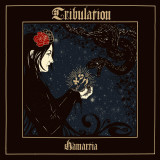
Nach zwei schwedischen Grammy Awards - zuletzt 2022 für ihr hochgelobtes Studiowerk 'Where the Gloom Becomes Sound', das Platz 12 der deutschen Albumcharts erreichte - sind TRIBULATION nun mit einer neuen EP namens 'Hamartia' zurück. Dies ist ein erster Vorgeschmack auf neue Aufnahmen mit dem neuen Gitarristen Joseph Tholl. Die EP enthält auch eine Coverversion von Blue Öyster Cults 'Vengeance (The Pact)'.'Hamartia' wurde mit Robert Phersson aufgenommen, von Tom Dalgety abgemischt (der zuvor 'Where the Gloom Becomes Sound' abgemischt hat), von Magnus Lindberg gemastert und mit einem Artwork von TRIBULATIONs Gitarrist Adam Zaars versehen.
- A1: Love Bites (So Do I) (So Do I)
- A2: Mz Hyde
- A3: I Miss The Misery
- A4: Freak Like Me
- A5: Beautiful With You
- A6: In Your Room
- B1: Break In
- B2: Rock Show
- B3: Daughters Of Darkness
- B4: You Call Me A Bitch Like It's A Bad Thing
- B5: American Boys
- B6: Here's To Us
Like many debut solo albums from musicians in bands, Jared Mattson’s Peanut didn’t originally come from a need to break away. As a composer for the Mattson 2, Jared Mattson was working up a batch of new songs through the winter of 2019-2020, looking ahead to the next album he and brother Jonathan Mattson, the blitzkrieging drummer, would record. As the pandemic hit stateside, Jared holed up in his home studio and kept developing the new music. And during that process it became increasingly clear to them that this wasn’t shaping up to be the next Mattson 2 album. This was a Mattson 1 album.
Jared had been absorbing the guitar work on records by reggae stalwarts Aswad and Burning Spear, and also the Police’s Andy Summer and the ways he gives songs space. And Jared wanted a prominent bass sound, too, where the guitar itself sometimes settles into the passenger seat so that the bass can drive. Lyrically, the album taps into our rattled world, where anxiety, loss, violence, and regret are sometimes pierced by the promise of love. The time spent working on the album was a profoundly introspective time as he reflected on past relationships while living through and writing during the pandemic, he also never lost sight of this truth about himself: Life is great with music.
One of the album’s standout highlights is “Burn Down Babylon,” which is propelled by the bass’s funk-you-say groove. You don’t often encounter many pop songs with so blunt an opening line as, “I got punched in the face last night by a neo-Nazi,”—a true experience that was delivered many years ago in a bar brawl in Carlsbad, California. But to hear the music that goes along with this tale manages a vibe that is less melee and more backyard jubilee.
When “Please Come Here,” with an intro that slinks along like a Cadillac on a Sunday morning drive, kicks in, it’s typical of the album’s melodic pop flourishes, but the twist here is that the vocals are in Japanese (The Mattson 2 have toured Japan 20 times and covered many Japanese pop songs on 2018’s Vaults of Eternity: Japan). Ween’s “She Wanted to Leave” is the lone cover, but the way Jared reimagines the song makes it fits seamlessly within the album’s sonic template. The song’s inclusion was also a personal way to honor one of Jared’s best friends, who died from cancer two years ago. The two had always bonded over the song and marveled at its inherent beauty. Ultimately, Mattson’s solo debut unfolds like a string of fascinating clouds: These are not songs in a hurry; they shift around as they float by, and, most notably, they carry their unique kind of electric charge.
NF is the stage name of rapper and composer Nate Feuerstein, whose raw emotions and honest lyrics launched him into the upper reaches of the charts with his 2017 album Perception. Initially emerging in 2010, NF gained wider attention after his 2015 album, Mansion, and 2016 follow-up, Therapy Session, both reached number one on the Christian charts. That success set the stage for his 2017 breakthrough. Buoyed by the Top 20 hit "Let You Down," Perception hit number one on the Billboard 200. NF's second Billboard 200 chart-topper, The Search, arrived in 2019 and was followed in 2021 by the mixtape Clouds.
Belgian junk jazz trio schroothoop (which translates as 'junk yard') bring together multi-instrumentalists Rik Staelens (wind & string instruments), Timo Vantyghem (bass & thumb piano) and Margo Maex (percussion). Their new album called 'MACADAM' will be out April 7 via Sdban Records, home of many strongholds in the lively contemporary Belgian jazz and groove scene.
In 2020, schroothoop first emerged with their much-acclaimed and infectious debut album Klein Gevaarlijk Afval (Small Hazardous Waste). "Music on homemade instruments with a surprisingly good result" (De Standaard). "Schroothoop show that material limitation can be liberating and that sometimes the source of new sounds is just old junk."(Written in music). "We assure you that this "scrap heap" is worth gold!" (Le Grigri).
On their second album, to be released on April 7, schroothoop explore the vast sounds of discarded objects found on the macadam streets of Brussels. Wooden crates turn into guitars and lyres. Scrap metal becomes a thumb piano, a cimbalom, or percussion bells. Their compelling collection of semi-improvised songs is born out of several fruitful residencies and live performances during which Margo Maex, Rik Staelens and Timo Vantyghem dive deeper into the possibilities and unique timbres of their DIY instruments.
The junk jazz trio find inspiration in traditional Afro-Cuban and North-African rhythms, New Orleans second line grooves, and Arabic Hijaz scales. On Macadam, the band also explore the realms of electronic music, not shunning hints of drum and bass, dub riddims and ambient soundscapes, using pitch shifting delays or gauzy reverbs. The album delivers a mesmerizing trip through the most diverse capital of Europe, mixed and post-produced by none other than sound wizard Dijf Sanders.
The trio originally met in the Brussels street orchestra scene. One night they found themselves jamming on trash cans, buckets and other illegally dumped materials. Soon after, they started building their own DIY instruments from street trash. Imagine flutes made out of pvc pipes, a scrap metal drum kit, thumb pianos made out of old kitchen knives, a tin can violin, worn-out cutting discs as gongs, and a washtub bass. Delivering their own brand of "junk jazz", Schroothoop literally gives junk a second life by immortalizing a whole range of lost and found objects through music. The Brussels-based group effortlessly incorporates jazz, Northern African music, and Afro-Cuban rhythms, resulting in a danceable and hypnotic trip through the city's melting pot.
Belgian junk jazz trio schroothoop (which translates as 'junk yard') bring together multi-instrumentalists Rik Staelens (wind & string instruments), Timo Vantyghem (bass & thumb piano) and Margo Maex (percussion). Their new album called 'MACADAM' will be out April 7 via Sdban Records, home of many strongholds in the lively contemporary Belgian jazz and groove scene.
In 2020, schroothoop first emerged with their much-acclaimed and infectious debut album Klein Gevaarlijk Afval (Small Hazardous Waste). "Music on homemade instruments with a surprisingly good result" (De Standaard). "Schroothoop show that material limitation can be liberating and that sometimes the source of new sounds is just old junk."(Written in music). "We assure you that this "scrap heap" is worth gold!" (Le Grigri).
On their second album, to be released on April 7, schroothoop explore the vast sounds of discarded objects found on the macadam streets of Brussels. Wooden crates turn into guitars and lyres. Scrap metal becomes a thumb piano, a cimbalom, or percussion bells. Their compelling collection of semi-improvised songs is born out of several fruitful residencies and live performances during which Margo Maex, Rik Staelens and Timo Vantyghem dive deeper into the possibilities and unique timbres of their DIY instruments.
The junk jazz trio find inspiration in traditional Afro-Cuban and North-African rhythms, New Orleans second line grooves, and Arabic Hijaz scales. On Macadam, the band also explore the realms of electronic music, not shunning hints of drum and bass, dub riddims and ambient soundscapes, using pitch shifting delays or gauzy reverbs. The album delivers a mesmerizing trip through the most diverse capital of Europe, mixed and post-produced by none other than sound wizard Dijf Sanders.
The trio originally met in the Brussels street orchestra scene. One night they found themselves jamming on trash cans, buckets and other illegally dumped materials. Soon after, they started building their own DIY instruments from street trash. Imagine flutes made out of pvc pipes, a scrap metal drum kit, thumb pianos made out of old kitchen knives, a tin can violin, worn-out cutting discs as gongs, and a washtub bass. Delivering their own brand of "junk jazz", Schroothoop literally gives junk a second life by immortalizing a whole range of lost and found objects through music. The Brussels-based group effortlessly incorporates jazz, Northern African music, and Afro-Cuban rhythms, resulting in a danceable and hypnotic trip through the city's melting pot.
The duo of Charles McCloud and Roslyn Johnson made only two albums during their career…but those two albums (Everything Must Change and Spirit of the Living God) are among the most collectible records ever made in the gospel genre. In fact, they are so hard to find that we’re still searching for Spirit of the Living God to scan the artwork, but we managed to snag a copy of their 1981 debut Everything Must Change on the obscure Cheri label (though we may have to pass a collection plate to recoup the cost!).
It’ll just take the first track to show you why these records are in such demand; you have never heard such a soulful (check out those harmonies!), slow-burning rendition of that hoary chestnut “Amazing Grace” in your sanctified life! And with able production by keyboardist Julius Brockington, who played with Larry Young and headed up several outfits of his own, Everything Must Change is a crossover album in the best sense of the word, blending the spiritual fervor of gospel with the danceable grooves of soul and—dare we say it?—disco. Don’t miss the Donny Hathaway cover “Someday We’ll All Be Free,” too. Black vinyl release, first ever reissue in any format…limited to 1000 copies!
Voïvod’s commercial peak and one of their many artistic peaks, 1989’s
Nothingface marked a move away from the Quebec metal band’s thrash beginnings to a more progressive rock sound epitomized by their fantastic cover of Pink Floyd’s “Astronomy Domine.” But it remains quintessential Voïvod, complete with sci-fi themes and tricky tempo changes. Long out of print on vinyl, Nothingface returns with a metallic (natch!) red vinyl pressing remasteredfor vinyl by Peter Moore.
This album originally came out on vinyl only in Europe, so there is still a lot of pent-up demand for a new LP reissue of this 1991
classic from the Voïvod catalog (especially in Canada, where the
band is worshipped). Produced by Terry Brown of Rush fame, Angel
Rat moved the band further into spacy psychedelic territory with
such tracks as “Golem” and the title track. A mesmerizing, moody head trip of a record. Metallic blue vinyl pressing. Remastered for vinyl by Peter Moore