
Cerca:123

- 1: Jet Stream Heart
- 2: Revelations
- 3: Megalith
- 4: Glimmer
- 5: Blue Flame
- 6: Vendetta
- 7: Jaguar
- 8: Horizon
- 9: Waiting On The Echoes
- 10: Fantasy Realm



https://b2b.integralmusic.com/articles/2046502
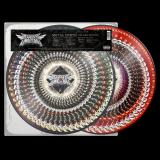
- A1: From Me To U (Feat. Poppy)
- A2: Ratatata (Babymetal, Electric Callboy)
- A3: Song 3 (Babymetal, Slaughter To Prevail)
- A4: Kon! Kon! (Feat. Bloodywood)
- A5: Kxaxwxaxixi
- B1: Sunset Kiss (Feat. Polyphia)
- B2: My Queen (Feat. Spiritbox)
- B3: Algorism
- B4: Metali!! (Feat. Tom Morello)
- B4: White Flame ー白炎ー
- C1: From Me To U (Major Lazer Remix)
- C2: From Me To U (Jordan Fish Remix)
- D1: From Me To U (Live From The O2)
- D2: My Queen (Live From Intuit Dome)
- D3: Algorism (Live From Saitama Super Arena)
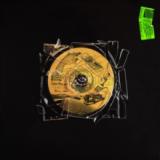
"Beyond HEAVY METAL": the deluxe edition is a special 2LP zoetrope vinyl featuring live recordings from arena shows in the UK, US, and Japan, along with “from me to u (feat. Poppy)” Major Lazer Remix and “from me to u (feat. Poppy)” Jordan Fish Remix
Having celebrated its 15th anniversary last year, BABYMETAL presents a new style of heavy metal album created in collaboration with a new generation of friends encountered across the globe. A powerful statement of who the band is today, this album pushes toward what lies "beyond HEAVY METAL" and aims to change the course of history.
Available to own on special edition zoetrope vinyl. Limited quantities, available while stocks last!
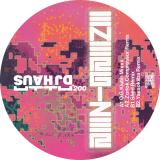
UTTU hits the 200 mark (officially) with DJ Haus in the command module navigating wild meteor showers, solar flares and of course WORMHOLES - along for the ride are fellow cosmonauts Legowelt (under his amazing new ZORLOK COMPRESSOR alias), Berlin legend SHED & Tokyo's 'modular dub enthusiast' YASSOKIIBA - each reworking EneGiZer into unique outer reaches of the sonic cosmos - absorbing DUBSTEP, REGGAE, TEKNO, BREAKZ and HOUZ!"
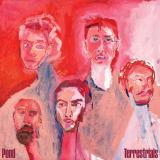
Die beliebte australische fünfköpfige Band POND schenkt mit ihrem neuen Album - ihrem elften - ,Terrestrials" einen Funken Hoffnung in einer feindseligen Welt. Als Wirbelsturm aus drängendem, verbranntem Rock'n'Roll ist ,Terrestrials" eine Hommage an die Klänge von damals, während es sich gleichzeitig unverblümt dem Hier und Jetzt stellt. Entstanden aus der Ehrfurcht vor einer besonders kraftvollen Epoche des australischen Rock, schöpft ,Terrestrials" aus dem Klang der Melancholie unter freiem Himmel, dem brutzelnden Hitzeschleier über den Ebenen und den klirrenden Hinterzimmern von Pubs, der einen ewig ergreifenden Nerv bei jedem trifft, der mit dem Klang, der Zeit und dem Ort vertraut ist. Wie ein Großteil des Pond-Katalogs ist Terrestrials ein Album über Menschen und Orte, über die Erforschung der Identität jedes Einzelnen sowie darüber, wo und wie sie sich überschneiden und aufeinanderwirken. Terrestrials zittert vor der Verzweiflung von Menschen und Planet am Abgrund, setzt aber letztendlich darauf, dass die Schönheit beider die Oberhand gewinnt.
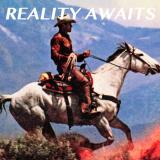
- A1: Psycho Shit
- A2: Dine N’dash
- A3: Lonely In The Future
- A4: Falling Out Of Love
- B1: Going To Babble On
- B2: Going Shopping
- B3: Liar’s Remorse
- B4: The Fruits Of Conquest
- B5: Pros And Cons
New music from The Strokes arrives now, beginning with a new song, “Going Shopping” released today. Produced by Rick Rubin, Reality Awaits is the 7th album from The Strokes. Full track list includes nine new songs — set for release on June 26.
6
In spring 2025, Abul Mogard and Rafael Anton Irisarri created the source material for their second album, Where Light Pauses in the Silence of the Sun, during a three-day residency at Morphine Raum in Berlin. Functioning as both recording studio and performance venue, the space has no stage, with the audience gathered around the performers. Working within an open framework, the duo reshaped the music each evening while recording the performances live to multitrack. Rotary speakers, modular synthesizers and bowed guitar formed the core of their sonic language, captured through a 1970s mixing console and microphones placed around the room.
Back in Mogard’s studio in Rome, the material was further crafted as motifs were stretched, fragments isolated, and tempos dissolved. Irisarri recorded additional guitar textures and treatments in New York, while passages recorded by Martina Bertoni and Andrea Burelli in Berlin reinforced the harmonic centres and brought breath, refinement and a new sensibility to their compositions. The process continued as Mogard’s layering and subtraction reassembled everyone’s parts into the final arrangement.
The album opens with “In the Eastern Wild,” building from a sparse outline into a monumental formation of low-frequency weight, its internal motion shaped by the rotating Leslie speaker. “Over the Domes” widens into a broader acoustic field, where sustained modular tones meet waves of softly plucked guitar. The music then turns inward with “A Blue Descent,” centred on Bertoni’s cello, whose growling timbre introduces a melancholic depth.
At the album’s centre, “In a Quiet Radiance” unfolds around a slow guitar ostinato, its luminous stillness opening into a more expansive and reflective state. Across its ten-minute span, Burelli’s violin lines and Bertoni’s lower cello phrases gradually surface, weaving through the harmonic field. Mogard brings Burelli’s processed voice to the fore, its emotive, operatic presence becoming one of the record’s pivotal moments. “Of Blessed Ages” suspends the sonic flow, shifting between parallel major and minor chords as lingering, slowly decaying melodies shape the music’s internal drift. The closing “Among Shadows” settles into a darker resonance as layered textures recede.
Mogard and Irisarri’s shared language balances restraint and maximalism. UK magazine Crack describes the music as “a tidal wave held in suspension,” while Dutch newspaper de Volkskrant writes, “What a colossal sound, and how this music strikes at the emotions.” Reflecting on the residency sessions, Irisarri recalls: “At moments I genuinely couldn’t tell if a sound was coming from me or from Abul. It stopped feeling like two people making decisions and began to feel like we were inside a system moving on its own."
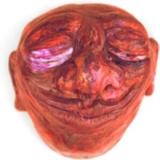
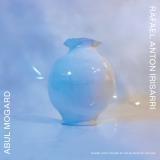
Marja de Sanctis’ cover artwork revisits the vessel sculpture from the duo’s first album, Impossibly Distant, Impossibly Close. There it appeared as raw, unfired clay. Here it has been fired in the kiln and finished with a glaze. Light gathers on its polished surface and spills into the surrounding space. As she explains, “I wanted to convey the idea of continuity within the duo, and the vessel became a kind of container for that idea. However, their music felt different this time, and with the collaboration of Martina and Andrea, I felt it should have a sleeker, softer, more glamorous look, very distant from the first raw appearance.” The transformation of the vessel from raw clay to fired form suggests a passage from immediacy toward permanence, mirroring the music’s gradual expansion.
6
In spring 2025, Abul Mogard and Rafael Anton Irisarri created the source material for their second album, Where Light Pauses in the Silence of the Sun, during a three-day residency at Morphine Raum in Berlin. Functioning as both recording studio and performance venue, the space has no stage, with the audience gathered around the performers. Working within an open framework, the duo reshaped the music each evening while recording the performances live to multitrack. Rotary speakers, modular synthesizers and bowed guitar formed the core of their sonic language, captured through a 1970s mixing console and microphones placed around the room.
Back in Mogard’s studio in Rome, the material was further crafted as motifs were stretched, fragments isolated, and tempos dissolved. Irisarri recorded additional guitar textures and treatments in New York, while passages recorded by Martina Bertoni and Andrea Burelli in Berlin reinforced the harmonic centres and brought breath, refinement and a new sensibility to their compositions. The process continued as Mogard’s layering and subtraction reassembled everyone’s parts into the final arrangement.
The album opens with “In the Eastern Wild,” building from a sparse outline into a monumental formation of low-frequency weight, its internal motion shaped by the rotating Leslie speaker. “Over the Domes” widens into a broader acoustic field, where sustained modular tones meet waves of softly plucked guitar. The music then turns inward with “A Blue Descent,” centred on Bertoni’s cello, whose growling timbre introduces a melancholic depth.
At the album’s centre, “In a Quiet Radiance” unfolds around a slow guitar ostinato, its luminous stillness opening into a more expansive and reflective state. Across its ten-minute span, Burelli’s violin lines and Bertoni’s lower cello phrases gradually surface, weaving through the harmonic field. Mogard brings Burelli’s processed voice to the fore, its emotive, operatic presence becoming one of the record’s pivotal moments. “Of Blessed Ages” suspends the sonic flow, shifting between parallel major and minor chords as lingering, slowly decaying melodies shape the music’s internal drift. The closing “Among Shadows” settles into a darker resonance as layered textures recede.
Mogard and Irisarri’s shared language balances restraint and maximalism. UK magazine Crack describes the music as “a tidal wave held in suspension,” while Dutch newspaper de Volkskrant writes, “What a colossal sound, and how this music strikes at the emotions.” Reflecting on the residency sessions, Irisarri recalls: “At moments I genuinely couldn’t tell if a sound was coming from me or from Abul. It stopped feeling like two people making decisions and began to feel like we were inside a system moving on its own."
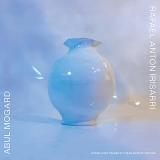
Marja de Sanctis’ cover artwork revisits the vessel sculpture from the duo’s first album, Impossibly Distant, Impossibly Close. There it appeared as raw, unfired clay. Here it has been fired in the kiln and finished with a glaze. Light gathers on its polished surface and spills into the surrounding space. As she explains, “I wanted to convey the idea of continuity within the duo, and the vessel became a kind of container for that idea. However, their music felt different this time, and with the collaboration of Martina and Andrea, I felt it should have a sleeker, softer, more glamorous look, very distant from the first raw appearance.” The transformation of the vessel from raw clay to fired form suggests a passage from immediacy toward permanence, mirroring the music’s gradual expansion.
6
In spring 2025, Abul Mogard and Rafael Anton Irisarri created the source material for their second album, Where Light Pauses in the Silence of the Sun, during a three-day residency at Morphine Raum in Berlin. Functioning as both recording studio and performance venue, the space has no stage, with the audience gathered around the performers. Working within an open framework, the duo reshaped the music each evening while recording the performances live to multitrack. Rotary speakers, modular synthesizers and bowed guitar formed the core of their sonic language, captured through a 1970s mixing console and microphones placed around the room.
Back in Mogard’s studio in Rome, the material was further crafted as motifs were stretched, fragments isolated, and tempos dissolved. Irisarri recorded additional guitar textures and treatments in New York, while passages recorded by Martina Bertoni and Andrea Burelli in Berlin reinforced the harmonic centres and brought breath, refinement and a new sensibility to their compositions. The process continued as Mogard’s layering and subtraction reassembled everyone’s parts into the final arrangement.
The album opens with “In the Eastern Wild,” building from a sparse outline into a monumental formation of low-frequency weight, its internal motion shaped by the rotating Leslie speaker. “Over the Domes” widens into a broader acoustic field, where sustained modular tones meet waves of softly plucked guitar. The music then turns inward with “A Blue Descent,” centred on Bertoni’s cello, whose growling timbre introduces a melancholic depth.
At the album’s centre, “In a Quiet Radiance” unfolds around a slow guitar ostinato, its luminous stillness opening into a more expansive and reflective state. Across its ten-minute span, Burelli’s violin lines and Bertoni’s lower cello phrases gradually surface, weaving through the harmonic field. Mogard brings Burelli’s processed voice to the fore, its emotive, operatic presence becoming one of the record’s pivotal moments. “Of Blessed Ages” suspends the sonic flow, shifting between parallel major and minor chords as lingering, slowly decaying melodies shape the music’s internal drift. The closing “Among Shadows” settles into a darker resonance as layered textures recede.
Mogard and Irisarri’s shared language balances restraint and maximalism. UK magazine Crack describes the music as “a tidal wave held in suspension,” while Dutch newspaper de Volkskrant writes, “What a colossal sound, and how this music strikes at the emotions.” Reflecting on the residency sessions, Irisarri recalls: “At moments I genuinely couldn’t tell if a sound was coming from me or from Abul. It stopped feeling like two people making decisions and began to feel like we were inside a system moving on its own."
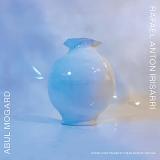
Marja de Sanctis’ cover artwork revisits the vessel sculpture from the duo’s first album, Impossibly Distant, Impossibly Close. There it appeared as raw, unfired clay. Here it has been fired in the kiln and finished with a glaze. Light gathers on its polished surface and spills into the surrounding space. As she explains, “I wanted to convey the idea of continuity within the duo, and the vessel became a kind of container for that idea. However, their music felt different this time, and with the collaboration of Martina and Andrea, I felt it should have a sleeker, softer, more glamorous look, very distant from the first raw appearance.” The transformation of the vessel from raw clay to fired form suggests a passage from immediacy toward permanence, mirroring the music’s gradual expansion.
