Nearly two decades into her storied career, 9-time GRAMMY-winning singer, songwriter, pianist, and 2020’s most livestreamed artist Norah Jones will release her first full live album ‘Til We Meet Again on April 16. The collection presents globe-spanning performances from the U.S., France, Italy, Brazil, and Argentina that were recorded between 2017-2019. The first single “It Was You,” which is available to stream or download today, was recorded at the 2018 Ohana Festival in Dana Point, California with Pete Remm on organ, Christopher Thomas on bass, and Brian Blade on drums. Additional musicians featured on the album include bassist Jesse Murphy, guitarist Jesse Harris, flutist Jorge Continentino, and percussionist Marcelo Costa. ‘Til We Meet Again can be pre-ordered now on vinyl, CD, or digital download.
The 14 songs featured on ‘Til We Meet Again also span Jones’ entire career from her 2002 debut Come Away With Me (“Don’t Know Why,” “I’ve Got To See You Again,” “Cold, Cold Heart”), 2004’s Feels Like Home (“Sunrise,” “Those Sweet Words”), 2012’s Little Broken Hearts (“After The Fall”), 2016’s Day Breaks (“Flipside,” “Tragedy”), as well as her more recent singles series (“It Was You,” “Begin Again,” “Just A Little Bit,” “Falling,” and the GRAMMY-nominated “I’ll Be Gone”). The album closes with Jones’ stunning solo piano performance of Soundgarden’s “Black Hole Sun,” a tribute to Chris Cornell that was recorded at the Fox Theatre in Detroit just days after Cornell’s death following a performance at the same venue.
Поиск:16 bit
Все
- A1: Cowboy
- A2: Who’s That Girl?
- A3: Let Me Blow Ya Mind (Feat Gwen Stefani)
- B1: You Had Me, You Lost Me
- B2: Got What You Need (Feat Drag-On)
- B3: Gangsta Bitches (Feat Da Brat & Trina)
- C1: That’s What It Is (Feat Styles P)
- C2: Scream Double R (Feat Dmx)
- C3: Thug In The Street (Feat Lox)
- D1: No, No, No (Feat Stephen Marley)
- D2: You Ain’t Gettin None
- D3: Life Is So Hard (Feat Teena Marie)
- D4: Be Me (Feat Mashonda Tifrere)
Scorpion is the second studio album by Eve. It was by Ruff Ryders Entertainment and Interscope Records on released 6th March, 2001. The album’s title is a reference to Eve’s zodiac sign, Scorpio. It features the Grammy-winning hit single, “Let Me Blow Ya Mind”, a duet with Gwen Stefani, winning their first Grammy Award for Best Rap/Sung Collaboration, a new category at the time.
Scorpion was a critical and commercial success, debuting at number four on the US Billboard 200 and became her second consecutive number-one album on the Top R&B/Hip-Hop Albums chart. Scorpion was later certified Platinum by the RIAA on 10th May, 2001. Scorpion was also nominated for Best Rap Album at the 44th Grammy Awards in 2002
Scorpion will release on 16th April in 2LP 180 gram black vinyl.
Superb unreleased soundtrack from British 1972 sex comedy starring Gabrielle Drake (Nick Drake’s sister) and Rchard O’Sullivan (Gilbert O’Sullivan’s brother!). Brilliant music on many levels, 17 sexy tracks of swinging jet-set jazz, groovy scatty vocals, hell it must be good because it’s on Trunk Records.
Take yourself back to the fleapit cinemas of the early 1970s. My home town of Aldershot had two - the ABC/123 (with three screens) and The Palace (just one screen, and anything but palatial). Au Pair Girls, released in 1972, was exactly the kind of soft porn “comedy” flick with a vague plot that would, without doubt, have been playing as part of a double bill to the regular “dirty mac brigade”. Such films and such establishments guaranteed the small crowd regular titillating wide screen visions of nude women in preposterous situations and fulfilling preposterous fantasies.
The title of Au Pair Girls suggests it all of course; yes, four young women fly into London from Europe and Asia, are sent to their new employers and find themselves in unexpected and unusual situations pretty fast. There is of course full nudity, crudity and a large slab of cheese on the menu.There is also no real comedy, a sprinkling of infamous character actors (Richard O’Sullivan, John Le Mesurier), and “UFO” actress Gabrielle Drake (sister of Nick Drake) wearing nothing at all. If anything, the film has maintained a vague middle aged male following because of Gabrielle.
But there’s little to save this film from contemporary criticism - its outdated view of life, rights, sex and taste sit uncomfortably today. But the jet set soundtrack by Roger Webb was worth saving.
By 1972 Roger Webb’s career in film and TV music was taking off. He was an established songwriter and live pianist with a jazz trio. He’d already penned a few British scores and was just starting on a formidable future with library companies including Chappell, de Wolfe and Capitol. His route to Au Pair Girls was accidentally through Norman Newell, one of the giants of the post war music industry.Actress and performer Dee / Deanne Shenderry had asked Newell to recommend an artist to arrange her up and coming album. New;ee recommended Roger Webb.The two worked together and some music was produced, but to my knowledge only got to acetate stage (possibly for Apple Records). Dee husband was Kenneth Shipman, a co-owner ofTwickenham film studios.And so when Kenneth Shipman started pre
production of Au Pair Girls, Roger Webb was an easy go-to for film music composition.
Many years ago there was an original reel / master for Au Pair Girls. It was transferred to CD, DAT and cassette circa 1990 and the rapidly degrading tape was subsequently misplaced, lost or just binned. So all we had to work with was a rather shaky transfer from nearly 30 years ago, one which included numerous wobbles as well as speeding up and slowing down moments.The job of rescuing all this was left to Jon Brooks, my hero for all such musical problems. The end result is what you hear on this album. It is by no means sonically perfect but it is all we will ever have.
It’s certainly not Roger Webb’s best ever score (I have more of his ace work coming) but it has a certain charm and relentlessness.The lyrics were written by Norman Newell, and I can imagine the pair having a huge amount of fun putting the score together and recording it, with - as you’d expect - a pretty tight band and lively vocal group.The main theme does, as one reviewer state, “go on a bit”, but there’s enough musically here for me to get excited about and really want to “stick it out”. So I have.
- We Are Sex Bob-Omb – Sex Bob-Omb
- Scott Pilgrim – Plumtree
- I Heard Ramona Sing – Frank Black
- By Your Side – Beachwood Sparks
- O Katrina! – The Black Lips
- I’m So Sad, So Very, Very Sad – Crash And The Boys
- We Hate You Please Die – Crash And The Boys
- Garbage Truck – Sex Bob-Omb
- Teenage Dream – T. Rex
- Sleazy Bed Track – The Bluetones
- It’s Getting Boring By The Sea – Blood Red Shoes
- Black Sheep – Metric
- Anthems For A Seventeen Year Old Girl – Broken Social Scene
- Under My Thumb – The Rolling Stones
- Ramona (Acoustic Version) – Beck
- Ramona – Beck
- Summbertime – Sex Bob-Omb
- Threshold (8 Bit) – Brian Lebarton
- Soundtrack: Disc Two: Side 4 (Bonus Tracks)
- Black Sheep (Brie Larson Vocal Version) – Metric
- No Fun – Sex Bob-Omb
- Garbage Truck – Beck
- Threshold – Beck
- Indefatigable – Sex Bob-Omb
- Ramona (Acoustic Demo Idea 2) – Beck
- Ramona (Acoustic Demo Idea 3) – Beck
- Ramona (Mellotron Version) – Beck
- Summertime – Beck
- Enter Goddess – Nigel Godrich
- Universal Theme
- Hillcrest Park
- Fight!
- Slick (Patel’s Song) – Dan The Automator
- Love Me Some Walking
- Talk To The Fist
- Rumble
- Feel The Wrath
- The Grind
- Hello Envy
- Mystery Attacker
- Second Cup
- The Vegan
- Bass Battle – Nigel Godrich/Jason Falkner/Justin Meldal-Johnsen
- Sorry I Guess
- Roxy
- The Ninth Circle
- Katanayagi Twins Vs Sex Bob-Omb – Beck & Cornelius
- This Fight Is Over
- Giedon Calling
- Level 7
- Go! – Plumtree
- Welcome To Chaos Theatre
- We Are Sex Bob-Omb (Fast) – Beck/Nigel Godrich
- Fast Entrance Into Hell
- Chau Down
- Game Over
- So Alone
- Round 2
- Death To All Hipsters – Nigel Godrich & Beck
- A Different Guy
- Boss Battle
- Blowing Up Right Now
- Aftermath
- Bye And Stuff
- Love – Osymyso
- Ramona – Osymyso
- Prepare – Osymyso
- Ninja Ninja Revolution – Dan The Automator
- Ramona (Acoustic Demo Idea 1) – Beck
This year marks the tenth anniversary of the theatrical release of Universal Pictures’ Scott Pilgrim vs. the World. The film adaptation by director Edgar Wright (Hot Fuzz, Baby Driver) of Bryan Lee O’Malley’s graphic novel series stars Michael Cera, Mary Elizabeth Winstead and Kieran Culkin and has since become a cult classic due in no small part to the use of music in its storytelling. The soundtrack album and score were originally released in 2010 by ABKCO Records.
Each side of each LP is graced with an image of one of the “Seven Evil Exes” characters from the film, with an image of Scott Pilgrim with Ramona Flowers on the eighth side. This marks the first time ever that Godrich’s score will get a vinyl release, which will also be available separately on a blue vinyl 2-LP set, also on March 26. On the same day, the original single LP version of the soundtrack will be reissued as the Ramona Flowers Edition on blue, green and magenta vinyl, representing the colors of the character’s hair throughout the film.
Now ABKCO, with Edgar Wright and Nigel Godrich’s oversight, has curated an expanded, four LP picture disc Seven Evil Exes Edition offering of the soundtrack/score, including more performances by Sex Bob-Omb and demos from Beck, as well as fan favourite “Black Sheep” by Metric and sung by actress Brie Larson.
Since its release, Scott Pilgrim vs. the World (Original Motion Picture Soundtrack) has received many accolades. UK’s The Independent ranked it at number 4 out of “the 40 greatest film soundtracks of all time,” declaring that Wright “found a way to seamlessly integrate his soundtrack into Scott Pilgrim vs. the World’s narrative.” It was also included on Alternative Press’ list of “16 Fantastic Movie Soundtracks You Need To Hear.” “We Are Sex Bob-Omb” won the 2010 Houston Film Critics Society Award for Best Original Song.
Scott Pilgrim Vs. The World (Seven Evil Exes Limited Edition)
• 4x LP picture discs
• Limited Edition Set
• Exclusive bonus tracks not included on original soundtrack by Sex Bob-omb, Beck, plus highly sought- after Brie Larson w/ Metric
• Social support from Edgar Wright + Beck
Bonus ephemera:
• Full colour film poster
• Exclusive Colouring Page by Bryan O’Malley
• Printed note from Edgar Wright, Director
- A1: In A Silent Way – Joe Zawinul
- A2: Sweet Pea – Wayne Shorter
- A3: In Search Of Truth – Lonnie Liston Smith & The Cosmic Echoes
- B1: Arjen’s Bag – John Mclaughlin
- B2: Politician Man – Betty Davis
- B3: Uhuru Sasa – Gary Bartz Ntu Troop
- C1: Directions (16 December 1970, First Set) – Miles Davis
- C2: Common Mama – Keith Jarrett
- D1: Song Of The Wind (Alt Take) – Chick Corea
- D2: You’ll Know When You Get There - Herbie Hancock
• In 1970 Miles Davis released “Bitches Brew”, which crystalised the trumpeter and bandleader’s experiments in rhythm, electronics and musical structure which he had been building on over the previous three years. The album has since become one of the most influential in musical history and was joined over the next couple of years by “Jack Johnson” and “On The Corner” in defining the future of music.
• Miles was the master bandleader and his LPs at the time declared that these were his ‘Directions In Music’, but he forged them with the help of a hand-picked group of musicians who proved themselves good enough to share his space on stage and in the studio. These players would all become central to jazz’s continued relevance and many would go on the record best-selling jazz records of their own. This compilation looks at the records that they made around the time they played with Miles and how they fed into or were fed by their time in his group.
• So we have Wayne Shorter and Joe Zawinul with versions of tracks they cut with Miles. Herbie Hancock’s journey into the electronic instruments that Miles convinced him to play, and Keith Jarrett’s firm rejection of them. Lonnie Liston Smith borrows the Indian percussion from “On The Corner” for his take on electronic funk. Chick Corea, John McLaughlin and Gary Bartz all show their distinctive talents that were allowed to shine in Miles’ band. As a bonus, we have Miles’ musicians alongside Betty Davis (his wife at the time) on a take of Cream’s ‘Politician Man’ and Miles’ 1970 group live at The Cellar Door on Joe Zawinul’s ‘Directions’.
• Available on CD and double vinyl with in-depth sleeve notes. The Miles Davis track is available on vinyl for the first time.
Thinking about a fox face may give many warm, fuzzy feelings,
but don’t forget that foxes have teeth.While Milwaukee quartet
Fox Face may not bite one’s face, their new album End Of Man
might just melt it off.
Featuring players drawn from various corners of the Brewtown
music scene, Fox Face came together organically ahead of the
recording sessions for their November 2017 debut album, Spoil
+ Destroy. Main songwriter Lindsay DeGroot (The Olives)
started working on her songs with multi-instrumentalist Lydia
Washechek (Static Eyes). Eventually fellow Olives member
Mary Hickey joined up on bass, and the final piece of the band
was found with the addition of drummer Christopher Capelle
(Midwest Beat, Long Line Riders). Spoil + Destroy was one of
the best garage punk albums of 2017-2018, taking on science
deniers, misogynists and other jerks with songs anchored by
fiery guitar playing and rock-solid ensemble playing.
End Of Man bumps up the furious guitar sound of Spoil +
Destroy a few more notches. It’s not hard rock, per se, but the
album’s sound edges in that direction. And one can tell that Fox
Face has been playing together for several years now, because
these recordings are tight AF. There’s no filler or extraneous
padding; the arrangements and playing make for a cohesive
whole, and lyrically the songs are direct and to the point while
still remaining universal enough to be met on personal terms by
the listener.
End Of Man may not be a party record … at least, once letting
the lyrics filter past the lizard brain enjoyment of the blazing
riffs. But art is not supposed to be all fun and games. Standing
up and speaking truth may not be the easiest path for a band or
its listeners, but there is much to be said for catharthis. Anyone
feeling despair and helplessness about the current political and
societal breakdown should find some common ground to rage
along with these new songs from Fox Face.
- A1: Sookie - Love Beat
- A2: Give It Up
- A3: Disco Madonna
- A4: Lovers Concerto (Vocal)
- A5: Don't Fight The Feeling
- B1: Play Me Desires/I Wanna Love/You Are Loving Me/Burning (Parts 1-4)
- B2: Midnight
- C1: The Mystery With Me
- C2: Don't Think About It
- C3: Choco Date
- C4: Tonight
- D1: Love Somebody (Part 1)
- D2: Your Love (With Venise)
- D3: Let's Keep It Together
Cameroonian Joe Bisso's earliest musical influences didn't come primarily from his homeland, but more from the neighbouring Congo, where the kind of early 60's Congolese Rumba played by the likes of Franco / TP Ok Jazz, and Tabu Ley Rochereau was establishing itself as a musical force in the region.
Alongside this exuberant, swinging, jazz influenced sound, the growing impact of the all conquering US soul titans became inescapable, and sprinkled with a bit of Johnny Halliday & Co's smooth chanson over the top, we get a snapshot of where Jo Bisso and friends post school musical experimentation was headed in the late 60's.
As that decade drew to a close, the single minded Bisso headed off to France to begin his quest for the future, and by 1972 could afford the journey to the US that he'd long dreamed of.
Enrollment at the Berkeley School of Music in Boston soon lead to a new band coming together, and by 1974 the all conquering, multi faceted approach that marks Bisso's musical career, meant he'd written, produced and sung on his debut single for the mighty Decca Records. 'Flying To The Land Of Soul' drew heavily from James Brown's propulsive dancefloor funk, whilst wearing it's African colours loud and proud via 'African Express' chants, and drums front and centre.
At the same time, Bisso and friends had started to immerse themselves in the fast emerging disco sound pulsing outwards from Downtown NYC into the Boston nightclubs, and by the time his debut album 'Dance To It' was released on France's influential Le Disques Esperance in 1976, it was the driving, 4/4 floor power of disco that was to define Bisso's sound on that, and the following two albums.
Whilst Bisso's immersion in Disco was based around it's energy and musicality (rather than any associated hedonism), 'African Disco Experimentals (1974 to 1978)' paints a picture of an artist dedicated to the underground club side of the scene, rather than focused exclusively on the fast emerging pop potential of the sound at the time.
The album's tone is set by 3.20 mins of building, tribal percussion and rolling rhythms of the opener 'Love Beat', a 'strictly dancefloor' approach mirrored in the near 11 mins of 'Love Somebody', building from soulful keys to deep bass funk, extended percussion breaks, joyous squelchy Moog licks, breathy vocals and more (interesting footnote : Bisso is credited as Producer / Writer / Arranger, but 'Recorded by' is attributed to Joe Chiccarelli, better known in recent years for his work with The White Stripes, Shins, and Broken Social Scene.)
Still clocking in at a healthy 6 mins plus, "The Mystery With Me" (1978) makes a nod towards more radio friendly waters with it's hooky, floaty choruses and tight structures (a then 22 year old Arthur Baker is credited as sole writer on Discogs - Bisso himself doesn't seemed convinced by this idea, but that's another story...)
'Let's Keep it Together' (1977) loops the song title over a slower groove, with free form electric guitar licks adding new textures, whilst 'Disco Madonna' (1976) showcases Bisso at his most playful, combining spoken word Hispanic vocals, rattling percussion and more of the always welcome Moog, switching up keys at the end for an unselfconsciously camp finale.
And if anything sums up the ambition of Bisso's work in the field at the time, 'Play Me' (1978) can lay claim to being the magnum opus. It's presented here as a continuous 16 minute extravaganza (as opposed to the 4 parts it came in originally) : lush strings, hypnotic vocal sections, irresistible basslines, crisp drums, the odd Barry White style interjection, disco moans, the occasional nod to a chorus vocal. None of it seeming in much of a hurry to go anywhere in particular, choosing instead to joyfully revel in the expansiveness of the form.
Selva Discos keeps broadening horizons. Its next release celebrates the start of a new series called Novaterra, this time focused on showcasing the music of contemporary Brazilian artists. First up is Zopelar, known not only for his work with the anarchic-techno-punk act Teto Preto but also for the project My Girlfriend and his solo LP, both on Apron Records.
Novaterra vol. 1 by Zopelar is a mini-LP featuring 6 tracks that range from the introversion to the extraversion. In one hand you have an A-side banger like "Be Together", with its addictive looped-sample, and in the other, you get the laidback interlude of "Modo Avião", which sounds like one of those MF Doom's instrumentals – and between both, you will find a whole spectrum of music where you can experience the duel between super crispy beats (a signature in Zopelar's work) and the richness of melodies and harmonies that he's able to knit stitch close to perfection.
The opener "Livre" has a great deep house vibe that makes you think of Prescription Records and Jazzanova, featuring a catchy bossa ad-lib. "NOX" is a Hammond-led tune with a groove bassline and lead that gets you going in no time as if Cesar Camargo Mariano and Larry Young toured together in the late 70's, like, a big, fat jazz-funk tune. "Dias Tensos" is a nervous drum workout led by an automat Tony Williams as if jamming in a 16-bit version of The Tony Williams Lifetime. And to wrap things up, "Boogie da Paz" is one of those perfect comedown tunes – a true tearjerker that works its melody line like a good pill works your serotonin, making it one of those tracks that you keep under your sleeve for those special 6 AM moments on a dancefloor.
The artwork is courtesy of Colletivo Design Studio in Sao Paulo.
Freshly signed artist named Ian Ash (also know as “H” and Sunny G) delivers a massive filtered boogie house track. So What U Want will also come with a Lord Funk remix which sound a bit more electro funk to blast the dancefloor.
This track is a radio killer and should be loved by many musiclovers including DJs, producers or simply people who like to listen to mainstream vocal house as French touch production. A bunch of samples and played instruments make it efficient and support the
sweet voice of the singer Djemaïli. He is known first as an R’n’B singer, but he liked to perform on this future classic – and you can hear it! Ian Ash is known as a resident DJ of the World-famous Montreux Jazz Festival where he has spun records yearly between 2001 and 2019. Including 1st and 2nd parts of George Clinton Parliament Funkadelic, Spearhead feat. Michael Franti, Doctor L, Tony Allen,Jean Grae, Raphael Saadiq, Will Calhoun, Common,Dj Cam, Mister Mike, Benji B, Souljazz, Andy Smith,Buddah Monk, Jimmy Cliff back band, Jamie Lidell, and Claude Nobs himself! He spun also at Cargo (London), SPACE (Ibiza), NL (Amsterdam), Divans du Monde
(Paris), etc. He surely is in the top 10 Funk DJs in Europe. He also has been stage and studio audio engineer for 2 decades and has mixed a couple of live artists such as Joe Sample, Mandrill or even AIR. He has mixed more than 90 concerts at Montreux Jazz Festival 2002 and deeply participated in producing 4 Days in Geneva by Ohmega Watts
more recently.
Sublime, unique, sexy and peculiar unreleased scores by electronic and jazz pioneer Ron Geesin, made for the sublime, unique, sexy and peculiar films by maverick director Stephen Dwoskin. There. we’ve said it. And if you have not heard of one or either of these two dudes it doesn’t really matter. Geesin made great music and worked with Pink Floyd. Dwoskin made odd films, most of them are in the BFI permanent collection. They are great and a bit strange.
These superb unreleased soundtracks come from a fascinating, progressive and important period in British film history. They represent an intriguing collaboration between the lively Ron Geesin from Scotland and the American Stephen Dwoskin, who both met in London.
Musically they are minimal, charismatic and quite groundbreaking. Here is the story…
HISTORY:
Steve Dwoskin arrived in London in 1964, aged 25, with several 16mm films in his trunk, shot in the cold-water flats of Greenwich Village. He had been on the fringe of the Factory scene, and some of his films starred Beverly Grant, ‘the queen of the underground’. But they had scarcely been seen, and they didn’t have soundtracks. For almost a year they stayed in the trunk, and stayed silent. Then he met Ron Geesin, somewhere around Portobello Road.
‘Slept last night, completely dressed after working over 12 hours on sound tracks at Ron’s,’ wrote Dwoskin in his diary for 29 July 1965. ‘My films are not anywhere near being anything. I need more energy, more concise and positive ideas and less inhibition. And of course space, money and people.’ Dwoskin, who taught and practised graphic design by day, had recently decided to stay in London beyond the term of the Fulbright scholarship that had brought him there.
Ron, living with Frankie in a basement flat in Elgin Crescent – they would marry the next year, with Dwoskin as best man – was about to leave the Original Downtown Syncopators, the trad jazz band he had joined aged seventeen-and-a-half, and was trying to go solo. On stage he would make vigorous use of piano and banjo; at home Frankie had bought him a new kind of instrument – a tape recorder. ‘Soon I had one tape recorder, two tape recorders, three tape recorders.’
Ron, wrote Dwoskin in his unpublished autobiography, ‘loved to record, and to cut and splice the quarter-inch recording tape to make new sounds. This triggered in me the idea of getting back to my films and finishing them’. Soon he was living in a dank basement in Denbigh Road, a few minutes’ walk from Elgin Crescent. Ron’s soundtracks for Dwoskin’ films, recorded in the Geesins’ flat, encompassed Ron’s very eclectic range of styles – madcap piano and fretted banjo as well as tape manipulation.
Aside from Ron’s soundtracks, some of which belong to films that no longer exist (including Pot Boiler), Frankie would act in one of the films that Dwoskin either lost or never finished during these years. He was disabled, having contracted polio as a child, and Ron and Frankie were both carers and collaborators; Ron had met him when he was struggling into his car.
There was no London equivalent to the underground film scene that Dwoskin had known in New York, and his films remained unseen until such a scene began to come into being, in the autumn of 1966. Some of them made their debut at the Mercury Theatre, near Notting Hill Gate, that September. Dwoskin wrote that Alone, starring Zelda Nelson (from Ron Rice’s Chumlum), and Chinese Checkers, with Beverly Grant and Dwoskin’s friend Joan Adler, went over best.
Soon both Dwoskin and Geesin became involved in the nascent London Film-Makers’ Co-op, which put on screenings in Better Books on Charing Cross Road – ‘if you can call them screenings,’ Ron recalls; ‘I’d call it fifteen blokes in various stages of disarray, peering through the smoke’. One or more of the films had been ‘striped’ with magnetic audiotape; with others ‘we had no means of direct syncing to the picture, so he started the film and I started the tape recorder’.
In the same autumn, Dwoskin moved into a flat almost opposite the Geesins on Elgin Crescent. More collaborations followed, including Naissant, on which Gavin Bryars, whom Geesin had met during a stint on the northern club circuit with novelty act Dr Crock and His Crackpots, played double bass.
Around the end of 1967 Geesin released his first solo LP, A Raise of Eyebrows, and Dwoskin won recognition the Fourth Experimental Film Competition, aka EXPRMNTL 4, an occasional film festival staged at Knokke-le-Zoute in Belgium. By now the films had optical soundtracks.
It was only after this that Dwoskin completed his first ‘British’ films, including Me Myself and I, with Barbara Gladstone, an American dancer who had appeared in Barbara Rubin’s Christmas on Earth, and with whom Dwoskin and Geesin had at one point devised a stage show, never produced. For Moment, a single-shot film, Geesin provided his most experimental score yet. At the time of its debut in 1970, Dwoskin and the Geesins were sharing a house in Ladbroke Grove.
By then, Ron was working with Pink Floyd, and soon afterwards he and Frankie moved out to the country, to be replaced by Bryars both in the house and as Dwoskin’s principal collaborator.
Until now these scores have remained part of the Geesin Archive and have never been issued.
Wrapping up the single release series from Carlton Jumel Smith's album "1634 Lexington Ave.", comes the deep beat ballad "Help Me (Save Me From Myself)". Progressing from moody minor keys towards the bittersweet hopefulness of the chorus, the track sounds like fell from Menahan Street Band's debut sessions with Charles Bradley and flew across the pond to soggy Helsinki, where Cold Diamond & Mink nurtured it to it's current glory.
The track starts up in classic hip hop soul style, with open drums and cinematic Rocky horns. But after the intro, when the ghost-like piano notes hit, is when the song really gets going. Carlton delivers one of his best dark-end-of-the-street vocals, matching his Timmion debut "I Can't Love You Any More". Tuomo "Pratt" Prättälä's haunting background vocals seal the deal, lifting the chorus to seventh group soul heaven.
Whether you're completing your Carlton single series with this gem or just getting your first whiff of this contemporary soul master, we salute you.
- A1: Frenetics - The Madman Talk
- A2: Vox Rei - Le Ombre Dei Soldati
- A3: The End - Tears In My Eyes
- A4: Les Blusons Noirs - The Scream
- B1: Illogico - Africani Gemiti
- B2: Blaue Reiter - My Inner Tought
- B3: Polaroid - Vita Immaginaria
- B4: Atelier Du Mal - Back To Taiwan
- C1: Sex - A Sickness Called Distress
- C2: Ship Of Fools - Metal Box
- C3: Ideal Standard - Another Loser
- C4: Nadja - Possession
- D1: The Age - Uer
- D2: Dark Ride - Apocalypse
- D3: Mono - From Planets & Satellites
- D4: Tv Dance - Schneller Leben
Searching for new languages beyond the bitter and nihilist dialect of punk, bands like Gaz Nevada, Litfiba, CCCP, Diaframma, Neon, and many others, began spreading their message all along the Italian peninsula during the early eighties and many of the members of these bands are now some of the best musicians/producers in the Italian independent music panorama (Giovanni Lindo Ferretti, Piero Pelù/Litfiba, Bisca, etc.). 16 tracks by 16 Italian underground bands from 1982-1984: bands who faded into oblivion before ever releasing anything of their own on vinyl. It should, however, be stated that if these sixteen bands had been found on an album, EP or single, they certainly would not have lowered the average quality of albums in that genre…not even in terms of sound quality, which has actually been improved upon here (considering that the original tapes had been lying around collecting dust for at least a quarter of a century) by careful restoration.
- A1: Shika 5' 04
- A2: Korin 6' 16
- A3: Ratanka 8' 13
- A4: 4 Gen Ga Nai 5' 07
- A5: Furura 3' 58
- B1: Mochi 3' 10
- B2: Shonen 4' 51
- B3: Tsuchi No Ue 6' 01
- B4: Biton 5' 36
- B5: Heritage 2' 25
- 1: Kyoku Wa Mirai 8' 25
- 2: Trampoline 5' 06
- 3: Toki No Uta 4' 59
- 4: Umiuta ' 50
- 5: New New Penopion 3' 26
- 6: Furo 3' 58
- 7: Yuki Yu 3' 25
- 8: Nana Hongi 4' 52
- 9: Saihate 8' 53
- 1: Iso (Phase) 7' 34
- 2: Music Exists 6' 41
- 3: Monki 5' 06
- 4: Papa 6
- 5: Yoru Wa Nagame ' 13
- A4: Riku No Hate, Mizu No Shiro 7' 03
- B1: Sanma 7' 21
- B2: Nitamono Doushi 3' 23
- B3: Wataridori 7' 28
- B1: Onjuku 4' 13
- 1: Budo No Arika 3' 43
- 2: Choe 4' 1
- 3: Korin (Instrumental) 6' 16
- 4: Jingreel 6' 17
- 5: Kick Out The Ass! 3' 01
- 6: Fururano 1 3' 58
- 7: Guitar 3' 41
- 8: Ten To Ten 7' 03
- 6: Nanja Nronja 4' 08
- 7: Tomas Azarahi 2' 4
- 8: Doble Andreas 3' 25
- 9: Johan No Gohan 3' 20
- 10: Sukkarakaan 5' 33
- A1: Eyes 6' 30
- A2: Ende 3' 22
- A3: Tsuki No Oto 7' 29
Now finally, the great "Music Exists"-series by Tokyo-based duo the Tenniscoats is completed. Apart from the regular 4 volumes, there is a heavy cardboard box, beautifully screenprinted and hand-numbered by senorburns, in 12 different color-combinations. Inside you'll find an extra-LP of bonus-tracks and alternative versions, "Music Exists disc 5", which only comes exclusively with this box. Like on the other LPs, you’ll hear heartbreaking songs, beautifully arranged with acoustic guitar, melodica, psychedelic keyboards and soundexperiments. Also included is a A3-Poster with a drawing by Ueno not used within the previous album-artworks.
Limited one-time pressing of only 500 copies worldwide. There is a small amount of full boxes with all 5 LPs and Poster available, for those, who don‘t have any of the albums so far.
Tenniscoats have devoted followers allover the world, but their releases were always hard to find outside of Japan. Except for their album "Tokinouta", which saw a very limited run on vinyl, and the seminal "Two Sunsets", their collaboration with the Pastels (and a small handfull of 7"s), there were never any vinyl-releases, and also the CDs were hard to get for any-one, who doesn't speak or read japanese.
So, this is the chance to dive deep into the beautiful, unique world of the Tenniscoats and their opus magnum "music exists".
"It may even be their greatest ever music, essential plus" Monorail Music, Glasgow
"Whatever's ailing you, Tokyo's Tenniscoats have got something for that" Boomkat, Manchester
Now finally, the great "Music Exists"-series by Tokyo-based duo the Tenniscoats is completed. Apart from the regular 4 volumes, there is a heavy cardboard box, beautifully screenprinted and hand-numbered by senorburns, in 12 different color-combinations. Inside you'll find an extra-LP of bonus-tracks and alternative versions, "Music Exists disc 5", which only comes exclusively with this box. Like on the other LPs, you’ll hear heartbreaking songs, beautifully arranged with acoustic guitar, melodica, psychedelic keyboards and soundexperiments. Also included is a A3-Poster with a drawing by Ueno not used within the previous album-artworks.
Limited one-time pressing of only 500 copies worldwide. There is a small amount of full boxes with all 5 LPs and Poster available, for those, who don‘t have any of the albums so far.
Tenniscoats have devoted followers allover the world, but their releases were always hard to find outside of Japan. Except for their album "Tokinouta", which saw a very limited run on vinyl, and the seminal "Two Sunsets", their collaboration with the Pastels (and a small handfull of 7"s), there were never any vinyl-releases, and also the CDs were hard to get for any-one, who doesn't speak or read japanese.
So, this is the chance to dive deep into the beautiful, unique world of the Tenniscoats and their opus magnum "music exists".
"It may even be their greatest ever music, essential plus" Monorail Music, Glasgow
"Whatever's ailing you, Tokyo's Tenniscoats have got something for that" Boomkat, Manchester
- 01: Lord Beginner - Sons And Daughters Of Africa
- 02: The Lion - Royal Wedding
- 03: The Mighty Terror - The Hydrogen Bomb
- 04: Dai Dai Simba - Modern Telephone
- 05: Willie Payne & The Starlite Tempos - Wa Sise
- 06: The Mighty Terror - The Emperor Of Africa
- 07: Louise Bennett - Bongo Man
- 08: Marie Bryant - My Handy Man
- 09: Nigerian Union Rhythm Group - Tortoise Mambo
- 10: Calypso Rhythm Kings - Boul Ve Se
- 11: The Mighty Terror - Life Is Like A Puzzle
- 12: The Mighty Terror - Chinese Children
- 13: Bill Rogers - Hungry Man From Clapham
- 14: Lili Verona - Underground Train
- 15: The Lion - Highway Code
- 16: Billy Sholanke - Kana Kana
- 17: Calypso Rhythm Kings - L’année Passée
- 18: Lord & Lady Beginner - One Morning
- 19: West African Rhythm Brothers - Ema Foju Ana Woku
- 20: Trinidad Steel Band - Caroline
part 8[26,01 €]
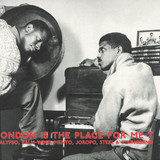
Still deeper forays into the musical landscape of the Windrush generation. A dazzling range of calypso, mento, joropo, steelband, palm-wine and r’n'b. Expert revivals of stringband music, from way back, alongside proto-Afro-funk. An uproarious selection of songs about the H-Bomb and modern phones, prostitution and Haile Selassie, mid-life crisis and the London Underground, racism and solidarity, the Highway Code and a 100% West Indian Royal Wedding.
For example some frantic British-Guianan joropo music-hall about Eatwell Brown from Clapham, who starts out biting off a piece of his mother-in-law’s face at a party, then devours everything in his path… a chunk of Brixton Prison, a Union Jack, a policeman’s uniform. Or Marie Bryant — collaborator of Lester Young and Duke Ellington — taking time off from skewering the South African PM Daniel Malan at her West End revue, to contribute some arch, swinging filth about uber-genitalia. Superior sound, courtesy of Abbey Road, D&M and Pallas; lovely gatefold sleeve; full-size booklet, with full notes, and fabulous previously-unseen photographs, including a set from the family archive of Russ Henderson (who led the first, impromptu Notting Hill Carnival march, in 1966).
- A1: Africa Negra - Mino Bô Bé Quacueda
- A2: Africa Negra - Zimbabwe
- A3: Sangazuza - Sun Malé
- A4: Os Úntuès - Chi Bô Sá Migu Di Védê
- A5: Sum Alvarinho - M'konvètá Dédo
- B1: Conjunto Equador - Mad?
- B2: Tiny Das Neves - Cladênço Padê Cluço
- B3: Conjunto Mindelo - Taji Océdo
- B4: Africa Negra - Aninha
- C1: Pedro Lima - Nga Ba Compensadora
- C2: Sangazuza - Cortição
- C3: Os Úntuès - Piquina Piquina
- C4: Conjunto Equador - Meu Di Plôc?
- D1: Sum Alvarinho - Tólá Muandgi
- D2: Pedro Lima E Conjunto Os Leonenses - Esatela Licu
- D3: Agrupamento Da Ilha - Bô Gosa So Txi
"The two Portuguese-speaking African islands of Sao Tomé & Principe, located in the Gulf of Guinea, created an unique music called Puxa : a refined mixture of various musical components from both sides of the Atlantic Ocean. A blend of Semba, Merengue, Kompas, Soukouss, Coladeira patterns, often pushing forward with a voodoo-like energy, solid bass lines, delicate melodies and backing harmonies of the rich Sao Tomean melodic traditions. Very first compilation focusing on the golden age of these island’s sounds, the 16 tracks selected will surely set fire on all dance floors !
Léve-Léve is the first ever compilation devoted to music from São Tome and Principe, two small islands situated off the coast of Gabon in central Africa. The album unravels a story of liberation where the music of Africa, Europe and the Americas unify with a carefree spirit personified by a phrase the islanders use all the time: “léve, léve” (“take it easy”). With echoes of Angolan semba and merengue, of Brazilian afoxê, of coladeira from Cape Verde and dance music from the Caribbean, it is a sound fiercely proud of its island heritage, sung in local dialects and using distinctive local rhythms.
On this record you can hear the cultural and social history of São Tome and Principe, and how live music represented its beating heart. Once known as the “Chocolate Islands” (remarkably, these two tiny islands were the largest cocoa producers in the world, though now this title acts as a reminder of its colonial past), through the years leading up to independence from Portugal, music would be a fundamental voice of liberation and conviviality. Os Úntués were one of the first groups to make an impression, releasing a couple of 7 inches in Angola – the litmus test of success for any of the islands’ groups. They united unique rhythms and dances like socopé, puita and dança-congo – borne from the islands’ largely slave-descendant population – with the sound of pop music beamed in on the radio from Europe, even adding in a little bit of soukous and Brazilian instrumentation. Their main rivals were Conjunto Mindelo, who fused São Toméan rhythms with rebita, an Angolan style, to create high energy puxa, a truly original island rhythm.
From the mid-1970s, coinciding with independence from Portugal in 1975, the islands’ groups featured an even stronger African influence and nowhere was that more apparent than with Africa Negra. They would listen to the latest records from Gabon, Zaire and Cameroon, taking inspiration and trying out phrasing from the greats of Central African guitar playing, developing a devoted fan base off the islands, as well as on. A score of other bands would follow a similar musical path, with a few getting their dues overseas in Angola, Cape Verde, Portugal and across Africa.
Os Leonenses (led by the iconic Pedro Lima), Conjunto Sangazuza, Sum Alvarinho and Conjunto Ecuador were just some of the other bands that formed a lively home-grown music scene that lit up the islands’ bars and open-air shows from the 1950s through to the mid-90s. Regardless of class or age, they were responsible for keeping the population entertained come the weekend, with Sunday matinee shows the highlight of the week, the music not stopping from midday until midnight.
As a Portuguese island colony that was for many years populated with slaves brought from Africa, São Tome and Principe has much in common with other Lusophone countries and boasts a richly complex and idiosyncratic musical DNA. Whilst the musical tapestries of Angola and Cape Verde are well known, São Tome and Principe’s secrets were assigned to the islanders themselves. Until now."
- A1: Diego Carpitella & Alan Lomax - E Ballamu Tutti Ddhoi Ti Paru
- A2: Diego Carpitella & Ernesto De Martino - Pizzica Tarantata N 014
- A3: Diego Carpitella & Ernesto De Martino - Pizzica Tarantata N 015
- A4: Diego Carpitella & Ernesto De Martino - Pizzica Tarantata N 026
- A5: Diego Carpitella & Ernesto De Martino - Pizzica Tarantata N 030
- A6: Diego Carpitella - Santu Paolu Meu De Galatina
- B1: Bjorn Torske & Trym Søvdsnes - Pizzica Tarantata N 026 (Rework)
- B2: Uffe - Pizzica Tarantata N 015 (Rework)
- C1: Lns - Pizzica Tarantata N 014 (Rework)
- C2: Bottin - Santu Paolu Meu De Galatina (Rework)
- D1: Don't Dj - Pizzica Tarantata N 014 (Rework)
- D2: Kmru - Pizzica Tarantata N 030 (Rework)
After their first issue focus on Benga, a Kenyan musical movement, FLEE is proud to present its new project: «Tarantismo: Odyssey of an Italian Ritual», available on 2LP Gatefold and as a bundle with 2LP Gatefold and a 168 pages Book.
Please note that the book only is not available
Dedicated to Tarentism, this project tells the story of a centuries-old choreo-musical ritual from Southern Italy, mobilizing frenetic rhythms and maniac dances, to exorcise women of a mysterious evil caused by the bite of a spider. Trans-disciplinary, this effort of documentation and artistic re-interpretation of one Europe’s most mysterious trance phenomenon is comprised of a double LP vinyl compilation including original recordings from Italian Maestro's Carpitella, Lomax and De Martino with reinterpretations from Don't DJ, Bottin, LNS, Bjorn Torske & Trym Søvdsnes, KMRU, Uffe and a hardcover Italian/English book.
Clear Vinyl.
Raime explore exquisitely honed rhythmic instincts with scintillating results on the 2nd release on their RR label.
Where the London duo’s 2018 EP and RR debut ‘We Can’t Be That Far From The Beginning’ evoked a meditative mood from the info overload of their home city that left acres of space to the
imagination, the ‘Planted’ EP rejoins the dance with four tracks that icily acknowledge strong influence from Latin American and Chicago footwork styles in a classically skooled mutation of hardcore British dance music.
In four fleetingly ambiguous dancefloor workouts they carry on a conceptual theme exploring the digital subconscious with persistently invasive, alien ambient shrapnel - half-heard voices, aleatoric prangs, and tag-covered signposts - woven into and thru their tightly coiled and reflexive drum programming.
UPTOWN, ’Num’ flexes tendons and hips like a Leonce riddim that danced all the way from NOLA and ATL to the wintery dawn of a LDN warehouse, while the lip-biting tension of minimalist 160bpm jungle/ footwork patterns and jibber-jawed vocals in ‘Ripli’ suggests the Alien film’s protagonist lost in a mazy rave space, chased by H.R. Giger-designed face huggers (or gurning energy vampires).
DOWNTOWN, ‘Kella’ then catches them on a grimy dubtech bounce, cocked back and straining at the harness, before ‘Belly’ shuts down the dance with invasive, demonic motifs exploding over dark blue chords and palpitating jungle subs with impeccable darkside style.
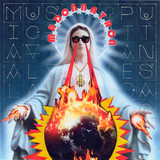
“Having moved forwards emotionally from the wilds of dystopian stalking and associated hobbies, Madonnatron have instead been found frolicking through the green pastures of gangsta pimps, Hindu God wars, Cyber Men invasion, loveless nightclub hook-ups, modern Italian Nabokov, and revered screen goddess Elizabeth Taylor. Think of them as post-punk lab rats in the Secrets Of Nimh, feasting dubiously on back-dated episodes of Top Of The Pops. With notorious roaring guitars, chanting vocals and rabid drums they audibly glow in the dark, are strong-armed, and will probably bite you.”
Like their debut, which was released to much acclaim in July 2017, Musica Alla Puttanesca was produced by Liam D. May at Trashmouth Studios.
Their atmospheric, raw, and confrontational live shows carry a sonic force that by turns will make you weep, cross yourselves, and weep again. In the last couple of years, Madonnatron delivered a successful UK headline tour; supported The Moonlandingz,
Book/ Cd/ 7''/ Flexi
There are still precious few women at the helm of record labels, let alone Indian women, but Vinita stands out as a proud anomaly... a champion of the underdog, an underdog herself, a surrogate mother to unsung musicians, a relentless workerbee, a fan, a carer, a catalyst...' (Richard Milward, from the Rocket Girl 20 book)
2018 marked the 20th anniversary of Rocket Girl, one of the most eclectic and resilient small independent labels in the UK, steered single-handedly by Vinita Joshi. To celebrate this milestone, in March 2019 Rocket Girl will release a very special collection of music and literature, comprising a 16-track CD compilation of Vinita's artists past and present, a collectable 7' and flexi disc, exclusive Anthony Ausgang print, full 20 track download, plus a strikingly illustrated 70-page hardback book uncovering the history of the label.
Based on extensive interviews with Vinita, with contributions from many of her bands (Füxa, God is an Astronaut, Coldharbourstores, Pieter Nooten), the book's text is written by Faber author and long-time Rocket Girl supporter Richard Milward. Beginning with Vinita's formative years in Rugby in the 1970s and 1980s, the story covers not only the eventful history of Rocket Girl but also Vinita's teenage initiation into the music industry: managing The Telescopes, founding Ché with Nick Allport out of the ashes of Cheree, before finally going it alone and setting up her own label in 1998. It is both an inspiring and bittersweet tale. Vinita's staying power alone in such a challenging industry is worthy of its own tribute: she has built a record label on her own terms from scratch, she has overcome the loss of loved ones, survived a breakdown at the height of her label's popularity, and all in all her immense love of music, her strength and positivity in the face of adversity blazes throughout the book. Along the way we learn of the hits (and why Kurt Heasley's vocal cords seemed to be malfunctioning during the Lilys' Top of the Pops appearance), the near-misses (including a never-before-seen letter from Richey Edwards of the Manic Street Preachers), the triumph of Vinita's first self-released LP A Tribute to Spacemen 3, her heartbreak losing Jason DiEmilio of The Azusa Plane in 2006, plus sad revelations concerning Television Personalities' Daniel Treacy's condition following his brain trauma in 2011...
Regular Rocket Girl designer Xiaofei Zhang has been given access to Vinita's vast collection of personal photographs, letters, flyers, press clippings and other keepsakes, arranging these alongside the text to give the book the feel of a technicolour scrapbook, a vivid chronicle of indie music past, present and future.
As Milward writes: 'The artists Vinita has worked with over the years are undisputed luminaries of alternative music, and stand up to any major indie label's roster: Spacemen 3, The Telescopes, Bark Psychosis, Disco Inferno, Lilys, Low, Bardo Pond, Mogwai, Cocteau Twins' Robin Guthrie, My Bloody Valentine's Kevin Shields, Patti Smith, Jonathan Richman, Television Personalities, to name just a handful.' Likewise, the artists featured on the accompanying CD compilation reveal just how far-ranging Vinita's taste is, and how loyal her bands have been to her over the years. The disc opens with a special 'Rocket mix' of Silver Apples' 'Susie' - the band that adorned the A-side of rgirl1, the label's first 7'. From here, there are cuts from Rocket Girl stalwarts like Füxa and Bell Gardens, as well as tracks contributed by friends and supporters of the label, such as Andrew Weatherall and Mogwai. Arguably the most notable track (certainly the most poignant) is the Television Personalities' 'All Coming Back', one of just a few unreleased songs recorded before Treacy's accident, and released here with Daniel's sister's blessing.
Vinita began her career selling Loop/Telescopes flexi discs on New Year's Eve 1988 and, in homage to this bygone format, she has included a 7' flexi (featuring 'Fight For Work', an outtake from Mogwai's most recent LP, Every Country's Sun) as well as a standard 7' bringing together rare tracks from two Philadelphia bands she has championed since their formation: Bardo Pond and The Azusa Plane. The three discs are housed in pockets found in the book's inside covers, and there are yet more gifts: an exclusive print by Anthony Ausgang (the instantly recognisable artist behind MGMT's Congratulations and Füxa's Electric Sound of Summer covers), plus a free download code for all tracks featured across the various formats of the collection.
Vinita's story is anything but ordinary, and this extraordinary collection is the most fitting tribute to the label's legacy so far: a treasure trove of rare tracks and unheard stories for Rocket Girl devotees, a comprehensive introduction to the label for the uninitiated, and both an inspirational chronicle and cautionary tale for anybody interested in the history of British independent music in the past thirty years...