Prärie" (Wild German Prairie) from 2018, we saw a burning house
surrounded by apparently insane figures
Almost four years later, on the cover of their second album, the band is standing
on the dike in Husum. In the background we see the Nordsee Hotel, which burned
out in the year of the debut's release. The looks of the band members reveal
friendly determination, which is very North German in its nonchalance.
Nevertheless, I don't doubt for a moment that Swutscher still know how to set
their surroundings on fire, even leave a trail of destruction. Their reputation is
legendary. Every person who has experienced Swutscher live knows that it is not
only a spiritual but also a physical experience. Reason down and thus lead it into
a wonderful dissolution of boundaries. This LP format is released on ltd ed cream
vinyl.
PR Agency (Print/Online/Radio GSA): Community Promotion PR Agency (Print/
Online/Radio Worldwide): La Pochette Surprise Marketing: Print/Online: 2500€ /
Radio: 2000€ / Social Media: 3000€ / Ads: 3000€ PrintAds: Westzeit Cover
(Feb2022), Musikexpress, Visions, OX Fanzine, Flight13 Mailorder, Schall TOUR
DATES Präsentiert von DIFFUS, OX FANZINE, BYTEFM 20.4. A- Wien - Rhiz 21.4.
München - Heppel & Ettlich 22.4. CH-Basel - Hirscheneck 23.4. Stuttgart - Club
Cann 28.4. Düsseldorf - KulturSchlachthof 29.4. Husum - Speicher 30.4. Hamburg
- Molotow 05.5. Kassel - Goldgrube 06.5. Münster - Gleis 22 07.5. Bremen - Tower
08.5. Hannover - Bei Chez Heinz 17.5. Köln - Bumann & Sohn 18.5. Nürnberg -
Muz Club 19.5. Chemnitz - Nikola Tesla 20.5. Dresden - Groove Station 21.5.
Berlin - Urban Spree Separater PR Report verfügbar
Suche:18 figures
Creme White Vinyl - On the cover of their debut album "Wilde deutsche
Prärie" (Wild German Prairie) from 2018, we saw a burning house
surrounded by apparently insane figures
Almost four years later, on the cover of their second album, the band is standing
on the dike in Husum. In the background we see the Nordsee Hotel, which burned
out in the year of the debut's release. The looks of the band members reveal
friendly determination, which is very North German in its nonchalance.
Nevertheless, I don't doubt for a moment that Swutscher still know how to set
their surroundings on fire, even leave a trail of destruction. Their reputation is
legendary. Every person who has experienced Swutscher live knows that it is not
only a spiritual but also a physical experience. Reason down and thus lead it into
a wonderful dissolution of boundaries. This LP format is released on ltd ed cream
vinyl.
PR Agency (Print/Online/Radio GSA): Community Promotion PR Agency (Print/
Online/Radio Worldwide): La Pochette Surprise Marketing: Print/Online: 2500€ /
Radio: 2000€ / Social Media: 3000€ / Ads: 3000€ PrintAds: Westzeit Cover
(Feb2022), Musikexpress, Visions, OX Fanzine, Flight13 Mailorder, Schall TOUR
DATES Präsentiert von DIFFUS, OX FANZINE, BYTEFM 20.4. A- Wien - Rhiz 21.4.
München - Heppel & Ettlich 22.4. CH-Basel - Hirscheneck 23.4. Stuttgart - Club
Cann 28.4. Düsseldorf - KulturSchlachthof 29.4. Husum - Speicher 30.4. Hamburg
- Molotow 05.5. Kassel - Goldgrube 06.5. Münster - Gleis 22 07.5. Bremen - Tower
08.5. Hannover - Bei Chez Heinz 17.5. Köln - Bumann & Sohn 18.5. Nürnberg -
Muz Club 19.5. Chemnitz - Nikola Tesla 20.5. Dresden - Groove Station 21.5.
Berlin - Urban Spree Separater PR Report verfügbar
- A1: Rock This Mother
- A2: Talk To Me Girl
- A3: You Can Find Me
- A4: Check This Out
- A5: Jesus Going To Clean House
- A6: Hope You Understood
- A7: Is It What You Want
- A8: Love Is Everlasting
- A9: This Is Hip-Hop Art
- A10: Opposite Of Love
- A11: Do You Know What I Mean
- B1: Saving All My Love For You
- B2: Look Out Here I Come
- B3: Girl You Always Talking
- B4: Have A Great Day
- B5: Take My Hand
- B6: I Need Your Love
- B7: Your Town
- B8: Talk Around Town
- B9: Booty Head/Take A Little Walk
- B10: I Love My Mama
- B11: I Never Found Anyone Like You
Vinyl LP[23,49 €]
As the sun sets on a quaint East Nashville house, a young man bares a piece of his soul. Facing the camera, sporting a silky suit jacket/shirt/slacks/fingerless gloves ensemble that announces "singer" before he's even opened his mouth, Lee Tracy Johnson settles onto his stage, the front yard. He sways to the dirge-like drum machine pulse of a synth-soaked slow jam, extends his arms as if gaining his balance, and croons in affecting, fragile earnest, "I need your love… oh baby…"
Dogs in the yard next door begin barking. A mysterious cardboard robot figure, beamed in from galaxies unknown and affixed to a tree, is less vocal. Lee doesn't acknowledge either's presence. He's busy feeling it, arms and hands gesticulating. His voice rises in falsetto over the now-quiet dogs, over the ambient noise from the street that seeps into the handheld camcorder's microphone, over the recording of his own voice played back from a boombox off-camera. After six minutes the single, continuous shot ends. In this intimate creative universe there are no re-takes. There are many more music videos to shoot, and as Lee later puts it, "The first time you do it is actually the best. Because you can never get that again. You expressing yourself from within."
"I Need Your Love" dates from a lost heyday. From some time in the '80s or early '90s, when Lee Tracy (as he was known in performance) and his music partner/producer/manager Isaac Manning committed hours upon hours of their sonic and visual ideas to tape. Embracing drum machines and synthesizers – electronics that made their personal futurism palpable – they recorded exclusively at home, live in a room into a simple cassette deck. Soul, funk, electro and new wave informed their songs, yet Lee and Isaac eschewed the confinement of conventional categories and genres, preferring to let experimentation guide them.
"Anytime somebody put out a new record they had the same instruments or the same sound," explains Isaac. "So I basically wanted to find something that's really gonna stand out away from all of the rest of 'em." Their ethos meant that every idea they came up with was at least worth trying: echoed out half-rapped exhortations over frantic techno-style beats, gospel synth soul, modal electro-funk, oddball pop reinterpretations, emo AOR balladry, nods to Prince and the Fat Boys, or arrangements that might collapse mid-song into a mess of arcade game-ish blips before rallying to reach the finish line. All of it conjoined by consistent tape hiss, and most vitally, Lee's chameleonic voice, which managed to wildly shape shift and still evoke something sincere – whether toggling between falsetto and tenor exalting Jesus's return, or punctuating a melismatic romantic adlib with a succinct, "We all know how it feels to be alone."
"People think we went to a studio," says Isaac derisively. "We never went to no studio. We didn't have the money to go to no studio! We did this stuff at home. I shot videos in my front yard with whatever we could to get things together." Sometimes Isaac would just put on an instrumental record, be it "Planet Rock" or "Don't Cry For Me Argentina" (from Evita), press "record," and let Lee improvise over it, yielding peculiar love songs, would-be patriotic anthems, or Elvis Presley or Marilyn Monroe tributes. Technical limitations and a lack of professional polish never dissuaded them. They believed they were onto something.
"That struggle," Isaac says, "made that sound sound good to me."
In the parlance of modern music criticism Lee and Isaac's dizzying DIY efforts would inevitably be described as "outsider." But "outsider" carries the burden of untold additional layers of meaning if you're Black and from the South, creating on a budget, and trying to get someone, anyone within the country music capital of the world to take your vision seriously. "What category should we put it in?" Isaac asks rhetorically. "I don't know. All I know is feeling. I ain't gonna name it nothing. It's music. If it grabs your soul and touch your heart that's what it basically is supposed to do."
=
Born in 1963, the baby boy of nine siblings, Lee Tracy spent his earliest years living amidst the shotgun houses on Nashville's south side. "We was poor, man!" he says, recalling the outhouse his family used for a bathroom and the blocks of ice they kept in the kitchen to chill perishables. "But I actually don't think I really realized I was in poverty until I got grown and started thinking about it." Lee's mom worked at the Holiday Inn; his dad did whatever he had to do, from selling fruit from a horse drawn cart to bootlegging. "We didn't have much," Lee continues, "but my mother and my father got us the things we needed, the clothes on our back." By the end of the decade with the city's urban renewal programs razing entire neighborhoods to accommodate construction of the Interstate, the family moved to Edgehill Projects. Lee remembers music and art as a constant source of inspiration for he and his brothers and sisters – especially after seeing the Jackson 5 perform on Ed Sullivan. "As a small child I just knew that was what I wanted to do."
His older brother Don began musically mentoring him, introducing Lee to a variety of instruments and sounds. "He would never play one particular type of music, like R&B," says Lee. "I was surrounded by jazz, hard rock and roll, easy listening, gospel, reggae, country music; I mean I was a sponge absorbing all of that." Lee taught himself to play drums by beating on cardboard boxes, gaining a rep around the way for his timekeeping, and his singing voice. Emulating his favorites, Earth Wind & Fire and Cameo, he formed groups with other kids with era-evocative band names like Concept and TNT Connection, and emerged as the leader of disciplined rehearsals. "I made them practice," says Lee. "We practiced and practiced and practiced. Because I wanted that perfection." By high school the most accomplished of these bands would take top prize in a prominent local talent show. It was a big moment for Lee, and he felt ready to take things to the next level. But his band-mates had other ideas.
"I don't know what happened," he says, still miffed at the memory. "It must have blew they mind after we won and people started showing notice, because it's like everybody quit! I was like, where the hell did everybody go?" Lee had always made a point of interrogating prospective musicians about their intentions before joining his groups: were they really serious or just looking for a way to pick up girls? Now he understood even more the importance of finding a collaborator just as committed to the music as he was.
=
Isaac Manning had spent much of his life immersed in music and the arts – singing in the church choir with his family on Nashville's north side, writing, painting, dancing, and working various gigs within the entertainment industry. After serving in the armed forces, in the early '70s he ran The Teenage Place, a music and performance venue that catered to the local youth. But he was forced out of town when word of one of his recreational routines created a stir beyond the safe haven of his bohemian circles.
"I was growing marijuana," Isaac explains. "It wasn't no business, I was smoking it myself… I would put marijuana in scrambled eggs, cornbread and stuff." His weed use originated as a form of self-medication to combat severe tooth pain. But when he began sharing it with some of the other young people he hung out with, some of who just so happened to be the kids of Nashville politicians, the cops came calling. "When I got busted," he remembers, "they were talking about how they were gonna get rid of me because they didn't want me saying nothing about they children because of the politics and stuff. So I got my family, took two raggedy cars, and left Nashville and went to Vegas."
Out in the desert, Isaac happened to meet Chubby Checker of "The Twist" fame while the singer was gigging at The Flamingo. Impressed by Isaac's zeal, Checker invited him to go on the road with him as his tour manager/roadie/valet. The experience gave Isaac a window into a part of the entertainment world he'd never encountered – a glimpse of what a true pop act's audience looked like. "Chubby Checker, none of his shows were played for Black folks," he remembers. "All his gigs were done at high-class white people areas." Returning home after a few years with Chubby, Isaac was properly motivated to make it in Music City. He began writing songs and scouting around Nashville for local talent anywhere he could find it with an expressed goal: "Find someone who can deliver your songs the way you want 'em delivered and make people feel what you want them to feel."
One day while walking through Edgehill Projects Isaac heard someone playing the drums in a way that made him stop and take notice. "The music was so tight, just the drums made me feel like, oh I'm-a find this person," he recalls. "So I circled through the projects until I found who it was.
"That's how I met him – Lee Tracy. When I found him and he started singing and stuff, I said, ohhh, this is somebody different."
=
Theirs was a true complementary partnership: young Lee possessed the raw talent, the older Isaac the belief. "He's really the only one besides my brother and my family that really seen the potential in me," says Lee. "He made me see that I could do it."
Isaac long being a night owl, his house also made for a fertile collaborative environment – a space where there always seemed to be a new piece of his visual art on display: paintings, illustrations, and dolls and figures (including an enigmatic cardboard robot). Lee and Issac would hang out together and talk, listen to music, conjure ideas, and smoke the herb Isaac had resumed growing in his yard. "It got to where I could trust him, he could trust me," Isaac says of their bond. They also worked together for hours on drawings, spreading larges rolls of paper on the walls and sketching faces with abstract patterns and imagery: alien-like beings, tri-horned horse heads, inverted Janus-like characters where one visage blurred into the other.
Soon it became apparent that they didn't need other collaborators; self-sufficiency was the natural way forward. At Isaac's behest Lee, already fed up with dealing with band musicians, began playing around with a poly-sonic Yamaha keyboard at the local music store. "It had everything on it – trumpet, bass, drums, organ," remembers Lee. "And that's when I started recording my own stuff."
The technology afforded Lee the flexibility and independence he craved, setting him on a path other bedroom musicians and producers around the world were simultaneously following through the '80s into the early '90s. Saving up money from day jobs, he eventually supplemented the Yamaha Isaac had gotten him with Roland and Casio drum machines and a Moog. Lee was living in an apartment in Hillside at that point caring for his dad, who'd been partially paralyzed since early in life. In the evenings up in his second floor room, the music put him in a zone where he could tune out everything and lose himself in his ideas.
"Oh I loved it," he recalls. "I would really experiment with the instruments and use a lot of different sound effects. I was looking for something nobody else had. I wanted something totally different. And once I found the sound I was looking for, I would just smoke me a good joint and just let it go, hit the record button." More potent a creative stimulant than even Isaac's weed was the holistic flow and spontaneity of recording. Between sessions at Isaac's place and Lee's apartment, their volume of output quickly ballooned.
"We was always recording," says Lee. "That's why we have so much music. Even when I went to Isaac's and we start creating, I get home, my mind is racing, I gotta start creating, creating, creating. I remember there were times when I took a 90-minute tape from front to back and just filled it up."
"We never practiced," says Isaac. "See, that was just so odd about the whole thing. I could relate to him, and tell him about the songs I had ideas for and everything and stuff. And then he would bring it back or whatever, and we'd get together and put it down." Once the taskmaster hell bent on rehearsing, Lee had flipped a full 180. Perfection was no longer an aspiration, but the enemy of inspiration.
"I seen where practicing and practicing got me," says Lee. "A lot of musicians you get to playing and they gotta stop, they have to analyze the music. But while you analyzing you losing a lot of the greatness of what you creating. Stop analyzing what you play, just play! And it'll all take shape."
=
"I hope you understood the beginning of the record because this was invented from a dream I had today… (You tell me, I'll tell you, we'll figure it out together)" – Lee Tracy and Isaac Manning, "Hope You Understand"
Lee lets loose a maniacal cackle when he acknowledges that the material that he and Isaac recorded was by anyone's estimation pretty out there. It's the same laugh that commences "Hope You Understand" – a chaotic transmission that encapsulates the duality at the heart of their music: a stated desire to reach people and a compulsion to go as leftfield as they saw fit.
"We just did it," says Lee. "We cut the music on and cut loose. I don't sit around and write. I do it by listening, get a feeling, play the music, and the lyrics and stuff just come out of me."
The approach proved adaptable to interpreting other artists' material. While recording a cover of Whitney Houston's pop ballad "Saving All My Love For You," Lee played Whitney's version in his headphones as he laid down his own vocals – partially following the lyrics, partially using them as a departure point. The end result is barely recognizable compared with the original, Lee and Isaac having switched up the time signature and reinvented the melody along the way towards morphing a slick mainstream radio standard into something that sounds solely their own.
"I really used that song to get me started," says Lee. "Then I said, well I need something else, something is missing. Something just came over me. That's when I came up with 'Is It What You Want.'"
The song would become the centerpiece of Lee and Isaac's repertoire. Pushed along by a percolating metronomic Rhythm King style beat somewhere between a military march and a samba, "Is It What You Want" finds Lee pleading the sincerity of his commitment to a potential love interest embellished by vocal tics and hiccups subtlely reminiscent of his childhood hero MJ. Absent chord changes, only synth riffs gliding in and out like apparitions, the song achieves a lingering lo-fi power that leaves you feeling like it's still playing, somewhere, even after the fade out.
"I don't know, it's like a real spiritual song," Lee reflects. "But it's not just spiritual. To me the more I listen to it it's like about everything that you do in your everyday life, period. Is it what you want? Do you want a car or you don't want a car? Do you want Jesus or do you want the Devil? It's basically asking you the question. Can't nobody answer the question but you yourself."
In 1989 Lee won a lawsuit stemming from injuries sustained from a fight he'd gotten into. He took part of the settlement money and with Isaac pressed up "Saving All My Love For You" b/w "Is It What You Want" as a 45 single. Isaac christened the label One Chance Records. "Because that's all we wanted," he says with a laugh, "one chance."
Isaac sent the record out to radio stations and major labels, hoping for it to make enough noise to get picked up nationally. But the response he and Lee were hoping for never materialized. According to Isaac the closest the single got to getting played on the radio is when a disk jock from a local station made a highly unusual announcement on air: "The dude said on the radio, 107.5 – 'We are not gonna play 'Is It What You Want.' We cracked up! Wow, that's deep.
"It was a whole racist thing that was going on," he reflects. "So we just looked over and kept on going. That was it. That was about the way it goes… If you were Black and you were living in Nashville and stuff, that's the way you got treated." Isaac already knew as much from all the times he'd brought he and Lee's tapes (even their cache of country music tunes) over to Music Row to try to drum up interest to no avail.
"Isaac, he really worked his ass off," says Lee. "He probably been to every record place down on Music Row." Nashville's famed recording and music business corridor wasn't but a few blocks from where Lee grew up. Close enough, he remembers, for him to ride his bike along its back alleys and stumble upon the occasional random treasure, like a discarded box of harmonicas. Getting in through the front door, however, still felt a world away.
"I just don't think at the time our music fell into a category for them," he concedes. "It was before its time."
=
Lee stopped making music some time in the latter part of the '90s, around the time his mom passed away and life became increasingly tough to manage. "When my mother died I had a nervous breakdown," he says, "So I shut down for a long time. I was in such a sadness frame of mind. That's why nobody seen me. I had just disappeared off the map." He fell out of touch with Isaac, and in an indication of just how bad things had gotten for him, lost track of all the recordings they'd made together. Music became a distant memory.
Fortunately, Isaac kept the faith. In a self-published collection of his poetry – paeans to some of his favorite entertainment and public figures entitled Friends and Dick Clark – he'd written that he believed "music has a life of its own." But his prescience and presence of mind were truly manifested in the fact that he kept an archive of he and Lee's work. As perfectly imperfect as "Is It What You Want" now sounds in a post-Personal Space world, Lee and Isaac's lone official release was in fact just a taste. The bulk of the Is It What You Want album is culled from the pair's essentially unheard home recordings – complete songs, half-realized experiments, Isaac's blue monologues and pronouncements et al – compiled, mixed and programmed in the loose and impulsive creative spirit of their regular get-togethers from decades ago. The rest of us, it seems, may have finally caught up to them.
On the prospect of at long last reaching a wider audience, Isaac says simply, "I been trying for a long time, it feels good." Ever the survivor, he adds, "The only way I know how to make it to the top is to keep climbing. If one leg break on the ladder, hey, you gotta fix it and keep on going… That's where I be at. I'll kill death to make it out there."
For Lee it all feels akin to a personal resurrection: "It's like I was in a tomb and the tomb was opened and I'm back… Man, it feels so great. I feel like I'm gonna jump out of my skin." Success at this stage of his life, he realizes, probably means something different than what it did back when he was singing and dancing in Isaac's front yard. "What I really mean by 'making it,'" he explains isn't just the music being heard but, "the story being told."
Occasionally Lee will pull up "Is It What You Want" on YouTube on his phone, put on his headphones, and listen. He remembers the first time he heard his recorded voice. How surreal it was, how he thought to himself, "Is that really me?" What would he say to that younger version of himself now?
"I would probably tell myself, hang in there, don't give up. Keep striving for the goal. And everything will work out."
Despite what's printed on the record label, sometimes you do get more than one chance.
Not content with a double 12” of acid drenched delinquency, Schrödinger’s Box have drafted in four 303 addicts to bring their own acrid fire to Hard Ton’s Bigger is Better.
To get the bitter ball rolling, Larionov opens. Known for his dark electro and EBM leanings, this reinterpretation of “Transcend Your Body” is a bruiser of throbbing pulses, lancing lines and stabbing synths to pierce the fog and strobe. Rude 66 follows with his beloved vocoder doing battle with Massimo Bastasi’s original vocals. The result is a duel of distant rhythms and shimmering wordplay. The flip sees Nightwave on the attack. Brawny beats elbow lyrics in this driving audio onslaught. Bulging rusted basslines crush speaker cones as a blistering remake takes hold, blasts of body bending brutalism turning Hard Ton’s original into an even sweatier brute. An artist born and raised on analogue squawk and squelch finishes. Posthuman, one of the infamous figures behind the I Love Acid nights, takes the tongue-in-cheek Brit Pop flashback of “Girls and Boys” and contorts it into a grimy Chicago jam.
- A1: Rock This Mother
- A2: Talk To Me Girl
- A3: You Can Find Me
- A4: Check This Out
- A5: Jesus Going To Clean House
- A6: Hope You Understood
- A7: Is It What You Want
- A8: Love Is Everlasting
- A9: This Is Hip-Hop Art
- A10: Opposite Of Love
- A11: Do You Know What I Mean
- B1: Saving All My Love For You
- B2: Look Out Here I Come
- B3: Girl You Always Talking
- B4: Have A Great Day
- B5: Take My Hand
- B6: I Need Your Love
- B7: Your Town
- B8: Talk Around Town
- B9: Booty Head/Take A Little Walk
- B10: I Love My Mama
- B11: I Never Found Anyone Like You
Cassette[11,72 €]
As the sun sets on a quaint East Nashville house, a young man bares a piece of his soul. Facing the camera, sporting a silky suit jacket/shirt/slacks/fingerless gloves ensemble that announces "singer" before he's even opened his mouth, Lee Tracy Johnson settles onto his stage, the front yard. He sways to the dirge-like drum machine pulse of a synth-soaked slow jam, extends his arms as if gaining his balance, and croons in affecting, fragile earnest, "I need your love… oh baby…"
Dogs in the yard next door begin barking. A mysterious cardboard robot figure, beamed in from galaxies unknown and affixed to a tree, is less vocal. Lee doesn't acknowledge either's presence. He's busy feeling it, arms and hands gesticulating. His voice rises in falsetto over the now-quiet dogs, over the ambient noise from the street that seeps into the handheld camcorder's microphone, over the recording of his own voice played back from a boombox off-camera. After six minutes the single, continuous shot ends. In this intimate creative universe there are no re-takes. There are many more music videos to shoot, and as Lee later puts it, "The first time you do it is actually the best. Because you can never get that again. You expressing yourself from within."
"I Need Your Love" dates from a lost heyday. From some time in the '80s or early '90s, when Lee Tracy (as he was known in performance) and his music partner/producer/manager Isaac Manning committed hours upon hours of their sonic and visual ideas to tape. Embracing drum machines and synthesizers – electronics that made their personal futurism palpable – they recorded exclusively at home, live in a room into a simple cassette deck. Soul, funk, electro and new wave informed their songs, yet Lee and Isaac eschewed the confinement of conventional categories and genres, preferring to let experimentation guide them.
"Anytime somebody put out a new record they had the same instruments or the same sound," explains Isaac. "So I basically wanted to find something that's really gonna stand out away from all of the rest of 'em." Their ethos meant that every idea they came up with was at least worth trying: echoed out half-rapped exhortations over frantic techno-style beats, gospel synth soul, modal electro-funk, oddball pop reinterpretations, emo AOR balladry, nods to Prince and the Fat Boys, or arrangements that might collapse mid-song into a mess of arcade game-ish blips before rallying to reach the finish line. All of it conjoined by consistent tape hiss, and most vitally, Lee's chameleonic voice, which managed to wildly shape shift and still evoke something sincere – whether toggling between falsetto and tenor exalting Jesus's return, or punctuating a melismatic romantic adlib with a succinct, "We all know how it feels to be alone."
"People think we went to a studio," says Isaac derisively. "We never went to no studio. We didn't have the money to go to no studio! We did this stuff at home. I shot videos in my front yard with whatever we could to get things together." Sometimes Isaac would just put on an instrumental record, be it "Planet Rock" or "Don't Cry For Me Argentina" (from Evita), press "record," and let Lee improvise over it, yielding peculiar love songs, would-be patriotic anthems, or Elvis Presley or Marilyn Monroe tributes. Technical limitations and a lack of professional polish never dissuaded them. They believed they were onto something.
"That struggle," Isaac says, "made that sound sound good to me."
In the parlance of modern music criticism Lee and Isaac's dizzying DIY efforts would inevitably be described as "outsider." But "outsider" carries the burden of untold additional layers of meaning if you're Black and from the South, creating on a budget, and trying to get someone, anyone within the country music capital of the world to take your vision seriously. "What category should we put it in?" Isaac asks rhetorically. "I don't know. All I know is feeling. I ain't gonna name it nothing. It's music. If it grabs your soul and touch your heart that's what it basically is supposed to do."
=
Born in 1963, the baby boy of nine siblings, Lee Tracy spent his earliest years living amidst the shotgun houses on Nashville's south side. "We was poor, man!" he says, recalling the outhouse his family used for a bathroom and the blocks of ice they kept in the kitchen to chill perishables. "But I actually don't think I really realized I was in poverty until I got grown and started thinking about it." Lee's mom worked at the Holiday Inn; his dad did whatever he had to do, from selling fruit from a horse drawn cart to bootlegging. "We didn't have much," Lee continues, "but my mother and my father got us the things we needed, the clothes on our back." By the end of the decade with the city's urban renewal programs razing entire neighborhoods to accommodate construction of the Interstate, the family moved to Edgehill Projects. Lee remembers music and art as a constant source of inspiration for he and his brothers and sisters – especially after seeing the Jackson 5 perform on Ed Sullivan. "As a small child I just knew that was what I wanted to do."
His older brother Don began musically mentoring him, introducing Lee to a variety of instruments and sounds. "He would never play one particular type of music, like R&B," says Lee. "I was surrounded by jazz, hard rock and roll, easy listening, gospel, reggae, country music; I mean I was a sponge absorbing all of that." Lee taught himself to play drums by beating on cardboard boxes, gaining a rep around the way for his timekeeping, and his singing voice. Emulating his favorites, Earth Wind & Fire and Cameo, he formed groups with other kids with era-evocative band names like Concept and TNT Connection, and emerged as the leader of disciplined rehearsals. "I made them practice," says Lee. "We practiced and practiced and practiced. Because I wanted that perfection." By high school the most accomplished of these bands would take top prize in a prominent local talent show. It was a big moment for Lee, and he felt ready to take things to the next level. But his band-mates had other ideas.
"I don't know what happened," he says, still miffed at the memory. "It must have blew they mind after we won and people started showing notice, because it's like everybody quit! I was like, where the hell did everybody go?" Lee had always made a point of interrogating prospective musicians about their intentions before joining his groups: were they really serious or just looking for a way to pick up girls? Now he understood even more the importance of finding a collaborator just as committed to the music as he was.
=
Isaac Manning had spent much of his life immersed in music and the arts – singing in the church choir with his family on Nashville's north side, writing, painting, dancing, and working various gigs within the entertainment industry. After serving in the armed forces, in the early '70s he ran The Teenage Place, a music and performance venue that catered to the local youth. But he was forced out of town when word of one of his recreational routines created a stir beyond the safe haven of his bohemian circles.
"I was growing marijuana," Isaac explains. "It wasn't no business, I was smoking it myself… I would put marijuana in scrambled eggs, cornbread and stuff." His weed use originated as a form of self-medication to combat severe tooth pain. But when he began sharing it with some of the other young people he hung out with, some of who just so happened to be the kids of Nashville politicians, the cops came calling. "When I got busted," he remembers, "they were talking about how they were gonna get rid of me because they didn't want me saying nothing about they children because of the politics and stuff. So I got my family, took two raggedy cars, and left Nashville and went to Vegas."
Out in the desert, Isaac happened to meet Chubby Checker of "The Twist" fame while the singer was gigging at The Flamingo. Impressed by Isaac's zeal, Checker invited him to go on the road with him as his tour manager/roadie/valet. The experience gave Isaac a window into a part of the entertainment world he'd never encountered – a glimpse of what a true pop act's audience looked like. "Chubby Checker, none of his shows were played for Black folks," he remembers. "All his gigs were done at high-class white people areas." Returning home after a few years with Chubby, Isaac was properly motivated to make it in Music City. He began writing songs and scouting around Nashville for local talent anywhere he could find it with an expressed goal: "Find someone who can deliver your songs the way you want 'em delivered and make people feel what you want them to feel."
One day while walking through Edgehill Projects Isaac heard someone playing the drums in a way that made him stop and take notice. "The music was so tight, just the drums made me feel like, oh I'm-a find this person," he recalls. "So I circled through the projects until I found who it was.
"That's how I met him – Lee Tracy. When I found him and he started singing and stuff, I said, ohhh, this is somebody different."
=
Theirs was a true complementary partnership: young Lee possessed the raw talent, the older Isaac the belief. "He's really the only one besides my brother and my family that really seen the potential in me," says Lee. "He made me see that I could do it."
Isaac long being a night owl, his house also made for a fertile collaborative environment – a space where there always seemed to be a new piece of his visual art on display: paintings, illustrations, and dolls and figures (including an enigmatic cardboard robot). Lee and Issac would hang out together and talk, listen to music, conjure ideas, and smoke the herb Isaac had resumed growing in his yard. "It got to where I could trust him, he could trust me," Isaac says of their bond. They also worked together for hours on drawings, spreading larges rolls of paper on the walls and sketching faces with abstract patterns and imagery: alien-like beings, tri-horned horse heads, inverted Janus-like characters where one visage blurred into the other.
Soon it became apparent that they didn't need other collaborators; self-sufficiency was the natural way forward. At Isaac's behest Lee, already fed up with dealing with band musicians, began playing around with a poly-sonic Yamaha keyboard at the local music store. "It had everything on it – trumpet, bass, drums, organ," remembers Lee. "And that's when I started recording my own stuff."
The technology afforded Lee the flexibility and independence he craved, setting him on a path other bedroom musicians and producers around the world were simultaneously following through the '80s into the early '90s. Saving up money from day jobs, he eventually supplemented the Yamaha Isaac had gotten him with Roland and Casio drum machines and a Moog. Lee was living in an apartment in Hillside at that point caring for his dad, who'd been partially paralyzed since early in life. In the evenings up in his second floor room, the music put him in a zone where he could tune out everything and lose himself in his ideas.
"Oh I loved it," he recalls. "I would really experiment with the instruments and use a lot of different sound effects. I was looking for something nobody else had. I wanted something totally different. And once I found the sound I was looking for, I would just smoke me a good joint and just let it go, hit the record button." More potent a creative stimulant than even Isaac's weed was the holistic flow and spontaneity of recording. Between sessions at Isaac's place and Lee's apartment, their volume of output quickly ballooned.
"We was always recording," says Lee. "That's why we have so much music. Even when I went to Isaac's and we start creating, I get home, my mind is racing, I gotta start creating, creating, creating. I remember there were times when I took a 90-minute tape from front to back and just filled it up."
"We never practiced," says Isaac. "See, that was just so odd about the whole thing. I could relate to him, and tell him about the songs I had ideas for and everything and stuff. And then he would bring it back or whatever, and we'd get together and put it down." Once the taskmaster hell bent on rehearsing, Lee had flipped a full 180. Perfection was no longer an aspiration, but the enemy of inspiration.
"I seen where practicing and practicing got me," says Lee. "A lot of musicians you get to playing and they gotta stop, they have to analyze the music. But while you analyzing you losing a lot of the greatness of what you creating. Stop analyzing what you play, just play! And it'll all take shape."
=
"I hope you understood the beginning of the record because this was invented from a dream I had today… (You tell me, I'll tell you, we'll figure it out together)" – Lee Tracy and Isaac Manning, "Hope You Understand"
Lee lets loose a maniacal cackle when he acknowledges that the material that he and Isaac recorded was by anyone's estimation pretty out there. It's the same laugh that commences "Hope You Understand" – a chaotic transmission that encapsulates the duality at the heart of their music: a stated desire to reach people and a compulsion to go as leftfield as they saw fit.
"We just did it," says Lee. "We cut the music on and cut loose. I don't sit around and write. I do it by listening, get a feeling, play the music, and the lyrics and stuff just come out of me."
The approach proved adaptable to interpreting other artists' material. While recording a cover of Whitney Houston's pop ballad "Saving All My Love For You," Lee played Whitney's version in his headphones as he laid down his own vocals – partially following the lyrics, partially using them as a departure point. The end result is barely recognizable compared with the original, Lee and Isaac having switched up the time signature and reinvented the melody along the way towards morphing a slick mainstream radio standard into something that sounds solely their own.
"I really used that song to get me started," says Lee. "Then I said, well I need something else, something is missing. Something just came over me. That's when I came up with 'Is It What You Want.'"
The song would become the centerpiece of Lee and Isaac's repertoire. Pushed along by a percolating metronomic Rhythm King style beat somewhere between a military march and a samba, "Is It What You Want" finds Lee pleading the sincerity of his commitment to a potential love interest embellished by vocal tics and hiccups subtlely reminiscent of his childhood hero MJ. Absent chord changes, only synth riffs gliding in and out like apparitions, the song achieves a lingering lo-fi power that leaves you feeling like it's still playing, somewhere, even after the fade out.
"I don't know, it's like a real spiritual song," Lee reflects. "But it's not just spiritual. To me the more I listen to it it's like about everything that you do in your everyday life, period. Is it what you want? Do you want a car or you don't want a car? Do you want Jesus or do you want the Devil? It's basically asking you the question. Can't nobody answer the question but you yourself."
In 1989 Lee won a lawsuit stemming from injuries sustained from a fight he'd gotten into. He took part of the settlement money and with Isaac pressed up "Saving All My Love For You" b/w "Is It What You Want" as a 45 single. Isaac christened the label One Chance Records. "Because that's all we wanted," he says with a laugh, "one chance."
Isaac sent the record out to radio stations and major labels, hoping for it to make enough noise to get picked up nationally. But the response he and Lee were hoping for never materialized. According to Isaac the closest the single got to getting played on the radio is when a disk jock from a local station made a highly unusual announcement on air: "The dude said on the radio, 107.5 – 'We are not gonna play 'Is It What You Want.' We cracked up! Wow, that's deep.
"It was a whole racist thing that was going on," he reflects. "So we just looked over and kept on going. That was it. That was about the way it goes… If you were Black and you were living in Nashville and stuff, that's the way you got treated." Isaac already knew as much from all the times he'd brought he and Lee's tapes (even their cache of country music tunes) over to Music Row to try to drum up interest to no avail.
"Isaac, he really worked his ass off," says Lee. "He probably been to every record place down on Music Row." Nashville's famed recording and music business corridor wasn't but a few blocks from where Lee grew up. Close enough, he remembers, for him to ride his bike along its back alleys and stumble upon the occasional random treasure, like a discarded box of harmonicas. Getting in through the front door, however, still felt a world away.
"I just don't think at the time our music fell into a category for them," he concedes. "It was before its time."
=
Lee stopped making music some time in the latter part of the '90s, around the time his mom passed away and life became increasingly tough to manage. "When my mother died I had a nervous breakdown," he says, "So I shut down for a long time. I was in such a sadness frame of mind. That's why nobody seen me. I had just disappeared off the map." He fell out of touch with Isaac, and in an indication of just how bad things had gotten for him, lost track of all the recordings they'd made together. Music became a distant memory.
Fortunately, Isaac kept the faith. In a self-published collection of his poetry – paeans to some of his favorite entertainment and public figures entitled Friends and Dick Clark – he'd written that he believed "music has a life of its own." But his prescience and presence of mind were truly manifested in the fact that he kept an archive of he and Lee's work. As perfectly imperfect as "Is It What You Want" now sounds in a post-Personal Space world, Lee and Isaac's lone official release was in fact just a taste. The bulk of the Is It What You Want album is culled from the pair's essentially unheard home recordings – complete songs, half-realized experiments, Isaac's blue monologues and pronouncements et al – compiled, mixed and programmed in the loose and impulsive creative spirit of their regular get-togethers from decades ago. The rest of us, it seems, may have finally caught up to them.
On the prospect of at long last reaching a wider audience, Isaac says simply, "I been trying for a long time, it feels good." Ever the survivor, he adds, "The only way I know how to make it to the top is to keep climbing. If one leg break on the ladder, hey, you gotta fix it and keep on going… That's where I be at. I'll kill death to make it out there."
For Lee it all feels akin to a personal resurrection: "It's like I was in a tomb and the tomb was opened and I'm back… Man, it feels so great. I feel like I'm gonna jump out of my skin." Success at this stage of his life, he realizes, probably means something different than what it did back when he was singing and dancing in Isaac's front yard. "What I really mean by 'making it,'" he explains isn't just the music being heard but, "the story being told."
Occasionally Lee will pull up "Is It What You Want" on YouTube on his phone, put on his headphones, and listen. He remembers the first time he heard his recorded voice. How surreal it was, how he thought to himself, "Is that really me?" What would he say to that younger version of himself now?
"I would probably tell myself, hang in there, don't give up. Keep striving for the goal. And everything will work out."
Despite what's printed on the record label, sometimes you do get more than one chance.
Over the 15 years since Loren Connors' Airs was first published, it has drawn a thick circle of fans. Gently recorded to cassette tape in 1999, (with wonderfully subtle multi-tracking). Airs is comprised of a series of brief electronic guitar poems. Intimately composed with the patience and purposeful hesitation we have reverently come to expect from Connors. Lyrical melodies recur in different forms throughout the LP, as shifting figures in a dream. Shadowy and sunken, the tone evokes an overcast landscape. The album feels singular; woven along as one flowing piece
Black vinyl[22,65 €]
2LP[36,56 €]
Turquoise and Black splatter vinyl[27,69 €]
Gold LP[25,63 €]
Black Vinyl[26,85 €]
Forest Green Vinyl[39,08 €]
Red / Blue Splatter Vinyl[29,37 €]
Black Vinyl[29,37 €]
Vinyl[35,92 €]
Clear Vinyl[28,53 €]
Clear Vinyl[30,21 €]
LP[30,21 €]
LP2[38,87 €]
Black Vinyl[29,37 €]
Creme White Vinyl[31,89 €]
Lavender Marble[30,63 €]
Yellow w/ red & black splatter[30,63 €]
Black VInyl[30,21 €]
Cassette[15,08 €]
Black Vinyl[33,19 €]
Tidewater Tri Color Vinyl[34,87 €]
Creme White Vinyl - On the cover of their debut album "Wilde deutsche
Prärie" (Wild German Prairie) from 2018, we saw a burning house
surrounded by apparently insane figures
Almost four years later, on the cover of their second album, the band is standing
on the dike in Husum. In the background we see the Nordsee Hotel, which burned
out in the year of the debut's release. The looks of the band members reveal
friendly determination, which is very North German in its nonchalance.
Nevertheless, I don't doubt for a moment that Swutscher still know how to set
their surroundings on fire, even leave a trail of destruction. Their reputation is
legendary. Every person who has experienced Swutscher live knows that it is not
only a spiritual but also a physical experience. Reason down and thus lead it into
a wonderful dissolution of boundaries. This LP format is released on ltd ed cream
vinyl.
PR Agency (Print/Online/Radio GSA): Community Promotion PR Agency (Print/
Online/Radio Worldwide): La Pochette Surprise Marketing: Print/Online: 2500€ /
Radio: 2000€ / Social Media: 3000€ / Ads: 3000€ PrintAds: Westzeit Cover
(Feb2022), Musikexpress, Visions, OX Fanzine, Flight13 Mailorder, Schall TOUR
DATES Präsentiert von DIFFUS, OX FANZINE, BYTEFM 20.4. A- Wien - Rhiz 21.4.
München - Heppel & Ettlich 22.4. CH-Basel - Hirscheneck 23.4. Stuttgart - Club
Cann 28.4. Düsseldorf - KulturSchlachthof 29.4. Husum - Speicher 30.4. Hamburg
- Molotow 05.5. Kassel - Goldgrube 06.5. Münster - Gleis 22 07.5. Bremen - Tower
08.5. Hannover - Bei Chez Heinz 17.5. Köln - Bumann & Sohn 18.5. Nürnberg -
Muz Club 19.5. Chemnitz - Nikola Tesla 20.5. Dresden - Groove Station 21.5.
Berlin - Urban Spree Separater PR Report verfügbar
Black vinyl[22,65 €]
2LP[36,56 €]
Turquoise and Black splatter vinyl[27,69 €]
Gold LP[25,63 €]
Black Vinyl[26,85 €]
Forest Green Vinyl[39,08 €]
Red / Blue Splatter Vinyl[29,37 €]
Black Vinyl[29,37 €]
Vinyl[35,92 €]
Clear Vinyl[28,53 €]
Clear Vinyl[30,21 €]
LP[30,21 €]
LP2[38,87 €]
Black Vinyl[29,37 €]
Clear Green Vinyl[31,89 €]
Lavender Marble[30,63 €]
Yellow w/ red & black splatter[30,63 €]
Black VInyl[30,21 €]
Cassette[15,08 €]
Black Vinyl[33,19 €]
Tidewater Tri Color Vinyl[34,87 €]
Creme White Vinyl - On the cover of their debut album "Wilde deutsche
Prärie" (Wild German Prairie) from 2018, we saw a burning house
surrounded by apparently insane figures
Almost four years later, on the cover of their second album, the band is standing
on the dike in Husum. In the background we see the Nordsee Hotel, which burned
out in the year of the debut's release. The looks of the band members reveal
friendly determination, which is very North German in its nonchalance.
Nevertheless, I don't doubt for a moment that Swutscher still know how to set
their surroundings on fire, even leave a trail of destruction. Their reputation is
legendary. Every person who has experienced Swutscher live knows that it is not
only a spiritual but also a physical experience. Reason down and thus lead it into
a wonderful dissolution of boundaries. This LP format is released on ltd ed cream
vinyl.
PR Agency (Print/Online/Radio GSA): Community Promotion PR Agency (Print/
Online/Radio Worldwide): La Pochette Surprise Marketing: Print/Online: 2500€ /
Radio: 2000€ / Social Media: 3000€ / Ads: 3000€ PrintAds: Westzeit Cover
(Feb2022), Musikexpress, Visions, OX Fanzine, Flight13 Mailorder, Schall TOUR
DATES Präsentiert von DIFFUS, OX FANZINE, BYTEFM 20.4. A- Wien - Rhiz 21.4.
München - Heppel & Ettlich 22.4. CH-Basel - Hirscheneck 23.4. Stuttgart - Club
Cann 28.4. Düsseldorf - KulturSchlachthof 29.4. Husum - Speicher 30.4. Hamburg
- Molotow 05.5. Kassel - Goldgrube 06.5. Münster - Gleis 22 07.5. Bremen - Tower
08.5. Hannover - Bei Chez Heinz 17.5. Köln - Bumann & Sohn 18.5. Nürnberg -
Muz Club 19.5. Chemnitz - Nikola Tesla 20.5. Dresden - Groove Station 21.5.
Berlin - Urban Spree Separater PR Report verfügbar
Black vinyl[22,65 €]
2LP[36,56 €]
Turquoise and Black splatter vinyl[27,69 €]
Gold LP[25,63 €]
Black Vinyl[26,85 €]
Forest Green Vinyl[39,08 €]
Red / Blue Splatter Vinyl[29,37 €]
Black Vinyl[29,37 €]
Vinyl[35,92 €]
Clear Vinyl[28,53 €]
Clear Vinyl[30,21 €]
LP[30,21 €]
LP2[38,87 €]
Creme White Vinyl[31,89 €]
Clear Green Vinyl[31,89 €]
Lavender Marble[30,63 €]
Yellow w/ red & black splatter[30,63 €]
Black VInyl[30,21 €]
Cassette[15,08 €]
Black Vinyl[33,19 €]
Tidewater Tri Color Vinyl[34,87 €]
Creme White Vinyl - On the cover of their debut album "Wilde deutsche
Prärie" (Wild German Prairie) from 2018, we saw a burning house
surrounded by apparently insane figures
Almost four years later, on the cover of their second album, the band is standing
on the dike in Husum. In the background we see the Nordsee Hotel, which burned
out in the year of the debut's release. The looks of the band members reveal
friendly determination, which is very North German in its nonchalance.
Nevertheless, I don't doubt for a moment that Swutscher still know how to set
their surroundings on fire, even leave a trail of destruction. Their reputation is
legendary. Every person who has experienced Swutscher live knows that it is not
only a spiritual but also a physical experience. Reason down and thus lead it into
a wonderful dissolution of boundaries. This LP format is released on ltd ed cream
vinyl.
PR Agency (Print/Online/Radio GSA): Community Promotion PR Agency (Print/
Online/Radio Worldwide): La Pochette Surprise Marketing: Print/Online: 2500€ /
Radio: 2000€ / Social Media: 3000€ / Ads: 3000€ PrintAds: Westzeit Cover
(Feb2022), Musikexpress, Visions, OX Fanzine, Flight13 Mailorder, Schall TOUR
DATES Präsentiert von DIFFUS, OX FANZINE, BYTEFM 20.4. A- Wien - Rhiz 21.4.
München - Heppel & Ettlich 22.4. CH-Basel - Hirscheneck 23.4. Stuttgart - Club
Cann 28.4. Düsseldorf - KulturSchlachthof 29.4. Husum - Speicher 30.4. Hamburg
- Molotow 05.5. Kassel - Goldgrube 06.5. Münster - Gleis 22 07.5. Bremen - Tower
08.5. Hannover - Bei Chez Heinz 17.5. Köln - Bumann & Sohn 18.5. Nürnberg -
Muz Club 19.5. Chemnitz - Nikola Tesla 20.5. Dresden - Groove Station 21.5.
Berlin - Urban Spree Separater PR Report verfügbar
Federico Albanese is a composer born in Milan, Italy in 1982, and currently based in Berlin. His musical versatility is a natural gift that pushes him to explore music in all its facets. Albanese's compositions are airy and cinematic, blending classical music, electronics and psychedelia. Federico started studying piano and clarinet as a child before becoming fascinated by rock music. As a teenager he studied bass and became a self-taught guitarist and soon became one of the leading figures of Milan's underground scene, performing in several bands. Influenced by black music, folk, electronic, modern and contemporary classical music his skills as a composer soon emerged, He worked for 5 years as prop man in several film sets. This experience made him understand the power of the connection between music and images and helped him to develop his personal musical path. In 2007 Albanese met singer and songwriter Jessica Einaudi and together they founded the avant-garde duo ""La Blanche Alchimie"". Composing songs with Jessica he rediscovered his love for the piano, which from that moment on, became his main instrument. Since then Federico has scored several films, short films and documentaries, including a documentary on a project commissioned by Ermenegildo Zegna in the National Museum of XXI Century Arts in Rome. In February 2014, Federico Albanese will release his debut album entitled ""The Houseboat and the Moon"". He found a place, an imaginary place, where, whenever he wanted to, he could jump on and just float away. On this moving shelter, traveling across memories and imagination, lulled by water and led by the moon, Federico wrote the 13 compositions of his debut. He recorded all of the piano parts with a 1969 German tape recorder, the Uher Royal Deluxe, which allowed him to catch all of the tiny hidden shades, the imperfections, the noises of the piano and its surrounding space. Federico melts this rarefied sound with electronics, live recordings, strings, and homemade instruments. The result is a combination of contrasts and colors with a variety of atmospheres that wonderfully represents Federico's musical universe. Vinyl: thick gatefold covers, 180g vinyl,free download.
- 1: La Chanson De Prevert
- 2: Les Feuilles Mortes
- 3: Mon Homme
- 4: Paris Canaille
- 5: À Tout Jamais
- 6: Quand Tu Dors Pres De Moi
- 7: Syracuse
- 8: La Foule
- 9: Et Maintenant
- 10: Le Temps De L’amour
- 11: La Mauvaise Reputation
- 12: Sous Le Ciel De Paris
- 13: Est- Ce Ainsi Que Les Hommes Vivent?
- 14: Il Etait Une Oie
- 15: Un Jour, Tu Verras
- 16: Pour Une Amourette
- 17: Que Reste T-Il De Nous Amours
- 18: Petite Fleur
- 19: Le Poinçonneur Des Lilas
- 20: On N’oublie Rien L’absent
- 21: Paname
- 22: L’ame Des Poètes
- 23: Le Tourbillon
- 24: Ne Me Quitte Pas
- 25: La Vie En Rose
26 iconic titles from the golden age of French song, includes 12-page
booklet with complete information in both English and French
Moving away from the big theatres and flourishing in clubs and small cafés, French Song had its summit in the mid-20th Century, when figures such as Edith Piaf, Charles Trenet, Jacques Brel, Georges Brassens, Léo Ferré, Dalida, Charles Aznavour, Henri Salvador, Juliette Gréco, and Serge Gainsbourg, disseminated their art first in Paris, and then throughout the world. It was a new kind of song,
influenced by literary realism and the naturalist movement, and its lyrics frequently focused on the lives of socially marginalized people.
Twenty- six of the best exponents of the genre are included on this splendid collection
Deluxe LP edition, remastered using transfers from the original
tapes lifted from the Phillips vault by mastering legend Kevin Gray.
Pressed at Pallas on 180g heavyweight vinyl and housed in a thick
reverse-board sleeve with additional insert featuring photographs
and words by bassist on the session Bill Crow.
This session, recorded at New York’s Nola Penthouse Studios in
1963, is a little-known masterwork from the incredible Gerry
Mulligan catalogue.
Baritone saxophonist Gerry Mulligan was a true icon of jazz, being
one of the prominent figures in the West Coast scene through the
1950s until his death in 1996. Voted Number One musician in his
instrument by Downbeat Magazine for 42 years in a row, Mulligan
was one of the key players of his time and a figurehead who
helped shape the sound of jazz to come.
From periods in the ‘Birth Of The Cool’-era Miles Davis line up, as
well as forming a piano-less quartet with Chet Baker, Gerry was
always on the frontline of what was hip and happening in
America’s one true art form.
With its striking Oliver Hardimon designed cover, ‘Night Lights’ is
the very definition of refined cool jazz. Shimmering with a latenight beauty that perfectly evokes a sophisticated New York City in
the early 1960s, Gerry and his Sextet fuse slow burning jazz noir
alongside emerging contemporary Brazilian rhythms, with the
interplay between Mulligan and guitarist Jim Hall a particular
standout throughout.
Title track ‘Night Lights’ is a wonderfully smooth, low light tune,
while the Latin-tinged ‘Morning Of The Carnival’ really finds the
band in their finest and most swinging form. A cover of jazz
standard ‘In The Wee Small Hours Of The Morning’, followed by
Chopin’s ‘Prelude In E Minor’ continues the delightful groove
before we finish out with Mulligan originals ‘Festival Minor’ and
‘Tell Me When’.
For this version of the release, New Land have also included the
1965 version of ‘Night Lights’, which gives an interesting
comparison, performed by his later day Quintet featuring the
Wrecking Crew’s legendary Hal Blaine on drums, amongst others.
- A1: Dj Marky Feat. Lorna King - Changing Moods
- A2: Data 3 - String Theory
- B1: Random Movement - Patty Melt
- B2: Melinki & D'cypher - Listen To Everything
- C1: Saikon - Guilty Pleasures
- C2: Carlito - About You
- D1: Collette Warren, Dj Marky & Tyler Daley - One Exception (Pola & Bryson Remix)
- D2: Fluidity & Loz Contreras - Back To You
* New from Innerground Records (co-founded by DJ Marky), also the home of Calibre, BassBrothers, Random Movement and Blade, comes the highly anticipated double vinyl LP from DJ Marky & others, ‘100’. Drawing inspiration from the past 18 years of Innerground’s vast history and impact on the Drum & Bass movement, and the signature latin influences of DJ Marky that have brought excitement and vitality to stages around the globe. This special collaboration between one of the most important figures in the genre, and a collection of some of the most highly respected producers and artists in the scene, creates a ground-breaking LP that marks the 100th release from Innerground Records.
* It should come as no surprise that the double LP packs a punch, when looking at the combined experience of its contributors. ‘100’ begins as a bold statement from the main man DJ Marky, laying down the foundations of what’s yet to come from this veteran D’nB lineup. We’re taken on a ride through morphing tempos and enchanting vocals that hammer home what this immense centennial is all about - a special milestone in the genre that will be remembered in years to come.
TRACKLIST:
A1 : DJ Marky Feat. Lorna King – Changing Moods (LEAD SINGLE (SPECIALIST RADIO PLUGGING BY LISTEN UP)
The album launches with the warm Brazilian sunshine D&B that Innerground’s main man Marky is known for. Lorna King’s uplifting harmonies intertwine with playful melodies to shape not only a guaranteed party starter, but a track that will put a smile on your face. Shades of his legendary ‘LK’??!
A2 : Data 3 – String Theory
After the Brazilian sunshine comes the rain… We’re taken on a detour through a dark valley as spiralling synths ascend to a glitch filled break. Ominous chords reverberate around the onslaught of rattling hats and deep choral vocals.
B1 : Random Movement – Patty Melt
The American D&B veteran returns to Innerground, bringing a funky fast guitar filled banger. Rapid drums and airy synths balance over happy vocals and undulating groovy bass guitar to create a track you can’t help but move to. Potential (slow-burner) track of, ’Innerground : 100’, the album?
B2 : Melinki & D'Cypher - Listen To Everything
A dark bopper with swaying hats chiming over aggressive basslines. Vocal samples provide a short-lived breather from this menacing track’s all-consuming energy. This isn’t the first time Melinki & D’Cypher have linked up and we look forward to many more from these two!
C1 : Saikon - Guilty Pleasures
Anticipative strings and a steady break lead to snappy vocal chops, crescendos at a break that unfolds in to house-led bouncey stabs. You wouldn’t expect anything less from Saikon!
C2 : Carlito - About You
Fans know that this is far from Carlito’s first Innerground rodeo – he’s back with a track that balances male and female vocals over enchanting pads. Synths twinkle amongst racing breaks to make for a certified club heater.
D1: Collette Warren, DJ Marky & Tyler Daley - One Exception (Pola & Bryson Remix)
As the album draws towards its close, cinematic piano and vocals to make your hair stand on end craft a beautiful contemplation between Tyler Daley and Collette Warren. D&B household names Pola & Bryson show their take on the track originally produced by DJ Marky. If this song doesn’t move you, you’re made of stone!
D2: Fluidity & Loz Contreras - Back To You
The LP finishes with a bang. Fluidity & Loz Contreras pair up to transport us back to the sunshine that Marky initiated. Oceanic pads and wispy vocals merge seamlessly to craft a warm and groovy finale that will leave you craving more Innerground energy, as this incredible centennial LP boldly forges its place.
The Rolling Stones have announced the release of 40th anniversary, expanded deluxe editions of their chart-topping, multi-platinum 1981 album Tattoo You, via Universal Music. The newly-remastered set, out on October 22, will be accompanied by no fewer than nine previously unreleased tracks from the era. '1CD: 11track remaster of album. 2CD Deluxe: 20 tracks over 2Cd's and also included is a 20 page booklet including an essay from Kevin Howlett & Jeff Slade. 1LP: 11 track remaster on 180g vinyl. 2LP Deluxe: Pressed on double 180g Black Vinyl in gatefold sleeve. 4CD+1LP Box: Includes 4 x CDS (CD1 - Remastered Album, CD2 - Bonus 9 Tracks + CD 3 & 4 - Still Life: Wembley Stadium 1982 + Tattoo You 12” Picture Disc + 124 Page Book + Lenticular Art. 5LP Boxset: Includes 5 x 180g Heavyweight Vinyl. (LP1 Brand New 2021 Remaster of Tattoo You, LP2 Lost & Found: 9 Previously Unreleased Tracks, LP3, 4 & 5 Still Life: Wembley Stadium 1982) + 124 page book & lenticular artwork. LIMITED EDITIONS. FIGURES SHARED OUT ONCE ALL ORDERS ARE IN AT DEADLINE.
Georgian DJ and producer Vulkanski returns to BITE with his first full length album Skeptical Answers. Serving as a longtime resident at Tbilisi club KHIDI, he’s also known as one of the key figures pioneering the local electronic music scene. Achi Tabukashvili stands for rich, vibrant techno and grinding, metallic soundscapes that are elegantly arranged through his high fidelity productions and singular dj sets. Vulkanski’s Skeptical Answers traverses over 10 tracks the infinite ranges between tectonic club techno, to UK-inspired IDM and broken beat, while reaching to contemporary weightless and electro territories. Producer Tabukashvili describes and questions a period of a deeper esoteric search through the labyrinth of contemporary viewpoints on instrumental sonics and its unexpected answers. In addition, Vulkanksi is known as one half of duo Greenbeam & Leon who began DJing and performing throughout Georgia in 2002. They notably appeared on Boiler Room in response to the police raids at Bassiani and Cafe Gallery 5 years ago. With Vulkanski’s debut BITE EP Science Gardens in 2018, he illustrated his detailed vision of his own dense soundscape productions culminating in a memorable Berghain debut for label cofounder Phase Fatale’s Ostgut Ton album release party in 2020. Now, Skeptical Answers examines a wider spectrum of sonic possibilities, aimed towards the most daring of dancefloors existing between the liminal bounds of club music and its deconstructions. A dissection of his focused elements in heavy electronics. ALSO INCLUDES DOWNLOAD CODE….
White Marbled Vinyl
Georgian DJ and producer Vulkanski returns to BITE with his first full length album Skeptical Answers. Serving as a longtime resident at Tbilisi club KHIDI, he’s also known as one of the key figures pioneering the local electronic music scene. Achi Tabukashvili stands for rich, vibrant techno and grinding, metallic soundscapes that are elegantly arranged through his high fidelity productions and singular dj sets. Vulkanski’s Skeptical Answers traverses over 10 tracks the infinite ranges between tectonic club techno, to UK-inspired IDM and broken beat, while reaching to contemporary weightless and electro territories. Producer Tabukashvili describes and questions a period of a deeper esoteric search through the labyrinth of contemporary viewpoints on instrumental sonics and its unexpected answers. In addition, Vulkanksi is known as one half of duo Greenbeam & Leon who began DJing and performing throughout Georgia in 2002. They notably appeared on Boiler Room in response to the police raids at Bassiani and Cafe Gallery 5 years ago. With Vulkanski’s debut BITE EP Science Gardens in 2018, he illustrated his detailed vision of his own dense soundscape productions culminating in a memorable Berghain debut for label cofounder Phase Fatale’s Ostgut Ton album release party in 2020. Now, Skeptical Answers examines a wider spectrum of sonic possibilities, aimed towards the most daring of dancefloors existing between the liminal bounds of club music and its deconstructions. A dissection of his focused elements in heavy electronics. ALSO INCLUDES DOWNLOAD CODE….
Clock, featuring two extraordinary songs written and performed by Arden herself. A vinyl-only edition of 250 copies, with fold-out poster and insert containing sleevenotes by Jack Bond, Sam Dunn, Charlotte Procter and Sebastian Saville. Arden and Bond’s collaborative career gave Britain some of the most extraordinary films it ever produced. Their filmography is woefully short - but it’s full to the brim of incredible, daring ideas and completely unfettered imagination. It’s packed, too, with pain and a disconcerting honesty about the human condition; challenging commonly-held ideas about madness and positing ideas which are far less easy to categorise or control. Anti-Clock, their final work together - Arden took her own life three years after its release - is a complex, contemplative piece, and Arden’s apparently comforting delivery of her self-penned songs and the see-saw flow of Mihai Dragutescu’s delicate instrumentation act only as a means to lure us in; to begin the de-programming. In Arden's book You Don’t Know What You Want, Do You?, the basis for the network of ideas at play in Anti-Clock – the motif of the rat is used as a metaphor for the rational mind. The lyrics to ‘Sleepwalking’ (living in a daze, wandering in a maze) also conjure up images of lab rats, of unthinking beings adhering to rules and systems, never questioning what is beyond what they think they know to be true. At the close of Anti-Clock, the central character, Sapha, simply says, ‘It has been my whole life's will to decode this puzzle, as though inside the answer to this equation was the insurance of that peace of mind that had eluded me. But there is no puzzle. And the mind is never peaceful. And dawn’s already here as the stars appear.’
In 2016, talented artist Paul Cut released his first vinyl with Popcorn Records: the Basement Jam EP.
This album foresaw the rise of the young producer, who has since piled up project on top of project, and record on top of record. One of the driving forces behind the D.KO label, and a (literal) key player of the Secret Value Orchestra band, Paul has also thrived on collaborations. Whether with Chez Damier, Jef K, Flabaire… They all fall under the spell of the young pianist’s skill, who has become in just a few years one of the leading figures of French house.
In 2019, Paul joined house legend Larry Heard for his world tour, and multiplied appearances at famed festivals such as Glastonbury, Dimensions, DGTL or Printworks. In 2020 Popcorn Records is turning 10. And to mark the occasion, Paul is coming back to his beloved label to unveil his first album. More than a year of thought and work went into “Le Bal des Douaniers”. An album composed of 10 titles, which all reflect fragments of Paul Cut’s influences.
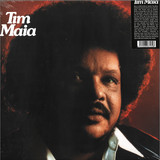
First vinyl reissue of this 1977 LP by one of the great figures of Brazilian music. Brilliant tracks like E necessario, Verao carioca, Venha dormir em casa or Musica para Betinha make it one of the strongest albums to come out of Brazil in the 1970s. Presented in facsimile artwork and pressed on 180g vinyl. TIP!
Tim Maia was born in 1942 in the suburbs of Rio de Janeiro and started his musical career at an early age, along with close friends such as Roberto Carlos or Jorge Ben. Carlos would eventually help him to get a deal for his first single at CBS.
During the 70s Maia started to incorporate soul and funk elements into his style. After a two-year period involvement in the Racional cult in Brazil, Maia's funky style was still at its best when he released this album in 1977. It was his first and only recording for Som Livre, the legendary label that became extremely popular due to the many soap operas soundtracks in its extensive catalogue.
- A1: Music To My Ears
- A2: Little Journey
- A3: Birds Of A Feather
- A4: Golden Dream
- A5: Chubby Cheeks
- A6: Guiding Light
- B1: Saskamodie
- B2: Somehow Someway
- B3: Jiinti
- B4: Music To My Ears (Reprise)
- B5: Sleepy Time
- B6: For Pepecito
- A1: Birds Of A Feather (Single Edit) 7
- A2: Guiding Light (Gonzales Solo Piano Version) 7
- B1: Birds Of A Feather (Vulfpeck Version) 7
- B2: Birds Of A Feather (Remix Feat Gza) 7
12" + 7"
In 2009 Mocky made a radical decision: after having become one of the cult figures of the leftfield Berlin electronic music scene of the early 2000s, Mocky retired his sampler and travelled to Paris to embark on an all acoustic journey with the producer Renaud Letang in the vintage Studio Ferber, previously inhabited by the likes of Nina Simone and Serge Gainsbourg.
Named after a song he made up when he was 7, using imaginary words, "Saskamodie" was an instant new future/retro classic: a return to pure musical expression by a cutting edge artist who was no longer bound by the electronic music scene. "Saskamodie" was a brave step into unchartered waters, the sound of a musician exploring where his talent can take him with rare confidence and authority. At different points you could hear a vintage soundtrack suite, a debonair jazz record (minus the solos) or a golden era '60s soul ballad recording ... yet, as if all these charming stylistic sorties weren't loveable enough, cut "Saskamodie" through the middle and you'll find that sweet, inescapably infectious melody is the lifeblood trickling through its core.
Mocky is listed as playing drums, bass, rhodes, piano, guitar, percussion, bells, recorder, vocals, whistle, organ and toys as well as writing string arrangements. Taylor Savvy, Gonzales, Jamie Lidell and Feist contribute additional instrumental and backing vocal performances that make this record sound more like a live performance than a studio creation.
"Saskamodie" has definitely stood the test of time and Mocky still successfully follows the path he started with this recording - be it on his series of digital Moxtapes, his album "Key Change", his recent "recorded-in-one-day" jazz album "A Day At United", his score for the japanese Netflix anime "Carole & Tuesday" or his writing and production work for the likes of Feist or Kelela.
Originally only released as CD/Digital Download, this 10 years anniversary limited vinyl edition brings us "Saskamodie" in it's original form, re-mastered for deluxe 180g vinyl and accompanied by an exclusive bonus 7" with a new single edit of the album's hit "Birds Of A Feather", a solo piano version of "Guiding Light" by Chilly Gonzales, the recent coverversion of "Birds Of A Feather" by LA's underground funk sensation Vulfpeck and a remix featuring a collaboration with noone less than the Wu Tang's GZA.
"An exceptionally musical album – there’s no other word for it – that could fail to seduce only the hardest of hearing, or the hardest of hearts" (Pitchfork, 8.0 review)
"An amazing record…a big hit for me" (Gilles Peterson)
"If Saskamodie was a film, it would undoubtedly be The Science of Sleep by Michel Gondry. Please take that as a wholehearted endorsement" (BBC)
Limited Edition of 500 handnumbered Box Set including 4LPs (180g), 1 CD, Download Coupon and a high quality 120 page booklet. NOTE: BOX IS SHRINK-WRAPPED BUT WILL BE OPENED FOR SHIPPING TO AVOID SEAM-SPLIT.
Black Truffle Together With Bernhard Rietbrock And Zhdk Are Honoured To Reissue This Stunning Boxset Celebrating Alvin Lucier's 85th Birthday Celebrations Which Took Place In Zurich, 2013.
Alvin Lucier Is One Of Most Important Figures In More Than A Half Century Of Avant-garde And Experimental Sound Practice. He Has No Equivalent. He Is Among America's Most Important Composers - A Towering Pillar Of Intellect, Creativity, And Beauty Realized Through Sound. His Singular And Unparalleled Body Of Work, Focused Around Acoustic Phenomena And Auditory Perception, Which Included, Among Many Others, The Groundbreaking Works Bird And Person Dyning, Music On A Long Thin Wire, And I Am Sitting In A Room, Each Quietly Shifting The Understanding Of What Music Could Be - Deceptively Discrete Gestures, Laying Their Mark On History And The Expectations Of Nearly Everything To Come, While Radically Expanding The Field. It Is Such A Life, Defined By Such Striking Accomplishment, Which This Release Celebrates Across The Four Lps, Cd, And Book Which Make Up The Lavish Illuminated By The Moon Release.
Recorded In October Of 2016 At The Alvin Lucier 85th Birthday Festival At The Zurich University Of The Arts, The Box Gathers A Remarkable Range Of Performances Of Works From Lucier's Life In Music, From The Iconic To The Lesser Known. It Begins With Wonderful Stagings Of I Am In A Sitting Room And Music For Solo Performer Performed By The Composer, Before Presenting The Work Charles Curtis Performed By The Cellist For Whom It Was Composed, And Double Rainbow, A Recent Work, Performed By The Incredible Joan La Barbara. Over The Course Of The Set's Many Discs, We Encounter Works Ranging From Nothing Is Real (strawberry Fields Forever), Braid, Two Circles, Hanover, Step, Slide And Sustain, And One Arm Bandits, Performed By Oren Ambarchi, Stephen O'malley, And Gary Schmalzl, With Further Contributions By Charles Curtis And Many Others Involved In The Celebrations Of Lucier's Life And Work. The Collection, By Offering An Expanse Of Material Otherwise Unavailable In The Composer's Discography, Opens A Rare Window Into The Breadth And Range Of Territory Which He Has Approached, As Well As Into The Unique Humor Which Has Quietly Bubbled Through His Entire Career. It Is A Singular Recording Event, The Likes Of Which Are Unlikely To Be Repeated.
A Worthy Tribute To One Of The Last Century's Most Important Composers, Offering Insight, Recognition, And Critical Investigation, Long Overdue And Lovingly Produced. Including An Extensive, Lavish 120 Page Book, With Numerous Unseen Images. Pressed On 180 Gram Vinyl, This Limited Edition Of 500 Individually Numbered Copies Is Unquestionably One Of The Most Beautiful And Important Releases Of 2018.
Key Selling Points: - Limited Edition Of 500 Handnumbered Units From Legendary Electronic Music Pioneer Alvin Lucier
- Lavish Box Set Including 4lps, 1 Cd, And A High Quality 120 Page Booklet.
- 180g Vinyl
- Incl. Download Coupon To Redeem All Tracks
- Over 190 Minutes Playtime
- Remarkable Collection Of Performances Of Works From Lucier's Life In Music, From The Iconic To The Lesser Known.
- Mastered & Cut By Helmut Erler At Dubplates & Mastering, Berlin.
Desolat's Loco Dice joins the roster of Martinez Brothers Cuttin' Headz label this April with
'$lammer', backed with a remix from Detroit Techno veteran DJ T-1000.
Du¨sseldorf's Loco Dice has long been one of the most respected figures in contemporary electronic music with releases over the years on leading labels like Cocoon, Cadenza, Ovum and of course his own Desolat as well as a heavy touring schedule taking him across the globe year in year out. Here though we see Dice offering up his new single courtesy of Cuttin' Headz, a platform the Martinez Brothers and associates to deliver high octane, dance floor focused House and Techno.
The original mix of title track '$lammer' leads with spiralling brass like bass tones, flute licks, shuffled shakers and resonant synth hooks running alongside a bumpy bass line and an amalgamation of heady, processed vocal lines.
Following is Detroit's DJ T-1000 stepping up on remix duties, stripping back the aesthetic of the original to lay focus on robust rhythms and various vocal refrains from the original whilst chugging bass and tension building atmospherics gradually unfold throughout.
Following on from his debut EP on Drumcode earlier this year, Ilario Alicante returns.For the past few years Ilario Alicante has enjoyed something of an unintentional Ibiza kinship with Adam Beyer. When the Swede played his special annual sets on the Amnesia Terrace for Cocoon, for three years out of four, the Italian has been right there playing alongside him, ensuring his talents were on the radar of the Drumcode chief.
Ilario made his first appearance on the label in 2016 with the stirring 'Temporary' featuring on A-Sides Vol.4, before securing his first full-length release with the 'Awakened' EP that dropped earlier this year. 'Figures & Echoes' deepens his contribution to the label with half a dozen powerful cuts.
'Figure of RA' opens the EP, combining a rousing vocal loop, pulsating beats and effective melodic interlude to fantastic effect.
'The Acid Runner' follows and is true to its name, characterised by echoing vocal effects that lead to a piercing 303-line that hits with peak-time power. 'Virgo's Echoes' features a persistent synth line that combining effectively with lush layers of melody to create an atmospheric impact. 'Third Eye' delivers an exhilarating dose of rave thanks to the hypnotizing riff that runs throughout.
After recently inaugurating the label with Shedbug's well-received Afterglow EP, Flux Records are back with their second release. Following suit, FLUX002 includes three original tracks from burgeoning French talent Laroze, supplied with a sweet remix from Detroit's one and only Andres.With its fair share of dance floor heaters the Loin Des Yeux EP exudes an effortless 90s revival feel to it, drawing upon classic US house and acid as the basis for its form and style. Limited press on 180g, 12 vinyl (no digital), with artwork from Laura Zhang. France's dance scene is currently replete with a plethora of fresh and charismatic artists, labels, and promoters, and has all the signs of a movement that's really beginning to take off. Hailing from Bordeaux, Laroze's making his own mark not just as one of the figures behind the country's authority electronic music publication SeekSickSound, but also as a DJ and producer in his own right.