When people think of Yacht Rock-those smooth, sun-drenched sounds that once drifted from Californian radio stations in the late '70s and early '80s-they rarely imagine it echoing through rehearsal rooms in Hamburg or Linz. Yet even far from the Pacific coastline, the appeal of shimmering chords, laid-back grooves, and polished production found fertile ground.
This compilation gathers rare and overlooked tracks from Germany and Austria. These artists embraced West Coast aesthetics with sincerity and subtle twists, resulting in music that feels both familiar and refreshingly new-smooth sounds for cloudy skies. So drop anchor, pour something cool, and enjoy this unexpected cruise through the lesser-charted waters of Euro Yacht Rock.
Our journey begins in Austria, where Reflection's Because (1981) set the tone with blue-eyed soul and analogue warmth-a sunlit blend of Doobie Brothers polish and local charm. Its creator, Dieter Heyduk, reappears with Austrian Sky, a heartfelt nod to his homeland that fuses mountain calm with oceanic longing.
From the North Sea island of Föhr, Ara Pacis dreamed of California on their 1979 self-release To the Westcoast. Inspired by Steely Dan and Lake, they turned German rock precision into breezy, melodic sophistication. Meanwhile, in Düsseldorf, Mainpoint fused funk and jazz-rock on Frisbee, their 1980 single bursting with rhythmic drive and optimism before the tide of the Neue Deutsche Welle swept such grooves aside.
Bremerhaven's Nuages offered the compilation's only instrumental gem, Strange Weekend (1985)-a gentle blend of jazz-funk and rock and largely lost to time. Its cool restraint captures the European interpretation of Californian ease.
Around the same period, British traveler Gavin James recorded River of Laughter in southern Germany, backed by the blues-rock band Black Cat Bone. His acoustic reflections on water and flow mirrored the soft, meditative pulse at Yacht Rock's core.
Berlin's Top Spin kept things playful with Bikin (1985), a funk-fusion snapshot of urban joy that showcased the city's finest session players. From the Ruhr area, the Jan Pack Band is up next. While not a typical Yacht Rock track, Cable Dance is driven by an effortless, groovy '80s vibe.
Peter Seiler's Goldfinger project reimagined Walkin' in the Sand as a relaxed reggae-tinged track, while Munich's Major Seven closed the voyage with Silverboat, a wistful soft rock ballad gliding between melancholy and light.
Across these hidden harbors of German and Austrian pop, the West Coast dream took on new forms-reflected in rivers, skies, and studio lights half a world away from L.A. Under and Above the Clouds celebrates that spirit: the enduring pull of smooth music, wherever it's made.
Поиск:1991
Все
- A1: Tanz Der Lemminge 2
- A2: (That's You) On The Floor .. Feat. Sketch
- B1: Eldorado Feat Twila Too
- B2: Eat U Like Candy Feat Nik Frost
- B3: The Increased Difficulty Of Concentration
- C1: If There Was No Gravity Feat Mary S. Applegate - Jammin Unit Remix
- C2: Superfreaky Feat Nik Frost
- C3: Mandragora
- D1: Not A Mindtrip Feat Mary S. Applegate !!!
- D2: Liquid Men With Liquid Hearts Feat Mary S. Applegate
- D3: Spacebrothers 2001 - Reionhard Schmitz Remix
With an intrigue for a particular niche of old UK hardcore which takes cues from Sheffield bleep ambience, heady rave futurism and soft, almost new age synth pads, Blank Mind presents ‘Lost Paradise: Blissed Out Hardcore 91-94’. Though the records gathered for the compilation span a short three-year period and bridge the gap between scenes, the collection manages to find a sweet spot where the influence of Warp’s Artificial Intelligence, back room chill out sonics and the nascent jungle boom meet with elements of Italian piano house and slower breakbeat cuts.
Opting to focus on atmosphere to highlight shared connections; in this case the duality of often serene and calming soundscapes with frenzied breaks and bass (see Hedgehog Affair’s ‘Parameters’ and Luxury’s ‘Twirl’ respectively); Lost Paradise is a formidable collection of tracks plucked from a thriving time for British dance music experimentation. The general themes of ascension and escapism channelled through digital samplers are also inescapably linked to a turbulent time in politics, beginning in the post-Thatcher years and culminating in the year the harshest anti-rave Criminal Justice Act came into force.
Initially building the compilation around DJ Mayhem’s track ‘Inesse’, Blank Mind label founder Sam Purcell and Amsterdam based producer Tammo Hesselink began a process of swapping favourites and deep cuts to spread across this 2x12” doublepack. The compilation avoids any obvious centrepieces through masterful sequencing, allowing for moments of refrain and tempo changes in a way that helps add to their overall vision of what this music is and can be; “We wanted to frame hardcore in a different light, looking at this idea of ecstasy through the traditional meaning of the word and exploring that symbolism”. By drawing from what some might consider the softer edges of the movement, the pair offer a look into the relevance of these tracks in the contemporary era, where the past years have seen both an explosion in popularity of old ambient/new-age music and a certified jungle revival.
- A1: 黒色エレジー*– 花粉犯罪
- A2: Surrealistic Men– "覚醒期
- A3: Bárbara - Can! Can! Can!
- A4: Anemone - 鋳物工?
- A5: Rap - 空間のあなた
- A6: Real - Kids
- A7: Oxz - Fall Into Night
- A8: Still - Just A Song
- B1: Allergy - インポテンツ
- B2: Inu - 305
- B3: Suicide - Celebration
- B4: Gara - Karyatide
- B5: Böhm - Possessed Love
- B6: 餓鬼道 - 赤い?
- B7: Unknown Artist - Unknown Song
- B8: Desertshore - 栄光製造機
- B9: Dark Mine Fields - Why
PT II[16,77 €]
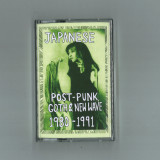
DINTE presents a cassette-only two-part Japanese post-punk, goth & new wave mixtape, the first in a tranche of regionally-focused mixes produced in partnership with Philadelphia's punk archivists World Gone Mad.
This album starts the journey of Unruly Records by featuring some of the early tracks and artists who helped shape the sound of "Club Music".
These songs were originally released between 1991 & 1995 and took dance-floors in Baltimore by storm. There is also a full color insert which paints a picture of that moment in time. In support of Baltimore City's Inaugural "Baltimore Club Music Day" on June 17th, we put together this anthology to kick off our "Anthology" collection/series which will initially start with 3 installments.
Be on the lookout for "Anthology 1996 double album next year!
Igor Tamerlan is a stranger in his own land. Born in 1954 the Hague and spent most formative years in Paris, Igor suddenly had the urge to relocate to Bali in 1986. “I want to settle in Indonesia and marry a local girl,” he told his sister shortly before flying out.
His next journey would be as audacious as his time in the Fifth Republic. Born from a prominent Indonesian expatriate family in Paris with ties to Indonesia’s first prime minister Sutan Sjahrir, Igor earned a degree in architecture at Ecole nationale supe´rieure d’architecture de Paris-La Villette.
He could have been a brilliant architect or a political scientist (he was accepted to Sciences Po), but his passion for music distracted him from his academic works. He was after all named after Russian composer Igor Stravinsky.
During his brief stint at Sciences Po, Igor spent most of times hanging out at recording studios and rub shoulders with the likes of singer-songwriter Jean-Jacques Goldman and Michel Polnaref. He had a brief encounter with The Rolling Stones at the Cha^teau de Thoiry studio in the early 1970s.
But Igor’s musical education and his occidental eyes appeared to be ill-suited for Indonesia. His first record, titled Langkah Pertama (First Step) on the mainstream label Musica was met with a shrug and was a commercial dud. An experimental record blending the influence of Spanish motifs, Francophile production and a whiff of hip hop and ska was seen by critics as being too alien. His sarcasm-laden lyrics and his biting critique of excessive materialism among the upper tier of Indonesia’s nouveau riche in the album was met with confusion from the audience. He was just too far ahead of his time.
He left the label Musica – or may had been dropped – soon after Langkah Pertama and decided to go independent. He then relocated to Bali and set up a state-of-the-art recording studio in Sanur, across the street from Southeast Asia’s first boutique hotel where luminaries like Mick Jagger, David Bowie, Sting, Yoko Ono and Ringo Starr stayed for their holiday.
From the studio, Igor recording everything from the sounds waterfalls, geckos, minibuses to motorized rickshaw and mix them with hip hop, jazz, electronica, dub and Balinese gamelan. A visionary, Igor was the first musician to use MIDI, which started to be available globally in the early 1980s.
On paper, songs like “Bali Vanilli” should not work, a mish mash of disparate elements mentioned above, sung in three languages, Balinese, English and Bahasa Indonesia while tackling the subject of overtourism. The song was also the first to introduce rap to an unsuspecting audience. But for some strange reason “Bali Vanilli” became a sensation and overnight Igor became household name. And in 1987, long before overtourism was an issue, Igor broached the subject to a national audience in Indonesia on the possible destruction of nature and culture from tourism.
Ever an iconoclast, Igor decided to step out of the limelight following the success of “Bali Vanilli” and in early 1990s he relocated to Indonesia’s cultural capital, Yogyakarta. Here, he worked on some more experimental music while juggling as music video director. He passed away in 2018 at the age of 64.
The 10 songs in this compilation, Bali Vanilli: Experimental Pop from Paradise Island (1987-1991), are some of Igor’s best works, music that would have gone into obscurity had it not been for the diligent work of film director Alfred Pasifico Ginting, who managed to track down some of the master tapes while researching on a documentary on the musician.
These recordings have never before been released outside of Indonesia. Igor would have been proud with this reissue project.
- Love Tunnel
- Devil's Triangle
- 1980: S Rock + Roll (Original Version)
- Cheri Love Affair (Original Version)
- Galileo
- Jesus Over New York
- Expose Yourself
- Hangin' Out With Jim
- Drink, Fight + Fuck
- Cock On The Loose
- When I Die
- Liquor Slicked Highway
- Sitting In This Room
- Watch Me Kill
- Castration Crucifixion
- Snakeman's Dance
- Slaughterhouse Death Camp
- Feces + Blood - Bacteria Of The Soul
- Master Daddy
Color Vinyl[22,65 €]
GG Allin singles compilation reissued on vinyl. If you had an immense amount of courage (as well as a strong stomach), then you may have been 'lucky' to have experienced G.G. Allin the way he was meant to be -- on-stage. In the studio, G.G.'s recordings more times than not did not match the fire of his live performance (and after watching some of his brutal shows on video, how could they'), as they were issued on a variety of little-known indie labels, and of varying quality. One of the first compilations to truly pull tracks from throughout G.G.'s controversial career is 2004's Expose Yourself: The Singles Collection 1977-1991. A few selections have been impossible to find for years, such as the early G.G. single "Love Tunnel" b/w "Devil's Triangle," which makes its first appearance in years here. Elsewhere, you'll find tracks that have appeared elsewhere -- "Snakeman's Dance," "When I Die," "Gypsy Motherfucker," etc. -- but are among G.G.'s best. Since it touches upon most of his different eras, Expose Yourself: The Singles Collection 1977-1991 is easily one of the better G.G. comps to appear. ~ Greg Prato
- Love Tunnel
- Devil's Triangle
- 1980: S Rock + Roll (Original Version)
- Cheri Love Affair (Original Version)
- Galileo
- Jesus Over New York
- Expose Yourself
- Hangin' Out With Jim
- Drink, Fight + Fuck
- Cock On The Loose
- When I Die
- Liquor Slicked Highway
- Sitting In This Room
- Watch Me Kill
- Castration Crucifixion
- Snakeman's Dance
- Slaughterhouse Death Camp
- Feces + Blood - Bacteria Of The Soul
- Master Daddy
Black Vinyl[22,65 €]
GG Allin singles compilation reissued on vinyl. If you had an immense amount of courage (as well as a strong stomach), then you may have been 'lucky' to have experienced G.G. Allin the way he was meant to be -- on-stage. In the studio, G.G.'s recordings more times than not did not match the fire of his live performance (and after watching some of his brutal shows on video, how could they'), as they were issued on a variety of little-known indie labels, and of varying quality. One of the first compilations to truly pull tracks from throughout G.G.'s controversial career is 2004's Expose Yourself: The Singles Collection 1977-1991. A few selections have been impossible to find for years, such as the early G.G. single "Love Tunnel" b/w "Devil's Triangle," which makes its first appearance in years here. Elsewhere, you'll find tracks that have appeared elsewhere -- "Snakeman's Dance," "When I Die," "Gypsy Motherfucker," etc. -- but are among G.G.'s best. Since it touches upon most of his different eras, Expose Yourself: The Singles Collection 1977-1991 is easily one of the better G.G. comps to appear. ~ Greg Prato
Following the release of Drop Nineteens' first album in 30 years, Hard Light and the reissue of their 1992 shoegaze masterwork Delaware, we are excited to announce the official release of Drop Nineteens' 1991. This LP comprises the band's first two demo sessions which were mailed out via cassette to labels in 1991 finding their way to the UK music press and generating instant buzz and an ensuing feeding frenzy to sign the band. After signing with Caroline Records Drop Nineteens decided to write an entirely new record, Delaware, for their first official release, leaving the songs on 1991 behind, frozen in time. Swells of layered guitars and buried vocal harmonies adom these tracks, displaying Drop Nineteens when the comparison to their UK contemporaries like Slowdive and Ride were apt. 1991'S songs, recorded with a low fi charm, show an ambitious young band capable of writing songs filled with texture and hooks, on the eve of their breakthrough with Delaware.
- 1: Gritter
- 2: Tendrill
- 3: Dry Riser Inlet
- 4: (A Higher Form Of) Killing (Radio Phuque Edit)
- 5: Diable (Wayco Survival Mix)
- 6: Deconstruction (Reconstruction)
White[27,69 €]
These ultra heavy industrial metal tracks were recorded over two sessions at the iconic Maida Vale studios: 28th April 1991 and 30th March 1993 and were sourced directly from the BBC Archives (with thanks), with careful remastering for CD and vinyl. The 1991 session was recorded during the same period as "Industrial" (Deaf Records / Peaceville), with the 1993 session recorded around the time of "Desensitized" (Earache). "If you look on your PITCHSHIFTER albums you will see that we always credit John Peel. He was instrumental in getting the band out there and often played our music on the radio when no one else dared. The 'Peel Sessions' we did were a great honour and every time I met John he was always such a great guy... a legend" (JS). Founded in Nottingham in 1989, PITCHSHIFTER's early style was heavy industrial metal, being cited as one of the originators of the genre along with Godflesh - a style which they termed "Death Industrial". These sessions and albums mark the end of that classic period, before a shift towards the more commercial, beat-driven Industrial style from the mid-90's onward that they are still known for.
Following the release of Drop Nineteens' first album in 30 years, Hard Light and the reissue of their 1992 shoegaze masterwork Delaware, we are excited to announce the official release of Drop Nineteens' 1991. This LP comprises the band's first two demo sessions which were mailed out via cassette to labels in 1991 finding their way to the UK music press and generating instant buzz and an ensuing feeding frenzy to sign the band. After signing with Caroline Records Drop Nineteens decided to write an entirely new record, Delaware, for their first official release, leaving the songs on 1991 behind, frozen in time. Swells of layered guitars and buried vocal harmonies adom these tracks, displaying Drop Nineteens when the comparison to their UK contemporaries like Slowdive and Ride were apt. 1991'S songs, recorded with a low fi charm, show an ambitious young band capable of writing songs filled with texture and hooks, on the eve of their breakthrough with Delaware.
Mannequin Records is thrilled to announce the upcoming release of Chromium Industries, a double LP (MNQ 162) capturing the innovative spirit of two pioneers of electronic music: Andrew Lagowski and Paul (Howie D) Howard. This long-anticipated album marks a return to the seminal sounds of the Chromium Industries label, which emerged as a crucial platform for boundary-pushing techno and electronic music in the early 1990s.
Andrew Lagowski, a name synonymous with exploration in electronic music, has been at the forefront of sound innovation since the early 1980s. Known for his work under various aliases, including Lagowski, Legion, and S.E.T.I., his early output in experimental and industrial sounds paved the way for his later techno-focused ventures. Albums like Knowledge (S.E.T.I.) and Nadir (Lagowski) highlighted his pioneering approach to unconventional sound sources and production techniques. In the 1990s, his work with Chromium Industries brought him into the techno spotlight, with a series of influential 12” singles that helped shape the electronic music landscape. With over 60 albums and 10+ singles to his name, Lagowski’s versatility and dedication have garnered him a loyal following and lasting influence across genres.
Paul Howard, aka Howie D, brought his DIY ethos from the punk scene of the 1970s into electronic music. As a founding member of The Frames and co-founder of the Brain Boosters and Spacematic labels, Howard has consistently pushed boundaries. His early forays into hip-hop saw him release the genre-pioneering jazz-rap track Miller Light as Fission. The transition from punk and hip-hop to electronic music was a natural one, culminating in his creation of Chromium Industries after a fateful night hearing Lagowski’s Vermilion at a London party. The label brought some of the most unique techno releases to the scene, with tracks like Blue Anomaly causing near-riots on the dancefloor. Since then, Howard’s work has evolved to include multiple aliases, including The Legend That Is, Phase Collective, and Skulpture.
Chromium Industries 2xLP will be available for purchase from January 2025 through Mannequin Records and select distributors.
This is an essential release for collectors, DJs, and anyone who reveres the legacy of 1990s techno and early rave.
- A1: 胎児* - Radioactive Ash
- A2: Non Band - Duncan Dancin
- A3: Mannequin Neurose - #¼&¢
- A4: Antena - Drug Patient
- A5: Unknown Artist - Unknown Song
- A6: Coma - Coda
- A7: Sadie Sads - Pair Dog
- A8: G-Schmitt - Future Daze
- A9: C·c·mekka = 爬虫類の脳* - アルゴソの空
- B1: Asylum - 自虐者
- B2: Bardo Thödol - Silver Stug
- B3: Unknown Artist - Unknown Song
- B4: いんど猫* - 水の中
- B5: Mensu - Lura
- B6: Phaidia - 戦略
- B7: The Lautrec - Dark Crystal
- B8: Unknown Artist - Unknown Song
PT I[16,77 €]
DINTE presents a cassette-only two-part Japanese post-punk, goth & new wave mixtape, the first in a tranche of regionally-focused mixes produced in partnership with Philadelphia's punk archivists World Gone Mad.
Earquake 1992[22,48 €]
Earquake 1993[22,48 €]
Earquake 1994[22,48 €]
Earquake 1995[22,48 €]
Earquake 1996[22,48 €]
Earquake 1997[22,48 €]
Earquake 1998[22,48 €]
Earquake 1999[22,48 €]
To celebrate the first anniversary of "EARQUAKE: Wolfgang Voigt 1991 - 1999", a limited double vinyl series is starting in December 2020. With each release one EARQUAKE year is honoured with a kind of "Best Of". For the loyal vinyl fans and all those who want to become one. The first strike, the double 12inch “EARQUAKE 1991“ with a total of 7 tracks, includes "Love Inc.: Trance Atlantic XS" and "Mike Ink: Dialogue E.P." - two absolute cult classics of the early nine-zero-nine and three-zero-three acid-hysteria era. As a kind of "original sound commentary" on the music of that time, there is also a new interpretation of the interview-based art piece "Wolfgang Voigt - Du musst nichts Sagen", which is combined with a Wolfgang Voigt hit that has been out of print for a long time and which the connoisseur will immediately recognize.
This piece is only available on the vinyl version of “EARQUAKE 1991“!
Zum einjährigen Jubiläum von “EARQUAKE - Wolfgang Voigt 1991-1999“ im Dezember 2020 startet eine limitierte Doppel-Vinyl-Reihe auf Profan, mit der jeder EARQUAKE-Jahrgang durch eine Art “Best Of“ gewürdigt wird. Für die treuen Vinyl-Fans und alle, die es noch werden wollen. Der erste Streich, die Doppelmaxi “EARQUAKE 1991“ mit insgesamt 7 Stücken, beinhaltet die beiden, seit fast 30 Jahren nicht wieder aufgelegten Maxis “Love Inc.: Trance Atlantic XS“ und “Mike Ink: Dialog E.P.“ – zwei absolute Kultklassiker der frühen Neun-Null-Neun und Drei-Null-Drei Acid-Hysterie Ära. Als eine Art “O-Ton Kommentar“ zur Musik dieser Zeit, gibt es außerdem eine Neu-Interpretation des, auf einem Interview basierenden Kunst-Stückes “Wolfgang Voigt – Du musst nichts Sagen“, welches in der vorliegenden Version mit einem sehr lange vergriffenen Wolfgang Voigt-Hit kombiniert ist, den der Kenner sofort heraushören wird.
Dieses Stück gibt es ausschließlich auf der Vinyl Version von “EARQUAKE 1991“!
- Grow Wild
- Eskimo Song
- Fancy
- Harpers
- Scream Tall
- Country
- Eureka
- Second Skin
- My Favorite People
- Turtle Song
- Hot Day
- Martha
- Halfway Knowing
- 4: Brothers
- Ohio
- Jungle Jim
- Nevermind
- Blue Blanket
- Biding Your Time
- Shaking Your Head
- Simple Song
- Tell The Truth
- Fancy
- Gloria/Angels We Have Heard On High
- The Bathtub Song
- No Goodbyes
- Arms Akimbo
- May This Be Love
- Lie And Forget
To celebrate the 40th anniversary of their formation, Hugo Largo will release Huge, Large and Electric, a three LP set featuring all of the band’s studio output (1988’s Drum and 1989’s Mettle) including a full album of previously unreleased and live recordings (Hugo Largo Unreleased and Live 1984-1991). These albums are long out of print, and will be released on streaming services for the very first time. The set includes essays from Michael Stipe, who produced the band’s debut release Drum, along with Brian Eno and Hugo Largo member Tim Sommer.
- A1: I Desire (Dave Vocal Version)
- A2: Love Declaration
- A3: Pieces Of Glass
- A4: Dancing To The Fall Of The Berlin Wall
- B1: Love Via Computer
- B2: Planet 21
- B3: Just One Look
- B4: Metropolis
- B5: Secret Lies
- C1: And You (Linndrum Version)
- C2: Erotica
- C3: Machine Language
- C4: Watching You
- C5: Run Away
- D1: My Suburban Playground (Extended Remix)
- D2: She Fades Away
- D3: Beats Like A Machine
- D4: Time Fades To Nothing
Formed by high school buddies Andreas Gregor and David Rout, Techniques Berlin started in 1984 experimenting with synthesizers, drum machines and guitars. In the early stages, the band was heavily influenced by UK new romantic acts The Human League, Visage, Yazoo, OMD and Depeche Mode, as well as rising Canadian synth-pop bands Rational Youth, Men Without Hats and Trans-X. It took them a few years to master their electronic toys and create a unique blend of addictive electro-pop melodies and beautifully crafted alternative beats.
In the late 80s, Techniques Berlin played live on a regular basis and their 3 self-released tapes received frequent local airplay in Canada. Despite their moderate success, the band failed to secure a record deal. Eventually both members had developed a strong interest in the burgeoning electro-industrial scene. Dave and Andreas founded !Bang Elektronika and were working with Digital Poodle as live drummers. Both of these projects were soon picked up by record labels. Techniques Berlin played their last show in November of 1991 at the University of Toronto, debuting the last track they had recorded, fittingly called ‘Time Fades to Nothing’. Or so they thought…
The proliferation of Internet radio and streaming music platforms introduced the band to a new generation of fans, enabling Techniques Berlin to stage a remarkable comeback. Within the next years they released the compilation “Suburban Playgrounds and Concrete Beaches” (Fabrika Records), recorded a new album “Breathing” (Nadanna) in 2018 and offered a series of shows in Toronto, Montreal, Mexico City and Leipzig.
“The Language of Machines” compiles a selection of original recordings between 1985 and 1991, including some favourite tunes like ‘Dancing to the Fall of the Berlin Wall’, ‘Metropolis’, ‘Watching You’ and a few unreleased tracks/versions. Limited edition of 500 copies on double vinyl with gatefold sleeve.
a 1 I Desire Dave Vocal Version
j 10 And You LinnDrum Version
o 15 My Suburban Playground [Extended Remix]
- You Speak Jealousy
- Stumbling Block
- Crab Nebula
- Caterpillar
- Miserific Condition
- Eternalux
- New Radio Hit
- Broken E-Strings
- Totality
- Mkultra
- Negated
- Said Serial
- Census
- Plight
- Seen Not Heard
- Mile Me Deaf
- Solo Sonata
- The Light At The End Of The Tunnel Is A Train
- Corpse Pose
- Everything Is Weird
- Torch Song
- Lazslo
- Behold The Salt
SALT VINYL[37,19 €]
"A Single History 1991-2001" ist eine erweiterte und neu gemasterte 25-Jahres-Jubiläumsausgabe der vergriffenen Singles und Compilation-Tracks des mythischen Trios aus Olympia, Washington. Von den ersten Post-Hardcore-Klängen auf "Crab Nebula" bis zum Dub-inspirierten Todesmarsch von "Behold The Salt" füllt diese 23-Track-Doppel-LP die verzerrten Lücken der ersten sieben Alben und versammelt Reste aus dem ersten Jahrzehnt von Unwound. "Ich würde lieber verwesten Fisch essen, als mir das hier anzuhören"
- You Speak Jealousy
- Stumbling Block
- Crab Nebula
- Caterpillar
- Miserific Condition
- Eternalux
- New Radio Hit
- Broken E-Strings
- Totality
- Mkultra
- Negated
- Said Serial
- Census
- Plight
- Seen Not Heard
- Mile Me Deaf
- Solo Sonata
- The Light At The End Of The Tunnel Is A Train
- Corpse Pose
- Everything Is Weird
- Torch Song
- Lazslo
- Behold The Salt
Black Vinyl[34,66 €]
"A Single History 1991-2001" ist eine erweiterte und neu gemasterte 25-Jahres-Jubiläumsausgabe der vergriffenen Singles und Compilation-Tracks des mythischen Trios aus Olympia, Washington. Von den ersten Post-Hardcore-Klängen auf "Crab Nebula" bis zum Dub-inspirierten Todesmarsch von "Behold The Salt" füllt diese 23-Track-Doppel-LP die verzerrten Lücken der ersten sieben Alben und versammelt Reste aus dem ersten Jahrzehnt von Unwound. "Ich würde lieber verwesten Fisch essen, als mir das hier anzuhören" -
- Mar Vista - Visions Part 1 Her Eyes Are Closed
- Kennlisch - Kennlisch
- Crystal Eyes - Crystalzed
- Warlus - Girl Like You
- Gerard Alfonsi - Fana Stickle
- Geoffroy - Viking
- Amphyrite - Symphonie Pour 3 Oeufs Brouilles
- Eole - Friendship
- Capucine - Les Elephants
- Rictus - Flashes
- Inscir Transit Express
- Polaris - Polaris
- Joel Boutolleau - Force
- Spotch Forcey - Frustre
- Demon Wizard - Black Witch
- Temple Sun - Voyage Sans Retour
- Chantal Weber - Ballade Aux Chataignes Tombees
- Jean-Claude Zemour - X Kmh
- Rhodes Co - Baoum
- Guidon Edmond Et Clafoutis - Stormy Sunday
"For a long time, I'd come across these discs without really understanding what connected them, apart from a button and that famous logo designed by René Dessirier. Then, with a little more digging, I discovered the "self-production" link. For choirs, schools, folk singers, young pop groups, popular homes and even great composers who engraved unique copies of certain recording sessions...
The French equivalent of the English "Derby Service", the Kiosque d'Orphée, formerly at 7 Rue Grégoire de Tours in the 6th arrondissement, was taken over by Georges Batard in 1967 and moved to 20 Rue des Tournelles in the 4th arrondissement of Paris. The adventure lasted until 1991. Georges Batard was a sound engineer who used a Neumann tube engraver to engrave acetates from the tapes he received, before printing the precious vinyls in the press factories of the day, where he was able to produce very small runs of between 50 and 500 copies.
Of course, there were other structures for releasing his records, such as Voxigrave or, later, FLVM, but none of them had so many records in their catalog. Le Kiosque d'Orphée was neither a label nor a publisher, but a structure that allowed you to press your own vinyl, at a time when it was quite an adventure to get your first 45 rpm or 33 rpm album released!
Georges Batard was described as passionate and conscientious. His son, bassist Didier Batard, wrote of him:
"Georges was passionate about recording and reproducing the stereo sound of his great passion, music. He paid close attention to distortion rates, signal-to-noise ratios, response curves, rise times and other damping factors in audio equipment. He was looking for the exact reproduction of concert hall sound in his living room (with the same sound level, if possible...). In the late '50s/early '60s, he found other sound enthusiasts in AFDERS (Association Française pour le Développement de l'Enregistrement et de la Reproduction Sonores). He became its honorary president. Every Saturday afternoon, its members met to test au- dio equipment. Their opinions were published in the monthly Revue du Son.
All you had to do was send in your tapes and choose the number of record copies you'd like to take home with you, so you could finally share your creations and, in a way, exist. You could opt for a generic sleeve, available in several colors, directly customizable with your name and credits, or you could design your dream sleeve yourself in your living room or at a printer's.
This "Do It Yourself" temple gave birth to some superb pouches. Stencilled, hand-written, illustrated with paintings, drawings, illustrations by friends or girlfriends of the time, photo prints hastily stuck in the middle of a blank, white sleeve, on which the traces of time would leave their imprints, so that collectors and the curious would come and buy them decades later, with the promise of a musical discovery, unfortunately not always fulfilled...
What most of these records have in common is the youth of their songwriters, whether or not they've had a career. Stories of buddies, of getting by and dreams of glory made up this catalog. Most of them were amateur productions, both in terms of the level of the musicians and the quality of the recordings, made on a two-track or, the ultimate luxury, a 4-track in a teenager's bedroom or parents' living room.
It was the beginning of the home studio, thanks to the advent of the Revox portable tape recorder. A bit of a shaky DIY system, but, in return, the luxury of setting no limits: one-sided tracks, no outside censorship, no artistic director, no manager, no Barclay or EMI/Pathé Marconi logos...
When you finally had your own record, you could give it away or sell it to friends, family or after concerts. You could also drop it off at the nearest record shop, with undisguised pride.
It was also a calling card that could be sent to radio stations or music labels, in the hope of launching a career...
Many of the protagonists in this story tried to sign with labels, but in those days, bridges were not so easy to build between one's hometown, or even one's village, and the major or more specialized label that might have released these records. At the time, the advertisements published in the press by the Kiosque d'Orphée opened up the field of possibilities for provincial composers. It was now possible to make their own record, without having to go through the process of signing with a label.
Some of the composers who have gone on to make a career have used this channel to release their first record or parallel projects (Claude Engel, Dominique A, Andy Emler, Michel Deneuve, Claude Mairet, Mick Piellard, Tristan Mu- rail...) and sometimes even single or very limited pressings of work or promotional copies (Bernard Parmegiani, Jef Gilson...).
This album is the conclusion of a long investigation, begun six years ago. It took a long time to find the records, scattered all over the place, in the homes of collectors and sometimes the musicians themselves, and then to listen to them, sometimes painstakingly, to unearth these moments of grace.
From this work, 23 tracks remain, but there are dozens of others that could have been included, so we had to choose, and the choice had to be as universal as possible. This selection is obviously not objective, but I hope you'll like it.
Today's music is raw, touching and powerful. "
Jean-Baptiste Guillot - Born Bad Records

Ultravillage is a collective and burgeoning community of new age music devotees, private press fanatics and underground ambient, minimal and progressive electronic aficionados. T
Mark Griffey, the man behind Ultravillage, has recently made the venture into releasing albums, with the intention of reissuing forgotten personal masterpieces of 1980s and 90s private press synth culture on new label Mid-Air Museum. MM’s first vinyl record release is a collaboration with Scottish reissue label chOOn!!.
Together, they present Accidental Music 1987-1991 by Charles Esposito, a career retrospective of the experimental composer from Martha’s Vineyard, Massachusetts. The cinematic and the sacred swirl around on Accidental Music, which gives new life to intriguing self-released tapes that Esposito put out in the 1980s and 90s. Heard by few on its original release, the music featured on this compilation ranges from Palace of Lights percussive sonics to an almost minimal techno palette, a meeting of pop and twisted electronics with the hypnotic immediacy of ancient ritual.
Accidental Music 1987-1991 develops a series of resonant harmonic spaces, by adding layers of instruments and played objects. Rather than work as acoustic maps of specific locations, these pieces eddy and gather into positive physical presences. But Esposito’s real strength lies in creating depth of field. The foreground might be dominated by glassy chimes or resonant prayer bowl-like timbres, but beyond it a series of sonic veils seems to recede towards murky imperceptibility. There’s also a kind of surreal decorum at play, passages that sound like an immaculately laid dinner table being shaken by an earth tremor while the tinkling complaints of the silver, glass and muffling linen are scrupulously recorded.
Available for the first time on vinyl, Accidental Music 1987-1991 by Charles Esposito is an exploration into
many inner worlds and dreamscapes, an analogue mirage of avant-garde gems. Produced in cooperation with the artist for Mid-Air Museum and chOOn!!.
Mastered for vinyl and digital and featuring liner notes from Mark Griffey.
First time on vinyl for this legendary live performance by SF post-punks Toiling Midgets. Originally called 'Mark Left The Building' because Mark Eitzel on vocals, literally left the band half way through the show. Essential listening for essential music nerds
- City Gate
- Rumble
- Side Walk
- Cool Weasel Boogie
- Got A Match?
- Elektric City
- No Zone
- King Cockroach
- India Town
- All Love
- Silver Temple
- Light Years
- Second Sight
- Flamingo
- Prism
- Time Track
- Starlight
- Your Eyes
- The Dragon
- View From The Outside
- Smokescreen
- Hymn Of The Heart
- Kaleidoscope
- Home Universe
- Passage
- Beauty
- Cascade Part 1
- Cascade Part 2
- Trance Dance
- Eye Of The Beholder
- Ezinda
- Amnesia
- Inside Out
- Make A Wish Part 1
- Make A Wish Part 2
- Stretch It Part 1
- Streeth It Part 2P
- Kicker
- Child's Play
- Tale Of Daring Chapter 1
- Chapter 2
- Chapter 3
- Chapter 4
- Beneath The Mask
- Little Things That Count
- One Of Us Is Over 40
- A Wave Goodbye
- Lifescape
- Jammin E. Cricket
- Charged Particles
- Eternal Child
- Free Step
- 99: Flavors
- Illusions
- Forgotten Past
Led by the legendary pianist and composer Chick Corea - the venerated 27-time Grammy winner and National Endowment for the Arts Jazz Master - The Elektric Band stormed onto the jazz scene in the mid-1980s, making an immediate and lasting impact on the genre. With their electrifying performances and innovative blend of jazz fusion, the group produced a series of albums that set the bar for excellence in contemporary jazz. Featuring a core lineup of virtuosic musicians - John Patitucci on bass, Dave Weckl on drums, Eric Marienthal on saxophone and Frank Gambale on guitar - the group created a dynamic and electrifying sound that came to define the jazz fusion style. Their collective musicianship was on full display on each album, as they seamlessly blended complex compositions with captivating improvisations. With each outing, the band explored new sonic territories, incorporating elements of funk, Latin and Afro music, and pop sensibilities. Their 5-album studio discography is a masterful tapestry of multi-layered music, showcasing their creativity, innovation, and musicianship. A restlessly creative, eternally youthful and uncommonly generous spirit, Armando Anthony “Chick” Corea left behind an incredibly rich legacy of recorded music when he passed away on February 9, 2021. The music of the Elektric Band continues to inspire and influence musicians to this day, cementing their legacy as one of the most important and iconic jazz fusion bands of all time
Step into the captivating world of Melody Fields as they release their transformative albums, "1901" and "1991." With a marbled musical background, these albums are crafted with the precision of a brushstroke by the likes of Pablo Picasso or Gustav Klimt. Each track is carefully composed, drawing inspiration from manic behavior, fixated obsessions, and the pursuit of something greater. Melody Fields explores themes of spirituality, faith, trust, and conviction in various forms, often leading to addiction or madness. During the pandemic, Melody Fields accumulated hours of material, embracing the freedom to experiment with drum machines and synthesizers in one session, and exploring oriental instruments in another. The result is a sonic tapestry that defies conventions and pushes boundaries. The primary album, "1901," can be described as a rock album with psychedelic influences. It features repetitive guitar riffs, distorted soundscapes, and mesmerizing three-part harmony vocals. As they traverse these musical landscapes, Melody Fields is joined by guest musicians from esteemed bands such as Goat and Holy Wave, adding an extra layer of sonic brilliance. The album culminates with the captivating track "Mayday," a haunting composition written by the legendary Klaus Dinger from Neu! In contrast, "1991" is a concept album that evolved from late-night jam sessions, experimental sounds, and danceable music. It presents four remixes, including contributions from Goat and Al Lover, breathing new life into the original composition “Jesus” from “1901”. Notably, "1991" includes the thought-provoking composition "Diary of a Young Man," written by Daniel Treacy from Television Personalities, which invites introspection and reflection. Melody Fields' "1901-1991" presents a sonic journey through time, combining elements of rock, psychedelia, and experimentalism. These albums showcase the band's dedication to musical craftsmanship and their willingness to embrace diverse influences. Prepare to be immersed in their sonic universe, where boundaries are shattered, and creativity knows no limits.
"One Sunday afternoon in 1990, I had a phone call from Keith saying that Sarah Records had received the demo cassette the two of us had recorded on a 4-track in a friend's shed and were interested in putting out two of the songs as a single. T
hey were Clearer and Alison. Delighted by this news, we booked some recording time with a studio we'd regularly used in our previous incarnation as Feverfew, the White House in Weston-super-Mare.
This was the first time we'd ever played a note of music that was using someone else's money, so the pressure was being felt. We recorded Clearer, Fearon and Chelsea Guitar, with Clearer becoming Sarah 55, the first of eight singles for the band across two labels. At that time, we were still toying with a name for ourselves and had settled with the Art Bunnies.
While driving us back home from Weston, though, I declared that I really couldn't see how people would take us seriously with a name like that. Disappointed, Keith (Girdler) then got out a piece of paper upon which he'd written several other contenders. These included Opal Trumpet, the Smiling Monarchs and (thankfully) Blueboy."
A Colourful Storm presents Blueboy's singles collection and the band's final retrospective release. Beautiful gatefold sleeve designed by Sarah Records' own Matt Haynes with original artwork insert, postcard and liner notes by Paul Stewart.
As soon as the pilots of the Space Oddities endeavour decided to tackle Yan Tregger's oeuvre, a major problem surfaced: where to begin? And where to end? Upon which side should one launch into the ascension of this body of work? It will have taken Alexis Le-Tan and Jess years to put up this selection, capturing the profusion and eclecticism of Tregger who, at 81 years old, has yet to lay down the arms and still defines himself as a "jack of all trades". Symphonies, library music, movie soundtracks, TV credits, advertisement, French variété, pop, disco, electronic, experimental or relaxation music, Yan Tregger (born Edouard Scotto di Suoccio) took up all genres, styles and formats through a career spanning from the end of the 50s to this day. How the Stakhanovist successfully went down so many different routes can be explained by his innate talent for composing melodies; they are the very basis on which his iconoclastic production was built. Ten years ago already, Yan Tregger had welcomed us in the studio of his Parisian suburb pavilion. There, sat in front of his machines and albums framed on the wall, he had delved into the midst of a life writing itself like would a rather unusual musical score.
Following the unpublished works of the Ukrainian/Estonian musician Valentina Goncharova, Volume 2 of Shukai’s archival project sits in direct contrast to the solo works of Vol. 1. Recordings 1987-1991 Vol. 2 completes Shukai’s dive into the sound world of an important yet overlooked artist working within Soviet era electroacoustics.
London-based DJ and producer 1991 has emerged as one of the most exciting artists in dance music. Since starting the project back in 2016, within a year he'd won the 'Best Newcomer' award at the 2017 Drum & Bass Awards. He has held down a steady release schedule of hits, collaborating with the likes of Sub Focus and Netsky, and remixed Axwell, Chase & Status, Claptone and Basement Jaxx. His touring schedule has seen him travel across the globe, with sell out tours across Europe, North America, Japan and Australia & New Zealand.
Formed in Louisville, KY in 1991, Falling Forward was a band made up of childhood friends Benjamin Clark, Gary Bell, Jonathan Mobley, Ben Lord, and Chris Higdon. Started in their early teens, the band released a handful of recordings on a few different labels (Noble Recordings, Initial Records, and Doghouse Records) before disbanding in 1995. Higdon, Mobley, and Lord would immediately regroup as the renowned atmospheric post-hardcore band, Elliott. Falling Forward's first 7" was originally released as the first (and only) title on local Louisville imprint, Noble Recordings, in a scarcely limited edition of 500. Shortly thereafter, they signed to rising Detroit-turned-Louisville label, Initial Records, for their lone full-length album, Hand Me Down. Founding member Benjamin Clark then left, replaced by Endpoint's Pat McClimans. In 1995, as their popularity and influence were peaking across the United States, Falling Forward released two final singles: an acoustic split 7" with fellow Louisvillians, Metroschifter; and a self-titled 7" EP on the prolific Midwestern indie label, Doghouse Records. All of those releases are long out-of-print, and Falling Forward's entire catalog has remained unavailable in any format for over 20 years. Let These Days Pass: The Complete Anthology 1991-1995 documents the entire recorded history of a young band who met in their pre-teens, wore their hearts on their collective sleeves, and incidentally inspired and influenced thousands of kids and dozens of bands (most notably Thursday) across the world with their unique union of chunky, metallic riffs, pop-punk-inspired hooks, and startlingly infectious, Sunny Day Real Estate-inspired melodicism. Restored and remastered from the original master tapes by Alan Douches at West West Side Music (The Promise Ring, Converge), Let These Days Pass is packaged in all-new artwork culled from elements of the band's history, and includes a 20-page full-color booklet of rare and unpublished photos, fliers, and lyrics.
The four-piece known as Man…or Astro-Man? have been using the pandemic to conduct more research at Astro Labs and a by-product is a new vinyl single! The B-side features a cover by Solid Space. Space 1991. The year the future finally begins! You now indeed live in the future. The past is so outdated and we all know how fleeting the present is, so seriously... why not live in the future? In fact, the first ever computer “website” was created this very year. Soon enough, everyone will have their own personal “website” or “webspace” that will reside in its own virtual “domain.” Think of it: everyone in the whole world will be now be digitally connected and able to interact in just a matter of a few minutes. Dear citizens of the past and present: we want to welcome you all. Enjoy the future. The future is now.
'Images And Words Demos (1989-1991)' wurde ursprünglich 2005 auf Ytsejam Records veröffentlicht und dokumentiert eine besondere Zeit für die Band, als sie sich auf die Veröffentlichung ihres bahnbrechenden Albums 'Images and Words' vorbereitete. Diese Sammlung enthält Instrumentalversionen von Dream Theater -Klassikern wie 'Take The Time' und 'Learning to Live'. Außerdem sind seltene frühe Versionen einiger der bekanntesten Songs der Band zu hören, wie z.B. 'Oliver's Twist', der später zum Fan-Favoriten 'Pull Me Under' werden sollte. Außerdem sind die Originalaufnahmen der Probeaufnahmen zu hören, bei denen Dream Theater James LaBrie als ihren neuen Sänger verpflichteten. Remastered und zum ersten Mal auf Vinyl erhältlich, ist dies ein faszinierender Blick auf die ersten gemeinsamen Tage der Band. Diese neueste Ergänzung zu den 'Lost Not Forgotten Archives' ist als 2CD Digipak, Gatefold 180g 3LP+2CD und als Digitales Album erhältlich.