Big Sigh brings together the best of Marika's previous works as an indie musician and adds a new layer of epic sounds and full-bodied production. Big Sigh is the "hardest record" Marika has ever made. As the title suggests, it is a relief of sorts - of sadness, of stress and lust, but mostly relief. Co-produced with Sam Petts Davies (Frank Ocean, Radiohead, Red Hot Chilli Peppers) & Charlie Andrew (Alt J, Wolf Alice, London Grammar). Lyrically there's always romance a longside grief, with elements of vulnerability and feeling trapped. "This album took a long time I got to the end of it I was quiet. I wanted to be away from it and let it sit in its own space. Now the dust has settled and I've got to re-enter the world of big sigh, and I'm excited." Stepping into a new world, moving forward, chipping away. Breath in, breath out. Big sigh."
Buscar:2 elements
2026 Repress
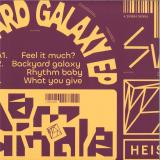
Dam Swindle's new 'Backyard Galaxy' EP is an ode to house music and the classic Swindle sound.
It's only been a few months since Dam Swindle released their highly acclaimed album "Open" and already the boys are back on Heist with a new release that takes you right back to the dancefloor. Where they've spent the better part of the last 3 years writing their album with all its sonic explorations and collabs, this new EP sees the duo return to their roots of club-ready house music. The 'Backyard Galaxy' EP comes with 4 high-energy house tracks made in their Amsterdam studio that have been road-tested all summer.
EP opener "Feel it much?" has all the ingredients of a classic Swindle heater, with warm pads, rich organic percussion and tons of soul. There's a simple and effective vocal running throughout the track that blends nicely with the classic house elements and electronic textures that are layered throughout the track. There's an effortless flow to this track and it comes as no surprise that it has been a highlight in their sets this summer.
The EP title track 'Backyard Galaxy' is an up-tempo Latin-themed jam with a hint of old school techno. The synth stabs hit you just right and the modulated vocal chops are a lovely boost for the build ups and add a touch of swing to a track that already has a tight groove. Add to that a huge breakdown and drum roll and you've got yourself a track that'll light up any dancefloor.
On the flip, we're moving into garage territory with the shuffling vibes of 'Rhythm Baby'. The current popularity of the genre is not missed on Dam Swindle, but when you look closely, you'll see this track is full of elements that the duo have built their legacy on. The vocal chops, transposed key samples and swing are all on point and work just as well below, as above 130 bpm if speed is your thing.
The EP closes with the NY-style house cut 'What you give', which reminds us of Dam Swindle's remix of Cinthie's Heist hit 'Won't U take me' with its lush organs and moody keys. It's perhaps the most classic house track they've made in a long time and you can hear they had a great time recording this. It's playful, vibey and catchy. Just the way we like it.
Dam Swindle might have delivered one of the standout cross-over albums of 2025, but on this EP the message is clear: Once a househead, always a househead.
As always, enjoy the music and play it loud!
Much love,
Heist HQ
- White Horses
- I Can Wait
- All Night
- Disappearing
- Hey
- Days Like These
- There's A Comma After
- Still
- Don't Walk Away
- More
- The Price You Pay (It Must Be Wearing Off)
Focusing on their craft, staying out of the fray and
holding fast their faith to find new ways to express the
discord and delight of being alive, to turn the duality of
existence into hymns we can share, Low present ‘HEY
WHAT’.
These ten pieces - each built around their own
instantaneous, undeniable hook - are turbocharged by
the vivid textures that surround them. The ineffable,
familiar harmonies of Alan Sparhawk and Mimi Parker
break through the chaos like a life raft.
Layers of distorted sound accrete with each new verse
- building, breaking, colossal then restrained, a solemn
vow only whispered. There will be time to unravel and
attribute meaning to the music and art of these times
but the creative moment looks forward, with teeth.
‘HEY WHAT’ is Low's thirteenth full-length release in
twenty-seven years, and their third with producer BJ
Burton.
Low’s 2018 album ‘Double Negative’ was a critical and
commercial success (including 8.7 / Best New Music
at Pitchfork), introducing new noise / experimentalbased textures and pop elements to their sound and
revitalizing their fanbase.
Founded in 1993, Low are influential pioneers of
minimalist, artful indie-rock.
Low’s track ‘Congregation’ was recently featured in an
episode of FX’s Devs.
- A1: The Whip Hand
- A2: Aegis
- A3: Dyslexicon
- B1: Empty Vessels Make The Loudest Sound
- B2: The Malkin Jewel
- B3: Lapochka
- C1: In Absentia
- C2: Imago
- C3: Molochwalker
- C4: Trinkets Pale Of Moon
- D1: Vedamalady
- D2: Noctourniquet
- D3: Zed And Two Naughts
Noctourniquet And then everything went black, at least for a while, at least for The Mars Volta. In the months and years following their fifth full-length, Octahedron, Omar kept on at his usual fearsome creative pace. In fact, he ramped up his output considerably, starting up his own Rodriguez Lopez Productions label and releasing a slew of solo albums. It was a practice he’d begun shortly after De-Loused’s release, with his solo debut A Manual Dexterity: Soundtrack Volume One, but as the decade reached its close, Omar grew to rely upon his solo recordings as an outlet for his prolific creativity, these albums often exploring musical pastures far beyond even The Mars Volta’s wide-ranging parameters. Before choosing to release music under his own name, Omar would always play it to Cedric first, to see if the frontman thought it had potential to become Mars Volta music. Shortly after Octahedron’s completion, Cedric flagged one batch of tracks Omar had cut with Deantoni Parks, a brilliant drummer and composer who’d briefly occupied the Mars Volta drumstool in-between Jon Theodore and Thomas Pridgen’s tenures, and whose volcanic creativity and unique, unpredictable approach to rhythm and composition had quickly made him one of Omar’s favourite artistic foils.
As with the music that made up Octahedron, the new tracks Cedric had optioned for The Mars Volta often veered far from the riotous, Grand Guignol visions of their earlier releases. It possessed the punchy, song-based focus of Octahedron, though this was a considerably darker, more menacing strain of pop, with synthesisers figuring heavily in the productions. Cedric took the tracks in 2009 and set about writing songs to the music. But no more new Mars Volta music would be heard until 2012. The years that passed in-between were nonetheless momentous, and busy, witnessing an unexpected reunion of the members of At The Drive-In, and Cedric joining his own side-project, Anywhere. But there wasn’t any sign of life within the Mars Volta until Omar, Cedric and their bandmates took to the road for a series of live shows in the spring of 2011, billed as The Omar Rodriguez-Lopez Group, debuting the songs that would become Noctourniquet. The album followed the next year, and it remains one of The Mars Volta’s finest, its electronic textures staking out unfamiliar but fertile new ground.
An unsettling, subtly turbulent listen, Noctourniquet found Cedric sketching out a story about “some sort of device that stops the darkness from bleeding”, drawing influence variously from the nursery rhyme Solomon Grundy, the Greek myth of Hyacinthus and the song Birth, School, Work, Death by British underground rockers The Godfathers. It was an album of dystopian futurism, signalled by the paranoid cyber-rock of opener The Whip Hand and its unnerving chorus, “That’s when I disconnect from you”. But it was also an album of inspired, unexpected moves and uncanny invention, like how Dyslexicon seemed to eerily evoke Blondie’s Rapture, before rushing headlong into its bruising chorus, tempos shifting restlessly throughout like quaking earth beneath the listener’s feet, or how Aegis put a brave new spin on The Mars Volta’s trademark rewiring of salsa’s overdriven passions, or how Cedric had never sounded as scary as he did on The Malkin Jewel’s mutant burlesque shuffle. Tracks like Molochwalker were sleek and concise in a way The Mars Volta had never really attempted before – which was all part of Omar’s plan.
“It had all been guitar, guitar, guitar, overdubs, everything fighting for space in the same frequency,” he explains. “So for Noctourniquet, it was all about subtracting elements, of sticking to how I made demos.” Deantoni’s presence helped revivify the group, playing against cliché and expectation, and taking each song in unexpected directions. “I’d beatbox a rhythm for him to play, to go with my guitar part, and he’d come back with three or four alternate options. It was so great.” Similarly, Cedric had never sung better than on Noctourniquet, staking out a fearsome spectrum from the chilling Tom Waitsian growl of The Malkin Jewel to the keening, beautiful vocalisation on Vedamalady, rising to match some of Omar’s most deft, most immediately effective and melodic songs yet. Indeed, Noctourniquet is the sound of a band discovering new ways to do familiar things, renewing their commitment to their mission, finding fresh inspiration a decade in, and shaking off any complacency that might have come with ten years of acclaim and success.
- 1: West End Girl
- 2: Ruminating
- 3: Sleepwalking
- 4: Tennis
- 5: Madeline
- 6: Relapse
- 7: Pussy Palace
- 8 4: Chan Stan
- 9: Nonmonogamummy
- 10: Just Enough
- 11: Dallas Major
- 12: Beg For Me
- 13: Let You Win
- 14: Fruityloop
Lily Allen returns with West End Girl, her long-awaited fifth studio album. Written and recorded over an intense 10-day period, blending raw honesty with infectious pop craftsmanship, documenting elements of her time in New York with piercing clarity and insight.
RYOZO BAND’s New Single “QUIET FOG / FUGITIVE” Coming to 7-Inch Vinyl!
Following their previous release Pleasure and a remix by French beatmaker Lex (de Kalhex) that drew attention from multiple directions, RYOZO BAND
kicks off 2026 with a two track single available on streaming and 7-inch vinyl.
The lead track, “Quiet Fog,” is a mid tempo piece highlighted by a powerful horn ensemble, with an awe-inspiring saxophone solo that steals the spotlight.
It’s a track that showcases the band’s evolving groove and ensemble maturity.
Released simultaneously with the 7-inch, “Fugitive” is a cover of a hidden gem by Jamaica’s legendary ska band The Skatalites.
While paying homage to the original, RYOZO BAND reimagines it with their signature energy and dynamism, delivering an uptempo arrangement full of drive
and vitality. The result is an energetic yet sophisticated sound that promises to ignite live audiences.
RYOZO BAND is led by Ryozo Obayashi (SANABAGUN.), joined by an all star lineup: drummer Masaaki Nagata (Zainichi Funk), saxophonist Takehide
“KIDS” Hashimoto (Zainichi Funk), guitarist Tetsuta Otachi (SAHAS), keyboardist Yusei Takahashi (Setagaya Trio, Terumasa Hino Quintet), percussionist
Ryotaro Miyasaka (Yuta Orisaka Ensemble), and trumpeter Kyotaro Hori (ACO, TAMTAM). Each member brings a highly acclaimed background, blending
their influences into an ensemble rich in depth and vitality, modernizing ska and jazz elements with a contemporary twist.
A release brimming with passion and love for music—perfect for ushering in 2026. This single is proof that RYOZO BAND is evolving to the next stage.
- Visa Fran Utanmyra O Tysta Ensamhet
- Mellan Branta Strander
- Berg-Kirstis Polska
- Byssan Lull
- Glans Over Sjo Och Strand
- Takene Neerleggen
- Emigrantvisa De Salde Sina Hemman
- Vem Kan Segla
- Echte Rust
- Polska Fran Medelpad
- Mellan Branta Strander First Take
- Takene Blaa Timmen
- Geheimen
- Visa Fran Rattvik
- Ganglek Fran Alvdalen
- Trollmors Vaggsang
- Polska Efter Hook Olle
- Takene Reis
- Slaaplied
- Takene Brorsan
Äktaro stands for äkta (genuine) and ro (calm): music shaped by the simplicity and solitude of Swedish nature. This album was recorded during a winter week in a small family cabin in the Swedish woods, where cold days and a warm fireplace set the tone. The music sits between Scandinavian folk, jazz influences, ambient elements, and minimalist improvisation. Using analogue recording gear, traditional Swedish songs, and inspiration from Jan Johansson, it became a warm and personal collection in which place, time, and memory are clearly present. The music offers room for calm and reflection, much like the atmosphere during the recording week.
- (Don't Dream Its Over)
- Imaginary Lines
- Rain And Sirens
- Ocean East, Ocean West
- Hairspring
- Minus Power
- (Deluge In A Paper Cup)
GREEN VINYL[24,33 €]
Jagged City unveils their debut instrumental EP, `There Are More of Us, Always`, a bold collection that moves between spacious, melodic guitar passages and raucous, swelling climbs. With heartfelt, melodious songwriting, a diverse range of eclectic touches buried within, and eruptions of dense, layered sound, this record delivers wonderfully balanced compositions through raw and personal production. The project began as a cross-continental art experiment between Jake Woodruff (Defeater) and Carlos Torres (former touring member of Explosions In The Sky). What started as a simple exchange of ideas quickly found real shape through collaborative composition and thoughtful arrangement. Early sessions with David Haik helped refine the songs' structures and drum frameworks, setting the groundwork for what would become Jagged City's striking debut. "We wrote with pure instinct, just tried to add something new to a genre that we love. As we traded ideas, we took some left turns and incorporated elements that may be unexpected." (Woodruff) The result feels immediate, deviously rough at the edges, and charged with a punk-minded intensity that keeps the momentum taut and the sound intimate. RIYL Mogwai, Do Make Say Think, Godspeed, Mono, Defeater, Explosions In The Sky
- Hasiera 00:50
- 2: Iratzarri 0:37
- Sarrakio 02:10
- Dantza Bihurritua 03:50
- Desagertu 03:18
- Meditazioa I 02:09
- Besarkatu Ninduzun (Cdr Y Basandere Ahotsak) 03:50
- Meditazioa Ii 02:53
- Ametza Iii 02:06
- Oroipen 04:04
- Fallen Gaza 03:09
- Atseginzale Dantza 02:14
- Sua Eta Heriotza 00:59
- Agur Maria (Cdr Y Basandere Ahotsak) 03:55
- Bukaerako Dantza 04:03
- Amaiera 00:36
Una interpretación de Soinuarenbidea II debería partir de esta premisa: todo es posible, nada es aleatorio, y en sí mismo es un imposible de aleatoriedades. El escenario planteado explora la idea de realidad aumentada desde una percepción sonora, ambiental y colectiva. La obra transita hacia adelante y hacia atrás recreando experiencias extintas de porvenir incierto, tratando de facilitar un fin pacificador. Cada pieza sonora se crea, se despliega, se repliega y se destruye, en una torsión permanente de toda la realidad que hace posible cada fragmento musical, cada identidad acústica, cada espacio sonoro. Lo onírico, la ficción, y el viaje están continuamente presentes, y es en el transitar de cada fragmento donde se produce el diálogo de la exposición musical. Los elementos de esta ficción se recrean continuamente, en un continuum donde se entrelazan y se van contorsionando a medida que crecen o decrecen con cada fragmento de síntesis concreta. Los temas explícitamente musicales son el magma que conduce a dar voluptuosidad al disco, siendo la piel un contexto o límite que en sí mismo fluctúa indefinidamente en texturas y configuraciones posibles. Y la urdimbre del silencio es la síntesis que está continuamente presente y que trata de cohesionar los fragmentos en continua colisión expresiva. Las grabaciones de campo proporcionan el material sonoro concreto, y como un fractal sonoro cada una de ellas ofrece diferentes grados de interpretación que a su vez conduce a nuevos fragmentos y nuevas creaciones. Así que se puede pensar que esta es una síntesis de una posible realidad, pero interpretable en infinidad de maneras. Un movimiento y una estaticidad implícitas que generan estructuras y dinámicas acústicas. Lo que se escucha no es real, pero en sí mismo forma parte de la realidad, creando un escenario expectante. Lo cinematográfico, plástico y teatral, danzante y dinámico cobra importancia en este juego, porque se trata de contar una historia, una experiencia recreada desde los puntos de vista del arte visual. Es a su vez hilo conductor y entretenimiento, discurso político y puro divertimento. Es desde este espacio de convivencia artística que tiene sentido la totalidad y justifica el formato sonoro planteado. La contradicción de la obra es patente en el formato, y es a su vez el planteamiento de una accidentalidad en el devenir vital. Contenedor de Ruido recoge todas estas contradicciones y las manifiesta en la obra Soinuarenbidea II. Es una historia sonora, es un cuento acústico. Es un fragmento de vitalidad en imágenes audibles. Es una invitación a la reflexión, a la crítica, al disfrute, a la meditación, a la celebración. Y sobre todo es esperanzadora apreciación de la realidad como algo maleable que confeccionamos colectivamente, que requiere de una paciente observación y la participación colectiva global, en un mundo finito pleno de diversidades y del que ignoramos prácticamente todo, al que deberíamos volver con respeto y devoción.
Soinuarenbidea II-ren interpretazio batek premisa honetatik abiatu beharko luke: dena da posible, ezer ez da ausazkoa, eta, berez, ausazkotasun ezinezko bat da. Planteatutako agertokiak errealitate areagotuaren ideia aztertzen du, soinu-, ingurumen- eta talde-pertzepzio batetik abiatuta. Lanak aurrera eta atzera egiten du, etorkizun zalantzagarriko esperientzia desagertuak birsortuz eta helburu baketsua lortzen saiatuz. Soinu-pieza bakoitza sortu, hedatu, tolestu eta suntsitu egiten da, musika-zati bakoitza, identitate akustiko bakoitza eta soinu-espazio bakoitza ahalbidetzen dituen errealitate osoaren etengabeko bihurdura batean. Onirikoa, fikzioa eta bidaia etengabe daude presente, eta pasarte bakoitzaren joan-etorrian gertatzen da musika-erakusketaren elkarrizketa. Fikzio honen elementuak etengabe birsortzen dira, continuum batean, non sintesi zati zehatz bakoitzarekin hazi edo txikitu ahala elkar lotzen eta bihurritzen diren. Esplizituki musikalak diren gaiak diskoari atsegintasuna ematera eramaten duen magma dira, azala testuingurua edo muga izanik, testura eta konfigurazio posibleetan mugarik gabe aldatzen dena. Eta isiltasunaren irazkia etengabe presente dagoen sintesia da, zatiak etengabeko adierazpen-talkan kohesionatzen saiatzen dena. Landa-grabazioek soinu-material zehatza ematen dute, eta soinu-fraktal batek bezala, horietako bakoitzak interpretazio-maila desberdinak eskaintzen ditu, eta horrek, aldi berean, zati eta sorkuntza berrietara eramaten du. Beraz, pentsa daiteke errealitate posible baten sintesia dela, baina hamaika modutan interpreta daitekeena. Egitura eta dinamika akustikoak sortzen dituzten mugimendu eta estatikotasun inplizitu bat. Entzuten dena ez da erreala, baina, berez, errealitatearen parte da, eta agertoki espektakularra sortzen du. Zinematografikoak, plastikoak eta antzerkikoak, dantzariak eta dinamikoak garrantzia hartzen dute joko honetan, ikusizko artearen ikuspegitik birsortutako istorio bat, esperientzia bat, kontatzea baita helburua. Aldi berean, hari gidaria eta entretenimendua da, diskurtso politikoa eta dibertimendu hutsa. Elkarbizitzarako espazio artistiko honetatik osotasunak zentzua du eta planteatutako soinu-formatua justifikatzen du. Obraren kontraesana nabarmena da formatuan, eta, aldi berean, bizi-bilakaeran istripu-tasa bat planteatzea da. Zarata-edukiontziak kontraesan horiek guztiak jasotzen ditu eta Soinuarenbidea II obran adierazten ditu. Soinu istorio bat da, ipuin akustiko bat. Bizitasun zati bat da, irudi entzungarrietan. Hausnarketarako, kritikarako, gozamenerako, meditaziorako eta ospakizunerako gonbidapena da. Eta, batez ere, itxaropentsua da errealitatea modu kolektiboan egiten dugun gauza xaflakor gisa hautematea, behaketa pazientea eta partaidetza kolektibo globala eskatzen dituena, dibertsitatez betetako mundu mugatu batean, ia guztia kontuan hartzen ez duguna, eta errespetuz eta debozioz itzuli beharko genukeena.
An interpretation of Soinuarenbidea II should start from this premise: everything is possible, nothing is random, and in itself is an impossible randomness. The proposed scenario explores the idea of augmented reality from a sonic, environmental, and collective perception. The work moves back and forth, recreating extinct experiences of an uncertain future, seeking to facilitate a peaceful end. Each sound piece is created, unfolds, retreats, and is destroyed, in a permanent twisting of all reality that makes each musical fragment, each acoustic identity, each sonic space possible. The dreamlike, the fictional, and the journey are continually present, and it is in the transit of each fragment that the dialogue of the musical exposition takes place. The elements of this fiction are continually recreated, in a continuum where they intertwine and contort as they grow or diminish with each fragment of concrete synthesis. The explicitly musical themes are the magma that leads to the work's voluptuousness, the skin being a context or boundary that in itself fluctuates indefinitely in possible textures and configurations. And the warp of silence is the synthesis that is continually present and seeks to unite the fragments in a continuous expressive collision. The field recordings provide the concrete sound material, and like a sonic fractal, each one offers different degrees of interpretation that in turn lead to new fragments and new creations. So one can think of this as a synthesis of a possible reality, but interpretable in an infinite number of ways. An implicit movement and staticity that generate acoustic structures and dynamics. What is heard is not real, but in itself is part of reality, creating an expectant scenario. The cinematic, plastic and theatrical, dance and dynamic aspects take on importance in this game, because it is about telling a story, an experience recreated from the perspective of visual art. It is at once a common thread and entertainment, political discourse and pure entertainment. It is from this space of artistic coexistence that the whole makes sense and justifies the proposed sound format. The contradiction of the work is evident in its format, and it is, in turn, the presentation of an accidentality in the course of life. Noise Container gathers all these contradictions and manifests them in the work Soinuarenbidea II. It is a sound story, an acoustic tale. It is a fragment of vitality in audible images. It is an invitation to reflection, to critique, to enjoyment, to meditation, to celebration. And above all, it is a hopeful appreciation of reality as something malleable that we collectively craft, requiring patient observation and global collective participation, in a finite world full of diversity and of which we know practically nothing, to which we should return with respect and devotion.
Paisajes sonoros, diseño sonoro, drones y música grabada, realizada y arreglada para Contenedor de Ruido por David Aranaz. Coro: Basandere Ahotsak. Producido y mezclado por David Aranaz. Mástering: Estanis Elorza. Fotografía: David Aranaz. Texto: David Aranaz. Traducción: Saioa Aranaz Oreja. Trabajo y Diseño artístico: Cristina Martinez. Edición: Contenedor de Ruido Producciones y Sarbide Music. Distribución: Contenedor de Ruido.
Contenedor de Ruido agradece el apoyo en la realización de Soinuarenbidea II al coro Basandere Ahotsak y en especial a Eva Orbara Goicoa.
Soinuarenbidea II está dedicado al pueblo palestino.
Paisajes y objetos Sonoros, samplers y otras músicas transformadas para Soinuarenbidea II
Burlada: Paseos sonoros matinales por Merindad de Sangüesa, Calle Mayor, Capuchinas, Parque Uranga y varias iglesias y plazas. Pasajes del cotidiano: basura de papel, cristal y plástico.
Pamplona: Cementerio de San José. CEIP Sanduzelai /// Quinto Real: Fábrica de Armas, Puerto de Urkiaga y alrededores. Suite del silencio, bosques en movimiento /// Fábrica de armas de Orbaiceta: regatas, biosques, paseo sonoro hasta regata /// Belate: Puerto de Belate y alrededores. Vacas en pradera junto a las turberas /// Bardenas Reales: Suite de guitarra y Suite del silencio, estepa desértica /// Austria: Tranvías de Graz y Viena. Muchedumbre del metro de Viena.
Voces cinematográficas de: Matanza en Texas, Robocop, Espíritu Sagrado, Solo los Amantes Sobreviven, Voces de Gaza, Yojimbo, Terciopelo Azul, Los 7 Magníficos.
La pista A2 está dedicada a la memoria de David Lynch.
La pista B4 está dedicada a Eva Orbara Goicoa.
Pista A4: Contiene interpretaciones de piano de Three Piano Pieces Op.11 de Arnold Schoenberg.
Pista A5: Es una interpretación expandida con síntesis FM del Concerto Op. 24 - Etwas lebhaft - de Anton Webern.
Pista A7: Contiene la canción Besarkatu ninduzun (Letra de Josune López y música de Josu Elberdin) en interpretación de Basandere Ahotsak en la iglesia de Burutain bajo la tormenta.
Pista B2: Contiene la canción Recuerdos de la Alhambra (Fernando Tárrega) en interpretación torsionada de David Aranaz Sarasa.
Pista B14: Contiene la canción Agur María (Letra y Música de Estíbaliz Robles “Estitxu” y arreglo exclusivo de Alfonso Ortiz para Basandere Ahotsak) en interpretación de Basandere Ahotsak.
Equipamiento para Soinuarenbidea II.
Micros de condensador SE7, configuración XY y ORTF; Micros de cinta ORTIZ LUTHIER configuración XY y Blumlein; Grabadoras MARANTZ y ZOOM; Sintetizadores y samplers Elektron MONOMACHINE SPS-1, MACHINEDRUM SFX6 y MODEL:SAMPLES. Dave Smith MOPHO. Torso Electronics S-4. Sintetizador Modular 333 DIY; Guitarra clásica ALHAMBRA 6P; Esculturas Sonoras tipo Baschet, cristal y metales; Mesa Soundcraft FX16ii; Interface de Audio RME Babyface Pro FS; DAW Logic Pro; Procesamiento de modelado analógico con Acústica Audio, Waves, Softube, Brainworx, Sonible, Analog Obsesion, Tokio Dawn. Metering de Logic y RME DigiCheck . Amplificación Hafler PRO2400. Monitorización BW DM602 S3. Mezcla digital; Mastering híbrido.
- 1: Let Us Burn
- 2: Dangerous
- 3: And We Run
- 4: Paradise (What About Us?)
- 5: Edge Of The World
- 6: Silver Moonlight
- 7: Covered By Roses
- 8: Dog Days
- 9: Tell Me Why
- 10: Whole World Is Watching
- 11: Keep On Breathing
- 12: One Of These Days
- 13: Living On Fire
- 14: And We Run
- 15: Silver Moonlight
- 16: Covered By Roses
- 17: Tell Me Why
- 18: Whole World Is Watching
"‘Hydra’ is the sixth studio album by Dutch symphonic metal band Within Temptation. It was originally released on January 31, 2014 in Europe and on February 4, 2014 in North America. The album contains guest appearances by singer Howard Jones (ex-Killswitch Engage), rapper Xzibit, metal vocalist Tarja Turunen (ex-Nightwish) and alternative rock singer Dave Pirner (Soul Asylum). It was the first album by Within Temptation to be recorded with three guitarists, with Stefan Helleblad making his Within Temptation studio debut on ‘Hydra’ since his addition to the band shortly after the release of ‘The Unforgiving’ in 2011. ‘Hydra’ is also the first Within Temptation album to feature Robert Westerholt's growling techniques since the band's debut album, ‘Enter’ in 1997. The band wanted it to be a real Within Temptation record, but heavier, more musically challenging, pushing borders and frontiers with new elements and influences, and at the same time bring back more from their early metal roots “... A bit like the past and future at the same time"" – as stated by the band.
The album title refers to the great variation in musical genres, the band improves on with each new release. Guitarist Robert Westerholt adds: ""Hydra is a perfect title for our new album, because like the monster itself, the record represents the many different sides of our music"". According to the ancient Greek mythology, the Hydra was a giant multi-headed serpent that, for each severed head, sprang forth two more in their place. This new Expanded Edition comes with 8 bonus tracks, never released on vinyl before.
- 1: Gonna Lose
- 2: Fool's Gold
- 3: Understood
- 4: Elements
- 5: Rock Steady
- 6: Spiderweb
- 7: Never Alright
- 8: Alright
- 9: Comes A Day
"When The Wind Forgets Your Name" ist das erste neue Built to Spill -Album seit der Veröffentlichung von "Untethered Moon" aus dem Jahr 2015 und das achte Studioalbum dr langlebigen Band um Mastermind Doug Martsch. Es wurde von Martsch produziert, von Martsch, Lê Almeida, Joao Casaes und Josh Lewis gemischt und von Mell Dettmer gemastert. Das Cover Artwork wurde von dem Comiczeichner Alex Graham (Dog Biscuits; Fantagraphics Books) gestaltet, der auch den fünfzigteiligen Comicstrip für das Klappcover des Albums illustriert hat (erhältlich mit den CD-, LP- und MC-Ausgaben des Albums). Seit 1992 wollte Doug Martsch, Gründer von Built to Spill, dass seine geliebte Band ein gemeinschaftliches Projekt ist, eine sich ständig weiterentwickelnde Gruppe von unglaublichen Musikern, die gemeinsam Musik machen und live spielen. Nach mehreren Alben und EPs auf Independent-Labels stand Martsch von 1995 bis 2016 bei Warner Brothers unter Vertrag. In dieser Zeit nahmen er und seine wechselnden Mitstreiter sechs unbestreitbar großartige Alben auf - "Perfect From Now On", "Keep It Like A Secret", "Ancient Melodies Of The Future", "You In Reverse", "There Is No Enemy", "Untethered Moon". "When The Wind Forgets Your Name" setzt nun die Erweiterung des Built to Spill -Universums auf neue und aufregende Weise fort. Im Jahr 2018 brachten Martschs Glück und seine Intuition ihn mit dem brasilianischen Lo-Fi-Punk-Künstler und Produzenten Le Almeida und seinem langjährigen Mitstreiter Joao Casaes zusammen, beide von der psychedelischen Jazz-Rock-Band ORUA. Als Martsch ihre Musik entdeckte, verliebte er sich sofort in sie und bat sie bei Built to Spill mitzumachen, als er eine neue Begleitband für Auftritte in Brasilien brauchte. Die Auftritte in Brasilien liefen so gut, dass Martsch, Almeida und Casaes beschlossen, 2019 weiter zusammen zu spielen und durch die USA und Europa zu touren. Bei Soundchecks erlernten sie neue Songs, die Martsch geschrieben hatte, und als die Tournee zu Ende war, nahmen sie die Bass- und Schlagzeugspuren in seinem Proberaum in Boise auf. Nachdem sie nach Hause geflogen waren, begann Martsch selbst mit dem Overdubbing von Gitarren und Gesang. Das gemeinschaftliche Abmischen fand während der Pandemie übers Internet statt, in dem die Tracks hin und her geschickt wurden. Herausgekommen ist "When The Wind Forgets Your Name", eine komplexe und schlüssige Mischung aus den unterschiedlichen musikalischen Ideen der Künstler. Neben den poetischen Texten und Themen von Built to Spill sorgen die Experimente und die Liebe zum Detail für ein Album voller einzigartiger, lebendiger und zeitloser Klänge.
Limitierte Loser Edition, gepresst auf "Misty Kiwi Fruit Green" farbiges Vinyl. "When The Wind Forgets Your Name" ist das erste neue Built to Spill -Album seit der Veröffentlichung von "Untethered Moon" aus dem Jahr 2015 und das achte Studioalbum dr langlebigen Band um Mastermind Doug Martsch. Es wurde von Martsch produziert, von Martsch, Lê Almeida, Joao Casaes und Josh Lewis gemischt und von Mell Dettmer gemastert. Das Cover Artwork wurde von dem Comiczeichner Alex Graham (Dog Biscuits; Fantagraphics Books) gestaltet, der auch den fünfzigteiligen Comicstrip für das Klappcover des Albums illustriert hat (erhältlich mit den CD-, LP- und MC-Ausgaben des Albums). Seit 1992 wollte Doug Martsch, Gründer von Built to Spill, dass seine geliebte Band ein gemeinschaftliches Projekt ist, eine sich ständig weiterentwickelnde Gruppe von unglaublichen Musikern, die gemeinsam Musik machen und live spielen. Nach mehreren Alben und EPs auf Independent-Labels stand Martsch von 1995 bis 2016 bei Warner Brothers unter Vertrag. In dieser Zeit nahmen er und seine wechselnden Mitstreiter sechs unbestreitbar großartige Alben auf - "Perfect From Now On", "Keep It Like A Secret", "Ancient Melodies Of The Future", "You In Reverse", "There Is No Enemy", "Untethered Moon". "When The Wind Forgets Your Name" setzt nun die Erweiterung des Built to Spill -Universums auf neue und aufregende Weise fort. Im Jahr 2018 brachten Martschs Glück und seine Intuition ihn mit dem brasilianischen Lo-Fi-Punk-Künstler und Produzenten Le Almeida und seinem langjährigen Mitstreiter Joao Casaes zusammen, beide von der psychedelischen Jazz-Rock-Band ORUA. Als Martsch ihre Musik entdeckte, verliebte er sich sofort in sie und bat sie bei Built to Spill mitzumachen, als er eine neue Begleitband für Auftritte in Brasilien brauchte. Die Auftritte in Brasilien liefen so gut, dass Martsch, Almeida und Casaes beschlossen, 2019 weiter zusammen zu spielen und durch die USA und Europa zu touren. Bei Soundchecks erlernten sie neue Songs, die Martsch geschrieben hatte, und als die Tournee zu Ende war, nahmen sie die Bass- und Schlagzeugspuren in seinem Proberaum in Boise auf. Nachdem sie nach Hause geflogen waren, begann Martsch selbst mit dem Overdubbing von Gitarren und Gesang. Das gemeinschaftliche Abmischen fand während der Pandemie übers Internet statt, in dem die Tracks hin und her geschickt wurden. Herausgekommen ist "When The Wind Forgets Your Name", eine komplexe und schlüssige Mischung aus den unterschiedlichen musikalischen Ideen der Künstler. Neben den poetischen Texten und Themen von Built to Spill sorgen die Experimente und die Liebe zum Detail für ein Album voller einzigartiger, lebendiger und zeitloser Klänge.
- A1: Feuer Und Eis
- A2: Valkyrensturm
- A3: Berserker Feat. Asenblut
- A4: Freie Vögel
- A5: Bei Vollmond
- A6: Zwielichtkarneval
- A7: Walpurgisnacht
- A8: Freya Feat. Nissara
- A9: Der Stete Tropfen
- A10: In Odins Goldener Hall
- A11: Götterdämmerung
- A12: Ein Goldener Morgen
SAGENBRINGER weaves fantasy and emotion, joy and sorrow into the 12 stories on ‘Zwischen den Welten’ (Between Worlds) through words and sound. All of this is packaged in a modern musical guise that has been forged from folk and metal elements into a hot iron. Stories are everywhere. They are countless and come from all corners of the worlds we know and don't know. But they always manage to stimulate the mind, touch the heart or send the soul on a journey. This is the calling of SAGENBRINGER: to spread these stories and not let them fall into oblivion. After establishing themselves in the German folk and pagan scene with their first two albums, ‘Sagenbringer’ and ‘Zeit der Geschichten’, and becoming a recurring name on festival posters across Germany, the young skald troupe are now releasing their third studio album on 30 January 2026. Zwischen den Welten (Between Worlds) transports listeners to the most diverse corners of mythology, legends and human emotions.
Black[11,72 €]
Following his remix of Youthman by Echo Inspectors & Subset, Biodub returns to Primary Colours with his first original release for the label, the Dialogue EP.
The title track, Dialogue, shows Biodub’s familiar warmth and attention to detail, built around deep basslines, subtle textures, with a calm and reflective flow. It’s understated yet full of presence, a fine example of Biodub’s ability to communicate emotion through minimal elements.
Pablo Bolivar steps in for the Dream Dub Remake, offering a refined reinterpretation that expands the original into wider, dreamlike space. His version brings a smooth, rolling energy with gentle synth layers, flowing delays, and a steady, hypnotic rhythm that carries both warmth and clarity. It’s a standout moment on the release, highlighting the shared sensibility between both artists.
Grassland continues with a natural, organic movement, a balance of deep groove and open atmosphere, while Ubiport closes the record in a more introspective tone, marked by subtle echoes and restrained rhythm.Dialogue is a cohesive and thoughtful release that reflects the core sound of Primary Colours: immersive, detailed, and rooted in the deep dub tradition.
Green Marbled[11,72 €]
Following his remix of Youthman by Echo Inspectors & Subset, Biodub returns to Primary Colours with his first original release for the label, the Dialogue EP.
The title track, Dialogue, shows Biodub’s familiar warmth and attention to detail, built around deep basslines, subtle textures, with a calm and reflective flow. It’s understated yet full of presence, a fine example of Biodub’s ability to communicate emotion through minimal elements.
Pablo Bolivar steps in for the Dream Dub Remake, offering a refined reinterpretation that expands the original into wider, dreamlike space. His version brings a smooth, rolling energy with gentle synth layers, flowing delays, and a steady, hypnotic rhythm that carries both warmth and clarity. It’s a standout moment on the release, highlighting the shared sensibility between both artists.
Grassland continues with a natural, organic movement, a balance of deep groove and open atmosphere, while Ubiport closes the record in a more introspective tone, marked by subtle echoes and restrained rhythm.Dialogue is a cohesive and thoughtful release that reflects the core sound of Primary Colours: immersive, detailed, and rooted in the deep dub tradition.
Childhood Intelligence’s 18th release by ADSR aka. Todd Nickolas & Dominic Paterson from Toronto, Canada. The 2x12” album presents mostly tracks written and produced by Todd, with A1/D1 being in collaboration with Paterson. "Give a teenager in a rural Canadian setting an analog synthesizer, a drum machine and a four-track cassette recorder and feed him a steady diet of 80s EBM, Post-Punk, Synthpop, Electro, Dub, Acid, Hip Hop and House, and you’ll get the kind of genre melding electronic-based music that Todd Nickolas has been known for since his early days of writing and producing." The end result is a versatile one, with “Passive Articulation” presenting abstract Techno - House - Electro visions, and fusing all the elements of vintage Intelligent Dance Music that we cherish so much: warm basslines, beautiful chord progressions, diverse and surprising arrangements infused with haunting melodies, hypnotic cyber sounds, detached vocal cuts and dubbed percussion.…Overall fresh & timeless classiness for the present, past & future.
Recorded various locations New Hamburg, Kitchener-Waterloo, Ottawa, Toronto, San Francisco and Los Angeles. ADSR greatly thanks those who were there from the start, those who joined along the journey and those here now.
Childhood Intelligence Nineteen by Dan Piu “The Mystic Mind” 2x12 LP
As the vortex of time evolves, Swiss Underground Legacy “Dan Piu” returns to his home planet “Childhood intelligence”. A rare specimen and artifact known for his timeless & intelligent soul-infused music, arises with his 3rd solo album on Childhood. “The Mystic Mind” 2x12 Lp as the trilogy, the sequel of “Tru Time And Ages” and “Inside Universe”.
This Full-Length player is a voyage through yet another unexplored realm of Dan's creativity, where listeners are invited to explore a vast network of emotions. As the album organically unfolds, tales of spooky synth worlds emerge, where hypnotic atmospheres collide with analog technoid elements, guided by classic JUNO chord progressions. Witness the alchemy of vintage ARP, Jupiter, Mono/Poly, and 80s Yamaha sounds as they morph into an elusive journey of electronic mysticism crafted by the otherworldly mind, the “Mystic Mind” of Dan Piu.
A chopped-and-screwed love letter to the sounds of rebajada – half-speed cumbia, pioneered by Sonido Dueñez in the 1990s, and born from an overheated turntable motor that didn’t make the crowd stop dancing. With Debit’s treatment, rebajada becomes an ethereal, at times intense ambient tapestry that’s also a history lesson.
Spend any amount of time pacing the streets of Monterrey, the bustling city in the north of Mexico where Delia Beatriz, aka Debit, grew up, and you’ll be sure to catch traces of cumbia echoing from Bluetooth speakers, DIY soundsystems, or car stereos. An Afro-Latin dance form and »practica cultural« originating in Colombia in the early 19th century, cumbia evolved rapidly in the early 1900s, as a localised sound played on drums and flutes quickly modernised to integrate European instrumentation like the accordion. When it reached Mexico in the 1940s, the sound shifted again, fusing with mariachi styles and integrating further vallenato folk elements. Eventually, cumbia spread across the entirety of Latin America, splintering into a spectrum of different musical styles such as chicha in Peru, and cumbia villera in Argentina. And over in Monterrey, cumbia inadvertently found its own idiosyncratic groove.
From the 1950s to the 1970s, waves of immigrants from across Mexico and Latin America headed to Monterrey to find work, making a home in Colonia Independencia. Colombian cumbia records, shipped in from Mexico City, Houston, and Miami, became the soundtrack of the neighbourhood, relaying familiar stories to a rural working class adjusting to their new industrial reality. The sound struck a chord with locals, and huge street parties hosted by ramshackle soundsystems known as sonideros unified the diverse community. So when cumbia rebajada materialised serendipitously in the 1990s, it emphasised and highlighted the memory distortions at the heart of the immigrant experience. Local record collector, selector, and sonidero Gabriel Dueñez had been playing cumbia for hours one night when disaster struck: his turntable’s motor overheated and slowed down, turning the music into a warped groan, with half-speed voices echoing over wobbly accordion drones and splashy drums. But the crowd kept dancing, and Sonido Dueñez realised he’d struck gold – cumbia rebajada was born.
Over the next few years, he dubbed a popular series of mixtapes, hawking them at the flea market on the dried-up Santa Catarina riverbed beneath El Puente del Papa, the bridge that links downtown Monterrey with Independencia. These woozy archives became the stuff of legend, poetically but subconsciously shadowing DJ Screw’s series of epochal cassettes that appeared over the border in Houston. Beatriz uses Sonido Dueñez’s first two tapes as the starting point for »Desaceleradas«, entering into a dialogue with time, culture, and geography as she recalls the sonic ecosystem that surrounded her decades ago, long before she emigrated to the USA. If 2022’s acclaimed »The Long Count« was an attempt to recover concealed pre-Columbian history in the face of colonisation, »Desaceleradas« jumps forward, figuring out how memory and shared celebration can resist a more contemporary form of cultural erasure. As AI systems scrape, blend, and decontextualise culture around us, leaving vapid slop, »Desaceleradas« proposes a slower, more careful, and ultimately more human kind of engagement. It’s an archive with a pulse.