
Suche:3 quartet

- A1: Get Sun
- A2: And We Go Gentle
- A3: Love Heart Cheat Code
- A4: Blood And Marrow
- A5: Telescope
- B1: Make Friends
- B2: By Fire
- B3: Red Room
- B4: Nakamarra
Brainfeeder stellt Tres Leches vor - ein Trio herzzerreißender Troubadoure, bestehend aus Paul Bender und Simon Mavin von Hiatus Kaiyote, ergänzt durch das tourende Bandmitglied und dem langjährigen Kollaborateur, Alejandro „Silentjay“ Abapo - und ihr kommendes Album, „The Smooth Sounds of Tres Leches, LHCC Mart Vol. 1“, das Mitte August 2025 auf dem Label erscheint.
Liebevoll aufgenommen und abgemischt in verschiedenen Hotelzimmern an den freien Tagen einer Nordamerika-Tournee, drehen Tres Leches die Lichter herunter und interpretieren Hiatus Kaiyote-Evergreens wie „Get Sun“, „Red Room“, „Make Friends“, „Nakamarra“ und mehr neu, um Leidenschaften zu wecken, die Sinne zu entzünden und die wilde Bestie in sich zu beruhigen. Ursprünglich als Soundtrack zu einem imaginären Supermarkt für „Love Heart Cheat Code“ gedacht, nahmen diese schwülen und sinnlichen Interpretationen der Hiatus Kaiyote-Tracks bald ein Eigenleben an. Hiatus Kaiyote - das Quartett bestehend aus Naomi „Nai Palm“ Saalfield (Gitarre, Gesang), Paul Bender (Bass), Simon Mavin (Keyboards) und Perrin Moss (Schlagzeug) - wurde von vielen bekannten Namen gesampelt, darunter The Carters (Beyoncé & Jay-Z), Kendrick Lamar, Anderson .Paak und Chance The Rapper. Außerdem wurden sie von gefeierten Künstler:innen wie SZA, Kehlani, Willow Smith und Virgil Abloh unter Vertrag genommen. Letzten Herbst coverte Doja Cat die „Mood Valiant“-Single, „Red Room“, in der Live Lounge in Los Angeles und spielte den Song auch mehrfach auf ihrer damaligen Tour.

- As I Watch My Life Online
- She Came For A Sweet Time
- Day 2
- Opening A Door
- American Church
- Modern Entertainment
- Uncensored On The Internet
- If I Fall (Would You Crawl Under My Skin)
- Deadstar
- If I Knew I Was Dying (I Would Stare At The Sun)
- Last Seen Online
- Terabyte
- She'll Sleep It Off
late night drive home have never known a world without Wifi - without access to the endless stream of joy, sorrow, heartbreak, and hope that we all tune in and tune out to on the daily. In many ways, the guys can"t really extricate themselves from that reality - even their band name comes from a random Wikipedia page - but they"re trying to at least grapple with it. "Most of us grew up on the internet with unsupervised access at a very young age," says singer Andre Portillo. "As we started foreseeing all the outcomes - both good and bad - of this kind of access and advancement, we started writing... forming a sound and message that would become our next record." The culmination of that, then, is the buoyant yet ominous as I watch my life online, the band"s debut album. late night drive home was born in El Paso, Texas, and Chaparral, New Mexico, hardworking communities where folks built their houses by hand and collars were mostly blue. Comprising guitarist Juan "Ockz" Vargas, singer Andre Portillo, drummer Brian Dolan, and bassist Freddy Baca, the entirely self-taught quartet released their first digital EP as a full band, 2021"s Am I sinking or Am I swimming?, and blew up with the single "Stress Relief," a blast of early-Aughts indie that racked in tens of millions of streams. After they signed with Epitaph Records in 2023 - and releasing 2024"s grunge-inspired 3 song EP i"ll remember you for the same feeling you gave me as i slept - they found themselves playing stages their indie idols previously shredded: Coachella, Shaky Knees, Austin City Limits, and Kilby Block Party. Since the end of the pandemic, though, the band had been dreaming up as i watch my life online. "I started thinking about the time after the pandemic and how much things were changing," says Vargas. "So the whole album is a critique of social media and the way we use the internet to distance ourselves from each other." The resulting suite of tracks is a series of online vignettes that hammers home the band"s message: the photos on your phone shouldn"t be your identity; your posts aren"t your inner monologue. A bigger life is lived where there"s no service - in your hometown on a late night road with your friends, and on stage, where the band finally found their destination after that long drive.

Since the late 1960s, jazz drummer Takeo Moriyama has been a dominant force in the free jazz scene, initially with the Yosuke Yamashita Trio, and more recently, collaborating with the KYOTO JAZZ SEXTET, earning respect from past to present. Recorded in 1980 with his quartet featuring Fumio Itabashi, this album is renowned for being the first to include the emotionally rich Japanese masterpiece "Watarase". Other highlights include the spirited "Exchange" and the beautifully poignant "Goodbye". Each track is a standout, offering a grand-scale performance where tranquility and movement organically intertwine, making it one of the top albums in the history of Japanese jazz.

- A1: Quasimode - High Tech Jazz (Paul Murphy 45 Edit)
- A2: Christian Prommers Drumlesson - Trans Europa Express
- A3: Pamela Wise - Gibraltar
- A4: Jazzbois - Nutville (Live At Ninety One Living Room)
- A5: Antonio Hart - Sticks
- A6: Saimaa - Super Strut
- A7: Clementine - Sandalia Dela
- A8: Barry Adamson - - Miles
- B1: Version City Session - Riot In Lagos (Slowly Version)
- B2: 3Io - Born Slippy Nuxx
- B3: Giacomo Gates - Is That Jazz
- B4: Frank Morgan &Amp; Bud Shank - Quiet Fire
- B5: Blue Mode - Jungle Strut (Feat Chip Wickham)
- B6: Mike Ledonne Groover Quartet Plus Gospel Choir - Bridge Over Troubled Water
14
Jazz Room Head Honcho Paul Murphy kept hearing all these fab versions of some of his favourite tunes.
He couldn't release them all, a year is just not long enough so it was time to put together the first Jazz Room Records Compilation, entitled JAZZ ROOM PRESENTS: COVERS. Snappy & to the point.
Some exclusives and first time Vinyl releases on this Double Vinyl album, ranging from the Psychedelic Jazz Fusion of Helsinki Collective "Saimaa" with their epic LIVE version of the Deodato Classic "Super Strut" to the Japanese Shibuya Jazz Artistry of Quasimode with a Jazzy take on the Galaxy2Galaxy 90's Techno Floor Filler. Jazz meets Dub in the "Slowly" produced "Riot In Lagos" and some finger snapping Cool New York Vibes on Giacomo Gates Hip To The Trip version of Gil Scott-Heron's "Is That Jazz".
There's even a Gospel meets Soul Jazz tribute to Simon and Garfunkel. Oh yeah. Did we say there's a Chip Wickham exclusive too?
Louie Vega says: "This is an Awesome Compilation!"
d 04: Jazzbois - Nutville (Live At Ninety One Living Room) feat. Dom Beats
6
Since its founding back in 2014, Blume has carved a unique place in cultural landscape, issuing free-standing works, spanning the historical and contemporary, that represent singular gestures of creativity within the field of experimental sound. Joining their broad efforts in building networks of context and understanding that already includes the works by Werner Durand, Sarah Hennies, Bruce Nauman, John Butcher, Jocy de Oliveira, Mary Jane Leach, Valentina Magaletti, Alvin Curran, Julius Eastman, Alvin Lucier, and following the first ever vinyl release to attend to James Tenney's legendary Postal Pieces, the label now presents the first LP published by the visionary Swiss composer Jürg Frey. Drawing from the transformative power of breath and resonance, this release represents one of the most profound explorations of musical metamorphosis to emerge from the contemporary experimental landscape.
The completed work represents a "conjunction of these two artists" that has "activated a transformative form of experimentalism." These renderings "dance with an airy lightness, humour, and play, imbuing them with a beauty and emotiveness that can be rare within experimental music." They exist as "breaths, carrying the curiosities of life, belonging to no time and all time, to no one and everyone: a human music to be inhaled and pondered, for which the outcome remains unknown." In this liminal space between composition and interpretation, between breath and resonance, Zurria and Frey have created something that transcends the boundaries of experimental music itself, offering what might be called a metaphysical cartography of sound in its most essential form. As Bradford Bailey observes in his penetrating liner notes, "music is rarely a fixed entity," existing instead in a state of perpetual flux, "taking on the influences of its interpreters and performers." This fundamental truth finds its most eloquent expression in the transformative collaboration between Italian flutist Manuel Zurria and Frey, longtime member of the Wandelweiser Group. Where conventional recordings might preserve a definitive version, this release activates what Bailey calls "states of unknowing and continued experimentation," allowing Frey's compositions to evolve into entirely new dimensional territories. The original string quartet and piano works dissolve into breath-carried architectures of sound, where "the original remains in a constant dialogue with its transformation." This is not mere arrangement but ontological metamorphosis - an alchemical process through which crystalline harmonies are reborn as atmospheric phenomena.
The metaphysical dimensions of this transformation become clear through detailed analysis of the musical result. Where Frey's original compositions operate through what he calls "basic confidence in the clear and restricted material," Zurria's interpretation activates entirely new perceptual territories. Space holds almost atomic sense of weight against the airy punctuations of timbres, textures, and tones, creating "suspensions of time within which questions and identities posed by instrumentation fade." The Extended Circular Music pieces - each comprising "a small number of bars to be repeated an undetermined number of times" - become organizations of sound that defy being definitive or fixed. Originally scored for different combinations of violin, viola, cello, and piano, these works now exist as pure phenomena of breath and resonance, where "hanging, breath-length utterances dance and intertwine amongst complex harmonic clusters and conjunctions."
The philosophical implications of this transformation illuminate a lineage of composers who have moved "away from abstraction and responding to the need to create" something beyond mere technique. Drawing parallels to Morton Feldman's understanding of non-functional harmony, Zurria's approach represents "a transformative form of experimentalism" that activates what Frey calls the "thaumaturgic power" of music - its capacity to heal and transform consciousness itself. The result is "a radical reimagining of ambience: sprawling sonorities and resonances adrift in space, carrying the liberated traces of the work's former incarnations and their truths." In Zurria's interpretation, Frey's String Quartet n.3 becomes something approaching "an organ played in slow motion, its seals leaking," while the Extended Circular Music pieces transform into "glacial chords from a diverse palette of voicings, harmonies, timbres, and tones."
Performed by Manuel Zurria. Recorded and mixed by Zurria at BigCardo, Catania between 2022-2024, with mastering by Bruno Germano at Vacuumstudio, Bologna, this Blume release represents a profound exploration of musical transformation.

The New Eves are a Brighton quartet who have been labeled as one of the country's most spellbinding new bands. Nestled somewhere between primal rock'n'roll live performance and transcendent ritual, there's an unmistakable alchemy that happens when Violet Farrer (guitar, violin, vocals), Nina Winder-Lind (cello, guitar, vocals), Kate Mater (bass, vocals) and Ella Oona Russell (drums, flute, vocals) step onto a stage together. Now, they've distilled this visceral energy into their extraordinary debut album The New Eve Is Rising: a lighting rod of inspiration channelled by a quartet with the ability to create something greater than the sum of their parts. The New Eve Is Rising was written in Brighton and at an artistic residency at The Cornish Bank, co-produced by The New Eves and Jack Osbourne (Bingo Fury) and recorded at Rockfield Studios and Bristol's Cotham Parish Church.

Brady Corbets "The Brutalist" wurde für 10 Oscars nominiert, darunter "Best Original Score". Dass der Film, der im Vintage VistaVision-Format gedreht wurde, von der Musik lebt, wird direkt am Anfang klar: er beginnt mit einer fesselnden 10-minütigen Ouvertüre, komponiert von Daniel Blumberg. Die Erzählung folgt dem ungarischen Architekten László Toth (Adrien Brody), der sein Leben im Nachkriegsamerika neu aufbaut.Die Filmmusik umfasst eine Mischung aus groß angelegten Blechbläser-Orchestrierungen, lyrischen Klaviermelodien und improvisiertem Jazz und verkörpert die Brutalismus-Designästhetik mit ihrem reichen und resonanten Klang. Dafür arbeitete Blumberg mit Musikern in Großbritannien und Europa zusammen, darunter Axel Dörner (Trompete), Evan Parker (Saxophon), Sophie Agnel (Klavier) und John Tilbury (Klavier).Für die Jazzclub-Szene des Films stellte Blumberg ein Quartett zusammen, das live am Set auftrat und eine der dynamischsten Nummern des Films schuf. Im Epilog des Films, das in den 1980er Jahren spielt, ist zudem Synth-Pop-Pionier Vince Clarke (Depeche Mode, Erasure) zu hören, der das Hauptthema des Films in einen Synth- und Drum-Machine-getriebenen Track verwandelte.

Celebrated Blues artist Patrick Sweany returns with his much-anticipated new record Baby, It’s Late.
Utilizing ace players from two of his Nashville side-projects (the 50s/60s era Blues combo Tiger Beats, and the Soul/Funk quartet Super Felon), Baby, It's Late is a pastiche of Sweany's wide-ranging influences and history, incorporating Classic Rock, Soul, Country and, of course, a massive dose of vintage Blues.
Sweany produced the record himself - a first in his storied career.
The discovery of Doris Dennison's score represents a genuine musicological breakthrough—what once would have been "a tree falling in the woods" thirty years ago now holds the potential to render "a thunderous clap in our minds." While researching Anna Halprin's lesser-known collaborators, scholar Tom Welsh uncovered the archives of AA Leath, one of Halprin's principal dancers. Buried within these materials was Dennison's handwritten score for Earth Interval, dated May 1956. Born in Saskatchewan, Canada, in 1908, and raised near Seattle, Dennison (1908-2009) encountered John Cage while teaching Dalcroze eurythmics at the Cornish College of the Arts. She joined Cage's earliest percussion quartet—alongside Margaret Jansen, the composer and his wife Xenia—in the group widely regarded as having performed the first complete concert of percussion music in the United States. This historic December 1938 concert was followed by tours and the landmark May 1941 performance at the California Club, comprising Cage and Lou Harrison's Double Music, the premiere of Cage's Third Construction, and Harrison's 13th Simfony.
As Bradford Bailey observes in his extensive liner notes, Earth Interval demonstrates "an extraordinary balance of elements that imbues the piece with a sense of clarity, directness, and constraint that is both distinct and ahead of its time." The work's most remarkable innovation lies in its approach to extended techniques, particularly Dennison's notation for the central movement: "In 2nd movement, 1st player lowers + raises a gong into a tub of water while beating." This technique, absorbed from Cage's experimental vocabulary, generates what Bailey describes as "fields of acoustic abstraction that bend and warp time through sustained resonances, beat, and space." The temporal sophistication of these manipulations anticipated Karlheinz Stockhausen's Mikrophonie I (1964) and Annea Lockwood's water-based sound investigations by over a decade. After joining Mills College as dance accompanist, Dennison maintained crucial connections to the Bay Area's experimental scene, collaborating with figures like Merce Cunningham and programming Cage's music throughout the 1950s.
Comprising three movements—Land Form, Air Tide, and Earth Play—Earth Interval is scored for recorder, drums, gongs, maracas, muted gongs, and bowl gongs. In total, the piece is just under eight minutes: "a fleeting glimmer of moment in time, a life spent at the cutting edge, and a singular creative vision that packs a powerful punch." When viewed in historical context, placed in contrast to roughly contemporaneous avant-garde percussion works by Cage, Harrison, Louis Thomas Hardin (Moondog), and Harry Partch, or important precursors like Edgard Varèse's Ionisation (1931) and Henry Cowell's Ostinato Pianissimo (1934), it's clear that Dennison was following her own path. Earth Interval is not derivative. It is a precursor to what was yet to come, alluding to developments of avant-garde and experimental music that wouldn't begin to appear on the cultural landscape until the 1970s and '80s, with the emergence of Post-Minimalism and more idiosyncratic artists and ensembles like Midori Takada, Ros Bandt, Peter Giger, Frank Perry, Christopher Tree, Michael Ranta, Gamelan Son of Lion, and Niagara.
This recording by Chicago's Third Coast Percussion, captured in March 2022, represents the first complete documentation of this pioneering work. The ensemble's interpretation reveals the piece's remarkable contemporaneity while maintaining its historical specificity. Where Cage, Harrison, and Partch employed "self-consciously off-kilter polyrhythms," Dennison's rhythmic sensibility anticipates minimalist developments by nearly a decade, yet integrates "forceful rests, as well as sharp shifts in sonic character, tempo, and meter, that break the momentum and breathe a sense of life into the piece's structure." This positions her work closer to Post-Minimalism decades before its emergence. The architectural approach demonstrates Dennison's understanding that "the composer almost entirely disappears" in favor of phenomenological listening experience, creating what might be called an egoless music that places its realities and meaning entirely in the ear of the beholder. The present recording, realized by Chicago's distinguished Third Coast Percussion ensemble, represents a significant achievement in experimental music scholarship and performance practice. As specialists in the Cage tradition and contemporary percussion repertoire, Third Coast Percussion approached Earth Interval with the historical sensitivity and technical precision required to illuminate Dennison's subtle compositional innovations. The March 2022 recording sessions, engineered by Colin Campbell, capture both the work's intimate chamber music qualities and its bold exploration of extended techniques. The ensemble's interpretation reveals the piece's remarkable contemporaneity—its ability to speak directly to current musical concerns while maintaining its historical specificity.
This recording serves multiple scholarly functions: it provides the first complete documentation of Dennison's compositional voice, offers insight into the broader network of experimental music practitioners surrounding Cage and Harrison, and demonstrates the sophisticated level of compositional thinking that was occurring within the Bay Area's dance-music collaborations of the 1950s. The work's emphasis on phenomenological listening—what might be called an "egoless" approach to musical experience—places it within a lineage of American experimental music that prioritizes perceptual process over compositional personality. The work's original obscurity—limited to AA Leath's performances at venues like the 1957 Pacific Coast Arts Festival at Reed College—paradoxically allowed it to remain "entirely on its own terms," free from the constraints of historical categorization. Drawing on Jacques Derrida's Archive Fever, the argument emerges that "the archive can acknowledge, celebrate, and resurrect" overlooked voices, transforming our understanding of experimental music history. The present Blume edition, featuring Third Coast Percussion's authoritative interpretation, includes a lavishly illustrated 16-page booklet designed by Bruno Stucchi / dinamomilano, containing complete scholarly apparatus, historical photographs, and detailed production notes. This recording enables "cross-temporal intersectionality," allowing Dennison to "belong to a newly formed and more dynamic understanding of the present and past," demonstrating how forgotten voices can reshape entire historical narratives when given proper scholarly attention and performance advocacy.

- A1: You Can’t Blame Me
- B1: You’re All I Need To Make It
auch erhältlich
Grass Green[14,08 €]
For our 100th Eccentric Soul 45, Numero returns to our Ohio roots with three replica 45s from the Capsoul universe. Marion Black’s timeless two-sider “Who Knows” b/w “Go On Fool” made a few blipsupon its 1970 release, but has taken on a life of its own soundtracking prestige TV and car commercials around the globe and finally going gold after 65 years. We discovered Ron Harrington’s “Because You’re Mine” demo amongst the Capsoul tapes, a demo cut for founder Bill Moss that never escaped greater Columbus. The mid-tempo harmony joint “It Happened To Me Again” adorns the flip, with a lo-fi funk backbeat tossed in for good measure. Capsoul’s crown jewel group harmony quartet Johnson, Hawkins, Tatum & Durr cut just two records in their short time together, but the quartet’s “You Can’t Blame Me” has endured as a classic example of the raw and unhinged soul sound that Numero is known for. Eccentric Soul from the heart of it all.

For our 100th Eccentric Soul 45, Numero returns to our Ohio roots with three replica 45s from the Capsoul universe. Marion Black’s timeless two-sider “Who Knows” b/w “Go On Fool” made a few blipsupon its 1970 release, but has taken on a life of its own soundtracking prestige TV and car commercials around the globe and finally going gold after 65 years. We discovered Ron Harrington’s “Because You’re Mine” demo amongst the Capsoul tapes, a demo cut for founder Bill Moss that never escaped greater Columbus. The mid-tempo harmony joint “It Happened To Me Again” adorns the flip, with a lo-fi funk backbeat tossed in for good measure. Capsoul’s crown jewel group harmony quartet Johnson, Hawkins, Tatum & Durr cut just two records in their short time together, but the quartet’s “You Can’t Blame Me” has endured as a classic example of the raw and unhinged soul sound that Numero is known for. Eccentric Soul from the heart of it all.

- You Can't Blame Me
- You're All I Need To Make It
auch erhältlich
LTD. GRASS GREEN VINYL[14,08 €]
Auf dem Weg zur 100. Eccentric Soul 45 widmet sich die Numero Group ihren Wurzeln in Ohio mit drei Replika 45s aus dem Capsoul-Universum. Capsouls Kronjuwel, das Harmonie-Quartett Johnson, Hawkins, Tatum & Durr, haben in ihrer kurzen Zeit nur zwei Platten aufgenommen, aber der Song "You Can't Blame Me" des Quartetts gilt als ein klassisches Beispiel für den rauen und ungestümen Soul-Sound, für den Numero bekannt ist. Eccentric Soul from the heart of it all.

Auf dem Weg zur 100. Eccentric Soul 45 widmet sich die Numero Group ihren Wurzeln in Ohio mit drei Replika 45s aus dem Capsoul-Universum. Capsouls Kronjuwel, das Harmonie-Quartett Johnson, Hawkins, Tatum & Durr, haben in ihrer kurzen Zeit nur zwei Platten aufgenommen, aber der Song "You Can't Blame Me" des Quartetts gilt als ein klassisches Beispiel für den rauen und ungestümen Soul-Sound, für den Numero bekannt ist. Eccentric Soul from the heart of it all.
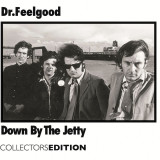
Als Reaktion auf den Prog und Glam der frühen 1970er Jahre war der Back-to-Basics-Sound des britischen Pub-Rock in den Rock ‚n‘ Roll und R&B früherer Jahrzehnte verwurzelt, und nur wenige Bands verkörperten ihn so kraftvoll wie Dr. Feelgood. Das Quartett aus Essex hatte bereits jahrelange Live-Erfahrung, als es mit Produzent Vic Maile ins Studio ging, um DOWN BY THE JETTY aufzunehmen, und das zeigt sich in den zwölf Titeln, die der Konzertmitschnitt „Bony Moronie“/„Tequila“ am Ende dieses Debüts vorausgehen. Gitarrist Wilko Johnson schrieb mehrere großartige Originalsongs für dieses Album, darunter „She Does It Right“ und „Roxette“, und der bluesige Gesang von Frontmann Lee Brilleaux rundet das Ganze ab. DOWN BY THE JETTY, das Bands wie The Jam, Boomtown Rats und Blondie inspirierte, feiert sein 50-jähriges Jubiläum. 2025 Remastered auf 140g Vinyl und CD.

- Bird Of Prey Beaten Back
- Pillows Plumped For The Guests
- In Vivo Receptor
- Gravity Does Its Worst
Bitterviper is an all-new configuration of individuals and intent. Nikos Veliotis (cello), Taku Unami (synthesizer), Sarah Hennies (percussion) and David Grubbs (piano, guitars) have all participated - solo and as collaborators - in some of the most striking avant music-making of the past couple of decades. Their quartet"s collective minimalist interplay passes through dense harmonic fields, transcendentally ionized ambient moods and soundtracks.

Der Pianist konnte lediglich zwei Studioalben aufnehmen, bevor er durch seine Drogensucht obdachlos
wurde und in der Themse ertrank. Auf seinem Debütalbum präsentierte er sich mit einem fantastischen
Quartett und einem Programm aus modern und ungewöhnlich arrangierten Jazzstandards und Eigenkompositionen

11
Grinderman entstand 2005, als Nick Cave Material für das Album „Abattoir Blues/The Lyre of Orpheus“
von Nick Cave & The Bad Seeds schrieb. Gemeinsam mit Martyn Casey am Bass, Warren Ellis an Violine
und Gitarre und Jim Sclavunos am Schlagzeug erarbeitete die Band gemeinsam Songs. 2006 ging sie in
ein Londoner Studio und begann eine Marathon-Session mit Songwriting und Demoaufnahmen. Mit dem
Ziel, den raueren, ursprünglicheren Sound von Caves gefeiertem Post-Punk-Projekt „The Birthday Party“ nachzubilden, wichen die Texte und die Musik von Grinderman deutlich von Nick Caves früheren Arbeiten
mit The Bad Seeds ab.
Im darauffolgenden April nahmen sie die besten dieser neuen Songs auf und nahmen mit Hilfe ihres langjährigen Freundes und Produzenten Nick Launay ein Album auf. Ihr am 5. März 2007 veröffentlichtes Debü-
talbum „Grinderman“ mit elf Songs wurde von der Kritik hoch gelobt und enthält die Singles „No Pussy
Blues“ und „Get It On“. Das Quartett kam 2009 wieder zusammen, um „Grinderman 2“ aufzunehmen, das
2010 erschien. Im Dezember 2011 gab Cave die Auflösung der Band auf einem Musikfestival in Australien
bekannt.
Das „unglaublich aufregende Debütalbum“ (Observer Music Monthly) ist auf schwarzem Öko-Vinyl und im
CD-Digisleeve-Format erhältlich

9
Grinderman entstand 2005, als Nick Cave Material für das Album „Abattoir Blues/The Lyre of Orpheus“
von Nick Cave & The Bad Seeds schrieb. Gemeinsam mit Martyn Casey am Bass, Warren Ellis an Violine
und Gitarre und Jim Sclavunos am Schlagzeug erarbeitete die Band gemeinsam Songs. 2006 ging sie in
ein Londoner Studio und begann eine Marathon-Session mit Songwriting und Demoaufnahmen. Mit dem
Ziel, den raueren, ursprünglicheren Sound von Caves gefeiertem Post-Punk-Projekt „The Birthday Party“ nachzubilden, wichen die Texte und die Musik von Grinderman deutlich von Nick Caves früheren Arbeiten
mit The Bad Seeds ab.
Im darauffolgenden April nahmen sie die besten dieser neuen Songs auf und nahmen mit Hilfe ihres langjährigen Freundes und Produzenten Nick Launay ein Album auf. Ihr am 5. März 2007 veröffentlichtes Debü-
talbum „Grinderman“ mit elf Songs wurde von der Kritik hoch gelobt und enthält die Singles „No Pussy
Blues“ und „Get It On“. Das Quartett kam 2009 wieder zusammen, um „Grinderman 2“ aufzunehmen, das
2010 erschien. Im Dezember 2011 gab Cave die Auflösung der Band auf einem Musikfestival in Australien
bekannt.
Das „unglaublich aufregende Debütalbum“ (Observer Music Monthly) ist auf schwarzem Öko-Vinyl und im
CD-Digisleeve-Format erhältlich

15
Penguin Cafe Orchestra’ is the second studio album by the Penguin Cafe Orchestra, released in 1981, and recorded between 1977 and 1980. By this album, the line-up for the band had expanded greatly, with contribution including Simon Jeffes, Helen Leibmann, Steve Nye and Gavyn Wright of the original quartet, as well as Geoff Richardson, Peter Veitch, Braco, Giles Leamna, Julio Segovia and Neil Rennie.
All pieces were composed by Simon Jeffes, except for ‘Paul’s Dance’ (Jeffes and Nye), ‘Cutting Branches’ (traditional), and ‘Walk Don’t Run’ (by Johnny Smith).
The cover painting is by Emily Young.
‘Cutting Branches For A Temporary Shelter’ is based on the traditional Zimbabwean song, ‘Nhemamusasa’, a field recording of which can be heard played on mbira on the Nonesuch Records album ‘The Soul of the Mbira’.
The Boston Globe opined that “this is one of the most eccentric records released this or any year... It’s also one of the most delightful.”
In 2021, ‘Penguin Cafe Orchestra’ was named among The Fifty Best Albums Of 1981 by Spin.
This repress uses the 2008 remaster.
Pressed on apricot vinyl.
