Samosa Records dips its toes back into the Afrikano waters with Volume 3 of the Afro themed, genre-busting series and features four deadly tracks from some of Samosa’s most trusted lieutenants.
Breaking the ice as the first track of this exceptional EP is Vincent Galgo and ‘African Rebel’. Mr Galgo has clearly read the brief here – giving us a 125bpm marauder that’s a melting pot of unstoppable horns, furious rhythms and an Afro-pop style bass that is the beating heart of the track.
Track 2 is Samosa regular Frank Virgilio who introduces us to his ‘Mistress’. As a straight up jazz-infused, mid-tempo rhythmic chugger, ‘Mistress’ quickly gets down to the important business of racking up the beats and instrumentation. The generous spread of guitar riffs, assertive bass and organ stabs are expertly lifted by the layered and always rolling drums and bongos induce a trance-like state of mind, so be warned!
On the B-Side Samosa newcomer Casper Leo wears his Tribal heart on his sleeve with the enchanting and utterly captivating jangler - ‘Tom Tom’. You can never have too much Kora guitar and ‘Tom Tom’ has lashings of it, with delicious sprinkles of melodic Marimba – perfect for West African sunsets.
Closing the EP off in style is Afro beats grand master, Lego Edit and the filthy-sexy ‘El Safari’. No other producer can take the essence of the Afro beat structure and bend it to their will like Lego Edit can. Like a late night fist-fight in Club Coco Bongo, ‘El Safari’ punches its way out of the doors. A slinky, wily alley cat of a tune that digs deep with its claws and doesn’t let go and another masterpiece from Lego Edit.
Afrikano Vol.3 has done the impossible and set the bar even higher for this wonderfully diverse Samosa series. We want more. We want ‘4’. With this in your record box, you’ll come with a warning.
Search:4 to the bar
- A1: Cal Green “Revolution Rap” Part 1
- A2: Cesar Mariano And Cia “Metropole
- A3: Peter Lipa “My Album”
- A4: Stefano Torossi “Fearing Much”
- A5: Joyce “Longe Do Tempo
- A6: Cal Green “Revolution Rap” Part 2
- B1: Lorez Alexandria “Baltimore Oriole”
- B2: Willie Tee & The Gaturs “Concentrate”
- B3: Mary Lou Williams “Pale Blue”
- B4: Duke Ellington “Didjeridoo”
- B5: Ennio Morricone “Dies Irae Psichedelico”
- B6: Egberto Gismonti “Janela De Ouro”
Taken from the ultra-rare Japanese promo mix CD released in 2004 by madlib himself on his Mind Fusion label. Now on multi -coloured splater viny for the first time. Taking a selection of the best tracks, grooves and breaks from the legendary Mind Fusion Volume 2 mix CD here on vinyl for the first time ever are the entirety full length unmixed original versions. An amazing collection of extremely rare Jazz, Funk , Brazilian and Soul music from Madlibs eclectic and uber diverse record collection. The sleeve design is also a wonderful piece of contemporary art as first displayed on the Japanese mix CD now fully blown up to album cover size making this a must have for all rare art and music lovers.
Lucila Justina Sarcines Reyes was born on July 19, 1936, in the Rímac district. Lima, which had just mourned the death of the emblematic composer Felipe Pinglo two months earlier, was a city on the verge of modernization that clung to its colonial and racist ways. Having been born black marked a difficult path in her life: after the father's premature death and a fire that left her and her 15 siblings homeless, she takes the streets to financially support her mother, and at 5 years old learns to sing in bars while begging for money in the port of Callao. After being admitted to a Franciscan convent and studying only until the third grade of primary school, now a teenager, she returns home, but suffers an attempt of rape by her new stepfather; she is forced to move to the central neighborhood of Barrios Altos, to live with her uncle, a guitarist from the legendary Guardia Vieja, also known as the founders of the Peruvian criollo waltz. This group of non-professional musicians, made up of bricklayers, merchants, artisans, marble workers and other employees, prolonged the oral traditions of their African slave ancestors in working-class neighborhoods of the capital. While the wealthy reject the music of their peons, which they associate with alcohol and disorder, it is the workers who listen carefully to the European waltzes and Aragonese jotas at the aristocratic halls, and later, back in their famous one-pipe alleys, transform their music under the spell of the night. It is in these sociability spaces that house numerous low-income families, where these criollos cheer up birthdays, weddings, anniversaries and other parties until dawn with the trill of their guitars and cajones. It is there that Reyes, at 16 years old, picks up the legacy of the Guardia Vieja and her life changes forever: she is often asked to sing in jaranas (criollo parties), and since her voice stands out immediately, she is encouraged to make her debut on a radio show called "El Sentir de los Barrios", whereshe performs the waltz "Abandonada" by Sixto Carrera.
Brighton (UK) punks THE BAR STOOL PREACHERS have announced their new EP 'Below The Static', which features reimagined versions of songs from the bands 2022 album 'Above The Static'. The EP is out 13th September 2024 via Pure Noise Records. Speaking about the new EP the band said, "For this release, we really wanted to highlight how good the songwriting was. We were stoked with how well the album went down but we really wanted to expose some of the more vulnerable elements and fuck with the format a bit. To hear such strong fxmale vocals, and having heavy guitar riffs on cellos/violins etc. really got us excited about these songs again. Some of the versions are stripped right back to just a voice and one instrument. It's the band like you've never heard it before, and really breathes a different life into the songs."
Through X Scroll Era, Gabo Barranco, aka AAAA, conducts a rigorous overhaul of the aesthetics and statements of low-profile IDM, trance, and progressive-acid music typical of the early 2000’s. In addition to this inherent and undeniable veneration for the era, the pieces on this album — which originated from recordings and experimental exercises with gear and accidentally became an album — serve also as a kind of retrospective inspection of Mexico City's suburbs (Lomas de Sotelo), with landscapes full of indiscriminate concrete, highways of two and three levels, factories, and parking lots that have supplanted nature with their own detached beauty. It is a sound memory, a specific melancholy that praises skate squads of the area, friends from the past, parties, and substances. It reviews the decline of rave culture but also its resilience and capacity for transformation. What AAAA offers us with X Scroll Era is an almost multigenerational soundtrack, a memory that feels collective and recollects euphoria, ecstasy, and nostalgia.
After several LPs and EPs (Acid Test, Omnidisc, Janushoved) and several years active in the dance and contemplative electronic music circuit (MUTEK, BERGHAIN, iii Points, RBMA), X Scroll Era is the first album by Gabo Barranco, aka AAAA, published on the Mexican label Umor Rex.
- 1: The Three ‘O’ Clock - Jet Fighter
- 2: The Rain Parade - Don’t Feel Bad
- 3: True West - Lucifer Sam
- 4: Bangles - Going Down To Liverpool
- 5: Thin White Rope - Down In The Desert
- 6: Game Theory - 24
- 7: The Dream Syndicate - Definitely Clean
- 8: The Long Ryders - Too Close To The Light
- 9: Green On Red - Illustrated Crawling
- 10: 28Th Day - Pages Turn
- 11: The Dream Syndicate - That’s What You Always Say
- 12: The Pandoras - In And Out Of My Life (In A Day)
- 13: The Long Ryders - Ivory Tower
- 14: The Three ‘O’ Clock - With A Cantaloupe Girlfriend
- 15: Bangles - All About You
- 16: The Rain Parade - Talking In My Sleep
- 17: The Three ‘O’ Clock - Her Heads Revolving
- 18: True West - Shot You Down
- 19: Wednesday Week - If Only
- 20: Thin White Rope - Exploring The Axis
- 21: The Rain Parade - Mystic Green
- 22: Green On Red - Lost World
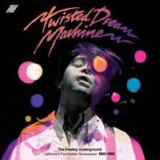
Futurismo proudly present a celebration of the Paisley Underground scene with TWISTED DREAM MACHINE The Paisley Underground / California’s Psychedelic Renaissance: 1982-1986, the next volume in their Altered Vision compilation series.
This collection draws from the neo psychedelic movement that took hold in California during the early to mid 80’s, one that melded the psychedelia, country, garage rock, avant-garde and pop of the 60’s with the DIY ethos of the then burgeoning punk scene, a hypnotic amalgamation of sound that came in staunch contrast to the blown out sonic excesses of the time.
Twisted Dream Machine takes you on a trip from the city to the desert, as the kaleidoscope of noise drifts from the The Dream Syndicate’s Velvet Underground inspired take on Crazy Horse and The Three O’Clock’s chiming baroque powerpop, to Rain Parade’s dreamy Beatlesesque melodies and the Bangles hook-laden Love inspired pop. Also featured are the wondrous sounds of Green On Red, The Long Ryder’s, Game Theory, True West, Thin White Rope and others highly worth your attention. If you are not familiar with some of the bands here, you will surely question how that is possible. The Paisley Underground, if anything, encapsulated a certain musical mindset, an outlook where the past and the future would collide in the moment. This thread would bond the bands, yet each honed it’s own sound in a twisted incarnation of the seeds planted two decades earlier. Whilst the ‘scene’ did remain contained, its influence did in fact spread throughout mainstream culture as the Bangles stuck a chord into the heart of MTV, whilst Prince took inspiration from the movement in his own songwriting and the naming of Paisley Park, as well as signing The Three O’Clock to his label and writing one of the Bangles biggest hits.
As you listen to the tracks on Twisted Dream Machine you will be reminded that there is still music left to discover and inspire, this compilation is aimed to hopefully delight longtime fans, as well as ignite a passion for those new to the bands. The Paisley Underground was the sound of neo psychedelic rock, it was subterranean pop...in
the classic sense, it was alternative rock before the term existed, a distillation of the fundamentals present at the dawn of rock ‘n’ roll, with a twist. The bands of the Paisley Underground may have been writing out of their own time, but as you listen to them in today’s context these songs should be heard as landmarks, rather than throwbacks. After all, nothing this good should stay underground. This 2xLP comes on limited edition coloured vinyl, it is housed in a gloss laminated outer sleeve with colour inner sleeves and contains a large fold-out poster with unseen photos and liner notes by Lisa Fancher of Frontier. Also available on CD with Gloss laminated Sleeve and Fold Out Poster.
Jade Hairpins waste no time fulfilling their second album's titular demand. From its harmony-drenched opening note to its baroque-anthemic conclusion, Get Me the Good Stuff is positively loaded with musical ideas, an absurdist buffet of sound and aesthetic that comes with one hell of a floorshow as the Hairpins stack those ideas higher and higher, almost daring them to crash to the floor. Instead, those elements - punksploitation, power pop, baggy, funk, and Italo disco are just some touchstones - are not only held aloft, they defy gravity and convention. These pyrotechnics are, in true Jade Hairpins fashion, something of a sleight of hand. While the music swaggers and gallops, Get Me the Good Stuff grapples with anxiety and self-doubt, obfuscating pain and alienation with sparkling wit and some straight-up ravers. Get Me the Good Stuff opens with one of those, "Let It Be Me," in which Jonah Falco shouts lyrics about being alone with one's shortcomings against guitars, synths, and harmonized vocals that are on the verge of closing in. The song is just over 90 seconds long, hitting with the gnarled-barb ferocity of punk and the gleeful insanity of theatrical art rock. It is, in other words, overwhelming. Or it would be if Jade Hairpins - Jonah Falco and Mike Haliechuk - weren't remarkably nimble in their ability to bring unity to sounds by placing them in competition against each other. When those sounds are adjacent, like the glam and disco that saturate "Drifting Superstition," the thrill of those universes colliding in the heat of an absolutely filthy clavichord line turns its lyrics, about the habit of solving personal problems by ignoring them, into a winner's anthem on the order of Bowie or Hot Chocolate. Get Me the Good Stuff arcs towards unequivocal joy as Falco, Jade Hairpins' primary lyricist, breaks these cycles and attempts to run away with his dreams. The arc is roughly analogous to how the album came to fruition. Four years removed from Harmony Avenue, an album of material that proved too strong to be contained within the narrative universe of Fucked Up's Dose Your Dreams, Jade Hairpins have gelled as a live act - with Tamsin M. Leach and Jack Goldstein centering them on stage - and planted their flag in the UK punk scene in which Falco has embedded himself. Working out new material live, Falco noticed that crowds were digging into his unfinished lyrics, and the album tightened around the anxieties of being in the spotlight, of being worthy of attention. At times, those songs are eager to please, like the album's title track in which a winking self-deprecation rubs up against the self-congratulatory bombast of Freddie Mercury, Falco simultaneously turning heads as a shooting star and a burning car. Elsewhere, as in "Better Here Than in Love," Jade Hairpins pitch themselves towards creating gorgeous soundscapes that exist nowhere else, channeling postpunk through the glimmering haze of '80s Japanese electronic music. Theatrical and personal, absurd and true-to-life, playful and serious, Get Me the Good Stuff is album of tremendous personal and artistic growth that signposts towards dozens of potential futures to come. It's not only worth the attention, it continuously rewards it.
Jade Hairpins waste no time fulfilling their second album's titular demand. From its harmony-drenched opening note to its baroque-anthemic conclusion, Get Me the Good Stuff is positively loaded with musical ideas, an absurdist buffet of sound and aesthetic that comes with one hell of a floorshow as the Hairpins stack those ideas higher and higher, almost daring them to crash to the floor. Instead, those elements_punksploitation, power pop, baggy, funk, and Italo disco are just some touchstones_are not only held aloft, they defy gravity and convention. These pyrotechnics are, in true Jade Hairpins fashion, something of a sleight of hand. While the music swaggers and gallops, Get Me the Good Stuff grapples with anxiety and self-doubt, obfuscating pain and alienation with sparkling wit and some straight-up ravers. Get Me the Good Stuff opens with one of those, "Let It Be Me," in which Jonah Falco shouts lyrics about being alone with one's shortcomings against guitars, synths, and harmonized vocals that are on the verge of closing in. The song is just over 90 seconds long, hitting with the gnarled-barb ferocity of punk and the gleeful insanity of theatrical art rock. It is, in other words, overwhelming. Or it would be if Jade Hairpins_Jonah Falco and Mike Haliechuk_weren't remarkably nimble in their ability to bring unity to sounds by placing them in competition against each other. When those sounds are adjacent, like the glam and disco that saturate "Drifting Superstition," the thrill of those universes colliding in the heat of an absolutely filthy clavichord line turns its lyrics, about the habit of solving personal problems by ignoring them, into a winner's anthem on the order of Bowie or Hot Chocolate. Get Me the Good Stuff arcs towards unequivocal joy as Falco, Jade Hairpins' primary lyricist, breaks these cycles and attempts to run away with his dreams. The arc is roughly analogous to how the album came to fruition. Four years removed from Harmony Avenue, an album of material that proved too strong to be contained within the narrative universe of Fucked Up's Dose Your Dreams, Jade Hairpins have gelled as a live act_with Tamsin M. Leach and Jack Goldstein centering them on stage_and planted their flag in the UK punk scene in which Falco has embedded himself. Working out new material live, Falco noticed that crowds were digging into his unfinished lyrics, and the album tightened around the anxieties of being in the spotlight, of being worthy of attention. At times, those songs are eager to please, like the album's title track in which a winking self-deprecation rubs up against the self-congratulatory bombast of Freddie Mercury, Falco simultaneously turning heads as a shooting star and a burning car. Elsewhere, as in "Better Here Than in Love," Jade Hairpins pitch themselves towards creating gorgeous soundscapes that exist nowhere else, channeling postpunk through the glimmering haze of '80s Japanese electronic music. Theatrical and personal, absurd and true-to-life, playful and serious, Get Me the Good Stuff is album of tremendous personal and artistic growth that signposts towards dozens of potential futures to come. It's not only worth the attention, it continuously rewards it.
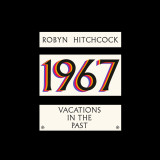
Robyn Hitchcock is a rock’n’roll surrealist. Born in London on March 3rd, 1953 he describes his songs as “pictures you can listen to”. As much a child of Dali, De Chirico, and JG Ballard as of his 1960s musical heroes, he is a master of the absurd, reveling in the beauty of the unexpected. His first publicly visible band The Soft Boys (1976 - 81) has remained an influential art-rock touchstone for generations of musicians. “I just want to be an obscure cult fringe,” he told the NME in 1978; the NME didn’t believe him, but he’s been true to his ambition. Without ever breaking the surface of pop culture Hitchcock has floated at a tangent to the mainstream for nearly 5 decades. His songs have been performed by REM, The Replacements, Neko Case, Gillian Welch & David Rawlings, Lou Barlow, Grant Lee Phillips, Sparklehorse, and Suzanne Vega with the Grateful Dead among others. A confirmed outsider, he nonetheless has devoted listeners around the world who attend his concerts, and also tune into the online streaming shows Robyn seasonally does with his wife, the singer Emma Swift. In 1996 he was the subject of Jonathan Demme’s in-concert film, ‘Storefront Hitchcock’. Robyn Hitchcock came of age in the 1960s when he attended Winchester College, an eccentric hothouse boarding school in the south of England. This is the subject of “1967”, which is both a memoir and an album, due for release in June this year. The memoir is a book “1967: How I Got There And Why I Never Left”, describing how the music of Bob Dylan, The Beatles, Jimi Hendrix and others drastically transformed the direction of his life when he left home for this strange new world. The companion record album “1967: Vacations In The Past” is a selection of the (mostly) hit songs of that year, re-recorded acoustically by Robyn with the help of some friends in Cambridge, San Francisco, and Sydney. He is currently preparing new material to release in 2025. “I like to keep busy”, he says: “We have all eternity to not exist”.
The birth and growth of the Jamaican recording industry…
Records have played an integral part in the history of Jamaican music and the importance of making records, as opposed to making music, can never be overstated. These are the stories, told through first-hand accounts wherever possible, of the men and women… manufacturers, musicians, arrangers and record producers… who made the records and who made the sound of reggae available worldwide.
“An absolutely crucial survey of the origins of the Jamaican music industry replete with chapter and verse quotes from many of the pivotal movers and shakers. A wealth of new information, expertly marshalled: this is a book whose time has come."
Steve Barrow
Co-author of ‘Reggae The Rough Guide’
“Noel Hawks’ history of Jamaican studios and the characters involved provides an intriguing insight into the development of ska, rock steady and reggae. His lifelong love and deep knowledge of the music prove to be invaluable assets as he takes us on a journey from the primitive ‘direct-to-disc’ mento recordings of the Fifties through to the sophisticated roots and dub reggae of the Seventies. As both a music fan and a reggae business insider he has had access to the main players in the Jamaican music scene, and this book offers a genuine and unique insight into Kingston’s studios and the producers and musicians who worked in them.”
Chris Lane
Fashion Records
“Any music reference book should balance knowledge of an expert and enthusiasm of a fan in roughly equal measure. Noel Hawks’ ‘Jamaican Recordings’ unquestionably succeeds in doing both. The wealth of facts and information that Noel has amassed in almost fifty years of researching and collecting reggae and its musical antecedents are presented here in a way that will show any reader that Noel still gets as much pleasure out of finding new classic music, not to mention acquiring new know how about it, as he and others among us did when we started our individual collector odysseys.
‘Jamaican Recordings’ is a fine read and a book that anybody with more than a passing interest in Jamaican recordings will need to add to their library right away.”
Tony Rounce
Author & Music Historian
For our second release, circuit|breaker quips back the stacked offering of CBRK001 with another dynamic double LP, exhibiting some of the best local and international talent that’s cropped up on our radar over recent years.
The label is as driven as ever to build a bridge between our community and the wider electronic
music domain, giving artists a platform to preach the sound that speaks to them, and this release is but another stepping stone towards greatness, for us and for them.
CBRK002 opens up with a rolling, gritty number that could only be Fergus Sweetland, as metallic voices beckon forth on ‘Untitled (ARP 1.02)’. Hasvat Informant, whose thunderous reputation precedes him, then storms the barn with the explosive ‘Abispa Ephippium’. The B-side shifts gears to Goa’s Dotdat and his frantically groovy track ‘Holo’, followed by a gorgeous minimal number by Berlin-based Pino Peña – Mia’s Pocket; one that’s sure to get summer dancefloors pumping.
The C-side of the record contains two heaving tracks, the C1 from the prominent force of Cloudy Ku with ‘A Room of One’s Own’, and the C2 from the dark visage that is disgrays with
‘Turmstraße’. The final side of the record has Amsterdam legend Juan Sanchez open the filter with a warm, jacking submission in ‘Indulge’, while the Berliner Marsch takes us home with a
devious timbre that will have bodies glued to the floor on ‘Into You’.
- A1: Juan Piña Y Sus Muchachos - Toquen Cumbia
- A2: Los Corraleros De Majagual - La Pollera Colorá
- A3: Aníbal Velásquez Y Su Conjunto - La Negra Celina
- A4: Cumbia Cipote Vaina - Soledad
- A5: Calixto Ochoa Y Su Conjunto - Recordando El Pasado
- A6: Lucho Campillo Y Su Conjunto - Me Dejaste Solo
- B1: La Sonora Del Caribe - Gaita Colombiana
- B2: El Sexteto Miramar - Cumbiamba
- B3: Pello Torres Y Sus Diablos Del Ritmo - Lucy
- B4: Combo Los Galleros - Suena La Timba
- B5: Los Guacharacos - Baila Rosita
- B6: Combo Sampuesano - Cumbia Monterian
- C1: Conjunto Típico Vallenato - Cumbia Sampuesna
- C2: Pedro Laza Y Sus Pelayeros - Esperma Y Ro
- C3: Andrés Landero Y Su Conjunto - La Pollera Rosada
- C4: Los Golden Boys - Se Trabó La Banda
- C5: Orquesta Nuñez - La Samaria
- C6: Los Candelosos - Cumbia De Amores
- D1: Morgan Blanco Y Su Conjunto - Cumbia De Colombia
- D2: Pacho Galán Y Sus Sabaneros - Caracoleando
- D3: Los Gavilanes De La Costa - Lorenza
- D4: Las Estrellas De Tolú - Cumbia Al Amanecer
- D5: Los Warahuaco - El Pescador De Barú
- D6: Rodolfo Aicardi Y Su Tipica Ra7 - La Colegiala
A selection of 24 Colombian cumbia bangers for the dance floor from the deep vaults of Discos Fuentes, the most emblematic and best remembered label in the golden age of the genre. An invitation to enjoy and be amazed, above and beyond ethnographic and academic concerns. Double LP. The historical origins of cumbia in Colombia are nebulous and imprecise. The mythology surrounding it suggests an ancient past when Amerindian, African and European musical sounds were mixed together. The main record companies in Colombia such as Discos Fuentes, Discos Tropical, Sonolux, Zeida-Codiscos, Silver, Ondina, Discos Atlantic, Vergara and Curro were created between Barranquilla, Medellín, Cartagena and Bogotá from 1936 to 1954. All of them, without exception, recorded Colombian tropical music that over the years was given different names such as porro, gaita, fandango, paseaito, merecumbé, mapalé, bullerengue or, of course, cumbia. This first volume in the series “Cumbia Cumbia Cumbia!!!” comprises 24 Colombian cumbia bangers for the dance floor from the deep vaults of Discos Fuentes, the most emblematic and best remembered label in the golden age of the genre. This is complemented by a selection of cumbias recorded by the label Discos Tropical, which sold most of its catalog to Discos Fuentes in 1990. Discos Fuentes concentrated on recording cumbias played on the accordion and by orchestras and ensembles. The label produced a prodigious number of albums devoted to cumbias between 1962 and 1979, which served to define ambiguous stereotypes, rooted as much in authenticity and modernity as in demure sensuality and joyful nostalgia. “Cumbia Cumbia Cumbia!!!” combines well-known classics and rarities that are difficult to find in their original formats. An invitation to enjoy and be amazed, above and beyond ethnographic and academic concerns.
Get Nuff Nuff Data is a series of books exploring positive forces in contemporary music in relation to place and culture.
This book opens the series with the stories of musician I Jahbar and his surrounding community, set in the outskirts of Spanish Town, Jamaica. In 2011 I Jahbar collaborated with a duo of California based experimental musicians, and his acrobatic performance on their track ‘Spy’, inspired the founding of a record label named ‘Duppy Gun’. Their music captivated me like nothing had before. It was difficult to frame, drawn towards an innovation in sound, while embodying some ancient energy. 'Duppy Gun’ has paved its own unique path in dancehall music ever since, showcasing the power of international creative collaborations, by linking Jamaican lyricists with producers from different parts of the world.
There’s a little family formed around those musical projects, of goodhearted, talented individuals.
Led by a growing curiosity, I came to Jamaica, offering to create a visual aspect to the ongoing dancehall movement. During 3 weeks of collaborating with I Jahbar, we worked on a shared vision of promoting the voices of emerging vocalists and documenting their creative spirit.
The feeling of being welcomed to step into an unfamiliar narrative inspired the creation of this series, examining the perceptions of ones belonging and idea of home. Through segments of monologues and conversations, nature and portrait photographs, the book portrays a bond between people and their surrounding land, what they seek to change or wish to cherish and preserve. Get Nuff Nuff Data is dedicated to the simple lines that connect us all, each individual story exists as a universal one.
* Part of the book takes place online, including access to ‘unprintable data’. Exclusive video, audio, and downloads.
Details:
Self published
Designed by Matúš Hnáts
Printed by Tiskárna Helbich
500 copies, Swiss binding, 120 pages, 16x24cm
Printed on Fedrigoni 135gsm Symbol Tatami White
ISBN 978-965-598-736-2
(Barcode on the Last page of the book)
Even though it came out on a major label, this record sells for hundreds of dollars if you can find it at all (we know…we paid for a copy), and it’s no wonder… it’s the perfect blend of raw R&B passion and smooth, sophisticated soul production. First, the passion part… Willie Tee was a New Orleans pianist and singer best known for recording a series of burnin’ 45s (some cut for Harold Battiste’s short-lived AFO label) during the ‘60s. I’m Only a Man was Willie’s album debut, cut for Capitol in 1970, and he brought the same deep-seated intensity to the record that he did his singles. The difference was, for I’m Only a Man, Willie’s warm, raspy voice was lovingly bathed in spectacular arrangements by H. B. Barnum and produced by the great David Axelrod. Strings, brass, xylophone, bluesy guitar licks, and a funky rhythm section are all percolating inside this record’s grooves, with a daring choice of material that ranges from Cannonball Adderley’s “Walk Tall” to the Bacharach-David nugget “Reach Out for Me” to the self-penned highlights “Mirror” and “Bring On the Heartaches” to the album closer “People” from Funny Girl. Capitol wasn’t known for breaking soul acts at the time, which may explain why this record remains a cult classic; we’re happy to give it the exposure it deserves, with a purple vinyl pressing limited to 1000 copies.
Debut album from Los Angeles duo Los Yesterdays - Sweet Soul music meets Mexican Folklorico
"Sweet soul music - also known as lowrider oldies on the West Coast, rolas and souldies - are typically early 60s-style tunes that emphasize vocal harmonies. Most songs are slow-to-midtempo, many are ballads, and the sub-genre is generally stripped down compared to the highly produced Motown hits of the time....there is a generations-long appreciation for sweet soul music among California’s Latino communities. Eastern Los Angeles teens.... helped foster a love of sweet soul in the early 60s by covering soulful ballads by artists like James Brown... Those sounds....were kept alive by record collectors and people who spent evenings cruising along East Los boulevards." - Los Yesterdays are a Chicano soul band from Los Angeles based around the creative collaboration between Gabriel Rowland and Victor Benavides. They began working together when Rowland - a drummer by trade, then creaky and exhausted from waking up at dawn to work construction - decided to channel those struggles into song. He contacted Benavides, a former bandmate of Rowland’s deceased brother, to record the soul ballads that Southland Chicanos call “oldies.” Los Yesterdays filter love-struck R&B crooning through guitar-strumming Mexican balladeering; the result is something that sounds like the Los Angeles of yesterday and today - the indelible, immovable Los Angeles of cruising Whittier Boulevard, of cold drinks on the porch on blazing summer nights, of watching a blue-orange toxic sunset and wondering if they are thinking about you. Los Angeles changes; Los Angeles stays the same. Los Yesterdays have changed, outgrown their childhood barrios and the bands of their early 20s and their private garage hermitude; Los Yesterdays are Frozen In Time.
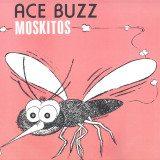
Ace Buzz is one of the various projects of Tony Baron and Gery Francois (the minds behind projects like "Teknokrat's" and others that would found their output on labels like Carrere). Potentially naive for some, but surely playful and raw, an exquisite example of the sound of Belgian "New Beat". Void of the usual aggressive temper known to the genre, "Moskitos" comes in with a slight juxtaposition of Balearic accents in the form of those classic, very simple, piano chords we might have heard enough of. The samples employed invoke the image of someone in a cheap hotel room in Ibiza without AC trying to kill the airborne vermin celebrated in the title while hallucinating from an August drug infused heatwave, who knows. On the B-side, things slow down into a deeper more serious mood, "Nuevo Mondo" departs from the usual New Beat potency into something a bit more digestible to the ear in a rather unique way, followed by a Remix that sounds more like a complete facelift of a cover version by studio maestro Anatolian Weapons.
"Springing from Osaka, Japan’s cultural center and historical heart, comes HYPER GAL, a two-piece band consisting of visual artist Koharu Ishida on vocals and noise artist Kurumi Kadoya on drums.
The minimalist duo make maximum impact - stripping music down beyond the bare essentials, to create shimmering, no wave pop from blast beat drums, glittery keyboard loops and ethereal bubblegum vocals - laced with velvet and firecrackers.
On “After Image” HYPER GAL hold fast to their limited palette, but expand their reach. Working with a canvas larger than ever before, the band fearlessly alternate bold, avant-garde strokes with intimate, deliberate gestures. The result is a new world awash in a sea of endless possibilities - only visible with closed eyes and open ears.
“There's something almost vapor-wave-adjacent about the glorious racket riled up by this pair. The effect of repetition throughout, the way the beat slips in and out of time, is hypnotic” - THE WIRE
“Blends elements of noise, no wave, pop and blistering punk to create something remarkable and new… Endlessly inventive and challenging” - MAXIMUMROCKNROLL
“These royalty of no-wave-pop don't blink and their delivery is absolute. An exhilarating, total experience” - NOISE-FI
""Indescribable, just listen to it for yourself. And don't take any stimulants beforehand, you could end up in the emergency room"" – OX FANZINE
“It looks like noise, but there is too much color. Pop, but unsellable. Their music goes beyond barriers, genres and boundaries, as if a virus had been injected into a video game bringing delirious ruin to a perfect world” – SODA POP
“Intensely good. A beautiful challenge, a noise, relentless, not an onslaught, always inviting, like they want to pull you in rather than chase you away. Actually, this is joyous” - THE ORGAN"
- A1: Raul Seixas, Sérgio Sampaio - Ta Vida
- A2: Edy - Sess–O Das
- A3: Sérgio Sampaio, Raul Seixas
- A4: Sérgio Sampaio - Eu Acho Graça
- A5: Miriam Batucada - Chorinho Inconsequente
- A6: Raul Seixas, Sérgio Sampaio - Quero
- B1: Miriam Batucada - Soul Tabarôa
- B2: Sérgio Sampaio - Todo Mundo Está Feliz
- B3: Raul Seixas - Aos Trancos E Barrancos
- B4: Edy - Eu N–O Quero Dizer Nada
- B5: Raul Seixas - Dr. Paxeco
- B6: Sociedade Da Gr–-Ordem Kavernista - Finale
A wonderfully wild album - every bit as much as you'd guess from the cover - by a group that provided an early showcase for the talents of Raul Seixas and Sergio Sampaio - both artists who'd later have a big impact on Brazilian music in the 70s! The cover might look as trippy as a Tropicalia album, but these guys are maybe lightly looser overall - still with a talent for mixing together odd and offbeat elements, often with a nice degree of wit - but also groovy enough to make some of their songs swing nicely, with a very catchy vibe! The group also features the lovely Miriam Batucada and Edy -- who both get a chance to sing too - and titles include "Eta Vida", "Quero Ir", "Eu Acho Graca", "Sessao Das 10", "Dr Paxeco", "Finale", "Todo Mondo Esta Feliz", and a great version of the Antonio Carlos E Jocafi tune "Soul Tabaroa"
Anyone who’s overcome mental, physical, emotional, or spiritual barriers will relate deeply to Soraia’s music. Their instrumentation and lyrics showcase tragic romance, awakened passion, fiery desire, and lost identity - yet their message is ultimately filled with a consistent foreboding of hope. It's the band's drive to empower the listener to make the change they choose that helps Soraia stand apart, defining them not simply as a rock n' roll band, but even more: a hard-rocking force of nature.