
Suche:54

12
Inspired by Muddy Waters and other blues greats, the South London blues-rock band Killing Floor was formed in 1968 with lead singer and harmonica player Bill Thorndycraft, guitarist Mike Clarke, bassist Stuart McDonald, pianist Lou Martin and percussionist Bas Smith. This self-titled debut set, issued by the independent Spark label (and licensed to Sire for US pressings), was produced with care by former DJ John Edward, based on Chicago blues material, as heard on the cover of Willie Dixon’s ‘You Need Love.’ This is the band at their rawest beginnings, a grittier traditional blues set that contrasts with later work for Larry Page.
7
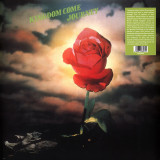
Theatrical rocker Arthur Brown gained notoriety and fame in equal measure through ‘Fire,’ an anthem to their pyrotechnic excess. When his backing musicians quit to form Atomic Rooster, Brown formed Kingdom Come to further explore the nexus of music and theatre and of the series of albums they cut for Polydor, Journey is the strangest and greatest. Stretching to the deepest reaches of space rock, Journey used the Bentley Rhythm Ace drum machine, and Victor Peraino’s synths, theremin and mellotron, to chart the astral records of history. This is Brown’s true masterpiece, an astounding record that was aeons ahead of its time.

- A1: A Whole Lotta Shakin' Goin' On
- A2: Going Home Tomorrow
- A3: Money Honey
- A4: Only You
- A5: Hound Dog
- A6: Goodnight Irene
- B1: Lawdy Miss Claudie
- B2: Groovy Little Suzy
- B3: Short Fat Fanny
- B4: Cherry Red
- B5: Memories Are Made Of This
- B6: Blueberry Hill
7
Known as ‘the Architect of Rock ‘n’ Roll,’ the flamboyant rhythm and blues extrovert, Little Richard, made an incredible impact with unorthodox piano playing and rasping, shouted vocals, yielding a series of pivotal hits in the mid-1950s, but he abandoned secular music for gospel following a tour of Australia in 1957. Lured back into rock by promoter Don Arden, his UK tour featuring The Beatles as support, Little Richard Is Back was his comeback set for Vee Jay, his voice now deeper and seasoned; the range of covers are tackled with plenty of pep, and original ‘Groovy Little Suzy’ was co-written by Harry Nillson. All hail the King!

4
The adventurous singer, guitarist and music journalist Mick Farren launched his solo career after being sacked by his fellow Deviants, the protopunk band he fronted from 1967-69. Suffering from depression and other mental health issues, Farren teamed up with an all-star cast, including members of Quartermass and ex-Tyrannosauros Rex honcho Steve Peregrin Took for debut opus Mona The Carnivorous Circus, mixing hard rock, spoken word, spaced-out interludes, radio cut-ups and garage rock, rendering a work as compelling as it is hard to classify. Strange, delightful and a favourite of Julian Cope, this is an aural journey to savour.


- A1: Gates To Infinity
- A2: Through & Through
- A3: In The Garden Of The Mystic
- A4: Burning Down
- A5: Desdemona
- A6: Spanish Castle Magic
- A7: The Veil
- B1: The Laughter Castle
- B2: Scenes From The Dreams Of Angels
- B3: Infinity Beyond Beyond
- B4: Moonlight On Yeading (Bonus Track)
- B5: Lovin' Fire (Bonus Track)
After debut LP Lord Of The Dark Skies, London-based acid psych trio Outskirts Of Infinity released Scenes From The Dreams Of Angels on their own Infinity imprint. Heading deeper into space rock, the album had bassist Nick Saloman on keyboards in places and front man Bari Watts on synth, but his ripping is really spectacular throughout and there’s a nod to the Hendrix influence on a killer cover of ‘Spanish Castle Magic.’ Arguably their best album, it has style, grace, and hallucinogenic power, this edition reproducing the inner gatefold lyrics.

10
The American psych pop quintet Paper Garden had established a solid reputation performing to university students in their native New York and in surrounding states in 1967-68 before being commissioned to cut a debut LP with British producer Geoff Turner for Musicor, the resultant sessions yielding a self-contained concept album of totally new work. With sitars and tabla on some songs trading places with baroque elements and orchestrated interludes, the breezy psych pop gets pulled in all manner of directions and often sounds closer to the British psychedelic sound than anything Stateside. A rare and rich listening experience!


6
Fresh from their US tour supporting Black Sabbath, Brooklyn-based heavy metal trio Sir Lord Baltimore expanded to a quartet for the recording of their self-titled sophomore album, released by Mercury in late 1971. The new addition was uitarist/keyboardist/vocalist Joey Dambra, brother of guitarist co-founder, Louis Dambra, adding a dual-guitar element to their hefty sound. The album begins with the epic “Man From Manhattan,” a symbolic allegory of a resurrected Christian icon in a new setting; in contrast, “Where Are We Going” captured the rawness of the group in live glory and “Chicago Lives” a twin-guitar attack. Somehow, the band did not survive long after its release, though Joey later recorded with John Lennon; this reissue spins at 45 RPM for maximum fidelity.

- A1: Lost Awakening
- A2: Your Woman's Gone And Left You
- A3: Night Girl
- A4: Nothing Can Change Your Mind
- A5: Living For Today
- B1: Big House
- B2: Mirrors Of Sorrow
- B3: Look, What Else Is Happenin
- B4: I'm Fallin' Far Behind
- B5: Witches Come Today
6


- A1: Too Late For That Now
- A2: Now I Aint A Junkie Anymore
- A3: What You Gonna Do
- A4: Like You Used To Do
- A5: You've Gotta Move
- B1: Put A Record On
- B2: Funky Money
- B3: Beggar By Your Side
- B4: Maternity Orders (Keep On Rolling In)
- B5: It’s Over
3
English blues outfit Tramp had a fleeting existence in the late 60s and early 70s—here today, gone tomorrow. Based around former John Dummer Blues Band vocalist/ guitarist Dave Kelly and sister Jo Ann on harmonies and occasional lead, the group got a boost from Fleetwood Mac mainstays Mick Fleetwood, Danny Kirwan, and Bob Brunning, as well as former Savoy Blues keyboardist, Bob Hall. If not quite as compelling as their 1969 debut, this 1974 LP has the hallmark touches that made the Mac leaders of the British blues scene. Fleetwood Mac devotees and British blues lover, get stuck in!

10
English blues outfit Tramp was a fleeting affair, active in the late 1960s and early 1970s on an on again, off again basis. Centred on former John Dummer Blues Band guitarist/vocalist Dave Kelly and his singing sister Jo Ann, the group benefitted from Fleetwood Mac mainstays Mick Fleetwood, Danny Kirwan, Bob Brunning and former Savoy Blues Band keyboardist, Bob Hall. Produced for Spark in 1969 by Donovan’s manager, Peter Eden, their sole LP featured tough blues originals, written by members of the group. This is a must-have for all Fleetwood Mac devotees, andfor lovers of British blues albums.

9
The roots of 80s English psychedelic freak band The Tryp lie in a hoax perpetuated by Steve Lines’ indie mag Mardenbeat, based in the town of Calne in the Marden Delta, which reviewed a gig by a non-existent band; former JP Sunshine main man Rod Goodway and partner Christine Cotter then gave flesh to the beast with Lines and Paul Ricketts of Unhinged mag, cutting My Brain Collapsed! as an exploration of mushroom-fuelled mental instability. First issued on cassette label Mardentapes and later by Acid Tapes (just as Lines took over from Alan Duffy), this edition is the first on vinyl-A Must Have FOR ALL Tryppers!


- A1: Electric Night
- A2: Sleep Song
- A3: Autumn Wine
- A4: Rat Race
- A5: Just Wanna Hold You
- A6: Holland
- B1: Nightingale Crescent
- B2: The Farmer
- B3: In The Gym
- B4: Blue Pine Trees
- B5: Ooh Mother
- B6: Volcano*
- B7: I’ll Believe In You (The Hymn)*
9
Beginning in the mid-1960s as a covers band, the group that came to be Unicorn soon determined that original material was the way to go, and after being inspired by a Crosby, Stills and Nash album, their particular brand of enlightened folk rock tinged with country shades yielded a contract with Transatlantic for their 1971 debut. Fast forward to 1974 and Blue Pine Trees finds the band at their finest with sweeping harmonies and bluegrass tinges, and with Pink Floyd’s David Gilmour in the producer’s chair, all of their glorious potential is realised on this lost gem of an album that is fully ripe for rediscovery. A truly great work!


