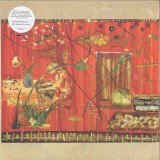
During the 1970s George Jackson made a series of sublime southern soul recordings at Sounds Of Memphis studios. This LP gathers together rare singles and tracks that were unreleased at the time to showcase this golden period in the soul singer-songwriter’s career.
Recorded using many of the players from the Hi house band, who were at the time being featured on the recordings of Al Green and Ann Peebles.
Four tracks are making their first appearance on vinyl, whilst the compilation features both sides of his rare 1975 Chess single ‘Macking On You’ b/w ‘Things Are Getting’ Better’ and his ER single ‘Talking About The Love I Have For You’, which regularly sells for over $1000 on auction.
Jackson had a long career that saw him write hit singles for artists such as Candi Staton, Clarence Carter, the Osmonds and Bob Seeger, whilst covers of his songs have been UK hits for both Yazz and Joss Stone. However, his success as a writer somewhat obscured his talent as a performer, something that our series of releases focused on him has sought to rectify.
quête:7 record cover
Black Vinyl Edition
The Log and the Leeway follows a 6 year journey of personal exploration and drastic change for Bram Bosteels and his singular Kaboom Karavan universe. What entails is a sound-curiosity of rare format, following a metamorphosis that goes beyond the musical.
Early in the process, Bram was struck by the word/concept of a Leeway : the gradual departure from an intented course due to external influences. Following a boyish fascination for explorers travel journals, logbooks and the far fetched corners of the world, he could not have forseen how fitting of a title he had chosen. Drastically all of a sudden one day, completely unexpectedly, Bram experienced his own father dying in front of him from a rare disease. Shocked and confused by this intense encounter, his perspectives and musical course departed from its original path. But at the same time it was an enlightenment and a necessary influence for him to realise the initial idea and finish this album, started over half a decade before.
The ones familiar with Kaboom Karavan already know that nothing really sounds quite like it. Bram’s musical (and non-musical) universe is of the rare breed that seems to be entirely his own. Self-contained, but never opaque. Quite the opposite actually. Bram never pushes us away, instead, by listening to his music we are given view to a synesthetic wunderkammer of images, places, objects and possibilities. Distant but magnetic, alien but intimately familiar, Kaboom is folk music from another dimension. Listening to The Log and the Leeway is like waking up next to a bonfire in the middle of a swamp wearing somebody else’s clothes: You may not know how you got here, but whatever is happening seems to very directly involve YOU. What will happen?
Note from Erik K Skodvin (Miasmah): All the sounds, fabrics, instrumentation and stories that binds The Log and the Leeway together go far beyond what can be touched up in this simple writeup. As someone who have followed this journey since the beginning, and seen it shift from lighthearted fun to the most crepuscular personal experience, heard the stories behind (almost) every field recording and gone through boundless amounts of clips, visual details, notes, and inspirations – I can only say that it is with great pleasure and certain nostalgia I can present this record in full through Miasmah and close this quite extraordinary chapter. Bram is without doubt the most fascinating person I know. Like I told him in April 2020 during a trying time: “If everything fails, we´ll open a Kaboom Karavan museum” - an idea that might not be as far-fetched as it sounds.
Featuring: Cover painting by John Lurie. 16 page booklet of Musical illustration / collagés by Walter Dhoogh & Erik K Skodvin that more or less connects (or confuses) the dots between the music and stories behind. Mastered by Lupo at Loop-O
- A1: Carole Cole - Ethiopia
- A2: The Silvertones - Give Praises
- A3: The Inamans - How Deep Is Your Love
- A4: Lasksley Castell - Jah Love Is Sweeter
- B1: Bunny Rugs - Let Love Touch Us Now
- B2: Bunny Rugs - I Am... I Said
- B3: The Originals - Got To Be Irie
- B4: The Upsetters - Double Wine
- B5: Junior Byles - Mumbling & Grumbling
Black Ark Vol. 2 is another piece of Lee ‘Scratch’ Perry’s limitless musical puzzle. It’s a bedrock of deep and heavy rhythms recorded around Jamaica =just before the demise of Perry’s famed Black Ark Studio. Black Ark Vol. 2 is the follow up album to the acclaimed Black Ark In Dub that unsurprisingly for an Upsetter release, took a different path. More vocal oriented, the album features extended dubwise cuts of (former wife and co-producer) Carol Cole’s ‘Ethiopia’, The Originals ‘Got To Be Irie’, Junior Byles ‘Mumbling & Grumbling and The Inamans remake of the Bee Gees hit ‘How Deep Is your Love’, along with an alternate take of the Silvertones roots classic ‘Give Thanks’ with flute overdub and a couple of solid covers from Third World lead vocalist Bunny Rugs. Originally released in 1981 the hard to find Black Ark Vol. 2 remains a frozen sonic timepiece, captured at the beginning of the end of one era and poised at the start of another.
Swiss jazz bliss! We Release Jazz is very, very, VERY happy to present its sixth release (following Ryo Fukui’s Scenery and Mellow Dream, Le Cercle Rouge’s soundtrack by Eric Demarsan, Stuff Combe 5 + Percussion, and Marc Moulin’s Placebo Live 1971) coming straight from its beloved hometown of Geneva. Boillat Thérace Quintet’s self-titled album is available for the first time since its original limited private pressing in 1974 and comes as a vinyl LP as well as a digipack CD* (with 3 never-heard bonus songs). Full of prolific and inspired local clusters and boosted by the recently launched Montreux Jazz Festival, the Swiss jazz scene was vibrant and inventive in the 1970s, notably in the region surrounding Lake Geneva. This is precisely where jazz activist and brilliant pianist Jean-François Boillat and wind instrument master Raymond Thérace formed their quintet whose dazzling debut album was recorded in 1974. An absolute Lemanic gem of the soul-jazz/modal kind, the self-titled album includes superb covers of Freddie Hubbard’s “Straight Life”, Keith Jarrett’s “In Your Quiet Place”, and Rahsaan Roland Kirk’s “Sweet Fire”, plus groovy original compositions from the Boillat-Thérace crew. Helvetian fun facts: the velvety “1224” is dedicated to Geneva’s public transport line Tram 12, and one exquisitely funky track on the album is named after the famed yet elusive (and locally legendary) Swiss Marmite: “Cenovis”! This is reissued in conjunction with Boillat Thérace Quintet’s My Greatest Love featuring Benny Bailey (1975), also available via We Release Jazz. *The CD version includes 3 bonus tracks (Herbie Hancock, Wayne Shorter, and Claude Engel covers), never released before.
Re-Release
Black Truffle is honoured to present the premier recordings of two recent works by legendary American experimental composer Alvin Lucier. A friend and contemporary of pioneers like Robert Ashley, David Behrman, Gordon Mumma, and Christian Wolff, Lucier has been crafting elegant explorations of the behavior of sound in physical space since the 1960s. Lucier is perhaps best known for I Am Sitting in a Room (1970), in which he repeatedly re-recorded his own speaking voice being played back into a room until the room's resonant frequencies entirely obscure the spoken text. Beginning in the early 1970s, he has written a remarkable catalogue of instrumental works that focus on phenomena produced by the interference between closely tuned pitches, such as audible beating, often using pure electronic tones produced by oscillators in combination with single instruments.
Demonstrating the restless creative drive of an artist now in his 80s, the two recent works presented here both feature the electric guitar, an instrument Lucier has just recently begun to explore. In Criss-Cross, Lucier's first composition for electric guitars, two guitarists using e-bows sweep slowly up and down a single semitone, beginning at opposite ends of the pitch range. The piece is a model of simplicity, exemplifying Lucier's desire not to 'compose' in the conventional sense, but rather to eliminate everything that 'distracts from the acoustical unfolding of the idea'. In this immaculately controlled performance of Criss-Cross by Oren Ambarchi and Stephen O'Malley, (for whom the piece was written in 2013), a seemingly simple idea creates a rich array of sonic effects - not simply beating patterns, which gradually slow down as the two tones reach unison and accelerate as they move further apart, but also the remarkable phenomenon of sound waves spinning in elliptical patterns through space between the two guitar amps.
In the comparatively lush Hanover, Lucier draws inspiration from the beautiful photograph that provides the LP with its cover, an image of the Dartmouth Jazz Band taken in 1918 featuring Lucier's father on violin. Using the instrumentation present in the photograph, Lucier creates an unearthly sound world of sliding tones from violin, alto and tenor saxophones, piano, vibraphone (bowed) and three electric guitars (which take the place of the banjos present in the photograph). Waves of slow glissandi create thick, complex beating patterns, gently punctuated by repeated single notes from the piano. The result is a piece that, like much of Lucier's instrumental music, is simultaneously both unperturbably calm and constantly in motion.
Stunning LP design by Stephen O'Malley including an inner sleeve with a portrait of Alvin Lucier by Kris Serafin.
Criss-Cross' recorded at Studios Ina GRM, Paris by Francois Bonnet and mixed by Alvin Lucier. Hanover' recorded in Zurich and mixed by Alvin Lucier.
Mastered and cut by Rashad Becker at D&M Belin.
Criss-Cross' recorded at Studios Ina GRM, Paris by Francois Bonnet and mixed by Alvin Lucier. Hanover' recorded in Zurich and mixed by Alvin Lucier.
Mastered and cut by Rashad Becker at D&M Berlin.
Black Truffle’s documentation of the prolific recent work of legendary American composer Alvin Lucier continues with Works for the Ever Present Orchestra. This is a very special release for the composer, as it presents pieces written for the thirteen-member Ever Present Orchestra, formed in 2016 exclusively to perform Lucier’s works. At the heart of the ensemble are four electric guitars, an instrument Lucier began composing for in 2013 with Criss-Cross (recorded by two core members of the Ever Present Orchestra, Oren Ambarchi and Stephen O’Malley, for whom it was composed, on Black Truffle 033). Through the use of e-bows, the guitars take on a role akin to the slow sweep pure wave oscillators heard in many of Lucier’s works since the early 1980s, but with added harmonic richness. Like much of Lucier’s instrumental music, the pieces recorded here focus on acoustic phenomena, especially beating patterns, produced by the interference between closely tuned pitches. The work presented here is some of the richest and most inviting that Lucier has composed. Though all of the pieces clearly belong to the same continuing exploration of the behaviour of sound in physical space and make use of related compositional devices, each takes on a strikingly different character. Titled Arc, for the full ensemble of four guitars, four saxophones, four violins, piano and bowed glockenspiel inhabits a world of sliding, uneasy tones, punctuated by a single piano note. Where Double Helix, for four guitars, rests on a pillow of warm, low hum, EPO-5, for two guitars, saxophone, violin, and glockenspiel possess a limpid, crystalline quality. Accompanying the four new compositions are two adaptations of existing pieces for radically different instrumentation, demonstrating Lucier’s excitement about the new possibilities suggested by this dedicated ensemble. Works for the Ever Present Orchestra is an essential document of the current state of Lucier’s continuing exploration, as well as offering a seductive entry-point for anyone who might yet be unacquainted with his singular body of work.
Presented in a deluxe gatefold sleeve with cover artwork and liner notes from Alvin Lucier. Includes a download code featuring hi-res vesions of the LP material. The download code also includes the bonus Adaptions for the Ever Present Orchestra featuring two pieces (“Two Circles” and “Braid”) that are not included on the LP version. Mastered by Rashad Becker. Design by Lasse Marhaug.
- A1: Demigod
- A2: Is It Wrong
- A3: Twisted Soul
- A4: Fragment Pool
- B1: Sugar Rush
- B2: Quicksilver
- B3: Labyrinth
- B4: Icarus
- C1: Noise In Your Head
- C2: Telekinesis
- C3: Sweet Agitation
- C4: Put A Woman On The Moon
- D1: We Are The Humans
- D2: This Belongs To You
- D3: These Boots Are Made For Walkin’
- D4: Purple Haze
The Humans were Toyah, her musical director Chris Wong and multi-instrumentalist the late Bill Rieflin (drummer for King Crimson and latter-day REM, as well as Ministry, the Revolting Cocks, Lard, KMFDM, Pigface, Swans, Chris Connelly, and Nine Inch Nails).
Recorded in 2010 at London’s Scala theatre, and issued in its entirety for the first time, the concert features Guest Human throughout, Robert Fripp. The set list includes Humans favourites “Labyrinth”, “Sugar Rush” and “Demigod”, as well the two encore tunes, covers
of Nancy Sinatra’s “These Boots Are Made For Walkin’” and Jimi Hendrix’s “Purple Haze”.
If you collect vintage 70's soul-jazz vinyl, there is a good chance that you already own a record that features the amazing vocal talents of Dee Dee Bridgewater. Whether it be Roy Ayers, Norman Connors, Billy Parker or Carlos Garnett - Dee Dee is the glue that fuses these artists together. Although best known for her jazz work, Dee Dee has had a wonderfully rich and varied career encompassing soul, musicals, gospel, and underground disco from the 70's to the present day. She is still active as a vocalist, composer, and producer and remains one of our favourite vocalists at Mr Bongo HQ. We take things back to the early years of Dee Dee's career with her debut album 'Afro Blue'. Recorded in Tokyo in 1974, the album was released exclusively in Japan via two different Japanese labels (Trio Records in 1974 and All Art in 1985 respectively). Each release had unique cover art and we have opted to present the album in its original 1974 form.
'Afro Blue' features an exquisite collaboration of American and Japanese musicians, such as Cecil & Ron Bridgewater, Motohiko Hino and producer Takao Ishizuka. The result is a sublime deep soul-jazz masterpiece with timeless versions of 'People Make The World Go Round', 'Love From The Sun', and 'Afro Blue'. It is arguably one of the finest albums in its genre. This record has long been a sought-after item for DJs and collectors alike, so we are delighted to finally make this wonderful music from an understated great available to all.
IZIPHO SOUL are ecstatic to collaborate with Marlin McNichol’s Angel Dove Global.
Legendary 70s funk band Ripple return with their two original members - Curtis “Kazoo” Reynolds & Keith “Doc” Samuels - as RIPPLE 2.20.
For the first project, we present a brand new version of John Edwards’ ‘Exercise My Love’, this is no ordinary cover, check out the slick production and Doc Samuels’ incredible vocals!
On the flip we’ve gone as funky as we’ve ever dared to venture. A remix of Ripple’s signature song, with a fresh modern twist, that will ignite your record rooms now and dance floors soon!
Limited edition of 300 copies
Fresh from their release on John Digweed's Bedrock Records under their more covert Techno guise 'Cypherpunx' the Brighton based duo Flip Fantazia unleash their debut album ‘The Trip’.
Touching on influences from Air to Bonobo, The xx to DJ Shadow, ‘The Trip’ guides you down a road less travelled meandering through Downtempo, Electronica & Trip Hop with a few Jazzy twists & turns.
Essentially Flip Fantazia is a meeting of two minds,
four hands, several synths, quite a few guitars, some very clever computer software with a variety of drum machines. The prolific duo spend most of their time writing, recording, producing, mixing & mastering original music down in an old bank vault in Brighton... well, Hove actually! Their real names… Douglas Horner & Tim Belcher.
Born from a project focussed mainly on music for Sync, writing for Ninja Tune PM, Cavendish Music, Delimusic, BMG PM & Deep East + more this is their first artist album to be commercially released.
Their first brief for Ninja Tune’s Production Music company was to create an authentic 60s sounding Samba song and a Boogaloo / Salsa, both of which appear on the Ninja Tune Latin Excursions album.
Along with a contemporary breaks / glitch remix of the classical masterpiece Flight Of The Bumblebee and a piece of funk with a foodie flavour for two other Ninja Tune production music albums. Another brief came in for some Australian influenced Beach House from delimusic to be used on the BBC Commonwealth Games Gold Coast 2018 coverage, so out came the Didgeridoo and five new tracks were born. Writing to brief is a delight & an adventure for Flip Fantazia covering many genres from authentic Samba to electro disco new-wave post modern cosmic soul funk afro-boogie punk alt+indie dance crossover and everything in between! So it was tough to narrow The Trip down to 10 original tracks which best illustrate the authentic Flip Fantazia sound.
Two guitar legends - Eric Clapton and B.B. King - first performed together in NYC in 1967. Over 30 years later, in 1999, the two longtime friends joined forces to create a collection of all new studio recordings of blues classics and contemporary songs. The resulting album Riding with the King would be released in June 2000 and go onto sell over 4 million copies globally and win a Grammy Award for Best Traditional Blues Album.
To celebrate the 20th anniversary of this classic album, two additional previously unreleased tracks have been added: The blues standard “Rollin’ and Tumblin’” and a cover of Willie Dixon’s “Let Me Love You Baby.” Both tracks were recorded during the original sessions and were produced and mixed especially for this release by Simon Climie, who produced the original album with Clapton. The original tapes have been remastered by Bob Ludwig for release on 26th June via Rhino Records.
The 14-track collection will be available on 180-gram black double vinyl package and was mastered (vinyl) by Chris Bellman at Bernie Grundman Mastering in Los Angeles.
The album features four B.B. King originals, plus a selection of covers from writers as diverse as Isaac Hayes & David Porter (“Hold On I’m Coming”), Johnny Mercer & Harold Arlen (“Come Rain Or Come Shine”) and William Broonzy & Charles Seger (“Key To The Highway”). John Hiatt wrote the album’s title track.
Emotional Rescue is proud to reissue a collection of global music band, International Noise Orchestra, presented across 4 special EPs.
Founded when Berlin based musician Ulrich Hornberg mixed a newly acquired Commodore 64 with visiting Algerian drummer Jol Allouche's tablas "old culture meets new technology" the fundamentals were laid. Simple, maybe naive, with a curiosity to combine and inspire. 'The means of production must belong to the workers', investing in a studio, label and publishing house allowed INO the adventure to record what they wanted, a project via 'gastes', taking their influences and culture, in a melting pot of eastern melodies, african percussion, jazz, soul, dub, and pop an orchestra not of size, but of different playing styles and idiosyncratic interpretations.
Old meets new starts with their cover of Gimme Your Lovin, taking Winwood's classic and molding a white funk, pop, rock, dance hybrid, with enigmatic actor / singer Richard Strange's distinctive poetic delivery. Following Dr. Sarmaz, released under INO's alias - Internationales Gerauschorchester - the global dance vibrations begin.
Feel It Flow is pure 80's dance pop, with Glynnis Thomas (Savage Progress) distinctive tones leading to the jazz fusion of Atai, before closing with the guitar / synth / tabla rhythms of Culture Rescue Service.
The Bees are a textbook case of the chew and spit cycle that was the late 80’s South African music industry. Although their unknown story is likely unique, it is just as likely that it is no different to that of many other young artists who dreamed of getting their music heard at the time.
By 1988, the independent record label was no longer as uncommon as it had been at the beginning of the decade. As the 80s went on, more seasoned A&R reps and Producers that had gained experience and connections from their work under major labels would be trying to cash in on a market they helped create. Without the need of big rooms or expensive recording equipment, the digital advancements allowed many Producers to open or work in smaller studios and promote unknown artists under their own imprints. They would then have their catalogs marketed and distributed by the same major labels they had been working for just years prior. This would open up the possibility of a new era of stars as potential talent no longer had to be pitched to major labels in hopes of them taking a chance on a new signee over their already established artists. With the market growing and a struggle to keep up with the demand for new sounds this agreement would allow the major labels to put new emerging artists or groups on their catalog with little investment and high reward if it happened to be a hit.
ON Records was just one of the independent players at the time. Ronnie Robot had just signed the unlikely trio The Bees in hopes of adding a hit group to his label roster that consisted of solo acts. Despite the debut’s fresh house inspired sound, it failed to catch on was outsold by the bubblegum disco the label was known for. Over the years unsold back stock and promos would build up with the distributor. Luckily this allowed sealed copies from the label’s catalog to survive into the 90s when the distributor’s stock was unloaded and picked up by legendary Johannesburg jazz shop Kohinoor. Here sealed copies of the Bees first attempt sat under appreciated for over 20 years before becoming a hot title after they started circulating online and became club staples. This is how the first album of an unknown group with no success was able to become a collectors item and earn a reissue over 25 years later.
With their first record behind them The Bees were ready move forward and get back into the studio. A suggestion from producers had the trio change camps and go work with the newly formed Creative Sound Recordings, the label that promised “Music for the Future” and ended up being an essential studio in the early years of Kwaito. They would work with producer Chris Ghelakis and guitarist George Vardas, while a young Marvin Moses sat behind the desk. Musically the sophomore album was as good as a follow up as you could get. Building on the first album, Mashonisa delivers catchy melodies backed by heavy drum programming that would score points with any Pantsula. The Black Box inspired “ Never Give Up” was one of two tracks chosen to be pressed as the promo for the album, hoping to trick listeners with their catchy version of the hit( A year later the label would release their first volume of Black Box covers sang by neo soul diva BB, it would be a great seller). The label printed up an unknown amount of these in a last attempt to push the release in Shabeens and on Radio. The cheaper route of flooding the market with promo copies would only pay off 25 years later when unplayed copies started being rediscovered and had survived the years in a quantity that original run of the full album could not. Once again it was clear that with no mainstream appeal, the quality of the music on its own was not enough to garner any success at the time. The album flopped worse than their first and failed to make it past it’s initial run, making it one of the harder titles to get from the CSR catalog.
Mashonisa would be the last attempt from the Bees. They would disappear from the scene as quickly as they appeared. Of the three members it is only known that lead Singer Solomon Phiri continued in music fronting a wave dance group before he mysteriously vanished in 1993, never to be heard from again. Through a combination of luck and circumstance the group, which is unknown in South Africa to even the most plugged in musicians, producers and radio hosts of the time, managed to finally get some of the recognition they deserved 30 years later. Unfortunately this small blip of fame would happen with none of the band members present to give their side of the story, or even aware of how their two albums became popular enough to be printed on different continents in a new millennia. The Bees suffered the same fate as countless other artists of the time, who thanks to emerging independent labels and willing producers were given an opportunity to have a short career, only to be replaced by the meat grinder of the music industry when they failed to produce a hit.
Lascelle 'Lascelles' Gordon - the driving force behind Vibration Black Finger – astonishes us yet again with a magnificent second album. Once more his inspiration is drawn from the obscure spiritual jazz collectives of the 1970s where he employs a vast array of like-minded collaborators to create a listening experience infused with an ever-present undercurrent of personal expression and cultural empowerment that's as enriched with ideas as it is progressive in its form.
Having earned his chops as founding member of the Brand New Heavies, Campag Velocet and Heliocentric World, Lascelle's latest album Can You See What I'm Trying to Say bursts with energy and vivid contrasts, flowing effortlessly between beat-laden grooves, oscillating improvisations, soulful recitations, audio verité and moody atmospherics. The album drops like a post-hip-hop reimagining of foundational genres, with a prayer to the future.
''Can You See What I'm Trying to Say' is a quote from Marion Brown, the great alto saxophonist' explains Gordon. 'The album was put together over the last three years, not in the conventional way of going into the recording studio with musicians, but starting from ideas I had on various formats (cassettes, mini disc, DATs & reel to reel). I also used field recordings. I did a lot of home recording with long time musical friends Ben Cowen & Diana Gutkind, some of them going back 20 years. The voices of my nieces (heard on Law of the Universe) were recorded 25 years ago. 'Only in a Dream' and 'Empty Streets' are the only songs that were recorded live in the studio.'
'I was blown away by the New Life Trio 'Empty Streets' (from 1978) and was fascinated by the vocals' continues Lascelles. 'I always thought it would be great to cover this tune'. Such is the power of this song, it's used to open the album, with vocalist Ebony Rose turning in a thoroughly haunting vocal performance. While not a concept album as such, Lascelles has nonetheless conceived and presented Can You See What I'm Trying to Say to be heard as a complete listening experience, with each track blending into the next, resulting in a seamless expression of music.
Following 'Empty Streets', some instrumental interludes segue into a dimensional drift of beats, space synths, horns and electronics; there's a vocal reprise of 'Acting For Liberation', sung with gusto by Maggie Nichols, and then there's the album's momentous finale, 'Only In A Dream', which takes off as an ominous drone before a delicious bassline from the late Ken Kambayashi transforms it into an intense, soaring epic which finally descends onto another world.
In a career spanning several decades, Lascelle Gordon remains an omnivorous musical force, whether as DJ, collaborator or radio broadcaster. As amply demonstrated on Can You See What I'm Trying to Say, he refuses to rest on his laurels and continues to impress with music that is as rich, vital and contemporary as anything he's done before, covering an incredible amount of musical ground in the process.
Rare Brazilian spiritual jazz. Reissue for the first time worldwide from the original master tapes. Legendary sessions produced by Amado Maita. Deluxe Numbered Limited Edition with OBI and thick cover. Recorded Live at S. Paulo in 1982 it was originally issued on Amado Maita’s small indie label in the 80's called Poitou.
Featuring one of the best Brazilian Sax Players, the legendary Nestico and his sister composer, piano player Lilu. Nestico joined several Jazz ensembles in São Paulo, having participated in 1977 in the first Jazz festival held at the Municipal Theater, alongside the musicians Samuel (piano), Nilson (bass) and Caram (drums).
He performed several times in São Paulo with Syncro Jazz group. In 1982 released with the ensemble the LP “Syncro Jazz - Live”, along with the musicians Lilu Aguiar (piano), Peter Wooley (bass), Vidal (sax and flute), Dagmar (trumpet) and Ronny Machado ( drums).
In the repertoire, the songs “Pro César”, dedicated to pianist César Camargo Mariano, “Winter know” and “Black Cock”, all by Lilu Aguiar, “For Guzi” (Peter Wooley), “Cruzan” (M. Santamaria) and Revelation (S. Fortune). The LP contains amazing Fender Rhodes solos in a Heavy Modal Spiritual and Bossa Jazz a la Strata-East & Black Jazz Records.
Outta Sight’s collectable ‘Real Side’ series continues with two stunning sides from Ted Jarrett’s Nashville based ‘ref-o-ree’ label. Jarrett was a hugely successful songwriter and producer for a number of Tennessee labels before he formed Poncello and Spar ahead of the harder Soul sounding ‘ref-o-ree’ that was home to our star turn Wendell Watts. Little is known about Wendell Watts other than he recorded and released two 45s for the ‘ref-o-ree’ label in 1969. According to some sources he hailed from Detroit but these recordings are certainly Nashville based and were produced by label owner Ted Jarrett and arranged by his long-time collaborator Bob (Robert) Holmes. The 45s are highly collectable with “Kiss A Good Thing Goodbye” rarely seen for sale and available as a reissue for the very first time. Incredibly, both of our featured spins were originally released as B-sides. “You Girl” on the back of Watts’ soul-cover of the Peppermint Rainbow hit “Will You Be Staying After Sunday”, whilst “Kiss A Good Thing Goodbye” played second fiddle to the novelty Bob Holmes song “The Love Bug”. The latter was reissued in 1972 coupled with “Grooviest Thing Side Of Heaven” on the tiny Jiminie logo. Watts also released a chidren’s Christmas album in 1972, for which he wrote most of the songs, before bowing out of the music industry.
Kenny Dorham’s 1964 album Trompeta Toccata would be the final album that the great underrated trumpeter and composer would record as a leader, and it stands as a fitting testament to his prodigious talent. The album featured a stellar quintet with Dorham and his frequent collaborator Joe Henderson on tenor saxophone along with pianist Tommy Flanagan, bassist Richard Davis, and drummer Albert “Tootie” Heath. The brilliant album cover design by Reid Miles featured the bold typography that made his style so influential. This Blue Note 80 Vinyl Edition is all-analog, mastered by Kevin Gray from the original master tapes, and pressed on 180g vinyl at Optimal.
LTD. BLUE SEAFOAM WAVE VINYL
Holy Hive ist ein Folk-Soul-Trio aus Brooklyn, bestehend aus Folksänger/Gitarrist Paul Spring, dem begehrten Soul-Schlagzeuger Homer Steinweiss und dem Bassisten Joe Harrison. Die Band hat sich durch fast schon legendäre Konzerte und ihre EP "Harping" einen Namen gemacht. Als Holy Hive erforschen sie die Beziehung zwischen den lyrischen Traditionen des Folk mit dem Rhythmus und der Ästhetik des Soul. Das Debütalbum "Float Back To You", aufgenommen in Queens im Studio Diamond Mine (von dem Steinweiss Mitbesitzer ist), besteht aus 10 eigenen Songs, einem Cover von "Be Thou By My Side" (ursprünglich von der britischen Gruppe Honeybus aus den Sechzigern) und einer Adaption des irischen Folksongs "Red Is The Rose". Steinweiss hat das Album produziert, als Gäste treten die Harfenistin Mary Lattimore, Leon Michels (El Michels Affair) am Saxofon und Keyboard, Shannon Wise (The Shacks) als Backgroundsängerin, Dave Guy (The Roots) an der Trompete, Nick Movshon am Bass und Paul Springs Ehefrau Sophia Heymans am Klavier auf. Homer Steinweiss arbeitet seit zwanzig Jahren als professioneller Schlagzeuger und hat in dieser Zeit den Beat zu Hits von Amy Winehouse, Bruno Mars, den Jonas Brothers, St. Vincent und Charles Bradley beigesteuert - um nur einige zu nennen. Als Gründungsmitglied von Sharon Jones & The Dap-Kings ist er mit der legendären Gruppe durch die ganze Welt getourt, bis er sich für eine Karriere im Studio entschieden hat. Paul Spring hat als Solokünstler sieben Alben mit eigenen Songs veröffentlicht, darunter, "Home of Song", eine von Kritikern sehr gelobte Platte mit Kinderliedern. Der Multiinstrumentalist Joe Harrison hat unter anderem mit Frank Dukes und Charles Bradley gespielt. Die symbiotische Beziehung zwischen Steinweiss und Spring ist wie die eines Spechts, der auf dem Rücken eines Nashorns sitzt. Springs zarter Gesang und seine flatternde Gitarre schweben in perfekter Harmonie über Homers bulligem Schlagzeug. Holy Hive sind eine vielschichtige Band: Manches an ihnen erschließt sich sofort, anderes erst später. Wie der Titelsong des Albums, der sich zuerst wie ein wunderschöner klassischer Liebessong anhört und sich dann als die Gefühle einer Frau entpuppt, die sich auf ihre Katze freut. Dafür steht Holy Hive: Die Musik geht verführerisch einfach ins Ohr und entfaltet sich dann sehr langsam - bis sie ganz aufblüht.
Jazz funk and gritty rare grooves ensemble from down under - Kerbside Collection - return with their third record "Smoke Signals"! Continuing in a down home, instrumental approach, but this time crafting newer ideas and flavours into their spectrum of warm, analogue, dusty grooves from much more Fender Rhodes electric jazz elements, to New Orleans sprinklings alongside their 60's inspired West Coast style.
"Smoke Signals" continues the wilder tones, textures and 'library' sounds of extra instrumentation found on their last output "Trash or Treasure", whilst introducing hints of fusion and cinematic analogue electric colours into the mix bringing things into early 70s territory. Opening with the lush, analogue synth and keys palate of "Waiting Game", reminiscent of some classic Air "Moon Safari" grooves, before the album properly begins with a fresh rendition of the Rhodes heavy Cedar Walton 70's jazz funk classic "Jacob's Ladder".
Then straight into the street-styled jazz bongo breaks and funky flute of "Traffic", a skankin' New Orleans reggae homage to one of its finest Creole dishes, featuring funky Hammond organ courtesy of guest Jake Mason (Cookin' on 3 Burners) and tasty piano work from multi instrumentalist Andrew Fincher who handles both guitar and keys on the whole record.
The middle of the record comes with a steaming afro funk workout, and a low slung N'awlins styled blues 'n' soul groove, both featuring the fruity, low-end brass action of Papa Jo on the big baritone sax, before taking a gentle emotional breather with a delightful, soft, soulful, Rhodes ballad, and a 'waltz-jazz-wig-out' attributed to their label's A&R Mr Mellow (reminiscent of some humorous UK acid jazz à la Corduroy and James Taylor Quartet) featuring some beautiful jazzy Flugelhorn, and acoustic double bass.
The album wraps up with another cover - a grittier reinterpretation and arrangement of a Bob James 80s jazz funk classic "Westchester Lady" complete with funky flute and soaring guitar solo, before finishing with the explosive rock funk workout and title track "Smoke Signals", rounding out a record with a full spectrum of handmade jazz funk, reggae, soul, library and gritty rare grooves all recorded to tape machine.
Steel drum cover of Grace Jones. Steel drum cover of Erykah Badu. Third full length album coming in 2021. Bacao Rhythm & Steel Band is back with another crushing two-sider that is guaranteed to set dancefloors on fire and get heads nodding around the globe. The mysterious steel pan outfit hailing from Hamburg, Germany has become a staple in DJ sets from Europe to Japan, from the US to Brasil, and anywhere else these tunes have found their way to speakers. They have released a slew of classic 7”s and two critically acclaimed full length albums. With that they have set a high bar for themselves, one clearly they intend on pushing higher with this new offering. Side A is BRSB’s take on Grace Jones’ nightclub classic “My Jamaican Guy”. They take the tune to a new height from the first beat, laying down an infectious groove that will get people out of their seats immediately. Heavy duty drums and bass shake the speakers through the intro then the pans reveal what they are covering as they play the instantly recognizable top line of the original. Rhythm guitar, heavily echoed percussion hits, and the different pan sets all combine to make this yet another instant classic from Bacao. BRSB has received a lot of praise for their choices of covers. Occasionally reworking hits, but, most notably pulling the album cut gems from artists typically more championed by the underground. Well...here they go again, covering Erykah Badu’s homage to the late great J Dilla “The Healer”. This is the type of thing to make Spice Adams jump on his kitchen counter and scream. From the instant this comes on, necks will be snapping and faces will scrunch up as they take the original beat produced by Madlib and give it a run for its money. Shaking subwoofers with the eerie tremolo bass they replay E. Badu’s vocal melodies on the pans adding their own flourishes. Glockenspiel plays the downbeat and a clap like thunder keeps the two-step swaying, all coming together to make this another must have two-sider from Bacao Rhythm & Steel Band