Vic Bang's "Oda" arrives quietly - it was waiting for the right moment. The eight tracks are shaped by listening, by circling around sound instead of chasing it... you can definitely hear patience in the pacing, a willingness to let ideas linger, to let all the small motifs breathe.
The album moves with a softer and more deliberate rhythm than much of Vic's earlier work, as the sound world here feels concentrated and cohesive, built from a limited set of elements that gradually reveal themselves. Melodies unfold without too much fuss, textures repeat and mutate very subtly and the whole record holds together like a single extended thought.
The title Oda - or "ode" in English - hints at devotion, but not in any grand or ceremonial way. These pieces seem devoted to sound itself: to tone, to gesture, to fragile and simple musical forms. There's a gentle melancholy running through the album, but also clarity, even tenderness. Each track is dedicated to something - a timbre, a rhythm, a resonance - living up to the title's etymology.
All Music composed by Victoria Barca in Buenos Aires, Argentina, between 2024 and 2025.
Saxophone (3) by Camila Nebbia
Vocal samples by Catu Hardoy and Nicolás Said
Cello samples by Gabriela Areal
Mastered by Adam Badi Donoval
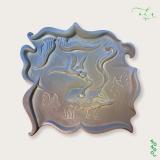
Front cover relief "Endulzando el oído" by Victoria Barca
Back cover photo by Indira Seoane
Design and layout by Paulina Ufnal and Janek Ufnal
quête:7 record cover
- A1: The Letter
- A2: L'intrigue
- A3: Drinking At A Stream
- A4: Oakwood Green
- A5: Children Of Clay
- A6: Sur La Plage
- A7: Her Masters Voice
- B1: The Draw In Room
- B2: The Slides
- B3: Fleur's Dolls
- B4: Mortuary
- B5: The City Sleeps
- B6: Birds
- B7: Silence & Wisdom
- B8: Festival
- C1: Our English Friends
- C2: Piroette
- C7: Albert The Mud Fish
- C8: Who Art In Heaven
- C9: Shackleford Breeze
- C10: 2 Blind 2 See
- C11: Zazinthos
- C3: The Third Movement
- C4: Play Room
- D1: Little Brown Jig
- D2: Tounges
- D3: Shalama
- D4: The Sun On The Sea
- D5: Interlude
- D6: The Snow Falls & The Village Is Overflowing With Children
- D7: Double Happiness
- C5: Starboard She Said
- C6: Los Estrellas
The short, mysterious career of the female French duo Deux Filles is bookended by tragedy. Gemini Forque and Claudine Coule met as teenagers at a holiday pilgrimage to Lourdes, during which Coule's mother died of an incurable lung disease and Forque's mother was killed and her father paralyzed in an auto accident. The two teens bonded over their shared grief and worked through their bereavement with music. However, after recording two critically acclaimed albums and playing throughout Europe and North America, Forque and Coule disappeared without a trace in North Africa in 1984 during a trip to visit Algiers. The short and terribly unhappy lives of Forque and Coule are at the root of the small but fervent cult following the mysterious duo have gained since their disappearance, not least because the placid, largely instrumental music on the duo's albums betrays no hint of the sorrow that framed their personal lives.
This would be a terribly sad story if a word of it were true. In reality, Deux Filles were Simon Fisher Turner, former child star/teen idol and future soundtrack composer, and his mate Colin Lloyd Tucker. Turner and Tucker left an early incarnation of The The in 1981 to pursue another musical direction. Turner claims that the idea of Deux Filles came to him in a dream, and he and Tucker strictly maintained the fiction throughout the duo's career. Not only did they pose in drag for the album covers, the duo once even played live without the audience realizing that the tragic French girls on-stage were actually a pair of blokes from south London. Deux Filles released two albums through Turner and Tucker's Papier Mache label, 1982's Silence & Wisdom' and 1983's Double Happiness'. Both albums are included here and blend watery piano, occasionally ghostly vocals, sheets of synthesizers, heavily processed guitars and the barest minimum of percussion. Drifting and wistful, they're a pair of lost ambient gems from a time when the genre had yet to mature, an excellent example of post-Eno, pre-Orb ambient music.
All songs have been remastered for vinyl by George Horn at Fantasy Studios in Berkeley. The vinyl comes housed in gatefold sleeve with original front covers of both albums, and a centerfold of archive images and the original liner notes. Each LP includes a sticker of the Lino cuts by Adrian Gill that was included with the original pressing.
"Like an early French film soundtrack with melodramatic overtones, the sound is jagged and disjointed but never harsh. Lilting guitars and ample use of echo smack of Vini Reilly, relying on the hypnotic qualities of the sound rather than abrasive noise" (Sounds, 03/1983)
- A1: Gameset
- A2: Baby How Could We Be Wrong
- A3: Power Of Social Media
- A4: Preview
- B1: Good Price
- B2: Pr
- B3: Goin Crazy
Premium first edition Kane West - western beats. Heavyweight vinyl, heavyweight sleeves, heavyweight design.
1xLP
12” Vinyl Records (180g, Black), Black and White Labels
12”Jacket 3mm Spine, 350gsm, Print 1/0 K, Gloss Machine Varnish + Hot Foil with Emboss on Front Cover, Hot Foil on Rear Cover
Full Colour 12” Board Sleeves
Creative Direction by Kane West
Design by Jacob Hulmston
Pencil Guy Artwork by Daniel Swan
- A1: El Nuevo Montuno Llego
- A2: Llamé A Chango
- A3: Monina Y Ramon 4:00
- A4: Balanceate 6:50
- B1: Triste Arrabal
- B2: Me Queda Un Guaguanco
- B3: Dichoso 3:30
- B4: Oye Tu Son Borinquen
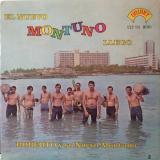
Roberto y su Nuevo Montuno recorded their first album, “El Nuevo Montuno Llegó” (1970), when Roberto Berríos was just 22 years old. This was also the debut release on Haddock’s own Uniart label. Berríos remembers that they did the recording in two sessions, splitting it up into four tracks per visit. The engineer was the famed Pedro “Pedrito” Henríquez, who recorded El Gran Combo, Roberto Roena and many others. The band had a mix of tasty, powerful originals, from Tony Cintrón’s title track that announced the band had arrived, ‘El Nuevo Montuno Llegó,’ to Quique Dávila’s mournful ‘Triste Arrabal.’ Then there was the hit Santería themed tune, ‘Llamé a Changó,’ which was a song that Quique Dávila brought to the band, but had been originally composed by Carlos Pinto, though Quique was given the credit. Dávila also composed ‘Me Queda Un Guaguancó,’ which is Roberto’s favorite song on the record (as well as a fan favorite), with Papo sounding like his friend Héctor Lavoe, and Quique Dávila’s proud manifesto declaring that Puerto Rico now had its own son montuno, ‘Oye Tu Son, Borinquen,’ featuring the pianist’s tasty but brief solo. The cover versions came from the group’s earliest period when most of their repertoire consisted of renditions of beloved but lesser known tunes, and include Louie Ramírez’s ‘Balancéate’ (a favorite of Roberto’s from Ray Barretto’s songbook), Bobby Valentín’s ‘Monina y Ramón’ (recorded during his stint with Willie Rosario), and a bolero indelibly sung by Cheo Feliciano when he was with the Joe Cuba Sextet, ‘Dichoso,’ written by Joe Cuba’s talented pianist, Nick Jiménez. Some of the arranging was done by Cintrón and some by Dávila, though Quique had some help from his old friend from El Combo Moderno, Freddie Miranda, who at that time was with Roberto Roena’s Apollo Sound. Roberto says that the arrangements of the cover tunes were made specifically to be different and more contemporary sounding than the originals. “El Nuevo Montuno Llegó” has become a legendary salsa dura classic from Puerto Rico and we are thrilled to present this first legitimately licensed and remastered vinyl reissue. It includes detailed liner notes that reveal the untold story of the band and their debut album, and rare photos.
French artist Trypheme debuts on Impatience with “Odd Balade”, a darkly-hued collection of songs drawn from human delicacy and dreamworld mythology.
“Odd Balade” is Trypheme’s most ambitious and boldest record to date - both lyrically and musically. The album’s thirteen tracks resist rigid genre boundaries and flutter from medieval folk realms, sprawling synths, gothic 80s wave, leftfield pop, haunted vocals, mutant electronica to reverbed guitars - all reflected through her own shadowy prism. Especially album closer “A Walk In The Vercors” evokes a soothing serenity that echoes the sonic balm of Julee Cruise.
Trypheme’s musical repertoire trends heavily electronic and somewhat abstracted, but on “Odd Balade”, the artist slips into the role of the modern troubadour with a shift to a more poetically and personal songwriting that is infused with symbolism and dreamlike fantasies. The connective tissue of the album is the audacity to love and the vulnerability that ensues. As intimate and introspective as the lyrics are, the themes remain universal and human to the core: the fear of losing a loved one, the melancholia of leaving places and t“the fear of losing a loved one, the melancholia of leaving places and the cycles of life. The record was largely composed in Chars, stirred by the French village’s eerie atmosphere and frequent trips to the seaside in Brittany, where Trypheme resides. Drawing inspiration from the rugged terrain of the seaside landscapes, the writings of Allen Ginsberg and Mark Fisher and the hyperrealist art of Scott Prior, Trypheme uses her songs to depict life with broad strokes of rhythm.
On “Odd Balade” Trypheme consolidates herself as a gifted, nimble songwriter, masterly producer and subtly powerful vocalist. The record combines her skill for crafting lush, alien sound worlds and efficient, alluring arrangements with stealthily devastating songs. Belin’s voice becomes a key ingredient, appearing on eleven of Odd Balade’s thirteen tracks, by turns heavily manipulated, sampled and replayed as a form of percussion, or basically bare.
“Odd Balade” is the manifestation of Trypheme’s roving artistic practice, a ceremonial-grade sacrament cast in a rich nocturnal glow. Pairing the mundane with the mythic, the album stays true to its core: odd and strangely familiar.
RIYL - Riding off into the sunset to an unknown destination, hauntology, present, tales told by the fireside, hot summer rain, adventures, to feel a warm presence when you are walking in the forest or in the mountain, coastal landscapes, sailor’s stories, slow motion, vitesse, heavy blossoms, colors, the warmth of the sun, the tenderness of the moon, getting lost in unfamiliar streets, city’s lights, motorway rest area by night, magic numbers, rendez-vous, picnic, serendipity, poetry, the smell of old records and old books.
Tiphaine Belin has been releasing music as Trypheme since 2016. Odd Balade was written and produced by Belin, and mixed by Belin and Abel Roux. It was mastered by Amir Shoat. Cover art photography is by Ariane Kiks, with art direction by Ariane Kiks in collaboration with Mathilde Chaize.
- A1: Another Thought (02:16)
- A2: A Little Lost (03:18)
- A3: Home Away From Home (05:12)
- A4: Lucky Cloud (02:16)
- B1: This Is How We Walk On The Moon (04:42)
- B2: Hollow Tree (02:30)
- B3: See Through Love (04:46)
- C1: Keeping Up (06:20)
- C2: In The Light Of The Miracle (06:05)
- C3: Lucky Cloud (Return) (03:00)
- C4: Just A Blip (03:42)
- D1: Me For Real (04:55)
- D2: Losing My Taste For The Night Life (04:34)
- D3: My Tiger, My Timing (05:41)
- D4: A Sudden Chill (02:45)
2026 Repress
Another Thought was the first collection of Arthur Russell’s music to be released after his death in 1992. Released in 1993 on Point Music it marked the beginning of nearly 30 years of work to let the world hear the enormous archive of unreleased recordings Arthur left behind. Be With revisits this first compilation for a new gatefold double vinyl version and a triple-fold digipak CD reissue.
Both versions of Be With’s 2021 reissue of Another Thought have been mastered by Simon Francis and the vinyl cut by Pete Norman. The original artwork has been restored and tweaked at Be With HQ for the gatefold sleeve and the triple-fold digipak, with the essential help of Janette Beckman. Each version comes with an insert reproducing the liner notes and lyrics from the original CD release.
Together with Calling Out Of Context, Soul Jazz’s World of Arthur Russell, and much of the ongoing work of Audika, Another Thought is absolutely essential for even the most casual Arthur Russell collection. In fact we’d argue it’s essential for any fan of non-obvious pop music. This is the only place where you can hear some of Arthur’s most recognisable tunes and it’s an album that absolutely deserves to be kept in press.
We’ll assume that by now you’re all at least a little familiar with the story of Arthur Russell, the farm boy from Iowa who moved to 1970s New York. Arthur Russell the genuine musical genius who died just 40 years old, leaving behind a wealth of music that dwarfed the few 12"s and LPs that were released during his short life.
Although Arthur had been working on an album for Rough Trade during his last years, with the label no-longer operating it was Point Music (Philip Glass and Michael Riesman’s label set up together with Philips) who stepped in to help Arthur’s partner Tom Lee start working out exactly what Arthur had left behind.
Tom suggested that Arthur’s friend Mikel Rouse was the right person to make the first catalogue. Working in Tom and Arthur’s apartment he had only two weeks to go through what turned out to be around 800 tapes.
As Tom explained “at the end of each day he would generally wait for me to come home and I would, to the best of my knowledge, name and identify pieces in question from that day’s work. As he worked Mikel compiled about a dozen cassettes that he thought would present the most finished sounding songs for Don/Point to use. As Don listened he would then suggest and ask me and thus we collaborated on the choices.”
Don is Don Christensen, Another Thought’s producer. With a final selection of songs from recordings made between 1982 and 1990, including sessions with some of Arthur’s regular collaborators Peter Zummo, Steven Hall, Mustafa Ahmed, Elodie Lauten, Julius Eastman, Jennifer Warnes and Joyce Bowden, it was then Don’s job to turn these into a finished album.
Another Thought is a little different from the compilations of Arthur’s music that came out since. In our conversations with Steve Knutson (who founded Audika Records and who manages Arthur’s estate together with Tom), he explained that “more than any project released by Arthur during his lifetime or posthumously by Audika, ‘Another Thought’ is the most worked over. The material was significantly edited and rearranged from the original source tapes”.
If the aim was to release a comprehensive exploration of every facet of Arthur’s music, from the most avant-garde of his avant-garde compositions through to the most disco-not-disco of his disco-not-disco tunes then the project was a spectacular failure. But as a coherent album of non-obvious pop music Another Thought is wonderful.
Starting with the sparse voice-and-cello of the title track, A Little Lost adds some guitar along with the sneaking suspicion that we’re listening to something nowhere near as simple as it first sounds. By the time we get to This Is How We Walk On The Moon - it could be the moment you notice the congas, or the percussion that’s been building behind them, or maybe it’s that blast of trumpet and trombone - we realise we’ve gone from splashing around to being completely submerged in the musical world of Arthur Russell.
From here the album heads off on its journey around the sounds of the left-field contemporary classical music of the time, re-directed towards pop ears, with minor detours through the swirling woozy disco of the half-remembered night before on In The Light Of The Miracle and My Tiger, My Timing. Whether it’s just Arthur, his cello and some bleeps on Just A Blip, or whether he has some vocal help as he does on the bounding Keeping Up, this is difficult music made so, so easy. And through it all is Arthur’s voice and cello. Sometimes drowned in distortion and sometimes clear as a bell, but always there somewhere.
A Sudden Chill finally returns us to the calmer waters we started in and this last track closes the album with a melancholy that’s not surprising given how soon after Arthur’s death the album was put together.
Whilst Another Thought holds together with the consistency of a proper album, there’s still no getting away from the fact that this was put together from audio recorded in different ways, in different places, with different people at different times. Those with keen ears will hear traces of tape hiss, the occasional blown-out note and some digital fuzz, all fingerprints of those original recordings as well as of the 1990s digital equipment that was used to piece Another Thought together.
Add to this Arthur’s obvious pleasure in making music from the sort of sounds that can make microphones, speakers and ears uncomfortable, it’s no surprise that Another Thought isn’t glossy and pristine. Don Christensen’s productions have been careful to not scrub up those original recordings so much that they lose their original vibe, understandable given that Arthur wasn’t around as a guide. We’ve applied a similarly light touch with the mastering for these Be With versions, just working to make sure they sound like they should on both the vinyl and the CD.
Despite the Discogs rumours, Another Thought was never originally released as an LP. So when it came to the sleeve for this Be With vinyl version we took the original CD artwork as a starting point to come up with something that looks like it could have been in the record racks back in 1993.
We have to thank Janette Beckman for helping us reproduce her iconic photograph of Arthur in his newspaper boat hat. One of many photographs she took of Arthur, Janette shot this in her New York studio back in 1986 for a short article in the January ’87 issue of The Face Magazine. Those with eagle-eyes will notice we’ve used an ever-so-slightly different shot from the one that appeared in The Face and then again on the original cover of Another Thought. The original has long since been lost so we’ve worked with what is left in Janette’s archives. And we also have to thank Tom Lee for giving us permission to reproduce his liner notes from the original CD booklet, together with Arthur’s lyrics.
- M'lover
- Hey Big Star
- Say Yeah
- Can't Let Go, Juno
- Ode To My Next Life
- Who'd You Kill
- Statues In A Gallery
- Why Don't You Answer Me
- Flame On Flame (A Slow Dirge)
- Honeybody
- Comin' To You
- Harpsi Chords
- M'lover (Demo-Arigato Version)
- Hey Big Star (Demo-Arigato Version)
- Say Yeah (Demo-Arigato Version)
- Can't Let Go, Juno (Demo-Arigato Version)
- Ode To My Next Life (Demo-Arigato Version)
- Who'd You Kill (Demo-Arigato Version)
- Statues In A Gallery (Demo-Arigato Version)
- Why Don't You Answer Me (Demo-Arigato Version)
- Flame On Flame (A Slow Dirge) (Demo-Arigato Version)
- Honeybody (Demo-Arigato Version)
Jubiläumsedition inklusive dem Original Sonderlust Album und einer zweiten Disc mit zwei brandneuen, unveröffentlichten B-Seiten und einer ,Demo-arigato"-Version von Sonderlust mit frühen Demos jedes Songs. Die Doppel-LP erscheint auf farbigem Vinyl: "Bone Vinyl" (LP1) und "Gold Vinyl" (LP2). Vor zehn Jahren war Kishi Bashi nach jahrelangen Tourneen zu seinen gefeierten Alben ,151a" und ,Lighght" kreativ und emotional ziemlich ausgelaugt. Die orchestrale Ausgelassenheit, die seinen Sound früher geprägt hatte, begann zu verblassen, was ihn dazu brachte, seinen künstlerischen Zweck zu hinterfragen. Aus dieser Erschöpfung entstand ,Sonderlust" (2016), eine sehr persönliche Neuerfindung, die von Verletzlichkeit, analoger Wärme und spiritueller Ehrlichkeit geprägt ist. Ishibashi verzichtete auf kunstvolle Violinen-Loops und setzte stattdessen auf Vintage-Synthesizer und reduzierte Texturen, wodurch ein Album entstand, das vor souliger, menschlicher Energie nur so sprühte. Songs wie ,Say Yeah", ,Honeybody" und ,Ode to My Next Life" fingen sowohl den Schmerz als auch die Freude der Selbstfindung ein und verankerten seine üppige Fantasie in gelebter Erfahrung. Jetzt, mit seiner Neuauflage zum 10-jährigen Jubiläum, steht Sonderlust als ein entscheidendes Werk da - in dem Kishi Bashis schillernde Verspieltheit der Selbstbeobachtung und Verbundenheit Platz machte. Die Neuauflage zeigt ein überarbeitetes Artwork des ursprünglichen Cover-Künstlers Ssin Kim, das Wachstum und eine neue Perspektive symbolisiert. ,Wenn man jünger ist, kann die Welt überwältigend wirken", reflektiert Ishibashi. ,Mit zunehmendem Alter beginnt man, seinen Platz darin zu sehen." Was als Album über Liebeskummer begann, ist zu einer zeitlosen Meditation über Empathie, Kreativität und die bleibende Schönheit des Menschseins geworden.
- Out Of Desperation (Luxury Chicken Song)
- Fare Dodging With The Mekon's Rider (3 Beers & A Lemon)
MEKONS - OUT OF DESPERATION (LUXURY CHICKEN SONG): ,Ein Luxus-Huhn ist was ganz Besonderes und Einzigartiges und hat einen hohen Wert. Es gibt auch ein handbemaltes Mekons-T-Shirt mit einem Huhn drauf, das eine Zigarette raucht. Hagar the Womb sind auch ganz besonders und einzigartig und haben einen hohen Wert, und ich bin froh, dass sie sich an dem Abend im Hawley Arms nicht wirklich getrennt haben, obwohl sie unseren Rider geklaut haben." - JON LANGFORD (Gründungsmitglied von Mekons, Three Johns und Waco Brothers), 2025 // HAGAR THE WOMB - FARE DODGING WITH THE MEKON'S RIDER (3 BEERS & A LEMON): Geschrieben von Ruth Elias & Chris Knowles. Aufgenommen bei Church Road Recording Company, Hove, von Paul Pascoe 2025. Hags: Ruth, Karen, Paul, Lorna, Mitch, Chris. Coverdesign & Illustration von Lorna Tiefholz. Text von Ruth. Der Labelaufdruck zeigt Chris, wie er eines der drei Biere im Zug trinkt. Dieser Song entstand kurz nachdem das dritte Bier getrunken war. ,Fare Dodging with the Mekon's Rider" entstand, nachdem wir vor ein paar Jahren in Brighton unsere Lieblingsband The Mekons supportet hatten. Im Gegensatz zu den Hags hatten sie einen reichhaltigen Rider, darunter eine Obstschale mit einer prächtigen Zitrone. Als wir uns auf den Weg zum Zug zurück nach London machten, steckte Ruth heimlich drei Bier aus dem Rider der Mekons in ihre Tasche und konnte sich dann nicht von der Zitrone trennen! Von Gesetzlosigkeit erfüllt, sind wir aus dem Zug ausgestiegen, nachdem uns gesagt wurde, dass wir nicht einsteigen könnten, weil wir die falschen Fahrkarten hatten. Wir haben die Biere getrunken, bevor der Zug den Bahnhof verließ, aber, liebe Leser, die Zitrone wurde nie verzehrt. Ein trauriges Ende für die Zitrusfrucht, aber in diesem Song, der unsere Errungenschaften des Abends feiert, wird sie nie vergessen werden.
- A1: Ballroom Blitz (Rough Mix)
- A2: Idc Jam
- A3: Midnight To Daylight (Outtake)
- A4: Show Me The Way (Alternative Mix)
- A5: Log One (That Girl) (Brian Vox)
- A6: Cover Girl (Band Demo)
- B1: Love Is Like Oxygen (Instrumental)
- B2: Windy City (Band Demo)
- B3: Falling In Love
- B4: Yesterday's Hero
- B5: Live For Today (Rough Mix)
- B6: New Shoes
- C1: Rebel Rouser (Steve Vocal)
- C2: Fire Engine
- C3: Blockbuster (Rough Mix)
- C4: Play All Night (Brian Vox)
- C5: Strong Love (Outtake)
- C6: Teenage Rampage (Rough Mix)
- D1: California Nights (Band Demo)
- D2: Hellraiser (Rough Mix)
- D3: Where Do We Go From Here
- D4: Silverbird (Band Demo)
- D5: Maggie
- D6: Lettres D'amour (Band Demo)
- D7: Lost Angels (Extended Rough Mix)
‘Platinum Rare 1’ contains extremely rare recordings by the four original SWEET members. The legendary glam/hard rock band continues to thrill fans all over the world to this day. Over the years, SWEET have sold more than 55 million records and reached 34 number 1 chart positions. The songs on ‘Platinum Rare 1’ come from the private archive of SWEET guitarist Andy Scott and were personally selected by him. Fans of the band will be thrilled with this collection of rare and alternative takes and mixes. Many of the songs on the album have never before seen the light of day on a regular SWEET release. ‘Platinum Rare 1’ is an absolute enrichment for every true fan of SWEET.
CATCHING FLIES ANNOUNCES BEATS & PIECES II - A Bold, Dancefloor-Driven Follow-Up to Acclaimed Mixtape
The Limited Edition Orange Vinyl releases a month before the digital release, and contains exclusive Vinyl versions of some of the tracks, which will not be available anywhere else. Following a run of celebrated releases on Cercle Records and Anjunadeep, alongside a widely praised BBC Radio 1 Essential Mix, London-based producer Catching Flies returns with Beats & Pieces II — a dynamic, dancefloor-focused counterpart to his previous mixtape, Beats & Pieces. Described as its "uptempo sister," the new project signals a confident shift in energy while preserving the organic textures and emotive detail that define his distinctive sound. Beats & Pieces II has already notched up a series of notable milestones.
• The track "Iajo" has been featured on the EA Sports FC 26 soundtrack (FIFA).• Catching Flies will deliver a BBC Radio 1 Chill Mix during the album's release week.• He has been named the cover artist for Spotify's Altar playlist.• Tracks from Beats & Pieces II have received support and praise from artists including Bonobo, Diplo, Solomun, and MJ Cole.• This summer, Catching Flies will perform live at festivals across Europe.• He will join melodic house artist Monolink on a North American tour coinciding with the album's release.• Catching Flies will perform at Anjunadeep's London Open Air event at the iconic Naval College in Greenwich this summer.
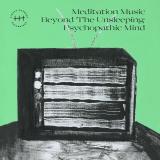
'Meditation Music Beyond The Unsleeping Psychopathic Mind' — a raw, deep free-jazz exploration where synth, voice, saxophone, and percussion dissolve into a single, unfiltered sound world. No boundaries, no polish — just presence and freedom for sonic expression.
Music spontaneously composed (improvised) by all members of the group. Recorded at Threshold Studios in Hamilton, Ontario, Canada. Produced by our good friend Devin Brahja Waldman and wrapped in hypnotic cover artwork specially crafted by renowned Vancouver-based artist Boone Naka.
Annie Shaw - keys/synth/vox
Sarah Good - keys/synth/vox
Nadah El Shazly - keys/synth/vox
Adam Kinner - tenor saxophone
Connor Bennett - soprano saxophone
Devin Brahja Waldman - synth, alto saxophone
Vicky Mettler - guitar
Alexei Orechin - guitar
Daniel Gélinas - drums, percussion
Philippe Melanson - drums, percussion
- B1: Calle
- A1: Overture
- A2: Víctima
- A3: Jaco Y Chofi
- A4: Atlantis
- A5: La Sal No Sala
- A6: Chipi-Chipi
- B2: Love Is Love
- B3: Tema De Amor
- B4: Fax U
- B5: Lament
- B6: Interludio De La Lágrima
- C1: Workin' In The Morning
- C2: Waitin
- C3: Kurosawa
- C4: Chiquilin
- C5: Andan (Excerpt)
- C6: James Brown
- D1: Intraterreno
- D2: No Sugar
- D3: Atlantis (Parte Ii)
- D4: Locomotion
- D5: Andan (Complete)
Carlos Alberto García Moreno, better known by his stage name Charly García, is an Argentine singer-songwriter, multi-instrumentalist, composer and record producer, considered one of the most important rock musicians in Argentine and Latin American music.
Named "the father of rock nacional", he is known for the complexity of his compositions covering genres like folk rock, progressive rock, symphonic rock, jazz, new wave and many others.
a conceptual rock opera featuring experimental passages and two big hits, "Chipi Chipi" and "La Sal No Sala".
La Hija De La Lágrima is available as a limited edition of 1000 individually numbered copies on silver coloured vinyl.
g B1. Calle Taxi
[g] B1. Calle [Taxi]
[g] B1. Calle [Taxi]
Impatience is thrilled to present Leaving Memory, the latest album-length work by Piper Spray and Lena Tsibizova. Leaving Memory is a searing distillation of the duo’s ouevre - it’s eleven prismatic electronic seances combining for a mind warping wormhole with it’s own internal (il)llogic, where pop, ambient, and industrial music convene beneath a rugged HD of digital processing and brain fog. Equally rosy with nostalgia as it is ominously forward looking, Leaving Memory defies easy categorization and makes for an astounding, confounding listen.
By turns violently abrasive and disarmingly touching, Piper and Lena deploy sounds that fracture and disintegrate, burn up and explode, synthetic supernovas that give the record an unmistakable, inimitable texture. Song structures often abide by their own blueprint - heading in one direction before making an abrupt dive elsewhere. Bursts of vibrant colour lurk below layers of grayscale noise. Unidentifiable voices deliver secret messages from the murk. When rhythm’s emerge they ground the tracks to some unknown terrain and invigorate.
Lame Line veers towards the sweeter end of their spectrum, a hazy plaintive repetition increasingly lashed with friction, before Exit erupts with clanging rhythm and shards of distortion. Diagnosis is an almost sweet alt-pop song, Lena’s vocals yearning beneath a dubby shuffle, while Keeper Of The Void’s possessed incantations open up to a ripping, fried climax. Beryl Grey releases the pressure gauge, a gently lilting drift arpeggiating as the sun sets, and Lost Cars sweats through claustrophobic drones and bird song before the clouds part on a serene scene. Leaving Memory closes with Shin, offering a genuinely sweet resolution and a gentle landing back down to earth of either footsteps or fireworks, swelling synthesized horns and woodwinds, a kiss on the cheek for making it out the other side.
On Leaving Memory, Piper Spray & Lena Tsibizova share their uniquely discordant take on freaky music for unsettled minds, an intensely energized set that offers a deeply evocative, unimaginable otherworld for adventurous ears.
Piper Spray and Lena Tsibizova have been producing music together since 2020. Leaving Memory is the first to be presented in the LP format. Piper has previously released music via Orange Milk, Hausu Mountain and Gost Zvuk, as well as his own Singapore Sling Tapes label. Lena works predominantly as a photographer, and together Piper and Lena have released music via radio.syg.ma and Kartaskvazhin. Both make music as part of Air Krew, who have released music on the Echotourist and Motion Ward labels. They’re both currently based nowhere.
Leaving Memory was written, produced and mixed by Piper Spray and Lena Tsibizova, and mastered by Sergey Podluzhniy. Cover photo by Lena Tsibizova, design and layout by Justin Sloane.
Don’t believe your ears - Pepper’s Ghost is the latest offering from NYC project Nuke Watch.
Whatever you think it is - it is not. By the same token it really can be whatever you want - electronica, jazz, improv, noise, new age, ambient - it’s none and all of these. Like the primitive visual illusion it’s named for - Pepper’s Ghost is a projection of a thing, it’s not the thing.
The Nuke Watch method - like that of Aaron Anderson and Chris Hontos’ other primary project Beat Detectives - leans almost entirely on live improvisation, with some advanced studio alchemy in post. Where the Beat Detectives palette draws from club music tropes, Nuke Watch blends recognizable tones (hand drums, woodwinds, keys, fretless bass) with sounds of providence unknown, the line between organic and synthesized instrumentation unintelligibly smudged. What is real and what is projection? It’s hard to say. What do our ears tell us? This is where we arrive at Pepper’s Ghost.
Warped as the sounds may be, the playing belies a crew of deeply expressive, learned improvisers who have their craft honed. Their friendship and psychic connection enhances the ritualistic rhythms, mutant modular synthesis, nimble keyboard runs, absurdist sampling and unidentified skronk. They’re wonderfully complemented across several tracks on this set by Cole Pulice’s levitational, sublime saxophone.
As unhinged as this might all appear, once the mind and music meet on the same wavelength this is profoundly moving, energizing and uplifting Alive Music that recalibrates the sense of what music can be.
Nuke Watch is Aaron Anderson and Chris Hontos, with an array of friendly guests. They’ve released records as Nuke Watch on The Trilogy Tapes, Commend and Moon Glyph. As Beat Detectives they’ve released records on Not Not Fun, 100% Silk and their own studio imprint NYPD Records.
Pepper's Ghost was written and produced by Aaron Anderson and Chris Hontos. Additional instrumentation on these recordings by Cole Police, Leonard King, Eric Timothy Carlson, Chris Farstad and William Statler. It was mixed by Chris Hontos and mastered by Jack Callahan. Painting on the cover is “The Unity Of Being” (2020), by Ry Fyan. Design and layout by Aaron Anderson.
RIYL - Musical illusions, puzzles and magic tricks, downtempo, music of the spheres, good journey, Eddie Harris, Ketron, "world building", orange sunshine, suspension of disbelief.
(Early support by Ben Klock, DVS1 & Rene Wise) DHÆÜR makes his debut on Dustin Zahn's Enemy Records with 4 stripped down Techno tools ranging from "relentless and heavy" to "grooving and introspective." Each track offers a different approach to minimalistic Techno, all rich in moody atmospherics.
In classic A1 fashion, "Bayes Theorem" is the heaviest track on the record. Throbbing sub bass meshes together with pedaling hi hats while vocal chops and modulating synth work cover the top end. It's sinister and pounding, yet retains a sense of groove without becoming too aggressive. "Perception" closes the A side with a deeper and more introspective approach. The bass fills in only where necessary,leaving the pads and bleepy synths to do all the heavy lifting.
"Scanning" kicks off the B-side, defined by a rolling bass line and moody chord stabs. It gives the dance floor exactly what it needs and nothing more. The record comes to a close with "5th Avenue." It's deep, steady, rolling, and dripping in polymeter synth pulses. Brief glimpses of vocal phrases offset the darkness, giving it a bit of funk and playfulness...making it essential for deeper late night sets.
Alongside with the release of the new album “Tote Winkel”, Sankt Otten will be delighting us with another limited vinyl bonus release. “Hymnen und Helden” (hymns and heroes) is a collection of cover versions created over the last few years. As the album title suggests, it pays homage to self-proclaimed musical hymns and heroes from the seventies and eighties.
HYMNEN UND HELDEN – track by track: A well-known Moog sequence leads us on the way into the cover album. Giorgio Moroders 1977 disco classic “I feel love” has been tackled here. Sankt Ottens instrumental interpretation starts out familiar, but ends in a slightly disturbing disharmony of mellotron and ebow guitar.
The instrumental version of the melancholy Wipers anthem from 1983 starts with a rather unusually fast 808 beat for Sankt Otten. The 80s electronic echoes suit the punk rock earworm “Doom Towen” surprisingly well.
Without Deutsch Amerikanische Freundschaft, more unusual electronic music would hardly have been conceivable in Germany in the early 1980s. “Alles ist gut” tribute to this band and singer Gabi Delgado-Lopez, who passed away in 2020 and with whom they shared the festival stage in 2015. Gabi‘s lyrics are rendered by text- to-speech software with the voice of an unknown Claudia.
“Wishing (If I had a photograph of you)” was made famous in 1982 by A Flock of Seagulls. This record was regularly played on Stephan Ottens turntable back then. Reason enough to remember this with “Sehnen (Hät- te Ich von dir eine Fotografie)”. The recordings for this album were made in 2007 and have been updated and completed in the last year. Carsten Sandkämper, who was also featured on Sankt Ottens debut album “Eine kleine Traurigkeit”, contributed the vocals and lyrics.
The Swiss band Grauzone became famous with the NDW hit “Eisbär”. Instead of this title, they took on the B-side of this single with “Ich liebe sie”. A synthpop love song full of innocence, stylishly sung by Carsten San- kämper and refined with Kraftwerk-like choral sounds and an herbaceous motorik beat.
The band has enjoyed a personal friendship with Harald Grosskopf since their collaboration in 2013 on the album “Messias Maschine”. With “So weit, so gut”, they take on his little hit from the album “Synthesist”, which is one of the gems of the synthesizer albums of the eighties.
“Kriegsmaschinen, fahrt zur Hölle” is an anti-war song from 1974 by Günter Schickert, the Berlin master of the echo guitar. Unfortunately, the lyrics are still relevant. Oliver Klemm contributes the delay guitars and Stephan Otten puts the lyrics through a vocoder. Sankt Otten compress the 17-minute original to just under 5 minutes and move it musically from the 70s to the 80s.
Sankt Otten’s adaptation of David Bowies “Heroes” is equipped with warm Juno 106 sounds, ebow guitar and synthesizer pads. The German “Helden” version, known from the movie Christiane F. – Wir Kinder vom Bahnhof Zoo, is sung in a touching way by Carsten Sandkämper.
New York-based Rafael Anton Irisarri was responsible for mastering the record. As part of the series with graphic covers, this die-cut artwork was also created by Mexican designer Daniel Castrejon. The one time only vinyl pressing, limited to 350 copies, comes in a beautifully designed die-cut cover and colored vinyl. The Osnabrück duo Sankt Otten, founded in 1999, have been releasing on Denovali since 2009. The band has dedicated itself to the holy trinity of Krautrock, Ambient and contemporary Electronics.
d Sehnen [Haette ich von Dir eine Fotografie]
Written during a period of geographic and artistic transition, Country Music traces Severin Black’s movement from London to Berlin, unfolding through cycles of isolation and adaptation. Composed on the city’s periphery, the album’s material was continually dismantled and reassembled, reflecting a process of both artistic and personal reconstruction. The album marks a shift in production methodology, moving away from the immediacy of summed live takes toward a more deliberate, stratified multitrack approach. Sparse yet hypnotic, the record distills layers of sound formed by constant relocation, recurrent solitude, and a recalibration of instinct. In many ways, it echoes the experience of exile, not in a political sense but in the quieter, more insidious form of displacement that alters one’s perception of time and self. The music drifts between structure and dissolution, a reflection of existing at the threshold of different spaces—both physically and sonically.
The shedding of the previously used Nape moniker signaled a decisive sonic transformation, informed by extended time spent in the Pyrenees and a renewed engagement with folkloric material. Severin began playing the clarinet while making this record, and though its presence is minimal, it reveals itself as an interest in acoustic simulation, particularly the digital approximations of classical instruments that emerged within 1990s synthesizer technology. This interrogation of authenticity and mediation parallels the album’s thematic engagement with memory, where recollection functions not as a retrieval of fixed experience but as an iterative process of distortion and reconstruction. The relocation to Berlin reignited an affinity for grime music, evident in the syncopated brass of Pilgrim Wine and the fractured vocal layers of March, while memories of childhood in rural Wales permeate the record’s atmospheric spaces. The album includes contributions from longtime collaborator Vanessa Bedoret and Berlin-based artist Pavel Milyakov (Buttechno).
Country Music situates itself within an unresolved dialogue—between past and speculative futures, between folk lineage and digital fragmentation, between place and its embodied and sonic traces. What emerges is not a fixed statement but a process, an ongoing negotiation between what is left behind and what is brought forward. Words by Chantal Michelle
Mastered by Owen Pratt / Design by Severin Black / Center label image by Nicky Kidd / Back cover text by Alya Kanıbelli
Taroug is the solo project by drummer and electronic music producer Tarek Zarroug with roots in the suburbs of the Tunisian desert and having grown up in Germany. Following the release of his 2020 EP, "Perpetual," as well as a number of notable remixes for artists such as Archive, Taroug has continued to refine his musical aesthetic.
Taroug's debut album Darts & Kites, set to be released on Denovali Records, draws inspiration from the Penrose tiling and explores themes of change and transformation. Fascinated from the pattern's unending possibilities, Taroug incorporated its infinite permutations not only into the album's nine tracks, but also in the cover art design. Darts & Kites showcases a blending of genres and styles, resulting in a sonic landscape, that is both hunting and beautiful. Experimental and abstract soundscapes are enriched by oriental influences, collected field recordings, pulsating dark beats and hypnotic vocals.
The album also features the contributions of other notable artists, including Beate Wolff's cello performance on Jewels I. Benedikt Koch's saxophone adds a sense of controlled chaos with delayed and swelling notes to the track Deguech, while Timo Schieber's piano provides a crucial element of the album's title track, Darts & Kites. Niklas Genschel lends his vocals to Queen of Carthage, which also features the saz playing of Abdallah Abozekry.
Created in collaboration with architect and designer Marie Brosius, the album artwork captures different ornaments reflecting the album's content. Darts & Kites is a mosaic of sound, blending together elements of unfamiliar and familiar.
Dictaphone are back with their 6th full length called "Unstable". In the 25th year of the project Brussels born composer and mastermind Oliver Doerell is surrounded again by a lot of musicians & friends. Roger Döring is there, his clarinet and saxophone play has always been a trademark sound of the band - also Alexander Stolze's ghostly violins. The dark atmosphere and experimental sound of the new album is a reference to the 80s belgian art music scene, which Doerell had the luck to experience in his formative years. Minimal jazz meets musique concrete meets a postpunk mind. On this new album “Unstable“ more voices and vocals than usual can be heard - especially Helga Raimondi (who already sang on the last album “Goats and Distortions 5") . As a collage artist she is also responsible for the visual side of Dictaphone - she designed the cover artwork and the visuals for the live shows.
The Brussels-Berlin-Teheran connection: Other guests on "Unstable" are the voices of Kaveh Ghaemi and Ashkan Afsharian, who Doerell met during a modern ballet production by Modjgan Hashemian (2008). The trumpet of Shahab Anousha can be heard in the track “La fin“ - Oliver Doerell and Shahab Anousha also share the spoken words Project “Noufān”. For nearly 20 years Oliver Doerell is linked to the Iranian Diaspora in Berlin and the Dictaphone track “Rattle” from the classic album “ Poems from a rooftop “ (2012) has been a hit in Teherans underground scene since the beginning. Furthermore the title track “Unstable“ is a homage to Ian Curtis of Joy Division. The words of this piece are based on the setlist of Joy Divisions last show.
Dictaphone played more than two hundred shows all over the world (including festivals Mutek, Transmediale, Unsound , Benicassim and many others). Their music can be heard in countless films, tv series and theatre pieces - (“the responder“ (BBC) , “the love he knows” (Ali Mohammad) , “Don´t move“ (Modjgan Hashemian) , Ring (Felix Ruckert) among others.
- A1: Rhythm-Al-Ism (Intro) (1:40)
- A2: We Still Party (5:13)
- A3: So Many Wayz (5:41)
- A4: Hand In Hand (4:18)
- B1: Down, Down, Down (4:43)
- B2: You’z A Ganxta (4:22)
- B3: I Useta Know Her (3:50)
- B4: No Doubt (4:12)
- C1: Speed (3:21)
- C2: Whateva U Do (7:47)
- C3: Thinkin’ Bout U (4:05)
- C4: El’s Interlude (4:05)
- D1: Medley For A “V” (The P***Y Medley) (6:27)
- D2: Bombudd Ii (2:59)
- D3: Get 2Getha Again (4:41)
- D4: Reprise (Medley For A “V”) (2:39)
2026 Repress
DJ Quik is a giant of West Coast hip-hop. With his fourth album Rhythm-Al-Ism he created his masterpiece, a perfect hip-hop album. As Quik explains, “the name Rhythm-Al-Ism alone tells you what I was doing. I was mixing up rhythms. I was meshing R&B with hip-hop and jazz. And a little bit of comedy”. It’s absolutely sensational and as with a lot of mid-90s albums those original vinyl copies are now rare so here’s the Be With re-issue.
A preternaturally gifted producer/rapper, DJ Quik has produced scores of LA gangsta rap classics. He’s released platinum and gold records of his own, as well as helped craft them for the likes of Tupac, Snoop Dogg, and Dr Dre. Quik has always been quirkier and more interesting than his gangsta rap peers, both musically and lyrically. An old-school funk producer at heart, he’s also incredibly nice on the mic. His raps often deal in boasts, jokes and good times but also cover his beefs, his trials and his trauma. Partying and pain, all mixed up. DJing and producing hype beat tapes from age 14, Quik’s tracks blended the languid funk and rubbery synths of Zapp and George Clinton with a gangsta aesthetic, creating a more danceable foil to Compton’s more typical nihilistic hedonism. Ultimately, his records sound custom engineered to drift out over sun-soaked barbecues.
Released in 1998 on Profile, Rhythm-Al-Ism was the closest Quik ever got to making a commercial splash. “You’z A Ganxta” and “Hand in Hand” made radio waves across the country and the less radio-friendly tracks like “Medley For A ‘V’” were bumping out of car stereos. Combining his soulful, jazzy P-Funk/G-Funk beats with his effortlessly smooth flow, Rhythm-Al-Ism was the quintessential West Coast Party. Squelchy synths, bouncy bass, monstrously knocking drums and freaky keys - this is peaking acidic party-rap, straight out the gate. Music for gliding, for skating, for time with your people and your poison. Sunshine. No cares. BBQs. Heavy smoke in the air. Dripping with wit and good humour. A real swing to the vibe.
The album opens with Quik setting out his mission statement with “Rhythm-Al-Ism (Intro)”, telling us what this is all about before the self-explanatory “We Still Party” rocks the spot. It’s definitely all about the party here, complete with Quik’s signature head-nod/body-moving beat. Next up, the undeniable laidback funk and dripping swing of groove-laden “So Many Wayz”. This positively slaps.
Then we get to the three huge singles. The R&B-tinged radio-friendly minor-hit “Hand In Hand” closes the first side only for the flip to get straight into the rolling and scratching of bleepy computer-funk banger “Down, Down, Down” (featuring a particularly nice use of Howard Johnson’s epochal “So Fine”). The effortlessly smooth, flute and guitar-laced “You’z A Ganxta” completes the trio. Next up the fast-paced, vocoder-enhanced, woulda-beena-global-hit “I Useta Know Her”. This coulda (shoulda) been a single too. Head-nod funk workout “No Doubt”, with its ace sample of Prince's “Sexy Dancer”, closes out the second side.
“Speed” races out the gate on the second disc, sampling Edwin Birdsong’s “Rapper Dapper Snapper” in a harder, better, faster, stronger way than those daft Parisian punks. Amphetamine-swift raps over soaring, string-drenched b-boy beats. A total anthem. Up next, the staggering, near 8-minute laconic, lounge-y sax-rap of “Whateva U Do” cools things down and smooths things out with its flute wrapping around a sample of Smokey Robinson’s “So In Love” and some oh-so-classy lounge-piano tinkling. And speaking of smooth, things don’t get much smoother than the blissfully melodic glider-anthem “Thinkin’ ’Bout U” riding that ace flip of SWV’s “Use Your Heart”. Exceptional.
The exquisite funky-flute-slapper “Medley for a ‘V’ (The P***Y Medley)” opens the fourth and final side, with star turns from Snoop Dogg and a typically suave Nate Dogg. It’s followed by the supremely skanked-out “Bombudd II”, a beautifully sweet reggae-fuelled ode to the herb. “Get 2Getha Again” is slick funk. Stunning.
This 2022 Be With double LP re-issue has been mastered for vinyl by Simon Francis, cut by Pete Norman and pressed at Record Industry. Unusual for the time, Rhythm-Al-Ism was originally pressed as a double and we’ve reproduced the original LA vibe picture sleeve and insert to match.
As that original front cover says, this is “over 70 minutes of commercial free music” and it’s absolutely perfect from start to finish. There are no stand-out tracks here. It’s all gold.
: Rhythm-al-ism (2LP)