Teresa Rotschopf, a musician and composer from Vienna, presents her second solo album, »Currents and Orders« – a radical, delicate, yet grandiose sonic journey between experimental pop, new music, and improvised composition. The album will be presented live on August 27 as part of the »Pop-Kultur« festival (silent green, Berlin) and at the »ORF RadioKulturhaus« (Vienna) on 12 September.
»Currents and Orders« was recorded in an unusual location: a stalactite cave in Styria, Austria. Together with a small group of musicians (Maria Gstättner: bassoon, contraforte; Alex Kranabetter: tuba, trumpet, French horn; Patrick Dunst: saxophone, duduk; Florian Klinger: marimba, vibraphone, glockenspiel, cymbals, gong, stalactite; Patrick Pulsinger: gong, stalactite; Ulrich Schleicher: gong) and in co-production with Patrick Pulsinger, Rotschopf recorded the album in June 2023 – deep underground, far from daylight, but all the closer to archaic sounds and resonances.
The cave becomes not only an acoustic stage, but also a symbolic space of memory, retreat, and transformation. The album comprises four pieces – including two large-scale tracks:
- the opening, mantra-like title track »Currents and Orders« (over 10 minutes)
- the final, free-jazz, expressive »I Open My Gates (for You)« (over 20 minutes)
With a minimalist structure, choral voices, vibraphone, percussion, and wind instruments, fragile yet powerful soundscapes emerge, whose spatial depth is also palpable through the cave reverberation.
Rotschopf first developed the desire to record in a cave in the summer of 2022. What began as a visual and sonic image became a concrete project – supported by the Austrian Cave Association. In June 2023, Rotschopf and her musicians spent three days in a cave in the Styrian forest. Almost a kilometer of cable was laid, and equipment and instruments were carried deep underground. Rotschopf describes the recording situation as a kind of return to herself: »I descended into this cave, as if I could descend into myself, into my own womb ... What we did in the cave could just as easily be called ›recording music,‹ but it could also be called ›remembering‹ – remembering the earth, the cave, and humanity.«
»Currents and Orders« is an album like a ritual: haunting, atmospheric, bold in its form, and deeply rooted in both physical and emotional space. Music that takes its time, uses space, and pushes boundaries.
The pre-release single »O Please My Soul (Rest On My Back)« (release: July 17, 2025) is accompanied by a striking music video shot by Antoinette Zwirchmayr on 16mm film: Teresa Rotschopf holds a real owl in her hand – an image that is as magical as it is enigmatic.
Label owner Martin Hossbach read a review of Rotschopf's first solo album, »Messiah,« in 2018 and contacted the artist. Joint releases followed, including a drone album on the sub-label Martin Hossbach Score and a Pet Shop Boys cover version on Martin Hossbach Cover.
Teresa Rotschopf, Musikerin und Komponistin aus Wien, präsentiert mit »Currents and Orders« ihr zweites Soloalbum – eine radikale, zarte und zugleich groß angelegte Klangreise zwischen experimentellem Pop, Neuer Musik und improvisierter Komposition. Das Album wird am 27.8. im Rahmen des Festivals »Pop-Kultur« (silent green, Berlin) und am 12.9. im »ORF RadioKulturhaus« (Wien) live vorgestellt.
»Currents and Orders« entstand an einem ungewöhnlichen Ort: in einer Tropfsteinhöhle in der Steiermark, Österreich. Gemeinsam mit einer kleinen Gruppe von Musiker:innen (Maria Gstättner: Fagott, Kontraforte; Alex Kranabetter: Tuba, Trompete, Waldhorn; Patrick Dunst: Saxophon, Duduk; Florian Klinger: Marimbaphon, Vibraphon, Glockenspiel, Becken, Gong, Stalakmit; Patrick Pulsinger: Gong, Stalakmit; Ulrich Schleicher: Gong) und in Ko-Produktion mit Patrick Pulsinger nahm Rotschopf das Album im Juni 2023 auf – tief unter der Erde, fern von Tageslicht, dafür umso näher an archaischen Klängen und Resonanzen.
Die Höhle wird nicht nur zur akustischen Bühne, sondern auch zum symbolischen Raum der Erinnerung, des Rückzugs, der Transformation. So umfasst das Album vier Stücke – darunter zwei großformatige Tracks: - das eröffnende mantraartige Titelstück »Currents and Orders« (über 10 Minuten) - das finale, free-jazzig-expressive »I Open My Gates (For You)« (über 20 Minuten)
Mit minimalistischer Struktur, Chorstimmen, Vibraphon, Schlag- und Blasinstrumenten entstehen fragile und zugleich mächtige Klangwelten, deren räumliche Tiefe auch durch den Höhlenhall spürbar wird.
Der Wunsch, in einer Höhle aufzunehmen, kam Rotschopf im Sommer 2022. Was als visuelles und klangliches Bild begann, wurde zu einem konkreten Vorhaben – unterstützt vom Österreichischen Höhlenverein. Im Juni 2023 begab sich Rotschopf mit ihren Musiker:innen drei Tage lang in eine Höhle im steirischen Wald. Fast ein Kilometer Kabel wurde verlegt, Equipment und Instrumente tief unter die Erde getragen. Rotschopf beschreibt die Aufnahmesituation als eine Art Rückkehr in sich selbst: »Ich stieg in diese Höhle hinab, so als ob ich in mich selbst hinabsteigen könnte, in meinen eigenen Schoß [...] Was wir in der Höhle taten, könnte man ›Musik aufnehmen‹ nennen, genauso gut aber auch ›Erinnern‹ – Erinnern von Erde, Höhle und Menschsein.«
Currents and Orders ist ein Album wie ein Ritual: eindringlich, atmosphärisch, mutig in der Form und tief verwurzelt im physischen wie emotionalen Raum. Musik, die sich Zeit nimmt, Raum nutzt und Grenzen sprengt.
Die Vorab-Single »O Please My Soul (Rest On My Back)« (VÖ: 17.7.205) wird begleitet von einem eindrücklichen Musikvideo, das Antoinette Zwirchmayr auf 16mm-Film drehte: Teresa Rotschopf hält darin eine echte Eule auf ihrer Hand – ein Bild, das genauso magisch wie rätselhaft wirkt.
Labelbetreiber Martin Hossbach las im Jahr 2018 eine Rezension des ersten Rotschopf-Soloalbums »Messiah« und nahm Kontakt zu der Künstlerin auf. Es folgten gemeinsame Veröffentlichungen – etwa ein Drone-Album auf dem Sub-Label Martin Hossbach Score und eine Pet-Shop-Boys-Coverversion auf Martin Hossbach Cover.
Поиск:7 record cover
Все
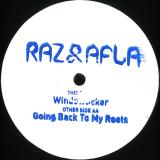
Wah Wah 45s present two very special cover versions from our beloved Afro-electronic duo, Raz & Afla, available on 12" vinyl for the very first time! Having recently released their sophomore LP, Echoes Of Resistance, to great acclaim and support ranging from Nick Grimshaw on BBC 6 Music to Tash LC on BBC Radio 1, and the follow up remix project Remixes Of Resistance, the pair offer up their unique takes on two very different slices of club culture on twelve inches of wax.
First up, the pair tackle Aphex Twin's sleazy and sinister turn-of-the-century dance floor bomb Windowlicker and take it somewhere completely unexpected, as Raz explains:
"We wanted to go to a different place from our influences for this one. When we told people we will cover this tune everyone said 'but how?!' In Raz & Afla style. We had an idea of what elements to recreate from the original and how we can reference it within our spectrum of sounds. It was so much fun to do and really kicks off at our live shows."
It's a heavily percussive reinterpretation, replete with spooky wordless vocals, funky guitars and spine tingling synths that builds into something of a future Afro-house anthem, whilst respecting the genius of the original recording.
On the flip, Going Back To My Roots has become a mainstay in Raz & Afla's live sets, and means a lot to them personally, as Raz once again explains:
"We love this song. The lyrics resonate with us, talking about the meaning of connection to a land and its people. The history of this song is also fascinating, from Hugh Masekela and Orlando Julius through Odyssey and Richie Havens. We wanted to give it our own flavour. You can't choose your heritage and where you are born. It is always a part of you and we like to celebrate that."
Written and first recorded by Lamont Dozier in 1977, Going Back To My Roots was famously covered by Richie Havens in 1980 before becoming a huge crossover hit when interpreted by disco outfit Odyssey in 1981. Raz & Afla very much give their version their own unique dance floor feeling. It's one which has received much support on BBC 6 Music.
- A1: Time For A Change (Paul’s Collection)
- A2: Nobody Will Ever Help You (The Klan)
- A3: 20Th Century (Berry Clan)
- A4: See My Car (New Inspiration)
- A5: I Don’t Need You (The Jumpers)
- A6: Woman Don’t Love Me (The Swallows)
- A7: When I’m Down (Ferre Grignard)
- B1: Only Lonely Me (The Mec-Op Singers)
- B2: Lonely Tears (R And The R’s)
- B3: Mad Jane (François Nico)
- B4: Tomorrow (The Midgets)
- B5: Freedom (Les Altesses)
- B6: Tus Es Mon Enfer (Mosaïque)
- B7: Cocaine Blues (Patrick)
Starman Records, the Belgian label renowned for re-releasing Belgian rock from the 60s, 70s, and 80s, has so far released five volumes in the highly anticipated and widely acclaimed Belgian Vaults Series, praised by both press and fans.
These unique albums focus entirely on the sixties and early seventies, compiling many rare and hard-to-find tracks—mainly originally released as singles on small, long-forgotten labels. Covering genres such as pop, beat, rock ’n’ roll, and psych, these gems are well worth rediscovering. Belgian Vaults are not just collector’s items; each album features restored and remastered sound quality and is carefully curated to appeal to all fans of sixties rock.
- A1: Destination (Dr. Yusef Lateef)
- A2: Black Family
- A3: What Shall I Tell My Children Who Are Black (Dr. Margaret Burroughs)
- A4: Impepho
- A5: We Are Starzz
- A6: London
- B1: Capetown (Feat. Asher Simiso Gamedze)
- B2: The Oracle
Angel Bat Dawid's International Anthem debut The Oracle introduced her multifaceted voice to the world. The response to its modest, initial cassette/digital release in January of 2019 was immediate, and immense. Within a month of its announcement, Dawid was being featured on magazine covers and receiving offers from international festivals; and her subsequent activity marked the beginning of an epic run of creative output (including 2020's LIVE double LP, the same year's EP Transition East, 2021's Hush Harbor Mixtape Vol. 1 Doxology, and the sprawling opus Requiem for Jazz, released in 2023) that continues through the present.
The collection of compositions on The Oracle present a deep blend of powerful and emotive songs alongside heavy and free improvisation. In true DIY fashion, Dawid recorded and mixed the album using only her cell phone.
"Angel's fieldnote approach affirms that the everyday remains a legitimate site of creative production," says South Africa based percussionist, collaborator, and IARC labelmate Asher Gamedze in his liner notes for the album's IA11 Edition. Gamedze - the only other musician to appear on The Oracle besides Dawid, who constructed most of the album's tracks by layering, overdubbing, and arranging lo-fi symphonies of her own voice, wind instruments, percussions, and keyboards - waxes extensively about Dawid's significance in his notes, calling her "a living exemplar and extension of the spacious sonic horizons opened by the likes of the AACM and their refusal of any limitations on their creative vision and the destruction of the demarcation between composer and improviser."
"...a masterpiece, rich with dense improvisation and Afrocentric themes." - Suraya Mohamed, NPR
- A1: Girl Violence
- A2: Jaime
- A3: Origin
- A4: I Feel Pretty
- A5: Cry Cry Cry
- A6: Get Your Heart Broken
- A7: Girls
- B1: Covers
- B2: Say What You Will
- B3: Rip Kp
- B4: Alone Again
- B5: Slow Down And Shut Up
- B6: Serena
Ltd. Orange Vinyl[26,68 €]
'Girl Violence' ist das dritte Album der New Yorker Künstlerin King Princess (Mikaela Straus) und ihr bisher persönlichstes und unverblümtestes Werk. Sie schrieb das Album, nachdem sie eine langjährige Beziehung, einen Major-Label-Deal und eine Stadt, die ihr den Funken nahm, hinter sich gelassen hatte. Es fängt das Chaos, die Klarheit und die Katharsis eines Neuanfangs ein.
In kühnen Pop-Hymnen und intimen Bekenntnissen erforscht Straus die nuancierte, chaotische und magnetische Dynamik der Liebe zu Frauen. Das Ergebnis ist eine Platte, die emotional wild, klanglich furchtlos und zutiefst selbstbewusst ist.
Seit ihrem Durchbruch mit der Platin-zertifizierten Hymne '1950', die über eine Milliarde Streams verzeichnen konnte, hat sich King Princess einen einzigartigen Platz im modernen Pop geschaffen. Mit 'Girl Violence' wendet sie das Blatt, übernimmt die volle kreative Kontrolle und liefert ihre bisher eindrucksvollste und kompromissloseste Vision.
- The Sink Thank You
- Beers With My Name On Them
- Why I Bought The House
- Travel Safe
- Cobalt Room: Good Work / Silver Saab
- Voice Memo
- Like Another Planet Instrumental
- Country Girls
- Falls
On the cover of 8 Tips for Full Catastrophe Living, the new album by Asher White, The Statue of Liberty is in pieces but not destroyed - in progress, being built, not yet complete. Her torch is on the ground, her head somewhere out of frame. Before she was a symbol, she was metal, and living, sweating people riveted her together. The spirit of de/construction characterizes 8 Tips, White's 16th LP overall and first since signing to Joyful Noise. Like White's previous albums, 8 Tips for Full Catastrophe Living darts boldly among varied musical styles. Doom metal splits open into bossa nova; psychedelic rock and power pop flip into industrial techno. Each song emerges from its composite parts in the studio: White doesn't draft or demo before recording, but builds out her pieces sculpturally, sound by sound. "It's forever collage, forever assemblage," she says of her music. "To me, it has more to do with J Dilla, L.A. beat, and musique concrète than pop songwriting." The record's quick turns and vivid contrasts reflect White's cultural voraciousness. A writer, painter, and sculptor as well as a musician, she gathers materials constantly, always digging for new ideas in every possible form. The films of Claire Denis, the novels of Clarice Lispector, and the memoirs of Eve Babitz all funnel into White's reflection of 21st century disaster capitalism. 8 Tips is also White's first album to have been mixed outside her Providence studio; after recording it herself, she brought tracks to Seth Manchester (Lightning Bolt, Battles, The Body) who gave the album its brawny, unruly charge. "I was interested in making something that serves dually as a self-help book and a chronicle of self-destruction," says White. Overlaying autobiography onto character vignettes, 8 Tips for Full Catastrophe Living wrenches open the idea of apocalypse - an abrupt disaster rained down on uncomplicated innocents - and peers inside at its bursting, devastated particulars. Apocalypse is slow and uneven. Nations falter as do individual people, clinging fast to their old, dilapidated self-preservation strategies. What saved you in the past might destroy you in the future. Flip it around, shake yourself loose, ruin the person you've known yourself to be, and you might get the chance to become something else. "There have been so many end times, many other apocalypses." White says. "People were writing self-help tips, and people were partying." We have survived catastrophe before. Out of the ruins, people made work - art, books, culture. "I was interested in making something that sounds like a self-help book, but it's actually about self-destruction," says White. "In full catastrophe living, you just have to do a bunch of whippets. This album is mostly about doing whippets. I'm not even kidding."
- Travelogue
- Useless
- Change Of Heart
- One Million Rainy Days
- Wishing Well
- April Street
- Beyond The Sea
- Friday I'm In Love
- Holiday
- Downtown
- Tilt-A-Whirl
- Stars Above
- Crazy Town
- I Will Remember You
glo-worm produce chiming pop music of a nonbouncing variety that sounds pure, forlorn and unencumbered. Glo-Worm are at the heart of the `90s East Coast independent pop music scene that brought us Slumberland Records, Velocity Girl, Versus and chickfactor magazine. glimmer KLP054 brings all the various glo-worm 45s together under one roof. It's a real charmer, and now available for the first time as a long playing (LP) phonograph record. glo-worm formed in Washington D.C., summer 1993 and features the voice of Pam Berry ( cofounder of chickfactor magazine) accompanied by Dan Searing (drums, percussion) and Terry Banks (guitar). Previously, Pam had sung in Black Tambourine. Terry played in Tree Fort Angst and a stint in English underground combo St. Christopher. Dan had been in Whorl. During the course of glo-worm's two-and-a-halfish year lifespan, the band released three 7" EPs (issued by the Somersault, Slumberland and K labels) and had songs on a couple of compilations, all leading up to the glimmer [KLP054] album, which compiled the 7" EPs and added a cover of The Cure's `Friday I'm in Love' and was released by K in 1996.
David Bowie 6. I Can’t Give Everything Away (2002 - 2016) is the sixth in a series of box sets spanning Bowie’s career from 1969. The eighteen-piece vinyl box set is named after the closing track on ★ (BLACKSTAR), Bowie’s final studio album. The box sets include newly remastered versions (except ★ and No Plan), with input from David’s co-producer Tony Visconti.
Exclusive to each of the box sets are Montreux Jazz Festival and Re:Call 6. The former was recorded on the 18th of July 2002 at the prestigious Montreux Jazz Festival and among the 31 tracks features a full performance bar one song of one of Bowie’s most revered albums, Low.
Re:Call 6 features 41 non-album / alternative versions / b-sides and soundtrack songs, including tracks never previously available on vinyl.
An accompanying 84 page book features previously unseen notes, drawings and handwritten lyrics from Bowie and photos by Sukita (who took the set’s cover shot), Jimmy King, Frank W. Ockenfels 3, Markus Klinko, Mark ‘Blammo’ Adams and more as well as memorabilia, technical notes about the albums from co-producer Tony Visconti and design notes from Jonathan Barnbrook.
18 LP Box Set:
84-page hardback book
Heathen (Remastered) (1LP)
Montreux Jazz Festival (4LP) (Previously unreleased)*
Reality (Remastered) (1LP)
A Reality Tour (Remastered & Re-sequenced) (3LP)
The Next Day (Remastered) (2LP)
The Next Day Extra (Remastered) (1LP)
★ (Blackstar) (1LP)
No Plan (1LP)
Re:Call 6 (Non-album singles, edits, single versions, b-sides and soundtrack music) (Remastered) (4LP)*
- A1: Intro 1’06”
- A2: City Is Dead 1’58”
- A3: Bloody Belgium ’1”22
- A4: Do You Wanna Now 2’55”
- A5: For The Fret 2’35”
- A6: I’ll Get You 1’18”
- A7: Rock Over Belgium 1’41”
- A8: Fascist Cops 2’41
- A9: I Wanna Get A Job In The City 3’33”
- A10: I Feel Allright 1’41”
- A11: No Monarchy 2’35
- B1: Sex Queen 1’47”
- B2: Baby That’s Alright 1’48”
- B3: Dead Industry 2’48”
- B4: Razor Blades For Sale 1’46”
- B5: This Is Rock And Roll 2’21”
- B6: Do You Love The Nazis 3’39”
- B7: If The Kids Are United 4’47
- B8: Blitzkrieg Bop 2’00”
- B9: 12Xu 3’52”
The Belgian leading punk band The Kids, founded by Ludo Mariman, made their debut in 1978 with their landmark titleless album, surely deserving to be part of the global top list of great seventies punk albums. After another four studio albums, the band called it a day... only to resurface a good ten years later, at the end of the 1990s. Since then, The Kids have become an international cult punk band, much in demand in Belgium and abroad (USA, Germany, France, Italy, Japan…), mainly focusing on their initial seventies punk repertoire, with many classic songs that have effortlessly survived the ravages of time.
The Kids are still the most angry Belgian band, which says a lot about the eagerness and sharpness of Ludo Mariman and his mates. The Kids, for sure, still are an absolute top band!
"Flabbergasted" was recorded early 2001 at the AB Club in Brussels and released the following year on CD, which sold out quickly. Starman Records issued the album in 2015, making it available on vinyl for the very first time, with restored audio and entirely new artwork. Sold out long ago, it was followed by a second print run in 2023 on limited colored vinyl. An album you can’t miss—sharp as a razor blade and containing many of The Kids' classics, along with a couple of contemporary punk covers. The band still tours actively and will celebrate, in 2026, their 50th anniversary.
'Girl Violence' ist das dritte Album der New Yorker Künstlerin King Princess (Mikaela Straus) und ihr bisher persönlichstes und unverblümtestes Werk. Sie schrieb das Album, nachdem sie eine langjährige Beziehung, einen Major-Label-Deal und eine Stadt, die ihr den Funken nahm, hinter sich gelassen hatte. Es fängt das Chaos, die Klarheit und die Katharsis eines Neuanfangs ein.
In kühnen Pop-Hymnen und intimen Bekenntnissen erforscht Straus die nuancierte, chaotische und magnetische Dynamik der Liebe zu Frauen. Das Ergebnis ist eine Platte, die emotional wild, klanglich furchtlos und zutiefst selbstbewusst ist.
Seit ihrem Durchbruch mit der Platin-zertifizierten Hymne '1950', die über eine Milliarde Streams verzeichnen konnte, hat sich King Princess einen einzigartigen Platz im modernen Pop geschaffen. Mit 'Girl Violence' wendet sie das Blatt, übernimmt die volle kreative Kontrolle und liefert ihre bisher eindrucksvollste und kompromissloseste Vision.
Everything Is Recorded, the collaborative music project centred around producer Richard Russell, returns with a brand new single, “Porcupine Tattoo” - a stripped-back lament featuring two American musical icons - Noah Cyrus and Bill Callahan - who appear on record together for the very first time. The collaboration came together while Russell was hosting sessions for a forthcoming Everything Is Recorded album, one set to build on previous acclaimed releases including 2018’s eponymous, Mercury Prize-nominated debut album. Reaching out to Callahan - an artist he’s long admired and whose song “I’m New Here” was covered by, and provided the title for, Gil Scott-Heron’s final, Russell-produced studio album - Russell asked the simple question “who would you like to write a song for?”. “Noah Cyrus” was Callahan’s reply. The final single features Callahan’s original demo vocal, pitched down and resting on layers of sub bass and complemented by Cyrus’ crystalline counterpoint vocal. It was recorded during a rainy week of sessions in a bungalow at Los Angeles’ Chateau Marmont, which Russell described as “comfortable but haunted”. The song continues a lineage of Russell productions – from “I’m New Here” to Bobby Womack’s “Deep River” and Damon Albarn’s “History of a Cheating Heart” – that explore a sparser, more acoustic side of his sound. The limited edition 7” vinyl single is released on XL Recordings in partnership with Drag City, Bill Callahan’s long term label home. The 7” exclusively features a second collaboration between Everything Is Recorded and Callahan in the form of “Norm”, a tribute to the Austin-based singer songwriter’s favourite comedian Norm MacDonald”
- A1: Vital Disorders - Zombie
- B1: Kotoa - Zombie
Wah Wah 45s present a unique moment from 1982 where New Wave and Post Punk collided with Afrobeat in the shape of Norwich DIY outfit Vital Disorders and their subversive yet instantly memorable version of the Fela Kuti classic, Zombie.
Band member Suzy Cox explains more:
"The song came to the band through our vocalist Lenneka Van Gilst who was in the group between January 1980 and December 1981. Lenneka grew up in Nigeria and had the original track on vinyl. When she moved to Trowse House, Norwich, the flat under Chris, the VD's bass player, he heard the vibes floating through the floorboards. One thing led to another and it was in our set for ages. Lenneka had left the band to travel to Mexico by the time we recorded the track. We did well to choose it as the song has really stood the test of time. Lenneka had a lot of African Beat which was a big influence on us."
The track came to label boss Dom Servini's attention having been unearthed by BBC 6 Music DJ Gilles Peterson in late 2024, and a vinyl reissue of this rare and one-off gem was the obvious choice. Rather than pairing it with its original punky B-side though, Dom enlisted new signings to the label - young Afro-dub outfit Kotoa - to record their take on the Kuti classic. The quintet delivered what is a three minute, intense take on the Afrobeat genre, complete with youthful voices of protest echoing those of over 30 years ago.
The 7-inch vinyl only release of Zombie comes with re-worked art courtesy of our award winning designer Animisiewasz, taking the home-made look of the original cover and updating it respectfully for 2025.
- A1: Malavoi - Te Traigo Guajira
- A2: Los Caraibes - Donde
- A3: Tropicana - Amor En Chachacha
- A4: Ryco Jazz - Wachi Wara
- A5: Eugene Balthazar - Dap Pignan
- A6: Roger Jaffort - Oye Mi Consejo
- A7: Les Kings - Oriza
- B1: Les Supers Jaguars - Tatalibaba
- B2: Super Combo De Pointe A Pitre - Serrana
- B3: L'ensemble Abricot - Se Quedo Boogaloo
- B4: Henri Guedon - Bilonga
- B5: Les Aiglons - Pensando En Ti
- B6: Los Martiniquenos - Caterate
In Guadeloupe, many people think that jazz and ka music are like a ring and a finger. To some extent, the same could be said about so called Latin music and the music played in the French West Indies.
Both aesthetics were born in the Caribbean and bear so many connections that they can easily be considered cousins. In constant dialogue, there are lots of examples of their fruitful alliance and have been for a while. The English country dance that used to be practiced in European lounges came to be called kadrille in Martinique and contradanza in Cuba. They both featured additional percussion instruments inherited from the transatlantic deportation. Drawing from shared feelings about the same traumatized identity – later to be creolized – it would be hard not to assume that they were meant to inspire each other. The golden age of the orchestras that graced the Pigalle nights during the interwar period further proves the point. As soon as the 1930s, Havana-born Don Barreto naturally mixed danzón and biguine music in a combo based at Melody's Bar. In the following decade, Félix Valvert, a conductor who was born and raised in Basse-Terre in Guadelupe, also worked wonders in Montparnasse with La Coupole, which was an orchestra made up of eclectic musicians. Afro- Caribbean performers of various origins were often hired on rhythm and brass sections in jazz bands, which used to enliven the typical French balls of the capital. In the 1930s and onwards, Rico’s Creole Band was one of them.
Martinican violinist-clarinettist Ernest Léardée, who would become the king of biguine music as well as the main figure of French Uncle Ben's TV commercials (a dark stigma of post-colonial stereotypes), had musicians from the whole Caribbean sphere play at his Bal Blomet – and they all enchanted "ces Zazous-là" (according the words of Léardée's biguine-calypso piece). In les Antilles (French for French West Indies), music history started to speed up in the 1950s, when trade expanded and radio stations grew bigger. The Guadelupean and Martiniquais youth tuned in their old galena radio sets to South American and Caribbean music. As for the women traders, les pacotilleuses, they bought and sold goods across different islands (the "passing of items through various hands" was thought to be most pleasurable) and brought back countless sounds in their luggage. Such was the case of Madame Balthazar, who once returned from Puerto Rico with the first 45rpm and 33rpm to ever enter Martinique.
Out of this adventure was created the famous Martinican label La Maison des Merengues, a music business she opened and undertook with her husband and which proved to be a major landmark. At the end of the 1950s, in Puerto Rico, Marius Cultier competed in the Piano International Contest playing a version of Monk's Round 'Midnight. He won the first prize and this distinction foreshadowed everything that was to come. Cultier, the heretic Monk of jazz, was quickly praised for writing superb melodies, always tinged with a twist that conferred a unique sound to his music. It didn't take long for the gifted self-taught musician to get to play with Los Cubanos, making a name for himself thanks to his impressive maestria on merengues.
The rest is history. Besides, in the late 1950s, Frantz Charles-Denis, born into the upper middle class in Saint-Pierre and better known by his first name Francisco, went back home after working at La Cabane Cubaine – a club located rue Fontaine where he had caught the Latin fever. Francisco's music was therefore heavily marked by his Cuban cousins' influence, which gave the combos he led a specific style and also led to renewal. Things were swinging hard in La Savane, located in the main square in Fort-de-France. He set up the Shango club close by and tested out the biguine lélé there, a new music formula spiced up with Latin rhythms. Soon afterwards, fate had him fly to Puerto Rico and Venezuela.
As for percussionist Henri Guédon (percussions were only a part of his many talents), he was born in Fort-de-France in May 22nd 1944, the day marking the celebration of the abolition of slavery. As an old man, he could remember that in " his father's Teppaz, a lot of hectic 6/8 music was constantly playing...". In the opening lines of his Lettre à Dizzy, a small illustrated collection of writings published by Del Arco, he highlighted the huge impact that cubop had on him as a teenage boy, around 1960. He eventually turned out to be the lider maximo in La Contesta, a big band steeped in Latin jazz. He was also the one who originated the word zouk to describe music which brought the sound of the New York barrio to Paris. It was the culmination of a journey that started in Sainte-Marie: "a mythical place for bélé, the equivalent of Cuban guaguancó". In the early 1960s, the tertiary economy developed to the detriment of agriculture. Yet rural life was where roots music emerged in Martinique and in Guadeloupe.
Record companies played a major part in the process of Latin versions sweeping across the islands – before reaching everywhere else. Producer Célini, boss of the great Aux Ondes label, and Marcel Mavounzy, both the head of Émeraude records - a firm which was founded in 1953 - as well as the brother of famous saxophonist Robert Mavounzy, were big names to bear in mind. Although there were many of them - all of whom are featured on this record - Henri Debs was definitely the major figure in the recording adventure. He proved to be so influential that he even got compared to Berry Gordy. In the mid 1950s, when he acquired his first Teppaz, he worked on his first compositions: a bolero and a chachacha. Then, he became the one man who made people discover Caribbean music, from calypso to merengue. He was among the first ones to rush out to San Juan, Puerto Rico, to buy records and distribute them through a store run by one of his brothers in Fort-de-France. He had members of the Fania All Star come and perform there, which he was madly proud about. He was also the first one to pay attention to Haitian music, such as compas direct and various other rhythms which would soon flood the market. As a result, many of the combos hitting his legendary studio would end up boosted by widespread "Afro-Latin" rhythms. However, he never denied his identity: gwo ka drums were given a major role, although they were instruments which had long been banned from the "official" music spheres. The present selection bears witness to such a creative swarming. Here are fourteen tracks of untimely yet unprecedented cross-fertilization: all types of music rooted in the Creole archipelago have found their way, whatsoever, to the tracklisting. Whether originating from the city or being more rural, they all go back to what Edouard Glissant, in an interview about the place of West Indian music in the Afro-American scope, called "the trace of singing, the one which got erased by slavery." "It is so in jazz, but also in reggae, calypso, biguine, salsa... This trace also manifests through the drums, whether Guadelupean, Dominican, Jamaican or Cuban... None of them being quite the same. They all point to the idea of a trace, seeking it out and connecting to each other through it. This is the hallmark of the African diaspora: its ability to create something new, in relation to itself, out of a trace. It may be the memory of a rhythm, the crafting of a drum, a means of expression which doesn't resort to an old language but to the modalities of it." The opening track features one of the emblematic orchestras of this aesthetic identity, criscrossing many music types from the archipelago. The 1974 Ray Barretto guajira – Ray Barretto was a major New York drummer influenced by Charlie Parker and Chano Pozzo – is magnificently performed by Malavoi, a legendary Fayolais group (i.e from Fort-de-France). Additionally, the compilation ends on a piece by Los Martiniqueños de Francisco. It symbolically closes the circle as it is a genuine potomitan of Martinique culture which also functions as a tireless campaigner for Afro-Caribbean music. Practicing the danmyé rounds (a kind of capoeiria) to the rhythm of the bèlè drum, it delivers a terrific Caterete, a kind of champeta of Afro- Colombian obedience which was originally composed by Colombian Fabián Ramón Veloz Fernández for the group Wgenda Kenya. The icing on the cake is Brazilian Marku Ribas, who found refuge in Martinique in the early 1970s, bringing his singing to the last trance-inducing track. These two "versions" convey the whole tone of a selection composed of rarities and classics of the tropicalized genre, swarming with tonic accents and convoluted rhythms. It is the sort of cocktail that the West Indians never failed to spice up with their own ingredients. For instance, the Los Caraïbes cover of Dónde, a famous Cuban theme composed by producer Ernesto Duarte Brito, has a typical violin and features renowned Martinique singer Joby Valente and his piquant voice.
The track used to be – or so we think – their only existing 45rpm. The meaningful Amor en chachachá by L'Ensemble Tropicana, a band which included Haitian musicians among whom was composer and leader Michel Desgrotte, also recalls how Latin music was pervasive in the tropics in the mid-1960s. They were the ones keeping people dancing at Le Cocoteraie in Guadelupe and La Bananeraie in Martinique. Around the same time, another "foreign" band, Congolese Freddy Mars N'Kounkou's Ryco Jazz, achieved some success on both islands by covering Latin jazz classics – such as their adaptation of Wachi Wara, a "soul sauce" by Dizzy Gillespie and Chano Pozo whose interweaving of strings and percussions can have anyone hit the dancefloor. How can you resist Dap Pinian indeed, a powerful guaguancó by Eugene Balthazar, performed by the Tropicana Orchestra and published by the Martinique-founded La Maison des Merengues? It also acts as a symbol of the maelstrom at work. Going by the name Paco et L'orchestre Cachunga, Roger Jaffory used to play guaguancó too: his Fania-inspired Oye mi consejo is one example of his style. Baila!!!!! Dancing was also one of the Kings' focus points. Oriza is a Puerto Rican bomba and a "classic" originally composed by Nuevayorquino trumpeter Ernie Agosto, which reserves major space for brasses, giving it a special sheen.
Emerging from the New York barrios crucible was also La Perfecta, a Martinique group originating from Trinidad, whose name directly references the totemic Eddie Palmieri figure as well as his own band, also called La Perfecta. Here they borrow Toumbadora from Colombian producer and composer Efraín Lancheros and interpret it by emphasizing percussions, which set fire to the track even more than the wind instruments. The same goes for Martinique's Super Jaguars, who use Tatalibaba – a composition by Cuban guitarist Florencio "Picolo" Santana which was made famous by Celia Cruz & La Sonora Matencera – as a pretext for sending their cadences into a frenzy. In a more typically salsa vein, the Super Combo, a famous Guadelupean orchestra from Pointe-Noire that was formed around the Desplan family and had Roger Plonquitte and Elie Bianay on board, adapt Serana, a theme by Roberto Angleró Pepín, a Puerto Rican composer, singer and musician also known for his song Soy Boricua. Here again, their vision comes close to surpassing the original. In the 1970s, L'Ensemble Abricot provided a handful of tracks of different syles, hence reaching the pinnacle of the art of achieving variety and giving pleasure. They played boleros, biguines, compas direct, guaguancó and even a good old boogaloo - the type they wanted to keep close to their hearts for ever, "pour toujours", as they sang along together in one of their songs. Léon Bertide's Martinican ensemble excelled at the boogaloo which had been composed by Puerto Rican saxophonist Hector Santos for the legendary El Gran Combo.
Three years later, in 1972, Henri Guédon, with the help of Paul Rosine on the vibraphone, tackled the Bilongo made famous by Eddie Palmieri. Such a classic!!!!! And so were the Aiglons, the band from Guadelupe: choosing to execute Pensando en tí, a composition by Dominican Aniceto Batista, on a cooler tempo than the original, they noticeably used a wonderfully (un)tuned keyboard in place of the accordion. On the high-value collectible single – the first one released by Les Aiglons under the Duli Disc label – there is a sticker classifying the track under the generic name "Afro". Now that is what we call a symbol. Jacques Denis
1988's Love Hysteria was produced by Simon Rogers, who at the time was also playing with The Fall. It contains eight songs written by Peter with Paul Statham, plus a cover of Iggy Pop's "Funtime". Record Collector said that the album's songs "All Night Long, Indigo Eyes, Dragnet Drag and Blind Sublime managed to combine direct rock power with Murphy's vocal gymnastics and imaginative way with lyrics."
- Just Be Simple
- Blue Factory Flame
- The Dark Don't Hide It
- Leave The City
- When Your Love Has Gone
- The Old Black Hen
- Everything Should Try Again
- Lioness
- Whip-Poor-Will
- Hard To Love A Man
- Shadow Answers The Wall
Comet Dust Red Vinyl. Jason Molina war ein Künstler, der nicht gerne zurückblickte. Während seines gesamten Lebens und seiner Karriere als Singer-Songwriter trieb ihn ein rastloser und sich ständig weiterentwickelnder kreativer Impuls voran, der seinen Fokus auf das Wesentliche richtete. Seine unermüdliche Kreativität und Arbeitsmoral trugen Früchte. In seinem kurzen Leben erreichte Molina das, wonach die meisten Musiker streben: einen Sound, der sofort wiedererkennbar ist, sich aber selten wiederholt. Von den Ufern des Eriesees in seiner Heimatstadt Lorain, Ohio, bis hin zu internationalen Bühnen mit seinen Bands Songs: Ohia und Magnolia Electric Co. spielte Molina sein umfangreiches Repertoire an geheimnisvollen, romantischen, stürmischen und monumentalen Songs, die gleichzeitig innovativ und in der amerikanischen Tradition verwurzelt waren. Er tüftelte ständig an seinem Sound, seinem Image, seiner Band und seinem Zuhause, um seine Muse zu befriedigen. Ein Tenor-Gitarre spielender Außenseiter. Ein liebeskranker Lo-Fi-Indie-Rocker. Ein trauriger Slowcore-Barde. Ein Pionier des Roots-Rock des 21. Jahrhunderts. Ein kanonischer Songwriter des Mittleren Westens. Jason Molina hat seine kreative Flagge in all diesen Bereichen gehisst - um seinen Anspruch zu markieren, um zu zeigen, wie weit er gekommen war, und um eine Spur wertvoller Talismane zu hinterlassen. Mit ,I Will Swim to You: A Tribute to Jason Molina" - benannt nach einer Zeile aus Molinas Song ,Lioness" - würdigen Run For Cover Records und eine Gruppe befreundeter Künstler den bleibenden Einfluss des Songwriters. Die Compilation mit Molina-Covers wurde von einigen der visionärsten Singer-Songwritern der Gegenwart eingespielt, darunter MJ Lenderman, Hand Habits, Horse Jumper of Love, Sun June und viele mehr, und enthält einzigartige Interpretationen von Molina-Fan-Favoriten und weniger bekannten Stücken aus seinen Soloalben und weniger bekannten EPs. Das Ergebnis ist eine unverwechselbare Liebeserklärung, eine oft atemberaubende Gesamtdarbietung generationenübergreifender Talente, die einem der begabtesten, aber unterschätzten amerikanischen Songwriter Tribut zollen.
- 1: Diamonds Cutting Diamonds
- 2: Tell Me I Exist
- 3: Can You Find Her Place
- 4: Edge Of The Throne
- 5: Kiss The Future
- 6: The Time
- 7: Give It Back To You
- 8: Floating Dream
- 9: Green Is The Colour
The album introduced a lush, complex dream world that the singer, composer, and producer created and inhabited largely on her own. She produced all the songs, and wrote and performed everything on the self-released collection outside of a re-imagined cover of Pink Floyd’s “Green is the Colour” and 2 other tracks (“The Time,” “Give It Back To You”), which started as instrumentals written by Survive’s Kyle Dixon (who composed the Stranger Things soundtrack with his bandmate Michael Stein), to which Ainsworth wrote melodies and added lyrics. Ainsworth, who’s relocated to Los Angeles from Toronto since 2017’s Darling of the Afterglow, explains that the collection revealed itself to her “as a play taking place in Mother Nature’s vanishing home,” aka Phantom Forest, and that she’s singing from 3 perspectives: herself, Mother Nature, and Greek Chorus. For instance, of the album’s opener, “Diamonds Cutting Diamonds,” she explains: “The Greek Chorus sets the scene, narrating and offering direction on how to enter Phantom Forest. It’s my hope that the listener will imagine the narration to be directed to them as well, as they begin the journey of the album.” You’ll get a sense of this from the collection’s edenic cover art and the playful, pastoral video for the album’s first single, “Can You Find Her Place.” Its inspiration came from Ainsworth’s love for Italian Renaissance painter Botticelli’s 15-century masterpiece “Primavera,” an allegorical representation of the burgeoning fertility of the earth in spring. She notes: “The video features the Greek gods of the painting in a choreographed Baroque style dance.” Keeping with the personal feel of the collection, her sister Abby Ainsworth directed the clip. In line with the classical and historical depths of Phantom Forest, Ainsworth, who holds a Masters Degree in film scoring composition from NYU and studied composition as an undergrad at McGill, notes that although the album might be considered pop, she approached it as an orchestrator. “Even if I’m dealing purely with synths,” she says, “The songs are like a score, each one an evolving journey. I love to use strings so I’ve included my string arrangements on ‘Tell Me I Exist’ and ‘Can You Find Her Place.’ I recorded live musicians on drums, bass, and guitar on ‘Edge of the Throne,’ ‘The Time,’ and ‘Floating Dream,’ and wove those live elements into my programmed elements.” Phantom Forest is a beautiful, vast collection that mixes the historical and the hands on, with hooks about the apocalypse and people obsessively using face-recognition software to see what paintings their face match with, in search of some kind of connection. It’s a journey that holds up to close listening (and lyric reading) and to dance floors, but that can also exist on a purely emotional plane. In all cases, it asks that you listen, and take some kind of action.
- Angels Over Berlin
- Goodtime
- Vacation
- America
- Inevitable Need To Reach Out
- Birds Of Paradise
- Mono No Aware
- Lost In The Funhouse
- New Years Days
- New Years Eve
- Crazy Horses Run Free
Forming in 2014, Fury established themselves quickly, releasing both a demo on Washington, D.C.'s Mosher Delight Records and the "Kingdom Come" EP on Boston's Triple B Records in the same calendar year. They built on the melodic legacy of Orange County by way of heavy, rhythmic, start-stop guitars and Stith's wordy and referential lyrics. Then, in 2016, came their debut LP on Triple B Records, "Paramount," which was met with respect from the hardcore community and praise from outsider critics."Failed Entertainment" documents the work, both personal and creative, undertaken since the release of "Paramount," a period of time marked by as many difficulties as successes. Stith said, "I've asked myself `Why have I done this?' and `Why do I continue to do this?' more times in the last two years than the rest of my life combined." Those eternal, existential questions form the thematic foundation of the new songs, which look past the superficial concerns about status and popularity that preoccupy so many musicians, focusing instead on life's inevitable, inescapable problems and the ways in which they can be compounded by the banal realities of art-making _ the isolation of being on tour, the pressure of being expected to somehow transform that universal angst into nice, catchy songs that provide simple lessons.
- The Vice Yard
- Junk Man Feat. Cyril Neville
- Love Will See Us Through Feat. Pimps Of Joytime
- The Truth Feat. Kelly Finnigan
- This One Time Feat. Jesse Wagner
- Delightful Feat. Masauko Chipembre
- Jawbone
- Party People Feat. Pimps Of Joytime
- This Space Feat. Black Shakespeare
- The Way
Connection is the new ten song LP from Los Angeles powerhouse Orgone featuring collaborations with Cyril Neville, Kelly Finnigan, Pimps of Joytime, and more. The album is the inaugural release on 3 Palm Records, distributed by Colemine Records and Secretly Distribution. A spiritual follow up to fan favorite Bacano, Connection is gritty, lean, and tight soul and funk at its best. It explores the invisible threads that bind us all, spiritually, emotionally, and artistically. Much like the collage that adorns the cover, this hard hitting collection of songs illuminates the essence of Orgone: a musical pastiche of different vocalists, heavy riffs, vintage production, and a core rhythm section that never disappoints. The synergy created in these songs demonstrates that the whole is truly greater than the sum of all the individual parts and players.
- A1: Introduction
- A2: Twist And Shout
- A3: You Can't Do That
- A4: All My Loving
- 5: She Loves You
- 6: Things We Said Today
- 7: Roll Over Beethoven
- 8: Can't Buy Me Love
- 9: If I Fell
- Side Two
- 1: Boys
- 2: A Hard Day's Night
- 3: Long Tall Sally
- 4: Vancouver Press Conference
20,000 fans were there for The Beatles’ first appearance in Canada at the open-air Empire Stadium, Vancouver. The boys’ set lasted just under half an hour and they forgot to play ‘I Want To Hold Your Hand’. The show was broadcast live by local radio station CKWX and the engineer only got the balance right on the fourth song, the vocals on the previous songs had too much distortion. It almost didn’t happen as the airline pilot didn’t have the correct paperwork for entering Canada, and the group only got to the venue at 9.15pm. The fans loved it but the critics were less impressed. “Seldom in Vancouver’s entertainment history have so many paid so much for so little” said Jack Wasserman, covering for Owl Prowl radio show.