Strut presents Mulatu Plays Mulatu, the first major studio album in over 10 years from the father of Ethio-jazz, Mulatu Astatke. Featuring masterful new arrangements of some of his classic compositions, Mulatu Plays Mulatu finds Mulatu revisiting the sounds that helped to change the face of Ethiopian music during the late "60s and early "70s. The album was recorded between London and Addis Ababa, working with his long-standing UK band, a tight, intuitive ensemble honed through years of live performance, alongside cultural musicians resident at his Jazz Village club in Addis. Mulatu Plays Mulatu realises Mulatu"s long-term vision of Ethio-jazz, intricately balancing Western jazz arrangements with the rich sounds of traditional Ethiopian instruments including the krar, masenqo, washint, kebero and begena. Throughout the album, he reshapes familiar material with rich textures, expanded improvisations and a deepened rhythmic complexity, creating a body of work that feels as vital and contemporary as it does steeped in tradition. Familiar compositions like "Yekermo Sew", "Netsanet" and the celebratory "Kulun" are reinvented here as elegant big band performances. Bridging continents and generations throughout his 50-year career, Astatke now offers us an invitation to hear his music again, with a completely fresh perspective. Ethio-jazz, like its creator, is always in motion.
Поиск:9 west
Все
- Southbound To Marion
- M. Daguerre
- Saccharin
- Frida Kahlo
- Seratonin
- Full On Night
- Handwriting
The Rachel's band began when Jason Noble joined forces with Christian Frederickson. Within months of their meeting on a crowded trolley, they had formed a small ensemble to perform original compositions. In the next three years, madness ensued. Christian finished his degree at the Peabody Conserva-tory of Music, traveled to Switzerland to study, returned home, then wound up in NYC to attend the Julliard School. Jason didn't finish his degree, moved back to Louisville, began employment as an artist by day, dishwasher by night, and be-gan working with friends in a band that would become Rodan. This insane, all over the world life-style, led to a barrage of telephone, demo tape, notepaper, sheet music & mail communication. This, combined with sporadic two-week or two-day person-to-person collaborations in whatever city was central enough, became the bizarre process of the music. During this long gestation, Rachel Grimes became involved, first assisting Jason in his brute comprehension of written music, then joining as a pianist & confidant. Soon she was fully entrenched, providing the strange coincidence of possessing the name "Rachel," and an incredible backbone to the project. Several recordings had been finished, some in the studio, hundreds of 8-track cassettes, a few jambox cuts, but the time for a concentrated attempt at an LP seemed far away. Finally, Rachel, Christian, & Jason began assembling musicians who they respected; John, Mark and Barry from the Chicago supergroup The Coctails, Kevin Coul-tas from Rodan, Bob Weston, and several other string players from various walks of life. The result was a group of semi-vagrants, some reading from sheet music, some rambunctious noisemakers, working from an equally improvisational and tight-assed way. The real character comes from the musicians involved, participating in what can only be called a "labor of love." Handwriting, the band's debut album, was originally released by Quarterstick Records in 1995. Jacket custom screen-printed by Jeff Mueller at Dexterity Press.
Ryan Silva, known professionally as Plato III, is an American rapper, producer, and songwriter. He is recognized for his introspective lyrics, fusing personal narratives with sharp insights on race, class, and identity. His music blends hip-hop with influences ranging from indie rock to r&b and funk, creating a sound that is both boundary-pushing and deeply rooted in his experiences.
After self-releasing several projects throughout the 2010s, Plato III gained wider attention with his 2022 Polyvinyl debut, The Devil Has Texas, a vivid exploration of his trailer park upbringing in West Texas. On his new album, Grown, Silva pushes his artistry even further, with a more pop-forward approach that showcases his innovative sound and compelling storytelling. Produced by Phillip Odom (Militarie Gun, Say Anything), Grown features Silva’s most mature work to date, examining the weight of responsibility and aging under the strain of capitalism. Musically, the album bridges modern rap with "grown folks music," drawing inspiration from the soul of Al Green and Marvin Gaye to the funk and boogie of Prince and Earth, Wind & Fire. Grown offers a fascinating look at Silva’s reflective inner dialogue, cementing his status as one of contemporary music’s most original voices.
“Tunggak Semi” is the third album from Indonesian musician and producer Bambang Pranoto. Originally released in 2000, it’s an exemplary slice of what has become his signature style, a dream-like meditation on aspects of nature, combining elements of accordion, acoustic guitar, flute and percussion. The compositions cross eastern and western notation to inhabit a world of their own, a world between worlds, where harmonies reflect the beauty and joy of nature.
Bambang had a rather atypical entry into music, and studied electronics and telecommunications, before he took advantage of the wave of computer software like Cubase and Protools in the 1990s that enabled him to set about recording his own compositions and soundscapes. After playing in groups, he developed his own approach to constructing his productions. He invites musicians to record interpretations of his themes, which he then pieces together in Protools like a jigsaw puzzle. “The musicians have never even met!” he chuckled on a Skype call.
“Tunggak Semi” refers to the giant trees that appear all over Bali, and their process of renewal and regeneration. “If you cut the tree, and leave the roots, they will grow again. Everytime we cut, they grow again. It’s limitless. This philosophy means there’s always something new coming, whether an idea or music, anything.” This approach has grown out of Bambang’s studies into meditation, including Indian and Chinese scriptures, also Balinese and Indonesian religions. Music, like meditation, is a daily practice, and acceptance of the music and its ‘unfinishedness’, forms a central part of the process.
“We must not just think, but we must also feel, and we must accept that feeling,” explains Bambang, and that’s a step of opening one’s mind to possibility. It seems in keeping with two of Bambang’s musical inspirations, namely Ryuichi Sakamoto and Peter Gabriel, both known for their love of world folk music, and fusion of musical traditions. That’s mirrored in Bambang’s own collage-like approach, recording elements and piecing them together to make something unimagined. While the acoustic sound palette for “Tunggak Semi” is rooted in live recordings, Bambang is not afraid to put the digital technology to good use.
“We have to use the computer as a tool in the best way we can,” Bambang says. “Sometimes people say music is made by people, not by the computer, but it’s just another piece of equipment. What can we compose from this equipment? It’s technology music!”
Written and produced by Bambang Pranoto at interactive garden studio, Depok, Bogor between September and December 2001. 2025 version remastered by Wouter Brandenburg at Brandenburg Mastering.
- Kyenkyen Bi Adi M'awu
- Gyae Mensu
- Yaw Barimah
- Susu Ne Won Nka
- Baabi A Obi Awuo
- Afe Nkyere Ba
- Obi Nnim
- Koforidua Nsuo
Black Album[22,65 €]
Two Seminal albums from cult Ghanaian musician Alhaji K. Frimpong and his group the Cubano Fiestas, recorded in 1976 and 1977 respectively and considered to be some of the best highlife albums ever recorded, at the pinnacle of West African musical tradition and innovation. Both originally self titled, they have become known by the colour of the covers - Blue and Black respectively. The Blue Album brings new arrangements to traditional Ghanaian melodies and features the masterpiece Kyenkyen Bi Adi M"awu (come back my love) - universally known in Ghana, covered and sampled by artists such as Chronnix, Gnarls Barkley and many more. The Black Album expands the electronic elements and features the equally visionary Hwehwe Mu Na Yi Wo Mpena, although the real gem is hiding on the B side: the extended groove of "Adam Nana". Sinuously evolving guitar lines, clavinet vamps, harmonised vocal snatches and otherworldly percussion expand and contract over a full quarter of an hour - a Ghanaian repost to the Afro Jazz experiments going on at the same time on the other side of the Atlantic. Although popular in Ghana at the time of the release, the albums were never distributed internationally and original copies of the album are extremely rare. The albums got a limited reissue in 2011 and have been unavailable since - even reissue copies sell for high prices on the second hand market.
West coast writer / producer George Semper recorded four sides on the Sherilles − a group led by Vessie Simmons, who had been lead singer for the Ribbons in the early 60s. She would go on to have a prolific solo career in the 70s, right through to the 90s. Ace sleuth Alec Palao found four Semper-produced sides on two DCT acetates and we licensed the rights from the Semper family.
These fully realised recordings are from 1968 when the group had to swiftly change their name from the attempted one of the Shirelles − which they had hoped to get away with, and presumably cash in on that outfit’s fame. A court injunction put paid to that plan and though the name change was only slight, it was never tested in court, as the tracks were never issued. ‘Nobody’s Gonna Love You’ is an excellent George Semper song and judging by the 100 Club’s audience reaction to recent plays will become a staple of forward-thinking club’s playlists.
‘Make It On My Own’ is in the same groove and not far short of the A side. Vessie would re-write and re- record it in 1975 as ‘I Can Make It On My Own’ for a solo release on her Simco label.
- Seduce
- I Found Out
- Fuck You Jesus
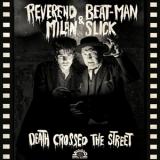
- Death Crossed The Street
- What Is Wrong With Those People In This World Today
- In The End
- Feed My Brain
- Shut Up
- Junkie Child
- I Want Your Sweat
Zwei Garagen-Generationen treffen aufeinander! Reverend Beat-Man, das Schweizer Ein-Mann-Orchester und der König des Blues Trash, trifft auf Milan Slick, eine echt dunkle Seele und vielleicht Reinkarnation von Nick Cave (ach, noch zugegen)/Johnny Thunders, um Rock'n'Roll zu spielen, der so frisch und lebendig, wild und düster ist wie nie zuvor. Reverend Beat-Man und Milan Slick lernten sich 2020 inmitten der Pandemie kennen, als sie einen Soundtrack für den Vampirfilm "A Girl Walks Home Alone at Night" von Ana Lily Amirpour schrieben. Zusammen spielten sie Gigs bei Super Sonic Records oder im legendären SO36 in Berlin, um dann gemeinsam mit Beatrice Graf und Benjamin Glaus ein Album unter dem Namen "Reverend Beat-Man & The Underground" zu produzieren (im Rahmen des Rocklette PALP Festivals), eine makabre Tanzparty zum Untergang der Menschheit. Als Nächstes nahmen der superprimitive Rock 'n` Roll-Trash-Hi-Energy-Lo-Fi Reverend Beat-Man und der raffinierte, clevere, verspielte und düstere Milan Slick ihr erstes gemeinsames Album im ehemaligen Züri West Studio mit Sebastian Zwahlen und dem einzigartigen Robert Butler von Miracle Workers auf. Reverend Beat-Man ist eigentlich eine Ein-Mann-Band mit einer Mission: Blues-Trash und wilden Rock'n'Roll. Geboren 1967 in Bern, Schweiz, im Sommer der Liebe und des Hasses, ist er seit 1992 auf Tour, zuerst als Lightning Beat-Man, dann als Reverend Beat-Man One-Man-Band und mit seiner Band The Monsters. Er spielte in ganz Europa, Nord- und Südamerika, Japan, Vietnam, Neuseeland, Australien, Afrika, CBGBs, Montreux Jazz, Muddy Roots usw. Er ist der Gründer von Voodoo Rhythm Records (1992). Wäre er Politiker, würden ihn sogar seine Feinde respektieren (die Regierung). Er wurde 2014 für den Schweizer Musikpreis nominiert, gewann den lokalen Musikpreis als einflussreichster Musiker in Bern (Hauptstadt der Schweiz) und betreibt dort einen Platten- und Souvenirladen. Der Singer-Songwriter Milan Slick (Jahrgang 2004) steht noch ganz am Anfang seiner Karriere, hat aber bereits mit namhaften Künstlern wie Mario Batkovic oder Birdman Jäggi oder seiner eigenen Band Fatigues zusammengearbeitet. In seiner Musik sind Einflüsse von u.a. Nick Cave bis David Bowie zu hören, aber auch, dass sich eine eigenwillige junge Stimme herauskristallisiert, von der wir in Zukunft hoffentlich noch viel hören werden. Als Classic Black or limitiertes Glow In The Dark Vinyl, jeweils mit vierseitigem A4-Insert & DLC, Digisleeve-CD, Kassette sowie Tonband mit Extras erhältlich!
REVEREND BEAT-MAN & MILAN SLICK
DEATH CROSSED THE STREET (TAPE)
Zwei Garagen-Generationen treffen aufeinander! Reverend Beat-Man, das Schweizer Ein-Mann-Orchester und der König des Blues Trash, trifft auf Milan Slick, eine echt dunkle Seele und vielleicht Reinkarnation von Nick Cave (ach, noch zugegen)/Johnny Thunders, um Rock'n'Roll zu spielen, der so frisch und lebendig, wild und düster ist wie nie zuvor. Reverend Beat-Man und Milan Slick lernten sich 2020 inmitten der Pandemie kennen, als sie einen Soundtrack für den Vampirfilm "A Girl Walks Home Alone at Night" von Ana Lily Amirpour schrieben. Zusammen spielten sie Gigs bei Super Sonic Records oder im legendären SO36 in Berlin, um dann gemeinsam mit Beatrice Graf und Benjamin Glaus ein Album unter dem Namen "Reverend Beat-Man & The Underground" zu produzieren (im Rahmen des Rocklette PALP Festivals), eine makabre Tanzparty zum Untergang der Menschheit. Als Nächstes nahmen der superprimitive Rock 'n` Roll-Trash-Hi-Energy-Lo-Fi Reverend Beat-Man und der raffinierte, clevere, verspielte und düstere Milan Slick ihr erstes gemeinsames Album im ehemaligen Züri West Studio mit Sebastian Zwahlen und dem einzigartigen Robert Butler von Miracle Workers auf. Reverend Beat-Man ist eigentlich eine Ein-Mann-Band mit einer Mission: Blues-Trash und wilden Rock'n'Roll. Geboren 1967 in Bern, Schweiz, im Sommer der Liebe und des Hasses, ist er seit 1992 auf Tour, zuerst als Lightning Beat-Man, dann als Reverend Beat-Man One-Man-Band und mit seiner Band The Monsters. Er spielte in ganz Europa, Nord- und Südamerika, Japan, Vietnam, Neuseeland, Australien, Afrika, CBGBs, Montreux Jazz, Muddy Roots usw. Er ist der Gründer von Voodoo Rhythm Records (1992). Wäre er Politiker, würden ihn sogar seine Feinde respektieren (die Regierung). Er wurde 2014 für den Schweizer Musikpreis nominiert, gewann den lokalen Musikpreis als einflussreichster Musiker in Bern (Hauptstadt der Schweiz) und betreibt dort einen Platten- und Souvenirladen. Der Singer-Songwriter Milan Slick (Jahrgang 2004) steht noch ganz am Anfang seiner Karriere, hat aber bereits mit namhaften Künstlern wie Mario Batkovic oder Birdman Jäggi oder seiner eigenen Band Fatigues zusammengearbeitet. In seiner Musik sind Einflüsse von u.a. Nick Cave bis David Bowie zu hören, aber auch, dass sich eine eigenwillige junge Stimme herauskristallisiert, von der wir in Zukunft hoffentlich noch viel hören werden. Als Classic Black or limitiertes Glow In The Dark Vinyl, jeweils mit vierseitigem A4-Insert & DLC, Digisleeve-CD, Kassette sowie Tonband mit Extras erhältlich!
Straight from Maracaibo, a region in western Venezuela known for its intense heat and constant energy, come Onoffon and Ginno presenting a sound that fuses the rawness of the present with the warmth of classic synthesizers from the 80s and 90s. Cervical EP features four tracks made for the dance floor. A debut that speaks clearly about what the label will offer us in the future under Onoffon's leadership.
- A1: Message Of The Bhagavat
- A2: Civilized Man
- A3: Here We Go
- A4: Appreciation
- A5: Empathy
- B1: Not The Flesh
- B2: Chance
- B3: Mantra
- B4: Surrender To Your T.v
- B5: Letter To A Friend
- B6: Metamorphosis
Shelter is a Hardcore punk band formed by Ray Cappo. After releasing previous works through independent labels, the band signed a deal with the legendary heavy metal and hard rock label Roadrunner Records. Originally released in
1995, the critically acclaimed album Mantra was the first
release by the band on the label.
By the time Shelter released the album Mantra, the punk rock scene was in evidence in America, especially in California, with bands like Bad Religion, Rancid, The Offspring and Green Day achieving mainstream popularity.
With Mantra the band moved away from the more punk pop style and created a melodic hardcore style. The song Here We Go' became an anthem. Lyrically the album focused mainly on Hare Krishna philosophy and the problems the Western Civilization creates. The first song, Message of the Bhagavad', is introduced by an excerpt of a Bhagavad Gita verses reading.
This classic album is now finally available again on vinyl!
- Asshole
- Baby
- Caddy
- Daley
- Effortless Feat. Evidence
- Furthermore
- Grateful
- Heavy Lifting Feat. Haphduzn
- Instrument
- Jester
- Kilowatts Feat. Kurious
- Locusts
- Mash Feat. Mike The Martyr, Musab, And Muja Messiah
- Neptune
- Phidiophobia
- Past
- Quicksand
- Really
- Sean
- Trying
- Used To
- Velour
- Westbound
- Xxx
- Yearning Feat. Yoni Wolf Of Why?
- Zorro Feat. Zoodeville
Cassette[20,59 €]
Auf Jestures, dem weitläufigen neuen Album von Atmosphere, taucht Slug tief in die Komplexität des Lebens ein und konfrontiert uns mit den unerwarteten Reibungspunkten des häuslichen Alltags und der Stabilität im mittleren Lebensalter. Längst hat er den Glauben hinter sich gelassen, dass große Kunst großen Schmerz erfordert, und stellt die Vorstellung in Frage, dass Kreativität aus Traumata entstehen muss. Stattdessen erkundet ihr fünftes Album der 2020er Jahre eine andere Art von Spannung - eine, die in Reflexion, Verantwortung und den stillen Offenbarungen des Alltags verwurzelt ist. Das Ergebnis ist ein Album, das persönliche Entwicklung einfängt, ohne die Vergangenheit zu romantisieren oder die Zukunft zu fürchten. Das Format des Albums ist ebenso ambitioniert wie seine Themen: 26 Songs, die jeweils mit einem anderen Buchstaben des Alphabets beginnen und in der Reihenfolge von A bis Z angeordnet sind. Selbst die Gastbeiträge folgen diesem Muster - Evidence ist auf ,Effortless" zu hören, Kurious auf ,Kilowatts" und Musab, Muja Messiah und Mike the Martyr alle auf ,Mash". Die Trackliste mag zwar umfangreich erscheinen, doch viele dieser Songs sind überraschend kurz - oft nur ein oder zwei Strophen - und vermitteln ihre Kernaussagen mit chirurgischer Präzision. Der Effekt ist ein kuratiertes, fließendes Mosaik, das einen vollständigen emotionalen und kreativen Bogen spannt, ohne sich in die Länge zu ziehen. Jestures ist mehr als eine Retrospektive, es ist eine Meditation über Bewegung und Bedeutung - darüber, wie die Zeit uns prägt und wie selbst Alltägliches transformativ sein kann. Slug verbindet Vergangenheit und Gegenwart mit Leichtigkeit und verweist auf ikonische Atmosphere-Sounds, während er sich mit sich entwickelnden Beziehungen, Erinnerungen und Selbstbewusstsein auseinandersetzt. Ants reichhaltige Produktion bietet den perfekten Hintergrund und wechselt zwischen Electro-Glitch, düsteren Drones und verspieltem Twang. Im Kern ist Jestures eine Geschichte des Fortschritts, die auf eine Zukunft hinarbeitet, die von Widerstandsfähigkeit und kreativer Klarheit geprägt ist.
- Asshole
- Baby
- Caddy
- Daley
- Effortless Feat. Evidence
- Furthermore
- Grateful
- Heavy Lifting Feat. Haphduzn
- Instrument
- Jester
- Kilowatts Feat. Kurious
- Locusts
- Mash Feat. Mike The Martyr, Musab, And Muja Messiah
- Neptune
- Phidiophobia
- Past
- Quicksand
- Really
- Sean
- Trying
- Used To
- Velour
- Westbound
- Xxx
- Yearning Feat. Yoni Wolf Of Why?
- Zorro Feat. Zoodeville
Vinyl[32,35 €]
Auf Jestures, dem weitläufigen neuen Album von Atmosphere, taucht Slug tief in die Komplexität des Lebens ein und konfrontiert uns mit den unerwarteten Reibungspunkten des häuslichen Alltags und der Stabilität im mittleren Lebensalter. Längst hat er den Glauben hinter sich gelassen, dass große Kunst großen Schmerz erfordert, und stellt die Vorstellung in Frage, dass Kreativität aus Traumata entstehen muss. Stattdessen erkundet ihr fünftes Album der 2020er Jahre eine andere Art von Spannung - eine, die in Reflexion, Verantwortung und den stillen Offenbarungen des Alltags verwurzelt ist. Das Ergebnis ist ein Album, das persönliche Entwicklung einfängt, ohne die Vergangenheit zu romantisieren oder die Zukunft zu fürchten. Das Format des Albums ist ebenso ambitioniert wie seine Themen: 26 Songs, die jeweils mit einem anderen Buchstaben des Alphabets beginnen und in der Reihenfolge von A bis Z angeordnet sind. Selbst die Gastbeiträge folgen diesem Muster - Evidence ist auf ,Effortless" zu hören, Kurious auf ,Kilowatts" und Musab, Muja Messiah und Mike the Martyr alle auf ,Mash". Die Trackliste mag zwar umfangreich erscheinen, doch viele dieser Songs sind überraschend kurz - oft nur ein oder zwei Strophen - und vermitteln ihre Kernaussagen mit chirurgischer Präzision. Der Effekt ist ein kuratiertes, fließendes Mosaik, das einen vollständigen emotionalen und kreativen Bogen spannt, ohne sich in die Länge zu ziehen. Jestures ist mehr als eine Retrospektive, es ist eine Meditation über Bewegung und Bedeutung - darüber, wie die Zeit uns prägt und wie selbst Alltägliches transformativ sein kann. Slug verbindet Vergangenheit und Gegenwart mit Leichtigkeit und verweist auf ikonische Atmosphere-Sounds, während er sich mit sich entwickelnden Beziehungen, Erinnerungen und Selbstbewusstsein auseinandersetzt. Ants reichhaltige Produktion bietet den perfekten Hintergrund und wechselt zwischen Electro-Glitch, düsteren Drones und verspieltem Twang. Im Kern ist Jestures eine Geschichte des Fortschritts, die auf eine Zukunft hinarbeitet, die von Widerstandsfähigkeit und kreativer Klarheit geprägt ist.
- Strange Meeting With Owls
- Skewered By The Daystar
- It Was A Flood
- Atlas On His Day Off
- Turn Signal
- And You Want To Be My Dog
- Secret Weather
- A Tavern Poem, Passed From Mouth To Mouth
- Another Bullshit Rodeo
- They Laugh That Win
- Escape Artist
- Darkness Leaning Like Water Against The Windows
- The Moon Says
- Hores & Hero
- Demon Confrontation
- Fixing The Past Is A Sucker's Game
- Sea & Swimmer
Gabriel Birnbaum, der Hauptsongwriter der Brooklyn-Band Wilder Maker, sagt, dass das neueste Album der Gruppe, The Streets Like Beds Still Warm, ,einer allgemeinen formalen Asymmetrie folgt, wie einer Traumlogik". Es ist reichhaltig strukturiert, stimmungsvoll und tiefgründig und ebenso narrativ wie experimentell. Es als Konzeptalbum zu bezeichnen, so groß dieser Begriff auch ist, würde ihm eigentlich nicht gerecht werden. Tatsächlich ist es nur der erste Teil einer Konzepttrilogie, die die Geschichte einer langen Nacht in der Stadt erzählt, von der Dämmerung bis zum Morgengrauen. Das Album folgt einem einsamen Erzähler, der durch die Straßen treibt und Bars und Krankenhauszimmer betritt und wieder verlässt. Wenn das ein bisschen noir klingt, dann liegt das daran, dass es das auch ist. ,Film noir Detektive sehen am Anfang immer makellos aus, aber am Ende des Films haben sie einen zerrissenen Kragen, ein blaues Auge, ihre Hosen sind fleckig und sie fangen an, aus Verzweiflung Leute zu schlagen", sagt Birnbaum. ,Sind sie noch die Guten? Ich finde das faszinierend und ich liebe die visuellen Hinweise, die die innere Landschaft widerspiegeln." Zwar gibt es auf The Streets Like Beds Still Warm keine visuellen Hinweise im eigentlichen Sinne, doch das Album verdankt sein großartiges Debüt der Kinematografie. Impressionistische Wirbel aus verzerrter Gitarre, Schlagzeug und Saxophon untermalen Birnbaums heiseres, weltmüdes Bariton-Crooning, das manchmal an Bill Fay erinnert. Aber manchmal, in all den düsteren Bar-Geschichten, denkt man auch an Tom Waits. Es ist ein Vergleich, der sowohl irreführend als auch verkürzend sein kann, aber es ist schwer, diese Assoziationen beim Hören von The Streets Like Beds Still Warm nicht zu sehen - vielleicht eine langsam schwingende Tiffany-Lampe direkt über dem Kopf des Erzählers, der etwas mehr als halbtrunken ist und eine brillant poetische, antiheroische Geschichte auf eine Serviette in einer Bar kritzelt. Seien Sie jedoch versichert, dass dies nicht ,The Heart of Saturday Night" und auch nicht ,In the Wee Small Hours" ist. Tatsächlich stammen die musikalischen Vorläufer von ,The Streets Like Beds Still Warm" aus ganz anderen Ecken des musikalischen Universums. Die Band lässt sich direkt von den Werken der zeitgenössischen Alt-Jazz-Musiker Anna Butterss und Jeff Parker sowie vom Ambient-Pionier Brian Eno ,The Streets Like Beds Still Warm" ist insgesamt ein Statement für nächtliches und hypnotisches Storytelling - sowohl in Bezug auf Stil als auch Inhalt. Birnbaums Engagement für die Erzählung, die letztendlich von Menschlichkeit handelt, spiegelt sich in der traumhaften Art und Weise wider, wie sich die Melodien entfalten. Es könnte gar nicht anders funktionieren. Tief empfunden und fokussiert, unbestreitbar hörenswert, aber schwer zu fassen - ,The Streets Like Beds Still Warm ist wunderschön seltsam - und es fühlt sich genau wie etwas an, das in zehn Jahren die Anerkennung erhalten wird, die es verdient.
- A1: Mulatu Astatke - Munaye
- A2: Mulatu Astatke - Meche Dereshe
- A3: Tesfa Mariam Kidane - Yetesfa Tezeta
- A4: Mulatu Astatke - Kasalefkut Hulu
- A5: Mulatu Astatke - Tezeta
- B1: Bahta G. Hiwot - Ewnet Yet Lagegnesh
- B2: Mulatu Astatke - Yegele Tezeta
- B3: Bahta G. Hiwot - Bemgnot Alnorm
- B4: Mulatu Astatke - Yekrmo Saw
- B5: Tesfa Mariam Kidane - Heiwote
★Japanese obi-strip
★Limited colored vinyl
The return of Mulatu to Ethiopia after studying jazz in the West sparked a new wave in the country’s music scene—Ethio-jazz.
This ambitious compilation album gathers modern Ethiopian sounds from 1969 to 1972, aiming to widely introduce what must have been a highly innovative
sound for its time.
In fact, the majority of the tracks featured on this compilation are either credited to Mulatu himself or arranged by him. In that sense, it’s no exaggeration to
call this a “Mulatu album” in essence. The result is a truly one-of-a-kind sound born from the fusion of Afro-indigenous Ethiopian rhythms and the Latin jazz
influences Mulatu absorbed during his time in the United States. The exotic, rustic flavor and smoky blackness that emerge from this blend defy description.
P-VINE is proud to release this historic work for the first time on colored vinyl.