Long coveted by diggers, connoisseurs and beat makers, here we have the first-ever reissue of Amedeo Tommasi's "Industria 2000", released in 1974 via RCA's "Original Cast" series under his Jarrell alias. These 12 sonic experiments - totally devoted to synthesizers - offer tense tonalities, dissonant ambiences, complex textures, white noise rides and muted rhythms that can easily be seen as cornerstones of what would become later known as Industrial Music, also anticipating the sonic landscapes found in some of the early Warp Records releases.
Comprising 12 tracks entirely devoted to synthesizers, Industria 2000 explores a range of stark, tense tonalities and dissonant atmospheres. The album’s complex textures, white noise swells, and muted rhythms can be seen as precursors to industrial music, anticipating the aggressive, abrasive soundscapes that would later come to define the genre. It is clear that Tommasi's work was not only ahead of its time, but was also laying the foundations for the sound realms explored in the early days by major electronic record labels of the 1990s and future electronic pioneers.
Suche:a tommasi
- 1
Climate - atmosphere is what we say. Soul with beautiful expression, is what they say in the modern jazz scene in the US. It's a necessary component for good jazz, as well as for swing. But to achieve an organic atmosphere which is therefore vital and alive, a relationship of intentions and views, and a congeniality of thoughts are needed. When Tommasi was in Rome for a few days and had Santucci and Scoppa listen to the latest pieces he had composed, the three musicians ideas, aspirations, and agreement in taste appeared to exist right off the bat, and the idea to do an album together was born almost instantly.
Now, with all things said and done, a certain climate seems to have been achieved, with no lack of a swing enriched with heat and energy. The two horn players, who up until now have played and recorded with a band from Rome, the Modern Jazz gang, have really and fully understood the spirit of the pieces written by Tommasi, and even if it's the first time they have met with the trio of the pianist from Trieste, they demonstrate that they have merged and combined into one, more than anyone had hoped for. The album was recorded by forging ahead and overcoming various obstacles like that of a geographical distance that they were not used to (the horn players reside in Rome, and the others in Turin, Bologna, and Lucca); but now that the project has been achieved rehashing the difficulties that they had to get past in order to finish the piece is no longer important (and nor is it well wished for).
- A1: Amedeo Tommasi - Brasilia (The Sound)
- A2: Max Rocci & His Friends - Colorombo (Il Mondo Dei Giovani, Vol 4)
- A3: Max Rocci & His Friends - Niagara Falls (Il Mondo Dei Giovani, Vol 4)
- A4: Alessandroni E Il Suo Complesso - Via Mare (L'ora Del Cocktail)
- A5: Joël Vandroogenbroeck - Electronic Jungle (Images Of Flute In Nature)
- A6: Kema - Pescatori (Canto Femminile) (La Natura E L'uomo)
- B1: Desert - Leaving (Desert)
- B2: The Swingers - Depressione (Jazz Video)
- B3: Latrudi - Feeling (Teleobiettivo)
- B4: Narassa, Amedeo Tommasi Trio - Lalo (Made In The Usa)
- B5: The Swingers Feat Marco Di Marco - Meditazione (Il Mondo Dei Giovani, Vol. 1)
- B6: The Swingers - Nostalgia (Il Mondo Dei Giovani, Vol 3)
Blue note / Schema / Far Out recordings artist shares a new compilation of golden age italian library music.
Following his acclaimed five-part Viagem compilation series celebrating Brazil's forgotten bossa nova and samba jazz, Far Out, Blue Note and Schema recording artist and international DJ Nicola Conte turns his curatorial attention homeward with Viaggio, an extraordinary exploration of Italy's library music renaissance 1970-79.
The 12-track compilation spotlights the remarkable creative explosion that occurred during the seventies: when some of the greatest yet most historically overlooked composers, including Amedeo Tommasi, Alessandro Alessandroni and Max Rocci, were composing and recording huge amounts of original music for film and television libraries.
Unlike commercial releases designed for mass consumption, library music was created specifically to accompany images on screen. This meant creative freedom for composers who imagined scenarios, feelings and worlds to soundtrack. Pressed in limited quantities, these recordings were distributed only to internal circles of music supervisors, journalists, and television professionals – making them virtually invisible to the general public for decades.
"This is a journey through a largely forgotten world," explains Conte. "While major jazz recording opportunities were scarce, an incredible network of small labels owned by publishing companies – often created by the composers themselves – began to flourish. This created an open space where musicians could express more experimental and free thinking sounds."
At the heart of Viaggio stands Amedeo Tommasi, the sophisticated jazz pianist who emerged in 1960 backing international stars like Chet Baker, Bobby Jaspar, and Jacques Pelzer. Tommasi was among Italy's earliest artists to introduce Black US modal jazz influences, and when traditional recording opportunities dwindled, he pivoted to soundtrack and library music, helping define a distinctly Italian sound that bridged experimental jazz with the emerging possibilities afforded by developments in synthesizer and recording technologies.
The compilation features rare gems from small label outputs, namely the Cenacolo and Rotary label catalogs. Tommasi's contemporaries include the great Alessandro Alessandroni and his vocalist wife Giulia De Mutiis (Kema), Stefano Torrosi (under the alias Farlocco - meaning fake/phony), and Belgian composer Joël Vandroogenbroeck. The recordings capture the technological evolution of the era as beguiling synthesis often combines with global influences spanning Brazilian rhythms, jazz-funk explorations, and Middle Eastern scales.
"You can hear both the haunting melodies and sun-kissed atmospheres so typical of Italian culture from that era," Conte observes. "Some of these albums could have been proper artist releases, while others were specifically designed for accompanying images on screen, yet all were crafted with exploratory creativity that still resonates powerfully today."
- Atleti
- Sport Sull' Acqua
- Concentrazione Agonistica
- Ginnastica Artistica
- Scherma
- Velocità
- Maratona
- Pentathlon
- Fondo
Trumpetist Francesco "Cicci" Santucci and saxophonist Enzo Scoppa cut their teeth in the late "50s, playing with the Italian group Modern Jazz Gang, along with other Italian jazz greats such as Sandro Brugnolini and Amadeo Tommasi. In June 1971, "il maestro" Piero Umiliani made his Sound Workshop recordingstudio in the heart of Rome availableto them, so that they could create an album under his supervision. The result was Olimpiade, a jazz-funk album featuring Franco d"Andreaon electric piano (who would go on to play with the group Perigeo a year later), and Belgian musician Joel Vendrokenbrak on organ. It should be noted that this session was also released on Dire, under the name On the Underground Road, but is here reissued for the first time with its magnificent original cover. A poster of the artwork and a printed insert featuring the Sound Workshop studio are also included with this reissue.
Scored by the legendary Italian film composer Armando Sciascia, Sea Fantasy is a conceptual suite of twelve exotic themes evoking the many moods and dramas of life under the sea. Recorded in 1972 for Sciascia's own Vedette label, the album is a key recording within the micro-genre of Italian underwater library music. A mosaic of evocative modern classical, flamenco textures and a surge of raw analogue synthesizers. Mysterious aquatic music that sits comfortably alongside other Italian Soundtrack and Library recordings including the lush bossa of Daniele Patucchi's Men Of The Sea (CAM) as well as the experimental electronics of Biologia Marina by Amedeo Tommasi & Alessandro Alessandroni (Rhombus). With several cues used for the English-version soundtrack to Harald Reinl's 1976 (Erich von Däniken inspired) mondo-documentary Mysteries Of The Gods, Sea Fantasy is reminiscent of the exotic mood-music scored for Folco Quilici's documentary Oceano composed by Ennio Morricone as well as Luigi Scattina's legendary tropical sexploitation film Il Corpo composed by Piero Umiliani. This new 2019 edition has been newly remastered and expanded with additional liner notes and photos.
Remastered and expanded edition.
Legendary Italian underwater Library recording
Replica vinyl reissue of the rare 1972 LP
Mysterious aquatic mood music
Sonor Music Editions presents this restored issue of Maestro Sandro Brugnolini's Overground. This elusive masterpiece in library music captures the most impressive work, alongside Underground (1970), of the Italian composer and alto sax player.
Sandro Brugnolini was a prominent member of the Modern Jazz Gang, a famous Italian jazz group, during the 1950s and 60s, which also included Amedeo Tommasi, Cicci Santucci, and Enzo Scoppa. The group was active from 1956 to 1965 and produced some remarkable albums such as Miles Before And After (1960) and the original soundtrack from Gli Arcangeli (1962), which featured the renowned American jazz singer, Helen Merrill. Subsequently, he recorded many of the genre's most iconic releases, including Feelings (1974), albeit uncredited, and ventured into Psychedelic Lounge Funk and Progressive Jazz Beat tunes.
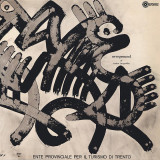
Overground was released on Sincro Edizioni Musicali in 1970 as the soundtrack to Enrico Moscatelli and Mario Rigoni's documentary Persuasione, commissioned by Ente Provinciale Per Il Turismo Di Trento, a local tourism board in Italy, with music composed by Sandro Brugnolini and Luigi Malatesta featuring some of the best musicians in Italy at the time like Angelo Baroncini and Silvano Chimento on guitars, Giorgio Carnini on piano and organ, Enzo Restuccia on drums, and Giovanni Tommaso on bass and effects. The music spans from underground Psychedelic Prog. Rock with swirling organs, trippy effects, and distorted fuzz guitars to sophisticated Lounge grooves with Avant-garde orchestrations.
The music has been transferred and remastered from the original master tapes. It has been lacquer cut in stereo by Jukka Sarapää at Timmion Cutting and packed in a thick cardboard sleeve featuring a fully restored painting by Umberto Mastroianni licensed by Centro Studi dell’Opera di Umberto Mastroianni
Limited Clear Grey Vinyl 7". For Fans Of… Piero Umiliani, Amedeo Tommasi, Dorothy Ashby, Sandro Brugnolini, El Michels Affair, Sven Wunder. Breezy and carefree, Dragatto reminisces on a day spent exploring the streets of Madrid with only a camera, a few rolls of film and the shoes on his feet. Heavily inspired by the European adaptation of Bossa nova in the 1960’s, Salvator creates his own unique mood that’s equal parts sunny and joyful using simple melodic themes opposite lush string arrangements. A surefire companion for the next road trip down the coast or excursion through a foreign city. On the B side, as if delivered from the future, the sweet and punchy Return to Normal is a message of hope and optimism letting us know that things will indeed get better. Dreamy harp arpeggios float effortlessly atop a crushing rhythm section tip-toeing the line between calmness and urgency. Turn this one up loud, light one up and let go.
Tracks 1. Mind On Madrid 2. A Return To Normal
- 1