AWESOME TAPES FROM AFRICA News

NATIVE SOUL - TEENAGE DREAMS

Die südafrikanische House-Variante Amapiano geht bei ATFA mit "Teenage Dreams" in die dritte Runde. Nach TENO AFRIKA und DJ BLACK LOW schnappte sich das in New York beheimatete Label das 2019 gegründete Produzenten-Duo NATIVE SOUL, die mit "Teenage Dreams" ihr Debüt geben. Der Titel ist passend gewählt, schließlich sind Kgothatso Tshabalala und Zakhele Mhlanga (DJ Zakes) mit 19 bzw. 18 Jahren sozusagen selbst gerade erst den Kinderschuhen entwachsen. Obwohl die beiden in Pretoria aufgewachsenen Jungproduzenten zur Generation 'Ma2000' gehören, also nach Beginn der Demokratie geboren wurden und die Apartheid nie erlebt haben, überzeugt "Teenage Dreams" mit einer künstlerische Reife, die das jeweilige Alter der beiden Soundtüftler weit übersteigt. Die zwölf Tracks auf dem Debüt sind überwiegend moody, instrumental und mit Drums "made from basslines which stick out like a pocket turned outside of pants" versehen. Für Fans von BURIAL und MR. FINGERS!

non in magazzino

Ordina ora e ordineremo l'articolo per te presso il nostro fornitore.

22,23

Last In: 4 years ago
EPHAT MUJURU & THE SPIRTIT OF THE PEOPLE - Mbavaira

Ephat Mujuru exemplifies a unique generation of traditional musicians in Zimbabwe. Born under an oppressive colonial regime in Southern Rhodesia, his generation witnessed the brutality of the 1970s liberation struggle, and then the dawn of independent Zimbabwe, a time in which African music culture - long stigmatized by Rhodesian educators and religious authorities - experienced a thrilling renaissance. Under the tutelage of his grandfather, who was a respected spirit mediumand mbira master, Ephat showed an early talent for the rigors of mbiratraining, playing his first possession ceremony when he was just ten years old. By then, guerilla war was engulfing the country and his grandfather Muchatera tragically became a victim of the violence, a devastating blow to the young musician. In the midst of the liberation struggle, mbira music became political. Eventually, the Rhodesians were defeated, but rather than return to the past, the nation of Zimbabwe was born and a new future unfolded. Ephat threw himself into the spirit of independence, singing of brotherhood, healing, and unity: crucial themes during a time when the nation's two dominant ethnic groups, the Shona and the Ndebele, were struggling to reconcile differences. Ephat's band would eventually follow the popular trend and add electric instruments. But before that, he and Spirit of the People released two all-acoustic albums, and they may well be the most exciting and beautiful recordings he made in his career. Mbavaira, the second of these albums, was released in 1983. As the independence years moved on, there would be fewer and fewer commercial mbira releases. But for the moment, Ephat had the required stature and reputation. Also, with the energy and drive we hear in these recordings, the album could easily rival the pop music of its day. Within a few years after the release of Mbavaira, it and albums like it became harder to find in Zimbabwean record stores. Ephat adapted to the times and formed an electric band. They recorded more albums over the years but none of them have the particularly delicious energy of Spirit of the People in the first years of Zimbabwe's independence.

pre-ordina ora27.08.2021

dovrebbe essere pubblicato su 27.08.2021

19,87
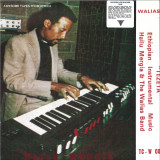
Hailu Mergia and the Walias Band - Tezeta

From their genesis as members of the Venus club in-house band in the early 70s, Hailu Mergia and the Walias Band were at the forefront of the musical revolution during an era where modern instruments and foreign styles superseded the traditional fare to become the staple sound of Ethiopia. No one would argue that the Walias were the trailblazing powerhouse of modern Ethiopian music. They were the first band to form independently without affiliation to a theatre house, a club or a hotel; unprecedented and risky as they had to raise all funding for expenses by themselves including buying equipment. They were the first to release full instrumental albums, considered to be commercially unviable at the time. They opened their own recording studio, with band members Melake Gebre and Mahmoud Aman doubling as technical buffs during sessions. They were also the first independent band to tour abroad. In short, they were the pioneers every band tried to emulate; some more successfully than others.
Odds are, any Ethiopian over the age of 35 who had access to TV or radio by the early 90s, will instantly recognize the sound of Walias. What is not a given is, how many would actually identify the band itself. Barely a day went by without hearing the Walias either in the background on radio or as an accompaniment to various programs on TV.

This Tezeta album, the band’s second recording, released in 1975, is one of those that have been impossible to find for nearly three decades. Sourced by Awesome Tapes From Africa and expertly remastered by Jessica Thompson, its unique and funky renditions of standards and popular songs of the day are so quintessentially Walias, flavorful and evocative. Hailu's melodic organ, unashamedly front and center in every track, makes even the complex pieces accessible.
Profoundly engaging; it's an immersive trip down memory lane for those of us getting reacquainted with it, while also an enthralling and gratifying experience for fresh ears.

Virtually unknown recording outside Ethiopia.
Documents Mergia & Walias legendary early period.
Follow-up to reissue of hugely popular seminal Ethiopian instrumentals LP Tche Belew (ATFA012)

Cassette-only, released in 1975 on the band’s in-house label to fund their record store.
Beautifully-rendered instrumentals of classic Ethiopian standards.

non in magazzino

Ordina ora e ordineremo l'articolo per te presso il nostro fornitore.

23,49

Last In: 4 years ago
MERGIA, HAILU & THE WALIAS BAND - TEZETA

Unknown recording outside Ethiopia which documents Mergia Hailu & The Walias legendary early period. Beautifully-rendered instrumentals of classic Ethiopian standards, "Tezeta"is the follow-up reissue of the hugely popular seminal Ethiopian instrumentals LP "Tche Belew" (ATFA012). It was a Cassette-only release in 1975 on the band's in-house label, to fund their record store. From their genesis as members of the Venus club in-house band in the early 70s, Hailu Mergia and the Walias Band were at the forefront of the musical revolution during an era where modern instruments and foreign styles superseded the traditional fare to become the staple sound of Ethiopia. No one would argue that the Walias were the trailblazing powerhouse of modern Ethiopian music. They were the first band to form independently without affiliation to a theatre house, a club or a hotel; unprecedented and risky as they had to raise all funding for expenses by themselves including buying equipment. They were the first to release full instrumental albums, considered to be commercially unviable at the time. They opened their own recording studio, with band members Melake Gebre and Mahmoud Aman doubling as technical buffs during sessions. They were also the first independent band to tour abroad. In short, they were the pioneers every band tried to emulate; some more successfully than others. Odds are, any Ethiopian over the age of 35 who had access to TV or radio by the early 90s, will instantly recognize the sound of Walias. What is not a given is, how many would actually identify the band itself. Barely a day went by without hearing the Walias either in the background on radio or as an accompaniment to various programs on TV. This Tezeta album, the band's second recording, released in 1975, is one of those that have been impossible to find for nearly three decades. Sourced by Awesome Tapes From Africa and expertly remastered by Jessica Thompson, its unique and funky renditions of standards and popular songs of the day are so quintessentially Walias, flavorful and evocative. Hailu's melodic organ, unashamedly front and center in every track, makes even the complex pieces accessible. Profoundly engaging; it's an immersive trip down memory lane for those of us getting reacquainted with it, while also an enthralling and gratifying experience for fresh ears.

non in magazzino

Ordina ora e ordineremo l'articolo per te presso il nostro fornitore.

19,87

Last In: 4 years ago
DJ BLACK LOW - UWAMI

In many ways, DJ Black Low's debut album, Uwami, shows the signs of an artist's first offering in any musical genre. Showcasing fluency in a broad range of styles and stuffing a number of ideas to the record's brim is the 20 year-old producer's attempt to both introduce himself to a wide listenership and stamp a recognizable sound in their minds. In other ways, somewhat out of the young South African producer's control, Uwami goes against the grain. The album comes at a time when South African electronic music is being fundamentally disrupted. Amapiano, the electronic music movement which first gained popularity with a small, core group of followers, now dominates the mainstream. Well-known and pervasive, amapiano borrows from a diverse palette of musical styles which are popular in South Africa's largely Black townshipsjazz, kwaito, dibacardi, deep and afro house among them. Instead of pandering to the seemingly insatiable local appetite and growing global penchant for amapiano though, on Uwami DJ Black Low seeks out the limits of the sound du jour and tries to stretch them. On his solo productions, he uses the samples and compositional norms that make amapiano hits the bedrock on which to experiment and improvise. With collaborators, DJ Black Low improvises within the boundaries of listener-friendly grooves. The sound he creates has foundations of what could easily have progressed into captivating amapiano songs on their own. But he uses improvised but structured electronic percussion and distortion sounds to drive the tracks in a particular direction. What remains is something like a deconstructed amapiano. For a young producer living in the townships of the greater Pitori area of South Africa's Gauteng province, there were few avenues available for Radebe to pursue a career in music. His trajectory shows the vulnerability of this pursuit. "I had started producing in 2013 and it so happened that I lost my equipment in 2014. I couldn't afford to buy equipment. In 2017, a friend of mine who had been making music found a job and decided to quit music. He gave me his equipment and I was able to start producing again. That's when I started getting back to it. I tried to pick up where I had left off, with hip hop and commercial house but I found that amapiano was the popular music. I liked it, so I started producing it."

non in magazzino

Ordina ora e ordineremo l'articolo per te presso il nostro fornitore.

19,87

Last In: 4 years ago
NAHAWA DOUMBIA - KANAWA

Nahawa Doumbia's new album Kanawa concisely captures this current moment in Malian history. The singer, whose storied career spans more than four decades, reflects on the immigration crisis from the Malian perspective in the title of her new album Kanawa. Across eight songs recorded in Bamako with a band including traditional and modern instruments, Doumbia merges her early work that relied on a spare expression of her trademark didadi rhythm with the bombastic range of contemporary Malian pop. The beautifully complex musical accompaniment that results is courtesy of the large ensemble she pulled together with producer and arranger (and day one collaborator) N'gou Bagayoko. The band features two highly expressive Malian string instruments, the ngoni and the slightly smaller kamalé ngoni, as well as a variety of percussion, drum programming, karignan (a metal scraper) and acoustic and electric guitars. Doumbia's daughter, a celebrated singer with her own group and busy concert schedule, Doussou Bagayoko sings on "Adjorobena," a song about patience, tolerance and living in peace. Doumbia weaves together a roadmap of her psyche when it comes to the good and bad life has to offer. She talks about marriage and women leaving home to join another through the metaphor of a tree in the garden; she includes gunshot samples in the song "Foliwilen" to honor the bravery of hunters, soldiers and other courageous people; she uses a bird in "Djougoh" to talk about lazy people; and, in "Ndiagneko" she advises people to ignore critics, just do you. Mali has gone through an intense period of regional strife and terrorist incidents over the last ten years and Doumbia roots the album in tragic local concerns with deep global implications. "The meaning of Kanawa is so simple. We see our children trying to cross the ocean all the time. I said that many of our children die in the ocean and some of them die while crossing the Sahara. But I ask them why do they leave their country? They said that they leave because of the family situation or problems like poverty and unemployment. I ask them to stay and work in their country. I call on the UN and African leaders so that we can coordinate our efforts to find a solution, to create jobs for them so that young people stop leaving. That's why I chose it as the title of my album so that everybody can learn from it and also so that there is a reduction in the number of people emigrating. So that some will hear the message and stay home and grow the land. Leaving is not the only solution. My message is to help the youth find jobs."

non in magazzino

Ordina ora e ordineremo l'articolo per te presso il nostro fornitore.

19,87

Last In: 5 years ago
Hailu Mergia - Yene Mircha

It's been a long, winding road to Hailu Mergia's sixth decade of musical activity. From a young musician in the 60's starting out in Addis Ababa to the 70's golden age of dance bands to the new hope as an emigre in America to the drier period of the 90s and 2000s when he mainly played keyboard in his taxi while waiting in the airport queue or at home with friends. More recently, with reissue of his classic works and a re-assessment of his role in Ethiopian music history, Mergia has played to audiences big and small in some of the most cherished venues around the world. With 2018's critical breakthrough "Lala Belu" Mergia championed himself and consolidated his legacy, producing the album on his own and connecting with listeners through the sheer creative power of his version of modern Ethiopian music. His subsequent performances revealed an artist who is in no way stuck in the nostalgia for the "golden age" sound. The press agreed, including the New York Times, BBC and Pitchfork, calling his music "triumphantly in the present" in its Best 200 Albums of the 2010's list. Mergia's new album "Yene Mircha" ("My Choice" in Amharic) encapsulates many of the things that make the keyboardist, accordionist and composer-arranger remarkable_elements that have persisted to maintain his vitality all these years, through the ebb and flow of his career. The rock solid trio with whom he has toured the world most recently, DC-based Alemseged Kebede (bass) and Ken Joseph (drums), forms the nucleus around which an expanded band makes a potent response to the contemporary jazz future "Lala Belu" promised. "Yene Mircha" calcifies Mergia's prolific stream of creativity and his philosophy that there is a multitude of Ethiopian musical approaches, not just one sound. Enlisting the help of master mesenqo (traditional stringed instrument) player Setegn Atenaw, celebrated vocalist Tsehay Kassa and legendary saxophone player Moges Habte from his 70's outfit Walias Band, Mergia enhances his bright, electric band on this recording with an expanded line up on some songs. Mergia produced the album which features several of his original compositions along with songs by Asnakesh Worku and Teddy Afro. An artist still reinventing his sound every night on stage during his marathon live sets, this 74-year-old icon refuses to make the same album twice. The album feels as urgent and risky as his concerts can be, pushing the band to the outer limits of group improvisation and back with chord extensions during his exploratory solos. "Yene Mircha" captures this live experience and fosters an expansive view of what else could be in store for this tireless practitioner of Ethiopian music.

non in magazzino

Ordina ora e ordineremo l'articolo per te presso il nostro fornitore.

18,45

Last In: 6 years ago
Antoinette Konan - Antoinette Konan

''M'acko'', ''Kokoloko Tani''and ''Abidjan Adja'' are deep mid-tempo Ivory Coast Boogie Synth steppers, heavy production!! Funny fact.., the 1986 LP is mixed by Sammy Massamba!

non in magazzino

Ordina ora e ordineremo l'articolo per te presso il nostro fornitore.

23,82

Last In: 6 years ago
Professor Rhythm - Professor 3

South African Mbaqanga And Bubblegum Instrumentals For The Dance-floor. First Time Available Outside South Africa. Cult Favorite Among Collectors. Follows The Successful Reissue Of bafana Bafana' Last Year. Professor Rhythm's 1991 Recording Professor 3 Is A Vivid Reflection Of Urban South Africa As Apartheid Was Ending. Thami Mdluli's Production Project Had Young And Old Dancing To A Sound That Sought To Unite Blacks Within Southern Africa. our Music Gave Hope To The Hopeless,' He Says. Mdluli's Third Instrumental Album (which Contains Some Background Vocals, To Be Exact), Portrays The Moment When The Dominant Mbaqanga And American R&b-based Bubblegum Sounds Being Produced In Johannesburg And Other Urban Centers Were Transforming Into House And Hip-hop-inspired Kwaito. The Pop Of The 80's And All That Went With It—from The Models Of Synths And Drum Machines To The Lyrical Style—gave Way To A Changing Melodic Emphasis And New, Much Slower Tempi Using A Completely Different Rhythmic Skeleton. Upbeat, Chipper Bubblegum, Often With Double-time Breakdowns And Upstroke Syncopations, Faded And The Sounds Began To More Closely Resemble Those Of Contemporary Black America—where Hip-hop Was Slowing Down And The Bass-lines And Melodies Were Getting Moodier, Darker In General. At The Same Time House Music Had Briefly Reached Mainstream Acceptance In The States And That Popularity Continued To Feed Into Awareness Overseas. These Two Influences Blended With The Burgeoning House Music Scenes In Johannesburg And Pretoria As Professor Rhythm 3 Was Being Produced In March 1991 (the Same Year Apartheid Ended). Mdluli Explains, we Were Influenced By Foreign Bands And So People Updated Their Sound.' According To Mdluli, The Evolving Sound Was Bolstered By Widening Availability Of House And Rap Records From Abroad While, Most Importantly, An Increasing Sense That Apartheid Might Soon Be Finished Was Met With A New Positivity Vibe Society. 1991, '92, '93... Mandela Was Released. People Were Upbeat, They Were Happy, The Music Was Good.' Professor 3 Came Out On Vinyl As The Lp Business Was Dying In South Africa And Sold Around 20,000 Copies. It Was Mainly Distributed On Tape, Which Sold Closer To 100,000. With The Help Of Engineer Fab Rosso, The Recording Features Backing Vocalists From Mango Groove. After Making A Half-dozen Records As Professor Rhythm, Mdluli Once Again Shifted His Focus Musically. By The Mid-90's He Had Veered Off Gospel Music— And Left Playing In Bands And Started Making His Own Solo Recordings. His Enormous Success In The Gospel Realm In The Years Since Is A Remarkable Story In Its Own Right, But For Now We Are Only Dancing.

non in magazzino

Ordina ora e ordineremo l'articolo per te presso il nostro fornitore.

20,97

Last In: 6 years ago
Hailu Mergia - Lala Belu
 
4

First new LP in over 15 years. Builds on 3 successful ATFA reissues of Mergia's music. Legendary artist still active after decades of historic work. Modern Ethiopian jazz built on ancient scales and standards. Capping several successful years traveling the world performing to audiences big and small, Hailu Mergia's Lala Belu has been a long time coming. It builds on Mergia's remarkable career resurgence over the past few years. Beginning in 2013 with the reissue of his dreamy Hailu Mergia and His Classical Instrument followed by the enormous success of his seminal Ethio-jazz masterpiece Tche Belew and continuing with last year's widely acclaimed Wede Harer Guzo, Mergia has received considerable accolades from listeners and press globally, including The New York Times, Pitchfork and The Wire. His old recordings are cherished revelations for Ethiopian music fans; however, Mergia's return to the stage has been just as inspiring and electrifying. Mergia's vintage recordings are known for an inherently mysterious and worn-in quality, while his new recordings echo his band's 21st century live show with modern instrumental interpretations of crucial Ethiopian standards and Mergia's own original compositions. Tony Buck (drums) and Mike Majkowski (bass), who have backed Mergia on tour throughout Europe and Australia, form the bass-drums trio on the recording. Having played venues from Radio City Music Hall and the Kennedy Center to jazz festivals, rock clubs and DIY spaces all over North America, Europe and Australia, Mergia and Awesome Tapes From Africa want to document this moment in his landmark career with a snapshot of Mergia's current sound. Since he emigrated from Ethiopia and built a life in Washington, D.C. around 1981—where he remains working as an airport taxi driver when he is not on tour—Mergia's career has followed a humble trajectory. He made a few recordings in America but they didn't easily reach fans back home. He kept making music on his own and with friends but after the early 80's his gigs in the U.S. mostly dried up. It wasn't until he began working with Awesome Tapes From Africa and putting together bands with the help of booking agents and musicians in Europe and the U.S., that he was able to chart a new path. With a broad audience of young listeners in diverse venues and distant locales, at age 71, Mergia is enjoying his comeback and is not slowing down.

non in magazzino

Ordina ora e ordineremo l'articolo per te presso il nostro fornitore.

21,81

Last In: 7 years ago
Dj Katapila - Aroo

DJ Katapila's Aroo EP is the latest addition to the iconoclastic producer's catalog of fast-paced, pan-West African-influenced dance music. From a young age, Ishmael Abbey was a beloved local DJ in Accra, Ghana's competitive and rapidly-evolving music galaxy. DJ Katapila's debut release with Awesome Tapes From Africa, 2016's reissue of Trotro, ignited international acclaim for the Ghanaian DJ and producer: The New York Times, Pitchfork, Resident Advisor and FACT heaped praise on his work. Katapila launched a touring career beyond his grueling schedule of all-night parties around Ghana's southern coast and neighboring countries, heading to Europe and the UK, where he performed at festivals and clubs the pasty two years. Katapila brought Ghana's street party culture to audiences overseas, a wave of joy and happy dancers were left in his wake. The song Aroo' uses his earlier song Cocoawra' as a jumping off point and expands upon its endearing quick-rhythmed interplay of vocal hiccups and percussive clinks. Katapila thinks of Aroo' as a simple math equation: Francophone rhythms plus techno equals so hot and danceable.' While traveling this past summer in Europe, he continued to work on the minimalist electronic music steeped in his hometown rhythms that has made him a growing and singular voice in West African music. Having never travelled outside his region before, the contemporary sounds of London impacted his sonic palette, triggering new song African Techno.' He explains, In Europe and the UK they like these techno songs and house music. They have songs that sound like African music, and we have songs that sound like house music and techno music.' Ghana Baby DJ' references his ongoing development of Ga dance music style gbe ohe. It also conjures his daughter's voice and inimitable vibe and blends it with the characteristic clave rhythm of this. The EP's final cut is a track released with a an eye-catching music video this summer called "Monkey." Following radio play in Ghana and demand from fans online, this track makes its debut on vinyl. Awesome Tapes From Africa is proud to present new music from this unmistakably original artist with an honesty and unpretentiousness that feels good at this current point in history.

non in magazzino

Ordina ora e ordineremo l'articolo per te presso il nostro fornitore.

13,15

Last In: 8 years ago
Professor Rhythm - Bafana Bafana

Professor Rhythm is the production moniker of South African music man Thami Mdluli. Throughout the 1980's, Mdluli was member of chart-topping groups Taboo and CJB, playing bubblegum pop to stadiums. Mdluli became an in-demand producer for influential artists (like Sox and Sensations, among many others) and in-house producer for important record companies like Eric Frisch and Tusk. During the early '80s, Mdluli projects usually featured an instrumental dance track. These hot instrumentals became rather popular. Fans demanded to hear more of these backing tracks without vocals, he says, so Mdluli began to make solo instrumental albums in 1985 as Professor Rhythm. He got the name before the recordings began, from fans, and positive momentum from audiences and other musicians drove him to invest himself in a full-on solo project. It was the era just before the end of apartheid and house music hadn't taken over yet. There wasn't instrumental electronic music yet in South Afric a. As the '80s came to a close, that was about to change. Professor Rhythm productions mirror the evolution of dance music in South Africa. They grew out of the bubblegum mold - which itself stems from band's channeling influences like Kool & the Gang and the Commodores - into something based on music for the club. His early instrumental recordings First Time Around and Professor 3 mostly distilled R&B, mbaqanga and bubblegum grooves into vocal-less pieces for the dance floor. Musically, these were a success and commercially the albums all went gold. There were countless bubblegum albums flooding the marketplace, with nearly disposable vocalists backed by mostly similar-sounding rhythm tracks. Most of the lyrical content was light and apolitical. But the keyboards used formed the musical basis for what would come next. By the time Professor 4 and this recording Bafana Bafana - the name references South Africa's national soccer team - were released in the mid-1990s, k waito had fully emerged. Access to instruments and freedom of expression helped its rise in influence among youth. According to Mdluli, "Once Mandela was released from prison and people felt more free to express themselves and move around town, kwaito was becoming the thing." Lyrically, kwaito championed the local township lingo while adapting "international music," house music, into the local context. "International Music," as house music and early kwaito were interchangeably known, in many ways reflects the sounds coming from America. But South Africans made it their own. Today, the largest part of the music industry is occupied by house music and its relatives.

non in magazzino

Ordina ora e ordineremo l'articolo per te presso il nostro fornitore.

22,48

Last In: 7 years ago
Om Alec Khaoli - Say You Love Me

Say You Love Me wasn't "Om" Alec Khaoli's first solo recording but the 1985 EP solidified the bass player and songwriter's standing as one of South Africa's most consistently innovative pop auteurs. He built a career on ubiquitous rock, pop and soul hits with groundbreaking bands like the Beaters, Harari and Umoja.

But Khaoli's seemingly endless fountain of music continued outside these ensembles, where he usually played bass and contributed songwriting and vocals. Khaoli released several successful solo works while he made records with Umoja and worked on other productions with friends. This creativity was aided by Khaoli's own recording studio. He was the first South African to have a privately-owned studio.

As black artists were forced to record during lunch breaks and didn't get sufficient access and time in the white-owned studios, having his studio allowed Khaoli to develop in his own way. Hence his productive output during the 80's and early 90's, releasing 5 LPs with Umoja and 5 solo LPs, along with numerous singles and EPs. There's something broad and dynamic about the almost epic pop sound Khaoli creates on Say You Love Me.

Being the first South African to take control his recording process and thereby free himself from one of apartheid's many strictures, he took his vision of music to new realms and made timeless music for the dance floor in the process.

non in magazzino

Ordina ora e ordineremo l'articolo per te presso il nostro fornitore.

14,92

Last In: 2 years ago
Awa Poulo - Poulo Warali

Awa Poulo is a singer of Peulh origin from Dilly commune, Mali, near the border with Mauritania. Largely pastoral and often nomadic, Peulh- (or Fula-)speaking peoples are found from Senegal to Ethiopia but predominate in the Sahel region of West Africa. Awesome Tapes From Africa is proud to release Poulo's newest recording of highly virtuosic folk-pop, fresh from the studio, broadcasting her vision of Peulh music beyond the grazing grounds and central markets of her remote home region in southwestern Mali. It's not very common to find a female singer performing publicly among the Peulh. But Poulo's mother's co-wife is Inna Baba Coulibaly, who is a celebrated singer most Malian music fans know. Coulibaly herself was brought into music by forces outside her control when a regional music contest required an entry from her village and she was chosen to be a singer. So, set in motion by a surprising series of events, young Poulo's entree into the music world was auspic ious as she gained popularity across the region. After several locally released tapes and CDs, this record is Poulo's first internationally-distributed record. On Poulo Warali, she and her band combine the hallmarks of Peulh music—warm flute floating over cross-rhythmic n'goni (lute) riffs and resonant calabash gourd hand percussion—with broader Malian sounds like lightly-distorted guitar and a heavier, rollicking inertia. Shapeshifting layers of rhythm and woody overtones match Poulo's commanding voice in a jocular yet deliberate dance. This is a relatively rare example of Malian Peulh music played in a modern, cosmopolitan context, reflecting the mixed society of Dilly, where Bambara, Soninke and Peulh-speaking people live among each other. Poulo's conscious lyrics about community concerns speak to the distinctive identity of her broadly-flung people. While Peulh represents less than 10% of Mali's melting pot of languages, the dynamic music here powerfully resonates well beyond the linguistic borders.

non in magazzino

Ordina ora e ordineremo l'articolo per te presso il nostro fornitore.

23,49

Last In: 8 years ago
Hailu Mergia & The Walias - Tche Belew3

The acclaimed and highly sought-after LP by Hailu Mergia and the Walias, Tche Belew, an album of instrumentals released in 1977, is perhaps the most seminal recording released in the aftermath of the 1974 revolution. The story of the Walias band is a critical chapter in Ethiopian popular music, taking place during a period of music industry flux and political complexity in the country. Hailu Mergia, a keyboardist and arranger diligently working the nightclub scene in Addis Ababa, formed the Walias in the early 1970's with a core group of musicians assembled from prior working bands. They played Mergia's funk- and soul-informed tunes, while cutting 45rpm singles with various vocalists. While the Walias performed at top hotels and played the presidential palace twice, their relationship with the Derg regime was complex, evidenced by the removal of one song from the record by government censors. Decades later, Hailu Mergia was surprised to see the album fetching more than $4,000 at online auctions (it helped that the most popular of all Ethiopian tunes "Musicawi Silt" appeared on the record). Now everyone has the chance to listen again - or for the first time - to this timeless pillar of Ethiopian popular music. // 01. Tche Belew 05:01! 02. Yemiasleks Fikir 04:04! 03. Yikirta Lemminalehu 03:35! 04. Musicawi Silt 03:49! 05. Lomi Tera-tera 04:07! 06. Woghenei 03:58! 07. Ibakish Tarekigne 04:00! 08. Birtukane 05:30! 09. Eti Gual Blenai 04:59! 10. Yenuro Tesfa Alegne 01:46!

pre-ordina ora15.10.2014

dovrebbe essere pubblicato su 15.10.2014

22,48
ATA KAK - BATAKARI (TAPE)

ATA KAK

BATAKARI (TAPE)

CassetteATFACAS53
AWESOME TAPES FROM AFRICA
07.11.2025

Ata Kak schuf mit seinem Debütalbum **,Obaa Sima"** ein eigenwilliges Stück ghanaischer Musikgeschichte. Bei seiner Veröffentlichung im Jahr 1994 blieb es zunächst weitgehend unbeachtet, doch 2006 erlebte die Kassette online ein neues Leben. Als erster Beitrag auf dem Blog *Awesome Tapes From Africa* avancierte sie zu einer Art Manifest für das gesamte Projekt - und löste eine ungewöhnliche, aber nicht gerade leise Kultbegeisterung aus. Seine fesselnde Mischung aus experimenteller elektronischer Musik und Twi-sprachigem Hiplife erreichte ein überraschend breites Publikum unter Musikfans unterschiedlichster Couleur. Das Rätsel um die Identität des Musikers wuchs. Schließlich trat Yaw Atta-Owusu aus dem Schatten - aus seinem ruhigen Zuhause in Kumasi - und tourte um die Welt, spielte energiegeladene, schweißtreibende Auftritte auf großen Festivals wie Glastonbury, Sónar und Pop Montreal. Nun veröffentlicht Ata Kak erstmals seit 1994 neue Musik. Über mehrere Jahre hinweg in Studios rund um Kumasi entwickelt, präsentieren die Songs den akrobatischen Rap und das charakteristische Scatting des Sängers-Rappers, dramatische Drums und sogar die traditionelle Akan-Harfe. Die Kompositionen sind ambitionierter als seine frühen Werke, mit komplexeren Arrangements und vielschichtigen Harmonien. Die neuen Stücke sind auch Ausdruck eines ruhelosen Künstlers - Ata Kak ist ein produktiver Dichter und Autor von rund einem halben Dutzend Büchern, zudem passionierter Gärtner und fleißiger Maler. Geboren 1960 in Ghana, war Ata Kak nicht immer in der Musik aktiv. Seine Reisen und seine Offenheit für die Welt führten ihn jedoch in die Musikszene. Während seines Aufenthalts in Deutschland wurde er eingeladen, in einer Reggae-Band Schlagzeug zu spielen, und trat später in Highlife-Bands in Ontario auf, nachdem er in die Gegend um Toronto gezogen war. Dort nahm er **,Obaa Sima"** in seinem Heimstudio auf und veröffentlichte es 1994 in Ghana. In den Jahren danach war er nur wenig musikalisch aktiv, bis ,Obaa Sima" 2015 neu aufgelegt wurde. Seitdem spielt er seine Songs live - unterstützt von einer brillanten Gruppe Londoner Musiker - und hat auf drei Kontinenten getourt, vor Tausenden von Fans in den unterschiedlichsten Locations.

non in magazzino

Ordina ora e ordineremo l'articolo per te presso il nostro fornitore.

14,08

Last In: 6 months ago
ATA KAK - OBAA SIMA (TAPE)

ATA KAK

OBAA SIMA (TAPE)

CassetteATFACAS54
AWESOME TAPES FROM AFRICA
05.11.2025

Es gibt wohl keine größere Überraschungserfolgsgeschichte aus dem Internet im Bereich Musik als die von Ata Kak.Der ghanaische Rapper und Sänger veröffentlichte 1994 still und leise ein Tape, das erst 2006 wiederentdeckt wurde - zu einer Zeit, als die bloggetriebene Online-Sammlerbewegung für Musik in der Vor-Streaming-Ära auf ihrem Höhepunkt war.Die mitreißende Mischung aus Lo-Fi-House und aufrichtig vorgetragenem, kraftvollem Burger Highlife eroberte Mitte der 2000er die Herzen von Musikliebhabern auf der ganzen Welt. Mit Unterstützung seiner Londoner Band spielte Ata Kak weltweit Konzerte und stand auf riesigen Bühnen vor Tausenden von Fans.Die sieben Songs auf ,Obaa Sima" haben Hörerinnen und Hörer gleichermaßen begeistert und verblüfft, seit sie als erster Beitrag auf dem Blog Awesome Tapes From Africa erschienen. Eine gut dokumentierte, jahrelange Suche nach dem Sänger endete 2015 mit einer Neuauflage.Trotz der sorgfältigen Arbeit der langjährigen ATFA-Mastering-Partnerin Jessica Thompson war die Klangqualität der Quelle jedoch nicht optimal - das originale DAT-Tape war verschimmelt und zerfiel.Nach jahrelanger Suche nach der bestmöglichen Kassette steht nun die Obaa Sima Anniversary Remaster-Version bereit. Zum ersten Mal können wir diesen inzwischen legendären, unkonventionellen Dancefloor-Klassiker in glasklarem Klang hören.Die ursprüngliche Neuauflage von ,Obaa Sima" hat über 10.000 LPs verkauft, und die Kassette wurde vom ursprünglichen Blogpost Hunderttausende Male heruntergeladen. Auf der Basis dieser legendären Aufnahme spielte Ata Kak energiegeladene Shows in Clubs und auf Festivals weltweit.Die Deluxe-Edition des neuen Remasters enthält eine LP in gesprenkeltem Vinyl sowie eine DVD-Dokumentation mit bisher unveröffentlichtem Filmmaterial.

non in magazzino

Ordina ora e ordineremo l'articolo per te presso il nostro fornitore.

14,08

Last In: 5 months ago
MOSKITO - IDOLAR (TAPE)

In the vibrant streets of Tembisa, South Africa, amidst the sprawling urbanity connecting Johannesburg and Pretoria, the story of Moskito began. Formed in 2001 by Mahlubi "Shadow" Radebe and the late Zwelakhe "Malemon" Mtshali, the group first emerged as a powerhouse of pantsula dancers. However, their undeniable passion for music soon led them down a new path_ one that would cement their place in kwaito history. Spending countless hours on the street corners of their township, where they were born and raised, Shadow and Malemon danced and sang with an infectious energy that attracted crowds. It wasn't long before the duo decided to channel their talents into a kwaito group, and after adding friends Patrick Lwane and Menzi Dlodlo, Moskito was born. (Pantsula dancing emerged in the 1950s among Black South Africans in townships and continually evolved until it became intertwined with kwaito music culture. The stylized, rapid foot movements and characteristic low-dancing became associated with kwaito as it took over South African urban culture into the early 2000s.) With limited resources, the group displayed immense creativity, recording demos using two cassette decks and instrumental tracks from other artists. They would rap and sing over an instrumental playing on one deck while the second deck records their performance. Their determination paid off when they submitted their demo to Tammy Music Publishers, who were captivated by Moskito's style. "Kwaito was the thing `in' at the time. If you did music you did kwaito. We wanted to fit in and actually it was easy," says Radebe. "We didn't have engineers in the group, so the first time in a real studio was with Percy and Thami to record Idolar." That same year, the group released their debut album, Idolar, under Tammy Music. The album was an undeniable success reaching gold status selling over 25,000 units and earning them a devoted fan base across South Africa and neighboring countries like Botswana, Swaziland, Namibia and Zimbabwe. Moskito collaborated with industry legends such as Chilly Mthiya Tshabalala, who was known for his work with Thiza and Spoke "H." They drew inspiration from Thami Mdluli a.k.a Professor Rhythm, who had dominated the disco scene back in the 80s and 90s. Mdluli helped with musical arrangements and executive produced the album and signed on producer-engineer Percy Mudau, while Shadow and Malemon took pride in composing most of their songs. Like many of the rising kwaito artists of the time, they didn't have music production or engineering backgrounds so they required support from engineers together their ideas down on tape. They were inspired from South African kwaito icons like Trompies, Mdu, Mandoza, and Arthur Mafokate, alongside international heavyweights like Snoop Doggy Dogg, Dr. Dre, 2Pac, and R. Kelly, Moskito created a sound that was uniquely theirs_a perfect blend of local flavor and global influence.

pre-ordina ora23.05.2025

dovrebbe essere pubblicato su 23.05.2025

14,08
JESS SAH BI - JESUS - CHRIST NE DECOIT PAS (TAPE)
  • A1: Ile De Gorée
  • A2: Il Veut Marcher Avec Toi
  • A3: Y Vou Balé Va
  • B1: Séhé Voulé
  • B2: Fortifie-Toi
  • B3: Il Veut Marcher Avec Toi (Remix)
  • B4: Loué
disponibile anche

Vinyl[22,27 €]


Jess Sah Bi is well-known as half of the legendary duo Jess Sah Bi & Peter One who brought homegrown Country-Americana to the West African masses with their smash debut Our Garden Needs Its Flowers in the mid-1980s. Touring stadiums and reaching listeners worldwide, their music has racked up millions of spins on YouTube and remains imprinted in the hearts of Ivorians of a certain age. ATFA reissued their album in 2018, garnering critical acclaim from publications including Pitchfork and Rolling Stone and reaching a new generation of listeners outside Ivory Coast (Cote d'Ivoire). Sometime in the early 90s, Die Sahbi - or Jesse, as he known to friends-became gravely ill with an unknown ailment and almost died. He visited various doctors and all kinds of religious healers and nothing helped. One day he went down to an Evangelical Christian revival in his neighborhood. They prayed over him and he was delivered. He says, "Their prayers helped chase out whatever demons and unhealthy spirits were inside me. After that my illness went away. When I went to the United States a few months later on an exchange program I wanted to make music to thank God because I was saved." He recorded an album of music praising God in order to honor a promise he made to himself at the depths of his desperation in the hospital. The album Jesus-Christ Ne Deçoit Pas Jesus Christ Does Not Let Us Down came out in 1991 and sold around 3000 cassettes in Ivory Coast. The master tape was lost along the way so the recording has never been on digital platforms until now. Jesse didn't have much time to record while visiting South Carolina, hence the relatively short album, 6 songs including two reprises for filler. A local pastor connected him with a studio and some American musicians (Robert Fortner and Gary Davis) to help. They added acoustic guitar, percussion and keyboard accompaniment to Jesse's soaring French and Gouro vocals, harmonica and finger-picked acoustic. The resulting recording is deeply soothing and contemplative music that perfectly compliments the songs already embraced by millions. But he had to find the rest of the studio expenses-$600 total-which he secured drawing cartoons for UNICEF. Jesse is Ivory Coast's first political cartoonist, a vocation for which he was widely celebrated at the time. It also made him a few enemies which lead to him leaving the country permanently a few years later. Jesus-Christ Ne Deçoit Pas is Jess Sah Bi's first and only gospel album. Fortunately, fans responded with enthusiasm: widespread radio airplay and concerts followed, along with a growing solo profile in the country. The first big gospel artists in Ivory Coast were the duo Mathieu et Constance, who emerged in 1989. There was a bigger gospel music movement in English-speaking counties like Ghana and Nigeria (Christians make up roughly 40% of the population in Ivory Coast, slightly less than Muslims). Jesse didn't have any intention of working in Christian music but he realized, "You don't make music to make money-you want to send a message." In the years since Jesus-Christ's release, gospel music in Ivory Coast has grown to become a key part of music culture in the country. Spiritual music appears in community actives across the public and private spectrum from religious gatherings and parties to television broadcasts and music festivals. And, as it has evolved and indigenized locally, gospel music has picked up elements of traditional Ivorian music, reggae and soul. The album ultimately precipitated the demise of the duo, who were soon separated geographically as Peter One relocated to Nashville. He went on to become a nurse and release a successful solo album on Verve following the ATFA collaboration. Nowadays Jesse lives in the Bay Area and continues to record and perform music wherever and whenever he has the chance. He is publishing a new book of humorous cartoons in 2025 and his most recent album Never Give Up came out in 2020

non in magazzino

Ordina ora e ordineremo l'articolo per te presso il nostro fornitore.

14,08

Last In: 13 months ago
NAHAWA DOUMBIA - VOL. 2 (TAPE)
 
4
disponibile anche

Black Vinyl[21,64 €]


Awesome Tapes From Africa the label began over 10 years ago with the reissue of Nahawa Doumbia’s Vol. 3. The recording kicked off a successful run of classic and new recordings from artists across Africa, being made available for the first time in the international marketplace. ATFA makes it possible for artists to expand their fanbases and revenues streams with legally licensed recordings and a 50/50 profit split. For its 50th release, ATFA presents iconic Malian singer Nahawa Doumbia’s beloved Vol. 2

pre-ordina ora06.12.2024

dovrebbe essere pubblicato su 06.12.2024

14,08
Articoli per pagina:
N/ABPM
Vinyl