
pre-order now06.09.2024
expected to be published on 06.09.2024
27,69 €
expected to be published on 06.09.2024

The elusive gemstone of 1970s Harlem soul and funk from the Ray Alexander Technique, officially reissued with bonus tracks. Renowned for its enviable combination of musical muscle and malleability, guitarist/songwriter Raymond Alexander Jenkins’ tight four-piece unit was so revered on the uptown club circuit that it was offered the opportunity to serve as the Apollo Theater house band. Jenkins demurred, hopeful and confident in his groupís chances at making it on its own, and Let’s Talk is the sublime result of their hard work. Independently released and recorded with a distinctly lo-fi charm, it is a collection of unabashedly sincere songs that perfectly encapsulates the era’s heady milieu of Black pride and cultural awareness, and the plaintive emotion of struggling to realize dreams whilst navigating a city and neighborhood in decline. Personal tragedy coupled with Jenkins’ inability to gain traction as a musician, would haunt him for years. But Let‘s Talk’s reputation would eventually spread via word-of-mouth praise amongst soul and funk connoisseurs and record collectors. Now elevated to exalted status, it may finally be more widely appreciated as a testament to Jenkins’ gifts. The main album is augmented by two songs by Ray Alexander Technique with Chris Bartley, not available on the original album.
expected to be published on 15.03.2024

The Ray Alexander Technique were four gifted musicians from Harlem led by Raymond Alexander Jenkins, they recorded their solitary LP ‘Let’s Talk’ in 1974. Amongst 70s soul and funk albums it is in the exalted status category.
Selected as a first time on a 45 is ‘Taking The Long Way Home’, a wonderful mid-tempo opus conveying the message of never giving up.
Featured on Side 2 is the band’s final and hideously rare LU JUN 45. Ray’s friend Chris Bartley was enlisted and was the featured vocalist on both songs - ‘I Am In Love With You’ is a stunning sweet soul ballad, whilst ‘I Wonder Why’ takes the tempo up a few notches and packs an equally emotional punch thanks to the great arrangement and Bartley’s achingly wistful performance.
expected to be published on 17.06.2022

Cold, Bold & Together (CBT) CBT was founded in Bellingham, Washington in 1971 by percussionist Tony Gable and musicians Solomon Harris, Keith Hooks and twin brothers TC & Jamar Jenkins. It soon became evident that Bellingham was not a particularly welcoming environment for R&B music, so they moved to Seattle to try their luck and plumb the rich supply of venues, which they successfully did until disbanding in 1978. They spent their early Seattle years playing a combination of covers and originals in clubs, later becoming the "go to" opening act for various nationally known artists, such as Ohio Players, Kool and the Gang and Earth, Wind & Fire. While they were paying their club circuit and opening act dues, they squeezed in recording sessions whenever they could and released their own material, which was well-received and got strong regional airplay. However, because of the feudal nature of the music business at the time, they just couldn't break out, and like a lot of Northwest bands with great potential, they inevitably broke up and went their separate ways. Upon disbanding, they left behind a collection of original recordings at Seattle's legendary Kaye-Smith studios.
Unfortunately for CBT, the studio passed through several owners and at some unknown point in time, one of them did the unforgivable and destroyed the storied studio inventory of two-inch tapes and quarter-inch masters. Unknown to the band, a copy of their masters was smuggled out by their producer who added them to his legacy collection of cloned quarter-inch masters. After several years and many moves, he became concerned about the tendency for magnetic tape to deteriorate over time.
He sent the tapes to a Seattle lab to be restored and digitized, with the hope that perhaps, some day, they might be made available for the listening pleasure of R&B fans. The hoped-for day has finally arrived. Russell Paine and Super Disco Edits has pressed two of the Kaye-Smith CBT tracks: "Go For It", a jazz-influenced instrumental, featuring Kenny G, and "Unity", sung by the group en masse with Tony Gable singing lead. The musicians on these tracks are: Tony Gable, leader, vocals and percussion Harry Alexander, drums Kenny Gorelick (now world-renowned "Kenny G"), sax, flute and horn arrangements Chris Ishi, trumpet Michael Young, Trombone Jamar Jenkins guitar, vocals TC Jenkins bass, vocals 1 Philip Woo, keyboards Footnotes: CBT gave legendary saxophonist Kenny G his start in the music business. Kenny was still in high school when he was recruited to play sax and write horn arrangements. Kenny co-wrote, arranged and played sax and flute on the instrumental "Go For It." He rips a smoking tenor sax solo in the middle, which showcases his already masterful technique and solidifies his R&B bona fides. He went on to have a spectacular career recording for Clive Davis and Arista Records. Before his untimely passing in 2016, Tony Gable went on to found contemporary Jazz group, "Tony Gable and 206" (206 being Seattle's then only area code). With songwriting, performance and production help from Kenny G.
On Stock and ready to ship

Two years after making their bow via a fine contribution to the Claremont Editions 3 compilation, Nuremberg’s Neumayer Station are ready to drop their debut full-length excursion, the mesmerising and immersive Crossings.
The brainchild of drummer-turned-producer Michael Kargel, a musician with a bulging CV that includes stints in various German indie-pop and rockabilly bands, Crossings was co-produced and mixed by Frank Mollena (best known to Claremont 56 fans as the man behind the Fürsattl and Bambi Davidson projects), with additional contributions by Alexander Sticht and an impressive roll call of guest musicians plucked from Nuremberg’s vibrant musical underground.
Recorded at different points over the last three years, the eight tracks showcased on Neumayer Station’s inspired debut album draw influence from the hypnotism of classic German ‘kosmische’ recordings, the freewheeling and stoned headiness of CAN, and the gently unfurling beauty of sun soaked Balearica. Kargel, Mollena and their collaborators set the tone with opener ‘Unterführung’, where Sticht’s layered and sonically hazy vocalisations rise above space-rock guitar motifs, droning analogue synth sounds, languid bass and slow-motion drum breaks. With effects aplenty and all manner of melodic electronic flourishes, it’s a deeply psychedelic and mind-expanding affair.
‘Nalut’ follows, with Kargel’s own atmospheric howls and whistles cannily combining with sun-bright tropical guitars, echoing chords and delay-laden saxophone solos riding the dub-flecked, low-slung groove. The collective’s Balearic influences are explored in more sonic detail on ‘A Gentle Flow’, a shuffling and soft-focus affair marked out by emotive piano & jazz guitar, brushed percussion, sunrise-ready synths and pleasingly stretched-out electronic textures. Neumayer Station return to this drifting, morning-fresh and eyes-closed sound later in the LP, via the wonderous ‘Von der Morgenröte’.
The heady influence of spaced-out dub production techniques comes to the fore on ‘Bassrutscher’, an Alexander Sticht co-production rich in Americana-influenced guitar textures, metronomic dub bass, rim-shot heavy drums, mazy organ and orange-hued sundown sounds. It ushers in the more up-tempo shuffle of ‘Zielgerade’, an inner space, out-of-mind affair whose driving but loose-limbed groove provides a platform for exotic, droning and otherworldly guitar, sax and synth sounds. As with all great albums, Crossings gently builds towards a triumphant and memorable conclusion. The spacey Balearic/kosmische crossover of ‘Feeling Forst’, where darting intergalactic synth sounds rub shoulders with gentle acoustic guitars in a hallucinatory soundscape, tees up closing cut ‘Crossings’, the krautrock-rooted, sax-sporting slab of enveloping late-night beauty that first introduced listeners to Neumayer Station back in 2023. It’s a fitting conclusion to a staggeringly good debut album.
Order now and we will order the item for you at our supplier.
OPAQUE LAVENDER Vinyl[29,20 €]
Sally Anne Morgan is an artist and naturalist in the purest senses. Raised on old time and Appalachian folk traditions, Morgan"s artistry embodies the rich life of the communities and natural world she surrounds herself with. Based in Alexander, NC on the edge of Appalachia and the Pisgah National Forest, Sally"s blend of traditional technique and distinctly modern compositional approach are infused with the sounds of her garden, surrounding pastures, forests and mountains. Guest synthesis Sean Dunlap (Field Patterns) and hurdy-gurdy player Brian "Geologist" Weitz (Animal Collective) embellish pieces with droning thrums and sonic moss. Second Circle The Horizon is an album built on Morgan"s singular artistic voice as an improviser and composer intertwined with deft intuition. Morgan"s music highlights her bond with nature, and how its beauty and the beauty of artistic creation are interwoven. The album celebrates creation, revels in discovery, and marvels at the complex patterns, intersectional cycles and simple beauty of a creative life intertwined with the natural world.
expected to be published on 20.06.2025
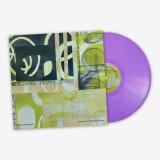
Sally Anne Morgan is an artist and naturalist in the purest senses. Raised on old time and Appalachian folk traditions, Morgan"s artistry embodies the rich life of the communities and natural world she surrounds herself with. Based in Alexander, NC on the edge of Appalachia and the Pisgah National Forest, Sally"s blend of traditional technique and distinctly modern compositional approach are infused with the sounds of her garden, surrounding pastures, forests and mountains. Guest synthesis Sean Dunlap (Field Patterns) and hurdy-gurdy player Brian "Geologist" Weitz (Animal Collective) embellish pieces with droning thrums and sonic moss. Second Circle The Horizon is an album built on Morgan"s singular artistic voice as an improviser and composer intertwined with deft intuition. Morgan"s music highlights her bond with nature, and how its beauty and the beauty of artistic creation are interwoven. The album celebrates creation, revels in discovery, and marvels at the complex patterns, intersectional cycles and simple beauty of a creative life intertwined with the natural world.
expected to be published on 20.06.2025

Moshe Fisher-Rozenberg returns to Altin Village & Mine with his second album as Memory Pearl. »Cosmic-Astral« reimagines a music programme used by psychotherapists in the 1970s in combination with LSD. While the original album was designed to take the listener on a cosmic journey of personal discovery through classical music, Fisher-Rozenberg draws on the sounds of electronic instruments and a collage-like approach: he converted the scores of the original pieces by Richard Strauss, Alexander Scriabin, and others into MIDI files, manipulated those into entirely new shapes and sounds using a variety of techniques, while also combining them with improvisational input from artists such as Sam Prekop, Joseph Shabason, Moritz Fasbender, Alec O’Hanley, Bram Gielen, and Brandon Valdivia.
Besides his work as a multi-instrumentalist, producer and collaborator of bands such as Alvvays as well as a member of the group Absolutely Free, Fisher-Rozenberg is also a registered psychotherapist and certified music therapist. »Cosmic-Astral« is hence marked by his expertise in both fields while also displaying the conceptual rigour and aesthetic playfulness that had already been in full effect on his Memory Pearl debut, 2021’s »Music for 7 Paintings« for Altin Village & Mine. Aiming to create his own version of the »Cosmic-Astral« programme, but making it more »delicate and tender,« as he puts it, Fisher-Rozenberg combines the ethereal with the terrestrial, abstraction and concretion, synthesization and the organic across these nine tracks.
As a whole, the resulting album is quite literally trippy. »Each piece is meant to bring the listener deeper into their journey,« explains the Toronto-based artist. »You can think of it in terms of space travel, with each tune taking you further out of yourself and deeper into a cosmic realm.« Think about »Cosmic Astral« as a map through which you can find your way towards sonic healing.
Order now and we will order the item for you at our supplier.

After navigating the labyrinthine musical chambers of their 2023 modern exotica album 'Palace Of A Thousand Sounds', Reno. Nevada’s Whatitdo Archive Group has returned with their first-ever holiday offering—venturing into the darker side of Christmas folklore with their new ice-cold 45, 'Wild Man'. Drawing inspiration from a global archetypical myth of the same name, Whatitdo Archive Group examines the ancient story of the Wild Man—the hairy, half-human, half-beast that stalks the shadows of humanity’s shared primeval past. The myth of the Wild Man is a folktale that goes by many names: The Yeti of the Himalayas, the Bigfoot of North America, and, of course, Krampus of Eastern Europe—a yuletide beast with a reputation as a child-devouring "Anti-Claus" who now finds himself the subject of Whatitdo’s latest musical exploration.
‘Wild Man’ gives us a glimpse into the band’s newest sonic direction. With a heavy rhythm section carried by Alexander Korostinsky’s driving bass line, the sticky wah-guitar of Mark Sexton’s L-5, and the acrobatic lines of the Wurlitzer electric piano, “Wild Man” revels in the spiritual jazz flavors of Pharoah Sanders and grooves hard like the classic soul-jazz stylings of Ramsey Lewis. Much like the Krampus myth itself, 'Wild Man' is meant to weave an ominous spell over any Christmas cocktail party long after the kids have gone to bed. Hear the warning for yourself in the song’s haunting chant: "You better watch out for your life, when the Wild Man comes in the night".
But mythology isn’t abandoned on the B-side. The band takes the traditional English folk melody 'Greensleeves' and reimagines it through the musical lens of Ethio-jazz. Recorded live at the Archive Group Studios, the track exudes a dark, roomy atmosphere, drenched in unease and mystery courtesy of the wandering electric piano dancing above the hypnotic rhythm section and mesmeric groove of the distant Batá drums. This fresh reimagining taps into the ancient, cross-cultural lineage of the "Green Man" myth, a pagan symbol of rebirth and the power of the natural world, further blurring the lines between holiday cheer and the primal, elemental forces enshrined in our collective cultural memory.
After the band’s 'Palace Of A Thousand Sounds' was named 2023’s "Best Library Record" by PopMatters Magazine, their new 'Wild Man' 7” capitalizes on the same creative process that shaped their last record, while now exploring new conceptual territory. By drawing inspiration from archaic global folklore and again utilizing their peculiar recording techniques, W.A.G. has crafted a truly unique holiday offering that unearths the darker, more primal undercurrents of the Christmas tradition. The 'Wild Man' 7" is released as part of the Snowflakes Christmas Singles Club, pressed on snow-white bio-vinyl and limited to 300 copies.
expected to be published on 29.11.2024

U.S. Cinematic outfit Whatitdo Archive Group returns to explore the worlds of Mid-Century Exotica and Library Music with "Palace Of A Thousand Sounds," out on May 5th.
From the instrumental cinematic-soul outfit behind 2021's critically acclaimed The Black Stone Affair comes Whatitdo Archive Group's most recent foray into the realms of the esoteric and arcane, and their most adventurous album to date: Palace Of A Thousand Sounds, available May 5th, 2023 on Record Kicks on limited edition LP, CD and digital platforms.
After The Black Stone Affair enthralled record collectors by traversing the cinematic landscape of an imagined 1970s Spaghetti Western, Palace Of A Thousand Sounds finds Whatitdo Archive Group entrenched deeper in the worlds of mid-century exotica and library music—from the Tropicalia-steeped Amazon to the minor key tonalities of the far-out Near East.
When the dust finally settled from their debut album, composer and tireless sound scientist Alexander Korostinsky set out to discover the band's new direction, with the ultimate goal to breathe new life into the mid-century era sound with the compass of modernity as his guide.
From its conception in 2021, Palace has sought to carry on a legacy set in motion by the likes of Martin Denny, Les Baxter and Juan García Esquivel. Korostinsky, guitarist Mark Sexton, and drummer Aaron Chiazza recorded the album in marathon sessions from Korostinsky's Studio "A," in Reno, Nevada—a mysterious sonic laboratory where the year 1970 has yet to happen, and vintage analog equipment interfaces with modern musical perspectives and experimental recording techniques to produce era-defining sounds.
Not content to appeal to the sensibilities of armchair anthropologists, Palace Of A Thousand Sounds finds the band interrogating the genre itself while making studious tributes to the real places and times it draws from. It's in this tension between here and there, fantasy and reality, that Whatitdo Archive Group find their groove.
Drawing from a century of pop and folk sounds from around the world the way only 21st-century crate-diggers can, Palace is rooted in an undercurrent of heavy funk that is decidedly here and now. Whatitdo Archive Group showcase the breadth of their influences with disarming confidence, equally at home behind sweeping harp, loungey vibraphone or Turkish bağlama saz. A lush seventeen-piece orchestra commanded by award-winning composer Louis King (Janelle Monáe, Monophonics) completes the instrumental mélange, enticing listeners to imagine a borderless planet unified by melody and rhythm.
The album is unafraid to explore the strange and uncomfortable in pursuit of an authentic musical identity, subverting expectations in pursuit of forwarding the genre while paying homage to its past. Fans will appreciate the architectural complexity of the record accessible only through multiple listens—each visit to the palace yielding new details to marvel at, curiosities to ponder, grand mysteries to explore.
Once the needle drops, W.A.G carefully guides you from room to room, sound to sound within the walls of the album's sonic palace. Listening becomes an aural journey providing glimpses into different worlds both real and imagined; you are everywhere and nowhere all at once—a guest in the grand halls and hanging gardens of time and sound.
Steeped in obscurity, a cult following of crate-diggers and musical oddity collectors has been brewing over the mysterious releases of the Whatitdo Archive Group. Surfacing in 2009 from the high deserts of Reno, NV USA, this three-piece recording collective(Alexander Korostinsky, Mark Sexton and Aaron Chiazza) focuses solely on curating, performing and preserving esoteric soundtrack, library and deep-groove collections. As an onlooker, it's hard to tell whether the music they are procuring is actually archival, music of their own creation, or both. Their debut LP The Black Stone Affair, the formerly lost soundtrack music of a once-shelved Italian cinematic masterpiece, was released in 2021 and received praise from the likes of Wall Street Journal, Mojo Magazine, Uncut, Shindig, Blues & Soul Magazine, BBC 6, FIP Radio (FR), KCRW (US), JazzFM (UK) and more. Two years later, the Whatitdo Archive Group is back. Get ready for an exotic adventure with their sophomore full-length effort: Palace of a Thousand Sounds.
Order now and we will order the item for you at our supplier.

witching seaside ambience for a sound shaped by inner-city living, Atelier’s second full-length studio album, Lights Towards The Exit, channels the mood of a sleepless cityscape.
Lights Towards The Exit is Atelier’s second full-length studio album. After the release of Varsam Court at the end of 2019 on Lossless, run by mentors and friends Mathias Schober and Thomas Herb, the duo experimented with different ideas in the studio, and at the start of 2020 a common thread began to appear between a few of the tracks which laid the foundation for the sound of their second album.
Both Alexander and Jas moved to Berlin in the period before the release of Varsam Court from their hometown of Cape Town, South Africa, where their first album was written and recorded. Moving provided some challenges, particularly with what was the most essential equipment to bring from their previous studio set-up, but those limitations proved to be useful in incorporating new instruments and techniques to the recording process.
Lights Towards The Exit was written and recorded in different spaces in Berlin – from bedrooms in apartment blocks to three different studios across the city. The different locations all had a specific ambience – such as 4th- and 5th-floor bedrooms with busy street views; a studio with no windows in a typical old Berlin backyard complex forever under threat of being sold and gentrified; and a bigger studio with windows on the opposite side of the corridor overlooking the backyard of a mechanic workshop. The final details and edits were completed in Atelier’s current studio, in a contrasting area surrounded by office blocks, plazas, 9-5ers and, most importantly, their friends and colleagues.
Swapping the mountains, sea and seclusion for tall buildings, backyards and a new community, Lights Towards The Exit channels the sensation of being surrounded by people, but still feeling like you're on your own. The album was written through three years of cold winters, sweaty summers and a period where the world stood still during the pandemic. Frustrated with the cease of momentum, but still optimistic, Atelier disappeared from public view, abandoning social media to focus on recording, songwriting and experimentation.
It was a difficult time: the duo longed to perform and continue producing music, and the imposed limitations sometimes felt like an impossible obstacle. Ultimately, though, this would provide inexpected inspiration and influence the sound and direction of the new album.
The sound of Lights Towards The Exit is not a departure from their first album, but a progression: influenced by the new surroundings in the duo’s adoptive city, Atelier’s second album is an ode to first-time experiences, new languages, challenges, club culture and the shift from youth to maturity, as well as a balm to those stuck somewhere in between.
The overall sound is a lift not in tempo, but in energy, matching the openness needed to make a new start in a new place.
Order now and we will order the item for you at our supplier.

Musique Infinie is the collaborative project of Manuel Oberholzer a.k.a. Feldermelder and Noémi Büchi.Their album »Earth«, released through the Hallow Ground label, is based on a spontaneously composed live score for Alexander Dovzhenko’s groundbreaking 1930 silent movie »Zemlya« (»Earth«) created for the 24th edition of the VIDEOEX festival for experimental film.
Frequently cited as a masterpiece of early 20th century filmmaking, the movie deals with the collectivisation of Ukraine’s agriculture. The Swiss duo complemented it with atmospherically rich electronic soundscapes that are both deeply immersive and highly evocative. As a stand-alone music release, the two-piece »Earth« album captures the essence of Büchi and Oberholzer’s collaboration that is marked by mutual trust and musical versatility that puts them in a state of »togetherness trance,« as they call it.
Oberholzer has been highly productive as a composer, musician, sound designer, and installation artist in recent years, releasing a slew of solo albums as well as a variety of collaboration records with artists such as Sara Oswald and Julian Sartorius. Büchi has recently debuted as a solo composer and sound artist working with electroacoustic techniques to create a »symphonic maximalism for the end of the world,« as she dubs it.
Both are prolific and versatile artists with a penchant for working conceptually, however their collaboration as Musique Infinie is an improvisational and thus by design an intuitive one.
Their sessions start with an exchange on emotions and thoughts rather than theoretical questions or aesthetic debates. When they get to work—often for several hours—they rarely talk.
They approached »Earth« the same way, improvising freely together and using only a few select samples from the film’s original score in the process. Their open-ended approach is marked by an aesthetic ambivalence that perfectly corresponds with the movie’s own inherent contradictions.
Dovzhenko approached his socio-political subject with poetic imagery and philosophical rigour, juxtaposing notions of traditionality with the depiction of modernity.
Büchi and Oberholzer accordingly work with motives that at o ce seem anthemic and elegiac, working with sounds and musical motives that evoke a sense of familiarity in one moment before transforming into something futuristic and uncanny in the next. Their score for »Zemlya« is not to be understood as a mere interpretation of the movie, but rather a re-narration or even re-negotiation of its aesthetic and emotional qualities under their very own terms. »Earth« is an album that concisely depicts what is at the core of the duo’s musical partnership
expected to be published on 19.02.2024

Early on, his prodigious technique and wide-ranging style garnered comparisons with the great Oscar Peterson. But there has always been another side to Alexander's playing. Usually, jazz grabs the upper hand, but on occasion he digs deep into his Jamaican roots.
The 1974 We've Only Just Begun recording signals the beginning of Jamaican pianist Monty Alexander's fruitful relationship with MPS, lasting over a decade and encompassing some dozen albums. On many he partners with no one else than fellow Jamaican and one of the fathers of ska, guitarist Ernest Ranglin.
Among others, this Best Of includes tracks from Monty's MPS classics like RASS!, Here Comes The Sun, Montreux Alexander - The Monty Alexander Trio Live At Montreux, We've Only Just Begun, Monty Strikes Again, Cobilimbo, or the untitled Monty Alexander & Ernest Ranglin.
expected to be published on 29.09.2023

Experimental elements of Baroque and Chamber Pop make up this indie
rock band from Phoenix, Arizona - Emby Alexander creates a focused
aesthetic through thoughtful craft of self-produced music, art, and film
Even while constantly seeking out new textures, techniques, and feelings, SOARS
ERA epitomizes the Emby Alexander vibe. Consummate explorers and
overachievers, the four-piece have swum further than their already wild farthest
reaches and established a new spiritual psychedelic home.
expected to be published on 15.07.2022

"...a swirl of the bedrock elements that make up modern music, his LP lifts from Soul, Funk and Hip-Hop to create this ode to Detroit House."
A NATION OF MILLIONS
EARLY SUPPORT FROM ALEXANDER NUT ("Tight beats from Snips as always. Dexters Pain is my fave here. Big ups"), KARIZMA ("Proud to hear a friend grow musically, great work on the album my friend...Full Support. K'), RED RACK'EM, SK VIBEMAKER
SNIPS delivers the first vinyl release on Houseology. The Barbershop LP is a tongue in cheek play on the production techniques Todd Worsnip aka Snips normally uses when making his Hip-Hop work. This 8 track LP is meeting of the two worlds of House and Hip-Hop tapping into Snips' raw ability to find the best cuts and chops needed for any genre.
DJ Snips began his career at legendary London record store Deal Real', where he ran the open mic night alongside British host and comedian Doc Brown, Snips' years at Deal Real saw him DJ'ing alongside performances from several US heavy hitters including Kanye West, Mos Def and the Black Eyed Peas.
Snips' knack for manoeuvring through a wide range of Hip Hop oeuvres has seen him play around the world, Specifically in NYC where he has been a guest at legendary parties including Everyday People, Bible Study, Mobile Mondays and Ginny's Supper Club. As well as being a regular in NY, Snips has also headlined events in The Philippines, Australia, Germany, Hong Kong, The Netherlands, Qatar, France, Norway and Spain. When Snips isn't touring or on the Club circuit, he's known for churning out beats for some of the most talented MCs on both sides of the Atlantic. His production work includes tracks for several major US recording artists including M1 (Dead Prez), Capadonna (Wu Tang), Sean Price.
Work on the Houseology record label allows Snips the opportunity to articulate himself even more so within his skilled production, by drawing a definitive line between the House/Hip-Hop relationship which has existed for years.
Order now and we will order the item for you at our supplier.

Two leaders from very different musical worlds, the innovative pianist Bruce Brubaker and scientist-now-electronic-artist Max Cooper collaborate to create this latest expression of music by Philip Glass and tell a story of diversity and vulnerability.
Commissioned by and introduced at the Paris Philharmonie in 2019, Glassforms melds the acoustic concert grand piano with synths and cutting-edge electronic production techniques to create a compelling album and a dynamic live experience.
Rather than just reworking or augmenting via traditional means, Max Cooper and Bruce Brubaker fundamentally rewire Glass’ forms in a manner that’s not possible with human composition tools. Max built a new system for musical expression through coding with software developer Alexander Randon, creating a tool for taking live data from the piano and transforming it into new but intimately related forms which drive his synths on stage.
The result is that each of the pieces by Glass becomes its own electronic “instrument,” an instrument Bruce plays in addition to, and simultaneously with the original piece. As Bruce plays the piano and controls synths with his playing, Max modulates and augments, sometimes adding his own melodies to form hybrid variants.
Order now and we will order the item for you at our supplier.

Birthed from Arizona’s regaled Ascetic House collective, Body of Light is a dark synth-pop outfit comprised of young brothers Andrew and Alexander Jarson. What began as a vehicle for their exploration of noise and sound during their early teens has evolved into an established production over the last decade, as Body of Light continues to carve out their own style of complex, structured, and moving dancefloor electronics.
Their music is not only individually personal, but drawn from experiences shared between the two brothers – and calls on elements of new wave, freestyle, goth, and techno to create timeless and singular tracks without fear of trend or passing fashion.
On their third album Time to Kill, Body of Light refines their brand of cold and driving synth pop with a bold pallet of sounds and a focus on uncharted technique and purpose. Like the pale digital stare of the modern devices surrounding our daily lives, the album weaves stories of love and obsession in an era of technical bondage and fleeting exhilaration. Written over a period of intense and profound change, Time to Kill stands as a startling reminder of how important our existence truly is. Haunting keys, swelling pads, and punching rhythms score their work as Alex Jarson presents an alluring and romantic dialogue with confident projection. The title single “Time to Kill” kicks off the album with a merciless signature beat, complimented by distorted sample patterns against an infectious, moving bass groove
Order now and we will order the item for you at our supplier.