Wild River - the first solo album from David Longdon - the late lead singer of Big Big Train, re-mixed, re-mastered and expanded. Originally self-released in 2004 as a limited edition CD, beyond being briefly available through the BBT site, the album has long been out of
print. Dave Gregory (XTC) guests on guitar and Mellotron. David had always intended to remix and repackage it. However, his sudden death in November 2021 meant that his plan never came to fruition.
In a final act of remembrance by his long-time colleague Rob Aubrey, Big Big Train’s engineer since 1994, David’s wishes have now been fulfilled. Additionally, the album packaging has also been re-designed by Longdon’s friend and collaborator Steve Vantsis.
Wild River - the first solo album from David Longdon - the late lead singer of Big Big Train, re-mixed, re-mastered and expanded. Originally self-released in 2004 as a limited edition CD, beyond being briefly available through the BBT site, the album has long been out of
print. Dave Gregory (XTC) guests on guitar and Mellotron. David had always intended to remix and repackage it. However, his sudden death in November 2021 meant that his plan never came to fruition.
In a final act of remembrance by his long-time colleague Rob Aubrey, Big Big Train’s engineer since 1994, David’s wishes have now been fulfilled. Additionally, the album packaging has also been re-designed by Longdon’s friend and collaborator Steve Vantsis.
Heidi Lord Wife of Rephlex/WeMe artist Jodey Kendrick 3 of Heidi's tracks are featured on the famous "EDM" Compilation Albums This is the Debut album from Heidi Using a unique pallet of sounds from MRI machines to modular synthersizers to conversations in a super market to her own processed voice Co produced by her Husband "I could describe what the album means to me, But i would much rather leave it to listener to experience and feel and to interpret how they see fit"
Originally released on CD in Japan in 2003, as a love letter & thank you to his Japanese fans. Recorded at home, produced, engineered & mixed by Matthew Sweet (bass, guirars & vocals) with the classic ‘Girlfriend’ era lineup of Ric Menck (drums), Greg Leisz (guitars) and the genius electric lead guitar of Television’s Richard Lloyd. The sleeve art is by renowned artist Yoshimoto Nara. In the liner notes, Sweet describes the album's title as an attempt at reverse English: "If I did it correctly, the title should seem a little strange or wrong, but still meaningful! The true definition is supposed to be a 'love you' life, one devoted to loving someone or something, even life itself!"
“an excellent modern guitar pop album, filled with great hooks and harmonies and irresistible ringing six-strings”
Allmusic
“Kimi crackles with Girlfriend‘s energy, as Lloyd and Sweet’s guitars provide antagonistic foils as they did more than a decade before on cuts like “Tonight We Ride.”
Rolling Stone
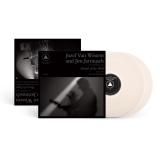
Jozef Van Wissem and Jim Jarmusch’s Bocca di Lupo and Mouth of the Wolf were recorded in July 2025 in Bologna, Italy. The recording sessions took place just after several live dates in New York and Chicago, and a week before they began a short European tour which included Paris, London, Ghent, Porto, and a first date in Bologna.
Below are notes from Jozef and Jim directly.
“With thanks to Gian Luca Farinelli and Rosanna Mordini from the extraordinary Cineteca di Bologna, we were able to secure recording days in the very cool Fonoprint Studios — located on Via Bocca di Lupo in Bologna, hence the titles of these two LPs. (“In bocca al lupo” — in the mouth of the wolf — is the Italian idiom for wishing one good luck; equivalent to “break a leg” in English.)
Bocca di Lupo starts with a new version of our own “Only Lovers Left Alive,” and “Apology” is a new version of a pre-existing piece by Jozef. All other tracks are new originals. We were honored to have guest duet vocals from the iconic Courtney Barnett on “Never Like You Said.” The lyrics of the song arrived spontaneously in a single take in the studio. It’s not directed at a specific person, but more an emotional response to several disingenuous, deceitful people — a closing of the door on their toxic behavior. And a casually recorded conversation (concerning the haunted auras of particular pieces of vintage women’s clothing) between Adriana Coppi and Veronica Mayrr (from Deux Femmes) is woven as a background into the track titled “Pour Deux Femmes.” “Black Roses” is an original poem written in Bologna, and recited from within its own musical setting. All other tracks are instrumentals.
Mouth of the Wolf, the second LP, consists of two longer, darkly ecstatic instrumental studio tracks — “In A” and “Massa Damnata.” Both were created with two electric guitars, and derived from our live performances. We consider it to be a musically separate album, and is therefore presented in its own sleeve and with its own artwork.
Our music has many inspirations — everything from our friends in Sunn O))) and Swans to Terry Riley and Morton Feldman; from Hildegard Von Bingen and WIlliam Lawes to Psychic Ills and Spacemen 3; from Les Rallizes Dénudés and NEU! to Nadja and Glenn Branca; from Ian Svenonius and Dead Skeletons to Son House and Gwenifer Raymond…from sunset to sunrise…full moon to new moon…”
a 01. Only Lovers Left Alive 4:36
b 02. Never Like You Said 5:23
[c] 03. Apology [5:11]
[d] 04. Black Roses [2:44]
[e] 05. On Twofold Nature [9:37]
[f] 06. Pour Deux Femmes [8:09]
[g] 07. In Bocca Al Lupo [5:58]
[h] 01. In A [12:56]
[i] 02. Massa Damnata [17:51]
[a] 01. Only Lovers Left Alive [4:36]
[b] 02. Never Like You Said [5:23]
[c] 03. Apology [5:11]
[d] 04. Black Roses [2:44]
[e] 05. On Twofold Nature [9:37]
[f] 06. Pour Deux Femmes [8:09]
[g] 07. In Bocca Al Lupo [5:58]
[h] 01. In A [12:56]
[i] 02. Massa Damnata [17:51]
[a] 01. Only Lovers Left Alive [4:36]
[b] 02. Never Like You Said [5:23]
[c] 03. Apology [5:11]
[d] 04. Black Roses [2:44]
[e] 05. On Twofold Nature [9:37]
[f] 06. Pour Deux Femmes [8:09]
[g] 07. In Bocca Al Lupo [5:58]
[h] 01. In A [12:56]
[i] 02. Massa Damnata [17:51]
[a] 01. Only Lovers Left Alive [4:36]
[b] 02. Never Like You Said [5:23]
[c] 03. Apology [5:11]
[d] 04. Black Roses [2:44]
[e] 05. On Twofold Nature [9:37]
[f] 06. Pour Deux Femmes [8:09]
[g] 07. In Bocca Al Lupo [5:58]
[h] 01. In A [12:56]
[i] 02. Massa Damnata [17:51]
[a] 01. Only Lovers Left Alive [4:36]
[b] 02. Never Like You Said [5:23]
[c] 03. Apology [5:11]
[d] 04. Black Roses [2:44]
[e] 05. On Twofold Nature [9:37]
[f] 06. Pour Deux Femmes [8:09]
[g] 07. In Bocca Al Lupo [5:58]
[h] 01. In A [12:56]
[i] 02. Massa Damnata [17:51]
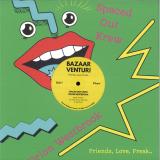
After releasing their first LP on PPU under the name of CEEOFUNK, Spaced Out Knew and Orion Westbrook are releasing a brand new 6-track EP entitled "Friends, Love, Freak."
Watch out: an "unidentified sonic object" is heading your way!
It’s a funky anomaly that pays tribute to 80's grooves while asserting a fresh style all its own—decidedly "offbeat." The sound blends unique touches of cosmic soul-funk and European 80's synth-pop influences with a "DIY" approach, sitting somewhere between "disco-not-disco" and unconventional grooves.
Vocals are performed in Italian, French, and English, featuring the excellent Ghostape, Lydie Gaga, Marius Cyrilou, and Chérie Bibi. Themes include love, desire, and bonds of brotherhood...
On the menu: fat slap-bass lines, funky guitars, smooth electric piano, sparkling analog synths / Solina String Machine, and on top, an abundance of Casio SK-1 synth and lo-fi sampling gadgets.
The vibe oscillates between boundless energy and laid-back grooves, all served up with a non-conformist freshness and a touch of originality that can be read "between the lines."
Reportage is the duo of Peter Olof Fransson and Svante Sjöstedt from Gothenburg, Sweden. They met in the late 1980s while working as postal workers in the district of Majorna. Since then, they have repeatedly worked together on music in various projects.
The recordings for "Reportage 1" began in late 2022 and were a natural development in the aftermath of a project called The Owl Report. But while The Owl Report mainly focused on English lyrics, the lyrics in Reportage are instead written and sung in Swedish.
Most of the Reportage material has been recorded in Svante’s family country house near Ulricehamn, and further edited and mixed in Gothenburg by Peter. The pieces mainly emerge from long evening improvisations, which then developed the melodic content and structures. Initially created on either guitar, mandolin, or ukulele, alongside bass guitar and simpler electronic rhythms as a base, the compositions were then further shaped with additional acoustic and electric string instruments, vocals, organs, field recordings, and electronically shaped fragments.
The music remains open, reduced, and without any visible intention to assert itself.
Peter Olof Fransson also releases music under the name Retep Folo, including on the UK labels Clay Pipe Music and Buried Treasure Records. His album "The Afterlife", on which Svante also participated, was created in collaboration with Dorothy Moskowitz, former singer of the American experimental and psychedelic band The United States of America, which was active in the late 1960s.
On "Reportage 1", images of a present out of balance emerge: overstimulated communication, social patterns of inclusion and exclusion, and repeating political and media loops. Figures move between withdrawal and overwhelm, between observation and participation. Again and again, it also touches on perception itself, and on how reality is filtered and shifted.
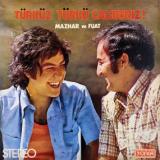
Turkey’s first stereo LP. A foundational recording of Anatolian psychedelia. Audio transferred from the original analog master tapes, mastered and lacquer cut by Frank Merritt at The Carvery, London, and pressed on 180g heavyweight black vinyl at Record Industry in the Netherlands.
Released by the legendary Yonca Müzik label in 1973 as Turkey’s first stereo LP, Türküz Türkü Çağırırız! now returns as the first official reissue. The album captures Mazhar Alanson and Fuat Güner at a pivotal moment before their later success with MFÖ, one of Turkish pop-rock’s most influential and enduring groups.
Mazhar and Fuat first met in 1966 through a shared love of The Beatles’ Rubber Soul. Inspired by the close vocal harmonies of The Beatles and Crosby, Stills & Nash, they initially believed this music could only work in English. Producer Ergin Bener encouraged them to develop their own musical language in Turkish.
Previously members of Kaygısızlar, the pioneering group that accompanied Barış Manço, Mazhar and Fuat explored a more intimate Turkish folk-rock sound on this album. Zafer Dilek’s arrangements bring his distinctive guitar and keyboard work to a recording in which acoustic guitars, organ and electric guitar touches frame Anatolian melodies. Country-rock influences and the English-language “Upside Down” add to its range.
The title roughly translates as “We are Turks, and we sing Turkish folk songs” — reflecting a search for a new, distinctly Turkish musical identity. The album draws on works by Âşık Veysel, a defining voice of Turkish folk poetry, and Yunus Emre, the great Anatolian Sufi poet.
“Adımız Miskindir Bizim” was sampled on Action Bronson’s “Easy Rider,” while Stones Throw producer Oh No sampled “Sür Efem Atını.”
Following their 2023 LP Presents, Nathan Nelson's American Cream Band bring the Twin City heat back to Quindi with an album rooted in duality. From the yin and yang party-starting A side and meditative B side to the dual-attack boy-girl vocals, the nature of opposites and equals steer the expansive, artful strain of rock n' roll that spill out of this wholly unique Minnesotan export. For the ever intriguing Quindi, it's a strident step into Spring after the frosty introspection of Roudi Vagou & Läuten der Seele's Taghelle Nacht. While the world burns and injustice prevails, Twin is a celebration of unity and radical expression-all the more urgent against the backdrop of authoritarian overreach and righteous protest that has whipped through Minneapolis in recent times.
Twin continues Nelson's drive at the helm of American Cream Band to draw in a colourful cast of players to feed into his orgiastic sound, meshing the trance-induction of krautrock with the irrepressible funk of the post-punk-new-wave explosion. But principal among the cast of characters and forming a central tenet to the identity of this album is Liz Buhmann, lead vocalist and a formidable, playful foil to Nelson's own Midwestern twang. Around the electric spark between Buhmann and Nelson, a heavy duty ensemble wrangle guitar, bass, sax, a cornucopia of synths and a battery of percussion into all manner of sonic forms.
The double-sided concept manifests throughout Twin. On 'Call Me' Buhmann sings in French to contrast Nelson's English, while the strident strut of the NYC disco groove is offset by an inherent dreaminess that turns the track into a more cosmic kind of dancefloor workout. 'Ethical Vampire' is a spiky cut with a garage rock patina that spirals into a psychedelic, synth-soaked get-down. 'Don't Burn The House Down' is a loose and limber roller that captures Can at their funkiest along with the hypnotic vibe of other such esteemed long format jammers, but American Cream Band boils that energy into a hook-laden art pop sensibility before a gentle, drawn out landing.
Even the more pensive moments on Twin find space for friction. For all its tender, smoky temperament, 'Leda and the Swan' lets the electric piano and guitar fray at the edges and bleed into the red while Mat Heinrich's tumbling drums lurch with pent-up intensity on the one. 'No Funeral Necessary' skirts around the mellow pools of new age but prefers to let liberally doused Tape Echo tweak out Alex Meffert's honeyed sax inflections and Buhmann and Nelson's disparate sermons.
Nelson describes Twin as "an oppositorum coincidentia" - a reference to the mystical Latin concept of the coincidence of opposites that suggests contradictory ideas 'fall together' in a higher reality. Beyond the sound of the album, this idea also manifests in the cover photography by Sho Nikado and the swans on the LP labels by Autumn Garrington. As freewheeling and wide-open as American Cream Band feels, nothing appears by accident. The end result feels like a nourishing whole - rich with substance and nuance, deep enough to be explored and absorbed yet also so brazen and immediate you can't help but feel its surface charms from the first thrusts of 'The Hive Is Pissed' to the last ripples of 'We're Not So Sinister'.
An anthology born out of isolation and deep introspection, Sky Dust Drifter is a cosmic medley of sun-soaked AOR, psychedelic folk, and soft rock. This soundtrack was driven by the lonesome cowboy, a lockdown savior leaving me adrift in desert winds and dimly lit country bars.
Long-distance trades and masked meetups yielded a collection of private press LPs and 45s from ten different artists spanning 1973 to 1980. This seemingly random stack of records revealed songs living entangled in themes of hard luck, heartache, and the inevitable loneliness of existence. Adorned in cracked leather and chrome, this album is an aimless wander from the soil to the stars.
Featuring an unreleased English version of the compilation’s title track “Sky Dust Drifter” (originally released only in Hebrew), the record shifts from laconic afterthoughts to bold proclamations. From Michael Andrews’ blue-eyed soul assertion “Something Bad’s Better Than Nothin’,” to the searing electric guitars and bold synths of Sunburst’s “Special Lady,” Sky Dust Drifter thrives on solitude in a universe of unconditional self-rule where loneliness is not darkness but rather a blazing light of autonomy.
One of the most popular French TV extracts of all time is the black and white image of a young and extremely nervous-looking Françoise Hardy being given a firm dressing-down by Mireille Hartush (the famous music teacher who ran La Petite Conservatoire de la Chanson in the 1960s). Presented here is her debut studio album Françoise Hardy (issued as The Yeh-Yeh Girl from Paris! in the USA). It was released in France in December 1962 by Disques Vogue with the catalogue number LD 600-30. Originally issued with no title, except for her name on the cover, the album has therefore colloquially become known by the title of its most successful song, Tous les garçons et les filles, and later reissues added this title. This sensational album compiles the twelve original French versions from her first three EPs released by Vogue during 1962. Hardy would also record versions of songs from the album in Italian (1962, four tracks released on singles have been added here as a bonus), English (1964) and German (1965). The iconic LP combines rockabilly, folk, jazz and blues, and has been noted for its simplicity, featuring a minimalist jazz percussion, bass, and both acoustic and electric guitar. 180 GRAM - GATEFOLD COVER - LIMITED EDITION
A6: Anthony Hamilton & Elayna Boynton– Freedom, Acoustic Guitar – Elayna Boynton, Co-producer – Daniel Beard, Mixed By, Mastered By – Daniel Beard, Duane Allen (2), Piano, Electric Piano
B7: Don Johnson And Christoph Waltz– Five-Thousand-Dollar Nigga's And Gummy-Mouth Bitches, Written-By
B9: Don Straud– Sneaky Schultz And The Demise Of Sharp, Written-By
B12: Rick Ross With Walton Goggins And Jamie Foxx– 100 Black Coffins, Engineer
Recorded | By
C14: Samuel L Jackson, Leonardo DiCaprio And Christoph Waltz– Hildi's Hot Box, Written-By
C17: James Brown And 2Pac With James Russo (2), Christoph Waltz And Jamie Foxx– Unchained (The Payback / Untouchable), Mixed By
D19: Brother Dege– Too Old To Die Young, Lyrics By, Music By – Dege Legg, Mastered By – Bruce Barielle, Mixed By – Dege Legg, Primo (9), Tony Daigle, Producer – Dege Legg, Primo (9), Tony Daigle, Recorded By – Dege Legg, Vocals, Resonator Guitar
D20: Samuel L Jackson And Jamie Foxx– Stephen The Poker Player, Written-By
D22: Samuel L Jackson And Jamie Foxx– Six Shots Two Guns, Written-By
D23: Annibale E I Cantori Moderni*– Trinity Titoli, Composed By – Franco Micalizzi, L Stott*, Conductor
A1: James Russo (2)– Winged, Written-By
A4: Jamie Foxx And Christoph Waltz– "In That Case Django, After You ..", Written-By
A2: Luis Bacalov, Rocky Roberts– Django Theme Song (English Version), Written-By – Luis Bacalov
A3: Ennio Morricone– The Braying Mule, Written-By – Ennio Morricone
A5: Luis Bacalov, Edda dell'Orso– Main Titles Theme Song (Lo Chiamavano King), Written-By – Luis Bacalov
B8: Luis Bacalov– La Corsa (2nd Version), Written-By – Luis Bacalov
B10: Jim Croce– I Got A Name, Written-By – Charles Fox, Norman Gimbel
B11: Riz Ortolani– I Giorni Dell'Ira, Conductor – Riz Ortolani, Written-By – Riziero Ortolani*
C13: Jerry Goldsmith Featuring Pat Metheny– Nicaragua, Soloist – Pat Metheny, Written-By – Jerry Goldsmith
a A1 James Russo (2)– Winged, Written-By Dialogue – Quentin Tarantino
d A4 Jamie Foxx And Christoph Waltz– "In That Case Django, After You...", Written-By [Dialogue] – Quentin Tarantino
[f] A6 Anthony Hamilton & Elayna Boynton– Freedom, Acoustic Guitar – Elayna Boynton, Co-producer – Daniel Beard, Mixed By, Mastered By – Daniel Beard, Duane Allen (2), Piano, Electric Piano [Wurlitzer], Bass, Electric Guitar, Acoustic Guitar, Programmed By, Percussion – Kelvin Wootenm, Producer – Kelvin Wooten, Recorded By – Daniel Beard, Kelvin Wooten, Vocals, Backing Vocals – Anthony Hamilton, Elayna Boynton, Written-By – Anthony Hamilton, Elayna Boynton, Kelvin Wooten
[g] B7 Don Johnson And Christoph Waltz– Five-Thousand-Dollar Nigga's And Gummy-Mouth Bitches, Written-By [Dialogue] – Quentin Tarantino
[i] B9 Don Straud– Sneaky Schultz And The Demise Of Sharp, Written-By [Dialogue] – Quentin Tarantino
[l] B12 Rick Ross With Walton Goggins And Jamie Foxx– 100 Black Coffins, Engineer [Recording Engineer] – Isaiah Pryor, Phillip "Logann" Scott III*, Guitar – Charlie Burrel*, Lyrics By – Jamie Foxx, Rick Ross, Mixed By – Jaycen Joshua, Mixed By [Assisted] – Trehy Harris, Music By – Jamie Foxx, Producer – Ainz "Brainz" Dimilo*, Jamie Foxx
[m] Recorded By [Rick Ross's Vocals] – John Rivers*, Written-By [Dialogue] – Quentin Tarantino
[o] C14 Samuel L. Jackson, Leonardo DiCaprio And Christoph Waltz– Hildi's Hot Box, Written-By [Dialogue] – Quentin Tarantino
[r] C17 James Brown And 2Pac With James Russo (2), Christoph Waltz And Jamie Foxx– Unchained (The Payback / Untouchable), Mixed By [The Payback], Edited By [The Payback] – Claudio Cueni, Voice [As Ace Speck] – James Remar, Written-By [Dialogue] – Quentin Tarantino, Written-By [The Payback] – Fred Wesley, James Brown, John Starks*, Written-By [Untouchable (Swizz Beatz Remix)] – Anthony Henderson, Bruce Washington, Kasseem Dean*, Tupac Amaru Shakur*, Yafeu Fula, D18 John Legend– Who Did That To You?, Performer [Sample] – The Mighty Hannibal, Producer – Paul Epworth, Written-By – James T. Shaw (The Mighty Hannibal)*, John Stephens (3), Paul Epworth
[s] D19 Brother Dege– Too Old To Die Young, Lyrics By, Music By – Dege Legg, Mastered By – Bruce Barielle, Mixed By – Dege Legg, Primo (9), Tony Daigle, Producer – Dege Legg, Primo (9), Tony Daigle, Recorded By – Dege Legg, Vocals, Resonator Guitar [Slide/Dobro], Body Percussion [Stomps], Handclaps [Claps] – Dege Legg
[t] D20 Samuel L. Jackson And Jamie Foxx– Stephen The Poker Player, Written-By [Dialogue] – Quentin Tarantino
[v] D22 Samuel L. Jackson And Jamie Foxx– Six Shots Two Guns, Written-By [Dialogue] – Quentin Tarantino
[w] D23 Annibale E I Cantori Moderni*– Trinity: Titoli, Composed By – Franco Micalizzi, L. Stott*, Conductor [Orchestra Directed By] – M° Gianfranco Plenizio*
[d] A4 Jamie Foxx And Christoph Waltz– "In That Case Django, After You...", Written-By [Dialogue] – Quentin Tarantino
[f] A6 Anthony Hamilton & Elayna Boynton– Freedom, Acoustic Guitar – Elayna Boynton, Co-producer – Daniel Beard, Mixed By, Mastered By – Daniel Beard, Duane Allen (2), Piano, Electric Piano [Wurlitzer], Bass, Electric Guitar, Acoustic Guitar, Programmed By, Percussion – Kelvin Wootenm, Producer – Kelvin Wooten, Recorded By – Daniel Beard, Kelvin Wooten, Vocals, Backing Vocals – Anthony Hamilton, Elayna Boynton, Written-By – Anthony Hamilton, Elayna Boynton, Kelvin Wooten
[g] B7 Don Johnson And Christoph Waltz– Five-Thousand-Dollar Nigga's And Gummy-Mouth Bitches, Written-By [Dialogue] – Quentin Tarantino
[i] B9 Don Straud– Sneaky Schultz And The Demise Of Sharp, Written-By [Dialogue] – Quentin Tarantino
[l] B12 Rick Ross With Walton Goggins And Jamie Foxx– 100 Black Coffins, Engineer [Recording Engineer] – Isaiah Pryor, Phillip "Logann" Scott III*, Guitar – Charlie Burrel*, Lyrics By – Jamie Foxx, Rick Ross, Mixed By – Jaycen Joshua, Mixed By [Assisted] – Trehy Harris, Music By – Jamie Foxx, Producer – Ainz "Brainz" Dimilo*, Jamie Foxx
[m] Recorded By [Rick Ross's Vocals] – John Rivers*, Written-By [Dialogue] – Quentin Tarantino
[o] C14 Samuel L. Jackson, Leonardo DiCaprio And Christoph Waltz– Hildi's Hot Box, Written-By [Dialogue] – Quentin Tarantino
[r] C17 James Brown And 2Pac With James Russo (2), Christoph Waltz And Jamie Foxx– Unchained (The Payback / Untouchable), Mixed By [The Payback], Edited By [The Payback] – Claudio Cueni, Voice [As Ace Speck] – James Remar, Written-By [Dialogue] – Quentin Tarantino, Written-By [The Payback] – Fred Wesley, James Brown, John Starks*, Written-By [Untouchable (Swizz Beatz Remix)] – Anthony Henderson, Bruce Washington, Kasseem Dean*, Tupac Amaru Shakur*, Yafeu Fula, D18 John Legend– Who Did That To You?, Performer [Sample] – The Mighty Hannibal, Producer – Paul Epworth, Written-By – James T. Shaw (The Mighty Hannibal)*, John Stephens (3), Paul Epworth
[s] D19 Brother Dege– Too Old To Die Young, Lyrics By, Music By – Dege Legg, Mastered By – Bruce Barielle, Mixed By – Dege Legg, Primo (9), Tony Daigle, Producer – Dege Legg, Primo (9), Tony Daigle, Recorded By – Dege Legg, Vocals, Resonator Guitar [Slide/Dobro], Body Percussion [Stomps], Handclaps [Claps] – Dege Legg
[t] D20 Samuel L. Jackson And Jamie Foxx– Stephen The Poker Player, Written-By [Dialogue] – Quentin Tarantino
[v] D22 Samuel L. Jackson And Jamie Foxx– Six Shots Two Guns, Written-By [Dialogue] – Quentin Tarantino
[w] D23 Annibale E I Cantori Moderni*– Trinity: Titoli, Composed By – Franco Micalizzi, L. Stott*, Conductor [Orchestra Directed By] – M° Gianfranco Plenizio*
[d] A4 | Jamie Foxx And Christoph Waltz– "In That Case Django, After You ..", Written-By [Dialogue] – Quentin Tarantino
[f] A6 | Anthony Hamilton & Elayna Boynton– Freedom, Acoustic Guitar – Elayna Boynton, Co-producer – Daniel Beard, Mixed By, Mastered By – Daniel Beard, Duane Allen (2), Piano, Electric Piano [Wurlitzer], Bass, Electric Guitar, Acoustic Guitar, Programmed By, Percussion – Kelvin Wootenm, Producer – Kelvin Wooten, Recorded By – Daniel Beard, Kelvin Wooten, Vocals, Backing Vocals – Anthony Hamilton, Elayna Boynton, Written-By – Anthony Hamilton, Elayna Boynton, Kelvin Wooten
[g] B7 | Don Johnson And Christoph Waltz– Five-Thousand-Dollar Nigga's And Gummy-Mouth Bitches, Written-By [Dialogue] – Quentin Tarantino
[i] B9 | Don Straud– Sneaky Schultz And The Demise Of Sharp, Written-By [Dialogue] – Quentin Tarantino
[l] B12 | Rick Ross With Walton Goggins And Jamie Foxx– 100 Black Coffins, Engineer [Recording Engineer] – Isaiah Pryor, Phillip "Logann" Scott III*, Guitar – Charlie Burrel*, Lyrics By – Jamie Foxx, Rick Ross, Mixed By – Jaycen Joshua, Mixed By [Assisted] – Trehy Harris, Music By – Jamie Foxx, Producer – Ainz "Brainz" Dimilo*, Jamie Foxx
[m] Recorded | By [Rick Ross's Vocals] – John Rivers*, Written-By [Dialogue] – Quentin Tarantino
[o] C14 | Samuel L Jackson, Leonardo DiCaprio And Christoph Waltz– Hildi's Hot Box, Written-By [Dialogue] – Quentin Tarantino
[r] C17 | James Brown And 2Pac With James Russo (2), Christoph Waltz And Jamie Foxx– Unchained (The Payback / Untouchable), Mixed By [The Payback], Edited By [The Payback] – Claudio Cueni, Voice [As Ace Speck] – James Remar, Written-By [Dialogue] – Quentin Tarantino, Written-By [The Payback] – Fred Wesley, James Brown, John Starks*, Written-By [Untouchable (Swizz Beatz Remix)] – Anthony Henderson, Bruce Washington, Kasseem Dean*, Tupac Amaru Shakur*, Yafeu Fula, D18 John Legend– Who Did That To You?, Performer [Sample] – The Mighty Hannibal, Producer – Paul Epworth, Written-By – James T Shaw (The Mighty Hannibal)*, John Stephens (3), Paul Epworth
[s] D19 | Brother Dege– Too Old To Die Young, Lyrics By, Music By – Dege Legg, Mastered By – Bruce Barielle, Mixed By – Dege Legg, Primo (9), Tony Daigle, Producer – Dege Legg, Primo (9), Tony Daigle, Recorded By – Dege Legg, Vocals, Resonator Guitar [Slide/Dobro], Body Percussion [Stomps], Handclaps [Claps] – Dege Legg
[t] D20 | Samuel L Jackson And Jamie Foxx– Stephen The Poker Player, Written-By [Dialogue] – Quentin Tarantino
[v] D22 | Samuel L Jackson And Jamie Foxx– Six Shots Two Guns, Written-By [Dialogue] – Quentin Tarantino
[w] D23 | Annibale E I Cantori Moderni*– Trinity Titoli, Composed By – Franco Micalizzi, L Stott*, Conductor [Orchestra Directed By] – M° Gianfranco Plenizio*
[d] A4 | Jamie Foxx And Christoph Waltz– "In That Case Django, After You ..", Written-By [Dialogue] – Quentin Tarantino
[f] A6 | Anthony Hamilton & Elayna Boynton– Freedom, Acoustic Guitar – Elayna Boynton, Co-producer – Daniel Beard, Mixed By, Mastered By – Daniel Beard, Duane Allen (2), Piano, Electric Piano [Wurlitzer], Bass, Electric Guitar, Acoustic Guitar, Programmed By, Percussion – Kelvin Wootenm, Producer – Kelvin Wooten, Recorded By – Daniel Beard, Kelvin Wooten, Vocals, Backing Vocals – Anthony Hamilton, Elayna Boynton, Written-By – Anthony Hamilton, Elayna Boynton, Kelvin Wooten
[g] B7 | Don Johnson And Christoph Waltz– Five-Thousand-Dollar Nigga's And Gummy-Mouth Bitches, Written-By [Dialogue] – Quentin Tarantino
[i] B9 | Don Straud– Sneaky Schultz And The Demise Of Sharp, Written-By [Dialogue] – Quentin Tarantino
[l] B12 | Rick Ross With Walton Goggins And Jamie Foxx– 100 Black Coffins, Engineer [Recording Engineer] – Isaiah Pryor, Phillip "Logann" Scott III*, Guitar – Charlie Burrel*, Lyrics By – Jamie Foxx, Rick Ross, Mixed By – Jaycen Joshua, Mixed By [Assisted] – Trehy Harris, Music By – Jamie Foxx, Producer – Ainz "Brainz" Dimilo*, Jamie Foxx
[m] Recorded | By [Rick Ross's Vocals] – John Rivers*, Written-By [Dialogue] – Quentin Tarantino
[o] C14 | Samuel L Jackson, Leonardo DiCaprio And Christoph Waltz– Hildi's Hot Box, Written-By [Dialogue] – Quentin Tarantino
[r] C17 | James Brown And 2Pac With James Russo (2), Christoph Waltz And Jamie Foxx– Unchained (The Payback / Untouchable), Mixed By [The Payback], Edited By [The Payback] – Claudio Cueni, Voice [As Ace Speck] – James Remar, Written-By [Dialogue] – Quentin Tarantino, Written-By [The Payback] – Fred Wesley, James Brown, John Starks*, Written-By [Untouchable (Swizz Beatz Remix)] – Anthony Henderson, Bruce Washington, Kasseem Dean*, Tupac Amaru Shakur*, Yafeu Fula, D18 John Legend– Who Did That To You?, Performer [Sample] – The Mighty Hannibal, Producer – Paul Epworth, Written-By – James T Shaw (The Mighty Hannibal)*, John Stephens (3), Paul Epworth
[s] D19 | Brother Dege– Too Old To Die Young, Lyrics By, Music By – Dege Legg, Mastered By – Bruce Barielle, Mixed By – Dege Legg, Primo (9), Tony Daigle, Producer – Dege Legg, Primo (9), Tony Daigle, Recorded By – Dege Legg, Vocals, Resonator Guitar [Slide/Dobro], Body Percussion [Stomps], Handclaps [Claps] – Dege Legg
[t] D20 | Samuel L Jackson And Jamie Foxx– Stephen The Poker Player, Written-By [Dialogue] – Quentin Tarantino
[v] D22 | Samuel L Jackson And Jamie Foxx– Six Shots Two Guns, Written-By [Dialogue] – Quentin Tarantino
[w] D23 | Annibale E I Cantori Moderni*– Trinity Titoli, Composed By – Franco Micalizzi, L Stott*, Conductor [Orchestra Directed By] – M° Gianfranco Plenizio*
When you’re running a label, a demo occasionally comes across your desk that makes you reconsider everything you thought your label was all about. For Balmat, such was the case with this stunning album from Stephen Vitiello, Brendan Canty, and Hahn Rowe. It sounds like nothing we’ve released so far—and that very otherness opened up a whole new world of possibilities for us.
Fans of ambient, experimental electronic music, and sound art will be familiar with Vitiello, a New York native, long based in Virginia, who has collaborated with a cross-generational list of greats: Taylor Deupree, Steve Roden, Lawrence English, Tetsu Inoue, Nam June Paik, Ryuichi Sakamoto, Pauline Oliveros, and many more. On labels like 12k, Room40, and Sub Rosa, he has explored a wide range of minimalism, microsound, lowercase, ambient, improv, and other styles. But this album is something different. It may begin in ambient-adjacent territory, but it quickly veers off, and it just keeps zigzagging, taking on elements of krautrock, post-punk, dub, and the groove-heavy interplay of groups like Natural Information Society and 75 Dollar Bill.
This stylistic turn is thanks in large part to Vitiello’s choice of collaborators. “We’re coming from three different schools,” Vitiello says: “sound art, art rock, and punk rock.”
Active since the early 1980s, Rowe—a violinist, guitarist, and producer/engineer—has played with, or manned the boards for, a frankly jaw-dropping list of musicians: Herbie Hancock, Gil Scott-Heron, the Last Poets, Roy Ayers, John Zorn, Glenn Branca, Swans, Live Skull, Brian Eno, David Byrne, Anohni, R.E.M., Yoko Ono, and many more. But he might be most closely associated with Hugo Largo, a one-of-a-kind New York quartet—two basses, vocals, and Rowe’s violin—that in the late 1980s helped lay the groundwork for what would eventually become known as post-rock.
Canty, of course, is the legendary drummer of Fugazi, the visionary DC post-hardcore group, as well as Rites of Spring before them, and, currently, the Messthetics, a Dischord-signed instrumental trio with guitarist Anthony Pirog and Fugazi bassist Joe Lally.
Vitiello’s trio first collaborated on First, a 17-minute piece released on the Longform Editions label in 2023. Second picks up where the freeform drift of First left off, channeling the trio’s exploratory energies into more intentionally structured tracks and—in a real first for Balmat—some almost shockingly muscular grooves. “Sometimes my projects are more conceptually driven,” Vitiello says, “but I think this was more musically geared. I just wanted to open up the references and bring in an incredible drummer, bring in some melodies, and I’m sort of the center.” But his collaborators, he stresses, are “vastly creative in making anything I might suggest better.”
Like its predecessor, Second took shape in phases, shifting between improvisation and collage. Vitiello laid down the skeleton of the music at home, sketching out initial ideas on Rhodes keyboard and acoustic and electric guitar; he then fed the parts through samplers and his modular system, recording 10- or 20-minute jams. Once he had edited them into more structured forms, he hit the studio with Canty, who added not just drums but also bass and piano; finally, Vitiello took the results of those sessions to Rowe, who played violin, viola, electric bass, and 12-string acoustic and bowed electric guitar, and assisted in some of the final structuring and mixdown.
A few more surprises along the way: Reanimator’s Don Godwin, the studio engineer where Vitiello recorded with Canty, contributed what he calls “resonant dustpan”; and none other than Animal Collective’s Geologist, who just happened to be in the studio that day, sits in on hurdy gurdy on “Mrphgtrs1,” the album’s gorgeous, stunningly atmospheric drone closer. “I love these chance encounters,” Vitiello says. “Somebody I admire, a group I admire—that was an unexpected gift.”
An unexpected gift is a great way of describing Second as a whole: three veteran musicians venturing outside their usual zones and finding a new collaborative language together. The results can’t be neatly slotted into any given genre; they belong not to any given category, but to the spirit of conversation itself.
180 G. BLACK VINYL WITH LINER NOTES IN CREOLE, FRENCH, ENGLISH
Originally released in 1979, "Spiritual Sound" lives up to its name, a soaring, triumphant album, six tracks of spirit magic from Guadeloupe.
Telluric, intense, terribly alive, the gwoka drums of Guadeloupe carry the identity of a painful and fervent island. Marked forever by the crime of slavery, Guadeloupe's créolité cherishes the ka drums and their natural environment: the low-pitched boula drum with male goatskin, the high-pitched soloist makè drum with female goatskin, the chacha, ti bwa, triangle, calabash and other percussion instruments that surround them, and the voices - the fiery, proud, timbred, urgent voices of the gwoka.
This album is also a legend for its voices: in his then dazzling youth, singer Lukuber Séjor was one of the first gwoka artists to largely feminize the chorus of répondè, who converse with his text delivered in a straight and powerful voice.
And everything here sets new standards. In 1979, Mizik Filamonik - Spiritual Sound proclaimed a spiritual patriotism of ferocious intensity. The album by Lukuber Séjor - whose spelling alone is a battle - sets out to give Guadeloupe the intangible weapons of self-respect and self-knowledge, through a singular practice of traditional music.
The genesis of gwoka music is less straightforward than one might imagine... The drums performed the servile task of accompanying the work of slaves in the fields and during the “corvées” imposed by the administration, before being freely practiced by the common people after the abolition of 1848. At the heart of the conviviality of the Guadeloupeans furthest from the cities - geographically and socially - the gwoka drums come out for carnival, funeral wakes and neighborhood celebrations, but also during strikes, fits of anger and armed vigils of the riots and revolts that have punctuated the island's history. For generations, governors of the colony and then the prefects of the overseas department of Guadeloupe have been viewing the gwoka as a potential for turbulence and a threat to public order.
But as the Beatlesmania, “chanson engagée” and rock revolutions unfolded in Europe, young people turned to the drums of mizik a vié nèg (“bad negro music”, in Creole), which Guadeloupeans had learned to despise by following the “assimilation” process advocated by the school system and most of the political class. At the end of the sixties, in a Guadeloupe mourning the deadly repression of the May 1967 social movement, they played traditional music, refusing to wrap it up in tourist prettiness and madras folk costumes. Instinctively, they played a rough and contemporary gwoka, led by the incendiary Guy Konkèt. This was the era of decisive 45 rpm records such as Robert Loyson's Kann a la richès, which brought to light the fieriest words of union rallies.
At his home in Sainte-Anne, Lukuber Séjor played with flautist Olivier Vamur and his brother Claude Vamur, who cobbled together a drum kit from tin crockery and became, a few years later, the most influential drummer in Kassav'.
These were the years of the Bumidom program, when young Guadeloupeans were encouraged to emigrate to mainland France. At the age of twenty, Lukuber Séjor embarked on the liner Irpinia, disembarking at Le Havre and taking the train to the Gare Saint-Lazare - the route taken by thousands of young West Indians who went on to study or looked for work, all the while trying to maintain a link with their homeland. In this case, it's at the Antony university residence, where Lukuber played the drum and participated in a thousand gwoka updates and aggiornamentos, while exile reinforced the need for a spiritual link with the native land.
In 1978, Guy Konkèt played at the Salle Wagram, a historic event for West Indian music. After serving as répondè - i.e. backing vocalist - on one of his home-recorded albums, Lukuber joined his live band. Little by little, he became one of the key artists on a circuit parallel to French show business. At a student party in Caen, he met a young woman from Martinique who, at the time, was more motivated by her ambitions as a visual artist than by her vocation as a musician. Her name was Jocelyne Béroard and, a few years before she plunged into the Kassav' adventure and became the greatest West Indian singer of her generation, she designed the cover of Lukuber Séjor's LP.
This ambition was obvious and imposed its will. A more or less regular band was formed, with Roger Raspail, Rudy Mompière and Éric Danquin on ka drums, Claude Vamur on ti bwa, Olivier Vamur and Françoise Lancréot on flutes and Annick Noël on keyboards. Lukuber Séjor is set on wanting to extend the gwoka palette to other instruments, as the jazz-rock revolution opens a thousand new doors. Annick Noël will play a wide range of timbres and textures on electric piano and synthesizer. Another novelty: the répondè are two men and two women, Roger Raspail, Olivier Vamur, Françoise Lancréot and Maryann Mathéus ...
Mizik Filamonik - Spiritual Sound is a self-production in which the singer and leader sank all his savings, allowing him no more than a single day in the studio. The first side is more of a musical manifesto, with the first two tracks, Éritage and Penn é plézi, being instrumentals. The third, Son, forcefully celebrates the need for Guadeloupeans to connect with the gwoka. In fact, Jocelyne Béroard's cover shows a tambouyé in the shadow of a cloudy sky, against which a radiant sun is rising and whose light will soon flood the entire landscape. The silhouette and face of this man strongly evoke the immense Vélo, master of the ka, rejected at the time on the fringes of society.
The second side of the LP is surprising. Formally, three tracks are explicitly linked like the three parts of a triptych. Primyé voyaj evokes the appalling tribulation of Africans deported as slaves to Guadeloupe; dézyèm voyaj speaks of the Bumidom program and the economic, political and social forces driving young Guadeloupeans towards the mirage of prosperity in France; twazyèm voyaj closes the cycle with the emigrants' return from Europe after years away from their island...
This gwoka, obsessed with the need to save Guadeloupe spiritually, appeals far beyond the politicized audience. Mizik Filamonik - Spiritual Sound instantly became a classic, although Lukuber Séjor never really made a career for himself as a musician.
After all, the album was released in 1980, with no promotional resources in France or Guadeloupe - and therefore no concerts. The thirty-two-year-old author, composer and performer made his own third trip back to Guadeloupe. He set up a small woodworking business, which he lost in Hurricane Hugo in 1989. His other activity, teaching in a medical-educational institute, became the core of his professional life. He continued to be an active campaigner - a campaigner for the Creole language, a campaigner for the reawakening of identity, a campaigner for special education, a campaigner for a thousand causes that he ignited with his generous and perceptive enthusiasm, such as the defense of breadfruit fries...
The echoes of his 1979 album have not died down. Of course, the use of Penn é plézi as the theme tune for Radio Guadeloupe's funeral notices from 1980 to 1992 kept him in the collective memory, but he continues to sing and compose sporadically, as with his all-female
vocal group Vwapoulouéka... Still convinced that music is a means of liberating the spirit, he continues the journey of a young man eager to deploy the power of Creole music and language.
Orphic Apparition follow up their inaugural release by RAFRAM, the collaborative project of Toronto's Raf Reza aka Raf Rizzla and UK acid house luminary Ramjac Corporation, with a new two-tracker from the transatlantic bass warriors. Where the RAFRAM 12" gifted us five variations on the same live jam cut from Grow Tottenham, here we have a spontaneous track written by Paul (Ramjac) on the A-side and a fully warped dancehall mix from Raf on the B. (short)
'Press 1 to Repeat' began as an on-the-spot demonstration of the musical self, a natural response to being asked 'What is it that you do?'. Within a few minutes Ramjac had his laptop out and was bashing out a quintessentially English sort of kitchen tabletop version of Kraftwerk - Numbers, the tongue in cheek automated voice on the other end of the line querying his account balance in tow. Proudly showing his friend Ryoko his improvisatory skills, a £10 hifi from a Japanese 2nd hand shop served as the portable monitors whilst the track waited to be brought back to his studio in London. The track is anchored by a bouncy, Irdial-reminiscent percussive workout which punches above its weight for its humble beginnings. Add the dubbed out synth pads and sort of electrical static FX in the background and everything syncs together in cosmic harmony. Hopefully Ryoko now gets the gist!
Raf Rizzla takes the stems and channels some inspiration from the Jamaican movie “Third World Cop” by turning the track on its head with a double-time baseline and half-time melody to craft a big dancehall version with a bit of a modern day On-U twist. Here Raf shows yet another side to his truly versatile production chops which have seen him release house, trance, breaks and downtempo cuts on a variety of Canadian labels prior to starting Orphic Apparition.
Twin Cosmos is not only the name of the musical output of fraternal twins Morihito & Yasuhito Ito, but more philosophically, an album that encapsulates, “the universe of twins”.
The pair were born 1953 in Yokkaichi, Mie Prefecture. A port city 50 kilometres west of Nagoya, famous for its chemical plants. Despite their surroundings, they grew up in an environment that fostered learning and self-expression. From an early age, they began to carve out their own paths.
Morihito was fascinated with scientific endeavours, space travel and spirituality. His father, an electrician by trade - motivated him to build his own musical equipment. This led him to attend an acoustic engineering school in Tokyo from 1972-1974, after which, Morihito returned to Yokkaichi where he worked in the instrument and audio section of a department store. This helped him keep up to date with the latest equipment, while allowing him to simultaneously work on his own musical endeavours.
Morihito’s side of the ‘Double Action’ LP is a cohesive piece, which effortlessly drifts from one song to the next through samples of flowing water and rockets launching into space ,that were recorded while visiting his brother in the States. His music is carried by flowing vocal harmonies, guitar strums, and floating synths to create an eternal dreamlike ambiance.
In contrast, Yasuhito gravitated towards philosophy and the arts and in 1976 followed his Englsih teachers’ advice and moved to the ‘foreign world’ of the United States. It’s here that he further explored his interests in Christianity, sadomasochism and poetry. He was exposed to artists like John Cage and Sun Ra, as well as a variety of ‘Do It Yourself’ recording techniques that enabled him to record remotely.
Using samples, poetry, and an original approach to traditional folk & rock songs, he recorded his side of the LP. The outcome being provocative, dark and confronting realisations, which solely used English lyrics to represent his experiences in the ‘Western world’. In 1980, Yasuhito was wooed back to Japan by his brother and the prospect of a combined record release.
The self-released album ‘Double Action’, was completed at Victor studios in Japan. Without a distribution network, the release was sold mostly to family and friends and fell into obscurity. Despite not reaching commercial success, the pair have continued to make music over the past four decades, crediting it as their driving force in life. This 2022 release includes an insert with archival images & liner notes in both English & Japanese.
Global pointing Brazilian jazz trio releases their new album Agôra, that sparkles with electric funk and Herbie-esque eclecticism. It features a myriad of guest vocalists and musicians including Brazilians Xênia França and Zé Leônidas, Jembaa Groove's Ghanaian singer Eric Owusu and South African artists Bongani Givethanks & Mpho Nkuzo
Re-wiring the concept of 'fusion' for 2023, Agôra is Brazilian trio Caixa Cubo's resurgent new record with the title referring to 'now', based upon the intuitive and fluid nature of the trio's method, and this inspired recording. With shoots to black music culture, from Brazil to Brooklyn, Ghana and South Africa, Agôra is the group's ninth album yet is their first where they've invited guests, mainly singers, onto each track and follows their last, Angela from 2020, released on Heavenly Records, which won a BBC 6 Music Album of the Year (Huey Morgan's selection) granting them much deserved international recognition.
The core musical elements of Caixa Cubo are Henrique Gomide (keys), João Fideles (drums) and Noa Stroeter (bass), all from São Paulo, Brazil and where they met as teenagers and would continue their friendship and musical bond at the Royal Conservatory in The Hague, Netherlands. Now all in their mid thirties, João and Noa live back in the city where it all started but Henrique has settled in Cologne, Germany where the recording of Agôra took place, over the course of 3 days, at the home cum studio of Chris 'Dusty' Doepke, their friend and owner of the label they signed to, Jazz & Milk.
In line with all their creations where flow and energy provide the magic, allowing what the moment provides, the album shines not only for its virtuosity but for its minimalism, the depth of space, and for the first time, the ability to figure in and outside of the jazz fold, as the trio decided, for the first time, to bring in singers and add a new aesthetic to their sound.
"Agôra is a wake-up call to reality, a reminder that the infinite possibilities of technological progress should not disconnect us from the earth, from eye-to-eye relationships, and from moments lived in person" the band are keen to point out. "And that we must not be consumed by greed, for all we truly possess.... is the NOW."
Turning hope and metaphor into music, the debut single Sábado, an electrified future- jazz-fizz reflects perfectly the spontaneity that permeated the entire recording of the album. "When we got to the studio, we had no idea what we were going to record. We started playing a groove, kind of inspired by Gilberto Gil's 80s albums, and our drummer João started singing this funny song 'Sábado Barrigudão' (Big Belly Saturday) alongside the bass groove and that was that". Inspired by their city of birth, São Paulo, it features long time collaborator and vocalist Zé Leônidas, with cuicas, tamborim, agogo and shakers providing the most obvious Brazilian affect from the album.
Dreams is the band's first foray into R'n'B melding the group's simple and sporadic instrumentation of drums, keys and bass into a Jill Scott inspired song that could have been born in Brooklyn yet sung by Brazilian singer and Grammy nominated Xênia França and Zé Leônidas in both English and Portuguese. Xênia recently performed online for hip-to-it website Colors and it's her latest collaboration with Caixa Cubo, having first met in 2009 for a series of live performances.
South African artists Bongani Givethanks & Mpho Nkuzo come to the record with a wholly different approach on Ndiyakhangela, providing spoken word and vocal refrains on top of an Afro-Brazilian percussion jam with a delivery and verse in Xhosa, Zula and Ndebele. Asase is the album opener and features vocals of Eric Owusu who is part of highlife pioneer Pat Thomas's live band and most recently, co-leader of Jembaa Groove, an Afro-soul band from Berlin. It's a synth wig out with djembe grooves and offers a brand new take on Afro-soul-jazz.
Other contributions come from Cologne based jazz singer Rebekka Ziegler (Oblique Sunshine), São Paulo based guitarist Eduardo Camargo (Caio & Eric) and trumpet player Matthias Schriefl on Kismeti, a gorgeous and rolling number that ebbs and flows, exemplifying the group's effortless ability to craft a sound energised by a belief in one-self and the idea of having faith without the need to look at each other for verification.
As drummer and percussionist João Fideles perfectly surmised upon arriving for the recording session, "What drums do you have? Whatever you have, I'll use it". Agôra is testament to nearly 20 years of camaraderie, friendship and most importantly, trust.
The late Matt Watts was an American songwriter/storyteller and performer from Montana residing in Antwerp and Brussels, Belgium. He ws the son of a catholic priest and mother with Cherokee roots in the Carolinas.
He first began using the electric organ to write songs and also recording them on cassettes when he was 11 years old. When he was 13 his mother bought him an electric guitar from a pawn shop in South Carolina. Using a karaoke machine as an amplifier, he began writing and performing and recorded his first album at age 15 in a small studio in Great Falls, Montana.In addition to writing and performing his own music, he began performing and touring with various local Punk & Noise bands.
In 2007 when he was 19, he moved to Antwerp, Belgium. Since his arrival he has worked and performed with Zita Swoon Group, become a member of Rudy Trouvé's I H8 Camera, translated Simon Allemeersch and Rudy Trouvé’s critically acclaimed piece SCREEN into English, formed The Calicos (now Humo’s Rock Rally winners under Quinten Vermaelen) as a one time backing band, worked with many artists and songwriters (including Emillina Torini & The Colorist, The Love Substitutes, ..) and toured and released various widely acclaimed solo albums and a duo album with Nicolas Rombouts on Starman Records.
Highlights for sure were “How Different It Was When You Were There” (2017 - **** De Standaard), produced by Nicolas Rombouts (ex-Dez Mona) and featured guest performances by Nathalie Delcroix and Bjorn Eriksson (Eriksson Delcroix) and Stef Kamil Carlens. Its excellent successor “Queens” (produced by Stef Kamil Carlens and Nicolas Rombouts) featured a.o. the late Sandy Dillon and Jim White.
Sadly Matt Watts passed away too soon in June 2024. “Restless Kind” is the final album readied shortly before his death in a production by Bai Kamara Jr. Another astonishing collection of intimate Americana songs with lyrics as fascinating miniature novels.
includes DL code and insert with English & Japanese lyrics
The terms “nursery rhymes” and “children’s songs” may give rise to visions of idyllic innocence and the charms of childhood, but "Play Nursery Rhymes and Children's Songs" by Tokiyo Ooto & Orhythmo, their first release on EM Records, brings forth quite different aural imagery: this is an eerie and unsettling sonic picture book which hints at the darkness and mystery which form the hidden heart of many traditional songs and rhymes. The length of the songs provides a hint: each piece delves deeply into the latent uncanniness of the music, with superficial innocence gradually displaced as electric guitar, bass, field recordings and concrete sounds draw the listener into a chilly forest, while Tokiyo Ooto’s voice croons dark “lullabies for adults,” blending elements of folk, slowcore and dream pop. The Tokiyo Ooto & Orhythmo duo formed in 2023, releasing their first album in 2024. This release updates two pieces from the first album, and also includes a traditional Japanese children’s song from Shiga Prefecture and a masterpiece for children by composer Yasushi Akutagawa. Both musicians are Osaka-based: Ooto is a guitarist and singer-songwriter who also works in band and solo contexts; Orhythmo is a bassist with hardcore punk roots who focuses on improvisation, drone, noise and ambient sound. This release is available on CD, vinyl and DL; physical versions feature a printed insert with Japanese and English lyrics. The evocative cover is by Yoshitomo Ano.
Somewhere between krautrock, noise rock, decaying psychedelia, and pagan proto-punk, Dééfait makes music like one performs a ritual: in trance, on repeat, and without a safety net. From the chaotic arteries of Mexico City to the basement venues of the Paris suburbs, Dééfait sculpts noise rock in apnea. Their self-titled debut EP is a noise rite: a wall of guitars, incantatory percussion, and possessed voices. With Dééfait, sound twists, repeats, stretches, until exhaustion and ecstasy. Formed in 2023, Dééfait brings together the Valero brothers (Lucas on guitar / Pablo, ex-Pays P, on drums), Enir Da (bass - Temir Alcy, Dali Muru & the Polyphonic Swarm), Grégoire Couvert (guitar), and Riki Lara, a Mexican-born vocalist and performer whose lyrics _ chanted, whispered, shouted _ alternate in three languages: English, Spanish, and French. Active on the Paris underground scene since 2024 (La Mécanique Ondulatoire, Le Cirque Électrique, Nouveaux Sauvages_), Dééfait imposes a ritual tension, physical, almost hallucinatory. No choruses to hum along to, no comforting melodies _ just a dense sonic flow that seeps and vibrates. This debut EP, set for release in December 2025 on Ici, d'ailleurs (Zëro, Matt Elliott, Bruit Noir_), lines up six long tracks resembling pagan litanies. Six extended pieces forming a possessed monologue, as if a camera had been slipped inside a burning body. Everything pants. Everything overflows. From We Love Each Other So Much That We Won't Belong To Any Species Anymore, love exceeds expected forms and becomes an organic pact, a ritual of species departure: "Cut me like you want, in bloom your fire," "We scratch consanguinity / We don't belong to any species anymore." It quickly suggests a call to ecstasy, to trance. The EP as a whole navigates unstable zones where desire, sacrifice, and alienation entwine like serpents on acid. Molokh 8 chants an offering to a carnivorous deity, between severed tongue and chemical body. In Bondbondbond, voices entangle, seek each other in a delirious, sensual chiaroscuro where pleasure derails into compulsion. It's a dogma-free ceremony, a game of inverted masks. Alether _ a live-explosive track and perhaps the most powerful of this first project _ shatters frameworks: convulsive dancing, possessed rhythms drowned by waves of guitar. Finally, Ferreri, cook for us closes the EP as a dark farce: a deviant homage to Italian filmmaker Marco Ferreri, the track chews and regurgitates words as if digesting an overfed world. Recorded in the chaos of DIY and mixed as a raw work, the record captures Dééfait's electric discharge in its purest state. The sound is dirty, visceral, possessed. Think Terminal Cheesecake, Boredoms, Nick Cave-era Birthday Party on acid, but also CAN impaled on an autopsy table, or a Giallo under a strobe light_ Yet it emerges as a singular work.
FOR THE FIRST TIME EVER: THE LONG-LOST RECORDINGS OF BIRMINGHAM ROOTS REGGAE PIONEERS NATRUS Mastered from the original tapes by Guy Davie at Electric Needle Mythology, the label founded by music writer, author and broadcaster Pete Paphides, is thrilled to announce the archival release of newly-discovered recordings by Birmingham reggae band Natrus. Comprising members of the same family – seven in total – Natrus were a ubiquitous presence of the live circuit within and beyond the West Midlands in the late 1970s. Used as an ad hoc “Wrecking Crew” by local producer and promoter Toney Owens, NATRUS frequently provided live accompaniment to visiting Jamaican artists such as Sugar Minott, Johnny Osbourne and Freddie McKay. With an age span ranging from 9 to 25, NATRUS’S live work had to be structured around the educational obligations of their younger members. But when they weren’t playing live, they would frequently hone their own compositions at Owens’ studio in Saltley, Birmingham.
During their collective lifetime, NATRUS released one very limited edition single Mash It, with a stellar guest vocal from deejay Ranking Glad(Stone). Featured alongside Mash It on this release are a selection of recordings previously thought lost by the group who laid them down. They were only discovered after Toney Owens’ alerted Needle Mythology’s Pete Paphides to the existence of some 60 quarter-inch reels featuring all the music recorded by Owens over a period of ten years or so. When Paphides finally tracked down NATRUS rhythm guitarist Owen Taylor, he was stunned to hear of their existence. After a meeting with Taylor and his siblings, Needle Mythology collaborated with NATRUS on the restoration and remastering of the tracks featured on this, their very belated debut album. As well as Mash It and its original flipside Come From Africa, highlights on ‘NATRUS’ include a superb version of Slim Smith’s The Time Has Come and the deep roots entreaties of Freedom Inna Babylon, both showcasing the soulful vocal of lead singer Fitzdonald “Fitz” English and the almost psychic sense of musical attunement that percolates right down the the formidable rhythm section of Beverley Stewart (bass) and Clinton Gordon (drums).
The year that NOW’s story began, and where we started our ‘Yearbook’ series back in 2021. An incredible year in Pop music, and a fabulous selection of the years’ hits have featured on that first ‘Yearbook’, and on the ‘80-84 Final’ as part of our appreciation of 1983. Those tracks were generally the bigger hits of the year, with their Chart achievement a factor in their inclusion. However, that’s not the whole story, and our celebration of 1983 wouldn’t be complete without shining a light on some of the year’s singles that have been compiled much less frequently over the past 40 years. Welcome to the THE VAULT for 1983…Some of the tracks were Top 40 hits, some missed the Chart completely, and some were huge in the U.S. and not in the U.K. – but all are part of the wonderful Pop story of 1983. Released as 80 tracks across 4-CDs, available as a standard 4CD and as a a special edition 4CD in ‘hardback book’ packaging featuring a 28-page track by track guide, original singles artwork and a quiz and 45 tracks across 3-LPs, pressed on stunning translucent red vinyl -
out of Stock
Last delivered 3 months ago available to reorder, subject to availability
Writings on the topic that go off in all directions, mind-numbing lectures given by academics, and testimonies, most of them heavily doctored, from those who “lived through that era”: so many people today fantasize about the early days of punk in our country… This blessed moment when no one had yet thought of flaunting a ridiculous green mohawk, taking Sid Vicious as a hero, or – even worse – making the so-called alternative scene both festive and boorish. There was no such thing in 1976 or 1977, when it wasn’t easy to get hold of the first 45s by the Pistols or the Clash. Few people were aware of what was happening on the fringes of the fringes at the time. Malcolm McLaren was virtually unknown, and having short hair made you seem strange. Who knew then that rock music, which had taken a very bad turn since the early 1970s, would once again become an essential element of liberation? That, thanks to short and fast songs, it would once again rediscover that primitive, social side that was so hated by older generations? Who knew that, besides a few loners who read the music press (it was even better if they read it in English) and frequented the right record stores? Many of these formed bands, because it was impossible to do otherwise. We quickly went from listening to the Velvet Underground to trying to play the Stooges’ intros. It’s a somewhat collective story, even though there weren’t many people to start it.
The Guilty Razors were among those who took part in this initial upheaval in Paris. They were far from being the worst. They had something special and even released a single that was well above the national average. They also had enough songs to fill an album, the one you’re holding. In everyone’s opinion, they were definitely not among the punk impostors that followed in their wake. They were, at least, genuine and credible.
Guilty Razors, Parisian punk band (1975-1978). To understand something about their somewhat linear but very energetic sound, we might need to talk about the context in which it was born and, more broadly, recall the boredom (a theme that would become capital in punk songs) coupled with the desire to blow everything off, which were the basis for the formation of bands playing a rejuvenated rock music ; about the passion for a few records by the Kinks or the early Who, by the Stooges, by the Velvet mostly, which set you apart from the crowd.
And of course, we should remember this new wave, which was promoted by a few articles in the specialized press and some cutting-edge record stores, coming from New York or London, whose small but powerful influence could be felt in Paris and in a handful of isolated places in the provinces, lulled to sleep by so many appalling things, from Tangerine Dream to President Giscard d’Estaing...
In 1975-76, French music was, as almost always, in a sorry state ; it was still dominated by Johnny Hallyday and Sylvie Vartan. Local rock music was also rather bleak, apart from Bijou and Little Bob who tried to revive this small scene with poorly sound-engineered gigs played to almost no one.
In the working class suburbs at the time, it was mainly hard rock music played to 11 that helped people forget about their gruelling shifts at the factory. Here and there, on the outskirts of major cities, you still could find a few rockers with sideburns wearing black armbands since the death of Gene Vincent, but it wasn’t a proper mass movement, just a source of real danger to anyone they came across who wasn't like them. In August 1976, a festival unlike any other took place in Mont-de-Marsan – the First European Punk Festival as the poster said – with almost as many people on stage as in the audience. Yet, on that day, a quasi historical event happened, when, under the blazing afternoon sun, a band of unknowns called The Damned made an unprecedented noise in the arena, reminiscent of the chaotic Stooges in their early adolescence. They were the first genuine punk band to perform in our country: from then on, anything was possible, almost anything seemed permissible.
It makes sense that the four+1 members of Guilty Razors, who initially amplified acoustic guitars with crappy tape recorder microphones, would adopt punk music (pronounced paink in French) naturally and instinctively, since it combines liberating noise with speed of execution and – crucially – a very healthy sense of rebellion (the protesters of May 1968 proclaimed, and it was even a slogan, that they weren’t against old people, but against what had made them grow old. In the mid-1970s, it seemed normal and obvious that old people should now ALSO be targeted!!!).
At the time, the desire to fight back, and break down authority and apathy, was either red or black, often taking the form of leafleting, tumultuous general assemblies in the schoolyard, and massive or shabby demonstrations, most of the time overflowing with an exciting vitality that sometimes turned into fights with the riot police. Indeed, soon after the end of the Vietnam War and following Pinochet’s coup in Chile, all over France, Trotskyist and anarcho-libertarian fervour was firmly entrenched among parts of the educated youth population, who were equally rebellious and troublemakers whenever they had the chance. It should also be noted that when the single "Anarchy in the UK" was first heard, even though not many of us had access to it, both the title and its explosive sound immediately resonated with some of those troublemakers crying out for ANARCHY!!! Meanwhile, the left-wing majority still equated punks with reckless young neo-Nazis. Of course, the widely circulated photos in the mainstream press of Siouxsie Sioux with her swastikas didn’t necessarily help to win over the theorists of the Great Revolution. It took Joe Strummer to introduce The Clash as an anti-racist, anti-fascist and anti-ignorance band for the rejection of old-school revolutionaries to fade a little.
The Lycée Jean-Baptiste Say at Porte d’Auteuil, despite being located in the very posh and very exclusive 16th arrondissement of Paris, didn’t escape these "committed" upheavals, which doubled as the perfect outlet for the less timid members of this generation.
“Back then, politics were fun,” says Tristam Nada, who studied there and went on to become Guilty Razors’ frontman. “Jean-Baptiste was the leftist high-school in the neighbourhood. When the far right guys from the GUD came down there, the Communist League guys from elsewhere helped us fight them off.”
Anything that could challenge authority was fair game and of course, strikes for just about any reason would lead to increasingly frequent truancy (with a definitive farewell to education that would soon follow). Tristam Nada spent his 10th and 11th unfinished grades with José Perez, who had come from Spain, where his father, a janitor, had been sentenced to death by Franco. “José steered my tastes towards solid acts such as The Who. Like most teenagers, I had previously absorbed just about everything that came my way, from Yes to Led Zeppelin to Genesis. I was exploring… And then one day, he told me that he and his brother Carlos wanted to start a rock band.” The Perez brothers already played guitar. “Of course, they were Spanish!”, jokes their singer. “Then, somewhat reluctantly, José took up the bass and we were soon joined by Jano – who called himself Jano Homicid – who took up the rhythm guitar.” Several drummers would later join this core of not easily intimidated young guys who didn’t let adversity get the better of them.
The first rehearsals of the newly named Guilty Razors took place in the bedroom of a Perez aunt. There, the three rookies tried to cover a few standards, songs that often were an integral part of their lives. During a first, short gig, in front of a bewildered audience of tough old-school rockers, they launched into a clunky version of the Velvet Underground's “Heroin”. Challenge or recklessness? A bit of both, probably… And then, step by step, their limited repertoire expanded as they decided to write their own songs, sung in a not always very accurate or academic English, but who cared about proper grammar or the right vocabulary, since what truly mattered was to make the words sound as good as possible while playing very, very fast music? And spitting out those words in a language that left no doubt as to what it conveyed mattered as well.
Trying their hand a the kind of rock music disliked by most of the neighbourhood, making noise, being fiercely provocative: they still belonged to a tiny clique who, at this very moment, had chosen to impose this difference. And there were very few places in France or elsewhere, where one could witness the first stirrings of something that wasn’t a trend yet, let alone a movement.
In the provinces, in late 1976 or early 1977, there couldn’t be more than thirty record stores that were a bit more discerning than average, where you could hear this new kind of short-haired rock music called “punk”. The old clientele, who previously had no problem coming in to buy the latest McCartney or Aerosmith LP, now felt a little less comfortable there…
In Paris, these enlightened places were quite rare and often located nex to what would become the Forum des Halles, a big shopping mall. Between three aging sex workers, a couple of second-hand clothes shops, sellers of hippie paraphernalia and small fashion designers, the good word was loudly spread in two pioneering places – propagators of what was still only a new underground movement. Historically, the first one was the Open Market, a kind of poorly, but tastefully stocked cave. Speakers blasted out the sound of sixties garage bands from the Nuggets compilation (a crucial reference for José Perez) or the badly dressed English kids of Eddie and the Hot Rods. This black-painted den was opened a few years earlier by Marc Zermati, a character who wasn’t always in a sunny disposition, but always quite radical in his (good) choices and his opinions. He founded the independent label Skydog and was one of the promoters of the Mont-de-Marsan punk festivals. Not far from there was Harry Cover, another store more in tune with the new New York scene, which was amply covered in the house fanzine, Rock News (even though it was in it that the photos of the Sex Pistols were first published in France).
It was a favorite hang-out of the Perez brothers and Tristam Nada, as the latter explained. “It’s at Harry Cover’s that we first heard the Pistols and Clash’s 45s, and after that, we decided to start writing our first songs. If they could do it, so could we!”
The sonic shocks that were “Anarchy in the UK”, “White Riot” or the Buzzcocks’s EP, “Spiral Scratch” – which Guilty Razors' sound is reminiscent of – were soon to be amplified by an unparalleled visual shock. In April 1977, right after the release of their first LP, The Clash performed at the Palais des Glaces in Paris, during a punk night organised by Marc Zermati. For many who were there, it was the gig of a lifetime…
Of course, Guilty Razors and Tristam were in the audience: “That concert was fabulous… We Parisian punks were almost all dressed in black and white, with white shirts, skinny leather ties, bikers jackets or light jackets, etc. The Clash, on the other hand, wore colourful clothes. Well, the next day, at the Gibus, you’d spot everyone who had been at this concert, but they weren’t wearing anything black, they were all wearing colours.”
It makes sense to mention the Gibus club, as Guilty Razors often played there (sometimes in front of a hostile audience). It was also the only place in Paris that regularly scheduled new Parisian or Anglo-Saxon acts, such as Generation X, Siouxsie and the Banshees, the Slits, and Johnny Thunders who would become a kind of messed-up mascot for the venue. A little later, in 1978, the Rose Bonbon – formerly the Nashville – also attracted nightly owls in search of electric thrills… In 1977, the iconic but not necessarily excellent Asphalt Jungle often played at the Gibus, sometimes sharing the bill with Metal Urbain, the only band whose aura would later transcend the French borders (“I saw them as the French Sex Pistols,” said Geoff Travis, head of their British label Rough Trade). Already established in this small scene, Metal Urbain helped the young and restless Guilty Razors who had just arrived. Guitarist for Metal Urbain Hermann Schwartz remembers it: “They were younger than us, we were a bit like their mentors even if it’s too strong a word… At least they were credible. We thought they were good, and they had good songs which reminded of the Buzzcocks that I liked a lot. But at some point, they started hanging out with the Hells Angels. That’s when we stopped following them.”
The break-up was mutual, since, Guilty Razors, for their part, were shocked when they saw a fringe element of the audience at Metal Urbain concerts who repeatedly shouted “Sieg Heil” and gave Nazi salutes. These provocations, even still minor (the bulk of the skinhead crowd would later make their presence felt during concerts), weren’t really to the liking of the Perez brothers, whose anti-fascist convictions were firmly rooted. Some things are non-negotiable.
A few months earlier (in July 1978), Guilty Razors had nevertheless opened very successfully for Metal Urbain at the Bus Palladium, a more traditonally old-school rock night-club. But, as was sometimes the case back then, the night turned into a mass brawl when suburban rockers came to “beat up punks”.
Back then, Parisian nights weren’t always sweet and serene.
So, after opening as best as they could for The Jam (their sound having been ruined by the PA system), our local heroes were – once again – met outside by a horde of greasers out to get them. “Thankfully,” says Tristam, “we were with our roadies, motorless bikers who acted as a protective barrier. We were chased in the neighbouring streets and the whole thing ended in front of a bar, with the owner coming out with a rifle…”
Although Tristam and the Perez brothers narrowly escaped various, potentially bloody, incidents, they weren’t completely innocent of wrongdoing either. They still find amusing their mugging of two strangers in the street for example (“We were broke and we simply wanted to buy tickets for the Heartbreakers concert that night,” says Tristam). It so happened that their victims were two key figures in the rock business at the time: radio presenter Alain Manneval and music publisher Philippe Constantin. They filed a complaint and sought monetary compensation, but somehow the band’s manager, the skilful but very controversial Alexis, managed to get the complaint withdrawn and Guilty Razors ended up signing with Constantin with a substantial advance.
They also signed with Polydor and the label released in 1978 their only three-track 45, featuring “I Don't Wanna be A Rich”, “Hurts and Noises” and “Provocate” (songs that exuded perpetual rebellion and an unquenchable desire for “class” confrontation). It was a very good record, but due to a lack of promotion (radio stations didn’t play French artists singing in English), it didn’t sell very well. Only 800 copies were allegedly sold and the rest of the stock was pulped… Initially, the three tracks were to be included on a LP that never came to be, since they were dropped by Polydor (“Let’s say we sometimes caused a ruckus in their offices!” laughs Tristam.) In order to perfect the long-awaited LP, the band recorded demos of other tracks. There was a cover of Pink Floyd's “Lucifer Sam” from the Syd Barrett era – proof of an enduring love for the sixties’ greats –, “Wake Up” a hangover tale and “Bad Heart” about the Baader-Meinhof gang, whose actions had a profound impact on the era and on a generation seeking extreme dissent... On the album you’re now discovering, you can also hear five previously unreleased tracks recorded a bit later during an extended and freezing stay in Madrid, in a makeshift studio with the invaluable help of a drummer also acting as sound engineer. He was both an enthusiastic old hippie and a proper whizz at sound engineering. Here too, certain influences from the fifties and sixties (Link Wray, the Troggs) are more than obvious in the band’s music.
Shortly after a final stormy and rather barbaric (on the audience’s side) “Punk night” at the Olympia in June 1978, Tristam left the band ; his bandmates continued without him for a short while.
But like most pioneering punk bands of the era, Guilty Razors eventually split up for good after three years (besides once in Spain, they’d only played in Paris). The reason for ceasing business activities were more or less the same for everyone: there were no venues outside one’s small circuit to play this kind of rock music, which was still frightening, unknown, or of little interest to most people. The chances of recording an LP were virtually null, since major labels were only signing unoriginal but reassuring sub-Téléphone clones, and the smaller ones were only interested in progressive rock or French chanson for youth clubs. And what about self-production? No one in our small safety-pinned world had thought about it yet. There wasn’t enough money to embark on that sort of venture anyway.
So yes, the early days of punk in France were truly No Future!
out of Stock
Last delivered 6 months ago available to reorder, subject to availability
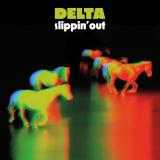
“From Birmingham and centred around the extraordinary songwriting talent of James and Patrick Roberts – initially as The Sea Urchins and since 1993 as Delta – they’ve only just got round to releasing their debut album, Slippin’ Out. It is a work of some beauty”. 9/10 NME ALBUM OF THE MONTH, 2000
“It’s classicist for sure, shot through with the influence of The Beatles, Byrds and Buffalo Springfield. In James’ downright beautiful closing ballad ‘I Want You’ one can also discern the school of ambitious English balladry that peaked in about 1968: The Casuals, Love Affair, Barry Ryan. The impression of accomplished old-schoolery is only furthered by the dizzying string arrangements penned by Louis Clark Jnr, son and namesake of the one-time orchestral chief of Electric Light Orchestra” – Mojo lead review, 2000
Having ended the 90s with the spirited ‘Laughing Mostly’ compilation of singles and demos (Guardian Album Of The Week) Delta finally released their debut studio album of twelve songs in the summer of 2000 on the Dishy Recordings label. Accepting that this might be their sole studio album the band threw everything at these recordings allowing it to exist in its own sphere, unbothered by their contemporary generation and disregarding the idea of even releasing a single.
Recorded at DEP International there was a notable difference to the scruffier, looser charm of their 1990s recordings, a tighter focus developed by having the experienced Lenny Franchi mixing the LP with them. Lenny had been working with a number of Island artists including My Bloody Valentine and Tricky so knew his way around a desk. There was also the question of budget (a few months passed between recording and mixing whilst funds were raised) so every day counted. Ultimately though you can hear the joy in the recordings, even amongst the melancholy and angst. As James recently recalled in an interview in Shindig! Magazine: “It was such a big deal for us. It’s one of my fondest memories doing that record. Everyone was happy. If there’s anything that I’d stand by, I think it would be that”
Louis Clark Jr joined the band towards the end of the ‘90s and brought a classically-trained element to the recordings particularly with his string arrangements. For ‘Cuckoo’, ‘I Want You’ and the prophetic ‘We Come Back’ Louis brought in eight players from the Birmingham Conservatoire; the baroque style is partly why the record often receives comparisons to Love’s ‘Forever Changes’.
On release ‘Slippin’ Out’ was a big favourite with writers at the NME, Mojo and The Guardian again and before long the band were signed to Mercury/Universal for their second studio album ‘Hard Light’, a far more expensive and expansive love affair. It was a temporary palatial home where things quietly fell apart again, but that’s another chapter.
“If long-term memory is nothing more than selective editing and only pop’s most weighty visceral works are built to last then it’s quite possible that in 50 years the Britpop era will be best recollected for the two bands it ostracised. Earlier this year we met Shack and thought their story of mercurial brilliance indicated the biggest music biz oversight of the 90s. We were wrong because we hadn’t met Delta yet. This is richer and more engrossing than anything by Shack”
The Italian music scene is enriched by an intriguing new jazz trio: Chromogen.
Led by bassist and composer Matteo Magnaterra, the project features three members: tenor saxophone, bass, and drums. Using an unconventional lineup, they pursue a well-defined exploration of sound and timbre, creating ample space for dialogue and experimentation. They
pave the way for a new, holistic jazz style, clearly defined in their first album, "Chromogen."
The name is inspired by a parallel passion of the artist-composer: analog photography.
Chromogen is, in fact, the English name for the chemical compound capable of transforming a negative image, dyeing it with color. Those
same colors will then animate the artist's songs, developing imagery tied to his way of observing, portraying the world around him in vivid
colors.
CREDITS
Matteo Magnaterra: compositions, electric bass
Matteo Diego Scarcella: tenor saxophone
Vincenzo Messina: drums
Jacopo Trapani: recording, mixing
Francesco Brini: mastering
Basket of Light is the most progressive and complex release by the British folk-rock group Pentangle. Traditional English folk songs are reinterpreted with a mix of jazz, pop and rock influences. Everything their previous works promised is fulfilled here. The album opener 'Light Flight' has become their signature song. If there is a prog folk masterpiece then it is Basket Of Light. Pentangle proved they could release a progressive, ground-breaking work without keyboards, much studio trickery or even electric instruments.
The original Pentangle was active in the late 1960s and early 1970s. The original line-up includes Bert Jansch (vocals & guitar) and John Renbourn (vocals & guitar).
“From Birmingham and centred around the extraordinary songwriting talent of James and Patrick Roberts – initially as The Sea Urchins and since 1993 as Delta – they’ve only just got round to releasing their debut album, Slippin’ Out. It is a work of some beauty”. 9/10 NME ALBUM OF THE MONTH, 2000
“It’s classicist for sure, shot through with the influence of The Beatles, Byrds and Buffalo Springfield. In James’ downright beautiful closing ballad ‘I Want You’ one can also discern the school of ambitious English balladry that peaked in about 1968: The Casuals, Love Affair, Barry Ryan. The impression of accomplished old-schoolery is only furthered by the dizzying string arrangements penned by Louis Clark Jnr, son and namesake of the one-time orchestral chief of Electric Light Orchestra” – Mojo lead review, 2000
Having ended the 90s with the spirited ‘Laughing Mostly’ compilation of singles and demos (Guardian Album Of The Week) Delta finally released their debut studio album of twelve songs in the summer of 2000 on the Dishy Recordings label. Accepting that this might be their sole studio album the band threw everything at these recordings allowing it to exist in its own sphere, unbothered by their contemporary generation and disregarding the idea of even releasing a single.
Recorded at DEP International there was a notable difference to the scruffier, looser charm of their 1990s recordings, a tighter focus developed by having the experienced Lenny Franchi mixing the LP with them. Lenny had been working with a number of Island artists including My Bloody Valentine and Tricky so knew his way around a desk. There was also the question of budget (a few months passed between recording and mixing whilst funds were raised) so every day counted. Ultimately though you can hear the joy in the recordings, even amongst the melancholy and angst. As James recently recalled in an interview in Shindig! Magazine: “It was such a big deal for us. It’s one of my fondest memories doing that record. Everyone was happy. If there’s anything that I’d stand by, I think it would be that”
Louis Clark Jr joined the band towards the end of the ‘90s and brought a classically-trained element to the recordings particularly with his string arrangements. For ‘Cuckoo’, ‘I Want You’ and the prophetic ‘We Come Back’ Louis brought in eight players from the Birmingham Conservatoire; the baroque style is partly why the record often receives comparisons to Love’s ‘Forever Changes’.
On release ‘Slippin’ Out’ was a big favourite with writers at the NME, Mojo and The Guardian again and before long the band were signed to Mercury/Universal for their second studio album ‘Hard Light’, a far more expensive and expansive love affair. It was a temporary palatial home where things quietly fell apart again, but that’s another chapter.
“If long-term memory is nothing more than selective editing and only pop’s most weighty visceral works are built to last then it’s quite possible that in 50 years the Britpop era will be best recollected for the two bands it ostracised. Earlier this year we met Shack and thought their story of mercurial brilliance indicated the biggest music biz oversight of the 90s. We were wrong because we hadn’t met Delta yet. This is richer and more engrossing than anything by Shack”
out of Stock
Last delivered 10 months ago available to reorder, subject to availability
Nachdem sie sich bereits einen beispiellosen Ruf als Singer/Songwriterin und Toursängerin mit The Pogues erarbeitet hat, veröffentlicht Iona Zajac aus Glasgow ihr Debütalbum ""Bang"". Zajacs Stärke liegt in ihrer Fähigkeit, Licht und Dunkelheit mit verblüffender Leichtigkeit auszubalancieren. Während einige Songs sich mit Gewalt und Intimität auseinandersetzen, stehen an anderer Stelle Surrealismus und Humor im Mittelpunkt. Diese klangliche Gewandtheit, zugleich gefühlvoll und verspielt, stellt Zajac neben Gleichgesinnte wie PJ Harvey und Angel Olsen - Künstlerinnen, die sich nicht scheuen, das Intime mit dem Explosiven zu verbinden. Ihre beeindruckende Stimme führte sie auf Touren mit Mercury Rev, Arab Strap, Lankum, Cassandra Jenkins sowie 2025 mit Alison Moyet. Letztes Jahr trat sie mit den Pogues bei deren bahnbrechender Reunion in Dublin auf. ""Bang"" wurde in Edinburgh mit Produzent Dani Bennett-Spragg (black midi, English Teacher, IDLES, Sam Fender, Wunderhorse) aufgenommen und verbindet intime akustische Momente mit der Dynamik der gesamten Liveband.
Amazing Things is an album about death which isn't morose, slow, or quiet. A year ago Darren lost a friend to cancer. Amazing Things is an album about death which isn't morose, slow, or quiet. Instead, it is packed with joyful, melodic guitars and some of Darren's prettiest tunes. It is sometimes very sad, but also heartfelt, loving, and rewarding. Darren recorded the album almost entirely solo and this time he has dug deep into his primary instrument, the electric guitar, creating a sound that is rich in tone and texture. Darren Hayman is a British songwriter best known for his work with late 90s band Hefner, but has since made more than 20 albums dealing with astronauts, the English Civil War, William Morris, Lidos, and Thankful Villages. He lives in South London with his dog.
Los Angeles-based duo LUCKYANDLOVE are back with their third album, evoking a new sense of art school originality, following their critically acclaimed “Transitions” album. The duo defines 'Humaura' as the atmosphere that emanates from the feelings of the human spirit void of technological control.
Blending raw analog synth sounds with driving punctuated percussion and punchy analogue bass, LUCKYANDLOVE’s music is shaped by the embers of Siouxsie and The Banshees and Bauhaus, resonant spectres carry over from synth-laden galaxies, where the needle hits the vinyl groove and Doc Martens marched to basement dance floors.
LUCKYANDLOVE is the raw sonic experiment of Loren Luck and April Love, whose music transcends genres. Their live analogue synth beats, Moog instrumentation and beautiful, harmonic vocals trigger an immediate download of fuzzy sunset synthgaze, blue-black neon darkwave, and tigerprint electro punk.
“‘Humaura’ is an action-packed, cinematic, entertaining and soulful electro-dance record full of fresh air and wide-open roads where there is more freedom to party, to be in nature, and to be our wild selves,” says April Love.
Fusing together pulsating molten kicks, abrasive fuzz-laden analog synths and sensual vocals, the anti-tech angst anthem ‘I Am Human’ is a call to take back our lives, underlining the need to reconnect with being Human before it’s too late. ‘Lonely at Night’ is a "last call" bar track about the desperate, frantic desire for human connection, building from a haunting sense of isolation to a fast-paced, climactic reunion with a crush. Elsewhere, this album features enchanting lyrics rooted in emotions from melancholy and sorrowful glom to a state of blissful trance.
This album was recorded, mixed and mastered for digital release by Grammy award-winning engineer Be Hussey (Modern English, Twin Tribes, Boy Harsher) at Balboa Studio and Catwater for the digital music, and mastered for vinyl and lathe-cut by Grammy-nominated engineer Nicholas Townsend (Weezer, Grimes) at Townsend Mastering.
Their 'Lucky + Love' and 'Transitions' albums having earning them a global fan following, US and UK tours, multiple tracks featured in the indie hit film 'Tiger Within' (Ed Asner's final performance), and wide acclaim, noting their “soulful, synthesized sound" (LA Weekly), “spectral synths and dazed-dreamy feeling” (Big Takeover Magazine), not to mention their "uncompromising and inventive sonic experiment” (The Spill Magazine) and sound that “oscillates between the asphalt synth streets & interstellar outer realms” (Impose Magazine).
LUCKYANDLOVE’s visceral, dark electro-pop appeal continues to stretch through time and space. Praise for the album’s lead track ‘I am Human’ have poured in from over a dozen countries. ‘Humaura’ promises to cement the duo’s reputation as one of America’s most vivacious electronic / synthwave acts, positioning them firmly within the lineage of artists like Phantogram, Ladytron, The Soft Moon, Twin Tribes and ACTORS.
‘Humaura’ Press:
“...In contrast to its synth-laden darkwave and electropunk sound, the song presents lyrical themes of championing the human spirit and emotions over the technological void" ~ Regen Magazine
“Moog textures and distorted synth tones weaving together like electric currents. An industrial edge that carries a dreamy undercurrent, nodding to darkwave, punk rock and post-punk influences without sounding dated" ~ Myth of Rock
"Every second and note is a meld of lava-esque incitement and beguiling melodic fixation and a breath to unpredictability and stirring fuzz hued uniqueness… a thrilling encounter" ~ The Ringmaster Review
"Layers fall into place and give rise to soaring vocals. The beautiful timbre of her voice sits over the landscapes of sound and reveal poignant lines that hit home." ~ Sound Read Six
'Mei Semones' sweetly evocative blend of jazz, bossa nova and math-y indie rock is not only a way for her to find solace in her favorite genres, but is an intuitive means of catharsis. "Blending everything that I like together and trying to make something new - that's what feels most natural to me," says the 23-year-old Brooklyn-based singer-songwriter and guitarist. "It's what feels most true to who I am as an artist." Plinking guitar tones and asymmetrical time shnatures exemplify her forays into angular indie rock more now than ever before, especially on her debut Bayonet Records single "Wakare no Kotoba"-its wide-interval arpeggios in odd meters being some of the most technically difficult guitar work Mei has ever implemented in her songwriting. Translated to "parting words" in English, the self-described "anti-love song" serves as a farewell to a toxic friendship, complete with orchestral swells and crashing guitars. Originally from Ann Arbor, Michigan, Semones began playing music at a young age, starting out on piano at age four before moving to electric guitar at age eleven. After playing jazz guitar in high school, she went on to study guitar performance with a jazz focus at Berklee College of Music. College is where she met her current bandmates, including string players Noah Leong and Claudius Agrippa, whose respective viola and violin add softness and multidimensionality to Mei's intricate guitar work. After releasing a slew of singles and an EP in 2022, coinciding with her move to New York City, Mei and her band have since gone on to collaborate with post-bossa balladeer John Roseboro and embark on their first-ever tour with the melodic rock outfit Ravi, Semones chronicles infatuation, devotion, and vulnerability in her songs, complete with sweeping strings, virtuosic guitar-playing and heartfelt lyrics sung in both English and Japanese, that have all become part of her sonic trademark: ornately catchy, genre-fusing compositions serving as the backdrop to tender lyrics touching on the universalities of human emotion.
'Mei Semones' sweetly evocative blend of jazz, bossa nova and math-y indie rock is not only a way for her to find solace in her favorite genres, but is an intuitive means of catharsis. "Blending everything that I like together and trying to make something new - that's what feels most natural to me," says the 23-year-old Brooklyn-based singer-songwriter and guitarist. "It's what feels most true to who I am as an artist." Plinking guitar tones and asymmetrical time shnatures exemplify her forays into angular indie rock more now than ever before, especially on her debut Bayonet Records single "Wakare no Kotoba"-its wide-interval arpeggios in odd meters being some of the most technically difficult guitar work Mei has ever implemented in her songwriting. Translated to "parting words" in English, the self-described "anti-love song" serves as a farewell to a toxic friendship, complete with orchestral swells and crashing guitars. Originally from Ann Arbor, Michigan, Semones began playing music at a young age, starting out on piano at age four before moving to electric guitar at age eleven. After playing jazz guitar in high school, she went on to study guitar performance with a jazz focus at Berklee College of Music. College is where she met her current bandmates, including string players Noah Leong and Claudius Agrippa, whose respective viola and violin add softness and multidimensionality to Mei's intricate guitar work. After releasing a slew of singles and an EP in 2022, coinciding with her move to New York City, Mei and her band have since gone on to collaborate with post-bossa balladeer John Roseboro and embark on their first-ever tour with the melodic rock outfit Ravi, Semones chronicles infatuation, devotion, and vulnerability in her songs, complete with sweeping strings, virtuosic guitar-playing and heartfelt lyrics sung in both English and Japanese, that have all become part of her sonic trademark: ornately catchy, genre-fusing compositions serving as the backdrop to tender lyrics touching on the universalities of human emotion.
A valentine for black hearts! An electric array of magic sounds! The shock return of a missing legend! The surprise formation of HOUSE Of ALL by five former members of The Fall was bound to provide some pleasant surprises, not the least of which being the creation of an identity distinct from that of any specific Fall line-up, and here the band offer an steep evolution of sound of their two previous albums . . . darker, more elliptic and can we say it? A more mystical sum of talents than most groups ever manage. They've kept their open door policy to former members of The Fall and expanded it. Phil Lewis, who's stepped in live for Pete Greenway, makes his studio debut, and the long-lost Karl Burns has emerged from his mystery lair to add a third set of drums to the line-up . . . besting The Glitter Band by 50%! How this will work live has yet to be determined, but the band has already scheduled dates in Spring, 2025. House Of All Souls is somewhat more psychedelic than its predecessors, and despite seven players, each with his own particular style, the songs and production are shockingly cohesive. From the breakneck pace of first tune, Tempest And Storm to the superb album closer, Born At Dawn And Dead At Sunset, there's quite a lot to unpack - it's an album-lover's album, each track magnificent in its own way and impossible for us to pick a fave from the lot of 'em. Plenty has been written about The Fall, whose 50th birthday is just a few years off, but rare is the group with an equally perverse and persuasive influence in that period. When HOUSE Of ALL debuted, Martin Bramah remarked on it being "part of the Fall family continuum" - a matter of actual fact, given the pedigree of its members. With this, HOUSE Of ALL's third full-length album, it's proven fact that the bright lights of those multiple talents behind the band have yet to dim.
Black vinyl / 505mcn paper / 30 x 60 cm Insert with Liner Notes by Tony Higgins printed on 250 mcn Lenza Top Recycling Paper / Condensed interview to Spata Sisters and exclusive pictures.
Personnel:
Enzo Randisi - Musser Percussion Keyboards
Riccardo Randisi - Acoustic Piano, Rhodes, ARP & Korg Keyboards
Marcello Pellitteri - Drums
Giuseppe Costa - Acoustic Bass & Electric Bass Guitar
Mimmo Cafiero - Congas & Percussions
Sandro Palacino - Tenor and Soprano Saxes
Loredana Spada - Vocalist
Cinzia Spata - Vocalist
Mary Lo Giudice - Vocalist
Mariella Gueli - Vocalist
Notes:
Did someone say Summer? Sicily is what Cuba is to the Caribbean, sun, sea, easy and friendly people with lots of troubles! You won't find anything better around that identifies the summer more than this album by Enzo Randisi who at the beginning of the 80s put together a Swing Ensemble as a tribute to that "cheerful" movement of Jazz music. But Enzo and his fellas just couldn't stay on track and put in the best that the alternative Palermo area could offer in that historical period, like the sisters Cinzia and Loredana Spata, who brought the production to a next level in the vocal version of All Blues or in Chic Corea's Spain. But what really struck us was Charles Cables' version of "Quite Fire" (here missspelled as "Quite Fair"), released a few months earlier only in Japan and which would only become famous in the 90s with the Acid Jazz movement, and this tells us a lot about how hungry Enzo and Riccardo were of musical knowle, to be able to find some pearls in a city with basically no record shops and isolated...well...it's on an island! For this re-press we enlisted Tony Higgins, who recently finished a very long commitment and greenlight to delight us with his polished English...Welcome back Tony!
Music To Varnish Owls By. Does Geoff Bastow have a claim for the best album title of all time? It's certainly up there. It's also one of the hardest to find library funk records. But don't let the eye-catching name fool you into thinking this isn't serious business.
As a key member of Giorgio Moroder's team, the legendary Geoff Bastow shouldn't need any introduction. You'll be familiar with his singular brilliance as the brains behind the much-sampled boogie/disco classics "You Don't Like My Music (Hupendi Muziki Wangu?!)" and "Don't Stop", released by his group, K.I.D.
But 1975's Music To Varnish Owls By is where it all began for our hero.
It's packed with incredibly soulful, soothing music that - despite being utilised a few times by Knxwledge - remains still largely un-mined. So, beat-makers, get cracking. And instead of that hyper-rare original, spend that £300 on something else.
Born in 1949, Bastow was a Munich-based English songwriter and record producer. Originally working as a guitarist and pianist in dance bands around his home county of Yorkshire, he moved to London in the early 1970s and then Munich in around 1976. He was one of the main architects of the Munich disco sound of electronic innovator Giorgio Moroder and also released heaps of killer library records for legendary labels like Bruton (with brother Trevor), Impress, JW Music Library and the Munich-based Sonoton between the 1970s-2000s. Bastow died tragically young, in Berlin, Germany on 16 March 2007, at the age of just 57. But he left behind a truly incredible electronic music legacy. He deserves to be much better known and this reissue should bring him to a fair few more ears. Let's see why...
Light-hearted opener "The Rough With The Smooth" contains a killer open drum break and is basically guitar-drenched flute-laced piano-funk. However, the first genuine highlight, "Beautiful People", is just majestic. Reflective, pastoral and silky smooth - as the title suggests, it's just straight beautiful; a chiming, deeply soulful instrumental that has to be heard to be believed. Sampled by Knxwledge but nobody else of note, which is crazy. Slo-mo soul beat "Tumbleweed" is another stone cold track just desperate to be laced by a skilled MC. Laconic, lysergic funk with nostalgic overtones, the guitar is prominent but the flute and glock really elevate it to perfection.
"Bits And Bats" is clav-enhanced Blaxploitation-esque street-funk with tough bass and crunchy drums that, despite its hardness, manages to flirt with breeziness. All in all, sumptuous, pounding wah-wah brilliance. Another huge one, up next. The insistent piano-funk head-nodder "A Change Of Pace" is a total sleuth-funk jammer, with a wonderfully soft snare and more hypnotic, melancholic flute lines. Man, we'd love to hear Alchemist chop this up. It even sounds a bit like Bastow was keeping things thoro with this one. Closing out Side A, the bright and breezy Bossa of "Janelle" makes it a perfect run of six untouchable gems. As elegant as it is sleazy, it sounds like it could've been on the classic KPM greensleeve, Piano Viberations.
Side B opens with the Ramsey Lewis-inspired "Time And A Half", a deceptively simple bass, drums and piano workout, decorated with stylish percussion with some great chord changes and hints of drama via a great bass solo. The heavy "Supersplash" is a doped-out drama suite with fuzzy wah-wah guitars, electric piano and glock. "Fillet Of Soul" is a catchy wah-wah propelled shuffle with piano and vibes, super dynamic but also incredibly chill.
"Well Above Average" is exactly that, a funky instrumental that serves as a straight ahead guitar-soul workout. Oozing bass-driven class, it gets better with every listen. Some open drums for your delectation, too. The fuzzy clav-and-vibes funk of "The Clan" - also understandably sampled by Knxwledge - is a monster head-nod slow jam whilst, seeing us out, the uber-relaxed "Sing Song" rounds things off in bright fashion with its slow but insistent clav, electric piano and glock greatness. Swoon.
As ever, the audio for Music To Varnish Owls By has been carefully remastered by Be With regular Simon Francis, ensuring it sounds better than ever. Cicely Balston's expert skills have made sure nothing is lost in the cut whilst the records have been pressed to the highest possible standard at Record Industry in Holland. The original, iconic sleeve has been restored here at Be With HQ as the finishing touch to this long overdue re-issue.
out of Stock
Last delivered 4 months ago available to reorder, subject to availability
'Mei Semones' sweetly evocative blend of jazz, bossa nova and math-y indie rock is notonly a way for her to find solace in her favorite genres, but is an intuitive means ofcatharsis. "Blending everything that I like together and trying to make something new -that's what feels most natural to me," says the 23-year-old Brooklyn-based singer-songwriter and guitarist. "It's what feels most true to who I am as an artist." Plinking guitar tones and asymmetrical time signatures exemplify her forays intoangular indie rock more now than ever before, especially on her debut Bayonet Recordssingle "Wakare no Kotoba"_its wide-interval arpeggios in odd meters being some ofthe most technically difficult guitar work Mei has ever implemented in her songwriting.Translated to "parting words'' in English, the self-described "anti-love song" serves as afarewell to a toxic friendship, complete with orchestral swells and crashing guitars. Originally from Ann Arbor, Michigan, Semones began playing music at a young age,starting out on piano at age four before moving to electric guitar at age eleven. Afterplaying jazz guitar in high school, she went on to study guitar performance with a jazzfocus at Berklee College of Music. College is where she met her current bandmates,including string players Noah Leong and Claudius Agrippa, whose respective viola andviolin add softness and multidimensionality to Mei's intricate guitar work. After releasinga slew of singles and an EP in 2022, coinciding with her move to New York City, Mei andher band have since gone on to collaborate with post-bossa balladeer John Roseboroand embark on their first-ever tour with the melodic rock outfit Raavi. Semones chronicles infatuation, devotion, and vulnerability in her songs, complete withsweeping strings, virtuosic guitar-playing and heartfelt lyrics sung in both English andJapanese, that have all become part of her sonic trademark: ornately catchy, genre-fusing compositions serving as the backdrop to tender lyrics touching on theuniversalities of human emotion.
Ltd. to 500 colored copies worldwide. The band's first album from 1993, lovingly remastered by Johannes Scheibenreif. A classic of German progressive rock. The band's only English-language album. In 1973 the band signed a contract with Brain Records and Jochen Petersen (later keyboarder with Randy Pie) produced their debut album "Banished Bridge" at the Chameleon Studios in Hamburg. The album was recorded completely without electric guitars, the centerpiece being the 17-minute title track "Banished Bridge". The music is slightly fragile, flowing, almost lyrical. The floating synthesizer and keyboard passages are reminiscent of the early works of Pink Floyd and Genesis. A debut album that already showed where the band would later go. "Banished Bridge" remained Novalis' only English-language record, but for many it is still considered a classic of German progressive rock.
After navigating the labyrinthine musical chambers of their 2023 modern exotica album 'Palace Of A Thousand Sounds', Reno. Nevada’s Whatitdo Archive Group has returned with their first-ever holiday offering—venturing into the darker side of Christmas folklore with their new ice-cold 45, 'Wild Man'. Drawing inspiration from a global archetypical myth of the same name, Whatitdo Archive Group examines the ancient story of the Wild Man—the hairy, half-human, half-beast that stalks the shadows of humanity’s shared primeval past. The myth of the Wild Man is a folktale that goes by many names: The Yeti of the Himalayas, the Bigfoot of North America, and, of course, Krampus of Eastern Europe—a yuletide beast with a reputation as a child-devouring "Anti-Claus" who now finds himself the subject of Whatitdo’s latest musical exploration.
‘Wild Man’ gives us a glimpse into the band’s newest sonic direction. With a heavy rhythm section carried by Alexander Korostinsky’s driving bass line, the sticky wah-guitar of Mark Sexton’s L-5, and the acrobatic lines of the Wurlitzer electric piano, “Wild Man” revels in the spiritual jazz flavors of Pharoah Sanders and grooves hard like the classic soul-jazz stylings of Ramsey Lewis. Much like the Krampus myth itself, 'Wild Man' is meant to weave an ominous spell over any Christmas cocktail party long after the kids have gone to bed. Hear the warning for yourself in the song’s haunting chant: "You better watch out for your life, when the Wild Man comes in the night".
But mythology isn’t abandoned on the B-side. The band takes the traditional English folk melody 'Greensleeves' and reimagines it through the musical lens of Ethio-jazz. Recorded live at the Archive Group Studios, the track exudes a dark, roomy atmosphere, drenched in unease and mystery courtesy of the wandering electric piano dancing above the hypnotic rhythm section and mesmeric groove of the distant Batá drums. This fresh reimagining taps into the ancient, cross-cultural lineage of the "Green Man" myth, a pagan symbol of rebirth and the power of the natural world, further blurring the lines between holiday cheer and the primal, elemental forces enshrined in our collective cultural memory.
After the band’s 'Palace Of A Thousand Sounds' was named 2023’s "Best Library Record" by PopMatters Magazine, their new 'Wild Man' 7” capitalizes on the same creative process that shaped their last record, while now exploring new conceptual territory. By drawing inspiration from archaic global folklore and again utilizing their peculiar recording techniques, W.A.G. has crafted a truly unique holiday offering that unearths the darker, more primal undercurrents of the Christmas tradition. The 'Wild Man' 7" is released as part of the Snowflakes Christmas Singles Club, pressed on snow-white bio-vinyl and limited to 300 copies.
'Mei Semones' sweetly evocative blend of jazz, bossa nova and math-y indie rock is not only a way for her to find solace in her favorite genres, but is an intuitive means of catharsis. "Blending everything that I like together and trying to make something new - that's what feels most natural to me," says the 23-year-old Brooklyn-based singersongwriter and guitarist. "It's what feels most true to who I am as an artist." `Tsukino', Mei's debut, self-released EP, is being released physically for the first time ever on Bayonet Records! The EP will be released by itself on CD & Tape formats, and will be included in a vinyl pressing on the B-side of Semones' landmark EP, `Kebutomushi'! Plinking guitar tones and asymmetrical time signatures exemplify Semones' forays into angular indie rock more now than ever before. Originally from Ann Arbor, Michigan, Semones began playing music at a young age, starting out on piano at age four before moving to electric guitar at age eleven. After playing jazz guitar in high school, she went on to study guitar performance with a jazz focus at Berklee College of Music. College is where she met her current bandmates, including string players Noah Leong and Claudius Agrippa, whose respective viola and violin add softness and multidimensionality to Mei's intricate guitar work. After releasing a slew of singles and an EP in 2022, coinciding with her move to New York City, Mei and her band have since gone on to collaborate with post-bossa balladeer John Roseboro and embark on their first-ever tour with the melodic rock outfit Raavi. Semones chronicles infatuation, devotion, and vulnerability in her songs, complete with sweeping strings, virtuosic guitar-playing and heartfelt lyrics sung in both English and Japanese, that have all become part of her sonic trademark: ornately catchy, genrefusing compositions serving as the backdrop to tender lyrics touching on the universalities of human emotion.
The seeds of composer Rafael Anton Irisarri’s latest LP were first planted during his 2016 tour in Italy, months before that Autumn’s unexpected presidential election. The linguistic glitch of an innocuous diner in Milan named “il Mito Americano” – meant as “The American Dream” but translated literally to English as “The American Myth” – sparked a series of ideas, both conceptual and musical.
Amid the chaos of 2020, while exploring the stark world of brutalist architecture and inspired by the false fronts of Potemkin villages, a vision started to take shape: FAÇADISMS. Composed over three years, it’s a late capitalist lament of simmering electric despondency.
Irisarri’s obsession with repeating motifs mirrors the cyclical nature of our tumultuous political history. The album’s eight tracks heave and storm like a tempest being drained of its rage. This is the sound of majestic dissipation, of morning afters, fashioned from a mournful haze with cavernous guitars and granular twilight. A euphony of a receding tide as one sifts through the remnants of what remains: dust, delusion, and memory.
Opening with the somber gauze of “Broken Intensification," FAÇADISMS moves fluidly between moments of absence and abandon. Ashen swaths of electronics billow above smoldering embers of melody, guitar, and scattered streaks of processed strings and voice, as on the rapturous doom of “Control Your Soul's Desire for Freedom,” featuring Julia Kent on cello and Hannah Elizabeth Cox on vocals. "The impoverished peoples of the Americas have known all along that 'freedom' is a cruel illusion crafted by the elites, akin to Potemkin's fake villages designed to impress Catherine the Great," Irisarri indicates. "FAÇADISMS illustrates a twisted inversion where the rulers deceive their subjects with illusions of safety, democracy, and free speech to create a grotesque mirage of control over their own lives.”
Elsewhere, Irisarri leans into passages of hushed oblivion (“Hollow,” “Dispersion of Belief”), while ragged drones rumble and disintegrate into wind-battered ambient wreckage. One has the sense that it’s all too late. The hour of fury has passed. The beauty has come and gone. Irisarri’s muse has become the crack in the façade of the unraveling myth.
The record closes with a climax of grand departure. Co-written with Kenyan sound artist KMRU, “Red Moon Tide” surges from flickering elegy to celestial disquiet, roiling waves of hymnal descent, and bristling noise. The effect is unsettling and unmooring: a soundtrack for the soul leaving the body, only to discover a void. It’s the sound of the center not holding, of shared illusions being dissolved in a tunnel of white light.
The cover photograph captures a profound sense of desolation. Taken in the historic shanty town of La Perla, Puerto Rico, where Irisarri spent his childhood, brutal colonial mysteries are lost to time. A skeletal concrete structure decays against an expansive blue horizon. Only the shadow of its shell ripples on the empty sea.
Has the American myth finally run its course?
out of Stock
Last delivered 23 months ago available to reorder, subject to availability