HABIBI FUNK RECORDS Novedades

Charif Megarbane & Ali - Tirakat LP

Tirakat brings together Jakarta-based trio Ali and Lebanese composer and multi instrumentalist Charif Megarbane in a collaboration rooted in long histories of cultural exchange between Indonesia and the Arab world. Ali are known for blending 1970s Indonesian psychedelic funk with Orkes Melayu, disco grooves, and Arab melodic forms, while Megarbane’s extensive catalogue has consistently explored similar cross-regional currents through jazz, library music, and Mediterranean-influenced arrangements. What connects the two is not genre alone, but a shared musical vocabulary shaped by overlapping histories, references, and lived cultural continuities.
The relationship between Indonesia and the Arab world stretches back over a thousand years, forged through Indian Ocean trade routes that carried not only goods, but languages, belief systems, instruments, and musical ideas. These exchanges were gradually absorbed into local traditions rather than replacing them. In Indonesia, Arabic musical elements entered through devotional practices and ensemble formats such as Gambus, Qasidah, and Orkes Melayu, where maq?m-derived melodic structures were adapted into local tuning systems and performance styles. Over time, these sounds became embedded within Indonesian popular music, shaping genres such as dangdut and informing a wider sonic landscape that remains audible today.

No en stock

Haga su pedido ahora y le encargaremos el artículo en nuestro proveedor.

22,65

Ültimo hace: 15 Días
Various - Habibi Funk: A Selection From Libyan Tapes (LP 3x12")

Habibi Funk is more than happy to announce our 31st release which happens to be our 3rd various artists compilation. The album is dedicated to the cassette tape scene in Libya from the late 80s to early 2000s, from disco to reggae to pop. All songs previously unreleased outside of Libya and not available on any DSP platforms.

This compilation isn’t a sweeping history of Libyan music — it’s a personal journey into the sounds we fell in love with while digging through tapes, conversations, and stories across Libya and beyond. Rather than spotlighting the country’s most famous musical exports, the compilation brings forward a mix of overlooked gems and local classics of the cassette era: artists whose work thrived despite political limitations, and scarce international exposure. The music featured here blends reggae rhythms, synthy disco grooves, gritty pop, house, and funk, a vibrant collision of genres that reflects Libya’s unique sonic landscape from the 1980s to the early 2000s. Many of these recordings were recovered from the TK7 cassette factory in Sousse, Tunisia, a now-demolished site that once played a quiet but vital role in distributing and manufacturing Libyan music. Other tracks were digitised in a Cairo hotel room in 2021, where we transferred nearly 100 tapes over the course of three days, on-site using a high-grade cassette deck brought into Egypt with us. From that trove emerged artists like Ahmed Ben Ali, Cheb Bakr, and Najib Alhoush & The Free Music, who have already featured on our earlier releases. Their sounds sit alongside contributions from this release from the likes of Khaled Al Melody, Fathi Aldiyqz & Sons of Africa Band, City Lights Band, Libya Music Band, and Group Hewaya. During this era, Independent artists relied on makeshift home studios or travelled abroad to record in Tunisia and Egypt, gradually building their own infrastructures for creativity. By the 90s and early 2000s, as access to digital equipment increased, a few of the artists began setting up their own studios — a shift that gave rise to a more self-sufficient recording culture across the country. The resulting sounds are anything but homogeneous. They reflect Libya’s geographic and cultural crossroads: North African rhythms meet Arab melodies and deep African roots. Reggae, in particular, took on a local Libyan flavour — not just musically, through the slowed-down cadence of traditional shaabi beats, but socially, as a vehicle for expressing identity and pride. What ties all the artists on this comp together is a boundary- pushing approach to genre and style: recorded in small studios, exchanged by hand, and shaped by a cross-pollination of influences, from Benghazi to Tripoli and beyond. All tracks are licensed from their creators and in the case of the artists being deceased from their estates. All profits are being split 50:50 between us in the licensors and ownership remains with the creators, we only licensed the music.

No en stock

Haga su pedido ahora y le encargaremos el artículo en nuestro proveedor.

46,64

Ültimo hace: 6 Meses
Various - Habibi Funk: A Selection From Libyan Tapes (LP 2x12")
No en stock

Haga su pedido ahora y le encargaremos el artículo en nuestro proveedor.

28,15

Ültimo hace: 6 Meses
Charif Megarbane - Hawalat LP

If Hawalat sounds like a world tour that’s because it essentially is. “As much as Marzipan is a picture of Lebanon from the inside, Hawalat kind of picks up from where Marzipan finished but more looking to the outside, the diaspora, to the notion of exile.” Megarbane says he is interested in the connections between the global and the domestic, the mundane and the cosmic, and wanted to create space for non-linear progression.

Hawalat is based on the idea of hawala, informal money transfers that you can make to certain countries impacted by a lack of currency or unstable political and economic contexts. His use of the term on this album is not a financial one, Megarbane explains, but a nod to notions of creative exchange between “places, persons, generations.” It is the first time Megarbane called on other musicians in this way to inform his sound, including a collaboration with Sven Wunder on the song Helia featuring strings by the Stockholm Studio Orchestra.

The album opens with first single Hanadi, a punchy Somali-inspired track with warm non-lexical vocals and saxophone. It immediately pivots to the Dreams of an Insomniac, which balances soft, effortless vocals and keys with urgent violin intrusions. Al Dollarji feels like Megarbane’s bread and butter, that is Mediterranean sounds with intricate strings, while Al Bahriye takes this staple and introduces hip hop inflections. The result is a rich 17 track album that effortlessly blends genres and styles.

Including 8 page, 12" sized booklet with unseen photos and liner notes by Armani Syed.

No en stock

Haga su pedido ahora y le encargaremos el artículo en nuestro proveedor.

22,48

Ültimo hace: 6 Meses
Kamal Keila - Kamal Keila

Kamal Keila

Kamal Keila

2x12inchHABIBI008-1
HABIBI FUNK RECORDS
10.04.2025

Songs about the unity of Sudan, peace between Muslims and Christians and the fate of war orphans, backed by grooves equally taking influence from Arabic sounds, American funk as well as neighboring Ethiopia.

Kamal Keila was among the first artist we met in Sudan during our two trips to Khartoum and Omdurman last year. He is one of the key figures of the Sudanese jazz scene that was a vital part of the musical culture in Sudan from the mid 1960s until the islamist revolution in the late 1980s. When we meet Kamal he luckily presented us with two mold covered studio reels.
Each tape included five tracks. One with English lyrics and another with Arabic ones. Musically you can hear the influence of neighboring Ethiopia much more than on other Sudanese recordings of the time, as well as references to Fela and American funk and soul. His lyrics, at least when he sings in English which gave him more freedom from censorship, are very political. A brave statement in the political climate of Sudan of the last decades, preaching for the unity of Sudan, peace between Muslims and Christians and singing the blues about the fate of war orphans called "Shmasha".
A note inside one of the boxes specified the track titles, durations and the fact that the sessions were recorded on the 12th of august 1992. Both sessions stand as a hearable testament how Kamal Keila stuck to a sound aesthetic from decades ago, while incorporating current events into his lyrics.
Kamal Keila's album is the first in a series of releases covering the Sudanese jazz scene on Habibi Funk. Be on the lookout for albums by The Scorpions and Sharhabeel coming soon.

2LP + Download Code + 8 Page Booklet

No en stock

Haga su pedido ahora y le encargaremos el artículo en nuestro proveedor.

29,37

Ültimo hace: 14 Meses
Cheb Bakr - Samh AlMea’ad

Habibi Funk is excited to announce the release of Samh Almea'ad, a new 7" record by Libyan artist Cheb Bakr, hitting the shelves on December 6, 2024. Recorded in the early 2000s, Bakr’s music fuses the pulse of Libyan pop with R&B and hip-hop influences, bringing the energy of Benghazi to the dance floors of New York in the early 2000s. Cheb Bakr’s sound is a unique blend of styles that captures the essence of two worlds and includes production and vocals by Ahmed Ben Ali.

Our journey with Cheb Bakr’s music began when Yousef Alhoush, whose father Najib Alhoush led The Free Music from Libya, generously lent us boxes of cassettes to digitize. With the help of a journalist traveling from Tripoli to Cairo, we brought the tapes and a high-quality deck to Egypt. For three days in a hotel room on Zamalek island in Cairo, we sifted through nearly 100 tapes, finally landing on several from Cheb Bakr that dated back to the late 1990s and early 2000s. His albums stood out for their fresh, genre-defying sound—Bakr’s vocals flowed effortlessly over R&B and hip-hop beats with touches of jungle and drum and bass percussion, creating a fusion that crossed cultural and musical boundaries.

Returning to Berlin, we took a deeper dive into the digitized tapes, identifying bands, singers, and producers that excited us. In the process, we noticed familiar rap verses on a few of Bakr’s tracks—verses by none other than Ahmed Ben Ali, who was about to release an album with Habibi Funk. When we asked Ahmed about his connection with Bakr, he explained that they’d collaborated closely at Jamaica Studios in Benghazi, with Ahmed even producing some of Bakr’s songs.

Despite having lost touch for years, Ahmed helped us reconnect with Cheb Bakr through mutual friends. Their reunion took place in Bakr’s living room, where we joined them on a video call to discuss Bakr’s career and his influences. He explained how he sought to reinterpret eastern Libyan folk sounds for a new generation, blending them with contemporary genres.

This 45 marks the beginning of our work with Cheb Bakr, offering a glimpse into his unique musical style, with a full album to follow at a later date. The release includes two standout tracks that showcase Bakr’s dynamic range. Side A features “Samh Almea'ad,” a reinterpretation of a 2003 New York classic with Bakr’s signature spin. Since our first listen in that Cairo hotel room, it’s been played at every Habibi Funk set without exception. Side B, produced by Ahmed Ben Ali, features “Rjana Lamta,” a track that hints at American influences alongside a nod to Ahmed’s “Dameek Majeb.” Bakr’s artistry ties these contrasting elements into an original, dancefloor-ready track that remains as captivating today as it was two decades ago. As always, this 7" release comes with a booklet detailing some of the Cheb Bakr story. Samh Almea'ad will be out on vinyl December 6th.

Licensing info: These songs were licensed from Cheb Bakr. We pay the licensing partner 50% of the profits of this release. Only project related costs are deductible from the gross income, research and travel costs come out of our own share. Publishing was not included in our agreement (We feel it’s important to be transparent about these deals, therefore we will include these infos in all future releases).

No en stock

Haga su pedido ahora y le encargaremos el artículo en nuestro proveedor.

12,40

Ültimo hace: 15 Días
Dalton - Alech 7"

Dalton

Alech 7"

7"-VinylHABIBI001
HABIBI FUNK RECORDS
29.11.2024

Dalton was a band from Tunis, the capital of Tunisia. They came together as a band around 1968 when most of the members studied together at the University of Tunis. The band had five members. Faouzi Chekili on guitar, piano and vocals, Ridha Kouhen on bass guitar, Mustapha Rehouma and sax and percussion, Sadok Gharbi on trumpet and vocals and Skaner Alim on drums and vocals. They were active in the local scene, playing music that was heavily influenced by American soul and funk and at the same time regional musical traditions. In the early 70s the band got a regular gig at a beach hotel called Sahara Beach Resort on the coastline of Tunisia. They had six month contracts for a couple of years in the early 70s and during that time they would play every single night of the tourist season. While the hotel gig required the band to play sets leaning towards tourist entertainment, the regular work helped put some money into the band's accounts. Using those funds the band was able to travel to Rome to record their one and only 7' single release "Alech" around 1971/1972. The band eventually dismantled in the mid 70s and returned briefly as a new group with new members in the late 1970s under the name Carthago but that is a different story.
"That "Soul Brother" is my jam.... !!!!" Lefto
The single itself impressed us heavily when we first stumbled upon it through French collector Victor Kiswell. While the b-side "Soul Brother' sounds like a Tunisian version of modern soul / AOR with it's English lyrics and lush arrangements, the title track "Alech' is the one that will get every party started. An infectious 3/4 rhythm, a great horn arrangement and brillantly layered vocals that made us think of Brazillian music or the Georgian groove band Gaya. Luckily Faouzi Chekili, the former band leader and composer uses social media communication so he was easy to track down. He is still active as a renowned musician in the Tunisian jazz scene and remains active recording and playing concerts both in Tunisia and internationally.

No en stock

Haga su pedido ahora y le encargaremos el artículo en nuestro proveedor.

12,40

Ültimo hace: 17 Meses
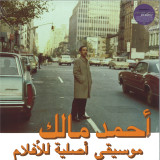
Ahmed Malek - Musique Original De Films, Volume Deux

Habibi Funk is thrilled to share a second collection of deep grooves and unreleased songs from Algeria's Ahmed Malek, often compared to Italian heavyweight Ennio Morricone. Malek’s music effortlessly switches between thematic jazz, funk, reggae and Algerian folk – creating indelible soundscapes that intersect the musical innovations made in African jazz by Mulatu Astatke, Bembeya Jazz National along with some of Europe’s finest experimental composers like Piero Piccioni and Janko Nilovic. “Musique Originale de Films, Volume Deux” is out June 28th, 2024 via Habibi Funk.

Whenever an interview asks about a “memorable moment” in Habibi Funk label history, one we always reference is how we got in touch Ahmed Malek’s (22K Spotify Followers, 285K Spotify Monthly Listeners) music and subsequently his family. It all started with us coming across Ahmed Malek’s music on YouTube in 2012. We were mesmerized by how effortlessly the music would switch between jazz, funk and Algerian folk while counterweighting it with an undertone of melancholia. Musical perception is different for every person, but there is a chance that his music will touch you in one way or another. At the time, we had just started the Habibi Funk label and we felt Ahmed’s music might be a good fit for the sound we were trying to highlight. Fast forward three years: we had become captivated with the idea of reissuing some of Ahmed Malek’s music. We knew some people had tried to locate his family but, but with no success. In the end it was an incredible amount of luck that made it possible for you to read these words and listen to Ahmed’s music. We were on a DJ gig in Beirut playing old Arabic records and we mentioned our passion for Ahmed Malek’s music to a friend. She said she knew one person in Algier, and as much as it would be a shot in the dark, she could ask her if she had an idea of how to find Malek’s family. Two weeks went by before we heard back, and what we got was incredibly good news - her Algerian friend was the neighbor of Ahmed Malek’s daughter! We’re not spiritual people, but it felt like the universe wanted to see the release happen. We started to speak with Henya, Ahmed Malek’s daughter and she was more than happy with our idea. She assured us that her father would have loved the plan as well. She provided us with tons of awesome material, from great photos, to unseen video footage and unreleased tracks. Eventually we visited Henya in Algeria and we licensed some of her father’s music, first for one (Habibi 003), then for another (Habibi 005), then we eventually organized an exhibition in June/July 2019 – Planète Malek – Une Rétrospective – at the Musée Public National D’Art Moderne & Contemporain in Algiers, focusing on Ahmed Malek’s artistic life. We also produced a small movie about him that our friend Paloma Colombe shot and directed. “Musique Originale de Films, Volume Deux” is a deep collection of unreleased songs and stemmed grooves from the Algerian master, from jazz, funk, psych to reggae rhythms and Latin flavors, all under the sonic umbrella of “Planète Malek;” and to quote the maestro, “I didn’t choose music, music chose me.” Lead single is the subtlety funky “Thème Rythme Léger,” out May 3rd along with LP Pre-Order (coincided with Bandcamp Friday for a larger impact) a delicate sonic dance between flute, piano and Spanish guitar with a Bossainfluenced groove. The steady, swingin’ drum groove is cloudlike - definitely toe-tapping friendly so just grab a partner to feel the Rhythme Léger. Second single out May 17th is the reggae-infused “L’Empire Des Rêves” – a sultry sax melody weaves through a prismatic rocksteady thematic groove. 3rd and final single “Thème Djalti feat. Aïda Guéchoud” – is a true Western-inspired ode to his Italian counterpart Ennio Morricone. “Thème Djalti” features the haunting vocals of Aïda Guéchoud, and combines elements of baroque and Bossa-jazz in a timelessly thematic way that seems grandiose yet remains uniquely personal to your ears. Swelling strings, trumpet, fem vox, flute, and plucked guitar expertly arranged, feels like you’re riding a horse into the sunset. Focus track “La La La” is fiery afro-arab-funk of the highest order! Put on your dancing shoes as Ahmed cuts the rug and gets us grooving along. Sonically the cut sounds like if Ahmed ran into The JB’s and Fela Kuti at a Cymande concert. Driving guitar and organ solos vie over pulsating bass riffs and afro-funk drumming that’ll have you out on the dance floor in no time. As always, both vinyl and CD come with an extensive booklet featuring background and interviews with Ahmed compiled through found newspaper clippings and newsreels, also including unseen photos, scans and more. “Ahmed Malek: Musique Originale de Films, Volume Deux” will be out everywhere June 28th.

No en stock

Haga su pedido ahora y le encargaremos el artículo en nuestro proveedor.

22,48

Ültimo hace: 6 Meses
Roger Fakhr - East of Any Place LP

"East of Any Place,” out December 1st via Habibi Funk, is a treasure trove of songs we came across alongside Rogér Fakhr's acclaimed 2021 album, "Fine Anyway." These tracks, hidden for decades and only passed between a handful of people, offer a glimpse into Rogér’s musical genius and the vibrant scene of Lebanon during a period marked by civil war and social upheaval. This release serves as a companion to "Fine Anyway," feat studio tracks that didn't make it into the previous album.

No en stock

Haga su pedido ahora y le encargaremos el artículo en nuestro proveedor.

24,33

Ültimo hace: 14 Meses
Sharhabil Ahmed - The King Of Sudanese Jazz

We're super happy to announce our 13th release by Sharhabil Ahmed, the actual King of Sudanese Jazz (he actually won that title in a competition in the early 1970s). Sonically it sounds very different from what Jazz is understood to sound like outside of Sudan. It’s an incredible unique mix of rock’n’roll, funk, surf, traditional sudanese music and influences from Congolese sounds. Original copies of Sharhabil recordings are often hard to find, so we’re happy they will now be widely available. “Argos Farfish” which was featured on our last comp amassed close to 400.000 plays already.

No en stock

Haga su pedido ahora y le encargaremos el artículo en nuestro proveedor.

20,13

Ültimo hace: 14 Meses
The Scorpions & Saif Abu Bakr - Jazz, Jazz, Jazz LP

'I heard about Seif Abu Bakr and The Scorpions maybe 3-4 years ago. Their album 'Jazz, Jazz Jazz' ended up on my radar because of an eBay auction with the bids eventually rising daily up to a staggering 1000$. The music is a unique combination of incredible horn arrangements powerfully performed, a vigorous drummer contributing a funky backbone and Seif's vocals uniting those elements. The results range from instrumental tracks awaking memories of 1970s crime thriller soundtracks to more Sudanese-rooted tracks, a lot of them modernized versions traditional rhythms of the diverse regions of Sudan and even an excursion into Colgolese Soukouss.
I went for my second trip to Sudan in December 2018 and after doing some research on the first trip my local colleagues Larissa and Yassir had managed to reach Amir, The Scorpions band leader and he was happy to meet. We got together with him in a Cafe right at the Nile in Omdurman. It was a happy occasion for everyone. He told us stories about him meeting Jimmy Cliff and Lewis Armstrong when they visited Sudan and how he and his band mates from The Scorpions played extensively in Kuwait, both in club residencies as well as for television. Amir brought tons of incredible photos illustrating not only the bands history but the vivid cultural live in the many music clubs in Khartoum of the 1970s. During this decade up until 1983 the capital was home to a huge number of clubs, bards and concert halls. This scene started to perish after president Nimeiry's turn away from his socialist policies, that he was widely associated with in the first decade of his rule, towards the implementation of Sharia law in 1983. During the first decade of his rule he had actively supported various artists of the Jazz scene, taking some of them on trips throughout Africa. The 1989 coup of Bashir and his generals then caused the final blow to a once thriving scene. Both of these political events within 6 years lead to significant drawbacks for the Sudanese jazz scene resulting into hardly no gig opportunities left and parties and concerts being critically observed. A number of musicians faced prosecution, most of the time for their political views; some left Sudan for good. Music never completely vanished from public life and even the regime kept selected artists close, but for a majority of those bands affiliated to the jazz scene life and making ends became a lot harder. The Scorpions dissolved as a group around the same time.
The re-release was produced with a clean copy of the vinyl version as a source. The original reel tape of the album stayed with Saif Abu Bakr along with another reel with other recordings that were never released. Unfortunately it was lost when Saif Abu Bakr had to flee to Kuwait temporarily during the second gulf war when Iraq raided Kuwait. Vinyl version comes with extensive booklets with photos, interviews, liner notes. The vinyl version also has a DLL code.

No en stock

Haga su pedido ahora y le encargaremos el artículo en nuestro proveedor.

20,04

Ültimo hace: 14 Meses
Hamid El Shaeri - The SLAM! Years (1983-1988) LP

If you were to ask for a defining Habibi Funk track, there are a few that come to mind: from Fadoul’s “Sid Redad,” Dalton’s “Soul Brother” to Ahmed Malek’s “Omar Gatlato.” However, none are as widely connected with us at this point as Hamid Al Shaeri’s “Ayonha.” We heard the track for the first time when we were working on selecting tracks for your first compilation and we instantly loved it. We obviously had heard of Hamid El Shaeri’s music before, but only material from his Al Jeel phase when he was already the full-blown
superstar he is now.

Listening to his releases from the early 1980’s opened a whole new door for us. At the time, Hamid had just left Libya to pursue his career in Egypt via a detour in London, where he recorded his first album. Hamid’s distinct sound of the sound is quintessentially reliant on heavy synths and so it was particularly important to purchase these synths in a timely manner. “Whenever a new one synthesizer would come out, we would have to buy it immediately, otherwise someone else would get their hands on that sound.” London also played an important role for Hamid as a musical epicenter.

He fondly reminisces about the many live shows he attended there, including some of the biggest international musicians like Freddie Mercury and Michael Jackson. After returning to Cairo where he also recorded his following albums, he connected with SLAM! for the
release of his debut, laying the foundation of a collaboration that lasted for 5 albums. Luckily, we were able to connect with Hamid through our friend Youssra El Hawary, whose extensive network has opened many doors for us within the Egyptian music scene. We met Hamid for the first time probably in 2016 at his office / rehearsal studio in the outskirts Cairo. We were expecting a larger-than-life
character in-line with his status as a certified superstar, yet the actual person turned out to be very approachable and super easy to connect with. He liked the idea of an effort to amplify his early works again,
which, when originally released, were far from an economic success.

While he was down to assist with an interview and his blessing for the project he also told us that for any license we needed to speak with the original label SLAM! who released these songs, still held the rights and also remained in business over the decades though they didn’t actively release any new music. Hany Sabet had started SLAM! records in the early 1980s and focused on cassette tape releases, the
format that expedited the success of a new generation of record labels in Egypt. By the mid 1980’s, SLAM! had become one of the most successful and economically dominant record labels in Egypt, with Hamid El Shaeri being just one of their key artists, alongside Mohamed Mounir, Hanan, Hakim, Mustafa Amar and many more. Luckily, Hany Sabet turned out to be a friend of our colleague Malak Makar’s father, which probably helped to warm him to the idea of licen- sing “Ayonha” to this - in the scale of his world - tiny label
from Germany. Eventually “Ayonha” ended up becoming a widely successful release and either Hany or we brought up the idea of a full album dedicated to Hamid El Shaeri’s work on SLAM!.


"Maktoub Aleina” is the first single and will be released January 14th. Following the massive success of "Ayonha,” “Maktoub Aleina” is another mid-tempo groover with a beautiful, synth-forward melody, that brings together a lovely combination of soul, disco and Arabic pop music of the highest order, giving a taste of full album. The second single, “Yekfini Nesma Sotak” will be released January 28th and combines Hamid’s unique formula of soul and pop, held together by a catchy synth melody. “Yekfini Nesma Sotak” picks up the
pace a bit, making the uplifting mood of the track even more powerful. Third single, arriving February 11th, is “Dari Demou’ek,” one of the stand out tracks of Hamid’s early recordings done for SLAM! in the early 1980s. Dominated by a disco infused bassline, the track offers a lot of space of the funky production to shine while Hamid inserts his vocals at all the right moments. A masterpiece of disco touched by Arabic pop music.

Full album arrives February 25th. This release is dedicated to Hany Sabet, the founder of SLAM! and his wife Rosemary Jane Sabet (who
took the photos we used for the cover and the booklet), who sadly passed away during the time it took us to prepare the release.
Vinyl comes with an extensive booklet with an interview with Hamid as well as unseen photos

No en stock

Haga su pedido ahora y le encargaremos el artículo en nuestro proveedor.

21,81

Ültimo hace: 14 Meses
Ibrahim Hesnawi - The Father Of Lybian Reggae LP

Habibi Funk is digging deep to present the songs of Ibrahim Hesnawi, otherwise known as “The Father of Libyan Reggae.” Kingston meets Tripoli in this incendiary collection of Arabized roots, dub, dancehall and more. Featured on Habibi Funk’s last compilation (HABIBI015) with his track “Tendme,” Hesnawi crafts restless funk with evident buttressing from a reggae foundation. Highlighted across the LP is how Hesnawi essentially pioneered such an effortless synthesis between traditional Libyan music and Jamaican reggae stylings, plus the endlessly disparate funk, jazz, and disco accents which firmly situate Hesnawi in a league of his own. LP out everywhere October 6th.

No en stock

Haga su pedido ahora y le encargaremos el artículo en nuestro proveedor.

22,65

Ültimo hace: 14 Meses
Hamid El Shaeri - The SLAM! Years (1983-1988) LP

If you were to ask for a defining Habibi Funk track, there are a few that come to mind: from Fadoul’s “Sid Redad,” Dalton’s “Soul Brother” to Ahmed Malek’s “Omar Gatlato.” However, none are as widely connected with us at this point as Hamid Al Shaeri’s “Ayonha.” We heard the track for the first time when we were working on selecting tracks for your first compilation and we instantly loved it. We obviously had heard of Hamid El Shaeri’s music before, but only material from his Al Jeel phase when he was already the full-blown
superstar he is now.

Listening to his releases from the early 1980’s opened a whole new door for us. At the time, Hamid had just left Libya to pursue his career in Egypt via a detour in London, where he recorded his
first album. Hamid’s distinct sound of the sound is quintessentially reliant on heavy synths and so it was particularly important to purchase these synths in a timely manner. “Whenever a new one synthesizer would come out, we would have to buy it immediately, otherwise someone else would get their hands on that sound.” London also played an important role for Hamid as a musical epicenter.

He fondly reminisces about the many live shows he attended there, including some of the biggest international musicians like Freddie Mercury and Michael Jackson. After returning to Cairo where he also recorded his following albums, he connected with SLAM! for the
release of his debut, laying the foundation of a collaboration that lasted for 5 albums. Luckily, we were able to connect with Hamid through our friend Youssra El Hawary, whose extensive network has opened many doors for us within the Egyptian music scene. We met Hamid for the first time probably in 2016 at his office / rehearsal studio in the outskirts Cairo. We were expecting a larger-than-life
character in-line with his status as a certified superstar, yet the actual person turned out to be very approachable and super easy to connect with. He liked the idea of an effort to amplify his early works again,
which, when originally released, were far from an economic success.

While he was down to assist with an interview and his blessing for the project he also told us that for any license we needed to speak with the original label SLAM! who released these songs, still held the rights and also remained in business over the decades though they didn’t actively release any new music. Hany Sabet had started SLAM! records in the early 1980s and focused on cassette tape releases, the
format that expedited the success of a new generation of record labels in Egypt. By the mid 1980’s, SLAM! had become one of the most successful and economically dominant record labels in Egypt, with Hamid El Shaeri being just one of their key artists, alongside Mohamed Mounir, Hanan, Hakim, Mustafa Amar and many more. Luckily, Hany Sabet turned out to be a friend of our colleague Malak Makar’s father, which probably helped to warm him to the idea of licen- sing “Ayonha” to this - in the scale of his world - tiny label
from Germany. Eventually “Ayonha” ended up becoming a widely successful release and either Hany or we brought up the idea of a full album dedicated to Hamid El Shaeri’s work on SLAM!.


"Maktoub Aleina” is the first single and will be released January 14th. Following the massive success of "Ayonha,” “Maktoub Aleina” is another mid-tempo groover with a beautiful, synth-forward melody, that brings together a lovely combination of soul, disco and Arabic pop music of the highest order, giving a taste of full album. The second single, “Yekfini Nesma Sotak” will be released January 28th and combines Hamid’s unique formula of soul and pop, held together by a catchy synth melody. “Yekfini Nesma Sotak” picks up the
pace a bit, making the uplifting mood of the track even more powerful. Third single, arriving February 11th, is “Dari Demou’ek,” one of the stand out tracks of Hamid’s early recordings done for SLAM! in the early 1980s. Dominated by a disco infused bassline, the track offers a lot of space of the funky production to shine while Hamid inserts his vocals at all the right moments. A masterpiece of disco touched by Arabic pop music.

Full album arrives February 25th. This release is dedicated to Hany Sabet, the founder of SLAM! and his wife Rosemary Jane Sabet (who
took the photos we used for the cover and the booklet), who sadly passed away during the time it took us to prepare the release.
Vinyl comes with an extensive booklet with an interview with Hamid as well as unseen photos

No en stock

Haga su pedido ahora y le encargaremos el artículo en nuestro proveedor.

23,24

Ültimo hace: 3 Años
Roger Fakhr - Fine Anyway

Roger Fakhr

Fine Anyway

12inchHABIBI016-1
HABIBI FUNK RECORDS
06.10.2023

Rogér Fakhr is a musician from Lebanon. He recorded these songs in the late 1970s in Beirut (and some during a brief exile in Paris). Some were circulated on hand copied cassettes among friends, others like "Had To Come Back Wet" were never released. His music effortlessly combines folk with touches of jazz and soul. He wrote, composed and arranged all songs. While working on his own music he also played for Ziad Rahbani, Fairouz and other musicians.

When we first heard Roger's music we were blown away! The music was a mixture of folk with touches of other genres. Maybe one could also refer to it as "singer-songwriter", since all of the songs were Roger's own compositions. Songs of unique beauty both musically as well as lyrically. At the same time they gave me the feeling of them being somehow time and space isolated capsules. Nothing really revealed, where they could've been recorded and without knowing it was Beirut, my first guess maybe would have rather been California, sometime in the 1970s. The immersive effect of his compositions and voice are just incredible. I was stunned and proposed Roger to work on a re-release, which he politely declined, saying he had no interest in this music being reissued.

The vinyl version comes with a 8 page booklet and a DL code. CD digipak version comes with a 16 page booklet.

No en stock

Haga su pedido ahora y le encargaremos el artículo en nuestro proveedor.

21,89

Ültimo hace: 4 Años
Various - Habibi Funk: An Eclectic Selection
No en stock

Haga su pedido ahora y le encargaremos el artículo en nuestro proveedor.

30,67

Ültimo hace: 12 Meses
Attarazat Addahabia & Faradjallah - Al Hadaoui LP

Attarazat Addahabia & Faradjallah's album came to us as quite a mystery. Our friends from Radio Martiko got access to the studio archive of the Boussiphone label and a reel labeled “Faradjallah” was among the items they had found there. After listening to the selection of reels they borrowed, Radio Martiko felt it was not a fit for their label and helped us licensing it from Mr. Boussiphone instead. We knew nothing about the band. We just had the reel with the music but very little information. What we knew was that the music was incredible and very unique. Gnawa sounds were combined with funky electronic guitars, very dense layers of percussions and female backing vocals more reminiscent of musical styles further south than Morocco. We started asking around whether anyone knew the band with no immediate success until we asked Tony Day, a musician from Morocco who helped us during our search for Fadoul’s family. His sharp memory came through once again, remembering all the names of the Attarazat Addahabia band members and even how to contact the bands singer and leader Abdelakabir Faradjallah. After visiting him at his home in Casablanca with our Moroccan colleague Sabrina multiple times, he shared his personal story. His father arrived in Casablanca from Aqqa at the age of six and his mother came from Essaouira. Abdelakabir was born in the neighbourhood of Benjdia in 1942. Abdelakabir Faradjallah studied fine arts in Casablanca, graduating in 1962. He also played soccer in the second team of "Jeunesse Societe One". His brother-in-law Ibrahim Sadr worked for one of the biggest football teams of the time in Morocco called "Moroco Sportive Union", which allowed him to travel to France occasionally. While Ibrahim was never part of the band he brought along a few instruments from trips.


Yet the majority of the instruments they could not afford to buy were build by Faradjallah and Abderrazak, Faradjallah's brother who passed away early. For instance they had built a Spanish guitar and a drum made of wood barrel and sheepskin by themselves.During the 1950s Faradjallah was booked as a singer for surprise parties with friends. He started to write his first songs including "L’gnawi" in 1967 and wanted to make people discover Gnawa culture, or maybe rather his take on the culture to be more exact. Faradjallah recalls his first interaction with the genre in the streets of the Dern neighbourhood, where he used to go to elementary school. Gnawa is one of the essential musical genres of Morocco. It combines ritual poetry with traditional dances and music linked with a spiritual foundation. Musically a lot of influences originated from West Africa as well as Sudan. Gnawa is usually played by a selection of specific instruments such as the qaraqab (large iron castanets centrally associated with the music), the hajhouj (a three string lute), guembri loudaâ (a three stringed bass instrument) and the tbel (large drums). People would put shells on their clothes and instruments and use incense at their parties. "Sidi darbo lalla - lala derbo khadem..." came from Gnawa verses Faradjallah used to sing when he was 14. The lyrics tackle a global (im)balance of power and the question of social status in this course. The band Attarazat Addahabia was formed in 1968. The original line-up included 14 members, all from the same family. They played their first small concerts here and there starting in 1969. Later in 1973 they performed bigger shows for instance at the Municipal Theatre followed by the "Al Massira Show" at Velodrome Stadium in downtown Casablanca. Their first album "Al Hadaoui" (the one you are listening to) was recorded at Boussiphone studios in 1972 and was never released before. Nobody seems to remember the exact reason why Boussiphone ended up deciding not to put the album out. The album's title track also served as the basis for Fadoul's "Maktoub Lah", who frequented the same circles as the band for some time.

Their shows sometimes could go as long as 12 hours, starting at 5pm in the afternoon, with an occasional break here and there. In the 1980s the band took a brief break. Faradjallah recalled the reason for that break like this: "Zaki, the bands drummer, had fallen in love with a young girl from Mohammedia. Soon after, he fell very ill. The group members were convinced that the girl had given him ‘s'hor’ (a kind of local Moroccan version of "black magic"). For four years, the whole group stopped playing. It was unthinkable to find another drummer to replace Zaki, even temporarily." So they waited four years for Zaki to "get back on his feet" before going back on stage. Apart from very few gigs here and there Faradjallah stopped playing music in the mid 1990s. Some members from the younger generations formed a new band and still play frequently to this day. Faradjallah runs a television repair shop coupled offerings beverages and snacks in the Belevedere /Ains Sbaa district of Casablanca. While Faradjallah was primarily a musician, he would work for the local cinema and paint their posters for new movies by hand and he designed all artworks and cover posters of the band.

And this eventually led to him participating actively in our first exhibition dealing with Habibi Funk’s work in Dubai 2018. He helped us by creating calligraphic complementations on large photo prints for that show.

No en stock

Haga su pedido ahora y le encargaremos el artículo en nuestro proveedor.

22,06

Ültimo hace: 6 Años
Artículos por página
N/ABPM
Vinyl