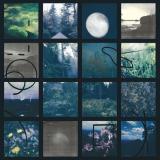
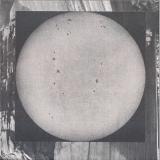
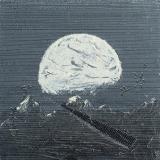
Schatterau’s third album, »Wir gingen durch leere Stunden« (We went through empty hours), sees the German duo blossoms with beauty and sophistication through a broad creative language.
This opus, presented in the form of vivid auditory tableaux vivants, explores the topography of memory as a landscape in constant motion – full of loops, feedbacks, and mirage-like distortions. Sounds climbing like vines over old walls, concealing details only to reveal new ones. Some pieces feel like fragments of a dream whose origin has vanished, others like displaced echoes of a day long gone.
Memories create paths that only become visible in retrospect – detours that somehow always lead back to oneself. Each track draws the listener into a different recollection, as if opening an old door. Inside, time behaves strangely: it jumps, stretches, and repeats.
»Wir gingen durch leere Stunden« ultimately presents Schatterau at their most experimental, complex and measured extremes, channelling ambiguous human emotional resonance ranging from melancholy to pure ecstasy.
Hands In The Dark News
- 1
Jaime Fennelly, as Mind Over Mirrors, makes music that pushes the known to the lip of the unknown, where it rocks precariously and in exhilaration. He scrambles the familiar and tweaks the comfortable, not through aggression, but a throbbing estrangement. When placed at a distance, these require longer reaches to grasp. The reward for this effort is an enlarged field of perspective, experience, and also of feeling. This is deeply feeling music to feel deeply.
In all of Jaime’s records—and, arguably, especially in Particles, Peds, & Pores—there’s a seed of the pastoral, some ancient shepherd’s song ringing through nearby hills and groves, but one also yearning to plumb the uncanny and the creative possibilities of disintegration. “Farewell to woods,” the grieving Damon sings in Virgil’s eighth Eclogue. “Let all be ocean now.” Fennelly sounds vast, enveloping wildernesses and the thrilling disquiet of their echoless grandeur. (Maybe Burroughs speaks to the borders of these zones: “Pulsing mineral silence as word dust falls from demagnetized patterns.”) There’s something of the heroic at work here, too, although the hero’s instinct has been suitably tempered—or awed—to know not to fly too close to the sun.
Mike Majkowski makes his debut on Hands in the Dark Records with Invisible, a selection of six moody and mysterious pieces produced between 2019 and 2025.
The prolific Australian double bassist and music maker has been involved in a diverse array of contemporary, improvised and experimental music since the early 2000s. This time, the Berlin-based artist is venturing deeper into downtempo, meditative and hypnotic minimal electronic realms.
While time and space are constraints, they also define our identities, creating inexplicable bonds with others flowing through shared moments and shared places. The state of being invisible obliterates these confines, allowing one to return to their pure essence. In this setting, Majkowski’s compositions display a discreet and profoundly emotional language characterised by vulnerability, darkness and confusion, while also embodying hope, soothing and resilience. A dim light, transcending love, space, memory and time.
ugne&maria is a collaboration between Marija Rasa Kudabaite and Ugnė Vyliaudaite, both residing in Belgium. Their musical style is characterised by a multilayered, down-tempo, yet danceable approach, incorporating violin, synthesizers and sampling techniques.
We were completely blown away by the duo’s live performance at Meakusma Festival in August 2024. It was one of those rare moments when time seemed to stand still: the music, the atmosphere and the audience merged into a single warm, smooth and radiant aura of positive energy and vibes. This experience made us want to share such exceptional talent on Hands in the Dark and we are over the moon to announce the release of ugne&maria’s new album ‘Zotasphere’, dropping on 16th January 2026.
The 8 songs featured on the record came together slowly, bit by bit. Diary-like, each track reflects on different moments and life events that have followed ugne&maria over the past couple of years. Layers of sound and layers of memory are interlaced into the album, an embodiment of all that feels distant, yet still present. Most of the tracks move around a steady, unhurried pulse, never faster than 120 bpm. Some tracks even ended up being intentionally slowed down, as if the music itself wished to breathe more, mirroring life’s natural pace, with elements stretching, shifting and decelerating. Focused on bass and rhythm, influenced by the depth and warmth of classic house and low-end music, ugne&maria let the sounds drift elsewhere. The violin became a voice, the voice became a texture.
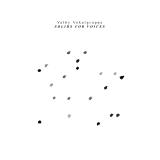
Valby Vokalgruppe was initiated in 2008 by Anja Jacobsen, the Danish collective’s current line-cup is completed by Lil Lacy, Sonja LaBianca, Cæcilie Trier and Laura Marie Madsen. The group has written and performed a large number of cross-aesthetic pieces over the years, including an album Bah New Era released in 2012 on Eget Værelse.
Sharpened to its core, the group dives deep into rhythmical architectures built almost solely from the voice - think Platonic solids reimagined as sound objects. Think trance without electronics. These new compositions are compressed, sparkling forms — vocal geometries that spin, collide, and dissolve through repetition. From inside the circle: radical precision, soft dissonance, and playful intuition guide the way. The group explores the voice not as melody alone, but as material — vibrating, modulating, refracting.
Solids For Voices transcends into deep concentration calling for a clear state of mind, in recognition of an increasingly fragmented and incoherent reality. Valby Vokalgruppe endeavours a total absorption into the voice, the rhythm and the trance.
The German band Schatterau returns to Hands in the Dark with their latest release, »Übers Jahr« (»Throughout the Year«), which follows their acclaimed debut album from last year.
This sophomore effort, as its title implies, delves into the cyclical nature of time and the duality of the transient and the eternal unfolding of events. The album comprises 17 vignettes that reflect on the seasons, capturing their unique light and sounds, the passage of time, and the interplay of movement and stillness, as well as the perpetual transformation that leads to new beginnings.
Continuing the approach of their inaugural album, the compositions are constructed around endless cassette loops, allowing the band to explore intricate textures and weave them into a surreal, dreamlike tapestry. In this release, the warmth and melancholy of the compositions have developed into a more intricate existence, showcasing a wider array of textures and sounds, while the songwriting exhibits greater maturity, inviting listeners into a more immersive and cohesive experience.
»Übers Jahr« transcends being a simple collection of auditory moods; it serves as an intimate portrayal of the seasons that cyclically unfold, embodying a mystery that surpasses both memory and time.
It has been almost seven years since the release of Alpestres, the impressive debut by Matthias Puech on Hands in the Dark. While that first experience took us on a mystical journey through fascinating fictional landscapes, 'Cabanes' lets its narrative unfold in a confined space: eight pieces each resembling small structures or makeshift shelters that, while enveloping and isolating the listener, remain open to their surroundings. These are not merely interiors; they are handcrafted spaces through which we gain insights into the world. Yet they allow the light from the outside to seep in, reminding us of reality.
According to Puech, each composition has a distinctive two-part story that are both clear and intriguingly interconnected. The first one often revolves around the anecdotal and tangible aspects of instrumental "play," showcasing a technical exploration with his tools, the discovery of sounds in a library, and the serendipitous encounters that inspired them. The second part, however, delves into the more elusive yet profound state of existence that the French artist experienced while engaging with these sounds, reflecting on the moments he listened and re-listened to them, ultimately deeming them worthy life companions. These two narratives, perhaps reshaped over time like distant memories, interact in ways that can either clash or complement each other, creating a lasting impact on the listening experience.
A significant aspect of the compositional process involves distancing oneself from these connections to creation, allowing for the rediscovery of a state of listening that is free from prior emotional influences—what one might call "pure" listening. This method enables the transformation of a sequence of events into a narrative that is independent of its original intent, resulting in a universal object. After spending considerable time with the attached pieces and attempting to induce a form of amnesia to reconstruct an artificial narrative, Matthias Puech has ultimately chosen to relinquish this pursuit. Thus, the album is aptly termed “Cabanes” (“Huts”): fragile structures whose design clearly reflects the intention behind their creation, showcasing all the signs of considerate craftsmanship.
Named after a metro station located in East Paris, Pointe du Lac originated in 2014 as the brainchild of analogue gear enthusiast Julien Lheuillier, joined shortly after by multi-instrumentalist Richard Francés, followed by Quentin Rollet on Saxophone a few years down the line. Les siphonophores des eaux froides et profondes de l'Arctique (“Siphonophores of the cold, deep Arctic waters”) is the project’s third studio album, the first one written as a three-piece as well as their first release on Hands in the Dark.
Like the organisms the album title refers to, Pointe du Lac’s music is highly polymorphic and complex, using a subtle and distinctive blend of Electronica, Krautrock, Jazz and Kosmische as vessels for the band’s fantastic instrumental imaginary voyages. Compared to previous albums and EPs -which tended to suggest cosmic odysseys- this new cinematic outing is diving deep and intends to shed light on fascinating, mysterious and diverse creatures and their habitats. Supported by (paradoxically) warm and impeccable sonic forms, the exploration turns out to be an unsurprisingly expansive one, yet accessible and oddly familiar sounding. There is a sense of assurance and serenity in the French trio’s latest offering, the musicians mastery and open-ended approach to free ambient music lets their ideas flow and never stagnate. The narrative of this expedition is one that will be remembered long after the listening finishes.
Christian Schoppik aka Läuten der Seele brings his “Water” trilogy to a close with his new album ‘Die Reise zur Monsalwäsche’ (The Journey to Monsalwäsche) following up ‘Die Mariengrotte als Trinkwasseraufbereitungsanlage’ (2022, Hands in the Dark) and ‘Ertrunken im seichtesten Gewässer’ (2023, World of Echo).
This final instalment takes the listener on a sacred odyssey searching for the fulfilment of one's (or is it his own?) spiritual destiny, from beginning (‘Entschluss, Abschied & Aufbruch’ / ‘Decision, Farewell & Departure’) to end (‘Verirrung, Ankunft & Erlösung’ / ‘Losing Way, Arrival & Salvation’).
While the compositional technique of this opus still relies primarily on samples and altered audio-collages, each chapter of the trilogy was intentionally created from very different sources. The present collection is arguably less "experimental" than some of Läuten der Seele's previous works, as classical music takes center stage this time. However the mastery in crafting such magnificent and intriguing narratives sees the simplicity and emotional depth of these sonic mariages become the beauty of it all.
Schoppik remains consistent as ever in his creative explorations, and this release feels very much like a culmination of his past projects. “Die Reise zur Monsalwäsche” will probably come to be known as a standout entry in the German artist's music catalog, showcasing a new facet of his talent.
- A1: Wear Your Love Like Heaven
- A2: Mad John's Escape
- A3: Skip-A-Long Sam
- A4: Sun
- A5: There Was A Time
- B1: Oh Gosh
- B2: Little Boy In Corduroy
- B3: Under The Greenwood Tree" (Words By William Shakespeare, Music By Leitch)
- B4: The Land Of Doesn't Have To Be
- B5: Someone Singing
- C1: The Enchanted Gypsy
- C2: Voyage Into The Golden Screen
- C3: Isle Of Islay
- C4: The Mandolin Man And His Secret
- C5: Lay Of The Last Tinker
- D1: The Tinker And The Crab
- D2: Widow With A Shawl (A Portrait)
- D3: The Lullaby Of Spring
- D4: The Magpie
- D5: Starfish-On-The-Toast
- D6: Epistle To Derrol
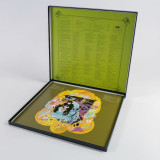
Donovan’s Original
A Gift From a Flower to a Garden made for a few firsts: the first double LP of Donovan’s
career, one of the first box sets in pop and, most importantly for Donovan himself; the first
pop album for the children of tomorrow.
He resolved to make A Gift From a Flower to a Garden an album of two halves. The first,
Wear Your Love Like Heaven, was intended for his own generation as they started to think
about the kind of world they wanted to leave behind. The second, For Little Ones, was for
the children they had or would have in the years to come. The result was a kaleidoscopic
folk-jazz suite on the power of love, imbued with all the romance and mystery of an Arthur
Rackham illustration for an ancient English fairy tale. The songs, remarkably adventurous
given Donovan was a globally famous singer at his commercial height, combined the
influences he had amassed so far.
There is something about A Gift From a Flower to a Garden that could never be repeated,
though. It is such an innocent evocation of the childlike imagination, so redolent of its time,
yet set apart from it too. All these years later, the peaceful qualities of this pioneering,
enchanting, deeply unusual album feel more valuable than ever.
The state51 Box Set
With authenticity core to the project, The state51 Conspiracy engaged one of the UK’s
leading experts in box set design, Daniel Mason at Something Else, to painstakingly recreate
the box, records and accompanying ephemera. The first challenge was to find the deep blue
leatherette paper the original box set was covered in; a problem since it was no longer in
production. “I knew people who had stacks of it, gathering dust on top shelves, so I bought it
up wherever I could find it,” says Mason. Then came the reproduction of 12 loose leaf lyric
sheets on fine art watercolour paper, each of them featuring a watermark and a fairytale-like
illustration by Donovan’s artist friends Sheena McCall and Mick Taylor. Where, though, to
find the same paper stock? “I found out that it was made at a paper mill in North Wales
called Abbey Mills. Unfortunately the mill dissolved in the early 70s and very little of the
paper remained. However enough paper remained to allow us to produce the numbered
certificate also signed by Donovan that sits within the box.”
Then to the iconic cover image. Donovan and Jimi Hendrix’s personal photographer Karl
Ferris, used infra-red film to achieve the psychedelic effect on the cover, but the original
negatives couldn’t be found. Mason then used digital technology to ramp up the colour levels
on a reproduction from an original copy of the album while allowing it to remain a little bit
faded, as it would be after half a century. The same labour of love and care has gone into
producing all elements of the box; from the rebuilding of the famous front cover font to the
hand-numbered and signed certificate; letterpress printed on the original paper stock of the
1968 UK release lyric sheets.
To cap it all off the original mono master tapes were waiting safely in the EMI Donovan
Archive and transferred from tape to digital by Abbey Road Studios where new lacquers
were cut, ensuring Donovan's favoured mono version of the album would be presented both
physically (and digitally for the very first time) in striking audiophile quality. The final touch to
The prolific Brussels-based ensemble Razen is back on Hands in the Dark with a new stunning collection of fascinating improvisations: ‘Hier l’An 4000’.
Based upon the theme of reincarnation hypnosis and inspired by the writings of Donoso and Slauerhoff, 1940s SF drawings, sky burials and a fantasy of future music where savagery and sophistication meet, the band ventures here into reverse mesozoic exotica. Each piece leans on sampled hand percussion (by grace of the legendary Algerian percussionist Abdelmajid ‘Guem’ Guemguem), augmented by Brecht Ameel, Kim Delcour and David Poltrock’s trademark devotional approach on early music wind instruments and pre-digital keys and synthesisers, spiralling down into their own rabbit hole of repetition and changes.
As gorgeously illustrated by the contemporary British painter Nicholas William Johnson: whilst proposing a futuristic trance-like trek through magenta night skies, toxic radiations and a hostile flora, Razen has never sounded more ecstatic and disruptive.
A Crimson Shore is Saåad’s first studio album since Présence/Absente in 2018. In the interim, Toulouse-based composer and producer Romain Barbot has enriched his experience as an artist through multiple collaborations, the composition of soundtracks and commissioned pieces, as well his involvement with the bands FOUDRE! and Sables Noirs.
This new chapter in the artist’s discography reflects this artistic maturity, evoking the project’s finest ambient recordings while revealing a new, unfiltered and decisive personality. Saåad’s use of a more direct musical language (exclusively electronic on this album) is intended to lay bare the inner life of its creator: the tracks are structured in a cycle of loops, vibrations and drones which respond to and confront each other like the torments of existence, torn between the twilight of sombre music reduced to its purest function of catharsis and the dawn of a new, luminous narrative journey.
A Crimson Shore is a raw, all-encompassing album, shot through with the fear of death, of growing old, of accepting it, of grief — past, present, imagined and future — and the search for a transcendental refuge.
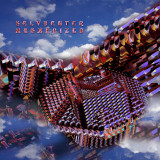
Going past musical genres and instead straight towards something more elemental - Selvhenter’s music creates a strikingly direct, physical experience of sound composed of polyrhythms, acoustic and electric melodies, heavy music and improvised beauty.
Since forming in Copenhagen in 2010, drummers Jaleh Negari and Anja Jacobsen, saxophonist Sonja LaBianca and trombonist Maria Bertel have forged a unique approach to making music that starts with their instrumental setup: two drummers that interlock as frequently as they go their own way, a trombone put through a bass amplifier loud enough to rattle your chest and a saxophone put through a range of effects so that it often sounds unrecognisable. Selvhenter work within their own idiom, drawing from the individual players’ personalities and interests to make a highly collective music, where all four musicians are absorbed into a total sound where an improvised free jazz approach collides with experimental electronic music and avant-garde noise/post-punk sonorities.
Their new LP Mesmerizer - which marks their first physical album release in nearly a decade and their debut on the French label Hands in the Dark - carries forward this process of exploration, deploying original and complex patterns of rhythm through various percussive instruments and finely textured horns and synths. The attention to sonic details is also almost pushed to an extreme on this new offering, making the open auditory adventure suggested by the title of the album all the more captivating. These creative developments have brilliantly kept Selvhenter’s music alive to new uncharted moods and possibilities, while at the same time strengthening their core elements: a propulsive, dense and often ecstatic music.
Staran Wake is a collaborative project by Andrew Bunsell and Tom Relleen. After several years creating music in various groups together, followed by countless hazy late night recording sessions at each other’s studios and crisper afternoons producing the results, the British duo’s musical vision materialised with this self-titled instrumental album, taking nearly 4 years to complete.
This collection of pieces is composed with a wide range of instruments and combines multiple dark, experimental genres to form a rather lavish and unique proposition. It is imprinted with intense turgid textures, interweaving the hyper-tactile characteristics of analogue sound with field recording elements and sound effects.
Although the project’s name suggests a rather celestial concept (‘an’ means moon in one of the early protolanguages), the music actually explores the intimate feelings of transient space and otherness. It uses subtle build-ups of tension and repetitive progressions to shape an impression of distended time and space. More than a mere treat for the ears, it’s a multi-layered album that invites reflection.
All tracks composed, performed and recorded by Andrew Bunsell and Tom Relleen at Dalston Studios, Space Studios and The Bunker, London, UK
Arranged, produced and mixed by Andrew Bunsell and Tom Relleen at The Bunker, London, UK
Mixed and mastered by Marta Salogni at Studio Zona, London, UK
Artwork and design by Jonas Meier
The prolific German musician Christian Schoppik is dropping his second solo album of 2022 under the moniker Läuten der Seele, following up his critically acclaimed self-titled debut album released at the start of the year.
Once again, “Die Mariengrotte als Trinkwasseraufbereitungsanlage” (The Mother Mary Grotto as a Drinking Water Treatment Plant) is a work based on a mix of sample collages and recorded instruments that are often used sparsely but as load-bearing elements. However, this time, Schoppik came up with two long tracks where the narrative evolves in multiple and intricate movements to tell mysterious stories that have to be imagined by the listeners as the music unfolds. If the title of the tracks “Opferkerzen weihen das Betonbecken” (Votive Candles consecrate the Concrete Pool) and “Der Heilige Geist aus der Leitung” (The Holy Ghost from the Water Tap) give a starting point to these stories, the ethereal, mystic and dreamy sounding minimal atmospheres presented in this record let each one of us contemplate our own soothing experience against the continuous chaos surrounding us.
Razen are back with a second album on Blue Rot, follow up to last year's release Robot Brujo on HITD.
On Blue Rot, the band introduces a softer palette and a new quartet, as the core duo of multi-instrumentalists Brecht Ameel and Kim Delcour is augmented with new band member Berlinde Deman on Serpent and guest Thomas Bloch on Glassharmonica and crystal Baschet. Drawing inspiration from late 19th-Century Symbolist art, Blue Rot summons heartbreak and the perils of isolation in languid, hypnotic modes, laying bare the beauty of stillness, the solitary gaze at drifting clouds.
Notwithstanding its hushed and melancholy tone colours, the album provides the listener with the customary disorientation, instrument clashes and tension between stasis and slow-moving development so firmly entrenched in the sound world of Razen. These five improvised pieces offer another testimony to the uniqueness of this outfit, their esoteric ancient-modern approach and to their dedication to explore new ground on each release while managing to sound only like themselves.
We instantly fell in love with Razen the first time we saw them live in September 2018. It was during a unique Sunday morning mass at the Friedenskirche (which translates literally to mean ‘the church of peace’), as part of the Meakusma Festival. Slightly sleep deprived and still euphorically intoxicated from the night before, their performance in front of a full mass of devotees had a biblical aura to it from the first note they played. They delivered a stunning set which was somehow, paradoxically, both relaxing and formidably tense.
Two years later and the group are now bringing their talent for restraint and slow tension-building to the fore on “Robot Brujo”. Each of the six improvisations on this double LP is made up of the barest of materials, with the three musicians relying on a limited combination of tones. They lay their focus on small variations in timbre, timing, articulation and vibration, which creates a narrowing of consciousness, and feels something a bit like staring meditatively at the minute changes of leaves blowing in the wind.
Recorded over two sessions, in what Razen themselves refer to as their detached playing style, "Robot Brujo" stands as an auditory magnifying glass of concentration, in all its uncanny and minimal glory.
It is yet another new step up from the deep listening ensemble from Brussels, after 10 years exploring music together.
- A1: Five Synthesizers
- A2: Two Bonangs Coated Spheres Piano Two Synthesizers Natural Objects
- A3: Three Synthesizers
- A4: Vibraphone Marimbaphone Malleted Wood Two Synthesizers
- A5: Synthesizer Two Idiophones Rin Gong
- B1: Two Bells
- B2: Carbon Steel Four Spheres Four Drums Three Synthesizers
- B3: Two Vibraphones Two Bowed Marimbaphones_ Wooden Xylophone Two Bells Handheld Wo
- B4: Four Synthesizers Two Bells On Tuned Wood
We’ve got something a bit different from usual for our next release: Meeting of Waters by Josiah Steinbrick.
Back in 2017 the unassuming Los Angeles-based multi-instrumentalist and producer released his first collection of solo pieces and we’ve been listening to it compulsively since then. Given that its initial release was only in North America, both on cassette with Leaving records and in an extremely limited vinyl self-release via BANANA editions, we felt that this meticulously crafted, essential work righteously deserved to get a proper spin in Europe too!
The album is composed of what you could call nine sculptural environments, each a mixture of organic sketches and improvisations, recorded rapidly and more or less free of any processing. Each piece is based on up to five simple elements - electronic and/or (tonal) percussions - used to create subtle evolving patterns and harmonies. The sounds explore the wilderness of jazz in a concrete setting, devotional in nature, creating a timeless cartography.
- 1