Cerca:kazumi nikaido

Generi
Tutto
  • 1
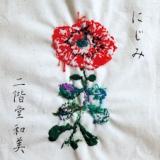
KAZUMI NIKAIDO - Nijimi 2x12

KAZUMI NIKAIDO

Nijimi 2x12

12inchPLP-8310/1
P-Vine Japan
20.03.2026
  • A1: No Song Needed
  • A2: It's Tough Being A Woman
  • A3: Sermon Song
  • A4: Walking With You
  • A5: Push Down
  • B1: Blues Of My Cat And Me's Departure
  • B2: Kirin
  • B3: Trusting In The Cicadas
  • B4: Cape
  • B5: Cherry Blossoms On The Back
  • C1: Blue Moon
  • C2: Budding Love Song
  • C3: I Love You Slowly
  • C4: Before I Knew It, It Was The Present
  • D1: Time To Farewell
  • D2: Song Of Awakening
  • D3: The Soles Of My Feet

Nikaido Kazumi’s acclaimed and enduring masterpiece "Nijimi", originally released in 2011, returns on vinyl. The album eventually led to her performing
the theme song “Inochi no Kioku” for Studio Ghibli’s The Tale of the Princess Kaguya. Filled with songs capturing her heartfelt emotions and charm—such
as “Onna wa Tsurai yo” and “Totsutotsu I Love You”—this is a truly precious record.

pre-ordina ora20.03.2026

dovrebbe essere pubblicato su 20.03.2026

46,85

Last In: 2026 years ago
Jyuriaano - Dreaming Glass

An’archives present the debut album by Tokyo avant-pop duo Jyuriaano, Dreaming Glass. Consisting of Morimoto Ariomi and Cobalt, the two members of Jyuriaano have long histories in Japanese underground music. Morimoto’s history traces back to the late nineties; his nascent interests in noise collage and solo acoustic performance slowly transmuted to group endeavours, and more recently he’s performed with the likes of Akiko Toshimitsu (Usurabi), Maki Miura (Shizuka) and Doronco (Los Doroncos).

Cobalt has released a string of excellent singer-songwriter albums, many on his Poet Portraits label, which has also released material by the likes of Kazumi Nikaido, Place Called Space, Cuthberts, and moools, the latter of which he also performs with on occasion. While Morimoto and Cobalt have known each other for decades, they decided to form Jyuriaano in 2016, and since then have performed at live houses and small bars in Japan, all while slowly working together on their gentle, spirited songs.

The group’s formation story is typically playful – “It all started when we brought an acoustic guitar into the car on a rainy afternoon and started writing songs while eating Japanese sweets,” Cobalt recalls. That sense of play is important to the songs on Dreaming Glass, which vary wildly, from bright, infectious pop songs with a sixties lilt (“Dreaming Baby”, “How Close”), through slinky jazz-pop numbers (“Drawing A Nude”) to melancholy folk laments (“Erica”, “Night Window”). There’s something in Jyuriaano’s collaborative dynamic that gifts Morimoto and Cobalt a particularly open field, when it comes to their creative endeavours.

Some of this might also be down to their listening habits. When asked about their interest in Japanese folk precursors, legendary groups like Folk Crusaders and Itsutsu-no-Akai-Fusen, Cobalt agrees that they have a place in the duo’s listening pantheon, but that’s not where the story ends. “We’ve also listened to commercial folk music outside of those core genres,” he reflects, “We don’t just listen to one genre, but also rock and roll, noise industrial, punk, new wave, jazz, chanson, and more.”

You might also hear touches of groups like the forementioned Usurabi, or Maher Shalal Hash Baz, or songwriters like Kazumi Nikaido and Shintaro Sakamoto. But Jyuriaano’s songs, somehow, feel quite sui generis in the way they magic up alternative visions for pop’s possibilities. Dreaming Glass is, quite simply, a lovely, unpretentious joy of an album.

pre-ordina ora20.06.2025

dovrebbe essere pubblicato su 20.06.2025

22,48

Last In: 2026 years ago
Tenniscoats - Tan-Tan Therapy

Tenniscoats

Tan-Tan Therapy

12inchMORR186-LP
Morr Music
07.10.2022

Just over a decade ago, Japanese indie-pop duo Tenniscoats recorded »Papa's Ear« (2012) and »Tan-Tan Therapy« (2007), two albums made with musical and production help from Swedish post-rock/folk trio Tape. Originally released on Häpna, they are beautiful documents of the exploratory music made by a close-knit collective of musicians, fully at ease with each other, playing songs written by Tenniscoats and arranging them in gentle and generous ways. Released during a prolific phase of collaboration for Tenniscoats – during the late ‘00s and early ‘10s, they would also collaborate with Jad Fair, The Pastels, Secai and Pastacas – they have, however, never been available on vinyl. In collaboration with Alien Transistor, Morr Music is now reissuing these albums with bonus material.

Filled with graceful pop songs, autumnal folk tunes, and gentle yet risk-taking improvisations, »Tan-Tan Therapy« was the first Tenniscoats album to be released in Europe, after a run of albums on Japanese labels, and the excellent »Live Wanderus« (2005) on Australian imprint Chapter Music. It was also the first recorded evidence of their collaboration with the three members of Tape and that group’s extended musical family. It opens with one of Tenniscoats’ signature songs, the pop fantasia of »Baibaba Bimba«, with Tenniscoats singer Saya repeating a light-headed incantation over joyous brass. The essence of Tenniscoats is contained in »Baibaba Bimba«: uplifting melody and playful musicianship, tinged with distant echoes of winsome melancholy.

From there, »Tan-Tan Therapy« explores many hues of lustrous blue. »Oetu to kanki no Namoriuta (Given Song of Sob and Joy)« is an aquatic arbour, the musicians’ gentle performances growing together like vines and seaweed as Saya’s voice swims through the waterway. »Umbarepa!« is full of play and pleasure, sparkling with glockenspiel as snare drum tattoos push the song ever-forward. »Abi and Travel« floats past, a lovely instrumental built from shifting layers of synthesizer and pianet; »Good B.«, an extra track originally only available on the Japanese edition of »Tan-Tan Therapy«, is added to this reissue, and follows a similar thread, its humming pump and Hammond organs swirling under beautiful vocals from Saya and guest performer Kazumi Nikaido.

Throughout, you can sense the deep empathy the members of Tenniscoats and Tape have for one another. It’s a conversational, tender and, at times, fragile music that can only be created out of mutual trust and kindness, with each of the players contributing to the community of sound they’re building. There’s an element here, too, of feeling out the possibilities of what this creative meeting can achieve, something reflected in the loose-limbs sprawl of »Marui Hifo (Everyone)«, which echoes the seaside drift of Bristol post-rock group Crescent, and the following »One Swan Swim«, a dreamsong redolent of the sleepy sensorium of Robert Wyatt’s »Rock Bottom«.

The freedom and liberty at the heart of Tenniscoats is something Tape and their friends have picked up on, beautifully so, and run with during the entirety of »Tan-Tan Therapy«. This is music with its wings outstretched, wanting to take to the air, ready to fly.

pre-ordina ora07.10.2022

dovrebbe essere pubblicato su 07.10.2022

21,64

Last In: 2026 years ago
Tenniscoats - Papa's Ear

Tenniscoats

Papa's Ear

12inchMORR184-LP
Morr Music
06.05.2022
 
12

Just over a decade ago, Japanese indie-pop duo Tenniscoats recorded »Papa's Ear« (2012) and »Tan-Tan Therapy« (2007), two albums made with musical and production help from Swedish post-rock/folk trio Tape. Originally released on Häpna, they are beautiful documents of the exploratory music made by a close-knit collective of musicians, fully at ease with each other, playing songs written by Tenniscoats and arranging them in gentle and generous ways. Released during a particularly productive time for Tenniscoats – during the late ‘00s and early ‘10s, they would also collaborate with Jad Fair, The Pastels, Secai and Pastacas – they have, however, never been available on vinyl. In collaboration with Alien Transistor, Morr Music is now reissuing these albums both digitally and on double vinyl, with extra tracks.

This reissue mini-series starts with »Papa’s Ear«. The second album from this expanded line-up of Tenniscoats, you can hear the musicians are immediately comfortable in each other’s presence, and they’ve almost intuitively understood what they can offer to one another. Saya and Ueno of Tenniscoats bring their magical, gentle folk-pop sensibility, and their winning way with straightforward, yet lush melodies. Johan Berthling, along with fellow Tape member Tomas Hallonsten, plus guests Fredrik Ljungkvist, Lars Skoglund, Andreas Söderstrom and Andreas Werlin, all generous and creative presences in the Swedish jazz underground, shades in the songs with endlessly inventive arrangements, highlighting the warmth and curiosity at the core of the Tenniscoats’ aesthetic – sometimes taking the songs in unexpected directions, other times pillowing the melodies with the softest of brushstrokes and the kindest of tones.

»Papa’s Ear« includes some of Tenniscoats’ most memorable songs. »Papaya« is a lustrous dreamland of a song, with the Swedish musicians singing ‘pa-pa-ya’ as an enchanted tattoo, while Saya’s piano and melodica clank and huff out, further expanding the song’s horizon. It’s followed by the spindly and mysterious »Sappolondon«, where drums and double-bass shuffle and pulse under weeping accordion and bittersweet clarinet. Saya’s voice sighs into the frame while the musicians breathe lungfuls of sweet drones and flick glittering countermelodies across the song’s surface. It reminds a little of the wild kindness of Movietone, or the regal charm of Carla Bley’s compositions.

Elsewhere, you can hear Tape and their friends embracing the freedom offered by the songs of Tenniscoats: see, for example, the glistening electronics in »På floden«, like a keyboard conducting a music box on a distant planet; or the descending phrase for winds on »Sabaku«, dovetailing beautifully into a creek of moon-lit texturology. The double-LP ends with two extra tracks, drawn from the 2008 Tenniscoats/Tape split single, also released by Häpna., »Lutie Lutie« is a sweet delight, driven by a clacking drum machine, the Tenniscoats duo joined by Hallonsten on glockenspiel and synthesizer, and special guest, Japanese indie-pop legend Kazumi Nikaido, as choir. »Come Maddalena« rounds off the set, a brooding cover of an Ennio Morricone tune, the music by Tape, the vocals by Tenniscoats and Nikaido. Open-hearted and full of puckish spirit, »Papa’s Ear« is an album of great tenderness and warm friendship.

pre-ordina ora06.05.2022

dovrebbe essere pubblicato su 06.05.2022

28,36

Last In: 2026 years ago
yumbo - 間違いの実 / The Fruit Of Errata 2x12"

Following in the footsteps of the pathbreaking Minna Miteru compilation of Japanese indie music, Morr Music and Alien Transistor have again joined forces to release The Fruit Of Errata, a compilation introducing the world to the intimate DIY pop of yumbo. Led by songwriter, pianist, and occasional vocalist Koji Shibuya, the Japanese band has released four albums since forming in 1998. This compilation draws fifteen songs (eighteen on vinyl) from those albums, and some ancillary releases, to uncover a biographical narrative of yumbo, showing how Shibuya’s songwriting, and the group’s limber, sensitive playing, has developed over the decades. It also places them squarely within a tradition of home-spun but ambitious Japanese pop that takes in Maher Shalal Hash Baz, Tenniscoats, Nagisa Ni Te, Yuzo Iwata, Kazumi Nikaido and more.

yumbo is very much the vision of Shibuya, an amiable iconoclast whose songs seem informed by some of his early listening – there’s the playful seriousness of Maher Shalal Hash Baz’s Tori Kudo here, an avowed long-time hero for Shibuya, but also the flexibility of freely improvised music. You can also hear Shibuya’s fondness for Mayo Thompson and The Red Crayola in both the idiosyncracies of the writing and the egalitarian looseness of the playing. Shibuya also carries those energies into the group’s membership – there are fantastic stories of him having a conversation at a record shop, or overhearing someone speaking, and asking the person in question to join yumbo as one of their various singers. He seems open to chance as a driving force, as a way to make space for unexpected possibilities to blossom.

The great achievement of yumbo and Shibuya, though, is translating all of this into beautiful, unpredictable pop songs. There’s a gorgeous soul-inflected lilt to “A House” that makes it delightfully affecting; the swaying brass on “Storm” propels its melody to a moody, dreamlike conclusion; the nakedness of “The Sweetest Mass” is slightly reminiscent of Carla Bley’s more pop-focused writing, crossed with the classicism of the songs that spilled from the Brill Building in the ‘60s. Throughout, Shibuya renders pop a deeply personal experience; you can hear musings here on friendship, family, intimacy, the complexity of relationships, mortality, and imbalances of power. These musings are also shadowed by real-life events: the effects and impact of the Great East Japan Earthquake of 2011 are captured in songs like “Umbrella People” from Onibi.

Throughout the performances on The Fruit Of Errata, Shibuya and the group play with tenderness; they also often draw on other players to flesh out the music even further, two such guests being the aforementioned Tori Kudo (on “Umbrella People”) and Olympia, Washington’s LAKE (on “The Devil Song”). Community-minded and generous in approach, the writing of Shibuya and the music of yumbo is never less than lovely, and The Fruit Of Errata is a welcome introduction to their world. Open and gentle, confident and generous, these pop songs are filled with charm and spirit.

pre-ordina ora04.06.2021

dovrebbe essere pubblicato su 04.06.2021

34,41

Last In: 2026 years ago
  • 1
Articoli per pagina:
N/ABPM
Vinyl
