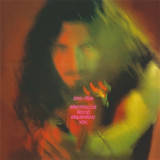
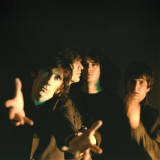
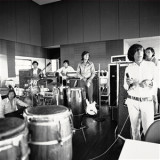
This 1986 album by The Primates remain as the only recording ever released by these four 60s r&b and garage fans. Originally published on Greg Shaw's very own Voxx (Bomp! sublabel focused on revival garage/psychedelia) and produced by Shaw himself, this valuable musical document that portraits the essence of the L.A. 80s garage scene, has been out of print for more than 20 years! So we thought it would be a perfect record to reissue as part of our Bomp! reissue series. The Primates were formed in 1984 and cut their teeth at L.A. spots such as the Cavern Club, as part of a growing scene of devoted Nuggets/Pebbles fans, fascinated with 1960s garage punk classics. The core of the band were Brett Miller and Ted Edlefsen, sporting Vox guitars, and Erik Bluhm as front man, with different drummers, mostly Brian Corrigan but then also Eric from Threw the Looking Glass and Gene from The Miracle Workers. The opener 'I Ain't Like You', 'Bad Luck' or the fun cover of Neil Sedaka's 'I Go Ape' reflect the wild, party-driven mood of the entire album, making you wonder how crazy their shows were in the golden era of the L.A. 80s garage scene. Combining originals and versions (check their great take on Q65's 'I Got Nightmares'), "We Are The Primates" remains as a wild, raw, party album that every fan of garage music should own. Munster is thrilled to reissue this essential '80s garage gem as part of a series of releases celebrating Bomp! 50th anniversary. Our issue includes a booklet with liner notes and rare photos and ephemera.
MUNSTER Novedades
"My Lover The Killer" is the latest collaboration between Lydia Lunch and Marc Hurtado. They first worked together on the 'Sexodrone' track of the Etant Donnés's album "Re-Up" in 1999. Featuring Terry Edwards (Gallon Drunk), Ian White (Gallon Drunk), Mark Cunningham, We Are Birds of Paradise, David Lackner. "My Lover The Killer" is a collaborative project with Marc Hurtado. What began as a loose musical concept in the summer of 2012 became a prophecy written in blood by November of the same year. "My Lover The Killer" is a late night noir confessional. Sinister, sexy and mysterious, the music slithers, erupts and caresses the seductive vocals as they relay twisted tales rife with innuendo, promises and threats. The text is based on the murder/suicide of an ex-lover whom I had recently contacted for the first time in over a decade. Caught in the early fall hurricane which leveled the East Coast of America while enroute to Los Angeles, I had sent an invitation proposing that we meet for drinks. Two days later, during a alcohol fueled fight with his girlfriend about whether or not he should come to see me, he shot and killed her, called the police, turned the gun on himself, and died the next day on his 55th birthday. A tragic event, which "My Lover The Killer" attempts to make sense of. Each song is a rumination on the frightening effects of a mad love spun out of control and the haunting remnants of a lover who still stalks from beyond the grave.
Bomp Records of Burbank, California was likely the most significant American independent record label of the 1970s. In 1979 Voxx was founded as a subsidiary of Bomp as a specialty label for '60s-styled garage and psychedelic inspired music and was home to the debut album of the Pandoras. The Pandoras really got started back in 1982 when triple threat Paula Pierce (guitar, vocals AND songwriter) met singer and guitarist Debbie Mendoza at Chaffey College Rancho Cucamonga, one of those dozens of small communities that make up the greater Los Angeles area. According to stories told around the campfire, Paula had posted an advertisement on the bulletin board inside the college's cafeteria. The ad was both simple and direct: Wanted: female musician to jam with. As legend has it, the ad also stressed a keen interest in 60's garage punk music. Debbie answered Paula's ad, and soon the two girls were bringing guitars to school and holding impromptu jam sessions between classes. A little later that year, Paula brought in Gwynne Kahn on keyboards and second guitar, and Debbie convinced drummer Casey Gomez to join. People who were around at the time pinpoint December 1982 as the official beginning of the Pandoras as a band. The Pandoras didn't waste any time getting down to business. They started gigging regularly, and their repertoire of tasty garage nuggets expanded substantially, fueled both by Paula's talented songwriting and also no doubt by her relationship with Unclaimed frontman Shelley Ganz and his extensive knowledge of obscure 60's gems. The Pandoras unleashed their first recordings on the world in 1983 with the "I'm Here, I'm Gone" EP on Moxie records. It was a meaty slab of girls in the garage punk rock, and while maybe not as polished as subsequent efforts, it clearly showed off the talent of the band. Greg Shaw had been alerted to the band a few months earlier, and always one to know a good thing when he heard it, he quickly signed them. "It's About Time" saw the light of the day in 1984 on Voxx Records and became one of the first and best efforts of authentic 1960's-styled garage punk to emerge from the revival scene. It was pure garage gold! Today, 40 years after its original release date, we are thrilled to reissue this essential '80s garage punk gem as part of a series of releases celebrating Bomp! 50th anniversary. Our issue includes 3 bonus tracks and liner notes by Gravedigger V's John Hanrattie. "Paula Pierce refused to play it cute. On The Pandoras' debut album she out-snarled, out-screamed, out-fuzzed and out araged the male-dominated competition-like a well-aimed go-go boot to the jugular." - Mike Stax, Ugly Things Magazine "As good a '60s punk record as any contemporary combo is likely to make." - Trouser Press
After remaining unavailable for years, here's the long-awaited vinyl reissue of the debut album (originally released in 1972) by one of the epoch-making groups in the history of Peruvian rock: We All Together. Their original compositions -all sung in English- betray their passion for McCartney, taking Beatle centrism to new heights in South America. While the Uruguayan Los Shakers could remind us of the first phase of the Fab 4, We All Together is like their '70s version. Amazing compositions, with nods to prog rock and the twilight imprint of singer-songwriters living the end of the hippy dream, that show both diversity and a defined identity. A must for any '70s rock collector. DESCRIPTION Between 1967 and 1974 Saúl and Manuel Cornejo led a series of epoch-making groups on the MAG label (New Juggler Sound, Laghonia and We All Together) in the history of Peruvian rock. All these bands were directly influenced by the British invasion and used new sounds from Hammond, phase shifters, synthesizers and tapes played backwards, which stimulated rivalry with other groups. Another hallmark of the brothers was the technical quality of their records, thanks to Saul's supervision of all MAG recordings between 1972 and 1974. At the end of 1971, when Laghonia was working on the last tracks of "Etcétera", they met Manuel Antonio Guerrero's (MAG) son, Carlos, who had just got back from the USA, and gladly joined in the choruses of the last songs Laghonia was recording. They met up again soon after to rehearse some of Paul McCartney's songs. As soon as he heard them play, Guerrero Senior urged them to form a group focused on cover versions of foreign hits not yet known in Peru. Initially, the Cornejo brothers weren't enthused by a project so different from Laghonia, but ended up accepting as it gave them the opportunity to spend time in the studio. Carlos' melodic voice was another incentive, although they made it clear that the new group, We All Together (WAT), would stick to the mixing desk: "The group isn't into presentations or shows, we're about recording music and purifying it to the max," stated Saúl at that time. Their first album included four covers of Paul McCartney and Badfinger, several compositions by Carlos Guerrero -appealing Beatles-style melodies- and two songs from Saúl and Manuel's archives. 'Children', by keyboardist Carlos Salom, opens the LP: a nostalgic description of childhood, with the distinctive piano sound (achieved through mixing) that permeates the record. Although WAT sang and composed in English, they had no intention of undermining or alienating national culture. Their aim was much more innocent: they simply wanted to make it in the English-speaking world. 'It's a Sin to Go Away' was composed during Laghonía's lifetime as a band and it features guitars played backwards and a psychedelic-progressive style closely attuned to the era. After being included on several compilations, praise for the song has flowed from Europe and the United States in recent years. The album was released in July 1972 and became one of the best-selling Peruvian rock LPs.
HIGHLIGHTS Originally released in 1980, this was Stiv Bators' first solo album. Now reissued with 2 bonus tracks, not available on the original version, a slightly different picture on the cover (the actual unfiltered photo as used on the 1980 issue) and a booklet with extensive liner notes and photos. Bators was the man who destroyed Rocket from the Tombs, from which he hijacked half the members to found one of the most influential American punk bands to have existed, The Dead Boys. Stiv had turned in his broken teeth for a more power pop oriented solo career. This is not an album recorded by a has-been former punk idealist; instead it's a true step forward into another unknown arena packing all the glare and attitude that remained from the last. The music is more similar to 60's power pop than the vicious punk rock that Bators became known for originally, while a member of The Dead Boys. New generations continue to discover it. It still holds up very well and sounds as fresh and vibrant as ever. DESCRIPTION On August 11th of 1980, Stiv Bators, David Quinton Steinberg, George Cabaniss and Frank Secich flew to Vancouver, in British Columbia, Canada. They were there to do the West Coast leg of the "URGH! A Music War" tour. On the bill of the tour were Pere Ubu, Magazine, the Members, and they were billed as Stiv Bators and the Dead Boys or just the Dead Boys. After the tour they were supposed to embark on a 6-week tour of Australia, New Zealand, and the Far East. During the beginning of the Urgh Tour the Australian Tour was abruptly canceled. Greg Shaw who owned Bomp Records decided that since the band were already going to be in California that they should do Stiv's solo album which they had planned to do after returning from Down Under. So, Bators and the rest of the group set up camp at the infamous Tropicana Motel in West Hollywood and Greg booked them into Perspective Studios in Sun Valley, CA. Before going into Perspective, they went into Andy Chappel's Stone Fox rehearsal studio in North Hollywood, CA for a few days to rehearse the songs and arrange them for the album. "We had 'Evil Boy' (Zero-Secich), David Quinton's 'Make Up Your Mind' and my song 'A Million Miles Away'. We also rearranged mine and Stiv's 'The Last Year' changing the key from D to F# and making it much easier to sing in a power pop vein. In addition, we had 'Swinging A Go-Go' another great contribution by George Cabaniss. Stiv and I had written two more for the album 'Ready Anytime' and the album closer 'I Wanna Forget You (Just the Way You Are)'. We also had a moody dark instrumental (written by Cabaniss-Quinton-Secich) that we were playing around with for some time. Stiv was supposed to write lyrics for it, but he never got around to it, so we left it as an instrumental. It had a great vibe and reminded me of the John Cassavetes 1956 film "Crime in The Streets" and was thus christened that. The last song we picked for the LP was 'I Had Too Much To Dream (Last Night)' which was the one cover we did that suited Stiv's voice perfectly. After a few days of rehearsing at Stone Fox, we went into Perspective Studio in Sun Valley, California. Greg hired Thom Wilson (who would later become a famous punk rock producer of Offspring, Iggy Pop, Dead Kennedys, T.S.O.L., Bad Religion and many others). Stiv co-produced with Thom and Andy Chappel and Thom did the engineering." Frank Secich recalls. In September, after the "Disconnected" mixing sessions, Stiv went to Baltimore to film "Polyester" with Movie Director John Waters and actors Tab Hunter and Divine. Stiv then went to the UK to record with the Wanderers doing their LP "Only Lovers Left Alive". He wanted to have both bands going simultaneously but logistically and practically they all knew that could never work. The "Disconnected" Band would do one last tour to support the album release of "Disconnected". The LP was released by Bomp Records on Monday December 08th, 1980. Later that night, John Lennon was murdered in New York City. So many of the principal characters involved in the creation of "Disconnected" have passed on. Stiv Bators (June 3rd, 1990), Greg Shaw (October 2nd, 2004), Thom Wilson (February 8th, 2015), and George Cabaniss (July 17th, 2020). But "Disconnected" lives on and on and has left quite a legacy for itself. There have been over 100 cover versions internationally of the songs from "Disconnected" and it has been in print and reissued in various forms in many countries around the world. New generations continue to discover it. It still holds up very well and sounds as fresh and vibrant as ever.
Los York's became the epitome of Peruvian garage sound. Two of the best and wildest songs contained on their last LP had never appeared on a single despite their enormous potential for the dance floor and the interest they aroused among DJs since their rediscovery in the 60s scene. Set the dance floor on fire with the first time 45 issue of this Latin garage double-sider. DESCRIPTION After two successful albums on MAG, supported by a handful of singles, the Peruvian garage beat band Los York's culminated their disagreements with their label by leaving it in 1969 and signing a new contract with Virrey. Along the way there was an album to finish for which they had already recorded a good part of the instrumental tracks. "Los York's 69" finally saw the light of day on MAG but, to the surprise of its fans, the voice of its charismatic singer, Pablo Luna, had been replaced by that of the no less iconic Pablo Branda, also known as Melcochita. The all-round artist, trained in the studios of MAG as a skilled percussionist, guitarist and sonero, proved himself to also sing and shout with the same energy and attitude as the brilliant Pablo Luna. On top of that, it is rumored that it was another MAG artists, Los Teddy's, who actually completed the instrumental tracks for some cuts on the album, something that seems consistent with the much more energetic and surfy style of songs like 'El Sicodélico'. Two of the best and wildest songs contained on their last LP had never appeared on a single despite their enormous potential for the dance floor and the interest they aroused among DJs since their rediscovery in the 60s scene. Set the dance floor on fire with the first time 45 issue of this Latin garage double-sider: 'El Sicodélico' and 'El Loco'.
Rare debut LP by the eccentric Peruvian singer Jean Paul "El Troglodita", known for his wild performances and extreme way of life. Enrique Roberto Tellería made his Peruvian television debut in 1965 under the stage name Jean Paul El Troglodita and wearing an imitation leopard skin suit. He would switch from melodic calm to shouting wildly or suddenly drop to the floor on his knees and smash the furniture like crazy. At the age of 19, DisPerú signed him to the label on the strength of these early performances. His first single included a freely translated version of 'Secret Agent Man' in Spanish. He began to work on the eleven cover versions that would feature on his first LP immediately, writing all his own lyrics and accompanied by the beat band Los Steivos. Despite the predominance of English beat music in Peru, the album only included three songs directly related to the British invasion: 'Bus Stop' by The Hollies, also played in raga rock style; 'Paint it Black' by The Rolling Stones; and 'The House of the Rising Sun', which follows the arrangement recorded by The Animals. So most songs come the American songbook. Apart from 'Tema de El Troglodita' (a versión of 'Secret Agent' by The Challengers), we find the bluesy 'Mustang Sally' (Sir Mack Rice). Two other US numbers, originally performed with orchestral accompaniment, were adapted to fit the rock band format: 'Poor Side of Town' (Johnny Rivers) and 'Take Me to the Moon' (Kaye Ballard). 'El verdadero amor' ('True Love'), an uncredited version is in a similar vein. The Spanish song 'Negro es negro' (Los Bravos) and the Brazilian track 'Que todo se vaya al infierno' (Roberto Carlos) also feature on the LP. El Troglodita's association with the so-called nueva ola, indicated on the back cover, needs clarification. In Peru, nueva ola was a mixed bag rather than a specific musical style and encompassed slow rock, twist, bossa nova and all the styles that the record industry produced to tame the wild rock 'n' roll impulses of teenagers in the early sixties. The Peruvian artists that performed these inoffensive Spanish adaptations of Paul Anka, Neil Sedaka or Frankie Avalon, were presented as successful models of youth culture. This was until 1964, when the Beatles with their mop-top haircuts hit the charts, vindicating rock 'n' roll and imposing the group format over the soloist model. Meanwhile the press continued to call any youth music recorded during the rest of the decade nueva ola. Jean Paul noted these distinctions early on and distanced himself from it in several statements. He saw his performance more in a style as a solo artist as following in the footsteps of e.g. Los Saicos. His 'hippie' lifestyle got him arrested by the new de facto military government in 1968, who accused him of promoting drug consumption and corrupting the Peruvian youth. The charges were soon dropped but his reputation was tarnished, and he ended up emigrating to Central America. The album includes Spanish sung versions of British beat songs and covers of the American songbook as well as various international hits.
Limitierte farbige Splatter Vinyl-LP! Die Loons aus Südkalifornien spielen seit mehr als 25 Jahren ihre ganz eigene Art von psychedelischem Garage- und Freakbeat. Mit ,Memories Have Faces" haben sie ihr bisher eindrucksvollstes Werk geschaffen, zusammen mit einer klasse Version von ,Cries from the Midnight Circus" von den Pretty Things. Gegründet in San Diego, haben The Loons fünf Alben und eine Reihe von Singles aufgenommen und veröffentlicht und sind in mehr Städten auf der ganzen Welt aufgetreten, als sie zählen können. Sie haben mit Ikonen der 60er Jahre wie Glenn Ross Campbell von The Misunderstood, Dick Taylor von The Pretty Things, Randy Holden von The Sons of Adam und Blue Cheer und Michael Stuart-Ware von Love zusammengearbeitet. Mike Stax, der auch die Zeitschrift Ugly Things herausgibt, ist der Leadsänger. Anja Stax spielt Bass und singt Backing Vocals. Marc Schroeder und Chris Marsteller spielen Gitarren, und Chris Cancelliere sitzt am Schlagzeug. Mike Stax war bereits ein Veteran in mehreren anderen Bands aus San Diego, darunter The Crawdaddys und The Tell-Tale Hearts, als er 1997 die Loons gründete. Ebbot Lundberg von The Soundtrack of Our Lives produzierte das Debütalbum der Gruppe, ,Love's Dead Leaves", das 1998 bei Get Hip Records erschien. "A perfect pairing of Love-influenced garage-psych and British underground in the mould of the Pretty Things played with preternatural style and ability." - Shindig Magazine "Fantastically talented - as a group and individually, they've worked so hard at their passion _ It has been one of the highlights of my life to have been involved with them." - Glenn Ross Campbell, the Misunderstood
Unavailable for over three decades, we are happy to reissue this garage rock's essential gem, originally released in the early days of Greg Shaw's Bomp! label. Bomp! Records of Burbank, California was likely the most significant American independent record label of the 1970s. It was the first in this country to recognize and actively support the punk rock and new wave revolution with its releases, at a time when both America's vast regional disparity and an extremely conservative record business had deemed this new, strange idiom anathema. In its first five years Bomp! the label wore its heart on its sleeve with a series of fascinating, unpredictable, and memorable 45 RPM releases. And the whole was brainstormed by Greg Shaw, likely the only maverick alive at that time who could have created and populated such a scenario. The winter 1976 issue of Who Put The Bomp (Greg Shaw's fanzine) had featured a detailed report on the Boston scene, with favorable mentions of two future Bomp! acts. Willie 'Loco' Alexander was a local legend, the storied former lead singer of the Lost, and his 1975 single 'Kerouac' (reissued on Bomp!) was a suitably eccentric, Dylan-ish ode to the beat maven. DMZ was a more predictable proposition, sporting obvious glam roots and an eccentric but dedicated rock & roll fan in lead singer, Jeff 'Mono Mann' Conolly. Wearing his heart on his sleeve, Conolly and crew went for a chaotic and intense hybrid of Dolls, Stooges and most of the Nuggets bands, so Bomp! the label was a natural choice. With killer cuts like 'Busy Man' and 'When I Get Off,' their Craig Leon-produced 1977 EP captured the DMZ zeitgeist considerably better than the album they would later record for Sire.
Los York's became the epitome of Peruvian garage sound. 'Abrázame' features a beat-influenced go-go twang guitar garage psych tone throughout and the unique voice of the iconic frontman of the band resulting an irresistible Latin garage hipshaker! Set the dance floor on fire with this first time 45 reissue of the Latin garage anthem 'Abrázame'! Los York's became the epitome of Peruvian garage sound, and the kings of the multi-group concerts which teenagers flocked to on Saturday and Sunday mornings in Lima's main movie theaters. The group was in tune with the youth from popular districts who were gradually turning morning concerts into dynamic gigs as the fashion for solo rock-ballads waned and garage sounds by bands like Los Shain's, Los Derbys, Los Juniors, Los Flyers and, of course, Los York's took over. Their supportive fans would follow them to every gig. After releasing their three first singles on MAG, featuring covers of popular hits, it took them a year to turn their ideas into songs for their first LP that was successfully released at Christmas in 1967. The original version of 'Abrázame' was included in this album and also released as a single. Although clearly based on Don Covay & The Goodtimers' r&b classic 'Mercy Mercy', the recording features a beat influenced go-go twang guitar garage psych tone throughout and the unique voice of the iconic frontman of the band, Pablo Luna, resulting an irresistible Latin garage hipshaker! A rawer, fuzzier version of the same song was released one year later and renamed as 'Abrázame baby'. How cool and handy is to have both versions together on one single artifact? Set the dance floor on fire with this first time 45 reissue of the Latin garage anthem 'Abrázame'!
Die Loons aus Südkalifornien spielen seit mehr als 25 Jahren ihre ganz eigene Art von psychedelischem Garage- und Freakbeat. Mit ,Memories Have Faces" haben sie ihr bisher eindrucksvollstes Werk geschaffen, zusammen mit einer klasse Version von ,Cries from the Midnight Circus" von den Pretty Things. Gegründet in San Diego, haben The Loons fünf Alben und eine Reihe von Singles aufgenommen und veröffentlicht und sind in mehr Städten auf der ganzen Welt aufgetreten, als sie zählen können. Sie haben mit Ikonen der 60er Jahre wie Glenn Ross Campbell von The Misunderstood, Dick Taylor von The Pretty Things, Randy Holden von The Sons of Adam und Blue Cheer und Michael Stuart-Ware von Love zusammengearbeitet. Mike Stax, der auch die Zeitschrift Ugly Things herausgibt, ist der Leadsänger. Anja Stax spielt Bass und singt Backing Vocals. Marc Schroeder und Chris Marsteller spielen Gitarren, und Chris Cancelliere sitzt am Schlagzeug. Mike Stax war bereits ein Veteran in mehreren anderen Bands aus San Diego, darunter The Crawdaddys und The Tell-Tale Hearts, als er 1997 die Loons gründete. Ebbot Lundberg von The Soundtrack of Our Lives produzierte das Debütalbum der Gruppe, ,Love's Dead Leaves", das 1998 bei Get Hip Records erschien. "A perfect pairing of Love-influenced garage-psych and British underground in the mould of the Pretty Things played with preternatural style and ability." - Shindig Magazine "Fantastically talented - as a group and individually, they've worked so hard at their passion _ It has been one of the highlights of my life to have been involved with them." - Glenn Ross Campbell, the Misunderstood
Long unavailable warehouse find. Double LP for £7.50 Munster Records proudly presents a collection of Patrik Fitzgerald's Small Wonder and Polydor releases. A combination of punk's outrage with a streak of optimism, rare for its time and place, collected for the very first time on a double LP package. Patrik Fitzgerald was one of the oddities that punk rock threw up in 1977. A lone singer with an acoustic guitar regaling punk audiences with lyrical songs and interspersing them with chats, stories and poems. He is the great forgotten songwriter from the Class of '77. Patrik Fitzgerald never became a household name or punk icon like Rotten, Strummer or Weller, but to his loyal followers he is just as important and as inspirational. Same goes for Mark Perry, Vic Godard and Robert Lloyd.
After the Dead Boys, Bators embarked on a musical journey that saw him touch upon power pop during a brief solo career. Although included in our past release "I Wanna Be a Dead Boy" (1992), as a limited edition 7" boxset, this is the first time the single gets an official reissue in its original format. This is an essential power pop classic! As the frontman for the Dead Boys, Stiv Bators terrorized audiences with his snotty, in-your-face punk rock style. But after the Dead Boys, Bators embarked on a musical journey that saw him touch upon power pop during a brief solo career. Stiv moved to Los Angeles and signed with Bomp! Records, Greg Shaw's label that released many seminal 70s West Coast punk and power pop groups such as the Nerves, the Weirdos, the Zeros and the Germs. The first Bators single to emerge from Bomp!, 'It's Cold Outside' (originally by Ohio legends The Choir), is a song that the Dead Boys reportedly could not figure out how to play. It was released in May 1979. The B side 'The Last Year' is a Stiv/Jeff Jones (alter ego of Frank Secich) song dedicated to the recently deceased bassist of the Sex Pistols Sid Vicious and would later appear on the LP "Disconnected" (1980).
Dive into the revolutionary Latin rock vibes of Traffic Sound with their 1970 masterpiece, "Virgin."
Originating in Lima, Peru, this iconic album marked a turning point for the band, fusing psychedelia, hard rock, and a touch of progressive rock with a distinct Latin flavor. The self-written tracks, notably the anthem 'Meshkalina' with nods to local culture, showcased the band's unique blend of influences.
Includes extensive liner notes and the original artwork on tip-on gatefold sleeve.
- A1: Los Saicos– Demolición
- A2: Jean Paul 'El Troglodita'– Tema Del Troglodita
- A3: Gloria Travesí– Pobre Adan
- A4: Los Cuatro Brillantes– Vuelve A Mi Barquita
- A5: Claudio Fabbri– Fiesta De Verano
- A6: Los Saicos– Te Amo (Instrumental)
- A7: Golden Boys (11)– No Resisto Más
- B1: Los Peruvian Brass– Virgines Del Sol
- B2: Chano Scotty Y Su Combo Latino– Prende La Vela
- B3: Chano Scotty Y Su Combo Latino– Psicosis
- B4: Toño Y Sus Sicodelicos– Mr Boogaloo
- B5: Los Guajiros Del Ritmo– El Fresco
- B6: Alicia Estrada– Yolanda
- B7: Toño Y Sus Sicodelicos– El Guayacol
Disperú is the first independent record label in Peru and South America that was founded and run by a woman. In the space of five years Rebeca Llave turned not only Disperú into a successful company but also transformed it into an amplifier and showcase for unique Peruvian popular music projects including the raw, wild and visceral sound of Los Saicos, 60s punk pioneers. This compilation comprises 14 amazing tracks, ranging from cumbia or boogaloo to beat and garage, to celebrate the music legacy of this unique pioneer woman. Disperú was founded at a key moment for Peruvian popular music. In 1965 young Peruvians were gaining prominence in society and the entertainment industry. The hangover of the 'new wave', with its balladeers, persisted on the radio and television, but rock bands were also emerging, inspired by what was happening musically in Liverpool and on the beaches of California. Guided by her ability to spot talent and target what she perceived as commercial prospects, Rebeca signed up an impressive lineup of artists. Several of which would move on to bigger labels, after 'the girl with the charming smile' had set them on the recording road to fame. Besides gathering young rockers (Los Saicos, Jean Paul El Troglodita_) and new wave bands (Los 4 Brillantes, Golden Boys_) under its umbrella, Disperú also ventured into coastal and Andean music from Peru and tropical music (Chano Scotty y su Combo Latino, Toño y sus Sicodélicos_).
It was the summer of 1996 in London. Rat Scabies had his studio 'The Arch' underneath Kew Bridge, in which various projects were recorded. At some point, Rat (The Damned), Derwood Andrews (Generation X) and Glen Matlock (Sex Pistols) drifted in to rehearse and write songs to record an album. Pretty soon they were ready to start recording, but they didn't have a singer. They called upon an old friend Gary Twinn (20 Flight Rockers), who flew in on the red eye from Los Angeles and immediately started recording. It may have been a good idea to give Gary time to get over the jet lag, and write some more songs. But Gary's lyrics were working well and it was sounding so good they started laying down the tracks. A day or so later, Martin Lee Stephenson, a young hot mixer came down to the Arches and mixed the seven tracks that were recorded. The plan was to do a few more songs and have a finished album. Gary went back to the west coast and started booking shows. It was all looking good, and it was fun. Then Glen called to say the Pistols had offered him to reform with a world tour called Filthy Lucre, and he'd be doing that for the next six months at least. So, Dead Horse was truly dead, and the whole idea was abandoned. These tapes have been on the shelf for almost 30 years. These tapes are being released in the interest of music history, and the fact that they were never quite finished shouldn't matter to anyone. The quality of the people involved shines through.
Shelly y Nueva Generación was a cult Spanish soul and garage band that left an indelible mark on the late 1960s music scene. Their rare 45s, now classic DJ spins in the mod/psych 60s scene, boast a funky Le Beat Bespoke style freakbeat sound. Three singles were released on Philips between 1968-69, including their stunning take on Nonato Buzar's 'Vesti Azul' and the outstanding original 'I'm Just a Fool', as featured on Ivan Zulueta's cult film "Un, Dos, Tres, Al Escondite Inglés". This long-awaited release unveils their complete discography plus many unreleased recordings unearthed from lost tapes now seeing the light of day for the first time! It comes with a 8-page booklet with extensive notes and rare photos of the artists. This compilation stands as both a celebration of the band's legacy and a rediscovery of the timeless allure that made Shelly y Nueva Generación an enduring force in the annals of Spanish music history.
Shelly y Nueva Generación was a cult Spanish soul and garage band that left an indelible mark on the late 1960s music scene. Their stunning take on Nonato Buzar’s ‘Vesti Azul’ and their mind-blowing original ‘I’m Just a Fool’ have become classic DJ spins in the 60s scene and highly sought-after records. Reissued for the first time on a 45. Shelly y Nueva Generación was a cult Spanish soul and garage band that left an indelible mark on the late 1960s music scene. Their songs have been included on various compilations several times since the 90s, making their records highly sought-after by collectors worldwide. Their stunning take on Nonato Buzar’s ‘Vesti Azul’ and their mind-blowing original ‘I’m Just a Fool’ have become classic DJ spins in the 60s scene, being the latter one of their most popular songs after being featured on Ivan Zulueta’s cult film “Un, Dos, Tres, Al Escondite Inglés” that showcased some of the most interesting Spanish bands from the late 60s. First time single reissue
The mind-flowing 'Dices' somehow did not make it onto the Grupo Pan's only album and instead found its home on the B side of a long-forgotten 1972 single. One can only wonder why this great song with a devastating guitar riff and an irresistible rhythm section was not granted a place in the grooves of the LP of the Venezuelan band_ Late 60s hard rock sounds made by salsa musicians! On the flip, a rare hard psych gem from Peru by the one and only Jean Paul "El Troglodita". First time single reissue! The few records released by Venezuela's most prolific percussionist, Nené Quintero, and his first band sound like a somewhat artisanal classic rock recording from the end of the 60s but made by "salseros" (as involved in Salsa music). Their only LP "Pan" (recently reissued for the first time on Vampisoul) succeeded in overcoming through its grooves the eternal rivalry between the followers of the hard rock sounds and those who, on the contrary, were devotees of salsa. Grupo Pan also released a bunch of 45s mostly comprising LP tracks. However, the mind-flowing 'Dices' somehow did not make it onto the album and instead found its home on the B side of a 1972 single. Enrique Tellería (aka Jean Paul) was nicknamed "El Troglodita" (The Caveman) due to his wild performances in his native Peru. Screams, extreme body shaking and, quite often, stage destruction were part of his energetic shows. His hard psych gem 'Fuera de Atracción' was originally released on a much sought-after 45 on the tiny Peruvian label Rey Record. We thought it would be a perfect pairing with the stunning A side to finish off this single. First time single reissue!
With his seemingly endless capacity for creating compositions which have an alluring quality, and which are often wrapped in a mesmerising arrangement that pays homage to those towering sound constructions made by Phil Spector, Shadow Morton, Brian Wilson and the likes, veteran New York polymath Marc Jonson is also deserving of household name status. Involved in making records since the mid-sixties, Jonson's latest long-play collection is a particularly special glimpse into a secret stash of recordings made between 1979 and 2012 in his tiny flat on Cornelia St., New York's Greenwich Village, during the years we spend living (and surviving) there. These tracks are only now seeing the light of day, with many featuring Jonson at his melodic, awe-inspiring best; soul-baring, honest and vulnerable. Spanning these grooves are such delightfully told stories as 'The Man Who Walks On Air', 'November Paint Brush', the atypical jazz stylings of the instrumental title cut, plus the revealing light that is 'The Moon' and the magical, wide eyed beauty as conjured by 'Ages Of Wonder'. These tracks are only now seeing the light of day, with many featuring Jonson at his melodic, awe-inspiring best; soul-baring, honest and vulnerable. "Those who have taken the leap into Jonson's hitherto unknown musical world will be able to tell you that this is not only an experience which is immensely rewarding, but it's also one which needs to be heard to be believed. The captivating layers and mesmerising quality heard throughout lies in the way Jonson's startling array of songs seem to breathe in and exhale from many different, often eclectic elements." Lenny Helsing (Shindig!, Ugly Things Magazine).
All & Nothing has become one of the icons of Spanish underground rock of the 70s and their records are among the most sought-after pieces by collectors. With a short discography consisting of just two singles - one of them was even released in Argentina with an alternative cover- the band All & Nothing has become one of the icons of Spanish underground rock of the 70s and their records are among the most sought-after pieces by collectors. The group was really nothing more than a studio project, put together by journalist and record producer José Luis Alvarez, who never performed in public. Their goal was to record songs in the same style that the emerging Andalusian rock scene was already doing in the south of Spain under the influence of the latest international rock trends -imported through the US military bases- and the local musical idiosyncrasy. Although most of the recorded songs - some of whom remained unreleased for years- succeeded in reflecting the original goal, for this first single of All & Nothing their producer instructed the band to record something similar to Iron Butterfly's classic 'In-a-gadda-da-vida', and 'Underground Vibrations nº 2' seems to be a very accomplished effort. The record has become a very sought-after item for those collecting the lesser-known side of 70s Spanish underground rock. The stunning rhythm section on both sides of the single plus the overwhelming organ solos and firing wah-wah and fuzz guitars explain the high interest on this elusive 45, a must in the top DJs record boxes. We are happy to reissue this amazing All & Nothing debut 7" for the first time, remastered from the original tapes and featuring the 1970 sleeve artwork.
Hard salsa with rocking tropical electric guitar! Príncipe's 1967 debut album, featuring powerful Afro-Latin rhythms like guaguancó and pachanga played with youthful exuberance and originality. Truly unique sound from the dawn of salsa in Venezuela. Príncipe y Su Sexteto, from Caracas, Venezuela, were early pioneers of "salsa con guitarra eléctrica" (salsa with electric guitar), a subset of the salsa genre where the electric guitar is the main melodic rhythm instrument, often taking the spotlight in place of the piano and brass section. They were the perfect combination arriving at the right moment, when salsa spontaneously emerged as a new musical movement coming from working-class youth of the barrios in Caracas. All the compositions are original to the band, and hold up really well more than 50 years later. Though the arrangements and playing are deceptively simple, the effect is both mesmerizing and energizing, like early rock 'n' roll fed through a Caribbean filter. This first time reissue has been remastered directly from the original tapes and licensed from Discomoda. With in-depth liner notes it has also been augmented by three smoking bonus tracks that were never released during Príncipe y Su Sexteto's existence as a band. 180g vinyl.
The Vampisoul chicas are back. And for the third time. And, although collectors and connoisseurs have never stopped playing the songs by these Spanish female singers, here they are again, sounding as vibrant as they did half a century ago. Because these children of their times, the musical decades of the 60s and 70s covered by this compilation, boldly ventured into the limited spaces of freedom open to female artists back then. And they did so with attitude, in search of the right repertoire, proudly presenting new, daring personal projects often breaking away from the demure tone adopted by mainstream local female singers. And they were canny about it too. Realizing that the censors working back would just listen to the song that the record company flagged up as the listening target on the A side and not bother to flip the single over, they recorded many of their racier songs on the B side. That exciting dark side of singles, which have long tempted collectors. Lacking the freedom and visibility enjoyed today, these daring records by these female singers went as far as they could and a few managed to go beyond. The songs on this compilation tell everyday stories, narrating small socio-musical conquests revolving round the enduring theme of young love. Sass, sex, boy-girl rivalry, the defense of liberating women's fashion and, saying what women think loud and clear, all characterize these grooves. Performed in a variety of musical styles ranging from ye-yé, twist, disco, beat, popcorn, flamenco pop to Northern Soul, and, even more surprisingly, sung in an everyday, natural and self-assured tone that must have ruffled some feathers. As in previous volumes of "¡Chicas!", this third compilation includes female singers from outside Spain but whose career, their decision to sing in Spanish or their long tours and local stays, and occasionally permanent residence, meant their albums were created, recorded or produced here in Spain. It's a winning proposition for everyone. Take the band Los Bravos, four of the singers that passed through the ranks of this quintessentially Spanish group were foreigners. It's part of our open-door policy. Spain is different. In every sense. But let's get down to the serious stuff and the ritual: vinyl on the turntable and needle poised ready to play. Third volume of Vampis' ¡Chicas! series, an irresistible collection of ye-yé, twist, disco, beat, popcorn, flamenco pop and even Northern Soul! From the early 60s and in the middle of a difficult political and social context, Spanish female singers - and those who moved to Spain - disregarded conventions and overcame all barriers to be part of a music movement that shook the Spanish society of the period. Many of the 24 tracks are reissued for the first time, including very hard-to-find records. It includes extensive notes by Vicente Fabuel featuring all the original record sleeves and artist photos.
This is The Zeros' third single, a pioneer punk rock band formed in 1976 in Chula Vista, California. Comparisons with The Ramones are often made when describing the energetic and fierce guitar driven sound of the group. After a 2-year gap, following their two first singles on Greg Shaw's very own Bomp! Records, the band released this third 45 on Test Tube Records. 'They Say That (Everything's Alright)' is a fabulous song by Hector Peñalosa. "Getting Nowhere Fast" is another classic by Javier Escovedo. In spite of the excellence of these two tracks, The Zeros lost the momentum generated by the first two singles, leaving the third as an afterthought. Soon after, the band broke up. First time reissue! Incl. artwork replica on retro style record sleeves.
The Zeros is a pioneer punk rock band formed in 1976 in Chula Vista, California. Comparisons with The Ramones are often made when describing the energetic and fierce guitar driven sound of the group. This is their second single, released in 1978 on Greg Shaw's very own Bomp! Records (after the fantastic 1977 "Don't Push Me Around" single). 'Beat Your Heart Out'/'Wild Weekend' is another boss one by Javier Escovedo and it also has Robert Lopez's fantastic 'Beat Your Heart Out' on the flip. These first singles recorded by the band instantly catapulted The Zeros into a top draw on the local scene and have become legendary. First time reissue! incl. artwork replica on retro style record sleeves.
The Zeros is a pioneer punk rock band formed in 1976 in Chula Vista, California. Comparisons with The Ramones are often made when describing the energetic and fierce guitar driven sound of the group. First time single reissue in almost four decades! Incl. artwork replica on retro style record sleeves. This is their debut single, released in 1977 on Greg Shaw's very own Bomp! Records. 'Don't Push Me Around' and 'Wimp' are among the greatest punk rock songs of all time, written by Javier Escovedo. It was followed by another single in 1978, "Beat Your Heart Out"/"Wild Weekend". These first singles recorded by the band instantly catapulted The Zeros into a top draw on the local scene and have become legendary.
Out of print for quite a few years now, this album is a stunning power-pop gem recorded at a time when this kind of girl group pairing with punk rock was unusual.b This is one of the most iconic albums released on Greg Shaw's Bomp! Records. It now includes bonus tracks on top! Definitely stood the test of time. Check out the titles, these young ladies were wearing their collective hearts on those sleeves of theirs. This kind of girl group pairing with punk rock was unusual at the time and it provided a much-needed antidote to the male dominated skinny tie brigade. Nikki looked like Pam Dawber (Mindy from Mork and Mindy) and sounded like Clare Grogan (of Altered Images) what was not to be instantly smitten by. Born and bred in Detroit, Miss Corvette reportedly ran away from home at age 16 because her mother refused to allow her to attend an MC5 show. Greg Shaw wrote the following in the liner notes to the 20th Anniversary label compilation, Destination Bomp! "Nikki was a tireless worker. Like some coalminer's daughter, she'd travel around the country with her band. Playing 200 shows a year. She knew everybody and was a lot of fun to hang out with so, I figured that if all her friends bought the record... so I signed her. The girl had style and attitude galore plus, she had master guitarist/songwriter and former Romantic Peter James. One of Detroit's most savvy cats." The lady herself kindly supplied the following summary. "We went to LA and signed with Bomp in maybe 1979 but Greg wasn't sure what to do with us. We did the Honey Bop single with Ronny Weiser at Rollin Rock and a couple songs with the Kessel Brothers. We started something with Kim Fowley that did not work out. They kept trying different producers until we finally decided to go back to Detroit and do the album on our own. We didn't have a lot of experience but we knew what we wanted and Detroit was part of that so we recorded the album and had a blast doing it. Peter wanted us to be poppier and I wanted to be more punk. We sort of met in the middle with what I've always called Bubblegum Punk. I can't believe it's been 43 years since this came out and there are still kids discovering it and people who grew up with it that still listen to it. I constantly hear from people all different ages, all over the world about how much they love it album and that really means so, so much to me!" Hear the phenomenon for yourself.
This is one of the most obscure records ever released in Venezuela in the 60s and the only recording of The Pets. This 1967 album shows perfectly what the influences of the Venezuelan nueva ola (new wave) scene were at the time, including versions of The Doors, Beatles, Rolling Stones, Paul Revere & The Riders_ as well as the outstanding original "El Entierro De Un Hombre Rico Que Murio De Hambre", one of the finest garage tunes to emerge from Latinamerica. It followed the global triumph of the Beatles that made the wave of beat groups gets bigger and bigger and lots of new bands emerged, some of which would last while others would definitively go into oblivion, and a small number of them would leave at least one recording that today is considered a highly valuable collector's item. This is the case of The Pets. Originally, they were not called The Pets, but The Playboys, and basically the group was formed to liven up the parties and gatherings at Casa Italia, a very important institution in Los Teques, near Caracas, where they formed. At one of these parties, they were heard by a representative of the Discomoda label who insisted on recommending the group to the company, completing the signing of their contract almost immediately. First time reissue, audios remastered from the original tapes and pressed on 180g vinyl.
American Punk-Rock group The Toros formed in 1976 in Chula Vista, California. The band was originally formed with Javier Escovedo (vocals/guitar), Robert Lopez (guitar), Héctor Penalosa (bass) and Baba Chenelle (drums). Often referred to as "the Mexican Ramones," they were just one of many contributors to the city of Los Angeles' Punk explosion in the late '70s, although they never received the acclaim like their contemporaries Black Flag, Circle Jerks or Germs and Wipers. They have more followers and fans outside of the United States, especially Australia, Europe and Spain in particular. The label "the Mexican Ramones" did not take into account their other revealing influences: pre-Punk and Garage-Rock bands. The Zeros make it evident on this album, releasing covers of New York Dolls among others. But the originals, for example "They Say (That Everything's Alright)" and "Handgrenade Heart", also exploit the spirit of loud, strident rock. There are also slow and melodic, sloppy and dirty Pop songs to satisfy all tastes. The quartet broke up in 1981, reformed sporadically for live shows, and recorded the 1999 album "Right Now!". An excellent album. Ideal to have a good time and enjoy good Rock. Also, for those who don't know The Zeros, an excellent introductory album, so you can then review their catalogue. Versions of songs by The Zeros were released by the Los Angeles bands Wednesday Week ("They Say That Everything's Alright"), The Muffs ("Beat Your Heart Out"), the Basques La Secta ("Wild Weekend"), the Australians Hoodoo Gurus or the Swedes The Nomads ("Wimp").
Amazing garage punk cult band featured on the "Brazilian Nuggets" Vol 1 and Vol 2 compilations. Recorded in 1968, this EP is almost impossible to find and has never been sold on Discogs. It comes with a 12-page booklet with liner notes, photos and memorabilia. This release is a collaboration between Discos Nada, Fatiado and Munster Records. The Beggers were formed in the industrial ABC Paulista region, the birthplace of the Brazilian punk rock scene. But many years before that, The Beggers were already a kind of proto-punk act, as can be heard on the first track of this 7" record, 'Estes Homens Farrapos', a rather unusual social commentary song in those flower power days. Considered a protest song, it ended up being censored. However, the most psychedelic and experimental track is 'We're Going, to Aid You', a song about a fictional alien invasion. The creepy effects created by the group in the studio can be compared to those by the greatest international bands of the time. The Beggers only had three original compositions and a fourth one was missing to complete the EP. This was how 'We're Going, to Aid You' was eventually created as an experiment in the studio, just to complete the record. With "Metamorfose" banned from the shops, the members of The Beggers were running out of money, and without any gigs they had no other choice but to break up the band shortly after the release of their mighty EP. Bento Araujo (author of the book series Lindo Sonho Delirante) An amazing example of genuine teenage garage rock from 60s Brazil reissued for the first time, as result of a collaboration between Discos Nada, Fatiado and Munster Records.
Reissue of this super hard to find self-released Brazilian garage-beat 7" from 1965. Still very unknown even among hardcore collectors of the genre, but surely an amazing example of genuine teenage garage rock from 60s Brazil reissued for the first time The band would later become Loyce e os Gnomos, a cult band featured on the compilation Brazilian Guitar Fuzz Bananas. The reissue includes an insert with liner notes and a previously unseen photo of the band. Unearthing a forgotten chapter in Brazil's musical scene, Gatos Malucos emerges as an enigmatic garage/psychedelic band from the small city of Limera, in the Sao Paulo countryside. Comprising friends aged 14 to 16, Gatos Malucos combined their admiration for iconic acts like the Beatles and Yardbirds with an unmistakable Brazilian essence. Years later, two band members went on to form the amazing proto-punk band Loyce e os Gnomos. "I literally went crazy. I became a fanatic for the Beatles and proceeded on collecting everything related to them. Records, clothes, newspaper clippings and magazines and song lyrics. Even the Gretsch guitar, similar to the model that George Harrison played, I had the opportunity to pick up in the US. Then when the movies came up, it was pure bliss. The mood was set and, to assemble our band, it was a no brainer. After all, the music flowed harmoniously through our veins." Raphael (Gatos Malucos Guitarrist)
- A1: Our Love Should Last Forever - The Whatt Four
- A2: Be A Cave Man - The Avengers
- A3: Guaranteed Love - Limey & The Yanks
- A4: Lost Innocence - The Buddhas
- A5: Grey Zone - The Fog
- A6: I Need Love - The New Wing
- B1: See If I Care - Ken & The Forth Dimension
- B2: In The Heat Of The Night - Mental Institution
- B3: When It's Over - The Avengers
- B4: You're Wishin' I Was Someone Else - The Whatt Four
- B5: Flight Of The Dead Bird - Limey & The Yanks
- B6: My Dream - The Buddhas
- C1: I Told You So - The Avengers
- C2: Peddlers Of Hate - Don Hinson
- C3: Melodyland Loser - The New Wing
- C4: The Highly Successful Young Rupert White - The Chocolate Tunnel
- C5: Tomorrow Never Comes - Limey & The Yanks
- C6: You Better Stop Your Messin' Around - The Whatt Four
- D1: Shipwrecked - The Avengers
- D2: This Freedom I Have Found - Unknown Artist
- D3: Leather Coated Cottage - Limey & The Yanks
- D4: Brown Eyed Woman - The New Wing
- D5: My True True Love - The Avengers
- D6: I'll Never Let You Go - Carl Walden & The Humans
Top-rated West Coast garage sounds from the vaults of maverick genius Gary S Paxton. Acknowledged classics, tantalising obscurities and several previously unheard gems, all from the original master tapes, including tracks by Limey & The Yanks, The Avengers, The Whatt Four, The Buddhas_ among many others. Vintage garage rock is only one of the many tributaries of popular music that the maverick Gary S Paxton recorded and produced in his 1960s heyday, and compared to other genres, the off-kilter genius behind 'Alley Oop' and 'Monster Mash' was hardly prolific with it. But for a producer-engineer of his repute, it was inevitable that Paxton would cross paths with the sudden surge of teenaged rock groups that emerged in the wake of the British Invasion. We've gathered the best of them on "Lost Innocence", and for any aficionado of the genre, a treat is in store. As well as a brace of acknowledged Californian punk classics present and correct for the first time direct from master tape, this rockin' little disc also shares further booty from the Garpax vaults, including some obscurities well worthy of re-appraisal, along with completely unreleased nuggets of note. Counting among the well-known are the Avengers, Bakersfield's top dogs in the punk bracket thanks to snot-nosed missives such as 'I Told You So' and the controversial 'Be A Cave Man'. Ken & the Forth Dimension and Limey & the Yanks serve up the highly regarded items 'See If I Care' and 'Guaranteed Love' respectively, with a trio of ear-opening unissued tracks from the latter as a bonus. Riverside's Whatt Four weigh in with the popular ear-burners 'Our Love Should Last Forever' and 'You're Wishin' I Was Someone Else'. And the Buddhas' title cut is still the most eloquent ode to carnal knowledge in the entire 60s punk pantheon. Compiled by genre expert Alec Palao and originally released by Big Beat/ACE on CD only a few years back, it is now available on vinyl for the first time.
- A1: Carlos Picklin - La Charanga Del Espacio
- A2: Tito Chicoma - Cumbia A Go Go
- A3: Choche Merida - El Rock De Los Chinos
- A4: Benny Del Solar, Melochita, Ita Branda - Rumba Espanola
- A5: Lucho Macedo - Rock & Roll Mambo
- A6: Nallye Fernandez - Batijugando
- A7: Nelson Ferreyra - Twist En Guaracha
- B1: Los Kintos - Kintos Boogaloo
- B2: Patty Pastel - Computador Electronico
- B3: Luciano Luciani - A Bailar Bump
- B4: Willy Marambio - Trompeta A Go Go
- B5: Los Vikingos - Go Go En Patines
- B6: Edgar Zamudio - Dia De Pago
- B7: Lucha Macedo - El Maestro Del Rock & Roll
Exotica, ye-yé cumbia, guaracha infused twist, rock’n roll mambo, Spanish rumba, boogaloo beat, tropical garage and other unexpected bastard genres are featured in this festive compilation of bizarre hits taken from the glorious catalog of records released during the 60s and 70s on the Peruvian label Discos MAG. Some clearly unite genres, others are projects with creative names, but all are bold musical initiatives that got and will always get people onto the dance floor. “Sabroso Go Go” brings together fourteen musical mixes created in the recording studios of Manuel Antonio Guerrero (MAG), in which music directors combine rhythm with alchemy in a quest to find the philosopher's stone of the dance. Exotica, ye-yé cumbia, guaracha infused twist, rock’n roll mambo, Spanish rumba, boogaloo beat, tropical garage and other unexpected bastard genres are featured in this festive compilation. Although this compilation begins in 1957, experiments like this (some more memorable than others) were not new in Peru. The songs on this album were however much more successful hybrids. Some clearly unite genres, others are projects with creative names, but all are bold musical initiatives that got and will always get people onto the dance floor. At the end of the fifties, rock music shook the foundations of Peru, and orchestras rushed to cover hit songs and explore the possibilities of mixing them with tropical music. Lucho Macedo's orchestra took up the mantle and reinterpreted a well-known guaracha by Celia Cruz ('Rock and Roll') in mambo style, renaming it 'Rock and roll Mambo'. 'Maestro de Rock and Roll', a hit by the Cuban Conjunto Casino, received similar treatment. Another mix in this vein is the rock tune 'El Rock de los Chinos' by the Mexican Manolo Muñoz (author of 'Speedy González') recorded by the Chilean Choche Mérida for MAG in 1961. The following year, Chubby Checker’s 'The Twist' hit the scene and was immediately fused with guaracha by maestro Nelson Ferreyra. A legendary MAG musician, Carlos Pickling, composed 'La Charanga del Espacio' in 1963. The space sounds are produced by Pickling and his inseparable Hammond. He himself is the one who leads the orchestra that accompanies Benny Del Solar, Lita Branda and Pablo "Melcochita" Villanueva in the tropicalized version of Spanish Rumba, when the beats of the Iberian rumba were still exotic in South America. Around that time, the Chilean Willy Marambio was already living in Lima. In the track included on this album, the go-go style showcases his virtuosity on the trumpet. Another outstanding trumpet player, Roberto "Tito" Chicoma from Chiclayo, played as a session musician with MAG from 1959. A few years later, he became one of the most popular Colombian cumbia players, a talent he demonstrates in the song on this compilation, which blends the fun of go-go with yé-yé beats. 'Batijugando' was a hit from Mexico and was played in all the rhythms played across the Hispanic world since 1967. Inspired by the "Batman" series, it was performed at MAG by the Betico Salas orchestra, with vocals by the Panamanian lady crooner Nallye Fernández. 'Computador Electrónico' is another surprise on this album, performed by Panamanian vocalist Patty Pastel, it is the only known version in Spanish of 'Der Computer Nr. 3', originally sung in German by France Gall. Two other songs feature Edgar Zamudio. The versatility of Zamudio y Los Vikingos (originally a Chilean group) is demonstrated in the guitar-heavy song composed specifically for the late sixties skate fashion ('Go Go en Patines') and in his idiosyncratic protest song ('Día de Pago') performed in beat style. In the mid-seventies, Los Kintos, led by guitarist Francisco Acosta, developed different harmonic ideas in an instrumental track that veers from boogaloo to salsa, the fashionable rhythm of the day. Finally, in 1976, when the bumping hips dance craze swept the continent, Manuel Guerrero was quick to jump onto the bandwagon, composing a Bump song, together with his son Carlos. The Italian musician based in Lima, Luciano Luciani performed the song 'A Bailar Bump' backed by his band of local musicians Los Mulatos.
First time reissue of mega rare 1972 psych-folk album from Venezuela.
180g LP.
One of the most obscure records ever released in Venezuela that was originally distributed in tiny quantities as a promo-only album.
A magic blend of protest songwriting, with a strong environmentalist statement, and folky pop with psych ingredients —such as the use of sitar sounds— recorded by the collective of artists “Una Luz”, and “El Zigui” who was once described as the local Bob Dylan.
The late ‘60s was a short period of time, long enough to turn the world upside down.
Music, paying attention to the ancient Greeks who said that changes in society are also reflected in it, also undergoes violent transformations in its structure. The turbulent joy of rock and roll and twist gives way to the meditative sounds of the waves of the sea contained in surf to finally welcome music of soft and delicate harmonies with songs full of references in their lyrics to the state of society and their relationships with the environment.
On the other hand, in Venezuela, although the expansive wave of May 68 had not reached it, a certain degree of dissatisfaction began to be perceived, especially through the music of a singer-songwriter from the countryside of Venezuela known as Ali Primera, El Cantor del Pueblo. Thanks to a scholarship from the German government, he studied for a few years in that country, and it was there that he recorded his first album, with songs whose lyrics reflect the essence of authors such as Bob Dylan and Atahualpa Yupanqui. And Ali Primera becomes one of the greatest influences of our artist: El Zigui.
Guillermo Sánchez Corao —known as El Zigui for some strange reason— was born in the Venezuelan city of Maracay, capital of the State of Aragua, on January 13, 1948. From a very young age he began to study guitar playing and, already in his teens, we can find him as part of the duo El Zigui & Franklin together with Franklin Laudelino Mejías, another young man with a great musical pedigree.
It is during his bohemian phase as a troubadour, in the surroundings of the Ateneo de Caracas, when his music caught the attention of producer Mario Tepedino, the most important youth music producer at the time. Mario takes him to his TV show “2001 Juvenil”. With the incorporation of other musicians such as Rubén "Micho" Correa —who would later become a great arranger and record producer— he created the group El Zigui y Una Luz, which would later be joined by musicians such as Carlos "Nene" Quintero and Alfredo Padilla, members of the amazing Grupo Pan. Later on, another outstanding singer would also join Una Luz: Guillermo Carrasco.
With this formation they made it into a recording studio in 1972 where they managed to record, in just 30 hours, a long-playing album of which only 60 copies were pressed and has therefore gained cult status among collectors. As expected, the strong content of the lyrics was not supported by the media, making the promotion of the album impossible to accomplish. However, it was with the help of Mario Tepedino that they made it to television, with appearances on “2001 Juvenil” and “Antesala Lunar”, a show that was especially produced for the broadcast of the arrival of man on the Moon.
That was probably one of the main reasons for El Zigui to move to Canada and then France until 1978 when he returns to Venezuela. He would then join bands like Xabañón, Fogón and De Vuelta al Futuro, a 12-member super group. The former members of Una Luz had become well known musicians in the country, especially Guillermo Carrasco who was one of the greatest ballad artists in the ‘80s and targeted by the biggest record companies at the time. El Zigui died in a traffic accident on June 22, 1999. If he had lived through these crazy times... where would he have gone?
Debut album by Ani Zinc, member of the Spanish experimental duo Diseño Corbusier and co-founder of the iconic record label Auxilio de Cientos. - First time reissue of this much sought-after record on the highly collectable Spanish experimental label Auxilio de Cientos. Formed in 1981, NEO ZELANDA was the way of expression of a woman, Ani Zinc, who since then began to experiment with vocal music, manipulated tapes or sound collages. As a child, radio had been her only contact with music. She received her first shock listening to 'Remember Love', the repetitive song by Yoko Ono. She later found out about Llorenç Barber, Spanish experimental music pioneer. After recording a single ("Paso Hambre") and several cassettes ("Radio-Sabotage", "Ese Lenguaje"), which helped her to gain international recognition, and the inclusion of her work in various contemporary cultural centers (Juan March Foundation, among others), her first LP saw the light of day in 1986 on her own label, Auxilio de Cientos (also home to Diseño Corbusier, pioneer Belgian EBM/Industrial band The Klinik, and the amazing compilations "Pas De Deux" and "Terra Incognita"). "Mix Zelanea" brings together part of her experimental work with voices and sound effects ('Si Esto Es Amor' or 'Il Drama'), together with new compositions, in which she is accompanied by some friends and welcomes the use of conventional instruments such as drum machines, keyboards, etc, resulting a richer and more diverse outcome ('Alemana Mix', 'Extenso Mundo Brillante', etc).
Los York's became the epitome of Peruvian garage sound and the kings of the multi-group concerts which teenagers flocked to on Saturday and Sunday mornings in Lima's main movie theaters. It took them a year to turn their ideas into songs for their first LP that was successfully released at Christmas in 1967. It features a beat-influenced go-go twang guitar garage psych tone throughout, including a bunch of covers like Alan y sus Bates' 'Pronto Un Doctor' or The Box Tops' 'The Letter', and amazing originals like 'No Puedo Amar' with an intense garage beat. First time official reissue. - DESCRIPTION: The group was in tune with the youth from popular districts who were gradually turning morning concerts into dynamic gigs as the fashion for solo rock-ballads waned and garage sounds by bands like Los Shain's, Los Derbys, Los Juniors, Los Flyers and, of course, Los York's took over. Their supportive fans would follow them to every gig. After releasing their three first singles on MAG, featuring covers of popular hits, it took them a year to turn their ideas into songs for their first LP that was successfully released at Christmas in 1967. The band was backed by Melcohita on vibraphone and Mario Allison on percussion.
HIGHLIGHTS FINALLY, the highly sought-after and fun 'Drácula Yeyé' by Andrés Pajares is being officially reissued on a 7" vinyl single for the first time. The version recorded by the Spanish band Doctor Explosión in the 90s helped to popularize this song that has already achieved the status of garage-yeyé holy grail. On the B side the stunning garage-beat number 'Caperucita Yeyé' brings together some of the best artists of the Spanish-sung yeyé scene of the 60s: singers Marta Baizán, Miguel Ríos and the Venezuelan garage band Los Impala. Two highly sought-after garage-yeyé songs on a double-A-side single, essential for lovers of 60s sounds. DESCRIPTION Mainly known for his career as an actor, especially during the post-dictatorship years and through his "soft-erotic" comedy films, the popular Spanish comedian Andrés Pajares also recorded several records since the mid-1960s. Among them, "Dracula Yeyé" is THE song that has conquered selected dancefloors worldwide and has been on the wants lists of 60s sounds collectors and DJs for years. A rare artifact that was originally released in 1968 and whose original copies are very scarce and currently fetch exorbitant prices in the second-hand market. The later version recorded by the Spanish band Doctor Explosión in the '90s helped to make this record better known so that has already achieved the status of Spanish garage-yeyé holy grail. The single is completed with another fun and surprising yeyé song on the B side that could well be the main track of this release since it brings together some of the best artists of the Spanish-sung yeyé scene of the 60s: singers Marta Baizán, Miguel Ríos and the Venezuelan garage band Los Impala. All of them were the uncredited artists involved in this recording that was originally released as a children's record, with the musicalized narration of the classic tale "Little Red Riding Hood" that these musicians turned into a stunning garage-beat hit. Both songs are reissued here on a 7" single for the first time.
- 1: Por La Mañana
- 2: Oda A La Gente Mediocre
- 3: Hay Un Extraño Esperando En La Puerta
- 4: Si La Guerra Es Buen Negocio, Invierte En Tus Hijos
- 5: Reflejos De Olla
- 6: Historia De Un Loto Que Floreci En Otoño
- 7: Niños
- 8: No Como Antes
- 9: La Banda Le Hace Ud. Caer En Cuenta Que
- 10: Nosotros, Nuestra Arcadia, Nuestra Hermanita Pequeña
- 11: Un Sueño MGico
- 12: Psalmo Siglo Xx, Era De La DestrucciN
Last album recorded by Colombian rock pioneers Los Speakers in 1968 after leaving behind its affinity with yéyé and go-go music. One of the most brilliantly whacked-out psych LPs to emerge from South America. Originally self-released on their own Producciones Kris label, this is an almost impossible to find cult record. Officially reissued for the first time. By 1968, Colombian rock had left behind its affinity with yéyé and go-go music. In Medellín, Discos Fuentes had terminated its contract with Los Yetis, whose farewell record "Olvídate" set a strong anti-establishment tone. While the fire of protest that had spread rapidly among students in Paris was dying out, young people in Bogotá voiced their discontent. Aware of the effervescent political climate across the world, Los Speakers wrote their last record between June and September of the convulsive year of 1968. In order to give shape to these new songs they needed a space where they could experiment freely with sound. The music historian and critic and sound engineer, Manuel Drezner, made a providential appearance and offered the innovative Ingeson studios to the trio under one condition: that his company's name was included in the title of the record. For four months, Rodrigo, Manuel and Roberto created a record that was completely different to anything on the Colombian rock scene at that time. Los Speakers used cutting-edge equipment to record and mix "El maravilloso mundo de Ingeson", It was the first time local musicians had access to a multichannel mixing desk where they could experiment with all kinds of bold sound effects. The silences between songs were replaced with brief intervals of sound including the noise of a train running over a passer-by, a bomb exploding_ Although it's often labelled a conceptual record, the four compositions that each of the band members contribute reveal different aesthetic personalities. From the strong influence of Renaissance and Baroque poetry and music to the virulent social critique and pacifist statements, suffused with religiosity and mysticism. Armed with the demo tape, Los Speakers presented the project to CBS, Philips, Sonolux and Bambuco. The labels' verdict was unanimous: not very commercial and very costly. The group reacted to this negative response by pooling their personal savings, inventing a fictious record label called Kris and released the record just as they had imagined it. This led to the creation of a graphic concept unheard of in Colombia: the record included a booklet containing photos, texts and illustrations. Although there was a big media roll out, which included TV appearances and features in newspapers and magazines, as predicted the album was a commercial failure_ "El maravilloso mundo de Ingesón" is one of the most brilliantly whacked-out psych LPs to emerge from South America.
Highlights: Limey and the Yanks' A-side 'Love Can't Be A One Way Deal' is a garage song with a sound pitched somewhere between the Beau Brummels and the Beach Boys. 'Guaranteed Love', on the flipside, is an outstanding bluesy number with a stinging fuzz guitar, a concise harp solo and a rousing Bo Diddley-fied groove that has made its way to various compilations since the early 80s and now gets reissued for the first time on a 7" single. This release includes notes by Mike Stax (Ugly Things Magazine) Details: In California in the mid-sixties, with the British Invasion raging, having an authentic Englishman as the lead singer of your band was an ace in the hole that gave you an edge over the competition. Such was the case with Limey & the Yanks a quintet from Buena Park in Southern California's Orange County. Limey was young Steve Cook, and his Yanks by 1965 were guitarists Gregg DeLorto and Tim Gunne, bass player Bob Batman and drummer Wes Hunsinger. With his blonde Keith Relf-style hair, Steve was a striking front man who fortunately also possessed a decent voice, and with his father managing the group they were soon making waves throughout the area. A victory at a Battle of the Bands at the Hollywood Palladium put them on the map in Los Angeles, attracting the attention of producer Gary Paxton. By this time Wally Downing had joined on lead guitar, replacing Gregg DeLorto who had defected to the Spats. Paxton produced their debut single in late 1965, and it was released in January of the following year on his Starburst label. Paxton's business partner in Starburst was Lloyd Johnson, and the single's A-side was written by Lloyd's son Ken, who also recorded for Starburst with his group Ken & the Forth sic Dimension. Paxton had already produced a version of 'Love Can't Be A One Way Deal,' a couple of years earlier with the Rev-Lons, a girl group from Bakersfield, but the version by Limey & the Yanks took a completely different approach, turning it into a lovelorn garage number with a sound pitched somewhere between the Beau Brummels and the Beach Boys, with bright harmonies, mournful harmonica and a melodic twangy guitar solo. Swinging on a guitar hook based on Bobby Parker's 'Watch Your Step,' 'Guaranteed Love,' took a bluesier approach with a confident Limey vocal, stinging fuzz guitar, a concise harp solo and a rousing Bo Diddley-fied groove. The single was not a hit, but it added heft to the group's growing reputation. A second single, 'Out of Sight, Out of Mind,' was released in October, but it would be the group's last, although they did continue, through several lineup changes, into 1967. Limey's legacy lives on_
"Diré a mi gente" is a 1969 Colombian pop classic with one foot in protest song and the other in acid rock, harsh sounding but also current and sincere. The rawness of the lyrics, the simple and dynamic electrified instrumentation and the contrast with the sweetness and innocence of the adolescent vocals make it reminiscent of Nadaism via Pablus Gallinazo, the bittersweet tenderness of Elia y Elizabeth and the post Los Yetis duet of Norman y Darío. First time vinyl reissue. Liner notes by Mexican DJ and collector Carlos Icaza aka Tropicaza (Dublab / Worldwide FM). "Diré a mi gente" is an essential Colombian album that connects the new generations that grew up after the fall of the socialist block. It's a classic with one foot in protest song and the other in acid rock, harsh sounding but also current, raw and sincere. It's reminiscent of Nadaism via Pablus Gallinazo, the bittersweet tenderness of Elia y Elizabeth and the post Yetis duet of Norman y Darío. It was recorded by the brothers Ana y Jaime Valencia and originally released in 1969 on the local label Discos 15. The messages it conveys are still fresh and the blend of superb songs, arrangements and the candor of the duo's performance proves the relevance and importance of re-listening to this album in an increasingly nihilistic and depoliticized world. The teenage voices enhance the truthfulness and power of conviction of the classic songs of Alí Primera and Daniel Viglietti. The endearing song 'Cuántos momentos', originally recorded by Iván Darío López from Los Yetis-Norman y Darío, stands out on the album. 'Es largo el camino', with more stark lyrics by Nelson Osorio backed by Astudillo's screeching guitar, sends shivers down your spine. "Diré a mi gente" reaffirms that the transformative power of music is still there, latent, waiting to be unleashed. Even though the road traveled to get there is sometimes long.