In spring 2025, Abul Mogard and Rafael Anton Irisarri created the source material for their second album, Where Light Pauses in the Silence of the Sun, during a three-day residency at Morphine Raum in Berlin. Functioning as both recording studio and performance venue, the space has no stage, with the audience gathered around the performers. Working within an open framework, the duo reshaped the music each evening while recording the performances live to multitrack. Rotary speakers, modular synthesizers and bowed guitar formed the core of their sonic language, captured through a 1970s mixing console and microphones placed around the room.
Back in Mogard’s studio in Rome, the material was further crafted as motifs were stretched, fragments isolated, and tempos dissolved. Irisarri recorded additional guitar textures and treatments in New York, while passages recorded by Martina Bertoni and Andrea Burelli in Berlin reinforced the harmonic centres and brought breath, refinement and a new sensibility to their compositions. The process continued as Mogard’s layering and subtraction reassembled everyone’s parts into the final arrangement.
The album opens with “In the Eastern Wild,” building from a sparse outline into a monumental formation of low-frequency weight, its internal motion shaped by the rotating Leslie speaker. “Over the Domes” widens into a broader acoustic field, where sustained modular tones meet waves of softly plucked guitar. The music then turns inward with “A Blue Descent,” centred on Bertoni’s cello, whose growling timbre introduces a melancholic depth.
At the album’s centre, “In a Quiet Radiance” unfolds around a slow guitar ostinato, its luminous stillness opening into a more expansive and reflective state. Across its ten-minute span, Burelli’s violin lines and Bertoni’s lower cello phrases gradually surface, weaving through the harmonic field. Mogard brings Burelli’s processed voice to the fore, its emotive, operatic presence becoming one of the record’s pivotal moments. “Of Blessed Ages” suspends the sonic flow, shifting between parallel major and minor chords as lingering, slowly decaying melodies shape the music’s internal drift. The closing “Among Shadows” settles into a darker resonance as layered textures recede.
Mogard and Irisarri’s shared language balances restraint and maximalism. UK magazine Crack describes the music as “a tidal wave held in suspension,” while Dutch newspaper de Volkskrant writes, “What a colossal sound, and how this music strikes at the emotions.” Reflecting on the residency sessions, Irisarri recalls: “At moments I genuinely couldn’t tell if a sound was coming from me or from Abul. It stopped feeling like two people making decisions and began to feel like we were inside a system moving on its own."
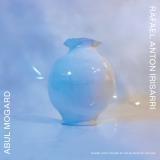
Marja de Sanctis’ cover artwork revisits the vessel sculpture from the duo’s first album, Impossibly Distant, Impossibly Close. There it appeared as raw, unfired clay. Here it has been fired in the kiln and finished with a glaze. Light gathers on its polished surface and spills into the surrounding space. As she explains, “I wanted to convey the idea of continuity within the duo, and the vessel became a kind of container for that idea. However, their music felt different this time, and with the collaboration of Martina and Andrea, I felt it should have a sleeker, softer, more glamorous look, very distant from the first raw appearance.” The transformation of the vessel from raw clay to fired form suggests a passage from immediacy toward permanence, mirroring the music’s gradual expansion.
Search:martina andr
- 1
In spring 2025, Abul Mogard and Rafael Anton Irisarri created the source material for their second album, Where Light Pauses in the Silence of the Sun, during a three-day residency at Morphine Raum in Berlin. Functioning as both recording studio and performance venue, the space has no stage, with the audience gathered around the performers. Working within an open framework, the duo reshaped the music each evening while recording the performances live to multitrack. Rotary speakers, modular synthesizers and bowed guitar formed the core of their sonic language, captured through a 1970s mixing console and microphones placed around the room.
Back in Mogard’s studio in Rome, the material was further crafted as motifs were stretched, fragments isolated, and tempos dissolved. Irisarri recorded additional guitar textures and treatments in New York, while passages recorded by Martina Bertoni and Andrea Burelli in Berlin reinforced the harmonic centres and brought breath, refinement and a new sensibility to their compositions. The process continued as Mogard’s layering and subtraction reassembled everyone’s parts into the final arrangement.
The album opens with “In the Eastern Wild,” building from a sparse outline into a monumental formation of low-frequency weight, its internal motion shaped by the rotating Leslie speaker. “Over the Domes” widens into a broader acoustic field, where sustained modular tones meet waves of softly plucked guitar. The music then turns inward with “A Blue Descent,” centred on Bertoni’s cello, whose growling timbre introduces a melancholic depth.
At the album’s centre, “In a Quiet Radiance” unfolds around a slow guitar ostinato, its luminous stillness opening into a more expansive and reflective state. Across its ten-minute span, Burelli’s violin lines and Bertoni’s lower cello phrases gradually surface, weaving through the harmonic field. Mogard brings Burelli’s processed voice to the fore, its emotive, operatic presence becoming one of the record’s pivotal moments. “Of Blessed Ages” suspends the sonic flow, shifting between parallel major and minor chords as lingering, slowly decaying melodies shape the music’s internal drift. The closing “Among Shadows” settles into a darker resonance as layered textures recede.
Mogard and Irisarri’s shared language balances restraint and maximalism. UK magazine Crack describes the music as “a tidal wave held in suspension,” while Dutch newspaper de Volkskrant writes, “What a colossal sound, and how this music strikes at the emotions.” Reflecting on the residency sessions, Irisarri recalls: “At moments I genuinely couldn’t tell if a sound was coming from me or from Abul. It stopped feeling like two people making decisions and began to feel like we were inside a system moving on its own."
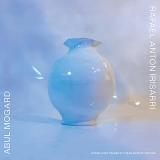
Marja de Sanctis’ cover artwork revisits the vessel sculpture from the duo’s first album, Impossibly Distant, Impossibly Close. There it appeared as raw, unfired clay. Here it has been fired in the kiln and finished with a glaze. Light gathers on its polished surface and spills into the surrounding space. As she explains, “I wanted to convey the idea of continuity within the duo, and the vessel became a kind of container for that idea. However, their music felt different this time, and with the collaboration of Martina and Andrea, I felt it should have a sleeker, softer, more glamorous look, very distant from the first raw appearance.” The transformation of the vessel from raw clay to fired form suggests a passage from immediacy toward permanence, mirroring the music’s gradual expansion.
In spring 2025, Abul Mogard and Rafael Anton Irisarri created the source material for their second album, Where Light Pauses in the Silence of the Sun, during a three-day residency at Morphine Raum in Berlin. Functioning as both recording studio and performance venue, the space has no stage, with the audience gathered around the performers. Working within an open framework, the duo reshaped the music each evening while recording the performances live to multitrack. Rotary speakers, modular synthesizers and bowed guitar formed the core of their sonic language, captured through a 1970s mixing console and microphones placed around the room.
Back in Mogard’s studio in Rome, the material was further crafted as motifs were stretched, fragments isolated, and tempos dissolved. Irisarri recorded additional guitar textures and treatments in New York, while passages recorded by Martina Bertoni and Andrea Burelli in Berlin reinforced the harmonic centres and brought breath, refinement and a new sensibility to their compositions. The process continued as Mogard’s layering and subtraction reassembled everyone’s parts into the final arrangement.
The album opens with “In the Eastern Wild,” building from a sparse outline into a monumental formation of low-frequency weight, its internal motion shaped by the rotating Leslie speaker. “Over the Domes” widens into a broader acoustic field, where sustained modular tones meet waves of softly plucked guitar. The music then turns inward with “A Blue Descent,” centred on Bertoni’s cello, whose growling timbre introduces a melancholic depth.
At the album’s centre, “In a Quiet Radiance” unfolds around a slow guitar ostinato, its luminous stillness opening into a more expansive and reflective state. Across its ten-minute span, Burelli’s violin lines and Bertoni’s lower cello phrases gradually surface, weaving through the harmonic field. Mogard brings Burelli’s processed voice to the fore, its emotive, operatic presence becoming one of the record’s pivotal moments. “Of Blessed Ages” suspends the sonic flow, shifting between parallel major and minor chords as lingering, slowly decaying melodies shape the music’s internal drift. The closing “Among Shadows” settles into a darker resonance as layered textures recede.
Mogard and Irisarri’s shared language balances restraint and maximalism. UK magazine Crack describes the music as “a tidal wave held in suspension,” while Dutch newspaper de Volkskrant writes, “What a colossal sound, and how this music strikes at the emotions.” Reflecting on the residency sessions, Irisarri recalls: “At moments I genuinely couldn’t tell if a sound was coming from me or from Abul. It stopped feeling like two people making decisions and began to feel like we were inside a system moving on its own."
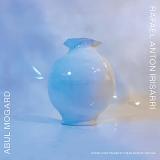
Marja de Sanctis’ cover artwork revisits the vessel sculpture from the duo’s first album, Impossibly Distant, Impossibly Close. There it appeared as raw, unfired clay. Here it has been fired in the kiln and finished with a glaze. Light gathers on its polished surface and spills into the surrounding space. As she explains, “I wanted to convey the idea of continuity within the duo, and the vessel became a kind of container for that idea. However, their music felt different this time, and with the collaboration of Martina and Andrea, I felt it should have a sleeker, softer, more glamorous look, very distant from the first raw appearance.” The transformation of the vessel from raw clay to fired form suggests a passage from immediacy toward permanence, mirroring the music’s gradual expansion.
A Strangely Isolated Place presents a long-lost collaboration between Polish artists Olga Wojciechowska and Tomasz Walkiewicz as Monoparts—a partnership formed many years ago that resulted in an album once destined to remain unreleased.
Olga Wojciechowska, known for her modern-classical masterpieces such as Infinite Distances (2019) and Unseen Traces (2020), as well as her 2022 collaboration with Scanner, breaks all known expectations with Soothsayers. In a dramatic departure, Olga unveils a new and unexpected side, debuting her haunting vocals—a delicate, spellbinding performance that recalls the golden era of trip-hop, and comparisons to the sounds pioneered by Tricky, Massive Attack, and Martina Topley-Bird.
With Tomasz adding layers of depth through intricate beats and electronics, Olga’s voice becomes the emotional core of the record, conjuring an intimate and nostalgic atmosphere.
"This album is like becoming one with the earth itself—feeling the rawness of the wood, tasting the earth in your mouth, and sensing the presence of ancient spirits. The music carries a deep, primal energy, like being part of the forest, with creatures watching you from the shadows." - Olga Wojciechowska
To complete the journey, ASC lends his signature touch with a stunning drum’n’bass reinterpretation, amplifying the album’s nostalgic essence. Soothsayers emerges as a spellbinding ode to times gone by, in more ways than one.
Featuring artwork by Moon Patrol, with mastering and lacquer by Andreas LUPO Lubich.
- A1: Svitanie - Jonáš Gruska
- A2: Yamaha Birds Pt 1 - Dialect
- A3: La Guardiana De Las Ondas Radiales 1 - Makakinho Do Amor
- A4: Sonderbare Ereignisse Am Lake Hillier - Baldruin
- A5: Kirkas Laulu, Haalea Valo - Olli Aarni
- A6: Wind Up Paradise Birds -Øyvind Torvund, Bit20 Ensemble, Trond Madsen, Jørgen Træen, Kjetil Møster
- A7: Whizz -Vic Bang
- A8: A Glitch In The Jungle - Grykë Pyje
- A9: Harpusta / Tarjous -Tomutonttu
- B1: Vögel Unserer Heimat - Native Instrument
- B2: Irekle Qoştar - Hmot
- B3: Ptakodisk - Artificial Memory Trace
- B4: Mijn Papegaai Fluit Pure Tonen - Floris Vanhoof
- B5: Aviary - John Also Bennett
- B6: Susurrus - Cheryl E Leonard
- B7: The Wild Birds Of Bluesealand - Mike Cooper
- C1: Un Signe Sylvestre - Matthias Puech
- C2: Barrockstadt Feathered Symphony - Enchanted Lands
- C3: Kolibřík - Ursula Sereghy
- C4: Pigeon Tones For Eggflute - Ecka Mordecai, Malvern Brume
- C5: Bird To Bottle - Banana, Alexandra Spence, Mp Hopkins
- C6: Whistle & Bag - Rie Nakajima
- C7: The Listener - Martina Lussi
- D1: Clivis - James Rushford
- D4: Synthetic Birdsong - Andrew Pekler
- D5: 030652_0125ꜱ12 ᴡᴀᴠ - Atte Elias Kantonen
- D6: Dive Woodz - Kensho Nakamura
- D7: Time Flys - Felicity Mangan
- D8: While They Gathered My Ears Grew - Maria Komarova
- D9: Birds In Gutter - Misha Kurilov
- D2: Three Calls - Kate Carr
- D3: Starlings Gulls Doves - Infant
When you listen to birds, they usually talk about food, sex/family, or anxiety. If they knew about the true nature of humanity's cruel and exploitative relationship with birds, they would be discussing rebellion. Humanity's current trajectory about birds is to cause the extinction of one-third of all bird species by the end of this century.
This record crystallises the borders between memory, beauty, and anxiety. At the core is an amalgam of all the birds we have met and heard, their sounds synthesised from a blend of memories. Esthetically it simulates the qualities of bird sounds, hitting similar frequential sweet spots. There is a great variety of birds captured here, from high to low frequencies, from solo voices to groups, from birds standing on their own to complex world-building, where the bird voices are part of an ecosystem, becoming one of the instruments.
You could stop there, enjoying this record on a musical level, but it invites us to do one step further, to consider reconfiguring our relationship with the Earth and its inhabitants. To question our impact, and to ask why we need synthetic bird music. Is it just a visionary endeavour or is it because we are failing at fostering a world in which organic birds and other creatures can thrive?
32 artists from the whole world, including our favourite artists from Eastern Europe, have contributed to this compilation both with new and previously released music. Their music is ordered from dawn to dusk and into the night. For many of the artists it's their first time on mappa, but some have previously released an album with us.
- 1


