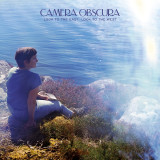
Consisting of 12 stunning tracks, A Wasteland Companion was made with 18 musicians and recorded in eight different studios in Portland, Omaha, New York City, Los Angeles, Austin and Bristol (UK). Ward's honey-soaked vocals, deft finger-picking, innate sense of melody and beguiling lyrics have already cemented his reputation as one of America's true musical treasures and A Wasteland Companion features some of the finest songwriting and most striking delivery of his career. With each and every recording Ward finds new ways to make the colors of his songwriting palate sparkle and his dexterous skills as producer, arranger, guitarist and singer seem to burst into even brighter bloom on each release.
Merge News
Post-War: the fifth M. Ward album. Its songs unravel their world-wearied tales of life, love, and human kindness with an innate and special grace, helped in part by the very talented friends who join him on this record, such as Neko Case and Mike Mogis, as well as old Monsters of Folk touring buddy Jim James (My Morning Jacket
Transistor Radio: the fourth M. Ward album. Listening to M. Ward's breezy ode to radio's forgotten heydays is a lot like taking in a huge breath of dust-bowl wind -- however, its charms are rooted in the hazy lemonade-sipping of summer rather than the great depression-obsession of the post-O Brother, Where Art Thou? mainstream.
Neues Label, neues Album! Torres - alias Mackenzie Scott - veröffentlicht ihr viertes Album "Silver Tongue", den Nachfolger von "Three Futures" (2017) auf Merge Records. "Silver Tongue" ist eine vollständige Umsetzung der Welt, die Scott im Laufe der letzten Jahre als Torres errichtet hat - und die erste Torres-Platte überhaupt, die ausschließlich von Scott selbst produziert wurde. Das Album zeigt auf anspruchsvolle Weise die Impulse auf, die unser Begehren ausmachen - von den träumerischen ersten Errötungen der Verliebtheit bis hin zu dem etwas erschreckenden Erstaunen, das mit der Verbindung einer neuen Person einhergeht. Zu schwungvollen Gitarren und wirbelnden Synthesizerklängen kämpft Scott auf "Silver Tongue" mit den Höhen und Tiefen des Verliebtseins.
What I can say about TORRES is I think the music comes from a convicted place. Not convicted meaning a person is narrowly and foolishly committed to an ideal, or unshakably convinced of themselves, or a zealot, or stubborn. I mean dedicated, I mean: If TORRES' music gets weird, gets brainy, gets funny, gets defiant, provokes, deliberately scandalizes, employs the crass to undermine the austere, courts lofty philosophical truth-it's all done with the conviction of an artist with the (essential) belief in the worth of their task. I think you can hear it in the songs, someone reaching, leaning over the boundary between known and not, probing the almighty. After a decade and six studio albums and however many one-offs and tours and articles read and conversations had, the parts of this pursuit I've been able to observe are all marked by a dedication to creation that treats the act-ongoing-with as much preciousness as the evidence of the act that is left in a record. The modes of being are different: heartbroken, broke, furious (right- and unrighteously), awestruck by love, compelled by desire. sometimes resigned to death, sometimes fascinated by and reverent of the future. Sometimes viscerally present, other times suspended in heady awareness, poised on a fulcrum of observation and participation in the phenomenon that aliveness is. The tools are the same: instruments that growl and shriek and moan, a lyrical voice shouting, swooning, chuckling, snarling as the moment commands. TORRES' music-making is conducted in a melodic vocabulary unique to itself-methods, equipment, circumstances shifting around the impulse to affirm the self within the world, to make art that bears all these little artifacts of the divine and of the real and show it to people and know it is valuable. I think that's what Mackenzie's music does. And I think it's just incredibly good music to listen to. -Julien Baker TORRES is the pseudonym of Mackenzie Scott. She was born January 23, 1991, and lives in Brooklyn, New York, with her wife Jenna, stepson Silas, and puppy Sylvia. She has been releasing albums and performing as TORRES since 2013. What an enormous room is TORRES' sixth studio album (her third with Merge). It was recorded in September and October 2022 at Stadium Heights Sound in Durham, North Carolina. It was engineered by Ryan Pickett, produced by Mackenzie Scott and Sarah Jaffe, mixed by TJ Allen in Bristol, UK, and mastered by Heba Kadry in NYC. The album contains 10 songs. Mackenzie wrote all of them. Sarah played bass guitar, synths, drums, organ, and piano. Mackenzie sang vocals, played guitar, bass, synths, organ, piano, and programmed drums. Additional synth bass, tambourine, and shakers were played by TJ Allen.
Mit "Duet for Guitars #2" machte M. Ward durch sein charakteristisches Raspeln und seine Fingerpicking-Fähigkeiten auf sich aufmerksam. Die Songs sind weniger umfangreich als spätere Platten und die Bandbreite reicht von Wiegenliedern bis hin zu rockigen Liebeserklärungen. Erstmals erschienen 1999 bei Co-Dependent Records, fand eines der ersten 1.000 Exemplare seinen Weg zu Howe Gelb, der "Duet for Guitars #2" im Jahr 2000 bei Ow Om wiederveröffentlichte. Es wurde danach nicht mehr aufgelegt und blieb ein schwer zu findendes Stück des M. Ward-Katalogs bis 2007, als es mit drei neuen Tracks auf Merge wiederveröffentlicht wurde. Mehr als eine Entstehungsgeschichte, ist "Duet for Guitars #2" ein wunderschönes Album, das Lo-Fi und Americana-Liebhaber in Ohnmacht fallen lassen wird, ganz zu schweigen von neuen und alten M. Ward-Fans.
Im Jahr 2003 kam der Durchbruch für M. Ward mit der Veröffentlichung von "Transfiguration of Vincent". Pitchfork lobte es als ein Album, das "Zeitlosigkeit ausstrahlt und sich über Genregrenzen hinwegsetzt", und Slant setzte es auf ihre Liste der besten Alben der 2000er Jahre. Auf "Transfiguration of Vincent" ist Wards elegantes Fingerpicking, sein beschwörender Gesang und seine herzzerreißende Lyrik in voller Blüte. Selbst ein so universeller Song wie David Bowies "Let's Dance" klingt nicht nur neu, sondern unwiderruflich als wäre es sein eigener. Als eine der meistgeschätzten Platten im Merge-Katalog ist "Transfiguration of Vincent" sowohl ein großartiger Ort, um die Liebesbeziehung zu M. Ward zu beginnen, als auch ein tiefes, atemberaubend realisiertes Werk, zu dem die Hörer seit 20 Jahren immer wieder zurückkehren.
Orbiting Human Circus' new album is called Quartet Plus Two. What is Orbiting Human Circus? It is the continuing evolution of Julian Koster (Neutral Milk Hotel, The Music Tapes), whose music and storytelling under this moniker have encompassed immersive theater and a Night Vale Presents podcast, as well as more traditional albums. Central to the album are the "two" referenced in the title: North and Romika, the singing saws, whom Koster doesn't "play" so much as encourage. "I think saws sing like angels," says Koster. "I always have. Since I was a little boy. When you encourage them to sing, they do so earnestly and beautifully. It's an honest and real sound." The origins of Quartet Plus Two are as magical and seemingly unlikely as everything else in Koster's career. While walking through New York's Central Park, he stumbled upon Gauvain Gamon and Kolja Gjoni_a standup bass player and drummer, respectively_playing Gershwin and Mingus, and a musical partnership was born. Pianist Benji Miller rounds out the titular quartet, with Koster's longtime collaborators Robbie Cucchiaro (horns) and Thomas Hughes (orchestral arranging and chimes) of The Music Tapes also contributing to the record. The music they make together is at once familiar and unrecognizable, as Koster and Orbiting Human Circus interpret jazz compositions by Irving Berlin, Duke Jordan, George and Ira Gershwin, and others, alongside Koster's three originals. The use of the term "composition" is intentional and speaks to Koster's relationship with the music of Quartet Plus Two in far more evocative terms than "cover" or "standard." "To me it was always magical that there were these people called `composers' who created symphonies and popular songs for other people to breathe into life and existence all over the world and throughout time," he explains. "They traveled into our homes as sheet music, endless recorded interpretations, or were passed from hand to hand, village to village, like folk tales, changed by every hand that touched them. That music was something that came to life in our own living rooms and lives, songs that our grandmothers might have sung in a choir that we might sing just as earnestly. I just think it's nice, and I would love to share that feeling in any way we can."
In dem Moment, als die Nadel auf die neue A Giant Dog-Platte fällt, krümmt sich die eigene Vorstellung davon, wie eine A Giant Dog-Platte klingen soll, wie Raum und Zeit um ein Raumschiff, das mit Lichtgeschwindigkeit fliegt. Bite ist ein Konzeptalbum, in dem es um Charaktere geht, die sich in einer virtuellen Realität namens Avalonia bewegen und zugleich ist es das erste Album von A Giant Dog mit eigenen Songs seit Toy von 2017.
Sabrina Ellis, Andrew Cashen, Danny Blanchard, Graham Low und Andy Bauer - auf ihrem Höhepunkt als Musiker, fordern sie sich mit komplexeren Arrangements heraus und versetzten sich hinein in die Köpfe der Figuren, die dieses vermeintliche Paradies Avalonia bewohnen. "Wir mussten uns in den Hauptfiguren wiederfinden oder uns in die Hauptfiguren hineinversetzen. Wir entwickelten sie, lernten ihre Gedanken, Emotionen und Motivationen kennen und brachten diese dann in neun Songs zum Ausdruck", erklärt Ellis. Themen wie Sucht, Geschlechterfluidität, ethisches Leben in einer kapitalistischen Gesellschaft, körperliche Autonomie, Geiz, Trauer und Zustimmung sprudeln unter dem versprochenen Glück von Avalonia.
Dies wird in Songs wie "Different Than" deutlich, in dem Ellis singt: "My body can't explain the things my mind don't comprehend", als ob der gesellschaftliche Geschlechterdruck seine Protagonistin aus ihrer Haut herausquetscht. Die Songs auf Bite sind voller Bombast und erinnern abwechselnd an den raumfahrenden Opernrock des Electric Light Orchestra und die hohe Dramatik einer Ennio Morricone Filmmusik. Der erzählerische Bogen des Albums ist von epischer Tragweite, seine Charaktere stehen vor unmöglichen Unwahrscheinlichkeiten und sind mit dem sicheren Untergang konfrontiert, und ist so bequem vergleichbar mit der Sci-Fi-Grandezza von Thin Lizzy's Jailbreak wie auch mit der High Fantasy von Dio und Iron Maiden. Passenderweise sind A Giant Dog bis an die Zähne bewaffnet mit neuen Ideen zu dieser Erzählung gekommen, mit Synthesizern und Streichern, um das zu schaffen, was Ellis als orchestral beschreibt: symphonischen, futuristischen Punk. Um dies zu erreichen, verließen sie ihre Heimat Austin, Texas, in das La Cuve Studio in der Nähe von Angers, Frankreich.
Auf dem französischen Land legten A Giant Dog ihre Zukunftsvision vor einer ausgesprochen pastoralen Kulisse nieder. Auf den Wanderungen von Angers nach La Cuve, so Ellis, sahen sie "viele Dinge, und auch gar nichts. Schwäne auf dem Fluss. Romani, die in kleinen Anhängern leben, mit einer Hütte für ihren Hund an der Seite Ein Jongleur auf einem Einrad - ich verarsche dich nicht. Wir dachten, wir dürften nach dieser Reise nicht mehr nach Frankreich zurück, um ehrlich zu sein", fährt sie fort. "Fünf laute, stampfende, klatschende, randalierende Amerikaner, die im November 2022 drei Wochen lang durch die Straßen von Angers gelaufen sind." Diese Erfahrung war der Höhepunkt von zwei Jahren Planung und Schreiben, in denen das Universum von Avalonia Gestalt annahm. Die daraus resultierenden neun Songs besetzen nicht nur diesen Raum: Sie haben darin gelebt und sie wollen raus.
In dem Moment, als die Nadel auf die neue A Giant Dog-Platte fällt, krümmt sich die eigene Vorstellung davon, wie eine A Giant Dog-Platte klingen soll, wie Raum und Zeit um ein Raumschiff, das mit Lichtgeschwindigkeit fliegt. Bite ist ein Konzeptalbum, in dem es um Charaktere geht, die sich in einer virtuellen Realität namens Avalonia bewegen und zugleich ist es das erste Album von A Giant Dog mit eigenen Songs seit Toy von 2017.
Sabrina Ellis, Andrew Cashen, Danny Blanchard, Graham Low und Andy Bauer - auf ihrem Höhepunkt als Musiker, fordern sie sich mit komplexeren Arrangements heraus und versetzten sich hinein in die Köpfe der Figuren, die dieses vermeintliche Paradies Avalonia bewohnen. "Wir mussten uns in den Hauptfiguren wiederfinden oder uns in die Hauptfiguren hineinversetzen. Wir entwickelten sie, lernten ihre Gedanken, Emotionen und Motivationen kennen und brachten diese dann in neun Songs zum Ausdruck", erklärt Ellis. Themen wie Sucht, Geschlechterfluidität, ethisches Leben in einer kapitalistischen Gesellschaft, körperliche Autonomie, Geiz, Trauer und Zustimmung sprudeln unter dem versprochenen Glück von Avalonia.
Dies wird in Songs wie "Different Than" deutlich, in dem Ellis singt: "My body can't explain the things my mind don't comprehend", als ob der gesellschaftliche Geschlechterdruck seine Protagonistin aus ihrer Haut herausquetscht. Die Songs auf Bite sind voller Bombast und erinnern abwechselnd an den raumfahrenden Opernrock des Electric Light Orchestra und die hohe Dramatik einer Ennio Morricone Filmmusik. Der erzählerische Bogen des Albums ist von epischer Tragweite, seine Charaktere stehen vor unmöglichen Unwahrscheinlichkeiten und sind mit dem sicheren Untergang konfrontiert, und ist so bequem vergleichbar mit der Sci-Fi-Grandezza von Thin Lizzy's Jailbreak wie auch mit der High Fantasy von Dio und Iron Maiden. Passenderweise sind A Giant Dog bis an die Zähne bewaffnet mit neuen Ideen zu dieser Erzählung gekommen, mit Synthesizern und Streichern, um das zu schaffen, was Ellis als orchestral beschreibt: symphonischen, futuristischen Punk. Um dies zu erreichen, verließen sie ihre Heimat Austin, Texas, in das La Cuve Studio in der Nähe von Angers, Frankreich.
Auf dem französischen Land legten A Giant Dog ihre Zukunftsvision vor einer ausgesprochen pastoralen Kulisse nieder. Auf den Wanderungen von Angers nach La Cuve, so Ellis, sahen sie "viele Dinge, und auch gar nichts. Schwäne auf dem Fluss. Romani, die in kleinen Anhängern leben, mit einer Hütte für ihren Hund an der Seite Ein Jongleur auf einem Einrad - ich verarsche dich nicht. Wir dachten, wir dürften nach dieser Reise nicht mehr nach Frankreich zurück, um ehrlich zu sein", fährt sie fort. "Fünf laute, stampfende, klatschende, randalierende Amerikaner, die im November 2022 drei Wochen lang durch die Straßen von Angers gelaufen sind." Diese Erfahrung war der Höhepunkt von zwei Jahren Planung und Schreiben, in denen das Universum von Avalonia Gestalt annahm. Die daraus resultierenden neun Songs besetzen nicht nur diesen Raum: Sie haben darin gelebt und sie wollen raus.
- 1: Fables Of The Silverlink
- 1: 2 Radial B
- 1: 3 Garden Eye Mantra
- 1: 4 Segue 4 (Iv)
- 1: 5 Lady Grey
- 1: 6 Dying In May
- 1: 7 Conjuring Summer In
- 1: 8 Radial C (Nocturne For Three Trees)
- 1: 9 Blue Over Blue
- 1: 0 Radial E
- 2: 1 Claire's Not Real
- 2: My Childhood
- 2: 3 Chalk Flowers
- 2: 4 Radial H
- 2: 5 Hey Siobhan
- 2: 6 Stems Of Anise
- 2: 7 Through The Roses
- 2: 8 I Dreamed Of You, Maria
- 2: 9 The Village Is Always On Fire
Black Vinyl[27,31 €]
I Am Not There Anymore folgt auf das 2017 erschienene Music For The Age Of Miracles (das nach einer siebenjährigen Pause der Band erschien), wobei die neuen Aufnahmen 2019 begannen und stückweise bis 2022 fortgesetzt wurden - zum Teil wegen der Pandemie, aber auch, weil die Band den Raum für Experimente haben wollte. "Wir haben uns schon immer für andere Musik als Gitarrenmusik interessiert", sagt Sänger, Texter und Gitarrist Alasdair MacLean. Diesmal hat er - zusammen mit dem Bassisten James Hornsey und dem Schlagzeuger Mark Keen - Elemente des Post-Bop-Jazz, der zeitgenössischen Klassik und der elektronischen Musik einbezogen. MacLean meint: "Nichts von alledem war in der Lage, seinen Weg in unseren Sound zu finden, außer auf die beiläufigste Art und Weise, in der schwächsten Ausprägung." I Am Not There Anymore bestätigt die Stellung von The Clientele unter den großen Stilisten der Popmusik, indem es geschickt von Bild zu Bild, von Stimmung zu Stimmung wechselt, und zwar auf eine Weise, die sich sowohl neu als auch klassisch anfühlt, während The Clientele als Band in neue klangliche Gefilde vorstoßen. Im Laufe der 32-jährigen Karriere von The Clientele haben Kritiker und Fans ihre Lieder mit Worten wie "ätherisch", "schimmernd", "dunstig", "hübsch" und "zerbrechlich" beschrieben. Alasdair MacLean, hat seine eigene Interpretation der Wirkung, die seine Musik erzeugt. "Es ist das Gefühl, nicht da zu sein", sagt er. "Was wirklich in allen Clientele-Platten steckt, ist das Gefühl, nicht in dem Moment zu sein, in dem man sich befindet." I Am Not There Anymore evoziert regelmäßig das, was MacLean "das Gefühl, nicht real zu sein" nennt. Viele der Songs wurden von MacLeans Erinnerungen an den Frühsommer 1997 inspiriert, als seine Mutter starb.
- 1: Fables Of The Silverlink
- 1: 2 Radial B
- 1: 3 Garden Eye Mantra
- 1: 4 Segue 4 (Iv)
- 1: 5 Lady Grey
- 1: 6 Dying In May
- 1: 7 Conjuring Summer In
- 1: 8 Radial C (Nocturne For Three Trees)
- 1: 9 Blue Over Blue
- 1: 0 Radial E
- 2: 1 Claire's Not Real
- 2: My Childhood
- 2: 3 Chalk Flowers
- 2: 4 Radial H
- 2: 5 Hey Siobhan
- 2: 6 Stems Of Anise
- 2: 7 Through The Roses
- 2: 8 I Dreamed Of You, Maria
- 2: 9 The Village Is Always On Fire
Red Vinyl[34,41 €]
I Am Not There Anymore folgt auf das 2017 erschienene Music For The Age Of Miracles (das nach einer siebenjährigen Pause der Band erschien), wobei die neuen Aufnahmen 2019 begannen und stückweise bis 2022 fortgesetzt wurden - zum Teil wegen der Pandemie, aber auch, weil die Band den Raum für Experimente haben wollte. "Wir haben uns schon immer für andere Musik als Gitarrenmusik interessiert", sagt Sänger, Texter und Gitarrist Alasdair MacLean. Diesmal hat er - zusammen mit dem Bassisten James Hornsey und dem Schlagzeuger Mark Keen - Elemente des Post-Bop-Jazz, der zeitgenössischen Klassik und der elektronischen Musik einbezogen. MacLean meint: "Nichts von alledem war in der Lage, seinen Weg in unseren Sound zu finden, außer auf die beiläufigste Art und Weise, in der schwächsten Ausprägung." I Am Not There Anymore bestätigt die Stellung von The Clientele unter den großen Stilisten der Popmusik, indem es geschickt von Bild zu Bild, von Stimmung zu Stimmung wechselt, und zwar auf eine Weise, die sich sowohl neu als auch klassisch anfühlt, während The Clientele als Band in neue klangliche Gefilde vorstoßen. Im Laufe der 32-jährigen Karriere von The Clientele haben Kritiker und Fans ihre Lieder mit Worten wie "ätherisch", "schimmernd", "dunstig", "hübsch" und "zerbrechlich" beschrieben. Alasdair MacLean, hat seine eigene Interpretation der Wirkung, die seine Musik erzeugt. "Es ist das Gefühl, nicht da zu sein", sagt er. "Was wirklich in allen Clientele-Platten steckt, ist das Gefühl, nicht in dem Moment zu sein, in dem man sich befindet." I Am Not There Anymore evoziert regelmäßig das, was MacLean "das Gefühl, nicht real zu sein" nennt. Viele der Songs wurden von MacLeans Erinnerungen an den Frühsommer 1997 inspiriert, als seine Mutter starb.
All Her Plans, the third album from Melbourne, Australia's Cable Ties, finds the trio of Jenny McKechnie, Shauna Boyle, and Nick Brown at their punchiest and most assured. The ferocious, kraut-influenced blend of post-punk and garage rock of Merge debut Far Enough remains, but McKechnie's lyrics invite the listener closer than ever before. The urgency and fury that have marked Cable Ties' output thus far is more nuanced on All Her Plans.
The unfettered rage of their calls to action endures tackling subjects like broken mental healthcare systems and the burden of familial care that is largely placed on women…while holding space for gratitude, love, and acceptance. All Her Plans is a breakthrough moment for Cable Ties. It is the sound of a group that is exhilarated to be making music together again, both a celebration of their resilience and a massive step forward into a future they can finally claim as their own.
Wye Oak, das Duo bestehend aus Jenn Wasner und Andy Stack, veröffentlicht mit Every Day Like The Last eine Sammlung brandneuer Songs und bereits veröffentlichter Singles, mit der die Band neue Wege beschreitet. Die neun Songs auf Every Day Like The Last stammen aus einer Zeit, in der sich Wye Oak nach mehr als einem Jahrzehnt kontinuierlicher Albumveröffentlichungen und Tourneen im Umbruch befanden. Die musikalische Partnerschaft von Jenn Wasner und Andy Stack erblühte in der Ungewissheit dieser Zeit, wann immer sie spürten, dass Wye Oak etwas zu sagen hatten. Sie gingen dazu über, schnell EPs und Singles zu schreiben, aufzunehmen und digital zu veröffentlichen. Klanglich kehrten Wasner und Stack zu den Grundlagen zurück. Sie balancierten das Organische und das Künstliche aus und nutzen Elektronik und Programmierung, um neue Texturen hinzuzufügen. Für Stack gibt es einen roten Faden, der sich durch das scheinbare Chaos zieht: "Freude im Untergang der Welt zu finden". Every Day Like The Last tut genau das, indem es den Hörer an die neuen Höhen erinnert, die Wye Oak seit 2018's The Louder I Call, The Faster It Runs erreicht haben, während es einen Blick ins Ungewisse wirft, was vor uns liegt. Der Titel dieser Sammlung erkennt diese Dualität an, indem er sie wie eine Frage stellt: "Jeder Tag wie der Tag davor" oder "Jeder Tag wie der letzte Tag auf der Erde"? "Beide Bedeutungen treffen zu", sagt Wasner. Es gibt keine einfachen Antworten.
All Her Plans, the third album from Melbourne, Australia's Cable Ties, finds the trio of Jenny McKechnie, Shauna Boyle, and Nick Brown at their punchiest and most assured. The ferocious, kraut-influenced blend of post-punk and garage rock of Merge debut Far Enough remains, but McKechnie's lyrics invite the listener closer than ever before. The urgency and fury that have marked Cable Ties' output thus far is more nuanced on All Her Plans.
The unfettered rage of their calls to action endures tackling subjects like broken mental healthcare systems and the burden of familial care that is largely placed on women…while holding space for gratitude, love, and acceptance. All Her Plans is a breakthrough moment for Cable Ties. It is the sound of a group that is exhilarated to be making music together again, both a celebration of their resilience and a massive step forward into a future they can finally claim as their own.
Wye Oak, das Duo bestehend aus Jenn Wasner und Andy Stack, veröffentlicht mit Every Day Like The Last eine Sammlung brandneuer Songs und bereits veröffentlichter Singles, mit der die Band neue Wege beschreitet. Die neun Songs auf Every Day Like The Last stammen aus einer Zeit, in der sich Wye Oak nach mehr als einem Jahrzehnt kontinuierlicher Albumveröffentlichungen und Tourneen im Umbruch befanden. Die musikalische Partnerschaft von Jenn Wasner und Andy Stack erblühte in der Ungewissheit dieser Zeit, wann immer sie spürten, dass Wye Oak etwas zu sagen hatten. Sie gingen dazu über, schnell EPs und Singles zu schreiben, aufzunehmen und digital zu veröffentlichen. Klanglich kehrten Wasner und Stack zu den Grundlagen zurück. Sie balancierten das Organische und das Künstliche aus und nutzen Elektronik und Programmierung, um neue Texturen hinzuzufügen. Für Stack gibt es einen roten Faden, der sich durch das scheinbare Chaos zieht: "Freude im Untergang der Welt zu finden". Every Day Like The Last tut genau das, indem es den Hörer an die neuen Höhen erinnert, die Wye Oak seit 2018's The Louder I Call, The Faster It Runs erreicht haben, während es einen Blick ins Ungewisse wirft, was vor uns liegt. Der Titel dieser Sammlung erkennt diese Dualität an, indem er sie wie eine Frage stellt: "Jeder Tag wie der Tag davor" oder "Jeder Tag wie der letzte Tag auf der Erde"? "Beide Bedeutungen treffen zu", sagt Wasner. Es gibt keine einfachen Antworten.
Eric Emm and Jesse Cohen of Tanlines are indie-rock lifers turned reasonable, happy middle-aged fathers of two, figuring out their place in a chaotic culture and industry that can no longer command their full attention. They are emblematic of a particular time and place that doesn't really exist anymore, yet here they are existing, and thriving, in 2023. The Big Mess came together when Emm and his family moved from Brooklyn to rural Connecticut, while Cohen launched a marketing career and a successful podcast and stayed in the city. Emm continued writing songs_hundreds of them _ through all the weirdness of the past few years, but he wasn't exactly sure who he was writing them for. "I spent years figuring out in my mind, `What is my musical life going to look like?'" he says. "I just kept writing." Cohen gave Emm his blessing to continue Tanlines, even if his own contributions would be limited due to his own non-musical obligations. "I'm like, `Whatever you can do to keep this thing going, do it,'" Cohen says. And with that, Tanlines was reborn. By January 2022 Emm felt he had a body of work that made sense as a Tanlines album. Cohen spent ten days with Emm at his Connecticut studio, along with unofficial third Tanline Patrick Ford (!!!). This was tied together with a sleek final mix from Peter Katis (The National, Interpol) at his famed Tarquin Studios, resulting in a clear vision of what Emm's musical life was going to look like: The Big Mess. The first sounds on The Big Mess are the title track's coiled guitars and thumping drums, building into the kind of outsize, choral rock anthem artists like Tanlines were almost a reaction to. It is warm and nostalgic, and Cohen likens a lot of the prevailing mood to "a sepia filter on a digital photo." He continues, "we were pretty intentional about making this the first song on the album, underlining the way that this is a new phase of the band." Cohen says. The moody, scintillating "Burns Effect" serves as one of the biggest pushes forward for the Tanlines sound, and for Emm as a lyricist. He says that the song is "deep and dark and dangerous, but in a fun way. It's one of the more personal tracks on the album where this ungrounded part of my personality surfaces, but with an over-the-top machismo, almost an ironic character." Other tracks like "New Reality" and closer "The Age of Innocence" are also demonstrably guitar-forward in ways that wouldn't seem obvious for Tanlines (despite Emm's pedigree in austere avant-garde math-rock outfits Storm & Stress and Don Caballero), but Emm is less sure The Big Mess is a total departure. "I'm trying to make these absolutely simple things," he says. "I think of these songs as Rothko paintings: They're big and they're bold and they're seemingly straightforward, but they have a lot of depth and they engage with you and make you feel something."
Ltd. Green & Blue Vinyl
Over the past 20 years, The New Pornographers have proven themselves one of the most excellent bands in indie rock. The group's ninth album and first for Merge establishes them alongside modern luminaries like Yo La Tengo and Superchunk when it comes to their ability to evolve while still retaining what made them so special in the first place. A dazzling and intriguing collection of songs, "Continue as a Guest" finds bandleader A.C. Newman and his compatriots Neko Case, Kathryn Calder, John Collins, Todd Fancey, and Joe Seiders exploring fresh territory and shattering the barriers of their collective comfort zone. Newman began work on "Continue as a Guest" after the band had finished touring behind 2019's "In the Morse Code of Brake Lights". Themes of isolation and collapse bleed into this album, as Newman tackles the ambivalence of day-to-day life during the COVID-19 pandemic. But Newman says that the album's title track also addresses the concerns that come with being in a band for so long. "The idea of continuing as a guest felt apropos to the times," he explains. "Feeling out of place in culture, in society, being in a band that has been around for so long_not feeling like a part of any zeitgeist, but happy to be separate and living your simple life, your long fade-out. Living in a secluded place in an isolated time, it felt like a positive form of acceptance: find your own little nowhere, find some space to fall apart, continue as a guest." Newman discovered new vocal approaches within his own talent. There are new and rich tones to Newman's voice throughout Continue as a Guest, from his dusky lower register over "Angelcover" to his slippery slide over the glimmering synths of "Firework in the Falling Snow," to bold tones he embraces on the soaring "Bottle Episodes." Another sonic change comes courtesy of saxophonist Zach Djanikian, whose tenor and bass luxuriate all over Continue as a Guest's alluring chassis, especially on the menacing build of "Pontius Pilate's Home Movies." Along with Newman's usual collaborators, several songwriters contribute. The bursting opener and first single "Really Really Light" is a co-write with Dan Bejar (Destroyer, the New Pornographers). Then there's "Firework in the Falling Snow," a collaboration with Sadie Dupuis of Speedy Ortiz and Sad13. Even as Newman embraces a collaborative spirit more than ever, his new album is a testament to his ability to discover new artistic sides of himself. "Continue as a Guest" sounds like a thrilling path forward for The New Pornographers, with songs that generate a contagious feeling of excitement for the future as well.
Orange Viny
If naming is a form of claiming, of being claimed, how is one tethered to both the physical landscape that surrounds us, as well as our own internal emotional landscape_at times calm, at times turbulent, and ever changing? H.C. McEntire's new album Every Acre grapples with those themes_themes that encompass grief, loss, and links to land and loved ones. And naming_claiming land, claiming self, being claimed by ancestry and heritage_permeates the hauntingly beautiful landscape that is this poignant collection of songs. The songs straddle the line between music and poetry. In "New View," McEntire cites poets "Day, Ada, and Laux, Berry, and Olds"_fixtures in the world of writing, whose works are beacons of light over bleak horizons. The beginning of the song is backed by soft guitar plucks that fall on the downbeat and spangle like stars, and, throughout, guitar, bass, and drums swell together gently, mimicking ebbing and flowing tides under the moon. McEntire's voice (at once tender and fierce) intones the truth of both giving and taking, releasing and claiming: "Bend me, break me, split me right in two. Mend me, make me_I'll take more of you." Permeated by heartbeat-like drums, "Shadows" develops quiet ruminations on surrender and loss_reminiscing, moving on. This ponderous, dreamlike song asks the question of how "to make room." How does one make room, for self and for renewal and surrender, when it is so difficult to leave what you know behind? Playing with slivers of descending chromatics, along with the occasional downward-stepping bass, here McEntire yearns for home, and for nesting. Perhaps one of the more grief-stricken songs, "Rows of Clover" is a lamentation, one that touches on the loss of a "steadfast hound." The lone piano in the beginning of the song is rhythmically hymn-like. The stark verse arrangement gradually leads to a chorus that reads like a moody exhale, swollen with lush guitar strums and a Bill Withers-esque understated soul groove. But what stands out the most is an image of being "down on your knees, clawing at the garden"_the only explicit mention of a person in the song. "It ain't the easy kind of healing," sings McEntire, seemingly from further and further away as her voice echoes; and healing ta;kes time, time takes time_truths that linger painfully. "Dovetail" is a song that tells of various women. The song moves back and forth between solo piano and the addition of bass and drums under vocals. McEntire's gentle, trembling vibrato_harmonized in thirds in a celebratory manner_calls to mind a rejoicing psalm and shines through these images, leaving the listener cuttingly fraught with emotions_such as wonder, sadness, nostalgia_that can only arise with these juxtapositions. Gracious (and graceful) with its lilting melodies and lush harmonies, Every Acre ex - plores the acres of our physical and emotional homes. These songs are reaching for the kind of home that we all seek: one where we can rest and lay down (or tuck away) our burdens of loss. And maybe, moving through every acre of a world that often tries to tear our sense of identity and heritage down, McEntire sheds light on what it is to be human in this life_both stingy and gracious, both hurtful and kind.
Clear Vinyl
"One Day" ist eines der energiegeladensten und komplexesten Alben der kanadischen Hardcore-Legende Fucked Up, obwohl es nur 10 Songs enthält. Fucked Up waren in der Vergangenheit eher für ihre epischen Auswüchse bekannt, von gewaltigen Konzept-Alben bis hin zu 12-stündigen Konzerten - es mag also überraschen, dass ihr sechstes Studio-Album ihr bisher kürzestes ist, geschrieben und aufgenommen innerhalb eines einzigen Tages - was dem Album auch den Titel gab. Man sollte nun aber nicht Spiellänge mit Substanz verwechseln: Der Sound der Band ist nur noch größer geworden, noch härter, mit noch dichterem Melodie-Dickicht. Das Album klingt vollmundig und unmittelbar, mit Musik, die brutal und leidenschaftlich rüberkommt, so wie sie nur Fucked Up machen können. Die Gitarren klingen gigantisch und die musikalische Abenteuerlust, die das epische, üppige "Dose Your Dreams" von 2018 kennzeichnete, ist auch hier sehr präsent. "One Day" ist ein unbestreitbares Werk der Zuversicht von einer Band, die weiterhin auf höchstem Niveau agiert und Musik macht, die garantiert ein Leben lang, und darüber hinaus, hält.
If naming is a form of claiming, of being claimed, how is one tethered to both the physical landscape that surrounds us, as well as our own internal emotional landscape_at times calm, at times turbulent, and ever changing? H.C. McEntire's new album Every Acre grapples with those themes_themes that encompass grief, loss, and links to land and loved ones. And naming_claiming land, claiming self, being claimed by ancestry and heritage_permeates the hauntingly beautiful landscape that is this poignant collection of songs. The songs straddle the line between music and poetry. In "New View," McEntire cites poets "Day, Ada, and Laux, Berry, and Olds"_fixtures in the world of writing, whose works are beacons of light over bleak horizons. The beginning of the song is backed by soft guitar plucks that fall on the downbeat and spangle like stars, and, throughout, guitar, bass, and drums swell together gently, mimicking ebbing and flowing tides under the moon. McEntire's voice (at once tender and fierce) intones the truth of both giving and taking, releasing and claiming: "Bend me, break me, split me right in two. Mend me, make me_I'll take more of you." Permeated by heartbeat-like drums, "Shadows" develops quiet ruminations on surrender and loss_reminiscing, moving on. This ponderous, dreamlike song asks the question of how "to make room." How does one make room, for self and for renewal and surrender, when it is so difficult to leave what you know behind? Playing with slivers of descending chromatics, along with the occasional downward-stepping bass, here McEntire yearns for home, and for nesting. Perhaps one of the more grief-stricken songs, "Rows of Clover" is a lamentation, one that touches on the loss of a "steadfast hound." The lone piano in the beginning of the song is rhythmically hymn-like. The stark verse arrangement gradually leads to a chorus that reads like a moody exhale, swollen with lush guitar strums and a Bill Withers-esque understated soul groove. But what stands out the most is an image of being "down on your knees, clawing at the garden"_the only explicit mention of a person in the song. "It ain't the easy kind of healing," sings McEntire, seemingly from further and further away as her voice echoes; and healing ta;kes time, time takes time_truths that linger painfully. "Dovetail" is a song that tells of various women. The song moves back and forth between solo piano and the addition of bass and drums under vocals. McEntire's gentle, trembling vibrato_harmonized in thirds in a celebratory manner_calls to mind a rejoicing psalm and shines through these images, leaving the listener cuttingly fraught with emotions_such as wonder, sadness, nostalgia_that can only arise with these juxtapositions. Gracious (and graceful) with its lilting melodies and lush harmonies, Every Acre ex - plores the acres of our physical and emotional homes. These songs are reaching for the kind of home that we all seek: one where we can rest and lay down (or tuck away) our burdens of loss. And maybe, moving through every acre of a world that often tries to tear our sense of identity and heritage down, McEntire sheds light on what it is to be human in this life_both stingy and gracious, both hurtful and kind.
"One Day" ist eines der energiegeladensten und komplexesten Alben der kanadischen Hardcore-Legende Fucked Up, obwohl es nur 10 Songs enthält. Fucked Up waren in der Vergangenheit eher für ihre epischen Auswüchse bekannt, von gewaltigen Konzept-Alben bis hin zu 12-stündigen Konzerten - es mag also überraschen, dass ihr sechstes Studio-Album ihr bisher kürzestes ist, geschrieben und aufgenommen innerhalb eines einzigen Tages - was dem Album auch den Titel gab. Man sollte nun aber nicht Spiellänge mit Substanz verwechseln: Der Sound der Band ist nur noch größer geworden, noch härter, mit noch dichterem Melodie-Dickicht. Das Album klingt vollmundig und unmittelbar, mit Musik, die brutal und leidenschaftlich rüberkommt, so wie sie nur Fucked Up machen können. Die Gitarren klingen gigantisch und die musikalische Abenteuerlust, die das epische, üppige "Dose Your Dreams" von 2018 kennzeichnete, ist auch hier sehr präsent. "One Day" ist ein unbestreitbares Werk der Zuversicht von einer Band, die weiterhin auf höchstem Niveau agiert und Musik macht, die garantiert ein Leben lang, und darüber hinaus, hält.
Neon Orange Vinyl. Reigning Sound's Memphis in June is a document of Greg Cartwright and the original Memphis lineup of his garage/soul group in the pocket and on their home turf. Live from the Harbor Town Amphitheater, right on the river, they forcefully knock out a dozen songs across the band's catalog with their friends, many of whom appeared on 2021's A Little More Time with Reigning Sound. The live album was pressed on neon orange vinyl, for Record Store Day 2022.
Aufgenommen im Herbst 2020 in den Middle Farm Studios in Großbritannien, markiert "Thirstier" eine Wende zu einem größeren, bombastischeren Sound für TORRES. Die ängstliche Stille, die sich über einen Großteil von Scotts früherer Musik legte, wird in Songs, die für die Feier nach der Seuche zugeschnitten sind, auf den Kopf gestellt. Scott hat das Album zusammen mit Rob Ellis und Peter Miles produziert und dabei auf ihre Erfahrungen mit der Eigenproduktion von "Silver Tongue" zurückgegriffen, um ihre Musik auf eine noch breitere Basis zu stellen. Gitarrengetriebene Soundwände, die an die Arbeit von Produzent Butch Vig mit Garbage und Nirvana erinnern, wogt und zerstreut sich wie die Brandung bei starkem Wind und trägt Scotts souveräne Stimme in den Vordergrund. "Thirstier", der Nachfolger von "Silver Tongue" aus dem Jahr 2020, ist Scotts bisher überschwänglichste und gewagteste Platte, die sie im aufregenden freien Fall zeigt. Das Album revoltiert gegen den grauen Luftzug der Zeit, eine sengende und lebensbejahende Eruption eines Albums, das sich fragt, was passieren könnte, wenn wir einen Weg fänden, unsere Fantasien unerschöpflich zu machen. "Thirstier" sprengt die Grenzen der imaginativen Möglichkeiten.
black vinyl in mirrorboard gatefold jacket with die-cut! Much like the New Orleans-born artist who created it, Second Line is an unapologetic genre bender that pushes boundaries, expands possibilities, and shatters expectations. It's more than just an album: Second Line is a cohesive sensory experience that questions traditional ideas of sound, production, and visual aesthetics as they relate to music. Its interlocking parts tell an epic story about the quest for artistic expression, with Dawn describing her project as "a movement to bring pioneering Black women in electronic music to the forefront." She elaborates: "You never see women appreciated as producers and artists alike _ especially Black women in the electronic space. The time is now for us to start recognizing their talent, not only in electronic music but in all genres. I wanna be the reason why a young Black girl from the South can be whoever she wants to be musically, visually, and artistically." Second Line cuts to the chase with its opening suite of dancefloor bangers, immediately displaying Dawn's mastery of layered production and melodic hooks. Second Line treats Louisiana Creole culture, New Orleans bounce, and Southern Swag as elemental, allowing Dawn to weave in and out of house, footwork, R&B, and more. As she says, "I am the genre." The story of Second Line centers on Dawn's persona King Creole, assassin of stereotypes, a Black girl from the South at a crossroads in her artistic career. To move forward, she decides to look back, but where previous album New Breed took influence from her father, Second Line is illuminated by Dawn's mother. Her proud repeated proclamation of "I'm a Creole Girl" introduces the ecstatic dancehall pop of "Jacuzzi," and later, on the cinematic album centerpiece "Mornin | Streetlights," she answers Dawn's question of how many times she has been in love. Intimate conversations like this between the two are interlaced throughout Second Line, giving credence to how the protagonist came to be, and direction to build a lane forward. It's no surprise that King Creole's story parallels Dawn Richard's. As a founding member of Danity Kane, and later with Diddy's Dirty Money, Dawn was able to explore the ins and outs of commercial pop music. As a solo artist, she opted to selfrelease her music. Over the span of five critically acclaimed full-length albums, Dawn has made the message clear that she will not bow down or bend to industry norms. All the while, she's built her resume with enough extracurriculars to make your head spin: Cheerleader for the New Orleans Hornets? Check. Animator for Adult Swim? Check. Owner-operator of a vegan pop-up food truck? Check. Martial arts expert? Check! Second Line embodies the heritage of soul music and the roots of New Orleans, all surrounded by the influences of electronic futurism. "The definition of a Second Line in New Orleans is a celebration of someone's homecoming," says Dawn. "In death and in life, we celebrate the impact of a person's legacy through dance and music. I'm celebrating the death of old views in the industry. The death of boxes and limits. I'm celebrating the homecoming of the Future. The homecoming to the new wave of artists. The emergence of all the King Creoles to come." Dawn Richard is bold, confident, purposeful, and a King throughout Second Line. Are you ready to dance?
"Saint Cloud" von Katie Crutchfield alias Waxahatchee ist das fünfte Album der Indie-Songschreiberin und wurde im Sommer 2019 auf der texanischen Sonic Ranch in Tornillo und Long Pond in Stuyvesant, NY, aufgenommen und von Brad Cook (Bon Iver, Big Red Machine) produziert. Mit unerschütterlicher Ehrlichkeit unterzieht sich Crutchfield auf "Saint Cloud" einer offenen Selbstprüfung. Das Album entstand nach Crutchfields Entschluss Alkohol und Drogen hinter sich zu lassen, entsprechend widmet sie sich lyrisch dem Thema Sucht. Das schlägt sich auch klanglich in einer klareren und traditionelleren Ausrichtung des Albums nieder: "I think all of my records are turbulent and emotional, but this one feels like it has a little dose of enlightenment. It feels a little more calm and less reckless." gibt die Musikerin zu Protokoll. Auch musikalisch beschreitet Crutchfield neues Terrain, während die letzten beiden gefeierten Alben "Out In The Storm" (2017) und "Ivy Tripp" (2015) noch von lärmenden Gitarren bestimmt waren, streift "Saint Cloud" diese Wall of Sound Schicht für Schicht ab, um Platz für Crutchfields Stimme und Texte zu schaffen. Das Ergebnis ist ein Album geworden, das von klassischen Americana-Sounds durchwoben ist, aber mit einem modernen Touch. Auf "Saint Cloud" präsentiert sich Crutchfield erneut als eine der talentiertesten Geschichtenerzählerinnen der Gegenwart und sitzt so selbstsicher im Songwriter-Sattel wie noch nie zuvor.
The album long sought after by Mountain Goats fans is finally back in print and features new liner notes by John Darnielle. Released on the precipice of the Mountain Goats' breakout albums All Hail West Texas and Tallahassee, The Coroner's Gambit is an introspective epic that stands as one of Darnielle's best outings in any era.Darnielle on The Coroner's Gambit:There are few records in the Mountain Goats catalog that are closer to my heart than The Coroner's Gambit. It bears a sonic thumbprint shared by none of its brethren (Panasonic RX-FT500, Marantz PMD-222, and sessions in Omaha probably recorded to a Tascam Porta-One) and while two of those sources appear on several later releases, none of the other records really sound like it. Although it contains exactly no autobiographical songs, it feels personal to me_intimate, diaristic. I have vivid memories of the songs I wrote and recorded in Colo, and foggy memories of the Greyhound trip to and from Omaha. I was taking Greyhounds across Midwestern state lines to record songs with friends when I made The Coroner's Gambit, is what I'm saying. You can maybe hear the exhaust of the Greyhound in the songs if you listen close.
For the first time ever, Neutral Milk Hotel's much-beloved, endlessly influential 1998 album In the Aeroplane Over the Sea is available on cassette. On too many "best albums of the 1990s" lists to recount, In the Aeroplane Over the Sea gives us Jeff Mangum's powerful solo acoustic work, full horn-section marches, history, religion, and sex _ everything you hoped for and more!
m 1.13[UNTITLED TRACK]
[m] [UNTITLED TRACK]