Search:not even noticed feel

Styles
All
  • 1
not even noticed - Feel

Not Even Noticed

Feel

12inchEUDEMONIA018
eudemonia
04.10.2024

not even noticed returns to eudemonia with another great
four-track EP. Known for their introspective approach and
captivating storytelling, the German-duo has quickly garnered
a loyal following, drawing fans in with each release. The
upcoming EP is anticipated to highlight their signature style
while also exploring new musical horizons.

In Stock

On Stock and ready to ship

10,80
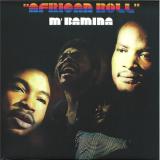
M’BAMINA - AFRICAN ROLL

Gatefold Sleeve

M’Bamina – African Roll (1975)
The story of an album born between Africa, Italy, and the nightclub culture of the 1970s
In the heart of 1970s Italy — a country undergoing profound social change and a music scene just beginning to open itself to distant sounds and cultures — an extraordinary, almost improbable story took shape. It is the story of a group of young African musicians who found their way to Europe, of a Turin nightclub that became a crossroads for communities and experimenters, and of an album which, released in small numbers and largely unnoticed at the time, is now considered a rare jewel of Afro-fusion.
The band called themselves M’Bamina — an ensemble of musicians from Congo, Cameroon, and Benin, who arrived in Italy in the early Seventies. Settling between northern Italy and the Pavia area, they began performing in small clubs and community events, bringing with them a vibrant rhythmic heritage: African polyrhythms, call-and-response vocals, funk-infused bass lines, and Caribbean or Afro-Latin colours absorbed along their musical journeys. Their raw, contagious energy on stage quickly drew attention.
Meanwhile, in Turin, another story was unfolding. There was a venue becoming almost legendary: Voom Voom, one of the city’s liveliest nightclubs, run by Ivo Lunardi. The club attracted an eclectic crowd — students, artists, foreigners, night owls — and Lunardi quickly understood that the dancefloor wasn’t just a place for music, but a melting pot for a new kind of cultural energy. Out of this vibrant atmosphere came his idea: to turn the club’s name into a small independent record label, Voom Voom Music, capable of capturing the spirit of those years and giving voice to unconventional projects.

When Lunardi heard M’Bamina, he immediately sensed that this was the sound he had been searching for: fresh, different from anything circulating in Italy at the time, and capable of blending African tradition with funk and European sensibility. He brought them into the studio.
Production was handled by Lunardi along with Christian Carbaza Michel, while the engineering was entrusted to Danilo Pennone, a young sound technician with a sharp, intuitive ear.
The recording sessions — held in Turin in 1975 — produced a remarkably warm and direct sound. The music feels almost live: grooves rooted in African tradition, but open to funk-rock structures and modern arrangements. It is a natural fusion, never forced. Tracks move between tribal rhythms, funk basslines, light electric guitars, congas and Afro-Latin percussion, with call-and-response vocals and melodies that echo both Congolese tradition and the lineage of Latin jazz. Not by chance, one of the album’s most striking tracks, Watchiwara, reinterprets a Latin standard through M’Bamina’s own rhythmic language.

The album was titled African Roll — a name that was already a statement of intention. It is African music that “rolls,” that moves, adapts, transforms within a new geographic and cultural setting. It is not strictly Afrobeat, nor Congolese rumba, nor Western funk: it is a spontaneous, hybrid blend, shaped more by lived experience than by any calculated aesthetic program.
When African Roll was released, the world around it barely noticed. Distribution was limited, and 1970s Italy had yet to develop a cultural framework for receiving such music. The national music press rarely paid attention to African or “world” productions. The album slipped into silence — though the band’s own story did not.

M’Bamina continued performing across Europe and Africa, even sharing a stage in Cameroon with none other than Manu Dibango. By the late Seventies, they moved to Paris, signed with Fiesta/Decca, and recorded a second LP, Experimental (1978). Meanwhile, the peculiar record they had made in Turin began to resurface quietly among vinyl collectors, Afro-funk enthusiasts, and DJs hunting for forgotten grooves.
That is when the album’s fate began to shift.

Over the decades, African Roll emerged as an almost unique document: a snapshot of an intercultural Italy before the word “intercultural” even existed, a fragment of migrant history, a spontaneous experiment in musical fusion born far from major industry circuits but rich in authenticity. Original copies began commanding high prices on the collector’s market, and the album became recognized as one of the hidden classics of European Afro-fusion from the 1970s.
Today, more than fifty years later, this reissue finally restores visibility and dignity to a project that deserves to be heard, studied, and celebrated. It is not simply an album: it is the testimony of a rare cultural encounter, born in an Italy unaware of how fertile such exchanges would one day become.

It is the story of a visionary producer, an extraordinary band, and a fleeting moment in which music, migration, and nightlife came together to create something genuinely new.
African Roll is — now more than ever — the sound of a bridge: between continents, between eras, between cultures. A record that, after rolling far and wide, has finally come home.

In Stock

On Stock and ready to ship

23,49
Ben Oyefeso - Sequenzmuzik LP 2x12"

The second release on Ben Kaczor and Lb Honne's new imprint "St. Odes" features Ben Oyefeso from Hamburg with a deep, glitchy 2x12" vinyl-only LP!

Ben Kaczor: “After a gig at the Golden Pudel in Hamburg last year, I stopped by Remoto Records the next day. The music playing in the shop struck me immediately — delicate, unusual, and soothing all at once. As I kept listening, I even noticed my headache fading away. Behind the counter was Ben Oyefeso, quietly playing his unreleased tracks. Since that moment, the rest is history.”

St. Odes emerges from the depths of Switzerland, born out of the friendship and shared sonic vision of Lb Honne and Ben Kaczor. Driven by a precise yet fearless approach to creative expression, the label embraces what they call “elegant punk” — a refusal to follow convention. While its roots lie in ambient, house, and techno, the focus remains singular: not on meaning, but on feeling.

The first release "Various Minds 001" sold out very quickly.

The second release features Ben Oyefeso from Hamburg with a deep, glitchy 2x12" vinyl-only LP!

Ben Kaczor: “After a gig at the Golden Pudel in Hamburg last year, I stopped by Remoto Records the next day. The music playing in the shop struck me immediately — delicate, unusual, and soothing all at once. As I kept listening, I even noticed my headache fading away. Behind the counter was Ben Oyefeso, quietly playing his unreleased tracks. Since that moment, the rest is history.”

In Stock

On Stock and ready to ship

27,69
Tanukichan - Circles

Tanukichan

Circles

12inchCAK176LP
Carpark Records
06.11.2024

Tanukichan, the musical project of Oakland, CA’s Hannah van Loon, has been a prominent figure in modern shoegaze music since 2016, when she first collaborated with Chaz Bear of Toro y Moi. Together, they released an EP and two full-length albums under Bear's Company Records, culminating in 2023's GIZMO. With her new EP Circles, out September 20th, 2024, via Carpark Records, van Loon ventures into new territory by teaming up with a new producer for the first time – Franco Reid.

The genesis of their partnership dates back to the GIZMO campaign, when Reid noticed van Loon wearing an Incubus shirt in a press photo on Instagram. Intrigued by whether or not van Loon was a genuine fan, he sent her a DM. Their shared musical interest sparked a dialogue that eventually led to the creation of the single "NPC" in 2023.

Lead single “City Bus,” offers a reflection on van Loon's childhood bus rides in San Francisco, evoking the stop-and-go rhythm of commuter life through hard-hitting drums and heavy guitar feedback phasing in and out of the mix. Themes of self-reflection and societal belonging permeate the track, echoing van Loon's ongoing personal journey.

While much of Circles delves into internal struggles, “It Gets Easier” takes on a more celebratory tone as van Loon realizes she’s developed a heightened sense of maturity when dealing with hardship. “It feels easier to let go of situations or people that don’t serve me,” reflects van Loon, “Or if they can’t be avoided, at least I don’t have to dwell on the sadness or discomfort I feel when letting someone down.” Introduced by Reid, nu-gaze sensation Wisp, contributes a verse in her similarly ethereal vocal style.

There is a notable shift on Circles when you consider the first three Tanukichan releases were produced by a pioneer of the chillwave genre. With van Loon’s consistently dreamy songwriting and Reid at the helm, Tanukichan enters new sonic territory that feels larger, arena-ready, and more like a highspeed night drive than the hazy summer dream of its predecessors.

In Stock

On Stock and ready to ship

19,96
Jasmine Guffond - Alien Intelligence

Through the medium of a distinctly synthesised, sustained ambience, seasoned artist and composer Jasmine Guffond arrives on OOH to explore the tension between technology and human creativity in an increasingly ambiguous playing field.

Alien Intelligence came into being during Guffond's residency at fabled Parisian institution GRM in 2021. While learning how to generate sound and make music with the in-house Serge modular synthesiser, the Australian artist noticed the typical role of human input for machine output was being subverted by the behaviour of certain electronic elements, which came to exercise their own influences on the direction of the music.

Taking this idea one step further, Guffond proceeded to explore the programming environment MaxMSP, a customisable interface which allowed her to blur the lines between human input and machine directives even further. Across the three extended pieces which make up Alien Intelligence you can hear the results of Guffond's inquisitive approach as she coaxed the machines into bringing their own ideas to bear on the music.

The tension inherent in this thematic duality is mirrored by the contrast between glacial ambience and chaotic interference across the album. On 'Serge & Maxine Variation One' the presiding mood is a slow and patient one, as undulating waveforms rich with harmonic overtones spill out over one another across 10 minutes. The track's latter passage, driven by steadily intensifying oscillations, is then interrupted with an unexpected flurry of pitch shifting. This kind of complex technical movement features more prominently at the start of 'Serge & Maxine Variation Three', which then gradually shifts into a gentler ebb and flow of rising and falling frequencies.

Angled slightly differently and residing on the B side of the album, 15-minute quiet epic 'Serge & Maxine Variation Two' bookends a louder passage of synth work with serene, sustained notes that ring out a sort of hymnal melody. Throughout, the movement in the music evolves in subtly modulating, hypnotic, ways, but there are also unexpected turns or melodic diversions which feel much more incongruous. In its closing stretch, the notes dart around more freely as though played by hand, but it's hard to be sure whether these shifts in the otherwise delicate tonal music were a human conceit or a programming by-product. In the end, the two inputs logically become one.

As Guffond says herself, "More-than-human logics emerge, a kind of alien intelligence that questions an assumed central position of human subjectivity in socio-technical assemblages and considers the philosophical, socio-political and cultural implications beyond music practice in an increasingly technologically mediated world."

As AI creeps into art as much as other aspects of modern life, Guffond applies her playful instinct to the theme of these works by re-considering machine intelligence as 'alien', crediting its contributions with a more robust yet enigmatic identity in the creative process, leading to an end result which is far from artificial.

►Mastered by Giuseppe Ielasi, cover art by Ilan Katin, layout by incepBOY, photo by Camille Blake, words by Oli Warwick

In Stock

On Stock and ready to ship

23,11
Space Ghost - Dance Planet (Be Free Edition)  LP

Space Ghost returns with Dance Planet – Be Free Edition, a remastered, recut and expanded edition of his beloved 2022 album. Featuring refreshed artwork, newly remastered audio, and a brand-new digital remix package from not even noticed, RAMZi, Crystalline Reality, and Space Ghost himself, this is the definitive version of a modern house classic.

Rooted in uplifting, soulful 4/4 traditions inspired by forebears like Larry Heard and Blaze, Dance Planet flows effortlessly between ambient reflection and warm, driving club cuts. The remaster brings added depth and clarity — from the lush swells of “Afterglow” and the tripped-out breaks of “Dream Weaver” to the R&B-tinged groove of “UFO. ” Dancefloor staples like “Back To The Source” and “Soul Shower” retain their warmth and punch, while “Emotional Healer” and “Be Yourself (Motivational Mix)” continue to deliver Space Ghost’s signature affirmation: don’t be afraid to be yourself, don’t be afraid to let go.

Pressed on 140g black vinyl with new artwork and including a download code for the full extended album + remixes. A timeless, feel-good house LP — restored and expanded for collectors and selectors alike

out of Stock

Order now and we will order the item for you at our supplier.

22,90

Last In: 3 days ago
Chalk - Crystalpunk LP

Chalk

Crystalpunk LP

12inchALT005
ALTER
13.03.2026
  • Tongue
  • Pain
  • Can't Feel It
  • Longer
  • Onenine-Eight-Zero
  • Eclipse
  • Skem
  • I.d.c
  • Beal Feirste
  • Ache

The beauty, confusion, complexity, and intensity of their youth - lived under the shadow and around the scars of conflict - are entangled in the industrial dance-punk hybrid encoded in the record's DNA, aptly entitled Crystalpunk. "This record is us waving a flag for that generation -- the ones who inherited confusion, resilience, and a fractured sense of self." They're waving that flag as intensely as possible too. For the uninitiated, Chalk mainlines the reaction between genres, eras, and cultures, commuting this collision into their sound. The Belfast group could comfortably power an underground warehouse party after-dark, incite a mid-day festival mosh-pit, or shake an arena on any given evening.

Their power has seamlessly translated to the stage with the group packing venues and delivering alternately sweaty and electrifying performances to a growing rabid fan base. As a group, they've sold out shows across the UK, EU and USA, notched festival performances such as Glastonbury, SXSW, BBK, Trans Musicals and more across 11 countries and were handpicked to tour alongside IDLES and Fontaines D.C.. Coming from dissimilar backgrounds and rallying together naturally, Ben and Ross first crossed paths in film school. As the story goes, Ben had noticed a framed poster of Dublin disruptors Gilla Band in one of Ross's Instagram photos and felt a kinship before ever actually speaking to him.

"Nobody else at our school was into experimental noise guitar bands, so that was all I needed to see," laughs Ben. Emerging in 2022, Chalk initially made waves with songs like "Them," "Velodrome," and "Static." Ultimately, they come-of-age and tell a story that resonates beyond borders. Not just a portrait of the band, but one of their home, a complicated place where the sacrifices made and risks taken by activists, artists, ravers and punks created the only environment that a band like Chalk could emerge from. Crystalpunk is not about choosing a side, it's about choosing the future.

pre-order now13.03.2026

expected to be published on 13.03.2026

25,17
Various - Blunted Breaks Vol.3 3x12"

Released in 2018, the Original Blunted Breaks Vol.1 compilation was a landmark release in the future jungle revival, collating the sounds of the rapidly emerging underground in long player format and extending the reach of the modern productions beyond the clubs and hardcore vinyl enthusiasts, to the likes of BBC Radio 6, with guest Dead Man’s Chest mix and album feature on Tom Ravenscroft’s show.

In the ensuing years, contemporary jungle music has continued to gain in popularity with a rapidly expanding global influence and reaching younger audiences who’ve adopted it as the sound of now.

In 2025, Western Lore continues its role as a modern tastemaker in both jungle music and the wider electronica scene with Blunted Breaks Vol.3, a 12 track long player featuring a selection of deep and textural future jungle workouts from the freshest rising talent & now established stalwarts of jungle music.

Released on triple heavyweight (180g) black vinyl, shrink-wrapped in full art sleeves & digital.

out of Stock

Order now and we will order the item for you at our supplier.

37,40

Last In: 9 months ago
Fleetwood Mac - Mirage LP 2x12"
  • Love In Store
  • Can’t Go Back
  • That’s Alright
  • Book Of Love
  • Gypsy
  • Only Over You
  • Empire State
  • Straight Back
  • Hold Me
  • Oh Diane
  • Eyes Of The World
  • Wish You Were Here

If every significant artist has an underrated gem in its catalog, then Mirage is that album for Fleetwood Mac. An obvious return to relative simplicity after the dramatic tension of Rumours and experimental ambitions of Tusk, the 1982 album finds the band re-grouping after a brief hiatus and again climbing to the top of the charts. Extremely well-crafted, well-produced, and well-performed, the double-platinum effort distills the group’s hallmark strengths into a filler-free set that never runs short of addictive pop hooks or daft accents.

Sourced from the original analog master tapes, pressed at Fidelity Record Pressing in California, and housed in a Stoughton jacket, Mobile Fidelity’s numbered-edition 180g 45RPM 2LP set presents Mirage in reference sound for the first time. The efforts co-producers/engineers Ken Caillat and Richard Dashut went to capture the splintered albeit formidable band can be heard with stunning accuracy, range, depth, and detail.

Though Rumours understandably gets a permanent spot in the audiophile hall of fame, the smooth, clear, and dynamic sonics on Mirage confirm that the record that stood as Fleetwood Mac’s last effort for five years deserves a place in the same vaunted arena. The presence and imaging of Mick Fleetwood’s percussion alone on this reissue might have you wondering how this slice of soft-rock bliss has gone under-noticed for decades. Other prized aural aspects — separation, definition, impact, tonal balance — are also here in spades.

Like much surrounding Fleetwood Mac in the 1980s, arriving at Mirage was not easy. Caillat searched for studios located outside of Los Angeles on a mission to change up the vibe of the band’s prior recording sessions. Everyone settled on Le Chateau in France, where relations between some members remained icy — and cooperation with the producers strained. Battles with exhaustion, bitterness, and addiction further informed the proceedings at the 18th century complex in the French countryside, where even communal meals were allegedly eaten in silence.

Inevitably, the feelings that co-producer Lindsey Buckingham, Stevie Nicks, Christine McVie, and company harbored — as well as the situations in which they found themselves — drifted into the songwriting. In its rapid ascent to rock-star royalty status, Fleetwood Mac drifted apart, embarked on solo pursuits, and found it was lonely at the top. Emptiness, the illusion of dreams, the longing for love, the want to escape to bygone times of innocence and happiness: Such themes inform a majority of the narratives. Even if the lyrics regularly take a back seat to easygoing arrangements that allow Mirage to come on like a refreshing breeze on a sunny summer afternoon.

Home to three Top 25 singles in the U.S. and having occupied the pole position of the Top 200 album charts for five weeks, Mirage rightfully resonated with the mainstream and attracted listeners on both sides of the pond. And how, via a smart blend of sugary melodies, warm harmonies, interlaced notes, nimble rhythms, taut structures, and passionate vocals. Not to mention the presence of what arguably remains Nicks’ signature song, the biographical “Gypsy,” a meditation on the loss of her close friend Robin Anderson that teems with majesty, mystery, and mysticism — and which gets an assist from Buckingham’s shaded tack piano and richly strummed guitar chords.

Its ranking as an all-time classic aside, that No. 12 hit has plenty of company when it comes to brilliant pop turns on Mirage. On the subject of Nicks, the raspy singer gets a little bit country on “That’s Alright.” Its clip-clopping pace and two-stepping progression complement subtle vocal swells that emerge during the final verse of a tune that is ostensibly about leaving but still conveys forgiveness and grace. And what would a Fleetwood Mac record be without Nicks drawing on the tools of the supernatural — cards, dreams, wolves, and the like — on the twirling “Straight Back.”

Despite the potency of Nicks’ primary contributions, Mirage seemingly unfolds as a tight competition between Buckingham and McVie — and one that ultimately ends in a draw. Buckingham’s salvos include the contagious “Can’t Go Back,” a yearning to time-travel back to the past that’s complete with hall-of-mirrors backing vocals; “Oh Diane,” out-of- left-field ear candy sweetened with hiccupped vocals and salt-and-pepper-shaken grooves; the chiming “Eyes of the World”; and “Empire State,” a delightfully fluttering track whose high-range vocals, lap harp notes, and ringing xylophones hint at the galaxies of sound that would erupt on Tango in the Night.

Then there’s McVie. As elegant, understated, and coolheaded as she’s ever been on record, she pours her heart out on cuts that revolve around her inevitable split with Beach Boy Dennis Wilson. In the process, she punctuates Mirage with a characteristic not always associated with catchy pop music: emotional weight, and the sense of dreaded acceptance in the face of dreams deferred.

“I wish you were here/Holding me tight,” McVie sings over a delicate melody on the album-closing piano ballad “Wish You Were Here.” Though they hoped otherwise, for the members Fleetwood Mac, distance and separation were always close at hand. Believing otherwise, inviting nostalgia, and pretending everything was fine only amounts to a mirage.

pre-order now31.03.2025

expected to be published on 31.03.2025

88,19
Cheb Bakr - Samh AlMea’ad

Habibi Funk is excited to announce the release of Samh Almea'ad, a new 7" record by Libyan artist Cheb Bakr, hitting the shelves on December 6, 2024. Recorded in the early 2000s, Bakr’s music fuses the pulse of Libyan pop with R&B and hip-hop influences, bringing the energy of Benghazi to the dance floors of New York in the early 2000s. Cheb Bakr’s sound is a unique blend of styles that captures the essence of two worlds and includes production and vocals by Ahmed Ben Ali.

Our journey with Cheb Bakr’s music began when Yousef Alhoush, whose father Najib Alhoush led The Free Music from Libya, generously lent us boxes of cassettes to digitize. With the help of a journalist traveling from Tripoli to Cairo, we brought the tapes and a high-quality deck to Egypt. For three days in a hotel room on Zamalek island in Cairo, we sifted through nearly 100 tapes, finally landing on several from Cheb Bakr that dated back to the late 1990s and early 2000s. His albums stood out for their fresh, genre-defying sound—Bakr’s vocals flowed effortlessly over R&B and hip-hop beats with touches of jungle and drum and bass percussion, creating a fusion that crossed cultural and musical boundaries.

Returning to Berlin, we took a deeper dive into the digitized tapes, identifying bands, singers, and producers that excited us. In the process, we noticed familiar rap verses on a few of Bakr’s tracks—verses by none other than Ahmed Ben Ali, who was about to release an album with Habibi Funk. When we asked Ahmed about his connection with Bakr, he explained that they’d collaborated closely at Jamaica Studios in Benghazi, with Ahmed even producing some of Bakr’s songs.

Despite having lost touch for years, Ahmed helped us reconnect with Cheb Bakr through mutual friends. Their reunion took place in Bakr’s living room, where we joined them on a video call to discuss Bakr’s career and his influences. He explained how he sought to reinterpret eastern Libyan folk sounds for a new generation, blending them with contemporary genres.

This 45 marks the beginning of our work with Cheb Bakr, offering a glimpse into his unique musical style, with a full album to follow at a later date. The release includes two standout tracks that showcase Bakr’s dynamic range. Side A features “Samh Almea'ad,” a reinterpretation of a 2003 New York classic with Bakr’s signature spin. Since our first listen in that Cairo hotel room, it’s been played at every Habibi Funk set without exception. Side B, produced by Ahmed Ben Ali, features “Rjana Lamta,” a track that hints at American influences alongside a nod to Ahmed’s “Dameek Majeb.” Bakr’s artistry ties these contrasting elements into an original, dancefloor-ready track that remains as captivating today as it was two decades ago. As always, this 7" release comes with a booklet detailing some of the Cheb Bakr story. Samh Almea'ad will be out on vinyl December 6th.

Licensing info: These songs were licensed from Cheb Bakr. We pay the licensing partner 50% of the profits of this release. Only project related costs are deductible from the gross income, research and travel costs come out of our own share. Publishing was not included in our agreement (We feel it’s important to be transparent about these deals, therefore we will include these infos in all future releases).

out of Stock

Order now and we will order the item for you at our supplier.

12,40

Last In: 10 days ago
Evgeny Grinko - Tiny Mouse Tales / Naive Album

Tiny Mouse Tales was released in 2018. At the time, Evgeny was living in a house surrounded by forest. One night he noticed movement in his kitchen and saw a mouse. The mouse kept coming back but seemed to have different features each time! Eventually Evgeny understood that it was a family of mice, and the title of his new record was evident. On Tiny Mouse Tales Evgeny tells the musical story of the family of mice living in his home, expanding his palate to include the trumpet to great effect on tracks such as “Hunter In Love” and “Prologue.” The blog Spellbinding Music sums it up perfectly: “With short pieces such as “Prologue”, “Epilogue” or “Carousel”, the Tiny Mouse Tales EP sketches wonderful cinematic themes begging to be expanded and heard on the big screen.” Naive Album was released in 2019. Album opener “Where Art Thou” announces the arrival of a masterpiece. More than ever, Evgeny’s compositional voice is fully formed. Each track feels like a journey in itself, and the album has several crescendos that make the listener feel as if there is an entire orchestra backing Evgeny. The album closer, “Unexpected Finale Somewhere in Lisbon,” perfectly encapsulates this masterpiece. Running through three separate, repeating themes, the track is at times mournful, intense, epic and humorous. Witness the picked / improvised violin notes on top of the relaxed accordion theme that makes up the second half of the track. Although the record was recorded in Lisbon, this track has the feeling of a stroll down the Seine in Paris, a silhouette dancing with heels clicking left and right. Now, these treasured recordings and pieces of Evgeny Grinko’s creative world will be available in physical format for the first time.

pre-order now08.11.2024

expected to be published on 08.11.2024

25,17
deary - Aurelia LP

Deary

Aurelia LP

12inchSCR295EP
SONIC CATHEDRAL
01.11.2024

Just under a year after their acclaimed self-titled debut, dreampop duo deary release a brand new six-track EP – Aurelia – via Sonic Cathedral on November 1. It includes the singles ‘The Moth’, ‘Selene’ and ‘The Drift’ and features Slowdive drummer Simon Scott playing on three songs. It will be available on three different vinyl variants, a CD with three bonus tracks and digitally. It’s a stunning record, which displays a new-found maturity in terms of production as well as musically and lyrically. The band – singer Rebecca ‘Dottie’ Cockram and guitarist/producer Ben Easton – have had to grow up in public since the release of their debut single at the start of 2023, supporting legends such as Slowdive and Cranes and TikTok sensations like Wisp along the way. An aurelian is a rare old term for a lepidopterist – someone who studies and collects moths – derived from the Latin aurelia, meaning chrysalis. The perfect title for an EP which is based around the theme of metamorphosis and change. “It leans on the natural world, the human body, the earth and sky as well as human emotion,” says Ben of how the EP represents physical and metaphysical growth. “Change can be daunting but equally exciting, which is something we’ve come to learn.” “While writing the EP, I found a letter I had written to myself when I was 22,” adds Dottie. “I was fresh out of university and had moved back in with my parents as Covid was in full force. I was uninspired and lost and reaching out to my future self for some hope. It was a physical representation of what can happen in a few years; how much can change and how you never know what’s coming next. “I found it interesting that – at the age of 26 – here I was looking back to my younger self for hope or just some comfort in the fact that things will and do move on. It was important to me to bring both of these versions of myself into the new songs.” “Personally, I had noticed a change in myself; a new level of social anxiety, a strange disassociation to things that once brought me joy as well as negative repetitions in my daily life,” reveals Ben. “I began the year sober which allowed me to finish the writing process as a letter of care to my own mental health. There are motifs throughout the EP – for example the riffs in ‘The Moth’ and ‘The Drift’ being reminiscent of each other – which are like musical reflections of these repeated cycles.” It’s musically where the change deary have undergone is most obvious. ‘The Moth’ mixes howling guitars atop a strident breakbeat making it more Curve than Cocteaus; ‘Selene’ is a slow-building wall of noise; ‘The Drift’ combines a perfect pop melody with an incredible sense of urgency. These three singles are balanced by the brief but beautiful ‘Where You Are’ which leads into the Portishead-style trip-hop of ‘Dream Of Me’. The title track has been a staple of their live sets for about a year as ‘Can’t Sleep Tonight’, but its mix of The Cure circa Disintegration and Mezzanine Massive Attack has grown and evolved so much that they renamed it ‘Aurelia’ as the embodiment of the change they have been through. “We’ve allowed deary to naturally grow over the past year, we didn’t want to force it to take a certain shape or sound,” explains Dottie of the duo’s slow and steady approach. “A lot of the last EP was written by sending ideas back and forth over WhatsApp, but this time we were able to sit in the same room and I think that really shows. We know each other a lot better now as we have experienced this journey together and that benefits the writing process as we are more open with each other and can be vulnerable.” “Aurelia definitely feels a lot more collaborative, more personal and more fully realised than the first EP,” concludes Ben. “It feels like a real document of what has been a very important time in both of our lives. Ironically, the band has changed and matured even more since the recording, so we’re both excited to document the next stage

pre-order now01.11.2024

expected to be published on 01.11.2024

24,16
Dancefloor Classics - Dancefloor Classics Vol. 5

Sasu Ripatti presents the fifth and last volume in his "Dancefloor Classics" series. Music for imaginary dancefloors, released on Ripatti's own label "Rajaton".

--

”Look up, into the light” she said, while the camera shutter clicked. ”Like this? Does it look holy?” His neck felt stiff. Her reply: ”Yes, just like that. What do you mean holy? Like religious? ”No, more like trying to look very far, somewhere beyond what we can see.” ”Okay, stand still, I’m going to come close to you now. The light hits your face great.” click, click, click.
He noticed her fingernails. They were not polished. Natural. Even somewhat rugged, as if something wore out the fingers slightly. What had these hands held besides the camera? What made the edges of her fingernails drift off?
He thought it’s weird to look straight into the camera. The photographer had closed her left eye, the one not looking into the lens. Then it opened, she looked up, perusing the surroundings, then she closed her eye again, then looked up, closed, looking up, very quickly. It all seemed very professional. Maybe she calculated the light, making sure it’s close to perfect. ”What will these photos look like?” – the thought popped into his head briefly. It was liberating to think it wouldn’t matter.
”What’s that song playing?” he asked. ”Wait a sec, Ol’ Dirty Bastard?” she replied. ”Oh yeah, right. But the sample?” ”Hey, could you look up again, like that. No, lower.”
New directions: ”Look out from the window, turn left.” ”My left or yours?” ”Yours, I always try to think from the direction of my model.” How professional! This is a good shoot, so natural. Should I worry about how the photos look like? No, I don’t want to. His thoughts bounced around. What would the story be like? It’s a big newspaper, everyone will read it. Maybe someone drinks coffee and eats a stroopwafel while they do it. Will they place the waffle on top of the mug for a brief while, so that it gets hot and the syrup melts a little? Then it feels wet, and you can bend the cookie.
She broke his train of thought off midway through: ”Now turn right, but look left, and slightly up, but don’t turn your face right.” ”Umm, like this? Sounds like a set of pilates instructions.” she laughed ”You do pilates?” ”Yeah, it’s hard sometimes. Have you tried?” ”No”, she said. ”I’m not good for sports that are done in groups.” ”Yeah, but in pilates you can just be inside your mind, drowning in your private thoughts.”
”What are you thinking in pilates?” she asked, taking more photos. ”Well, mostly just which way is right. And which left.” click, click.

out of Stock

Order now and we will order the item for you at our supplier.

17,44

Last In: 20 months ago
Dancefloor Classics - Dancefloor Classics Vol. 4
 
4
also available

Vol.1[17,27 €]

Vol.2[19,20 €]

Vol.3[19,12 €]

Vol.5[17,44 €]


Sasu Ripatti presents the fourth volume in his "Dancefloor Classics" series with five 10" releases coming throughout 2023. Music for imaginary dancefloors, released on Ripatti's own label "Rajaton".

”Look up, into the light” she said, while the camera shutter clicked. ”Like this? Does it look holy?” His neck felt stiff. Her reply: ”Yes, just like that. What do you mean holy? Like religious? ”No, more like trying to look very far, somewhere beyond what we can see.” ”Okay, stand still, I’m going to come close to you now. The light hits your face great.” click, click, click.

He noticed her fingernails. They were not polished. Natural. Even somewhat rugged, as if something wore out the fingers slightly. What had these hands held besides the camera? What made the edges of her fingernails drift off?

He thought it’s weird to look straight into the camera. The photographer had closed her left eye, the one not looking into the lens. Then it opened, she looked up, perusing the surroundings, then she closed her eye again, then looked up, closed, looking up, very quickly. It all seemed very professional. Maybe she calculated the light, making sure it’s close to perfect. ”What will these photos look like?” – the thought popped into his head briefly. It was liberating to think it wouldn’t matter.

”What’s that song playing?” he asked. ”Wait a sec, Ol’ Dirty Bastard?” she replied. ”Oh yeah, right. But the sample?” ”Hey, could you look up again, like that. No, lower.”

New directions: ”Look out from the window, turn left.” ”My left or yours?” ”Yours, I always try to think from the direction of my model.” How professional! This is a good shoot, so natural. Should I worry about how the photos look like? No, I don’t want to. His thoughts bounced around. What would the story be like? It’s a big newspaper, everyone will read it. Maybe someone drinks coffee and eats a stroopwafel while they do it. Will they place the waffle on top of the mug for a brief while, so that it gets hot and the syrup melts a little? Then it feels wet, and you can bend the cookie.

She broke his train of thought off midway through: ”Now turn right, but look left, and slightly up, but don’t turn your face right.” ”Umm, like this? Sounds like a set of pilates instructions.” she laughed ”You do pilates?” ”Yeah, it’s hard sometimes. Have you tried?” ”No”, she said. ”I’m not good for sports that are done in groups.” ”Yeah, but in pilates you can just be inside your mind, drowning in your private thoughts.”

”What are you thinking in pilates?” she asked, taking more photos. ”Well, mostly just which way is right. And which left.” click, click.

Q&A with Sasu Ripatti:

1) Tell us something about the EP series ”Dancefloor Classics”, what’s the idea and what can we expect?

I’ve been slowly writing these sort of dance music pieces and finally curated them together for a conceptual release. I like to create music for a dancefloor that exists only in my imagination and doesn’t try to suck up to the standardized reality.

2) Your vinyl format is 10” which is quite special (as opposed to LP / 12”). Why did you choose it?

It’s my favourite format, absolutely. The size is perfect, and you can make it sound really good @ 45 rpm. And you still can make great artwork.

3) You seem interested in sampling/repurposing, what does it mean to you as an artist to approach something already existing from a new angle? How does the source material inform you about the approach to take?

I guess i could flip it around and just say I’ve outgrown synths or electronic sounds to a great extend, and having gotten rid off all my synths already good while ago I’ve used samples as my main source material a lot. It’s obvious on this series that i’ve sampled existing music, but I also sample instruments and things in the studio and resample my own library that I have built over the years, it’s quite large. To me the end result matters, not so much how I get there. Once I have something on my keyboard and play around, it’s all an instrument, though with sampling other music it becomes a really interesting and complex one as you’re possibly playing rhythm, but also harmonic content and maybe hooks or whatever, all at once.
I never sample premeditadedly, like listening to records and looking for that mindblowing 3 sec part. I just throw the cards in the air and see what lands where, just full intuition and hopefully zero mind involved, playing tons of stuff, trying things, just recording hours of stuff. Then comes the interesting part to listen to hours of mostly crazy stuff and finding that mindblowing 3 sec part.

4) What is your relationship with the dancefloor (conceptually and/or in experiences / as a performer)?

Very complicated. I have never really felt comfortable on a dancefloor but have always wanted to. There’s something in club music, in theory, that really speaks to me. It has never really materialized for me – speaking mainly from a performer’s point of view who goes to check on a dancefloor for a moment after a concert. I never have DJ’d or felt much interest towards it. But again, I love the idea and concept of DJing. As well as producing music for imaginary DJs. Lately, as in the past 10+ years, I haven’t even performed in any sort of club spaces. So my relationship to the dancefloor is quite removed and reduced, but there’s quite a bit of passion and interest left.

All tracks composed and produced by Sasu Ripatti.
Artwork & photography by Marc Hohmann.
Mastering by Stephan Mathieu for Schwebung Mastering.
Vinyl cut by SST Brueggemann.
Publishing by WARP Music Ltd.

out of Stock

Order now and we will order the item for you at our supplier.

17,27

Last In: 20 months ago
Tanukichan - Circles (TAPE)

Tanukichan

Circles (TAPE)

CassetteCAK176CS
Carpark Records
20.09.2024

Tanukichan, the musical project of Oakland, CA’s Hannah van Loon, has been a prominent figure in modern shoegaze music since 2016, when she first collaborated with Chaz Bear of Toro y Moi. Together, they released an EP and two full-length albums under Bear's Company Records, culminating in 2023's GIZMO. With her new EP Circles, out September 20th, 2024, via Carpark Records, van Loon ventures into new territory by teaming up with a new producer for the first time – Franco Reid.

The genesis of their partnership dates back to the GIZMO campaign, when Reid noticed van Loon wearing an Incubus shirt in a press photo on Instagram. Intrigued by whether or not van Loon was a genuine fan, he sent her a DM. Their shared musical interest sparked a dialogue that eventually led to the creation of the single "NPC" in 2023.

Lead single “City Bus,” offers a reflection on van Loon's childhood bus rides in San Francisco, evoking the stop-and-go rhythm of commuter life through hard-hitting drums and heavy guitar feedback phasing in and out of the mix. Themes of self-reflection and societal belonging permeate the track, echoing van Loon's ongoing personal journey.

While much of Circles delves into internal struggles, “It Gets Easier” takes on a more celebratory tone as van Loon realizes she’s developed a heightened sense of maturity when dealing with hardship. “It feels easier to let go of situations or people that don’t serve me,” reflects van Loon, “Or if they can’t be avoided, at least I don’t have to dwell on the sadness or discomfort I feel when letting someone down.” Introduced by Reid, nu-gaze sensation Wisp, contributes a verse in her similarly ethereal vocal style.

There is a notable shift on Circles when you consider the first three Tanukichan releases were produced by a pioneer of the chillwave genre. With van Loon’s consistently dreamy songwriting and Reid at the helm, Tanukichan enters new sonic territory that feels larger, arena-ready, and more like a highspeed night drive than the hazy summer dream of its predecessors.

pre-order now20.09.2024

expected to be published on 20.09.2024

11,98
LOMA - How Will I Live Without a Body LP

January 2023, Dorset. Snow is piled at the door, icy roads are closed, and Emily Cross is in a coffin. Not a setting typical for a rebirth. But for Loma, this is where they bring their band back from the brink. "It's like a demon enters the room, whenever we get together", writer, singer and instrumentalist Cross says of the struggle to bring new Loma music into the world. Following the release of their 2020 second album Don't Shy Away, Loma's three members were cast around the globe and the band-not for the first time-entered a deep sleep. Multi-instrumentalist and recording engineer Dan Duszynski remained in his studio in Don't Shy Away's central Texas heart, but Cross, a UK citizen, moved to Dorset, and writer and instrumentalist Jonathan Meiburg left the US for Germany to research a book. In the pandemic years, even being in the same room was impossible, and attempts to start a new record faltered. The following winter, in an attempt to salvage the record and the band, Cross suggested they regroup in the UK, in the tiny stone house-once a coffin-maker's workshop-where she works as an end-of-life doula. With minimal recording gear and few instruments, Loma turned two whitewashed rooms into a makeshift studio, using a padded coffin as a vocal booth. It was a turning point. They scrapped much of what they'd made, letting a new place set a new course. The one-lane roads, hedgerows and dark skies of Dorset gave the new songs an ineffable but unmistakable Englishness. The band used the ruin of a 12th-century chapel as a reverb chamber-surprising hillwalkers who peeked in to find them singing to no one-and the sounds of Cross's chilly workshop wormed their way into the recording: a leaky pipe, a drummer's brushes on a metal lampshade, the voices left on an ancient answering machine. What emerged was How Will I Live Without A Body?: a gorgeous, unique, and oddly comforting album about partnership, loss, regeneration, and fighting the feeling that we're all in this alone. Many of its songs have a feeling of restless motion; faceless characters drift through meetings and partings, tangling together and slipping away. "I Swallowed A Stone" is like a nightmare with a happy ending; "How It Starts" and "Broken Doorbell" reflect on the challenge (and necessity) of wrestling with agoraphobia. Though the record nods to the trio's separate lives- a German percussion ensemble, a pair of Texan owls, and the surf at Chesil Beach make guest appearances-the core of Loma's sound remains intact: earthy, organic and deeply human, anchored by Cross's cool, clear voice. Loma's previous album, Don't Shy Away, was galvanized by the unexpected encouragement and contributions of Brian Eno. This time, they found inspiration in another hero, Laurie Anderson, who offered a chance to work with an AI trained on her entire body of work. Meiburg sent her a photo from his book-in-progress about the once and future life of Antarctica; Anderson's AI responded with two haunting poems. "We used parts of them in a few songs," he says. "And then Dan noticed that one of its lines, 'How will I live without a body?' would be a perfect name for the album, since we nearly lost sight of each other in the recording process." In the end, Loma's efforts to reconnect with one another are the album's central focus: what do you owe a shared past, when everyone and everything has changed? "Making this record tested us all," says Duszynski. "I think that feeling was alchemized through the music." Alchemized, because How Will I Live Without A Body? is by no means a stressed-out record: an undercurrent of deep calm runs through it. But maybe 'relaxed' isn't the right word. It's more like a feeling of relief, of making it through a tough journey together.

pre-order now28.06.2024

expected to be published on 28.06.2024

23,95
Dancefloor Classics - Dancefloor Classics Vol. 1 - 5 (5x10€)

Sasu Ripatti's complete "Dancefloor Classics" series. Music for imaginary dancefloors, released on Ripatti's own label Rajaton.

”Look up, into the light” she said, while the camera shutter clicked. ”Like this? Does it look holy?” His neck felt stiff. Her reply: ”Yes, just like that. What do you mean holy? Like religious? ”No, more like trying to look very far, somewhere beyond what we can see.” ”Okay, stand still, I’m going to come close to you now. The light hits your face great.” click, click, click.
He noticed her fingernails. They were not polished. Natural. Even somewhat rugged, as if something wore out the fingers slightly. What had these hands held besides the camera? What made the edges of her fingernails drift off?
He thought it’s weird to look straight into the camera. The photographer had closed her left eye, the one not looking into the lens. Then it opened, she looked up, perusing the surroundings, then she closed her eye again, then looked up, closed, looking up, very quickly. It all seemed very professional. Maybe she calculated the light, making sure it’s close to perfect. ”What will these photos look like?” – the thought popped into his head briefly. It was liberating to think it wouldn’t matter.
”What’s that song playing?” he asked. ”Wait a sec, Ol’ Dirty Bastard?” she replied. ”Oh yeah, right. But the sample?” ”Hey, could you look up again, like that. No, lower.”
New directions: ”Look out from the window, turn left.” ”My left or yours?” ”Yours, I always try to think from the direction of my model.” How professional! This is a good shoot, so natural. Should I worry about how the photos look like? No, I don’t want to. His thoughts bounced around. What would the story be like? It’s a big newspaper, everyone will read it. Maybe someone drinks coffee and eats a stroopwafel while they do it. Will they place the waffle on top of the mug for a brief while, so that it gets hot and the syrup melts a little? Then it feels wet, and you can bend the cookie.
She broke his train of thought off midway through: ”Now turn right, but look left, and slightly up, but don’t turn your face right.” ”Umm, like this? Sounds like a set of pilates instructions.” she laughed ”You do pilates?” ”Yeah, it’s hard sometimes. Have you tried?” ”No”, she said. ”I’m not good for sports that are done in groups.” ”Yeah, but in pilates you can just be inside your mind, drowning in your private thoughts.”
”What are you thinking in pilates?” she asked, taking more photos. ”Well, mostly just which way is right. And which left.” click, click.

Q&A with Sasu Ripatti:

1) Tell us something about the EP series ”Dancefloor Classics”, what’s the idea and what can we expect?

I’ve been slowly writing these sort of dance music pieces and finally curated them together for a conceptual release. I like to create music for a dancefloor that exists only in my imagination and doesn’t try to suck up to the standardized reality.

2) Your vinyl format is 10” which is quite special (as opposed to LP / 12”). Why did you choose it?

It’s my favourite format, absolutely. The size is perfect, and you can make it sound really good @ 45 rpm. And you still can make great artwork.

3) You seem interested in sampling/repurposing, what does it mean to you as an artist to approach something already existing from a new angle? How does the source material inform you about the approach to take?

I guess i could flip it around and just say I’ve outgrown synths or electronic sounds to a great extend, and having gotten rid off all my synths already good while ago I’ve used samples as my main source material a lot. It’s obvious on this series that i’ve sampled existing music, but I also sample instruments and things in the studio and resample my own library that I have built over the years, it’s quite large. To me the end result matters, not so much how I get there. Once I have something on my keyboard and play around, it’s all an instrument, though with sampling other music it becomes a really interesting and complex one as you’re possibly playing rhythm, but also harmonic content and maybe hooks or whatever, all at once.
I never sample premeditadedly, like listening to records and looking for that mindblowing 3 sec part. I just throw the cards in the air and see what lands where, just full intuition and hopefully zero mind involved, playing tons of stuff, trying things, just recording hours of stuff. Then comes the interesting part to listen to hours of mostly crazy stuff and finding that mindblowing 3 sec part.

4) What is your relationship with the dancefloor (conceptually and/or in experiences / as a performer)?

Very complicated. I have never really felt comfortable on a dancefloor but have always wanted to. There’s something in club music, in theory, that really speaks to me. It has never really materialized for me – speaking mainly from a performer’s point of view who goes to check on a dancefloor for a moment after a concert. I never have DJ’d or felt much interest towards it. But again, I love the idea and concept of DJing. As well as producing music for imaginary DJs. Lately, as in the past 10+ years, I haven’t even performed in any sort of club spaces. So my relationship to the dancefloor is quite removed and reduced, but there’s quite a bit of passion and interest left.

All tracks composed and produced by Sasu Ripatti.
Artwork & photography by Marc Hohmann.
Mastering by Stephan Mathieu for Schwebung Mastering.
Vinyl cut by SST Brueggemann.
Publishing by WARP Music Ltd.

out of Stock

Order now and we will order the item for you at our supplier.

66,35

Last In: 20 months ago
Dakota Suite - This River Only Brings Poison LP 2x12"

»This River Only Brings Poison« was released in 2002 as the sixth full-length album of Chris Hooson’s Dakota Suite project. This first-ever vinyl edition of the record includes four bonus pieces and makes it possible for fans to re-evaluate one of the most crucial Dakota Suite albums in the project’s vast discography while also providing new listeners with an entry point into its intricate musical cosmos. With contributions by artists as diverse as steel guitarist Bruce Kaphan and drummer Tim Mooney from American Music Club, Derald Daugherty, and Laura and Chris Donohue as well as long-time collaborators such as David Buxton, Colin Dunkley or Ed Collins, »This River Only Brings Poison« turned out as a sonically rich and stylistically versatile as it is emotionally multi-layered.

»Writing music for me has always been a cathartic exercise,« explains Hooson. While the instrumental pieces generally serve to express a raw sense of his internal struggles, his vocal-led songs communicate them more directly. »Those are the words I cannot say openly. It’s not that I cannot voice them in a conversation, it’s just that they only seem half-formed and not ›true‹ unless they are located within a song,« he says. What makes Dakota Suite unique is that throughout the project’s history, the music and lyrics have always had a single addressee: Hooson’s wife Johanna, whose photographs were used for the album artwork and who is featured on clarinet on »sand fools the shoreline.«

»The title of the record was something that I had said when Johanna and I first met to make her see that the journey she was considering taking would be full of love, but also come at a cost,« explains Hooson. »The songs were written at a time when I was really struggling to think I could be the person that she deserved.« In the end however, »This River Only Brings Poison« marked a turning point in Hooson’s oeuvre after highly productive time with Dakota Suite: it would take another five years until he returned with a new album. »The reason for that was that I needed to accept that she had made her choice to be with me and that was a big thing for me to get my head around,« he says.

Hooson’s highly personal approach to writing songs also has an impact on the ways in which he works with his collaborators when recording them. »The people with whom I play really need to understand how I perceive the world to be able to play what I need,« he says. »My instructions would always be things like, ›This is what the song means to me, this is what I am trying to communicate to Johanna when she hears it, so your cello, for example, needs to sound like you have noticed that the cloud is covering the sun, and the weight of the air on your skin is heavier and it has unsettled you.‹«

For this particular record, he reached out to Mooney and Kaphan as an admirer of their group American Music Club. Expecting to be rejected, he instead found himself on a flight to San Francisco together with multi-instrumentalist Buxton shortly thereafter, about to make what he today calls one of his most cherished recording experiences. After the four musicians finished the basic tracks, overdubs were added in Hooson and Buxton’s respective houses as well as Daugherty’s home studio while Hooson was visiting his old friend in Nashville.

Hooson emphasises that revisiting his older releases can be complicated. »I feel intense feelings, as every record is a diary of who I was in that period and what I was feeling. That is why having to play the songs live is always like having PTSD: I need to re-experience the event that caused me to write the song, and I do not enjoy that.« He remains, however, proud of »This River Only Brings Poison,« pointing especially to the opener »the lepers companion« as what might perhaps be his favourite song of his. »But overall I just hope that Johanna feels it spoke to her,« he says, adding that the two do not discuss his records. »For me it's enough that she is listening to the things I mean to communicate to her.«

pre-order now29.09.2023

expected to be published on 29.09.2023

32,73
Dancefloor Classics - Dancefloor Classics Vol. 3
 
4
also available

Vol.1[17,27 €]

Vol.2[19,20 €]

Vol.4[17,27 €]

Vol.5[17,44 €]


Sasu Ripatti presents the third volume in his "Dancefloor Classics" series with five 10" releases coming throughout 2023. Music for imaginary dancefloors, released on Ripatti's own label "Rajaton".

--
”Look up, into the light” she said, while the camera shutter clicked. ”Like this? Does it look holy?” His neck felt stiff. Her reply: ”Yes, just like that. What do you mean holy? Like religious? ”No, more like trying to look very far, somewhere beyond what we can see.” ”Okay, stand still, I’m going to come close to you now. The light hits your face great.” click, click, click.

He noticed her fingernails. They were not polished. Natural. Even somewhat rugged, as if something wore out the fingers slightly. What had these hands held besides the camera? What made the edges of her fingernails drift off?

He thought it’s weird to look straight into the camera. The photographer had closed her left eye, the one not looking into the lens. Then it opened, she looked up, perusing the surroundings, then she closed her eye again, then looked up, closed, looking up, very quickly. It all seemed very professional. Maybe she calculated the light, making sure it’s close to perfect. ”What will these photos look like?” – the thought popped into his head briefly. It was liberating to think it wouldn’t matter.

”What’s that song playing?” he asked. ”Wait a sec, Ol’ Dirty Bastard?” she replied. ”Oh yeah, right. But the sample?” ”Hey, could you look up again, like that. No, lower.”

New directions: ”Look out from the window, turn left.” ”My left or yours?” ”Yours, I always try to think from the direction of my model.” How professional! This is a good shoot, so natural. Should I worry about how the photos look like? No, I don’t want to. His thoughts bounced around. What would the story be like? It’s a big newspaper, everyone will read it. Maybe someone drinks coffee and eats a stroopwafel while they do it. Will they place the waffle on top of the mug for a brief while, so that it gets hot and the syrup melts a little? Then it feels wet, and you can bend the cookie.

She broke his train of thought off midway through: ”Now turn right, but look left, and slightly up, but don’t turn your face right.” ”Umm, like this? Sounds like a set of pilates instructions.” she laughed ”You do pilates?” ”Yeah, it’s hard sometimes. Have you tried?” ”No”, she said. ”I’m not good for sports that are done in groups.” ”Yeah, but in pilates you can just be inside your mind, drowning in your private thoughts.”

”What are you thinking in pilates?” she asked, taking more photos. ”Well, mostly just which way is right. And which left.” click, click.

--

out of Stock

Order now and we will order the item for you at our supplier.

19,12

Last In: 3 years ago
XYLOURIS WHITE - THE FOREST IN ME

More in tune now with the rhythm of the sun and moon, Xylouris White (Dirty Jim White and George Xylouris) speak to each other across great distances with the intuition and fellowship that can only be found over years in each other"s company. With fewer distractions, appreciative of the freedom to play with new sounds and spaces, they carve The Forest In Me from unbelievably thin air. Once you set the needle down on the record and hear for yourself, the intimacies and impressionism, abstraction and unfiltered emotion found in The Forest In Me, you may wonder what was the mood of the room in which this music came to be. George, Jim and long-time producer (and secret third member) Guy Picciotto share their thoughts: Guy Picciotto: "In late 2019, we had begun taking steps to working on new material. In a haphazard fashion, Jim and I started tracking drums in my basement, cutting them up into shapes with no set landing in mind. Some of it we sent to Giorgos in Crete - he responded with his lyra and his lute. Without intention we had initiated a process that would soon become more ruthlessly mandated by the world events that separated and isolated us to three corners of the globe in the following year." Giorgos Xylouris: "While we were recording, I noticed that the music had a certain solitude about it, both from the title and from inside. That led us to find more music from within that we had not yet discovered." Jim White: "The idea emerged, naturally nourished and nourishing a record with none of our usual angles and themes, no verbal language, no angst nor sudden dynamics, a more subtle structure. And we found The Forest In Me." The first revelation from The Forest In Me is "Latin White", in which Jim"s jaunty pattern sets the stage for George"s Cretan lyra and lute figurations, giving this short dance piece the feel of a welcome hoedown around the campfire, warding off the encroaching darkness of an emptied world. The repetitions, gathered to induce joy, have a glassy-eyed mechanical drive to them; their dervish-istic seeking betrays any suggestion of balm.

pre-order now14.04.2023

expected to be published on 14.04.2023

25,42
Dancefloor Classics - Dancefloor Classics Vol. 1
 
4
also available

Vol.2[19,20 €]

Vol.3[19,12 €]

Vol.4[17,27 €]

Vol.5[17,44 €]


”Look up, into the light” she said, while the camera shutter clicked. ”Like this? Does it look holy?” His neck felt stiff. Her reply: ”Yes, just like that. What do you mean holy? Like religious? ”No, more like trying to look very far, somewhere beyond what we can see.” ”Okay, stand still, I’m going to come close to you now. The light hits your face great.” *click, click, click.

He noticed her fingernails. They were not polished. Natural. Even somewhat rugged, as if something wore out the fingers slightly. What had these hands held besides the camera? What made the edges of her fingernails drift off?

He thought it’s weird to look straight into the camera. The photographer had closed her left eye, the one not looking into the lens. Then it opened, she looked up, perusing the surroundings, then she closed her eye again, then looked up, closed, looking up, very quickly. It all seemed very professional. Maybe she calculated the light, making sure it’s close to perfect. ”What will these photos look like?” – the thought popped into his head briefly. It was liberating to think it wouldn’t matter.

”What’s that song playing?” he asked. ”Wait a sec, Ol’ Dirty Bastard?” she replied. ”Oh yeah, right. But the sample?” ”Hey, could you look up again, like that. No, lower.”

New directions: ”Look out from the window, turn left.” ”My left or yours?” ”Yours, I always try to think from the direction of my model.” How professional! This is a good shoot, so natural. Should I worry about how the photos look like? No, I don’t want to. His thoughts bounced around. What would the story be like? It’s a big newspaper, everyone will read it. Maybe someone drinks coffee and eats a stroopwafel while they do it. Will they place the waffle on top of the mug for a brief while, so that it gets hot and the syrup melts a little? Then it feels wet, and you can bend the cookie.

She broke his train of thought off midway through: ”Now turn right, but look left, and slightly up, but don’t turn your face right.” ”Umm, like this? Sounds like a set of pilates instructions.” she laughed ”You do pilates?” ”Yeah, it’s hard sometimes. Have you tried?” ”No”, she said. ”I’m not good for sports that are done in groups.” ”Yeah, but in pilates you can just be inside your mind, drowning in your private thoughts.”

”What are you thinking in pilates?” she asked, taking more photos. ”Well, mostly just which way is right. And which left.” *click, click.

pre-order now24.02.2023

expected to be published on 24.02.2023

17,27
TEX PERKINS AND THE FAT RUBBER BAND - TEX PERKINS AND THE FAT RUBBER BAND

The latest thrilling incarnation of master rock'n'roll storyteller Tex Perkins (The Cruel Sea, Beasts of Bourbon, Thug, Tex Deadly and the Dum Dums, Tex, Don et Charlie.) and the Fat Rubber Band began with a rare vinyl copy of Link Wray's Beans and Fatback album, recorded in 1971. Perkins and his respected musician, songwriter, producer and bandmate Matt Walker share a mutual admiration of the American electric guitar innovator, whose iconic power chords in his signature 50s rock'n'roll instrumentals, had a profound influence on the evolution of rock guitar. The Fat Rubber Band is borned with this rare vinyl, the pair have enjoyed countless musical conversations over the decade while hanging out backstage and on the road. Walker offered the debut album's opening track, the wide-screen drama of "Pay The Devil's Due". Perkins responded with the plaintive blues of "My Philosophy". Walker replied with the album's fuzz driven debut single "Danger Has Been Kind" and Perkins countered with the glacially-paced, intimate "Poor Simple Minded Fool". The pair road-tested their works in progress as a duo before enlisting bassist Steve Hadley, drummer Roger Bergodaz and Evan Richards on percussion to complete the Fat Rubber Band line-up to record the album's ten tracks at Walker's Stovepipe Studios in Victoria's Dandenong Ranges. "At Matt's studio - you open the door to the studio and nature floods in," Perkins says. "We wanted it to sound rural, to feel the dirt and the grass and the leaves." Even after all these decades, when you think you know that gravelly baritone inside out, Perkins finds new emotional tones in the service of the Fat Rubber Band's songs vivid narratives, with their characters wrestling, but sometimes dancing, with the tougher, darker qualities of the human condition. This is truly existential blues. Bubbling underneath those upfront vocals and raw harmonies are intricately entwined guitar conversations and unexpected percussive flourishes. "Another aspect that we wanted was for the sound to be sometimes a collision and sometimes a marriage of acoustic and electric instruments. We wanted that tension between mandolins and bouzoukis meeting fuzz guitars." "We also considered percussion to be a vital element of the sound we were going for; we noticed in the recordings we loved from the 50s and 60s that often the tambourine hit, or the maracas, or whatever percussion, was right up there in the mix, right next to the vocal," Perkins says.

pre-order now30.12.2021

expected to be published on 30.12.2021

27,52
William Stuckey - The First Time

During the production of two singles (This being the first) unfortunately William Stuckey passed away, below are some words from my partner in the project Brian Sears regarding our work with him pm his LP.

Brian Sears - I'm not one that likes to write but I wanted to say a few things about William Stuckey. William Stuckey passed away last in August 2021 at age 73, and is an artist that I've been working with since last summer. He was a key fixture in the Little Rock music scene and most notably was one of the driving forces behind the legendary True Soul label. Lee Anthony, the owner of True Soul Records, once told me that William Stuckey was the most talented musician he had ever worked with, and if you know anything about that label or Lee Anthony, that's quite a compliment.


When I reached out to William last summer about re-releasing his material, he ignored my calls and messages. Fortunately, I was able to reach his son, Erreyon who was kind enough to listen to me. I've worked a lot of terrible sales gigs in my past and "getting to the point" is sometimes a hard thing to achieve, especially when you're trying to talk about the music business and music that's 50 years old. But the point was simple, his music matters and deserved to be preserved. This resonated with William and Erreyon and they gave Euan Fryer and myself a chance.There was a memorable handoff of the master tapes in a parking lot and from that point forward I knew William Stuckey trusted me. Trust is something he had to do a lot in his life due to the fact that he was visually impaired and I'm thankful he trusted us. As I wrote before, there was a long process of transferring the tapes, but it was successful, and the album has never sounded so good. William had incredible hearing and was able to pick out details most might not detect. He was gifted and that shined through his own playing and voice through copious recordings. Speaking with him after he finally heard the newly remastered album, the way he had intended for it to sound, is something I'll never forget. Moments like that are really the reason why I feel so compelled to work with older musicians that didn't get a fair shake the first time.

Meeting William Stuckey face to face earlier this summer was one of the highlights of my year. We laughed and hung out at his place where he had lived for the past 50 years. I told him his music was internationally known and the re-release was well received. He was humble and felt like a long lost friend that I hadn't seen in a long time. I'll never forget that. I told him I wanted to take some photos, and I'm so glad I did.We had a good time and it was a beautiful summer night and as I left his place his neighbours noticed me walking to my car and wanted to chat, so we talked briefly and it ultimately lead to one of them getting into their car and cranking "The First Time" on the stereo system in their driveway. I wasn't sure if Stuckey could hear it from his house, but part of me knew he probably could and hearing his song echo in the background as I drove off and thinking about Stuckey and the time we shared and his music being appreciated by so many, even in that moment, is a wonderful memory. I'd like to think he was smiling.His music and legacy will live on forever.
Rest in peace to a great one.

out of Stock

Order now and we will order the item for you at our supplier.

11,39

Last In: 4 years ago
Harry Bertoia - Glowing Sounds

Harry Bertoia

Glowing Sounds

12inchFW1036LP
Sonambient
05.02.2021

Harry Bertoia's Glowing Sounds LP contains three versions of the same composition, each transferred at different tape speeds in accordance with the artist's instructions. This is the third LP to be released from Bertoia's extensive tape archive and it's the first, of many, to be released using instructions left behind by the artist himself.

Bertoia wrote the concept for this Glowing Sounds LP on a note in 1975 and slipped it into the master tape case where it sat unread for 45 years. The idea was simple, transfer the original recording at its original speed and two slower speeds. Bertoia noticed that the results, however, were profound.

Recorded on January 20, 1975 using two large gongs, Glowing Sounds is one of the most powerfully minimal recordings yet discovered in Bertoia's collection. The artist's note left with the tape indicated that it was recorded at a speed of 15 IPS (inches per second) but slowing it down to speeds of 7.5 IPS and 3.25 IPS were quite effective for enhanced playback. Side A features the original 15 IPS recording and the 50% slower 7.5 IPS recording. Side B features a 20 minute, ultra-slow version at 3.25 IPS.

Long, deep drones and powerful overtones define the sound of this recording. Comparison of the three speeds provides a revealing magnification of Bertoia's gongs, overtones and the artist's inventive approach to performance, composition and recording.

Bio:
Harry Bertoia first gained some artistic visibility in the early 1940s, then came into prominence with his sculptural, ergonomic chairs, produced by Knoll Furniture beginning in 1952, which quickly became classics of modernist furniture. Inspired by the resonant sounds emanating from metals as he worked them and encouraged by his brother Oreste, whose passion was music, Harry restored a fieldstone "Pennsylvania Dutch" barn as the home for this experiment in sounding sculptures which he had begun in the late 1950s. Bertoia was an obsessive composer and relentless experimenter, often working late into the night and accumulating hundreds of tapes of his best performances; Oreste, too, would explore and record the sculptures' sounds during his annual visits to his brother's home in rural Pennsylvania.

Harry Bertoia's recently dismantled Sonambient barn collection was an attentive listener's paradise full of warm, expressive instruments that were gorgeous visually and audibly. Nothing could prepare you, even on return visits, for the overwhelming experience of entering the spacious wood and plaster interior where gongs, some of them giant, hung among the ranks of standing sculptures of various metals. Over nearly twenty years of adding, culling and rearranging, Bertoia carefully selected nearly 100 harmonious pieces ranging in height from under a foot to more than fifteen feet. He considered this barn a full experience, sights and sounds comprising not a collection of works, but one piece unto itself. It was here, deep in the woods, that his Sonambient recording work took place.

Learning by experimentation was common for Bertoia and he mastered the art of tape recording, turning the Sonambient barn into a sound studio with four overhead microphones hanging from the rafters in a square formation. He would experiment with overdubbing by performing along to previous recordings, sometimes backwards, constantly improving his methods while also honing his performance skills. Bertoia was a careful editor of his own work and only chosen recordings remained, each with a date and carefully considered observations written on a note included with each tape. Through these pieces of paper a the artist's logic can be uncovered, a careful approach to composition, ideas, feelings and forms. The story of Sonambient barn collection will slowly be told through the release of recordings from the archive as well as installations and performances built from Bertoia's own recordings, lectures and a book.

pre-order now05.02.2021

expected to be published on 05.02.2021

24,16
Das Bierbeben - Schwarze Spinne Ep

Das Bierbeben

Schwarze Spinne Ep

12inchSTRIKE158EP
Strike
24.06.2016

"The wall is high, the ditch is deep"

Just at the right moment, Bierbeben is finally back. But no! We're supposed to say "Das Bierbeben". Of course. But we have really been living for a long time in a world abandoned by predicates. It is a world of opinions, mostly of the sort that can be bought like (day-old) bread. The world hasn't even noticed. And fighting against this bread are guilds that feel betrayed by seared dough.

Such heavy thoughts on a day (like any other) when we actually close ourselves off inside and eat the shit anyway!!! On days like this, the Hamburg/Berlin-based act Das Bierbeben launches another new single - no, an EP, with the title: 'Schwarze Spinne'. Back to the old roots, strong, clear, and good. And very, very new.

The artists apparently (in the name of the people) only caved in after much begging and pleading from the Berlin-based (back then) trend label Shitkatapult. It's not true. There is only one reason for this music: and that is us. That's how it is.

After three albums and a triple sabbatical, Das Bierbeben is back with four tracks: shaped by truth, chiseled from insight, demanded by sense,
and right on the mark. But not this punk.

out of Stock

Order now and we will order the item for you at our supplier.

9,12

Last In: 4 years ago
  • 1
Items per Page:
N/ABPM
Vinyl