Dutch record label, shop and club platform One Eye Witness presents a lively new entry in their V/A series with WITNESS08. Honing in on more fresh talent from across the globe, Amsterdam’s wandering eye gathers producers Sinqmin, Salomee, Kate08 and elusive duo The Evil B-Side Twins (DJ Tool & Yazzus) for another trip into tech house — and beyond!
Kate08’s “Sticky Toffee” is suitably viscous, burbling and oozing its way across shifting sections. The London artist delicately balances percussion atop warbling bass tones and synth lines that pop in and out. Salomee gets moody on “Night Behaviour”; lurking in the shadows, the track’s acid squelch and interlocking melodies point to the psychedelic, with a purring bassline that keeps things grounded.
The Evil B-Side Twins lay in wait on the flip, springing into action with the tightly-wound “Spindrift”. Propelled by a spiky break and cascading delays, its 303 lines sound like rubber, bouncing between the other synths deployed by the duo. All manner of FX trickery is woven into the production: the Twins layer up and load the track with intricate details. Supplying an unexpected respite from the club action, final cut “Aesthetics For Destination” marks the debut foray into hip-hop for OEW. Produced by Seoul-based Sinqmin and featuring the sultry vocals of 문선 (MOONSUN), the track’s sparse beat and ghostly samples make for a mellow, head-nodding end to another hit from the label.
WITNESS08 — More talent, more trax!
Suche:one eye witness
And another! One Eye Witness rounds up 4 more acts to deliver the latest instalment of their V/A series, WITNESS07. The EP brings together names from across Europe: here fresh faces — the likes of Bristol’s JoeLy — rub shoulders with more established dancefloor exponents such as SameSame from Germany and Rome’s Christopher Ledger, all utilising the hypnotic tech house aesthetic championed by O.E.W.
Young Adults’ “It’s Only Temporary” kicks the EP into gear, a perky cut loaded with bounce. The The Hague duo employ a rubbery bassline and sound palette with plenty of boing, whilst working in a playful nod to a certain 1997 Loveparade anthem. Christopher Ledger gets classy on “Change That”, its slinky, steady break keeping hips in motion whilst tricky dubwise FX swirl across the stereo field. JoeLy slows things down and reigns it in with “Transitional”: beneath the filter sweeps, a seductive, sliding acid bassline is accompanied by augmented 303 action. As punchy as it is textural, the fittingly titled “Novel End” by SameSame seems draped in gauze — delicate drones wrap the drums in a soft cocoon, offering something a little more cerebral. WITNESS07: A tech house Tour de Europe, brought to you by Amsterdam’s all-seeing eye!
MADE IN JAPAN*
*Each size is based on Japanese standards.
The size may be small. Take one size smaller.
Material:
Outer fabric: 100% nylon taffeta (surface: fluorinated water repellent, reverse side: acrylic coating)
Lining (Body): 100% polyester (Tricot raised lining)
Lining (sleeves): 100% polyester
MADE IN JAPAN*
*Each size is based on Japanese standards.
The size may be small. Take one size smaller.
Material:
Outer fabric: 100% nylon taffeta (surface: fluorinated water repellent, reverse side: acrylic coating)
Lining (Body): 100% polyester (Tricot raised lining)
Lining (sleeves): 100% polyester
MADE IN JAPAN*
*Each size is based on Japanese standards.
The size may be small. Take one size smaller.
Material:
Outer fabric: 100% nylon taffeta (surface: fluorinated water repellent, reverse side: acrylic coating)
Lining (Body): 100% polyester (Tricot raised lining)
Lining (sleeves): 100% polyester
Sleek new t-shirt from US techno and house underground stalwart label Fixed Rhythms. They've been pumping out releases by Marcela Dias Sindaco, Jdotbalance, Eamon Harkin, Escaflowne, JR2k, Alien D, Russell E.L. Butler, and Sweater On Polo to name a few, and there are tons more on the horizon. This year marks the 5 year anniversary of the label, so a merch drop is in order. Printed on high quality Comfort Colors white t-shirts. Preorder only, so don't sleep on this!
Size S - 2XL
Sleek new t-shirt from US techno and house underground stalwart label Fixed Rhythms. They've been pumping out releases by Marcela Dias Sindaco, Jdotbalance, Eamon Harkin, Escaflowne, JR2k, Alien D, Russell E.L. Butler, and Sweater On Polo to name a few, and there are tons more on the horizon. This year marks the 5 year anniversary of the label, so a merch drop is in order. Printed on high quality Comfort Colors white t-shirts. Preorder only, so don't sleep on this!
Size S - 2XL
Sleek new t-shirt from US techno and house underground stalwart label Fixed Rhythms. They've been pumping out releases by Marcela Dias Sindaco, Jdotbalance, Eamon Harkin, Escaflowne, JR2k, Alien D, Russell E.L. Butler, and Sweater On Polo to name a few, and there are tons more on the horizon. This year marks the 5 year anniversary of the label, so a merch drop is in order. Printed on high quality Comfort Colors white t-shirts. Preorder only, so don't sleep on this!
Size S - 2XL
Sleek new t-shirt from US techno and house underground stalwart label Fixed Rhythms. They've been pumping out releases by Marcela Dias Sindaco, Jdotbalance, Eamon Harkin, Escaflowne, JR2k, Alien D, Russell E.L. Butler, and Sweater On Polo to name a few, and there are tons more on the horizon. This year marks the 5 year anniversary of the label, so a merch drop is in order. Printed on high quality Comfort Colors white t-shirts. Preorder only, so don't sleep on this!
Size S - 2XL
Sleek new t-shirt from US techno and house underground stalwart label Fixed Rhythms. They've been pumping out releases by Marcela Dias Sindaco, Jdotbalance, Eamon Harkin, Escaflowne, JR2k, Alien D, Russell E.L. Butler, and Sweater On Polo to name a few, and there are tons more on the horizon. This year marks the 5 year anniversary of the label, so a merch drop is in order. Printed on high quality Comfort Colors white t-shirts. Preorder only, so don't sleep on this!
Size S - 2XL
Amsterdam producer Kaap steps forward on his own De Lichting imprint with three twisted jams of deep and playful techno. The passionate gearhead, known for his dubby takes on house and techno, started his Working Titles playground back in 2017 by running a niche cassette outlet Yield on the side. In late 2018 he merged into the prolific De Lichting collective and is a frequent guest on Indigo Aera's AEX series. After many years of hard work, Kaap's new solo EP is surfacing, and it's worth the wait. Over the course of three tracks, Kaap shows high levels of creativity. The first track 'Razor' is a bouncy bass wobbler, its rubbery acid lines and crispy percussion make it an ideal party starter. Title track 'Omen' reaches for deeper grounds, a deep and murky groover enlightened by tactical bleepy rhythms. Kaap's love for dub-techno triumphs on the lengthy b-side as a closer on this EP. With over ten minutes of hazy atmospheres and mesmerizing pads, it builds and builds towards the rolling fields of euphoria.
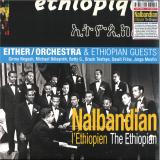
The Éthiopiques series returns! Essential archive recordings from an extremely fruitful period in Ethiopian music.
Before “Swinging Addis” took over the world, there was Moussié Nerses Nalbandian — the Armenian-born composer who shaped modern Ethiopian music. Mentor, arranger, and pioneer, he laid the foundations of Ethio-jazz.
This Éthiopiques volume revives his forgotten legacy, recorded live by Either/ Orchestra First issue ever with new exclusive photos and in depth liner 8-page insert.
“Ethiopian jazzmen are the best musicians that we have seen so far in Africa.
They really are promising handlers of jazz instruments.”
Wilbur De Paris
(1959, after a concert in Addis Ababa)
አዲስ፡ዘመን። *Addis zèmèn* **A new era.**
The time is the mid-1950s and early 1960s, just before "Swinging Addis" bloomed – or rather boomed – onto the scene. Brass instruments are still dominant, but the advent of the electric guitar, and the very first electronic organs, are just around the corner. Rock’n'Roll, R’n’B, Soul and the Twist have not yet barged their way in. Addis Ababa is steeped in the big band atmosphere of the post-war era, with Glenn Miller's *In the* *Mood* as its world-wide theme song, neck and neck with the Latin craze that was in vogue at the same period. Life has become enjoyable once again, with the return of peace after the terrible Italian Fascist invasion of Ethiopia (1935-1941). The redeployment of modern music is part and parcel of the postwar reconstruction. *Addis zèmèn* – a new era – is the watchword of the postwar period, just as it was all across war-torn Europe.
The generation who were the young parents of baby boomers** were the first to enjoy this musical renaissance, before the baby boomers themselves took over and forever super-charged the soundtrack of the final days of imperial reign. Music is Ethiopia's most popular art form, and very often serves as the best barometer for the upsurge of energy that is critical for reconstruction. Whether it be jazz in Saint-Germain-des-Prés or the *zazous* who revolutionised both jazz and French *chanson* after the *Libération*, be it Madrid's post-Franco Movida, or Dada, the Surrealists and *les années folles* that followed World War I, the periods just after mourning and hardship always give rise to brighter and more tuneful tomorrows. Addis Ababa, as the country's capital, and the epicentre of change, was no exception to this vital rule.
**Two generations of Nalbandian musicians**
Nersès Nalbandian belonged to a family of Armenian exiles, who had moved to Ethiopia in the mid-1920s. The uncle Kevork arrived along with the fabled "*Arba Lidjotch*", the** "*40 Kids*", young Armenian orphans and musicians that the Ras Tafari had recruited when he visited Jerusalem in 1924, intending to turn their brass band into the official imperial band. If Kevork Nalbandian was the one who first opened the way of modernism, pushing innovation so far as to invent musical theatre, it was his nephew Nersès who would go on to become, from the 1940s and until his death in 1977, a pivotal figure of modern Ethiopian music and of the heights it. Going all the way back to the 1950s. Nothing less. And it is Nersès who is largely to thank for the brassy colours that so greatly contributed to the international renown of Ethiopian groove. While the younger generations today venture timidly into the genealogy of their country's modern music, often losing their way amidst a distinctly xenophobic historiographical complacency, many survivors of the imperial period are still around to bear witness and pay tribute to the essential role that "Moussié Nersès" played in the rise of Abyssinia's musical modernity.
Given the year of his birth (15 March 1915), no one knows for sure if Nersès Nalbandian was born in Aintab, today Gaziantep (Turkiye/former Ottoman Empire) or on the other side of the border in Alep, Syria... What is certain is that his family, like the entire Armenian community, was amongst the victims of the genocide perpetrated by the Turks. Alep, the place of safety – today in ruins.
Before Nersès then, there was uncle Kevork (1887-1963). For a quarter of a century, he was a whirlwind of activity in music teaching and theatrical innovation. *Guèbrè Mariam le Gondaré* (የጎንደሬ ገብረ ማርያም አጥቶ ማግኘት, 1926 EC=1934) is his most famous creation. This play included "ten Ethiopian songs" — a totally innovative approach. According to his autobiographical notes, preserved by the Nalbandian family, Kevork indicates that he composed some 50 such pieces over the course of his career. This shows just how much he understood, very early on, the critical importance of song as Ethiopia's crowning artistic form. Indeed, for Ethiopian listeners, the most important thing is the lyrics, with all their multifarious mischief, far more than a strong melody, sophisticated arrangements or even an exceptional voice. (This is also why Ethiopians by and large, and beginning with the artists and producers themselves, believed for a long time — and wrongly — that their music could not possibly be exported, and could never win over audiences abroad, who did not speak the country's languages).
Last but not least, one of Kevork's major contributions remains composing Ethiopia's first national anthem – with lyrics by Yoftahé Negussié.
Nersès Nalbandian moved to Ethiopia at the end of the 1930s, at the behest of his ground-breaking uncle. Proficient in many instruments (pretty much everything but the drums), conductor, choir director, composer, arranger, adapter, creator, piano tuner, purveyor of rented pianos,... he was above all an energetic and influential teacher. From 1946 onwards, thanks to Kevork's connexion, Nersès was appointed musical director of the Addis Ababa Municipality Band. In just a few years, Nersès transformed it into the first truly modern ensemble, thanks to the quality of his teaching, his choice of repertoire, and the sophistication of his arrangements. It was this group that would go on to become the orchestra of the Haile Selassie Theatre shortly after its inauguration in 1955, which was a major celebration of the Emperor's jubilee, marking the 25th anniversary of his on-again-off-again reign.
At some point or other in his long career, Nersès Nalbandian had a hand in the creation of just about every institutional band (Municipality Band, Police Orchestra, Imperial Bodyguard Band, Army Band, Yared Music School…), but it was with the Haile Selassie Theatre – today the National Theatre – that his abilities were most on display, up until his death in 1977. To this must be added the development of choral singing in Ethiopia, hitherto unknown, and a sort of secret garden dedicated to the memory of Armenian sacred music, and brought together in two thick, unpublished volumes. Shortly before his death (November 13, 1977), he was appointed to lead the impressive Ethiopian delegation at Festac in Lagos, Nigeria (January-February 1977).
His status as a stateless foreigner regularly excluded him from the most senior positions, in spite of the respect he commanded (and commands to this day) from the musicians of his era. Naturally gifted and largely self-taught, Nerses was tirelessly curious about new musical developments, drawing inspiration from the very first imported records, and especially from listening intensely to the musical programmes broadcast over short-wave radio – BBC *First*. A prolific composer and arranger, he was constantly mindful of formalising and integrating Ethiopian parameters (specific “musical modes”, pentatonic scale, and the dominance of ternary rhythms) into his “modernisation” of the musical culture, rather than trying to over-westernise it. It even seems very probable that *Moussié* Nerses made a decisive contribution to the development of tighter music-teaching methods, in order to revitalise musical education during this period of prodigious cultural ferment. Flying in the face of all the historiographical and musicological evidence, it is taken as sacrosanct dogma that the four musical modes or chords officially recognised today, the *qǝñǝt* or *qiñit* (ቅኝት), are every bit as millennial as Ethiopia itself. It would appear however that some streamlining of these chords actually took place in around 1960. It was only from this time onward that music teaching was structured around these four fundamental musical modes and chords: *Ambassel*, *Bati*, *Tezeta* and *Antchi Hoyé*. A historical and musical “details” that is, apparently, difficult to swallow, especially if that should honour a *foreigner*. Modern Ethiopian music has Nersès to thank for many of its standards and, to this day, it is not unusual for the National Radio to broadcast thunderous oldies that bear unmistakable traces of his outrageously groovy touch.
Big one from Milanese maestro Inner Lakes. Hell-bent on making 2025 his year, the Kalahari debutant maintains form and momentum with the latest in a flurry of vital releases.
A meticulously-crafted 4-tracker imbued with menace and urgent, late nite throb, it’s precisely the spiralling, nocturnal kinda style that has become his hallmark. Streetwise, upfront and packing a sizeable amount of f*ck-off NRG.
Expect noirish, night-stalking rave suspense and hardware-fuelled, high-velocity torque. Best heard in the company of shadow-dwelling spectres, or perhaps, at the event horizon of a black hole.
DJ tools reveal greater depth and nuance upon closer inspection, and disembodied vocals lure inquisitive ears deep into the dream state. Finely measured throughout, it’s a masterful balance between functionality and full-blown dancefloor immersion, all courtesy of a fella at the top of his game.
Written and Produced by Inner Lakes.
Mastered and cut by Kassian Troyer at Dubplates & Mastering.
Distributed by One Eye Witness.
Artwork by S.O.N.S
It’s a follow-up long in the making as Ukrainian artist Volodymyr Gnatenko re-enters Kalahari orbit.
Somewhere between submerged video game OST and ritual incantation, Mershiy LP recalls the finest psychoacoustic ambient dub the ‘90s had to offer. Less direct than the previous album, allowing space for IDM introspection and some proper contemplation. A mind-melt but keeping it widescreen and pretty meticulous throughout.
Imagined vistas shot in pristine 4K, impeccably crafted with close listening in mind. Repeated listens reveal more insectoid detail and a knack for detailed sonic immersion.
A 6-track zone-out where diaphanous texture makes way for ominous dread as the narrative unfurls. Balancing urges and inclinations with a fathomless churn of acid, trance, dub and pointelist electronics.
Written and Produced by Volodymyr Gnatenko
Design by Susanne Janssen.
Mastered and cut by Anne Taegert at Dubplates And Mastering.
Distributed by One Eye Witness.
2025
Following the success of his ‘Love Dub So’ EP, Nick Barber’s Doof project returns to Mysticisms, delving back to his earliest recordings of his ground-breaking Trance project, presenting tracks from his previously cassette only release ‘The Love Mixes’.
A youth that had captured the psychedelia of Pink Floyd, Gong, Hawkwind and on to Psychic TV, as a self-taught guitarist, his first trip to India and Thailand in 1989 and witnessing the early electronic dance music at the Full Moon parties, had seemed rudimentary in nature compared to musicality of psychedelic rock.
Returning to England, the electronic / rock crossover of The Shamen’s ‘Progeny’ parties – featuring DJs like Paul Oakenfold and Mixmaster Morris with the live acts of Orbital and Ramjac Corporation – offered something new that turned his head, before finally finding his crew in the legendary squat / underground Pagan parties. There, residents Lol and Yaz first played the new electronic Trance sound, introducing Barber to the music of Eye-Q, Dance To Trance and the hugely influential Pete Namlook.
Recorded between 1990 – 1991, while living in Cambridge to study Philosophy, these are the first versions of tracks that formed the basis of his debut EP on Novamute, in 1993. Working with minimal equipment – an Akai sampler, Roland monosynth, Yamaha delay pedal, all sequenced on an Atari black and white PC and single MIDI output and then recorded straight to an 8-track Tascam cassette multitrack – the exuberance and rawness of the music are full of the excitement and naivety of youth.
Never intended for public release or initially even as a demo, Barber would play the music off the Tascam multitrack for friends at after parties. Dubbing a handful of cassettes himself and personally drawing the covers, around a dozen cassettes were handed out to mates. Eventually one copy found its way to Mute Records, who were looking to launch their dance offshoot, Novamute. Re-edited mixes of Gift Of The Gods and The Nagual appeared on his debut EP and history was made, before Doof went on to release for luminaries like TIP Records and Dragonfly and a career touring the globe was launched.
Remastered from the original tapes, this EP offers a snapshot of that time, the energy and joy of these early recordings is clear and overwhelming. Where Ambient, House and Techno met the birth of electronic Trance that truly stand up some 30 years later as originals then and now.
Trance The Mystery.
Zuul supplies pressure control’s debut release, Routine Machine.
Following releases on Exarde and White Scar, the Laik label-head’s signature sound takes a menacing turn. In a departure from his usual output he delivers a grizzly 5 tracker filled with EBM, New Beat and Wave affined floor-fillers; all fraught with tension, straight out of the Kirkstall strip.
Fitting for peak-time, warm-ups and rub-downs, the EP is filled with snarling, left-of-centre bombs. All reminiscent of the golden-era sound forged in Frankfurt and Ghent circa 88-91, with new-school stylings for the modern day working disk-jockey.
Constructed exclusively for dark and discerning dance floors.
You can run, but you can’t hide.
Credits:
All music by Ollie Burgess
Pressing and distribution by by One Eye Witness
Design by Al Robertson
Mastering by Marco Pellegrino
Words by Josh Bayat
WRWTFWW Records is honored to announce the first ever vinyl release of Joe Hisaishi’s original soundtrack for the critically acclaimed and all around classic 1993 Japanese yakuza/crime/thriller movie Sonatine. The legendary album comes in a limited edition housed in a luxurious heavyweight sleeve with selective varnish printing and a special paper obi belt.
The celebrated Sonatine was directed, written and edited by Takeshi Kitano, who also takes center stage as the main protagonist of the thrilling yakuza film. Director, screenwriter, comedian, actor, tv personality and icon, 'Beat' Takeshi is also known for Boiling Point, Hana-Bi, Battle Royale, Johnny Mnemonic, Ghost in the Shell and many many more.
Considered one of the greatest ever, Joe Hisaishi is a composer, musical director, conductor and pianist behind over 100 film scores including Kitano’s A Scene at the Sea, Kikujiro, and Brother, as well as his famed work for director and animator Hayao Miyazaki’s Studio Ghibli masterpieces Castle in the Sky, My Neighbor Totoro, Princess Mononoke and the list goes on. Little known fact: his first ever produced-album is a collaboration with percussionist Midori Takada (Through the Looking Glass): MKWAJU Ensemble’s MKAWJU also released on WRWTFWW Records.
The Sonatine movie score showcases the composer’s more contemplative, minimalistic, and intimate side in a superb and deeply evocative neo-classical and ambient musical journey. The depth and emotional resonance of the compositions make for an exceptional and timeless soundtrack. It is known to be one of Hisaishi’s own favorites.
Sonatine (Original Soundtrack) by Joe Hisaishi follows the release of the soundtrack of Takeshi Kitano’s Violent Cop (1989), as well as music from another groundbreaking Japanese movie, Shin’ya Tsukamoto’s Tokyo Fist (1995). Collect them all on WRWTFWW Records!
Torn Hawk is no newcomer…he’s been lurking in the corners, creeping in and between various arts worlds for well over a decade: spoken word slice of life narrations as heard on NTS Radio and Trilogy Tapes; more guitar-oriented song structural work on Mexican Summer; extensive videography (PPU Party Volumes One and Two along with music videos for Torn Hawk as well as Bicep, Xosar, and more); and more beat-focused work as seen on Unknown To The Unknown and as is featured here on his 12” for Fixed Rhythms.
Euphoria in a concrete rainforest. The joys of plumbing the depths of your own inner darkness. 80s synth sounds with soaring guitars and police sirens and rhythmic vocal snips. Distorted bass line bombers. S l o w e d down breakbeats. Offkilter, stomping grooves for the seasoned freaks. Mid-tempo heavy hitters fit for those thirsty for slime and hungry for grit. Step inside and get your fill!
Credits:
Mastered by Dietrich Schoenemann.
Design by Nick Owen.
Distributed by One Eye Witness.
These tracks are responsible for a huge impression on Dream Software and the sound of the label, so it is with great honour we reissue these tracks and release them back into the outersphere. The soundtrack to a retrofuturist world gleaming with optimism. A world where humanity, technology and nature exist in a peaceful symbiosis. A real utopia. We thank you Alex for your inspirational music.
Written and produced by Alex Silvi (Alien Signal) throughout the years of 1993-1994. ‘North Polar Stars’, ‘Brilliant Evening Planets’ and ‘Violent Volcanoes of Io’ originally released on album ‘Celestial Sights of the Future’ from Upland Recordings in 1993. ‘Quantum Limit’ was originally released on album ‘The Search Begins’ also on Upland Recordings in 1993, whereas ‘Atomic (Esoteric Mix)’ was a self-release from 1994.
Lovingly remastered by Lopazz@mixmastering.de and carefully distributed by One Eye Witness.
© Dream Software, Corp (2024)
Companion’s fourth full-length excursion comes from Naarm newcomer Declan. Following the release of his debut single Aqueduct on CMPN003, Declan returns to the label with an entrancing 5-track EP that gently unwinds through boundless, sun-drenched dreamscapes. Awash in the golden hues of 90s chill-out tent culture, Soul Arch embarks on a trance-inducing trip that fuses new age influences, balearic spirit and feverish, hypnotic repetitions.
The release gracefully shifts between moments of restraint and hidden depths, soaring to elevated and distant peaks. The effect is expansive, characterised by protean vocal samples, pulsing pitter-pat percussion and weightless pads as though gently breathing. Suited for late-nights beneath dust shrouded stars and the peaceful mornings after, Soul Arch is best listened from start to finish, with one eye cast towards the sunrise.
All tracks written and produced by D. McNamara
Mastered by P. Twigg
Artwork by X. Ford-Legrand
Design by G. Butterfield
Worldwide distribution by One Eye Witness
© Companion 2024
TAKAHIRO MUKAI is a Japanese electronic music composer who has about 60 official releases to his name. This is 8 pieces of brooding, modular electronic, rhythmic hypnosis from a contemporary maestro of the experimental electronics tape circuit underground.
We’re honored to publish another chapter of his ever-evolving communique with machines. Early DJ support by DJ Voices. Inorganically mesmerizing, full of shadows, plumbing the depths of modular telekinesis…perhaps “Out Of Place” for some, right in time for the deep listeners….
Limited edition of 100 professionally dubbed and manufactured C50 cassettes.
Mastered by Dietrich Schoenemann.
Design by Nick Owen.
Distributed by One Eye Witness.
SUZI returns after the beautiful EP by Downstairs J with a new power compilation, including contributions by Beta Librae, Flørist, Dashiell, and Alfredo 92. This VA record explores modern takes on tech dimensions driven by catchy grooves.
The record debuts with an essential dancefloor killer by Dashiell, a talented musician based in Naarm/Melbourne. "Beep Beep" has a slick badass attitude driven by its frenetic core melody, accompanied by a spooky cosmic atmosphere, and makes this track an instant hit for dancefloors.
The second contribution, "Listening to the ants," comes from Beta Librae, one of NYC's most unique exports in recent years. Her signature contemporary deep-bleep-groovy sound can also be found in this composition, which has a slow and dubby feel filled with small insect-like details. A perfect symbiosis between organic and digital worlds.
On the flip side, we find "Dot Matrix," a groover by Berlin-based Flørist. Breaky tech-house with MPC-like swingy shakers channeling a balance between minimalistic details and slightly scratchy sound design. The bass-line, one of the key elements here, comes and goes over and over again, creating superb tension from beginning to end.
The final track "Bora" of the record comes from Copenhagen, by Alfredo 92. What makes this track so special is its propulsive drive without any kick drum in it. The association of wind-like groove elements combined with a subtle melody makes this beautifully crafted sonic tempest.
Curation and design by Cleveland. Mastering by Marco Pellegrino at Analog Cut. Distribution & production by One Eye Witness.
Clear Vinyl
The debut album from Samuel Coates, AKA Setaoc Mass, crystallises the expansive, left-field vision that's been brewing in his techno-focused discography. Now, downtempo, drum & bass and electro-influenced soundscapes come through strong, as the Manchester-born, Berlin-residing artist combines a decade of dance floor experience and a lifetime of wide-ranging music tastes. The album's 14 tracks transcend the dance with rhythmic and tonal adventure. The urgency of Coates' techno records remains, though now suspended in an unbound space that switches between unpredictable body music and eyes closed moments of escape. Timeless melodies recall the golden era of UK electronica, while ultra-modern production drives the record's microscopic details home. A lovingly crafted collection of the tracks that have been kept for when the time is right. It's the sound of Samuel Coates, then Setaoc Mass - vulnerable but visceral music that demands your full attention.
From the depth of transient memories comes ‘Some Leaves Must Fall 聽其自然’, Temple Rat’s latest EP and the inaugural release for Martin Gilleshøj’s ‘Buttheads’ label.
Across 6 tracks Temple Rat distills fragments of spatial memory, merging conceptual ambience with the mystic, spatial, and driven edges of deep trance and hypnotic techno. A pensive and functional synthesis, one played out like an ode to the sustained.
Through 2024 while moving between Berlin and Sichuan, Temple Rat conceptualized and finished ‘Some Leaves Must Fall 聽其自然’. At its core, the work is an exploration of how the personal memory of cities and their particular acoustic environments can be transmuted in musical form. For these places, altered by the passing of time and the shifting of contexts, mirror the fluid and generative nature of sound itself.
Creatively this approach was borne out in a kind of archaeology of sound: by sampling and capturing auditory fragments Mei was able to preserve otherwise fleeting moments of experience. Sonics which not only embodied the emotions of the present but served too as a mechanism of recall, pulling memory back into focus even against the erasures of time.
In its method this project seeks to transform the sonic textures of urban and natural environments into high-energy dance tracks, exploring the tension between the certainty of space and the uncertainty of time. A tension operating not only within the structural logic of the sound itself, but so too as an affective experience, extending into the listener’s body and perceptual field.
For we are not the first to note that in a world of pervasive temptation and fragmented information, sustained listening has become rarified. Through this project, Temple Rat hopes to counter this tendency; to encourage a deeper mode of listening that restores attention, re-establishing our essential connection with the present.
All music is written, recorded, arranged, and produced by Temple Rat aka Yuxin Mei
Mastered by Giuseppe Tillieci at Enisslab
Distributed by One Eye Witness
With Hyperbola, Laima Adelaide frames speed as a condition of softness rather than impact. The fan- tasy of flying through the air with effortless move- ment forms its emotional core, as tracks move fast, yet nothing collides: rhythms skim the surface, tex- tures hover, and motion unfolds through glide inste- ad of strike. Energy is continuous and diffused, pro- ducing propulsion without aggression, momentum without weight.
The hyperbola operates as both image and method. Sounds trace curved trajectories, drawing close only to diverge again, suspended in a state of gentle tension. Elements never resolve into force, they re- main airborne, elastic, and permeable, as if shaped by an invisible geometry. Across the EP, velocity becomes a tool for lightness, revealing an ethereal space where motion is elegant, friction dissolves, and intensity is carried through grace rather than pressure.
Credits:
Mastering by HWA
Artwork and Graphic Design by Enrico Caldini
Distributed by One Eye Witness
HSH is a new collaborative series by Human Space Machine and Sunju Hargun. It is an exploration of their shared friendship & connection to electronics, machines and the beauty of unpredictable mistakes, extending into long studio improvisations that shaped an EP born from free-spirited jam sessions.
This debut features four jams combining the strengths of both artists. It is heady and meticulously crafted, filled with subtle details, a trippy fusion of light and dark, thoughtful and physical techno with space to experiment.
Something for everyone, every space and every hour.
Credits:
Written, Produced and Recorded in Amsterdam, March 2025.
Distributed by One Eye Witness
Mastering: Giuseppe Tillieci (Neel) Enisslab
Straight out of the local mud of the city of Antwerp comes dancing this next Souvenirs from Imaginary Cities slab of free-flowing bits of electronic wonder : Schönen Abend by Simon B. Just in time to ease you out of this endless winter and right into springtime. Like the previous hit by Purple Uncle, this flower takes some time to bloom and fill up your head and body with it's ear wormy fragrance.
It's hazy and cinematic, makes you think of Italian electronic pioneers and their library magic, Patrick Cowley's School Daze and Haruomi Hosono in some kind of gothic manner. It's quite stripped and lush at the same time, rhythms like minimal mechanics make you fly above the river and land just outside reality. It's a nice place where soft jazz tingles right around the dark corner, and that particular mix of exotica and melancholia — the trademark of this port city's best electronic auteurs is definitely in the air. The river still shines, but she’s deeply poisoned. The old town has lost every bit of fresh air but keeps on digging for old gold. This bitter pill is served with delicacy and lightness, the wound is dressed up seductively — feet in the mud, head in the air. Stuff is sensuous, with quiet places reminding of the good side of those times when the big wheel stopped turning ever so madly. A strange quietness whistles through the leaves. Some things take time to unfold. In or out of C.
Four years in the making, this is the solo debut LP of Simon B, a longtime contributor to Antwerp's improvised music scene (Groovecats Deluxe, Wij Blij Trio ). Primarily a double bass player, he also has a deep-felt passion for offbeat electronica and the rainbowy side of American minimalism, which takes front here. The smoky voice on the last track belongs to Nina-Joy Thielemans, Nina-Joy is part of Particals, a trio working with live electronics and field recordings, releasing an lp on Ultra Eczema later this year. Furthermore, you can hear the tenor and soprano saxophone of Adia Van Heerentals on 4 tracks, deepening out Simon's naturally flowing compositions and playing around with his melodies. You may know her from Bodem and her strong presence in the Belgian jazz scene lately.
Simon's electroacoustic experiments — using a clarinet and some outboard effects — were important tools in finding the very specific colour of this record. There's this airy character, like wind blowing through old layers of bricks and over the river, anchored with a deep sense of bass, gathering ages of dust and memories in these eight elegantly wobbling tracks, forming a perfect whole that’s really coming together in one deep listening from A to Z.
The centrepiece is perhaps Come to Me, instrumental and reprise with vocals, but no fillers on this one. Every part of the mystery is needed to come to its end and back again. It's a record that works in the morning, to open up a day and in the quiet corners of the night, with it's sleazy quirkiness, smiling towards you from the right corner of the eye. A perfect compagnon for your long-form wandering habits, light reflections on a wet surface obsessions, coffee slurping in the morning and the forgotten art of beachcombing. Quite essential these days, witnessing a world going apeshit.