Hatchback is the alias of Samuel Milton Grawe. Sam creates music that sings of the Cosmos, full of deep resonant tones, glistening arpeggios, lush pads and harmonic motifs. ‘Phaser For The Ocean, Chorus For The Moon’ is his magnum opus, a sprawling masterwork that encompasses ambient, new age and environmental music to wondrous effect. Soaked in Californian consciousness, the album is a balm like no other for these troubled times.
When I first was getting into the creative side of music making in my teens, I was heavily influenced by concept albums like ‘Quadrophenia’ and ‘The Lamb Lies Down on Broadway’, as well as epic pieces that took up an entire side of a record: Pink Floyd’s ‘Echoes’, Yes’ ‘Close To The Edge’, Klaus Schulze’s ‘Nowhere Now Here’, Miles Davis' ‘Shhh/Peaceful’ and ‘He Loved Him Madly’. In the extreme, these ideas coalesced in double albums where each side of each record is occupied by a single title - Yes’ ‘Tales From Topographic Oceans’, and Tangerine Dream’s ‘Zeit’ being primary examples. When I returned to making music after moving back to Northern California in 2020, the first piece I recorded landed around the 20-minute mark, and the idea of creating three other long pieces to realize a full album felt like a natural - if indulgent - goal. From there, each new piece followed sequentially. Four songs. My fourth album. - Sam Grawe
‘Phaser For The Ocean Chorus For The Moon’ is a pure expression, informed by a lifetime of deep listening unbound by algorithms or AI.
These are songs for the sunrise and the sunset - and every colour in between.
[a] 01. And The Walls Became The World All Around [18:53]
[b] 02. Phaser For The Ocean, Chorus For The Moon [21:48]
[c] 03. Other Desert Cities [20:19]
[d] 04. Friendship Fountain [18.33]
quête:piece of shh
- 1
Shhh. The command to be quiet is not just part of the title of one of the two sprawling compositions on this pioneering album. It's also an apt metaphor for the relaxed hypnotism and spaced-out atmosphere that define In a Silent Way, a record that pushes the boundaries of studio possibilities, artist-producer relationships, and rock-jazz chasms. Recognized as Miles Davis' first full-on fusion effort and part of his "electric" era, the 1969 landmark claims a Who's Who line-up that sends the music into an ethereal stratosphere.
Mastered from the original master tapes and pressed at RTI, this unsurpassed 180g LP edition lifts the veil on the cutting-edge assembly process that created the pair of lengthy suites. Helmed by three electric instruments, the bevelled compositions melt away all preconceived notions of "jazz," ˜rock," and "ambience," following a loose theory Davis dubbed "New Directions."
Few albums are so delicately textured. And on Mobile Fidelity's meticulous reissue, such sulcate elements pour over ink-black backgrounds on a canyon-wide soundstage. In particular, Tony Williams' inventive percussive touch – he causes the cymbals to shimmer as a pieces of silver tend to do when exposed to sunlight – is broadcast with lifelike three-dimensional qualities, the panoramic view extending to Davis' nocturnal trumpet, Wayne Shorter's ribbon-unfurling saxophone, Dave Holland's extrapolative bass, and the mosaic of keys.
If the record's only accomplishment is its introduction of guitarist John McLaughlin to the world, it alone would be enough. Yet In a Silent Way continues to bedazzle, puzzle, and inspire for myriad reasons – not the least of which is the seemingly telepathic communicative methods employed by the group's members. The line-up is great on paper, but, if it's even possible, the octet sounds even better in practice, with the instruments and tonalities conjoining in avant-garde communion like hyper-sensitive tentacles exploring the stippled landscapes of an undiscovered planet.
Diverting from expectation, tubular grooves twist, turn, and spin, sometimes piling atop of each other, always shying away from structure and melody. Ellipsoidal solos provide hesitant guidance, ranging from Chick Corea's Fender Rhodes phrases to Davis' decorative spirals. And as colour is the primary unit of currency on Davis' Sketches of Spain, laid-back episodes, geometric spaces, and quiet sensuality reign here, with the set's maverick reputation attained via musings on solitude rather than explosions of noise.
Controversial for the period, the heavily edited production of In a Silent Way blew open the once-locked doors on what producer's could attempt – and how artists could assist them. Knitted together as one would construct a cross-hatched quilt, songs contain grafts of repeat passages that provide unifying structure and experimental continuity. What a statement.
SHHE, Scottish-Portuguese sound artist and producer Su Shaw, is releasing new mini-album, ‘DÝRA’, on July 19th via One Little Independent Records. The ambient project took form during a self-directed artist residency in the Westfjords of Iceland, influenced by the tranquillity of the Dýrafjörður fjord. Immersed in a distinct landscape with quietly monumental surroundings, Shaw began documenting her experience of the environment through field recordings and environmental data captured across several geographical locations.
‘DÝRA’ is an exploratory and mesmerising durational piece, evocative in its construction, inviting listeners to imagine their own space and scale within a landscape. Reflective, textured, and pensive, with expansive synths that further showcase Shaw’s deftness in sculpting immersive and introspective soundscapes.
Dýrafjörður is a 32-kilometre-long fjord in the Ísafjarðarbær municipality, in the Westfjords of Iceland. Shaw originally embarked on a 10-day residency in 2018, during which the village experienced an immense storm, hindering her schedule. Shaw explains, “It was my first visit to Iceland, and I’d made myself a meticulous itinerary in advance, which included recording at the summit of some of the peaks in the fjord. When the storm arrived after only a few days, it made any kind of travel challenging – so partly out of necessity to be able to continue developing the project, I began recording my immediate surroundings instead – attuned to incidental sounds from around the village and fluctuating weather states – and I quickly built up an archive of the environment”.
HOMESHAKE ist das Projekt des kanadischen Home-Producers Peter Sagar, dessen Sound halluzinatorisch und herzzerreißend in seinen Schreien nach Verbindung ist, strukturiert, tiefgründig, auf einzigartige Weise seine vielfältigen Einflüsse würdigend. "Horsie", das siebte HOMESHAKE-Album und das zweite in 2024, vertieft Sagars Beziehung zu Einsamkeit und Angst und untersucht diese Themen im Kontext von Live-Auftritten. Die 12 Songs verwenden von Künstlern wie Four Tet und My Bloody Valentine beeinflusste Texturen, die rhythmischen Formen von D’Angelo und Sade sowie Ambient Americana-Momente im Stile Ry Cooders.
Following March's CD Wallet, HOMESHAKE presents his second album of 2024, Horsie. Written and recorded at his home studio in Toronto, it explores Sagar’s complicated feelings about returning to live performance. Deepening his relationship to loneliness and anxiety, the record examines those themes in the context of touring.
Horsie employs various textures influenced by artists like Four Tet and My Bloody Valentine, the rhythmic forms of D’Angelo and Sade, and moments of ambient Americana found in the works of Ry Cooder. The cornerstone pieces of gear used were an Ensoniq EPS and Roland Juno 60, though the album also employs a great deal of electric guitar, along with his beloved SP-404. He maintains a philosophy of “less is more,” finding the simplest route from one point to another.
HOMESHAKE, the musical project of Peter Sagar, is an expression of adjustment and contortion within the world as he experiences it and the sounds he wants to hear in it. Hallucinatory and heartbreaking in its cries for connection, Sagar’s sound is often imitated but has proven to be entirely his own; textural and profound, uniquely honoring his diverse influences but adrift within its own transportive imagination.
Timeless minimalist approach to composition braced by repetition and playfulness.Alberto’s music reflects calm, focus and intimacy. Ethereal and atmospheric, his pieces operate within the digital as well as the analogue realm in equal measures. Sampling, Midi sequencing and field recordings are the instrumentation used in these 15 songs recorded on a four track reel to reel tape. Highest possible recommendation for fans of Suso Saiz,Jon Hassel, Eno or Harold Budd
“Haizetxe” which stands for wind house, is the first ever record consisting of unreleased material recorded between mid 80’s and 90’s by musicianAlberto Lizarralde in Zaldibia, Basque Country.
One of the founders of the first school of Improvisational jazz and contemporary music (Jazzle) established in San Sebastián to In the early 1990s,Alberto is a well-known figure among Basque musicians but not so much among the general public. In his professional curriculum we find the direction of the Plaza Festival, the Zirrara record company, his work as a producer, editor (editions 3e argitalpenak), the direction of the audiovisual installation JAArtzeren Unibertsoa, the arrangements and composition for the Iparraguirre 7 project, etc...And even so, he has managed to stay away from the spotlight.
In all this time he was composing and recording music, but the right circumstances never arose for its release.Thus, it has remained stored in a drawer all these years. Finally the music of Alberto Lizarralde sees the light on Hegoa label in a limited run of 300 LPs.
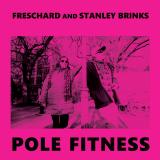
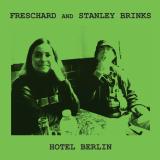
Very limited pressing of 300 units only. Following on from the two sold out records together, Freschard and Stanley Brinks come together for 12 brand new tracks. Lion Heart is an irresistibly charming collection of late night tales, woozy ballads and uptempo sing-alongs. Clemence Freschard’s beautiful vocal tones lend this a rich, French indiepop/chanteuse vibe, complemented by Stan’s wistful timbre and characteristic warm instrumentation. Stanley Brinks is renowned for his unique anti-folk style: both playful and suggestive, insightful and entertaining. Brinks was born in Paris, France, in 1973. He studied a bit of biology and worked as a nurse for a while. Half Swedish, half Moroccan, strongly inclined to travel the world, he soon began spending most of his life on the road and developed a strong relationship with New York. By the late 90s he’d become a full time singer-songwriter – André Herman Düne – as part of three piece indie-rock band, Herman Düne. Several albums and Peel sessions later and after a decade of touring Europe, mostly with American songwriters such as Jeffrey Lewis, Calvin Johnson and early Arcade Fire he settled in Berlin. The early carnival music of Trinidad became a passion, and in the early 21st century he became the unquestioned master of European calypso, changing his name to Stanley Brinks. Under this moniker he has recorded more than 100 albums, collaborated with the New York Antifolk scene on several occasions, recorded and toured with traditional Norwegian musicians, and played a lot with The Wave Pictures. Freschard grew up in a farm in French Burgundy. Aged 18 she moved to Paris, where she baked pies and cakes in a cafe. There, a local musician and regular customer called Stanley Brinks wrote a few songs for her to sing. Homeless in Paris, she saved up just enough money to get herself a ticket to New York. There she found an old electric guitar and started writing her own songs. In 2004 she moved to Berlin, where she recorded her first LP, "Alien Duck". Her second album, "Click Click", recorded in 2006, features electric guitar by Stanley Brinks. On her third album, she plays the drums herself. On her fourth “Shh...” she also plays the flute, and she breaks out the washboard on her fifth “Boom Biddy Boom”. On Midnight Tequila, Freschard brings it back to just drums and vocals // “an absolute joy.” Q // “...a set that’s as wistful and charming as it is playful and self-concious.” Uncut // “quietly charming” Pitchfork
Industrial techno doom jazz meets Touareg percussion and mantric chanting
Soundway presents the unique results of a one-off 2018 meeting in Marrakech between Belgrade-based tribal/ techno/industrial outfit Tapan and the nomadic Touareg electrified desert-blues group Generation Taragalte.
Tapan is not an ordinary “techno” project, rather it escapes easy categorization. It is the Belgradebased production duo of 20/44 club resident Nebojša Bogdanović (Schwabe), and Goran Simonoski, a producer behind music projects such as Belgradeyard Sound System, Piece of Shh and more. Both have been active in the Belgrade music and nightlife scenes since the 1990s, and since 2015 have brought together their diverse musical experience under the collaborative moniker of Tapan.
While performing at the Atlas Electronic festival in Morocco in 2018, they encountered Generation Taragalte of southern Morocco, and recorded the initial music for the Atlas EP in an improvised studio on the festival grounds, followed by final production on returning to Belgrade. The result was the 4-track EP “Atlas”, a dark, desolate and potent collision of the electronic drone-jazz of Belgrade and the windswept, desiccated psych-guitar riffs of the Moroccan Sahara.
In a time when Jazz music is entering a contemporary renaissance and exciting the ears and minds of new audiences, Zombie Zombie's Étienne Jaumet offers us his unique, idiosyncratic take on the sound with the sprawling '8 Regards Obliques', his 3rd solo album with the Versatile label.
Jazz requires a certain freedom of technique, interpretation and improvisation that already matches Jaumet's own production style and sonic aesthetic as well as his playful approach towards music. The eight pieces that make up the new LP were very quickly recorded; Jaumet let himself be carried away by the atmosphere without focusing too much on fine details or the laborious aspects of the composition process. The finished article is a spontaneous collection that stands out, a true mirror image of the creative process adopted by the artist. Not surprisingly, spontaneity is one of the characteristics already present in his music, in both his recorded output and his live happenings, where he leaves much room for freedom and improvisation.
'8 Regards Obliques' was recorded at the Versatile studio in less than 3 weeks with quite a basic set up: TR 808, selected synthesizers, vocals and of course the saxophone, which is a constant presence also in his previous albums. For the mix Etienne has again appealed to the maestro I:Cube, a central figure of the Versatile story and a prdigious engineer and artist in his own right. He immediately understood that it was necessary to keep the spontaneous side alive and to not over-produce the pieces or over-edit them, being constantly mindful to retain the power in the sound and in the frequencies. From Sun Ra with 'Nuclear war', Miles Davis in 'Shhh / Peaceful' or 'Theme from a symphony' by Ornette Coleman to 'Caravan' (already quoted by many jazzmen), Etienne enjoyed revisiting classic masterpieces and paying tribute to his inspirations. He allowed himself only one personal and original composition, 'Ma révélation mystique'.
- 1