Written and recorded between 1972 and 1982 in Western Oregon, Back to the Woodlands is a previously unreleased, and nearly lost, album made by Ernest Hood during the same era as his near mythical album Neighborhoods. A visionary combination of field recordings, zithers, and synthesizers, Back to the Woodlands offers an unprecedented depth of access to this singular artistic mind.
Born into a musical family, Ernest Hood began a promising career as a jazz guitarist during the 1940s, touring internationally with his brother Bill Hood and the saxophonist Charlie Barnet, before contracting polio in his late twenties. The disease left Ernest unable to play the guitar and confined him to a wheelchair for the rest of his life. It also forced him to adapt and innovate around his musical practices in the face of adversity; Hood’s value of sound matured with a remarkably democratic and nonhierarchical approach and application.
Taking up the zither, a less physically-demanding stringed instrument to the guitar, embarking upon the unprecedented process of incorporating field recordings into his work as early as 1956, and eventually discovering the synthesizer, Hood’s music became imbued with optimism and subtle cultural critique. This ethos and technique - refined over the coming decades - would lay the groundwork for a sprawling body of radio work, mail order recordings for homebound listeners, and Neighborhoods, self-issued as a small vinyl edition in 1975.
Where Neighborhoods, a nostalgic opus, drawing from a well of collective memory of the 1950s, is defined by traces of human activity, Back to the Woodlands leaves the modern world behind, delving into Hood’s love for nature. Only recently discovered in his archives, the album dramatically expands his concept of “musical cinematography,” imagistically triggering states of sensory memory from within its zither and synthesizer melodies, intertwined with field recordings made during Hood’s extensive travels throughout Oregon. If Neighborhoods is a retreat into the gauzy joys of a romanticized past, Back to the Woodlands is an immersion in the timeless sanctuary of the natural world.
RVNG International Novedades
Horse Lords return with Comradely Objects, an alloy of erudite influences and approaches given frenetic gravity in pursuit of a united musical and political vision. The band's fifth album doesn't document a new utopia, so much as limn a thrilling portrait of revolution underway. Comradely Objects adheres to the essential instrumental sound documented on the previous four albums and four mixtapes by the quartet of Andrew Bernstein (saxophone, percussion, electronics), Max Eilbacher (bass, electronics), Owen Gardner (guitar, electronics), and Sam Haberman (drums). But the album refocuses that sound, pulling the disparate strands of the band's restless musical purview tightly around propulsive, rhythmic grids. Comradely Objects ripples, drones, chugs, and soars with a new abandon and steely control. This transformation came, in part, due to circumstance. Sidelined from touring their early 2020 album The Common Task in a world turned upside down, Horse Lords promptly returned to their Baltimore practice space and began piecing together the music that became Comradely Objects (Bernstein, Eilbacher, and Gardner have since relocated to Germany). Removed from their tried and true method of refining new music on the road, the quartet invested less energy ensuring live playability and more rehearsing and recording. The deliberate writing and tracking process, a rarity since the band's earliest days, led to a collection of pieces that signal a new peak of creativity and musical heft without devolving into studio sprawl or frippery. Comradely Objects reflects familiar elements of Horse Lords' established palette_the mantra-like repetition of minimalism and global traditional musics, complex counterpoint, the subtleties of microtonality, a breadth of timbres and textures drawn from all across the avant-garde_with some standout stylistic innovations. At different moments, the album veers closer to free jazz than anything else in the band's catalog, channels spectral electroacoustic tones, and throbs with unexpected yet felicitous synth. While these new elements are evidence of additional studio time and care, Comradely Objects retains the dizzying obsessive rhythmic energy that galvanizes the best moments of the band. Music for people who like Mdou Moctar, This Heat!, Battles, Ndagga Rhythm Force, Can, Captain Beefheart, Art Ensemble of Chicago, LaMonte Young.
Lucrecia Dalt is a Colombian recording artist, songwriter, and producer currently based in Berlin, Germany. Dalt channels sensory echoes of growing up in Colombia on her eighth studio album ¡Ay!, where the sound and syncopation of Tropical Music encounter adventurous impulse, lush instrumentation, and metaphysical sci-fi meditations in an exclamation of liminal delight. Dalt's introspective approach to composition, last surfaced on her entrancing 2020 album No era sólida, refracts across ¡Ay! in a subconscious spectrum of the music genres she absorbed as a child. Treasured sounds and syncopations of bolero, mambo, salsa, and merengue rooted in Dalt's early surroundings awaken on ¡Ay! and give glow to the album's contours. The intuitive melodic structures of this music, processed by memory and modular synths, led Dalt to a mirage of her creative origins and the album she has always wanted to make. ¡Ay! is a tincture of rich acoustic textures filtered through the warmth of Dalt's signature machinic distortion, diffused of easily-defined edges as previously explored on No era sólida and her 2018 album Anticlines. Here, vivid incantations of upright bass, wind ensembles and brass form shimmers of harmonic motif, distilled across radiant rhythms. Dalt worked closely with friend and collaborator Alex Lázaro to cultivate new shapes and colors for slowed down tumbaos and bolero percussion patterns. Together they deconstructed the traditional drum kit into serpentine expansions of congas, bongos, temple blocks and timbales, all of which they tuned to dance among Lucrecia's lucid vocal processions. For Fans of David Sylvian, Rosalía, Robert Wyatt, Rita Indiana, Matías Aguayo, Tom Waits, Meridian Brothers.
Horse Lords return with Comradely Objects, an alloy of erudite influences and approaches given frenetic gravity in pursuit of a united musical and political vision. The band's fifth album doesn't document a new utopia, so much as limn a thrilling portrait of revolution underway. Comradely Objects adheres to the essential instrumental sound documented on the previous four albums and four mixtapes by the quartet of Andrew Bernstein (saxophone, percussion, electronics), Max Eilbacher (bass, electronics), Owen Gardner (guitar, electronics), and Sam Haberman (drums). But the album refocuses that sound, pulling the disparate strands of the band's restless musical purview tightly around propulsive, rhythmic grids. Comradely Objects ripples, drones, chugs, and soars with a new abandon and steely control. This transformation came, in part, due to circumstance. Sidelined from touring their early 2020 album The Common Task in a world turned upside down, Horse Lords promptly returned to their Baltimore practice space and began piecing together the music that became Comradely Objects (Bernstein, Eilbacher, and Gardner have since relocated to Germany). Removed from their tried and true method of refining new music on the road, the quartet invested less energy ensuring live playability and more rehearsing and recording. The deliberate writing and tracking process, a rarity since the band's earliest days, led to a collection of pieces that signal a new peak of creativity and musical heft without devolving into studio sprawl or frippery. Comradely Objects reflects familiar elements of Horse Lords' established palette_the mantra-like repetition of minimalism and global traditional musics, complex counterpoint, the subtleties of microtonality, a breadth of timbres and textures drawn from all across the avant-garde_with some standout stylistic innovations. At different moments, the album veers closer to free jazz than anything else in the band's catalog, channels spectral electroacoustic tones, and throbs with unexpected yet felicitous synth. While these new elements are evidence of additional studio time and care, Comradely Objects retains the dizzying obsessive rhythmic energy that galvanizes the best moments of the band. Music for people who like Mdou Moctar, This Heat!, Battles, Ndagga Rhythm Force, Can, Captain Beefheart, Art Ensemble of Chicago, LaMonte Young.
Lucrecia Dalt is a Colombian recording artist, songwriter, and producer currently based in Berlin, Germany. Dalt channels sensory echoes of growing up in Colombia on her eighth studio album ¡Ay!, where the sound and syncopation of Tropical Music encounter adventurous impulse, lush instrumentation, and metaphysical sci-fi meditations in an exclamation of liminal delight. Dalt's introspective approach to composition, last surfaced on her entrancing 2020 album No era sólida, refracts across ¡Ay! in a subconscious spectrum of the music genres she absorbed as a child. Treasured sounds and syncopations of bolero, mambo, salsa, and merengue rooted in Dalt's early surroundings awaken on ¡Ay! and give glow to the album's contours. The intuitive melodic structures of this music, processed by memory and modular synths, led Dalt to a mirage of her creative origins and the album she has always wanted to make. ¡Ay! is a tincture of rich acoustic textures filtered through the warmth of Dalt's signature machinic distortion, diffused of easily-defined edges as previously explored on No era sólida and her 2018 album Anticlines. Here, vivid incantations of upright bass, wind ensembles and brass form shimmers of harmonic motif, distilled across radiant rhythms. Dalt worked closely with friend and collaborator Alex Lázaro to cultivate new shapes and colors for slowed down tumbaos and bolero percussion patterns. Together they deconstructed the traditional drum kit into serpentine expansions of congas, bongos, temple blocks and timbales, all of which they tuned to dance among Lucrecia's lucid vocal processions. For Fans of David Sylvian, Rosalía, Robert Wyatt, Rita Indiana, Matías Aguayo, Tom Waits, Meridian Brothers.
Following the compass of an entrancing debut, Flore Laurentienne’s Volume II presents another palette of rich orchestral sound, where changing forces of water inspire metaphorical markers that navigate passages of life and loss.
Mathieu David Gagnon resumes his voyage into environment and emotion with Volume II, drawing inspiration from the rivers and rugged wilderness of the composer’s native Quebec. In his return as Flore Laurentienne – the namesake of an inventory documenting St. Lawrence Valley flora – Gagnon assembles vivid melodic motifs and delicate modulation with a vast string ensemble to emulate the tides of human experience.
Listeners of Volume I will recognise Gagnon’s signature approach towards reworking and reframing an emblematic melody or concept across a series of works inVolume II, a process he likens to that of a painter creating multiple sketches of the same view. Continued from the first album, the enigmatic “Fleuve” series is conjured to evoke the multiple personalities of the great St. Lawrence River, and the “Navigation” works (“III” and “IV”) wade through dappled progressions and expansive streams of string, the latter of which harbors the gentle meanderings of improvised clarinet.
Following the compass of an entrancing debut, Flore Laurentienne's Volume II presents another palette of rich orchestral sound, where changing forces of water inspire metaphorical markers that navigate passages of life and loss. Mathieu David Gagnon resumes his voyage into environment and emotion with Volume II, drawing inspiration from the rivers and rugged wilderness of the composer's native Quebec. In his return as Flore Laurentienne - the namesake of an inventory documenting St. Lawrence Valley flora - Gagnon assembles vivid melodic motifs and delicate modulation with a vast string ensemble to emulate the tides of human experience. Listeners of Volume I will recognise Gagnon's signature approach towards reworking and reframing an emblematic melody or concept across a series of works in Volume II, a process he likens to that of a painter creating multiple sketches of the same view. Continued from the first album, the enigmatic "Fleuve" series is conjured to evoke the multiple personalities of the great St. Lawrence River, and the "Navigation" works ("III" and "IV") wade through dappled progressions and expansive streams of string, the latter of which harbors the gentle meanderings of improvised clarinet. In the world of Flore Laurentienne, complexity emerges from simplicity as the composer roams familiar environments in constant flux. Gagnon extracts beauty through repetition and constraint, utilizing the writing style of counterpoint for which one of his greatest musical inspirations, Johann Sebastian Bach, is renowned. The lilting waves of "Canon" possess the eponymous formation of melodic 'leader and follower' motif, and magnify the softness of the album's eighteen string musicians into a force of full euphoric resonance. In Volume II, Gagnon continues his expansion of classical composition archetypes to meet a new realm of sonic romanticism. Thematic conventions of wandering the pastoral sublime become altered into glimmering refractions, relaying the emotional and kinetic power of natural energies. Volume II forms an estuary where streams of auditory microcosm reach a horizon of dynamic contrast, and reflect the parallel tenors of nature and humankind.
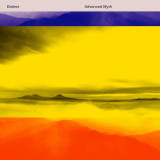
Advanced Myth is the lucid debut album from Dialect, the long standing project of British composer, multi-instrumentalist, and field recordist Andrew PM Hunt. An enchanted exploration of unusual source synthesis, electro-acoustic arrangements, and sound found in foreign environments, Advanced Myth is its own cosmos expanding and contracting in real time. Although a largely meditative listen, it oscillates between moments of shimmering lucidity and corrosive washes of noise. Originally released digitally by tasty morsels in 2015, Advanced Myth has been newly mastered by Stephan Mathieu from definitive mixes, and is available for the first time on vinyl. Since his debut, Hunt has built a broad oeuvre with a quiet confidence across several albums, including Gowanus Drifts (2015), Loose Blooms (2017), and Under ~ Between (2021), his debut for RVNG Intl., and its companion piece, Keep Goingü... Under. For Fans of Laurie Spiegel, Visible Cloaks, Oneohtrix Point Never, Catarina Barbieri, Clare Rousay.
Black Vinyl[29,83 €]
Option Explore, Dylan Moon’s second full-length album, is a glassy-eyed survey of pop’s playing field both past and present, and a collection of clever, colorful songs filtered through frequencies, timbres, and dreams discovered and discarded while its maker shifts from one sub-genre to the next.
Option Explore signals a significant departure from Moon’s debut 2019 album Only the Blue s, which at its heart is a folk record from the forlorn fringes of psychedelia: a little mysterious, but ultimately lucid in its internal logic and generous with standalone, but sing- along, songs. Dylan’s 2020 EP Oh No Oh No Oh No suggested both a shift in his writing and listening habits, culminating with the 2021 compilation Moon’s Toons Vol. 1. On Option Explore, Moon willfully spins multitudes. With a careful study of synthpop, a penchant for warped yet unwavering guitar grooves, and an effortless songwriting ability, he leans into unlikely convergences, and arrives at something deeply futuristic in its disregard for genre sanctity.
A guiding principle for Option Explore was the “explore/exploit trade-off” concept, a behavioral mechanism of foraging (“the choice between exploiting a familiar option for a known reward and exploring unfamiliar options for unknown rewards”) which has been employed within computational neuroscience and psychiatry. Moon uses exploratory foraging as a manifesto for song construction: music without end, without limit. Many of these songs avoid conclusive compositional conventions, and sound more like turning a radio dial than pressing preset play. Tracks begin at what feels like a midpoint and fade out with little warning, adding to the sensation of sonic melt.
Emerald Green Vinyl[29,83 €]
Option Explore, Dylan Moon’s second full-length album, is a glassy-eyed survey of pop’s playing field both past and present, and a collection of clever, colorful songs filtered through frequencies, timbres, and dreams discovered and discarded while its maker shifts from one sub-genre to the next.
Option Explore signals a significant departure from Moon’s debut 2019 album Only the Blue s, which at its heart is a folk record from the forlorn fringes of psychedelia: a little mysterious, but ultimately lucid in its internal logic and generous with standalone, but sing- along, songs. Dylan’s 2020 EP Oh No Oh No Oh No suggested both a shift in his writing and listening habits, culminating with the 2021 compilation Moon’s Toons Vol. 1. On Option Explore, Moon willfully spins multitudes. With a careful study of synthpop, a penchant for warped yet unwavering guitar grooves, and an effortless songwriting ability, he leans into unlikely convergences, and arrives at something deeply futuristic in its disregard for genre sanctity.
A guiding principle for Option Explore was the “explore/exploit trade-off” concept, a behavioral mechanism of foraging (“the choice between exploiting a familiar option for a known reward and exploring unfamiliar options for unknown rewards”) which has been employed within computational neuroscience and psychiatry. Moon uses exploratory foraging as a manifesto for song construction: music without end, without limit. Many of these songs avoid conclusive compositional conventions, and sound more like turning a radio dial than pressing preset play. Tracks begin at what feels like a midpoint and fade out with little warning, adding to the sensation of sonic melt.
On the outskirts of late 1970s Olympia, Washington, something stirs, sings, and breathes. Cheri Knight, a music composition student at the Evergreen State College, is developing her practice in a quaint but adequately equipped campus recording studio, amalgamating with the sonic timbre of the surrounding time, space, and place, while devoting to her own inner maxims. At once performative and meditative, electronic and organic, collaborative and self-contained, Cheri’s early compositions are simultaneously complete and sketches of a ceremonial process at play. American Rituals captures the artist’s environmental emergence, unearthing a unique compositional voice and signposting a regional sonic ethos.
The path to Evergreen seems gently preordained for Cheri, a whisper in the trees. Growing up in a musical household in Western Massachusetts, she learned to play piano and clarinet, demurring from notated music but composing piano pieces in the minimalist mode of Erik Satie and folk songs inspired by Joni Mitchell. In high school, her class studied John Cage’s work, an epiphanic moment
for the young artist. The group also visited a studio outside Amherst where she encountered the modular limitlessness of a Moog synthesizer. Cheri studied philosophy and music at Whitman College in Washington, and then took a year to build a stone house with some friends in New Hampshire. She settled at Evergreen soon after, carrying with her a zeal for improvisation, creative investigation,
and hands-on experimentation.
serenitatem, the fifteenth installment of FRKWYS, RVNG Intl.'s collaboration series pairing inter-generational artists in creative conversation, joins Visible Cloaks with Yoshio Ojima and Satsuki Shibano, two trailblazers of the Japanese avant-garde music and visual arts scenes of the 1980s and 90s.
- A1: Zoe Brezsny - Timelapse Passionflower
- A2: Isik Kural - Forlorn
- A3: Lucia Hinojosa Gaxiola - Window Poem
- A4: Satomimagae - Dots
- A5: Ivanna Baranova - Cantadito
- A6: Vhvl - Shell One
- A7: Jessica Rae Elsaesser - There Is A Dream Of You
- A8: Visible Cloaks - Arcoiris
- A9: Tessa Bolsover - Untitled (Morning) (Morning)
- A10: Sign Libra - Pi
- A11: Ivanna Baranova - Nice To See You Joyous
- A12: Dialect - Beeoh
- A13: Jessica Rae Elsaesser - It Regenerates Each Night
- A14: Batu - Face Of The Lake
- B1: Lucia Hinojosa Gaxiola - High Ways (Desert Poem) (Desert Poem)
- B2: Anna Homler, Michael Vincent & Waller Darryl Tewes - Bounding/Missive From The Teacup Galaxy
- B3: Tessa Bolsover - Untitled (Salt) (Salt)
- B4: Diatom Deli - Tranquilo
- B5: Zoe Brezsny - Twin Flame
- B6: Emily A Sprague - Silken (Part 2 1)
- B7: Tessa Bolsover - Untitled (Night Buzzes) (Night Buzzes)
- B8: Rachika Nayar & Nina Keith - In The Memory Room
- B9: Ivanna Baranova - Whiplash Portal
- B10: Wayne Phoenix - Living Is The Answer To The Question That Is Asked By Being Alive
- B11: Zoe Brezsny - Sunken Meadow Park Ii
Turkish-born sound designer Işık Kural embraces the joys of improvisation on his second full-length album. The twelve short tracks of ‘in february’ were all composed on the fly, based around loops of unconventional recordings - short piano phrases, humming synths and field recordings - and moulded into beautiful ruminations on the passing of time.
Hungry Shells, the seventeenth entry in RVNG Intl.’s intergenerational collaborations series FRKWYS, brings together vocalist, multi- instrumentalist, and sound artist Ka Baird with avant-garde composer and radical performance art pioneer Pekka Airaksinen. Recorded six months before Pekka’s passing, Hungry Shells alchemizes separate but similar spiritualistic practices, canvassing Baird’s voice and synthesizer rituals and Airaksinen’s lysergic sound explorations into startling, surreal landscapes.
Pekka Airaksinen, who left this realm for another in May 2019, is recognized as a pioneering composer both in and outside his native Finland’s fringe art community. A founding member of the late 60s art and music collective The Sperm, Airaksinen discovered Buddhism in the early 1970s, eventually establishing a number of meditation centers around Finland. Throughout his career Airaksinen embraced a degree of obscurity and anonymity that was inspired by his Buddhist learnings, and afforded him complete creative freedom. As he explained, “The less success you have, the more time there is to develop things.”
Ka Baird, who found her musical footing in Chicago playing in Spires That In The Sunset Rise before moving to New York to pursue her solo career, has developed a practice based in forms of active and engaged embodiment. Inspired by Charlemagne Palestine’s Body Music, Baird’s performances explore physical extremes as a catalyst for charged immediacy and presence. “I’m interested in the
places between precision and something unrestrained,” she told The Wire in 2019. Drawing on minimalism’s ecstatic deployment of duration and endurance, her recordings explore the outer limit sounds of her voice and its synthesis with developing music technology.
Airaksinen and Baird convened in Utrecht in the fall of 2018 to write, rehearse, and record Hungry Shells ahead of a performance at the Dutch festival institution Le Guess Who? Sessions took place between contemplative walks along the city’s medieval canals, and, for Airaksinen, lengthy meditations in his hotel room. Early on in the trip, Pekka shared ODO with Ka, a collection of Buddhist parables that he divinely received while meditating. After translating several of these texts from Finnish to English the duo used them as text for the album, and a sort of psychic foundation.
Before there was Rimarimba, Suffolk-born, Felixstowe-based musician and home recording enthusiast Robert Cox assembled a cast of friends, some musicians and some not so much, for an experiment in group exploration and ecstatic expression under the name The Same. Sonically and gravitationally defined by Cox’s collaboration with guitarist Andy Thomas (a partnership which formed in 1976 to record as General Motors), Sync or Swim, The Same’s one and only album, also featured keyboards by Florence Atkinson and Paul Ridout, and vocals by Robert’s sister Rebecca.
Originally released in small cassette and vinyl quantities on Unlikely Records, Cox’s imprint and a meeting point for many other musicians found at the fringe, the back cover of the original album jacket is as much a map of the personnel, place, and process
fundamental to Sync or Swim as it is a table of contents for DIY music-making at the beginning of the 80s: “Recorded in peaceful Wiltshire between September 18th and October 6th 1981 (using a miscellany of home made devices) onto a Teac A-3300SX via a Teac A-3440. No noise reduction systems were used.”
The additional equipment listed – a combination of consumer technology and DIY innovation – speaks to an unpretentious, improvisational ethos that pilots Sync or Swim, and Cox’s career as a whole. Rimarimba, whose near complete discography Freedom To Spend made available again in 2019, showcased Cox’s simultaneously hermetic and prolific creative process, while The Same celebrates making sound for sound’s sake and the serendipity surrounding those moments.
Wiltshire, home to the Stonehenge stone circles and a county of empty plains in the southwest of England, is worlds away from the commerce and industry of Glenn Branca’s New York City or Neu’s Düsseldorf. While The Same may feel in some ways like a British blend of these minimalist and motorik machinations, Cox and Thomas were curiously fascinated with The Grateful Dead and Frank Zappa’s brand of psychedelic music.
Cox’s own definition of British psychedelia is “folk music meeting technology and going bonkers.” It’s by this definition that Sync or Swim takes unexpected forms, from tape-speed tomfoolery, concrète sound collage and analog delayed marimbas, to the colorful spectrum of interwoven guitar play between Cox and Thomas reminiscent of Ghanaian Highlife but more accurately indebted to Jerry Garcia.
Satomimagae is a songwriter, singer, producer and composer residing in the environs of Tokyo, Japan. Hanazano is Satomimagae's fourth album and first for RVNG Intl. Her last albums Kemri (2017), and Koko (2014), were released on Chihei Hatakeyama's White Paddy Mountain. A tribute to everyday mysticism, Hanazono (translated as "flower garden") is an ecology of simple, cyclical refrains and elegiac entreaties cross-pollinating with ludic and layered folk vibrations. Each song on Hanazono is dedicated to a simple theme, object or image, out of which grows uncomplicated melodies wrapped in layers of textural warmth, like a flower subtly moving in sway with its environment. Accompaniments of avian calls and electric guitar strata, added by Hideki Urawa, who also mixed Hanazono, suggest a spacious firmament above this burgeoning bed of earth. An ecology of simple, cyclical refrains are bathed in humming ethers, elegiac entreaties cross-pollinating with ludic and layered folk vibrations. These are songs, lyrically light footed and tunefully mellow. Every element has its place, blooming in synchronicity with its sphere. Hanazono realizes a shift in the artist's habitually intimate and introspective tendencies. Though there are perceptible shades to this space_suggestions of isolation and vulnerability_there is a balance of light which resonates outwards. There is a sense of seeing the world around with wide-eyes, and belonging to it. This way of looking and being is reflected in the folktale relief print illustration which covers the album, setting a scene of sanctuary and insight for this green, growing patch of sound.
Dialect's Under~Between unfolds with the hopeful energy of seedlings springing forth from soft earth. The longstanding project of Liverpool-based artist Andrew PM Hunt, Dialect's cross-pollination of acoustic and synthetic ensembles with human voice on Under~Between grows into a joyous ecosystem of delicate sound and intimate, unexpected melodies, yielding a strange yet delectable fruit.
Angel Tears in Sunlight is Pauline Anna Strom's first album in over thirty years; an assemblage of music that refracts the expansiveness, and minutiae, of imagined realms while embracing the kaleidoscopic echoes of our distant epochs. The capacity to collapse time might elucidate the enigma of Pauline Anna Strom. A mystic force in music, emerging during the dawn of new age as the Trans-Millenia Consort, the pioneering synthesist channelled primordial energies into future-facing sound through a series of full-length releases between 1982 and 1988. Little was known about her, except by a constellation of devoted followers who saw a unique legacy forming amidst the (mostly male) synthesist canon of the time. Following the 2017 release of Trans-Millenia Music, an anthology revitalizing the most evocative parts of Strom's catalog, the Bay Area visionary sensed the universe telling her to return to music. As with her work in the 80s, Angel Tears in Sunlight was composed and recorded in the same San Francisco apartment where Strom has lived for almost four decades in synthesis with her machines and "dinosaurs." Populated by a compact array of modern instruments that streamline the sound of her analog past and her beloved iguanas, Little Soulstice and Ms Huff, the terrarium of her home forms an intimate yet limitless ecosystem that defies the constraints of the outside world. Within this sanctuary, Strom becomes lost in time, drawing on the ancient energies of her inner visions. Her hardware forms the crux of translating these ideas into sound. "It's the only way this stuff can be pulled out of myself, the universe, Little Soulstice, an ammonite_," Strom notes. "It couldn't be done without this machinery, because there's no other way to draw and capture these frequencies into sonic interpretation." Strom's process of recording transient live-takes enriches the mystery of her work. She renders the machinery a composer itself, a cohabitation with a living other. "Many musicians wouldn't go that far because of ego," Strom muses. "The equipment has to become part of you and your creativity. That's how I think it all comes together." Music-making becomes a harmonic language of intuition with an instrument, where Strom cultivates sound for a harvest that defies season. Shaped by circadian contours, Angel Tears in Sunlight is a celestial observatory of earthborn phonic mosaics. Strom uncovers a symbiosis between hardware frequencies and apparitions of nature in the record's arena of organic tones, emulating the melodic pulses of primeval terrain. The album transcends both shadow and light, falling to hushed stretches of sound as if not to awaken antediluvian animals, before soaring through the treetops where ancient skies peer over reptilian traffic and unsparing rains.
This is the first ever archival collection of material from the Italian Minimalist Tiziano Popoli, featuring fourteen previously unreleased recordings for installations, theater, and radio broadcasts spanning from 1983 to 1989. Featuring extensive use of the Yamaha DX7 synthesizer, TR909 drum machine, and early sampling techniques, these recordings trace the organic, hybridized elements of Italian experimental music as it convened in the hands of Tiziano Popoli and his friends, uniting elements of pop music, minimalism, and manipulations of found sound. Popoli's first album, Scorie, recorded with Marco Dalpane, is a highly sought after LP, and was finally repressed in 2018 by Italian label Soave. "Burn the Night / Bruciare la Notte: Original Recordings, 1983-1989" is a joint release between RVNG Intl. and Freedom To Spend, and was compiled from hours of material unearthed by Tiziano Popoli from his archives, and then meticulously remastered from original sources by Rashad Becker. The 2xLP and CD include printed inner sleeves and booklets with extensive liner notes written by Bradford Bailey, archival photographs, and ephemeral enrichment. RIYL: Philip Glass, Franco Battiato, Lino Capra Vaccina, Oren Ambarchi, RAMZi, Roberto Musci, Faust, CAN, Art of Noise, Durutti Column, Roberto Cacciapaglia.
In a Word, the sixteenth installment of the intergenerational collaboration series FRKWYS, brings together postminimalist composer Daniel Lentz with vocalist and sound artist Ian William Craig for an album that embraces erosion and the fertility of the loam left behind. A document of shared transformation, Lentz's elegant piano figures and Craig's trembling tenor are wilted, warbled, and looped through manipulated tape machines in a real time composition that evokes a strange warmth and layered beauty.
Lucrecia Dalt is a Colombian recording artist, songwriter, and producer. After studying civil engineering in Colombia, Dalt worked at a geo-technical company for two years and has since lived in Barcelona and Berlin, where she currently resides. She has released six solo albums and has collaborated with musicians Aaron Dilloway, Jan Jelinek, and Gudrun Gut, to name a few. No era sólida is Dalt's seventh solo record, and her second on RVNG Intl., following the release of 2018's Anticlines. No era sólida is an introspective venture into visceral sonic terrain, as Dalt sets out to capture the moment when one becomes pure sound. The album observes a transition in Dalt herself through the emergence of an alternate ego / state of self named Lia. Each song identifies a different state experienced by Lia, opening with Disuelta (`dissolved') and transforming through pieces such as Seca (`to be dry'), Ser boca (`to be mouth'), Espesa (`thick'). Lia's poetic reflections on the panspermia echo her origins, having come from some other ether. As a lifeform seeded through sound, the very essence of Lia is embodied in the exploratory instincts of her creator Lucrecia Dalt, an artist whose innate sonar system traces the far reaches of musical experimentation.
Kate NV is the project of Russia-born recording artist, songwriter, and producer Kate Shilonosova. Best known in her hometown of Moscow as the lead singer and founder of the post-punk garage band Glintshake, Kate NV is also a performer in the experimental Moscow Scratch Orchestra and releases music under an alternate alias, NV. "Room for the Moon" is Kate NV's third album and second for RVNG Intl. "Room for the Moon" was inspired by memories of 70s/80s Russian and Japanese pop music and movies. The album finds Kate NV singing in Russian, French, and English. She collaborated with musicians Jenya Gorbunov (bass guitar), Vladimir Luchanskiy (saxophone), Quinn Oulton (bass guitar, saxophone), Nami Sato (Japanese Narration), and Marco Passarani (marimba). "Music knows what she wants," says Kate NV. On "Room for the Moon", the lyrical follow up to the buoyant minimalism of 2018's "FOR", NV follows this muse in fluid expression, harmonizing her lunar lullabies with a starry compositional choreography. NV says, "I always let music express herself without pressure, and with or without voice."
Craig Leon revisits the extraterrestrial origins of civilization on Anthology of Interplanetary Folk Music Vol. 2: The Canon, a continuing chronicle of his early 80s albums Nommos and Visiting. Exploring the cosmic lore of Leon’s earlier work, The Canon expands upon the conceptual cycle based on the alien and mathematical relationships that backbone the creation of art, architecture, science, and music.
In 1981, producer and composer Craig Leon, known in the downtown New York zeitgeist for his production on The Ramones and Suicide’s debut albums, released Nommos, a minimal, primitive electronic exploration based on a speculative, wildly imaginative anthropology.
After viewing an exhibition of Dogon art at the Brooklyn Museum in 1973, Leon remained fascinated by the Mali tribe’s creation myth that the Earth was visited in ancient times by the Nommos, a semi-amphibious alien race who travelled from the white dwarf Sirius B to impart their wisdom to mankind.
Nommos, curiously released on John Fahey’s Takoma Records, manifested Leon’s obsession and investigation: an abstract, ascendent collection of music that could have soundtracked the interstellar visitors’ journey to Earth. Shimmering, mechanical, and anchored by an entrancing pulse of the Dogon’s ceremonial music, Nommos and its sequel, the privately pressed 1982 album Visiting, careened into obscurity.
In the intervening years, while Leon pursued his career as a successful producer, cult interest in the albums grew, culminating in the Anthology of Interplanetary Folk Music Vol. 1., the 2014 archival collection which presented Nommos and Visiting as they were intended to be heard, two sides of the same coin.
The Canon picks up where Nommos and Visiting left off, tracing the path of ancient wisdom imparted by the Dogon’s alien visitors spreading from Mali into Egypt and across the water to Greece as imagined in William Stirling’s ""The Canon,"" an anonymous exposition of cosmic law published in a nearly invisible print edition in 1897.
Though the music – propulsive and spacious – is clearly of a part with Nommos and Visiting, the alien sounds of the Nommos become more familiar to western ears and musical vocabulary as the album narrative thrusts forward. The Canon implies – through ecstatic, contemporary sound and synthesis – that the origins of Western thought, and civilization itself, lie in the great beyond.
Nearly four decades since their first collaboration on Nommos and Visiting, Leon is once again joined by his partner Cassell Webb on vocals and album production. Leon composed, and both he and Cassell performed, and produced all of the music of The Canon, consciously engaging many of the same synthesizers and programs of Anthology of Interplanetary Folk Music Vol. 1 for Vol. 2.
For Shelley's on Zenn-La, Oliver Coates designs a complex of bending truths and reverse walkways to vernal states. Open ears can peer down hidden aux channel corridors, while melodic patterns present two-way mirrors to rooms of other retinal colors. An endless euphoria is just beneath the dance floorboards of Shelley's, and an inquisitiveness unencumbered by the institution of knowledge surrounding its frame and inhabitants.
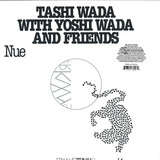
Composer Tashi Wada has performed for years with his father Yoshi Wada—artist, composer, and early member of the Fluxus movement. However, they have rarely appeared together in studio settings. Nue, the fourteenth entry in RVNG Intl.'s intergenerational FRKWYS series, finally brings Tashi and Yoshi, along with an eclectic group of close friends and extended family, together on tape.
Nue draws on aspects of Tashi's background for his widest vision to date—among them the minimalist bagpipe music of Yoshi, who co-composed three of the tracks, the psychoacoustic and perceptual explorations of his mentor, composer James Tenney, and reimagined forms of ancient and devotional music. The album, however, is not a tribute to the past or a recapitulation of familiar sounds. Instead, Nue is an intertwining of people and ideas as a means of growing, of looking inward to move outward, and of looking back to move forward.
To achieve this growth, Tashi assembled a core group of fellow travelers, including Yoshi, composer Julia Holter, producer Cole MGN, and percussionist Corey Fogel, to give life to this multifaceted suite. As an experience, Nue subtly navigates the interactions, intimacy and spaciousness of this group.
The album's title itself is a nod to Tashi's abiding interest in duality and the unknown: nue is a mythological Japanese chimera with the face of a monkey, the legs of a tiger, and a snake for a tail, a composite form, at once disturbing and otherworldly. But, as the composer points out, nue is also French for naked—stripped of complexity, bare and exposed, but also raw and essential.
From the doubling of tones—and the world of harmonic nuances such an action produces—to the rich interplay between individual musicians, all baring their own personalities and experiences through shared performance, Tashi's compositions allow space for these elements to join and grow. The multipartite creature that is an ensemble melds in the simplicity and purity of the music itself.
As explained by Tashi, each part was written with an individual in mind, not simply an instrument. And each individual performer makes their mark, from Holter's vocal performances on the cresting, oceanic 'Mutable Signs' and 'Ondine' with guest vocalists Simone Forti, Jessika Kenney and Laura Steenberge, to Fogel's resonant, precise percussion on 'Bottom of the Sky.' Producer Cole MGN, who has worked extensively with artists like Beck and Ariel Pink, helped to create a world of sound with minimal yet multi-dimensional materials. Like many of its influences, Nue uses deceivingly simple means to create complex, coherent worlds and narratives.
Tashi notes the influence of legendary Brazilian writer Clarice Lispector, whose work looked inward, investigating memory and emotion and dream, to understand the often overwhelming world outside the self. Like Lispector's classic novel Near to the Wild Heart, Nue cleaves these archetypal dualities—world/self, old/new, complex/simple—to create a work that allows them to coalesce into something singular.
As Tashi states in his liner notes: 'My desire was to create something both old and new sounding—ancient and futuristic—and ultimately something of its own world and other. Nue is a vision, an endless night of dreams, and a personal history of sorts, full of joys and demons.'
Lucrecia Dalt's Anticlines is a volume of bodily and geological substrates within poetic theory and sound. It is a place where skins and minerals dissolve and commingle, where gaseous subterranean leaks inflate lungs, where brain cavities echo interplanetary waves bent from passing through atmospheres.
A former geotechnical engineer from Colombia currently residing in Berlin, Dalt's concern with boundaries and edges shape the lyrics and music of Anticlines, her sixth album. Paying careful attention to pace, breath, and texture, Dalt microtonally shifts the distance between speech and song while using traditional South American rhythms to support her contemporary electronic composition.
Lucrecia arrived at the atmosphere of Anticlines after several months of studying and creating new patches for the Clavia Nord Modular, forming a rhythmic feedback flow with it, a Moogerfooger MuRF, and her voice. The overall effect of cavernous space backdroping Dalt's intimate vocal phrasing rewards contemplation, supported in the physical formats of Anticlines by a lyric booklet documenting Lucrecia's collaboration with Australian artist Henry Andersen.
The album opens with Edge,' bordering on a pathological circlusion of self upon other. The lyrics depart from the Colombian myth of El Boraro, an Amazonian monster who turns its victims insides to pulp before sucking them dry and inflating their bodies like balloons to lifelessly float away. Tar' ponders human dependence on earth at the boundary of the heliopause, where to inhale might be like breathing tar. Dalt's distant and obscured vocals end with, we touched only as atmospheres touch.'
The sonic rise and fall of Analogue Mountains' is inspired by martian traces found in Antarctica embedded by meteorite ALH84001, suggesting that we might well be living in mountains transferred from Mars.' The steadily winding music on Concentric Nothings' descends with the lyrical exercise of dissolution let my touch be indistinct and instinctive.'
Interspersed with the lyrical pieces of Anticlines are instrumental interstitials that demonstrate preceding concepts — as if to say, this is what antiforms sound like, and this is what the universe's indifference sounds like.' Dalt's ongoing experiments with visual artist Regina de Miguel support these ideas, their practice allowing the objects of their attention to slip in and out of being.
Mystic of matter, Lucrecia Dalt has previously performed and worked with Julia Holter and Gudrun Gut, her slippery spoken word and performative nature recalling the work of Laurie Anderson, Robert Ashley, Asmus Tietchens, or Lena Platonos. While touching stones, The Thing by Dylan Trigg, Cascade Experiment by Alice Fulton, and Wretched of the Screen by Hito Steyerl are but a few formative scripts that support Dalt's exploration of the betwixt and between.
In preparing a live set for Anticlines, Dalt plans to stage an uninterrupted configuration, like a kind of alienated lecture, aiming for gestures that create tensions with non-existent objects.' Dalt intends to provide meaning and a place for the listener to meditate or relate to the concerns and ideas' she presents.
- Lucrecia Dalt is a Colombian recording artist, songwriter, and producer.
- After studying civil engineering in Colombia, Dalt worked at a geo-technical company for two years and has since lived in Barcelona and Berlin, where she currently resides.
- She has released five solo albums and has collaborated with musicians Julia Holter, Laurel Halo and Rashad Becker, to name a few.
- Dalt has composed for sound design installations and performance pieces for institutions such as the Santa Monica Art Centre, Reina Sofia Museum and the Maisterravalbuena gallery of Madrid, in collaboration with visual artist Regina de Miguel.
- Anticlines is Dalt's sixth solo record, and her first on RVNG Intl., following the release of 2015's Ou.
- Anticlines explores the boundaries and limitations of human consciousness. The album's poetic lyrics were written collaboratively between Dalt and Henry Andersen during a weekend in Brussels, Belgium.
Moscow Is Mythologized For Its Grandeur And Gravity But Its Parable Pleasures Offer Splendor And Even Absurdity. Over The Ten, Symmetrical Pieces Of For, Kate Nv Scores Her Native Urban Environment With Just Enough Whimsy To Gurgle Through The City Cracks And Grow Psychotropic Foliage. Each Sound Assumes Its Own Personality, Moving Through The Album Metropolis Like Miniature, Mutating Molecules Viewed From Nv's Apartment Window.
Alternately A Guitar-wielding, Post-punker And One Within The Multitude Of Moscow Scratch Orchestra's Avant-garde, Nv Is A Versatile Artist That Maneuvers Instinctively In Whatever Musical Environs She Finds Herself. Nv's Second Solo Album Is An Even More Abstract Endeavor Than The Hybrid Pop Of 2016's Binasu. Inspired By Casual Moments Of Ephemeral Sound From Within And Beyond Her Apartment Walls, The Record Has A Clarity Arrived Altogether And From Right Under Her Nose. Recorded At Home, Nv Says It Was As If The Music Was Not Written By Herself, But Her Chair.
For Inhabits A Stage That Piero Milesi & Daniel Bacalov, Ann Southam, Or Hiroshi Yoshimura May Have Written Music For And Dresses It With Viktor Pivovarov's Psychedelic Depictions Of Moscow - Contorting Bodies, Flying Pencils, And Multi-dimensional Faces Dance With Subtle Arpeggiations, Conversational Voice Synthesis, And Anthropomorphic Midi. Animating Objects Is Essential To The Album. Like A Surreal Still Life, Each Piece Is An Alien Arrangement Of Common Elements That Extend The Everyday Ritual Into An Eternal Landscape Of Unconscious Activity. Somewhere Along That Landscape, Kate Awaits And Greets With Apples For Hands And Fish For Feet.
Like The Album Title, Each Composition Contained Within Is Represented As A Three Letter Word, In Russian And English. The First Half Of For Was Written In The Spring. Starting With yxo Ear,' Previously Released On The Peaceful Protest Compilation Cassette In 2017, Melodies Meander And Lollygag. a Two' Incorporates Human Breath Played Like Notes On A Pump Organ. Oak' Offers A Warm Tune To Tango. How' Loops Curious Notes That Bump Into Each Other With A Chirpy Acknowledgement. You,' The Only Track On For With Lyrics, Sets A Wassily Kadinsky Poem To Song.
The Second Half Of The Album Was Written In The Autumn. The Feathery Edges Of One' Extend Like Watercolors Bleeding Off A Rubber Scroll. See' Is A Subdued, Shadowy Variation Of How', As If The Same Song Were Played In Different Weather, Dimmer Light, Or By Kate's Devious Doppelganger. The Electronics Unravel And Unwind On Dog' Until The Final Track, Who,' Ends With Vague Solemnity And Rattled Metals.
A Short Online Film Series By Shura Kulak Will Accompany The Release Of For. The Films Follow A Solitary Figure Performing Ordinary Tasks Through A Slow, Warped Lens — Each Song Enacting A Daily Habit: Waking, Dressing, Reading, And So On. In Her Live Performances Around The Album, Kate Nv Will Play Each Song From Memory, Allowing For Variation From The Recorded Tracks, And Scenes From The Films Will Be Re-created And Improvised In The Moment.
Visible Cloaks' Lex proposes a utopian dream language and its accompanying sound, a limitless, delicate space developed by fluid musical techniques and subconscious voices. The six pieces comprising Lex simulate a more peaceful future, their mysteries telling a new tale in an unknown but imaginable melodic language. Visible Cloaks are the Portland-based musicians Spencer Doran and Ryan Carlile. Utilizing software-based composition rooted in randomization, MIDI-translation and chance operations, the duo has established an improbable humanist mode of music from esoteric processes. Following their self-titled debut album, Visible Cloaks offered Reassemblage, an album simultaneously honoring the post-Yellow Magic Orchestra school of avant musical adventure and diverging from it. Veering from the paths cleared by Japanese and Italian electronic pop and ambient artists of the mid-80s / early-90s, Reassemblage established Visible Cloaks' own camp in a forest of deep sound canopied by trees grown from synthetic seeds.The sound represented on Lex is webbed with sculptural arrangements and interpolated by the sounds of alien speech. These strange and serene utterances were created by Doran feeding a chain of multiple dialects and accents through a language translation software to create an auditory poetry of an evolved place and time.
Lex features both the final version of this process and earlier, simplified experiments with it ( Keys'). The idea - building on 'fourth world' or 'global village' type concepts - was to create a projected language that was a fusion of many,' Doran explains. The result was a very disorienting form of non-language that amplifies the lapses in meaning that occur with the inaccuracy of auto-translation software.'
Permutate Lex, a companion short film to Lex made by Visible Cloaks in collaboration with artist Brenna Murphy (who also created the artwork for Reassemblage and several virtualist videos for the album), is an integral counterpart, both visualizing an aesthetic alive with human form and guiding the sonic experience of the first five pieces: Wheel,' Frame,' Transient,' Keys,' and title track Lex.' World,' the longest piece presented on Lex, is redrawn from a generative composition originally produced for an installation Doran made with Murphy.
The original work incorporates LFOs and randomized MIDI-information, and was intended to variate indefinitely. In this 'fixed' version, World' provides a more conclusive view into the impossible musical environments Visible Cloaks make real. Longer than any track on
Reassemblage, World' expresses the deepening, patient intimations suggested by Lex.
Doran says the Lex attempts to communicate the essence of a world distant enough that it can't be captured or comprehended from the present, appearing only surreal and inscrutable.' The statement reveals a broader musical philosophy fueling this new moment, an awakened voice woven through complex melodic shapes and phrases establishes communication between listeners and the unknown, here presented by Visible Cloaks as sounds coloring the very edge of the envisionable.
Visible Cloaks' Reassemblage is a collection of delicately rendered passages of silence and sound that invokes - and invites - consciousness. The foundation of the duo's second album is gently poured upon the ground their musical predecessors explored, using the materials of chance operations, MIDI translation,' and other generative principles that favor inclusive musical environments over the narrowly constrained.
In 2010, Spencer Doran, one part of Visible Cloaks alongside Ryan Carlile, prepared the first volume of Fairlights, Mallets, and Bamboo, a mixtape indicated by Doran as an investigation into fourth-world undercurrents in Japanese ambient and pop music, years 1980 - 1986.' These mixes contextualized the outré orbit of Yellow Magic Orchestra-related solo projects and their abstract, radiant forays as forever futuristic modes of music.
Reassemblage evokes similar musical futures celebrated on the Fairlights mixes, but does so observantly rather than reverently. The title Reassemblage, for example, is taken from a film essay by Trinh T. Minh-ha, which explores the impossibility of ascribing meaning to ethnographic images. The author aims to speak nearby' rather than speak about.' In other words, to embrace lapses of understanding, and realize that the impulse to map direct meaning across a cultural gap often results in further disconnect.
In an effort to speak nearby' rather than speak about,' Visible Cloaks filters and forms source material to become young again. Often the duo strip tonal elements of their specificity or randomize melodies so they become stirring and lucid. Essential patterns emerge, conscious experience heightens. In these moments, the musical language of Reassemblage finds unlimited resonance and presents a path to uninhabited realities.
The origin of this language could be described as translingual or polyglottal, working within the eastern / western feedback loop of influence, Fourth World ambiguity, and the universality of human emotion. Incorporating an international array of virtual instruments to advance the idea of panglobalism through digital simulation, tones and colors cohere into a living, breathing pool of sensorial experience in Visible Cloaks' environs.
Beyond embracing the fluidity of worldly musical influences, Visible Cloaks works fluently between mediums. The contribution of stalwart digital and installation artist Brenna Murphy's dream dimensions to Reassemblage's cover artwork and surrounding videos extends the album's exploration of global headspace into a visual, visceral reality.