After their recent LP Mirages (Kraak Records, 2025) with French turntablist Guilhem’All, the group continues to explore collaborations with artists and instruments from diverse musical traditions. Building on decades of uncompromising acoustic exploration, Razen delves deeper into their practice with five improvisational pieces that unfold slowly in time and space. The duo’s radical core - Brecht Ameel and Kim Delcour - finds in Van der Harst a longtime kindred spirit, united by the impact of sound, intonation, and the sheer joy of playing.
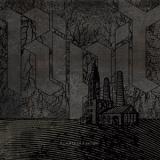
To be released on April 24 via VIERNULVIER Records, the artwork for Stained Glass Starling was created by American visual artist Robert Beatty (Oneohtrix Point Never, Christina Vantzou, The Weeknd, Tame Impala). The physical release comes with a 16-page booklet including artwork and an interview.
A long-standing artistic kinship lies at the heart of this project, with first encounters dating back to the early 2000s in Belgian musical improv theatre. Van der Harst’s lifelong experience in improvised music and music theatre, spanning back to the 1980s, combined with a vast arsenal of rare and historical instruments, opens new tonal territories within the Razen universe.
These explorations are not incidental: his family roots in the former Dutch East Indies — through his great-grandfather — provide a quiet backdrop to his enduring affinity for Asian musical traditions. Instruments such as erhu, Javanese kacapi, and others introduce timbres
that bring the music its most pronounced Asian inflections to date.
Yet despite this shift in colour, the underlying ethos remains unmistakably Razen. Working from sound rather than form, the ensemble approaches music as painters approach a canvas: adding layers, contrasts and shades with care. There is no soloist’s ego here; all voices are equal, echoing principles found in gamelan traditions.
Over the decades, Razen and Dick Van der Harst have crossed paths repeatedly, notably through cult theatre productions by Belgian theatre maker Eric De Volder, including Zwarte vogels in de bomen (2002) and Huis der Verborgen Muziekjes I–II (2000–2006). Recording an albumtogether had long been a shared aspiration — a wish that crystallised after a 2024 concert at Concertzaal Miry in Ghent, part of the Ruiskamer series by VIERNULVIER Art Centre.
Search:robert pain
RIPIT is back with a new LP after 3 years spent mostly on the mesmerizing collaboration between THE ÅNGSTRÖMERS- his duo with FRÉDÉRIC ALSTADT -and the Haitian voodoo ensemble CHOUK BWA.
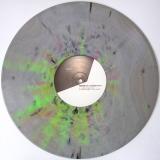
While Ripit is better known for his radical noisy breakbeat work, "A Church or a Factory" explores a more industrial, power electronic and noise ambient side of his synthesizer lust. The instruments abused on this record are: Serge modular, Knifonium and various eurorack modular. The A-side comes with 5 powerful synthetic industrial songs which feature each one a different guest vocalist. The B-side is a long ambient noise piece that will plunge the listener in an anxious meditation.
Ripit is the project of the French NICOLAS ESTERLE for almost 25 years. He explores electronic instruments thru distortion , ranging from industrial hardcore to breakcore, from doom hiphop to dusty dub. Beside his solo project, he's involved in various bands like SOLAR SKELETONS (with TZII), FUJAKO (with HHY) and more recently The Ångströmers.
On the guest side, there's a wild bunch of Nicolas' friends:
- PAUL-TERGEIST is the galactic moniker of PAUL BEAUCHAMP in his band SPACE ALIENS FROM OUTER SPACE;
- ANDREA EV is the lead member of 1997EV;
- ROBERT IMHUMAN and DIVTECH are members of the REALICIDE COLLECTIVE;
- TZII is a long-time road comrade of Nicolas and a touring freak spreading his music all over the world;
- ANDRÉ COELHO is known as METADEVICE and is the founder of the now-defunct SEKTOR 304.
The title "A Church or A Factory" refers to the Belgian countryside, wherever you are, you are at least surrounded by a church or a factory. As he just left the urban life of Brussels to escape to the French countryside, he is now lost enough not to have neither a factory nor a church in sight.
“Estonian cultural theoretic Tõnis Kahu once said that Black Metal is men seeking for masculinity while their bodies lack the capacity to catch up and are lagging behind. In the age of microplastics and low-testosterone, Tapetud Rott is asking for ancestral guidance from George Michael. Each day with the growing pains of maturity they can only dream about living somewhere so happy-go-lucky and tranquill as the city that once provided the suitable breeding ground for giving birth to such an agressive and theatrical expression that could mark its cadaverous polar opposite. The mask they now so falsely wear is one seeking for Vitamin D inside the heart of a deceased Rat.”
Limited Black 7-inch Vinyl
Music by Robert Nikolajev & Mikk Madisson
Recorded in Tallinn
Mastered By The Bastard
- A1: Roberta Vandervort - Stumbler
- A2: Roberta Vandervort - Walk Softly
- A3: Roberta Vandervort - Let Me Love You That Much
- A4: Roberta Vandervort - Hey Now
- A5: Roberta Vandervort - Child
- B1: Sally Townes - Real To You
- B2: Sally Townes - Bright Eyes
- B3: Sally Townes - Slow Burning Candle
- B4: Sally Townes - Maybe More
- B5: Sally Townes - Neon Castles
2026 Repress
To enter the world of Sally Townes and Roberta Vandervort is to be swept away into a dimension of unique sound. Embellishments of smoldering jazz funk, seductive soft rock, breezy AOR, and misty folk, all paint a picture of the worlds which they inhabited; from the endless flat expanse of Dallas, the hot and humid bustle of a Bourbon Street night club, to the late night buzz of a Los Angeles studio session.
While Sally Townes and Roberta Vandervort never crossed paths in our reality, their supernatural union on this compilation feels like the meeting of old, yet familiar friends, set in a parallel dimension with lives intertwined. The songs feel like old friends, too — a comforting time capsule of the popular sounds of the era, yet offering something completely new. Bridged by the striking similarities in their musical confidence, vocal conviction, and boundless creativity, both women encapsulate an uncompromising passion for living, loving, and creating on their own terms.
- A1: Jancen - Voided Oasis
- A2: Arthur Robert - Dyson Sphere
- B1: Vinicius Honorio - Tundra
- B2: A-Sts - Transit
- C1: Len Faki - Stardancer
- C2: Jeroen Search & Decoder - Fiber
- D1: Iglo - Paraphrase
- D2: Glaskin - User Illusion
- E1: Scheermann - Elura
- E2: Obscure Shape - Träume Im Nebel
- F1: Roman Poncet - Icelander
- F2: Arkan - French Kiss
Figure is celebrating its 150th release with a loaded triple vinyl compilation, showcasing artists both old and new to the label – a testament to what the Figure sound is today. The cover art has been commissioned from Berlin-based graffiti artist Erik Winkler, whose spray-painted work is adorning the thick triple-pocket sleeve housing three colored records.
The compilation features some important recent additions to our growing roster: both Jancen and Arthur Robert deliver their unique take on tunneling techno, be it searing or psychedelic. And Brazilian shape-shifter Vinicius Honorio carves out his own gliding bass frequencies while A-STS relies classic drum machine bleep hypnosis.
Label head Len Faki’s own energetic appearance echoes his versatile style found on his recent album release. The all-out production featuring strings and quirky synths sits in contrast with Jeroen Search & Decoder - a pairing of veterans, whose minimal hardware sound slowly builds over trippy acid loops. The flipside belongs to a younger generation of producers, namely IGLO turning out a superb techno roller teeming with life and lush with details. The duo of Munich brothers Glaskin already remixed Faki for his Fusion album, their first original release on Figure comes a skillful blend of distorted stabs and deep grooves.
Equally refined but with a harder edge to it, Scheermann practices a dark, minimalist approach where each element gets time to shine for maximum effect. His bleak track is aptly paired with a rare solo release of Obscure Shape whose fractures of a dreamy, twinkly melody make for one of the most emotional moments of the compilation. The final side holds Roman Poncet’s seasoned understanding of groove, balancing perfectly the dubby stabs and vocal chops for a dazzlingly perfect loop. The final tones to this milestone release come courtesy of another of Figure’s bright new voices: Arkan manages to conjure up a powerful sense of progression, where colourful synths converge in harmonies over an effortlessly bouncing beat.
It is a rare moment for an independent label to make to number 150. But to keep finding new talent who help re-shape the signature sound while expanding the family roster, that’s a true blessing. This package shows how Figure is growing and adapting as a label, staying relevant as one of the leading voices in modern techno.
Wally Badarou is a synth pioneer and musical polymath. But rarely does he sing over his sumptuous tracks. The 6 songs that comprise new record Simple Things finally realise Wally's vision for select backing tracks from his beloved Colors Of Silence.
The tracks were originally developed back in 2001 for the release of the original CD; here, Wally has “simply" added overdubs and vocals to their mastered mixes with some discerning edits. Simply put, Simple Things is another slice of simply stunning Wally Badarou genius.
Simple Things has been decades in the making. Indeed, Wally struggled not only with the idea of singing these wonderful songs himself but singing them in English and writing his own lyrics, while wrestling with the sensational backing tracks, which themselves seemed to have taken on a life of their own.
As Wally explained to us: "In addition to the instrumental artist I have been known as, so far, there has always been a singer who simply was not sure he was, up until now. Even though “Back To Scales Tonight”, my very first album, was, indeed, a song album."
Opener "It Couldn't Be You" embellishes the uptempo groove of soca-funk gem "The Lights Of Kinshasa". As Wally explained to us, it's about “a simple love story somewhere, one rainy night, under the lights of Kinshasa. A woman, a man, online dating, quite usual in our times. Then they meet, almost missing each other." The guide vocal Wally had laid for Colors Of Silence - with an organ sound - seemed striving for words in Linguala, a Congolese language he could not speak. Therefore the decision to do it himself was not an easy one, for it had to be in English to fit his singing. We think it turned out pretty good!
"You Can't Hide Always" vocalises Wally's deep concerns set to the propulsive "Smiles By The Millions": "Populism, ostracism, radicalism, ethics and values all turned upside down worldwide, are they all inevitably exacerbated by our social networks? It could all melt down one day, like a house of cards in the ocean of fake news and false prophecies”. Wally wanted to keep the track as bare as possible but, inevitably, the backing vocals and the synth-brass arrive ultimately to present a welcome 70s flavour, with no snare-drum added.
The bright and breezy "We'll Make It Again" adds vocals to "Where Were We", a tropical, reggae-tinged bounce through the islands. Here's Waly: "Where were we when we last said: "I love you"? Simple words to express something quite common, but never quite simple to deal with. A simple song about the resilience of the broken hearts.” The reggae came from it being conceived when Wally was scoring for “Third World Cop”, a 1999 Jamaican action movie.
"Walk Straight Ahead" provides Wally's gorgeous, contemplative and idiosyncratic vocals to the deep serenity of Colors Of Silence highlight, "Amber Whispers". It's a gliding, divine, mini melodic masterpiece. It'll make you swoon in its extreme beauty. As Wally describes, "it started as just whispers, sweet amber whispers. Then the colour turned darker, as darker skies seemed to fall upon us while the whole world keeps on walking ahead, straight ahead, regardless of the blatant warnings, feeling much too comfortable in conformity. Initially, the verses were to be spoken only. I realised they could be sung all the while, without overshadowing the ethereal atmosphere." Amen.
The serene, celestial "Painting My Life Blue" presents the vocal version of "Days To Wonder". Says Wally, "how does it feel when your second half is gone after decades of riding life together? Past the temporary loss of your bearings, you come to realise you've been blind to the essential, and suddenly you can see...For this most intimate song of mine, I had tried to come up with a melody on top of the existing backing track, long before realising the melody was in the keyboard part already. It just needed to be properly mixed with it."
The profoundly emotional "Just Two Lovers" works up the formerly-too-brief and glorious "Crystal Falls" into a much fuller masterpiece and features acoustic guitar sparkle before fully glistening with some gentle head-nod percussion. Waly explains further: "Dear little green men, please tell me, what is it about us that makes you want to come and visit us so often (contrary to Fermi's assertion)? And here is the reply I believe I heard them sing: "You've got the key you've been searching for: Love”. I reverted to the initial backing track I had made around 1985, which already bore the melody, and which I added acoustic guitars to, before singing it." An astounding closer.
A synth specialist, there can be few artists more under-appreciated given their vast influence than Wally Badarou. His solo work practically defined the sound of the Balearic DJs of the 1980s, and thus the more sophisticated sound of dance culture thereafter. He was one of the Compass Point All Stars (with Sly and Robbie, Barry Reynolds, Mikey Chung and Uziah "Sticky" Thompson), the in-house recording team of Compass Point Studios responsible for a series of albums in the 1980s recorded by Grace Jones, Tom Tom Club, Mick Jagger, Black Uhuru, Gwen Guthrie, Jimmy Cliff and Gregory Isaacs. Badarou's keyboard playing could also be heard on albums by Robert Palmer, Marianne Faithfull, Herbie Hancock, M (Pop Muzik), Talking Heads, Manu Dibango and Miriam Makeba. He also produced Fela Kuti. Phew!
When we asked Wally about the significance of this collection's title, he explained: "These are "Simple things” that everyday’s life seems to build upon. The simplest are the harder to describe, but when satisfactorily described i.e. with simple words, they are the more genuine and authentic to express and share. I’ve immersed myself in other classic song lyrics, something I hardly did before, just to appreciate the genius behind the simple words they were made of, and had a great time studying how powerful they were in expressing complex ideas such as love."
Recording was twofold: first, most of the backing tracks were recorded in 2001, in Wally's studio in Normandy, mostly using hardware synths and Yamaha digital consoles. Then, he fine-tuned the melodies and wrote the lyrics in late 2023, then added some overdubs and sang them all during summer 2024. States Wally, "Digital Performer was and remains the DAW I’ve been using throughout, ever since the 80s."
Wally's sophisticated synth textures and expressive keyboard runs are so full of character, so full of life, that this work of art transcends any easy genre categorisation. Meticulously remastered and cut by both Simon Francis and Cicely Balston respectively, it has been pressed to the highest possibly quality at Record Industry in Holland. Sometimes, the simple things are the most extraordinary.
- A1: O Mi Sol Li Lon (Angie March) (Side A)
- A2: Arabesque No 1 & 2 (Sally Heath)
- A3: Midtown (Tom Waits)
- A4: On Le Joue Pour Nous (Mistinguett)
- A5: Menlimontant (Charles Trenet)
- A6: Cockroach & Barflies (The Tiger Lillies)
- A7: Soutine's Cow (The Tiger Lillies)
- A8: Bridge (The Tiger Lillies)
- A9: Goodbye (Sacha Puttnam & Steve Mclaughlin
- B1: Modi's Place (Caroline Dale) (Side B)
- B2: Cinzia (Oskar Shuster)
- B3: Disfruto (Carla Morrison)
- B4: Doves (Sacha Puttnam, Steve Mclaughlin & Tim Wheeler)
- B5: Beef Painting (Sacha Puttnam, Steve Mclaughlin & Yasmin Ogilvie)
- B6: Cathedrals (Instrumental) (Robert Stevenson & Caroline Dale)
- B7: Sunday In The Park (Sacha Puttnam, Steve Mclaughlin & Caroline Dale)
- B8: Sculpture Drums (Sacha Puttnam, Steve Mclaughlin & Tim Wheeler)
- B9: Stairway Romance (Sacha Puttnam, Steve Mclaughlin & Tim Wheeler)
- B10: The Stars (Sacha Puttnam, Steve Mclaughlin & Tim Wheeler)
- C1: Cemetery (The Tiger Lillies) (Side C)
- C2: Cemetery Nightmare (The Tiger Lillies)
- C3: Blown Up Cafe (Sacha Pullman, Steve Mclaughlin & Llan Eshkeri)
- C4: The Black Angel's Death Song (The Velvet Underground & Niko)
- C5: Tom Traubert's Blues (Tom Waits)
- D1: Gangnat Dinner (Sacha Puttnam, Steve Mclaughlin, Robert Stevenson & Sally Heath)
- D2: Modi Speech (Sacha Pullman, Steve Mclaughlin & Llan Eshkeri)
- D3: How Did It Go (Sacha Pullman, Steve Mclaughlin, Tim Wheeler & Llan Eshkeri)
- D4: Argument Pt2 (Sacha Pullman, Steve Mclaughlin & Llan Eshkeri)
- D5: Bea Returns Sculpture (Sacha Puttnam, Steve Mclaughlin & Tim Wheeler)
- D6: Cathedrals (Jump, Little Children)
- D7: Doves Ending (Sacha Puttnam, Steve Mclaughlin & Tim Wheeler)
- C6: Pour Lui (Lucienne Delyle)
- C7: Stairs (The Tiger Lillies)
Modi: Three Days on the Wing of Madness is a 2024 biographical drama based on the life of renowned Italian artist Amedeo Modigliani.
Directed by Johnny Depp, the film stars Riccardo Scamarcio in the title role, with supporting performances by Stephen Graham,
Al Pacino, and Antonia Desplat. The film’s original soundtrack plays a pivotal role, blending evocative original compositions by The Tiger Lillies
with classic tracks from artists such as Charles Trenet, Augie March, Tom Waits, and The Velvet Underground & Nico.
The soundtrack is available as a deluxe 2LP vinyl set in a gatefold sleeve with imagery from the film
And as a 2CD Box Set with lift-off lid, featuring a 24-page booklet including exclusive notes from Johnny Depp and behind-the-scenes images
- Hotel California
- New Kid In Town
- Life In The Fast Lane
- Wasted Time
- Wasted Time (Reprise)
- Victim Of Love
- Pretty Maids All In A Row
- Try And Love Again
- The Last Resort
The moment the instantly recognizable intertwined guitar passage on the title track to the Eagles' Hotel California begins, the record's genius becomes obvious all over again. Ranked the 118th Greatest Album of All Time by Rolling Stone, certified by RIAA as the third best-selling LP in history, and considered the foundation on which the Golden State's mid-‘70s music scene was built, the 1976 landmark is a music staple immune to shifts in trends, eras, and styles. Fearlessly addressing the chaos and consequences of American life, its songs remain strikingly prescient and gain creedence with each passing day.
Mastered from the original analogue master tapes, pressed on MoFi SuperVinyl, and limited to 17,500 numbered copies, Mobile Fidelity's UltraDisc One-Step 180g 45RPM 2LP vinyl box set ensures you will want to permanently check into and never leave this particular Hotel California. Up to the herculean task of standing head and shoulders above all prior reissues, this collectible edition plays with extreme clarity, organic richness, tube-like warmth, massive dynamics, and microscopic levels of detail. You'll be able to practically smell the colitas and feel the breeze in your hair. Songs come across with an epic sweep and feature immersive, front-to-back soundstages that allow the music unprecedented air, roominess, and separation. As for the noise floor? It's basically as invisible as the spirits that waft in the corridors of the unforgettable title song.
Aesthetically, the premium packaging and presentation of the UD1S Hotel California pressing befit its esteemed status. Housed in a deluxe box, it features gorgeous foil-stamped jackets and faithful-to-the-original graphics that illuminate the splendour of the recording. From every angle, this UD1S reissue exists as a curatorial artefact meant to be preserved, touched, and examined. It is made for discerning listeners that prize sound quality and production, and who desire to fully immerse themselves in the art – and everything involved with the album, from the renowned cover art to the meticulous finishes.
Indeed, the opportunity to zero in on all the particulars of the 26-million-selling Eagles record dubbed "a legitimate rock masterpiece" by vaunted Los Angeles Times scribe Robert Hilburn has never been better. A global phenomenon that marked the band debut of guitarist-singer Joe Walsh, Hotel California continues to resonate and connect with listeners of all generations taken by its narrative depth, stark directness, picturesque melodies, daring majesty, and ardent emotionalism. Adorned with a breathtaking exterior photograph of the Beverly Hills Hotel that serves as the simultaneously haunting and alluring cover art, and rounded out by a rear-cover shot of the Lido Hotel lobby that reinforces a notion that teeters between permanence and transience, Hotel California is brilliantly tied to a specific place that functions as a universally understood metaphor for the American Dream.
Confronting the darker undercurrents and oft-ignored constructs attached to that romantic notion, the record's songs revolve around a host of shared themes: excess, mobility, stability, illusion, fame, destruction, and idealism included. Notably, Hotel California appeared at a crucial junction in American history: During the country's bicentennial and amid escalating controversies related to the Vietnam War, energy crisis, and governmental corruption. That the Eagles manage to channel such cultural, social, and economical matters into a cohesive, stately, big-picture statement is alone a stupendous feat. That the album's reach, boldness, vitality, accessibility, and understated intensity have never waned make it a marvel.
Reflecting on Hotel California 40 years after its original release, and indirectly explaining its enduring appeal and increasing relevance, singer-songwriter Don Henley confirmed the record pertains to the "loss of innocence, the cost of naiveté...the difficulties of balancing loving relationships and work, trying to square the conflicting relationship between business and art; the corruption in politics, the fading away of the Sixties dream of ‘peace, love and understanding.'"
It can be argued that Henley and company squarely hit on and drove home those ideas in the surreal title track, chart-topping "Life in the Fast Lane," and grand "The Last Resort" alone. But that would miss the forest for the trees. Experienced as an unbroken whole, complete with the pristinely shot imagery and physical grooves, Hotel California unfolds like a geography-conscious saga by James Michener and plays like colour-saturated movie shot on 70mm film by Martin Scorsese. It's about our collective and individual decisions – and the shape of our past, present, and future. And, just like that conjured by our imaginations, Hotel California continues to take on a life of its own.
More About Mobile Fidelity UltraDisc One-Step and Why It Is Superior
Mobile Fidelity Sound Lab's UltraDisc One-Step (UD1S) technique bypasses generational losses inherent to the traditional three-step plating process by removing two steps: the production of father and mother plates, which are created to yield numerous stampers from each lacquer that is cut. For UD1S plating, stampers (also called "converts") are made directly from the lacquers. Since each lacquer yields only one stamper, multiple lacquers need to be cut. Mobile Fidelity's UD1S process produces a final LP with the lowest-possible noise floor. The removal of two steps of the plating process also reveals musical details and dynamics that would otherwise be lost due to the standard multi-step process. With UD1S, every aspect of vinyl production is optimized to produce the best-sounding vinyl album available today.
MoFi SuperVinyl
Developed by NEOTECH and RTI, MoFi SuperVinyl is the most exacting-to-specification vinyl compound ever devised. Analogue lovers have never seen (or heard) anything like it. Extraordinarily expensive and extremely painstaking to produce, the special proprietary compound addresses two specific areas of improvement: noise floor reduction and enhanced groove definition. The vinyl composition features a new carbonless dye (hold the disc up to the light and see) and produces the world's quietest surfaces. This high-definition formula also allows for the creation of cleaner grooves that are indistinguishable from the original lacquer. MoFi SuperVinyl provides the closest approximation of what the label's engineers hear in the mastering lab.
Zuul supplies pressure control’s debut release, Routine Machine.
Following releases on Exarde and White Scar, the Laik label-head’s signature sound takes a menacing turn. In a departure from his usual output he delivers a grizzly 5 tracker filled with EBM, New Beat and Wave affined floor-fillers; all fraught with tension, straight out of the Kirkstall strip.
Fitting for peak-time, warm-ups and rub-downs, the EP is filled with snarling, left-of-centre bombs. All reminiscent of the golden-era sound forged in Frankfurt and Ghent circa 88-91, with new-school stylings for the modern day working disk-jockey.
Constructed exclusively for dark and discerning dance floors.
You can run, but you can’t hide.
Credits:
All music by Ollie Burgess
Pressing and distribution by by One Eye Witness
Design by Al Robertson
Mastering by Marco Pellegrino
Words by Josh Bayat
180 G. BLACK VINYL WITH LINER NOTES IN CREOLE, FRENCH, ENGLISH
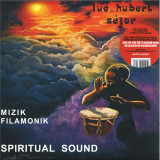
Originally released in 1979, "Spiritual Sound" lives up to its name, a soaring, triumphant album, six tracks of spirit magic from Guadeloupe.
Telluric, intense, terribly alive, the gwoka drums of Guadeloupe carry the identity of a painful and fervent island. Marked forever by the crime of slavery, Guadeloupe's créolité cherishes the ka drums and their natural environment: the low-pitched boula drum with male goatskin, the high-pitched soloist makè drum with female goatskin, the chacha, ti bwa, triangle, calabash and other percussion instruments that surround them, and the voices - the fiery, proud, timbred, urgent voices of the gwoka.
This album is also a legend for its voices: in his then dazzling youth, singer Lukuber Séjor was one of the first gwoka artists to largely feminize the chorus of répondè, who converse with his text delivered in a straight and powerful voice.
And everything here sets new standards. In 1979, Mizik Filamonik - Spiritual Sound proclaimed a spiritual patriotism of ferocious intensity. The album by Lukuber Séjor - whose spelling alone is a battle - sets out to give Guadeloupe the intangible weapons of self-respect and self-knowledge, through a singular practice of traditional music.
The genesis of gwoka music is less straightforward than one might imagine... The drums performed the servile task of accompanying the work of slaves in the fields and during the “corvées” imposed by the administration, before being freely practiced by the common people after the abolition of 1848. At the heart of the conviviality of the Guadeloupeans furthest from the cities - geographically and socially - the gwoka drums come out for carnival, funeral wakes and neighborhood celebrations, but also during strikes, fits of anger and armed vigils of the riots and revolts that have punctuated the island's history. For generations, governors of the colony and then the prefects of the overseas department of Guadeloupe have been viewing the gwoka as a potential for turbulence and a threat to public order.
But as the Beatlesmania, “chanson engagée” and rock revolutions unfolded in Europe, young people turned to the drums of mizik a vié nèg (“bad negro music”, in Creole), which Guadeloupeans had learned to despise by following the “assimilation” process advocated by the school system and most of the political class. At the end of the sixties, in a Guadeloupe mourning the deadly repression of the May 1967 social movement, they played traditional music, refusing to wrap it up in tourist prettiness and madras folk costumes. Instinctively, they played a rough and contemporary gwoka, led by the incendiary Guy Konkèt. This was the era of decisive 45 rpm records such as Robert Loyson's Kann a la richès, which brought to light the fieriest words of union rallies.
At his home in Sainte-Anne, Lukuber Séjor played with flautist Olivier Vamur and his brother Claude Vamur, who cobbled together a drum kit from tin crockery and became, a few years later, the most influential drummer in Kassav'.
These were the years of the Bumidom program, when young Guadeloupeans were encouraged to emigrate to mainland France. At the age of twenty, Lukuber Séjor embarked on the liner Irpinia, disembarking at Le Havre and taking the train to the Gare Saint-Lazare - the route taken by thousands of young West Indians who went on to study or looked for work, all the while trying to maintain a link with their homeland. In this case, it's at the Antony university residence, where Lukuber played the drum and participated in a thousand gwoka updates and aggiornamentos, while exile reinforced the need for a spiritual link with the native land.
In 1978, Guy Konkèt played at the Salle Wagram, a historic event for West Indian music. After serving as répondè - i.e. backing vocalist - on one of his home-recorded albums, Lukuber joined his live band. Little by little, he became one of the key artists on a circuit parallel to French show business. At a student party in Caen, he met a young woman from Martinique who, at the time, was more motivated by her ambitions as a visual artist than by her vocation as a musician. Her name was Jocelyne Béroard and, a few years before she plunged into the Kassav' adventure and became the greatest West Indian singer of her generation, she designed the cover of Lukuber Séjor's LP.
This ambition was obvious and imposed its will. A more or less regular band was formed, with Roger Raspail, Rudy Mompière and Éric Danquin on ka drums, Claude Vamur on ti bwa, Olivier Vamur and Françoise Lancréot on flutes and Annick Noël on keyboards. Lukuber Séjor is set on wanting to extend the gwoka palette to other instruments, as the jazz-rock revolution opens a thousand new doors. Annick Noël will play a wide range of timbres and textures on electric piano and synthesizer. Another novelty: the répondè are two men and two women, Roger Raspail, Olivier Vamur, Françoise Lancréot and Maryann Mathéus ...
Mizik Filamonik - Spiritual Sound is a self-production in which the singer and leader sank all his savings, allowing him no more than a single day in the studio. The first side is more of a musical manifesto, with the first two tracks, Éritage and Penn é plézi, being instrumentals. The third, Son, forcefully celebrates the need for Guadeloupeans to connect with the gwoka. In fact, Jocelyne Béroard's cover shows a tambouyé in the shadow of a cloudy sky, against which a radiant sun is rising and whose light will soon flood the entire landscape. The silhouette and face of this man strongly evoke the immense Vélo, master of the ka, rejected at the time on the fringes of society.
The second side of the LP is surprising. Formally, three tracks are explicitly linked like the three parts of a triptych. Primyé voyaj evokes the appalling tribulation of Africans deported as slaves to Guadeloupe; dézyèm voyaj speaks of the Bumidom program and the economic, political and social forces driving young Guadeloupeans towards the mirage of prosperity in France; twazyèm voyaj closes the cycle with the emigrants' return from Europe after years away from their island...
This gwoka, obsessed with the need to save Guadeloupe spiritually, appeals far beyond the politicized audience. Mizik Filamonik - Spiritual Sound instantly became a classic, although Lukuber Séjor never really made a career for himself as a musician.
After all, the album was released in 1980, with no promotional resources in France or Guadeloupe - and therefore no concerts. The thirty-two-year-old author, composer and performer made his own third trip back to Guadeloupe. He set up a small woodworking business, which he lost in Hurricane Hugo in 1989. His other activity, teaching in a medical-educational institute, became the core of his professional life. He continued to be an active campaigner - a campaigner for the Creole language, a campaigner for the reawakening of identity, a campaigner for special education, a campaigner for a thousand causes that he ignited with his generous and perceptive enthusiasm, such as the defense of breadfruit fries...
The echoes of his 1979 album have not died down. Of course, the use of Penn é plézi as the theme tune for Radio Guadeloupe's funeral notices from 1980 to 1992 kept him in the collective memory, but he continues to sing and compose sporadically, as with his all-female
vocal group Vwapoulouéka... Still convinced that music is a means of liberating the spirit, he continues the journey of a young man eager to deploy the power of Creole music and language.
Bertrand Dicale
- A1: Street Level Entrance (1:52)
- A2: Get At Me (4:08)
- A3: Diggin’ U Out (4:48)
- A4: Safe + Sound (4:49)
- B1: Somethin’ 4 Tha Mood (5:55)
- B2: Don’t You Eat It! (1:08)
- B3: Can I Eat It? (4:59)
- B4: It’z Your Fantasy (4:23)
- C1: Tha Ho In You (4:45)
- C2: Dollaz + Sense (5:53)
- C3: Let You Havit (3:40)
- C4: Summer Breeze (4:34)
- D1: Quik’s Groove Iii (2:37)
- D2: Sucka Free (2:11)
- D3: Keep Tha “P” In It (5:25)
- D4: Hooray 4 Tha Funk (2:11)
- D5: Tanqueray (4:19)
2025 Repress
DJ Quik is a giant of West Coast hip-hop. With 1995’s Safe + Sound, he scaled new levels of musical magnificence with his signature new age P-Funk/laconic G-Funk. A quintessential, sun-scorched LA album, this is pretty much essential. Typical for mid-90s albums the original vinyl copies are now rare so here’s the Be With re-issue, complete with “Tanqueray”, the hidden track from the original CD release.
A preternaturally gifted producer/rapper, DJ Quik has produced scores of LA gangsta rap classics. He’s released platinum and gold records of his own, as well as helped craft them for the likes of Tupac, Snoop Dogg, and Dr Dre. Quik has always been quirkier and more interesting than his gangsta rap peers, both musically and lyrically. An old-school funk producer at heart, he’s also incredibly nice on the mic. His raps often deal in boasts, jokes and good times but also cover his beefs, his trials and his trauma. Partying and pain, all mixed up. DJing and producing hype beat tapes from age 14, Quik’s tracks blended the languid funk and rubbery synths of Zapp and George Clinton with a gangsta aesthetic, creating a more danceable foil to Compton’s more typical nihilistic hedonism. Ultimately, his records sound custom engineered to drift out over sun-soaked barbecues.
By the time of his third album DJ Quik was a household name on the West Coast - California’s premier rapper/producer not named Andre Young. Released on Profile in 1995, Safe + Sound was certified gold. Less reliant on samples and more focused on live instruments, it elevated him from producer to fully-fledged composer. This sound — the quick, winding basslines, tinny high hats, smooth instrumental solos, soulful pipes, and Roger Troutman’s talkbox — defined him. This is an album of full-blown masterpieces. Rich soundscapes and masterfully arranged orchestrations with dense layers of sounds, intricate rhythms, and well-balanced songwriting.
The first track proper, “Get At Me” samples Cameo whilst Quik takes aim at the Judases in his life, the horn-laced chorus providing a triumphant feel. On the horizontal “Diggin’ U Out”, the soulful electric piano of Warryn Campbell lays a relaxed groove for Quik to talk over about one of his favourite topics: sex. Title track “Safe + Sound” chronicles Quik’s formative years over a slick instrumental. The moody bass locks a laidback infectious groove, the hook is catchy and Quik’s delivery is in fine form. On the uber-chilled “Somethin’ 4 Tha Mood”, Quik cooks up a breezy, feel good track of sparkly keyboards, syncopated claps, shuffling hi-hats, woozy synths and a floating two-minute flute solo courtesy of Robert “Fonksta” Bacon. Analysing the highs and lows of an average day in the hood, it echoes Cube’s “It Was a Good Day”.
“It’z Your Fantasy” is a silky smooth soundtrack to Quik’s detailed retelling of a sexcapade with a young lady and whilst “Tha Ho In You” is musically perfect for that midsummer family BBQ, its lyrical content is unsurprisingly decidedly less family-friendly. A real highlight, the infamous “Dollaz + Sense” is one of the most ruthless diss tracks of all time. The brutal lyrics ride a laidback West Coast beat, flipping a sample from Young & Company’s “I Like (What You’re Doing To Me)” as Quik fires lyrical shots at his arch Compton nemesis, MC Eiht. On the loping, hazy “Let You Havit”, Quik is again in gangsta mode, with more bars of barbs aimed at Eiht, rhyming over sun-kissed synthy-rollerskate funk.
Some of the finest tracks on Safe + Sound are those designed to de-stress. The evocative “Summer Breeze” is a classic warm-weather jam, anchored by a twangy funk guitar, breezy string arrangement, and a soulful hook delivered by Dionne Knighton. Quik’s nostalgic lyrics are not far from DJ Jazzy Jeff & The Fresh Prince’s “Summertime”, reminiscing over barbecues at the park, young love, and the brevity of halcyon youth. The relaxed and jazzy “Quik’s Groove III” is another highlight, as bass, guitar, piano and flute combine to create a smooth, soulful instrumental.
The swaggering “Shack Up”-sampling “Sucka Free” features a cameo from Playa Hamm, all funky braggadocio and over much too quikly (pun thoroughly intended). The jazz-flavoured “Keep Tha ‘P’ In It”, again featuring Playa Hamm but this time extending the cameo invitations to Hi-C, 2nd II None and Kam, is pure laidback P-Funk. The deep bass and industrial drums make sure the groove hits hard.
“Tanqueray” was originally a hidden track on the CD version of the album, but it’s too good to hide. This wild party samples Brass Construction’s gigantic “Get Up To Get Down” and soars in its drunk-ebullience. An apt way to close this party-driven set.
This 2022 Be With double LP re-issue has been mastered for vinyl by Simon Francis, cut by Pete Norman and pressed at Record Industry. Unusual for the time, Safe + Sound was originally pressed as a double, so all that was missing was the CD’s hidden bonus track “Tanqueray”, so we’ve fixed that. The original vinyl release never got a picture sleeve, so we’ve recreated the original’s promo-style silver-sticker and plain black jacket. A subtle cover for a wonderfully unsubtle record.
Bog Bodies - the band consisting of Robert Stillman, Anders Holst and Seán Carpio delve into deep time to carve sonic abstractions across their self-titled new album on MIC.
Navigating the “liminal territory between noise and signal, chaos and control, form and abstraction,” the trio recorded and mixed the album on an
8-track cassette machine. Bog Bodies is a searching inquiry into the mythologies and magical undercurrents that knit together our existence in the information age.
Bog Bodies opens with a leftfield homage to Superman III, exploring the mythical qualities of technology through a series of angular horn lines that dissolve into the mire of feedback noise on the album’s raking, anthemic title track. Reverberating in tectonic sheets of sound on ‘One That Is Reflected In The Image Becomes All’ and Bog Bodies reaches its climax on the 11-minute ‘Cave Painting 2019’ - a subterranean epic of mystic force, drawn up from the earth in sweeping drones.
Bringing together their combined experiences playing with the likes of Manuel Göttsching, Luke Temple, The Smile and more recently Coby Sey.
- The Silver Key
- The Crosshair
- Rooftop
- The Child In You
- Return Of The Reapers
- The Trickster
- I Lit A Light
- The Rifleman's Wedding
- As I Dive
- Beginning Of The End
- Shared Fate
With `The devil's door' And Also The Trees, one true original Post-Punk/New Wave band, presents a quiet storm of an album. At times filmic, poetic and intense with an undercurrent of dark psychedelia. It completes a trilogy of works `The Bone Carver', `Mother-of-pearl Moon' and now `The devil's door' created by the current line-up. Here there are signature `And also the trees' poetic lyrics, orchestral guitar and soundtrack influenced songs inspired by newsreel, oil paintings and folklore. But with this work we have the addition of some surprising instruments that skew the album towards a world where John Barry meets Bela Bartok. And also the trees (AATT) formed during the original post-punk era in rural Worcestershire, an environment that has provided a constant inspiration to a group whose music has often explored the dark underbelly as well as the beauty of the British countryside. They are renowned for their captivating live performances, a unique style of mandolin-like electric guitar, evocative lyrics and dark jazz rhythms - not to mention a creative independence fiercely preserved for over four decades. Back then AATT immediately caught the attention of Robert Smith of The Cure, who invited them to tour with his group on several occasions. Smith was also involved with their early recordings alongside his bandmate Lol Tolhurst, who produced their first records. This longterm friendship and mutual respect was further solidified when AATT were invited to perform at the Robert Smith curated 2018 Meltdown festival in London. This July AATT appear as The Cure's special guests at the Nimes festival. Founded by singer Simon Jones and his guitarist brother Justin, AATT have maintained a continuous presence on the post-punk, and alternative rock scenes worldwide, with a solid fanbase e.g. in Germany.
ATA Records are proud to present the new release by Work Money Death, A Portal to Here. This album continues WMD’s exploration of Spiritual Jazz and the sounds and styles that evolved out of the 60s New Thing, particularly the recordings of
Alice Coltrane and Pharaoh Sanders. The first WMD album released since the tragic death of ATA guitarist Chris Earl Dawkins in early 2025, all four tracks reference the journey that band members and the studio have been on – in many ways this record is a testament and tribute to Chris, his musicality and creativity.
Featuring WMD stalwarts Tony Burkill, Neil Innes, Sam Hobbs, and Sam Bell, the album introduces Sorcererskeyboardist Johnny Richards to the WMD sound. Richards brings a fresh new take to the piano role here, drawing on what is clearly a broad knowledge of jazz history and channelling that through his own unique 21st century musical perspective.
The album also features contributions from Alice Roberts on harp, bringing the spirit of Alice Coltrane, Ben Powling on baritone saxophone, Richard Ormrod on woodwind, and Kev Holbrough & Steve Parry on brass. Those Sun Ra-esque horn sections lift the mood whenever they appear.Standout tracks are the second, Dance of the Spirits, with a strong core of Baptism and The Blues and some lovely playing by Richards, and the third track, Brother Earl, which begins with Tony on flute over rhythms that are directly reminiscent of open-hearted, late-60s spirituality. Tony later moves to tenor and, as on all four tracks here, eventually builds to the peaks of shattering emotional intensity that fans of Work Money Death - and spiritual jazz in general - love.
- 1: Step Into The Realm
- 2: Paint The World
- 3: Prototype
- 4: Love You Down
- 5: Packt Like Sardines In A Crushd Tin Box
- 6: Didn't Find Nothing In My Blues Song Blues
- 7: One For Grew
- 8: The Look Of Love
- 9: Over
- 1: Children Of The Dusk
- 2: Bend Down And Kiss The Ground
- 3: Vibratory Affinity
- 4: Time, As Veiled Eternity
The follow-up to 2024’s "Perpetual Eden" sees Bloody Head stretch out and capture the cosmic sprawl of their live gigs on record. Available on limited-edition LP with spot-varnished sleeve.
After finding their Perpetual Eden and then seeing it violently retrograde, Bloody Head return with a new transmission devoted to the pendulum’s swing and the big wheel’s turn.
The big wheel turns and the seasons turn and we turn and it all just keeps on spinning away… elliptic, off kilter, centres not holding, the whole merry-go-round whirling and dissolving and coagulating, perpetually.
The CHILDREN OF THE DUSK and the sundry weirdoes and creeps depicted on the cover painting, channelled by Danny Roberts 777, all spinning and singing and sinning as they rattle along… in some sort of strange, discordant VIBRATORY AFFINITY with themselves/each other/it all.
Stay a while and take the time to BEND DOWN AND KISS THE GROUND/smell the roses/find your Eden, in and amongst the nooks and cracks and crannies and in the thin, strange places.
TIME AS VEILED ETERNITY is a microcosm of the whole merry Shambala, pushing and pulling and coming together and falling apar
Recorded, mixed and mastered by James Atkinson at the Stationhouse, Leeds. The session almost kiboshed by Storm Éowyn. A sprawling mass/mess which oozes and lurches from bloody minded heaviness to meditative reflection to unsettling delirium and back again, ending in total sonic breakdown. More focused and restrained, more reckless and chaotic. There is No time, to every season some sort of purpose.
This is the first new Andy Boay album since 2013’s In The Light. I recorded it in January 2024 to a Yamaha MT8X 8-track cassette recorder in my room at the New York Center for Creativity & Dance in the East Village of Manhattan.
I mixed it in June 2024 with Joe Santarpia and Roberto Pagano at the Idiot Room in San Francisco. The three songs on Side A (“HBM,” “If I Ever Come Off,” and “You’re In The Air Now”) were initially arranged over several live performances using a multi-track looper. When I then sat down to track them to my tape machine, I meticulously sang and played out all repeating parts, layering and ping-pong-bouncing each doubled take to another tape-track. In this way I hoped to maintain the hypnotic quality of the looped parts while keeping them organic, singular, and fleeting. Side B is a triptych of more carefully arranged pop songs: a tremolo & mod-delay elegy to youth called “Careless,” bookended by two variations on the same theme — the stark, mellotron prayer of “One & One” and the lonesome after-hours funk of “I Want More”. The line “You took that walk for the two of us” has a dual meaning. In 2011, my friend Spencer Gilley took a long walk through Montreal while listening to demos I’d recorded.
He described the experience to me as magical, ecstatic, inspiring. His encouragement from that moment still echoes every time I sit down to write or record. Less than a year later, I met Florida musician Thomas Fekete. We formed a deep, brief friendship that lasted until his death in 2016. Thom entered my life during a chaotic time and helped me find direction and courage. He took me on a tour that shifted the course of my life. We bonded over surviving cancer as young men, Florida’s noise scene, and the strange lives we led as touring guitarists (he in Surfer Blood, me in Mac DeMarco’s band). Thom could always warmly anticipate all of my joy, humor, and curiosity—and all of my pain, anxiety, and fear. In this way, it felt like he was also taking that walk for the two of us—gently guiding me down a path he had already traveled. Andy Boay (Andy White) began playing and recording music as a teen in Orlando during the early 2000s, exploring noise, psych, and pop in bands and solo projects.
He has played in the duo Tonstartssbandht with his brother Edwin since 2007. He spent six years playing guitar in the touring band for Mac DeMarco. Andy Boay’s music taps the euphoric and the sorrowful, both onstage amongst friends and strangers, and tracking alone at his 8-track in the studio. These days he lives and works in the East Village neighborhood of New York City.
US Black Friday 2025 Release. There are very few albums in the psych/punk/hard rock/private presses strata that garner the sort of universal awe and accolades that Fraction’s almighty Moonblood LP does, and even fewer records in the world that could be dubbed ‘Christian Rock’ incur such fierce devotion. Indeed some records just meteorically lift themselves out any genre tag with brilliance and sheer defiance--and Moonblood is surely one of them. Based in LA, Fraction was a ragged collection of working-class musicians--the line-up was ringleader Jim Beach--vocals; Don Swanson--lead guitar, Curt Swanson--drums, Victor Hemme--bass, and Robert Meinel--rhythm guitar. Beach himself describes those early days: “The guys met through various acquaintances that we had in LA. All of us had been in bands before, but were seeking something with more teeth. We had a small studio in an industrial complex in North Hollywood and started practicing sometimes as early as 4:30 AM. We all had day jobs, so we did what we could.”
Amazingly the recording sessions for the album were recorded similarly on the fly, as Beach further states: “The Moonblood recording took place at Whitney’s Studio in Glendale, CA, early in 1971. On a strict budget, these songs were recorded in less than three hours—all of them “one takes.” We played, all 5 of us, simultaneously-- there were no studio effects, no overdubbing or any additional sound effects added. Basically what you hear is considered ‘old school’ recording.”
This workmanlike description in no way prepares one for the pure tortured genius the session wrought. Particularly noteworthy is Beach’s vocals—as commonly stated, the spirit of Jim Morrison is conjured in his deep baritone, which gives way to unparalleled pained howls, at times bathed in delay which trails into the abyss. Fascinatingly enough, Beach cites the much punker Love as his fave LA band over the Doors, and also gives influence-nods to proto-everything rockers The Yardbirds and to Dylan, whose dark word tapestries surely inspired Beach’s lyrics (though lines from The Doors’ “L’America” pop up on the LP) Whatever the case, the man clearly has a vision, as even the stark sleeve concept is Beach’s own. Equally as integral to the Fraction sound is lead guitarist Don Swanson—his blown-out fuzz riffs set a template for what is now commonly known as “stoner rock” or “acid punk,” and his solos consist of jagged, wah-wah-ed shards of notes, with his amplifier clearly pushed to the limit.
Beach says: “Don’s guitar was always my driving force and he did everything he could to keep it over the top. You’d never know that (his sound) was coming from an old, broken down Esquire. Don kept it alive!” The other members contributions shouldn’t be underappreciated though-- drummer Curt Swanson keeps things at a constant simmer, and then boils over when the whole band launches into snarling glory. The band and LP as a whole equals something indescribably intense from start to finish—comparisons to the Detroit late 60s high-energy bands like The Stooges and MC5 abound, as well as the sort of late 60s damaged spirit lurking in biker clubs and disgruntled Vietnam vets. The song cycle on side 1 of the LP in particular cuts to the emotional core, with severely charged dark lyrics like “Extend your thumbs and burn the darkness out of her.” Which brings us to the Christian aspect--it often can confuse listeners. The Fraction/Beach world of religion is complex and perhaps a bit pagan/sinister than most---fire and brimstone, temptation, and the truth-seeker being burned by this hell on earth—or perhaps as Beach himself best put it: “Speaking for myself, as a believer, it’s been a progressive experience since my childhood.
I think we’re all basically driven to live more than religion.” The album was pressed in a run of but a few hundred to little attention in the day, but now inferior bootlegs flood the marketplace, and originals of Moonblood command thousands of dollars. So enjoy this all-inclusive reissue, which also features for the first time on vinyl, 3 lost tracks-- like the more acoustic-minded “prisms” and “dawning light,” as well as the proto-metal choogle of “Intercessor’s Blues.”
The perfect accompaniment to that deep fall feeling, Frank Maston's beloved 2025 single finally gets its long overdue vinyl release! As our friends New Commute articulated beautifully, "Foreign Affairs" drifts through London fog and Paris shimmer, its avant-lounge glow wrapping each melody in a wistful ache. On B-side "Liaison," ghostly strings and a solitary piano paint a deserted twilight shoreline, Pacôme Henry's distinct 16mm cinematography hovering nearby." We've pressed just 500 of these gorgeous records so, be quick, Maston always flies.
Originally written for a film Maston was scoring in 2024, he decided to keep it aside for himself. And, well, us all. The song has a vibe Maston has previously flirted with; he wanted to dive in...all the way: "The arrangement is huge, definitely the biggest I've written, and it merited live musicians playing together. Also another experiment, to do it with all live musicians playing my arrangements. I wanted to make something that you'd want to put on when you bring a date back to your place. It's on the edge of sappy but that's sort of the point. I decided to give myself an unlimited budget - just spend whatever was necessary to get the right musicians and record it the best way possible."
It's this dedication to sonic perfection which Maston is rightly lauded for. We couldn't not put this on a cute wee 7" when we heard it.
The A side, "Foreign Affairs", is a brilliant, Bacharach-esque romp with a bit of that unapologetically romantic Morricone angle. Says Frank: "I was trying to synthesize that sort of jazzy/sexy/classy/romantic mature sound, where the edginess is in these surprising chord changes and subtle arrangement cues."
A wonderful complement, the flipside "Liaison", evokes Martin Denny, but Eden's Island was in Frank's head, too. He wanted to take a deep dive into that exotica sound - a genre he'd referenced a bit but never fully committed to - so the piece is lavished with those big sighing strings and a pretty lush arrangement. Happily, it all sounds super rich. Also, "Umiliani is always a reference for this sort of thing (Il Corpo etc.), That almost mechanical arrangement of things moving together and a simple melody over it (something I nicked from Ennio)".
The two songs were recorded in Paris and London in the summer of 2024. Aside from the rhythm section and piano, there's vibraphone, a full string section, trombones and alto and concert flutes. "Liaison" boasts strings, vibraphone, a female choir and tenor sax. Maston played piano and acoustic guitar but that's it (as opposed to playing basically everything on Tulips). His friend Oscar Sholto Robertson played drums and percussion whilst Maston mainstay Elie Ghersinu (formerly of L'Eclair) played bass.
The theme for a lot of Maston's titles is that they have two meanings. So "Foreign Affairs" is both a reference to him living abroad and the idea of constant cultural diplomacy and then there's this sexy/cheeky interpretation of foreign affairs in a literal way - "an affair abroad, ooh la la!". The artwork for this 7" single has Roman campaign flags, referencing the foreign affairs in sort of a sassy way. There's a violence implied. But then if you look from a bit of a distance it looks like a bouquet of flowers. So Frank thought it went with the spirit of the title. Also, he's used a lot of roman motifs now so he kept that theme going, even with the terracotta cover.
This is a vitally important project for our Frank. He explains why, here: "For whatever reason, these songs really resonated with me. I feel like they are either the end of a stylistic era for me or the beginning of a new one. They're sonically the culmination of what I'd been working towards and trying to get better at since I started. If I heard this when I was making Tulips I would have said "YES! *This* is what I want to be doing!". So that's the essence of it. It's a statement and the intended reaction is "This is really good, but why now?". Like the edge to it is the context of someone making this sort of thing in 2025, which I think is a huge strength. The real heads will get it. My music always has like a 2-3 year latency until people really catch onto it, and these ones will have a nice payoff I think."
We couldn't put it better ourselves. So we haven't.
- The World Doesn't Need Another Band
- I Only Ever Wanted To See You Fail
- A Figure On The Stairs
- Slow Torture Of An Hourly Wage
- Trouble Don't Last
- You're Never Safe From Yourself
- Your Cult Is On Fire
- My Toxic Friend
- Your Taste Makes You Strange
- Marty As A Youth
- What's The Worst Thing You Heard?
- No One Absolves Us In The End
- Richard In The Age Of The Corporation
- There Must Be A Pill For This
NEON PINK VINYL[27,31 €]
The Reds, Pinks & Purples is a San Francisco indie band led by Glenn Donaldson (The Ivy Tree, Skygreen Leopards, Art Museums and Painted Shrine). For fans of_ Guided By Voices, The Chills, Teenage Fanclub, The Shins, The Replacements, Leonard Cohen, The Go-Betweens, Robert Wyatt. Having penned over 200 songs in the last six years, The Reds, Pinks and Purples release a collection of tracks previously unreleased on physical format that continues to romanticise the wonders and woes of the world. With song titles that read like chapter sub-heads for a post-Douglas Coupland novella, 'The Past Is A Garden I Never Fed' takes The Reds, Pinks and Purples central orator Glenn Donaldson through the turmoil of small talk and everyday water cooler moments with a fine sense of pathos and irony. Set to a soundtrack that swerves between the dark days of Television Personalities and Byrdsian twang to the Jarvis Cocker-styled rhetoric and vocal tenderness of 'Richard In the Age Of The Corporation' with hints of everything from Husker Du's fuzzed splendour to the chiming majesty of The Chameleons it's an empowering listen. The pathos and irony of the glorious track 'The World Doesn't Need Another Band' sets out the band's store, it's a measured and quietly outspoken rant at lacklustre opposition peppered with a gorgeous guitar break. Meanwhile, 'I Only Ever Wanted To See You Fail' rumbles with an Eddie And The Hot Rods pre-punk riff before dissolving into a tale of self-doubt and remorse, bemoaning others' good luck. 'Toxic Friend' is from the book of the TVP's Daniel Treacey with an upbeat chorus that smacks of all that was good in old school indie in a hail of fuzzy logic and guitars. From humble beginnings as a home recording project, The Reds, Pinks and Purples has blossomed into a sporadic live unit with tours on both sides of the Atlantic and appearances at Pitchfork Fest London and Woodsist Fest as well as support slots for indie legends such as Destroyer, Guided By Voices, and The Feelies. "Donaldson's best work hides allure within a bigger picture, like a jangle-pop egg hunt" Pitchfork.
- A1: Hosanna (Meridian)
- A2: First Born (Redeemed)
- A3: When Angels Speak Of Love
- A4: Doubleupptown (Larocque)
- A5: W-I-S (Above Every Other)
- A6: Pistol Poem (Leadbelly)
- A7: Whip Appeal (Pipn8Ez)
- A8: Seven Trumpets
- A9: Giz'aard ($Uckets)
- A10: Helpmeet (Iyadunni)
- B1: Flir2A
- B2: U&Me (Decemberseventeen)
- B3: Illbethere, 4Everandever
- B4: Alàáfía (Cita's World)
ALTERNATE COVER[27,52 €]
Honour's debut album is a ligament stretching from Lagos to London and to New York, curling across the diaspora and brushing the darker hues of blues, hip-hop, free jazz, ambient, gospel with Christian mythology and Yoruba folklore. As cinematic as it is painterly, Alàáfíà is a meditation on themes of life, death and love that pulls inspiration from the unexpected poetic profundity of casual conversations, field recordings, literature, ephemera, or personal archives. The result is an impressionistic vision in Black and Blur that both exhausts and implicates language_substantiating a mythos proposed by Fred Moten that sublimates boundaries between everywhere and nowhere; history and the present; the individual and the universal. Alàáfíà delineates a gothic landscape cut by overdriven beats, swooping orchestral blasts, choral bursts and ear- splitting fuzz, where the fleshly and spiritual realms commune. Dedicated to Honour's late grandmother, the title track began to take form after their last embrace and remains steeped in her influence and spirit_a tape-saturated composition that starts in Lagos and ends in London's smoke-stained cityscape, the song's dream-like quality developed out of the artist's grief and PTSD coping with this loss. Beneath the stretched guitar drones and stuttering loops, their grandmother's shared faith bubbles to the surface. "When Angels Speak of Love," borrows its title from two works by Sun Ra and bell hooks, respectively. Sculpting echoes of praise music into disorienting spirals perforated with syrupy DJ Screw-inspired breaks and sharp splinters of melancholic guitar, "When Angels Speak of Love" engages a conceptual dialogue with the spirits of both late thinkers, folding them into Honour's pantheon of ancestral guides. The album's ninth track, "Giz Aard ($uckets)," is a dirge of regimented drums which anchor this somber melody as it whirls into a blizzard of heartache, uncertain if its consequence will be death or eternal joy. The album's sole lyrical offering, "Pistol Poem (Lead Belly)," begins with a darkly humorous bar, "He went thru hell and back/ came back/ 2 get the strap," that swells into a haunting allegory based on the life of Philip "Hot Sauce" Champion. A modern take on the Blues, Honour's lyrics reify the artist's status as a student of both literature and popular culture, crossbreeding the artist's clever wordplay with additional references to Richard Pryor, Robert Johnson, Kelly Rowland & Bryon Gysin. Setting core principles of hip-hop, R&B, jazz and gospel music to atemporal soundscapes and compositions, Honour crafts a record that marinates in its own knotty contradictions. The ghosts that sit on the artist's shoulders have never been more tangible than with this emotive debut.
- Musique Pour Le Lever Du Jour
- Arabesque
With Vermilion Hours, Melaine Dalibert offers a condensed rereading of his Musique pour le lever du jour, still exploring minimal variations and subtle piano resonances. This new version, enriched by David Sylvian's discreet electronic textures, retains the atmospheric magic of the original while offering a new density. Sylvian, best known as the singer of Japan, is also an important figure in ambient music, collaborating with Czukay, Hassell and Sakamoto. Their collaboration, born of a sincere artistic affinity, acts here as a transmission between generations. The two tracks on the album - Musique pour le lever du jour and Arabesque - evoke a soundscape where each note is reflected and diffracted infinitely. The electronic work acts like a halo, a vibrant aura. Dalibert speaks of a desire to humanize his theoretical processes, to touch through the organic. Like a Klee painting, each stratum of sound builds depth. This is, indeed, "landscape music," where, if you listen closely, you might hear birds singing in the background. And that is the true essence of these suspended harmonies, these vermilion hours-which transport us, as only the contemplation of nature can, into another space-time, a sonic bath that is also a renewal of the senses. Since his career with Japan began in 1974, David Sylvian has explored a wide range of musical territories, collaborating with the likes of Robert Fripp, Jon Hassell, Readymade FC and Ryuichi Sakamoto - venturing as far as ambient music, which he further develops here in tandem with Melaine Dalibert. While continuing to teach at the Rennes Conservatoire, Melaine Dalibert regularly releases albums on various labels and performs both his own works and those of other composers - most recently, a reworking of Keith Jarrett's Köln Concert. He also co-curates the Autres Mesures festival. The two pieces forming Vermilion Hours feel like transcending the generations. Between Melaine Dalibert (born in 1979) and David Sylvian (1958) lies the same generational gap as between Sylvian and Czukay (1938-2017) or Hassell (1937-2021). The CD versions adds two edit versions of both long tracks.
- The World Doesn't Need Another Band
- I Only Ever Wanted To See You Fail
- A Figure On The Stairs
- Slow Torture Of An Hourly Wage
- Trouble Don't Last
- You're Never Safe From Yourself
- Your Cult Is On Fire
- My Toxic Friend
- Your Taste Makes You Strange
- Marty As A Youth
- What's The Worst Thing You Heard?
- No One Absolves Us In The End
- Richard In The Age Of The Corporation
- There Must Be A Pill For This
SKY BLUE VINYL[23,49 €]
The Reds, Pinks & Purples is a San Francisco indie band led by Glenn Donaldson (The Ivy Tree, Skygreen Leopards, Art Museums and Painted Shrine). For fans of_ Guided By Voices, The Chills, Teenage Fanclub, The Shins, The Replacements, Leonard Cohen, The Go-Betweens, Robert Wyatt. Having penned over 200 songs in the last six years, The Reds, Pinks and Purples release a collection of tracks previously unreleased on physical format that continues to romanticise the wonders and woes of the world. With song titles that read like chapter sub-heads for a post-Douglas Coupland novella, 'The Past Is A Garden I Never Fed' takes The Reds, Pinks and Purples central orator Glenn Donaldson through the turmoil of small talk and everyday water cooler moments with a fine sense of pathos and irony. Set to a soundtrack that swerves between the dark days of Television Personalities and Byrdsian twang to the Jarvis Cocker-styled rhetoric and vocal tenderness of 'Richard In the Age Of The Corporation' with hints of everything from Husker Du's fuzzed splendour to the chiming majesty of The Chameleons it's an empowering listen. The pathos and irony of the glorious track 'The World Doesn't Need Another Band' sets out the band's store, it's a measured and quietly outspoken rant at lacklustre opposition peppered with a gorgeous guitar break. Meanwhile, 'I Only Ever Wanted To See You Fail' rumbles with an Eddie And The Hot Rods pre-punk riff before dissolving into a tale of self-doubt and remorse, bemoaning others' good luck. 'Toxic Friend' is from the book of the TVP's Daniel Treacey with an upbeat chorus that smacks of all that was good in old school indie in a hail of fuzzy logic and guitars. From humble beginnings as a home recording project, The Reds, Pinks and Purples has blossomed into a sporadic live unit with tours on both sides of the Atlantic and appearances at Pitchfork Fest London and Woodsist Fest as well as support slots for indie legends such as Destroyer, Guided By Voices, and The Feelies. "Donaldson's best work hides allure within a bigger picture, like a jangle-pop egg hunt" Pitchfork.
Enjoy The Ride Records, in partnership with Paramount Pictures, proudly presents Novocaine (Music from the Motion Picture), featuring Music by Lorne Balfe and Andrew Kawczynski. Nathan Caine can't feel pain. When the girl of his dreams (Amber Midthunder) is kidnapped, everyman Nate (Jack Quaid) turns his inability to feel pain into an unexpected strength in his fight to get her back. Directed by Dan Berk and Robert Olsen, this action comedy will have you laughing (and grimacing) as we follow Nathan through the mishaps and adventures, in order to save Sherry. Balfe and Kawczynski have created an exciting and charged score that is a fantastic adventure, we hope you enjoy it as much as we do! Pressed on limited edition colored vinyl, Novocaine (Music from the Motion Picture) is limited to 1,200 copies across 5 exclusive variants.
The Understated Debut That Launched a Peerless Career: Bob Dylan Is the Clearest Connection to the Singer-Songwriter's Folk Roots
Pressed on MoFi SuperVinyl for Reference Playback: Mobile Fidelity 33RPM SuperVinyl Mono LP Features the Direct Sound Dylan Intended
1/4" / 15 IPS analogue mono master to DSD 256 to analogue console to lathe
Bob Dylan's self-titled 1962 debut is as understated of an entrance as any significant musician as ever made. Well-versed in American roots music, Dylan simultaneously pays homage to tradition and extends it by putting his own stamp on classic material that metaphorically functions as the soil of contemporary songs and styles. Free of ego, and performed with masterful conviction, Bob Dylan ranks with the initial efforts of giants like Elvis Presley and the Rolling Stones.
Nodding to Woody Guthrie and re-imagining Blind Lemon Jefferson's "See That My Grave Is Kept Clean," Dylan straddles the past and future. He authoritatively displays the ability to handle weighty topics such as death, sorrow, and lamentation with the vaudeville flair, bluesy mannerisms, and poignant command of an artist three times his then-20-year-old age.
Sourced from the original master tapes, housed in a Stoughton jacket, and pressed on MoFi SuperVinyl at Fidelity Record Pressing, Mobile Fidelity's numbered-edition 180g 33RPM mono SuperVinyl LP brings the contents of this seminal release as close as they've ever come to live-in-the-studio quality. Transparent to the source, Dylan's voice, acoustic guitar, and harmonica come across with exceptional realism — the "husk and bark" to which Robert Shelton referred in his legendary New York Times review of a Dylan appearance at Gerde's Folk City — courtesy of the format’s nearly non-existent noise floor, groove definition, and quiet surfaces.
Heard in the original mono configuration, Dylan’s vocals are in the heart of the musical action and as one with the accompaniment. This reissue paints an incredibly accurate portrait of the concrete mass of sound that features no artificial panning and offers a straight-ahead immersion into the music producer John Hammond recorded in just two days in November 1961.
Though much has been made of the commercial indifference that greeted the album upon its low-key release, focusing on sales figures and the reaction of a public not yet hip to Dylan's name miss the forest for the trees. Distinguished from the era's other folk efforts by way of the singer-songwriter’s determination, brazenness, and lived-through-this worldliness, Bob Dylan lays the groundwork for the path he'd soon trailblaze and everyone else would follow.
As Dylan scholar and pop-culture critic Greil Marcus observed in 2010: "Everybody knew Joan Baez and the Kingston Trio; if you knew Bob Dylan, you knew something other people didn't, something that soon enough everybody had to know. Within a year, an album could put an adjective in front of the singer's name as if it were already common coin."
Mono is how almost everyone first heard Dylan’s opening salvo. A career like none other starts here.
MoFi SuperVinyl:
Developed by NEOTECH and RTI, MoFi SuperVinyl is the most exacting-to-specification vinyl compound ever devised. Analog lovers have never seen (or heard) anything like it. Extraordinarily expensive and extremely painstaking to produce, the special proprietary compound addresses two specific areas of improvement: noise floor reduction and enhanced groove definition. The vinyl composition features a new carbonless dye (hold the disc up to the light and see) and produces the world's quietest surfaces. This high-definition formula also allows for the creation of cleaner grooves that are virtually indistinguishable from the original lacquer. MoFi SuperVinyl provides the closest approximation of what the label's engineers hear in the mastering lab.
- Pain
- Shadow Talk
- Cult
- The Screams
- Worship Feat. Plvtinum And Vana
- Shallow
- Omen
- Wasted
- Crave Feat. Pinknoise
- Reasons
- Ophelia
Magnolia Park doesn't do subtle Since 2018, the Orlando quintet has fused punk, rock, pop, hip-hop, and metalcore into a genre- smashing whirlwind that's as thrilling live as it is on record. With viral Halloween Mixtape, their breakout debut Baku's Revenge, and tours alongside Simple Plan and Sum 41, they've cemented their spot as a must- see act at festivals like Welcome To Rockville, When We Were Young , Reading and Leeds.
Magnolia Park, featuring vocalist Joshua Roberts, guitarists Tristan Torres and Freddie Criales, drummer Joe Horsham and bassist Vincent Ernst - are set to unleash their most ambitious effort yet: VAMP, a neo-gothic concept album diving deep into the dark, anime- inspired world of Nocturne Nexus. Think Star Wars meets Dracula, where rulers and rebels clash in a fght for the future.
Recorded with top-tier producers like Andrew Wade and Zakk Cervini, VAMP is a sonic juggernaut - industrial undertones, colossal breakdowns, and vocalist Joshua Roberts' electrifying delivery. Magnolia Park has gone bold, heavy, and unforgettable. This is the album that will leave fans craving more.
Apollo / R&S are delighted to welcome back The Primitive Painter, aka the duo of Roman Flügel and Jörn Elling Wuttke for a timely reissue of their 1994 lost classic self-titled album of sonorous IDM.
Growing up in Frankfurt, in the 80s and 90s the duo met at an indie rock club in their home town of Darmstadt, bonding over their shared obsession with the first wave of acid, Chicago house and early Detroit techno as well as their patronage of now iconic Frankfurt club nights like The Omen or Dorian Gray or the infamous Delirium Record shop run by scene stalwarts Ata (Robert Johnson) and Heiko MSO (Playhouse).
Taking inspiration from the likes of The Black Dog and Transmat as well as seminal compilations such as Planet E’s Intergalactic Beats and Warp’s Artificial intelligence compilation the duo honed their inventive take on the Detroit techno blueprint under the monicker Acid Jesus, debuting on their freshly minted Klang Elektronik label. The label was started in conjunction with Ata and Heiko after Fluegel & Wuttke (regular patrons of the Delirium store) pressed a demo on them, muttering the immortal line; “Please listen to the tape, we are big Mr. Fingers fans.”
Through the mid ’90s the project flourished giving rise to a classic album and a brace of singles that number amongst the best of the era’s techno, winning them a influential fans most notably Sven Väth, David Holmes and Andrew Weatherall who invited them to play live at one of the legendary Sabresonic parties in London.
Alongside the success of the Acid Jesus project, the duo found great inspiration in outside of the club, including an ambient happening when the KLF came to play Frankfurt; “There were live sheep eating grass on stage while they played at Mark Spoon’s club XS”, as well as cinematic influence from the likes of Jim Jarmush and Wim Wenders. It was however the euphonic IDM grandeur of Apollo Recordings self titled compilation of 1993 that really got their creative juices flowing: “It was a ten track compilation with artists like David Morley, Model 500, Aphex Twin which still sounds so good today,” Jörn enthuses. “ It was really the trigger to go away from the Detroit sound and more towards the big melodies of B12 etc.”
Deciding to make their tribute to this style of music the duo turned out 10 tracks of gauzy, melodious electronica in a white hot fever, one after another over the ensuing months. Settling on a name for the new project they picked ‘The Primitive Painters’ taking inspiration from the band Felt. “We are both children of the C86 movement,” explains Jörn. “this attitude of noisy art school influenced rock like Primal Scream, MBV, The Jesus & Mary Chain really inspired us to take a DIY approach to our music.”
They sent the resulting demo cassette to Renaat at R&S / Apollo. “We really had no expectations,” Jörn explains. “So we were shocked and delighted when we received a fax saying that he wanted to release it”.
The resulting release was bungled by an R&S mix up that attributed the album to the duo’s own Klang Elektronik label which confused both fans and distributors alike, denying the release the critical boost and attention that it so richly deserved. Accordingly the release slipped out without much fanfare, with a chastened Fluegel & Wuttke returning to their Acid Jesus activities which would eventually lead to their blockbusting success as Alter Ego.
Over the ensuing years the reputation of The Primitive Painter album has only grown, with second hand copies (only 500 vinyl were pressed) changing hands for exorbitant amounts on Discogs, leading us to this opportune moment of a richly deserved ‘first’ release on the label for which the project was started, Apollo / R&S.
“This really brings us full circle,” says Jörn. “Apollo / R&S meant and means so much to us as artists and so it was bittersweet to not have the official release - to put that right all these years later feels really good.”
This new vinyl release comes in re-created original gatefold artwork and includes all original 10 tracks (Stoned Soul Picnic was previously on the CD only).
- Believer
- This House Is On Fire
- What Are We Fighting For
- Love Conquers All
- Where Are The Heroes Now
- Breaking Up
- Nowhere To Run
- Pay Dirt
- Pleasure & Pain
- Stay Alive
- Day By Day
Als die Melodic-Rock-Supergroup W.E.T. 2009 ihr selbstbetiteltes Debütalbum veröffentlichte, war nicht abzusehen, dass sie auch 15 Jahre später
noch Platten machen würden.
Doch das Dreiergespann, bestehend aus Sänger Jeff Scott Soto (Talisman, Journey, Axel Rudi Pell, Malmsteen), Erik Mårtensson (Eclipse) an Gitarre,
Bass und Keyboards und ergänzt durch Gitarrist Robert Säll (Work of Art), meldet sich mit seinem fünften Studioalbum zurück.
Das Album mit dem Titel „APEX“ ist ein kühnes Statement für die Zuversicht der Band, ihr bisher bestes Werk abgeliefert zu haben. Elf Tracks voller
großer Refrains und eingängiger Melodien, serviert auf einem Tablett voller sanfter Härte.
- A1: An Experience
- A2: Stay
- A3: Calling Me Home
- A4: White Lilly
- A5: Eternal Winter
- A6: A Second Time
- A7: Beside The Well
- B1: Apparition
- B2: Down And Up
- B3: Me In My Glas
- B4: Kingdom Comes
- B5: Only The Wind
- C1: Final Charity
- C2: The Tyger
- C3: Wolf In A Trap
- C4: Frantic Pain
- D1: An Experience (Single Version)
- D2: Doloures Echo
- D3: Response
The Local Moon (East Berlin 1987/88) The name The Local Moon originated from an intimation by the oriental jester Nasreddin that every city had its own moon. This idea did not go without a certain local colour in the bipolar frontline city of Berlin; from an astropolitical view, its divided sky never saw a full moon, the light conditions were ideologically broken. From the black light of those years emerged The Local Moon. René Le Doil and Ronald Lippok took wings like two crows from a pigeon’s nest when quite suddenly in 1987 light entertainment permeated East Berlin’s Offground and the two musicians were hired for the New Romantic revue New Affair. Before that, Le Doil had been involved in the Stattgespräch fashion spectacle and in Allerleirauh, the “thing of light, space, sound and leather”. Lippok had been the drummer for Rosa Extra, one of the earliest punk rock bands in East Berlin. Together with his brother Robert, who had already come into the picture with an avant-punk project named after the Jules Verne novel Fünf Wochen im Ballon (Five Weeks in a Balloon), Ronald Lippok then founded the post-punk commune Ornament & Verbre- chen, for whom Le Doil would occasionally guest as an... more credits released July 20, 2022 Tape (Side A, B, C – Track #1 - #16) Music by The Local Moon, recorded in April 1987 René Le Doil: accordion, bass, guitar, keyboards, piano, voice Ronald Lippok: acoustic guitar, keyboards, percussion, voice Produced by The Local Moon Single (Side D – Track #17 - #19) Music by The Local Moon, recorded in May 1988 René Le Doil: keyboard Ronald Lippok: keyboard, voice Charlotte Jansen: oboe, voice Alex Wolf: percussion Bo Kondren: emax, traktor Detelf Pegelow: guitar Robert Lippok: clarinet, ethno brass Produced by Bo Kondren Recorded at Gunther Krex Studio
- 1: Prologue
- 1: 2 The Sweet
- 1: 3 Music Box - Philip Glass
- 1: 4 Row Houses
- 1: 5 Graffiti
- 1: 6 Rows And Towers
- 1: 7 What's Candyman?
- 1: 8 I Thought We Could/The Turn
- 1: 9 Joke Summoning
- 1: 0 End Of Clive And Jerrica
- 1: Brianna Finds Bodies
- 1: 2 Brianna's Mirror Dream
- 1: 3 The Library
- 1: 4 The Elevator
- 1: 5 Frantic Painting
- 1: 6 You Should Say It
- 1: 7 End Of Finley
- 1: 8 Frantic Cycles
- 1: 9 The Story Of Daniel Robitaille
- 1: 20 Brianna In The Studio
- 1: 2 The End Of The Kids
- 1: 22 Anthony's Arm
- 1: 23 Got Taken
- 1: 24 Called To Row Houses
- 1: 29 End Of Burke
- 1: 30 Brianna Says His Name
- 1: 3 Music Box (Reprised) - Philip Glass
- 1: 32 Cabrini Walk (Bonus Track)
- 1: 33 Cabrini Walk Ii (Bonus Track)
- 1: 34 The Bridge (Bonus Track)
- 1: 25 The Laundromat
- 1: 26 Young William
- 1: 27 Leaves A Stain
- 1: 28 William Chases Brianna
The Complete Film Music Composed by Robert Aiki Aubrey Lowe - 2xLP 180 Gram Colored Vinyl - Old-Style Tip-On Gatefold Jackets with Satin Coating and a Built-In Booklet Page - Composer Liner Notes - 12 Page Art Gallery Exhibit Catalogue // In partnership with Universal Pictures, Metro Goldwyn Mayer (MGM) and Monkeypaw Productions, Waxwork Records is thrilled to present CANDYMAN Original Motion Picture Soundtrack by Robert Aiki Aubrey Lowe. Directed by Nia DaCosta (next year's The Marvels) from a screenplay by Oscarr winner Jordan Peele, Win Rosenfeld and DaCosta, Candyman, currently in theaters nationwide, is a fresh take on the blood-chilling urban legend and a contemporary incarnation of the 1992 cult horror classic. About Robert Aiki Aubrey Lowe: Robert Aiki Aubrey Lowe (b.1975) is an artist, curator and composer who works primarily with, but not limited to, voice and modular synthesizer for sound in the realm of spontaneous music. Along with analog video synthesis works, he has brought forth an A/V proposal that has been a focus of live performance and installation / exhibition. The marriage of synthesis and the voice has allowed for a heightened physicality in the way of ecstatic music, both in a live setting and recorded. The sensitivity of analogue modular synthesis echoes the organic nature of vocal expression, which in this case is meant to put forth a trancelike state. Lowe's works on paper tend towards human relations to the natural/magical world and the repetition of motifs. The deluxe 2xLP vinyl release features 180-gram colored vinyl, old-style tip-on gatefold jackets with satin coating and a built-in booklet page, liner notes by composer Robert Aiki Aubrey Lowe, a 12-page art gallery exhibition catalogue, artwork by Sherwin Ovid and Julian Williams and puppetry art by Manual Cinema.
- A1: (If You Think You're) Groovy
- A2: The First Cut Is The Deepest
- A3: Angel Of The Morning
- A4: To Love Somebody
- A5: A Likely Piece Of Work
- A6: Medicated Goo
- A7: Bury Me Down By The River
- B1: Will You Love Me Tomorrow - Andy Gibb With P.p. Arnold
- B2: Belle The Sleeping Car - Andrew Lloyd Webber, “Starlight Express” Original Cast, P.p. Arnold
- B3: A Little Pain
- B4: Supergrass
- B5: Electric Dreams
- B6: Burn It Up (7-Inch Edit) - The Beatmasters With P.p. Arnold
- C1: Perfect Sense Part 1 - Roger Waters Feat. P.p. Arnold
- C2: I Believe
- C3: Well Well Well - Steve Howe With P.p. Arnold
- C4: Salobreña - P.p. Arnold With Chaz Jankel
- C5: It's A Beautiful Thing (Radio Edit) - Ocean Colour Scene With P.p. Arnold
- C6: I'm Only Dreaming (Demo) - P.p Arnold With Steve Cradock
- D1: Satellite - Dr. Robert & P.p. Arnold
- D2: Like An Old Fashioned Waltz (Live, May 2012)
- D3: The Love Is Gone - The Mixture With P.p. Arnold
- D4: Different Drum
- D5: When I Was Part Of Your Picture
- D6: Soul Survivor
The very first (and long overdue) career-spanning retrospective from Soul music legend P.P. Arnold • A 57 song 3CD set, or 25 song 2LP set featuring singles, album tracks, demos, and previously unreleased songs • A stylishly packaged collection with new sleeve notes by author Jude Rogers • A companion piece to P.P. Arnold's critically acclaimed autobiography Soul Survivor The term "well-established" might be appropriate for some artists but it barely begins to cover the career of the phenomenal P.P. Arnold, whose records and performances are now in their seventh decade.
Her consistently excellent music covers multiple genres, her high-profile admirers and collaborators are plentiful, and yet 'Soul Survivor - A Life In Song' is the first collection dedicated to this extraordinary body of work. Compiled by the artist, 'Soul Survivor - A Life In Song' is being released on a 57 song 3CD set, and 25 song 2LP set, both formats housed in an eye-catching sleeve created by photographer (and close friend) Gered Mankowitz, with extensive new sleeve notes by author Jude Rogers.
Alongside key singles and album tracks it includes previously unreleased recordings, demo versions, live performances, and some rare mixes that are being reissued for the very first time. From her early days at Andrew Loog Oldham's Immediate label (where she "became one of us", according to Andrew) her allies, associates, and working partners have included the Small Faces, Cat Stevens, Mick Jagger, Barry Gibb, Eric Clapton, Andrew Lloyd Webber, The Blockheads' Chaz Jankel, Roger Waters, Ocean Colour Scene, The Blow Monkeys' Dr. Robert, and Paul Weller. In 2022 P.P. Arnold told her extraordinary life story in her critically acclaimed autobiography Soul Survivor (Mojo magazine called it "a jaw-dropping memoir"); now that book has the soundtrack that it deserves.
‘Music From The Penguin Cafe’ is the first studio album by the Penguin Cafe Orchestra. It was recorded between 1974 and 1976 and released in 1976. The executive producer for the album was Brian Eno, who released this album on his experimental Obscure label, with catalogue number ‘Obscure 7’. The original cover was by John Bonis. The reissue cover painting is by Emily Young. The album was included in Robert Dimery’s ‘1001 Albums You Must Hear Before You Die’.
This is the first repress since 1987 and uses the 2008 remaster.
Pressed on blue vinyl
Originally released in 2017, Beast Epic, Iron & Wine’s fourth album for Sub Pop, recasts soft power as a series of vignettes, observations and regular old songs that redeem through joy and a certain expectation of grace. Even the instant classic, “Bitter Truth, with a lyric as pained and direct as any I've heard from Iron & Wine, is leavened with background vocals recalling The Jordanaires. The album brims with surprise flourishes, classic touches and an appealing confidence that is evident on songs like “Call It Dreaming,” “Thomas County Law,” “About A Bruise” to the almost croony “Last Night.” Iron & Wine’s Beast Epic was written and produced by Sam Beam, and recorded and engineered by Tom Schick at the Loft in Chicago in July 2016 and January 2017. The musicians who played on Beast Epic include longtime Iron & Wine collaborators Robert Burger (keys), Joe Adamik (percussion), and Jim Becker (guitar, banjo, violin, mandolin), along with bassist Sebastian Steinberg (Soul Coughing and Fiona Apple), and Chicagoan Teddy Rankin Parker (cello). Beast Epic was mastered by Richard Dodd in Nashville, Tennessee. *The term "soft power" was cribbed from author and Harvard professor Joseph Nye, but used in a different context.
- Court And Spark
- Help Me
- Free Man In Paris
- People's Parties
- Same Situation
- Car On A Hill
- Down To You
- Just Like This Train
- Raised On Robbery
- Trouble Child
- Twisted
Joni Mitchell Gets Jazzy, Counterbalances Love and Trust with Freedom and Confusion on Court and Spark
Mobile Fidelity's UltraDisc One-Step 180g 45RPM 2LP
Plays with Definitive Detail and Clarity: Pressed on MoFi SuperVinyl Strictly Limited to 5,000 Numbered Copies
Box Set Features New Liner Notes
1/4" / 15 IPS / Dolby A analogue master to DSD 256 to analogue console to lathe
Court and Spark, the most commercially successful album of Joni Mitchell's trailblazing career, arrived after a year in which she took some time to breathe and kept a low profile. The pause led to more breakthroughs for the singer-songwriter. Marking Mitchell's increasing drift toward jazz (and affinity for Miles Davis and John Coltrane), Court and Spark garnered four Grammy nominations, earned the Best Album of the Year vote in the prestigious Pazz & Jop poll, and ranks #110 on Rolling Stone’s list of the 500 Greatest Albums of All Time.
Sourced from the original analog master tapes, pressed at Fidelity Record Pressing on MoFi SuperVinyl, strictly limited to 5,000 numbered copies, and featuring new liner notes, Mobile Fidelity's UltraDisc One-Step 180g 45RPM 2LP box set presents the 1974 classic with definitive detail, tonality, and directness. Marking the first time the revered LP has received audiophile-quality treatment, it's one of six iconic 1970s Mitchell records Mobile Fidelity is reissuing on vinyl and SACD sets.
Benefitting from a virtually nonexistent noise floor, dead-quiet surfaces, and superior groove definition, this collectible edition reproduces without compromise the textures, details, and breathtaking craftsmanship that help make Court and Spark into what many fans believe is the Canadian native’s finest hour. Notes bloom and decay as they do amid an acoustic live environment. Soundstages extend far and deep, with black backgrounds and balanced tones adding to the uncanny realism.
The reference-grade presence and openness put in transparent view Mitchell’s incisive words and unique phrasing, as well as the contributions of her prized support musicians — including Tom Scott and the L.A. Express as well as guest turns by the likes of David Crosby, Graham Nash, Jose Feliciano, and Robbie Robertson. Mitchell, experimenting with the melodic parameters of guitar and piano, is rightly found at the center of it all. The jazz-rock rhythms of drummer John Guerin, slippery guitar lines of Larry Carlton, vibrant horns and reeds laid down by Scott — crucial to the songs’ shape-shifting arrangements — can now also be heard with fresh ears.
Visually and physically, the packaging of the Court and Spark UD1S set complements its distinguished status. Housed in a deluxe slipcase, both LPs come in foil-stamped jackets with faithful graphics that illuminate the splendor of the recording. This reissue is for listeners who desire to engage themselves in everything involved with the album, including Mitchell’s “The Mountain Loves the Sea” painting — a picture of waves embracing and receding away from a mountain, a metaphor for the record’s lyrical themes — on the cover art.
Pitching deceptively light compositions against underlying tensions, Court and Spark witnesses the singer-songwriter finding her footing with a group of top-shelf musicians who seemingly understand her visions as well as expanding her lyrical palette and venturing further into territory no artist had dared explore. Mitchell’s accessibly complex structures, beat-propelled rhythms, and spirited interplay with Scott & Co. both give the music a different identity than her prior efforts and point in the directions she soon headed.
Lyrically, Court and Spark matches the wit, integrity, originality, and intellect of anything in Mitchell’s oeuvre — no small feat. Offsetting positives with negatives, and considering circumstances from multiple angles, Mitchell explores issues connected to love and freedom, certainty and confusion, and trust and fear with unfettered boldness and introspective empathy. She teeters between surrender and retreat, and spends a majority of the record sussing out the complications and sacrifices involved with such actions.
Mitchell addresses the transactional nature of desire (the intimate title track, the upbeat “Raised on Robbery,” complete with rock ‘n’ roll pep from Robertson and zesty sax from Scott); anticipation and disappointment of romance (“Car on a Hill,” “”Down to You); fame and celebrity (“A Free Man in Paris,” “People’s Parties”); and sanity (the dark and stormy “Trouble Child,” a satirical cover of Annie Ross’ “Twisted”). Throughout, she sings with an emotionally penetrating beauty and devastating honesty that teaches about ourselves.
Or, as Mitchell relays on “People’s Parties”: “Laughing and crying/You know it’s the same release.”
Tina Edwards "absolutely loving Ensoul and Locked! Big fan of what this band are doing. One of the most original outfits in London Jazz atm."
Jamie Cullum "beautiful music from Ambient Jazz Ensemble"
Presenting the genre defining and much hip hop sampled Ambient Jazz Ensemble. AJE’s Colin Baldry has a highly accomplished career in music writing and producing for iconic labels Motown, RCA, Geffen, Virgin and Capitol Records
London Fields describes London energy, vibe, anticipation; ‘fields' of electricity. The phrase conjours something of my own relationship with London. Having moved away after living & working there for 20 years I’ve recently fallen in love with the city again. I've been walking the streets, rediscovering it’s parks, canals, the architecture, the river; … & experiencing new music in London is always a joy. The 'London Fields’ have recaptured my imagination
Ensoul delivers sparse felt piano before Lynsey Ward releases her inner Kate Bush. Locked inspired initially by Tony Robert-Fleury’s 1891 painting ‘Alix Appearing in Mask’. And then the collaboration with singer songwriter Lynsey Ward an inspiration and a joy which comes across in the music
Camelot, the legendary seat of King Arthur's court in Early Middle Ages Britain, was probably not a real place. A corruption of the name of a real Romano-Briton city, the word "Camelot" accumulated symbolic, mythic resonances over centuries, until achieving its present usage as a near-synonym of "utopia." In the mid-20th century alone, Camelot inspired an explosion of representations and appropriations, among them the violent, affectless Arthurian court of Robert Bresson's 1974 film Lancelot du Lac and the absurdist iteration of Monty Python's 1975 Holy Grail, both of which feature armored knights erupting into fountains of blood; the mystical Welsh world of novelist John Cowper Powys's profoundly weird 1951 novel Porius, with its Roman cults, wizards and witches, and wanton giants; and the nationalist nostalgia of President John F. Kennedy's White House. Unsurprisingly there are fewer Camelots in more recent memory. Camelot, Canadian songwriter Jennifer Castle's extraordinary, moving 2024 chronicle of the artist in early middle age, charts a realer, more rooted, and more metaphorical place than the fabled Camelot of the Early Middle Ages (or its myriad depictions), but it too is a space more psychic than physical. In Castle's Camelot, the fantastic interpenetrates the mundane, and the Grail, if there is one, distills everyday experience into art and art into faith, subliming terrestrial concerns into sublime celestial prayers to Mother Nature, and to the unfolding process of perfecting imperfection in one's own nature. Co-produced by Jennifer and longtime collaborator Jeff McMurrich, her seventh record is at once her most monumental and unguarded to date, demonstrating a mastery of rendering her verse and melodies alike with crisply poignant economy. For all their pointedly plainspoken lyrical detail and exhilarating full-band musical flourishes, these songs sound inevitable, eternal as morning devotions. "Back in Camelot," she sings on the lilting, vulnerable title track, "I really learned a lot / circles in the crops and / sky-high geometry." The album opens with a candid admission of sleeping "in the unfinished basement," an embarrassing joke that comes true. But the dreamer is redeemed by dreaming, setting sail in her airborne bed above "sirens and desert deities." If she questions her own agency_whether she is "wishing stones were standing" or just "pissing in the wind"_it does not diminish the ineffable existential jolt of such signs and wonders. This abiding tension between belief and doubt, magic and pragmatism, self and other, sacred and profane, and even, arguably, paganism and monotheism, suffuses these ten songs, which limn an interior landscape shot through with sunstriped shadows of "multi-felt dimensions" both mystical and quotidian. The epic scale and transport of "Camelot," with its swooning strings, gives way dramatically to "Some Friends," an acoustic-guitar-and-vocals meditation in miniature on Janus-faced friends and the lunar and solar temperatures of their promises_"bright and beaming verses" versus hot curses_which recalls her minimalist last album, 2020's achingly intimate Monarch Season. (In a symmetrical sequencing gesture, the penultimate track, the incantatory "Earthsong," bookends the central six with a similarly spare solo performance and coiled chord progression, this time an ambiguous appeal to _ a wounded lover? a wounded saint? our wounded planet?) Those whom "Trust" accuses of treacherous oaths spit through "gilded and golden tooth"_cynics, critics, hypocrites, gurus, scientists, doctors, lovers, government, the so-called entertainment industry_sow uncertainty that can infect the artist, as in "Louis": "What's that dance / and can it be done? What's that song / and can it be sung?" Answering affirmatively are "Lucky #8," an irrepressible ode to dancing as a bulwark against the "tidal pools of pain" and the "theory of collapse," and "Full Moon in Leo," which finds the narrator dancing around the house with a broom, wearing nothing but her underwear and "big hair." But the central question remains: who can we trust, and at what cost faith, in art or angels or otherwise? Castle's confidence in her collaborators is the cornerstone of Camelot. Carl Didur (piano and keys), Evan Cartwright (drums and percussion), and steadfast sideman Mike Smith (bass) comprise a rhythm section of exquisite delicacy and depth. This fundamental trio anchors the airiness of regular backing vocalists Victoria Cheong and Isla Craig and frames the guitars of Castle, McMurrich, and Paul Mortimer (and on "Lucky #8," special guest Cass McCombs). Reprising his decennial role on Castle's beloved 2014 Pink City, Owen Pallett arranged the strings for Estonia's FAMES Skopje Studio Orchestra. On the ravishing country-soul ballad "Blowing Kisses"_Pallett's crowning achievement here, which can be heard in its entirety in the penultimate episode of the third season of FX's The Bear_Jennifer contemplates time and presence, love and prayer_and how songwriting and poetry both manifest and limit all four dimensions: "No words to fumble with / I'm not a beggar to language any longer." Such rare moments of speechlessness_"I'm so fucking honoured," she bluntly proclaims_suggest a state "only a god could come up with." (If Camelot affirms Castle as one of the great song-poets of her generation, she is not immune to the despairing linguistic beggary that plagues all writers.) Camelot evinces a thoroughgoing faith not only in the natural world_including human bodies, which can, miraculously, dance and swim and bleed and embrace and birth_but also in our interpretations of and interventions in it: the "charts and diagrams" of "Lucky #8," a daydreamt billboard on Fairfax Ave. in LA in "Full Moon in Leo," the bloody invocations of the organ-stained "Mary Miracle," and all manner of water worship, rivers in particular. (Notably, Jennifer has worked as a farmer and a doula.) The album ends with "Fractal Canyon"'s repeated, exalted insistence that she's "not alone here." But where is here? The word "utopia" itself constitutes a pun, indicating in its ambiguous first syllable both the Greek "eutopia," or "good-place"_the facet most remembered today_and "outopia," or "no-place," a negative, impossible geography of the mind. Utopia, like its metonym Camelot, is imaginary. Or as fellow Canadian songwriter Neil Young once sang, "Everyone knows this is nowhere." "Can you see how I'd be tempted," Castle asks out of nowhere, held in the mystery, "to pretend I'm not alone and let the memory bend?"
. For Fans Of: The Weather Station, Weyes Blood, Adrianne Lenker, Phoebe Bridgers, Joan Shelley, Lana Del Rey, Cass McCombs, Angel Olsen & Neil Young. Camelot, the legendary seat of King Arthur’s court in Early Middle Ages Britain, was probably not a real place. A corruption of the name of a real Romano-Briton city, the word “Camelot” accumulated symbolic, mythic resonances over centuries, until achieving its present usage as a near-synonym of “utopia.” In the mid-20th century alone, Camelot inspired an explosion of representations and appropriations, among them the violent, affectless Arthurian court of Robert Bresson’s 1974 film Lancelot du Lac and the absurdist iteration of Monty Python’s 1975 Holy Grail, both of which feature armoured knights erupting into fountains of blood; the mystical Welsh world of novelist John Cowper Powys’s profoundly weird 1951 novel Porius, with its Roman cults, wizards and witches, and wanton giants; and the nationalist nostalgia of President John F. Kennedy’s White House. Unsurprisingly there are fewer Camelots in more recent memory. Camelot, Canadian songwriter Jennifer Castle’s extraordinary, moving 2024 chronicle of the artist in early middle age, charts a realer, more rooted, and more metaphorical place than the fabled Camelot of the Early Middle Ages (or its myriad depictions), but it too is a space more psychic than physical. In Castle’s Camelot, the fantastic interpenetrates the mundane, and the Grail, if there is one, distills everyday experience into art and art into faith, subliming terrestrial concerns into sublime celestial prayers to Mother Nature, and to the unfolding process of perfecting imperfection in one’s own nature. Co-produced by Jennifer and longtime collaborator Jeff McMurrich, her seventh record is at once her most monumental and unguarded to date, demonstrating a mastery of rendering her verse and melodies alike with crisply poignant economy. For all their pointedly plainspoken lyrical detail and exhilarating full-band musical flourishes, these songs sound inevitable, eternal as morning devotions. “Back in Camelot,” she sings on the lilting, vulnerable title track, “I really learned a lot / circles in the crops and / sky-high geometry.” The album opens with a candid admission of sleeping “in the unfinished basement,” an embarrassing joke that comes true. But the dreamer is redeemed by dreaming, setting sail in her airborne bed above “sirens and desert deities.” If she questions her own agency whether she is “wishing stones were standing” or just “pissing in the wind” it does not diminish the ineffable existential jolt of such signs and wonders. This abiding tension between belief and doubt, magic and pragmatism, self and other, sacred and profane, and even, arguably, paganism and monotheism, suffuses these ten songs, which limn an interior landscape shot through with sunstriped shadows of “multi-felt dimensions” both mystical and quotidian. The epic scale and transport of “Camelot,” with its swooning strings, gives way dramatically to “Some Friends,” an acoustic-guitar-and-vocals meditation in miniature on Janus-faced friends and the lunar and solar temperatures of their promises—“bright and beaming verses” versus hot curses which recalls her minimalist last album, 2020’s achingly intimate Monarch Season. (In a symmetrical sequencing gesture, the penultimate track, the incantatory “Earthsong,” bookends the central six with a similarly spare solo performance and coiled chord progression, this time an ambiguous appeal to … a wounded lover? a wounded saint? our wounded planet?). Those whom “Trust” accuses of treacherous oaths spit through “gilded and golden tooth” cynics, critics, hypocrites, gurus, scientists, doctors, lovers, government, the so-called entertainment industry sow uncertainty that can infect the artist, as in “Louis”: “What’s that dance / and can it be done? What’s that song / and can it be sung?” Answering affirmatively are “Lucky #8,” an irrepressible ode to dancing as a bulwark against the “tidal pools of pain” and the “theory of collapse,” and “Full Moon in Leo,” which finds the narrator dancing around the house with a broom, wearing nothing but her underwear and “big hair.” But the central question remains: who can we trust, and at what cost faith, in art or angels or otherwise? Castle’s confidence in her collaborators is the cornerstone of Camelot. Carl Didur (piano and keys), Evan Cartwright (drums and percussion), and steadfast sideman Mike Smith (bass) comprise a rhythm section of exquisite delicacy and depth. This fundamental trio anchors the airiness of regular backing vocalists Victoria Cheong and Isla Craig and frames the guitars of Castle, McMurrich, and Paul Mortimer (and on “Lucky #8,” special guest Cass McCombs). Reprising his decennial role on Castle’s beloved 2014 Pink City, Owen Pallett arranged the strings for Estonia’s FAMES Skopje Studio Orchestra. On the ravishing country-soul ballad “Blowing Kisses” Pallett’s crowning achievement here, which can be heard in its entirety in the penultimate episode of the third season of FX’s The Bear Jennifer contemplates time and presence, love and prayer and how songwriting and poetry both manifest and limit all four dimensions: “No words to fumble with / I’m not a beggar to language any longer.” Such rare moments of speechlessness “I’m so fucking honoured,” she bluntly proclaims suggest a state “only a god could come up with.” (If Camelot affirms Castle as one of the great song-poets of her generation, she is not immune to the despairing linguistic beggary that plagues all writers.) Camelot evinces a thoroughgoing faith not only in the natural world including human bodies, which can, miraculously, dance and swim and bleed and embrace and birth but also in our interpretations of and interventions in it: the “charts and diagrams” of “Lucky #8,” a daydreamt billboard on Fairfax Ave. in LA in “Full Moon in Leo,” the bloody invocations of the organ-stained “Mary Miracle,” and all manner of water worship, rivers in particular. (Notably, Jennifer has worked as a farmer and a doula.) The album ends with “Fractal Canyon”s repeated, exalted insistence that she’s “not alone here.” But where is here? The word “utopia” itself constitutes a pun, indicating in its ambiguous first syllable both the Greek “eutopia,” or “good-place” the facet most remembered today and “outopia,” or “no-place,” a negative, impossible geography of the mind. Utopia, like its metonym Camelot, is imaginary
Anna McClellan's childhood summers were spent in front of the TV, cementing a love of narrative that would later reveal itself through songwriting. By seventeen, Anna was performing original songs in her hometown of Omaha, Nebraska. Her debut album, Fire Flames, garnered attention and earned her an opening slot on a Frankie Cosmos tour, setting the stage for her subsequently adored albums, 2018's Yes and No and / saw first light, released in late 2020. Now, with her forthcoming fourth album Electric Bouquet, out October 25, 2024 via Father/Daughter Records, McClellan crafts a musical journey that unfolds like one of her cherished television series. Each track is an episode, chronicling the past four years of her life - navigating a career change, a cross-country move, and relationships gone sour. Electric Bouquet is a narrative tour de force showcasing McClellan's remarkable ability to transform life's myriad of messy experiences into captivating musical stories. While writing the album, Anna attended trade school, apprenticing to become an electrician to escape the service industry grind and secure a foundational career alongside music. Eager to break free from Omaha, she decided to take her newfound electrical skills to pursue a career in the film industry in Los Angeles, CA where she's now based. Recorded in multiple sessions in Baltimore, MD and Omaha and co-produced with long-time collaborator Ryan McKeever and Another Recording Company Studios engineer Adam Roberts, Electric Bouquet shifts seamlessly between piano-driven melodies and guitar-anchored anthems, each song a miniature universe slowly opening unto itself.
- A1: Hosanna (Meridian)
- A2: First Born (Redeemed)
- A3: When Angels Speak Of Love
- A4: Doubleupptown (Larocque)
- A5: W-I-S (Above Every Other)
- A6: Pistol Poem (Leadbelly)
- A7: Whip Appeal (Pipn8Ez)
- A8: Seven Trumpets
- A9: Giz'aard ($Uckets)
- A10: Helpmeet (Iyadunni)
- B1: Flir2A
- B2: U&Me (Decemberseventeen)
- B3: Illbethere, 4Everandever
- B4: Alàáfía (Cita's World)
Original Cover[27,52 €]
Honour's debut album is a ligament stretching from Lagos to London and to New York, curling across the diaspora and brushing the darker hues of blues, hip-hop, free jazz, ambient, gospel with Christian mythology and Yoruba folklore. As cinematic as it is painterly, Alàáfíà is a meditation on themes of life, death and love that pulls inspiration from the unexpected poetic profundity of casual conversations, field recordings, literature, ephemera, or personal archives. The result is an impressionistic vision in Black and Blur that both exhausts and implicates language_substantiating a mythos proposed by Fred Moten that sublimates boundaries between everywhere and nowhere; history and the present; the individual and the universal. Alàáfíà delineates a gothic landscape cut by overdriven beats, swooping orchestral blasts, choral bursts and ear- splitting fuzz, where the fleshly and spiritual realms commune. Dedicated to Honour's late grandmother, the title track began to take form after their last embrace and remains steeped in her influence and spirit_a tape-saturated composition that starts in Lagos and ends in London's smoke-stained cityscape, the song's dream-like quality developed out of the artist's grief and PTSD coping with this loss. Beneath the stretched guitar drones and stuttering loops, their grandmother's shared faith bubbles to the surface. "When Angels Speak of Love," borrows its title from two works by Sun Ra and bell hooks, respectively. Sculpting echoes of praise music into disorienting spirals perforated with syrupy DJ Screw-inspired breaks and sharp splinters of melancholic guitar, "When Angels Speak of Love" engages a conceptual dialogue with the spirits of both late thinkers, folding them into Honour's pantheon of ancestral guides. The album's ninth track, "Giz Aard ($uckets)," is a dirge of regimented drums which anchor this somber melody as it whirls into a blizzard of heartache, uncertain if its consequence will be death or eternal joy. The album's sole lyrical offering, "Pistol Poem (Lead Belly)," begins with a darkly humorous bar, "He went thru hell and back/ came back/ 2 get the strap," that swells into a haunting allegory based on the life of Philip "Hot Sauce" Champion. A modern take on the Blues, Honour's lyrics reify the artist's status as a student of both literature and popular culture, crossbreeding the artist's clever wordplay with additional references to Richard Pryor, Robert Johnson, Kelly Rowland & Bryon Gysin. Setting core principles of hip-hop, R&B, jazz and gospel music to atemporal soundscapes and compositions, Honour crafts a record that marinates in its own knotty contradictions. The ghosts that sit on the artist's shoulders have never been more tangible than with this emotive debut.
THE LIGHT IS LEAVING US ALL is one of the C93 albums that haunts me the most. I was OverMoon and Blessed to work on it with the Astonishing Aeonic Beautiful Talents of Reinier Van Houdt, Alasdair Roberts, Ossian Brown, Rita Knuistingh Neven, Andrew Liles, Aloma Ruiz Boada, Michael York, Davide Pepe, Ania Goszczyńska, and Giulio Di Mauro. Once again, the Voice in the Mask of one of my favourite authors, and longest colleagues, Thomas Ligotti, also joined C93.
The album’s title was given to me in a dream, in which I saw The Souls of humans pouring out of their eyes, and returning to God—The Light Had Left Them Quite!
On THE LIGHT IS LEAVING US ALL, I brought together my studies of specific Akkadian and Biblical Hebrew texts that I was translating with my friends and teachers Professor Martin Worthington, Ola Wikander, and Professor Seth Sanders, and also Channelled my fascinations with The Red Barn Murder of 1827 and “The Witchcraft Murders” of “Bella” in Hagley Wood in c.1941 and Charles Walton in Lower Quinton in 1945.
All this time, the birds were sweetly singing, the kettle was on, the milkmaid was singing, and the policeman was dead—all this while the birds were softly singing, and The Light Was Leaving Us All.
Remastered by The Bricoleur at Bladud Flies!, and with the original artwork refreshed and reborn by Rob Hopeye, this 12” vinyl picture-disc comes in a full-colour die-cut sleeve, which is printed on both the outside and inside.
This is one of the first 4 reissues of the entire back catalogue of C93 on picture-disc and standard vinyl, in the lead-up to the publication of my autobiography at the end of 2025, whilst I also work on many other recording, publishing, and painting projects, and Watch And Pray! Each release in the picture-disc vinyl reissues series is limited to 1,000 copies, and the titles will not be repressed as picture-discs once they have sold out.