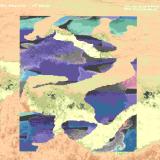
Cititrax release Sand Clock, the new full-length album by Men With Secrets, the Italian trio of Donato Dozzy, Lino Monaco, and Nicola Buono (Retina.it). Originally emerging from a shared background in experimental techno under the name Le Officine Di Efesto, the three musicians turned toward classic post-punk, minimal wave, and synth-driven pop with the formation of Men With Secrets. Their debut album Psycho Romance (2020), released on Bunker Records, introduced a meticulously produced body of work that felt like a rediscovered European darkwave recording from the early 1980s—yet was entirely contemporary in its construction.
With Sand Clock, the trio deepen this language. The album leans more directly into the melodic clarity and romantic tension of late-80s and early-90s darkwave and synthpop while maintaining the stark restraint that defines the project. Icy synthesizers, shuddering basslines, and precise drum machine programming frame baritone vocals that are intimate, emotionally exposed, and quietly apocalyptic.
Balancing pop structure with gothic atmosphere, Sand Clock moves between shadowed dance floor momentum and solitary headphone introspection. It is not an exercise in revivalism, but a continuation—an acknowledgment that the emotional architecture of that era remains unresolved and still relevant. Written and produced by Donato Dozzy, Lino Monaco, and Nicola Buono and recorded in Rome and Pompeii.
The vinyl edition is pressed on clear 160-gram vinyl, limited to 500 copies worldwide. Each record is housed in a heavy printed jacket with a printed inner sleeve.
Search:sand
There was a long time I considered Raymond Richards the ultimate secret weapon. There were sounds he could make that other people just couldn’t. Pure, whole, yet complex sounds. The pedal steel is an extremely niche instrument outside of its Country confines, but its sheer and transcendent depth has never failed to floor me. Raymond’s ear for implementing the steel into literally 'anything' has always been uncanny. After decades of being savvy to his work ethic, multi-faceted studio skills and overall sense of musical honesty, it became a priority for me to channel some of this into narratives through the ESP Institute and get his stories told. Without further recounting the history and trajectory of our musical relationship (see the press release for 2020’s critically-acclaimed album 'The Lost Art Of Wandering'), I can whole-heartedly confirm this sophomore release, 'Sand Paintings', opens an even wider door into Raymond’s visceral, contemplative world. The cast of players has elaborated to include Calexico’s John Convertino on drums and percussion, a bevy of eccentric stringed instruments and even a hint of brass to collectively stratify context for the pedal steel. Through diversifying the timbral palette, we invite an increased soundstage acuity but also reveal untapped wells of emotion for the listener, perhaps even testing cultural literacies. One foot remains in our established ambient realm, while the other steps toward grand cinematic gestures, and despite the dense, insurmountable emotion in these songs, there is a stoic singularity, like a lonesome cowboy pulling up his boot straps to endure another day. 'Badwater Basin' opens with courage, an enormous chord evoking Raymond’s image of “hard dawn”, but in navigating through the dramatic depictions of 'Monument Valley', 'Saguaro' and 'Deer On Hwy 80', we grapple with a cloaked vulnerability—weathered by the elements, beaten down and alone, yet still madly in love with the world. —Lovefingers
Born from a profound devotion to the piano and a reverence for the organic flow of life, byt’ surprises listeners by presenting "paths of sand", a remarkable creation by Amsterdam-based composer xico, offering sound and soul to those willing to listen beyond the surface.
Through the magic of experimentation, xico captured the fleeting beauty of the muse of improvisation, as described by Nachmakovich, transforming the ephemeral into something lasting. Performances recorded on the same old piano during the 2023 Kaalstaart Festival in the Netherlands have since evolved into a fully realized work. A journey of nearly three years of dedicated silence that began with Telva’s intuitive recognition of xico’s voice, starting with an invitation to her radio show and blossoming into a captivating fascination with what unfolded. This process led to the art of shaping the selected live recordings into a collector’s item, now materialized as a limited edition of 200 pressed vinyl copies, forever remaining as an artistic memento.
Perfectly attuned to the energy of the autumn equinox, paths of sand unfolds as an intimate reflection of music’s ability to hold what cannot be held, to speak what cannot besaid, and to embody what can never be described.
xico is a sound artist and improviser from Ibiza whose work explores the merging point between disruptive and post-natural soundscapes, crafting immersive sonic environments through compositions that unfold like ecosystems.
Encouraged by an understanding of chance as nature’s and awareness' most accessible voice, he focuses on creating generative live-sets with varying degrees of unpredictability. For him, subordinating human intention to nature’s order is a conscious choice, and making art through this lens becomes a statement and a spiritual practice. With his distinctive touch, his compositions resonate with the world in unexpected and profound ways, offering experiences you may never have heard before.
- But I Did Not
- Shiver
- Warm Storm
- Happenstance
- Center Of The Universe
- Forever And A Day
- The Golden Dregs
- New River
- A Hard Man To Get To Know
- Who Am I?
Delving into the Great American Songbook of Howe Gelb, Sandworms is a new collection that rephrases and rephases the legacy of Giant Sand acrossgenerations. This release offers bold reinterpretations from Water From Your Eyes, Deradoorian, Jesca Hoop & John Parish, Lily Konigsberg, Holiday Ghosts, Ella Raphael, Monde UFO, The Golden Dregs, and Gently Tender. The ever-present Giant Sand and their one-man cerebral traveller, Howe Gelb, are anchored by a reputation for idiosyncratic storytelling. A "natural storyteller," Gelb's multifarious musical delivery adds an enduring sense of wonder as he extols the virtues of happenstance. This collection celebrates the esoteric and singular journey Giant Sand have taken, through alt-country, jazz, lo-fi experiments, and beyond, while their legacy is reimagined here by a new generation of artists paying tribute to their lasting influence. Brooklyn duo Water From Your Eyes, known for their stoner humour, fatalistic undercurrents, and art-pop flair, bring a delicate balance of punk riffing and dream-pop escapism to Warm Storm, first heard on Giant Sand's Ramp (1991). Whitney K takes on Happenstance (from 1994's Glum), unravelling its existential puzzles with a whispering baritone that recalls the hushed intensity of Leonard Cohen. Drifting further into orbit, Angel Deradoorian reinterprets Center Of The Universe, the title track from the band's 1992 album, transforming its desert-fried rock into a spaced-out Sun Ra-paced drama. Elsewhere, Yer Ropes, a jaw-dropping highlight from Glum, is taken on by The Golden Dregs, blurring sentimentality and relationship mismanagement into something truly strange and moving. A special collection for both long-time fans and the newly curious, Sandworms: The Songs of Howe Gelb and Giant Sand is released via Fire Records and includes liner notes from Dave Henderson (Mojo).
Long, long overdue reissue of this gem from the depths of The Skaters dreamweaving dimension, released as a limited tape through Spencer Clark's Pacific City imprint back in 2008. Comprising a period of extreme and vital activity for both Clark as Monopoly Child Star Searchers and Black Joker and his kindred spirit James Ferraro under his own name - 'Marble Surf' or 'Discovery' - and a myriad of identities like Liquid Metal or Edward Flex, this split finds these intrepid explorers on each side of a scrying mirror.
Conjuring the Angel Snake entity as a vessel for unlocking the unconscious, Ferraro takes up the A-side with hypnotic wooden percussion sustaining queasy tape processed keyboard lines that intertwine amidst a growing haze of hiss. About halfway through the digression an announcer boombox voice cuts up the scenery for a serpentine dance around the discarded remnants of civilisations past and future. Clark's Monopoly Child rides a beaming synth and muffled percussion accents on his trademarked keyboard thrills, all ascending and descending runs brimming on the horizon, not quite here, not quite out of reach, fading out to a galloping murk smeared by hallucinatory flute-like sounds and portamento accents that float in harmonic suspension.
Truly visionary and arresting stuff from these true purveyors of the netherworld, due to be rediscovered in these times of poor half-reassessments of the given past. It was never a dream, it was always a dream.
"In The Sand" is an 80s rare groove classic originally written by the British band iLevel, here given a lush post-disco treatment in a perfect S-Tone Inc. style, and receives here a well-deserved 'physical treatment' with this 7-inch record, backed with the unreleased original track "Tudo Pra Ela" (Everything for Her). "In The Sand" features once again Julia St. Louis on vocals - recently heard on the previous single "Pressure" - and Marco Brioschi on trumpet. "Tudo Pra Ela" sees Toco on vocals and Priscila Ribas adding a sensual feminine touch on backing vocals; Brazilian jazz bassist Edu Hebling plays disco-styled basslines, while Stefano Tirone on keyboards and guitars defines the main coordinates back to the early 80s, renovating his love for that sound.
For roundabout a decade now, The Lavender Flu has been pumping their inimitable, underground group-sound way past all manner of lesser modern muck, moving only and always as their varied inspirations prompt them. As players, Chris Gunn, Ben Spencer, and Scott Simmons remain open to where any given moment might take them, which has resulted in thrilling experiences both live and on record at every turn. Tracing The Sand By The Pool, their latest album for In The Red, finds The Flu firing at their most crisp and direct, a full-band collection of meander-free hits triumphantly captured to tape by the lads themselves. Moments will tug, others will stun, but there can be no doubt this new communiqué is their mightiest. The record unfolds from “Within,” born out of a Kiwi brightness that is methodically guided through a series of near-crashes and sly, inward moves, spotlighting the key pillars of the band’s songcraft and tailored to convert the uninitiated. Gunn’s guitar work continues to fascinate and marvel, boasting too many moments of both melodic sweetness and violent shattering to detail here. Their cover of the hangmen’s “I’m Gonna Love You” capably inverts Suicide’s menace to a hopeful, romantic sheen. Of critical note are a pair of guest contributions from The Spatulas’ Miranda Soileau-Pratt, who lends vocals to multiple songs including the deceptive 80s dosed pop of “Snail On The Map”, and The Tube Alloys’ Shelby Jacobson, who takes lead on a cosmos-injected cover of Fleetwood Mac’s “That’s Alright,” as well as “Patron Eyes (Cocoon 2069),” the most vicious, smashingly punk moment the band has unleashed to date. From the jump to its final rest, the album is boundless and full of gifts.
Craft Recordings feiert das 15-jährige Jubiläum von Silversteins meistverkauftem vierten Album A Shipwreck in the Sand mit einer Vinyl-Wiederveröffentlichung. Das Konzeptalbum aus dem Jahr 2009 bleibt mit Titeln wie ”Vices” (feat. Liam Cormier von Cancer Bats), ”The End” (feat. Lights) und ”American Dream” ein Favorit in der umfangreichen Diskografie der Band. A Shipwreck in the Sand wird am 28. Juni erscheinen.
Limitiertes farbiges Vinyl, 2024 Pressung! Valley of Rain ist das Debütalbum von Giant Sand, das 1983 von Howe Gelb (Gesang, Gitarre) und Winston Watson (Schlagzeug), Tommy Larkins (Schlagzeug) und Scott Garber (Bass) aufgenommen und schließlich 1985 veröffentlicht wurde. Zum Zeitpunkt der Aufnahme war Howe Gelb mit den Möglichkeiten von Röhrenverstärkern nicht vertraut und hatte den Großteil des Albums mit einem Roland JC120 in den wunderbaren 8-Spur-Studio The Control Center in Korea Town, Los Angeles zusammen mit Ricky "Mix" Novak produziert. Gesamtkosten der eineinhalbtägigen Aufnahme betrugen $400. Als Enigma Records anbot, das Album zu veröffentlichen, baten sie um weitere 15 Minuten Musik, um es zu einer vollständigen LP zu machen. Ron Goudie wurde dann hinzugezogen, um die zusätzlichen Aufnahmen in einem Studio in Venedig, CA namens Mad Dog mit Eric Westfall Engineering zu überwachen. Es war dort, als Howe sich einen Verstärker auslieh, der im Studio gelagert worden war, dass er das Polster eines Röhrenverstärkers entdeckte und seine Welt sich veränderte. Der Verstärker war ein leicht modifizierter Fender Twin Reverb von Robbie Krieger von The Doors. 30 Jahre später, nachdem die Band auf unbestimmte Zeit eingeschläfert worden war, begannen sich die ersten Songs in die letzten Giant Sand Tourneen einzuschleichen. Irgendwie schien es angebracht, ihnen einen weiteren Versuch mit dem richtigen Verstärker zu geben, nur um zu sehen, was sie hätten sein können. Was die Idee zugänglicher machte, war die Verfügbarkeit der beiden ursprünglichen Schlagzeuger, die in Tucson lebten. Der erste Versuch kam letzten Sommer mit Winston & Tommy und Thoger Lund am Bass, sowie den beiden neuesten Mitgliedern, dem 29-jährigen Gabriel Sullivan und der 23-jährigen Annie Dolan an Doppelhalsgitarren. Das Geräusch war wahnsinnig. Der lustige Teil war Gabriel, der die Session entwickelt und gemischt hat und ihr einen absichtlichen 80er Jahre Produktionssound gab. Howe erklärte ihm später, dass er sich seit den ersten Originalaufnahmen im Krieg mit diesem Produktionstrend befand. So versuchten sie es alle noch einmal zur Weihnachtszeit, diesmal mit einem neu entdeckten Fender 30 Amp, der von 1980 - 1983 in Produktion war. Diese neue Neuaufnahme des ersten Albums klingt jetzt so, wie es hätte klingen sollen. Es wurde für $400 und am selben Tag und in der halben Sessionzeit wie das Original neu gemacht. Scott Garber kam sogar von Austin TX mit seinem Fretless Bass, so dass das Album buchstäblich die ursprüngliche Besetzung für mindestens die Hälfte der Songs zusammen hat. Giant Sand sind an den Anfang zurückgekehrt.
Color Vinyl[24,58 €]
Valley of Rain was Tucson’s Giant Sand’s debut album recorded in 1983, and eventually released by 1985. It included Howe Gelb on vocals, guitar and Winston Watson on drums for most of it, Tommy Larkins on drums for some of it and Scott Garber on fretless bass for all of it. At the time of the recording, Howe was unacquainted with the possibilities of tube (valve) amps and had recorded most of the album with a Roland JC120 at the miraculous 8 track facilities of The Control Center in Korea Town, Los Angeles by Ricky “Mix” Novak. This impromptu recording had occurred because the band refused to cancel their first Los Angeles live gig, at Madame Wong’s, when the band (Giant Sandworms) had broken up days before in Tucson. Instead, Howe headed out anyway with Scott, the newest member who’d only been in the band for about a year, after band mainstays Billy Sed and Dave Seger reasonably decided ‘enough was enough’ following a rough and tenuous year spent in the lower east side of NYC attempting to further the band circa 1981/82. Tucsonan Winston Watson, (who would go on to tour with Bob Dylan in the 90s, as well as Alice Cooper, Warren Zevon etc ) was already living in Los Angeles and was brave/kind enough to jump in for the live date with no rehearsal. The result was so sparked with adrenalin, that the trio set up an impromptu studio session the next day to attempt to capture the sonic thrust on tape. The total cost of the day and a half recording was $400 including one 1” reel of 30 minute tape. When Enigma Records offered to release the album they requested another 15 minutes of music to make it a full LP. Ron Goudie was then called in to oversee the extra recordings at a Venice, CA studio called Mad Dog with Eric Westfall engineering. Tommy Larkins, who had been on the previous country punk album of Howe’s “The Band of ... Blacky Ranchette” came in to drum for those last 3 songs. It was there when Howe borrowed an amp that had been stored at the studio did he discover the bolster of a tube amp and his world changed. The amp was a slightly modified Fender Twin Reverb owned by Robbie Krieger of The Doors. 30 some years later, now that the band had been put to sleep indefinitely, those very first songs had begun creeping into the last Giant Sand tours. It somehow seemed appropriate to give them another shot with the proper amp just to see what they could’ve been. What made the idea more approachable was the availability of both original drummers living back in Tucson. The first attempt came last summer with both Winston & Tommy and Thøger Lund on bass, as well as the 2 newest members, 29 year old Gabriel Sullivan and 23 year old Annie Dolan on double neck guitars. The sound was insane. The funny part was Gabriel, who engineered and mixed the session, gave it an intentional 80s production sound. Howe later explained to Gabe he had been at war with that production trend since those first original recordings. So they all tried it again at Christmas time, this time with a newly discovered Fender 30 amp that had only been in production from 1980 – 1983. This new re-recording of that first album now sounds like it should’ve sounded. It was re-done for $400 and the same day and a half session time as the original. Scott Garber even drove up from Austin TX with his fretless to play so that the album is literally the originally line up for at least half of the songs. And yes, no pedal boards were used too. The band intends to tour this summer playing only those Valley of Rain songs. Giant Sand Returns To Valley Of Rain.
‘Empires into Sand’ is the first album of new material from Normil Hawaiians in 40 years. The group first refined their sound during the early 80s, hitting on a pastoral experimentalism that drew on ambient drone, motorik impulse and post-punk pep.
‘Empires into Sand’ came together in the familiar manner of their original three albums, with improvisation and nuance informing the blueprint of the tracks. It was with the official release of this last record ‘Return of the Ranters’ (originally recorded in 1984/85, but then unconsciously shelved) in 2015 by Upset The Rhythm that led to the group reconnecting with the intention of playing music together again. Normil Hawaiians played a launch show for that ‘lost album’ and followed that up with more concerts, including an appearance at Supernormal, a residency at the Edinburgh Festival, gigs at Cafe OTO. They were even chosen by Richard Dawson to perform with him in London.
Throughout this time, Normil Hawaiians revisited their original songs for live performance. However for a group always so interested in evolving their sound, it came as no surprise that they shirked at the idea of a faithful retread. The band pushed their songs into new inventive dimensions, still progressive at core, but now imbued with a cosmic uncanny. A cinematic approach that was always quietly present has come to the fore. The quaint weirdness of folk song, the humanity of communal practice and the group’s ecological mindedness have all found a place in Normil Hawaiians’ current sound world.
When Normil Hawaiians write and record music they prefer to gather in a remote location and live together for a while, such is their communal ethos. Being far-flung across the UK, the Family Hawaii (numbering seven key members) decided to encamp to Tayinloan, a small village on the west coast of the Kintyre peninsula in Scotland. They set up their own studio in an isolated, windswept house overlooking the sea and started the tape rolling. Noel Blanden from the band explains the process neatly: “we set up and began playing, slowly and patiently, allowing the music to take its own shape based on where we were staying and our ongoing friendship. We recorded for days, capturing everything. A lot of new and rich ideas began to emerge”.
Normil Hawaiians took their time to develop these threads at their own pace, allowing songs to mutate and settle over months. Simon Marchant deftly produced and recorded the album whilst also performing in the band, this marked the first time the band had total control of their own sound. The last few years has seen the band reconvene in Herne Bay, Faversham, London and Leith to record new parts, constantly responding to the changing form of these quietly spectral songs of defiance.
‘Empires into Sand’ incorporates samples from old rehearsals and live music into the new finished pieces, this is in continuum with their previous records. Snippets of sound from the static of short wave radio and satellite transmissions also embellish the work. In fact the whole album is stitched together with interludes, creating an acutely immersive 45 minutes. ‘Exiles’ opens the album amid swirling atmospheres, synth flights and recordings of Vilnis Egle (father of Zinta Egle from the band) retelling his experience of fleeing his home in Latvia during Soviet occupation in 1942. George Bikandy also features on this track talking about his flight from Syria in 2014. ‘Ghosts of Ballochroy’ is a winding river of a song featuring a lively discourse in Scots courtesy of Rodney Relax. There’s a commitment to truth telling present across this hopeful album populated with angels, incoming tides, long shadows and the rose-washed sun. “From our broken windscreen, we feel the breeze” soars Guy Smith triumphantly over the driving beat of ‘Waterfalls : Bedford 330’. ‘Big City Sky’ flutters and sparkles with rapid synth runs, tape-looped drums and Jimmy Miller’s commanding vocal. With ‘In The Stone’ Zinta’s melody is deliberately jagged and blunt, exaggerated by octave-layered vocals and interjections from Guy.
This is thought-provoking, boundary-bothering music. Honest in intent, a solidarity of vision. The album’s title is derived from a poem by band member Mark Tyler, who sadly passed away during the recording process and the transience of life is felt heavily throughout. Noel best coins the group’s wish for the album: “we wanted to create an album that acknowledges our history and also reflects who we are today. We remained true to ourselves and we wanted to make something beautiful without removing the edges.” ‘Empires into Sand’ certainly does that, it’s an echo from the past, an echo from the future.
Das 25. Album von Giant Sand, das sie im 25.Jahr in ihrer Karriere aufgenommen haben, ist eine großartige und viel gefeierte Sammlung von perfekt ausgearbeiteten, persönlichen Songs von Howe Gelb. Mit Ausnahme von ein oder zwei wunderbar abrupten und perfekt platzierten Ausbrüchen ist es eine sanfte Achterbahnfahrt durch das innere Nachdenken über das Warum und Wozu von was auch immer, eine Meditation über Zeit und den Alterungsprozess.Howe Gelb erklärt zu dieser Platte: "Auf dieser LP zeige ich eine erworbene Wertschätzung für einfache Lyrik. Manchmal ist es eine Art Haiku, wie Flamenco-Verse oder der Blues. Ich kann mich mehr konzentrieren, da es offensichtlich ist, dass nur noch so viel Zeit übrig ist - das hat einen ganz eigenen Produktionswert."Diese Wiederveröffentlichung unterstreicht die eklektische und esoterische Karriere der Band und feiert ihre großartige, lange und kurvenreiche Laufbahn. Diese Deluxe-Wiederveröffentlichung enthält ein restauriertes Artwork und neu verfasste Liner Notes von Dave Henderson von MOJO.Giant Sand sind das wichtigste Ventil für die stilistischen Biegungen und die sonnengeschädigte Songkunst des Sängers und Songwriters Howe Gelb gewesen. In mehr als vier Jahrzehnten ist es ihm gelungen, Rock, Country, Blues, Punk, Garage, Lo-Fi, Jazz, Gospel, Avantgarde-Noise und Flamenco-Gypsy-Musik mit seinen impressionistischen Bildern und weitreichenden Beobachtungen der Welt neu zu erfinden. "An album full of heart, soul, and wit, this music confirms that no one does quite what Howe Gelb can do with such remarkably innate grace and feel" AllMusic Klassisch schwarzes Vinyl, original Coverart, Linernotes & DLC!
- Overture
- (Well) Dusted (For The Millenium)
- Punishing Sun
- X-Tra Wide
- 1972:
- Temptation Of Egg
- Raw
- Wolfy
- Shiver
- Dirty From The Rain
- Astonished (In Memphis)
- No Reply
- Satellite
- Bottom Line Man
- Way To End The Day
- Shrine
- Astonished (In Tucson) (Bonus)
- Dusted (In Tucson) (Bonus)
- Shiver (In Tucson) (Bonus)
- Punishing Sun (In Tucson) (Bonus)
- Bad (Not Good) (Bonus)
Giant Sand sind das wichtigste Ventil für die stilistischen Biegungen und die sonnengeschädigte Songkunst des Singer-Songwriters Howe Gelb. In mehr als vier Jahrzehnten ist es ihm gelungen, Rock, Country, Blues, Punk, Garage, Lo-Fi, Jazz, Gospel, Avantgarde-Noise und Flamenco-Gypsy-Musik mit seinen impressionistischen Bildern und weitreichenden Beobachtungen der Welt neu zu erfinden. Genau 25 Jahre nach der Veröffentlichung von Giant Sands legendärem "Chore Of Enchantment", dem panoramischen Meisterwerk, das den Wendepunkt für die klassische Besetzung mit dem erfahrenen Songwriter Howe Gelb und den späteren Calexico-Mitgliedern Joey Burns und John Convertino aus dem Jahr 1999 darstellte, kehrt das Album nun zurück. The Chore Of Enchantment" ist ein Songbook mit Howe Gelbs besten Liedern, gefüllt mit verblüffenden Einzeilern, der üblichen schrägen Instrumentierung, Echofeldern und nebligen Horizonten. Die hochkarätige Produktion des legendären Jim Dickinson, des PJ Harvey-Vertrautem John Parish und des gefeierten Singer/Songwriters/Produzenten Kevin Salem ist eine Tour-de-Force von Gelb's einzigartigem Oeuvre. Diese Wiederveröffentlichung zeigt die eklektische und esoterische Karriere der Band und feiert ihre großartige, lange und kurvenreiche Karriere. Die 2xLP Deluxe-Wiederveröffentlichung enthält ein restauriertes Artwork und neu verfasste Liner Notes von Dave Henderson von MOJO. "A beautiful, emotionally complex album." The Quietus. Klassisch schwarzes Doppel-Vinyl, original Coverart, Linernotes & DLC
Sure Thing presents Well of Sand, its second compilation. Six tracks from label friends and favorites, each new to the roster and offering bold, untempered explorations of tempo and weight, a concise yet expansive collection recalling the deliberate cadence of rippling sand and the sheen of shimmering oases.
Five years after the release of ‘Luyando’, Zimbabwe’s most celebrated music export returns with their long-awaited follow-up album ‘Tusona: Tracings in the Sand’. The six musicians from Victoria Falls are refining their unique sound: infectious Afro grooves deeply connected to Zimbabwe’s cultural DNA. ‘Tusana’ is their most danceable album to date, a DIY production recorded in Zimbabwe. It features horns by Ghanaian highlife outfit Santrofi.
Every Sunday, there is a gathering in the sweltering heat on grounds of an old local beer hall in the Chinotimba township in Mosi-o-Tunya (Victoria Falls). Entertainment is provided by various traditional groups including the Luvale Makisi masquerade. It is a day full of singing, drumming, dancing and storytelling. Mokoomba’s lead vocalist Mathias Muzaza can often be found here singing with a voice both soaring and vulnerable. In the course of the afternoon the other band members - guitarist Trustworth Samende, bass player Abundance Mutori, keyboard player Phathisani Moyo, percussionist Miti Mugande and drummer Ndaba Coster Moyo - often join in with singing. The drum driven song “Bakalubale” featured on their new album invites you to this gathering.
Mokoomba recorded ‘Tusona: Tracings in the Sand’, the follow-up album to ‘Luyando’ (2017, Outhere), in Zimbabwe during the pandemic. Instead of working with outside producers like Manou Gallo or Steve Dyer as they have in the past, this album was entirely recorded in a DIY fashion by Mokoomba. The collective from Zimbabwe put in all the experiences made over the previous years and have forged their music into a unique Zimbabwean sound. On popular demand from their fans in Zimbabwe they have even re-recorded three songs from their last more acoustic album ‘Luyando’ turning them into dancehall bangers (featured on the CD and digital versions of the album). In short, this album is more Mokoomba than any of the ones before.
On the album Mokoomba are singing about love, loss, courage in a changing society. The first single “Nzara Hapana” means “no money” in Shona. The song talks about a man who wants to ensure the future of his wife and family and is trying to protect them against the greed of his relatives. The danceable up-tempo song “Nyansola” praises the goddess of harvest and asks her for rain. “Makisi” is sung in Luvale. It celebrates the beauty of the initiation ceremony for which the whole community comes together. “Manina” is a song about losing a loved one. It was written during the pandemic and features the young singer Ulethu from Harare. Mokoomba sing in many different local languages. Their songs are in Tonga, Luvale, Shona, Nyanja and even Lingala used in “Makolo” when they team up with Congolese singer Desolo B. (The album also features horns by Nobert Wonkyi Arthur (trumpet), Bernard Gyamfi (trombone) and Emmanuel Arthur (sax) from Ghanaian highlife outfit Santrofi.)
The title of the album is a nod towards their immense respect for tradition. ‘Tusona’ refers to an ancient system of signs and symbols, drawn in the sand and used for instruction during initiation ceremonies by the Luvale in Southern Africa. Another important part of the Mukanda initiation ceremony is the incredible Makisi masquerade. Since 2008 the Makisi dances are on the UNESCO list of intangible heritage. The Makisi are masked characters, representing the spirit of deceased ancestors. During the yearly initiation ceremony the Makisi return to the living world to teach the young children to become responsible adults among the Lubale people of Southern Africa. In the last decade the interest - especially among the young people – has faded and the Makisi dances have nearly died out.
“Our inspiration comes from these gatherings”, Trustworth Samende explains, “from listening to and playing pure traditional music with everyone in the township. We then add influences from music that we listened to in our homes growing up and the sounds we experience travelling around the world.” It is the connection with the cultures around them that gives Mokoomba’s music its spiritual power. When you hear Mathias Muzaza singing and you watch closely, you will see the music carrying him away to a different sphere, a place where he is singing with the ancestors. Only a split second later though Trust Samende’s sparkling guitar riffs kick in, blending Congolese influences from neighbouring Kasai with Zamrock and Mbira inspired Chimurenga music, making you want to hit the dancefloor. It is this unique blend of local musical styles with contemporary dance music that is at the heart of Mokoomba’s music. The strong reference to tradition is also reflected in the cover illustration by young Zimbabwean visual artist Lomedy Mhako.
It has been nearly 10 years since this young energetic band from Zimbabwe has exploded onto the international music scene. Since then they have shared their music with fans all over the world: Mokoomba have performed in over 40 countries, rocking audiences in places like Roskilde festival (Denmark), WOMAD festival (UK), Sziget festival (Hungary), SXSW (USA), Apollo Theatre (New York) to name but a few.
Like anywhere in the world Africa’s musical output has become more and more producer based. Mokoomba are the living proof that Africa’s great guitar band heritage is well alive and ready to set any dancefloor on fire. Most important though is that deep below the surface of Mokoomba’s sound - flowing like the Zambezi River - you can still hear the heartbeat and the rhythm of a community connected by its music. Like ‘Tusona’, it is a source of rejuvenation, resilience and strength in these changing times. May the tracings in the sand not fade.
Recorded in the early 2000s, The Sand Dollars' two Tropicália-inspired remakes of classic late 60's nuggets by The Kinks and Donovan are paired together for the first time here on F-Spot Records' new subsidiary label Pangea International Recording Co., which focuses on world and global groove inspired releases, curated by David M Celia and Dan Ubick.
From the vaults of Dan Ubick's Lions Den Studios, we get the crown jewel in Ray Davies' catalog, "Waterloo Sunset" from Something Else by The Kinks, redone as a funky Tropicália-inspired track and re-named "Waterloo Bossa" complete with fuzzy compact organ, bouncy Fender bass, funky drums from Connie Price, a lush horn arrangement by Ubick's former Keystones cohort and trumpeter Todd M. Simon (Dap Kings, El Michels Affair, Macy Gray), string arrangement by mix guru and multi-instrumentalist Steve Kaye (The Lions, Inara George, Hepcat, Marley Bros.) and topped off with stereophonic vocals by jazz chanteuse Gretchen Parlato (Herbie Hancock, Wayne Shorter, Esperanza Spalding, Lionel Loueke).
Side B's "Get Thy Bearings" was initially pressed on Now-Again Records back in 2003 and quickly sampled by Lily Allen on her track "Sunday Morning" due to the raw and heavy drums and Fender bass courtesy of Connie Price and Richard "Doo" Lee along-side inventive horn arrangement by Todd Simon flipping the original on its heady head. Now freshly mastered, this B-side instrumental is available again as the hard-hitting remake of Donovan's classic from 1968's The Hurdy Gurdy Man LP that may inspire you to sample it as Biz Markie did on "I Told You."
Dickie Landry & Lawrence Weiner's Having Been Built on Sand was conceived as a vinyl edition and released by the Rüdiger Schöttle gallery in Munich with sleeve design by Weiner. The piece consists of eight untitled tracks. Lawrence Weiner, Tina Girouard, and Britta Le Va recite text with Dickie Landry’s woodwinds, all recorded in the natural reverb of Robert Rauschenberg’s studio, a former mission and chapel in Lower Manhattan. Layering Girouard in English, Le Va in German, and Weiner in English and German blocks of related or physically proximal texts repeat, invert, and intersect with Landry’s music as a constant. The layers of text and sound have meanings that fluctuate in complexity and scope, and like much of Weiner’s work, beyond mere facts.
The first piece is a trio for Landry’s keening tenor, repeating winnowed but breathy lines that contrast with and buoy Le Va’s clear, husky phrases, building in intensity as Weiner, in English, offers statements that are caught just off mic. The third cut adds Girouard, and one can hear woven parallels in the two women’s voices, cadences, and pitches, with Weiner’s cutting inflection dancing amid them. Landry’s bass clarinet is rich in its warble, full and gentle with woody footfalls that demarcate shapes through the chorus. Vocal rhythmic cycles, wordless in nature, are the energy that courses through the fourth song, urgent and sweaty as Weiner recites statements of political position in the Middle Ages, Le Va declaiming alongside in German. On soprano saxophone for the fifth tune, Landry pierces and darts in a bright manner in a private dialogue with himself, echoing Steve Lacy as female voices nearly bury one
Gelb's semi-surreal observations lace things together perfectly.” UNCUT. Filled with loud and lucky abandon; heady steady and direct singalongs for the heart in constant turmoil. Giant Sand’s esoteric journey to ‘Heartbreak Pass’ is an exotic journey through hails of Youngian guitars, off-the-cuff jazz piano rounds and beautiful alt-country yearning. While containing only new songs for this album, this feels like a greatest hits and as such is a perfect entry point for Giant Sand neophytes. Fire Records give ‘Heartbreak Pass’ a long overdue repress on white vinyl, with new liner notes and updated artwork. There’s a roll of the tongue, a couplet and some convolution underpinning Giant Sand’s 2015 opus ‘Heartbreak Pass’. So the story goes, so legend has it, a mere 30 years into their career, almost ten years ago, Giant Sand were regrouped and, for a fleeting second, someone made sense of it all (the words, the genre swapping sound, the roll call of friends and accomplices, the majesty of polar opposites attracting). On ‘Heartbreak Pass’ the result from this lengthy travelogue is a memoir filled with trinkets exchanged along the way. Sure, the Arizona desert is there, gritty and unforgiving but Howe's one-man-band is joined by a throng of well-wishers, this time around including Steve Shelley (Sonic Youth), Grant-Lee Phillips and Ilse DeLange (Common Linnets), The Voices Of Praise Choir, oft-time collaborator John Parish, Grandaddy’s Jason Lytle, Maggie Bjorklund on pedal steel, Italian singer/songwriter Vinicio Capossela and many more. It’s an album that travels far and shows its road weariness in places but it’s a celebration in all its ragged glory. In his original sleevenotes Howe pondered the fact that “The album is roughly broken into three volumes - loud and lucky abandon; heady steady and direct (Gelb's vision of Americana); and the heart in constant turmoil and something about a transponder.” He summarised: “I can't recommend it, nor do I regret it. It's been one life split into two.”
Tracks: A1 Heaventually A2 Texting Feist A3 Hurtin' Habit A4 Transponder A5 Song So Wrong A6 Every Now And Then A7 Man On A String B1 Home Sweat Home B2 Eye Opening B3 Pen To Paper B4 House In Order B5 Gypsy Candle B6 Done
Gerald Clayton gehört zu den wichtigsten Modern-Jazz-Pianisten unserer Zeit. Auf seinem zweiten BlueNote-Album will sich der sechsfach Grammy-nominierte Musiker mit den Auswirkungen der abstrakten Kraft der Zeit auseinandersetzen.
Bei der spannenden Umsetzung in mal lyrische, mal swingende, mal treibende Jazz-Klänge unterstützen ihn niemand Geringeres als sein berühmter Mentor Charles Lloyd am Saxophon, sein Vater John Clayton am Bass, Justin Brown am Schlagzeug und erstmals MARO als Vokalist.
Zu hören sind Originale, Stücke des katalanischen Komponisten Federico Mompou und von Geralds Onkel Jeff Clayton sowie zwei atemberaubende Solo-Klavierversionen des Standards „My Ideal“
- A1: Rich Woman
- A2: Killing The Blues
- A3: Sister Rosetta Goes Before Us
- A4: Polly Come Home
- B1: Gone Gone Gone (Done Moved On)
- B2: Through The Morning, Through The Night
- B3: Please Read The Letter
- C1: Trampled Rose
- C2: Fortune Teller
- C3: Stick With Me Baby
- D1: Nothin’
- D2: Let Your Loss Be Your Lesson
- D3: Your Long Journey
Anlässlich dem 15. Jubiläum des Albums „Raising Sand“ von Robert Plant und Alison Krauss erscheint
eine Wiederveröffentlichung des Albums am 25. Februar auf schwarzem 180-Gramm-Vinyl.
2007 veröffentlichten Alison Krauss und Robert Plant erstmalig „Raising Sand“, eines der meistgelobten
Alben des 21. Jahrhunderts. Es war eine unwahrscheinliche, faszinierende Zusammenarbeit zwischen einem
der größten Rockmusiker und einer der besten Country-Künstlerinnen, die eines der mühelosesten Duos der
modernen Popmusik bildeten. Das von dem legendären T Bone Burnett produzierte Album stieg auf
Platz 2 der Billboard 200 ein, wurde mit Platin ausgezeichnet und erhielt sechs Grammys, darunter die
Auszeichnungen für das Album und die Platte des Jahres.
„Raising Sand“ erscheint als 2LP.
Tape
Foam and Sand is the ambient soundscape and visual project of award-winning composer and conceptual artist, Robot Koch. Inspired by the composer’s daily habit of meditation, ideas for the project started to take shape during the lockdown of 2020, growing organically under the radar until Foam and Sand was officially announced in 2021. Using tape recordings of slowed-down pianos, modular synths, and other sonic sources, »Full Circle« is a collection of 16 warm and organic ambient tracks. The signature sound is created with loops that magnify the irregularities and imperfections of cassette recordings and that are then shaped by the artist into hazy meditative journeys. Through the process, the grainy subtleties of sound give way to vast and lush atmospheric soundscapes, making audible the complex interplay of micro and macro and highlighting the interconnectedness of these two spheres in life.
“I started meditating 7 years ago. It’s interesting that meditation and medicine have the same root syllable. Meditating before working on my music resets my brain and helps me access ideas that are layers deeper than my conscious mind. Foam and Sand started as a self-soothing project which I now share with the intention of providing healing and inspiration to others.” - Robot Koch
- 01: Circle 23 - Slow Meadow Rework
- 02: Circle 26 - Tom Ashbrook Rework
- 03: Circle 24 - Birds Of The West Rework
- 04: Circle 18 - Hainbach Rework
- 05: Circle 9 - Arms And Sleepers Rework
- 06: Circle 27 - Julien Marchal Rework (Feat. Delhia De France)
- 07: Circle 2 - Alaskan Tapes Rework
- 08: Circle 19 - Midori Hirano Rework
- 09: Circle 9 - Six Missing Rework
Tape
Foam and Sand is the ambient soundscape and visual project of award-winning composer and conceptual artist, Robot Koch. Inspired by the composer’s daily habit of meditation, ideas for the project started to take shape during the lockdown of 2020. Using tape recordings of slowed-down pianos, modular synths, and other sonic sources, »Full Circle« is a collection of 16 warm and organic ambient tracks.
»Full Circle Reworks« comes with an international selection of some of the most interesting and upcoming names in the ambient/electronic/modern classical community: Midori Hirano, Hainbach, Slow Meadow, Alaskan Tapes, Tom Ashbrook, Arms and Sleepers, Birds Of The West, Julien Marchal and Six Missing.
Delights imprint continues its venture in way-out cinematic grooves with a debut 45 from Oregano - a new collaboration between Shawn Lee, Paul Elliott (JetTricks, Eleven76, Hot Border Special), Shay Landa (RPS Surfers) and Markey Funk.
Initially recorded just a few hours ahead of the Tel Aviv premiere of The Library Music Film in early 2019, the first pair of cuts from this session has been taking shape throughout the global pandemic. The result is two pieces of otherworldly sci-fi psych-funk, featuring mesmerising flute by Roey Bar Yehuda (RPS Surfers): the meditative organ and synth-drenched slow-burner, Melting Sand on the A-side, and the quirky uplifting Transmitter on the flip.
Limited to 300 copies worldwide.
In the eyes of Nana Mouskouri, all these Bob Dylan songs are the stones that made his house and the roof that has sheltered it for sixty years; they were for her guides and landmarks. Each is sacred, each has its secret. That’s why Nana Mouskouri is so happy to present them to us today, brought together in this album. Timeless, they have crossed the ages and more than ever echo the problems of the young generation. The fights against violence, for peace and love are the same today as they were yesterday. Reviews in London Macadam, France in London, and L’Echo Ads London Macadam, France in London, and L’Echo
Sometimes, savagery is the most effective form of communication. For that, there are the Dueling Experts, the dark ninjas behind one of 2020’s most filthy, cohesive, and authentic hip-hop records. A masterclass of verbal carnage and bell-ringing beats that reminds you that if ain’t raw, it’s worthless. You may know Verbal Kent, the battle-scarred Chicago sensei, who has proven his mettle time and time again on wax -- both in his solo albums and in Ugly Heroes. But you’ve never heard him as serrated as he sounds alongside the Ghanian MC, Recognize Ali. Spitting pyroclastic flows over a treasure trove of lo-fi beats excavated from the legendary and mysterious producer, Lord Beatjitzu, the two craftsmen attack with meticulous rhyme schemes and hardbody vocals to spark melees. The beats are so adamantine that they could crush diamonds. Meanwhile, Kent and Ali exhibit a chemistry reminiscent of all-time greats like Billy Danze and Lil Fame of M.O.P., Raekwon and Ghostface, and Rock (Sean Price) and Ruck of the Boot Camp Click. This is the sound of war. Hip-hop to slap the proverbial taste of your mouth. The soundtrack to bloody knuckle brawls and broken glass. Beats that sound like they were dropped on the floor and coated in filth, boasting an almost Beta-like quality while simultaneously exemplifying sampling and chopping in a 90’s RZA-like fashion. This is the second installment "DE2: Sand the Floor