
8
Outstanding, heart-warming, experienced Techno & Ambient manifesto - Tip. (w/ download code)
non in magazzino
Ordina ora e ordineremo l'articolo per te presso il nostro fornitore.
27,69 €
Last In: 9 months ago
Outstanding, heart-warming, experienced Techno & Ambient manifesto - Tip. (w/ download code)
Ordina ora e ordineremo l'articolo per te presso il nostro fornitore.

Fully realised Shedism: wonderful, diverse, multi-dimensional, personalised take on Techno, 2023 reissue
Ordina ora e ordineremo l'articolo per te presso il nostro fornitore.

Under the moniker Shed, Pawlowitz published three highly ambitious albums in which he defined his work more and more as his own way of musical narration. 'The Final Experiment' is definitely the temporary highlight of this evolution. As musical work it does establish Shed conclusively as one of the most interesting and substantial electronic music artists of our time. It carries a vibe, that links Shed to other boundary breaking artists such as Ryuichi Nakamoto, Brian Eno and Carsten Nicolai. However, Shed found a way to develop a highly individual way of communicating electronic music, that is self-sufficient. 'The Last Experiment' is a mostly homogeneous piece of work, a meditation, where the stylistic confusion seems less important than then musical statement that it represents.
Ordina ora e ordineremo l'articolo per te presso il nostro fornitore.

dovrebbe essere pubblicato su 19.06.2026

The legends of the golden era of Italian soundtracks and library music go by many names, but the backbone of that era’s definitive sonic identity is most often identified as I Marc 4 (also known as Marc 4 or I Marc Quattro). While the moniker might be less familiar to the uninitiated, it is a simple acronym derived from its founding members: Maurizio Majorana (bass), Antonello Vannucchi (organ), Roberto Podio (drums and percussion), and Carlo Pes (guitar). The number "4" serves to highlight the core synergy of these four master musicians. Their journey began in Rome’s vibrant jazz scene of the 1950s and early 1960s, where they honed their craft as members of the RAI national orchestra and collaborated with the most prominent jazz and pop icons of the day. However, it was their pivotal role in defining the Italian cinematic sound of the 1960s and 1970s that secured their legacy. Their unmistakable style was an eclectic fusion of beat, jazz, classical, and Latin influences—textured with early synthesizers, experimental sound effects, and a blend of electronic and baroque instrumentation. Consequently, their initials are etched into the credits of countless landmark recordings by legendary composers such as Nino Rota, Armando Trovajoli, Gianni Ferrio, Alessandro Alessandroni, Piero Umiliani, and Ennio Morricone.
Beyond their work as session luminaries, they produced a vast body of library music under their own name at the legendary Telecinesound Studios in Rome. These recordings were released through prestigious library labels like Sermi, Ricordi, and Fonit Cetra, as well as through their own imprints: Nelson Records, Silver Men, and Silver Music, spanning a definitive series of sixteen albums. Ten of these volumes were issued on Nelson Records during the 1970s, featuring the now-iconic military stencil design. Each release was color-coded: red (G.L.P. 1001), dark blue (G.L.P. 1002), gold (G.L.P. 1003), light green (G.L.P. 1004), brown (G.L.P. 1005), black (G.L.P.1006), light blue (G.L.P. 1007), yellow (G.L.P. 1008), orange (G.L.P.1009), and cool green (G.L.P. 1010). The series was completed by two elusive companion releases: S.M. 2001 on Silver Music and S.M. 2002 on Silver Men, both presented in the same distinctive brown sleeve. Rediscovered in the 1990s and 2000s, these Nelson releases have since achieved cult status among collectors, producers, and DJs worldwide. The final two installments, S.M. 2001 and S.M. 2002, remain the rarest and most enigmatic of the set.
Often overlooked, they contain some of the most profound "hidden gems" in the group’s catalog. The tracklist traverses a wide stylistic spectrum: from the rare groove and proto-hip hop energy of "Trama Nella Metropoli", "Beat Morbido", and "Candy", to the lush cinematic atmospheres featuring the ethereal vocals of Edda Dell'Orso on "Summer In Love", "On The Rain", and "Arcobaleno". The collection is rounded out by sophisticated jazz pieces like "Flauti Ensemble", "Passeggiata", and "Atmosfere Dolci”. Sonor Music Editions has meticulously curated the finest moments from these two rare albums for this first-ever dedicated reissue. Bringing together the best of Silver Music (S.M. 2001) and Silver Men (S.M. 2002), this release retains the iconic stencil artwork but introduces a striking silver finish. This design choice honors the original ten-album sequence while shedding new light on these outstanding recordings—works that remain, in every sense, golden.
dovrebbe essere pubblicato su 03.07.2026

Fresh from DOTT’s “Puppy Luv EP” and Rudoh’s “Vinland In Space EP”, Jugaar Records is back and this time with a full-length, double-pack vinyl, and digital compilation bringing together friends from Asia and Europe. The record is testament to the healthy place the Asian electronic music landscape finds itself in and those intrepid producers who are willing to explore new scenes and sounds. It's energy-crew from the off - with UK beatmaker Joe Koshin’s “Astro Wax”, a techy electro work-out that conjures images of futuristic cityscapes and dense urban mazes. Up next, Pakistan-born and label co-boss Rudoh maintains the electro vibe with cut-up hip-hop vocals sprinkled on top of a pulsating bassline in his “KOF”. His records are being picked up by global tastemakers from Emerald to Roza Terenzi to DJ Masda. Don’t sleep!
Moving to the B-side, German-born, London mainstay Voigtmann shuffles and deals a steppy drum pattern and intricate synth-work, with a bassline drenched in that particular brand of funk to get the party going even at the most ungodly hour. Observatory resident Nic Ford closes this disk with an ambient excursion that summons spiritual rave voices from the deep laid atop a lilting synth loop. It’s typical of his ambient performances which have gained much notoriety in Vietnam of late.
Opening the second record is Egyptian gem Hassan Abou Alam whose recent outings on Naïve and Banoffee Pies have gained him much and well-deserved attention. Here, his “Gloom” combines twinkling IDM modes with heavy sub bass experiments primed to stop the most idiosyncratic dancefloors in their tracks. Up on C2, the Version, 3024 and Phonica Records graduate Yak adds breaks to the equation. His “Disk Full” brings together a haunting gated synth and razor-sharp beat programming to devastating effect. Melbourne based, Salt Mines Records honcho Shedbug concludes this side with his hopeful “A Lil Piece” whose soaring synth line will hit all the right emotional chords at all the right times.
On the final side Bangkokian Chalo reminds us why he is one of the masters of this increasingly fully formed scene. His Depth Charge is a muggy dub-laden, electro jam capable of rattling the weightiest sound systems in some of the most twisted raves at the end of some of the darkest Sois. The record is completed by New Delhi linchpin and Boxout.fm resident Monophonik, whose techno/electro “Tumbi” journeys out of the night into a euphoric sunrise moment that will be setting the dancefloors alight come festival season.
Disponibile in Stock e pronto per la spedizione
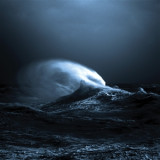
The Ottawa composer/performer and head of Black Bough Records plays every instrument on his CST debut: an accessibly avant-garde work of dark/ambient modern chamber music. Mark Molnar has been a linchpin of the Ottawa experimental music scene for over two decades, spanning contemporary classical, electroacoustic, industrial/noise, and improv. As a string player in a wide range of projects, an organizer and curator of innumerable shows, and via his own avantgarde label Black Bough Records, Molnar's unflagging contributions to independent music culture in Canada's capital city have been significant. EXO is his Constellation debut: a remarkable and bracing suite of post-classical composition on which Molnar plays every instrument. Meticulously self-recorded, primarily with strings, harp, and piano, EXO balances thematic melodicism, polytonality, and dissonance across three elegiac pieces of exquisitely expressive dynamism. This is exacting modern chamber music that blends formal and harmonic complexity with a solemn emotive sensibility accessible to a broad audience. Listeners that yearn for some edge and disquietude in a landscape of often all-too-approachable post-classical music should find EXO eminently worth their time and attention. While Molnar is a highly trained string player, and studied music under Aubrey Wolfe, microtonality with James Tenney, and composition with R. Murray Schafer, his trajectory has been entirely and intentionally outside the academy, signalling a socio-artistic commitment to DIY culture, forged from an early passion for the sonic worlds of post-hardcore, post-punk, no-wave, free improv, power electronics, and other independent/underground musics. His classically-informed works have been described as "tense currents of musical modernism invigorated with punk's raw vitality." EXO carries an undercurrent influenced by dark industrial and ambient metal in particular, with microphones purposely placed to pick up the low-end frequencies of the piano body, and of a bass drum positioned as a resonant skin in the acoustic space; an electroacoustic strategy organically meshed to the crisply defined and pristinely recorded pointillisms and polychords of strings, harp, and piano, which feed into this noisefloor of crepuscular sub-bass disquietude and decay. It's a production aesthetic that lends EXO a distinct undertow of tension and feeling, a sort of roiling maximalism where the chamber instrumentation traces arcs and waves of form and flow as if drawn from a dark, impervious ocean below. It also reinforces the profound hermeticism of Molnar's process, as a forbiddingly solitary creative act of immersion and navigation. The album artwork, featuring semiabstract stills of the sea by British photographer Ed Allen, further reifies this metaphor. The album's opening piece 'Sub Luna' (and its shortest at 8 minutes) showcases Molnar's adeptness at naturalistic and flowing complexity: tight cascades of climbing and descending chordal clusters hold their polytonal densities for various durations, yielding to more clarified harmonic suspensions and motifs, as melodic themes led primarily by violins in the higher registers provide a fractured lyricism. Molnar says: "the opening and closing figures of this piece act as opposing shorelines; the shorelines provide a reliable expression of range and key signature, and the tides come in and swallow them up, the motion of a body that addresses the relationship between states of lucidity and melodic figures." On 'Terre Sacer' everything happens in soupier waters, as a slow and doleful theme, anchored by grinding bass notes, circles in a gyre of dark resonances, until glistening strings gradually ascend to enrobe a plaintive and gently harrowing single-voiced ostinato over the composition's final third. Molnar's drone, ambient, minimalist, and goth-industrial influences are on display here. Side Two of EXO features the 18-minute multi-movement 'pallida Mors' (pale death): a waterfall of heterophony introduces dense chordal movements where strings are recorded and mixed to evoke pipe organ, in the album's most overtly dissonant and (anti)liturgical sequence. This gives way to ever more open and fragile spaces, before a resurgence of dark clusters and noise treatments introduces a final repeating piano coda, shrouded in devastated bass resonance, settling into what Molnar calls "a meditative hollow." Constellation is honoured to release this work by Mark Molnar, a longtime fellow-traveler whose selfless and boundlessly generous activities as an independent arts enabler sometimes obscure his own accomplished and uncompromising artistry. We trust EXO can help shed some much deserved light on this fine composer. Thanks for listening.
dovrebbe essere pubblicato su 06.06.2025

2024 Repress
Dark Entries is honored to finally present the first ever official vinyl reissue of Space Museum by Solid Space. Solid Space was the British duo of Dan Goldstein (keyboards, vocals) and Matthew 'Maf' Vosburgh (guitar, bass, keyboards, vocals) formed in 1980. Dan and Matthew met at the age of 11 while attending school in north London. In late 1978 at at the age of 14, they formed Exhibit 'A' with Paul Platypus' and Andrew Lunchbox' Bynghall. They recorded two EPs in 1979 and 1980, self-released on Irrelevant Wombat Records and appeared on 'The Thing From The Crypt' compilation. After the dissolution of the group, Mathew started taking his guitar over to Dan's house where he'd play his Casio MT-30 and they would record songs. Eventually a second hand drum machine and Wasp synthesizer were acquired from classified ads in Melody Maker and the Solid Space sound was born. By this time they were just turning 18 and finally found the freedom to make the music they'd had in their heads. Over the course of the next two years the band assembled eleven bedroom recordings that would become one of the most cherished DIY obscurities of its kind. Their debut album 'Space Museum' was released in 1982 on cassette by In Phaze Records. All of the songs were mixed by label boss Pat Bermingham on 8-track tape at The Shed, in Ilford, which was literally a garden shed. The band's music and lyrics were heavily indebted to science fiction, in particular the 1960s television series Doctor Who. 'Space Museum' is an unveiling of atmospheric, minimalist post punk supported by bright melodies. The music combines drum machines and synths with acoustic guitar and toy drums whilst also experimenting with samples between tracks. Lyrics deal with space travel and a general sense of dejection. Representing a bubbling spirit within the underground, they foreshadowed an entire world of independent music which would emerge across the 80's and well into the 90's. For this reissue we've included two bonus tracks from the band's archive, Platform 6' originally released on the B-side of the second single by Exhibit 'A', this song features only Dan and Matthew and is the first Solid Space track ever recorded. Tutti Lo Sanno' is a cover of In Phaze label mates Marine Girls, though the lyrics have been changed to suit the gender of the new singer.Each song has been carefully remastered for vinyl by George Horn at Fantasy Studios in Berkeley. The record is sleeved in a replica of the cassette artwork featuring the Cybermen and Jamie from the Doctor Who episode "The Wheel in Space". Every copy includes a double sided 11x11 insert with lyrics, notes and never before seen photographs of the band taken by Maf as well as a postcard featuring an original advert for the cassette.
Ordina ora e ordineremo l'articolo per te presso il nostro fornitore.

Dark Entries and Honey Soundsystem Records have teamed up once more to release the final volume of gay porn soundtracks by San Francisco-based musician and producer, Patrick Cowley. One of the most revolutionary and influential figures in the canon of disco, Cowley created his own brand of Hi-NRG dance music, The San Francisco Sound.' Born in Buffalo, NY on October 19, 1950, Patrick moved to San Francisco in 1971 to study at the City College of San Francisco. He founded the Electronic Music Lab at the school, where he would make experimental soundtracks by blending various types of music and adapting them to the synthesizer.
By the mid-70's, Patrick's synthesis techniques landed him a job composing and producing songs for disco superstar Sylvester, including hits like You Make Me Feel (Mighty Real)', Dance Disco Heat' and Stars.' This helped Patrick obtain more work as a remixer and producer. His 18-minute long remix of Donna Summer's I Feel Love' and his production work with edgy New Wave band Indoor Life were both of particular note. By 1981, Patrick had released a string of dance 12 singles, like Menergy' and Megatron Man'. He also had founded Megatone Records, the label upon which he released his debut album, Menergy'. Around this time Patrick was hospitalized and diagnosed with an unknown illness: that which would later be called AIDS. Throughout 1982, he recorded two more Hi-NRG hits, Do You Wanna Funk' for Sylvester, and Right On Target' for Paul Parker, as well as a second solo album Mind Warp'. On November 12, 1982, he passed away.
In 1979 Patrick was contacted by John Coletti, owner of famed gay porn company Fox Studio in Los Angeles. Patrick jumped on this offer and sent reels of his college compositions from the 70s to John in LA. Coletti then used a variable speed oscillator to adjust the pitch and speed of Patrick's songs in-sync with the film scenes. The result was the VHS collections Muscle Up' and School Daze' released in 1979 and 1980. Afternooners' is the third collection of Cowley's instrumental songs, recorded in May 1982. These recordings were culled from two 23-minute reels in the Fox Studio vaults. All songs were originally untitled, so we've used the titles from Fox Studio's 8mm film loops. This compilation also includes three bonus tracks found in the archives of fellow Megatone Records recording artist Paul Parker and the attic of teenage friend Lily Bartels. Influenced by Tomita, Wendy Carlos, and Giorgio Moroder, Patrick crafted a singular sound from his collection of synthesizers, percussion, modified guitars, and hand-built equipment. The listener enters a world of forbidden vices, evocative of Patrick's time spent in the bathhouses of San Francisco. The songs on Afternooners' reflect the advances of the equipment available at the onset of the 1980s. Cowley's unadulterated electronic forms are stripped down and dubbed up. Lush electronic percussion, soaring synthesizer riffs and low slung funk grooves comingle on these magnificent soundscapes.
Featuring 70 minutes of music never before released on vinyl. All songs have been remastered by George Horn at Fantasy Studios in Berkeley, CA. The vinyl is housed in a gatefold jacket designed by Berlin-based artist Gwenael Rattke, featuring black and white photos of Patrick in his studio that opens to a full color array of x-rated scenes from the Fox Studio vaults. Included is a fold-out poster featuring a handmade collage using photography and xeroxed graphics of classic gay porn imagery and an essay from Drew Daniel of Matmos. For Patrick's 67th birthday, Dark Entries and Honey Soundsystem Records present a glimpse into the futuristic world of a young genius. These recordings shed a new light on the experimental side of a disco legend who was taken too soon.
Ordina ora e ordineremo l'articolo per te presso il nostro fornitore.

With extensive practical and academic understanding of the ‘remix’ process, Stian Balducci takes on the role of audio architect in this refined and redesigned remix album.
His meticulous approach has not replaced, but built upon Kjetil Jerve’s piano material and boasts a thorough dedication to mood and timbre through-out. The outcome combines new strokes of colour and delicately layered textures, offering fresh perspectives to an old canvas. The aural landscape takes shape in progressive, parabolic pulsations, coupled with sparse, rhythmic heart-throbs that embody the faint silhouettes of drum reverberations. This atmospheric landscape is complimented with subtle, pensive keys from Kjetil’s piano recordings that add emotional depth to the work and pay diligent tribute to the free structures of jazz.
The final project may be understood as a window, giving view to life’s sentient and evocative themes, without ever infringing on their delicacy. The sonic progressions tap into nature’s cycles through meditative repetition and offer the listener some brief respite from innate human habits of over-thinking.
As the contents of the album unfold, we are taken reassuringly by the hand to familiar, foreign lands, filled with curious sonorous tales and subtle insights that shed light on a world of deeper perception.
In keeping with the communal ethos of Dugnad Rec, ‘Tokyo Tapes: Piano Recycle’ reflects a thoughtful exchange between Stian and Kjetil. Stian professed that the project went ahead with just one rule: “to work only with the original source material, no external samples or sound sources”. This puritan approach spotlights a shared characteristic between them; namely, a unified desire to explore vibrations and a wholistic dedication to sound experimentation.
Ordina ora e ordineremo l'articolo per te presso il nostro fornitore.

An exercise in control of auditory limitations and possibilities, GAEL redefines techno production with their comprehension of cold atmospherics and meticulous world building. Exemplified in their first solo EP ‘Frozen White Horse’ released on BITE Records, fervent, hurtling drums are underpinned by hopeful euphorics and circulating, breathy cybernetics. A culmination of sophisticated sonic dialects reared from the intersections of soundscaping and electronic music, the berlin-based DJ/Producer from Dagestan (by-way-of Kyiv and Odesa) commits their practice to the inclusivity of borderless, capricious and emotive dance- floor synergy. This energy was previously captured on BITE last year with their appearances on the Shedding Skin VA and The Soft Moon’s Exister Remixed. GAEL’s harmonic and organic approach to techno production echoes the heartbeat of dancefloor resistance,captivating audiences across venues from Berlin’s Berghain to Kyiv’s ∄ as a resident at the queer event series XITb. Delivering thunderous feeling through experimental sounds and masterful pacing, the 4-track-EP blurs the margins of moody techno exploration with remarkable attitude and a foreboding sense of uphill struggle. For the opening title track, a procession of stacked chords,synths and snares are met with a cyclone of galloping percussion building to maximum intensity until dispersing into echoey chimes. As the listener is able to catch their breath, the second track ‘prpttcxsstnc’ reignites - this time with trepidatious yet ethereal vibration, as the track continues to inject GAEL’s post-punk style of galvanised energy, rich layered drums maintain the undercurrent of resolute chaos into the following track ‘there is nothing left’. Sombre track titles are off-set by triumphant vigour for the third instalment, pushing through gale force drums and the clanging zaps and bleeps of electronic debris. Concluding with the final cacophony of collaged beats and drums, bellowing siren-like cold wails meld with GAEL’s calamity crescendo of crashing cymbals, the procession of rapturous drums slipping into a distant echo of warped hollow gleams.
Ordina ora e ordineremo l'articolo per te presso il nostro fornitore.

Black Truffle is thrilled to announce a major archival release from legendary American composer and live electronics innovator Richard Teitelbaum, centred around his soundtrack for Suzan Pitt’s cult 1978 animation Asparagus. Best known to some listeners for introducing Europe to the Moog synthesizer as a founding member of Musica Elettronica Viva in Rome, Teitelbaum’s extensive and radically experimental body of work includes collaborative recordings with master improvisers like Anthony Braxton, Andrew Cyrille and George Lewis, intercultural experiments combining electronics with non-Western instruments such as the shakuhachi, works for computer controlled piano, and large-scale multi-media operas. Recorded at York University, Toronto in 1975–1976, ‘Asparagus (European Version)’ sprawls across both sides of the first LP. Discovered by composer Matt Sargent in Teitelbaum’s tape archive, this is a previously unheard major work for Moog modular and Polymoog synthesizers, unique in Teitelbaum’s oeuvre for its lushness and gently melodic quality. The music unfolds slowly, submerging lyrical melodies and burbling arpeggios into uneasy, glacially shifting harmonic swells, the luscious texture thickened with subtle changes of modulation and phase, calling up the shifting layers of Costin Miereanu’s classic Derives or the kosmische Musik tradition more than any academic synthesizer exercise. Teitelbaum incorporated much of this material into his soundtrack for Suzan Pitt’s Asparagus, which receives its first official release here. Asparagus, famously paired with David Lynch’s Eraserhead for a two-year run of midnight screenings at New York’s Waverly Theatre, uses hand-drawn and stop animation to unfurl an oneiric succession of images, beginning with a sequence in which the female protagonist defecates two stalks of asparagus, which multiply and float out of the toilet bowl to form the letters of the title. Teitelbaum’s soundtrack interweaves delicate drifting tones from the ‘European Version’ with contributions from Steve Lacy and Steve Potts on saxophones, George Lewis on trombone and Takehisa Kosugi on violin. Edited closely to the film, even without images the soundtrack proposes a surreal journey through floating synth tones, squealing horns, propulsive arpeggios, distant chatter, and an old-timey waltz. The final side of the set presents a new realisation of Teitelbaum’s text score ‘Threshold Music’, performed at a memorial concert at Roulette, New York in 2022 by Leila Bourreuil (cello), Alvin Curran (sampler and objects), Daniel Fishkin (daxophone), Miguel Frasconi (glass objects) and Matt Sargent (lap steel). The piece asks musicians to match their instrumental volume to that of the sounds of the environment in which they play, sometimes with the addition of recorded environmental sounds, reinforcing frequencies they encounter in listening deeply to their surroundings. Here the players use a field recording taken at Teitelbaum’s home in Bearsville, New York, their long tones and shimmering, glassy textures delicately emerging from the white noise of the location recording. Released with the full approval of both Richard Teitelbaum and Suzan Pitt’s estates, Asparagus is illustrated with striking images from Pitt’s film and accompanied by detailed liner notes by Francis Plagne. These previously unheard pieces shed new light on the work of a key composer in the American experimental tradition, offering up some of Teitelbaum’s most beautiful and engaging music.
Ordina ora e ordineremo l'articolo per te presso il nostro fornitore.

Violist, violinist and singer-songwriter Marla Hansen returns to Karaoke Kalk with "Salt", her second full-length album to date. Building upon the sonic palette the Berlin-based musician established with her debut "Dust" in 2020, "Salt" takes the delicate mixture of acoustic instruments such as viola, violin, piano and guitar combined with subtle electronics to the next level. The new album is both a remarkable departure and at the same time sheds a new yet reassuring light on Hansen's work and creativity. "Salt" features numerous collaborations with like-minded musicians and friends, e. g. producer and composer Simon Goff, The Notwist's drummer Andi Haberl and the renowned artist DM Stith.
The "Dust" has settled. After having recorded her solo debut of that name, in 2020 the world came to a grinding halt, leaving Marla Hansen left to her own devices in her adopted home of Berlin. For Hansen, who previously had lent her talent to many creative minds such as The National, Sufjan Stevens, The Hidden Cameras, Jay-Z and Ravi Coltrane, the collaborative aspect of writing and producing music had always played a crucial part in finding her own path as a solo artist.
"I started to explore synthesizers and electronic production myself," she remembers of the time when meeting other musicians in person was out of the question. "I am proud that I accomplished many of the electronic elements of the new album by myself, and otherwise laid the groundwork for the final electronic structures through my own experiments. I always wanted to record a 'big' record, one that has a lot of power and sound, and this one is 'bigger' than anything I have done so far."
"Salt" is big, indeed. The opener "Chains" is driven by a gliding bass line, bobbing 808 snares, deep chords and a mesmerizing chorus doubled by luscious strings, marking the beginning of a new chapter in her creative journey. A stark statement, both musically and lyrically. Meanwhile, the title track of the album is an almost abstract sounding ambient miniature, sketch-like, dark and haunting, showcasing Hansen's voice in a shy, brittle and fragile state. If This Mortal Coil/The Hope Blister were ever to record another album, these songs should be high up on the shortlist of tunes to pick. "The One Time" - a duet with Hansen's long-time friend DM Stith - gently meanders between a Philip Glass-inspired piece for chamber orchestra and a vocal ensemble performing on Top Of The Pops. In this range of styles and approaches, Hansen's vision is more present than ever.
For refining and finishing the songs, Hansen turned to Simon Goff, who produced the album and engineered much of the recording, merging Hansen's newly-found songwriting approach with the artistic delicacy which made her debut album an exceptional piece of work. Features include among others: Alice Dixon (Oriel Quartett) on cello, Kyle Resnick (The National, Beirut) on trumpet, Benjamin Lanz (The National, Beirut) on trombone and tuba, and Miles Perkin on bass. And then there is The Notwist's Andi Haberl, who "crafted perfect drum and percussion parts to move the songs wherever they needed to go, either into their driving grooves, slow-build explosions or gentle swells of feeling."
But what are songs actually about? "The themes revolve around a feeling of being trapped. Having to stay inside during the pandemic, with all the silence and stillness coming with it. Simultaneously, I was caught up in a professional situation that was not working for me, yet it required a lot of energy and time. I was thinking a lot about how to break old habits and patterns. Patterns in my life, patterns I saw my friends and loved-ones stuck in. There are a lot of ways that people can be trapped, and breaking out of that requires a lot of courage and energy - on all levels. The title 'Salt' seemed to fit, ocean themes showed up naturally in some of the songs, and I thought often about the quote: 'The cure for anything is salt water: sweat, tears or the sea.' Maybe I was just dreaming of the ocean, since it was inaccessible for the first time! But I wanted a cure for this feeling of being trapped, in a time of uncertainty and anxiety, salt as a remedy seemed to have some truth in it: sweat, tears or the sea."
Perseverance and the urge for freedom prevailed in the end. "Salt" is a bold artistic achievement, with songs as big as the biggest waves imaginable. With melodies as alluring as the most comfortable breezes. Perfect from start to finish.
dovrebbe essere pubblicato su 15.03.2024

The long out-of-print sophomore album by the pioneering, creatively restless troupe, Cerberus Shoal, highlights the earliest phase of their transition from experimental hardcore band to transcendent exploratory collective. Originally released in 1996, _And Farewell To Hightide combined the group's unique command of patient anticipation with a significantly expanded musical palette and a refined musicianship. Shedding virtually all obvious references to the frenetic post-hardcore of their eponymous debut album, Hightide saw Cerberus Shoal incorporating elements of Talk Talk, Tortoise, and the early Windham Hill catalog into a sound that was incomparable at the time. Now, more than 20 years later, it's proven astonishingly prescient and truly timeless. Beautifully remastered and finally made available digitally for the first time ever, this expanded deluxe edition includes the Lighthouse In Athens EP recorded during the same era as _And Farewell To Hightide. Finally available on vinyl for the first time ever, _And Farewell To Hightide - Deluxe Expanded Edition is packaged in restored artwork with newly uncovered photos and extensive new liner notes written by the band. The record has been newly mastered for vinyl by Bob Weston at Chicago Mastering Service, and pressed onto audiophile-grade vinyl.
Ordina ora e ordineremo l'articolo per te presso il nostro fornitore.

THE LEGENDARY 1980 ALBUM REMASTERED FROM THE ORIGINAL TAPES.
• 2LP SET WITH 12” X 12” BOOKLET.
• INLCUDES THE PREVIOUSLY UNRELEASED ‘COMS 1-3 RDX SUITE’ (TAKEN FROM THE ‘COMMERCIAL
ALBUM’ MULTITRACK TAPES).
• PRODUCED WITH THE RESIDENTS AND THE CRYPTIC CORPORATION.
• THE SEVENTH IN A SERIES OF VINYL RE-ISSUES OF THE RESIDENTS’ CLASSIC 70S ALBUMS.
Formed in the early 1970s, The Residents have now been charting a unique path through the
musical landscape for 50 years. In celebration of that remarkable and unlikely anniversary, we
present an expanded vinyl edition of the classic 1980 LP ‘Commercial Album’.
Following almost a decade spent attempting to redefine what pop music could be, but with zero
hit singles to show for it, The Residents finally caved and produced their own pop music album as
the 80s dawned. But rather than have each song repeat the same minute of music three times as
per the traditional pop format, The Residents produced no less than 40 one-minute pop
masterpieces, and invited the listener to do the repeating bit themselves if they felt the need.
The resulting ‘Commercial Album’ both showcased the incredible depth of the group’s musical
palette and proved definitively that they could easily be as big as The Beatles if they wanted to.
Probably bigger, actually.
Featuring a breathless collage of toe-tappers, memorable melodies, instrumental experiments
and guest performers (Fred Frith, Chris Cutler and XTC’s Andy Partridge among them), the
record has since acquired legendary status among both fans and confused onlookers alike.
Alongside the original album, this 2LP edition presents the ‘COMS 1-3 RDX Suite’ – a brand new
interpretation of (almost) the entire album, produced by the group using the original multi-track
tapes – and a brand new sleevenote essay shedding new light on the album’s production.
‘Commercial Album’ is the latest in The Residents’ extensive ongoing pREServed series – expect
more throughout 2023 and 2024. Possibly even 2025 too, the way things are going.
dovrebbe essere pubblicato su 31.07.2023

Western Massachusetts band Landowner play abrasively clean minimalist-punk. Singer Dan Shaw began Landowner in 2016, writing and recording Impressive Almanac with a practice amp and a laptop drum machine. Those available tools would inform the band’s unapologetic sound—clean, confrontational, and absurdly stark. With a stated goal to sound like “Antelope playing Discharge”, Landowner’s diamond hard structures, repetitious instrumentals and caricatured hardcore make space for lyrics that reflect on the global systems our lives are tangled in and the dark absurdities we take for granted.
Landowner’s fourth Born Yesterday full length Escape the Compound focuses on the powerful grips manipulators and reality-deniers have on their victims, examining the social, political and interpersonal damage of cult-like influence and control. “A lot of the lyrics focus on cult manipulators and narcissists: falling victim to their toxic dynamics, and the difficulty of escaping their grip” says Shaw. From climate change deniers and conspiracy theorists to deceptive narcissists and actual cult leaders, Landowner explores the ubiquity of modern unreality through evocative imagery and a keen sense of awareness. The band’s plain instrumentation sheds and subverts hardcore punk’s noisy veil in favor of a direct, unswerving examination of these themes.
Written and recorded following the release of 2020’s Consultant, Escape the Compound finds Landowner leaning into the studio through deeper experimentation with a wider palette of sounds. The group’s lineup of Josh Owsley (bass), Elliot Hughes (guitar), Jeff Gilmartin (guitar), Josh Daniel (drums) and Dan Shaw played often since coming together in 2017. But with pandemic restrictions in place, the making of Escape the Compound became a much more insular pursuit, one where the mixing and mastering process helped turn the band’s most varied batch of material into a cohesive, thematic collection of songs.
Album opener “Witch Museum” is a collage of dark Massachusetts historical imagery. The song evokes a kind of cult dynamic traveling like a shadow through time, where dark absurdities are taken for granted, toxic behaviors are excused, and normalcy begins to shift. The line “Gail's behavior has changed” casts fictional “Gail” as the dark manipulator, whose whim we’re at the mercy of. She sheds her toxic behavior and the crisis finally ends - “and peace returns to the Commonwealth”- an absurdity, given that cult leaders and narcissists rarely seem to change.
By considering the past, Landowner sheds light on the present. The band challenges egomaniacs reluctant to accept an uncomfortable reality with both cynicism and concern. The literal landowner described in “Heat Stroke” collapses in exhaustion, cooked by a suffocating bass line and sizzling hi-hats. “You'd rather die of heat stroke than to let anybody see you change your mind,” Shaw gasps, later pleading with the character in “Floodwatch” to “please reconsider” their brazen stubbornness as they plunge through the rising waters of a flooded road.
The character in “Swimmer of Note” refuses to admit their miscalculations, instead doubling down on an ever-growing and increasingly-unsteady tower of lies. The sneering “Damning Evidence” sets a scene all too familiar: a smoking gun scenario with zero consequences. Shaw’s exaggerated vocal refrains and sarcastic inflections mock false hope: “how will they be expected to keep their minds intact, at the shock of simply hearing such damning evidence?”
“Beyond the Darkened Library” creaks open a secret passageway into a dimly lit, endless labyrinth of conspiracy theories, in which the character becomes hopelessly lost. “Aftermath” sounds the alarms: “stare so long that you start getting used to it; one glance says you should never get used to it.” The pair of “Tactics” tracks express what Shaw calls “an interpersonal microcosm of the album’s themes.”
Perhaps the most ambitious arc on Escape the Compound loosely begins with the title track. The subject in “Escape the Compound” gradually recognizes their own victimhood and plans a calculated flight from the “captivating shepherd” – hop the fence, flee, and regain autonomy. As the narrator escapes their stifling and abusive cult microcosm, a much grander existential timeline begins to appear. “Thousands of Years in Fast Forward” narrates a psychedelic surrender to the shared human experience through space and time, an ego-death adjacent to our ancestry, our own existence, and the before and after. “At the site of the crater, molecular hands unclasp molecular hands as you lose conditioning,” Shaw sings on the title track, “Your grandmother's garden. Your grandmother's kitchen. Your grandmother's primordial ocean.” It’s a profound actualizing glimpse into a true, forgotten reality and a startling reconnection with the self.
dovrebbe essere pubblicato su 21.07.2023

Western Massachusetts band Landowner play abrasively clean minimalist-punk. Singer Dan Shaw began Landowner in 2016, writing and recording Impressive Almanac with a practice amp and a laptop drum machine. Those available tools would inform the band’s unapologetic sound—clean, confrontational, and absurdly stark. With a stated goal to sound like “Antelope playing Discharge”, Landowner’s diamond hard structures, repetitious instrumentals and caricatured hardcore make space for lyrics that reflect on the global systems our lives are tangled in and the dark absurdities we take for granted.
Landowner’s fourth Born Yesterday full length Escape the Compound focuses on the powerful grips manipulators and reality-deniers have on their victims, examining the social, political and interpersonal damage of cult-like influence and control. “A lot of the lyrics focus on cult manipulators and narcissists: falling victim to their toxic dynamics, and the difficulty of escaping their grip” says Shaw. From climate change deniers and conspiracy theorists to deceptive narcissists and actual cult leaders, Landowner explores the ubiquity of modern unreality through evocative imagery and a keen sense of awareness. The band’s plain instrumentation sheds and subverts hardcore punk’s noisy veil in favor of a direct, unswerving examination of these themes.
Written and recorded following the release of 2020’s Consultant, Escape the Compound finds Landowner leaning into the studio through deeper experimentation with a wider palette of sounds. The group’s lineup of Josh Owsley (bass), Elliot Hughes (guitar), Jeff Gilmartin (guitar), Josh Daniel (drums) and Dan Shaw played often since coming together in 2017. But with pandemic restrictions in place, the making of Escape the Compound became a much more insular pursuit, one where the mixing and mastering process helped turn the band’s most varied batch of material into a cohesive, thematic collection of songs.
Album opener “Witch Museum” is a collage of dark Massachusetts historical imagery. The song evokes a kind of cult dynamic travelling like a shadow through time, where dark absurdities are taken for granted, toxic behaviours are excused, and normalcy begins to shift. The line “Gail's behaviour has changed” casts fictional “Gail” as the dark manipulator, whose whim we’re at the mercy of. She sheds her toxic behaviour and the crisis finally ends - “and peace returns to the Commonwealth”- an absurdity, given that cult leaders and narcissists rarely seem to change.
By considering the past, Landowner sheds light on the present. The band challenges egomaniacs reluctant to accept an uncomfortable reality with both cynicism and concern. The literal landowner described in “Heat Stroke” collapses in exhaustion, cooked by a suffocating bass line and sizzling hi-hats. “You'd rather die of heat stroke than to let anybody see you change your mind,” Shaw gasps, later pleading with the character in “Floodwatch” to “please reconsider” their brazen stubbornness as they plunge through the rising waters of a flooded road.
The character in “Swimmer of Note” refuses to admit their miscalculations, instead doubling down on an ever-growing and increasingly-unsteady tower of lies. The sneering “Damning Evidence” sets a scene all too familiar: a smoking gun scenario with zero consequences. Shaw’s exaggerated vocal refrains and sarcastic inflections mock false hope: “how will they be expected to keep their minds intact, at the shock of simply hearing such damning evidence?”
“Beyond the Darkened Library” creaks open a secret passageway into a dimly lit, endless labyrinth of conspiracy theories, in which the character becomes hopelessly lost. “Aftermath” sounds the alarms: “stare so long that you start getting used to it; one glance says you should never get used to it.” The pair of “Tactics” tracks express what Shaw calls “an interpersonal microcosm of the album’s themes.”
Perhaps the most ambitious arc on Escape the Compound loosely begins with the title track. The subject in “Escape the Compound” gradually recognizes their own victimhood and plans a calculated flight from the “captivating shepherd” – hop the fence, flee, and regain autonomy. As the narrator escapes their stifling and abusive cult microcosm, a much grander existential timeline begins to appear. “Thousands of Years in Fast Forward” narrates a psychedelic surrender to the shared human experience through space and time, an ego-death adjacent to our ancestry, our own existence, and the before and after. “At the site of the crater, molecular hands unclasp molecular hands as you lose conditioning,” Shaw sings on the title track, “Your grandmother's garden. Your grandmother's kitchen. Your grandmother's primordial ocean.” It’s a profound actualizing glimpse into a true, forgotten reality and a startling reconnection with the self.
dovrebbe essere pubblicato su 21.07.2023

The »Icol Diston« compilation, released in 2002 on DIN, comprised the three first EPs released by Uwe Zahn under his Arovane moniker. Following up on vinyl reissues of his path-breaking debut album »Atol Scrap« as well as 2000’s »Tides,« the German Keplar label finally makes »Icol Diston« available in its entirety on vinyl for the first time in a remastered version with new artwork. This expansive reissue sheds a new light on Zahn’s first two outings as a producer on the »I.O.« and »Icol Diston« EPs on Torsten ›T++‹ Pröfrock’s legendary label as well as highlighting his radical inventiveness as a remixer with the two renditions of Pröfrock-produced material offered on »AMX.« Taken together, these musically complex and emotionally rich electronic compositions form the prologue to an artistic story like none other while also documenting a very specific era in cultural history.
The energy running through Berlin and its boundaryless electronic music scene at the end of the 1990s is reflected by and refined through these eleven tracks. »There was an overwhelming dynamic of liberation reverberating through the city—through the clubs, the arts, the people,« says Zahn today. At this early stage in his career, he had a head full of ideas and slowly started filling up his studio with samplers, synthesizers, and sequencers to put them into practice. »I would compose percussive structures in my mind during long metro rides and record them once I was back at the studio as well as composing melodies spontaneously on my sequencer.« The Yamaha QY700 would become his sketchbook that allowed him to experiment with different patterns, creating polymetric figures out of discrete musical elements.
Zahn’s sessions, recorded live in stereo and straight to DAT, resulted in two very different EPs of original material. His debut »I.O.« showcases a playful and gentle, albeit dubby and at times moody aesthetic. The four tracks are exercises in sonic worldbuilding, creating vast spaces and filling them with a plethora of intertwining melodies and rhythms. Its successor »Icol Diston« drew on similar parameters, but painted a very different picture in terms of atmosphere and mood. »Berlin’s history felt still so tangible and yet somewhat ghostly during the 1990s, and it is a reflection of all that,« explains Zahn. »The weight of its past, starting with World War II up to the end of the GDR, clashed with an atmosphere of departure, a new zest for life among the people in the city.« It is perhaps no surprise then that the five tracks put a firmer focus on beats, at times even approximating techno or electro grooves despite never eschewing the complexity that is so central to Zahn’s work.
The »AMX« EP features two remixes of tracks originally produced by Pröfrock under two different guises. »Außen vor« had been released under his Dynamo moniker and was reworked by Zahn after having been introduced to his label owner’s Studio 440 sampler, sequencer and drum machine. By leaving the groove at the core of the original track mostly intact but infusing it with more dub as well as anthemic synth drones, Zahn gave it more depth both sonically and emotionally. With his remix of »No. 8,« released under Pröfrock’s tongue-in-cheek pseudonym Various Artists, Zahn followed a more radical approach which led him even deeper into dub territory. »I used a relatively short sample as the tonal foundation and then added an incredibly deep bass and percussive elements,« he explains. Widely different from the original version, it perfectly translated the spirit of this singular masterpiece into another stylistic idiom.
The »Icol Diston« compilation is imbued with a forward-thinking spirit that remains exhilarating until today. It captures the sound of one unique artist, but also electronic music during that time more broadly. This is the sound of opening a new chapter, the willingness to venture into the unknown.
All tracks composed and recorded by Uwe Zahn in 1998/99.
D1 is a remix based on the track by Dynamo. D2 is a remix based on the track by Various Artists.
Originally released on three 12inches by DIN in 1998/99 and on CD in 2002.
Remaster and cut by Kassian Troyer @ D&M.
Cover art by Jim Kühnel based on a photograph by Uwe Zahn.
Text by Kristoffer Cornils.
Ordina ora e ordineremo l'articolo per te presso il nostro fornitore.

On Origins Chris Bartels takes on the role of singer-songwriter for the first time under his Elskavon moniker, unveiling a voice that wouldn't sound out of place next to vocal-forward artists like Justin Vernon, Jónsi, or Baths, who master the balance between conventional songcraft and bold, idiosyncratic experimentation. Origins is vast yet intimate, fluttering yet cohesive, tattered yet clean, a little like rainfall during sunlight. Shedding the ambient-classical confines of his previous output, the album's opener and title track, offers a swirling mosaic of acoustic textures that recall the beloved duo The Books, laced with warped vocal utterances flitting in and out of a club-friendly beat. "Origins" is followed by the equally danceable "Coastline," which drives home the smiling melodies and intricate sound-design that form the spine of Origins, keeping Bartels' voice in a largely decorative and impressionistic role up to this point. "Blossom and the Void" dissolves the introductory tension as Bartels comes out lyrically swinging, his digitized voice chanting widely over the mutated New Wave-esque anthem. Here, Bartels shows his instinct for dynamics by rising to bombast and quickly dispelling it, making steep yet grace- ful descents into skillfully delicate sound-design. Throughout Origins, the patient glacial aesthetic of his previous work is still discernible-- there are wordless, expansive panoramas that stretch out patiently for minutes at a time and smartly resist the impulse to pack each moment with a persona made even more impactful when Bartels chooses to wield it. At other times, his spokesmanship is woven discreetly into a larger tapestry, like on "See Out Loud" (and its ambient reprise) where Bartels' voice shimmers from a distance, covering the scene in diffuse splendor. "There is so much warping, mangling, re-sampling, reversing and pitching," Bartels says of his intricate vocal manipulations. "I printed a lot of the vocal recordings onto a tape machine from the `60s, first at one speed, and then I'd halve, or double the speed going back into my comput- er," he elaborates, illustrating how this kind of analog processing freed him from his habits. "Sometimes I'd do this multiple times on one recording or layer-- it gave me such a unique and unexpected sound. At this point, I threw away any inhibition on what type of vocals to have, or not have, on the album." This newfound freedom is palpable in the peaks of soaring grandeur that dot the emotional landscape of Origins. "All These Years" cathartically reaches one such summit in its second half after laying a path of gently plodding indie-IDM in its first. The cinematic vignette "Dreymur Aftur" provides pause for reflection amid its brisk procession of string plucks and rhythmic synthesizer while marching wordlessly into album-closer "This Won't Last Forever." Here at the end, Bartels' guitar playing is laid bare in the mix, skeletally framing a single ribbon of his voice as it unfurls into the atmosphere. Though the track isn't expressly lyrical, its starkness still exemplifies the new leaf of vulnerability Bartels has turned over on Origins, an album that documents his hard-won evolution from musician, to producer, to composer_ and finally_ his confident arrival in the role of songwriter.
dovrebbe essere pubblicato su 17.02.2023

Remastered, expanded reissue of the breakthrough sophomore album by pioneering, creatively restless collective, Cerberus Shoal. Finally available on vinyl for the first time ever. Limited edition Sky Blue coloured vinyl pressing edition of 500. The LP highlights the earliest phase of their transition from experimental hardcore band to transcendent exploratory collective. Originally released in 1996, …And Farewell To Hightide combined the group’s unique command of patient anticipation with a significantly expanded musical palette and a refined musicianship. Shedding virtually all obvious references to the frenetic post-hardcore of their eponymous debut album, Hightide saw Cerberus Shoal incorporating elements of Talk Talk, Tortoise, and the early Windham Hill catalog into a sound that was incomparable at the time. Now, more than 20 years later, it’s proven astonishingly prescient and truly timeless. Beautifully remastered and finally made available digitally for the first time ever, this expanded deluxe edition includes the Lighthouse In Athens EP recorded during the same era as …And Farewell To Hightide. Finally available on vinyl for the first time ever, …And Farewell To Hightide – Deluxe Expanded Edition is packaged in restored artwork with newly uncovered photos and extensive new liner notes written by the band. The record has been newly mastered for vinyl by Bob Weston at Chicago Mastering Service, and pressed onto audiophile-grade vinyl.
dovrebbe essere pubblicato su 11.11.2022
