Spittle Records News
- A1: The Gam Ones – Take Me Soon (1984)
- A2: Vco – Radiomad (1981)
- A3: Next – Living In Tobruk (1984)
- A4: Reverie – The Only Tam-Tam In Town (1986)
- A5: Shaming Borsalino – Dea No (1986)
- B1: Xif – Your Game (1989)
- B2: Centro Uh ! – Japanese Match (Extract) (1981)
- B3: Catene Della Cresima – Zilpha Marsch (1987)
- B4: Celery Price – Tra Il Mare E La Notte (1988)
A natural compendium to the 391 series, with a strong selection straight to vinyl. Spittle CDs series 391 is filling a void screaming out for revenge. We’re not actually talking about hard to find material, but properly unreleased songs and compositions locked for several decades in some virtual memory lane. A proper distillate from the ongoing series, which showed the hidden roots of the Italian new-wave (with all the possible links to art-rock, goth, post-punk and industrial). Creativity has never been lacking and sometimes complete with a burst of originality, what lacked was a good promotion and a more accessible way to the underground market.
»Obsessions« is clearly a cult single of the era and one of their Neon's personal highlights. The band recorded the 4 track live in April 1982 and then reprocessed the take at Kindergarten Studio. The twelve inch was then released on the highly influential indie label Materiali Sonori. Neon is still considered as a legend of the Italian new-wave scene, one of the leading figure of the Florence underground movement that spread between the late '70s and the early' 80s.
»Informations of Death« is a key single from the proto-ebm Florence band Neon, their 1980 official debut with an early duo line-up comprised of Marcello Michelotti and Stefano Gasparinetti. The single is now released on double vinyl, accompanied by a 1979 live performance, recorded at the legendary Bananamoon Club in Florence.
»C'est Disco« was the first studio album by the Italian band Rats. It was released in 1981 by Italian Records and is a record strongly inspired by the wave and dark scene of that period. The band's line-up featured vocalist Claudia Lloyd on vocals, and on guitar the only member present in the more famous version active in the late '80s and '90s, Wilko Zanni, who in the next album would take Claudia Lloyd's place on vocals.
Durutti Column are still one of the most sought after band of the English post-punk. Since their first album 'The Return Of Durutti Column' (released on Factory in 1980), the guitarist, pianist and composer Vini Reilly has published a series of remarkable albums that filled the gap between new wave and ambient music. Reilly and Bruce Mitchell (who’s been working with such major artists like Simply Red and Rod Stewart) represented the future of the Manchester scene moving forward from the forerunners (Joy Division, A Certain Ratio, etc.) to the new musical heroes (Happy Monday, Stone Roses and the likes).
MATERIALI SONORI invited The Durutti Colurnnat for the first edition of the Greetings Festival in San Giovanni Valdarno in 1985, and build since then a steady relationship with the band. It was precisely Vini Reilly that started the record series 'Greetings' (dedicating to the Belpaese tracks like 'Florence Sunset", "San Giovanni Dawn", 'For Friends In Italy"). Subsequently MATERIALI SONORI dedicated the first cover of the magazine Sonora to Reilly and Mitchell (including a previously unreleased track on the magazine's compact disc)
'Dry' is conceived as a new journey among Vini inventions, through rarefied moods and subterranean streams of sound. The fifteen songs (lasting fifty-five minutes) have been recorded in Manchester in 1990, Vini sits in on guitar and piano, while Mitchell is on electronic and acoustic percussion, other instruments such as the clarinet (played by Zinnia Mitchell-Williams, Bruce's daughter), harmonica, viola and keyboards are also featured on the session. Here, once again, Durutti Column 's music could be defined as half-way between melancholy rock and 'progressive' New Age.
Finally available the 2nd – unreleased – album by iconic Italian post-punk outfit. Born in 1979 as Sextons, in 1980 they became Rats and in 1981 they published their classic debut ’C'est Disco’. Set to release in 1982 on cult label Italian Records, the record didn’t make it due to several diatribes with the company itself. Here’s your chance to taste this precious moment in Italian wave revolution.
La Maison's story is essentially an oral one, like for many bands in those years. Casual encounters, records found and exchanged, demos recorded at home, live club shows in a country that in those years was changing socially and culturally at the speed of light, and was molding itself at the rate of a fluid modernity. The tracks of this album, Collected Tape Experiments 1980-1984 tell the story of a world where synthesizers and drum machines coexist and replace traditional rock instruments. Where homemade overdubs broaden the spectrum of sonic possibilities and the "cut and paste" of tapes is done, literally, by hand. A world in which the first infatuations for wave and industrial are contaminated with no prejudice by the rhythms and sounds of funk and disco. A milestone for those who want to understand the vibrant landscape of Italian music of the eighties, many times too hectic and elusive to be captured in real time. Twenty one tracks on CD and twelve on vinyl, most of them never published before, see the light of day more than thirty years after their creation. - Livia Satriano
Five years after the release of volume 1 of the collection “Collected Tape Experiments 1980-1984”, further sound experiments by this incredible Milanese duo re-emerge, never sufficiently valued and who in a few years managed to create hundreds of tracks, synthesizing different influences such as Throbbing Gristle, Residents, Kraftwerk and the arty extremisms of the “No New York” scene.
ayne/Wayne County's most audacious album is also possibly among the most important albums of its age. Released in 1979 just as the new wave was teetering on the brink of some kind of bold step forward, Things Your Mother Never Told You was one of the sudden shoves which sent it sprawling into its destiny. Electro-punk starts here. Producer David Cunningham takes only a portion of the credit; in years to come he would lead the Flying Lizards into the realm of heavily stylized electronica. But County's songs match his ambitions all the way, from the harsh, grating soundscapes behind "C3"'s muttered imprecations to the soft-spoken paranoia of "Waiting for the Marines," and onto "Berlin," the song that put into words everything David Bowie (among others) tried to convey about that city via image and insinuation. It's not all electro-art smarts, of course. "Boy With the Stolen Face" and the pouting, punishing "Wonder Woman" are archetypal Electric Chairs - a reminder of how, at the band's very best, they could run the Rolling Stones close in the swaggering rock & roller stakes - and the murder mystery "Wall City Girl" could have fallen off a forgotten volume of Nuggets or Pebbles. The title track, meanwhile, doesn't simply seethe with all the promise -- sexual, social, and societal -- which made County the superstar (s)he so very nearly was, it also lets listeners know why no one has ever truly snatched that crown away.
Prior to his release this record was simply ‘labeled’ as Punk-Rock but this one comes from the New York Dolls side of Glam Punk. Storm the Gates of Heaven reveals unusual aspects of County's work: serious, reflective and profound. The monologue introducing the title track is the only part that may be considered offensive. The sound is a blend of bass, lead & rhythm guitar, drums & percussion by the versatile Electric Chairs.
Embellished by Hammond organ, the title track rages against and laments the suffering caused by religious wars. Cry Of Angels is an eloquent, even anthemic defense of Enlightenment values on which the guitar textures and the hook around the chorus superbly complement one another. An artful blend of County's characteristic outrage and the pure pop genius that lay behind the garish accoutrements, Storm the Gates of Heaven jams its eight tracks between two undisguised classics, the anthemic title track and a so-optimistic reading of "Tomorrow Is Another Day, not to mention a stunning cover-version of the Electric Prune´s "I had too much to dream last Night"
The scottish musician, born in 1953 in Port Glasgow, is one of the most eclectic artist of the so-called minimal wave scene. Alongside german singer Claudia Brücken (vocalist of the hit-makers Propaganda) he formed Act a short-lived synthpop group signed to ZTT Records in the late eighties. Licensed by Cherry Red in 1982, the double album ‘Contradictions’ is the third effort in Leer high and rising career. After the seminal debut on Industrial Records with Robert Rental – The Bridge (1979) – Leer ventured on a solo career with the brave synth wave of ‘Letter From America’ and his personal masterpiece ‘Contradictions’. The latter is such an enigmatic piece of work, with alien melodies as in the case of the ‘Soul Gypsy’ infectious white funk. The whole album was recorded in his living room at home onto 4-track using borrowed equipment ( Korg synth, Ult-sound drum computer & guitars ) from his friend Morgan Fisher. Featuring Leer’s haunting, uncertain vocal – recorded quietly, so as not to wake his girlfriend in their bedsit! – crooning over a minimal bass pulse and discreet whines and washes of primitive Wasp synthesiser, it retains its peculiar lo-fi magic four decades on.
- 01: Legs
- 02: Aging With Dignity
- 03: Subway Heart
- 04: Killing Time
- 05: Corridor , Lost Causes , Not The Person We Knew
- 06: Bones
- 07: Tourism
- 08: Surfing
- 09: As Is
- 10: After
- 11: Gate
- 12: You Said
- 13: Know
- 14: Conversations With White Arc
- 15: Carrying
- 16: Bait
- 17: Third Street
- 18: 3Oclock, June 21St, Get Down There And Do It
- 19: F.b.i
Back in print ! Spittle Records present an expanded reissue of Massacre's Killing Time, originally released in 1981. Following the breakup of Cambridge's avant-rock legends, Henry Cow, guitarist Fred Frith moved to NYC in 1979, and soon found himself deep in the heart of the city's robust post-punk and free-jazz scenes. He performed with Bill Laswell and Fred Maher, from the group Material, as a power trio of sorts under the moniker of Massacre. The group quickly garnered a reputation around town, and around the world for that matter, as a heavy and heady band that experimented greatly with rhythm, time signatures, and tone. As Frith himself put it, "the group was a direct response to New York. It was a very aggressive group, kind of my reaction to the whole New York rock club scene." Massacre released one album, Killing Time, before disbanding for nearly 20 years. Their first wave as a group crashed fast and furiously and this one album, recorded in part live in Paris, and in part at Brooklyn's OAO Studio, is a perfect encapsulation of early '80s NYC. In addition to the original album, first released on Celluloid in 1981, this deluxe three-sided double LP includes eight bonus tracks recorded live between '80 and '81 at The Stone in San Francisco, and Inroads and CBGB in NYC. Avant-jazz-post-punk-noise of the highest order from several legends and one of the most important projects Frith and Laswell were ever involved in.
At the time of its release, in early 1978 Chinese Restaurant' showed a certain impact. It was recorded between London and Milano, during the second half of 1977. The results were not really punk rock, but post punk' or even some sort of proto post punk' would be adequate. It is something more in the direction of bands such as Ultravox!, Stranglers and Suicide rather than Sex Pistols and Ramones, due to the use of electronic keyboards, obsessive rhythms, tense harmonies, and scratching vocals emerging from generally dark sound textures. Chinese Restaurant' was definitely ahead of its time, especially in terms of Italian rock. Chrisma had their own authentic glory and the minimum we can do is to celebrate it with a beautiful sacred vinyl' reissue.
In the Italian panorama of the '70s, Chrisma (Christina Moser and Maurizio Arcieri) skirted the common rules of Italian pop (the aura of progressive rock or the first wave of prolific folk singers); in fact, they created Italian new wave from scratch. After the release of their 1977 debut album Chinese Restaurant (SPITTLE 051LP) -- so far from the punk revolution and so deep into the algid dynamics of the Mittel-European sound -- came Hibernation, their creative peak on which they embrace the revelation of the man-machine and venture into the realms of incomparable robots Kraftwerk. Again the album was produced by Niko Papathanassiou (brother of the Greek legend Vangelis), and it features very sophisticated cover artwork created by famous photographer Mario Convertino. Chrisma, so far ahead of their time, crafted an opus that should be considered at the same emotional level as the most famous synth-pop bands from the UK and Germany. Highlights include "Vetra Platz," a long digital ride worthy of the most famous Kraftwerk singles; "Calling" and "Gott Gott Electron," a primeval couplet of furious post-punk numbers; and the lush "Lover," with Miss Moser still in top form. This reissue includes the original artwork with a silver background. RIYL: T. Rex, Nico, Kraftwerk.
- A1: Permanent Flebo
- A2: Lieve Affranto (Moderato Dolore)
- A3: Io Ti Spacco La Faccia (Dal Vivo)
- A4: Makaroni
- A5: Io Sono Un Pestone
- A6: Non Puoi Troncarmi Un Rock
- A7: Permanent Flebo Reprise
- B1: Sono Rozzo, Sono Grezzo
- B2: Blues A Balues
- B3: Io Vi Odio
- B4: Spacco Tutto
- B5: Inascoltabile (Strumentale)
- B6: Io Te La Do Su
- B7: Tutti Fatti
Back in print ! Inascoltable is the first album from Bolognese group Skiantos, the band that added a completely different flavor to the italian underground with their delirious performances and over the top lyrics. Released through Oderso Rubini's Harpo's Bazaar label (later Italian Records) in 1977 on cassette format, the album was recorded in one night in November 1977 in a session that was almost improvised. It was later printed on LP in 1979. This reissue from the original master does full justice to the insanely creative playing of the band fronted by Freak Antoni, who were true forerunners of demented rock and virtuous artists capable of colorfully interpreting all the non-standard rock movements from the British and American underground. This record wouldn't be out of place in the Zappa discography, although the whole turned out a little bit more punk...
Brilliant second album from the wholly original cult Sheffield post punk band. Released in 1983 on Red Flame ‘One Afternoon In A Hot Air Balloon’ is an adventure on its own. Artery somehow replaced the somber post-punk of the debut with a stream of melancholic pop paeans influenced by british folk and certain ballroom dances, with a spectral keyboard sound worth killing for. The secret weapon - when compared to the rest of their discography - is largely explained by the presence of keyboard player and (by now) main composer Christopher Hendrick. The band was in fact reduced to a trio with former members Mark Gouldthorpe (guitar) and Garry Wilson (drums) now supported by the singular effort of Hendrick (also on bass and xylophone). At the same time Garry Wilson was playing in an early incarnation of Pulp. Despite the early Joy Division influence - which the band firmly dismissed – Artery is moving forward into the so-called new romantic era. A vaudeville scenario light years ahead from the streets and the aggro-culture, a way to some pleasant and revealing experience.
- A1: Beating My Head
- A2: I’m Still Waiting
- A3: Take It All Away
- A4: Happy
- A5: He’s Read
- A6: See The Fire
- B1: Monkeys On Juice
- B2: Push
- B3: Silence
- B4: Hollow Eyes
- B5: Russia
- B6: Beating My Head (12” Version)
- C1: Chance
- C2: Generation
- C3: Spinning Round
- C4: Spinning Round (Crash Mix), Hold Yourself Down
- C5: Paint Your Wagon
- C6: More Jipp
- D1: Jipp (Instrumental Mix)^
- D2: Cut Down
- D3: Running Fever
- D4: Pushed Me
- D5: Crawling Mantra
- D6: Hang Man
- D7: All The Same
- D8: Shout At The Sky (Live)
For the first time ever this 27 track double album collects all of their singles on Red Rhino and Beggars Banquet/Situation Two on Vinyl. A mandatory compilation that also includes the bonus 7 inch originally appeared on the first ltd version of the 1986 album ‘Paint Your Wagon’ (Paint Your Wagon/More Jipp), an alternative and harder rendition of ‘Beating My Head’ (originally appeared o the Ep ‘This Today’) and ‘Russia’ from the 1984 Ep ‘Hollow Eyes’. Red Lorry Yellow Lorry were one of the most successful independent bands of the 80’s with their dark and often manic rhythms.
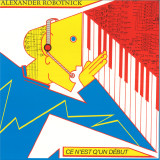
This Mini-LP was originally released on Materiali Sonori in 1984 in Italy and is long out of print. Alexander Robotnick (aka Maurizio Dami) is an Italian electronic musician. He made his debut on the Italian music scene as the founding member of Avida, a dance-cabaret band featuring Daniele Trambusti and Stefano Fuoch. in 1983 he attained international popularity with his track “Problèmes d’amour”, published first by the Italian label Materiali Sonori and then by Sire-Wea. “Problèmes d’amour” went on to become a “cult track” of the disco scene. After 40 years Spittle Records in joint venture with Materiali Sonori re-issues the mini album and the 12” with its original artwork.
"Once I was in Chicago, it was around 2010, I was just finishing my set and went outside the club to light a cigarette. Suddenly a police car stops nearby. I thought the policeman was here to fine me (I was more than 20 meters outside the venue), but he just lifted a poster of mine and asked to sign it. Then I realized that "Problèmes d’Amour" has been for a longtime the opening theme for a popular radio broadcast well-known between the black community (hence the policeman was black)”. - Maurizio Dami
The waiting is hell but heaven is waiting...it seeemed like an age to complete this record, we had demo’d it in a couple of days in swanyard studios and it sounded fresh and powerful, just like we wanted. Signing to Arista had given us the means and funds to take us to the next level and we were itching to get started. We had new equipment, the status of being a ‘signed band’ and we hoped the backing & Finances of a record company that believed as we did, that we could be big. Not ‘pop star big’ that was never for us, but ‘big’ like pink floyd who didn’t have to care about ‘pop’ singles. We were young & naive, even idealistic. Negotiations about producers ensued and Nigel Gray who had produced the Banshees was suggested and accepted and we shipped off for a month to his studios in Leatherhead... (Paul Nash, from the liner notes)
- The Wasps - Can't Wait 'Til '78
- Mean Street - Bunch Of Stiffs
- Neo - Small Lives
- The Wasps - Waiting For My Man
- Bernie Tormé -Living For Kicks
- Art Attacks - Animal Bondage
- Bernie Tormé - Streetfighter
- Art Attacks - Frankenstein's Heartbeat
- Neo - Tell Me The Truth
- Suspects - Nothing To Declare
- Maniacs - You Don't Break My Heart
- Maniacs - I Ain't Gonna Be History
The compilation that started it all ! In October a series of bands have been recorded at the Vortex Club for a proposed live album along the lines of the first ‘Live At the Roxy WC2’ record. The record featured the Maniacs, Suspects, Wasps, Neo, Art Attacks, Bernie Torme and Mean Street who were all regular players at the Vortex and Roxy. Released in 1977 - right after the punk-rock breakdown - the compilation made way for a revolutionary statement supporting the newborn counterculture.
Possibly one of the weirdest experiment in the post-punk realm, Vibing Up the Senile Man (Part One) is the second studio album by English anti-heroes Alternative TV, released in March 1979 on small indie label Deptford Fun City. Forget about the influential 1978 debut - The Image Has Cracked – frontman Mark Perry is literally leaving the planet in this effort. ‘There are free jazz influences; I'd got into the Art Ensemble of Chicago, Sun Ra ..) I'd moved into this house with an amazing music room – pianos, clarinets, you name it – and we'd always be picking up stuff from junk shops.’ The description set the pace for a unique performance, not only the afro-american heritage , traces of the Canterbury school are almost evident as the early experiment of the BBC Radiophonic workshop. Is it safe to consider Vibing up The Senile Man on the same time-line as Robert Wyatt ‘The End Of An Ear’ and Throbbing Gristle ’20 Jazz Funk Greats’ (Genesis P-Orridge is on board on two tracks, playing assorted percussion) ? Judge by yourself and don’t be scared.
First ever re-issue on vinyl. Red Shoes includes eight new recordings (dated early 1992), five unreleased tracks, a new version of When The World and more sophisticated rendition of For Madeleine and For Zinni. Vini develops his musical journey using fascinating licks for guitar, steeped in New Age, minimalism, soft electric folk and ambient music (we stressed to remind you that Vini’s style has been long informed by kosmische heroes such as Manuel Göttsching or Günter Schickert and even John Martyn). The album offers even the re-issue of the mini album Greetings Three, a very important goal for the band and the label Materiali Sonori. In fact, the four tracks included on this record - released in 1985 - have been explicitly dedicated to Italy, Tuscany and to new Italian friends. Along with Vini Reilly you will find the talent of Bruce Mitchell (drums) and John Metcalfe (violin) on display.
- A1: Neon - My Blues Is You
- A2: (Pankow) - God's Deneuve
- A3: Le Masque - Mother And Son
- A4: N.o.i.a. - Forbidden Planet
- A5: State Of Art - Your Eyes
- A6: Jeunesse D'ivoire - Days
- B1: Monuments - Oblivious (Edit)
- B2: Rats - C'est Disco
- B3: Fockewulf 190 - We Are Colder
- B4: Luc Orient - Night In Paris
- B5: Illogico - Abilità Motoria
- B6: 2+2=5 - Mathematic'n Logarithm
- B7: La Maison - 40 Secondi
What exactly happened in the Italian underground / post punk scene 30 years ago, is not entirely clear. Therefore, this collection of 13 incredible tunes helps track down the feeling and focuses on the blurry images of a period that was mixing influences from the UK/USA scenes with a more national' approach to new music developments. The damage began in 1977 when a series of urban / suburban musical agitators, whether skilled or complete amateurs, decided to embrace instruments as weapons for a war against sonic stereotypes. Here's the result: a multiform sonic attack that marks the history of a movement that may have remained local in most cases but whose echo reflected the amazing creativity of a generation.
- A1: Frenetics - The Madman Talk
- A2: Vox Rei - Le Ombre Dei Soldati
- A3: The End - Tears In My Eyes
- A4: Les Blusons Noirs - The Scream
- B1: Illogico - Africani Gemiti
- B2: Blaue Reiter - My Inner Tought
- B3: Polaroid - Vita Immaginaria
- B4: Atelier Du Mal - Back To Taiwan
- C1: Sex - A Sickness Called Distress
- C2: Ship Of Fools - Metal Box
- C3: Ideal Standard - Another Loser
- C4: Nadja - Possession
- D1: The Age - Uer
- D2: Dark Ride - Apocalypse
- D3: Mono - From Planets & Satellites
- D4: Tv Dance - Schneller Leben
Searching for new languages beyond the bitter and nihilist dialect of punk, bands like Gaz Nevada, Litfiba, CCCP, Diaframma, Neon, and many others, began spreading their message all along the Italian peninsula during the early eighties and many of the members of these bands are now some of the best musicians/producers in the Italian independent music panorama (Giovanni Lindo Ferretti, Piero Pelù/Litfiba, Bisca, etc.). 16 tracks by 16 Italian underground bands from 1982-1984: bands who faded into oblivion before ever releasing anything of their own on vinyl. It should, however, be stated that if these sixteen bands had been found on an album, EP or single, they certainly would not have lowered the average quality of albums in that genre…not even in terms of sound quality, which has actually been improved upon here (considering that the original tapes had been lying around collecting dust for at least a quarter of a century) by careful restoration.
- A1: Angelo Vaggi - Chameaux Tunisiens
- A2: Baker Street Band - Talkin Bout You
- A3: Al Aprile _ The Electric Art - Frattonove Under The Sky
- A4: Alphaville - Alphaville
- A5: Le Jour Prochain - Susan
- B1: Rocky Schiavone _ The Gangsters - Nessuno Mi Puo Giudicare
- B2: Off Set - 240 Seconds
- B3: Monofonic Orchestra - Lucys 1St Appointment
- B4: The Stumblers - Last Clean Shirt
- B5: Roberto Masotti - Automatic Guitar
'Matita Emostatica' is the re-issue of a sought after compilation connecting the most underrated outsider artists of the Milan scene, in the early eighties. The amazing artwork is the creation of influential designer and photographer Roberto Masotti, a very well known figure in the avantgarde and jazz realm (he made astonishing portraits for the likes of Anthony Braxton, Art Ensemble Of Chicago, Carla Bley, etc.)
The compilation was produced in 1981 by Al Aprile and released by Materiali Sonori. Among the 10 artists you can find future journalists, unstoppable record collectors, renowned photographers and influential underground persona ... just scroll down the album and read the names of Monofonic Orchestra, Angelo Vaggi, Baker Street Band, Al Aprile, Roberto Masotti and many others. The result was quite unbelievable, ranging from small cosmic opus to avantgarde symphonies and asymmetrical etno-world jams. In the end ‘Matita Emostatica’ was quite in line with the efforts coming from the rest of Europe and the other side of the ocean, so to speak the compilation wouldn’t be out of place in the Ralph or Crammed Discs catalogue. A postcard from a country that is no more.