Sub Rosa News

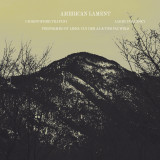
Christopher Trapani / Larry Polansky - American Lament

With Folksong Distortions, Pauwels and Van der Aa create a journey of lament through the soul of times gone by. Their radical renditions of works by Larry Polansky and Christopher Trapanido not distort the more upbeat rhythm and tradition of folk songs, but rather reveal and highlight the essence of hard lives, imposed choices - choices that were illusions in the first place - and the difficult times and conditions they have always depicted.

Christopher Trapani arranged two classics from the U.S. South, effects. The work, developed in collaboration with Tom Pauwels and Liesa Van der Aa, was originally made and featured on ICTUS' American Lament programme. The duo was given considerable room for improvisation and interpretation in the process. The first song, 'Wayfaring Stranger', is a well-known folk/gospel melody in A minor. The lyrics contrast an aimless journey through a harsh, hostile world, with the Christian promise of heaven as a 'home' and reunion with lost loved ones. The second song, 'Freight Train', was written by Elizabeth Cotten, a left-handed guitarist who held her guitar upside down, resulting in a very recognisable strumming style.

Sweet Betsy from Pike and Eskimo Lullaby are taken from Larry Polansky's 2005 'Songs and Toads', a five-section piece that computer-composed pieces. The work was originally written for guitar, more specifically for the national steel guitar, refretted in a specific intonation designed by Lou Harrison. Each piece explores a different guitar tuning. A significant intervention to the original work is made to accommodate Liesa Van der Aa's violin with effect pedals, opening to an epic re-reading of the work as conceived by the American composer Larry Polansky. What this set-up enables is a melancholy, slow-paced approach that quite radically opposes the more upbeat and joyful nature of the folk songs.

pre-ordina ora24.05.2024

dovrebbe essere pubblicato su 24.05.2024

23,11
Various - Funeral Gongs Ceremonies in Ratanakiri, Cambodia LP

These recordings of Gongs Orchestras were made during Funeral Ceremonies in two Kung villages and one Jaraï village in Ratanakiri province, Cambodia by Laurent Jeanneau (Kink Gong) in 2003 and 2004, at a times when jungle had not been replaced by rubber plantations. Focusing on funeral's ceremonies, those hypnotics pieces are intense and haunting harmonics sonic experiments.

"Adventure brought me to south-east Asia, not academic research. I was based on and off in Banlung, capital of Ratanakiri province between 2003 and 2006. Finding gongs orchestras became my obsession, I've witnessed different contexts in which gongs were being performed, but the most brainwashing ceremonies were the funerals, because they would never end, I remember leaving the 3 days funeral ceremony of a prominent Jaraï dead man in Tang ji village at the border with Vietnam and still hearing the gongs the entire next day going back home through the jungle". - Laurent Jeanneau (Kink Gong)

"Many of the ethnic minority groups, the Jarai, Kac_, Tampuan, Kavet, Kreung, Brao, Bunong, Mnong, Edé, and others, are hill-rice farmers who live in the uplands of the Annamite mountain chain. Collectively these groups have been known by many names, including a number of disparaging terms in local dialects, such as moï, kha, phnong, and others. The term Montagnard was applied to them by the French during the colonial period, and was used by the US military and in popular discourse in English during the United States-Vietnam War. In scholarly and popular literature during the mid-twentieth century these upland farmers were also called hill tribes. I have opted for the word highlanders as a relatively neutral term that avoids the semantic burdens associated with these other namings." - Jonathan Padwe, The book Disturbed forests fragmented memories.

pre-ordina ora16.02.2024

dovrebbe essere pubblicato su 16.02.2024

16,77
Univers Zero - Lueur LP

Univers Zero

Lueur LP

12inchSR555V-C
Sub Rosa
17.11.2023

Univers Zero's new album (since 10 years) follows the lineage of 'Phosphorescent Dreams', originally released only on CD in Japan in 2014, and reissued as an LP on the Sub Rosa label in 2019. Lueur is the fruit of two years' work and reflection, the foundations of which were laid by Daniel Denis (keyboards, drums, percussion...), then enriched by the contributions of Nicolas Dechêne (guitars), Kurt Budé (clarinet / bass clarinet) and Nicolas Denis (bass, percussion, vocals), all three present on Phosphorescent Dreams.

With this reduced line-up, Lueur offers a dense journey, rooted in the balance between power and calm, raging and serene sound. A balance, too, between complex arrangements and more contemplative moments. While this album continues the avant-rock tradition of Univers Zero, it also features some very short pieces, more electronic, tribal and haunting sounds, and voice work that is new to the U.Z. universe. Between tradition and subtle evolution, Lueur is a major new contribution to the discography of this band, which will be celebrating its fiftieth anniversary in 2024.

Univers Zero represents one of the longest-living bands in Belgium. It was established in 1974. Drummer Daniel Denis had the brilliant idea to gather together a team of professionals sharing the same taste for music. The band has adopted an instrumental progressive style. Over the last couple of decades, the band has also implemented a series of influences from chamber music - most commonly, chamber music from the 20th century. Even if the line-up changes a lot over the years, the overall sound of UZ remained fairly consistent.

pre-ordina ora17.11.2023

dovrebbe essere pubblicato su 17.11.2023

22,48
Univers Zero - Lueur LP

Univers Zero

Lueur LP

12inchSR555V
Sub Rosa
17.11.2023

Univers Zero's new album (since 10 years) follows the lineage of 'Phosphorescent Dreams', originally released only on CD in Japan in 2014, and reissued as an LP on the Sub Rosa label in 2019. Lueur is the fruit of two years' work and reflection, the foundations of which were laid by Daniel Denis (keyboards, drums, percussion...), then enriched by the contributions of Nicolas Dechêne (guitars), Kurt Budé (clarinet / bass clarinet) and Nicolas Denis (bass, percussion, vocals), all three present on Phosphorescent Dreams.

With this reduced line-up, Lueur offers a dense journey, rooted in the balance between power and calm, raging and serene sound. A balance, too, between complex arrangements and more contemplative moments. While this album continues the avant-rock tradition of Univers Zero, it also features some very short pieces, more electronic, tribal and haunting sounds, and voice work that is new to the U.Z. universe. Between tradition and subtle evolution, Lueur is a major new contribution to the discography of this band, which will be celebrating its fiftieth anniversary in 2024.

Univers Zero represents one of the longest-living bands in Belgium. It was established in 1974. Drummer Daniel Denis had the brilliant idea to gather together a team of professionals sharing the same taste for music. The band has adopted an instrumental progressive style. Over the last couple of decades, the band has also implemented a series of influences from chamber music - most commonly, chamber music from the 20th century. Even if the line-up changes a lot over the years, the overall sound of UZ remained fairly consistent.

pre-ordina ora17.11.2023

dovrebbe essere pubblicato su 17.11.2023

20,97
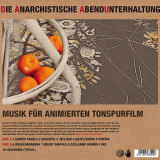
Die Anarchistische Abendunterhaltung - Musik für animierten Tonspurfilm LP

"Musik für animierten Tonspurfilm", the twelfth album by Die Anarchistische Abendunterhaltung (or DAAU, as they are commonly known), is the soundtrack to a series of short, abstract animation films by Rudy Trouvé, who also acted as a creative director during the recording process.

The music originates from acoustic improvisation sessions by accordionist Roel Van Camp, clarinetist Han Stubbe, double bass player Hannes D'Hoine and percussionist Jeroen Stevens. These took place according to conceptual guidelines set by Trouvé. Sometimes the starting point was a play on words or a random chord sequence, sometimes a specific atmosphere, but the playing field was always kept deliberately limited. Hence, the musicians were forced to build a musical structure with minimal means. The result was cut on cassette, after which the Antwerp enfant terrible - Rudy Trouvé-, known from his work with dEUS, Kiss My Jazz, Gore Slut and I H8 Camera among others, happily hit the tracks with a virtual sledge hammer. DAAU's pieces were cut up, sampled, drastically restructured and pasted together again, a method that had been applies earlier on the retrospective album 'Hineininterpretierung' (2017). On top of that audio collage, the musicians added new electronic layers, using a digital accordion, synths, digital bass and marimba. DAAU says: 'On the soundtrack, like on the older record, we were looking for a symbiosis between an acoustic and electronic sound. And there too we messed around with dub and Krautrock references'.

pre-ordina ora17.11.2023

dovrebbe essere pubblicato su 17.11.2023

20,97
Fred Frith & Ensemble Musiques Nouvelles - Something About This Landscape..

From his early days with Henry Cow, Fred Frith was seen as a brilliant instrumentalist and improviser, but what has been overlooked is what a first-rate composer he is. This recording offers both aspects. His most complex orchestral composition and two selected improvisations with the Ensemble Musiques Nouvelles. Fred Frith, as an infusion of energy and inspiration. ''Something about this Landscape was commissioned by Ars Musica in 2018. I composed the piece during a residency at Lou Harrison's straw-bale house in the desert at Joshua Tree, California. It's an inspiring place for a number of reasons - the silence, the light, the life, the history. The extraordinary diversity of birds during the migration season. Both other pieces are improvisations. The first one is the one we did during the concert (in public), the other one, very different, is the one we did during the dress rehearsal (on the day of the concert).'' Fred Frith.

pre-ordina ora30.09.2023

dovrebbe essere pubblicato su 30.09.2023

25,00
Elephantine - Moonshine

Elephantine

Moonshine

12inchSR551V-C
Sub Rosa
29.09.2023

Maurice Louca & his band Elephantine announce Moonshine, shining brightly with a live, raw, collective sound. Maurice Louca's band is incredible: double drummers Tommaso Cappellato & Özün Usta, Piero Bittolo Bon on alto, Daniel Gahrton on baritone and Isak Hedtjärn on clarinet, Rasmus Svale Kjærgård Lund on tuba, Rosa Brunello on bass, Els Vandeweyer on vibraphone, Louca on guitar/lap steel/synth.

As Asher Gamedze puts it in his essay: "Abstract territories of freedom, always grounded, expansive, multiple, internally differentiated, and elephantine."

One of the most gifted, prolific and adventurous figures on Egypt's thriving experimental arts scene, Louca has in recent years garnered a global reputation through three previous solo albums and an expanding, evolving lineup of genre-defying collaborations. The Wire called his 2014 sophomore solo effort, Salute the Parrot, "remarkable music-dense, driven and splashed with colour.

For Louca, Elephantine serves as both the pinnacle of his wide-ranging experience and a bold next step in his development as a composer, arranger and bandleader, from Cosmic Jazz, African and World music to transcendental modal traditions. The music-from its pensive lulls through its stretches of hard-grooving hypnosis and moments of avant-jazz.

pre-ordina ora29.09.2023

dovrebbe essere pubblicato su 29.09.2023

20,97
Die Anarchistische Abendunterhaltung - Die Anarchistische Abendunterhaltung

In 1995 the self-titled full-length debut of Die Anarchistische Abendunterhaltung (DAAU) was released. The band consisted of four young, 'classically derailed' musicians who played their own compositions with acoustic instruments such as violin, cello, clarinet and accordion. Their work contained influences from Roma music, Eastern European folk, klezmer and jazz, but was performed with the energy, rebellious spirit and Sturm und Drang of a bona fide punk band. DAAU was part of the fertile Antwerp scene, which also produced dEUS, Zita Swoon and Kiss My Jazz, and soon signed an international record deal with Sony Classical.

The group's influential first record, which has been out of print for a while, is now finally being released again and is available on vinyl for the very first time.

In those early days, DAAU consisted of four young, classically trained musicians who tackled their instrumental compositions with a true punk spirit. 'If we'd had guitars, bass or drums at that time, we would probably have been just another rock band', says accordionist Roel Van Camp, who, together with his schoolmates Buni Lenski on violin, the latter's brother Simon on cello and Han Stubbe on clarinet made up the Antwerp quartet. 'With our acoustic instruments we tried to create our own version of the music we loved listening to, from sixties rock and prog to new wave.'

The quartet, which initially played in streets and cafes, appealed to a diverse audience and sometimes joked that they were a classically trained unit that had 'gone off the rails'. 'As befits teenagers, we wanted to shake things up', Stubbe remembers, 'even though we always kept cherishing our classical backgrounds.' Van Camp: 'Our education was never supposed to feel like a straitjacket. We were free-spirited enough to ignore the laws and regulations of the music academy and to create our own sound. Our compositions were open to influences from Roma music, Eastern European folk, klezmer and jazz'. 'That eclecticism was a direct result of the zeitgeist', Han Stubbe adds. 'We loved different styles and happily mixed them together'.

The monniker Die Anarchistische Abendunterhaltung was derived from Steppenwolf, a novel by German writer Hermann Hesse about a character who was outside society. 'In the book, the narrator talks of a theatre', Van Camp explains. 'And at the entrance there is a warning sign sign that says: if you go in here, you are guaranteed to lose your mind. That was an apt description of the way our music worked'.

Almost all tracks on DAAU's first album were 'Drieslagstelsels' (or 'three-course rotations'). The term referred to an agricultural method of the early Middle Ages, but also to the fact that each song of the group consisted of three major movements. Van Camp: 'The titles of those pieces referred to our method of writing. We piled up a huge bunch of ideas, because we wanted to tell more than just one story. With each composition, we took the listener for a ride'.

pre-ordina ora29.09.2023

dovrebbe essere pubblicato su 29.09.2023

20,97
Die Anarchistische Abendunterhaltung - Die Anarchistische Abendunterhaltung

In 1995 the self-titled full-length debut of Die Anarchistische Abendunterhaltung (DAAU) was released. The band consisted of four young, 'classically derailed' musicians who played their own compositions with acoustic instruments such as violin, cello, clarinet and accordion. Their work contained influences from Roma music, Eastern European folk, klezmer and jazz, but was performed with the energy, rebellious spirit and Sturm und Drang of a bona fide punk band. DAAU was part of the fertile Antwerp scene, which also produced dEUS, Zita Swoon and Kiss My Jazz, and soon signed an international record deal with Sony Classical.

The group's influential first record, which has been out of print for a while, is now finally being released again and is available on vinyl for the very first time.

In those early days, DAAU consisted of four young, classically trained musicians who tackled their instrumental compositions with a true punk spirit. 'If we'd had guitars, bass or drums at that time, we would probably have been just another rock band', says accordionist Roel Van Camp, who, together with his schoolmates Buni Lenski on violin, the latter's brother Simon on cello and Han Stubbe on clarinet made up the Antwerp quartet. 'With our acoustic instruments we tried to create our own version of the music we loved listening to, from sixties rock and prog to new wave.'

The quartet, which initially played in streets and cafes, appealed to a diverse audience and sometimes joked that they were a classically trained unit that had 'gone off the rails'. 'As befits teenagers, we wanted to shake things up', Stubbe remembers, 'even though we always kept cherishing our classical backgrounds.' Van Camp: 'Our education was never supposed to feel like a straitjacket. We were free-spirited enough to ignore the laws and regulations of the music academy and to create our own sound. Our compositions were open to influences from Roma music, Eastern European folk, klezmer and jazz'. 'That eclecticism was a direct result of the zeitgeist', Han Stubbe adds. 'We loved different styles and happily mixed them together'.

The monniker Die Anarchistische Abendunterhaltung was derived from Steppenwolf, a novel by German writer Hermann Hesse about a character who was outside society. 'In the book, the narrator talks of a theatre', Van Camp explains. 'And at the entrance there is a warning sign sign that says: if you go in here, you are guaranteed to lose your mind. That was an apt description of the way our music worked'.

Almost all tracks on DAAU's first album were 'Drieslagstelsels' (or 'three-course rotations'). The term referred to an agricultural method of the early Middle Ages, but also to the fact that each song of the group consisted of three major movements. Van Camp: 'The titles of those pieces referred to our method of writing. We piled up a huge bunch of ideas, because we wanted to tell more than just one story. With each composition, we took the listener for a ride'.

pre-ordina ora29.09.2023

dovrebbe essere pubblicato su 29.09.2023

19,54
Fred Frith And Ensemble Musiques Nouvelles - Something About This Landscape For Ensemble

Since his early days with Henry Cow, Fred Frith has been regarded as a brilliant instrumentalist and improviser, but what has been overlooked is that he is also a first-rate composer. This recording offers both aspects. His most complex orchestral composition and two selected improvisations with the Ensemble Musiques Nouvelles. Fred Frith, as an infusion of energy and inspiration.

''Something about this Landscape was commissioned by Ars Musica in 2018. I composed the piece during a residency at Lou Harrison's straw-bale house in the desert at Joshua Tree, California. It's an inspiring place for a number of reasons - the silence, the light, the life, the history. The extraordinary diversity of birds during the migration season. Both other pieces are improvisations. The first one is the one we did during the concert (in public), the other one, very different, is the one we did during the dress rehearsal (on the day of the concert).'' - Fred Frith

Musiques Nouvelles is one of the two most successful and diversified contemporary music ensemble in this country with Ictus. With, under the influence of Jean-Paul Dessy, a deeply spiritual and mutual listening aspect. This meeting with the legendary Fred Frith will remain as an important step.

pre-ordina ora29.09.2023

dovrebbe essere pubblicato su 29.09.2023

19,54
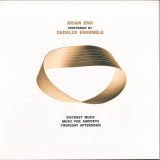
Dedalus Ensemble - Brian Eno Performed LP 2x12"

With »Discreet Music« (1975), »Music for Airports« (1978) and »Thursday Afternoon« (1985), Brian Eno invented a new music genre, Ambient Music, which he defined as »able to accommodate many levels of listening attention without enforcing one in particular; it must be as ignorable as it is interesting«. These versions performed and arranged by Dedalus Ensemble, according to the musicians and the critics who listened to it, goes beyond what we expect from it. A mental base that takes us far away. One of the only music without beginning or end in which we want to stay as long as possible.

The Dedalus Ensemble is a contemporary music ensemble based in Toulouse, founded in 1996 by Didier Aschour. Its repertoire includes works by classics of minimalism such as Christian Wolff, Phill Niblock, Frederic Rzewski, Tom Johnson, Moondog or Philip Glass.

non in magazzino

Ordina ora e ordineremo l'articolo per te presso il nostro fornitore.

22,65

Last In: 2 years ago
Bill Laswell - City Of Light

Bill Laswell

City Of Light

12inchSR114
Sub Rosa
25.07.2023

indian green vinyl 2022 repress

City Of Light is the sixth solo album by American composer Bill Laswell, released on July 29, 1997. While it may appear an anachronism in his catalog, fans of Bill Laswell will find City Of Light an extension of ideas he has explored throughout his career. His strong interest in Eastern music and religion resulted in this 1997 collaboration with Janet Rienstra. Part sacred, spoken word, part meditative soundscape, City Of Light takes as its inspiration the holy region of Banaras, India. Said to belong to Shiva, Banaras also contains the Ganges river: a place sought by Hindus for their cremation. Surrounding the texts is some of the most compelling music this genre has produced featuring Trilok Gurtu on tablas, Coil (Peter Christopherson & John Balance) on electronic, Tetsu Inoue at sound collages and Lori Carson at vocals.

non in magazzino

Ordina ora e ordineremo l'articolo per te presso il nostro fornitore.

18,87

Last In: 2 years ago
Puce Moment - Epic Ellipses LP

Puce Moment is part of the French contemporary music scene. Their music is climatic, often inhabited by a strong emotional power. A procession of harmonic structures organized in a ritual way, sometimes close to trance. It can be written or improvised, vocal or instrumental. The electronic and electroacoustic arrangements summon new spaces and abstract landscapes, which can go from the purest sound to the most raw distortions. Vast, slower, deeper - distant echoes of half-faded things - and when we are lost, voices appear. Voices whose only reference would be the timeless SeeFeel.

Nicolas Devos and Pénélope Michel are visual and sound artists, one trained at the Beaux-Arts and the Fresnoy studio national des arts contemporains and the other a classically trained cellist, singer and multiinstrumentalist. They created Puce Moment, envisaged as a sound research laboratory open to experimentation, to multi-disciplinary encounters and to decompartmentalization. Their work is akin to a fictional ethnology expressed through protean projects and mutant visual, sound and musical creations.

»Epic Ellipses« is their 4th album.

They have composed the original soundtracks of more than a dozen dance performance, fiction or documentary films, virtual reality in variable formats (Christian Rizzo, Mylène Benoit, Vania Vaneau, Benjamin Nuel, Laurent Pernot, Carolina Gonçalves). Or in the form of film-concerts including David Lynch's cult film 'Eraserhead' with which they have toured intensively since 2012 in France and Europe, and since 2019 »Koyaanisqatsi«, the cult experimental documentary by Godfrey Reggio.

pre-ordina ora28.04.2023

dovrebbe essere pubblicato su 28.04.2023

19,54
Laszlo Umbreit - Pas de Regrets

Laszlo Umbreit's album Pas de Regrets combines electronic sounds with recorded memories and various materials to create a unique listening experience. The album features complex soundscapes and techniques of layering and editing, drawing on Umbreit's experience as a sound designer for films. Pas de Regrets is an immersive and rich listening experience, with a narrative quality that places it between prospective electronics and experimental radio.

Laszlo Umbreit (*1986) is a Belgian sound designer and musician based in Brussels. Laszlo's work is anchored in sound research yet usually dialogues with the moving image, whether as present or absent. His musical practice mixes improvisation on electronic instruments, field recordings and a long meticulous editing and mixing process of sonic materials.

pre-ordina ora31.03.2023

dovrebbe essere pubblicato su 31.03.2023

18,91
Various - Alterations LP

Various

Alterations LP

12inchSUBLOGOS02
Sub Rosa
24.03.2023

Never released before recordings from Logos Foundation live sessions at Logos Foundation, January 3, 1981.

The music is free-improvisation - that is we make our music co-operatively while playing : by listening, reacting, throwing in new ideas, not by following preplanned schemes. At its simplest the group's intention can be said to be to play together as well as possible and to enjoy ourselves while doing so. We are very interested in the result and intend that the audience is as well. As well as the musicians reacting to each other the music itself is pretty reactive to context. In other words room acoustics, background noise, audience response have a strong effect on what happens. This is particularly true of the audience. We have done performances where conversation has broken out with some audience members. There is much to see as well as hear - this is partly to do with the instruments. Together Terry, Steve and David have hundreds, all sizes, all sorts, most colours. They completely cover the floor. Many of these are non-western. The wide range of instruments means that an extremely broad sound spectrum is covered, from sudden bangs to very quiet low notes, from squeaks to normal guitar sounds. This is what fixes the overal group sound.

David Toop: Flute, home-made reeds, percussion Peter Cusack: Guitar Steve Beresford: Piano, Small Instruments Terry Day: Percussion, home-made reeds

Logos Foundation, located in Ghent, is a unique professional organisation for the promotion of new music and audio-related arts by means of new music production, concerts, performances, composition, technological research and other activities related to contemporary music. This organisation has been founded in 1968 by Godfried-Willem Raes.

pre-ordina ora24.03.2023

dovrebbe essere pubblicato su 24.03.2023

19,54
Hastings of Malawi - Choreological Exchanges

Recorded at the height of the global pandemic, and at a time when remote communication was becoming increasingly prevalent, "Choreological Exchanges" is part of Hastings Of Malawi's continuing investigations into the medium of communication itself. Prior to telephony becoming digital, all phone calls were routed through mechanical telephone exchanges, and the majority of the sounds on side one are the sounds of these exchanges and some of the voices of the engineers who worked with them.

Hastings Of Malawi make strange records and this one is no exception although it has a more linear narrative structure in opposition to what critics have described as their Dadaist approach. Their records certainly resist genre classification and do not really fall into the category of music. Hastings Of Malawi have themselves described previous records as films without light, radio plays and as poems. This one is a dance - a dance that takes place within the chain, or pipe, that is brain - mouth - telephone - telephone exchange - telephone - ear - brain.

"It is a dance record but not in the way that these are usually understood. An invitation to dance appears twelve minutes in on the first side. It is a dance within the wires, movement around noise used as a sculptural material rather than unwanted signals and a joyful exploration of sonic materiality. The second side begins with the voice of a telephone engineer, who states that in the top floor switch room of the exchange is the only vestige of human control. Is this top floor switch room the human brain? The sounds on this side, float between the mechanical telephone exchange and the body where the messages are created and interpreted - it is an exploration of the relationship between thought and the material devices in which telephone sound is propagated and transformed. Side two ends with a long list of randomly generated words created by digital voice synthesis." - HOM

pre-ordina ora03.03.2023

dovrebbe essere pubblicato su 03.03.2023

18,03
Otto Sidharta - Kajang

Otto Sidharta

Kajang

12inchSR532V
Sub Rosa
17.02.2023

Unreleased before music by Otto Sidharta, pioneer of Indonesian electronic music. Inspired by Indonesia's multifarious styles of traditional music, that he tries to preserve, the four pieces on Kajang express a contemplation of the self.

Otto Sidharta loves to travel, everywhere within Indonesia, in order to collect almost any environmental tones and harmonies he can gather, as an endless source of composition. He is also deeply inspired by Indonesia's multifarious styles of traditional music, that he tries to preserve, as in some remote places, they keep their own tradition very strongly.

What really interests Sidharta is musicians not interacting with other kinds of music, as in those deep villages, where one might find sounds that feel like very "natural". It results in works expressing Sidharta's personal impression from their music: "I just use my own feeling, with no calculation", not using the tribals motif or style.

Kajang is the name of a tribal people living in the south of Sulawesi, a giant island in eastern Indonesia, a closed community, that Sidharta visited twice: "They cut off their communication with the outside world. They live in a very traditional way and try to avoid any new development in culture that might impact their way of life."

Sidharta's previous album collected early pieces under the title Indonesian Electronic Music 1979-92, released on Sub Rosa in 2017. Kajang gathers a quartet of compositions from 2015 to 2020.

Otto Sidharta is born in Bandung, Indonesia November 6, 1955. In the late 1970' he studied first in Jakarta, under guidance of Slamet Abdul Sjukur, later at the Sweelinck Conservatorium in Holland. In 2015 he accomplished his doctoral study at Institute Seni Indonesia Surakarta and finished in 2016. For years he felt isolated as a composer, not only because of living in Indonesia, but because the nature of his music lay outside the mainstream of electronic composition. Until 2019 he taught for many years in the music departments of several Indonesian universities. He also managed an Indonesian symphony orchestra for five years, a job that included setting up a tour of Japan.

pre-ordina ora17.02.2023

dovrebbe essere pubblicato su 17.02.2023

18,07
Julius Eastman - Two Extended Pieces For Four Pianos

It is recognized today that these tutelary pieces for four pianos are among the most powerful in contemporary music,their impact is almost unparalleled. After the historical version recorded forty years ago, this one, featuring four of the greatest European performers, is now regaining its full power. High level recordings too.

There was some for John Cage, then came Christian Wolff, and finally Morton Feldman, from this school in New York. Only Julius Eastman remained outside the game, the last figure, the most solitary and enigmatic - undoubtedly also one of the most powerful, and it is this power that is revealed through these recordings. In the 1970s and 1980s, Eastman was one of the very few African-Americans to gain recognition in the New York avant-garde music scene. He was politically committed, a figure of queer culture and a solar and solitary poet whose melancholy influenced his genius as well as his tragic destiny : suffering from various addictions, declared missing, actually homeless. During Winter of 1981-82, he got deported from his apartment by the police, who destroyed most of what he owned - including scores and recordings. He was found dead in 1990, on the streets of Buffalo, after years of vagrancy.

The Performers Nicolas Horvath, pianist and electroacoustic composer Nicolas Horvath is known for his boundariesless musical explorations - he has collaborated with leading contemporary composers from around the world, including Alvin Lucier, Alvin Curran and Valentyn Silvestrov - the recordings of his complete works for piano by Phil Glass made a lasting impression. He has collaborated recently with Lustmord on the Deconstruction of November by Dennis Johnson (Sub Rosa SR502: The Fall).

Melaine Dalibert, a French composer and pianist, fascinated by natural phenomena which are both expected and unpredictable, Dalibert has developed his own algorithmic procedures of composition which contain the notion of stretched time evoking Morton Feldman, minimal and introspective, adopting a unique concept of fractal series.

Stephane Ginsburgh, a tireless surveyor of the repertoire but also explorer of new music, collaborated with composers such as Philippe Boesmans, Jean-Luc Fafchamps, Stefan Prins, Frederic Rzewski and Matthew Shlomowitz of whom he premiered works, as well as with choreographers such as Anne Teresa De Keersmaeker (Rosas) and recorded Feldman, Duchamp and Satie for Sub Rosa and the complete set of Prokofiev piano sonatas for Cypres. Wilhem Latchoumia, he embraces both new music and the classical repertoire with success and charisma. His two last recordings for La Dolce Volta (Prokofiev and de Falla) have been highly acclaimed by critics with a FFFF in Télérama. Winner of the Hewlett-Packard Foundation and the Montsalvatge International Piano Competition, he brilliantly won the First Prize in the 2006 Orléans International Piano Competition.

pre-ordina ora03.02.2023

dovrebbe essere pubblicato su 03.02.2023

22,65
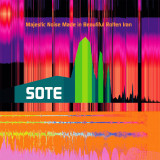
Sote - Majestic Noise Made In Beautiful Rotten Iran

It's an all electronic affair, harmonically maximalist, predominantly symphonic-synthetic, requiring active listening. Some pieces function as challengers of musical structural habits, provoking the short attention span culture, others present a problem-solution scenario, collectively via a neoteric noise aesthetic and detailed melodic weaving. Ultimately, the objective was to engineer an assortment of works full of sound, euphonic and vivid in nature.

The making of this album was intentionally a very personal process, going into self therapy territory at times interpreting the composer's contemplating mind dealing with tolerance, destruction, compassion, misery, grace and tyranny in an auditory manner. Some pieces function as challengers of musical structural habits, provoking the short attention span culture, others present a problem-solution scenario, collectively via a neoteric noise aesthetic and detailed melodic weaving. Ultimately, the objective was to engineer an assortment of works, awash with euphonic sound vivid in its essence, with a deep focus on various synthesis techniques within a compositional framework.

Dedicated to Peter Rehberg aka Pita

Ata 'Sote' Ebtekar composes music with a deeply-held conviction that rules and formulas should be deconstructed and rethought. He alters musical modal codes from their original tonality and rhythmic tradition to achieve vivid, synthetic soundscapes. Over the last three decades, his work has been published by labels such as Warp, Sub Rosa, Opal Tapes, Diagonal, Mute and Morphine, among others. In 2018, he founded a new label called 'Zabte Sote', which focuses on releases by Iranian experimental electronic composers from around the globe.

Known for creating compositions that range from the delicate to the abrasive, using sounds both of acoustical and electronic origins, Ebtekar sees music as the expression of cultural habits in sound and anti-sound (silence). Seeking to expand such traditions he creates music that, while rooted in many cultures at once, belongs to none in particular. Sote's work deals with various blueprints, in particular his solo all synthetic music, his electroacoustic audio/visual group project, and his multi-channel sound installations. Sote is on the jury panel of The DAAD Artists-in-Berlin Program, and has created commissioned work for and performed at a.o. Berghain and CTM Festival (Berlin), Unsound Festival (Krakow), Cafe Oto (London), Jazzhouse (Copenhagen), TodaysArt Festival (The Hague), Bozar (Brussels), Ultima Festival (Oslo), Donaufestival (Krems), Donaueschinger Musiktage, Mira (Barcelona), Terraforma (Milan), and many more.

pre-ordina ora20.01.2023

dovrebbe essere pubblicato su 20.01.2023

18,11
Leo Kupper - Electronic Works & Voices 1977-1987 (2x12")

Perfect follow up to our precedent 2LP (Electronic Works & Voices 1961-1979), this release highlights Leo Kupper's earliest compositions with his GAME machine - Générateur Automatique de Musique Electronique (Automatic Generator of Electronic Music) constructed during the 1960's. Purely electronic sounds into new structures, Leo Kupper shows through his 4 tracks a real spirit of renewal. Released in our Early Electronic series.

Tracklisting 2LP SIDE A 1 Aerosons (1982) / 15'00 SIDE B 2 Litanea (1987) / 18'07 SIDE C 3 Inflexions vocales (1982) / 21'35 SIDE D 4 Le rêveur au sourire passager (1977) / 24'08

In Stock

Disponibile in Stock e pronto per la spedizione

19,20
Articoli per pagina:
N/ABPM
Vinyl