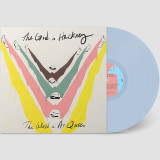
'The World in Air Quotes' is a genre-shifting style-melting kaleidoscope of art-rock, jazz, techno, folk & industrial. The God In Hackney sound like very little else from the early 2020's and whilst 'The World In Air Quotes' innovative progenitors are manifold - Eno, Coil, The Durutti Column, 1980s ECM jazz to name a few - it sounds beholden to none of them.
The God In Hackney's first album 'Cave Moderne' was Andrew Weatherall's album of the year for NTS Radio.
The God In Hackney's second LP, 'Small Country Eclipse', was album of 2020 for critic Sukhdev Sandhu of The Colloquium for Unpopular Culture: "Mordant music: stuttering, dread, black humour. A record that felt truly independent, beholden to no genre, out of step with all centres and signposted nodes."
'The World In Air Quotes' is The God In Hackney's 3rd album and their most musically emotive and lyrically inventive to date. It's an album that resonates with feelings about climate change, isolation, extinction, the social impact of technology, the flattening of history—and illuminates the darkness with imaginative rhythm, melody, noise & poetry. Songs range from widescreen, anthemic rock, to strange intricately arranged jazz-influenced songs, to abstract, textural electronic pieces. There's a strain of dark and surreal comedy too that runs through the lyrics and some of the choices the band makes in their sounds and arrangements.
The core God in Hackney quartet of Andy Cooke, Dan Fox, Ashley Marlowe and Nathaniel Mellors has expanded to include American multi-instrumentalists and composers Eve Essex (Eve Essex & The Fabulous Truth, Das Audit, Peter Gordon & Love of Life Orchestra, Peter Zummo, Liturgy) and Kelly Pratt (Father John Misty, David Byrne/St Vincent, Beirut, and Lonnie Holley among many others), signalling a new and ambitious direction for the band.
The album cover features original artwork by Iranian-American artist Tala Madani, recently the subject of a career survey exhibition at the Museum of Contemporary Art, Los Angeles.
Advertising:
The Wire, Maggot Brain
Reviews & features:
Maggot Brain - forthcoming feature
Hi-Fi+ Magazine - album review in April 2023 issue
Dereck Higgins (You Tube review)
Sonosphere - interview / feature
Weirdo Shrine - interview
It's Psychedelic Baby - interview
Spettacolo (Italy) - feature.
Ghettoblaster Magtazine (USA) - feature
Airplay:
Gilles Peterson - BBC Radio 6 Music
Steve Lamacq - BBC Radio 6 Music
Dublab - playlisted & featured in Dublab Recommends (Los Angeles)
Cian Ó Cíobháin - RTE Raidió na Gaeltachta (Ireland)
WFMU - playlisted
Resonance FM - The Wire presents Adventures In Sound & Music
Human Pleasure Radio (New Zealand)
Pete Wiggs & James Papademetie - The Seance (Repeater Radio, Sine FM & others)
Peter Hollo's Utility Fog - FBI Radio (Australia)
Jonathan Lethem & Sam Sousa on Radio Free Aftermath (KSP Claremont 88.7)
Life Elsewhere
WRPB Princeton
In Memory of John Peel
Mike Watt's Watt from Pedro Show
Поиск:the the abstract truth orchestra
Все
- 1
WOW. Daniel O'Sullivan's transcendent new album, Eros, is one of the greatest things we've ever heard. A simply stunning song cycle of hypnotic, experimental contemporary chamber music composed for a 14-piece ensemble. Combining minimalism, complex syncopation, detailed acoustic textures, weird intervals and samurai precision, this record will elegantly blow your mind. When Daniel first sent us this, he pitched it as “Liquid Swords meets Michael Nyman”. Trust us, he wasn't wrong. A "unique hybrid orchestral music", it presents a confluence of Daniel's longstanding fixations; indeed, there's elements of Nyman, Antonio Carlos Jobim, Magma, Aaron Copland and RZA. But this is wholly O'Sullivan's. Originally commissioned for the Sonoton Music Library in Munich, Eros now receives a deluxe vinyl release courtesy of Be With Records, bringing this meticulously crafted work to a wider audience. Limited to just 500 copies for the world, these are gonna fly.
An English composer and multi-instrumentalist, Daniel O'Sullivan’s career has been marked by versatility and innovation. In addition to his work with Sonoton, he has composed extensively for the legendary KPM music library, contributing to its storied legacy of production music. As a deep virtuoso and collaborator, O'Sullivan has also played in a number of influential projects, including Ulver, Sunn O))), This Is Not This Heat, Grumbling Fur and Miracle (with Steve Moore), leaving an indelible mark on the contemporary experimental music landscape.
O’Sullivan’s first foray into classically informed chamber music, Eros is a culmination of his long-standing fixations and expansive musical influences. The album features arrangements that are as detailed as they are emotionally resonant, showcasing his unparalleled ear for intervals and mastery of counterpoint. The music brims with complex rhythmic syncopation and a sensitivity to texture and space, resulting in a soundscape that is both intoxicating and dauntingly precise.
Recorded June 2023 and February 2024, in Brussels, London and Carmarthenshire, Wales, Eros features members of Echo Collective (Neil Leiter and Margaret Hermant), Thighpaulsandra (from seminal post-industrial band Coil), and jazz pioneer Oren Marshall. Daniel's sonic weapons of choice, in his own inimitable words, were "Big Bad Drum, Pee Anne Oh, Low End Brass, Willowy Winds & Samurai Strings." You get the picture. As a cyclical suite, this is a record that really needs to be heard in its entitreity, from start to finish, to truly appreciate the genius at work here.
A jaw-dropping statement of intent, the minimalist "Golden Verses" sets the tone with its complex cue which has your neck snapping right when it feels like it needs to. Listen and you'll understand. A syncopated tangle of sharp strings, crunchy bass, drums percussion and bright piano and mallets vie for position with French horn and woodwind melody in the most compelling and unexpected ways. Quite simply, it's one of the finest album openers I've ever heard. It's followed by the atmospheric rippling minimalism of "Lyre Lyre", a gorgeous gem with shimmering chimes, bright melody, human percussion and syncopated pizzicato strings. It kinda comes on like a less-abstract Boards Of Canada, bursting with typical wonderment. The piano and string-drenched "Dolorous Stroke" effortlessly builds its warm, pastoral orchestration with flowing piano arpeggio, steadfast drums, expressive string quartet, rich low brass, woodwind and lyrical flute. Just sublime.
The insistent frenetic propulsion of "Plain Paper" is utterly beguiling, featuring a determined string motif, urgent drums and percussion, driving low brass and breathless, energetic flute. The haunting, interweaving string arpeggios that propel "Grapes Draped" presents a claustrophobic minimalism for chaos and darkness, with growling low woodwind and brass, spiky harpsichord, skittering flutes and tight drums. Up next, "Xanix Annum" is a stately minimalist waltz with expressive lyrical string quartet and delicate woodwind, anchored by drums and percussion. "Painting Rose" is a bouncy stop-start track with angular syncopated strings and a piano pulse underneath bright harpsichord and flutes. "Rotunda Garden" presents ethereal textural minimalism for landscapes and reflection with flowing string arpeggios, warm, low woodwind drones, floating choir and cymbal swells. Closing out this extraordinary side of music, the glowing, flowing minimalism of "Flowry Orb" features urgent organ, piano and woodwind arpeggios, half-time drums with shimmering cymbals, a soaring, beautiful violin solo and hypnotic vocal chant.
Side 2 opens with "Theia Mania" a determinedly off-kilter, angular track featuring low wind, brass and drum stomp in dialogue with lively string trio, woodwind and solo horn. The light, airy minimalism of "Painting Percy" is built around an interplay of rhythmic motifs for piano, low brass, bassoon, fluttering flutes, urgent strings, drums and percussion whilst "For Archetypes" is a delicate, gently syncopated chamber cue for nostalgia, nature, reflection and moments of calm, with steady piano motif, intimate woodwind and French horn, and warm, graceful strings. The urgent Ars Memoriae is a propulsive march for progress, processes and industry, underpinned by driving tuba, with determined strings, resolute drums, and vivid, expressive flute, clarinet and French horn.
The syncopated energetic minimalism of "Mirrored Seven" presents layers of melodic and cyclical piano, drums, low brass, harp, flute and strings. "Pure Ornament" follows, a slowly evolving chamber cue with flowing clarinet, string and harp arpeggio, plodding tuba and percussion, fluttering flute and graceful, lyrical solos. Stunning! Up next, "Brave Boy" moves from its tender, warm, lullaby-like intro with lyrical flute, clarinet and strings before opening into a playful backend driven by a bouncy tuba riff and syncopated piano, woodwind, string trio, and drums and percussion. Rounding out this astonishing piece, "Waxen Waned" is a warm, pastoral chamber cue with light lyrical woodwind, tender French horn and subtly pulsing string trio.
The album's title is a reference to Plato’s conception of Eros, which is more than romantic or physical desire. It is a dynamic and creative force that drives individuals to seek perfection whether in art, relationships, philosophy or the pursuit of truth. Wholly appropriate, here, we think. When asked what his influences were in making this astounding record, he answered thusly: "Non-musical: Householding, Pythagoras, Goethe, Grail romances, Hermeticism, Doctrine of Signatures (Parcelsus, Bohme, Pliny), Eric Rohmer, John Stezaker, Yasujiro Ozu. Musical: Duke Ellington (late suites), Smile-era Brian, early RZA, Wagner (Parsifal Overture), Magma, Mancini, Axelrod, YMO, Hildegard, Nyman, Penguin Cafe Orchestra, Jobim (Stone Flower), Alessandro Alessandroni, Tavener, Moondog, Orthodox Music, Secular Music." That's some pretty deep shit. Makes you want to dive in, no?
Mastering for this vinyl edition was overseen by Be With regular Simon Francis, and it was cut by the esteemed Cicely Balston at Abbey Road Studios to be pressed in the Netherlands by Record Industry. Truly, Eros is a work of extraordinary depth and sophistication. It invites listeners to immerse themselves in its intricate layers, to lose themselves in its hypnotic rhythms, and to marvel at the precision of its execution. With this release, O’Sullivan reaffirms his position as one of the most inventive and uncompromising voices in contemporary music. Do. Not. Sleep.
- Stolen Moments
- Hoe Down
- Cascades
- Yearnin
- Butch And Butch
- Teenie's Blues
Black Vinyl[44,50 €]
Coloured Vinyl[20,80 €]
White/Blue Splatter Vinyl[25,42 €]
The Blues and the Abstract Truth is not just a landmark album in Oliver Nelson's career but in the history of jazz itself
The album features an incredible ensemble of top-tier jazz musicians, often referred to as a "supergroup": Oliver Nelson (alto saxophone, tenor saxophone), Freddie Hubbard (trumpet), Eric Dolphy (alto saxophone, flute), George Barrow (baritone saxophone), Bill Evans (piano), Paul Chambers (bass), Roy Haynes (drums). The early 1960s were marked by a shift from the hard bop of the 1950s to more experimental forms, including modal jazz, free jazz, and the incorporation of avant-garde elements. Musicians like John Coltrane, Ornette Coleman, and Charles Mingus were all pushing the boundaries of jazz, and Oliver Nelson's work fits within this broader movement: in this album there's a perfect combination of modern compositional techniques, virtuosic performances, and emotional depth make it an essential listening experience for any jazz fan. It captures the moment when jazz was evolving into new, exciting directions while staying connected to its roots in the blues. The Blues and the Abstract Truth is considered one of the essential albums in modern jazz where Oliver Nelson's compositional style blends hard bop, modal jazz, and blues influences with sophisticated harmonic structures and striking arrangements. The album is noted for ts rich orchestration despite having a relatively small ensemble with use of textures and colours, particularly in tracks like "Stolen Moments," created a new standard in azz arranging.
Violist, violinist and singer-songwriter Marla Hansen returns to Karaoke Kalk with "Salt", her second full-length album to date. Building upon the sonic palette the Berlin-based musician established with her debut "Dust" in 2020, "Salt" takes the delicate mixture of acoustic instruments such as viola, violin, piano and guitar combined with subtle electronics to the next level. The new album is both a remarkable departure and at the same time sheds a new yet reassuring light on Hansen's work and creativity. "Salt" features numerous collaborations with like-minded musicians and friends, e. g. producer and composer Simon Goff, The Notwist's drummer Andi Haberl and the renowned artist DM Stith.
The "Dust" has settled. After having recorded her solo debut of that name, in 2020 the world came to a grinding halt, leaving Marla Hansen left to her own devices in her adopted home of Berlin. For Hansen, who previously had lent her talent to many creative minds such as The National, Sufjan Stevens, The Hidden Cameras, Jay-Z and Ravi Coltrane, the collaborative aspect of writing and producing music had always played a crucial part in finding her own path as a solo artist.
"I started to explore synthesizers and electronic production myself," she remembers of the time when meeting other musicians in person was out of the question. "I am proud that I accomplished many of the electronic elements of the new album by myself, and otherwise laid the groundwork for the final electronic structures through my own experiments. I always wanted to record a 'big' record, one that has a lot of power and sound, and this one is 'bigger' than anything I have done so far."
"Salt" is big, indeed. The opener "Chains" is driven by a gliding bass line, bobbing 808 snares, deep chords and a mesmerizing chorus doubled by luscious strings, marking the beginning of a new chapter in her creative journey. A stark statement, both musically and lyrically. Meanwhile, the title track of the album is an almost abstract sounding ambient miniature, sketch-like, dark and haunting, showcasing Hansen's voice in a shy, brittle and fragile state. If This Mortal Coil/The Hope Blister were ever to record another album, these songs should be high up on the shortlist of tunes to pick. "The One Time" - a duet with Hansen's long-time friend DM Stith - gently meanders between a Philip Glass-inspired piece for chamber orchestra and a vocal ensemble performing on Top Of The Pops. In this range of styles and approaches, Hansen's vision is more present than ever.
For refining and finishing the songs, Hansen turned to Simon Goff, who produced the album and engineered much of the recording, merging Hansen's newly-found songwriting approach with the artistic delicacy which made her debut album an exceptional piece of work. Features include among others: Alice Dixon (Oriel Quartett) on cello, Kyle Resnick (The National, Beirut) on trumpet, Benjamin Lanz (The National, Beirut) on trombone and tuba, and Miles Perkin on bass. And then there is The Notwist's Andi Haberl, who "crafted perfect drum and percussion parts to move the songs wherever they needed to go, either into their driving grooves, slow-build explosions or gentle swells of feeling."
But what are songs actually about? "The themes revolve around a feeling of being trapped. Having to stay inside during the pandemic, with all the silence and stillness coming with it. Simultaneously, I was caught up in a professional situation that was not working for me, yet it required a lot of energy and time. I was thinking a lot about how to break old habits and patterns. Patterns in my life, patterns I saw my friends and loved-ones stuck in. There are a lot of ways that people can be trapped, and breaking out of that requires a lot of courage and energy - on all levels. The title 'Salt' seemed to fit, ocean themes showed up naturally in some of the songs, and I thought often about the quote: 'The cure for anything is salt water: sweat, tears or the sea.' Maybe I was just dreaming of the ocean, since it was inaccessible for the first time! But I wanted a cure for this feeling of being trapped, in a time of uncertainty and anxiety, salt as a remedy seemed to have some truth in it: sweat, tears or the sea."
Perseverance and the urge for freedom prevailed in the end. "Salt" is a bold artistic achievement, with songs as big as the biggest waves imaginable. With melodies as alluring as the most comfortable breezes. Perfect from start to finish.
A long-in-the-works project of ours, here comes A Tribe Called Kotori's first foray into full-length territories, as the immensely talented Rampue takes us on a melancholy-riddled ride across his phantasmatic mindscapes. A true sound explorer, deftly steering his ship down the junction of electronica, abstract and balearic-infused prog house, the Berlin-based vibist has us transfixed and elevated throughout the twelve cuts that form the backbone to this lushly textured promenade in sound - at times understatedly euphoric, at others rivetingly exotic.
Of the creative process that lead to 'Bubblebath Trance', Rampue explains "It all started and ended in the same moment: my cherished feline companion, my laptop awash with an unintended bath, and alas, a dearth of backups. The resultant calamity, an echo of chaotic tranquility." Under the generous layer of irony lies some unaltered truth about Rampue's debut long-player for A Tribe Called Kotori: this sense of serenity that goes with stepping into this warm and bubbling primitive chaos of sorts infuses the listening experience far and wide. Distantly emulating the "euphonious strains" of iconic PS1 video games soundtracks from his youth days, the album has us surfing a constant paradox of emotions, wistful but not abandoning itself to sorrow, dynamic yet suspended in some sort of mind-expanding stasis. As if you were looking at the world beneath you in exploded view, conscious of all thing, slowly moving up the many layers of our atmosphere towards uncharted skies.
A paragon of Rampue's most poignant take on classic electronica tropes, 'Harmonie' blazes with a poetic fire that engulfs about everything in its wake. Just figure yourself riding a chocobo across the sand-covered expanse of North Corel (toasting to the FFVII nerds here) as this blasts out in the distance. From this trancey bubblebath emerge lots of musical shades and nuances, from the nicely dubbed-out, brass-heavy coastal jazz of 'Schattenschranz' to the choppy, trip-hop-adjacent future electronics of 'Inside', via the exuberantly joyous mess of faux-organic number 'Tripomatic' and cinematic charisma of 'Ich hasse Sonne' high-flying orchestrations.
Connecting the dots between that trance-indebted ebullience and further downtempo-friendly attraction, 'Verfahren' perhaps encompasses best what 'Bubblebath Trance' is about: gracefully walking the tightrope in-limbo nostalgia-soaked inner movements and a powerful outward thrust, burning to let the feelings ooze out from the shell that holds them.Clad in purely 90s-compatible breaksy motion, 'Salz' is another attempt to reconcile emotional and physical dissonance, like kneading all states - solid, liquid and vaporous - into an impossible mega-vibe of its own; malleable, strong and enveloping in equal measure. Borrowing from two-step and UK garage, 'Take Away' is a definite high in Rampue's master unfolding of musical twists and turns, summoning a Boarder Community-esque atmosphere and clashing it alongside floor-ready footwork motifs to fascinating effect.
An ode to his studio companion, 'Buchla Trip' finds Rampue's exploring his machinic friend's quirky yet soulful array of electronic potentialities - making it sound like a conversation you'd have with R2-D2 in the heart of a Sandcrawler, whereas 'Kajal' beams us up to a fragmented headspace, halfway altered PC-Pop and arps-loaded electronica on amphetamines. Effusive and transporting, the title-track 'Bubblebath Trance' could well figure as the album's no.1 medley in essence: a bountiful lucid dream of dancing forms, colours and sentiments to wrap your head around, confidently drifting from a liminal state of consciousness down the rapids of one's troubled inner workings.
Rounding off the package, the languid ambient finale of 'Die Leiden des hungrigen Fruehstuecks' rubber-stamps the feeling that 'Bubblebath Trance' belongs to that rare category of albums. The ones that mint their own alphabet aside from typical norms and expectations, teaching you the ropes of their new language as it unreels between your ears - real and unreal, elusive to any other meaning than the one your guts and brains will be inclined to give it to, in real time. A crystal-pure object if you will, that shall not reveal its secrets, even after a thousand listens and just as many wowing moments.
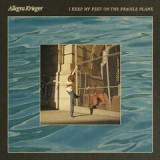
It contains all the signatures of her best lyricism: delicate and precise phrasings, moments that flicker between beauty and banality, meaning that forms through the accretion of observations, memories, and unexpected adages. This is an album that is at once post-theistic and devoted to a relationship with the divine, each song blinking in and out of "the fragile plane," a place Krieger describes as "a middle ground in the universe," both abstract and peaceful, where time, bodies, and names don't exist.
Krieger initially collaborated with Luke Temple and Jeremy Harris to record her vocals and guitar to tape at Panoramic Studios in West Marin, CA. As the album continued to form, Krieger envisioned instruments - like the French and English horn (Nancy Ranger and Priscilla Reinhart), electric guitar (Jacob Drab), and pedal steel (Kevin Copeland) - as characters which would walk in and out of the soundscape. What emerged from conversations with composer Sammy Weissberg, are brass parts that have a dark, almost surreal logic: horns arise to emphasize a word or phrase, fall out completely, only to rush back with dissonant orchestrations that gesture simultaneously toward deterioration and generation.
While Krieger takes inspiration from Elliot Smith's honesty, Judee Sill's cosmic reaching, and Joni Mitchell's sharp noticing, the dream-like association, harmonic dissonance, and angular melodic ascensions in each song are singularly and delightfully Krieger's.
"I Keep My Feet on the Fragile Plane" is a daring collection of songs by an artist who scries with both the cold glass eye of truth and the beating heart of empathy; who portrays life in all its twisted complexities.
Since 2014, Wand have made five albums (and an EP) in the studio and a living playing on the road. Business/pleasure: the two sides of their (multiverticed, decagon) coin, flipping in the strobe light of ongoing self actualization. And yet, by doing both at the same time-making a record of them playing live-they"ve now made their best one yet. How do you get Spiders In the Rain? Start by going all the way back to January 2020. Do you remember? Wand do. They"d been touring Laughing Matter for ten months. They"d done the coast, spanned the country, crossed the water twice, came back home and kept on going...driving, flying, occasionally floating (or maybe just thinking they were?), always on to the next town. They did all kinds of shows-clubs, ballrooms, festival gigs with no roof overhead-the songs expanding and contracting according to the dimensions of each day. Seventy-nine shows, and everything that was involved-the miles that ran beneath them, the different places and people everywhere, the music as it reathed, making everyone change every night-alchemized the band, and they drove deeper into their far horizon than they"d ever previously gone. The essential truth of the live vibe-that it"s always better when everybody"s here-was clear, so they booked a few shows more in Cali, from L.A. up to Marin. They brought along light and projections from The Mad Alchemist Liquid Light Show and Mike Kreibel and Zac Hernandez too, to tape everything-to get the big-deck energy out of performances in S.F. and L.A., but also to draw it out of the margins in Sacramento, Novato and Big Sur. It all happened, too. Everyone brought their experience. Packaged sumptuously with artwork from Sam Klickner, Spiders In the Rain is an arc of natural beauty and man-made abstraction inside and out, on an epic scale. Wand are orchestra and machine on Spiders In the Rain, one with the audience, able to get inside any dimension of their sound, whether its songs from their second album or their last one.
“This is another new one off the greatest album ever made. It’s called ‘My Kingdom.’” Rock and roll arrogance has never hemmed so close to the truth as this Ian McCulloch introduction to “My Kingdom” during the 1983 A Crystal Day concert special. Not only were Echo & the Bunnymen aware of the instant classic status of their latest LP, but the grand, majestic and fluid nature of Ocean Rain made it clear that the band had indeed set out to make “the greatest album ever made.” Ironically, despite all of their work and focus, this masterpiece sounds like it was simply handed down from the gods. Following the more rock-oriented material on their first albums, the songs on Ocean Rain were a departure. The aim was to make something “conceptual with lush orchestration, but with a twist.” With their success using strings on tracks like “The Back of Love” and “Never Stop” providing confidence, the band employed a 35-piece orchestra for Ocean Rain. Guitarist Will Sergeant would later describe the finished recording as “windswept; dark and stormy.” The Scott Walker / Love inspired string arrangements, unusual instrumentation, inventive recording techniques and McCulloch’s abstract and bewildering mysticism all added to the unique and timeless quality of the album. A statement of purpose by one of the elite bands from the ’80s underground, Ocean Rain includes several of the Echo & the Bunnymen’s most adored recordings and some of the best songs from the era. “The Killing Moon,” “Silver,” “Seven Seas,” “Crystal Days” and the aforementioned “My Kingdom” continue to mesmerize a new generation of post-punk romantics, and the band’s influence can be heard in the grandiose spectacle of groups such as Arcade Fire and British Sea Power.
3xLP+CD Artbook
(en) - Nearly two decades after the last official GAS album release, Wolfgang Voigt returns to his iconic Ambient project with a brandnew full-length.
- NARKOPOP continues the classic GAS aesthetic of symphonic scope and subtle variation, taking the listener on an otherworldly journey to the depths of rapture and reverie.
- Available as luxurious hardcover CD incl. 24 pages booklet.
In the body of work of Cologne artist Wolfgang Voigt - who, like few others, has informed, shaped and influenced the world of electronic music with countless different projects since the early 1990s -, GAS stands out in particular as a saturnine sound cosmos based on heavily condensed classic sequences. Even after nearly 20 years, the sound of GAS doesn't seem to have lost any of its luster, as shown by the commanding success of Kompakt's fall 2016 re-release of the essential back catalogue as a 10xLP/4xCD box set.
The overwhelming feedback from a loyal international fan community and worldwide media outlets attests once again to the sheer timelessness of GAS. Which is why it will feel like hardly a day has passed since the release of the last official album 'Pop' nearly two decades ago, when Wolfgang Voigt resumes this specific creative path with the upcoming new full-length NARKOPOP.
Even in the here and now, the unmistakable vibe of GAS immediately hits home, taking the listener on an otherworldly journey with the very first sounds, drawing him or her into an impervious sonic thicket, down to the depths of rapture and reverie. From wafts of dense symphonic mist emerges a floating and whirling feeling of weightlessness, before the listener steps into an eerily beautiful forest of fantasy, pulled in by the allure of a narcotic bass drum.
While earlier GAS tracks were often based on the hypnotic effects of looping techniques, the 10 new pieces on NARKOPOP unfold their magic in a more entwined manner, sometimes with the sonic might of an entire philharmonic orchestra, sometimes as subtle and fragile as the most delicate branch of a tree with many. A main characteristic of Voigt's oeuvre, the coalescence of seemingly contradictory stylistic aspects such as harmonious and atonal, concrete and abstract, light and heavy, near and far is also a decisive feature of NARKOPOP.
In accordance with the transgressive spirit of his collective work, Voigt carries the aesthetic conceptions of his music over to the realm of the visual. Based on his abstract forest pictures, the GAS artwork addresses Voigt's artistic affinity to romanticism and the forest as a place of yearning. For the first time, a closer look at the cover of NARKOPOP reveals signs of architectural fragments which hint at another, maybe parallel world behind Voigt's forest. Truth is the prettiest illusion.
(de) - Fast zwei Jahrzehnte nach dem letzten offiziellen GAS-Albumrelease kehrt Wolfgang Voigt mit einem brandneuen Langspieler zu seinem legendären Ambientprojekt zurück.
- NARKOPOP setzt die klassische GAS-Ästhetik zwischen symphonischer Grösse und subtiler Variation fort, eine Reise zu den Untiefen von Rausch und Entrücktheit.
- Erhältlich als luxuriöse Hardcover CD- Erhältlich als luxuriöse Hardcover CD inkl. 24-seitigem Booklet.
Aus dem Gesamtwerk des Kölner Künstlers Wolfgang Voigt, der mit seinen unzähligen unterschiedlichen musikalischen Projekten seit den frühen 1990er Jahren wie kaum ein Zweiter die elektronische Musikwelt geprägt, gestaltet und beinflusst hat, ragt sein Projekt GAS, ein auf stark verdichteten Klassiksequenzen basierendes, düsteres Klangkunstwerk, in ganz besonderem Maße heraus. Dass der Sound von GAS auch nach fast 20 Jahren scheinbar nichts von seinem Zauber und seiner Kraft verloren hat, zeigte eindrucksvoll der große Erfolg des im Herbst 2016 als 10xVinyl/4xCD Box auf Kompakt wieder veröffentlichten Backkatalogs.
Die überwältigende Resonanz, sowohl seitens der treuen internationalen Fangemeinde als auch der weltweiten Presse, bezeugte einmal mehr die schiere Zeitlosigkeit von GAS. Daher fühlt es sich auch an, als sei kaum ein Tag vergangen, wenn Wolfgang Voigt nun mit NARKOPOP genau da den künstlerischen Faden wieder aufnimmt, wo das letzte offizielle Album »Pop« ihn vor fast zwei Jahrzehnten hat fallen lassen.
Auch hier und heute verfängt der unverwechselbare Geist von GAS unmittelbar und nimmt den Hörer bereits mit den ersten Tönen mit in eine andere Welt, zieht ihn hinein in ein undurchdringliches Dickicht aus Klang, hinunter in die Untiefen von Rausch und Entrücktheit.
Aus dichten sinfonischen Nebelschwaden entsteht ein Schweben und Taumeln, ein Gefühl der Schwerelosigkeit, bevor der Zuhörer von der Anziehungskraft einer narkotischen Bassdrum wieder hinunter in den schaurig-schönen Fantasie-Wald gelockt wird.
Während frühere GAS Tracks oft auf der hypnotischen Wirkung des Loops basierten, entfalten die 10 neuen Stücke auf NARKOPOP ihre Magie auf verschlungeneren Pfaden, mal mit der klanglichen Wucht eines ganzen Philharmonieorchesters, dann wieder so zart und zerbrechlich wie der feinste Ast eines weit verzweigten Baumes. Das für Voigts Arbeiten so typische Ineinanderfließen scheinbar widersprüchlicher stilistischer Aspekte wie harmonisch und atonal, konkret und abstrakt, leicht und schwer, nah und fern ist auch auf NARKOPOP essenziell.
Im Sinne seines grenzüberschreitenden Schaffens, überträgt Voigt die ästhetischen Konzeptionen seiner Musik auch auf die Ebene des Visuellen. Das auf seinen abstrakten Waldbildern basierende GAS Artwork thematisiert Voigts künstlerischen Nähe zur Romantik und dem Wald als Sehnsuchtsort. Wer einen genaueren Blick auf das Cover von NARKOPOP wirft, der wird erstmalig Andeutungen architektonischer Fragmente entdecken, die eine andere, vielleicht parallele Welt hinter dem voigt'schen Wald erahnen lassen. Wahrheit ist der schönste Schein.
- 1