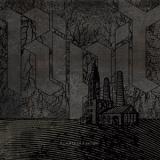
RedNilo is an Italian-Moroccan duo composed of Reda Zine and Danilo Mineo, two musicians based in Bologna linked by a deep passion
for world music, particularly African music. Their ongoing and tireless musical exploration has led them to collaborate for over a decade
on numerous artistic and recording projects. Their new album, eponymously titled RedNilo, features six tracks characterized by a sound
reminiscent of Gnawa, Hassani, Tuareg, and experimental rock. The psychedelic, raspy riffs of the electric guitar, the repetitive rhythms
of the percussion, and the rhythmic-melodic lines of the guembri represent and evoke their journey. The resulting sound material is the
culmination of their journey and their encounters with masters, artists, griots, artisans, and instrument makers in the Draa Valley in
southeastern Morocco, bringing together the two musicians' urban and experimental backgrounds and souls. The album's artwork was
designed by Moroccan artist Aali Wica, initiator and mentor of their spiritual and artistic journey to the southern African continent,
across the long black snake.
Réda Zine, a musician and documentary filmmaker born in 1977 in Casablanca, launched his musical career in the 1990s, contributing
to L'Boulevard, Africa's largest independent festival. Raised in the Casablanca medina, he was introduced to Gnawa music by various
Maallems. After studying at the Paris 3 Sorbonne University, he founded Café Mira, a project that has performed at several international
events.
From 2011 to 2014, Zine was artistic director for Creative Commons (Middle East and North Africa), where he won the #CC10 Korea
award in 2012 with the project "It will be Wonderful," which brought together musicians from over 12 countries. He has also been
involved in exhibitions on music and censorship, participating in events in major cities such as Paris, Buenos Aires, and Seoul. In Italy,
he continued his musical research with the Hardonik project and was part of the Afrobeat group Voodoo Sound Club, recording the
album Mamy Wata. Zine collaborates with artists such as Seun Kuti and has initiated educational activities related to Gnawa music,
contributing to initiatives such as the African Symphony Laboratory for improvisers. He is the co-founder of Fawda, a Gnawa-based
project, and is part of the Gnawa Rumi collective, which explores the music of the Moroccan diaspora in Italy. He directed the documentary "The Long Road to the Hall of Fame" about Public Enemy, which won an award at the Pan African Film Festival in 2015.
Danilo Mineo graduated as a national educator from the AMMnationalscholl music academy in Milan, with a thesis entitled "Afro-Cuban
Music and the Rhythm Section." Over the years, he has attended workshops and masterclasses with international artists and masters
of percussion and drums, including Horacio El Negro Hernandez, Airto Moreira, Trilok Gurtu, Luis Agudo, Arto Tuncboyaciyan, Dudu
Tucci, Dom Famularo, Karl Potter, Rodney Barreto, and Eno Zangoun, exploring the rhythmic language of various musical genres and
styles.
In addition to publishing several educational manuals for percussionists, music critics consider him a versatile percussionist, active in
various musical productions and recordings: Mop Mop, Fawda, Guglielmo Pagnozzi "Voodoo Sound Club," Fabrizio Puglisi "Guantanamo," Panaemiliana, The Mixtapers, and many others, with whom he has performed at numerous national and international music festivals (in Europe and Africa). As a percussionist and side man he has recorded numerous albums and collaborated with Italian and
international artists including: Giancarlo Schiaffini, Gianluca Petrella, Roy Paci, Roberto Freak Antoni, Famoudou Konate, Melaku Belay, Baba Sissoko, Kalifa Kone, Jamal Ouassini, Deda, Dj Lugi, Bioshi.
Cerca:urban voodoo
- 1
RIPIT is back with a new LP after 3 years spent mostly on the mesmerizing collaboration between THE ÅNGSTRÖMERS- his duo with FRÉDÉRIC ALSTADT -and the Haitian voodoo ensemble CHOUK BWA.
While Ripit is better known for his radical noisy breakbeat work, "A Church or a Factory" explores a more industrial, power electronic and noise ambient side of his synthesizer lust. The instruments abused on this record are: Serge modular, Knifonium and various eurorack modular. The A-side comes with 5 powerful synthetic industrial songs which feature each one a different guest vocalist. The B-side is a long ambient noise piece that will plunge the listener in an anxious meditation.
Ripit is the project of the French NICOLAS ESTERLE for almost 25 years. He explores electronic instruments thru distortion , ranging from industrial hardcore to breakcore, from doom hiphop to dusty dub. Beside his solo project, he's involved in various bands like SOLAR SKELETONS (with TZII), FUJAKO (with HHY) and more recently The Ångströmers.
On the guest side, there's a wild bunch of Nicolas' friends:
- PAUL-TERGEIST is the galactic moniker of PAUL BEAUCHAMP in his band SPACE ALIENS FROM OUTER SPACE;
- ANDREA EV is the lead member of 1997EV;
- ROBERT IMHUMAN and DIVTECH are members of the REALICIDE COLLECTIVE;
- TZII is a long-time road comrade of Nicolas and a touring freak spreading his music all over the world;
- ANDRÉ COELHO is known as METADEVICE and is the founder of the now-defunct SEKTOR 304.
The title "A Church or A Factory" refers to the Belgian countryside, wherever you are, you are at least surrounded by a church or a factory. As he just left the urban life of Brussels to escape to the French countryside, he is now lost enough not to have neither a factory nor a church in sight.
- A1: Enter
- A2: Patrice
- A3: Glorious Road Feat. Awon, Dj Craim
- A4: Ghost Dogs
- A5: Neve Feat. Lauryyn
- B1: Hydra
- B2: Never Too Much Feat. Awon
- B3: Vega
- B4: Supervillains Feat. Pasquale Mirra
- B5: Over
Kolosso, a sacrilegious mix of 808, Tap, Drill, and Bastard Jazz.
Founded in 2023 under the guidance of multi-instrumentalist and producer Davide "Kidd" Angelica (who has previously worked with Inoki,
Deda, Voodoo Sound Club, and others), the group brings together some of the most visionary musicians in Bologna's underground scene.
Their music explores the chaos of contemporary life, intertwining urban sounds and jazz languages in a continuous exploration of new sonic
perspectives and narrative horizons. The result is powerful and powerful live performances, complemented by rich, layered, and meticulously
crafted album productions.
OVER is the conclusion of Phase 1 of the Kolosso project: extensive underground work, in the studio and on stage, seeking a point of collision
between jazz and urban sounds, trap, drill, and grime. Worlds seemingly distant but united by a common drive: to transform the chaos of the
present into language.
OVER is an attempt to go beyond: beyond the patterns of composition, beyond the rules of production. A huge sonic puzzle constructed with
patience, instinct, and perseverance.
OVER is the raw power of a musical collective condensed into an album. A tamed energy, yes, but still radioactive, like uranium: unstable,
dense, alive.
Featuring: DJ Craim, Awon, Lauryyn, Pasquale Mirra
CREDITS
Davide Angelica: compositions, guitar, samples
Salvatore Lauriola: bass
Giuseppe Allotta: drums
Gioacchino Allotta: keyboards, synth
Gabriele Polimeni: trumpet
Federico Califano: alto sax
Matteo Diego Scarcella: tenor sax, flute
Jacopo Trapani: compositions, recordings, mixing
Francesco Brini: mastering
DJ Support: Gilles Peterson, Sean Johnston, Jaye Ward, Max Essa and Francois K
Limited to 300 copies
Having been long-time admirers of one another from afar, Hell Yeah and Michele Mininni finally come together for Pop Archetypes. It is a multifaceted debut album that collides broken beats, worldly rhythms, jazz, eastern melodies, live drums and much more into one thrilling 15-track opus that arrives on May 31st.
Italian artist Mininni has always had a leftfield take on electronic music and imbued it with rhythms, melodies and instruments from around the globe. He has released it on cult labels like R&S, Optimo Trax, Internasjonal and Curle Recordings but has saved his magnificent debut album for Hell Yeah. It is much more than a collection of sounds he has already explored and instead finds him heading off into all new territory without losing his signature sense of inventive and beguiling rhythm and melody. It is a multicultural journey that takes in heterogeneous styles and diverse influences but distills them all into one cohesive album with its own unique storyline.
Says Mininni of the record, 'I wanted each track to be like pieces of a unique, multifaceted picture, like walking through train cars or progressing through the levels of a video game, all filtered through my own vision and concentrated into 36 minutes. I wanted a pop album rooted in the extraordinary richness of popular music and projected into the future, a continuum where pieces communicate with each other and are received by the ears in symbiotic balance.'
Despite that concept, the album is a spontaneous listen full of surprises, left turns and original ideas that all hold together in thrilling fashion. It kicks off with the tumbling jazz drums and swirling synths of 'Spinning Around Cotton Candy', takes in mellifluous melodic layers and broken beats on 'Golden Room' and 'Slipped Air' casts you adrift amongst gorgeous piano keys and refracted vocals on the suspensory 'Vertigo'. There are jungle interludes with Eastern string melodies like 'Bangkok Tempo', lavish fusions of organic and synthetic sounds on 'Kundalini' and more charming Far Eastern rhythms on 'Muting Cat'. 'Congoflash' brings electrifying cosmic rays to busy hand drum patterns, 'The Magic Of Synesthesia' combines dark amen breaks and bright and uplifting flutes while 'Carousel Of Tears' douses you in watery melodies and celestial pads that awaken the soul.
Pop Archetypes is an adventurous work packed with meticulous and infinite details but all with an overarching narrative that makes it far more than the sum of its parts.
Nèg Ginen is a song composed by Jean Claude Dorvil on a traditional Nago rhythm (from Benin). Nèg in Haitian creole means “the dude“, “the guy“. It is about pride of being Haitians with solid African roots. As a matter of fact, when we mention Ginen, we talk about Africa. Like the majority of Chouk Bwa’s songs, this one is full of references mentioning Haitian voodoo rituals and spiritual /igures. For instance, Simbi Ganga is a lwa (voodoo spirit) from the Lakou Soukri Danach (voodoo temple) that lives in the water. Wild and brutal when he is chained up, he faithfully represents the Iwa Kongos, notorious for being real party-starters! Kebyesou is an Iwa who lives in the Lakou Souvnans (another temple). He is a royal /igure, like the Dahomey Iwas in general. The voodoo families are, so to speak, all present in this project!
Biography
After a /irst European performance in 2015 at Roskilde Festival leading to many other performances all around Europe, including WOMEX and WOMAD, Haitian traditionnal vodou band Chouk Bwa met the Brussels based duo The Ångströmers in 2016. Their new project combines a renewed dub sensitivity and Haitian rhythm science and spirituality. The ensemble has performed in Haiti and in European festivals including Trans Musicales de Rennes before releasing their /irst album Vodou Alé via Bongo Joe in 2020.
Modular synths and other vintage electronic instruments bring another dimension to Chouk Bwa’s music, although obviously it is always the band’s groove and /luent tempo that leads the energy of the ensemble: no laptops, no drum machines. There are certain freedoms that cannot be coerced. Even more, the electronic instruments are wired directly to the drums that feed them with impacts and caresses. All the Vodou families are there with their many rhythms and songs. Radical Vodou roots for urban audiences.
Birds are singing, a soft female voice embraces the stars, then the funk hits the fan: the second album of mysterious Japanese singer Nadja haunts immediately and marks one of the most exquisite reissues in the ever-growing catalogue of Studio Mule. Originally released in 1989 as promo only CD on the Japanese label Polystar, the album features some of the finest eighties pop funk fusion arrangements of the era. A deeply enchanting lost gem, that gets listeners instantly into heavy repeat addiction.
All ten songs are arranged by a group of grandmasters of their art. Japanese saxophonist, composer and music producer Yasuaki Shimizu, man behind the electronic ambient fusion classic “Kakashi”, was in charge for tunes like “Wac-Wack”, a neon light funk pop song, full of soft big city eroticism, ultra-slick synth lines and real funkateer explosions. It’s followed by “夢のとりこ”, the most stirring pop tune on the album, that originally was written by French composer, multi-instrumentalist, actor and singer Areski Belkacem, known for his and long-time collaborations with French avantgarde singer Brigitte Fontaine. Shimizu transformed the song into a low hanging funk jewel, with a cool rolling bassline, dub depth and synths that cry for cosmic help. Above all Nadja signs with a sexy chill, that somehow could only emerge in the 1980ees, when the cold war even made pop music real cool. The follow up is named “真珠のように”, features again music by Belkacem, this time transformed by Shimizu into electronic erotic pop - dreamy, witchy and precisely musical composed.
The B-Side opens with “Velvet Rain”, a funky urban boogie composition by Japanese keyboard player, composer and producer Akira Inoue, enlarged with glimmer camp kitsch, that immediately puts a smile on the listeners faces. It gets followed by “Paradise Catcher”, a soft pop tune with longing string and horn sections, arranged by legendary Jamaican rhythm and production duo Sly & Robbie. It somehow marks one of the strangest songs in their longstanding career, as it is largely minimal orchestral but yet super tight when it comes down to the rhythmic magnitudes. The next tune, “Private Tripper”, also stays soulful, funky and horn driven. Always pleasing the super tight, yet feathery voice of Nadja, that is dancing about boogie grooves and illuminating melodies with a seducing tragical coolness. Finally the album ends with a stylistic break in the overall musical atmosphere. It comes from Japanese musician Hiroaki Goto, it’s called “地図をずっと南へ”and features Afro-Brasilian voodoo rhythms, pan flutes, cosmic piano notes and Nadja, singing like a rain forest sorceress from outer space.
Ten arrangements by a bunch of high-grade arrangers, that all left Nadja’s voice enough space to widespread her talent as a supremely seducing singer, who wrote all lyrics, vocals and chorus by herself in order to present her touching vocal class in a vivid, bewitching timeless style. Come in and get ensnared!
With a hybrid jazz based on African grooves, Ethio-oriental melodies and psychedelic dub this Belgian five-piece creates an atmosphere where ancient and modern sounds fuse into a powerful, hypnotic and groovy sensation.
Receiving critical acclaim for their second album 'Artifacts' (2017), the Belgian quintet are pleased to announce the release of their much-anticipated third album entitled 'Future Flora', released 12th April via Sdban Ultra on vinyl / cd / digital.
Piloted by saxophonist/flutist/composer Nathan Daems (Ragini Trio, Dijf Sanders, Echoes of Zoo), the input of notorious musicians, drummer Simon Segers (MDC III, De Beren Gieren, Stadt), cornet player Jon Birdsong (dEUS, Beck, Calexico), keyboardist Wouter Haest (Voodoo Boogie) and bassist Filip Vandebril (Lady Linn, The Valerie Solanas) leads to the specific universe that only Black Flower is able to create.
Where debut album 'Abyssinia Afterlife' (2014) and 'Artifacts' (2017) bathed in an atmosphere of psychedelics, mythical figures, ancient sounds and modern cultures, new album 'Future Flora' refers to the power of plants and their importance for the future.
"'Future Flora' is a metaphor for the importance of feeding and watering powerful and revolutionary ideas and initiatives that can save our world. You can compare it with plants that fight between the paving stones of the city for their future. These "urban warriors" need water to survive and grow. Their future and ours depends entirely on how we look at the plant world", says Daems.
Black Flower's musical cross-pollination of sounds and rhythms remain on 'Future Flora', but there is still room for a more Western touch with Romanian and Maloya (Réunion) influences. Daems developed his own arrangements where Western, Oriental and Ethiopian scales and chords are fused together to create a real mix of traditional instrumentation and modern electrical vibrations.
The strong underlying groove is omnipresent, but the room for psychedelics, folklore and experimentation grows. Songs like new single 'Hora de Aksum' combine modern western rhythms with doses of Balkan eccentricities while 'Future Flora' takes you on a psyche-delicious 21th century Ethio-dub-jazz trip with echoes of Mulatu Astatke and Fela Kuti.
"The general feeling that dominates is that of strength and perseverance. The feeling that we have to fight for our future and that we have to do it now! The whole album is interspersed with this atmosphere and sounds swirling, haunting and ecstatic. For those who once saw Black Flower live at work, this energy will be extremely recognizable", he adds.
- 1