"This is the time that we, who have benefitted from the Last Poets shouldbe able to say, 'it's the Last Poets. It's them we should be honouring, because we did not honour them for so many years_"
KRS One wasn't just addressing the hip hop fraternity when he uttered
those words by way of introducing the video for Invocation - a poem
written thirty years ago, around the time of the Last Poets' last significant comeback. He was speaking to everyone who's been affected by the word, sound and power issuing from the most revolutionary poetry ever witnessed, and that the Last Poets had introduced to the world outside of Harlem at the dawn of the seventies.
In 2018 the two remaining Last Poets, Abiodun Oyewole and Umar Bin
Hassan, embarked on another memorable return with an album -
Understand What Black Is - that earned favourable comparison with theirseminal works of the past, whilst showcasing their undimmed passion andlyrical brilliance in an entirely new setting - that of reggae music. Trackslike Rain Of Terror ("America is a terrorist") and How Many Bullets demonstrated that they'd lost none of their fire or anger, and their essential raison d'etre remained the same.
"The Last Poets' mission was to pull the people out of the rubble o f their lives," wrote their biographer Kim Green. "They knew, deep down that poetry could save the people - that if black people could see and hear themselves and their struggles through the spoken word, they would be moved to change."
Several years later and the follow-up is now with us. The project started when Tony Allen, the Nigerian master drummer whose unique polyrhythms had driven much of Fela Kuti's best work, dropped by Prince Fatty's Brighton studio and laid down a selection of drum patterns to die for. That was back in 2019, but then the pandemic struck. Once it had passed, the label booked a studio in Brooklyn, where the two Poets voiced four tracks apiece and breathed fresh energy, fire and outrage into some of the most enduring landmarks of their career. Abiodun, who was one of the original Last Poets who'd gathered in East Harlem's Mount Morris Park to celebrate Malcolm X's birthday in May 1968, chose four poems that first appeared on the group's 1970 debut album, called simply The Last Poets. He'd written When The Revolution Comes aged twenty, whilst living in Jamaica, Queens. "We were getting ready for a revolution," he told Green. "There wasn't any question about whether there was going to be one or not. The truth was many of us still saw ourselves as "niggers" and slaves. This was a mindset that had to change if there was ever to be Black Power." He and writer Amiri Baraka were deep in conversation one day when Baraka became distracted by a pretty girl walking by. "You're a gash man," Abiodun told him. The poem inspired by that incident, Gash Man, is revisited on the new album, and exposes the heartless nature of sexual acts shorn of intimacy or affection. "Instead of the vagina being the entrance to heaven," he says, "it too often becomes a gash, an injury, a wound_" Two Little Boys meanwhile, was inspired after seeing two young boys aged around 11 or 12 "stuffing chicken and cornbread down their tasteless mouths, trying to revive shrinking lungs and a wasted mind." They'd walked into Sylvia's soul food restaurant in Harlem, ordered big meals, then bolted them down and run out the door. No one chased after them, knowing that they probably hadn't eaten in days. Fifty years later and children are still going hungry in major cities across America and elsewhere. Abiodun's poem hasn't lost any relevance at all, and neither has New York, New York, The Big Apple. "Although this was written in 1968, New York hasn't changed a bit," he admits, except "today, people just mistake her sickness for fashion." Umar is originally from Akron, Ohio, but had arrived in Harlem in early 1969 after seeing Abiodun and the other Last Poets at a Black Arts Festival in Cleveland. That's where he first witnessed what Amiri Baraka once called "the rhythmic animation of word, poem, image as word- music" - a creative force that redefined the concept of performance poetry and stripped it bare until it became a howl of rage, hurt and anger, saved from destruction by mockery and love for humanity. When Umar's father, who was a musician, was jailed for armed robbery he took to the streets from an early age where he shined shoes and raised whatever money he could to help feed his eight brothers and sisters. By the time he saw the Last Poets he'd joined the Black United Front and was ready to join the struggle. Once in Harlem, Abiodun asked him what he'd learnt in the few weeks since he'd got there. "Niggers are scared of revolution," Umar replied. "Write it down" urged Abiodun. That poem still gives off searing heat more than fifty years later. In Umar's own words, "it became a prayer, a call to arms, a spiritual pond to bathe and cleanse in because niggers are not just vile and disgusting and shiftless. Niggers are human beings lost in someone else's system of values and morals." And there you have it. It's not just race or religion that hold us back, but an economic system that keeps millions in poverty and living in fear - a system born from political choice and that's now become so entrenched, so bloated on its own success that it's put mankind in mortal danger. It was many black people's acceptance of the status quo that inspired Just Because, which like Niggers Are Scared Of Revolution, was included on that seminal first album. Along with their revolutionary rhetoric, it was the Last Poets' use of the "n word" that proved so shocking, but it would be wrong to suggest that they reclaimed it, since it never belonged to black people in the first place. There's never any hiding place when it comes to the Last Poets. They use words like weapons, and that force all who listen to decide who they are and where they stand. Umar's two remaining tracks find him revisiting poems first unleashed on the Poets' second album This Is Madness! Abiodun had left for North Carolina by then where he became more deeply enmeshed in revolutionary activities and spent almost four years in jail for armed robbery after attempting to seize funds related to the Klu Klux Klan. Meanwhile, the 21 year old Umar was squatting in Brooklyn and had developed close ties with the Dar-ul Islam Movement. A longing for purity and time-honoured spiritual values underpins Related to What, whilst This Is Madness is a call for freedom "by any means necessary," and that paints a feverish landscape peopled by prominent black leaders but that quickly descends into chaos. "All my dreams have been turned into psychedelic nightmares," he wails, over a groove now powered by Tony Allen's ferocious drumming. Those sessions lasted just two days, and we can only imagine the atmosphere in that room as the hip hop godfathers exchanged the conga drums of Harlem for the explosive sounds of authentic Afrobeat. Once they'd finished, the recordings and momentum returned to Prince Fatty's studio, since relocated from Brighton to SE London. This was stage three of the project, and who better to fill out the rhythm tracks than two key musicians from Seun Anikulapo Kuti's band Egypt 80? Enter guitarist Akinola Adio Oyebola and bassist Kunle Justice, who upon hearing Allen's trademark grooves exclaimed, "oh, the Father_ we are home!" Such joy and enthusiasm resulted in the perfect fusion of Nigerian Afrobeat and revolutionary poetry, but the vision for the album wasn't yet complete. He wanted to create a new kind of soundscape - one that reunited the Poets with the progressive jazz movement they'd once shared with musicians like Sun Ra and Pharoah Sanders. It was at that point they recruited exciting jazz talents based in the UK like Joe Armon Jones from Mercury Prize winners Ezra Collective, also widely acclaimed producer/remixer and keyboard player Kaidi Tatham, who's been likened to Herbie Hancock, and British jazz legend Courtney Pine, whose genius on the saxophone and influence on the UK's now vibrant jazz scene is beyond question. The instrumental tracks on Africanism are in many ways as revelatory and exciting as the Last Poets' own. It's important to remember that the kaleidoscope of styles and influences we're presented with here aren't the result of sampling but were played "live" by musicians responding to sounds made by other musicians. That's where the magic comes from, aided by Prince Fatty's peerless mixing which allows us to hear everything with such clarity. Music fans today have grown accustomed to listening to all kinds of different genres. Their tastes have never been so broad or all- encompassing, and so the music on this new Last Poets' album is as groundbreaking as their lyrics, and perfectly suited to the era that we're now living in. John Masouri
Cerca:a most wanted man
After an extensive tour of the UK at the end of 2022, the band decided to head into the studio to record their first long form offering. Following a passion for storytelling, they pulled together influences from Pulp Fiction to Fleabag, from Zadie Smith to Edward Hopper. They wrote relentlessly during 2022, diligently crafting what was to become this debut album. Released independently on their own Life and Times Recordings, Exit Strategy is a 13-track labour of love, recorded at Abbey Road Studios and Love Electric, enlisting the production smarts of Bernard Butler. The album is in two halves (divided literally by the two sides of the vinyl edition) entitled Galway and London and presents a multifaceted band, pushing themselves and exploring the limits of their philosophy.
Exit Strategy centres around a protagonist who moves from Galway to London in search of meaning, certain that, as the main character in the film of his own life, the solution lies in changing his surroundings and acting as someone he’s not. Both a mirror and a portal, the album promises encounters with manipulative bosses, evil ad agencies, a broken pact to flee to Australia, run-ins with the law, cheating boyfriends, drug fuelled youths, heartache, paranoia, social media anxiety and a drunk singer dressed as Jesus. Thematically the album races between emotions, between irony and sincerity, between soul searching and tongue-in-cheek finger pointing and ends where it all started, both musically and in terms of single rollout, with the nostalgic/euphoric first single Westway.
Explaining the album’s genesis and cinematic influence, James McGregor says: “We were always sure we wanted the album to be greater than the sum of its parts, so decided to create the world of a film, entitled Exit Strategy. We envisaged the record as a series of snapshots, telling the story of a group of characters trying to navigate through life.”
Hallmarked more by a philosophy than a sound, The Clockworks weave pop sensibilities with noisy, post-punk, rock-influenced stylings. The songs seem swaggering and dark yet often have an epic, nostalgic quality. They sit poetic introspection beside witty, kitchen sink drama to create something intense but playful.
With the release of Exit Strategy, The Clockworks have created a world to be explored, to be analysed and to be deciphered, but most importantly to be felt.
The last couple of years have seen a renaissance for West Coast singer-songwriters. LA-based youngsters such as Drugdealer and Sylvie have attracted considerable attention releasing warm and mellow records tonally reminiscent of the early 70s. Most fans of this new/old sound are unaware of Bart Davenport's early explorations in the same sonic territory. His now 20-year-old "Game Preserve"album should gain an appreciative new audience with its first ever vinyl release.
In the year 2000, Bay Area troubadour Bart Davenport and several other musicians were recruited by a major tech corporation in Seattle to work on an algorithm-based music matching/search engine. It was what looked like the beginning of a promising career. After a year, however, the project was shelved. Bart and his colleagues were laid off with a healthy severance package... on the 12th of September, 2001. Not only had the musician's life changed, so had the world. Rather than blow the money on a holiday or new car, Bart knew he had to make a record. A proper album that meant something.
Back in Oakland, he entered Wally Sound Studios with former Kinetics bandmate Jon Erickson at the controls, and a swathe of talented local musicians. "With Game Preserve," Bart explains, "Jon and I really wanted to knock it out of the park. I wanted to utilize people from my old bands like Loved Ones drummer John Kent. I also invited my newer indie-pop friends from Call & Response, and a young Nedelle Torrisi. Harmony singing by The Moore Brothers was an essential ingredient on Game Preserve as well."
Both Erickson and Davenport fondly recall growing up in households where the music of The Carpenters, Joni Mitchell and The Eagles soundtracked their young lives. By the early 00s they were ready to reconnect with what is often referred to as the "Laurel Canyon" sound. "I'd buy used tapes at garage sales and play them in the car. "Ladies Of The Canyon" by Joni and Jackson Browne's first album were both in heavy rotation. Jon Erickson was getting deeper into the Steely-Mac-Doobie yacht-rock sound in earnest. A certain amount of childhood nostalgia led a lot of us back to that part of the 70s. I'd flirted with classic soft-rock on my first album, but that record was pretty scattered esthetically. I wanted my next one to be more focused. Jon and I made some ground rules: no electric guitars (except on 'Bar-Code Trees'). No synths. Most importantly, all the songs have an air-tight, super dead, close mic'd drum sound. Putting these sorts of limitations on the sessions will give your record a specific quality. In the case of "Game Preserve"it's mostly about tight drums, acoustic instruments and analog production. We used a 24-track, two-inch tape machine for tracking, then ran the mixes through an analog board straight to a 1/4 inch master tape."
While the album's sonic palette may be firmly planted in 1970, Davenport's songwriting covers a sizable landscape of moods and reflections. From the quasi-flamenco intro of 'Sweetest Game' to the somber Wurlitzer of 'Nowhere Left To Go', to the 12-string shimmer of 'Intertwine', "Game Preserve" tells a story of young love, lost innocence and redemption, crossing borders and oceans along the way.
Released in 2003 on family-run Oakland label Antenna Farm, the ultra-analog sounding "Game Preserve" was only made available on digital formats, including CD. Copies were later pressed by labels in Germany and Spain; the latter being one country the album actually did well in, establishing Bart Davenport with a small but loyal fanbase he still enjoys today. Two European tours as support for Kings of Convenience also helped gain a foothold on the continent. Back in the US, however, Davenport and his sophomore album remained quite obscure.
Limited promotion meant it did little, but for the music lovers that heard it, the album undoubtedly remains a classic of the era, deserving far more. Twenty years on, it now finally receives its vinyl debut. "I personally think it holds up well," says Bart of the album two decades later. "The idea was to make something that could be an homage to late 60s/early 70s West Coast pop but hopefully timeless as well. Years on, I hear it as just that. It was a colorful and brief period of my life that felt at times like it could last forever. I discovered the joy of working in a proper studio with a perfect cast of characters. I'm still very close with all these people and still play music with many of them."
- Vintage Collection
- La Flare
- Deep Ain't It
- Sooth Sayings
- Mollyamory
- Over The Phone
- Candyman
- Supanatural
- Brick That Broke The Window
- Space Blue
- Buttaflies & Brownies
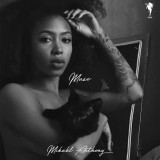
Hailing from the West side of St. Louis, Missouri, Mikahl Anthony’s sonic roots spread far across the global Alt-Soul / Hip-Hop scene. A highly soughtafter multidisciplinary artist (who has collaborated with the likes of Mick Jenkins, Chance The Rapper, Joey Purp, Smino and more), as well as being a founding member of Chicago’s THEMpeople collective, he now prepares to unveil his masterful full-length debut Muse via R&S Records.
Accompanied by several beautiful, self-directed film pieces, Muse is a record with storytelling at its core. Interspersed with commentary from a range of sources telling their stories to Mikhal, whilst collaboratively analysing their personal experiences, it speaks a candid and honest narrative, which reinforce the heartfelt lyrics within. With the project’s name anchored around a dual meaning acronym (1. Ms. Using sensual energy and 2. Making use of seclusion every day). The record is an audio version of docufilm, that creatively interprets the idea of self-therapy, an internal/interpersonal reflection of life experiences that serendipitously connect to Mikahl’s personal romantic relationships. Mikahl explains: ‘I wanted to use a unique style of songwriting, arrangement and filming with the intention of soundtracking my self-development/maturation process’.
On the project’s lasting impression on the listener, Mikahl elaborates ’The exploration of inner truth and vulnerability is key to the future of good music. I want this project to act as symbolism that highlights the mantra that honest approaches and authenticity still has the most value. I also want people to see how important the use of community is when you can connect them to your subject matter...I'd like my audience to observe and engage in their own self-reflections, approaches by way of listening or interacting with the story.’
Drifting to an elevated state of consciousness, Muse is a deeply intoxicating and engrossing listening experience from front to back. From the sliding, kaleidoscopic shadows of opening track ‘La Flare’, via the trepidation-laced atmosphere of ‘Polyamorous’ and the hazy, reverb drenched saxophone notes of LP closer ‘Eddie Kane’ - Mikahl channels moments of joy and pain, infused with spirit enriching instrumentation and gritty textures.
Visual stimuli play an integral role within Mikahl’s music. His songs represent transparency and openness dipped in funk. Layers of soft velvety vocals emerge from jazz harmonies, trap rhythms, and social commentary sourced from voiceovers/excerpts. His creations are the musical representation of documentary films. His art is imagery embodied.
Howlin Rain’s grand 3xLP archival statement and untold story, written over nearly two decades in invisible ink between the lines. Features never before heard songs from The Russian Wilds, The Dharma Wheel, The Alligator Bride, Mansion Songs, Live Rain and the lost Ethan Miller Band sessions. With a broad cast of musical characters including Rick Rubin (Producer/American Records), Luther Dickinson (North Mississippi Allstars), Scarlet Rivera (Bob Dylan’s Rolling Thunder Revue), Joel Robinow (Once and Future Band), Isaiah Mitchell (Earthless/ The Black Crowes) and many more. Includes songs by The Rolling Stones, Grateful Dead, Leon Russell and Neil Merryweather. “I wanted to compile the record so it would have impact like our grandest, wildest, most unabashed studio album. I left out home demos, and songs from quiet corners, sketches, etc, in favor of fully formed, fully finished, studio level tracks from front to back. Lost at Sea is intended to be something that you can pour yourself into and get swept away in.” — Ethan Miller (Founder, bandleader)
- 1: Embrace The Lie
- 2: We Are Perdition
- 3: Full Moon Fever
- 4: At Dawn
- 5: The Fog
- 6: The Plague
Black[28,15 €]
The Gates of Slumber return with a new album out in November on Svart Records “I never intended to pick up with The Gates of Slumber ever again in 2014. While I did start the band and wrote most of the first album it was never intended to be a one man show.” -Karl Simon, 2024 Indiana’s True Doom Metal legends The Gates of Slumber return with their sixth album out in November via Svart Records. The self-titled album is the band’s first full length offering since The Wretch from 2011. The Gates of Slumber was formed by Karl Simon in 1998. Various people were in and out of the group between 1998 and 2001, when the Blood Encrusted Deth Axe demo was recorded with Jamie Walters aka Dr. Phibes/Athenar (Boulder, Midnight) on drums and bass. In 2003 Jason McCash took over the bass duties and was a long-time member of the band until his untimely demise in 2014, after which Simon decided it was time to call it quits. That was until 2019 when the renowned metal festival Hell Over Hammaburg wanted to bring the band back on stage to perform at the festival’s 2020 edition. Simon reformed the band with its original member Chuck Brown on drums and Steve Janiak on bass and got back to work. “We’d been asked several times to play Hell Over Hammaburg. But there was no “we” to play. The germ of the idea started. We started re-learning songs from the first LP. It wasn’t too long into the rehearsals that we started coming up with new songs.”, states Simon. After a reunion tour was finished, Covid kicked in to slow down the process. Half of the album was already written but the remaining half took its time, and the songs were left to stew in their juices. With bastard heavy songs honoring the Doom Metal greats Saint Vitus and Penance, straight forward bangers, lyrics inspired by the Black Death and John Carpenter’s The Fog, The Gates of Slumber is a truly crushing album and a must listen to any Doom Metal fanatic. Having toured with Pentagram, Reverend Bizarre, Cathedral, Slough Feg, Earthride, and Weedeater in addition to getting praised by Decibel Magazine such as “The Gates of Slumber have quietly gone about the business of becoming one of the best heavy metal bands in the world.”, it’s safe to say The Gates of Slumber play some of the heaviest metal on this planet. The Gates of Slumber is available on vinyl, CD, and digital platforms on November 29th, 2024.
Black[26,01 €]
The Gates of Slumber return with a new album out in November on Svart Records “I never intended to pick up with The Gates of Slumber ever again in 2014. While I did start the band and wrote most of the first album it was never intended to be a one man show.” -Karl Simon, 2024 Indiana’s True Doom Metal legends The Gates of Slumber return with their sixth album out in November via Svart Records. The self-titled album is the band’s first full length offering since The Wretch from 2011. The Gates of Slumber was formed by Karl Simon in 1998. Various people were in and out of the group between 1998 and 2001, when the Blood Encrusted Deth Axe demo was recorded with Jamie Walters aka Dr. Phibes/Athenar (Boulder, Midnight) on drums and bass. In 2003 Jason McCash took over the bass duties and was a long-time member of the band until his untimely demise in 2014, after which Simon decided it was time to call it quits. That was until 2019 when the renowned metal festival Hell Over Hammaburg wanted to bring the band back on stage to perform at the festival’s 2020 edition. Simon reformed the band with its original member Chuck Brown on drums and Steve Janiak on bass and got back to work. “We’d been asked several times to play Hell Over Hammaburg. But there was no “we” to play. The germ of the idea started. We started re-learning songs from the first LP. It wasn’t too long into the rehearsals that we started coming up with new songs.”, states Simon. After a reunion tour was finished, Covid kicked in to slow down the process. Half of the album was already written but the remaining half took its time, and the songs were left to stew in their juices. With bastard heavy songs honoring the Doom Metal greats Saint Vitus and Penance, straight forward bangers, lyrics inspired by the Black Death and John Carpenter’s The Fog, The Gates of Slumber is a truly crushing album and a must listen to any Doom Metal fanatic. Having toured with Pentagram, Reverend Bizarre, Cathedral, Slough Feg, Earthride, and Weedeater in addition to getting praised by Decibel Magazine such as “The Gates of Slumber have quietly gone about the business of becoming one of the best heavy metal bands in the world.”, it’s safe to say The Gates of Slumber play some of the heaviest metal on this planet. The Gates of Slumber is available on vinyl, CD, and digital platforms on November 29th, 2024.
"Exhibit B: The Human Condition". It's really, really sick. It's really different from the last one and it's really different from the two before. But it's 100 percent EXODUS. Out of the last three, this one is faster, but it's also a little more melodic, and it's also a little bit more old school. Some of Rob's vocal patterns are just so old school; it's killer. The production is a little more, let's say, less sterile. Not less sterile, but less digital perfection, more organic. It's really, really lively. There is by far more melody on it as well. Thematically, it's a little different. The last one centered a lot on religion and this one is, as the title says, about the human condition; cruelty, ignorance, and inhumanity and brutality. Just the things that man has shown to be so adept at doing.” "Our goal in EXODUS is just basically to defy time, to defy age, to have every album just get more furious and more angry and more intense. A lot of people will ask me things like, 'EXODUS is achieving a lot of popularity again, do you think it's due to thrash metal coming back?`and I say, 'No. I think thrash metal's coming back because of EXODUS.'" The goal now, he says, is to remain "the most dangerous animal in the jungle." "We wanted to portray the violence of man at its finest, so we started with our own version of the Leonardo da Vinci sketch of Vitruvian Man, but done the ‘EXODUS’ way! I was pointed in the direction of Colin Larks of Rainsong Design for the cover and he killed it! To me, the artwork represents man and his affinity for bloodshed, ignorance, and all-around ability to be led like sheep to the slaughter. The image fits the songs on this record perfectly. The whole layout is going to be as sick as the record itself!" GARY HOLT, Exodus
The making of a maiden album can be a capricious process. One moment of outright musical flow paired with another period of sustained creative struggle are feats experienced by seasoned producers the world over. So when Miraclis was forced to hole away in his makeshift studio - in the midst of a global pandemic - the stage was set for something magical. Now it will see the light of day for the very first time.
Having released two singles on Secret Teachings to critical acclaim already this year, Chilean talent Miraclis will accomplish a milestone achievement in July with the release of his debut album: Origin Of Truth.
Difficult experiences were fundamental to the creation of such work, as were Miraclis’ inherent musical interests. He explains: “Origin Of Truth had its birth during the pandemic. I created it as a way of communicating to myself the sensations and feelings that were spinning around my head at the time. I've always been inspired by Bristol trip hop, as well as classical rock, and these genres definitely contributed to the making of these melancholic tracks. In a way I wanted to fuse all the musical influences that were part of my childhood, up until this point now, so this album really means a lot to me. It was my way of communicating, when there was a lack of social contact and communication itself was hard to come by.”
It's this meditative quality that initially drew Damian Lazarus to the project. “It’s a record that has its roots in electronic music, but it’s a very alternative, very deep, melancholic album. I find it both soothing and stirring at the same time, and that’s a quite interesting juxtaposition in that it feels edgy but delicious at the same time,” says Lazarus. “The fact that this was written in this place surrounded by the most incredible desert landscapes makes this a very important piece of work to me. It doesn’t sit in any particular genre, which is why it feels right for a Secret Teachings release. It hints at so many genres that I as a DJ am quite into, and it feels like a first as it’s unique and unclassifiable. That mystical, esoteric, edgy feel makes this a perfect release for the label.”
Sonnet opens proceedings, with ghostly vocals residing next to raw instrumental elements throughout. Miraclis’ signature guitar riffs soon converge on saddened keys, paving the way for Scienter. It takes the form of an instrument-based, electronic-inspired cut, building slowly before reaching a crescendo midway through via an enrapturing acoustic solo.
Floating Child comes next, brimming with a darker intensity courtesy of broody synth pulses and rhythmic hi-hats, as Shiver arrives next. There’s a rock-leaning sensibility to the piece that gives way to earnest lyrical offerings, opening swiftly into the breakbeat-esque world of Perceptions. Hard-hitting drums act as the focal point, with electric chords adding depth and intrigue, whilst Bright continues in a similarly heartfelt vein.
Introspective pads leave us feeling pensive, ahead of Interstellar taking us on a celestial journey through warped bass tones. Acting as the LP’s penultimate number, it’s a four-and-a-half minute showcase of guitar-based musical goodness and one that perfectly sets the stage for Trapped, a closing saga of suitably emotive proportions.
Miraclis earned his stripes as a DJ under the name Max Clementi in his native Chile, as well as Spain after a stint at the Barcelona SAE Institute. Playing and writing music since his parents gave him his first guitar at age twelve, he found himself inspired by synth wave, electronic pop, trip hop, and psychedelic rock of the ‘80s and ‘90s, drenching himself in music by the likes of Massive Attack, Tricky, Depeche Mode, and Nine Inch Nails. However, it wasn’t until he had to move back to Pucón to take care of his father during the pandemic that he began working on what would become Origin Of Truth.
Serendipity seems to play a large part in Crosstown Rebels’ new label Secret Teachings. Just look at the story of how Damian met Miraclis in the first place. It involved a chance midnight encounter in Pucón, Chile at a woodland campfire after the DJ was locked out of his hotel room. This meeting of minds was the start of a remarkable friendship, where Miraclis invited Lazarus to stay at his house and break bread with his family. The two kept in touch, exchanging music and ideas as a result.
Indignation Meeting are punky rail fans from Leeds. 15-year-old Peter is the driver - he's the drummer and lead singer, writes most of the songs, and also plays bass and trumpet on the album. The rest of the crew is his dad Michael on guitar, Hugo on bass, and with Keith, Heather and Sally often along for the ride when they play out. Here at DGHQ we loved listening to their self-released debut album Trouble In The Shed so much we eventually released it on vinyl for the first time. They now have a second album! Vocalist/drummer Peter very kindly talks us through the (train) tracks_ * "The Trainspotting Song" - Now, as a train geek, I go out filming trains an awful lot, and one thing you can't help noticing whilst out in the wilds of Staffordshire or the moors of Lancashire are a whole load of unnecessary 'Private Land' signs. This song is my response_ * "The Talyllyn Railway" - The history of the Talyllyn Railway is a fascinating one that I've long since wanted to explore, due to its unique nature as the first railway to ever be taken over by volunteers. This is the result! * "The Middleton Railway" - As a volunteer at the Middleton Railway, I had felt that a song needed to be written for quite a while. However, our guitarist Michael, ended up beating me to it! * "A Model World" - It was late one night, and I was lying on my sofa, trying my hardest to gain an ounce of enjoyment from 'Hornby; A Model World.' It was proving quite hard, due to the alarming lack of substance in the programme, so instead I decided that its name was rather good, and could be the basis of a song explaining my 'model world.' And, well, here it is! * "The Fifth Black Five" - This song is dedicated to the railway preservationists of old, who spent countless hours in cold, damp, dreary sidings, all to make sure us future generations would be able to enjoy the smell of a steam train. Thanks guys! * "Case Study" - This song is a commentary on the sensationalisation of disasters, when there's a massive tragedy and people at home just sit in their comfy sofas, watching the news and drinking tea. We know what's going on, but we can just choose to turn off the TV and forget it ever happened and continue with our lives. It also relates to the dehumanisation of those disasters you experience in school, where you have to write essays on someone who's just become homeless. It seems quite heartless sometimes_ * "Loco Motives" - This song is a fictional story of a man's personal struggle with a railway company, and the drastic measures he took to fix them_ * "That Would Never Suit His Grace" - With model railways, you always seem to get a few people who can never be satisfied with a layout or a model - no matter how hard someone's tried, there's always something to improve on, and they're never nice about it either. This song is a reality check for them_ * "Small Black Shunter" - This is our second homage to Zounds - Electrification would never be truly complete without its B-side. And this B-side is the story of a little loco who wanted to see the world. * "Rhydyronen" - Slowly but surely, we're going to pick off all of the stations on the Talyllyn Railway. Starting where Abergynolwyn left off, this is the story of our second favourite station on the TR. * "Typically English Day" - This is an homage to Mark Astronaut, a true punk genius who was gone before his time. Although there were many songs we could've picked to cover, it only seemed right to punk up one of his most popular tracks, and one of the main ones that got me into the Astronauts in the first place - Typically English Day, a heart-wrenching tale of an elderly couple trapped in the middle of a nuclear war, following their last moments before their inevitable demise. * "Just For The Record" - There is too much misinformation in the media these days, and one case I found particularly egregious was the gross misrepresentation of the strikers, who aren't so evil as the media want you to believe_
As a young conservatory student back in 2016, Danish trumpeter Anders Malta was invited to participate in a reunion concert with the legendary Ernie Wilkins Almost Big Band. He was so taken with the band and the music, that on the spot he decided that he wanted to form his own. In 2020, Anders Malta Almost Big Band played its first concert, going on to play a monthly residency at Christiania Jazz Club in Copenhagen for the past two years. Their debut album Introducing is set to release on August 23rd on April Records. Since the early days of jazz, the broad sound pallet and dynamic range of the big band has proven irresistible to composers and arrangers. However, the traditional big band, with its 16 16-19 individual moving parts, can also at times, and for different reasons, be an unwieldy machine to maneuver. Malta s 13 13-piece made up of Denmark s finest young soloists is agile like a small group, retaining the powerful force of the larger orchestra. Belonging to a new generation of musicians with a deep love and knowledge of the jazz tradition, Introducing " sees the band pay tribute to the timeless Hardbop sound of the 50" s and 60" s through the three movement suite Hardbop Conversations "", whilst offering a contemporary European perspective on the classic large ensemble format through Ouverture, Interludium and Epilog ". Intricate arrangements, rich harmony, soaring trumpet & flugelhorn improvisations and a diverse array of feel and grooves showcase the impressive stylistic and artistic breadth Malta has to offer as a bandleader, arranger, composer and instrumentalist. From the high high-energy swing and powerful tutti chords one craves from a Big Band to the more intimate textures of solo instrumental passages, the ensemble s sophisticated, complex, and joyous debut proves once again that Denmark s jazz scene is among the world s most prolific and exciting.
No one has lived a life quite like Marcos Valle. He became an overnight international sensation, fled a military dictatorship, dodged the Vietnam war draft, had his music sung by Homer Simpson, made enemies with Marlon Brando, and became an unsuspecting fitness guru for multiple generations. But to truly understand the great Brazilian composer, arranger, singer and multi instrumentalist, one must listen to his music.
Lead Single (Life Is What It Is) : Between the release of his first album in 1962 and today, Marcos Valle has released twenty-two studio albums traversing definitive bossa nova, classic samba, iconic disco pop, psychedelic rock, nineties dance and orchestral music. He has also had his songs recorded by some of the all time greats, including Frank Sinatra, Sarah Vaughn, Sergio Mendes, Elis Regina, and (last but not least), Emma Button of the Spice Girls. He has also had his music sampled by Jay-Z, Kanye West, Pusha T and many more.
With his twenty-third studio album Túnel Acustico, Valle set out to bring it all together.
“I believe my music is many things. It goes in different directions. I have many different ways of writing music, sometimes it’s melodies and harmony, sometimes the groove is the focus. But all the music I have made over my sixty year career is unified. It is all natural and it is all sincere. And this is what I wanted to bring to my new album.”
A prominent feature of Valle’s career has been his dual residence between Brazil and the USA. Originally moving over in the mid-sixties on the back of bossa nova’s international proliferation, Valle toured with Sergio Mendes and became hugely in demand as a composer and arranger. But the Vietnam War loomed and the threat of being drafted saw him return to Brazil. He spent the following years in Rio writing music for TV and film, as well as four cult favourite albums in collaboration with some of Brazil’s most groundbreaking musicians including Milton Nascimento, Azymuth, Som Imaginario and O Terco.
By 1975, Brazil's military dictatorship was at its most oppressive, making living and working increasingly difficult. Valle moved back to the US where he would reside in LA, writing songs for, and collaborating with the likes of Eumir Deodato, Airto Moreira, Chicago, Sarah Vaughn and Leon Ware, amongst others.
Túnel Acústico features two songs originally conceived during Valle’s time on the West Coast: “Feels So Good”, a stirring two-step soul triumph written in 1979 with soul icon Leon Ware, and the sublime AOR disco track “Life Is What It Is”, composed around the same time, with percussionist Laudir De Oliveira from the group Chicago.
Built around an unfinished demo Marcos found on a shelf in his house 44 years after it was made, the “Feels So Good” demo was restored with the help of producer Daniel Maunick, who also utilised AI stem-separation to remove the placeholder vocal ad-libs. Valle added Portuguese lyrics to sit alongside Ware’s vocal hook, as well as extra keyboards and percussion.
Also written in late seventies LA, “Life Is What Is It” was co-penned by Laudir De Oliveira from the band Chicago and first released on the bands’ Chicago 13 album with lyrics by Robert Lamb. Another nod to his good times in LA, Valle recorded his own version for Túnel Acústico, upping the tempo and deepening the groove for a blast of irresistible summer soul.
On Túnel Acústico, Valle's core band features two members of the renowned Brazilian jazz-funk group Azymuth: Alex Malheiros on bass and Renato Massa on drums. The rhythm section is completed by percussionist Ian Moreira, with additional contributions from guitarist Paulinho Guitarra and trumpeter Jesse Sadoc.
The contemporarily composed music on Túnel Acústico features an impressive lineup of guest lyricists, including renowned Brazilian artists: Joyce Moreno (Bora Meu Vem), Céu (Nao Sei), and Moreno Veloso (Palavras Tão Gentis) as well as Valle's brother Paulo Sergio Valle (Tem Que Ser Feliz).
The album closes with "Thank You Burt (For Bacharach)", a tribute to the legendary composer who passed away in 2023.
Túnel Acústico will be released on 20th September 2024 via Far Out Recordings. Valle is set to tour Europe and America in support of the album.
After a nine year hiatus SUN AND SAIL CLUB are back and they've come back swinging! This album is more aggressive than the previous album, as if that was even possible. Same line-up as before featuring Scott Reeder (FU MANCHU/SMILE) on drums, Scott Reeder (KYUSS/THE OBSESSED/FIREBALL MINISTRY) on bass, Bob Balch (FU MANCHU/SLOWER/BIG SCENIC NOWHERE/YAWNING BALCH) on guitar and Tony Adolescent (THE ADOLESCENTS) on vocals. The album starts with a mellow jazz guitar piece and then proceeds to rip your face off until the end of the album, which closes with another solo jazz guitar piece. "Shipwrecked" is their strongest album yet. Fully realized and to the point. Fast and dissonant. "This album is a compilation of riffs collected over a nine year period. Most of the songs were written last year but some of them have been floating around for a while. There is a general sense of unease throughout. I wanted to make an album that went one step further than "The Great White Dope." The songs are faster and more intense at times. It's basically the soundtrack of me beating the shit out of my guitar. Then you factor in Scott Reeder on drums, Scott Reeder on bass and Tony Adolescent on vocals and you've got something more than I could have imagined by myself. This album is raw and pummeling. If you're a glutton for punishment this might be your desert Island record." - Bob Balch Recorded at Jim Monroe's The Racket Room, Casa De Balch, and Scott Reeder's The Sanctuary
Red vinyl, limited to 300 copies. After a nine year hiatus SUN AND SAIL CLUB are back and they've come back swinging! This album is more aggressive than the previous album, as if that was even possible. Same line-up as before featuring Scott Reeder (FU MANCHU/SMILE) on drums, Scott Reeder (KYUSS/THE OBSESSED/FIREBALL MINISTRY) on bass, Bob Balch (FU MANCHU/SLOWER/BIG SCENIC NOWHERE/YAWNING BALCH) on guitar and Tony Adolescent (THE ADOLESCENTS) on vocals. The album starts with a mellow jazz guitar piece and then proceeds to rip your face off until the end of the album, which closes with another solo jazz guitar piece. "Shipwrecked" is their strongest album yet. Fully realized and to the point. Fast and dissonant. "This album is a compilation of riffs collected over a nine year period. Most of the songs were written last year but some of them have been floating around for a while. There is a general sense of unease throughout. I wanted to make an album that went one step further than "The Great White Dope." The songs are faster and more intense at times. It's basically the soundtrack of me beating the shit out of my guitar. Then you factor in Scott Reeder on drums, Scott Reeder on bass and Tony Adolescent on vocals and you've got something more than I could have imagined by myself. This album is raw and pummeling. If you're a glutton for punishment this might be your desert Island record." - Bob Balch Recorded at Jim Monroe's The Racket Room, Casa De Balch, and Scott Reeder's The Sanctuary
The Post-Punk Synth Alchemists return with new album ‘Strange Loops’. With blistering rhythms and searing bass, AK/DK return with their highly anticipated fourth album, ‘Strange Loops’. It builds on the momentum of their previous release; Shared Particles, which sold out of the Dinked edition even before its release and achieved no. 7 in the Indie Record Store charts. Known for their trademark motorik energy and riotous joy, AK/DK are back, and for the first time, they’ve introduced guest vocalists into the fray. This new release sees the drum and synth duo collaborate with three exciting artists: the musician TVAM, punk poet - Thick Richard, and I Am Fya; sound artist. The angular guitars and spaced-out vocals of TVAM intertwine with the duo’s driving beats and convulsing synths, resulting in the pulsating Devo-esque powerhouse of ‘Square Route’. The two bands have been crossing paths on festival line ups for a while now and it seemed inevitable that they should join forces. I Am Fya’s usual experimental textures and sound-collage is temporarily put to one side on ‘Pull Up’. For this deep and heavy sub-rattling cut; I Am Fya and AK/DK lean heavily into sound system bass and dancehall style. Her febrile and powerful vocals interweave with tectonic sub bass and stuttering rhythms, sounding like Missy Elliot jamming with a modular synth. Manchester’s very own Thick Richard adds his lyrical, jet-black humour to the track ‘Nobody Shouts’. Their collaboration began when the band invited the punk poet up for an impromptu improvisation during their set at Beatherder festival 2020. It went down so well that they had to record it; learning the track from fan footage online. This is nothing new for AK/DK, creating powerful improvised moments for those lucky enough to be in the audience. Strange Loops presents two distinct halves of music. The A side offers sure-fire bangers that will linger in your ears and have you pounding the dance floor, while the B side delves into more experimental and ambient territories with completely live takes from the studio, reflecting the duo’s love of ‘70s German Kosmische bands. “We always had more ambient experimental tracks on our records, and wanted to give them a spotlight on this release” says the band’s Gee Sowerby. Their previous releases have earned accolades such as BBC 6 Music’s ‘Album Of The Day’ and impressed judges on Steve Lamacq’s Roundtable, solidifying their reputation as pioneers in their genre. It’s on stage where AK/DK truly come to life. Their electrifying performances, characterised by joyous live-looping of keyboards, drums, and distorted whoops, have made them a fervent fan favourite for over a decade. They’ve left an indelible mark on audiences at festivals like End Of The Road, Blue Dot, and Green Man, winning over new audiences wherever they play. With Strange Loops, AK/DK continue to push boundaries and defy expectations, reinforcing their status as one of the most dynamic and innovative acts in the scene
Having established a legacy as one of the most highly regarded contemporary UK Jazz musicians of the past decade, Newham-based pianist Alfa Mist’s discography boasts such stone cold classics as ‘Antiphon’ ‘Bring Backs’ and ‘Nocturne’. Alfa is yet to be boxed into a specific genre as his music spans everything from hip-hop beat-making to producing for artists such as rapper Loyle Carner, composing neo-classical works for the London Contemporary Orchestra, and reworking tracks from composer Ólafur Arnalds and pioneering jazz label Blue Note, not to mention his collaborations with the likes of Jordan Rakei, Tom Misch and drummer Richard Spaven, producer Lester Duval and singer Emmavie.
Now unveiling his next offering, Alfa revisits his stellar 2024 performance with Manchester’s extraordinary string outfit Amika Quartet at heralded venue Kings Place (London), capturing the magic of the evening within this awe-inspiring live album. Featuring a handful of brand new, never-before-heard tracks (alongside a number of expansions of previous releases), ‘Recurring’ sees Alfa drawing inspiration from classic live Jazz recordings, capturing a unique moment in time that can never be replicated or replayed. Creating an authentic, unpolished and electric feel, feeding his long-running mission of real-time musical expressions that evolve with each performance. On the genesis of the record, Alfa says: ‘Some of my favourite albums are captured live performances. I came home from a long year of touring and decided to work on some music for Amika Quartet who I've been working with for years on a few different shows and projects. A lot of the music I release is recorded in whole takes, I think there's something nice about doing the best you can with the moments you have. I wanted to take that one step further by recording it as a live show and seeing what happens.'’
Due for release via Alfa’s own Sekito Records imprint, a potent, raw and spontaneous energy permeates the release. Marking his first project with a full string arrangement, the iconic Kings Place venue’s reputation for spectacular acoustics, as well as intimate setting made an ideal location for the live recording. The decision to record in a live venue rather than a studio was driven by Alfa’s desire to push beyond his comfort zone and explore new creative territories. On first single ‘Checkpoint’, Alfa also takes to the microphone, breaking away from his usual introspective lyrical style to make comments on the current state of the world. He explains: “ 'I've written lyrics before but this is the first time I've ever tried to write a poem and it ended up being about the double standards of violence we see in this world everyday”. This offering is a testament to Alfa’s continuous evolution as an artist, blending his introspective lyric with broader societal observations, all while maintaining the improvisational spirit of jazz.
“A huge thing for this record was to make it feel as close to our live show as possible,” says Tom Sharkett of W.H. Lung’s latest album. “We didn’t want it to sound live but we wanted to capture the excitement of the live performances.”
This is something that has become paramount to the group in recent years as they have undeniably blossomed into one of the most joyous and arresting live bands in the country. “The reason I’m in a band is to play live music,” says singer Joe Evans. “For me, music is live music. That’s what it’s for, to be played with people.”
The five-piece band, also featuring Chris Mulligan, Hannah Peace, and Alex Mercer-Main, decided to try something new on their third album after two incredibly successful collaborations with previous producer Matt Peel. In order to capture the energy, spirit and dynamism of their live shows, they relocated to Sheffield to work with Ross Orton (MIA, Arctic Monkeys, Working Men’s Club) who was able to harness this side of the band to remarkable effect. “Ross is the Sheffield Steve Albini,” says Evans. “He’s the king of not overthinking it and trusting the process of the art of recording songs. He was always there to stop us fucking around with cerebral stuff and get it down.” Sharkett echoes this too: “He was the exact producer we needed without us even realising. His productions and mixes are bombastic, lively and in your face and that’s exactly what we wanted.”
However, while this album is rooted in a sense of capturing a moment and a sparky liveness, that’s not to say it’s a raw or ragged record. It is still a meticulously composed, delicately layered and pristinely produced piece of work that, in true W.H. Lung style, runs the gauntlet from dance to pop to indie while still capturing that distinctly unique quality that is unquestionably their own. “It was a really big thing for me to realise what made us sound like us on this record,” says Sharkett. “I think the album sounds a lot more confident and self assured because of it. Some songs sound just so much like Lung and I’m really proud of that. I’m not sure we’ve done that as consistently across the other records.”
While the band have drilled deeper into finding their own singular identity, it’s not a record resting on its laurels. It’s a significant leap forward, expanding on their solid foundations while also breaking new ground. “The big difference with this record is its directness in every sense,” says Sharkett. “The songwriting is more upfront. Previously we’d focused a lot on vibe and production as opposed to just writing songs. The overall mission here was to revert to a classic songwriting structure and for the production to come afterwards.” And so what you have on this record are deeply considered and well-crafted songs, then recorded with blistering intensity in the moment, and then given a touch of experimentation afterwards. Then throw in Orton’s contributions to the band and it’s proven to be a real winning formula. “He brought a real dose of magic to the songs we’d written,” says Sharkett. “And brought an extra bit of wonk and quirkiness each time.”
The band’s ability to write more traditional and conventional songs is clearly a skill they’ve taken to with ease, at times there’s an almost Springsteen-like quality – but if he'd ever had an ecstasy period – to tracks such as ‘Thinner Wine’ and ‘Bloom and Fade’. While ‘How to Walk’ was constructed with one thing only in mind: that it would absolutely slay on stage. “I can’t wait to play this live,” says Evans. “We wanted a song to represent our live set, a new big one, and this is it.” Once again it leans towards the anthemic, with its driving, propulsive charge complete with incandescent synths and vocal melodies so irresistible you can already hear them being sung in unison by a crowd.
It’s an incredibly difficult feat to pull off a record that is more rooted in traditional songcraft while also capturing the power of a live performance, as well as pushing sonics into experimental new directions while working with a brand new collaborator. But here the band has managed to do just that. And the album’s closing song ‘I Will Set Fire To The House’ is a perfect example of such a thing. It’s a song that feels immaculately constructed but also very much alive and of the moment as its radiating synths engulf from the off, and Evans’ vocal is silky but powerful and in perfect symbiosis with Peace’s. It’s a song that captures the endless joys of music playing long into the night. “It may be a bit of a bloody bombastic way to end an album saying ‘and we’ll dance into the sunrise’,” says Evans. “But fuck it.”
MORE PRESS ON ‘VANITIES’ (MELO131)
"Vanities artily refines an exhilarating brand of up-front electro-dance" MOJO ⅘
'Idiosyncratic yet euphoric electronic pop on triumphant second LP' 9/10 Uncut
''One of the most effective alternative pop albums of the year'' 4/5 Record Collector
'Dance music for the modern age' - The Times (4*)
Forgive Yourself. Learn to live with yourself. Don't hurt yourself. This is the mantra of the new album Venus Smiles Not in the House of Tears from Samora Pinderhughes. Made over 8 years with loving detail by Pinderhughes and his longtime producer Jack DeBoe, it is a deeply personal exploration & reflection of mental health in the modern age. It tells a non-linear story about a relationship that didn't last, and the lessons learned through it. How can love exist when grief is in the way? Musically it's intentionally tough to pin down. Although Pinderhughes is Juilliard-trained, Venus is an open-genre exploration of musicmaking with wide-ranging production and a cinematic landscape of feeling and spirit. From quiet, contemplative piano pieces to hard-hitting and soulful full band jams, to expansive and fullthroated choir celebrations, Venus is a fitting accompaniment to a multitude of daily human experiences. It also features artists from Pinderhughes's tight-knit NYC community, representing a wave of new artists who thread the ethics of honesty & vulnerability into their work. Says Pinderhughes of the album, "Mental health isn't solitary; it's about how our feelings, fears, traumas, and conceptions of self meet the world around us. Like so many, I've struggled with depression, anxiety, and isolation within a complicated matrix of identities. I wanted to make a project that would be brutally and lovingly honest about what it feels like to try to sift through the debris of time. A project that really engages with what it means to love, in the midst of a society that teaches us all the wrong lessons. Our modern world wants us to get over things quickly and easily. That's where shame enters the picture, because when you struggle with deep cyclical feelings, the process of engaging with these elements in your life is never linear. It is always two steps forward, one step back. Kindness and honesty are required in equal measure in this life. Hopefully through the prism of these songs, you can feel something that resonates with you in your own life and experience." Pinderhughes is known for striking intimacy and carefully crafted, radically honest lyrics alongside high-level musicianship, and for using his music to examine sociopolitical issues and fight for change. His work delves into the things our society tries to hide - its history, its structures, and the things we all experience but don't know how to talk about. It is an invitation to feel and think deeply about how we live and a commitment to making art that is useful for everyday life. The New York Times described Pinderhughes' 2022 album GRIEF as a "visionary" work from "one of the most affecting singer-songwriters today, in any genre." Pinderhughes - a collaborator across boundaries with artists including Herbie Hancock, Glenn Ligon, Sara Bareilles, Common, Robert Glasper - is the creator and director of The Healing Project, a project that examines trauma & healing from incarceration, detention, and structural violence. Pinderhughes was the first-ever Art for Justice + Soros Justice Fellow and a recipient of Chamber Music America's 2020 Visionary Award. He is also a United States Artist Fellow, Creative Capital awardee, and Sundance Composers Lab fellow.
"The BBC Collection’ is an all-encompassing collection of the many recorded performances of Rory Gallagher at the BBC. Featuring eighteen CDs worth of radio concerts and sessions from 1971 to 1986, roughly 75% of this material has not been officially released before. Also included is two Blu Ray discs of BBC TV concerts and studio performances from 1973 to 1984, all of which has not been officially released previously.
Amassed from the BBC archives and Rory Gallagher’s own transcription discs and off-air cassette recordings, the boxset spans 16 years of his career (1971-1986), taking in highlights such as the 1977 dual television and radio broadcast Sight & Sound concert, Rory’s headlining set at the Reading Festival in 1980 to the emotional ‘At Midnight’ concert live from the Ulster Hall in Belfast, 1984.
A ‘best of’ from this collection will be available on 2CD and 3LP, titled “The Best of Rory Gallagher at the BBC”
These releases celebrate the importance of the artist Rory Gallagher, who was possibly the most recorded musician of the 1970s by the BBC.
“(‘Tore Down’) That was the first song I ever heard played…It’s a BBC recording of Rory Gallagher playing at the Paris Theatre in London in July 1972. And I was in the audience, aged 15, and those opening bars were enough to make me realise that this was something I wanted to do again and again… ‘Tore Down’ was my introduction to live, loud, amplified blues and when Gallagher had finished, my 15-year-old self could not contain his excitement. He ran down to the front to shake Rory’s hand…When the BBC did eventually broadcast the concert, I taped it by leaning the microphone from my clunky cassette recorder against the speaker of our old transistor radio and I listened to that tape over and over again” Nick Hornby, Author"