The Cutter & The Clan was the breakthrough album from Scottish Celtic rock band Runrig. Their fifth full length and the first with what is considered the classic line-up of the band. This record marked their debut for Chrysalis and took them to another level internationally, going Silver in the process. This was the beginning of a run of hit albums and features the song, 'An Ubhal as Airde', which was heard in the popular Carlsberg advert. The Cutter & The Clan has been mastered by Peter Beckmann at Technology Works, from the original pre-production 1/2" master and overseen by band member Malcolm Jones. Once In A Lifetime, originally released in 1988 and reaching Gold status, is considered to be one of the best live albums of the era. It's inclusion here gives listeners an insight into the excitement surrounding their live performances during this period.
quête:a scott
George Adams (1940-1992) was a passionate tenor-saxophonist who always had his own intense sound and personal approach to playing jazz. Paradise Space Shuttle is his third album as the sole leader and includes the set standard ""Send In The Clowns"", ""Metamorphosis"", a tribute to Charlus Mingus, and the album opener ""Intentions"". The line-up for these recordings included Ron Burton on piano, Don Pate on bass, Al Foster on drums and Azzedin Weston on percussion. Paradise Space Shuttle includes newly written liner notes by music journalist Scott Yanow.
Long-awaited reissue of an interesting and rare masterpiece by jazz guitar virtuoso Joe Pass, who took on jazz funk! (Made in 1971) This is the first release on Gwyn Records, a minor label in California, and features a very impressive lineup. Paul Humphrey and Earl Palmer on drums, Carol Kaye (label owner) and Ray Brown on bass, J.J. Johnson, Tom Scott, and Conte Candoli on horns, this is truly a historical session that brought together the top musicians of the West Coast at the time. From the cool funk of "Better Days" at the beginning of the session, almost the entire album was a storm of jazz funk. Free Sample" by Joe Sample, "Burning Spear," with its impressive undulating beat, "Head Start," with its too-subtle bass line, and the boogie shuffle "Gotcha! The jazz bossa "Balloons" and the weepy medium soul "It's Too Late" also have an outstanding presence. Not only can you enjoy Pass' intelligent soul-jazz guitar playing that hits all the right notes in a single tone, but the groovy, funky rhythm section is the best you'll hear on the West Coast.
Scottish experimental/electronic musician Drew McDowall's lifelong interest in an elegiac solo bagpipe style called pibroch (ceòl mòr in Gaelic) has been an inspiration for much of his previous work (including Coil's legendary Time Machines). This form, often traditionally used for laments and for tributes to the dead, fuses modal drones with flickering dissonance and plaintive melody evoking an ancient, solemn mood. His latest work, A Thread, Silvered and Trembling, both incorporates and transforms these elements via exploratory electronic processing, weaving an electro-acoustic tapestry of strings, shudders, voids, and voices, alternately disembodied and displaced. Co-produced with engineer Randall Dunn at Circular Ruin Studios in Brooklyn, the collection's four pieces capture McDowall at his most elevated and elusive, in thrall to "the ineffable - that which refuses to be spoken." McDowall's palette here is unusually eclectic, sourced from a dynamic orchestral ensemble arranged by Brent Arnold and comprised of cello, viola, violin, harp (Marilu Donovan of LEYA), and french horn. Ebbing between shrouded electronics and enigmatic, sometimes spectralist orchestration, the album moves with a seething, simmering energy, surging into elegant, uneasy crescendos. The first two pieces are inspired by a liberatory hijacking and inversion of a grim biblical story (and by a cryptic and strange UK simple syrup branding). Opener "Out of Strength Comes Sweetness" shivers with short echo and resonant pads, before shifting into the album's centerpiece: the 14-minute saga "And Lions Will Sing with Joy." A murmuring electrical storm of keening strings and disorienting drones gradually grows darker and denser, until suddenly there's a crack in the clouds, revealing mutated choral voices and sparkling harp. McDowall describes the track as "an incantation to help usher in a break, and a new beginning." The record's latter half evokes a deep untamed animism shot through with spiraling radiance. "In Wound and Water" sways with harp, plucked strings and eerie cello undertows while lush layers of disorientated electronics hang in the dusk. There is no resolution, only a faint gradient of fragile dissipation, leading into the album's harrowing and climactic closer, "A Dream of a Cartographic Membrane Dissolves." Processed voices (credited on the liner notes to "The Ghosts Who Refuse to Rest") contort, whisper, and gather as the rest of the ensemble sharpens, poising to strike. Then it does - grand, tragic stabs of strings and horns lashing the sky, storming heaven by force. The fallout is poetic and inevitable, raining embers into a dark sea. But the journey and catharsis of A Thread linger long after it goes silent. Like so much of McDowall's multifaceted catalog, this is music of immanence and alchemy, attuned equally to the sacred and the profane, to the tile and the mosaic.
Following a ten-year hiatus, multi-instrumentalists Rafael Anton Irisarri and Benoît Pioulard return with »How to Color a Thousand Mistakes«, their third LP together as Orcas. Building on the electronic minimalism of »Orcas« (2012) and the Twin Peaks-inspired haze of »Yearling« (2014), the duo have expanded their sound and vision into a full-spectrum ensemble.
In the time since their last major collaboration, Irisarri and Pioulard have done plenty on their own, while also traversing significant life changes: relocation from Seattle to New York, separation and divorce, illness, hospitalizations, and the loss of siblings, parents, and friends. Yet from these tribulations, they gleaned inspiration to reconstruct their lives, creating music with new collaborators and partners. Recorded in a variety of studios and cities including Brooklyn, Cambridge, Oxford, Seattle, and upstate New York, the resulting album, under the tutelage of UK producer James Brown (Arctic Monkeys, Kevin Shields, Nine Inch Nails), is a patiently-crafted beast, equally inspired by impressionism, British new wave, and dream pop.
With Irisarri’s guidance and Brown’s encouragement, Pioulard brings his velvety voice to its harmonized peak on songs like »Wrong Way to Fall« and the Durutti Column-indebted »Fare«. Where his most recent solo albums for Morr Music (»Sylva« and »Eidetic«) navigated foggy forests of ambient pop and stacked tape loops, here his characteristic blur shifts into focus with a unique degree of clarity and confidence. »How fare against balance do I / Navigate my errors?«, Pioulard sings in a heartbreaking tenor, echoing the album’s broader themes of introspection, grief, loss, trial and trauma.
Lead single, »Riptide«, is a summary of Pioulard’s life changes and personal upheavals in the past decade, »flitting eastward toward a yen deep in the past« and learning to glide through the tumult of ocean waves, as a metaphor for the punches one takes in pursuit of grace. Its towering, key-changing midsection arrives with the monumental drumming of Slowdive’s Simon Scott, a long-time friend and cohort who appears on most songs in the set. Scott’s quintessentially English, jazzier approach offers a balance of force and restraint as the backdrop for Irisarri’s majestic guitars, analog synth lines, and Martin Heyne’s Fender Rhodes counterpoints.
Second single, »Next Life«, began as a sketch by Scott, and reached its final form in the hands of Pioulard and Irisarri, at a point that each had endured major concurrent losses, finding a commonality in the need to gaze over the horizon while acknowledging the unavoidable bittersweetness of letting go – not only of people, but of routines, places, and expectations. It’s one of Orcas’ most nuanced pieces, with a mid-tempo, sunset glow that unfolds into a sparkling, slide-guitar finale as it disappears in the rear view.
On third-act highlight, »Bruise«, Scott is doubled on the drum kit by MONO’s Dahm Majuri Cipolla, whose Liebezeit-influenced metronomy anchors a nimble bass groove from Andrew Tasselmyer (of Hotel Neon), and some of the album's most syncopated, spaced-out interplay, courtesy of Puerto Rican guitar player Orlando Méndez (a childhood friend of Irisarri’s). Originally a droney, fingerpicked guitar demo, »Bruise« is the most storied composition here, having gone through almost a dozen versions and lyrical edits, with Brown distilling hours of improvised performances into the final arrangement.
Throughout »How to Color a Thousand Mistakes«, Irisarri uses his deep well of production experience to paint the stereo field with meticulously designed textures, exemplified on the slow burn of »Heaven’s Despite« and the heady rush of »Swells«. As a mixing and mastering engineer with Black Knoll, he has built a client list that reads as a who’s-who of modern, forward-thinking composition, including Temporary Residence, All Saints Records, and Ghostly International, among many others.
As with previous collaborations, Irisarri and Pioulard bring disparate styles and specialties to the table, but with an interpersonal dynamic that transcends friendship into brotherhood, their open-minded workflow and mutual respect are evident at every turn. »How to Color a Thousand Mistakes« brims with tight, complex art rock songwriting, masterful production, and sonic versatility, informed by a plethora of genres and tonal hues. The title might promise answers, but the gravitational center of the album is the dawning realization that, as you reckon with the infinite whims of the cosmos, there could be none.

- Sicily
- More Steps
- Tailing Tom
- Leaving New York
- Sicily Redux
- Being Richard
- Opening The Letter
- Una Barca - Vanitas
- Una Barca - Fin
- Dickies Documents
- A Palermo
- The So Called Memories - By Myself For A While
- Forgery Letters
- A Venezia
- The Latest News
- Dickies Rings
- Dickies Last Letter
- Sicily Variation - Ravini
- Next Steps
- Dear Mrs. Dasilva
- The Talented Mr. Ripley - Fin
- Tom
- Tom - Piano Sketch
- Dickie By Day
- Setting The Stage
- The Rooms - Don't Call Me Tommy
In collaboration with NETFLIX, Waxwork Records is excited to present RIPLEY Original Netflix Series Soundtrack Music by Jeff Russo. Tom Ripley, a grifter scraping by in early 1960s New York, is hired by a wealthy man to travel to Italy to try to convince his vagabond son to return home. Tom’s acceptance of the job is the first step into a complex life of deceit, fraud, and murder.
The limited series drama is based on Patricia Highsmith’s bestselling Tom Ripley novels. An- drew Scott plays Tom Ripley. Dakota Fanning plays Marge Sherwood. Johnny Flynn plays Dickie Green-leaf.
Seit mehr als zwei Jahrzehnten verfolgen Dr. Dog ihre Hingabe an die Alchemie des Musikmachens. Als es an der Zeit war, ihr elftes Studioalbum aufzunehmen, wählte die aus Philadelphia stammende Band einen vielschichtigen Prozess aus, der eine tiefere Synergie zwischen den fünf Mitgliedern (Bassist Toby Leaman, Lead-Gitarrist Scott McMicken, Rhythmusgitarrist Frank McElroy, Keyboarder Zach Miller und Schlagzeuger Eric Slick) erforderte. Diese Reise begann mit einer gemeinsamen Session in einer Hütte in den Wäldern von Pennsylvania, von wo aus Dr. Dog sich nach und nach ihren Weg zu dem fröhlich-unbefangenen Psych-Rock ihrer neuen, selbstbetitelten LP bahnten. McMicken übernahm bei "Dr. Dog" zum ersten Mal in der Geschichte der ausgesprochen egalitären Band das Ruder als Produzent, abgemischt wurde das Album vom mehrfachen Grammy-Gewinner Matt Ross-Spang (Jason Isbell, Drive-By Truckers). Getreu dem eklektischen Geist, der die Band schon immer beseelt hat, wechseln die 11 Tracks auf "Dr. Dog" von Soul über Surf-Rock bis hin zu symphonischem Pop mit einer Ausgelassenheit, die durch die wiederbelebte kreative Energie beflügelt wurde. Ihr erstes komplettes Album seit "Critical Equation" von 2018 zeigt Dr. Dog als eine Band, die noch immer, nach über zwanzig Jahren ihrer Karriere, zusammenwächst und sich weiterentwickelt.
Glasgow septet The Joy Hotel are announcing their debut album Ceremony with the release of its lead single, the surging and rapturous 'Jeremiah'. It’s a song that grapples with the idea of approaching unknowns, and how conflicting attitudes illicit different responses to the same situation. More directly, it’s about staring death in the face and choosing how to come to terms with it.
Newly signed to SO Recordings and with a debut album proper in hand, The Joy Hotel have become a word-of-mouth success story in the Scottish DIY scene, and have since taken their live show across the UK and Europe, playing festivals including Hidden Door, Doune the Rabbit Hole, Connect, TRNSMT, Twisterella, Latitude, Sound City and The Great Escape.
The band spent eleven days at Rockfield, the legendary studio in Monmouth, Wales, recording live-to-tape. When they left, they had a sound. It is often contradictory, in that it combines the songwriting sensibilities of pop and country with arrangements reminiscent of the psychedelic scene of the 60s, six-part vocal harmonies with elements of noise rock, beautiful balladry with a sense of humour, and a cinematic quality. The result of those eleven days is debut album Ceremony, a record that searches for the profound in the seemingly routine, and reaches out with arms wide open to wring celebration out of each moment.
Ceremony will be accompanied by a short film documenting the creation of the album called ‘Come The Ringing Bell’.
SHHE, Scottish-Portuguese sound artist and producer Su Shaw, is releasing new mini-album, ‘DÝRA’, on July 19th via One Little Independent Records. The ambient project took form during a self-directed artist residency in the Westfjords of Iceland, influenced by the tranquillity of the Dýrafjörður fjord. Immersed in a distinct landscape with quietly monumental surroundings, Shaw began documenting her experience of the environment through field recordings and environmental data captured across several geographical locations.
‘DÝRA’ is an exploratory and mesmerising durational piece, evocative in its construction, inviting listeners to imagine their own space and scale within a landscape. Reflective, textured, and pensive, with expansive synths that further showcase Shaw’s deftness in sculpting immersive and introspective soundscapes.
Dýrafjörður is a 32-kilometre-long fjord in the Ísafjarðarbær municipality, in the Westfjords of Iceland. Shaw originally embarked on a 10-day residency in 2018, during which the village experienced an immense storm, hindering her schedule. Shaw explains, “It was my first visit to Iceland, and I’d made myself a meticulous itinerary in advance, which included recording at the summit of some of the peaks in the fjord. When the storm arrived after only a few days, it made any kind of travel challenging – so partly out of necessity to be able to continue developing the project, I began recording my immediate surroundings instead – attuned to incidental sounds from around the village and fluctuating weather states – and I quickly built up an archive of the environment”.
AJ Lee & Blue Summit are an award-winning, energetic, and technically jaw-dropping bluegrass band quickly rising on the national roots music scene. Based in Santa Cruz, California, the group met as teenagers, picking together as kids at local bluegrass festivals until one day, they decided they would be a band. Their Signature Sounds debut, City of Glass is a spellbinding collection of original songs and covers that’s just as much country soul and gritty, bluesy Americana as it is rock club and festival-ready string band fare, all framed through a California folk lens. City of Glass not only focuses on AJ Lee’s songwriting and once in a generation voice, but also features the Bakersfield sound of guitarist and second lead vocalist Scott Gates on three tracks along with the guitar wizardry and indie rock influence of Sullivan Tuttle, the younger brother of Bluegrass superstar Molly Tuttle.
Hotspring is the alias of musician Scott Gailey.
Recent collaborative releases include a 2023 appearance on 0 Records’ 02 alongside C3D-E and Hashman, and a 2022 drop of three releases by loose Vancouver collective Kinda Green; past solo releases include 2019’s Polysensuality on Séance Centre and 2020’s Obit for Sunshade, also on Mood Hut.
The forthcoming Apodelia is Gailey’s second solo release on Canadian mainstay electronic label Mood Hut, and is partly a further exploration of song forms, studio techniques and instrumentation explored on 2020’s Obit for Sunshade. Apodelia explores lifting into revealing; scouring fidelities, playing with emotion, and improvising by night.
Monk’s Blues is an album by Thelonious Monk, accompanied by a big band arranged and conducted by Oliver Nelson. Produced by Teo Macero, the album was recorded in Los Angeles by Monk‘s working quartet augmented by a group of top Hollywood studio musicians. The Monk Quartet included Monk on the piano, Charlie Rouse on Tenor Saxophone, Larry Gales on Bass and Ben Riley on the Drums. Additional musicians a.o. Tom Scott, Buddy Collette, Bobby Bryant and Conte Candoli. Monk’s Blues is available as a limited edition of # copies on translucent blue coloured vinyl.
Following on from their highly anticipated debut on Steel City Dance Discs, Scottish duo Clouds, consisting of Glasgow based Liam Robertson and Berlin based Calum Macleod now unveil their second EP via the label, Positive Delusion.
Clouds waste no time in bringing us straight into their bass-soaked underworld with the title track and continue this unrelenting musical voyage with Get With It; an aggressive orchestra of distorted instrumentals, rolling percussion, bellowing bass and chopped vocals. The duo’s “mission” of achieving Rhythm Perfection is laid out bare in the aforementioned track, as its piercing stabs keep the listener hooked and chained to this ungodly underbelly of sound. Dreamarena, with its ominous rave-stabs and gut-hurdling bassline takes us eventually to our fate, as the EP reaches its darkest, deepest point with Vyperskin.
Color Vinyl[24,58 €]
Valley of Rain was Tucson’s Giant Sand’s debut album recorded in 1983, and eventually released by 1985. It included Howe Gelb on vocals, guitar and Winston Watson on drums for most of it, Tommy Larkins on drums for some of it and Scott Garber on fretless bass for all of it. At the time of the recording, Howe was unacquainted with the possibilities of tube (valve) amps and had recorded most of the album with a Roland JC120 at the miraculous 8 track facilities of The Control Center in Korea Town, Los Angeles by Ricky “Mix” Novak. This impromptu recording had occurred because the band refused to cancel their first Los Angeles live gig, at Madame Wong’s, when the band (Giant Sandworms) had broken up days before in Tucson. Instead, Howe headed out anyway with Scott, the newest member who’d only been in the band for about a year, after band mainstays Billy Sed and Dave Seger reasonably decided ‘enough was enough’ following a rough and tenuous year spent in the lower east side of NYC attempting to further the band circa 1981/82. Tucsonan Winston Watson, (who would go on to tour with Bob Dylan in the 90s, as well as Alice Cooper, Warren Zevon etc ) was already living in Los Angeles and was brave/kind enough to jump in for the live date with no rehearsal. The result was so sparked with adrenalin, that the trio set up an impromptu studio session the next day to attempt to capture the sonic thrust on tape. The total cost of the day and a half recording was $400 including one 1” reel of 30 minute tape. When Enigma Records offered to release the album they requested another 15 minutes of music to make it a full LP. Ron Goudie was then called in to oversee the extra recordings at a Venice, CA studio called Mad Dog with Eric Westfall engineering. Tommy Larkins, who had been on the previous country punk album of Howe’s “The Band of ... Blacky Ranchette” came in to drum for those last 3 songs. It was there when Howe borrowed an amp that had been stored at the studio did he discover the bolster of a tube amp and his world changed. The amp was a slightly modified Fender Twin Reverb owned by Robbie Krieger of The Doors. 30 some years later, now that the band had been put to sleep indefinitely, those very first songs had begun creeping into the last Giant Sand tours. It somehow seemed appropriate to give them another shot with the proper amp just to see what they could’ve been. What made the idea more approachable was the availability of both original drummers living back in Tucson. The first attempt came last summer with both Winston & Tommy and Thøger Lund on bass, as well as the 2 newest members, 29 year old Gabriel Sullivan and 23 year old Annie Dolan on double neck guitars. The sound was insane. The funny part was Gabriel, who engineered and mixed the session, gave it an intentional 80s production sound. Howe later explained to Gabe he had been at war with that production trend since those first original recordings. So they all tried it again at Christmas time, this time with a newly discovered Fender 30 amp that had only been in production from 1980 – 1983. This new re-recording of that first album now sounds like it should’ve sounded. It was re-done for $400 and the same day and a half session time as the original. Scott Garber even drove up from Austin TX with his fretless to play so that the album is literally the originally line up for at least half of the songs. And yes, no pedal boards were used too. The band intends to tour this summer playing only those Valley of Rain songs. Giant Sand Returns To Valley Of Rain.
Mario Rusca is most probably the biggest living Italian jazzman. His major influences are Duke Ellingtons composing abilities and Hampton Hawes' brilliant sound. He immersed himself in the harmonic inventions of the incredible pianists of the 60s and 70s: from Bud Powell to Bobby Timmons, Wynton Kelly and Bill Evans. Mario Rusca has been the house pianist of Capolinea, the most important Italian jazz club of the 70s and 80s. He went on to perform in important national and international settings-representing Italy in the "Piano Solo'' category of the "International Festival of Varsavia" and participating with his quintet at the "International Festival of Montreal". He has collaborated with a multitude of prestigious names: Chet Baker, Tony Scott, Curtis Fuller, Gerry Mulligan, Lou Donaldson, Art Farmer, Bob Berg, Lee Konitz, Dusko Gojkovic, Al Gray, Kay Winding, as well as Stefano Bagnoli, Enrico Rava, Tullio De Piscopo, Kenny Clarke, Stan Getz, Jimmy Owens, Toots Thielemans, Gianni Basso, Pepper Adams, Steve Lacy, Steve Grossman, Franco Ambrosetti, Woody Shaw, and Eddie "Lockjaw" Davis. With Gerry Mulligan, in particular, he toured in 1976 and with Lee Konitz, he recorded Wheres The Blues? at the end of the 90s. In this regard, Suspension in 1975 with Tullio De Piscopo and Recreations in 1976 with the phenomenal Larry Nocella playing saxophone are still very beautiful and modern recordings. As Mario says, "In jazz, you choose the companions that you can dialogue the most with.there needs to be an interplay, there needs a...a way of feeling, which is why you choose musicians because they feel like you, or, if nothing else, they follow you". The chemistry between the three of them is perfectly aligned, synergistic. Tonys drums and Riccardos bass create a soft and essential rhythmic tapestry that never hinder the creative prowess of the band leader. Here Mario Rusca is interpreting the most dynamic jazz standards. Blues for Gwen by McCoy Tyner, Blues Walk by Lou Donaldson, Blue Minor by Sonny Clark, Turnaround by Ornette Coleman, Bass Blues by John Coltrane or even Super Jet by Tadd Dameron. You cant help but imagine yourself on top of a convertible, smiling and carefree, while they travel through the soloist progressions of Turnaround and Super Jet. We need to underline the four originals included in this recording: Blue Dream (for Allerim), Tempo Blues, Double Horn e Monochrome Blues, extremely suggestive compositions, rich of intuitions and which well exhibit Mario Rusca composition skills and his ability to play the blues. MONOCHROME BLUES is a winning trio album which will deeply please the most demanding jazz hears. The musicians Mario Rusca (piano) Riccardo Fioravanti (bass) Tony Arco (drums)
Black[33,57 €]
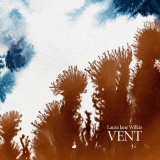
Hailing from Tain in the Highlands, Laura Jane Wilkie has a unique style which has roots in the Highland fiddle traditions but is influenced by an eclectic range of music from all genres.
Vent is centered around ancient women's work songs - waulking songs. Laura studied these to adapt them for the fiddle, immersing herself in the Scottish archives as well as having them passed on from friend, tradition bearer and one- woman- ceilidh: Rona Lightfoot. The album explores the melodies of these ancient waulking songs and how they have individually and communally provided a sense of safety, shared knowledge, power, love, humour and freedom to not only rural working women's communities but to Laura as a non Gaelic speaker.
Vent features an array of amazing talent including: Ian Carr on guitars/ harmonium; Sarah Hayes on keys/flute/ vocals; Joe Rattray on bass; Rachel Sermanni on vocals; Hannah Read on electric guitar; and Alice Allen on cello as well a improvised vocal samples by Pippa Blundell, Hannah Findlay, Gillian Fleetwood, Rona Lightfoot and Imogen Macleod.
Black[33,57 €]
Hailing from Tain in the Highlands, Laura Jane Wilkie has a unique style which has roots in the Highland fiddle traditions but is influenced by an eclectic range of music from all genres.
Vent is centered around ancient women's work songs - waulking songs. Laura studied these to adapt them for the fiddle, immersing herself in the Scottish archives as well as having them passed on from friend, tradition bearer and one- woman- ceilidh: Rona Lightfoot. The album explores the melodies of these ancient waulking songs and how they have individually and communally provided a sense of safety, shared knowledge, power, love, humour and freedom to not only rural working women's communities but to Laura as a non Gaelic speaker.
Vent features an array of amazing talent including: Ian Carr on guitars/ harmonium; Sarah Hayes on keys/flute/ vocals; Joe Rattray on bass; Rachel Sermanni on vocals; Hannah Read on electric guitar; and Alice Allen on cello as well a improvised vocal samples by Pippa Blundell, Hannah Findlay, Gillian Fleetwood, Rona Lightfoot and Imogen Macleod.
“With their debut record, the merry order of musically miscreants from Los Angeles bring you their eccentric, eclectic, electric Polywave experience” The core members are: Neight Trion (The Black Angels, The Shine Brothers), Rocky (Death Valley Girls), Jay Eraser (Grooms, Roya), Oh-Ra (?) and Malware (Dead Meadow). Recorded and mixed by Jason Simon at Tekeli-li Sound. Mastered by Howie Weinberg "World Destroyers’ Pleasure Club is a musickal order formed during the great plague of the 20’s in Los Angeles in thanks to a constellation of fortuitous alignments. In the midst of the isolation that connected all people across the globe, in that unsettling quiet, a vision was obtained of community, ecstasy and revelry. The vision took on a life of its own as the band found each other and continues to propel the unit forward in their journey toward its realization. When asked to describe their strange, mutant music some fans and even members have found it difficult to do so. For this reason they have chosen the term Polywave as their designated genre which they envision as including other forms of expression besides music, a tendency to be hyper-eclectic and bearing the distinguishing mark of a commitment to continual, intentional self-transformation. WDPC has performed at venues such as Permanent Records Roadhouse, Zebulon, Lodge Room and more, both headlining and supporting artists such as The Intelligence, The Black Lips and The Nude Party. Nicknamed The Mysterious Party Band, they’ve been told they sound like a “Gospel Devo” by DJ Al Lover (Fuzz Club Records), and drawn comparisons to Talking Heads, The Fall, Butthole Surfers and Peter Gabriel. As influences they cite artists as varied as Hailu Mergia, Psychic TV, Scott Walker, Fela Kuti and Red Crayola but these influences don’t necessarily reveal themselves sonically as much as resembling the spirit in which they were conceived. Artist Neight Trion, the principal songwriter, spends as much time on the lyrics as composing the music, aiming for both to be strong enough to stand on their own. Membership includes a revolving and evolving collection of instrumentalists and collaborative mimetic entities but the core members are Neight Trion, singer/keyboards (The Black Angels, The Shine Brothers), Rocky, bass guitar (Death Valley Girls), Jay Eraser, guitar (Grooms, Roya), Oh-Ra, drums (?) and Malware, synth (Dead Meadow). Hailing from all across the US and Europe their operations are based in the Los Angeles area. Armed with their eponymous debut released by Blow Your Mind Records based in Santiago, Chile, they’ll be coming to a town near you and preparing the way for the coming Polywave. This is only the beginning, the first stages of metamorphosis. They invite you to join them in their pursuit of the communal ecstatic experience
Burning Hell was recorded in 1959 in Detroit, MI, but wasn't released until 1964. Even then, it was only available in the U.K.. This 180-gram vinyl pressing marks the first official single LP worldwide release the album has seen. Pressed at QRP as part of the Bluesville Records / Acoustic Sounds series, the album features Hooker solo as he plays originals and classics. AllMusic states that, on this album, "Hooker shows himself to be an excellent interpreter who could have held his own with Delta bluesmen of any era."
Craft Recordings, in partnership with Acoustic Sounds, is releasing Burning Hell as part of the Bluesville Series. Bluesville is a brand-new hub for all things blues, including vinyl reissues, curated playlists, and more! Inspired by the original label imprint established under Prestige Records in 1959, the Bluesville Series will highlight the many trailblazing musicians who contributed to the rich tradition of the blues, including titles from legendary artists on labels such as Vee-Jay, Riverside, Vanguard, Stax, and Rounder Records.
The albums in the Bluesville Series are pressed on 180-gram vinyl at Quality Record Pressings and feature all-analog (AAA) mastering by Grammy-nominated engineer Matthew Lutthans at The Mastering Lab at Blue Heaven Studios, plus a tip-on jacket and obi strip with notes written by Grammy-winning producer, writer and musician Scott Billington.
In the late 90s, the bands that Mike Badger had been part of vanished in the rear-view mirror. The La’s and The Onset were no more. With a young family and his tin-can sculptures emerging as his primary source of income, the evenings in Allerton (south Liverpool) found him quietly strumming his acoustic guitar, careful not to disturb the sleeping children. Weekends often led to the Penny Lane Wine Bar and later to Henry Epstein’s residence, a haven for revelry after closing time. A place where acoustic guitars adorned the walls, and impromptu musical sessions unfolded. In the midnight hours at Henry Epstein’s house, Paul Hemmings conceived the idea of compiling an album featuring Mike’s new tunes, which seemed to carry a basic “pastoral” theme reflective of settled domestic life. Demos were recorded on a porta-studio, and the album, initially titled “Naked and Beyond,” was crafted with starkness and simplicity, adorned with selected embellishments contributed by associates who shared drinks and stages. Recording took place at “The Lab” studio just north of the city, utilizing a Teac 24 Track machine and the warmth of analogue recording. The studio featured an old Italian “Eko” acoustic guitar, a classical guitar, Louis Johnson’s cello arrangements, and Tommy Scott’s backing vocals. Once the core of the album was laid down, the journey continued to Anglesey, to Henry Priestman’s “Gossamer Dome” Studio, where a baby grand piano, Farfisa organ, and “Parrot” accordion were added to enrich the songs with colors, harmonies, and magic, all against the backdrop of a sea view. The front cover of the album was adorned with an objet d’art created from a spiraled frying implement, part of Mike Badger’s “Lost and Found” exhibition. As the need to release the album arose, Mike Badger and his collaborators established their own label, “Viper,” and secured a distributor. The album, titled “Volume,” reflected its creation – from its initial sound considerations to the organic body of work composed in recent years. The recording process, though thorough, embraced imperfections, as Mike Badger believed that completeness emerged from these flaws, giving the performance its distinct character. The spirit of the performance took precedence over perfection, resulting in a product that felt genuine, unfettered, and honest – created simply because it was meant to be made. Now the album turns 25 it is released on vinyl for the first time via Nine X Nine Records.