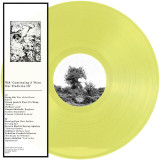
The third studio release from the There’s Something About Mary star Produced by Beserkley Records founder Matthew King Kauffman and pop-legend and Rock ‘n’ Roll Hall Of Famer, Kenny Lagun. Available CD & LP, with an exclusive green colored variant for Independent retail Jonathan Richman’s intended Beserkley catalog is available again. His true releases, Jonathan Richman & The Modern Lovers and Rock ‘n’ Roll With The Modern Lovers are back, as originally intended, on CD and LP with exclusive coloured variants for Independent retail. Enter Back In Your Life. While credited to Jonathan and the Modern Lovers (which now included Andy Paley – Brian Wilson, Chris Isaak, NRBQ, John Wesley Harding), the release was Jonathan, accompanied on about half of the material by the Lovers. It followed the 'Live' record” Another musician on the record, and co-producer, was Kenny Laguna, whose work with Buddah Records (The Ohio Express, 1910 Fruitgum Company, The Lemon Pipers,) plus Tommy James & The Shondells, Crazy Elephant, Bow Wow Wow, and Joan Jett. Laguna was a perfect person to put Jonathan’s sound where it needed to go. Featuring the Richman staples, “Abdul And Cleopatra,” “Affection,” and the title track, Back In Your Life signals the ending of his Beserkley tenure, but with much more to come . . .
Поиск:abdul
Все
Geir Sundstøl: Strings With: Maria Due, Daniel Sandén Warg, Audun Erlien, Nikolai Hængsle, Håkon Brunborg, Lars Horntveth, Hans Hulbækmo, Gulzar Butt, Kjell Pop, Jarle Bernhoft, Chimta Raja Abdul, Sofi Jonas, Bashir Rydhem, Erland Dahlen.Geir Sundstøl has made a name for himself as an innovative session musician on hundreds of Norwegian and international albums. 2015 saw the release of Furulund, the first self-composed long player from this Master of Strings. Langen Ro, Norwegian Grammy winner Brødløs and St.Hanshaugen Steel, followed soon after. Now, the stage is set for something quite different. The Studio Intim Sessions, Volume 1, Sundstøl's fifth solo album, has taken a trip on its own, away from the cinematic Nordic noir and genre-crossing soundscapes we know, and ended up somewhere south of the Kattegat.
1.Gem (06:16) 2.Dogg (03:29) 3.Snik (03:25) 4.Jekk (05:00) 5.C’est vide en ville (09:18) 6.Whole (03:50)
Limited Pressing.
Invisible City Editions returns with an official repress of a fantastic double-sided private press rarity from 1989 Detroit. Featuring two legendary Inner City alumni Producer/keyboardist Engineer Art Forest and Inner City background vocalist dancer/singer Shawn Pittman. On the A side a lush slow modern soul slow burner “Dreams'' features a deep,spatial throbbing bass line with glistening synths floating underneath cool angelic hypnotic vocals by Ms Pittman.” 'Dreams are only Dreams till you make it real' chants Shawn Pittman and we’re lead down a dazzling maze of mirrors. With “I'm Losing Control (Extended Bass-ment Club Mix)” on the flipside a wild late night warehouse dub remix features sci-fi vocal effects,fostex tape loops and ultra-heavy bass and driving drum machines. Minimal lush soul perfect for early mornings and the post-club world and a wild sci-fi house winner for late night club sessions. An IC fave! Remastered by Brandenberg/The Carvery (Note: we’ve also removed the drum machine going out of sync that was on the original press) Official Repress via Art Forest and his label Wildboy.Essential stuff!
Art Forest is an Electronic Engineer and production wizard from Detroit Michigan. He originally recorded 2 of Inner CItys’ Biggest Hits “Good Life” and “Big Fun” and continues to record to this day. Art Forest still finds and repairs equipment to add to his studio today. He also recorded for Paula Abdul “Straight Up” and Madonnas’ “Justify My Love” Shawn Pittman was a singer and dancer from Detroit who was a good friend of Inner City vocalist Paris Grey. Shawn Pittman sang backing vocals and harmonies on “Good Life” and “Big Fun”.
The Maghreban has been making Dance music and related genres under various names since the mid 90s, spanning Jungle, Hip Hop, Rave, House and Techno; on labels like Versatile, Black Acre, Eglo Records, R&S Records and his own Zoot Records.
This is his second full length LP under this project and is a refinement on his first. He has worked with the jazz saxophonist Idris Rahman to craft something more cohesive perhaps and more rooted in Jazz and Techno as well as Eastern music. There are also vocal collaborations with Nah Eeto, Omar and Abdullah Miniawy.
Airplay from Benji B, Gilles Peterson and Tom Ravenscroft on BBC Radio. DJ and Radio Support from Ben UFO, Nina Kraviz, Mosca, Otik, Eclair Fifi, Totally Enormous Extinct Dinosaur, Martyn Bootyspoon, Appleblim, Krikor, Photonz, Gramrcy, and many more.
Favourable reviews so far in Uncut & DJ Magazine: "His most expansive statement so far..Innovative and Irresistable", Reveiws to come in Mixmag, The Wire and other publications.
We welcome Stasis to De:tuned! UK techno pioneer Steve Pickton has dug deep into his DAT tapes collection to unearth 2 previously unreleased recordings from the golden era '92-'93. Both rarities offer a trademark lush and retro-futurist Detroit inspired sound that is totally unique. Fellow Likemind legend Nuron provides a stunning remix. The track was built up from scratch as no stems were available, giving you another sneak peek of the genius musical mind that is Nuron.
The vinyl version comes with impeccable sleeve and label artwork by Abdul Haqq (Third Earth).
Mastered by Matt Colton at Metropolis and pressed on 180 gr vinyl.
A separate digital release will also be available at the usual digital shops.
Stay tuned!
- A1: Dassai Menace (The Virgil) (The Virgil)
- A2: Lost (Feat Tom Misch & Frida Touray)
- A3: Brushstrokes (Feat Cleveland Watkiss)
- B1: Crazy (Feat Natalie Williams)
- B2: Breakout (Feat Lameduza)
- B3: American Gods (Feat Natalie Duncan)
- B4: Azimuth
- C1: Paradise (Feat Lameduza)
- C2: Dark (Feat Greentea Peng)
- C3: Yoshi's Highway (Feat Lady Blackbird)
- C4: The Start Of No Regret
- D1: Sunlight (Feat Lady Blackbird)
- D2: Dollis Hill Rufige
- D3: Reflection
The album, which features some incredibly exciting and varied names including neo soul up-and-comer Greentea Peng, American jazz & soul vocalist Lady Blackbird (on ‘Sunlight’) and British blues vocalist Natalie Duncan, shows off both the rich history and calibre of Goldie and James Davidson’s individually but also how they can create something together that’s so cohesive and forward thinking. The sound the duo have been able to create is also partly due to their geographical locations over the past 18 months, bouncing ideas between Davidson’s studio in Bournemouth on the south coast and Goldie’s house in Phuket, Thailand; showing two songwriters and producers at the top of their game responding to a year and a half in very different atmospheres but similar trying circumstances.
Lead single from the album ‘Dassai Menace’ (released with double A-side ‘Fathoms’) was picked up by Virgil Abloh who used it to soundtrack his Louis Vuitton SS22 fashion film ‘Amen Break’ (watch here), with Goldie walking in the accompanying catwalk show. Goldie will also be in residence throughout the month of February 2022 on BBC Radio 1 alongside the likes of world renown DJ’s Sama' Abdulhadi, Folamour, Or:la, LCY and Scratcha DVA.
Blue Note Records lanciert neues Sublabel: jazzige Klänge von Kapstadt bis Kairo sollen künftig bei Blue Note Africa erscheinen. Den Auftakt macht der südafrikanische Pianist Nduduzo Makhathini mit seinem zehnten Studioalbum.
Mit “Modes Of Communication: Letters From The Underworlds”, seinem Blue-Note-Debüt, wirbelte Makhathini vor zwei Jahren viel Staub auf. DownBeat kürte ihn zu einem der 25 Künstler, denen im
Jazz die Zukunft gehört. Auf “In The Spirit Of Ntu” zollt Makhathini nun mit einem Ensemble von jungen südafrikanischen Musikern seinen dezidierten Vorbildern John Coltrane, Bheki Mseleku, McCoy Tyner und Abdullah Ibrahim sowie seinen südafrikanischen Wurzeln Tribut.
To celebrate the 45th anniversary of iconic Dutch jazz label Timeless Records, Music On Vinyl is releasing a series that features albums that are part of the Timeless Records legacy and will be released mainly throughout 2022.
Part of this series is Pharoah Sanders’ Moon Child from 1990, which bookended a decade of musical soul searching for Sanders. The acclaimed free jazz player is known to have a raw and abrasive sound, but reinvented himself on this album as a more traditional improviser capable of thoughtful deliberations. Moon Child is a grand old time throughout, and Sanders has never been more eminently sing-along-able as he is on its title track. The record was co-written with Horace Silver, George Gershwin and Abdullah Ibrahim and recorded with William Henderson, Stafford James, Eddie Moore and Cheikh Tidiane Fal
Part of IF Music founder Jean-Claude’s ever expanding ‘YOU NEED THIS!’ series of compilation albums, the London record shop impresario and DJ takes us on another scintillating musical journey, this time exploring the catalogue of German jazz imprint, Enja Records. Like Jean-Claude’s ‘Journey Into Deep Jazz’ series on BBE Music and his 2017 exploration of Black Saint & Soul Note Records before it, ‘IF MUSIC PRESENTS YOU NEED THIS!: AN INTRODUCTION TO ENJA RECORDS’ provides another impeccably curated and programmed selection of music, assembled by simply one of the most knowledgeable and passionate vinyl specialists in the business. Featuring performances by John Stubblefield, Bobby Hutcherson, Harold Land, Don Cherry, Cecil McBee and Pharoah Sanders collaborator Marvin Hannibal Peterson to name but a few, this collection provides a great jumping-off point for Enja’s rich and diverse back catalogue. Founded in 1971 by Munich natives and jazz obsessives Matthias Winckelmann and Horst Weber, in its heyday Enja released albums by Eric Dolphy, Charles Mingus, Tommy Flanagan and John Scofield, as well as Kenny Barron, Chet Baker, Abbey Lincoln, Bea Benjamin, Freddie Hubbard, to name but a few. Having firmly established itself as “a bastion of all things deep in jazz” as Jean-Claude neatly sums up, Enja also went on to issue early World Music projects from Abdullah Ibrahim, Rabih Abou-Khalil, Mahmoud Turkmani and many others, and it remains active to this day. “There is no doubt that to the uninitiated, a compilation introducing such an esteemed archive is well overdue” says Jean-Claude. “As with previous albums curated by us, this is just a soupçon of this label’s vast back catalogue, which we hope will lead the listener to discover new music and to search out more from this criminally underrated, class act.”
Tracklisting
Ferocious JP / US free jazz bomb. A rare meeting between the NYC free jazz scene and the Japanese free music scene. Old-style Gatefold LP, with rare photographs & liner notes by Alan Cummings.
Following hot on the heels of the first, mid-sixties generation of Japanese free jazz players like Kaoru Abe, Masayuki Takayanagi, Yōsuke Yamashita, Motoharu Yoshizawa, etc., an exciting second wave of younger players began to emerge in the seventies. Two of its leading members were the saxophonist Kazutoki Umezu and multi-instrumentalist Yoriyuki Harada. Both were post-war babies and immigrants to the city, Umezu from Sendai in the north and Harada from Shimane in the west. They first met as students in the clarinet department at the Kunitachi College of Music, a well-known conservatory in western Tokyo. Harada was already securing sideman gigs on bass with professional jazz groups and was active in student politics, making good use of his connections to set up jazz concerts on campus. It was around this time that the two began to play together in an improvised duo, with Umezu on clarinet and bass clarinet and Harada on piano. They also experimented with graphic scores and prepared piano.
These experiments eventually led to the creation of a trio, with a high-school student called Tetsuya Morimura on drums, that they decided to name Seikatsu Kōjyō Iinkai (Lifestyle Improvement Committee) in joking reference to the Marxist discourse of the student radicals of the time. Around 1973, Umezu and Harada decided to call it a day and go their separate ways. Umezu began playing with the Toshinori Kondo Unit and Harada with the Tadashi Yoshida Quintet. In 1974 Harada formed his own trio and began to play at jazz coffeehouses across Japan.
Then, in September 1974 Umezu travelled alone to New York, where he set about building connections with the loft jazz scene in the city. It was a fortuitous moment to arrive in New York. Rents were cheap in the Lower East Side, possibilities for squatting existed, so many musicians and artists had moved to the area. Umezu soon became known on the scene as Kappo and he started to make connections with some of the young musicians like David Murray, Arthur Blythe, and Oliver Lake. He recalls making the rounds of the lofts every evening, checking out the performances, and getting the chance to sit in with many groups including Juma Sultan’s Aboriginal Music Society and trumpeter Ted Daniel’s orchestra.
Things were going so well that Umezu wrote to Harada and invited him to come to New York. He accepted and arrived in the city in July 1975. Harada and Umezu took the opportunity to resume their artistic collaboration. Their first concert together in over two years took place on July 20th at another loft, Sunrise Studios at 122 2nd Avenue. Umezu remembers Sunrise as an unusually sunny loft with the rarest of things, a grand piano. He invited along Ahmed Abdullah, a trumpeter he had got to know while playing with Ted Daniel. Abdullah led his own group and was a long-term Sun Ra sideman. William Parker, one of the key figures in the loft jazz scene of the period, was on bass. Abdullah also brought along Rashid Sinan on drums. Sinan drummed in Abdullah’s units throughout the seventies, but he had also played on Frank Lowe’s immortal Black Beings album and collaborated with Arthur Doyle, playing on Doyle’s Alabama Feeling album. By all accounts the evening was a huge success, with speed and dynamism of Harada’s piano playing gaining him lots of support.
Since they had managed to save some money from their day jobs, Umezu and Harada decided to set up a recording session with the same line-up on August 11 at Studio We, where there was a well-equipped studio on the third floor. Umezu recalls the session as follows, Of course, we recorded our performances in one take, with zero retakes as far as I remember. On all the tracks we recorded, we moved as one unit, sharp and fast. That was the nature of Lifestyle Improvement Committee, New York Branch.
Umezu and Harada would later become known for the elements of parody and entertainment that they brought to their music, a freewheeling blend of pastiche, humour and on-stage performativity that paralleled the approaches of the Art Ensemble, Sun Ra, and Holland’s ICP. But here, on their first recordings, the humour element is not yet present. Instead, there is a febrile sense of joy in creation and connection. On the Umezu-penned “Kim”, for example, Harada opens the piece with a speedy exploration of the full-range of the keyboard, hitting hard on the bass keys to create a rhythmic bed out of which patterns begin to emerge. Umezu enters at a much slower pace, longer held notes that at first float weightlessly over the urgency of the piano before they begin in splinter and accelerate. When Parker and Sinan kick in, it’s a rollicking tempo with Parker plucking deep and hard and the left-handed Sinan skittering hard across the topside of his kit. Abdullah kicks in a glorious solo twelve minutes in, bright and breathy at once. The piece slows and grows more spacious towards the end, giving Parker a chance to showcase some arco work that shades beautifully into the air against Abdullah’s trumpet.
Back in Your Life was released in 1979 under the Jonathan Richman & The Modern Lovers moniker, but only half the album featured the backup band. The other half of the album features Richman as a solo artist. The Modern Lovers were formed by Richman and included Leroy Radcliffe on guitar, Asa Brebner on bass and Denotra ‘D’ Sharpe on drums. Occasionally, they were joined by Richman’s friend and The Real Kids’ band leader John Felice.
Back in Your Life is available on black vinyl.
We're extremely proud to present HAPPENSTANCE, a sprawling jazz-concrète project produced by Johannesburg composer and double bass player Shane Cooper. Approached in 2020 by interdisciplinary arts space The Centre For The Less Good Idea to create audio work, Cooper drew on his network in the thriving South African jazz scene, bringing in Bokani Dyer (piano), Cara Stacey (bows), Daliwonga Tshangela (cello), Gontse Makhene (percussion), Jonno Sweetman (percussion) and Micca Manganye (percussion).
Two days of free-flowing composition, improvisation and investigative recording followed, with the results captured on a vintage reel-to-reel tape machine. This tape was fractured and reassembled by Cooper, bringing into surreal focus tiny ecosystems of sound, like curls of static clasped from the air and brought under the magnifying glass. The results - two long, standalone pieces - are dizzying, weightless; musique concrète melding with jazz-schooled virtuosity in a dubbed out bricolage of interludes and u-turns.
Recommended for fans of Abdullah Ibrahim, Tony Allen, Floating Points and Daphne Oram.
In 2015, London fusionistas Lokkhi Terra put on a show at Womad and Songlines Encounters festival, where they collaborated withe folk legends from Bangladesh - The Shikor Bangladesh All Stars". The music was based on countless rooftop jams helb back in Dhaka, where Lokkhi Terra had been touring regularly from 2009.
The second in the series of collaborations, this EP takes the iistener back to the beginning, capturing the first musical meetings between both bands. The period when long term Lokkhi Terra collaborator and Dhol Maestro Nazrul Islam (based in Dhaka), introduced his musical inner circle to the visiting Lokkhi Terra musicians. Friendships were forged, and musical conversations were explored. One singer stood out in particular - Dewan Baby Akthar.
Featuring songs by the great Bangladeshi mystics Baul Lalon Shai and Baul Abdul Karim.
"from London's global melting pot Lokkhi Terra joined Bangladeshi musicinas of Shikor for an unlikely but successful fusion that matched Asian influences with Cuban Jazz" The Guardian
180g Vinyl
The “Under Frustration” project takes stock of the contemporary Arab electronic scene, and highlights its astonishing diversity, by deconstructing Western clichés that are still fantasizing about a culturally homogenous Arab world.
In a context of post-revolutionary disillusion, this ambitious trilogy sets itself as a manifesto of a new, futuristic, underground wave that aims to uplift the Arab voice, once again. With this new release, Arabstazy allows the listener to walk among Shiite, Shaabi or Stambali lands - revealing new mystical sounds, reserved for trance ceremonies and ancestral rituals; all vivid in the eyes of the collective members, musicians, producers, videographers and photographers, nowadays, scattered between the United States, Tunisia, Germany, France, Sweden, Irak, Lebanon and Poland.
Vol2 includes unreleased tracks of Dj Haram, Praed, Hello Psychaleppo, Okydoki and many more.
Curated by Arabstazy, produced by Shouka, published by InFiné.
- A1: Emad Youssef - Al Bareedo Ana (The One I Love)
- A2: Abdel El Aziz Al Mubarak - Ma Kunta Aarif Yarait (I Wish I Had Known)
- B1: Kamal Tarbas - Min Ozzalna Seebak Seeb (Forget Those That Divide Us)
- B2: Madjzoub Ounsa - Arraid Arraid Ya Ahal (Love, Love Family)
- B3: Khojali Osman - Malo Law Safeetna Inta (What If You Resolve What's Between Us)
- C1: Zaidan Ibrahim - Ma Hammak Azabna (You Don't Care About My Suffering) (Live)
- C2: Saied Khalifa - Igd Allooli (The Pearl Necklace)
- C3: Taj Makki - Ma Aarfeen Nagool Shino! (We Don't Know What To Say!)
- D1: Hanan Bulu Bulu - Alamy Wa Shagiya (My Pain And Suffering) (Live)
- D2: Abdelmoniem Ekhaldi - Droob A Shoag (Paths To Love)
- D3: Samira Dunia - Galbi La Tahwa Tani (My Heart, Don't Fall In Love Again)
- E1: Mohammed Wardi - Al Sourah (The Photo)
- E2: Abdullah Abdelkader - Al Zaman Zamanak (It's Your Time)
- F1: Mustafa Modawi & Ibrahim El Hassan - Al Wilaid Al Daif (The Youth Who Came As A Guest)
- F2: Ibrahim El Kashif - Elhabeeb Wain (Where Is My Sweetheart)
- F3: Mohammed Wardi - Al Mursal (The Messenger)
In Sudan, the political and cultural are inseparable. In 1989, a coup brought a hardline religious government to power. Music was violently condemned. Many musicians and artists were persecuted, tortured, forced to flee into exile — and even murdered, ending one of the most beloved music eras in all of Africa and largely denying Sudan's gifted instrumentalists, singers, and poets, from strutting their creative heritage on the global stage.
What came before in a special era that protected and promoted the arts was one of the richest music scenes anywhere in the world. Although Sudanese styles are endlessly diverse, this compilation celebrates the golden sound of the capital, Khartoum. Each chapter of the cosmopolitan city's tumultuous musical story is covered through 16 tracks: from the hypnotic violin and accordion-driven orchestral music of the 1970s that captured the ears and hearts of Africa and the Arabic-speaking world, to the synthesizer and drum machine music of the 1980s, and the music produced in exile in the 1990s. The deep kicks of tum tum and Nubian rhythms keep the sound infectious.
Sudan of old had music everywhere: roving sound systems and ubiquitous bands and orchestras kept Khartoum's sharply dressed youth on their feet. Live music was integral to cultural life, producing a catalog of concert recordings. In small arenas and large outdoor venues, musical royalty of the day built Khartoum's reputation as ground zero for innovation and technique that inspired a continent.
Musicians in Ethiopia and Somalia frequently point to Sudan's biggest golden era stars as idols. Mention Mohammed Wardi — a legendary Sudanese singer and activist akin to Fela Kuti in stature and impact in his music and politics — and they often look to the heavens. A popular story is of one man from Mali who walked for three months across the Sahel to Sudan because the father of the woman he wanted to marry would only allow it if he got him a signed cassette from Wardi himself. Saied Khalifa is said to be the one of the few singers to make Ethiopian emperor Haile Selassie smile.
Such is the stature of Sudanese singers and the reputation of Sudanese music, particularly in the "Sudanic Belt," a cultural zone that stretches from Djibouti all the way west to Mauritania, covering much of the Sahara and the Sahel, lands where Sudanese artists are household names and Sudanese poems are regularly used as lyrics until today to produce the latest hits. Sudanese cassettes often sold more in Cameroon and Nigeria than at home.
But years of anti-music sentiment have made recordings in Sudan difficult to source. Ostinato's team traveled to Ethiopia, Somalia, Djibouti, and Egypt in search of the timeless cultural artifacts that hold the story of one of Africa's most mesmerizing cultures. That these cassette tape and vinyl recordings were mainly found in Sudan's neighbors is a testament to Sudanese music's widespread appeal.
With our Sudanese partner and co-compiler Tamador Sheikh Eldin Gibreel, a once famous poet and actress in '70s Khartoum, Ostinato's fifth album, following our Grammy-nominated "Sweet As Broken Dates," revives the enchanting harmonies, haunting melodies, and relentless rhythms of Sudan's brightest years, fully restored, remastered and packaged luxuriously in a triple LP gatefold and double CD bookcase to match the regal repute of Sudanese music.
A 20,000-word liner note booklet gives voice to the singers silenced by an oppressive regime.
Take a sail down the Blue and White Nile as they pass through Khartoum, carrying with them an ancient history and a never-ending stream of poems and songs. It takes two Niles to sing a melody.
1954 is the fifth vinyl release on the Modern Cathedrals label by recent Detroit export Altstadt Echo. Staying true to the themes of the the 'year series' that began with the 1913 EP and was followed by the 1905 EP, the artist continues to explore somber, broken beat techno with an eroded, highly-textured percussive focus.
In the previous two EPs from this series, Altstadt Echo was joined by Varg, Abdulla Rashim, Stave, and Evigt Morker on remix duty. For the 1954 EP, he's commissioned UK artist Szare, who delivers a highly danceable revision that combines the ghostly vocals of the original with highly frenetic percussive injections.
The artwork of the EP is aligned with the label's greyscale documentation of Detroit, this time featuring the stunning architecture of the New Center district of the city. The photos were taken by the artist prior to his move to Berlin in Fall 2017.
Rare Australian funk/jazz/blues LP from 1977. Limited edition of 500 copies.....
Until recently Leong Lau's records of the 1970s were well kept secrets of only the most avid Australian record collectors. Left Ear Records, along with the help of Leong, are proud to give collectors a chance to add That Rongeng Sound to their collection. Leong's unique Malay-jazz-meets-Aus-funk identity, takes listeners on a journey through funky beats and flowing melodies and is the reason the album is arguably one of the most innovative and exciting Australian funk/jazz albums. This reissue of the original 1977 LP is limited to just 500 copies and comes in a high quality tip on gatefold featuring original artwork and a brief biography on the enigma himself - Leong Lau.
Africa 45, number 17
Fathili & The Yahoos came from Kenya. Soulful but raw, mid-tempo afro-funk. Licensed from Melodica music stores courtesy of our great friend Abdul Karim. The Wings were a Nigerian band. 'Gone With the Sun' featured on their 1974 album 'Kissing You So Hard' and fuses bluesy disco, funk and soul moods with quirky synths and effects.
Sing a song fighter have never been more proud and happy than to finally announce and release this unissued and unheard fantastic recording South African in exile Johnny Dyani was one of the greatest bass players. Played with Don Cherry, Chris McGregor, Archie Sheep, Dollar Brand / Abdullah Ibrahim etc etc. He also made many great albums as a bandleader. And a few rare minimal albums where it was mostly him and his upright bass. He died way too early, in 1986. Karl Jonas Winqvist (Sing A Song Fighter) ranks some of Dyani's works ("African Bass", 'Witchdoctor's Son" with Okay Temiz and "Good News From Africa', with Dollar Brand) as "the most natural, creative musical force there is'. KJW investigated for years if there was more recorded Dyani material waiting to be heard. And where After e-mailing endlessly with the National Radio Museum in Switzerland he finally found what he was looking for.In 1978 graphic designer Niklaus Troxler arranged the great Willisau Jazz Festival in Switzerland. A lot of legendary artists like Max Roach, Jan Garbarek, Elvin Jones and Don Cherry were performing, and Johnny Dyani was one of them. He did this rare solo concert with some of the material that two years later would end up on his great album "African Bass". This LP contains the concert from beginning to end, showing Dyani at his very best on piano, gong, bass and vocals. Spiritual, adventurous and truly free,beautiful music.Gatefold cover, with extensive liner notes from Francis Gooding and Niklaus Troxler
2018 has a lot in store for London spiritual jazz outfit Emanative, with a full double LP and several remixes forthcoming, as well as some full live band appearances and DJ gigs. 'Planet B' is the band's first release of the year and it takes them in a slightly different direction, on a completely different vibration entirely, with an epic nine minute, almost post punk, afrobeat, disco and jazz inspired piece aimed at the leftfield dancefloor. The idea for this project grew from our interest in releasing the live version of the Ahmed Abdullah-written 'Lions Of Judah' (Steve Reid & The Legendary Master Brotherhood) , which appears on the B-side and was recorded live at London's famous Cafe´ OTO, an institution for experimental live music and free jazz. The version has become a Gilles Peterson favourite and a regular on his 6Music and Worldwide FM shows. Nick Woodmansey, the head of the group, wanted to include an original piece as well and so went in the studio with the band and a clear concept for recording 'Planet B'. Inspired originally by a Greenpeace poster and advert of the same name, as well as current adverse planetary situations. Musically it follows the spirit of Arthur Russell's leftfield disco of Dinosaur L project, no wave band ESG, and Sun Ra.
Carl Gari is a group of three from Munich: Jonas Yamer, Till Funke and Jonas Friedlich. They released their well received and idiosyncratic debut (NPR mentioned it as one of the 50 best albums in 2016) on The Trilogy Tapes, for which they collaborated with Egyptian singer and spoken word artist Abdullah Miniawy. For the second release on Permanent Vacation they perfected their unique blend of psychedelic ingredients, dubbed out drums, drony sounds and a general hazyness. The mystic chants of Abdullah, who is also featured on two tracks, weave themselves into the band's lively sound texture. Apart from that Carl Gari showcase the diversity of their analogue driven and melodic approach to electronic music through four beautifully detailed tracks.
Journey through vivid sonic currents and a state which might as well be regarded as Rashim's magnum opus: this is a new height with a mini album as the sixth release on ARR. The more basic and primal spirit of this release encapsulates Rashim's music in a way which makes total sense. Bound over for tracks, which all displays a different perspective of this dramatic colossus.
The fifth Modern Cathedrals release by Altstadt Echo seeks to exhume genuine, complex, and often contradictory human emotion from dead samples and broken beat structures. Throughout the 1905 EP, the artist crafts melodies that embody a tension between nostalgia and frustration, supported by carefully textured and relatively functional percussion. The remix of 'Dry Despair' by Abdulla Rashim (AR) strips the original of its lofty chords, instead pursuing a focused and bone-dry experimental techno approach. In contrast, the remix by Stave combines elements of the original's drifting atmosphere with violent industrial percussion.
Berlin Atonal is proud to pick up on a tradition begun in 1984 with the publication of two volumes of live recordings from the 1983 edition of the festival. Those records bore witness to the most inventive, adventurous sounds of the festival, and therefore of their time, containing live bits
from Psychic TV, La Loora and Z'EV.
Berlin Atonal Vol. 3 carries this custom forward three decades with selections from four of the standout performances of Berlin Atonal 2014. Of course Cabaret Voltaire's lauded and historical rst show in over 20 years is featured, Richard H Kirk's no-nostalgia and machinery driven set rmly putting the Cabaret Voltaire project in a future-facing direction.
Miles Whittaker's surprising and muscular live performance also contributes a cut, as does festival favourite Fis with his characteristically lumpy, textural soundscapes.
Finally, two selections from Abdulla Rashim's memorable session gesture toward a possible future for synthesised music.