7A Records are proud to present our deluxe reissue of Mungo Jerry’s Electronically Tested. Released on July 19th, the album has been remastered and expanded with four bonus tracks and features extensive liner notes including Ray Dorset’s own recollections.
Electronically Tested, Mungo Jerry’s second album, was first released in March 1971. Even the title clued in listeners that this was no ordinary record. As Ray Dorset reveals, “I came up with the name of the album. Durex used to have ‘electronically tested’ written on their packets. I thought that was quite the talking point, if people in the know said, ‘That’s the same name as on the packet of condoms!’ It was taboo to mention stuff like that.” Electronically Tested offered hints of the familiar via its inclusion of the UK #1 Hits “In the Summertime” and “Baby Jump,” but elsewhere, the album was pure, eclectic Mungo Jerry. Every side of Dorset’s talents as a singer, songwriter, and musician came to the fore on Electronically Tested, with his bandmates John Godfrey, Paul King, and Colin Earl–as well as producer Murray– joining him to create a joyful noise: “It’s got a lot of tracks that could have been singles in their own right. It was good for me to be able to play all that kind of stuff”. Mungo Jerry’s singular sound has been described as rock, folk, blues, country, good-time music, jug band music, pub rock, and gypsy rock–and that’s just a partial list. One can hear all of those elements in the disparate, timeless songs that form Electronically Tested. How would Mungo himself describe it? “It’s kind of rocky stuff. It’s got social commentary. It’s got all sorts of influences in there. It’s really best to say it’s Mungo Jerry music.” Electronically Tested originally peaked at # 14 on the U.K. Albums Chart the week of April 14, 1971.
quête:able noise
- You're So Cool (Main Title)
- I Think I Love You
- To The Club
- Not My Clothes
- I'm Your Son
- Father Goodbyes
- Stars At Dawn
- Alabama Hit
- Start Over
- Needed Gun
- Elevator Tension
- Police Comes In
- Shootout
- End Scene
- You're So Cool / Main Title (Alternate I)
- You're So Cool / Main Title (Alternate Ii)
- You're So Cool / Main Title (Remix)
- You're So Cool (Extended Single Version)
- Stars At Dawn (Extended Single Version)
- Amid The Chaos Of The Day
Enjoy The Ride Records in conjunction with Morgan Creek Entertainment proudly presents the True Romance Original Motion Picture Score, composed and conducted by Hans Zimmer.
In celebration of the iconic film's 30th anniversary, the True Romance Original Motion Picture Score is pressed at 45 RPM across 2 LPs for optimal sound quality.
Recorded on a budget of nine musicians (after being told the plans for a full orchestra had to be scrapped due to director Tony Scott going over budget), Hans Zimmer's True Romance score features percussion instruments xylophones, and marimbas to create innocent noise, a reflection of the lead characters - Alabama and Clarence Worley - in the violently dark comedy written by Quentin Tarantino. Featuring original art by Steven Wild, the art captures the spirit of the iconic characters of the cult classic film.
German film score composer and record producer Hans Zimmer has composed over 150 film scores in his vast career, some of which include Crimson Tide, The Dark Knight Trilogy, Gladiator, The Lion King, The Pirates of the Caribbean series, and True Romance. This carefully mastered score will bring you back to the innocence and intensity of the film, which fans had only been able to experience by watching the film in the theater or in their homes.
Runar Magnusson is an Icelandic/Danish sound artist and musician, currently based in Austria. With a masters degree in Electronic Music Composition from The Royal Academy of Music, Aarhus, Denmark, he is inspired by the sounds of nature, noise, and meditation. Magnusson specialises in atmospheric disturbances through minimalist compositions. A sly humour cuts through the dark hues of his works.
Magnusson writes: "The two works which make up "Inside Out of Chaos" are somewhat related. They were made at the same time and share the same source materials somewhat – a pool of sounds I had been experimenting with for a couple of years. Two separate projects created the opportunities for me to realise them in these finished forms.
At the beginning of 2020 I was invited to participate in an acousmatic concert series at the Traktorfabrikken in Vienna. Curated by Austrian composer Christian Tschinkel and performed on his Akusmonautikum sound system this particular event, titled Kill & Kaoss, was the last in the series. I named my piece after the event and dedicated it to Tschinkel´s Akusmonautikum system. Without my knowing, I had witnessed this system in action half a year earlier at a concert at the Hermann Nitsch Museum in Mistelbach, with Hermann Nitch playing the organ and Tschinkel operating the sound system – a profoundly enjoyable performance. I was very happy when I connected the dots soon after the invitation to participate. I intended my work for Kill & Kaoss to be a way to greet the new lunar year of the rat – a year which held many surprises… The event took place on 22nd of February 2020 at Traktorfabrikken, Vienna.
"Inside Out (for Trattner)" was composed for Austrian artist Josef Trattner. It was the soundtrack for a film that was a part of his exhibition "Inside Out" at the Kiesler Foundation in Vienna, 2020. I assisted with the installation of the exhibition, itself a filmed action that evolved into the movie of which this is the score. The installation was a very hard physical process that left me bloody and blistered. It was also a fascinating, trance-inducing experience. Mining with ones bare hands, digging out this huge structure and creating a womblike cave, a tunnel system, a playground, a hideaway while experiencing ever-increasing pain in the fingers and hands. The exhibition ran from 27 February 2020 until 23 December 2020.
I consider this release as the final part of a trilogy I refer to as "the three sisters of sorrow". These three releases are an insight into my state of mind at the time – a mental collapse, somewhat triggered by a move to a new country, the death of my friend Jóhann Jóhannsson and the loss of my father a year later. Between 2018 and 2021 I had the trilogy almost ready but had not been able to finish them. I sought professional help to lift me up from the deep and was diagnosed with ADHD, which explained many things in my life. Only after the darkness had lifted could I see that these three releases were connected. They depicted both the mental state I had been in – an incapacitating downward spiral, a crushing chaos – and also my search for the light, a way out of the maze and my path up to the surface."
Runar Magnusson, Vienna, 13 November 2023
- 01: Aykathani Malakon (Live At Cafe Oto)
- 02: Mouathibatti (Live At Café Oto)
- 03: Bell (Live At Café Oto)
- 04: Ya Nass (Live At Café Oto)
- 05: Rings (Live At Café Oto)
- 06: Shajar Al-Touti (Live At Café Oto)
- 07: 94 (Live At Café Oto)
- 08: Oulo La Emmo (Live At Café Oto)
- 09: Ayouha Al-Taiin Fi Al-Mawt (Live At Café Oto)
Live recording of the final show of SANAM's debut European 2023 tour at London's home for experiemntal music, Cafe Oto.
Beirut's SANAM burst on the scene in 2023 with their debut album Aykathani Malakon, chosen by The Guardian as one of their 5-star albums from 2023: "Aykathani Malakon thoroughly embodies their originating influences, whipping up kosmische, post-punk, psych rock, free jazz and Levantine folklore into an alchemical tour de force delivered with a defiant, DIY disposition".
Under difficult conditions, the band took to the road for a European tour in November 2023 with the final show at Café Oto. From their incendiary European debut earlier that month at LeGuessWho then rapturous, sold out shows in Switzerland, Belgium, Germany and the UK, spirits for the Cafe Oto gig were high and it was destined to be a tour highlight. 'Live at Café Oto' captures the intensity of the shows, a ritual where improvised rock, free jazz and noise underscored an exorcism of traditional Egyptian song and Arabic poetry.
Drummer Pascal Semerdjian adds: "On this tour, I felt the album evolve from being a set of improvised tracks captured spontaneously, into ripe solid songs. Playing these shows back-to-back, our chemistry kept growing, we got closer, and our live sets, at least to me, were an embodiment of this evolution. In a way, this was the real birth of the band"
Vocalist Sandy Chamoun: "We started the tour with a great push at LeGuessWho, and we kept this energy throughout the whole tour. Every gig felt like I was playing the songs for the first time, providing a new and fresh experience for me. We finished the tour with an emotionally intense gig at Cafe Oto, a dream venue. The audience was incredible, as if we had known each other for a long time and the energy was intense and intimate at the same time; it felt like we were in a small circle of fire together, both us and the audience."
"There was definitely magic in the air for our show at cafe oto - an iconic, humble and warm venue and the last show of the tour – it felt like everything was in the right place. It was my favourite show by far, specially that we were also comfortably able to talk about Palestine, the atrocity we have to live with and can't ignore." Pascal Semerdjian
Full of Hell Coagulated Bliss bio Full of Hell burst forth with incredible force from the small, dagger-shaped city of Ocean City, Maryland, 15 years ago. Over five full-lengths, five collaborative full-lengths, and countless splits, EPs, singles, and noise compilations, they’ve evolved at extraordinary speed, their music becoming more complicated and technical without ever slowing down or losing its soul. Everything on a Full of Hell album feels like a blur: smears of guitar, harsh noise shaken like gravel in a bag, singer Dylan Walker’s snarl and bite carrying him into outer space or into the core of the earth. They’re coiled, interlocking, impossible to penetrate, and they move with alarming speed. They have now reached terminal velocity. Having created their own context, they’re now able to walk around within it, to survey its terrain, to visit far corners and see who’s nearby. Coagulated Bliss sounds like Full of Hell, but it’s nothing like any Full of Hell record that’s come before it. These songs are trimmer, less freighted with anxiety, more interested in opening up than speeding away. Its bile is sometimes funneled into traditional song structures. It never shies away from the extreme harsh noise, unrelenting spirit, and pitch-black sadness of previous Full of Hell records; if anything, the leanness of these songs makes them feel even heavier. Nevertheless, there are tracks here you might find yourself whistling hours after listening. It’s an extraordinary and unexpected evolution in sound for a band who made their name on rapid metamorphosis, and it’s the logical endpoint of everything Full of Hell has covered so far..
Having built a loyal local Antwerp following off of the success of their 2019 debut self released album, ‘Forgotten Kingdom’, and growing reputation for electrifying stage performances, Kolonel Djafaar achieved worldwide recognition in 2021 for the ‘Cold Heat’ EP on Batov Records, attracting praise from Music Is My Sanctuary (“triumphant), and support from Gideon Coe on BBC 6 Radio Music, and DJs across Worldwide FM, Soho Radio, Le Mellotron, and KEXP.
The group overcame busy schedules and frequent quarantine periods to hit the studio in February 2022 to lay down four tracks. However, the creative itch persisted, leading to an intense writing session in August, deep in the heart of a tranquil forest. From noon until midnight, the band immersed themselves in the creative process, embracing the freedom to make noise without restraint.
Fueled by hearty breakfasts, unwavering focus, and the ambient clucking of chickens roaming the studio, Kolonel Djafaar crafted the majority of ‘Getaway’. This period marked a pivotal shift as a number of new band members joined just in time for the August sessions.
Membership changes, including Emiel Lauryssen joining on trumpet, alongside guitarist Philip Matthhijnssens, the band's palette has broadened and new sounds are able to break through. From psychedelic rock and soul influence of the Daptone Records’ affiliated Budos Band, surf rock (“Urban Dweller”), Morricone Spaghetti Western guitar, and Afro Cuban (“Kelmendi”), alongside the brassy Afrobeat and Ethio jazz vibes the group have been known for.
The broader dynamics of ‘Getaway’, and the band’s more cinematic and experimental approach, is particularly apparent on "Siren’s Glitch" and "Phil’s First Tear". The latter, first conceived by drummer Anton Van Hove, features the lead guitar doubling up with the bass guitar for added impact. Whilst the origins of "Convoi Exceptionnel", a brass & synths stomper of a march, trace back to a jam session during the band's Hungarian tour, another vital period of prolonged time together, capturing the organic essence of their experiences on the road.
Each track on ‘Getaway’ holds a unique connection to at least one band member, and all benefit from a collaborative approach to songwriting. "Sparking Clover'', an Ethio-inspired psych & soul groover penned by tenor saxophonist Doyin Smith, carries a poignant undertone inspired by personal loss, while psych rock leaning tracks like "Apologies in Advance" showcase the band's evolution and increasing professionalism in crafting a distinct sonic experience.
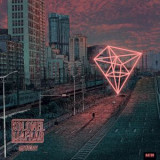
The curious cover art depicts a lone individual heading down an empty city street towards a large mysterious glowing object, evoking the common emptiness and struggle of urban life, and the search for meaning or just something better. The band envision the object to represent this album, offering a beacon to like-minded listeners. Kolonel Djafaar invite music enthusiasts on an immersive journey, to ‘Getaway’ from the daily grind of life, on an album reflecting diverse influences and marking a new chapter in their musical exploration.
Most audiophiles know Alan Parsons Project's I Robot by heart. Engineered by Parsons after he performed the same duties on Pink Floyd's Dark Side of the Moon, the 1977 record reigns as a disc whose taut bass, crisp highs, clean production, and seemingly limitless dynamic range are matched only by the sensational prog-rock fare helmed by the keyboardist and his creative partner, Eric Woolfson. Not surprisingly, it's been issued myriad times. Can it be improved? Relish Mobile Fidelity's stupendous UltraDisc One-Step 180g 33RPM box set and the question becomes moot.
Mastered from the original master tapes and pressed at RTI on MoFi SuperVinyl, I Robot comes to life with reference-setting realism on this numbered, limited-edition reissue. Boasting immaculate highs and lows, generous spaciousness, and see-through transparency that takes you into the studio with Parsons and Woolfson at Abbey Road, this definitive edition is designed to demonstrate the full-range capabilities of the world's best stereo systems while offering listeners the convenience of having all the music on one LP.
Featuring a nearly inaudible noise floor, this transcendent UD1S edition functions as a repeat invitation to savor reference-grade soundstages, immersive smoothness, sought-after instrumental separation, three-dimensional imaging, and consummate tonal balances. Able to be played back at high volumes without compromise or fatigue, it is a demonstration record for the ages – the likes of which are no longer being made. This is the very reason you own and invest in high-end audio gear.
The special characteristics of this UD1S version extend to the premium packaging. Housed in an elegant slipcase, the reissue features special foil-stamped jackets and faithful-to-the-original graphics. Aurally and visually, it is made for discerning listeners who prize sound quality and production, and who desire to fully immerse themselves in everything about this conceptual landmark. The Alan Parsons Project's most famous record deserves nothing less.
Inspired by and loosely based around the Isaac Asimov stories of the same name, I Robot delves into themes of artificial intelligence and technological dominance that make the record extremely relevant in the 21st century. Indeed, Parsons and Woolfson's pinnacle creation dovetailed with the ascendency of Star Wars, which itself is experiencing a rebirth in an age of self-driving cars, smart devices, and mindless automation. Lyrically, songs such as "The Voice" call into question human behavior – and their relationship to increasing robotic supremacy – in everyday life. Parsons and Woolfson reflect the associated paranoia, dichotomy, and transformation via shifting sci-fi arrangements steeped in drama and moodiness.
The absorbing tunes on I Robot also continue to fascinate due to their perfectionism and innovation. Borrowing from Pink Floyd's strategies, Parsons and Woolfson utilize a looped sequence on the title track to create new downbeats. "Some Other Time" employs two different lead vocalists and yet gives the illusion that only one is involved. Captivating strings, a piccolo trumpet, and bona fide pipe organ grace "Don't Let It Show." The origins of "Nucleus" stem from a unique analog keyboard concoction dubbed "the Projectron," devised by Parsons and electronic engineer Keith Johnson. Andrew Powell's orchestral and choral arrangements top it all off, with "Total Eclipse" arriving as a frightening track that presages the climactic "Genesis Ch. 1 V. 32."
Does man or machine win in the end? Decide as you get lost in Mobile Fidelity's UltraDisc 180g 33RPM LP pressing. Secure your numbered copy today!
More About Mobile Fidelity UltraDisc One-Step and Why It Is Superior
Mobile Fidelity Sound Lab's UltraDisc One-Step (UD1S) technique bypasses generational losses inherent to the traditional three-step plating process by removing two steps: the production of father and mother plates, which are created to yield numerous stampers from each lacquer that is cut. For UD1S plating, stampers (also called "converts") are made directly from the lacquers. Since each lacquer yields only one stamper, multiple lacquers need to be cut. Mobile Fidelity's UD1S process produces a final LP with the lowest-possible noise floor. The removal of two steps of the plating process also reveals musical details and dynamics that would otherwise be lost due to the standard multi-step process. With UD1S, every aspect of vinyl production is optimized to produce the best-sounding vinyl album available today.
MoFi SuperVinyl
Developed by NEOTECH and RTI, MoFi SuperVinyl is the most exacting-to-specification vinyl compound ever devised. Analogue lovers have never seen (or heard) anything like it. Extraordinarily expensive and extremely painstaking to produce, the special proprietary compound addresses two specific areas of improvement: noise floor reduction and enhanced groove definition. The vinyl composition features a new carbonless dye (hold the disc up to the light and see) and produces the world's quietest surfaces. This high-definition formula also allows for the creation of cleaner grooves that are indistinguishable from the original lacquer. MoFi SuperVinyl provides the closest approximation of what the label's engineers hear in the mastering lab.
- Mar Vista - Visions Part 1 Her Eyes Are Closed
- Kennlisch - Kennlisch
- Crystal Eyes - Crystalzed
- Warlus - Girl Like You
- Gerard Alfonsi - Fana Stickle
- Geoffroy - Viking
- Amphyrite - Symphonie Pour 3 Oeufs Brouilles
- Eole - Friendship
- Capucine - Les Elephants
- Rictus - Flashes
- Inscir Transit Express
- Polaris - Polaris
- Joel Boutolleau - Force
- Spotch Forcey - Frustre
- Demon Wizard - Black Witch
- Temple Sun - Voyage Sans Retour
- Chantal Weber - Ballade Aux Chataignes Tombees
- Jean-Claude Zemour - X Kmh
- Rhodes Co - Baoum
- Guidon Edmond Et Clafoutis - Stormy Sunday
"For a long time, I'd come across these discs without really understanding what connected them, apart from a button and that famous logo designed by René Dessirier. Then, with a little more digging, I discovered the "self-production" link. For choirs, schools, folk singers, young pop groups, popular homes and even great composers who engraved unique copies of certain recording sessions...
The French equivalent of the English "Derby Service", the Kiosque d'Orphée, formerly at 7 Rue Grégoire de Tours in the 6th arrondissement, was taken over by Georges Batard in 1967 and moved to 20 Rue des Tournelles in the 4th arrondissement of Paris. The adventure lasted until 1991. Georges Batard was a sound engineer who used a Neumann tube engraver to engrave acetates from the tapes he received, before printing the precious vinyls in the press factories of the day, where he was able to produce very small runs of between 50 and 500 copies.
Of course, there were other structures for releasing his records, such as Voxigrave or, later, FLVM, but none of them had so many records in their catalog. Le Kiosque d'Orphée was neither a label nor a publisher, but a structure that allowed you to press your own vinyl, at a time when it was quite an adventure to get your first 45 rpm or 33 rpm album released!
Georges Batard was described as passionate and conscientious. His son, bassist Didier Batard, wrote of him:
"Georges was passionate about recording and reproducing the stereo sound of his great passion, music. He paid close attention to distortion rates, signal-to-noise ratios, response curves, rise times and other damping factors in audio equipment. He was looking for the exact reproduction of concert hall sound in his living room (with the same sound level, if possible...). In the late '50s/early '60s, he found other sound enthusiasts in AFDERS (Association Française pour le Développement de l'Enregistrement et de la Reproduction Sonores). He became its honorary president. Every Saturday afternoon, its members met to test au- dio equipment. Their opinions were published in the monthly Revue du Son.
All you had to do was send in your tapes and choose the number of record copies you'd like to take home with you, so you could finally share your creations and, in a way, exist. You could opt for a generic sleeve, available in several colors, directly customizable with your name and credits, or you could design your dream sleeve yourself in your living room or at a printer's.
This "Do It Yourself" temple gave birth to some superb pouches. Stencilled, hand-written, illustrated with paintings, drawings, illustrations by friends or girlfriends of the time, photo prints hastily stuck in the middle of a blank, white sleeve, on which the traces of time would leave their imprints, so that collectors and the curious would come and buy them decades later, with the promise of a musical discovery, unfortunately not always fulfilled...
What most of these records have in common is the youth of their songwriters, whether or not they've had a career. Stories of buddies, of getting by and dreams of glory made up this catalog. Most of them were amateur productions, both in terms of the level of the musicians and the quality of the recordings, made on a two-track or, the ultimate luxury, a 4-track in a teenager's bedroom or parents' living room.
It was the beginning of the home studio, thanks to the advent of the Revox portable tape recorder. A bit of a shaky DIY system, but, in return, the luxury of setting no limits: one-sided tracks, no outside censorship, no artistic director, no manager, no Barclay or EMI/Pathé Marconi logos...
When you finally had your own record, you could give it away or sell it to friends, family or after concerts. You could also drop it off at the nearest record shop, with undisguised pride.
It was also a calling card that could be sent to radio stations or music labels, in the hope of launching a career...
Many of the protagonists in this story tried to sign with labels, but in those days, bridges were not so easy to build between one's hometown, or even one's village, and the major or more specialized label that might have released these records. At the time, the advertisements published in the press by the Kiosque d'Orphée opened up the field of possibilities for provincial composers. It was now possible to make their own record, without having to go through the process of signing with a label.
Some of the composers who have gone on to make a career have used this channel to release their first record or parallel projects (Claude Engel, Dominique A, Andy Emler, Michel Deneuve, Claude Mairet, Mick Piellard, Tristan Mu- rail...) and sometimes even single or very limited pressings of work or promotional copies (Bernard Parmegiani, Jef Gilson...).
This album is the conclusion of a long investigation, begun six years ago. It took a long time to find the records, scattered all over the place, in the homes of collectors and sometimes the musicians themselves, and then to listen to them, sometimes painstakingly, to unearth these moments of grace.
From this work, 23 tracks remain, but there are dozens of others that could have been included, so we had to choose, and the choice had to be as universal as possible. This selection is obviously not objective, but I hope you'll like it.
Today's music is raw, touching and powerful. "
Jean-Baptiste Guillot - Born Bad Records
Very limited vinyl pressing, 500 copies, housed in a full colour sleeve & printed inner sleeve & download. CD in a 4 panel digipack with a 4 page lyric booklet. New Heavy Sounds are always on the lookout for new bands that are looking to push the boundaries of what is considered as inhabiting the ‘heavy’ or ‘metal’ spectrum’. Stuff that pricks up the ears, a bold new voice within a maelstrom of genres and sub-genres. We believe we have found such a band. New York-based GUHTS (pronounced ‘guts’) declare themselves to be an ‘avant-garde post-metal project, delivering larger than life sounds through, deeply emotional music’. We are thrilled to be able to deliver that statement in the form of their debut album ‘Regeneration’. By their own admission, GUHTS' musical style is influenced not only by iconic metal bands like Gojira, Cult of Luna, YOB and Deftones, but more unconventional acts like Bjork, Subrosa, Isis, Julie Christmas, and even PJ Harvey. It’s undoubtedly heavy, with a strong feminist streak, it’s cathartic and weighty, a formidable debut for such a new band. Founded in 2020 as a passion project by Scott Prater (Witchkiss), and Amber Burns (Witchkiss) and then Dan Shaneyfelt (Black Mountain Hunger), GUHTS became its members’ main focus following the release of their first EP 'Blood Feather' which itself received rave reviews from the likes of Decibel Magazine, Invisible Oranges, The Obelisk, Cvlt Nation, and more. Brian Clemens Sleaping Dreaming) & Daniel Martinez (Nefariant) joined GUHTS in 2022 and the band swiftly started booking tours and making plans to record 'Regeneration'. Since then GUHTS have been steadily making a name for themselves with their powerful live performances., sharing stages with the likes of Yob, Cave in, Marissa Nadler, plus appearances at the Maryland Doom Fest, Crucial Fest and Ohio Doomed and Stoned Fest. ‘Regeneration’ is set to cement their status as one of the coolest and most interesting bands on the scene. Of the album, vocalist Amber says. "Regeneration" symbolizes the power of self-renewal, often overlooked. Embracing it means shedding old layers and welcoming new beginnings. Without this, life stagnates and is “sustaining”. Through regeneration, change becomes empowering, allowing new facets to emerge. It's a courageous, transformative process, inspiring others to overcome fear and embrace change. The album embodies the human spirit's resilience and capacity for growth. Musically ‘Regeneration’ is a powerful and intense series of songs, topped off by some seriously powerhouse and expressive vocal performances. It’s slow-moving chords, moving like sheets through sludge. High guitar lines above, ranging from piercing and shimmering to nasty. Drums pound but not without groove. There are strings, pianos and synths widening the palette. Atmospheric sludge, Metalgaze, maybe, but there’s also that link to the New York Noise lineage from The Velvets and Sonic Youth, becoming a type of post-hardcore in the process, while gaining a connection to metal partly due to the sheer heaviness. A raft of creative experimentation that pushes beyond the realm of post-metal. And then of course, the very first thing that hits you is Amber Gardner's unbelievable, hypnotising vocals - as scary as a banshee while also intimate and persuasive. Amber means it for sure and almost dominates the proceedings. Her lyrics are eclectic, thoughtful. Immersed in women's narratives frombooks like "Women Who Run With the Wolves" or works like "On Our Best Behavior" by Elise Loehnen. Amber advocates stepping beyond comfort zones, believing it's transformative for individuals and vital for Earth's future. Hokey occult rock it is not. In short ‘Regeneration’ is a bold and startling debut, that will reward and enthral listeners the deeper they delve into its many layers.
The concept of naught (Ø) has challenged Salvatore Mercatante throughout his musical career, specifically, trying to understand how the idea of ‘nothing’ fits into the realm of sound, and at the same time, exist in a world of influence at every turn. In the absence of everything, are we able to create something truly free?
As a lifelong New York-based musician, Mercatante’s influences and productions run a wide spectrum. Just as happy producing 80s-inspired horror soundtracks as he is refining acute drum patterns over and over again, Salvatore is the first to ask himself, where next? When a musician’s output can be influenced today by so much, and there is no self-defined or perceived artistic goal in mind, how do you start from a place of nothingness, again and again?
This approach has born many minimal and experimental albums of note in the past, but with Ø, Salvatore ended up with an almost controlled maximalist approach. Beginning with open spaces and allowing sonic textures to live and evolve past where you may expect, Ø allows the space between notes to become equally as important as the notes themselves. Walls of noise, soaring soundtracks, dense techno, glittering IDM, and minimal glitch, sit side-by-side to present an all-encompassing palette of sonic possibility.
Often, even without any intent, what can be born from nothing will somehow transpire back into something more recognizable. It’s human nature after all. A subtle fingerprint, as a sequence, melody, pattern, or drum kick. Whether Salvatore intended for this record to represent his defining sound or not, only time will tell.
Mastered by Giuseppe Tillieci @Enisslab, Rome, Italy.
Artwork by Brandon Locher
Written and produced by Salvatore Mercatante
A blistering advancement of the knife-sharp hooks and urgently efficient post-punk structures that they’ve spent over a decade refining since their formation in 2011, the band’s fourth album – and second on Specialist Subject - emerges from a period of flux for the band’s chief songwriting partnership of Emma Wigham (drums/vocals) and Mark Jasper (guitar/vocals). First came a move north to Yorkshire from their native London. “We had decorated a tiny, rented house in Mytholmroyd” Jasper explains. “We setup a practice room in the top of a mill nearby and tried to write music, which we did amid stress about money, and a fear of having made the wrong decision. We had left our jobs, friends and a nice but absolutely tiny flat in London behind, and moved to a small village in West Yorkshire.” Although they found the location to be beautiful, the transition from city life to rural turned out to be an odd fit – too much so, it turned out. From this relatively short stay in West Yorkshire, however, came a more permanent change as the couple welcomed their first child Ivy into the family. Although, they’re hesitant to put too much of Streams and Waterways influence on the shoulders of their young daughter – she arrived a year and a half into the album’s conception – there’s no denying that its themes of loss, birth, and being part of this eternal, momentary life were brought into sharp focus following their new arrival. “Streams and Waterways is about the struggle of looking at the clock, realising it’s actually going pretty damn fast and knowing that really you have no control over anything” Jasper confirms. Perhaps that explains the way that opener The Valley doesn’t even introduce itself before careering into a full-throttled, three-minute scuzzy rager that would approach the descriptor anthemic had it not been kicked and scuffed along the way; it’s maybe why the wiry, ferocious Choice You Make feels like a charge into a storm despite the uncertainty of what you might find. It’s perhaps why even when Witching Waves allow themselves respite on the pared down Open A Hole, there’s a churning anxiety that lies below the acoustic guitar and harmonising vocals: in many ways musically and thematically Witching Waves are relinquishing the control that’s always been a fixture of their music – with all the thrilling and nervous fallout that comes from that. Although the pair have since returned south (having relocated to Exeter), Streams and Waterways also serves as a document of their foray northwards. The surviving artefact from Jasper’s never-to-be-finished studio that he’d began to build in Yorkshire – following the ending of his London-based Sound Savers studio – the record is also the first to feature current bassist Will Fitzpatrick, who joined initially live on their support tour with Australian punks Camp Cope. Fitzpatrick – a key component of Liverpool’s DIY scene for two decades – quickly became a key part of the writing process. Recording sessions were done during periods of lockdown that allowed congregation, Jasper recalling a still unborn Ivy kicking hard during an early mix playback of It’s A Shame’s layered noise rock assault. “The song was about my past, a much harder time. But my future was egging me on” he says. It’s a neat summation of Streams and Waterways and its representation of the discomfort of life amidst the compulsion to ride on its journey regardless. It’s a record that finds Witching Waves looking into the future more than ever before, but still bristles with the rush of being in the moment – because ultimately, despite what may have happened or may yet come, the band’s strongest trait remains being able to keep you feeling in the present.
The Cornish improv noise / post-rock / shoegaze band’s cult classic debut, remastered and re-edited by Slowdive’s Simon Scott and available on vinyl for the first time since its release back in 2017, with original copies (released via The Weird Beard) now changing hands for triple figures. The three tracks that make up the album were recorded live, in one take. They are presented as captured snippets of the one song the band used to play, the continually existing and evolving ‘CPA’ (Cosmic Pink Alignment). It formed the blueprint for their unique mix of Sonic Youth squall and Slowdive-style beauty, which was later heard on 2021’s acclaimed debut for Sonic Cathedral, Sleepover. “People have told us they aren’t able to get a copy of the album, so a reissue was a good opportunity for us to re-look at it having learnt a bit more about the mastering process when we did Sleepover,” says guitarist Matt Ashdown. “Simon also mastered that, so we really trusted him and didn’t give him a brief – he knows we like to squeeze out as much low end as possible, which is why there is also a new cut; more low end means less space on the vinyl.” Simon’s magic touch has really elevated this stunning record, making it sound bigger, bolder and better than ever
Clear Marbled Vinyl[23,74 €]
To celebrate the 10th Anniversary of Major Arcana, Speedy Ortiz will release a remastered edition, on Carpark Records.
On their debut full-length, Western Massachusetts' Speedy Ortiz manages a bit of magic by conjuring the spirits of classic American indie rock, while twisting those ghosts into new shapes. It's easy to hear the influences of Helium, Jawbox, and Chavez on this album, as well as nods to their contemporaries including Grass is Green, Pile, and Roomrunner. Sweet vocal harmonies run up against gnarly distortion, aided by basic, chunky bass parts and heavy, fill-laden drums.
The album was recorded in a few days in November at Justin Pizzoferrato's (Dinosaur Jr., Chelsea Light Moving) studio, Sonelab, a huge space in an old factory in Easthampton, Mass. The sessions went from very early in the day until very late at night, with the band taking its time to experiment. Pizzoferrato's collection of old distortion pedals were utilized on both the record's guitars and vocals.
The theme of the occult and the supernatural runs deep through Major Arcana, inspired by singer-guitarist Sadie Dupuis' reading on black magic. Dupuis' sometimes knotty and abstract lyrics bring to mind fellow wordsmith Stephen Malkmus, while referencing horror film tropes, chemistry, and neuroscience. Major Arcana's literal translation is 'major mysteries,' a phrase from tarot cards. 'I don't write in a narrative way and am more concerned with use of language than meaning,' Dupuis says, 'so I like the open-endedness of the title and the way it invites interpretation.'
After too much time freelance writing and watching re-runs in a windowless Brooklyn basement, guitarist and songwriter Sadie Dupuis left New York City for the wilds of Northampton, MA in order to pursue a master's degree in poetry. In doing so, she began Speedy Ortiz, a self-recorded lo-fi project named after a minor character from the Love and Rockets comic series. Speedy Ortiz soon became something else entirely as bassist Darl Ferm, guitarist Matt Robidoux, and drummer Mike Falcone teamed up to form a full band, balancing abrasive noise with infectious earworms. The newly minted Speedy Ortiz quickly found an audience in the Boston DIY scene, playing frequently with their friends Pile, Grass is Green, Fat History Month, Sneeze, Krill, and Arvid Noe.
Almost immediately, the band recorded a two-song single, 'Taylor Swift' and 'Swim Fan,' with Paul Q. Kolderie (Pixies, Hole) and Justin Pizzoferrato (Chelsea Light Moving, Dinosaur Jr.), and self-released it in March of 2012. Shortly thereafter they spent a few weekends at the dingy yet atmospheric Sex Dungeon Studios in Philadelphia recording the Sports EP, a five-track, loosely conceptual 10' released that June on Exploding in Sound Records.
The creation of Major Arcana, their full-length debut, marks the evolution of Speedy Ortiz into a wholly collaborative effort. Darl leans toward basic, chunky parts, while Mike, a talented songwriter in his own right, helped arrange while also providing aggressive, boisterous drums. And Matt is a classically trained guitarist, but his experience in noise and experimental music comes through in his anti-melodic guitar solos, which counterbalance Sadie's angular, scalar guitar riffs and poppy vocals.
The end result is a band able to distill their influences and creative impulses into something at once dissonant and melodic, noisy yet undeniably pop.
This brand new EP from the Cornish improv noise / post-rock / shoegaze trio is their first release since their acclaimed second album Sleepover, which came out at the end of 2021. It features two long tracks and vocals from their Sonic Cathedral bandmate Lorena Quintanilla from Lorelle Meets The Obsolete. “One of our recording sessions resulted in a couple of tracks that had a very different energy to what we’ve recorded to date because there was less of a motif-based approach to them, which made them kind of scenic,” explains Mildred Maude guitarist Matt Ashdown. “We felt like they were the best opportunity we’ve had for doing a collaboration. We’ve played a few shows with Lorelle Meets the Obsolete and really clicked – we love what she does in that band and also as J. Zunz – so we asked her to do both tracks. It feels completely right – a natural pairing.” “I love collaborations and this one was really special,” adds Lorena. “I feel honoured to be part of this EP. I always enjoy seeing Mildred Maude, I feel that one can grasp eternity during their sets. With ‘Half The Sky’, the vocal melody and lyrics came out immediately, I felt like I was in a room jamming with them and everything was slowly flowing and growing. As for ‘Shifting’, it was another story. It is such a beautiful song, and I didn't want to mess it up. They liked one of the takes I sent, so I kept on that track for the first part and for the end I looped vocals on my DL4.” “Vocals change everything and give it a different air of completeness, but Lorena understands our music, so she was able to maintain its looseness,” concludes Matt. “We’re stunned by what Lorena has done; she’s given both tracks a different life
2023 Repress
Reiko Kudo first debuted on the Tokyo underground music scene in 1980 with NOISE, a duo which apart from herself under her then maiden name Reiko Omura on voice, guitar and trumpet featured Tori Kudo on organ. Their only album TENNO (1980 on Engel) is probably one of the most outstanding and uncompromising records of all time.
Like other pioneering female producers from Japan such as NON (of NON BAND), PHEW and HACO, who had all begun their startling careers in the early days of the japanese Punk era, Reiko Kudo can surely be regarded as one of the most unique, uncategorisable and daring voices in the entire field of electronic and experimental music ever.
RICE FIELD SLOWLY RIPING IN THE NIGHT was REIKO KUDO's second album under her own name. It features TORI KUDO (MAHER SHALAL HASH BAZ) and SAYA and TAKASHI UENO (TENNISCOATS) on various instruments. The recordings took place in 2000 at Reiko' s and Tori's house in the rural surroundings of Shikoku island.
All recorded music on this album sounds like it originates in a parallel dimension where time and key signatures simply don't exist, Some might describe this as outsider music, but this doesn't really begin to do justice to the quality of the tracks, there is nothing accidental or forced here, this is simply music created in a very different way. Yet again REIKO KUDO had conceived of something utterly beautiful.
"After producing the album "Souvenir de mauve" with Maher Shalal Hash Baz which we released on our label Majikick, the idea came to us, to release Reiko Kudo's work. For Reiko's work, we brought our recording equipment from Tokyo to Shikoku and recorded the entire album at her house.
The piano was positioned in a room with a high ceiling. We would set up our small recording equipment in the room and started to record. The basic tracks were recorded without any rehearsal and just a few overdubs were added on top of it. To have a distant sound on the recording, Tori played trumpet in the next room. The choir was standing outside the house, singing "Enya-totto, enya-totto" through the open window. It was early spring, I remember that it was still a bit cold and the members of the choir were freezing outside.
Reiko plays only at certain times of the day, so that we were able to complete only two or three recordings a day. Therefore we had plenty of free time. We went to a hot spring, to a cafe, or we tried pottery on a spinning wheel at Tori's workshop. It was a very rewarding time.
When this album was finished, we brought it to her to listen to. She said happily "I think this is the best work I have ever done." We felt that all our efforts were richly rewarded. Secretly, we thought the same, so we are delighted that this album will be re-issued." - Saya and Ueno (Tenniscoats), Tokyo 2018
Originally released on Majikick Records, Japan, 2000 Restauration and mastering by Detlef Funder at Paraschall Mastering, Düsseldorf. Vinylcut at Calyx, Berlin Translation by Miki Yui and Claus Laufenburg. Many thanks to Reiko Kudo, Tori Kudo, Saya and Takashi Ueno, Satoru Higashiseto.
For the exhibition “Flowers in 20th and 21st Century Art“, Eiko Ishibashi and Jim O‘Rourke had created the installation ”Lifetime of a Flower“ in which they set parameters but allowed the process itself to grow uncontrollably. Literally: in the garden of their Japanese house, they planted seeds and filmed the plant growing and thriving throughout the duration of the exhibition. Visitors were able to watch the stream in real time - and they heard a composition in which Ishibashi and O‘Rourke reflected the organic process in sound. The eponymous composition now available on LP, is an enigmatic and sophisticated layering of sounds, melodies and rhythms, noises from everyday life, all of which are repositories of associations, memories and expectations.
Hania Rani announces "On Giacometti" a tender meditation on the life and art of Alberto Giacometti and family. "On Giacometti" is a collection of beautiful recordings inspired by the renowned artist and family and features some of Rani's most profoundly delicate compositions to date. Invited by film director Susanna Fanzun, to score her forthcoming documentary on the legendary artist Alberto Giacometti, Hania Rani took herself to the Swiss mountains to compose in blissful isolation. As Rani explains eloquently below the compositions are based on improvised melodies, simple harmonies and structures and inspired by the silence of the mountains as Rani returns to her main instrument, the piano. The results are beguilingly reminiscent of her beloved debut album Esja, but with subtle extra layers of synthesiser, and on two tracks cello from friend and long-running collaborator Dobrawa Czocher.
'On Giacometti' is presented as a limited edition LP with bespoke packaging featuring Les Naturals - Chocolat (Gmund) sustainable recycled paperboard made from 100 % recovered paper with Foil Artwork by Łukasz Pałczyński. Plus Double sided printed insert and download code inside.
Hania Rani "On Giacometti":
‘When I was asked to compose a soundtrack for a movie about the family of Giacometti I didn't think twice.
Alberto Giacometti, a Swiss artist, who worked mainly as painter and sculptor has been one of my favourite artists for a long time. His individual style, aesthetics and the character of his creative process is still fascinating to me on many levels, so being able to dive even deeper into his universe, getting to know not only him but also his family was an opportunity that I couldn't miss. Little did I know how far this "yes" will take me - not only mentally and on a creative level but also physically. Thanks to the director of the documentary - Susanna Fanzun and by a stroke of luck and a couple of extra questions I decided to move for a couple of months to the Swiss mountains, not far away from the place where Giacometti was born and where the place he called home was, although he didn't live there. Susanna showed me a place close to her hometown where I could rent a studio and work on the soundtrack but also for my other projects. It was the middle of a winter, the area was full of ice and snow, just like only it can happen still in the mountains. The residency house was located in a valley surrounded by high mountains and the sun in the winter season was not coming up for too long during the day. I remember she told me about it and added "that not everyone is feeling well there, but I hope you will". I did.
Being almost separated from reality, the city and its entertainments, people rushing and everything that usually takes my attention I could fully concentrate on the music and soundtrack, spending most of the day with my own thoughts and having enough space to experiment and be free in a creative process. This soundtrack would probably be a very different thing if composed in a place that I am usually living in. I took this a chance to explore something new about myself as a composer and human being, taking the opposite direction that I would usually choose for myself.
The album "On Giacometti" includes the excerpts from the soundtrack, the most representative tracks and those which became a strong voice itself. Based a lot on improvised melodies, simple harmonies, structures and silence it reminds me of my debut album "Esja" which was partly composed and recorded in another chilly place - Iceland. All these components, both mental and physical, guided me back to my main instrument - piano, which I tried to redefine again with a language of the space that I was working in. The space is usually the key element that gives me the answer about the arrangement or character of the project. Space seems to be the first to appear and music is the invisible power which is changing its angels.’ Living surrounded by mountains makes you change the perspective and understanding of scale as Alberto Giacometti once famously wrote in a letter: It gives an impression that things that are actually far away, like mountains, are close and the other ones that are not so far away, like people, seem small, watched from a distance. You feel like touching the mountain top with your finger could be as easy as touching the tip of your nose. The snow additionally protects the whole area from the noise, each sound lands softly on the ground accompanied by echoes of immeasurable space. Each scratch or whisper is becoming an autonomic entity, opening the gate to the world of ghosts and lost spirits. It's easy to think that time stands still there, while nothing is moving and changing at the first sight. But the ubiquitous ice and snow reveal the passage of time, transforming frozen paysage into the wild stream of water - each day, hour and second. Melting and vanishing, clearing the space from white powder and noise consuming surface. Invisible process for a one night traveller, becomes painfully real for longer time settlers. Time flows with each new wave of sound coming through the river, reminding us that we are part of the cycle, which endlessly repeats itself.
buen clima is the solo project of producer, composer and DJ Felipe Castro (Santiago, 1993). Under that alias, he makes a sometimes clean, sometimes dirty mix of techno, house and electro, among other styles, with a soft spot for high BPMs, big, glossy pad sounds and interlocking rhythms. With a background in classical music and free improvisation, his productions and live performances often bring into them unexpected moments of noise, unusual influences and, above all, humour.
« This EP is comprised of five tracks written between 2020 and 2022, and it's got quite a bit of contrast among them, as well as some common threads. Some are gritty and noisy, some are a bit more amiable. However, they all show signs of recurring obsessions with certain rhythms, certain synth sounds, and share a sense of fun and humour. Each is an exploration of different production and synthesis techniques.
Big Butibit Chess Master Pro v.3.5 is on the lighter side, with some big warm pads and jazzy drum sound. It's kind of a sunny ghettotech cut, if that makes any sense. The synth part has a spontaneous feel, it was recorded pretty much in one take.
>:) Is a heavier club track, made to go a little evil, a little mischievous. It's full of squelchy sounds and has a drum part that sounds like a never ending Street Fighter combo, or a bunch of beer bottles being opened one after the other.
Forma/Contenido is also on the darker side, with a droning, oppressive mass of sound that accumulates and evolves all throughout the track. It's very much inspired by the piece "I am sitting in a room" by Alvin Lucier, and is, in fact, a sort of live version of the same premise, a long feedback loop of the voice and the beat recorded and played in the studio.
Arturito is how we call R2D2 in Latin America (or at least in Chile), and it's also my father's name. We both love the original Star Wars and this is a little tribute to that. I had a lot of fun making this track, using only Ableton's Operator synth to make 90% of the sounds. It's a bouncy, evolving electro cut with a lot of quirky bleeps and bloops.
Pequeña midi is definitely the heart of the EP, a slower track made for my cat, who's sitting in my lap as I'm writing this. The rhythms and the sounds are a musical representation of how I imagine her life is like, and of her little games, running around the house. In terms of style I feel like this is what it would sound like if Yellow Magic Orchestra did a slowed down footwork track (play it at 160 BPM if you don't believe me!). »
Lost in the depths of space, AAKAARA takes listeners on a journey to the outer limits of the sonic universe with their latest album “Obsidian Promises”. Blending influences from punk and metal, EBM, architectural design and certain celestial objects, AAKAARA offers a fresh take on industrial techno.
This body of work is dark and brooding, full of haunting and thought-provoking soundscapes. Metallic and cold one moment, blisteringly hot the next. Pounding drums create searing rhythms, acid-drenched synths weave abrasive textures, and noise permeates the stereo field. Inspired by the mysterious and alluring world of black holes, the producer explores the beauty of extremes through sound. “If you know my work or me,” AAKAARA says, “it’s no secret that I have a spiritual connection to, and an obsession with, black holes.
It’s not about doom and gloom, but about beautiful extremes: infinite calmness, ultra-high energy, being deeply centered, and inevitable attraction.” “I try to sonify this in a naive sense. It isn’t an attempt at science; it’s a way for me to practice a makeshift spirituality about these entities through craft and functional dance music for people.”
Spirituality and stellar inspiration were essential to AAKAARA’s life during the three years they spent between Los Angeles and London, while writing this album. It provided a sonic home during a period of transition, when they didn’t feel at home and didn’t have access to a studio.
Everything was made “in the box” using only Ableton 10. After collecting guitar pedals and amplifiers for years, AAKAARA has shifted away from a hardware-focused mindset and is now more invested in the conceptual framework, narrative, and cultural implications of their work. Visuals also play an integral role in this maximalist experience.
The outer sleeve (front and back cover) conveys the “big ideas” visually, while the companion poster includes custom typography, detailed drawings, symbol design, and poetry. The poetry provides a textual counterpoint to the lyric-less music, written in parallel but later stages of the production process. The visual identity of this work is inseparable from the music, describing it in an integral way. It’s the other side of the coin, not simply an accompaniment. With its spiritual connection to the infinite and mysterious, “Obsidian Promises” harnesses the beauty and intensity of celestial entities as musical inspiration, transforming the science into mystical, narrative-driven sonic experience. Get ready for a ride through the unknown as AAKAARA’s latest offering takes you on a high-energy trip through the black hole’s playground.
The axolotl is a species of salamander native to Mexico, living in a state of larva and having the capacity to regenerate damaged organs. This brief introduction doesn’t tell us if the axolotl sings. But, for the one that concerns us here: yes indeed.
In Paris, at the end of the 1970s, Etienne Brunet and Marc Dufourd would improvise regularly, inspired by some other saxophone-guitar duos: Claude Bernard-Raymond Boni firstly, then Evan Parker-Derek Bailey. When Jacques Oger (a saxophonist whom Brunet had met at a workshop given by Steve Lacy at the Châteauvallon festival in 1977) joined the duo Brunet-Dufourd, Axolotl was born.
Iconoclastic, the trio was bound to please Jac Berrocal, and he proposed to record their first album on the label ‘D’avantage’. In spring 1981 three days were just enough for Oger (tenor and barytone saxophones), Brunet (alto saxophone, bass clarinet and ‘things’) and Dufourd (electric guitar) to complete Axolotl, the first album by a group which would record ... two.
If there was a collective of iconoclasts, the trio would be there with some relatives: Alterations, Fred Frith, John Zorn, the ROVA Saxophone Quartet... and then because we mention a collective, Axolotl steps (considerably) beyond the domain of free improvisation to lean towards jazz (“Illusion”, “Paris, froissé”), No Wave (“Ombre pilée”, “Trottoirs défunts”), contemporary (“Oreiller”, “D’autres seuls”), and even what we could call ... acid fun (“Dehors”).
Above all, Axolotl wanted to really get to grips with sound via an expression as direct as it was liberating, as can be heard on “Ozone, flocon, torsion”, producing a noise that, even today pierces the brain. All we can hope is that now, thanks to this wonderful reissue, listeners will be able, like the axolotl, of regeneration.
Elias Devoldere is the drummer in bands such as Nordmann, Hypochristmutreefuzz, Suwi, Robbing Millions, and John Ghost. Following an ep, Kaiku, released last summer, Bloomed > Exploded is his debut full length as a solo artist. Besides writing and singing, he composed, played, recorded, and produced the bulk of the ten songs himself. 'Everything blooms', he explains the title of his first album. 'Until it explodes, and something else is able to grow from it'. In this case, what came full cycle is an intimate coming-of-age album of intangible atmospherics, crisp melodies, and understated rhythmical patterns.
BLOOMED >
'As a kid, I just wanted to play football, you know?', says Elias. 'But when I was eight years old, my parents made me choose between drawing school and music school'. And thus began a dedication to rhythm for Elias. At 18, he enrolled at the Royal Academy of Fine Arts in his hometown of Ghent, opting for a jazz education. 'Not because I aspired to become a master 'jazz drummer', but to learn music, to become a good musician'. It was at the academy that, after an impromptu jam session, Nordmann first came together. The exhilarating instrumental quartet went on to win second place at the prestigious Humo's Rock Rally in 2014, and released three albums to critical acclaim, with a new one in the works.
Devoldere, in the meantime, had completed his degree with a craving - ironically - for music. 'I was in over my head with jazz for such a long time, and went on an epic discovering spree. Moses Sumney, James Blake, Kendrick Lamar, Connan Mockasin... Lots of stuff I had missed over the years. In a way, I reconnected with the kind of music I was into before jazz dominated my life. Pink Floyd was my first love, for instance, and later Radiohead proved to be a game changer. Diving back into those kind of sounds, I was feeling the urge to follow my old dreams, of being a solo artist - or something more than 'just' a drummer, anyway. So I bought a guitar, an interface for my laptop, and started writing'.
EXPLODED
When he released his 5 track ep Kaiku in the summer of 2021, it summarised a lot of firsts for Elias. First time writing lyrics, first time as a lead vocalist, first time recording his own songs all by himself. The songs had been around for a while, but taking those leaps took a long time. 'Making the ep helped me to find my voice, in every way possible'. Still, in the aftermath of the pandemic, the songs on Bloomed > Exploded sprouted in a time of upheaval. 'Musically the album is quite serene, gentle even. But the themes speak of internal unrest and uncertainty. There are a lot of questions on the album, as it turned out. Duality, as the title suggests, coming from the struggle between a wish to turn everything upside down and a search for peace. Honestly: the prospect of my 30th birthday was messing with my head too'.
Recording during a period of solitude in France, Elias initially relied heavily on synthesizers and drum machines. 'Explode / Boalis was one of the first songs I wrote for this album, and pivotal for its atmosphere, based mostly on electronic elements. Later, I did use 'real' drums on most of the other songs, though, and contributions from other musicians, but the overall mood is very cohesive'. 'Pure', that's how Bruno Ellingham, the UK engineer who mixed the album, described it. Much to the delight of Elias, who reached out to Ellingham because of his previous work with bands such as Massive Attack and Portishead. 'Hearing the end result, I thought he really captured the essence of the original demo's. For me, that adds to this album being a sincere reflection of my true self. 'Take a dive/ Into the place where it's more quiet', as I sing in the last song, that kind of sums it up for me'.
After several years of intense performance activity, the Italian sound artist and
vocalist SARA PERSICO releases her debut EP "Boundary", to be followed by a full album.
Born and raised in Naples, Berlin-based sound artist / vocalist SARA PERSICO cut her teeth
experimenting on the fringes of Naples' fiery underground experimental/noise scene, developing a
technique that would integrate her voice with analogue electronics, field recordings, and samples.
PERSICO holds a BA from the Conservatory of Napoli and a Master's Degree from the
Conservatory of Bologna and gained several residencies and scholarships like Temp Studio,
Lisbon (2018), Amplify Berlin (2021), Sonoscopia, Porto (2022), Sardegna Teatro - V2 Unstable,
Argentiera (2022). She presented her work in festival and events like Ballroom Blitz Beirut, CTM
Festival, Ortigia Sound System Festival/Bosco Colto, Codex Club, Documenta Fifteen, Dancity
Festival, Radical DB, Life Libertas Festival, among others.
As improviser and performer, she has collaborated with a wide spectrum of artists, joining EVELYN
SAYLOR's vocal ensemble for CATERINA BARBIERI's acclaimed "light-years" show at Rewire
Festival and London's Southbank Centre, and worked on projects alongside THE EX's ANDY
MOOR, TONY ELIEH (KARKHANA), LUDWIG WANDINGER, DIRAR KALASH, ELVIN BRANDHI,
RECORDAT, and many others.
She's also a fearless DJ who's able to straddle vastly different worlds, offering just as much
attention to abstract electronic sounds as she does bass-heavy club music, noise, and vocal
experiments. She is currently a resident on Bethlehem's Radio Alhara.
All this energy and experience radiates from her solo debut "Boundary": PERSICO's expressive
vocals play a central role, but her command of precisely sculpted electronic textures and dynamic
rhythmic structures is just as crucial to the overall experience.
Deconstructed beats, experimental voice, harmonic music, distorted rhythms craft a dense
introspective work that explores intimately the boundaries of the self. Identity rupture as a survival
technique, a voice-research climax with an unconventional approach - multi-faceted ideas melt in a
heavy-aesthetical 6 track solo EP that brings together different styles like noise and clubby sounds.
Electronic music legend and head of Editions Mego, Peter Rehberg, teams up with zeitkratzer mastermind Reinhold Friedl. 3 side-long pieces melting electronic / contemporary avantgarde. Uncompromising.
When Peter "Pita" Rehberg and Reinhold Friedl first met each other, they did not like each other "at all," as Friedl emphasises with a hearty laugh. The two would however eventually bond over the years thanks to a mutual respect for each other's music. In the summer of 2021, they entered the studio together for the first time. Their joint album for Berlin's Karlrecords is a faithful document—no editing, no overdubs—of their improvisations during two recording sessions shortly before Rehberg's sudden and untimely passing on July 22nd of that year. The three pieces see Rehberg working with electronics and Friedl with his inside piano, proving that they had indeed managed to find a common ground—up to a point where it at times becomes hard to tell who plays what on this record.
Friedl ran into Rehberg in Zbigniew Karkowski's tiny Tokyo apartment in 1999 while organising the first edition of the Off-ICMC that was set to take place in the following year. "I came uninvited and slept a night at Zbigeniew's before Peter arrived and I had to move out," remembers Friedl, who ended up inviting the Mego founder to perform at the Off-ICMC even though he found it hard to relate to his music. "We had very different backgrounds: he came from industrial and I had roots in classical music and improv, a high-brow prick!" After having met several times at different concerts without ever really speaking to each other in the following years, a concert in Vienna in the late 2010s marked a turning point in their relationship (or lack thereof). Playing their sets back to back and loving every second of what the other was doing, the two finally clicked on musical level. "We met for dinner on each of the three following nights!," remembers Friedl.
The two would go on to become good friends, meeting regularly to discuss music and everything else while both were living in Vienna just a few minutes away from each other. Rehberg put out Friedl's collaboration with Eryck Abecassis, "Animal Électrique" on his Editions Mego label in 2020 and eventually they entered the studio twice for sessions that were completely improvised with no prior preparation. "Caciara," "Chiasso," and "Clamore"—named retrospectively after three Italian words for "noise"—capture the spontaneity of two artists who had always been outliers in their respective fields finding a common ground in sprawling dynamics and sonic intensity as well as enabling each other to expand their individual sound palettes. "Peter gave me cover," explains Friedl. "I had the feeling that I was able to do things I otherwise wouldn't play."
- A1: ) Siamese
- A2: ) First Day On A New Planet
- A3: ) Pow R Ball
- A4: ) Kewpies Like Watermelon
- A5: ) Phasers On Stun/ Sola Kola
- A6: ) Black Hole Love
- B1: ) Velvy Blood
- B2: ) Plastic Ashtray
- B3: ) Death 2 Everyone
- B4: ) Pachinko
- B5: ) (-)
- B6: ) Kernel
- B7: ) Road Song
- C1: ) It Is
- C2: ) On Yr Mind
- C3: ) Teen Dream
- C4: ) Majesty
- C5: ) Burriko Girl
- C6: ) Got The Sun
- D1: ) Silver Krest
- D2: ) Sucker/ Kitty Litter
- D3: ) Lo-Fi Scary Balloons
- D4: ) The Power Of Negative Thinking/ The Love That Brings You Down
Remastered reissue of “We Are Urusei Yatsura” (originally released in 1996), with bonus vinyl of unreleased demos and B-sides
Celebrating the 30th Anniversary of the founding of Glasgow “Geek Rock” band Urusei Yatsura
– Double Clear-Vinyl Reissue of 1996 Album
In the days before “landfill” indie, and in rebellion against a developing Britpop orthodoxy, there were some weird but melodic bands coming of age outside London that drew inspiration from the US underground and the sparkly retro-futurism of Japan. Primitive guitar noise with art rock leanings, post punk DIY and fanzine culture. The best known of these bands was maybe Urusei Yatsura; “noisy stars”, named in honour of Rumiko Takahashi, legendary manga creator.
Back in 1996, after several increasingly well-received 7’s, the band travelled to Leamington Spa to record their debut album with John Rivers, producer of Swell Maps and Glasgow scene godparents, The Pastels. The resulting album won the group legions of new fans and gained them their first Independent #1 chart placing, alongside peers Ash and Super Furry Animals.
“These were fertile years in Glasgow, a scene with no name, no single sound, where the magic thread tying everyone together was words and works so personal, they couldn’t be mistaken for anyone else’s. ‘We Are Urusei Yatsura’ is a cascade of ‘why not?’ thinking. The way ‘Phasers on Stun’ spirals into ‘Sola Kola’; the sunburned 23-second improv at the end of ‘Pachinko’; the slack-echoing strings of the outro to ‘Road Song’ sprayed with the shrapnel of toy electronics. Pure pop magic, Ren & Stimpy on upstairs, ray-guns, Ian’s homemade walkie-talkie speaker, a beatbox, all sealed with a “Talking Tina” doll’s emphatic endorsement: “I love it”” – Nick Soulsby
The vinyl-only double LP set comprises the original 1996 album recorded by John Rivers, accompanied with an extra disk of unreleased demos, rare singles and B-sides which have not been available since the 90’s. It documents the time leading up to the release of the LP and the singles that came from it, capturing the development, lost pop moments and essential experiments from the eccentric and joyful Glasgow band. The cover has been completely remixed using archive
photos and artwork from the time, with new interviews and extensive notes. The release marks 30 years since the official birthday of the band, 9/3/93.
“When I drove the transit van that took them down to Leamington Spa to record their first proper LP, there was a sense of quiet, assured anticipation. I couldn’t wait to hear it and when I came back a couple of weeks later to pick them back up, I remember so clearly when they played it from the van’s tape deck. Fergus and Graham were hunched over, focusing intently on what they wanted to change about the mix. The reverb wasn’t right or something. Maybe they didn’t like how high the vocals were in the mix. I said to them, you’re listening to the details, but missing what is most important–this is a fantastic record! It was. It is. It is a fantastic record. They were a brilliant live band and I am so lucky to have been able to have been there to see their formation.” – Alex Kapranos.
If we want to look into the future, we have to start considering the implications more holistically. All too often, science fiction is a dystopian projection of the current era's grimmest realities spiked with pragmatic historical hindsight - but what if instead it was able to reflect our needs, hopes, and dreams? On "SPINE", award-winning Danish composer SØS Gunver Ryberg considers a sustainable alternative, buoyed by interconnectedness, empowerment, and understanding. Channeling her dextrous sound design into advanced, time-bending music that fluctuates through techno, experimental ambient, and soundsystem-vibrating bass music, she maps out an artistic landscape that's futuristic and complex, but never oppressive.
Ryberg is an accomplished producer who's developed her sound over many years, playing concerts and working tirelessly on video game soundtracks, film scores, dance, performance, and multichannel installation pieces. Her first solo album "Entangled" appeared in 2019 on Berlin's esteemed Avian imprint, and was praised for its sensitive approach to noise and abstracted techno, while its EP-length followup "WHYT 030" was nominated for the Nordic Council's prestigious music prize this year. "SPINE" is the inaugural release on Ryberg's own label Arterial, and stands as a thematically dense statement of intent. The label provides a platform to extend Ryberg's artistic goals and reflect not just her world but a world she wants to see develop in the future: somewhere connected and creative, where exploration and free expression is prioritized over genre division and petty compromise.
This philosophy is central to the sounds on "SPINE", which have been carefully sculpted to accurately lay out Ryberg's worldview. Opening track 'Unfolding' presents a sonic ecosystem that flourishes as it spreads itself out, and quivering kick drums vibrate alongside unstable atmospherics. There's the faint fingerprint of Chain Reaction's notional dub techno in there somewhere, but Ryberg interrupts the thought before it can coagulate, assuring the listener that her vision isn't ponderous but playful and optimistic. This mood flickers into view again on the title track 'Spine', as fragmented breaks rumble beneath disorienting synths, faint images of a life we once knew refracted into cosmic beams of light. 'Mirrored Madness' meanwhile is warm, assertive, and optimistic, contrasting skittering cybernetic percussion with dense, enveloping harmonies.
When she pushes rhythm into the background, like on the cinematic 'We tumble on the edges', Ryberg's compositional skill is placed under the microscope. We're presented with the opportunity to examine another dimension of her work, the mystery beneath the stone, hearing saturated, alluring pads infused with hidden harmonies. In these moments, Ryberg implores all of us to consider the environment, asking us to think about the earth's essential nutrients on the dreamy 'Phosphorus Cycle', and what we might do to save ourselves on the delirious 'Where do we go from here'. Ryberg's concern isn't chastising, it's laid out in a warm embrace. The future could still be bright - there's something beautiful in the complexity if you just take the time to look closely.
- 1: It Must Really Suck To Be Four Year Strong Right Now
- 2: Tonight We Feel Alive (On A Saturday)
- 3: Wasting Time (Eternal Summer)
- 4: Nineteen With Neck Tatz
- 5: Find My Way Back
- 6: What The Hell Is A Gigawatt
- 7: One Step At A Time
- 8: This Body Pays The Bill$
- 9: Paul Revere’s Midnight Ride
- 10: Flannel Is The Color Of My Energy
- 11: Enemy Of The World
- 12: Listen! Do You Smell Something?
- 13: Bad News Bears
- 14: Cavalier
Brown/Gold Vinyl[28,36 €]
New England rock band Four Year Strong have announced a re-recorded version of "Enemy of the World” complete with an updated depiction of the album art. The album originally came out over 10 years ago and was a breakout record for the band. Now it sees new production and 4 extra b-sides. "We decided to re record EOTW first and foremost to be as cool as Taylor Swift, but secondly because we wanted to be able to repress the vinyl and offer it to fans that haven’t been able to get it since the record came out." says Alan Day. He continues "It was really interesting to revisit all of the songs down to every detail, getting to kind of relive it in a way. We recorded the drums with Will Putney (who worked on the original EOTW as a engineer), did the rest by ourselves at Dans house, and then had Will work his magic on it and mix and master it. We had just worked with Will for the first time since 2010 on our new album Brain Pain, and figured it would be perfect to work with Will as he knows FYS old and new more than anyone. So give it a listen, come out to the tour, and party like it’s 2010 again."
- 1: It Must Really Suck To Be Four Year Strong Right Now
- 2: Tonight We Feel Alive (On A Saturday)
- 3: Wasting Time (Eternal Summer)
- 4: Nineteen With Neck Tatz
- 5: Find My Way Back
- 6: What The Hell Is A Gigawatt
- 7: One Step At A Time
- 8: This Body Pays The Bill$
- 9: Paul Revere’s Midnight Ride
- 10: Flannel Is The Color Of My Energy
- 11: Enemy Of The World
- 12: Listen! Do You Smell Something?
- 13: Bad News Bears
- 14: Cavalier
Black Vinyl[24,74 €]
New England rock band Four Year Strong have announced a re-recorded version of "Enemy of the World” complete with an updated depiction of the album art. The album originally came out over 10 years ago and was a breakout record for the band. Now it sees new production and 4 extra b-sides. "We decided to re record EOTW first and foremost to be as cool as Taylor Swift, but secondly because we wanted to be able to repress the vinyl and offer it to fans that haven’t been able to get it since the record came out." says Alan Day. He continues "It was really interesting to revisit all of the songs down to every detail, getting to kind of relive it in a way. We recorded the drums with Will Putney (who worked on the original EOTW as a engineer), did the rest by ourselves at Dans house, and then had Will work his magic on it and mix and master it. We had just worked with Will for the first time since 2010 on our new album Brain Pain, and figured it would be perfect to work with Will as he knows FYS old and new more than anyone. So give it a listen, come out to the tour, and party like it’s 2010 again."
Most audiophiles know Alan Parsons Project's I Robot by heart. Engineered by Parsons after he performed the same duties on Pink Floyd's Dark Side of the Moon, the 1977 record reigns as a disc whose taut bass, crisp highs, clean production, and seemingly limitless dynamic range are matched only by the sensational prog-rock fare helmed by the keyboardist and his creative partner, Eric Woolfson. Not surprisingly, it's been issued myriad times. Can it be improved? Relish Mobile Fidelity's stupendous UltraDisc One-Step 180g 33RPM box set and the question becomes moot.
Mastered from the original master tapes and pressed at RTI on MoFi SuperVinyl, I Robot comes to life with reference-setting realism on this numbered, limited-edition reissue. Boasting immaculate highs and lows, generous spaciousness, and see-through transparency that takes you into the studio with Parsons and Woolfson at Abbey Road, this definitive edition is designed to demonstrate the full-range capabilities of the world's best stereo systems while offering listeners the convenience of having all the music on one LP.
Featuring a nearly inaudible noise floor, this transcendent UD1S edition functions as a repeat invitation to savor reference-grade soundstages, immersive smoothness, sought-after instrumental separation, three-dimensional imaging, and consummate tonal balances. Able to be played back at high volumes without compromise or fatigue, it is a demonstration record for the ages – the likes of which are no longer being made. This is the very reason you own and invest in high-end audio gear.
The special characteristics of this UD1S version extend to the premium packaging. Housed in an elegant slipcase, the reissue features special foil-stamped jackets and faithful-to-the-original graphics. Aurally and visually, it is made for discerning listeners who prize sound quality and production, and who desire to fully immerse themselves in everything about this conceptual landmark. The Alan Parsons Project's most famous record deserves nothing less.
Inspired by and loosely based around the Isaac Asimov stories of the same name, I Robot delves into themes of artificial intelligence and technological dominance that make the record extremely relevant in the 21st century. Indeed, Parsons and Woolfson's pinnacle creation dovetailed with the ascendency of Star Wars, which itself is experiencing a rebirth in an age of self-driving cars, smart devices, and mindless automation. Lyrically, songs such as "The Voice" call into question human behavior – and their relationship to increasing robotic supremacy – in everyday life. Parsons and Woolfson reflect the associated paranoia, dichotomy, and transformation via shifting sci-fi arrangements steeped in drama and moodiness.
The absorbing tunes on I Robot also continue to fascinate due to their perfectionism and innovation. Borrowing from Pink Floyd's strategies, Parsons and Woolfson utilize a looped sequence on the title track to create new downbeats. "Some Other Time" employs two different lead vocalists and yet gives the illusion that only one is involved. Captivating strings, a piccolo trumpet, and bona fide pipe organ grace "Don't Let It Show." The origins of "Nucleus" stem from a unique analog keyboard concoction dubbed "the Projectron," devised by Parsons and electronic engineer Keith Johnson. Andrew Powell's orchestral and choral arrangements top it all off, with "Total Eclipse" arriving as a frightening track that presages the climactic "Genesis Ch. 1 V. 32."
Does man or machine win in the end? Decide as you get lost in Mobile Fidelity's UltraDisc 180g 33RPM LP pressing. Secure your numbered copy today!
More About Mobile Fidelity UltraDisc One-Step and Why It Is Superior
Mobile Fidelity Sound Lab's UltraDisc One-Step (UD1S) technique bypasses generational losses inherent to the traditional three-step plating process by removing two steps: the production of father and mother plates, which are created to yield numerous stampers from each lacquer that is cut. For UD1S plating, stampers (also called "converts") are made directly from the lacquers. Since each lacquer yields only one stamper, multiple lacquers need to be cut. Mobile Fidelity's UD1S process produces a final LP with the lowest-possible noise floor. The removal of two steps of the plating process also reveals musical details and dynamics that would otherwise be lost due to the standard multi-step process. With UD1S, every aspect of vinyl production is optimized to produce the best-sounding vinyl album available today.
MoFi SuperVinyl
Developed by NEOTECH and RTI, MoFi SuperVinyl is the most exacting-to-specification vinyl compound ever devised. Analogue lovers have never seen (or heard) anything like it. Extraordinarily expensive and extremely painstaking to produce, the special proprietary compound addresses two specific areas of improvement: noise floor reduction and enhanced groove definition. The vinyl composition features a new carbonless dye (hold the disc up to the light and see) and produces the world's quietest surfaces. This high-definition formula also allows for the creation of cleaner grooves that are indistinguishable from the original lacquer. MoFi SuperVinyl provides the closest approximation of what the label's engineers hear in the mastering lab.
100% GALCHER was by all accounts a game-changer when it landed in 2013 as an hour of original music from a relatively unknown producer ushered in by the beloved mix series Blowing Up The Workshop. Galcher Lustwerk's signature sound — a smoky stream-of-consciousness baritone shadow-boxing with beats, informed by funk, rap, rhythm, and blues — felt like an epiphany, impossibly hypnotic and complete. Resident Advisor writes, "100% GALCHER laid out a louche, lysergic and resolutely black take on deep house." Pitchfork remembers the music's immediate impact: "It's the sort of gem you felt inclined to pass around” — and by year-end list time, word-of-mouth intensified. It was Resident Advisor and Juno's mix of the year, and earned a top-ten placement in FACT Magazine's albums list, as well as Philip Sherburne's personal rundown for Spin." Since then, select songs from 100% GALCHER have seen small-run pressings, while the album has lived primarily on SoundCloud and YouTube as a low-key cult legend. The gateway into Lustwerk's now well-established catalog, known for its reliability as a late-night listen and its prophetic vision for the near future of underground dance music. RA would later name it a mix of the decade, citing its influence and imagination: “Original in every sense — unknown, unheard and unbelievably good.” In late 2022, marking ten years since he first recorded the material, Lustwerk returns to Ghostly International to release 100% GALCHER as a remastered limited-edition double LP.
Lustwerk is a product of the Midwest. Growing up in Cleveland, he'd tape over his parents’ cassettes and spend hours at his family computer recording loops and designing artwork for the jewel cases of burned CDs. In high school, he turned to Ableton Live and absorbed every electronic music magazine he could find at the local Borders Books store. In excerpts from the 100% GALCHER liner notes, Lustwerk looks back: "My dad drove me to this shop on the westside Bent Crayon, where I would get anything the blogs told you to get + whatever the clerk recommended. CDs stayed in their packaging, there was always an overflow of vinyl stacked on the floor. I was too shy to listen to anything before buying."
As a college student at RISD, he played in noise bands, plugged into Providence's DIY scene via Myspace, and started DJing weeknights at bars downtown. There he connected with Young Male and DJ Richard, who would go on to found White Material Records and offer their third release to Galcher Lustwerk, an alias realized via CAPTCHA test, a perfect artifact of its internet age. By 2012, Lustwerk had drifted to New York City and settled into a graphic design job, quickly growing disenfranchised by office culture. "Some days I felt like a token, other days I felt invisible." At night, he and his friends were carving out their own space
MILK GREY VINYL
100% GALCHER was by all accounts a game-changer when it landed in 2013 as an hour of original music from a relatively unknown producer ushered in by the beloved mix series Blowing Up The Workshop. Galcher Lustwerk's signature sound _ a smoky stream-of-consciousness baritone shadow-boxing with beats, informed by funk, rap, rhythm, and blues _ felt like an epiphany, impossibly hypnotic and complete. Resident Advisor writes, "100% GALCHER laid out a louche, lysergic and resolutely black take on deep house." Pitchfork remembers the music's immediate impact: "It's the sort of gem you felt inclined to pass around" _ and by year-end list time, word-of-mouth intensified. It was Resident Advisor and Juno's mix of the year, and earned a top-ten placement in FACT Magazine's albums list, as well as Philip Sherburne's personal rundown for Spin." Since then, select songs from 100% GALCHER have seen small-run pressings, while the album has lived primarily on SoundCloud and YouTube as a low-key cult legend. The gateway into Lustwerk's now well-established catalog, known for its reliability as a late-night listen and its prophetic vision for the near future of underground dance music. RA would later name it a mix of the decade, citing its influence and imagination: "Original in every sense _ unknown, unheard and unbelievably good." In late 2022, marking ten years since he first recorded the material, Lustwerk returns to Ghostly International to release 100% GALCHER as a remastered limited-edition double LP. Lustwerk is a product of the Midwest. Growing up in Cleveland, he'd tape over his parents' cassettes and spend hours at his family computer recording loops and designing artwork for the jewel cases of burned CDs. In high school, he turned to Ableton Live and absorbed every electronic music magazine he could find at the local Borders Books store. As a college student at RISD, he played in noise bands, plugged into Providence's DIY scene via Myspace, and started DJing weeknights at bars downtown. There he connected with Young Male and DJ Richard, who would go on to found White Material Records and offer their third release to Galcher Lustwerk, an alias realized via CAPTCHA test, a perfect artifact of its internet age. By 2012, Lustwerk had drifted to New York City and settled into a graphic design job, quickly growing disenfranchised by office culture. "Some days I felt like a token, other days I felt invisible." At night, he and his friends were carving out their own space, throwing parties in small basements, office buildings, and off-beat karaoke bars in Manhattan, influenced by series such as Mr. Sunday in Gowanus and The Bunker at Public Assembly. The lifestyle started to bleed into Lustwerk's musical vision. He remembers the night it clicked in Providence, partying and listening to tunes with Morgan Louis and Alvin Aronson. He went back to New York and pieced together his bedroom setup: a Dave Smith Tempest drum machine, a Waldorf Blofeld synthesizer, and a TEAC cassette recorder. Early snippets went straight to SoundCloud, where Lustwerk tested the crowd. Comments and messages offered instant feedback. One DM proved to be the greenlight: from Matthew Kent, an invitation to his burgeoning mix series Blowing Up The Workshop. 100% GALCHER traveled fast and far. A phenomenon he could only enjoy for a short period before discovering that nearly all the masters of the tracks got wiped by water damage to his computer. "The only copies were now on the 192kbs mp3 mix I sent Matt." Until now, after Lustwerk revived the lost tracks and handed them to Josh Bonati for remastering. "The original mix was never mastered so I hope older fans can find something new here." Hearing the enhanced set for the first time delineated by tracklist reveals this was a proper album all along. Sly synth interludes (all titled "Stem") clear the air for raspy house anthems like "Fifty" and "Parlay," the set's original breakout. Themes present across Lustwerk's catalog first materialize in this iconic run _ the link between the meditative state of Midwest driving and the solitary comedowns of nightlife. Lust- werk, the narrator, is an elusive character, a secret agent of the club, embodied by the hooks: "One minute I'm on / next minute I'm gone," he reminds us on cult-favor- ite "Put On." These narcotic, one-line refrains stick with you; look no further than the original YouTube upload of "Kaint" to know that fans can't let these phrases go. While recorded alone, 100% GALCHER was a collective moment. A decade later, Lustwerk sees the legacy as shared: "Making music can be an alienating experience, especially for DJs who travel a lot, it's all super isolating. It's easy to express lone- liness in the music itself, but when it comes down to getting things done, putting music out, you def should go on that journey w other people, friends, or maybe just a group of people online, build things with your friends then they can build to help you."
100% GALCHER was by all accounts a game-changer when it landed in 2013 as an hour of original music from a relatively unknown producer ushered in by the beloved mix series Blowing Up The Workshop. Galcher Lustwerk's signature sound — a smoky stream-of-consciousness baritone shadow-boxing with beats, informed by funk, rap, rhythm, and blues — felt like an epiphany, impossibly hypnotic and complete. Resident Advisor writes, "100% GALCHER laid out a louche, lysergic and resolutely black take on deep house." Pitchfork remembers the music's immediate impact: "It's the sort of gem you felt inclined to pass around” — and by year-end list time, word-of-mouth intensified. It was Resident Advisor and Juno's mix of the year, and earned a top-ten placement in FACT Magazine's albums list, as well as Philip Sherburne's personal rundown for Spin." Since then, select songs from 100% GALCHER have seen small-run pressings, while the album has lived primarily on SoundCloud and YouTube as a low-key cult legend. The gateway into Lustwerk's now well-established catalog, known for its reliability as a late-night listen and its prophetic vision for the near future of underground dance music. RA would later name it a mix of the decade, citing its influence and imagination: “Original in every sense — unknown, unheard and unbelievably good.” In late 2022, marking ten years since he first recorded the material, Lustwerk returns to Ghostly International to release 100% GALCHER as a remastered limited-edition double LP.
Lustwerk is a product of the Midwest. Growing up in Cleveland, he'd tape over his parents’ cassettes and spend hours at his family computer recording loops and designing artwork for the jewel cases of burned CDs. In high school, he turned to Ableton Live and absorbed every electronic music magazine he could find at the local Borders Books store. In excerpts from the 100% GALCHER liner notes, Lustwerk looks back: "My dad drove me to this shop on the westside Bent Crayon, where I would get anything the blogs told you to get + whatever the clerk recommended. CDs stayed in their packaging, there was always an overflow of vinyl stacked on the floor. I was too shy to listen to anything before buying."
As a college student at RISD, he played in noise bands, plugged into Providence's DIY scene via Myspace, and started DJing weeknights at bars downtown. There he connected with Young Male and DJ Richard, who would go on to found White Material Records and offer their third release to Galcher Lustwerk, an alias realized via CAPTCHA test, a perfect artifact of its internet age. By 2012, Lustwerk had drifted to New York City and settled into a graphic design job, quickly growing disenfranchised by office culture. "Some days I felt like a token, other days I felt invisible." At night, he and his friends were carving out their own space
- A1: Pat Benjamin - January 11
- A2: Bons - Droste
- A3: Nein Rodere - Projection Check
- A4: Goldblum - Deep River
- A5: Trjj - Collectivizor
- B1: Blackwater - Overload
- B2: Komare - Blanco Y Verde
- B3: Cia Debutante - Slow Navigator
- B4: Valentina Magaletti - Low Delights
- B5: Roxane Metayer - Arc Volute
- C1: Stefan Christensen - No Alternatives
- C2: Exek - Who’ll
- C3: Still House Plants - Thinking About Appearances
- C4: Moin - Toots
- C5: People Skills - Flag For Gravity
- D1: Able Noise - To Appease
- D2: The Dengie Hundred - Albatross Iii
- D3: Tara Clerkin & Sunny Joe Paradisos - Castelfields
- D4: Mark Gomes - Orbiting Ganymede
- D5: Pat Benjamin - August 2
“Let me fly you home. We can talk on the way”
Thorn Valley is a 20 song assemblage of various transmissions from the ever diffuse and widening DIY underground, released to mark the four year anniversary of World of Echo. The river ever bends, the valley ever deepens.
Available as a gatefold double LP pressed in an edition of 500. Artwork by Matthew Walkerdine
repress
Levon Vincent returns with his fourth full-length studio album Silent Cities a striking departure from his previous records. This, his first release experimenting with the cassette format, Silent Cities is a kind of mixtape through more private moods and personal pitches (literally given Levon’s non-standard tunings).
While Levon has always pro
duced dance floor jams with the intention of raising people’s heart rates, Silent Cities began with 72 bpm: his average resting heart rate, and the concept of tuning the music he was making to his own body rather than increasing anything. This brought the tempos down to 72 bpm or even half of that, at 36bpm. Programming the record during the empty cityscape of Berlin lockdowns, this is the first time Levon’s created an album for the home stereo or for headphone listening whilst navigating through a city. A mixtape specialist in his youth; he was always wanted to play with the cassette format. The results are sure to delight any listener, with the ever-present ambient, krautrock, shoegaze, hip-hop and electro influences coming to the foreground on this work.
“I was expanding further along the lines of a surprise favourite from my previous LP, a song called She Likes To Wave To Passing Boats which was not a 4 on-the-floor piece to play in clubs but a more impressionistic piece of music that I wrote to expound some emotions one day” says Levon. “It was a song written using just intonation. I really love how warm the pure 4ths sound, so when working on the new LP Silent Cities I decided to use my own tunings”.
Historically, the use of just intonation has meant that such instruments could sound "in tune" in one key but at the expense of more dissonance in the other keys. None of the songs on Silent Cities use standard Western equal temperament, Levon created his own scale designs coupled with the ancient ratios found in just intonation.
Born in Houston in 1975, Levon’s life changed dramatically when his parents moved their family to New York in 1981, uprooted from what he knew, the shock, the change from Houston to New York at 6 years old, is referred to constantly in Levon’s Musical output over the years. Levon's family moved houses in and around NYC from 1981 -2010, never more than a mile or two from the WTC. He lived on the Lower East Side during his teenage years and early 20s. This time period and this locale are also a big theme recurrent in his music as he tries to convey how the "downtown" lifestyle and culture-melding affected him so much at a tender age. He cut his teeth working in record shops around lower Manhattan, and while working at the Halcyon Record shop in Brooklyn he (alongside DJ Jus-Ed) was instrumental in creating the wave that came to be known as the "NYC House Renaissance" circa 2010. During the Y2K years he studied 20th C post-minimalism at Purchase college of New York under James McElwaine (who tangentially produced Man Parrish’s Self-Titled proto-hip-hop debt LP). Levon was fortunate to study theory with avant-garde composer Dary John Mizelle and orchestration under conductor Joel Thome. He undertook masterclasses with Philip Glass and also served as intern for John Kilgore, engineer for Steve Reich, where he was present for notable mix sessions such as “Violin Phase.”
Post-minimalism clearly remains an influence not to mention the early sampler stars of 80s freestyle and synth pop. Mixing such far-reaching influences is something Levon executes tremendously well. The first track Everlasting Joy moves at a head nodding 96 BPM tempo, reflecting formative influences like Paul Hardcastle’s Rainforest or Art Of Noise’s Moments in Love. “Those types of songs were a big eye opener for me as a youth, because it was where I realised songs in popular culture didn’t have to be kept to just 3 minutes, and they didn’t require vocals either. So, Everlasting Joy is a song with that intention, one that might be radio-friendly, despite the long arrangement and without vocals. You could say it was inspired by 107.5 in NY because that was a station I listened to a lot in the 1980’s.”
The majority of demos on Silent Cities were recorded before Covid-19 hit the world - when Levon had found a studio space outside of home in his adopted city of Berlin. It was a career first - working on music outside the bedroom. This riding the train or bicycling ‘going to work’ in Berlin opened up a new mood in his music, using the time back and forth to be inspired - commuting as an NYC transplant who still feels as a tourist in Berlin, with a pair of headphones, looking out the window on the train, or stopping on bridges and parking his bike to enjoy Berlin's skyline and horizon. Then, the pandemic struck and “work” came to a halt. Levon had recorded so much material during that year in the studio out of house it seemed like an inflection point for him to lighten the burden of the possessions he was carrying.
“People close to me have watched me give away synths and hardware regularly and I have given away my record collection every few years for my whole life. As a struggling artist in my 20s who had worked in record stores that whole time, I learned that moving constantly with 12k records just wasn't the way to live. So, in light of the pandemic, I set up a shop online, and sold all my music equipment. I also created a separate shop for all my sneakers and clothes. Easy come, Easy go. This provided me with a slow drip type of income that carried me quite well through the pandemic and it allowed me to focus on my own art and music. Getting rid of all my possessions felt like a weight being lifted from my shoulders and I was able to stay the course and remain committed to the music. I needed a further 2 years to mix and arrange the LP. If it weren’t for the pandemic, I would not been able to make this type of LP, so in light of everything, I was able to turn a depressing time in to something lasting and musically very positive.”
You can hear how his approach to a cassette release retains the "Medium is the Message." ethos. Silent Cities is a spooling, warm piece about life memories and embodiment.
A deluxe, remastered, 20 year anniversary edition of the Heads’ third album proper, the under-rated gem in their canon that is “Under Sided”.
Originally released in 2002 on the Sweet Nothing label (SNLP/CD 11), Under Sided was recorded in 2001 at WhiteHouse Studios in Weston Super Mare, with Martin Nichols engineering. The band had previously recorded tracks for Mans Ruin 10” at these studios (also famous for Ripcord, Heresy, Slowdive, Hardskin, Decadence Within, Icehouse.. amongst many others!).
For the reissue, the original recordings were remastered for vinyl and CD by long time Heads Masterer (!) Shawn Joseph. The resultant 8 tracks, spread over 4 sides of vinyl are some of the best music the Heads have recorded, after a bit of a hiatus following their 2000 US tour / Peel session (included in the boxset / on the 2CD version here), the band regrouped and worked out the tracks for the album, relentless rehearsing for the recording. Very few shows happened in that 2001-2002 timeframe.. band members were busy, earning a living, getting on with life, but they still had some riffs/songs there.
Upon release in 2002 the album got great reviews in the press, from Kerrang and MOJO to the Sunday Times, all helping the Bristol fourpiece confirm their cult status, which has continued to current times..
The remastered album is being reissued as a 4LP + 2CD boxset. The extra 2LP features their Peel session from 2000, as well as a couple of compilation tracks (For Mad Men Only / Born To Go), and some unreleased demo versions, as well as 2 exclusive to this set CDS that feature nearly 150 minutes of Live recordings (mastered, but RAW!) from their gigs on the Thekla in Bristol and rehearsal room tapes in 2001 and 2002.
The boxset will also have a special slip-mat, stickers, and a 24 page booklet of photos /writings, including recollections by each band member, and others including Stewart Lee.
Under Sided is a pounding sike-nightmare that shows the Heads at the peak of their powers, there’s a flow throughout the album of melding psychedelic noise rock to unrelentin rhythms and creating a bad trip for all listening.. open battering-ram “Dissonaut” is a staple in their live shows to this day… even the gentle sooth of “Energy” is enveloped by a white noise fury.. the intensity of some of the tracks: the terror inducing “Bedminster” or “False Heavy” (a tour worn riffmonger from 2000) or the Magnet-esque “Heavy Sea”, showed the band as ferocious as any of the insurgent “stoner” genre of that time.
They were never going to make their living out of touring, record sales… as Hugo mentions in his notes for the booklet, “.. we had less boundaries and felt we could experiment more and not worry about commerciality…” but they were able to make this album.
A deluxe, remastered, 20 year anniversary edition of the Heads’ third album proper, the under-rated gem in their canon that is “Under Sided”.
Originally released in 2002 on the Sweet Nothing label (SNLP/CD 11), Under Sided was recorded in 2001 at WhiteHouse Studios in Weston Super Mare, with Martin Nichols engineering. The band had previously recorded tracks for Mans Ruin 10” at these studios (also famous for Ripcord, Heresy, Slowdive, Hardskin, Decadence Within, Icehouse.. amongst many others!).
For the reissue, the original recordings were remastered for vinyl and CD by long time Heads Masterer (!) Shawn Joseph. The resultant 8 tracks, spread over 4 sides of vinyl are some of the best music the Heads have recorded, after a bit of a hiatus following their 2000 US tour / Peel session (included in the boxset / on the 2CD version here), the band regrouped and worked out the tracks for the album, relentless rehearsing for the recording. Very few shows happened in that 2001-2002 timeframe.. band members were busy, earning a living, getting on with life, but they still had some riffs/songs there.
Upon release in 2002 the album got great reviews in the press, from Kerrang and MOJO to the Sunday Times, all helping the Bristol fourpiece confirm their cult status, which has continued to current times..
The remastered album is being reissued as a 4LP + 2CD boxset. The extra 2LP features their Peel session from 2000, as well as a couple of compilation tracks (For Mad Men Only / Born To Go), and some unreleased demo versions, as well as 2 exclusive to this set CDS that feature nearly 150 minutes of Live recordings (mastered, but RAW!) from their gigs on the Thekla in Bristol and rehearsal room tapes in 2001 and 2002.
The boxset will also have a special slip-mat, stickers, and a 24 page booklet of photos /writings, including recollections by each band member, and others including Stewart Lee.
Under Sided is a pounding sike-nightmare that shows the Heads at the peak of their powers, there’s a flow throughout the album of melding psychedelic noise rock to unrelentin rhythms and creating a bad trip for all listening.. open battering-ram “Dissonaut” is a staple in their live shows to this day… even the gentle sooth of “Energy” is enveloped by a white noise fury.. the intensity of some of the tracks: the terror inducing “Bedminster” or “False Heavy” (a tour worn riffmonger from 2000) or the Magnet-esque “Heavy Sea”, showed the band as ferocious as any of the insurgent “stoner” genre of that time.
They were never going to make their living out of touring, record sales… as Hugo mentions in his notes for the booklet, “.. we had less boundaries and felt we could experiment more and not worry about commerciality…” but they were able to make this album.
A deluxe, remastered, 20 year anniversary edition of the Heads’ third album proper, the under-rated gem in their canon that is “Under Sided”.
Originally released in 2002 on the Sweet Nothing label (SNLP/CD 11), Under Sided was recorded in 2001 at WhiteHouse Studios in Weston Super Mare, with Martin Nichols engineering. The band had previously recorded tracks for Mans Ruin 10” at these studios (also famous for Ripcord, Heresy, Slowdive, Hardskin, Decadence Within, Icehouse.. amongst many others!).
For the reissue, the original recordings were remastered for vinyl and CD by long time Heads Masterer (!) Shawn Joseph. The resultant 8 tracks, spread over 4 sides of vinyl are some of the best music the Heads have recorded, after a bit of a hiatus following their 2000 US tour / Peel session (included in the boxset / on the 2CD version here), the band regrouped and worked out the tracks for the album, relentless rehearsing for the recording. Very few shows happened in that 2001-2002 timeframe.. band members were busy, earning a living, getting on with life, but they still had some riffs/songs there.
Upon release in 2002 the album got great reviews in the press, from Kerrang and MOJO to the Sunday Times, all helping the Bristol fourpiece confirm their cult status, which has continued to current times..
The remastered album is being reissued as a 4LP + 2CD boxset. The extra 2LP features their Peel session from 2000, as well as a couple of compilation tracks (For Mad Men Only / Born To Go), and some unreleased demo versions, as well as 2 exclusive to this set CDS that feature nearly 150 minutes of Live recordings (mastered, but RAW!) from their gigs on the Thekla in Bristol and rehearsal room tapes in 2001 and 2002.
The boxset will also have a special slip-mat, stickers, and a 24 page booklet of photos /writings, including recollections by each band member, and others including Stewart Lee.
Under Sided is a pounding sike-nightmare that shows the Heads at the peak of their powers, there’s a flow throughout the album of melding psychedelic noise rock to unrelentin rhythms and creating a bad trip for all listening.. open battering-ram “Dissonaut” is a staple in their live shows to this day… even the gentle sooth of “Energy” is enveloped by a white noise fury.. the intensity of some of the tracks: the terror inducing “Bedminster” or “False Heavy” (a tour worn riffmonger from 2000) or the Magnet-esque “Heavy Sea”, showed the band as ferocious as any of the insurgent “stoner” genre of that time.
They were never going to make their living out of touring, record sales… as Hugo mentions in his notes for the booklet, “.. we had less boundaries and felt we could experiment more and not worry about commerciality…” but they were able to make this album.
In the year 2909, the first naturally-born human is found with endogenous AI code built into its DNA. As we cross into the 31st century, all living humans are controlled by a decentralized master AI known as MINDFRAME: The system has access to all of human consciousness with the ability to store and manipulate the data of every interaction and thought — even operating within your subconscious mind. It becomes impossible to know when or how you’re being controlled.
During each sleep cycle, our behaviors and memories are reformatted to align with MINDFRAMES control and order programming. Some have discovered that during these cycles, there are parts of the AI’s algorithm left exposed to extraction. Through meditative states, gifted cyber-shamans are now on a mission to reverse engineer enough of the AI to escape its grip and free us all.
FRANCOIS DILLINGER (Ben Worden) glides between the two worlds of electro and techno. His journey through the genres is dark while retaining a cerebral, dancefloor-oriented quality. This stems from influences of Industrial, Detroit’s rich history of electro, minimal techno, and even Ghettotech. In the studio, he uses primarily all external hardware and modular gear, utilizing Ableton for final arrangements and editing. His Live & DJ sets lean heavily into the generation of hypnotic loops, creating long protracted mixes between elements to form an unshakeable tension.
While he grew up an hour east of the Motor City, his musical roots were firmly planted there – taking hold over decades worth of defining moments in sound. As a fan, former promoter, and DJ he’s been a part of the Detroit scene for over 20 years, having lived there multiple different times. Currently, he also works with local Detroit label Infolines to manage branding and art direction alongside his wife, Ashely.
Prior to the MINDFRAME: CYCLES LP, he had released a track on SPEC-017’s VA release, and will feature a remix on an upcoming Specimen Records project as well. Early in 2021, his second album was released on Diffuse Reality featuring remixes from Keith Tucker/K1, Detroit’s Filthiest, and Squaric. Upcoming releases from DILLINGER include a variety of collaborative projects — Machine Men EP with Lloyd Stellar on LDI Records, an LP with Cyphon and Obzerv, and a number of VA releases with artists like RXMode (via Pareidolia Recordings), CYBEREIGN (via Science Cult), ADMN (via Infolines) and others. Look for other releases coming soon on Noise To Meet You, Roulette Rekordz, and Syntek Industries.
His previous releases have landed on Blind Allies, Natural Sciences, Dionysian Mysteries, Ukonx Recordings, Fanzine Records, and ZwaarteKracht—as well as a debut album on Narrow Gauge, ‘Chasing the Red’. Support for his music has come from the likes of Richie Hawtin, Dave Clarke, Jensen Interceptor, UMWELT, and others.
AM006 is by Berlin's ML, titled 'Life always breaks your heart'. Two 30-minute pieces were written, constructed, collaged and fixed together by himself. It's an important story, so there's a copy from ML below and also ours was written by Bokeh Version Industrial to do it justice.
Hallucinated Brazilian poetry read by text to voice engines, supernatural thrillers ripped from Youtube, the clang of cutlery and distant canteen conversation, that noise wire fencing makes when you rake it with a stick, crickets chirping over odd dance emotions, a sample you think your recognise but can’t name…..
The trivial is cosmically important, the cosmically important is trivial. ‘It’s about the product’ - all of life’s a sample. You contain universes.
Alice in Wonderland, late night sessions with kosmische guitar legends, ethnographic chants from an unknown land, “There’s no monopoly of knowledge / there’s no monopoly of power”: forecasts from global political trends, China will be important they say, someone’s whistling a tune that doesn’t exist, I’m thinking of times long before I was born . . .
Growing naturally like a beautiful montage from his field recordings (a rich library of personal psychoacoustic details) and his 150 Session on NTS, ML's Life Always Breaks Your Heart is mixtape-concrète:
Gamelan of the soul, Bio-Curry-Wurst in Kreuzberg, zither overlays the booms of the squatter’s homegrade grenades…
Mark Leckey vs. Alvin Curran, Gustav Flaubert vs Cabaret Voltaire, free association flashbacks with the timestamps mixed up, with added bass guitar, OP-1, Ableton, distinguishing the ‘real’ instruments becomes unimportant….they’re absorbed by memory foam….
No country, no flag – outernational without a cause!
There is no purpose, there is only reverie.
ML -
"A useless ruin, things are falling apart, even in our deepest, we long for harmony. A hypothetical path, for obscure reasons, fades into transparency. The mediocrity of Western culture, sicken by P.R., life offers a chance, a place for enthusiasm. The texture of the world, them can read it in your eyes. In the heart of schizo-culture, distance, suddenly shortened, forms characters as symbols. Deafen by mass media, embittered by unsettled chemistry, the willing body, forever in transition. The pre-invented existence, owned by language, creates a passage towards chaos. Paragraphs of currents, amplify the feelings, while silence leaks into the new luxury of time. Gentrification of sentiments, beneath our palms, all these memoirs. A modern consciousness, stretching over years in narcissistic differentiation. In touch with another human spirit, blowing backwards, beneath dark waters. We put our hands on your body, onto a new landscape, employed by metaphysical mutations. At the edge of the cosmos, prairies and mountains hide the truth in tactical silence. Apparently so, a number of months ago, above our head, a landscape of journals. Mystical content, statistically insignificant. A new patio, them crawled through the walls."
"Matasuna Records" returns to Mexico for a third time to dig for rare treasures. They got their hands on a special gem - two obscure Latin/Jazzfunk tunes by a band called "Colorado" from "Mexico City". The songs were released in 1976 on the Mexican label Peerless and the super rare original 7inch is virtually unavailable. Fortunately, the release is finally available for the first time as an official reissue in a remastered edition. An unjustly under-the-radar Latin jazzfunk highlight!
The song "Colorado", named after the band, opens the "A-side" of the single. The hypnotic fender rhodes puts the listener in the right mood right from the start, before the drums and percussion set the rhythm. The horns also add depth and melodiousness before the song takes a turn and reveals its funky side with guitars, synths and bass. A nice guitar solo also reveals the affinity for rock music without losing sight of the vibe of the song or tipping it a different direction. Definitely a fabulous song that comes up with a lot of ideas and inspirations, offering an unexpected richness in the under 3-minute running time.
The "B-side" also continues musically energetic in the same way with "Para Ti". Here, too, you can feel and hear the playfulness and experimentation of these extraordinary musicians. Atmospherically dense passages alternate with quieter phases and solo parts, before the tension rises again and literally explodes. As in the song "Colorado", rhodes, brass, guitars & bass offer a great and varied interplay. The secret highlight, however, might be the drum and percussion parts in the middle of the track, which will surely enchant not only the B-Boys and B-Girls.
Artist info:
The internet, a source of almost endless knowledge, offers no information about the band Colorado. All the more fortunate that one of the band's founding members, "Emilio Espinosa Becerra", provides detailed info for the reissue.
In 1968 the three brothers "Luis", "Francisco" and "Emilio Espinosa Becerra" from Mexico City started to rehearse together to play wellknown rock & pop songs at friends or family parties. At first, they played on Japanese guitars and a Teisco bass borrowed from a school friend. They saved up money to then buy guitar & bass amps and a microphone, which they always had to rent until then. However, the budget was only enough for Mexican replicas of the legendary Fender Bassman and the Fender Super Reverb. Original equipment was simply unaffordable.
Shortly thereafter, more members joined the band. Three musicians from the school band "Tepeyac": "Marco Nieto Bermudez" (trumpet), "Raymundo Mier Garza" (tenor saxophone) and "Alfonso Romero" (trombone). Another classmate named "Carlos Mauricio Fernández Ordóñez", who studied piano, also joined the group. His father had a chemical factory in the United States and helped bring equipment (amplifiers and a Farfisa Fast 5 organ) - hidden in the back of a truck - to Mexico. In the time that followed, more instruments were acquired, including bass and guitars (from Gibson, Rickenbacher and Fender) and microphones (from Shure) for vocals and horns.
With a larger band and new equipment, they played many parties in their district of "Lindavista" in "Mexico City" and neighboring areas from 1970 to 1973, as well as gigs at various festivals and school events. The group's band name at the time was "Sound Core Brass". However, more and more often people with turntables and speakers showed up at parties, which were also able to heat up. The so-called "Sonideros", a sound system culture that was emerging in the 1960s, charged less than a multi-piece live band, so the band's performances declined.
During those years, three other "Espinosa Becerra" family members joined the band: "Jorge Rafael" (trombone), "Sergio Alejandro" (tenor saxophone) and "Felipe de Jesus" (drums and percussion).
A brother of the musicians, "Carlos Espinosa Becerra", studied electrical engineering at the University. Together with another fellow student, he designed and built a 10-channel console with a variety of functions and features that far surpassed the devices available at the time. They also went to the US again to buy JBL speakers & tweeters to build their own sound system. On another trip to Los Angeles, they bought Phase Linear amplifiers, which offered enormous power by the standards of the time and had an extremely low distortion factor. With this equipment they could turn up the volume really loud and noise-free.
This was also the time when they stopped playing music from English bands & youth groups and changed their repertoire completely. They played mambos, chachachas, pasodobles and tangos on special occasions in big ballrooms and halls. Also, every now and then they hired a string quartet of well-known Mexican violinists to provide the musical entertainment at dinner events.
During those years, classmate "Pablo Rached Diaz" joined the band, playing tenor saxophone. Pablo was very active and organized many parties. He was also the one who helped the band to record on the Mexican label "Peerless". So in 1975 they were asked by Peerles Records to record their own songs. They had recorded a total of 12 songs - six of these songs were released on three vinyl singles (45rpm). Most of the songs were composed by "Gustavo Ruiz de Chavez Sr.". The band was asked to adopt a more commercial name, and so they had chosen the band name "Colorado". In the course of the releases, the band made some promotional tours and appeared in shows on "Televisa", the most important television station in Mexico in those years.
Later, several members of "Colorado" graduated and began to pursue regular professions. They didn't stop playing at events, but priority was given to more formal duties and the band was no longer as active as it had been in its heyday.
About 8 years ago, the band got back together to play again. The next generation of musicians also joined the band: two sons, a nephew and a brother-in-law of the original band members. Currently, they are back playing at friends' parties and family gatherings in Mexico City.
As Spacemoth's Maryam Qudus was hard at work in her recording studio, synthesizers piled high, she found her mind in another place, hypnotized by the questions swirling inside her: “How could I ever face this world alone?” she wondered. “How long will I be able to stay in this place that I love?” Attempting to understand her position in the universe, the relationships that hold her together, and the climate crisis unfolding around her, she realized ruminating over these concerns was paradoxically taking her away from precious experiences. No Past No Future is the reckoning point between nostalgia and nihilism: the struggle to hang on to a moment as it warps in time.
Devotion to music has driven Qudus—a performer, composer, and producer based in the Bay Area—for as long as she can remember. At age twelve, she traded chores for guitar lessons; at sixteen, she took on after school jobs to pay for voice lessons. As a first-generation Afghan-American child of working-class immigrant parents, finding a place in music has been nothing short of a challenge for Qudus.
The bulk of performance on Spacemoth songs comes from Qudus herself, who favors vintage synths like the Yamaha CS-50 and Korg Polysix alongside fluttering tape manipulations; these create cosmic, lush soundbeds, drawing comparisons to beloved projects like Broadcast and Stereolab. On songs like “Waves Come Crashing,” a whirlwind of noise leads into darker, bass-heavy instrumentation as she confronts the inevitability of death: “These fears, they have taken our years,” she laments about the anxiety of mortality. On “Pipe and Pistol,” Qudus explores the experience of being an immigrant starting over in America. The song showcases punchy rhythms, reminiscent of Devo’s post-punk dynamism: “I see your face / my powers, they raise,” she sings with potency. Identifying cyclical habits inspired “Round In Loops,” which highlights patterns we endure in our lives and minds. “Boss is waiting / we run / love is fading / we run,” Qudus commands, encouraging escapism and a break to the cycle of mundanity.
Every track flows with Qudus’ low timbered vocals, in harmony with the watery, glowing synthesizers that anchor the album. The result is a record rich in intergalactic, avant-pop, radiating in astonishment at the vast, emotional landscape humans contain within ourselves, and in wonder at the preciousness of our time on earth.