Jakes was the commanding voice behind the Lonely The Brave sound. A master of melody, his lyrical talents enthralled audiences across Europe from supporting Neil Young in Belgium, to arenas with Biffy Clyro, to the main stage at Reading and Leeds festival. Jakes has always been uncomfortable with being the centre of attention; when playing live he would stand at the back of the stage, side on, barely saying a word to the audience between songs. A total juxtaposition to the anthemic tunes he wrote-songs that felt like they could move mountains. As Lonely The Brave grew in reputation and audience, so did Jakes' discomfort with attention and adoration. He left the band in March 2018. Fast forward five years and Jakes is back with Interlaker, a new musical project, with a new musical partner, Jack Wrench of Arcane Roots. Wrench, a skilled drummer, but also a multi-instrumentalist, became the perfect partner for Jakes. Jakes says: “Jack and I got chatting about doing some music over Instagram in the spring of2022. I'd seen Jack, a couple to times, playing with Arcane Roots, so I knew what an amazing drummer he was. It was when he started to send over fully instrumental pieces that he'd done-drums, guitar, bass and all-that I realised we could be onto a really good thing. I think the first demo we put down-we did all the demoing together over the airwaves on Logic Pro-was a track called 'Ghost ride'. So we thought we were off to a good start. It certainly wouldn't be for everyone-putting together music without being in the same room together (me in Cambridge and Jack in Brighton) but it worked out really well for the two of us. Around a year later we had 12 tracks ready to go and began the process go beginning to make a record...”
quête:about 2
- You're All I Need To Make It
- Who Knows
- I'm Gonna Keep On Loving You
- Sock It To 'Em Soul Brother
- Too Far Gone
- You Can't Blame Me
- Number One
- Row My Boat
- Without Love
- I Want To Be Ready
- Your Love Keeps Drawing Me Closer
- Hot Grits!!!
- I Can't Take It
- Can We Try Love Again
- You're My Desire
- A World Without You
- Go On Fool
- Pure Soul
- It To 'Em Soul Brother (Inst.)
- All I Need To Make It (Inst.)
Where everything Numero begins. Three guys in a purple Saturn station wagon drove down to Columbus, Ohio, and came back to Chicago with a lost label - the rest is history. In the early '70s, Bill Moss' Capsoul imprint could barely break wind in the larger music marketplace, and yet today the label's output can stand shoulder-to-shoulder with any classic soul of its era. Isolated in central Ohio and lacking the funds to back them, groups like the Four Mints and Johnson, Hawkins, Tatum & Durr might've easily withstood ten rounds against the Temptations, Smokey, or Otis. The scrappy Capsoul writing team of Dean Francis, Jeff Smith, and Norman Whiteside would've thrown blow-for-hook-filled-blow with any Gamble & Huff or Holland/Dozier/Holland thrown at them. From Bill Moss' civil rights meditation "Sock It To 'Em Soul Brother" to Marion Black's future hit about the future "Who Knows" to Kool Blues bounding "I'm Gonna Keep on Loving You," Eccentric Soul: The Capsoul Label remains dollar-for-dollar the best soul compilation of its century and the perfect primer for anyone piqued by the Eccentric Soul series - otherwise known around here as the "budding Numero enthusiast."
Studio One was founded by Clement "Coxsone" Dodd1 in 1954, and the first recordings were cut in 1963 on Brentford Road in Kingston.1[2] Amongst its earliest records were "Easy Snappin" by Theophilus Beckford, backed by Clue J & His Blues Blasters, and "This Man is Back" by trombonist Don Drummond. Dodd had previously issued music on a series of other labels, including World Disc, and had run Sir Coxsone the Downbeat, one of the largest and most reputable sound systems in the Kingston ghettos.
In the early 1960s, the house band providing backing for the vocalists were the Skatalites[3] (1964–65), whose members (including Roland Alphonso, Don Drummond, Tommy McCook, Jackie Mittoo, Lester Sterling and Lloyd Brevett) were recruited from the Kingston jazz scene by Dodd. The Skatalites split up in 1965 after Drummond was jailed for murder, and Dodd formed new house band the Soul Brothers (1965–66), later named the Soul Vendors (1967) and Sound Dimension (1967-). From 1965 to 1968 they played 9 a.m. to 5 p.m., 5 days a week, 12 rhythms a day (about 60 rhythms a week) with Jackie Mittoo as music director, Brian Atkinson (1965–1968) on bass, Hux Brown on guitar, Harry Haughton (guitar), Joe Isaacs on drums (1966–1968), Denzel Laing on percussion, and on horns (some initially and some throughout): Roland Alphonso, Dennis 'Ska' Campbell, Bobby Ellis, Lester Sterling, among others on horns during the era of Rock Steady. Headley Bennett, Ernest Ranglin, Vin Gordon and Leroy Sibbles were included among a fluid line-up, to record tracks directed by Jackie Mittoo at Studio One from 1966-1968.
During the night hours at Studio One from 1965-1968, singers like Bob Marley, Burning Spear, The Heptones, The Ethiopians, Ken Boothe, Rita Marley, Marcia Griffiths, Judy Mowatt, Alton Ellis, Delroy Wilson, Bunny Wailer[4] and Johnny Nash, among others, would put on headphones to sing lyrics to original tracks recorded by the Soul Brothers earlier each day. These seminal recordings included "Real Rock" (by Sound Dimension), "Heavy Rock", "Jamaica Underground", "Wakie Wakie", "Lemon Tree", "Hot Shot", "I'm Still In Love With You", "Dancing Mood", and "Creation Rebel".
Jackie Mittoo, Joe Isaacs, and Brian Atkinson left Studio One in 1968, recorded drums and bass for Desmond Dekker's and Toots' biggest hits at other Kingston studios, then moved to Canada. Hux Brown stayed in Jamaica to record on the soundtrack The Harder They Come, The Harder They Fall, and toured in Nigeria with Toots and the Maytals and Fela Kuti. The Soul Brothers (a.k.a. Sound Dimension) formed the basis of reggae music in the late 1960s, being versioned and re-versioned time after time over decades by musicians like Shaggy, Sean Paul, Snoop Lion, The Clash, String Cheese Incident, UB40, Sublime, and countless other Billboard originals and remakes trying to emulate their original Rock Steady sound at Coxsone's Studio One.
The label and studio were closed when Dodd relocated to New York City in the 1980s.
Studio One was founded by Clement "Coxsone" Dodd1 in 1954, and the first recordings were cut in 1963 on Brentford Road in Kingston.1[2] Amongst its earliest records were "Easy Snappin" by Theophilus Beckford, backed by Clue J & His Blues Blasters, and "This Man is Back" by trombonist Don Drummond. Dodd had previously issued music on a series of other labels, including World Disc, and had run Sir Coxsone the Downbeat, one of the largest and most reputable sound systems in the Kingston ghettos.
In the early 1960s, the house band providing backing for the vocalists were the Skatalites[3] (1964–65), whose members (including Roland Alphonso, Don Drummond, Tommy McCook, Jackie Mittoo, Lester Sterling and Lloyd Brevett) were recruited from the Kingston jazz scene by Dodd. The Skatalites split up in 1965 after Drummond was jailed for murder, and Dodd formed new house band the Soul Brothers (1965–66), later named the Soul Vendors (1967) and Sound Dimension (1967-). From 1965 to 1968 they played 9 a.m. to 5 p.m., 5 days a week, 12 rhythms a day (about 60 rhythms a week) with Jackie Mittoo as music director, Brian Atkinson (1965–1968) on bass, Hux Brown on guitar, Harry Haughton (guitar), Joe Isaacs on drums (1966–1968), Denzel Laing on percussion, and on horns (some initially and some throughout): Roland Alphonso, Dennis 'Ska' Campbell, Bobby Ellis, Lester Sterling, among others on horns during the era of Rock Steady. Headley Bennett, Ernest Ranglin, Vin Gordon and Leroy Sibbles were included among a fluid line-up, to record tracks directed by Jackie Mittoo at Studio One from 1966-1968.
During the night hours at Studio One from 1965-1968, singers like Bob Marley, Burning Spear, The Heptones, The Ethiopians, Ken Boothe, Rita Marley, Marcia Griffiths, Judy Mowatt, Alton Ellis, Delroy Wilson, Bunny Wailer[4] and Johnny Nash, among others, would put on headphones to sing lyrics to original tracks recorded by the Soul Brothers earlier each day. These seminal recordings included "Real Rock" (by Sound Dimension), "Heavy Rock", "Jamaica Underground", "Wakie Wakie", "Lemon Tree", "Hot Shot", "I'm Still In Love With You", "Dancing Mood", and "Creation Rebel".
Jackie Mittoo, Joe Isaacs, and Brian Atkinson left Studio One in 1968, recorded drums and bass for Desmond Dekker's and Toots' biggest hits at other Kingston studios, then moved to Canada. Hux Brown stayed in Jamaica to record on the soundtrack The Harder They Come, The Harder They Fall, and toured in Nigeria with Toots and the Maytals and Fela Kuti. The Soul Brothers (a.k.a. Sound Dimension) formed the basis of reggae music in the late 1960s, being versioned and re-versioned time after time over decades by musicians like Shaggy, Sean Paul, Snoop Lion, The Clash, String Cheese Incident, UB40, Sublime, and countless other Billboard originals and remakes trying to emulate their original Rock Steady sound at Coxsone's Studio One.
The label and studio were closed when Dodd relocated to New York City in the 1980s.
If the Corona pandemic and the accompanying concert bans have at least one good thing going for them, it's the extra time musicians have to write songs and live out their creativity. This circumstance was also the driving force for the SAMURAI PIZZA CATS, who come from the Electric Callboy environment. Frontman Sebastian Fischer was behind the microphone in their predecessor band Her Smile In Grief, whose line-up also included Daniel "Danskimo" Haniß, who is now celebrating success as guitarist, songwriter and producer of Electric Callboy. The contact between the two never broke off and so Daniel also produced Sebastian's later band Fall Of Gaia in recent years, whose former drummer and multi-instrumentalist Stefan Buchwald is also involved in this new project - family business from downtown Castrop Rauxel! So while Stefan contributes the music, Sebastian writes the lyrics and Daniel, as a creatively involved producer, ensures a well-rounded overall result. Okay, before we try your patience any further, let's talk about the elephant in the room: the band name. The SAMURAI PIZZA CATS have named themselves after a Japanese anime series from the early nineties. Why? Stupid question! Of course, because they are fearless warriors on their instruments, love to eat pizza and like cats! And maybe a little bit because they have soft spots for anime and silly band names - but only maybe. Rumour also has it that "Banzai! Smack! Meow!" is an onomatopoeic description of the band's sound.
Finnogun’s Wake is the delightful portmanteau of a band fronted by Shogun (vocalist of Royal Headache, and later Shogun and the Sheets) and newcomer Finn Berzin. Decades apart in age but united in tutelage and outlook, they have mitigated the Joycean tome of What To Do Now, and crafted the four debut songs of the Stay Young EP from the inside out, sharing the spotlight for a riveting, deafening smear of melodic pop and buzzsaw guitars.
Mourning the departure of his best mate to a life overseas, Shogun started hanging out with his friend’s younger brother, Finn. The two of them started spending their free time together, one having seen a fair chunk of the world through music, the other just starting to figure it all out. They went through the essential lessons that could be gleaned from Definitely Maybe and Hüsker Dü, Finn got himself a guitar, and the songs simply fell out of both of them, with this initial batch as the result. Shogun sings on “Blue Skies” and “Strawberry Avalanche,” and Finn takes the lead on “So Nice” and “Lovers All,” and while there’s no mistaking Shogun’s striking delivery and fatalistic lyrics, Finn proves himself as a carousing foil, holding his ground like the natural he’s become.
Taking into account the fevered, quick-burning success of Royal Headache, this group is the most likely candidate to do it all again, giving the sense that some people can write bounding guitar leads that stick to you like burrs from the brush, and sing so effortlessly you’re embarrassed and a little mad about how great it all sounds. Backed on these recordings by keyboardist Gabrielle De Giorgio (a longtime collaborator of Shogun’s from back in the Sheets era), bassist Campbell Troy (who was in Shogun’s first hardcore band Nintendo Police back in the mid ‘90s), and DMA’s drummer Liam Hoskins (on some COVID-enforced boredom with no tour-dom), Finn and Shogun stare down a changed world from two very distinct poles, and aim to fill it with glorious songs just like these.
Shotns/Shadows, Songs from Testimonies (2024) is the latest volume in the Fortunoff Video Archive’s Songs from Testimonies project. Over the past four years, the Fortunoff Archive has worked closely with D. Zisl Slepovitch, a Belarusian-born and New York based composer, multi-instrumentalist, ethnomusicologist, and Yiddish educator to document the songs recounted in the Archive’s collection. As the Archive’s first musician-in-residence, Zisl located songs and conducted research about their origins. He then arranged and recorded versions with his ensemble, featuring renowned singer Sasha Lurje. Sasha, a Latvian-born Yiddish singer, specializes in performing and teaching old Yiddish singing styles.
Here it finally is, the first ever official reissue of all recorded material by Zyklome A, and as a bonus one unreleased track plus unreleased live recordings! One of Belgium’s earliest and most primitive hardcore punk bands’ legendary ‘Made In Belgium’ LP has been one of the rarest artifacts in the genre, and although it was bootlegged many times, the reason why an official reissue on vinyl has never been published is complicated. Zyklome A’s story starts in the middle of nowhere: in Bonheiden in early 1980, above a bank office. Brothers Bie and Toon Puttemans started shredding and terrorizing ears and minds with Markus Verbeeck, without any knowledge of anything close to a scene or other people doing what they were doing. Completely isolated, they were struck by lightning with the genius idea of speeding up punk, playing Ramones chords backwards and letting the bank office’s fire alarm go off with their wall of noise. When drummer Bie got to hear other hardcore records through a school mate, he was baffled to hear there were other folks out there doing what they were doing as well. After a fire alarm and family drama too many, the trio moved to a tiny shed in the garden of the Verbeeck family to refine their special blend of primal hardcore. The rest is history! For just 5 years they became one of Belgium’s most active HC bands, befriending many other classic main stays such as The Dirty Scums, Moral Demolition, Vortex, Wulpse Varkens etc., creating pits everywhere, and turning many a nazi skin’s skulls into pulp! When guitarist Toon “forgot” to fulfil his army service, he had to flee Belgium, and as the police harassed the other band members constantly about this, it became next to impossible to maintain Zyklome A. Zyklome A morphed into Ear Damage, with different members. In a later, army free future, a reunion of Zyklome A was not possible due to Toon’s heroin problem. It is strange, and sad to say, that the cards played differently when Toon passed away. Zyklome A played 2 reunion gigs in 2016 with guitarist Pieter Coolen (of Toxic Shock fame) before Markus’ severe back pain sadly also led to his passing. This record is dedicated to Toon and Markus, whose spirits live on through their incredible music. You will find the entire first album plus an extra LP with their part of the split single Moral Demolition, their tracks of the ‘Alle 24 Goed’ compilation LP, their tracks of the ’Second Time Around’ compilation cassette, an unreleased track and a live recording at the height of their game from 1984 in Deventer (which includes covers such as ’These Boots Are Made For Walking’ and ‘Rock ’n Roll Rebel’) and a 76 page book filled with tons of archive material such as flyers, lyrics, drawings, pictures and a lengthy interview with Bie Puttemans on this most possibly last Ultra Eczema release, Zyklome A’s ‘Uitgesproken (1980-1985)’.
The rather naughty Pilot label is back and ready to take you on a trip to the heart of the dancefloor here as Wodda steps up with more fresh garage, minimal and tech fusions. 'T Total' is a perfectly infectious swinger with rasping bass notes and crisp percussion that will get faces screwed up and floors pumping. 'Aphrodite Curse' picks up with more damn sexy sound designs and super silky grooves that will take any crowd for a cruise. There is some bright and old school piano action to 'With Me' while 'Keep It' then offers a turbocharged future house excursion that is all about the good times.
Trystero comprises Scottish/Luxembourgish producer Thomas Lea Clarke (aka MR TC) and Low Bat, otherwise known as one half of the formidable duo Jean-Luc. Their debut album, Sfumare e Vedere, was conceived over three days aboard Urban Boat, a 1960s barge transformed into an arts and performance space. Moored along the river just outside of Paris, the duo embarked on a joint residency, discovering their complementary creative energies and a mutual passion for all things strange and psychedelic.
As frontman, Low Bat is a fire-powered poet, his unparalleled stage presence resonating through Trystero's music. The French native and fluent German speaker has a natural flair for languages. For this project, he sings in a combination of Italian and English about love, loss, and class struggle, constructing surreal wordplay about pelicans and puttanesca. Meanwhile, Clarke's drone-lead electronic accompaniment takes its cues from sizzling acid, 1990s snap rhythms, post-punk, krautrock and shoegaze. Firmly rooted in these tripped-out genres, Trystero journeys to entirely new cosmic dimensions.
This is a welcome return to the label for Amazingblaze who released his Can't Stop EP in January this year and his Venture EP in 2022. Since then he has continued to innovate with his heavy-hitting trance, techno and hardstyle influenced sounds. His ever evolving studio skills see him mix up old school influences with new school sound design that is perfect for engaging dance floors. His signature imprint is all over these four new cuts with their mix of big synths, bigger drums and all consuming grooves.
“Believe EP says it itself. All I wanted to say is that you have to believe in yourself”, Amazingblaze says. “This brand new EP contains 4 full-power tracks that definitely goes through your heart. Massive trance synths combined with vocals make it sound really mysterious and groovy. Hope you enjoy it, and believe in yourself.”
Charlotte de Witte adds: “It’s no secret that to me, Amazingblaze is one of the purest talents out there. This guy really understands what music is about and manages to create dancefloor bombs time after time. I’m super proud to have him on board for another EP on KNTXT and to watch him grow and become one of the top level artists out there.”
'Believe' kicks off with intense drum patterns and smart vocal samples that are lit up with bright and electric synths full of euphoric energy. 'Strange Candy' is a bulky and physical mix of clipped techno funk and throwback rave sounds with strobe-like lasers shooting across the face of the track. There is more peak time brilliance in the hard drums and hands-in-the air synth magic of 'It Happened Again' while 'Boyz Makin Noiz' shuts down with twitchy stabs and twisted acid lines and dark vocals appear from the shadows.
Amazingblaze delivers yet another exceptional EP, seamlessly blending forward-thinking techno and trance elements.
Amazing floaty modern soul / disco goodness out of late 70s Queens, NY. 'Love Is The Same' two brilliant and different versions, both dancefloor fire…
Mark Beiner met Ben Iverson in 1976 when I was 17 years old, at the time he was a junior at Newtown High School in Elmhurst, Queens. Mark had taken a part time job as a Produce Clerk at Walbaum's Supermarket on Northern Boulevard in Jackson Heights, Queens, where I met Ben Iverson, the "Frozen Food Manager."
Back then Mark remembers, 'I was going to work early just to talk to him about his musical background and his time spent in the 50's and 60's with the Ohio Doo Wop Group, "The Hornets", or better known as, "Ben Iverson and The Hornets."'
In 1978 after Ben and I discussed getting together and composing music, I started writing poetry and expressing in writing my break-up with my college girlfriend, Paula. Ben and Mark went on to writing two albums worth of material, which in turn gave us a lot of time and presence on stage at our live gigs.
The regular Coast to Coast Band members consisted of Ben Iverson on Lead Vocals, Rhythm Guitarist and Co-Executive Producer, Joe Crowley, who is known today as "New York Congressman Joe Crowley." Carl (Woody Wood) Morton on Bass Guitar, Jimmy Johnson on Keyboards. Lead Guitarist, Lou Jimenez, currently owns his own recording studio, Music Labs in Elmont, Long Island. On Drums, Eddie Byam, on Alto Sax, Jay Cohen, who in the 70's used to record for "Gary U.S. Bonds." Gary Pevols on Trumpet. On Bone, Scott Burrows, Trumpet player, Steve Becker, along side Neil Levine, Stan Stockley, Tom Russo.
Repress!
Given the vital importance of your contribuNon as a member of the music community in France, we would like to tell you about our new approach – which aims to miNgate the impact of the current lack of events and fesNviNes – and explain iniNaNves organized to provide the best possible response to both your needs and those of the clubbers you are helping during this extraordinary crisis. Pixadelic and E.enne de Crécy are working to make new tracks available and help to limit the gloom that has been furNvely emerging over this period with the producNon of a third release in the Commercial ep series.
Begun in 2006 and halted in 2007, the series achieved very promising results, encouraging fun on the dance floor all over the world. In view of recent events, we felt it was urgent to conNnue our efforts in that direcNon. The result is two tracks: JUNK and DRUNK, whose effects on the body sNmulate those rushes of communicaNve excitement that have become essenNal at this Nme. We will be supplying these resources to players in the sector in order to contribute to cultural and fesNve events in France and the other countries of the world.
In January 1983, Minor Threat went into Inner Ear Studio for the first time as a five - piece (Brian Baker had moved from bass to second guitar and Steve Hansgen was now playing bass).
They had six new songs that would end up being the centrepiece of what became the ‘’Out of Step’’ 12" EP. The band had also decided to re-record the song "Out of Step" with some extra language to try to clarify the lyrics, as well as "Cashing In", a tongue-in-cheek song about the DC punk scene which they had only played live once.
After much debate, "Cashing In" was added as a hidden track on the original vinyl release though not listed on the cover or label. There was still blank tape on the reel, so they decided to record an instrumental with the working title, "Addams Family" and then recorded new versions of "In My Eyes" and "Filler" to hear what they sounded like with two guitars.
"Addams Family" ended up being used as a coda to "Cashing In", but the other two songs were never mixed and largely forgotten for over 35 years until the multitrack tapes were taken into the studio to be digitized in 2021.
Surprised by the discovery, Ian and Don Zientara mixed the two songs along with the complete take of "Addams Family". These outtakes are now being released on a 7" to mark the 40th anniversary of the release of ‘’Out of Step’’.
Krafty Kuts and DJ Robert Smith have teamed up to highlight the skills they are best at. Krafty Kuts is known for his unique beats from Hip Hop to Ghetto Funk. DJ Robert Smith on the other hand is famous for his scratches and turntable work. After Krafty passed on a few beats to DJRS about 2 years ago, Smith quickly realized that he wanted to create an EP from these beats with the help of his worldwide connections. The first song to receive rap vocals was "Here I Come" ft. Wildelux, who delivered in no time. The vision was strengthened and more feature requests followed: Supastition, 1773, BambuDeAsiatic and Slimkid3 who took Moonbeam Kelly on board. Within a very short time a masterpiece of first-class artists was created. The "Krafty Smith EP"!
Don´t Stop featuring 1773 & Katjuscha
1773 are Wisdm Uno & Jay Nagoma from Chicago. They have worked together with Ohmega Watts, Othello & Bombeardo and among others. Katjuscha is a friend of DJ Robert Smith circle of friends. She is an absolute singing talent with an incredibly insane ability to perform live on stage. What a voice!
Hang On featuring Supastition:
Supastition is without a doubt one of the most talented underground rapper and beatproducer there is. His latest album "Every Last Word" and "Art Of Direspect" with his other project "Speaker Bullies" prove his rap and production skills, first-class entertainment.
Krafty Kuts and DJ Robert Smith have teamed up to highlight the skills they are best at. Krafty Kuts is known for his unique beats from Hip Hop to Ghetto Funk. DJ Robert Smith on the other hand is famous for his scratches and turntable work. After Krafty passed on a few beats to DJRS about 2 years ago, Smith quickly realized that he wanted to create an EP from these beats with the help of his worldwide connections. The first song to receive rap vocals was "Here I Come" ft. Wildelux, who delivered in no time. The vision was strengthened and more feature requests followed: Supastition, 1773, BambuDeAsiatic and Slimkid3 who took Moonbeam Kelly on board. Within a very short time a masterpiece of first-class artists was created. The "Krafty Smith EP"!
This Fear featuring Slimkid3 & Moonbeam Kelly:
I think we don´t need to announce Slimkid3 of the legendary group The Pharcyde. He is the living legend and voice of 1,2 many Pharcyde songs we all can sing along. His songs in collaboration with DJ Nu-Mark, such as "I know, didn't I feat. Darondo" are world famous. "This Fear" wouldn't be a masterpiece without the incredible voice of Moonbeam Kelly, who was brought to this song via Slimkid. She is an outstanding singer with gangster and soul appeal. It's simply beautiful to listen to her voice.
Here I Come featuring Wildelux:
Wildelux has worked on numerous albums and EPs as a producer over the last 15 years, and performed at shows across the UK and internationally during this time. His motto has always been quality over quantity. His latest album is called "The It Factor".
- A1: Please Come Out
- A2: Wicked
- B1: Working With
- IB2: N My Head
- C1: Got Your Money
- C2: Didn't You Know
- D1: Two-Door
- E1: Memory Lane
- E2: Good Girls And Boys
- F1: All I Want From You
- F2: Don't Sell Rock
- G1: What Yours
- G2: Tweets
- H1: You Check
- H2: Hero Forever
- I1: Don't Pick Up
- I2: You Don't Know Me Anymore
- J1: Tenderly With You
- J2: Now Let's Wait
Sasu Ripatti's complete "Dancefloor Classics" series. Music for imaginary dancefloors, released on Ripatti's own label Rajaton.
”Look up, into the light” she said, while the camera shutter clicked. ”Like this? Does it look holy?” His neck felt stiff. Her reply: ”Yes, just like that. What do you mean holy? Like religious? ”No, more like trying to look very far, somewhere beyond what we can see.” ”Okay, stand still, I’m going to come close to you now. The light hits your face great.” click, click, click.
He noticed her fingernails. They were not polished. Natural. Even somewhat rugged, as if something wore out the fingers slightly. What had these hands held besides the camera? What made the edges of her fingernails drift off?
He thought it’s weird to look straight into the camera. The photographer had closed her left eye, the one not looking into the lens. Then it opened, she looked up, perusing the surroundings, then she closed her eye again, then looked up, closed, looking up, very quickly. It all seemed very professional. Maybe she calculated the light, making sure it’s close to perfect. ”What will these photos look like?” – the thought popped into his head briefly. It was liberating to think it wouldn’t matter.
”What’s that song playing?” he asked. ”Wait a sec, Ol’ Dirty Bastard?” she replied. ”Oh yeah, right. But the sample?” ”Hey, could you look up again, like that. No, lower.”
New directions: ”Look out from the window, turn left.” ”My left or yours?” ”Yours, I always try to think from the direction of my model.” How professional! This is a good shoot, so natural. Should I worry about how the photos look like? No, I don’t want to. His thoughts bounced around. What would the story be like? It’s a big newspaper, everyone will read it. Maybe someone drinks coffee and eats a stroopwafel while they do it. Will they place the waffle on top of the mug for a brief while, so that it gets hot and the syrup melts a little? Then it feels wet, and you can bend the cookie.
She broke his train of thought off midway through: ”Now turn right, but look left, and slightly up, but don’t turn your face right.” ”Umm, like this? Sounds like a set of pilates instructions.” she laughed ”You do pilates?” ”Yeah, it’s hard sometimes. Have you tried?” ”No”, she said. ”I’m not good for sports that are done in groups.” ”Yeah, but in pilates you can just be inside your mind, drowning in your private thoughts.”
”What are you thinking in pilates?” she asked, taking more photos. ”Well, mostly just which way is right. And which left.” click, click.
Q&A with Sasu Ripatti:
1) Tell us something about the EP series ”Dancefloor Classics”, what’s the idea and what can we expect?
I’ve been slowly writing these sort of dance music pieces and finally curated them together for a conceptual release. I like to create music for a dancefloor that exists only in my imagination and doesn’t try to suck up to the standardized reality.
2) Your vinyl format is 10” which is quite special (as opposed to LP / 12”). Why did you choose it?
It’s my favourite format, absolutely. The size is perfect, and you can make it sound really good @ 45 rpm. And you still can make great artwork.
3) You seem interested in sampling/repurposing, what does it mean to you as an artist to approach something already existing from a new angle? How does the source material inform you about the approach to take?
I guess i could flip it around and just say I’ve outgrown synths or electronic sounds to a great extend, and having gotten rid off all my synths already good while ago I’ve used samples as my main source material a lot. It’s obvious on this series that i’ve sampled existing music, but I also sample instruments and things in the studio and resample my own library that I have built over the years, it’s quite large. To me the end result matters, not so much how I get there. Once I have something on my keyboard and play around, it’s all an instrument, though with sampling other music it becomes a really interesting and complex one as you’re possibly playing rhythm, but also harmonic content and maybe hooks or whatever, all at once.
I never sample premeditadedly, like listening to records and looking for that mindblowing 3 sec part. I just throw the cards in the air and see what lands where, just full intuition and hopefully zero mind involved, playing tons of stuff, trying things, just recording hours of stuff. Then comes the interesting part to listen to hours of mostly crazy stuff and finding that mindblowing 3 sec part.
4) What is your relationship with the dancefloor (conceptually and/or in experiences / as a performer)?
Very complicated. I have never really felt comfortable on a dancefloor but have always wanted to. There’s something in club music, in theory, that really speaks to me. It has never really materialized for me – speaking mainly from a performer’s point of view who goes to check on a dancefloor for a moment after a concert. I never have DJ’d or felt much interest towards it. But again, I love the idea and concept of DJing. As well as producing music for imaginary DJs. Lately, as in the past 10+ years, I haven’t even performed in any sort of club spaces. So my relationship to the dancefloor is quite removed and reduced, but there’s quite a bit of passion and interest left.
All tracks composed and produced by Sasu Ripatti.
Artwork & photography by Marc Hohmann.
Mastering by Stephan Mathieu for Schwebung Mastering.
Vinyl cut by SST Brueggemann.
Publishing by WARP Music Ltd.
New Heavy Sounds is super stoked to announce a very very special team up between our favourite punk sisters, Shooting Daggers and Death Pill. Both bands have recorded a brand new song, and what better way is there to present them (or any kind of punk) than a good old split single. So kicking off the Shooting Daggers/Death Pill split, is this never before recorded Death Pill track 'MONSTERS'. Ukrainian punk trio Death Pill certainly made a stir when they hit the UK as part of their first ever European tour. Articles in the likes of the Guardian and Sunday, featured in all the music mags, plus the band showed that they were a pretty ferocious musical outfit, as those who were witness to the full on live experience can testify. Whilst in London, the band also had time to cut 'MONSTERS'. Recorded live in the studio with Wayne Adams (Pet Brick, Big Lad and producer of Green Lung) at the helm, MONSTERS is a short, sharp shock. An angry, sardonic and skewed amalgam of riffs and full on blast beats … it growls and it rips. The band says .. “This track is about how our parents knowingly or unknowingly lose their children. As an example - here are the most painful things you could hear from your folks: "When will you finish your music games?” "You will never achieve anything!” "When are you finally going to do something useful?" Therefore, when there was an opportunity to record a one live song in London, the choice of a song became obvious. Just imagine the "surprise" on the faces of our mums... Many thanks for Ged and Paul from the NHS label for supporting this idea, and to Wayne from Bear Bites Horse for the sick and fat sound” What makes this release all the more exciting, is that Shooting Daggers are dropping their first new music since last year's EP 'Athames'. Sal, Bea and Raquel are most definitely on the way up, their exciting blend of hard as nails hardcore, punk attitude and a neat melodic sense have made them a much sought after outfit, for gigs and festivals here and across Europe. They are slowly but surely proving themselves to be one of THE bands to watch in 2024. If the EP left their growing legion of fans gagging for more, new track 'NOT MY RIVAL' will not disappoint. It's a catchy, pogo-tastic, queercore punk banger, full of feminist grit and a killer earworm chorus. The band says ... "Not My Rival, is a song about dismantling the male gaze, fighting against the internalised patriarchal messages that we all unconsciously absorb. It's about breaking the cycle of female rivalry. We want to encourage lifting each other up instead of tearing each other down" The Shooting Daggers debut album is due in the new year .... you have been warned, this is the shape of things to come. But there’s more ... a very special 7” single strictly limited to 250 copies. Classic black vinyl, with a reversible foldover sleeve with artwork from each band on each side so you can choose your own cover, full colour printed labels housed in a poly overbag
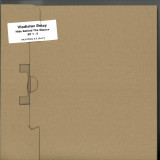
Vladislav Delay's complete "Hide Behind The Silence" series. Intuitive and raw music, momentary and reflective, released on Ripatti's own label Rajaton.
Stillness is a myth. Consider concepts such as ”still water”, or ”still air” for that matter. Go to a restaurant, ask them for a glass of still water, hold it against the light and see where we’re at. Even though the water itself has been captured and imprisoned in the glass, it never stops breathing. It’s filled with tiny particles, dancing. Everything can be explained on a molecular level, but since we’re not scientists – and even if you happen to be – it’s the natural world of perception that moves me.
Still air is very similar. A hot summer’s day with zero wind feels completely still. It’s the closest I have felt to complete stillness. Or for a more urban adaptation, imagine the same vibe inside a normal apartment. In those moments, revelations and mind- blowing experiences can be had with experiments in stillness.
Try this: Just sit down for a minute on a sunny day, making sure there’s enough natural light. Do absolutely nothing. Try not to breathe for a bit. (If you need a mental anchor, you can play Cage’s 4’33” in your head but nothing else.) Watch the tiny dots of dust dancing :..’ ̈.:; ́ ́*°.,’:,. ̈ ̈ ̈ ̈:,.’
The movement is crazy, but the feeling of stillness comes from witnessing how subtle it is. In (perceived) complete stillness, every act of microscopic mobility seems to speak volumes. Yet, it feels both reassuring and oddly threatening that the stillness is never complete. What if we would need absolute stillness? Or is it just enough that we can perceive something as such? Extremes attract, so for both water and air, extraordinary movement is equally fascinating. That is also a luxury item of sorts. For us to enjoy a very ”loud” body of water or air, we need to be safe, in enough control of the situation. So when you are, it’s worthwhile to pay attention and take it all in.
A rapid flowing free with extreme strength and just barely in control. Look at that water go! No still water on this one, only ”sparkling”. A windy day when birds seem surprised how hard it is to fly, but in the end they make it. Trees bend but don’t break. The wind shows you its movement but doesn’t hurt you. It feels friendly, like a big clumsy dog that doesn’t quite understand its size.
It’s beautiful to be a guest of the elements, but not at the mercy of them. A new kind of dialogue forms.
Q&A with Sasu Ripatti:
1) Tell us something about the EP series ”Hide Behind the Silence”, what’s the idea and what can we expect?
Exploration of inaction. Of many kinds. In arts and in personal life, or at bigger and more serious levels. Questioning myself as a human being as well as an artist. Acknowledging the growing activism all around, and the very clear need for it, and how it reflects my own inaction.
Musically speaking, after Rakka, Isoviha and Speed Demon, I finally found some relief, but more importantly lost the need to go musically ever more outward and intensive. I felt quite strongly certain periods/moods from the past and they made me revisit some musical ideas or states of mind I was exploring early on.
It’s about live moments being captured, not much premeditation or editing. More intuitive and raw, even though the end result (to me) feels and sounds quite introspective and calm. It’s not very ambitious. Momentary and reflective.
2) Your music doesn’t sound very silent. Does it come from somewhere behind the silence?
Oh, this time to me it sounds quite quiet and playing with space if not silence. I don’t know what’s actually behind silence, but I think silence is the source of everything. We just don’t understand it yet.
3) What kind of thoughts or experiences gave inspiration to this series?
Writing this in Nov ’22, it’s not a stretch to say the world has been really unwell. Sometimes, like Mika Vainio put it, the world eats you up. I feel a bit like that. And I try to hide in my studio and stay away from it all, but it’s getting harder by the day. I’ve been questioning myself and thinking if what us artists are doing is worth anything, and whether it’s just a selfish thing I’ve been doing for the past 25 years, running away from everything. I haven’t come to a conclusion yet.
4) Is it easy for you to be in silence, or around silence?
Absolutely. I not only hide behind silence but I also love silence. It’s only since I started going back to nature as a grown-up person that I sensed and was enveloped by silence, true silence. I have begun to appreciate it a lot. I think all the people should spend more time in silence.
All tracks composed and produced by Sasu Ripatti.
Artwork by Marc Hohmann, photography by Shinnosuke Yoshimori.
Mastering by Stephan Mathieu for Schwebung Mastering.
Vinyl cut by SST Brueggemann.
Publishing by WARP Music Ltd.