
Buscar:abra


5
Since the release of their critically acclaimed debut album in 2013 on Names You Can Trust, La Mecánica Popular has quietly been contemplating the evolution of the group's sound, philosophy, and overall approach to making music. Band leader Efraín Rozas' experimental nature has continually pushed the boundaries of his own definition of not only Latin American music, but its broader relationship with music's global culture and history. The sound of "psychedelic salsa" that LMP helped capture in their debut was destined for further outside-the-box interpretations, and with the formation of a new quintet lineup over the last few years, LMP began to incorporate a more free, improvised and instrumental-focused performance of Rozas' increasingly radical compositions. The band subsequently took this liberated approach directly into the studio, recording Roza Cruz live, in its entirety. It was a cathartic experience, a necessary methodology for the new album's concept that embraced the intimate performance of its players and did away with standard techniques of isolation and overdubs.
The evolution of the band's sound on Roza Cruz brings forth a blend of styles rarely heard together, a touch reminiscent of electric-era Miles Davis or Eddie Palmieri at his most experimental, as the driving force of timbales and congas provide a bed for a wave of lush, analog amplification that mirrors the dueling leads of fuzz guitar and electric piano. But as far out as those instruments take the listener, the raw rhythm — the clave — always keeps it tethered to the earth and the dance, a cerebral yet visceral gift for the mind and feet.

7
A few words for the album
Moment’s Aeternity:
a 12/8 composition celebrating the raw power of the “moment”, marked by whirling improvised moments between drums, bass clarinet and Harris P’s Armenian duduk.
Pajko, fire in the forest on the mountain:
in Sokratis own words: “I have a really vivid memory as a child. I was staring at the Djena mountain from my window in Archangellos which sits on the Pajko mountain. A little beam of light shone far in the horizon; it was a fire that in my little eyes looked as if the giants of Almopia were trying to communicate with each other using phryktoria (a way of contacting through fire in Ancient Greece).”
Footprints of some Giant Steps:
While the classic compositions of two true Jazz Giants- Wayne Shorter and John Coltrane- are certainly different, they do both connect in a mystical way. Rearranged in 5/8 combining half of each melody and half of each one’s chord progression, keeping the form of the piece for improvisation, still in 5.
Oson Zeis Fainou (Seikilo’s Epitaph):
found in a tomb stone in the Northeast of Greece, this is the only melody saved from the ancient times. It is accompanied by lyrics contemplating the meaning of life:
Ὅσον ζῇς φαίνου
μηδὲν ὅλως σὺ λυποῦ πρὸς ὀλίγον ἐστὶ τὸ ζῆν τὸ τέλος ὁ xρόνος ἀπαιτεῖ.
‘’While you live, shine
don’t feel blue for anything because our life is short and time demands an end.’’
Here is to Oghene K:
’’Hey man, where is the groove?’’, he would say, just to trigger another wave of inspiration for Sokratis. Oghene was a true force of nature, a well of kindness, a masterful artist that left this world too early. This one is for him.
Balkan Riff (for Milcho Leviev):
Milcho Leviev (1936-2019), was a long-time friend and collaborator and a true inspiration for expression, creativity and colorfulness. Expressing the deep sentiments evoked by the Balkan sound and history, this is a sorrowful dialogue between bass clarinet and contrabass.
Spirits of Djena:
one of the most esoteric and personal moments of the album. Composed and recorded during the challenging times of the COVID-era, you can hear the baritone and tenor saxophone firmly grounded on a crispy, hypnotizing contrabass groove.
Sokratis Votskos Quartet
Kostas Anastasiadis / Giorgos Klountzos - Chrysidis: Drums
Leandros Pasias: Piano
Vaggelis Vrachnos: Contrabass
Sokratis Votskos: Soprano Saxophone, Bass Clarinet and Compositions
Sokratis Votskos is a jazz saxophonist, clarinetist, composer, educator, and bandleader from Greece. Deeply invested in unearthing the folk sounds and heritage music of Greece and Eastern Europe, he weaves these into modern jazz compositions though the use of melodies, polyrhythms, and his reedy, timeless tone. He leads the Sokratis Votskos Quartet, he is one half of Kolida Babo and member of the Reggetiko Project. A highly regarded sideman and ensemble player, he has worked extensively with renowned jazz musicians with several highly acclaimed releases (MiC, Jazzman, Walt Disney and now Fair Weather Friends Records).
He has performed his music in numerous venues and festivals worldwide from Vinterjazz in Copenhagen, to the EFG London Jazz Festival where he performed at the legendary Ronnie Scott’s alongside Greg Foat.
He is also an archaeoacoustics researcher and enthusiast, having completed his Master studies on the field of ancient ritualistic caves of Greece research.
Leandros Pasias was born in Thessaloniki, Greece. At age 10 was introduced to piano, continuing his studies at the Modern Conservatory of Thessaloniki and later at the Conservatorium van Amsterdam in the department of jazz piano.Ηe holds a classical harmony diploma and a BA at the Department of Music Studies at the Aristotle University of Thessaloniki. In 2020 he received jazz improvisation lessons from Aaron Parks.
With a series of appearances in multiple international jazz festivals, Leandros has collaborated with a wide range of musicians from Nicolas Masson and James Wylie to Marina Osk, Ivo Papasov and Haris Lambrakis, among others.
A member of the Yako Trio, he released “OdesSea” on Fair Weather Friends Records (2021).
Vangelis Vrachnos was born in Thessaloniki, Greece, in 1989. While he started playing the bass at the age of 12, alongside his brother, his studies would commence a few years later. Introduced to double bass at the age of 23, he undertook jazz double bass studies at the Codarts Αcademy of Rotterdam. He has participated in several festivals such as the Technopolis and Odessa international jazz festivals. Since returning to his hometown, in 2015, he has been a founding member of Mordana and Yako Trio and has collaborated with a series of musicians like James Wyllie, Sokrates Votskos and Dimitis Agelakis, among others.
Kostas Anastasiadis is a tireless researcher, that has been diligently studying Tradition and its evolution, creating a fresh amalgam of sound moods. His mature improvisational virtuosity highlights a uniquely individual artistic expression and was recognized with the ̈Unique Individual Stylist" award by the PIT (Percussion Institute of Technology) in Los Angeles, California. He has been associated with various ensembles that have garnered significant interest in the global music scene. As an educator, he is the founder of "The Harmony of Rhythm" musical method, which aims to explore and establish the elements that constitute the concept of rhythm.
Giorgos Klountzos-Chrysidis was born in Thessaloniki in 1991. Following studies at the Modern Conservatory of Thessaloniki, he moved to France and the Conservatoire de Nice. With performances at well-known festivals like Nice Jazz Festival, Nuits du Sud and Jazz à Vienne, he had the opportunity to meet the American drummer Leon Parker, who encouraged him to move to Paris, where he spent the next two years under his tutoring and guidance.
In 2016, came a defining moment in his career as he traveled to New York for the first time. He participated in the quartet of saxophonist Diego Rivera for a series of performances and attended lessons by Rodney Whitaker and Randy "Uncle G" Gelispie at Michigan's State University.
Collaborations include Xavier Davis, Ricky Ford, Nicolas Masson, Diego Rivera, Craig Bailey, Baptiste Herbin, Marc Abrams, Pantelis Stoikos, Antonis Anissegos, David Lynch, Ziad Rajab and Ivo Papasov, among others.

Noah Kahan kehrt mit seinem vierten Studioalbum ”The Great Divide” zurück!
Der US-amerikanische Singer-Songwriter zeichnet sich durch seinen besonderen und gefühlvollen Indie-Folk
Stil aus!
Sein im Jahr 2022 veröffentlichtes Studioalbum ”Stick Season” und die gleichnamige Hit-Single erzeugten
einen viralen Moment in den sozialen Netzwerken, verhalfen Noah in Deutschland zum Gold-Status für die
Single und machten den 2-fachen Grammy-Nominee zum globalen Superstar!
Noah Kahan thematisiert in seiner Musik wichtige und nachempfindbare Themen wie Heimat, mentale
Gesundheit, das Erwachsenwerden und Alleinsein.
Mit seinem neuen Album ”The Great Divide” vereint Noah Kahan erneut seinen unverkennbaren Sound
und einzigartiges Storytelling mit ansteckenden Melodien und leidenschaftlichen Gitarrensounds!
”The Great Divide” ist eine Reflexion über Noahs Vergangenheit, seine mittlerweile komplizierte Beziehung
zu seiner Familie, seinen Freund*innen, seiner Heimat Vermont sowie über die Entfremdung und Distanz,
das Schweigen und die unausgesprochenen Wahrheiten zwischen Menschen.
Noah Kahans viertes Studioalbum ”The Great Divide” welches von Aaron Dessner (Florence + The Machine, Taylor Swift, Gracie Abrams, Bon Iver uvm.) & Gabe Simon produziert wurde, erscheint auf Vinyl
& CD.
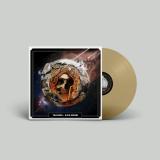
- Static Noise
- The Valley Of Nowhere
- Burning Out
- Sea Of Drowned Souls
- Swans
- Full Circle
- Between Earth And Moon
- Axis Mundi
Vienna sludge doom masters TARLUNG return with their most focused and destructive statement to date. Axis Mundi is a massive slab of low tuned heaviness forged in the darkest corners of sludge and doom.
Built on suffocating riffs, dragging tempos, chugging grooves and feral vocal delivery, TARLUNG create a sound that feels both crushing and hypnotic. The band move between oppressive sludge weight, bleak doom atmospheres and abrasive noise soaked tension, shaping long, immersive compositions that pull the listener into a collapsing sonic landscape.
While rooted in nasty, direct sludge doom, TARLUNG also explore experimental textures, subtle dynamic shifts and rare moments of contemplation within the chaos, only to be swallowed again by waves of uncompromising brutality. This is an album made for listeners who want weight, tension and depth, not just volume.
For Fans Of: YOB, Crowbar, Weedeater, Iron Monkey, Dopethrone, Thou, SUMA
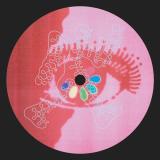
Epsie steps up on Secretsundaze’s 9FINITY imprint with ‘Any Colour You Like’, a four-track EP weaving trippy, techy, and subtly progressive elements juxtaposed with darker, electro-orientated moments for a heady dancefloor statement.
Built with a live-first mentality, his productions mirror the fluidity of his sets—intricate rhythms and elastic basslines ground the EP in pace and movement. The release oscillates from the sleek to the abrasive with punchy drums and otherworldly synths existing in tandem with deep tech house grooves. A distinctly European sensibility runs throughout: restrained yet exploratory, minimal yet richly detailed, all landing with understated psychedelia and deep functionality tailored for the heads.
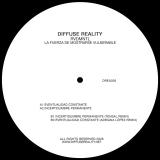
4
Diffuse Reality presents RVDMNTL - La Fuerza De Mostrarse Vulnerable. A 12" vinyl and digital release built on solid, robust Techno. Four tracks on vinyl, complemented by three additional digital cuts. Powerful sounds, raw textures, and atmospheres that pull you deep into an inner ocean. The vinyl includes remixes by Adriana Lopez and Tensal, adding even more rigidity and intensity with their signature sound. Here, the sound reveals itself as aggressive and abrasive, a record that will go straight into your bag for those moments of pure tension and impact.

- Badlands
- Die Young
- Javelin
- All Sinners
- Natural Disaster
- 100: 000
- Little Wide Open
- Cowtown
- Bible Belt
- I Ride Passenger
- Junebug
- Dandelion
- Field Guide For The Butterflies
Für Kevin Morby ist das ,kleine Weite" der weite Himmel, das einfache Leben, seine Herkunft aus dem Mittleren Westen und alle Pflichten, Bescheidenheit, Vertrautheit und Isolation: das Land, die Menschen und die Teile davon, die in ihm stecken. ,Der Mittlere Westen hat etwas Unbeabsichtigtes Musikalisches an sich: Zikaden, die in den Bäumen zirpen, ein vorbeifahrender Zug, eine Tornadosirene, die losgeht", erklärt Morby. ,Wenn man genau hinhört, gibt es diese fast unheilvollen Geräusche unter dem weiten Himmel - seine Hässlichkeit und seine Schönheit und wie beide oft gleichzeitig zusammenwirken. Und obwohl der Mittlere Westen technisch gesehen keine Ödnis ist, ist er meine Ödnis." Little Wide Open ist der Titel von Kevin Morbys achtem Studioalbum, produziert von Aaron Dessner. Im Sommer 2024 hatte Dessner Morby gebeten, The National bei ihrem Konzert im Londoner Crystal Palace Park zu unterstützen. Kurz darauf wandte sich Dessner, der gerade eine Glückssträhne hatte, nachdem er Alben für Taylor Swift, Ed Sheeran und Gracie Abrams produziert hatte, wandte sich an Morby und teilte ihm mit, dass er gerne sein nächstes Album produzieren würde. Anfang 2025 begannen sie mit den Aufnahmen in Aarons Long Pond Studio in Stuyvesant, New York, und beendeten sie im September desselben Jahres. Das Album, an dem eine Vielzahl von Mitwirkenden wie Dessner, der mehrere Instrumente spielt, Amelia Meath, Andrew Barr, Justin Vernon, Katie Gavin, Lucinda Williams, Meg Duffy und anderen, wurde von Morby als dritter Teil einer Trilogie nach ,Sundowner" (2020) und ,This Is a Photograph" (2022) beschrieben, in denen er seine Zeit im Mittleren Westen nach seiner Rückkehr nach Kansas City dokumentierte. Dieses Mal wertet Dessners Produktion Morbys Aufnahmen auf, ohne dabei den Fokus auf die Songs selbst zu verlieren. Es gibt eine neu gewonnene Zuversicht und Klarheit sowohl in Morbys Songwriting als auch in Dessners Produktion, die an Tom Pettys Klassiker Wildflowers aus dem Jahr 1994 erinnert. Da Morby mittlerweile hauptsächlich in LA lebt, hat sich die Atmosphäre, die Little Wide Open durchzieht, gegenüber seinen Vorgängern etwas verändert. Wie Rachel Kushner in ihrem Begleittext zum Album über Morby schreibt: ,Es geht um Zeit, um das Gefühl, dass er sich von der Nostalgie und dem verlorenen, aber schönen Kampf, an der Vergangenheit festzuhalten, gelöst hat. Er hat akzeptiert, dass die Zeit unaufhörlich fließt und man sie nicht aufhalten kann. Stattdessen hat er das Gefühl, dass er auf ihr reitet. Er ist Passagier der Zeit."

5
Two original house cuts. One statement. Soulbound / Abracadabra lands as a double-header single as part of our new XPRESS Singles Series, bridging gritty South London soul with slick Franco-American house energy - a release designed for the salubrious moments on the dance floor.
“Soulbound” sees Bustin’ Loose deliver cutting-edge disco-soul infused house music straight from the concrete textures of South London. Sung and produced by Bustin’ Loose himself, the track rides a pumping, elastic bassline with warm strings and raw vocal emotion - modern house with classic soul DNA. Capturing the energy of London's expansive music culture, Soulbound is both uplifting, euphoric and street-wise. Inspired by the music of Fatboy Slim, rappers like JME and Ghetts and the club culture of London.
On the flip side, “Abracadabra” from Magnolia & Sam Karlson featuring LA wordsmith Relaye drips with French house sensibilities, blending glossy filters, catchy wah guitar and punchy grooves with razor-sharp rap vocals. Imagine Music Sounds Better With You colliding with the cool charisma of Q-Tip - hypnotic, stylish, and irresistibly repeatable.
The remix package pushes the release deeper into club territory:
• Dam Swindle transform Soulbound into a deep, bumping underground roller, rich in groove and late-night atmosphere.
• Phil Weeks delivers a signature Ghetto Mix of Abracadabra, crafted with his beloved MPC sampler - raw drums, stripped-back funk, and a pure nod to house music’s roots.
• La Felix closes the circle with a nostalgic, early-2010s-tinged deep remix of Abracadabra, balancing modern polish with timeless dance-floor warmth.
10
Take Me, I’m Yours is the first collaboration album between Alan Abrahams and Jan Jelinek. Released through the latter’s faitiche, it builds upon multi-layered vocal sketches by the former. The Paris-based artist, primarily known for his work as Portable and Bodycode, supplied Jelinek with multi-layered song sketches that the German artist subjected to a rigorous process of manipulation, excavating the ambiguities of the original material and transforming its rhythms into subtle pulses. Take Me, I’m Yours is neither a typical Abrahams record nor a classic Jelinek album—it is something third, mediating between the physicality of the voice and the abstraction of electronic sound design.
The two had crossed paths before really getting to know each other after Abrahams invited Jelinek to play at one of his Süd Electronic parties. The idea of a collaboration emerged slowly. “It started as an experiment, and over the past few years grew from a few tracks into this album,” says Abrahams. He describes recording the basic material as a “tantalizing” process, not knowing how Jelinek would transform his material, some of which was based on wordless chanting, while other tracks were working with lyrical content. However, their mutual trust allowed Jelinek to remove the harmonies, radically reduce the rhythms, and concentrate on Abrahams’ voice.
Jelinek heard something “fragile” in this voice, “moments of doubt and dark premonitions.” He points to Forever as an example. “Alan’s original song reminded me of classic vocal house, but his voice seemed to almost break,” he says. “This contradiction made the piece even bigger, because we hear a singer in the moment of an awakening.” He further accentuated such tensions through arrhythmic synth modulations and time-stretching algorithms, while also adding concrete sounds from a variety of sources. With its dedication to both transforming and amplifying the emotional qualities hidden within Abrahams’ pieces, Take Me, I’m Yours functions as a dialogue between those two singular artists.
- 1: O Nevado (Feat. Alexandre Andrés)
- 2: O Abraço Da Serpente (Feat. Ilessi, Flavia Huarachi, Anders Skibsted)
- 3: A Cor Da Romã (Feat. Moa Edmunds Guevara)
- 4: Vera Cruz (Feat. Mané Fernandes, Albert Karch)
- 5: Misteriosa Buenos Aires
- 6: De Regreso (Feat. Flavia Huarachi)
- 7: O Ouro De Marawa (Feat. Gus Orihuela & André Maria)
- 8: O Garimpeiro E O Curumim (Feat. Ilessi, Flavia Huarachi, Anders Skibsted)
- 9: Entre Ríos (Feat. Luciana Insfran)
- 10: El Pajarillo Y La Mariposa (Feat. Flor Bobadilla, Cecilia Pahl, Alexandre Andrés)
- 11: Patagônia (Feat. Moa Edmunds Guevara, Pancho Rangonese, Albert Karch, Stanislav Zhukovsky)
- 12: Os Muitos Nomes De Salkantay
- 13: A Safira De Igarassu (Feat. João Machala)
- 14: Isla Del Sol (Feat. Júlio Rangel, Albert Karch)
- 15: Sentido De Su Ausencia (Feat. Iamana Mari, Gabriel Milliet)
- 16: Sequóias (Feat. Gustavo Assis Brasil, Albert Karch)
Caçador de Horizontes is the fourth and most ambitious album by Brazilian composer and songwriter Raphael Gimenes. Conceived as an expansive double album, it brings together voice and acoustic guitar with richly arranged strings, brass and a wide palette of percussion, engaging with the tradition of Brazilian songwriting while evoking the harmonic sensibility of artists such as Milton Nascimento, alongside elements of modern classical music.
Inspired by travels across the American continent, the album moves between intimate moments and large-scale instrumental passages, creating a cinematic and emotionally resonant atmosphere. Produced by Lucas Delacroix, Alexandre Andrés and Gimenes himself, it features more than 30 musicians from different countries and was supported by the Danish Arts Foundation (Statens Kunstfond).
11
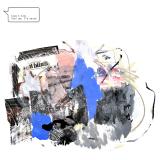
Andreu G. Serra and Kiran Leonard first met in Lisbon nine years ago, arriving in the city within weeks of each other by chance. Living together in a crumbling warehouse in Alto São João, they recorded a series of improvisations that became The Piri Piri Samplers (Memorials of Distinction, 2019): Serra’s abrasive, tape-warped guitar lines colliding with Leonard’s stark, pedal-free counterpoint. They played a single gallery show, left Lisbon that summer, and then spent almost a decade living in different countries.
When Stroom reissued The Piri Piri Samplers in 2024, the label suggested the duo make a new record. At first, it seemed impossible: Leonard was in London, Ubaldo in southern Catalonia, and their attempts at long-distance recording quickly collapsed into nothing. But the near-failure sparked something. Leonard travelled to Catalonia to restart the process in person; soon after, Serra moved to South London, and the pair began meeting every week.
The result is Making Friends: a richer, more expansive album built over six months. Where The Piri Piri Samplers was assembled from raw improvisations, Making Friends transforms fragments into fully realised songs, weaving together nylon and steel-string guitars, piano, drums, bells, samplers and more. For the first time, Serra and Leonard sing together, each in his own language - Catalan and English - sometimes translating one another in real time.
Musically, Making Friends still carries the jagged dissonance and free-blues spirit of the duo’s earlier work, while opening outward toward everything from emo and blown-out noise to fractured chamber pop. There are only three guests on the album, and they are worth mentioning: Rachel Leonard and Antonia Serra (the musicians' mothers) on the seventh tune, and the American poet Pete Simonelli (of Enablers) appears on Top of Duboce / Tyne Bridge Crossing, one of the album’s two sprawling centerpieces.
At its heart, Making Friends is an album about friendship: about distance, reunion, family, and the stubborn need to make music together. It begins with uncertainty and disconnection, but ends somewhere stronger - with, as put on the closing track, “molta il.lusió per lo que pugue vindre” or “much excitement for what may come.”
8
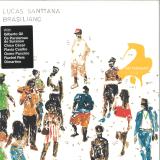
Lucas Santtana’s tenth album celebrates the vitality and musicality of the Romance languages.
The heir to Brazilian tropicalism, Santtana marks 25 years of his career with Brasiliano, a true collective celebration that brings together prestigious collaborators: Gilberto Gil, Oxmo Puccino, Flavia Coelho, Piers Faccini, Chico César, Paralamas do Sucesso, Cocanha, Dimartino, Karyna Gomes, Tainara Takua, Rachel Reis and Maria Lado.
Sung in eight different languages, Brasiliano is both an ode to linguistic diversity and a testament to its symbolic power. Carried by luminous and layered arrangements where voices intertwine like a polyphonic conversation, the album treats language as a musical instrument in its own right, but also as a political tool. Santtana questions cultural heritage, identity, colonial memory, and the possibility of a shared language. With his singular approach—blending popular rhythms, contemporary soundscapes and vibrant melodies—he celebrates the love and exchange embodied in Romance languages, where music becomes fertile ground for encounters and reinvention.
13
As the so-called “Latin boom” becomes a new anchor for hard-swung club sounds, it is crucial to recognize that the region’s musical culture extends far beyond dembow edits and the pop-trap hybrids that have edged into the mainstream. Monterrey-born, New York City-based producer and DJ Delia Beatriz, aka Debit, returns to NAAFI with Potpourri, a generous and kinetic collection of dancefloor-oriented tracks filled with percussive flourishes, squelching 303 basslines, and rhythmic mutations that actively challenge the status quo. Rather than rebuilding “Latin sounds” as a fixed category, the album rethinks their internal logic, tracing the evolution of techno and house in cities like Detroit, Chicago, and New York alongside parallel innovations emerging in Mexico, Colombia, and across the wider Latin world. Positioned on the bridge between Mexico and the US, Potpourri does not seek synthesis as a gesture of smooth fusion, but as a site of disruption.
The album can be heard as a loose follow-up to System (2018), Debit’s NAAFI-released EP that expanded the sonic potential of tribal guarachero through triplet-driven rhythms, industrial pressure, and noisy reconstruction. Potpourri retains guaracha as a structural backbone while drawing further influence from veteran DJ and producer Javier Estrada—who also appeared on System—and particularly from his fast-paced, nonlinear style of mixing. That approach becomes a formal principle here: canonical structures are dismantled, repetition is avoided, and tracks evolve without sacrificing propulsion. Coming after the introspective temporal inquiry of Desaceleradas and the speculative historical acoustics of The Long Count, Potpourri arrives as a deliberate surge of energy. As Beatriz explains: “It’s a manifesto for rethinking form and sound in dance music. By stepping outside traditional structures and embracing the potpourri approach, I’m creating new meaning with familiar rhythms. I’ve also been applying this to my DJ sets, using it as a tool to break free from established norms and explore new narrative possibilities.”
Years in the making, Potpourri imagines an alternate timeline in which the psychedelic squelch of acid—echoing pioneers such as DJ Pierre and Mr. Fingers—and the dub-inflected atmospheres of Basic Channel entered into direct and sustained contact with Latin American club mutations. Those references are legible, but never merely quoted. Instead, they are folded into syncopated hi-hats, overdriven kicks, and unstable arrangements that absorb both the intensity of the parties Beatriz remembers from Monterrey and the abrasive edge she sharpened at DIY noise shows in New England. The result is unmistakably a dancefloor record—heard in tracks as forceful as “Pero like” and the peak-time pressure of “tuvesuerte”—but one saturated with grotesque, psychedelic atmospheres, where sounds dissolve into hoarse croaks, acidic smears, and anxiety-inducing growls. Here, the rave becomes not simply a site of release, but a platform for navigating identity, hybridity, and artistic formation across borders. Moving through peaks and ruptures, Potpourri reveals a party narrative that is not linear but multidimensional.
By folding together the fluidity of DJ culture, the experimental charge of acid, and the rhythmic vitality of guaracha, Potpourri proposes a space of formal and political innovation within Latin America’s rapidly expanding electronic music landscape. It is a record that refuses containment, pushing against the templates through which Latin electronic music is often consumed, and insisting instead on friction, instability, and transformation as generative conditions for the dancefloor.
- A1: ) | Anuradha Paudwal – Gayatari Mantra
- A2: ) | Baba Zula – Arsiz Saksagan (Cheeky Magpie)
- A3: ) | Orchestra Tout Puissant Marcel Duchamp – So Many Things (To Feel Guilty About)
- A4: ) | Christopher Martin – Playing Games With My Heart
- B1: ) | Geir Sundstøl – C’est Vide En Ville
- B2: ) | Brother Ah – Transcendental March (Creation Song)
- B3: ) | Les Abranis – Therrza Rathwenza
- B4: ) | Sparkels – That Boy Of Mine
- C1: ) | Maximum Joy – Stretch (7” Mix)
- C2: ) | Chillera – Schax
- C3: ) | Elijah Minnelli – I Hope The Goats Come Back (Ze-Hood De-Sham Lichdal)
- C4: ) | Siti Muharam – Pakistan
- D1: ) | Muriel Grossmann – Traneing In
- D2: ) | Catford Gyrations – Land Of 1000 Presets **
- D3: ) | Living Daylights – Let’s Live For Today
- D4: ) | Natalie Bergman – Shine Your Light On Me
También disponible
Yellow / Pink Vinyl[49,37 €]
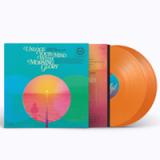
Crate digger and music enthusiast James Endeacott compiles ‘Unlock Your Mind With Morning Glory’ for Two-Piers Records – A glorious heady mix of the weird and wonderful eclectic music from his radio show ‘Morning Glory’
“One weekday afternoon towards the end of 2017 I sat in The Lyric pub on Great Windmill Street, Soho with my dear friend Raf. I’d just finished another of my weekly Soho Radio shows and was starting to think about the next one. Raf had been on as a guest playing some of his favourite tunes of the day. We had a few drinks, told a few stories and started to plot and scheme. It was always a dream of mine to have a daily radio show. Radio had always informed and excited me from my early teens listening to John Peel under the blanket when I should’ve been either sleeping or revising right up to the present-day musical excursions of NTS, WFMU and numerous internet based stations.
We decided to speak to Adrian and Dan who ran Soho Radio to see if they’d be up for us doing a daily morning show. To our surprise they were into the idea and within 5 minutes Adrain came up with the name Morning Glory. We all liked it. We were all excited. It was all systems go. In December 2017 Raf and myself started a daily 2 hour show. We did the show together, got guests in and the musical policy was whatever we felt like that day. After several months Raf found the mornings too much. Off he went into the distance occasionally coming back with a smile, and a bag of new music. I carried on alone and then suddenly in March 2020 the world stopped, and we went into lockdown.
We set up in my house in Catford, Southeast London and carried on. The show became 3 hours a day and I started to invite friends, record labels, record shops, bands etc.. to supply me with hour long mixes that I played every day. The show took off during this time. My musical tastes expanded as I spent all day long searching for new sounds from around the globe. People started to send me more and more music. I became obsessed with the show. The audience started to take to social media and ask for certain tracks or artists to be played. I got listeners to make me mixes to play on the show and I did several phone interviews with musicians while playing some of their favourite tunes.
I was grateful that Soho Radio left me to my own devices. They never told me what to do or what to play – they trusted ma and I trusted my instincts.
The music on this compilation is not a ‘best of’ it’s just how I felt when I compiled it at the start of 2025. Apart from a couple of tracks they are all things I’ve come across since the show started in December 2017. If I did a list of tracks now I’m sure it would be completely different. Surely that’s the point. We never stick in one place. We are always moving and searching. Always trying to unlock our minds. Put it on. Take your time and let it take you somewhere” James Endeacott 2025

Ideologic Organ freut sich, die brandneuen Aufnahmen von The Necks zu präsentieren, dem legendären australischen Trio, das sich durch die Umgehung musikalischer Klischees auszeichnet und gleichzeitig die Praktiken der Improvisation, des Jazz, des Post-Rock, des Ambient, des Minimal und der texturierten, ,klangbasierten" Musik erforscht und erweitert. Das neueste Werk dieses langjährigen Ensembles, Unfold, präsentiert sich als Doppel-LP mit vier seitenlangen Tracks. Das bewusste Fehlen von nummerierten Seiten gibt dem Hörer viel Raum, sich einzubringen, und lässt ihn seinen eigenen Weg durch die Klanglandschaft finden. Die kürzere Länge des Vinylformats ist für die Mitglieder des Ensembles kein Hindernis, sondern bietet ihnen einen kompakteren Horizont zum Nachdenken, in dem die zurückgelegte Strecke auf unmittelbarere und dynamischere texturale Aspekte neu ausgerichtet wird. Die Unmittelbarkeit von ,Rise" bestätigt diesen neuen Weg, während die traurigen Töne von Lloyd Swantons Bass um Chris Abrahams' kristallklares Klaviermotiv wirbeln und Tony Bucks Percussion den Prozess in erleuchtende Free-Jazz-Gefilde lenkt. ,Blue Mountain" bahnt sich einen Weg durch das klangliche Unterholz, wobei Soul-Orgel, rasselnde Percussion, Pfeifen und hüpfende Schallwellen um den Vordergrund wetteifern. ,Overheard" behält eine erhabene melancholische Aura, während Percussion und Keyboards sich gleichzeitig umarmen und auseinanderfallen, während ,Timepiece" als sanfte Geste weiterer Möglichkeiten dahinspringt. Wie genau The Necks ihre besondere Magie entfalten - so einfach es auch scheinen mag -, während sie sich immer weiterentwickeln, kann nur vermutet werden, aber ,Unfold" beweist einmal mehr, dass Regeln und Schulen gebrochen und zu Mustern und Rahmenwerken umgestaltet werden müssen, die sich von denen unterscheiden, die wir kennen.

In the humid static of early-’80s Tel Aviv, Chromosome emerged like a wiretap from the future. Formed in 1981 by provocateur Rami Fortis and sonic instigator Doron “Shultz” Eyal, the group fused punk abrasion, new wave architecture, avant-garde dissonance, and Middle Eastern textures. Joined by David Gervai and Rona Vered, they produced a singular 12" EP on their DIY imprint TOV Production - now a collector’s treasure.
This reissue of the Chromosome EP resurrects a raw, percussive artifact that slips between English, Arabic, and indecipherable phonetics like a busted shortwave signal. Anchored by “Makhtub” and backed with incendiary tracks such as “Show of Terrorism” and “Gazolina,” it is a vital document of Tel Aviv’s underground, mapping out a borderless, feral lineage for Israeli music.

