Part 2 of the jungle series, it's another 4-tracker for fuzzy Akai hardware samplers, Technics turntable, analog monosynth bass and wide stretches of polysynths. Built with strictly old-school hardware with a loose groove, it's somewhere to get lost, down those night roads, and early mornings in the sky. Soak it up, and let's let time move a little faster.
Search:abs
After a long hiatus broken by their inclusion in Om Unit's final epic Acid Dub Versions set, Alter Echo & E3 step out once more with the four-track “No Peace EP.”
With past releases on storied labels including ZamZam Sounds, Moonshine, Scrub A Dub, Lion Charge, LavaLava, and Khaliphonic, the duo opted to forego labels for this one, instead dropping the first release on their own AEE3 imprint.
The main mix of the title tune is a pounding dystopian slow-stepper collab with old friend & sparring partner Ishan Sound, dusted off and rebuilt after years on dubplate. Shot-through with stinging percussion, swirling with leaden atmospherics and dread truths, this one’s an absolutely uncompromising piece of supremely heavy steppers.
RSD’s remix opts for crystal clarity, extra layers of percussion, an emotional mid-range melody, and of course the huge bassweight Rob Smith is known & loved the world over for.
Om Unit’s “Kaliuyga Verse” recenters the tune on deeply spiritual indigenous wisdom spoken by Floyd “Red Crow” Westerman. This long-form rework fleshes out the instrumentation with classic UK dub percussion and FX, plus flute and much more, transmuting the original’s darkness into something magisterial and hopeful while maintaining absolute heaviness.
AEE3’s "Southeast Rock" closes the EP with a slower tempo meditation powered by a melodic bassline, chopped drums, dub tech stabs and righteous horns, an introspective ganja tune that will stay with you long after the runout groove.
POD & Edward Richards return with their second release on Kinetic Vision, the ‘Polar Phase’ EP, following their much lauded ‘SQZR’ EP. A landmark release for the label, ‘Polar Phase’ marks the first of a series of records to come. Set at a tempo of 100 BPM, the duo mix minimalism, broken beats, world music percussion and psychedelic synths to weave a tapestry of darkness, albeit more zen than melancholy.
The opening track ‘Mind Machine’ is propelled by a broken beat and flurry of hard hitting snares. A swirl of synths abound while a tribal incantation is whispered in the dark. The title track ‘Polar Phase’ takes us on a pulsing journey of techno hypnotism, with icy synths threatening deep underwater immersion. The B side ‘Flux Growth’ elicits an obscure playfulness with its punctuated kick and slowly building chaos. Finally the Sub Basics remix of ‘ Polar Phase’ lifts the tempo and we find ourselves in a bliss of pure dancefloor hedonism.
POD & Edward Richards have crafted a rich textural sound with slow paced hypnotic grooves, creating deep absorption for both DJ and listener alike.
- A1: Ratio (Pt. Ii Organ) ->
- B1: Ratio (Pt. Ii Dub) ->
Reissue der Deconstructed Mixes von Floating Points' "Ratio" aus 2017 im schwarzen Disco-Bag. Der epische Track von fast 19 Minuten Länge knüpft an Sam Shepherds frühe, dancefloor-orientierte Releases an, avancierte live schnell zum Publikumsliebling und war ein absolutes Highlight des Sets.
a A1: Ratio (Pt. II Organ) -> 19min: 04 sec @ 33rpm
b B1: Ratio (Pt. II Dub) -> [7min : 36 sec] @ 45rpm
[a] A1: Ratio (Pt. II Organ) -> [19min: 04 sec] @ 33rpm
[b] B1: Ratio (Pt. II Dub) -> [7min : 36 sec] @ 45rpm
[a] A1: Ratio (Pt. II Organ) -> [19min: 04 sec] @ 33rpm
[b] B1: Ratio (Pt. II Dub) -> [7min : 36 sec] @ 45rpm
[a] A1: Ratio (Pt. II Organ) -> [19min: 04 sec] @ 33rpm
[b] B1: Ratio (Pt. II Dub) -> [7min : 36 sec] @ 45rpm
- A1: On Your Mind
- A2: Nguzo Saba (The Struggle)
- B1: Unknown Track #3
- B2: Sexy Mama
- B3: Ultima Linda
- C1: Earthquake
- C2: Dizzy Profile (Alt Take)
- D1: Let Me Be The One
- D2: Alicia
- E1: Samba De Romance
- E2: Naima
- E3: Kimba
- F1: I’m Really Gonna Miss You
- F2: Reflections Of My Past (Feat Dennis Tini)
DJ Amir takes another deep dive into the back catalogue of Detroit's legendary Strata Records to curate a 2nd volume in his Strata Records – The Sound of Detroit compilations. Whereas volume one took in the soulful edge of the Strata canon this volume, as Amir says, 'leans into the label's groovier, funkier edges whilst still celebrating its bold, avant-garde spirit.' DJ Amir's relationship to the Strata label has resulted in the release of the long lost Charles Mingus live 'Jazz in Detroit' box set released on BBE Music along with re-issues from The Lyman Woodard Organisation and re-imaginings of Strata's genre defying music by Berlin based DJ and producer collective, Jazzanova as well as remixes from Kai Alce, Wajeed, Henrik Schwarz, re.decay and DJ Amir himself and, of course, volume one of The Sound of Detroit. Featuring music from The Soulmates, Fito Foster, Keith Boone & Janice Coombs and The Contemporary Jazz Quintet amongst others, The Sound of Detroit volume 2 absolutely exemplifies the importance of Strata Records in the history of innovative Black music as well as its place in the cultural landscape of Detroit as a powerhouse city for art and music. Released by BBE Music in collaboration with 180 Proof Records as a triple vinyl LP and high res. digital download DJ Amir presents Strata – The Sound of Detroit volume 2 really is a gem of a compilation to grace any serious music head's record collection.
MTY-3.14 “π”, released on March 14, 2026, is the fifth and final chapter of a journey begun fifteen years ago.
This standard edition presents the final form of Polar Inertia across three 12" vinyl records, featuring 11 tracks. Nothing added, nothing removed—only the music, unfolding in full.
Images dissolve, words fall away. What remains are faint echoes, like footprints slowly erased in fresh snow.
This final opus does not close the path. It fades into it. π is not an ending, but a state: the moment where movement continues, even as the world turns silent.
A last step.
A final trace.
Still moving, beneath the cold.
POLAR INERTIA
We are no one because we want to be no one,
And to be no one we have to be everywhere and nowhere- Polar Inertia examines the enigmatic and blurry realms, embracing the art of obscured vision.
Encountering the collective Polar Inertia is much like being absorbed by fog and captivated by its ever-shifting forms and densities, with things being as indistinguishable as in a whiteout.
Formed in 2010 by a group of artists, Polar Inertia transcends visibility, delving into structures that lie beyond the public gaze. Layers upon layers intertwine within the fabric of Polar Inertia, extending beyond their profound electronic compositions and live performances. It manifests as a conceptual universe, where sound, monochrome aesthetics, and elusive narratives converge, much like trying to grasp the intangible fog. The entity that is Polar Inertia is involved in installations, print- and video work and texts created for different contexts and live in different spheres such as Palais de Tokyo in Paris or the Lyon Biennale of Contemporary Art. Still, clubs and festivals are perfect spaces to experience these nebulous soundworlds and immerse in them. Fittingly, some of Polar Inertia’s appearances include the colossal halls of Berghain and Bassiani and at experimental festivals like Mutek Montreal and Atonal Berlin, that like to break with the classic club conventions.
Polar Inertia's sonic landscape unfolds with wafting textures accompanied by resonating beats and drones, reverberating through empty spaces, merging with the vast expanse of nothingness. Their sound exists at the crossroads of ambient, experimental, and deep techno, interwoven with vocal narratives. Since their inaugural release “Indirect Light“ on Dement3d Records in 2011, they remain a stronghold of relevance and captivation in the electronic domain.
Mastered by sixbitdeep, with artistic direction by Diplomatie Studio.
INDUSTRIAS MEKANIKAS is back with the third instalment of the ANTIKHRIST VISIONS saga. This release is particularly symbolic: it’s the ninth in the catalogue, marked by the infernal numerology that runs right through the whole series. It’s a descent into a sonic underworld, where noise becomes ritual and pleasure is just pure agony.
The artist tasked with opening this new chapter of the saga is the mighty Óscar Mulero, an essential figure on the national electronic scene and one of our biggest international ambassadors, whose career has left a deep mark on contemporary music. Here, with Faceless, he delves into dark, precise, and devastating electro territory; a spiritual machine that dictates the pulse of chaos.
Next up, we’ve got Pressurized Modulator with Reddrum: hard, crunchy, industrial electro, absolutely buzzing with electrical tension and twisted sonic matter.
Closing out the A-side is Jacko Volvone (aka Hoax Believers) with Quieren Cerrar Las Fábricas: a track that expertly blends electro, techno, and post-punk echoes, resulting in a tense, distorted, and combative sound, like a working-class echo shouting from the abyss.
Flipping over, the B-side opens with Hanging Nuts (made up of Waje Martín, Fake Robotik, and Ruben Montesco). They unleash a murky descent of filthy, distorted, primal electro, slashed through with guitars and raw, guttural vocals: a genuine chant from beyond the grave. The second cut marks the debut of Techselektah & Phil Fork with Champagne No Potable: a raging street anthem packed with fury, energy, and social criticism, where Spanish vocals emerge amidst EBM structures that have that ‘80s spirit, reinterpreted with today’s raw edge. And the big finish is down to HBK1 alongside Rigor Mortis, with Instinto Caníbal: a full-on explosion of electro-industrial and EBM that awakens the body’s most primitive urges.
Antikhrist Visions Vol. III is a sonic summoning from the lands of Hades: ritualistic matter, organic sound, and primal force. A testament to pleasure and torment—Tormento do Gostar—etched into the vinyl as if it were molten iron.
Memento Mori.
As Nathan Fake rises from the nocturnal subterranea and rave catharsis of his previous records, on Evaporator, he resurfaces into the domain of daylight, bringing a tangible sense of air rushing against your face, of big skies, and endless landscapes. The idea of pop accessibility that trickled into 2023’s Crystal Vision is refracted here through the prism of sweeping ambient, deep electronica, and trance uplift. Evaporator is Fake’s idea of “airy daytime music”, with each track a different barometer reading across the album’s varying atmospheres, which range from vibrant sunbursts, bracing rainscapes, and fine mists of clement melodics. “It’s not overtly confrontational electronic club music,” states Fake. “It’s quite pleasant, it’s accessible. As I was progressing through making the tracklist, I called it a daytime album. It doesn’t feel like an afterparty album.” For the past decade Fake has been gingerly introducing collaborations with heroes and friends alike into his lone, idiosyncratic working process. Border Community alumni Dextro AKA Ewan Mackenzie transmutes his ferocious drumming for Pigs Pigs Pigs Pigs Pigs Pigs Pigs into the blurred choral thump of ‘Baltasound’. ‘Orbiting Meadows’, meanwhile, is his second collaboration with Clark, an eerily idyllic duet where microtonal 18EDO piano clangs slowly twirl around wailing pads. Evaporator marks the junction point of old technology and ever fresh creativity for Nathan. The trusty “dinosaur” age software, particularly Cubase VST5, that has powered two decades of music is rarely updated. “I used to sort of feel a bit ashamed of using such old software, and then I kind of had an epiphany – that’s just how I work”, comments Fake. “That’s just how I play. I’m very fond of these old tools, and I get the most joy out of them, but now I’ve incorporated new technology too.” When an artist accumulates so much synergy with their instrument, music making becomes instinctual. By Fake’s account, much of Evaporator just fell into place. The album title arrived randomly in his head (“it felt completely perfect. Airy.”), ideas looped and developed until things locked into place and just felt right. ‘The Ice House’ is a fleeting glimpse of the sonic world he taps into in this creative state, its glassy FM synths built around a counterpoint between rough-hewn crystalline arpeggios and sparse yet gravitas-bearing bass. “That riff I just wrote out on the keyboard, I just played it forever and ever and ever. The original track ended up being really short. Here you go, and it’s gone!” These unplanned channellings of sound call forth records from Fake’s past while he looks ahead, perhaps getting at the very essence of his musicianship. The opener ‘Aiwa’ (“the breeziest,” he muses) reminds of the introspection that characterised Providence, excited by the fire and grit of Steam Days’ textural experiments, its chunky slams and clatters surging into a flood of harmonic buzzing as they reach out for old wisdom. ‘Hypercube’ stampedes in a similar chronological confluence, infusing an incessant synth line reminiscent of the golden age of rave with the crackling, ecstatic energy of modern festival anthems. Like the vaporisation of liquid to particles, everything that Evaporator presents has a mutant desire to be amorphous. Sounds rarely settle; the irradiated garage beat of ‘Bialystok’ is pitched downwards to driving, rebounding effect, while ‘You’ll Find a Way’ warps static into shivering energy, cinematic synth strings building anticipation into a gradual gush of chords. This translates into a more expansive stereo field than Fake has explored before. ‘Slow Yamaha’ saves the wildest, most kinetic transformations for last with a cornucopia of crispy melodies and fried drums; a sibilance of cymbals on the left, a susurrus of shakers on the right, and kaleidoscopic lasers pulsing and fizzing all around. Evaporation culminating in pure excited atoms. In a world where music has increasingly become background content, making albums remains lifeblood for Fake: “It makes me realise how long; twenty years is ages! It’s weird to see how much the world has changed. Release day back then you did fuck all, now you spend all day on socials. When I grew up the people who made the electronic music I was into were quite mysterious, and the artwork was very abstract. There was a massive distance between you and that music, and that was a key part of it, really. Now it helps to be an extrovert, and I'm just not, but the album marks the first time my face has graced the cover art. I’ve never wanted to do this before, I'm very shy, and generally I don’t like being seen,” he professes. “But, twenty years in, I supposed I could try something new. I'm very lucky that I'm somehow surviving in this world, where the media world favours extroverts and interesting looking people. It’s not my world but somehow I’m still in it.” Evaporator continues to prove Nathan’s necessary presence, with some of his most engaging, varied, and magical music yet.

Tim Maia’s self-titled 1973 album is one of those records that hits you from the very first groove and doesn’t let go. Originally released on Polydor Brazil, this was the fourth in a series of Tim’s self-titled albums and many fans and critics still consider it the crown jewel. Packed with irresistible hooks, lush arrangements, and that unmistakable Tim Maia swagger, the album captures the singer at the peak of his creative powers.If you’re new to Tim Maia, here’s the quick story: born in Rio de Janeiro, Tim was a larger-than-life icon whose music married American soul and funk with Brazilian samba and pop long before “fusion” was a buzzword. A true musical polymath, he absorbed everything from Curtis Mayfield to Motown and translated it into a sound entirely his own, gritty, passionate, and full of groove.
He didn’t just introduce soul to Brazil; he made it Brazilian.On this 1973 release, Tim pushes everything up a notch. The arrangements are bigger, slicker, and surprisingly majestic, without losing the raw spirit that earned him a devoted following. From the moment ‘Réu Confesso’ opens the album, you know you’re in for something special—smooth, funky, and heartfelt in all the right ways. The bittersweet ‘Gostava Tanto de Você’ remains one of his most beloved classics, while ‘O Balanço’ bursts with Brazilian flavor that practically dares you not to move. And with tracks like ‘Do Your Thing, Behave Yourself’ and ‘Over Again,’ Tim shows just how naturally the soul idiom fit him, even when he switched to English.This record has everything: deep grooves, soaring strings, magnetic vocals, and that unmistakable sense of joy that Tim Maia carried into every session. It’s a front-to-back winner—one of those albums that deserves a spot not just in Brazilian music history, but in any collection that celebrates great soul, funk, and timeless grooves.If you’re a longtime fan, it’s a reminder of why Tim Maia is legendary. If you’re discovering him for the first time, this is the perfect place to start. Either way: press play, turn it up, and let Tim do his thing.
- 01: Bunny&Apos;S Pie (Feat. Bruce Johnson, John Abercrombie &Amp; Chip White)
- 02: Trial N. 5 (Feat. Bruce Johnson, John Abercrombie &Amp; Chip White)
- 03: Dimenticare Stanca (Feat. Bruce Johnson, John Abercrombie &Amp; Chip White)
- 04: Katcharpari (Feat. Bruce Johnson, John Abercrombie &Amp; Chip White)
- 05: Fluid Connection (Feat. Bruce Johnson, John Abercrombie &Amp; Chip White)
- 06: Cheerin&Apos; Cherry (Feat. Bruce Johnson, John Abercrombie &Amp; Chip White)
- 07: Peace (Feat. Bruce Johnson, John Abercrombie &Amp; Chip White)
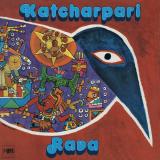
The breakthrough album. Enrico Rava's second solo record, recorded in Milan in January 1973 and released on the German BASF label, is nothing less than a cornerstone of Italian jazz-rock - the record that caught Manfred Eicher's attention and opened the doors to ECM. Rava himself has called it his breakthrough, and history proved him right.
The lineup is killer: John Abercrombie on guitar, Bruce Johnson on bass, Chip White on drums. Four musicians operating at the absolute peak of early seventies fusion energy - electric, cosmopolitan, burning with that particular fire that only existed in that brief window when jazz met rock and nobody knew the rules yet. Abercrombie, already on his way to becoming one of the most distinctive voices in electric jazz guitar, delivers some of his most ferocious early work here. White's drumming is relentless, pushing the music forward with an intensity that never lets up.
If Miles' Bitches Brew-era speaks to you, if Ian Carr's Nucleus gets you moving, if you know Sun Ra's Lanquidity and Don Cherry's Relativity Suite by heart - this is essential listening. Rava's vision was already fully formed: South American rhythms, Mediterranean warmth, free jazz ferocity, rock power - all flowing together without borders or categories. By the early seventies, Rava had absorbed everything - the New Thing, the European free scene, the electric revolution coming out of Miles' studio - and forged something entirely his own.
The seven tracks cover serious ground. "Bunny's Pie" introduces the music with an almost cosmic atmosphere of suspense, hovering in that liminal space before it trails off into the up-tempo vibrant frenzy of "Trial N. 5" - Abercrombie and Rava trading swirling solos at full intensity, the rhythm section locked in tight. "Dimenticare Stanca" moves from Rava's expressive balladic intro into pure funk, guitar and trumpet steering over the rhythmic drive with absolute confidence. The title track carries the lyrical feel and cadence of an Incan-Peruvian folksong - that cosmopolitan spirit made audible. "Fluid Connection" rides a funky bass riff into fusion heaven, with standout trumpet and guitar solos that build and release with perfect tension. "Cheerin' Cherry" pays homage to the great Don Cherry - Rava's spiritual mentor and fellow traveler in world music - exploring a North African soundscape that points toward the global jazz to come. Johnson's "Peace" closes the album with a minute and a half of serene, blissful calm - a moment of stillness after the storm.
This audiophile reissue - cut from the original masters, pressed by Pallas in Germany on 180gm vinyl, housed in a thick laminated hand-glued gatefold - does full justice to an album that remains a collector's holy grail.
Don't sleep on this one. Limited Edition.
- A1: ) Colour Chant
- A2: ) Still & Moving
- A3: ) The Reader’s Lamp
- A4: ) Sun In My Room
- A5: ) Carry A River In Your Mouth
- B1: ) Catch Up, Isobel
- B2: ) A Ship In The Sky
- B3: ) Some Circling
- B4: ) There Was Always A Golden Age
London quartet The Leaf Library return with their bold new album After The Rain, Strange Seeds. A luminous collection of pastoral indiepop, drawing inspiration from suburban isolation, unreliable memories and the surreality of the weather. Their most immediate and melodic work to date, the richly evocative songs brim with chiming guitars, buzzing organs and warm, dulcet strings, evoking Yo La Tengo’s more contemplative moments, The Clientele’s autumnal jangle pop and early Stereolab’s motorik melodicism. The sound of the album is defined by mixer John McEntire, whose work with Stereolab and Yo La Tengo (as well as a member of Tortoise/The Sea And Cake) have been major inspirations to the band.
The album explores themes of memory and place, albeit through an abstract haze – returning again and again to specific moments frozen in time: midsummer bright hot days in the Chilterns (“Sun In My Room”), meteorology and the strange movement of the weather (“Colour Chant”), red kites circling over suburban motorways (“Some Circling”), and the uncanny feeling of dusk and nighttime creatures on “The Reader’s Lamp” (titled by celebrated film director Peter Strickland). The lyrics are vivid yet elliptical, strung with abstract ideas and imagery, conjuring a gently unsettling, though never unwelcoming atmosphere. Not quite trusting your own recollection of things, while marvelling at the oddness of the natural world, the album’s title a good summation of the mix of strangeness and hope contained within.
As on past albums the band - founded by singer Kate Gibson and ex-Saloon guitarist Matt Ashton in the mid 2000s, and now completed by drummer Lewis Young and bassist Gareth Jones - have involved their extended musical family, including guitarist Mike Cranny (of fellow drone pop travellers Firestations) and keyboardist Irina Shtreis, both members of the Leaf Library live band. The album also sees the return of James Underwood’s Iskra Strings, a quartet that features on 4 tracks, with sumptuous arrangements by Daniel Fordham, as well as regular contributor Melinda Bronstein on vocals and Will Twynham (Dimorphodons) on harpsichord. They also welcomed Paddy Milner (on Hammond organ) and Scott McKeon (guitar) – both current members of Tom Jones’ band – for a startlingly delicate rolling crescendo to closing track “There Was Always A Golden Age”.
After The Rain, Strange Seeds is their 4th studio album. The result is The Leaf Library’s most accomplished and affecting work, John McEntire’s mix bringing a bold clarity to the band’s meticulous arrangements – closer to how they sound live than anything they’ve done before.
- A1: Window In The Sky
- A2: The Bachelor
- A3: Harry
- A4: Helnwein
- A5: Youth Packing
- A6: Syukatsu Process
- B1: Grandia Ad
- B2: Collapse Roppongihills
- B3: Driftwood
- B4: Memoria
- B5: Drakedreamdrain
- B6: Get Out
Following his critically acclaimed debut "Dentsu2060" released via Lorenzo Senni's Presto!?, Tasho Ishi's second full-length album "Tasho Ishi lI" is now available on his own label T's.
tI features the new-wave Parapara anthem "Collapse Roppongihills" which became a staple at Narita Airport raves. celebrity trap rave track "DreamDrakeDrain" reminiscent of jam session between Drake and David Chronenberg. the junk entertainment track "Hellnwein" depicting modern pop utopia and its violent underbelly.
The Japanese-style Eurodance meets Philip Glass "The Bachelor" inspired by reality TV. These anthems are contemporary, pop, and carry Tasho Ishi's unique critical edge.
The second album, 'Tasho Ishi Il', is both a musical translation of Japan's diverse techno-animism and a sequel to the previous work "Dentsu2060" Techno-animism: Para Para, anime voice actors, reality TV, epics, advertising, and raves. Each track stands alone yet forms part of a larger, chronologically unfolding narrative.
While all tracks are animated by Japan-specific sound imagery, this is a pop album rather than avant-garde or abstract. In essence, it's a series of songs generated by rave trans-layers, serving as both reportage and documentation tracing Tasho Ishi's visionary city and its phenomena.
Released in 2026 under the catalog number Z-ONE, the album "the river" is a live recording - a snapshot of music from the Hamburger "ZustandsZone" scene between 2014 and 2025. Blending free improvisation with structural depth, the album offers a sonic exploration that will appeal to both purists of the genre and lovers of avant-garde sounds in the contemporary jazz landscape. The striking artwork underscores the artistic ambition of this highly personal work, which fluidly transcends the boundaries between tradition and modern abstraction. "Sound arises, passes away, what has been and is perceived, for a sky's length."
- Renegade Rhythm
- 99: To 1
- The Weapon
- The Weapon Pt. Ii
- Through A Bullet Hole
- Eulogy
Cassette[14,08 €]
Mizery aus San Diego sind ein rebellisches Kraftpaket, das mit seinem Crossover-Hardcore-Sound für Aufsehen sorgen will. Mizery wurden 2014 mit ihrer EP ,Survive The Vibe" bekannt, gefolgt von ihrem 2016 erschienenen Album ,Absolute Light" (Flatspot Records). Mit ihren groovigen Rhythmen und dynamischen Live-Auftritten erregten sie schnell Aufmerksamkeit. Die Idee zu Mizery hatten die Kindheitsfreunde Jose Luna (Gesang) und Taylor Parker (Leadgitarre). Als die beiden den Schlagzeuger Cayle Sain trafen, wurde aus der Idee echt was. Bald darauf holten sie Miguel ,Mikey" Salazar am Bass dazu und begannen als Vierergruppe zu komponieren. Nach der Veröffentlichung des Albums tourten Mizery mit Genre-Größen wie Power Trip, Terror und Backtrack und nahmen Ahmad Ali am Bass auf, wodurch Mikey zur Rhythmusgitarre wechselte. Wie der Rest der Welt kam auch die Band während der Pandemie zum Stillstand, schrieb aber weiter Songs und war bereit, mit voller Kraft zurückzukommen. Im Dezember 2023 erschütterte der unerwartete Tod des Schlagzeugers Cayle Sain, der auch mit Twitching Tongues, God's Hate und GhosteMane auftrat, die Musikszene und brachte Mizery verständlicherweise zum Stillstand. Während sie ihre Trauer verarbeiteten und nachdachten, wussten die Mitglieder von Mizery, dass sie weitermachen mussten, und eine gefundene Aufnahme gab ihnen ein neues Ziel. Jose und Taylor entdeckten, dass Cayle die Vorproduktions-Demos, die sie ihm geschickt hatten, genommen und in einem professionellen Studio Schlagzeugspuren dafür aufgenommen hatte. Mit der Hilfe des Produzenten Taylor Young (The Pit) konnte die Band diese Schlagzeugspuren bekommen und sie für ihre selbstbetitelte EP verwenden. Die Mizery-EP, die am 20. März 2026 bei Flatspot Records erscheinen soll, ist ein offen politisches Album, das sich um Erneuerung und Reflexion dreht. In den sechs Tracks werden die Texte als Waffe eingesetzt, wie Jose erklärt: ,Es ist eine Reflexion einer Welt, die einige von uns sehen und andere ignorieren. Die Gewalttaten, die Angst vor Gewalt und die Auswirkungen von Gewalt." Die Songs weichen von einem geradlinigen Kurs ab und mischen mitreißende Rap-Gesangspassagen mit metallischen Riffs, einfallsreichen Grooves und einigen Überraschungen. Die Einflüsse stammen von Leeways ,Adult Crash", Merauders ,5 Deadly Venoms" und Only Living Witness' ,Innocents", kombiniert mit den Werken von Rage Against The Machine und P.O.D., die die Bandmitglieder in ihrer Jugend geprägt haben. Schon beim Opener ,Renegade Rhythm" wird klar, dass Mizery es ernst meint, wenn sie sich mit dem Zustand der Welt auseinandersetzen und dabei Musik machen, die im Kopf bleibt. ,The Weapon PT.II" ist der lauteste Track auf der EP und setzt auf Worte, um Veränderungen zu bewirken, statt auf physische Gewalt. Den Abschluss der EP bildet der selbstgerechte Song ,Eulogy" mit Gastgesang von Sammy Ciaramitaro von DRAIN. Der Song entstand als frühe Demo und war der einzige Track, für den Cayle programmierte Drums anstelle von Studioaufnahmen verwendet hatte. Um die Single zu vervollständigen, sprang Schlagzeuger David Stalsworth (Militarie Gun, Torena) bei den Aufnahmen ein und ist nun Mitglied von Mizery. Während manche die Veröffentlichung der EP als Triumph betrachten mögen, ist sie für Mizery ein Beweis für ihre Beharrlichkeit und zeigt, dass die Band bereit ist, in eine neue Ära einzutreten.
LTD. GRAPE PURPLE VINYL[22,27 €]
Mizery aus San Diego sind ein rebellisches Kraftpaket, das mit seinem Crossover-Hardcore-Sound für Aufsehen sorgen will. Mizery wurden 2014 mit ihrer EP ,Survive The Vibe" bekannt, gefolgt von ihrem 2016 erschienenen Album ,Absolute Light" (Flatspot Records). Mit ihren groovigen Rhythmen und dynamischen Live-Auftritten erregten sie schnell Aufmerksamkeit. Die Idee zu Mizery hatten die Kindheitsfreunde Jose Luna (Gesang) und Taylor Parker (Leadgitarre). Als die beiden den Schlagzeuger Cayle Sain trafen, wurde aus der Idee echt was. Bald darauf holten sie Miguel ,Mikey" Salazar am Bass dazu und begannen als Vierergruppe zu komponieren. Nach der Veröffentlichung des Albums tourten Mizery mit Genre-Größen wie Power Trip, Terror und Backtrack und nahmen Ahmad Ali am Bass auf, wodurch Mikey zur Rhythmusgitarre wechselte. Wie der Rest der Welt kam auch die Band während der Pandemie zum Stillstand, schrieb aber weiter Songs und war bereit, mit voller Kraft zurückzukommen. Im Dezember 2023 erschütterte der unerwartete Tod des Schlagzeugers Cayle Sain, der auch mit Twitching Tongues, God's Hate und GhosteMane auftrat, die Musikszene und brachte Mizery verständlicherweise zum Stillstand. Während sie ihre Trauer verarbeiteten und nachdachten, wussten die Mitglieder von Mizery, dass sie weitermachen mussten, und eine gefundene Aufnahme gab ihnen ein neues Ziel. Jose und Taylor entdeckten, dass Cayle die Vorproduktions-Demos, die sie ihm geschickt hatten, genommen und in einem professionellen Studio Schlagzeugspuren dafür aufgenommen hatte. Mit der Hilfe des Produzenten Taylor Young (The Pit) konnte die Band diese Schlagzeugspuren bekommen und sie für ihre selbstbetitelte EP verwenden. Die Mizery-EP, die am 20. März 2026 bei Flatspot Records erscheinen soll, ist ein offen politisches Album, das sich um Erneuerung und Reflexion dreht. In den sechs Tracks werden die Texte als Waffe eingesetzt, wie Jose erklärt: ,Es ist eine Reflexion einer Welt, die einige von uns sehen und andere ignorieren. Die Gewalttaten, die Angst vor Gewalt und die Auswirkungen von Gewalt." Die Songs weichen von einem geradlinigen Kurs ab und mischen mitreißende Rap-Gesangspassagen mit metallischen Riffs, einfallsreichen Grooves und einigen Überraschungen. Die Einflüsse stammen von Leeways ,Adult Crash", Merauders ,5 Deadly Venoms" und Only Living Witness' ,Innocents", kombiniert mit den Werken von Rage Against The Machine und P.O.D., die die Bandmitglieder in ihrer Jugend geprägt haben. Schon beim Opener ,Renegade Rhythm" wird klar, dass Mizery es ernst meint, wenn sie sich mit dem Zustand der Welt auseinandersetzen und dabei Musik machen, die im Kopf bleibt. ,The Weapon PT.II" ist der lauteste Track auf der EP und setzt auf Worte, um Veränderungen zu bewirken, statt auf physische Gewalt. Den Abschluss der EP bildet der selbstgerechte Song ,Eulogy" mit Gastgesang von Sammy Ciaramitaro von DRAIN. Der Song entstand als frühe Demo und war der einzige Track, für den Cayle programmierte Drums anstelle von Studioaufnahmen verwendet hatte. Um die Single zu vervollständigen, sprang Schlagzeuger David Stalsworth (Militarie Gun, Torena) bei den Aufnahmen ein und ist nun Mitglied von Mizery. Während manche die Veröffentlichung der EP als Triumph betrachten mögen, ist sie für Mizery ein Beweis für ihre Beharrlichkeit und zeigt, dass die Band bereit ist, in eine neue Ära einzutreten.
- 1: Each Day Is A Lifetime
- 2: I Want You Back
- 3: Out In The Country
- 4: You Can Come Right Back To Me
- 5: I Can't Be Hurt Anymore
- 6: Rainy Night In Georgia
- 7: I've Got A Need For You
- 8: Anything That You Ask For
- 9: Let Somebody Love Me
- 10: For The Shelter Of Your Love
- 11: Dinah
- 12: Don't Stop Lovin' Me
- 1: It's Gonna Take A Whole Lot Of Doin
- 2: I Want Her To Say It Again
- 3: Your Heartaches I Can Surely Heal
- 4: Get Away Heartbreak (Keep On Moving)
- 5: You Make Me Do Things I Don't Want To Do
- 6: Mountain Of Memories
- 7: Heaven Help Us All
- 8: Each Day Is A Lifetime
- 9: Don't Stop Lovin' Me
- 10: You Can Come Right Back To Me
- 11: Dinah
Motown Records: The Supremes, Stevie Wonder, The Miracles, Marvin Gaye, Martha Reeves and The Vandelas and, of course, The Temptations. It is antithetical to mention any of those without the others. The community of artists started as the Sound of Young America, but as history has proven, it became the sound, the look and the inspiration of so much more. And now, little nuggets of Motown's influence can be found the world over. David Ruffin, founding member of Motown superstars The Temptations, went on to become a successful solo artist even after he left the group. In 1969, Ruffin released two fantastic solo records, My Whole World Ended and Feelin' Good. Between 1970 and 1971 he recorded what was to be his third long playing solo record. However, his career was suddenly put on hold when Motown, for reasons unclear, shelved the album that had been dubbed David. The record had even been assigned a catalog number and final artwork. Ruffin returned in 1973 with a brand new LP titled David Ruffin (treated officially as his third LP) and the previously recorded album David sat on the shelves, unheard for decades. This deluxe 2xLP set features the original, rare David LP, plus an LP of bonus tracks and mono single mixes all packaged in a beautiful gatefold jacket, featuring extensive liner notes and striking color photographs of Ruffin. His red and yellow suede suit featured in the interior gatefold LP jacket is an absolute must-see! The record was cut and pressed at Third Man's Detroit HQ, just a couple miles away from the original Motown HQ. For the first time ever on vinyl, Third Man is proud to present the essential, true third LP from the Temptations' mighty David Ruffin.
Das 2022er Album "nichts" der Aachener Post-Hardcore Band FJORT als limitierte Purple Colored Vinyl LP. "nicht" ist ein 50-minütiges Erlebnis. "nichts" gewinnt dem dichten Sound der Band, der fließend zwischen allen Spielarten von Hardcore und Postrock wandelt, zahlreiche neue Facetten ab. Die Täler sind tiefer denn je, in den Höhen ist kaum Luft zu atmen. Die Atmosphäre fühlt sich nahezu greifbar an. Lyrisch gaben sich FJORT seit jeher kryptisch und bleiben dieser Linie treu werden auf "nichts" jedoch auch konkret wie selten zuvor. Vielleicht, weil Zeiten wie diese mehr denn je nach Schonungslosigkeit lechtzen. Vielleicht auch, weil eine Art Galgenhumor seinen Weg auf das Album gefunden hat, der mit dem absoluten Ernst gekonnt bricht. Abwechslungsreicher und schlichtweg größer klang diese Band noch nie.
E The Artist presents Six, his debut album for Nyahh Records; an incendiary opus of blown-out electronics and daring sonic abstractions, inspired by the seven seals, that posits E as a daring force within the Irish underground.
Garnering a fierce reputation both in Ireland and abroad despite minimal recorded output, the artist known as E instead boasts his infamy on the live circuit. The Nigerian-born, Dublin-based musician impressed over the years with a slew of memorable performances inspired by AfroPunkism, recontextualising contemporary black club genres into their loudest and most intense iterations. Following a brief side quest to Vienna early in 2025, E returned to Dublin relieved by the tangibility in familiarity of his surroundings. This inspired a period of personal reflection on self, mortality and religion in his cramped studio; from these sessions emerged his most substantial body of work to date in Six.
Inspired by the opening of the seven seals in the Book of Revelation, Six acts as a radical departure for E. Opener IDTYEK signals this change, a freak folk oddity that ill-prepares you for the road ahead. From MANTRAS’ obtuse techno through to RISE’s power electronics, E fulfils a listening experience intent on submission rather than interpretation. Dynamic contrasts temper the parameters of its sonic catharsis, a crescendo of geometric flow that challenges convention.
Six also extends the artist’s circle of collaborators. Ruby Eastwood and Mel Keane lend BRIDGE their poetry and creative instability respectively, frequent live collaborator Julia Louise Knifefist douses BLACKOUT with his signature guttural cries while KRAF’s obscured lyrics gives LINT a wayward edge. Bulgarian Umbrella offers the record its most substantial contribution on DROGO, a twenty minute meditation on life and death which forms the core inspiration for the album as a whole.
Six exists as a world obsessed with rationalising finality, a disorienting space between certainty and myth that stands as E The Artist’s most ambitious and strangely beautiful work to date.
The first resonant space Zosha Warpeha played in was the Emanuel Vigeland Museum in Oslo, Norway. Built as a mausoleum, its walls reach up into a gradual archway, creating an environment where sound expands and reverberates for twelve seconds before decaying into silence. Warpeha was greeted only by dim lights when she entered, and it wasn’t until she had spent several minutes listening that she was able to make out the frescoes that covered every inch of the room: graphic depictions of the cycle of life from conception through death. As the sound of her Hardanger d’amore encountered the walls and these slowly emerging scenes, they obscured its point of origin in both time and space, augmenting its own life cycle. The experience sat in the back of her mind over the next several years as she developed her own patient style of composition and performance, one that comes into full bloom on her new album I grow accustomed to the dark.
When Warpeha was selected as an artist in residence at Brooklyn’s ISSUE Project Room in 2025, she saw it as an opportunity to more intentionally explore how her music might fill a room with ample natural reverb. I grow accustomed to the dark documents two single-take solo performances for Hardanger d’amore and voice at IPR, with both pieces composed in a unique tuning system developed to interact with the space itself. Listeners can trace resonance from the contact of the bow on gut strings into the body of the instrument, its five sympathetic strings offering another layer of refraction, before the sound is thrown about the cavity of the room. The echoes emerge like a photographic double exposure, or wisps of smoke that linger in the air, creating ghostly harmonic convergences that blur the line between what is there and not-there. Sound begins to act like light, a synesthetic alchemy that transforms drones into beams and ornamental trills into flickers.
Both side-long compositions, “filament” and “visual purple,” exemplify a duality that animates Warpeha’s music: an expressive, individualistic style that draws on extensive knowledge of her instrument’s history in folk traditions, and an austere, devotional quality maintained by focus and precision. Though very different in character and structure, both pieces evolve slowly through numerous repetitive phrases, passages of stillness, and bursts of intensity. “filament” opens with a cycle of delicate melodic fragments played and sung around a drone before blossoming into an outpouring of swooping arpeggios, harmonics flying from the strings like sparks off a bonfire. The disorienting pulsation of harmonic beating forms the core of “visual purple,” the close-tone dissonance building to a swarm of open strings ringing boldly throughout the space. After the knotty tones reach their climax, the piece collapses into studied quietude, hushed, but without any drop in intensity.
When Warpeha first visited the Vigeland Museum in 2019, she was in Oslo to deepen her relationship to the Hardanger fiddle through the study of Norwegian traditional music, which is primarily passed down aurally. The experience of learning songs by ear, not only internalizing the tune but also absorbing the techniques and tonalities by listening, was a crucial step in her development as a composer. The years since have seen her sharpen those skills as a prolific member of the New York avant-garde and improvised music communities. Warpeha’s music encourages listeners to join her in this journey, to listen closely with each repeated phrase and through each dramatic shift. Like the frescoes on Vigeland’s walls, with time and intention, the depth of I grow accustomed to the dark comes on like a revelation.
AICHER is the work of longtime label veteran Liam Andrews (My Disco, EROS), with additional production from his My Disco spar Rohan Rebeiro – an experimental percussionist and erstwhile collaborator of Roland S. Howard and HTRK. Together, they make resoundingly coarse, bullish industrial musick, distilling fascinations with tone and space through eight gristly and darkly sublime cuts, sharpened by production from Boris Wilsdorf of Einstürzende Neubauten and Swans fame.
Through eight cuts, »Defensive Acoustics« reveals a clammy touch of reverberant buzz and below-the-belt shudder, with a creeping, sensual signature of authority that strongly recalls Alan Wilder’s Blasphemous Rumours-era sound design for Depeche Mode, stripped to absolute skeletal fire. Tectonic plates of sound are pushed to an extreme biting point in a sort of structural stress test that feels like an oil rig in action—or perhaps more acutely, junked at harbour.
We go from the lurching buckle of »Ascertain« and the bilious atonality of »Harness Pleads« to the vertiginous scale of the title piece and the brutal momentum of »An Exhausted Image«—almost collapsing under its own bass weight—while the pranging girders of »Constriction« make us think of that 101 version of »Stripped«: propulsive, full of primal energy, and clanging, clipped reverb. »Possessions« ends the album with a passage of bleakly romantic ambience, a judicious emotive counterweight to the preceding gnarl.