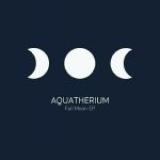
Should you happen to have been paying attention to progressive house and trance in the mid 1990s, you may well be familiar with Brendan McCarthy's most celebrated release as Aquartherium, 1994's Full Moon EP. It was a massive record across Europe but also found favour in San Francisco's freewheeling free party scene. 'Full Moon' itself is especially potent - an all-action chunk of hallucinatory progressive house/trance fusion full of star-burst synth motifs, bubbly electronics and ambient techno sonics - though the heavier, bleep-sporting, Brown Album-era Orbital flex of 'Luci In Deep Hypnosis' is just as good.
Cerca:acr
- A1: Fanmail
- A2: The Vic-E Interpretation - Interlude
- A3: Silly Ho
- A4: Whispering Playa - Interlude
- A5: No Scrubs
- B1: I'm Good At Being Bad
- B2: If They Knew
- B3: I Miss You So Much
- C1: Unpretty
- C2: My Life
- C3: Shout
- C4: Come On Down
- D1: Dear Lie
- D2: Communicate - Interlude
- D3: Lovesick
- D4: Automatic
- D5: Don't Pull Out On Me Yet
Roto makes his PILLZ debut with Lose Yourself, a high-voltage statement from one of Spain’s fastest-rising names. Across four razor-sharp cuts, the EP reflects a shared vision between artist and label: music with deliberate intent—sometimes hypnotic, sometimes fast and direct, and at moments pared down to pure introspection. Lose Yourself carries that spirit throughout, built to lock the floor under peak-time pressure while opening space for release in the glow of sunrise. Already echoing through the underground, it’s primed to soundtrack the circuit.
With this release, Roto steps forward as one of the new voices shaping tomorrow’s dance floor, balancing mystery, pace, and stripped-back tension.
Stripped of its branches and reduced to the bare trunk, Evigt Morker 6 stands at the threshold where fire becomes voice and light devours the sky. Across six tracks, the music moves through hushed revelation, listening for a call that cannot be refused. Salvation and damnation burn side by side on the horizon, as everything else is consumed by flame. ''Kapa grenarna. Lat stammen sta ren infor slutet. Nar riket oppnas ska rosten tala i lagor, bara for dig. Lyssna, och se hur ljuset ater himlen tills oandligheten skymtar. Kliv in i den negativa elden dar intet vander sig om och blir till.''
Western Lore presents the second part of an absolute jaw dropper of an LP from the enigmatic L own, the producer behind 2024’s much lauded Forgotten Paradise Bootlegs (which flew out so rapidly on Bandcamp, none of the ltd run of copies made it to retail).
Deep, musical, textural & blissed out jungle tekno wizardry across a range of tempos, Daybreak Survivors is a journey like no other. Emotive and dripping with nostalgia whilst sounding distinctly futuristic, L own effortlessly carves out a unique sound that shines like beacon in a sea of noise.
Inner Image is a series of live studio recordings by Kamran Sadeghi, an Iranian, New York City-based composer and interdisciplinary artist working across electronic music, sound art, and multichannel composition. The EP is focused on rhythm programming and non-sample-based, hyper-sculpted synthesis. Audible artifacts become compositional material, producing shifting textures while exploring auditory illusion, spectral layering, and spatial perception. This debut release on amenthia recordings bridges Sadeghi's club sound system music with his ongoing work in sound art and avant-garde composition.
Originally released in 1994, MSD - Moonboom is a true cornerstone of Irish dance music and one of the defining dancefloor anthems of the '90s. Fusing Techno, Progressive House and raw 303 energy, it became a staple on floors across Ireland and beyond, a track whose power has only grown with time. Now beautifully remastered and repressed on the newly launched CeltTribe label, Moonboom returns sounding bigger and sharper than ever. Created by Fintan McDonald alongside Dublin DJ Liam Dollard, with Paul Clifford and Peter Coss present during the original mixdown, the track was produced on a Tac Scorpion desk using Akai S1000 and S950 samplers, capturing the raw, hardware-driven spirit of early '90s dance music. Originally released on the Inner Conscience label, this reissue celebrates Ireland's underground dance heritage and is expanded with a strong set of 2026 remixes. The "Love Will Save the Day" Remix delivers a piano-led '90s House groove with nods to New York and Chicago, reflecting the deep Irish house sound loved in Cork and Waterford. The Lanzatech Remix is a tribal, acid-fuelled slammer driven by reworked piano, 303 lines and Detroit-inspired synth pads. Collie's "Midnight" Dub dives deeper into jazzy, hypnotic territory, while Ian's Techno Mix pushes Moonboom into darker, harder underground space with reimagined piano and vocals. A timeless Irish classic, respectfully reimagined!
Aquaregia celebrates its tenth anniversary with '10', a five-track compilation bringing together artists who have each shaped the imprint's sound over the past decade.
The release sees Troma & PERS1, Blazej Malinowski, Teo Drean, Nicola Dal Sacco, and 747 return to the label with new work, each interpreting acid through their own lens. Across the EP, Aquaregia's distinct blend of emotional, hypnotic, and musically rich acid techno is assembled in a nod to the label's foundation.
The record opens with Troma & PERS1's Atomic, a deep and dreamlike cut filled with metallic textures and drifting movement, followed by Blazej Malinowski's Brudnopis, sliding into a low-slung, seductive groove. On the flipside, Teo Drean's Honeymoon Phase injects orchestral euphoria and cinematic tension, while Nicola Dal Sacco channels vintage '90s hypnosis on Papaia. To close, 747's Decades offers a reflective, bittersweet finale - a fitting coda to Aquaregia's first ten years.
Bangkok Impact - alias of Finnish producer Sami Liuski - helped define the early-2000s Italo-disco and electro revival. Missionary On Mars became an underground club hit across Europe with its spacey synths and retro-futuristic vibe, earning cult status among DJs. With Caro and La Musche his reputation for sleek, hypnotic grooves that bridged classic Italo influences with techno energy got cemented. Remastered repress for a new generation.
HAVEN are back with their vinyl operation with a fresh plate of grubby Techno heat from Irish heavyweights Faetch & Sunil Sharpe on the Grotteca EP. Featuring 4 original rippers and a remix from Italian legend DJ Plant Texture of upfront club pressure, the NZ-based label are proud to transmit some of the finest in creeping electronics from across the globe.
The A-side kicks off with 'Bleed In' with its tough drum-work and hypnotising atmospheres eventually descending in to an all-out stomp with one of the filthiest synth-lines in the label's history hitting half-way through. This is followed up with 'Test Breaks' - a broken-beat slammer with a ton of gritty synth design and rear-shaking rhythms. The first side is closed with DJ Plant Texture's remix of 'Bleed In', where driving 909 hits combine with the original synth line for a club-ready weapon ready to get those feet moving.
On the B-side 'Vapornation' keeps the energy rolling with its rolling congas, heavy kick, and eerie atmospheres tailor-made for a concrete basement. Finally, 'Shinplant' closes the record with full-steam-ahead drums and squalid synth rhythms to end yet another plate of dance-floor ammunition from the HAVEN camp.
- A1: When It's Cold I'd Like To Die (Feat. Jacob Lusk)
- A2: This Was Never Meant For Us
- A3: Retreat
- A4: Estrella Del Mar (Feat. Elise Serenelle)
- B1: Ruhe
- B2: Mott St. 1992
- B3: Precious Mind - Quiet Future (Feat. India Carney)
- C1: Tallinn
- C2: On Air - Quiet Future (Feat. Serpentwithfeet)
- C3: Selene
- C4: Le Vide
- D1: Great Absence
- D2: Mono No Aware
- D3: The Opposite Of Fear
‘Future Quiet’ signals a striking new chapter for one of electronic music’s most enduring and visionary artists. Across fourteen tracks that encompass modern piano minimalism, immersive ambient soundscapes and a smattering of vocal collaborations, the album finds Moby reflecting on the tension between hyper-connected modern life and the deep human need for stillness.
- 1: Sanctus
- 2: Angel
- 3: Far Away
- 4: Venite Adoremus
- 5: Dreaming Of Home
- 6: Voca Me
- 7: Stabat Mater
- 8: Salve Regina
- 9: Ave Maria
- 10: Deep Peace (Gaelic Blessing)
The album Greatest Hits - Wonder is more than a collection - it is a musical journey, bringing together the 10 most treasured songs Invisible Hands Music releases that have touched hearts worldwide. Invisible Hands Music is proud to have enjoyed a dynamic and enduring partnership with Libera, spanning six acclaimed studio albums distributed across more than 200 territories. Each song on embodies the passion, artistry, and collaboration that have driven remarkable achievements - from multiple No.1 chart positions to "Album of the Week" features in major markets including the UK, Japan, and the USA. This definitive collection celebrates Libera's most beloved recordings and offers longtime fans and new listeners a memorable one-stop experience.
- A1: From Me To U (Feat. Poppy)
- A2: Ratatata (Babymetal, Electric Callboy)
- A3: Song 3 (Babymetal, Slaughter To Prevail)
- A4: Kon! Kon! (Feat. Bloodywood)
- A5: Kxaxwxaxixi
- B1: Sunset Kiss (Feat. Polyphia)
- B2: My Queen (Feat. Spiritbox)
- B3: Algorism
- B4: Metali!! (Feat. Tom Morello)
- B4: White Flame ー白炎ー
- C1: From Me To U (Major Lazer Remix)
- C2: From Me To U (Jordan Fish Remix)
- D1: From Me To U (Live From The O2)
- D2: My Queen (Live From Intuit Dome)
- D3: Algorism (Live From Saitama Super Arena)
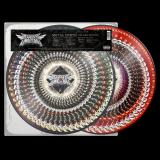
"Beyond HEAVY METAL": the deluxe edition is a special 2LP zoetrope vinyl featuring live recordings from arena shows in the UK, US, and Japan, along with “from me to u (feat. Poppy)” Major Lazer Remix and “from me to u (feat. Poppy)” Jordan Fish Remix
Having celebrated its 15th anniversary last year, BABYMETAL presents a new style of heavy metal album created in collaboration with a new generation of friends encountered across the globe. A powerful statement of who the band is today, this album pushes toward what lies "beyond HEAVY METAL" and aims to change the course of history.
Available to own on special edition zoetrope vinyl. Limited quantities, available while stocks last!
In spring 2025, Abul Mogard and Rafael Anton Irisarri created the source material for their second album, Where Light Pauses in the Silence of the Sun, during a three-day residency at Morphine Raum in Berlin. Functioning as both recording studio and performance venue, the space has no stage, with the audience gathered around the performers. Working within an open framework, the duo reshaped the music each evening while recording the performances live to multitrack. Rotary speakers, modular synthesizers and bowed guitar formed the core of their sonic language, captured through a 1970s mixing console and microphones placed around the room.
Back in Mogard’s studio in Rome, the material was further crafted as motifs were stretched, fragments isolated, and tempos dissolved. Irisarri recorded additional guitar textures and treatments in New York, while passages recorded by Martina Bertoni and Andrea Burelli in Berlin reinforced the harmonic centres and brought breath, refinement and a new sensibility to their compositions. The process continued as Mogard’s layering and subtraction reassembled everyone’s parts into the final arrangement.
The album opens with “In the Eastern Wild,” building from a sparse outline into a monumental formation of low-frequency weight, its internal motion shaped by the rotating Leslie speaker. “Over the Domes” widens into a broader acoustic field, where sustained modular tones meet waves of softly plucked guitar. The music then turns inward with “A Blue Descent,” centred on Bertoni’s cello, whose growling timbre introduces a melancholic depth.
At the album’s centre, “In a Quiet Radiance” unfolds around a slow guitar ostinato, its luminous stillness opening into a more expansive and reflective state. Across its ten-minute span, Burelli’s violin lines and Bertoni’s lower cello phrases gradually surface, weaving through the harmonic field. Mogard brings Burelli’s processed voice to the fore, its emotive, operatic presence becoming one of the record’s pivotal moments. “Of Blessed Ages” suspends the sonic flow, shifting between parallel major and minor chords as lingering, slowly decaying melodies shape the music’s internal drift. The closing “Among Shadows” settles into a darker resonance as layered textures recede.
Mogard and Irisarri’s shared language balances restraint and maximalism. UK magazine Crack describes the music as “a tidal wave held in suspension,” while Dutch newspaper de Volkskrant writes, “What a colossal sound, and how this music strikes at the emotions.” Reflecting on the residency sessions, Irisarri recalls: “At moments I genuinely couldn’t tell if a sound was coming from me or from Abul. It stopped feeling like two people making decisions and began to feel like we were inside a system moving on its own."
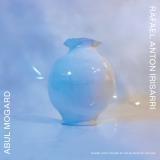
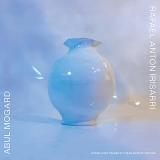
Marja de Sanctis’ cover artwork revisits the vessel sculpture from the duo’s first album, Impossibly Distant, Impossibly Close. There it appeared as raw, unfired clay. Here it has been fired in the kiln and finished with a glaze. Light gathers on its polished surface and spills into the surrounding space. As she explains, “I wanted to convey the idea of continuity within the duo, and the vessel became a kind of container for that idea. However, their music felt different this time, and with the collaboration of Martina and Andrea, I felt it should have a sleeker, softer, more glamorous look, very distant from the first raw appearance.” The transformation of the vessel from raw clay to fired form suggests a passage from immediacy toward permanence, mirroring the music’s gradual expansion.
In spring 2025, Abul Mogard and Rafael Anton Irisarri created the source material for their second album, Where Light Pauses in the Silence of the Sun, during a three-day residency at Morphine Raum in Berlin. Functioning as both recording studio and performance venue, the space has no stage, with the audience gathered around the performers. Working within an open framework, the duo reshaped the music each evening while recording the performances live to multitrack. Rotary speakers, modular synthesizers and bowed guitar formed the core of their sonic language, captured through a 1970s mixing console and microphones placed around the room.
Back in Mogard’s studio in Rome, the material was further crafted as motifs were stretched, fragments isolated, and tempos dissolved. Irisarri recorded additional guitar textures and treatments in New York, while passages recorded by Martina Bertoni and Andrea Burelli in Berlin reinforced the harmonic centres and brought breath, refinement and a new sensibility to their compositions. The process continued as Mogard’s layering and subtraction reassembled everyone’s parts into the final arrangement.
The album opens with “In the Eastern Wild,” building from a sparse outline into a monumental formation of low-frequency weight, its internal motion shaped by the rotating Leslie speaker. “Over the Domes” widens into a broader acoustic field, where sustained modular tones meet waves of softly plucked guitar. The music then turns inward with “A Blue Descent,” centred on Bertoni’s cello, whose growling timbre introduces a melancholic depth.
At the album’s centre, “In a Quiet Radiance” unfolds around a slow guitar ostinato, its luminous stillness opening into a more expansive and reflective state. Across its ten-minute span, Burelli’s violin lines and Bertoni’s lower cello phrases gradually surface, weaving through the harmonic field. Mogard brings Burelli’s processed voice to the fore, its emotive, operatic presence becoming one of the record’s pivotal moments. “Of Blessed Ages” suspends the sonic flow, shifting between parallel major and minor chords as lingering, slowly decaying melodies shape the music’s internal drift. The closing “Among Shadows” settles into a darker resonance as layered textures recede.
Mogard and Irisarri’s shared language balances restraint and maximalism. UK magazine Crack describes the music as “a tidal wave held in suspension,” while Dutch newspaper de Volkskrant writes, “What a colossal sound, and how this music strikes at the emotions.” Reflecting on the residency sessions, Irisarri recalls: “At moments I genuinely couldn’t tell if a sound was coming from me or from Abul. It stopped feeling like two people making decisions and began to feel like we were inside a system moving on its own."
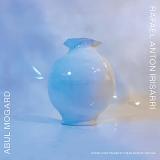
Marja de Sanctis’ cover artwork revisits the vessel sculpture from the duo’s first album, Impossibly Distant, Impossibly Close. There it appeared as raw, unfired clay. Here it has been fired in the kiln and finished with a glaze. Light gathers on its polished surface and spills into the surrounding space. As she explains, “I wanted to convey the idea of continuity within the duo, and the vessel became a kind of container for that idea. However, their music felt different this time, and with the collaboration of Martina and Andrea, I felt it should have a sleeker, softer, more glamorous look, very distant from the first raw appearance.” The transformation of the vessel from raw clay to fired form suggests a passage from immediacy toward permanence, mirroring the music’s gradual expansion.
In spring 2025, Abul Mogard and Rafael Anton Irisarri created the source material for their second album, Where Light Pauses in the Silence of the Sun, during a three-day residency at Morphine Raum in Berlin. Functioning as both recording studio and performance venue, the space has no stage, with the audience gathered around the performers. Working within an open framework, the duo reshaped the music each evening while recording the performances live to multitrack. Rotary speakers, modular synthesizers and bowed guitar formed the core of their sonic language, captured through a 1970s mixing console and microphones placed around the room.
Back in Mogard’s studio in Rome, the material was further crafted as motifs were stretched, fragments isolated, and tempos dissolved. Irisarri recorded additional guitar textures and treatments in New York, while passages recorded by Martina Bertoni and Andrea Burelli in Berlin reinforced the harmonic centres and brought breath, refinement and a new sensibility to their compositions. The process continued as Mogard’s layering and subtraction reassembled everyone’s parts into the final arrangement.
The album opens with “In the Eastern Wild,” building from a sparse outline into a monumental formation of low-frequency weight, its internal motion shaped by the rotating Leslie speaker. “Over the Domes” widens into a broader acoustic field, where sustained modular tones meet waves of softly plucked guitar. The music then turns inward with “A Blue Descent,” centred on Bertoni’s cello, whose growling timbre introduces a melancholic depth.
At the album’s centre, “In a Quiet Radiance” unfolds around a slow guitar ostinato, its luminous stillness opening into a more expansive and reflective state. Across its ten-minute span, Burelli’s violin lines and Bertoni’s lower cello phrases gradually surface, weaving through the harmonic field. Mogard brings Burelli’s processed voice to the fore, its emotive, operatic presence becoming one of the record’s pivotal moments. “Of Blessed Ages” suspends the sonic flow, shifting between parallel major and minor chords as lingering, slowly decaying melodies shape the music’s internal drift. The closing “Among Shadows” settles into a darker resonance as layered textures recede.
Mogard and Irisarri’s shared language balances restraint and maximalism. UK magazine Crack describes the music as “a tidal wave held in suspension,” while Dutch newspaper de Volkskrant writes, “What a colossal sound, and how this music strikes at the emotions.” Reflecting on the residency sessions, Irisarri recalls: “At moments I genuinely couldn’t tell if a sound was coming from me or from Abul. It stopped feeling like two people making decisions and began to feel like we were inside a system moving on its own."
Marja de Sanctis’ cover artwork revisits the vessel sculpture from the duo’s first album, Impossibly Distant, Impossibly Close. There it appeared as raw, unfired clay. Here it has been fired in the kiln and finished with a glaze. Light gathers on its polished surface and spills into the surrounding space. As she explains, “I wanted to convey the idea of continuity within the duo, and the vessel became a kind of container for that idea. However, their music felt different this time, and with the collaboration of Martina and Andrea, I felt it should have a sleeker, softer, more glamorous look, very distant from the first raw appearance.” The transformation of the vessel from raw clay to fired form suggests a passage from immediacy toward permanence, mirroring the music’s gradual expansion.
Phonica AM welcomes long-time friend of the shop Voigtmann, appearing under his A Thousand Futures alias with a release that feels perfectly at home on the imprint. Known for precision engineering and playful groove work, he delivers a 12″ that’s subtle, characterful and built for repeat play.
Across four tracks, Voigtmann moves between sleek, futuristic club moods with ease: from the ghostly, cosmic drive of “Leftfoot Lover” and the acid-flecked momentum of “Outer Edge,” through to the jacking electro-funk tension of “No Room For Squares.” The record closes on “Sunshine Capital,” a warm, chord-led cut that still carries his trademark grit - a deeper moment without losing focus.
Curated by Phonica’s Luther Vine, the AM series champions the stranger, more late-night corners of the dancefloor, and this release fits the ethos with style. Touching lightly on progressive house, tech house and electro-leaning minimal, the record avoids strict genre lines and instead prioritises feeling: trippy, functional and made for DJs.
Following on from the November release of the Material Things / Pike album Rain & Cymbals, 12th Isle enter the new year with a limited vinyl edition of Through Global Frequency, a prescient work of ambient synth, electro-acoustic music and voice recordings by long-standing Dutch multimedia artist Michel Banabila (b. Amsterdam, 1961). Structured around a poem largely composed of titles from recordings he has made over the years, and written during a period marked by new Dutch migration policies, the genocide in Gaza, and the rise of the far right across Europe, Banabila enlists the voices of friends and family, each reciting the poem back to him in their native language. These voice recordings are set within a unique composition that works with the tonality, cadence and rhythm of the vocals, encompassing languages such as Arabic, Spanish, isiZulu, German, French, English, Japanese, Turkish, Ukrainian, and Dutch. Contributions come from Scanner (Robin Rimbaud), Ines Kooli, Sebastian Lee Philipp (Die Wilde Jagd), Yuko Kobayashi, Simone Eleveld, Cengiz Arslanpay and more.
“I felt the need to create something warm, something that embraced diversity. Every voice here is uniquely recognisable and reflects how I know them. I truly enjoyed working with these recordings, focusing on their personalities and the distinctive sound of their languages. For me, making music has always been a way to stay sane, and I have always loved working with voice recordings.”
Music, mix and poem by Michel Banabila,
track 3 featuring Robin Schaeverbeke,
track 8 featuring Cengiz Arslanpay,
track 10 featuring Machinefabriek.
Cello on track 9 by Peter Hollo.
The Kandinski Issue marks Dominic Costello’s debut on Shut Off Notice and sets a clear tone for what’s to come. Rooted in minimal techno but pushing past restraint, the EP delivers four innovative cuts built for movement and late-night immersion.
Across the record, Costello balances precision with play. Locust and Cable Stack lock into hypnotic, tightly wound grooves, while Slewing and Hiss Print stretch the space with cutting textures and subtle shifts that reward deep listening. The result is a collection that feels chill yet exuberant, stripped back yet propulsive.
Designed for the dance floor but equally compelling in headphones, The Kandinski Issue is a confident first statement. Clean lines, sharp edges, and just enough tension to keep bodies moving and minds engaged.
More than thirty years after conquering dance floors across Europe, Mo-Do’s “Eins, Zwei,
Polizei” returns in a special picture disc reissue, available in record stores from January
30, 2026.
Originally released in 1994, the track quickly became a defining anthem of 90s eurodance,
blending driving electronic beats, a hypnotic German-language chant, and an infectious
club energy that still feels fresh today. Mo-Do turned a simple counting rhyme into a
worldwide phenomenon—one that continues to ignite dance floors, throwback playlists,
and DJ sets around the globe.
This new picture disc edition goes beyond sound, offering a highly collectible visual
experience. The striking design enhances the iconic imagery associated with the project,
making it as appealing to display as it is to play. It’s a reissue that honors both the artist
and an era, preserving the immediacy and impact that made “Eins, Zwei, Polizei” a true
timeless classic.
A must-have release for vinyl collectors, 90s dance enthusiasts, and anyone looking to
rediscover one of the most recognizable tracks in European dance music history.