Buscar:act of creation

Estilos
Todo
The Howling - All Hail Mega Force

The Howling is a collaborative project started by writer Ken Hollings and sound artist Howlround devoted exclusively to their shared love of text, audiotape and trash aesthetics. An intense collision of spoken word and analogue tape effects, the Howling's first performance took place at the Iklectik in September 2019 as part of a special programme to celebrate The Tapeworm's 10th anniversary.

Despite the pandemic, they have managed to continue working and conferring together since then, sharing sound files, texts and mixes online, which has resulted in All Hail Mega Force, their first full-length release for The Tapeworm. The two extended tracks contained on this audiocassette reflect their shared interest in Fluxus and how informal rules and permutations can be set up to work themselves out through loops and repetitions. A straight line connects Terry Riley's tape experiments in Paris from the early 60s with their experimental recordings in the Wimpy Bar on Streatham High Road, one of their favourite meeting places. 'The idea of instant, disposable one-off creations appealed to us a lot at the time,' The Howling explain, 'particularly as both pieces were conceived and developed during different phases of Covid lockdown in the UK.'

The title and source material are derived from the kid's adventure movie MegaForce, starring Barry Bostwik and Michael Beck. Designed to sell a range of Mattel hi-tech action toys, MegaForce tanked at the box office but lives on in the collective consciousness of those who share with The Howling a special love for Trash and Trash Aesthetics.

The two tracks also share similarities in approach and realization.

'All Hail Mega Force' was created by reading combinations of the words 'All Hail Mega Force' into a voice memo recorder, transferring it to tape, cutting the whole thing as a single long loop and then stretching it across three reel-to-reel machines simultaneously, using two pencils and a pint glass full of loose change to try and maintain sufficient playback tension. Over time the loop started to degrade, which accounts for the increasingly slurry and unpredictable playback, plus frequent ruptures caused by the tape becoming jammed and having to be tugged through the machine workings by hand. Twenty-four minutes later and the result was a completed new work and a slight backache.

The text for 'Are You Man Enough For Mega Force?' was recorded live in the Wimpy Bar on Streatham High Road, 28 November 2021. It was cut to tape and looped on 3 December 2021 at Warrior Studios, Loughborough Junction. Dragged by motor and then by hand across two tape machines with copious amounts of closed input feedback provided by a third rushing in to fill the gaps. One take with no effects or overdubs, but one tiny edit in the middle when something fell over.

Reservar03.06.2022

debe ser publicado en 03.06.2022

9,20
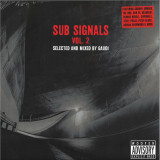
Various - Sub Signals, Vol.2 LP (2x12")
 
18

Sub Signals Vol.2 is a deep dive into underground bass, guided by artist and producer Gaudi. Featuring predominantly unreleased originals and versions by some of the biggest names in the worldwide dub collective, it intricately combines analogue elements with digital grooves to stunning effect.

Much more than just a compilation, the Sub Signals series is a celebration of the evolution of the sound of dub, from its original roots in reggae to its fusion with a much wider spectrum of sounds and influences. Gaudi curated the first volume back in 2006 for the cult Canadian label Interchill, sourcing tracks and dubs from High Tone, Zion Train, Manasseh, Almamegretta, Noiseshaper, Creation Rebel, Greg Hunter, Dubadelic and more.

15 years on, Gaudi has created the second volume, blending contributions by established reggae names Steel Pulse, Dennis Bovell and African Head Charge with next generation dub producers Alpha Steppa, Radikal Guru and Paolo Baldini Dubfiles, headline acts Groove Armada, Dub FX and The Orb with underground artists Deadbeat, Pitch Black and SUBSET, to create a seamless 75 minute mix.
“With Volume 2, I wanted to create a deep vibrational experience by shaping an aural trajectory that encompassed the many aspects of dub and its related sub-frequencies. To achieve my goal, I reached out to the artists I regularly work with to ask for contributions, in some cases digging in their archives to find what I was looking for.”

As a solo artist, Gaudi has recorded over 20 albums, while as a producer he has hundreds of productions under his belt. He has worked with legends of the reggae and electronic music worlds including Lee "Scratch" Perry, Horace Andy, Dub Pistols, Hollie Cook, Youth, Mad Professor, Prince Fatty, Lamb, Trentemøller and Nusrat Fateh Ali Khan.

Dedicated to the sound of dub in its many forms, Gaudi’s latest excursion of his Sub Signals series is pure bass therapy, designed to excite your eardrums and worry your woofers.

No en stock

Haga su pedido ahora y le encargaremos el artículo en nuestro proveedor.

25,17

Ültimo hace: 3 Años
Immolation - Acts Of God

Immolation

Acts Of God

12inch4065629634117
Nuclear Blast
20.05.2022

Just as one can smell a storm swelling on the horizon, the cataclysmic tremor that is IMMOLATION approaches to unleash its latest, immense creation: ACTS OF GOD. Due to be released in winter of 2022, this 11th studio album serves as the next chapter of IMMOLATION’S Death Metal epic. With 5 long years passed since the most recent studio album, ATONEMENT, ACTS OF GOD vigorously showcases IMMOLATION’s ability to consistently create fascinating sounds, while still keeping their feet firmly rooted in the old school, New York Death Metal for which they are renowned.

Emblazoned with a haunting new masterpiece by artist Eliran Kantor, ACTS OF GOD displays a trifecta of angelic beings desperately trying to prevent one another’s flesh from melting in a blackened light from above. The muted colors and ethereal images will ring familiar to fans of IMMOLATION’s previous album covers. “We wanted this cover to feel much darker; more melancholy and hopeless. The music has always been very dark, and a lot of Kantor’s work had the feeling that we were going for; the semi-surreal colliding with a classic, almost renaissance feel,” explains founder and vocalist/bassist Ross Dolan. “It’s unnerving. It really reflects the music perfectly,” agrees founder and guitarist Robert Vigna.

The album’s third track “The Age Of No Light” is a powerful, hard hitting song with an extreme yet catchy melody. “It’s quick, hits hard, and gets straight to the point” explians Vigna. Consistently changing speeds and patterns throughout, the song is short but remains both dynamic and memorable.

“Blooded” has all the usual IMMOLATION elements: the slow, the fast, the explosive, the big overlaid sections of groovy harmony eventually dropping into evil, ripping guitar work. “It’s a little powerhouse,” describes Vigna, “it’s straightforward, and it has all the elements you would expect from us in a nice, neat package.”

A song like “Immoral Stain” is a slightly mid-paced track with an intense, creepy atmosphere. Equipped with plenty of unusual moments, the beat is catchy, dark, and echoing. Searing guitar starts to recite a story and then quickly begins a conversation with thunderous vocals and a vociferous beat. “That whole section of build up just needed to be done exactly as it is. That’s what makes it sound different and interesting,” describes Vigna. Much like the rest of the album, while the lyrics cover the usual, general topics of genuine evil and the great deception of religion, the specifics are most certainly left to the listener’s interpretation. Fortunately for IMMOLATION fans, there is no shortage of corruption and catastrophe in this world.

Fittingly, the concluding track “Apostle” was the last song written for the album. “Some of those chorus sections have a weird almost dream-like quality,” describes Dolan. Its steadily growing momentum discharges rounds of guitar solos and relentless vocals which eventually lead way to an explosive finale to the album.

The creative journey for ACTS OF GOD began with years of notes, and an abundance of inspiration. With Vigna at the helm of the structural writing as usual, further composing and concepts were tossed back and forth amongst all 4 members. Eventually, they began to skeletonize the beginning of what would become a full length, studio album. While the recording process and entering the studio can be a very sterile experience for some musicians, the ferocity of the demos combined with the expertise of long time friend and recording counterpart Paul Orofino of Millbrook Studios (BLUE OYSTER CULT, BAD CO, GOLDEN EARRING), assured that this would not be an issue for IMMOLATION. “Having such a level of comfort is key,” remarks Dolan. Final touches were brought about on the mixing and mastering by Zack Ohren of Castle Ultimate Studios.

Firmly aligned with Nuclear Blast Records, the often coveted sound of IMMOLATION has reemerged from the depths of a cursed and cruel world to illuminate our minds and ears with exquisite, sonic destruction.

Reservar20.05.2022

debe ser publicado en 20.05.2022

31,30
Takayanagi Masayuki New Direction for the Art - La Grima

Famed free jazz concert registration of an early New Direction for the Art performance. Recorded in 1971. Old-style Gatefold LP, with rare photographs & extensive liner notes by Alan Cummings.

The performance by Takayanagi Masayuki New Direction for the Art at the Gen’yasai festival on August 14, 1971 was an intense, bruising collision between the radical, anti-establishment politics of the period in Japan and the febrile avant-garde music that had begun to emerge a few years before. The ferocious performance that you can hear here was received with outright hostility by the audience, who responded first with catcalls and later with showers of debris that were hurled at the performers. Takayanagi though described the group’s performance to jazz magazine Swing Journal as a success, “an authentic and realistic depiction of the situation”.

In 1962, Takayanagi, bassist Kanai Hideto and painter Kageyama Isamu went on to form an AACM-style musicians’ collective called the New Century Music Research Institute. Every Friday, members gathered at Gin-Paris, a chanson bar in the fashionable Ginza district of Tokyo, to push the outer limits of jazz creativity.

But the pivotal moment for his music was the creation a new trio version of his New Directions group in August 1969, with the free bassist Yoshizawa Motoharu and a young drummer Toyozumi (Sabu) Yoshisaburō. Experiments eventually led to the creation of two basic frameworks for improvisation that Takayagi referred to as Mass Projection and Gradually Projection.

“La Grima” (tears), the piece that was played at the Gen’yasai festival, is a mass projection and listening to it, you can get a clear sense of what Takayanagi was aiming at. Mass projection involves a dense, speedy and chaotic colouring in of space that destroys the listener’s perception of time, and thus of musical development.

The ferocity of the performance of “La Grima” at the Gen’yasai Festival in Sanrizuka on August 14, 1971 was consciously grounded by Takayanagi in a particular historical moment, ripe with conflict and violence. A month after the festival, on September 16, three policemen would die during struggles at the site. This was the context that the three-day Gen’yasai Festival existed within. The line-up reflected the radical politics of the movement, with leading free jazz musicians like Takayanagi, Abe Kaoru, and Takagi Mototeru appearing alongside radical ur-punkers Zuno Keisatsu, heavy electric blues bands like Blues Creation, and Haino Keiji’s scream-jazz unit Lost Aaraaff.

New Direction for the Arts trio topped the bill on the opening day, playing an aggressive, uncompromising “mass projection” set of polyphonic improvisation. Alongside drummer Hiroshi Yamazaki and saxophonist Kenji Mori, Takayanagi soloed hard and continuously for forty minutes. This was performance as precisely calibrated metaphor: three musicians responding to the demands of the moment with instinctive force and fury, untethered by rules, leaderless yet not rudderless (the direction part of the group’s name was no accident). The piece was entitled La Grima – tears - and the fusion between the palpable anger of the performance and hopeless sadness of its title were also perfectly apt for the situation. This was a fight that the state was always going to win. Yet, by all accounts, the band’s set went down like a fart at a funeral. The band were showered with catcalls and debris throughout, and by chants of “go home” when the music finally came to an end.

However, looking back at the event in the year-end issue of Japan’s leading jazz magazine, Swing Journal, Takayanagi was surprisingly upbeat: New Directions brought a solid political consciousness to our performance and succeeded in an authentic and realistic depiction of the situation. But journalism revealed its superficiality in its inability to penetrate the core of the music. I don’t know much about anyone else, but we at least left behind a competent record.

It’s a fascinating statement in many ways. Perhaps on one-hand it can be read as stubborn, solipsistic and self-justifying, yet in conjunction with his statement in 1971 there are points that guide us towards an understanding of just what Takayanagi intended with his performance at the festival. As Kitazato Yoshiyuki has argued, it becomes an almost religious act, directed at the earth deities of the land. A union of anger, sorrow and malevolence that can be placed nowhere effective, all it can do is find expression and channeling. The forcible land seizures at Narita, the eviction of farmers from land that had been in families for generations, the destruction of communities: none of this can be prevented, not least by an artistic action. All that can be done is an attempt to mark the land itself, to soak it with the combined force of emotions and the volume of the performances, to bury something there that cannot be drowned out, even by the coming roar of jet engines.

Reservar06.05.2022

debe ser publicado en 06.05.2022

25,17
Seikatsu Kojyo Iinkai - Seikatsu Kojyo Iinkai

Ferocious JP / US free jazz bomb. A rare meeting between the NYC free jazz scene and the Japanese free music scene. Old-style Gatefold LP, with rare photographs & liner notes by Alan Cummings.

Following hot on the heels of the first, mid-sixties generation of Japanese free jazz players like Kaoru Abe, Masayuki Takayanagi, Yōsuke Yamashita, Motoharu Yoshizawa, etc., an exciting second wave of younger players began to emerge in the seventies. Two of its leading members were the saxophonist Kazutoki Umezu and multi-instrumentalist Yoriyuki Harada. Both were post-war babies and immigrants to the city, Umezu from Sendai in the north and Harada from Shimane in the west. They first met as students in the clarinet department at the Kunitachi College of Music, a well-known conservatory in western Tokyo. Harada was already securing sideman gigs on bass with professional jazz groups and was active in student politics, making good use of his connections to set up jazz concerts on campus. It was around this time that the two began to play together in an improvised duo, with Umezu on clarinet and bass clarinet and Harada on piano. They also experimented with graphic scores and prepared piano.

These experiments eventually led to the creation of a trio, with a high-school student called Tetsuya Morimura on drums, that they decided to name Seikatsu Kōjyō Iinkai (Lifestyle Improvement Committee) in joking reference to the Marxist discourse of the student radicals of the time. Around 1973, Umezu and Harada decided to call it a day and go their separate ways. Umezu began playing with the Toshinori Kondo Unit and Harada with the Tadashi Yoshida Quintet. In 1974 Harada formed his own trio and began to play at jazz coffeehouses across Japan.

Then, in September 1974 Umezu travelled alone to New York, where he set about building connections with the loft jazz scene in the city. It was a fortuitous moment to arrive in New York. Rents were cheap in the Lower East Side, possibilities for squatting existed, so many musicians and artists had moved to the area. Umezu soon became known on the scene as Kappo and he started to make connections with some of the young musicians like David Murray, Arthur Blythe, and Oliver Lake. He recalls making the rounds of the lofts every evening, checking out the performances, and getting the chance to sit in with many groups including Juma Sultan’s Aboriginal Music Society and trumpeter Ted Daniel’s orchestra.

Things were going so well that Umezu wrote to Harada and invited him to come to New York. He accepted and arrived in the city in July 1975. Harada and Umezu took the opportunity to resume their artistic collaboration. Their first concert together in over two years took place on July 20th at another loft, Sunrise Studios at 122 2nd Avenue. Umezu remembers Sunrise as an unusually sunny loft with the rarest of things, a grand piano. He invited along Ahmed Abdullah, a trumpeter he had got to know while playing with Ted Daniel. Abdullah led his own group and was a long-term Sun Ra sideman. William Parker, one of the key figures in the loft jazz scene of the period, was on bass. Abdullah also brought along Rashid Sinan on drums. Sinan drummed in Abdullah’s units throughout the seventies, but he had also played on Frank Lowe’s immortal Black Beings album and collaborated with Arthur Doyle, playing on Doyle’s Alabama Feeling album. By all accounts the evening was a huge success, with speed and dynamism of Harada’s piano playing gaining him lots of support.

Since they had managed to save some money from their day jobs, Umezu and Harada decided to set up a recording session with the same line-up on August 11 at Studio We, where there was a well-equipped studio on the third floor. Umezu recalls the session as follows, Of course, we recorded our performances in one take, with zero retakes as far as I remember. On all the tracks we recorded, we moved as one unit, sharp and fast. That was the nature of Lifestyle Improvement Committee, New York Branch.

Umezu and Harada would later become known for the elements of parody and entertainment that they brought to their music, a freewheeling blend of pastiche, humour and on-stage performativity that paralleled the approaches of the Art Ensemble, Sun Ra, and Holland’s ICP. But here, on their first recordings, the humour element is not yet present. Instead, there is a febrile sense of joy in creation and connection. On the Umezu-penned “Kim”, for example, Harada opens the piece with a speedy exploration of the full-range of the keyboard, hitting hard on the bass keys to create a rhythmic bed out of which patterns begin to emerge. Umezu enters at a much slower pace, longer held notes that at first float weightlessly over the urgency of the piano before they begin in splinter and accelerate. When Parker and Sinan kick in, it’s a rollicking tempo with Parker plucking deep and hard and the left-handed Sinan skittering hard across the topside of his kit. Abdullah kicks in a glorious solo twelve minutes in, bright and breathy at once. The piece slows and grows more spacious towards the end, giving Parker a chance to showcase some arco work that shades beautifully into the air against Abdullah’s trumpet.

Reservar06.05.2022

debe ser publicado en 06.05.2022

25,17
Mall Girl - Superstar LP

Mall Girl

Superstar LP

12inchJANSEN129LP
Jansen Records
29.04.2022

Mall Girl: «Superstar» Jansen Records 2022 «Superstar», the debut record from Norwegian art-pop outfit Mall Girl, represents an exciting new chapter for the buzzed-about band. The release follows a string of successful singles, including their 2018 track “Slay Queen,” which introduced them as an act to watch in the alt-pop arena. The chaotic year of 2020 brought a string of infectious, vibey singles, including “My Sweet Mall Girl” and the fierce “Bad Girl." Members Iver Armand Tandsether, Hannah Veslemøy Narvesen, Eskild Myrvoll and Bethany Forseth-Reichberg were forced to get creative when the pandemic hit, sidelining best-laid plans to flesh out some songs before heading into the studio together. "Because of COVID regulations and the four of us living in two different cities, we changed the way we worked with the songs quite radically in the months leading up to the studio recording,” Narvesen says. "We’ve always been very oriented towards the live performance of the songs, including when we compose them together in our rehearsal space. That way of working has led to some challenges when recording, as you end up listening to the songs in a different manner and might figure out you should have done everything differently." While others put their creative endeavors on hold, Mall Girl opted to try something different. Many of the songs on «Superstar» were tracks that the band regularly performed, but they wanted to seize the opportunity to evolve their sound even more. “We actually ended up ‘remote composing’ big parts of the album, with everyone working from their own home studio and bouncing ideas back and forth,” Narvesen explains. "This was a very welcome change of workflow for us, and it lead to us making some songs which probably wouldn’t have turned out that way had we been together in the same room." This experimental shift in their creative process led to the creation of songs bursting with infectious hooks, hypnotizing grooves and punchy lyrics.

Reservar29.04.2022

debe ser publicado en 29.04.2022

28,36
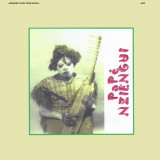
Papé Nziengui et son Groupe - Kadi Yombo LP 2x12"

Kadi Yombo, published in 1989, is the most successful album in the quest for a fusion between tradition and modernity in Bwiti harp music of the Tsogho people of Gabon. Combining beating rattles with a layer of synthesizers, Papé Nziengui blends in a contrapuntal dialogue characteristic of harp playing: male song in appeal and female choir in response, male voice of the musical arc and rhythms of female worship. But above all it’s Tsogho ritual music and modern studio orchestration. The result is an initiatory itinerary of 10 musical pieces which are all milestones likely to be simultaneously listened to, danced, meditated on, and soon acclaimed. In the years since, Nziengui has traveled he world from Lagos to Paris, from Tokyo to Cordoba, from Brussels to Mexico City to become a true icon, the emblem of Gabonese music.

Like Bob Dylan, "electrifying" folk and Bob Marley mixing rock with reggae, some purists have criticized Nziengui for having distorted the music of harp by imposing a cross with modern instruments. They even went so far as to claim that Nziengui was just an average harpist covering his shortcomings with stunts that were only good for impressing neophytes; like playing a harp placed upside down behind his back or playing two or three harps simultaneously. Sincere convictions or venomous defamations, in any case, Nziengui never gave in to such attacks, imposing himself on the contrary to pay homage to the elders (Yves Mouenga, Jean Honoré Miabé, Vickoss Ekondo) while instructing the maximum of young people. He is thus the promoter of many young talents, the most prominent of which is certainly his nephew Jean Pierre Mingongué. In a conservative society where the sacred is confused with secrecy, exposing the mysteries of Bwiti in broad daylight can be punished by exclusion or even execution.

Papé Nziengui has always claimed that he faces such risks because he never felt enslaved to a community that governs his life, that regulates his conduct, that has a right of censorship over his activities. Like Ravi Shankar, the famous sitarist, Papé Nziengui is a man of rupture but also of openness, a transmitter of culture. As proof, he has established himself in Libreville, Gabo’s capital, as the main harpist for sessions and concerts, accompanying the greatest national artists (Akendengué, Rompavè, Annie-Flore Batchiellilys, Les Champs sur la Lowé, etc.) as well as foreign artists (Papa Wemba, Manu Dibango, Kassav', Toups Bebey, etc.). In 1988, he was the first harpist to release an album in the form of a cassette produced by the French Cultural Center (Papé Nziengui, Chants et Musiques Tsogho). At the same time, he created his own group (Bovenga), combining traditional music instruments (musical bow, drums, various percussion instruments, etc.) in the framework of a true national orchestra, which gave the first concert and the first tours of a traditional music that was both modern and dynamic, thus "democratizing" the harp, to the dismay of certain purists.

On the other hand, in modern music, dominated by the logic of profit or even commercialism, artistic creation must often be adjusted for a specific audience based on reason rather than heart. But instead of allowing himself to be distorted, Papé Nziengui has always tried to produce music that is not a caricature, worthy in its expression as in its content, of the sacredness and transcendence of the music of the Origins. This is what makes Nziengui not only the musician, but the man someone whose age hasn’t altered any of his freshness or authenticity

Reservar08.04.2022

debe ser publicado en 08.04.2022

32,73
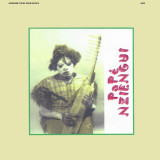
Papé Nziengui et son Groupe - Kadi Yombo LP

Kadi Yombo, published in 1989, is the most successful album in the quest for a fusion between tradition and modernity in Bwiti harp music of the Tsogho people of Gabon. Combining beating rattles with a layer of synthesizers, Papé Nziengui blends in a contrapuntal dialogue characteristic of harp playing: male song in appeal and female choir in response, male voice of the musical arc and rhythms of female worship. But above all it’s Tsogho ritual music and modern studio orchestration. The result is an initiatory itinerary of 10 musical pieces which are all milestones likely to be simultaneously listened to, danced, meditated on, and soon acclaimed. In the years since, Nziengui has traveled he world from Lagos to Paris, from Tokyo to Cordoba, from Brussels to Mexico City to become a true icon, the emblem of Gabonese music.

Like Bob Dylan, "electrifying" folk and Bob Marley mixing rock with reggae, some purists have criticized Nziengui for having distorted the music of harp by imposing a cross with modern instruments. They even went so far as to claim that Nziengui was just an average harpist covering his shortcomings with stunts that were only good for impressing neophytes; like playing a harp placed upside down behind his back or playing two or three harps simultaneously. Sincere convictions or venomous defamations, in any case, Nziengui never gave in to such attacks, imposing himself on the contrary to pay homage to the elders (Yves Mouenga, Jean Honoré Miabé, Vickoss Ekondo) while instructing the maximum of young people. He is thus the promoter of many young talents, the most prominent of which is certainly his nephew Jean Pierre Mingongué. In a conservative society where the sacred is confused with secrecy, exposing the mysteries of Bwiti in broad daylight can be punished by exclusion or even execution.

Papé Nziengui has always claimed that he faces such risks because he never felt enslaved to a community that governs his life, that regulates his conduct, that has a right of censorship over his activities. Like Ravi Shankar, the famous sitarist, Papé Nziengui is a man of rupture but also of openness, a transmitter of culture. As proof, he has established himself in Libreville, Gabo’s capital, as the main harpist for sessions and concerts, accompanying the greatest national artists (Akendengué, Rompavè, Annie-Flore Batchiellilys, Les Champs sur la Lowé, etc.) as well as foreign artists (Papa Wemba, Manu Dibango, Kassav', Toups Bebey, etc.). In 1988, he was the first harpist to release an album in the form of a cassette produced by the French Cultural Center (Papé Nziengui, Chants et Musiques Tsogho). At the same time, he created his own group (Bovenga), combining traditional music instruments (musical bow, drums, various percussion instruments, etc.) in the framework of a true national orchestra, which gave the first concert and the first tours of a traditional music that was both modern and dynamic, thus "democratizing" the harp, to the dismay of certain purists.

On the other hand, in modern music, dominated by the logic of profit or even commercialism, artistic creation must often be adjusted for a specific audience based on reason rather than heart. But instead of allowing himself to be distorted, Papé Nziengui has always tried to produce music that is not a caricature, worthy in its expression as in its content, of the sacredness and transcendence of the music of the Origins. This is what makes Nziengui not only the musician, but the man someone whose age hasn’t altered any of his freshness or authenticity

Reservar08.04.2022

debe ser publicado en 08.04.2022

10,29
Papé Nziengui et son Groupe - Kadi Yombo LP

Kadi Yombo, published in 1989, is the most successful album in the quest for a fusion between tradition and modernity in Bwiti harp music of the Tsogho people of Gabon. Combining beating rattles with a layer of synthesizers, Papé Nziengui blends in a contrapuntal dialogue characteristic of harp playing: male song in appeal and female choir in response, male voice of the musical arc and rhythms of female worship. But above all it’s Tsogho ritual music and modern studio orchestration. The result is an initiatory itinerary of 10 musical pieces which are all milestones likely to be simultaneously listened to, danced, meditated on, and soon acclaimed. In the years since, Nziengui has traveled he world from Lagos to Paris, from Tokyo to Cordoba, from Brussels to Mexico City to become a true icon, the emblem of Gabonese music.

Like Bob Dylan, "electrifying" folk and Bob Marley mixing rock with reggae, some purists have criticized Nziengui for having distorted the music of harp by imposing a cross with modern instruments. They even went so far as to claim that Nziengui was just an average harpist covering his shortcomings with stunts that were only good for impressing neophytes; like playing a harp placed upside down behind his back or playing two or three harps simultaneously. Sincere convictions or venomous defamations, in any case, Nziengui never gave in to such attacks, imposing himself on the contrary to pay homage to the elders (Yves Mouenga, Jean Honoré Miabé, Vickoss Ekondo) while instructing the maximum of young people. He is thus the promoter of many young talents, the most prominent of which is certainly his nephew Jean Pierre Mingongué. In a conservative society where the sacred is confused with secrecy, exposing the mysteries of Bwiti in broad daylight can be punished by exclusion or even execution.

Papé Nziengui has always claimed that he faces such risks because he never felt enslaved to a community that governs his life, that regulates his conduct, that has a right of censorship over his activities. Like Ravi Shankar, the famous sitarist, Papé Nziengui is a man of rupture but also of openness, a transmitter of culture. As proof, he has established himself in Libreville, Gabo’s capital, as the main harpist for sessions and concerts, accompanying the greatest national artists (Akendengué, Rompavè, Annie-Flore Batchiellilys, Les Champs sur la Lowé, etc.) as well as foreign artists (Papa Wemba, Manu Dibango, Kassav', Toups Bebey, etc.). In 1988, he was the first harpist to release an album in the form of a cassette produced by the French Cultural Center (Papé Nziengui, Chants et Musiques Tsogho). At the same time, he created his own group (Bovenga), combining traditional music instruments (musical bow, drums, various percussion instruments, etc.) in the framework of a true national orchestra, which gave the first concert and the first tours of a traditional music that was both modern and dynamic, thus "democratizing" the harp, to the dismay of certain purists.

On the other hand, in modern music, dominated by the logic of profit or even commercialism, artistic creation must often be adjusted for a specific audience based on reason rather than heart. But instead of allowing himself to be distorted, Papé Nziengui has always tried to produce music that is not a caricature, worthy in its expression as in its content, of the sacredness and transcendence of the music of the Origins. This is what makes Nziengui not only the musician, but the man someone whose age hasn’t altered any of his freshness or authenticity

Reservar08.04.2022

debe ser publicado en 08.04.2022

32,73
Wild Terrier Orchestra - Even The Chimera

EVEN THE CHIMERA is the debut album by Wild Terrier Orchestra, a new project by Dimitris Papadatos, aka Jay Glass Dubs, based on interchangeability and open improvisation. A newer, freer incarnation of Papadatos’ creative intent, the project acts more like an open container of disparate and idiosyncratic contributions from a mutable cast of musicians and artists. Often times not provided according to a pre-planned structure, these contributions are actually more likely to arrive in the form of free improvisations, unconnected musical segments and fragmented splinters of sound. This allows Papadatos to aggregate all the constituent parts according to an intuitive process that bridges between the detailed craft of electronic music production and surrealist techniques such as the Cadavre Exquis and the Cut-Up. It’s both a harmonization of contrasting tones and a research for commonality within difference, although none of the wild terriers are ever nearly tamed. Unsurprisingly, the main inspiration for this new chapter came from a a pinnacle of avantgarde literature: poet Andreas Embirikos’, considered Greece’s first surrealist and all-out paradoxical figure. Specifically, this release is guided and instigated by his poem OKTANA, in which Embirikos inscribes a manifesto for a hedonistic utopia years ahead of any accelerationist theories, bursting with contradicting presences and mutating identities. Written in the aftermath of the Greek civil war, the poem calls for a time of eternal poetry and spiritual intoxication that can only be reached through a painful process of violent deconstruction. Thus, EVEN THE CHIMERA was born: a culmination of Papadatos’ decades long research on traditional Greek and Byzantine music, free jazz and free improvisation. Firmly spread between two side-long tracks, the contributions of American singer and musician Cruel Diagonals on vocal duties as well as Greek artist and musician Fotini Korre on ney suggest the existence of a filament that connects the west and the east through the creation of ‘’possible musics’’. This happens in accordance to Papadatos’ practice of a counterfactual approach to the process of what music history dictates. It is also directly shaped by the musician’s frequent dwellings in the isle of Cyprus, a land in which the clash of worlds and culture has often taken both violent and beautiful shapes. The long drones, acoustic ghosts and unbalanced choirs that form the album seem to call from the Mediterranean itself, not only from its history but also from its possible futures and unreal narrations, invoking it as a nexus of diversity and possibility.

Reservar25.03.2022

debe ser publicado en 25.03.2022

23,74
72TM - Mutations EP

72Tm

Mutations EP

12inchTMSEP001
TMS Records
14.03.2022

New imprint and musical project from Benjamin Diamond (french iconic member of Stardust and voice of the hit "Music Sounds Better With You") & Ulysse Genet!

Two numbers referring to the year 1972.

And in two numbers, everything is said.

The project is simple and ambitious, it is the soundtrack of life passing by, of our lives, of theirs: those of two boys who became two men, both born the same year. 1972. And contrary to its commercial destination, the «TM» sometimes af fixed to these two letters appears here rather like a real mental tattoo, if not a purely aes thetic gesture, as if to tell us: these sounds, these feelings, these immaterial emotions, were deposited in the dark recesses of these two brains, these two minds, before passing through their bodies, passing through their fingers, then through the keyboards, the ins truments, to transform themselves, to turn into sounds, which, themselves, through the alchemy of creation, become music.

And this music is the soundtrack to these two lives: Benjamin Cohen. Ulysse Genet. And these two lives which at one point crossed, met. And from this crossing was born 72. From these two experiences, from these memories, from the memories of the two artists, music is revealed. Four tracks for the moment, instrumental, mixing the reminiscences of hip hop, the echoes of the ‘ambient’ created by Brian Eno, the techno vo lutes of Detroit, and more particularly those of Carl Craig. Without forgetting the roots of what has been called the French Touch... this unique musical adventure revealing France abroad in a singular way, in which Benjamin Cohen has actively participated.

No en stock

Haga su pedido ahora y le encargaremos el artículo en nuestro proveedor.

14,66

Ültimo hace: 4 Años
Marshall Vincent - In No Particular Order

Alt-R&B singer, songwriter, and producer Marshall Vincent announces his new EP 'In No Particular Order', a collection of five tracks on SA Recordings. Inspired by his time living in Berlin, New York, and Chicago, Marshall weaves together a soulful blend of orchestral, electronic, pop and folk elements to tell stories of life and love in vivid colour. Songs that are a mix of heartfelt ballads, haunting basslines, and dramatic strings draw a strong line to the alternative R&B of Moses Sumney, and the folky inspired songs of Kate Bush. Following a series of EPs that have garnered him critical praise - as well as landing him a support set for Kelsey Lu - In No Particular Order draws upon a multidisciplinary background spanning orchestral and theatrical training to explore the idea of ‘provocative healing’ - the use of pain, conflict, and emotional turmoil to create love, honesty, and intimacy. Sonically, Marshall’s music can be defined as intimate R&B, but there are threads of classical, folk, and electronic present, and all woven together with the aim of honest, universal storytelling. More important than genre is the pursuit of clarity and meaning, and as such, the references found within Marshall’s work are abundant. "I have always been quite sensitive, since I was a child. I also experienced hardships that made me closed off, cold and detached. I had to learn to face my pain. This fight manifested itself into creation. The ability and need to create my own world helped me see myself in others. In a way, it feels no different than the creation of a universe… my mania, my intensity, and my stress go into themselves, and they explode in these moments… sonic textures, movements, visual cues… all acting as tools to put me back together." - Marshall Vincent

Reservar28.02.2022

debe ser publicado en 28.02.2022

19,70
Frédéric D. Oberland & Gaël Bonnefon - Même Soleil

"Même Soleil" is the result of a dialog between the French photographer Gaël Bonnefon and the French musician Frédéric D. Oberland initiated by IIKKI, between December 2019 and June 2021.

Self-taught multi-instrumentalist & photographer, Frédéric D. Oberland finds himself at the crossroads of image and sound, favoring a synesthetic approach. He articulates different modes of narration, combining the raw character of the documentary form with the transfigured reality of myth and poetry, allowing him to question notions such as the sacred, the monstrous, the fraternity, while at the same time returning to the political news of the present. Attentive to the pulse of the body, his work is willingly itinerant, modulating between the ripples of dreams, watching the points of incandescence and the bursts of electricity that act as revelations of our presence in the world, here and now. He’s the co-founder of leading bands such as Oiseaux-Tempête, FOUDRE!, Le Réveil des Tropiques, FareWell Poetry and is co-curating the label NAHAL Recordings.

"Fueled by travels and their emanations, Frédéric D. Oberland’s music had to build new horizons this year, outlined by the curves of semi-modular synthesizers, the avalanches of effect pedals and the zigzagging paths of electric circuits. Même Soleil, his third solo album, manages to merge mystical visions of the unconscious and the absurdity of an apocalyptic present in a sensory whirlwind, operating an astonishing mutation with tones still unexplored in his previous releases. A visual as well as a musical journey that takes shape in a book and a record of the same title, Même Soleil is the result of a collaboration with the photographer Gaël Bonnefon. Seeking the tension between the blinding light of day and the glittering visions of saturated night skies, the two pieces in dialogue transcend reality to deliver their own truth, as bright as the first light of the sought-after morning." (Alice Butterlin)

Gaël Bonnefon graduated with highest honours from the Fine Arts School of Toulouse (Isdat) in 2008. He has exhibited at Villa Pérochon, at the Eté photographique in Lectoure, at the 104 in Paris during Jeune Création 2012, at Rencontres Internationales de la Photographie d’Arles and at PhotoEspaña, at the Abattoirs Museum in Toulouse in 2014, at the Château d’Eau Gallery in 2012 and 2019 and in the Vitrine of Frac Île-de-France in 2020. His work is part of the collections of Frac Midi-Pyrénées, Château d'Eau gallery, Kulturamt in Dusseldorf and Kiyosato Museum in Japan ; he participated in Temps Zero projects Berlin, Braga, Rome, Bucarest, Groningen and Thessaloniki. He has also been granted artist’s residencies in Germany, France and Israel. His first book Elegy for the Mundane was published by La Main Donne in 2019. He continues his intimate and dense journey and presents his second publishing, Même Soleil with photographic works from 2009 to 2021.

"At first brutal and declining, the substance of Gaël Bonnefon's photography is just like a gaze that fears being one day extinguished and that is always looking to be born again. In photography as in love, recoil and desire, tension and easement, repetition, wandering and rest, flight and pursuit. Here photography allows itself to be traversed by flashes of life, renewed forces, echoes of far-off kindnesses and lost joys. It sings silently, lover of a thousand faces from which the thread of a single and same image is born, followed without relent, from the snowy peaks of childhood to the lost worlds of the present." (Michaël Soyez)

No en stock

Haga su pedido ahora y le encargaremos el artículo en nuestro proveedor.

20,80

Ültimo hace: 4 Años
Various - British Mod Sounds Of the 1960s

Pressed on 140g Black Vinyl Including a signed print from Eddie Piller, limited to 750.
Demon are proud to release “Eddie Piller Presents British Mod Sounds Of the 1960s”, the follow up the “The
Mod Revival”. Featuring 100 original tracks across 6LPs, its a deep dive into the Mod scene in '60s Britain.
Including a selection of classic and rare tracks, tracing the scene from its R&B rootsto a soulful finale
Curated by Acid Jazz Records and Modcast founder Eddie Piller, and featuring new sleeve notes from
respected author and broadcaster Paul 'Smiler' Anderson.
As Eddie Piller points out in the forward to the extensive sleeve notes that accompany this collection, he
chose the word 'Sounds' carefully, reflecting the variety of talent contained here, from uncool session
musicians without an ounce of style in them, acts who saw an opportunity to jump on the Mod bandwagon
and bands who whole heartedly embraced Mod way of life.
And so this new collection mixes the Mod mainstays (Small Faces, The High Numbers The Action, The Fleur
De Lys), with a generous selection of future superstars (David Bowie, Rod Stewart, Elton John, Marc Bolan,
Jeff Beck and Graham Gouldman of 10cc are all represented here), and a few artists so obscure, so rare, that
they never got to release a record in the '60s, but Eddie has tracked down the tapes nonetheless.
"Be in with the In Crowd once more."
Every great youth cult deserves a great soundtrack, and when the '60s Mods adopted classic American R&B,
with a side order of hip Jazz, they undoubtedly found the right music for their exuberant and stylish way of
life. And yet, buying expensive imports, hoping for a local release or praying for a rare visit from overseas
talent was never going to be enough to satisfy British youth with a thirst for the latest sounds. Certainly not
those on the dancefloor and definitely not those with their own musical ambitions.
It was a music scene that began with imitation, before skill and imagination lead curious minds to innovation,
a scene that evolved from average (at best) copies of releases on the Chess, Motown and Stax labels, to
become something more sophisticated,something quite unique, something very British.
All formats are stylishly packaged (of course) and include new sleeve notes by Paul 'Smiler' Anderson, author
of the best-selling and highly regarded books'Mods: The New Religion' and 'Mod Art'.

Reservar04.02.2022

debe ser publicado en 04.02.2022

126,01
Guy Mac - Sonic Boom EP

Guy Mac

Sonic Boom EP

12inchHOTC183
HOT CREATIONS
01.02.2022

Rising UK-talent Guy Mac makes a much-anticipated debut on Hot Creations in January with the Sonic Boom EP. Made up of three original tracks, the release acts as both Guy’s and the label’s inaugural release of 2022.

The title track kicks off proceedings in an outright party fashion, as rampant kicks lay beneath up-tempo hats to set the tone. Reverberating vocals bounce alongside driving synth lines, before we’re soon graced with the stripped-back sounds of Waku Waku. Tribal-laced percussion opens into pulsing, space-like samples, whilst the enthralling chant of “waku waku” shimmers softly throughout. Rounding off the EP is Don’t Stop, another no-nonsense, late-night cut packed full of 4x4 drum patterns that perfectly encapsulates Guy’s hard-hitting, club-ready sound.

No en stock

Haga su pedido ahora y le encargaremos el artículo en nuestro proveedor.

12,56

Ültimo hace: 3 Años
Emile Parisien Sextet - Louise

Emile Parisien Sextet

Louise

12inchACTLP9943-1
ACT
28.01.2022

A musical journey with Emile Parisien is an adventure, something way out of the
ordinary. The soprano saxophonist’s sound is instantly recognisable - as is the way
with the greats - and you know that you are in the best possible company to set off
for a destination shrouded in uncertainty.
 For the past twenty years, the one-time child prodigy of Marciac has found ways to
astonish, to shake up and to enchant listeners with colourful and productive
experiments. His driving force is a passion which seems physically to take hold of
him as he plays.
 Anyone who has seen his development as a performer knows what he’s about; there
is an element of the dance but also the tension of a coiled spring. And among the
musicians who seek him out are not only the very best of his own generation but also
the jazz masters, such is his reputation both as a leader and as an inspirational
partner.
 As a musician he is one of a kind, with a power to be evocative and to bring
convincing shape to the unpredictable. His musical language can express sudden
frenzy, keeping the listener completely on tenterhooks, but there are also outbursts of
tenderness and a palpable emotional honesty.
 ‘Louise’ takes its title from Louise Bourgeois and more specifically her sculpture of a
spider, ‘Maman’. Her monumental work has motherhood as its theme, also conveyed
through the metaphor of weaving, an underlying thread that runs through Emile
Parisien’s creation.
 He has assembled a group of musicians who bridge the two sides of the Atlantic. The
saxophonist has set out to combine the essence of jazz with his own purposes; so,
what shines through here are both his kaleidoscopic imagination and his appetite for
breaking down barriers. Three American musicians are in the group, all of them
friends whom he has got to know over time.
 Their eagerness to engage in fruitful conversations with a trio consisting of Parisien
himself and two of his closest colleagues from France is miraculous. All kinds of
nuances and a confluence of influences are to be heard here. We find variations of
pace from skittering syncopations to the softly majestic.
 Textures are meticulously calibrated, with a broad palette of instrumental colours
both in the original compositions and in a burning cover of Joe Zawinul’s
‘Madagascar’. This collective endeavour leaves plenty of room for individual
inventiveness, yet there is a happy balance between the different personalities as
well. Emile Parisien, always hyperalert, knows when to step back and to leave the
initiative to his partners, but will then re-enter authoritatively and be the catalyst who
completely re-energise them.
 ‘Louise’ is just magnificent in its twists and turns, and in the way it celebrates the
sheer joy of the groove. ACT have taken a path towards intoxicating freedom with a
team of artists in complete balance both individually and collectively. Through its
subtle amalgamation of diffidence and affirmation, this pellucid music tells us the
truth about life.

Reservar28.01.2022

debe ser publicado en 28.01.2022

25,17
UELE LAMORE - LOOM (LP)

Uele Lamore

LOOM (LP)

12inch19439895731
Sony UK
21.01.2022

The highly anticipated debut album from Franco American conductor/composer/arranger. Uèle Lamore specializes mixing orchestral and acoustic textures with modular, electronic and synthetic elements. Not just affiliated to classical music, she likes to dive into the fields of composition and arranging through many musical styles: electro, new wave, rock, techno, minimal, neo-soul and many more that are left to explore leaving an infinite range of possibilities. The ten album tracks were composed and produced by Uèle Lamore herself and include 3 features from English speaking artists including Gracy Hopkins, who featured on the critically acclaimed The First Tree. Previous collaborations include Radiohead, Frank Ocean, Jonny Greenwood, Steve Reich, Terry Riley, Thom Yorke, Mica Levi, Beck and many more. Promo/marketing activity.

Reservar21.01.2022

debe ser publicado en 21.01.2022

28,36
Various - FLOWERS FROM THE ASHES: CONTEMPORARY ITALIAN ELECTRONIC MUSIC

2 x 180 gr heavy weight vinyl in deluxe matte-finish Gatefold cover + Download Card) Flowers From The Ashes is the latest multi-artist project to bear the acclaimed Stroboscopic Artefacts imprimatur. Silvia Kastel, Andrea Belfi, Marco Shuttle, Ninos Du Brasil, Alessandro Adriani, Chevel, Lucy, Lory D, Caterina Barbieri & Neel Flowers From The Ashes is the latest multi-artist project to bear the acclaimed Stroboscopic Artefacts imprimatur. There is a sensibility of decadence and corroded grandeur etched within its four album sides, reminding us that historically 'decadent' times have nonetheless resulted in some of the boldest acts of individual and collective creativity. Like the 'floral' theme that has remained a consistent feature of S.A.'s graphic presentation, the music here equally presents fragility and intensity in a way that really drives home this visual metaphor for good, while still holding out the promise that similar creations will be seeded in the near future.Though many of the artists involved have set of residence outside of their native Italy, all contribute here to make a captivating portrait of a shared spirit and cultural memory. The album opens with 'Errori,' deceptively fragile sonic ornaments crafted and suspended in space by Blackest Ever Black artist Silvia Kastel. This is followed closely by the mellifluous, warming glow of percussionist Andrea Belfi's 'Spitting & Skytouching,' and then by the resolute electric bass patterns and luminous fog of 'Lux et Sonus,' from Eeri label head Marco Shuttle. Hospital Productions alumnus Ninos du Brasil open the B-side with a similarly dense, amorphous construction built from tribalistic chants and rhythmic patterns, to be followed by Mannequin label boss Alessandro Adriani's 'You Will Not Be There For The End,' showcasing his distinctive take on the 'paranoiac breakdance' aesthetic of classic EBM. S.A. veteran Chevel rounds out the first record in the program by interlacing several percolating synth lines together into a richly conversational piece.The journey continues with 'Starving The Mind,' an undulating mini-epic from S.A. founder Lucy that is animated by his signature balance of seductiveness and concentration. The bright, biting acid synth tones of 'PRV-HH3-X', by Lory D, then takes a sharp right turn into an invisible metropolis ruled by reflective high fashion and hidden intrigue. The imposing architecture of 'Virgo Rebellion,' designed by modular synth futurist Caterina Barbieri, acts as an excellent companion piece, and sets up the closing '4G' from Spazio Disponibile co-founder Neel - a crepuscular serenade that accurately sums up much of the foregoing activity.

No en stock

Haga su pedido ahora y le encargaremos el artículo en nuestro proveedor.

18,45

Ültimo hace: 4 Años
Enitokwa - Re-Promo 2x12"

A variety of ambient and experimental cuts to be found here. A re-release of sorts, all original tracks were done by Enitokwa (Takashi Hasegawa) as rehearsal for a live performance at Tokyo - Batofar Festival in Paris in 2001 and were released on a limited CDR "promo." in 2002. All 8 tracks were recorded and mixed live in one sitting, and have been remastered, given names and pressed on heavy vinyl with a beautiful cover design by Berlin artist Nik Patrick.

The sample sources were largely inspired by records that Takashi listened to in High School - and feature two hugely well known British hands (one of whom have just reformed and have a new album out…), some old Jazz, Bossa Nova and Hawaiian records, as well as samples from ambient legends Deep Forest and Brian Eno. The result is an earthly nostalgic feel with deep moods to match the times we are living in.

The first track ‘Pop’ bursts into life with an etherial presence. ‘Ssab’ and ‘Chinese Girl Goes to Hawaiii’ have a rather filmic quality to them, whilst ‘Resonating’ seems to float over the wreckage of human activity, a post apocalyptic vision of Planet Earth. ‘Liquid Sky’ is a minimal groove which could be a sonic report from an eerie space station, which is itself a remix of Dub Sonic aka Takehito Nakazeto’s ‘Donigma Dub’.

‘Hope on Hop’ will appeal to today’s generation with its Techno and D’n’B influences, and features voices taken from Wim Wender’s ‘Paris Texas’. Track 7, ‘Mingos’ turns Gal Costa’s voice into a soaring atmospheric haze of digital memory, and the track ‘Holy Spiral’ is a combination of this one and ‘Resonating’, an ascendent 12 minute march to the release’s final close.


Takashi Hasegawa is a respected DJ, producer and live performer who plays live electronic and DJ sets regularly today in venues and festivals across Japan. He has been producing house, techno, experimental and ambient music since the 90’s - spending some of that time in the United States, including working in the music scene in the New York, before returning to Japan working as a sound engineer, A&R and producer for the famous Tokyo-based record label Club Yellow. Now based in Osaka-Fukuoka, Takashi’s music is still resonating with fellow music lovers around the world.


Now, 20 years on from its creation, this music is rediscovered and given a wider audience. The sound on ’Re-Promo’ interestingly gives an insight into the music Enitokwa is currently working on - reflecting the cyclical nature of creative output - and represents a slight departure from the swirling delicate ambient textures that you can hear in o.n.s.a and on the intricate and more musical 2069, released in 2017 and 2016 respectively.


Each track has a video accompaniment to be released in various media outlets, the label head Tom Ransom having partnered with diverse artists in Colombia, Denmark, Japan, Poland, France, Britain and China to create a wide range of visual outputs.


The release also sees two digital only remixes, one coming from London and Wigan’s enigmatic Isherwood (Edward Regan), and the other from Mat Fink - a unique DJ and up and coming producer raised in Pittsburgh and Berlin. Watch out for these…


Machines used:


Yamaha SU700

Sequential Circuits Pro One

Roland TR909

Roland TR808,

TC Electric D-Two

MAM RS3

Pedals


Remastering and additional audio treatment by Kabamix (LMD) on Dec.4.2017.

Dedicated to Takehito Nakazato (SONIC PLATE)

No en stock

Haga su pedido ahora y le encargaremos el artículo en nuestro proveedor.

20,97

Ültimo hace: 3 Años
Various - Antologia de Música Atípica Portuguesa Vol.3

Third time’s a charm. Or a chant in this case.“Antologia De Música Atípica Portuguesa” is back.Following two sold out volumes, the unplanned trilogy comes to a close with chants and hymns whilst continuing to merge music genres and presenting them as a world building concept.

If the first two volumes were dedicated to work (“O Trabalho”) and regions (“Regiões”), it only made sense to close the trilogy with ceremonial music, connecting the real – each musicians’ creation – with a fantasied celebration of Portuguese folk, traditions, and ghost methods within these unusual anthems.

If you’ve listened to Niagara before, you probably felt this whole ceremonial thing going on. A perfect opener then, for this volume with Niagara’s deep dive into proto religious-ambient music with “Paulo, Apolo e Pedro”. It sets the tone for the next 35-minutes of ethereal like songs. Either you listen to musicians working within their natural habitat (João Pais Filipe or Filipe Felizardo) or feel them exploring new areas in their realm (Niagara, Joana Guerra or Serpente), this third volume manages to combine eight of the best underrated visionaries working in current day Portugal.

In the past, “Antologia da Música Atípica Portuguesa” created an imaginary folktale where current day creations could live with the idea of archive or fake-folk. This volume forgets the world building and actually lives in it. Because this is the real Portugal. This is our folk. These are our chants. Embrace the otherworldly.

No en stock

Haga su pedido ahora y le encargaremos el artículo en nuestro proveedor.

16,60

Ültimo hace: 4 Años
Artículos por página
N/ABPM
Vinyl