ALTER presents a remastered edition of Cremation Lily’s second album, on vinyl for the first time. Recorded whilst living in Hastings and originally released as a double cassette on his Strange Rules label in 2017, The Processes… forms a trilogy of albums in the CL canon that were influenced by the life and atmospheres within British coastal towns. Composed using a rudimentary set-up of synth, drum machine and two modified walkmans, CL draws upon a broad range of influences from the underground electronic music spectrum. Noise, tape music and ambient techno are all referenced and align to form a cohesive collection of tracks, flowing fluidly in sequence. Melancholic synth pads and deep kick drums intersect with crude field recordings and occasional bursts of feedback, evoking a claustrophobic uncertainty that feels more like being pulled under than carried above.
Features additional piano and violin by Theodore Cale Schafer.
Remastered by John Hannon.
quête:add noise
Michal Jablonski strikes back on Binary Cells. Almost two years have passed since his last appearance and his banging remix of Casual Treatment's - 99 Reasons. This time the Warsaw based producer is back with his unique touch and we gladly present "Higgs", a flawless stomper 12".
A1 "Rain" is the intro track with a cinematic movie thriller approach driving us in a cold an uncertain atmosphere leading to "Higgs", a post-apocalyptic atmosphere gem combining mesmerizing and mechanic cuts clearly designed for dancefloors. The third gem of this side is "Fragile", an obscure story full of dark energies and shrill noises, transporting the audience into an obscure journey.
VSK and Kwartz decided to join their forces, showing their finest cuts on the B-side "Higgs" has been totally reinterpreted by VSK in a UK approach making it a stomping and flammable gem. Kwartz also added his vision to "Fragile", transforming it in a pure dark ritual.
“All heads realize, recognize. Real heads on the rise, recognize. You better recognize”. Another milestone of Hip Hop's Golden Era gets an official 45 rpm on 7" vinyl release to celebrate the 25th anniversary of Smif-N-Wessun's debut album "Dah' Shinin”.
Representing Brownsville & Bed Stuy Brooklyn, rap duo Smif-N-Wessun, Tek and Steele, first appeared on Black Moon’s debut album Enta Da Stage in 1993. Adding relentless rhymes to tracks "U da Man" and "Black Smif N' Wessun," the pair paved the way for the Brooklyn Supergroup Boot Camp Clik.
25 years later, the raw and gritty sound of Da Beatminerz productions cut through the noise that is often found in the present day music industry, and was selected as one of The Source's 100 Best Rap Albums of all time.
Marking their 20th year as a band, Maserati returns with their first new album in five years. Produced by the band and mixed by Grammy-winning producer, John Congleton (Explosions In The Sky, Swans, Angel Olsen), Enter The Mirror is Maserati's most compelling mélange of triumphant guitar hooks, abstract synth-pop, and Wax Trax-inspired noise anthems. The gated drums of Phil Collins and chorus-drenched guitars of INXS were prominent influences on Enter The Mirror, paired to magnificent effect with the increasingly dystopian lyrical themes (which, ironically, were also massive influences on popular music in the 1980s, and feel ever more relevant now). In addition to longtime members Coley Dennis, Matt Cherry, Chris McNeal, and Mike Albanese, Maserati are joined by friends and collaborators, Bill Berry (R.E.M.), Owen Lange, and Alfredo Lapuz Jr. Self-reflection and loss of control as both a positive and negative aspect of modern existence is at the heart of Enter The Mirror. It is Maserati's most efficient and cohesive album, and a monumental accomplishment for a band who have weathered many storms throughout their first two decades - and found the will to not just keep moving, but to move with style and chase.
Repress
Leading lights of the neo ambient rhizome alongside Huerco S’ West Mineral label, Experiences Ltd has already amassed a cult following after just one release - ULLA’s ‘Tumbling Towards A Wall’, now returning to relay a sublime, probing debut of crackling, cross-continental communications from mdo, Ultrafog, and Nikolay Kozlov, aka Folder.
Weft from dematerialised ambient tropes spooled between their respective bases in Kansas City, Tokyo, and Samara in Russia, ‘New Path’ slots fuzzily into an expanding prism of contemporary ambient music which echoes the purpose and effect of the original thing via traces of ‘90s/‘00s experimental techno and minimalist rhythms. Their sound effectively recalls K. Leimer’s systems music as much as the Pole’s eerie dub malfunctions; running a lushly frayed and decentralised style that embraces a gently psychedelic sort of chaos and lysergic, hallucinatory vision in an up-to-the-moment way shared by the likes of Huerco. S and uon.
If original ambient was analogous to THC and LSD, and in the ‘90s MDMA, then the effect of Folder’s music, and that of their peers, adds the putative, lushly dissociative effect and non-linearity of Ketamine and psilocybin to that formula. As such ‘New Path’ attempts to follow new routes through your neurons, sparking at new junctures of style and form that better reflect and counter a current psychic state of stasis and anxious anticipation.
Coming from the label behind those cult ‘bblisss’ volumes of 2016-2018, listeners can trust their needs for relaxation and otherworldly curiosity will be sated by ’New Path’, as it courses from iridescent ambient noise in the titular opener, to the laminal diffractions of ‘Plasma’, and soothing textural abstraction of ‘Reset’, shoring up in ‘Node’ as though oceanic ambient currents have individually lead them to this bobbing buoy inthe middle of a noumenal ocean.
► One half of duo Lumisokea and persistent sonic explorer ANDREA TAEGGI (Opal Tapes, SM-LL, Type, Präsens Editionen) debuts on OOH-sounds with a new solo album under-the-influence of mushrooms.
► Recorded at Willem-Twee synthesis studios in Holland, Mycorrhiza is a lucid excursion into a new form of 'ritual-computer-music' — gamelan from the future.
►Master + Cut by Helmut Erler, D&M Berlin. Limited Edition of 200, 12" black vinyl housed in gold cardboard sleeve with 'ad-hoc' fluo sticker.
Of course this is not the first album born under-the-influence of mushrooms, but apparentlyTaeggi doesn't take them here as he rather observes the cognitive and intelligent behavior of mycorrhizal fungal roots—one of the great mysteries inhabiting the forest soil, and from which a network of beneficial underground relationships with plants sprouts. Known as Mycelium, this fascinating wood-wide-web very much resembles the intricacy of the human neural system—transporting carbon, water and nutrients from one tree to another. A mutualistic symbiosis that Taeggi similarly establishes with the rather rare arsenal of sound machineries he had access to at Willem-Twee synthesis studios in Holland—a center for experimentation inspired by Berio and Maderna's Studio di Fonologia RAI in 1950s Milan.
In the process of tweaking and feeding electric impulses and sound signals into instruments of the likes of the iconic ARP 2500/2600 and a number of testing/measuring units from the 50/60s—originallynot conceived as musical instruments—Taeggi engages into an exchange of nutrients and information, while abruptly sabotaging un-welcome elements, hence accelerating the sound superhighway towards spectral psychedelic tension—a process he seems to be extremely in control of. Taking a step aside from his usual minimal approach to address more complex structures and augmented mind-sets, Mycorrhiza sounds at times like gamelan from the future: a lucid excursion into a form of "ritual-computer-music" with a conspicuous penchant for detail,alluding to a continuitybetween pseudo-cerimonial and laboratory-like computer music, steering clear from any reference to a specific creed or religion—imagine Stockhausen drinking the Amazonian sacred brew Ayahuasca..
The swarming micro-movements of "Cuttleburrs" multiply in a series of crescendos marked by sudden falls, saturated drums incursions and tense sonic clusters, introducing the more explicit gamelan percussive tones and compositional forms of "Kodama" and "Icaro". Recorded on the ARP 2500, "Mycorrhiza" uses white noise generators, resonant bass and spring reverb to conjure up a magical fungal diorama, which expands into the spooky shadows of skeletons and demons of "Phantasmagoria" and the spectral mystics of "Oculus Cordis"—the Eye of the Spirit — in which Taeggi grapples with the same sine-wave generators that Stockhausen used in his seminal "Studie I" and "Studie II".
For the first release of the new decade we are honoured to introduce LA-based Oxóssi who has conjured a captivatingly sinister sonic palette for his debut EP on the label.
Sama
A scorching 8-bar intro catapults us straight into 'Sama', the first track of the release, where abandoned-jungle-ruins atmospheres meet threatening wooden flutes and weighty wobs - Oxóssi is not messing about. The narration proceeds with a melody sung by a penetrating laser-beam-like synth, which adds a space layer to this organic banger, getting more and more detuned throughout the track while kickstarting a call-and-answer march between the flute and synth-wob melodies. Don't expect to uncover the secrets of 'Sama' at a first listen, this intricate creation will keep revealing itself listen after listen.
Saut Dans Le Vide
An alluring pad harmony and a hidden inspirational message from the artist introduce the fascinatingly titled 'Saut Dans Le Vide', a masterful arrangement of unrelenting piano chords, subtle choir stabs, dreamy flute leads and compellingly staggering drums. Elements keep artfully alternating throughout this convoluted composition which arouses a pensive, melancholy-nuanced hopefulness.
Undead
It's time to get glitchy here, as 'Undead' makes its entrance. Shimmering melodies rain down in a glittery shower of eerie purple confetti, surrounded by rattling white noise strikes and playful-yet-mighty bass hits. As the story evolves, an 8-bit synth lead briefly takes us to a post-apocalyptic landscape before we momentarily wake up from this psychedelic daydream, just in time to take a breath and dive back in for round two.
Luz Azul is a group started by LA-based vocal and performance artist Anna Homler (aka Breadwoman) together with musicians Marcos Fernandes and Robert Montoya in 2007. On this record they compose their own mesmerising cosmic universe where the hypnotic speaking in tongue voice of Anna Homler blends mesmerising together with the sound of her found toys intensified by the shamanistic percussion of Marcos and the pulsating electronics of Montoya.
As fellow percussionists and sound artists, Marcos Fernandes and Robert Montoya's collaborations began in 1983 and ran the gamut from ambient to noise, rock to electronica to improvisation. Both were founding members of Trummerflora, a collective of creative musicians based in San Diego from 1999 to 2009.
All three artists were active in the improvised music scene in Southern California and met at Spring Reverb 2006, an annual festival of experimental music curated by the Trummerflra Collective. At the time, Fernandes was experimenting with processed percussion as well as phonography and samples while Montoyawas exploring improvisational possibilities on the computer.
Fernandes and Homler expressed their mutual interest in collaborating but it was not until the fall of 2007 that they performed a series of concerts together. Pleased with the results, they performed together again in the spring of 2008 with the addition of Montoya. There was chemistry and the trio promptly decided to enter the studio to capture their collective magic. The session yielded the music found on Luz Azul.
Anna Homler - voice, pocket theremin, sample sticks, whistles, assorted dry and squeaky objects, greeting cards, wood devil, tiny metals and motors and potato slicer
Marcos Fernandes - percussion & electronics
Robert Montoya - electronics
Yokohama-based producer Foodman - aka 食品まつり or Shokuhin Matsuri - continues his expansive sonic voyage with his new EP Dokutsu, out on 6th March 2020. It follows his 2019 release ODOODO, which was issued on Diplo’s Mad Decent label. Dokutsu is the first release on Highball, a brand new label exporting forward-thinking music from Japan.
Foodman emerged from Japan’s nascent footwork scene, using the genre as a springboard for an escapist exploration into a dazzling array of sounds. He’s since earned the respect of influential fans including Diplo, Benny Blanco, Cashmere Cat and HOMESHAKE, while Pitchfork, Noisey, FACT and Tiny Mix Tapes have included his releases in various ‘best of the year’ lists since 2016.
Opening track Kazunoko sets the tone for what will follow. Its woozy rhythm is evocative of the off-kilter playfulness that’s become a hallmark of Foodman’s uncategorizable artistry. It’s also a sign of his inventiveness that he constantly adds fresh layers to the track without losing sight of its light-hearted, spacious feel.
Another of Foodman’s unorthodox traits is his ability to meld the frenetic with the soothing. Hirake Tobira is a case in point. Its production is hypnotic, while its central motif - endless twists and variations on a vocal sample - is sufficiently insistent to demand attention. Kachikachi reverses the trick with a thrilling rush, stuttering otherwise unobtrusive sounds.
Elsewhere the EP plays on sonics which have echoes of the familiar while remaining alien: the boss fight soundtrack of Oshiro, the clattering percussion that dominates Imo Hori, and the ambient psychedelia of Konomi.
Based in Yokohama, an hour south of Tokyo, Foodman’s multifaceted skills also encompass DJing and painting. His press image, shown above, is a self-portrait. From the stripped-back sketches of his 2012 set Shokuhin (released on Giant Claw’s Orange Milk label) to the richer textures of ODOODO, Foodman has subverted everything from Okinawan folk to J-Pop to D&B/classical fusion into his own otherworldly inventions.
“All heads realize, recognize. Real heads on the rise, recognize. You better recognize”.
Another milestone of Hip Hop's Golden Era gets an official 45 rpm on 7" vinyl release to celebrate the 25th anniversary of Smif-N-Wessun's debut album "Dah' Shinin” .
Representing Brownsville & Bed Stuy Brooklyn, rap duo Smif-N-Wessun, Tek and Steele, first appeared on Black Moon’s debut album Enta Da Stage in 1993. Adding relentless rhymes to tracks "U da Man" and "Black Smif N' Wessun," the pair paved the way for the Brooklyn Supergroup Boot Camp Clik.
25 years later, the raw and gritty sound of Da Beatminerz productions cut through the noise that is often found in the present day music industry, and was selected as one of The Source's 100 Best Rap Albums of all time.
Sary Moussa is an electronic musician who has been active in the Beirut underground scene since 2008. He released his first full-length album Issrar in October of 2014 under the moniker radiokvm. His latest record Imbalance, finds Moussa revisiting the soundscapes of his childhood; from the echoes of political unrest, to Greek-Catholic chants, and the quiet nights of a secluded Southern village. The album combines sound design with intricate melodic arrangements to create a choir of synthesizers and noise singing in and out of sync.
In addition to his solo work, Moussa has also composed music for theatre and dance performances, short films, and museum installations.
Direct from the Midwest CLEAR is proud to present four tenacious hardware workouts from Juzer.
In theory the 12” starts slowly, with the 100 bpm rattle of Old Reliable, although it’s fitful energy is anything but, while the following track September coils itself into a tightly wound circuit freak-out. Busy Bees and We Work Hard We Play Hard are the buildup and climax of the record’s machinedriven anxiety, fit for a chase scene in a post apocalyptic megacity thriller.
Juzer is the joint project of two artists central to the underground musicscene in Chicago, Beau Wanzer and Dan Jugle. The work of both straddles the fault-lines between, noise, techno, industrial, EBM, and the more frenzied shades of house. In addition to a prolific number of solo releases, Wanzer is a member of Mutant Beat Dance with Traxx and Steve Summers, Civil Duty with Shawn O’Sullivan, and many more. Like Wanzer, Jugle was a habitual collaborator and his untimely passing last year shocked Chicago’s electronic music community. Jugle was a natural collaborator, the sort of person for whom creating music was a daily act, and even better with friends. In addition to Juzer he was also a member of Dar Embarks, Chandeliers, and Ghost Arcade. Previous Juzer material was issued on The Corner and Dog In The Night.
RAVE026 is a double hammer of blitzkrieg gabber and seething acid trance/schranz from Service
Animal (Vereker) and Crime Unit, featuring material previously issued on impossible-to-find
tapes by the cult, DIY label; Live Adult Entertainment
The punkish reputation of Live Adult Entertainment precedes them as one of the underground’s
keenest yet elusive operations to emerge in recent years. Based in Thessaloniki, a port city in
northern Greece, they’ve released some 28 tapes, CDR’s and lathe cut vinyl of musick ranging from
psy-trance to industrial noise and concrète since 2017, and always in editions ranging from zero
to 20 tops, leading to feverish and frustrated reactions from those listeners who’ve chanced upon
their YouTube videos before they get taken down. Finally, this 12” features the first readily available
and properly mastered LAE material on a physical format.
On the A-side, Endangered Species label boss Oliver Vereker adopts his gabber alias Service
Animal for his first outing proper since appearing as Renoir on his label’s 2017 CD, ‘Death Always
Follows’. Revolving material originally available on tape in edition of 20 copies, it boots off with
the 12-hp hoof and dive-bombing drones of ‘Core Of Reality’ next to the evil Arcardipane styles of
‘F.T.W’, which are both produced with the same, powerful conviction in charred black metal, noise
and hardcore techno that made his 2015 releases as Restraint and Grace so vital, only with added
acceleration and syncopation.
The B-side follows with a pair of seething workouts from the ‘Cyber Afterbirth Vol.1’ mix by
LAE co-owner, Crime Unit. Hearkening back to a sound that was ubiquitous between Hackney
Warehouses and small-town UK/European techno clubs in the late ’90s/early ‘00s, they are
ravenous examples of the LAE aesthetic, applying scuzzy DIY principles to gnashing German
schranz and adrenalising acid trance with ruthlessly direct results that pack one of the meanest
breakdowns you’ll hear this year. Trust they will mercilessly sort the dancers from the posers.
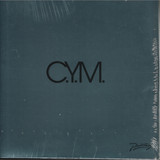
C.Y.M. is the collaboration between British producer and DJ Mike Greene (otherwise known as Fort Romeau) and LA-based American musician Chris Baio, who releases music as Baio in addition to playing bass in the acclaimed band Vampire Weekend. Their debut, self-titled EP arrives on Phantasy as an elegant pean to the infinite possibilities of kosmische music, driven by a motorik strain of psychedelia. The foundations of a wider project, C.Y.M. speaks not for analogue nostalgia, but a subtle and modern update on imagined futures that are still open to interpretation.
‘Capra’ immediately establishes the duo’s masterful if unsurprising grip on rhythm, a man-machine stomp that persists as the track takes myriad turns, from post-punk guitar licks and processed vocals, through bubbling modular synthesis and culminating in a soaring, cathartic melody. On ‘Far Gone’ C.Y.M. turn their studio inward for a more brooding and intimate interpretation of their sound, a balearic amalgam of intriguing vocals, feedback soaked riffs and no-wave inspired movement. The bliss beneath the waves of noise that crash across C.Y.M’s music emerges fully on the driving conclusion, ‘Super-Cannes’. A hypnotic tempo and blistering drums intertwine with whirling organs, and shimmering keys, providing a wistful and warm finale.
Black Truffle invite you to an evening of drunken revelry in the Batcave! After a chance meeting at a local supermarket in Poughkeepsie, New York, Joe McPhee and Graham Lambkin have performed together as a duo extensively in recent years, in addition to their joint work excavating some of the wildest tapes from McPhee’s archive for Lambkin’s now defunct Kye label. Live in the Batcave documents an evening the two friends spent together in the company of Joe’s brother Charlie and Lambkin’s son Oliver in November 2017 at Charlie’s house in Poughkeepsie. The LP captures seven increasingly drunken snapshots of the four shooting the breeze, playing flutes and whistles, drumming on anything at hand, and playing records.
Edited together in Lambkin’s distinctive style of lo-fi domestic tape collage, the multiple simultaneous cassette recordings of the shenanigans abruptly cut in and out and fall out of sync, creating disorientating, woozy echoes. Mics are bumped, stories are told, drinks are poured, text messages arrive, and AACM-esque flute jams are interrupted by violent bursts of laughter and wet-mouthed sound poetry. All the while, classic soul records play, initially in the background, but coming increasingly to the fore until the record culminates in a strangely moving free-associative singalong. Presented in a gatefold sleeve with extensive photographic documentation and liner notes from Joe McPhee, Live in the Batcave is a truly unique document that exists somewhere between free jazz, audio verité, performance art, and everyday life. File next to your copy of Das Kümmerling Trio. ‘Our music was born from the sounds of jazz, funk, soul, noise … sounds with no other reason so exist, except because they did, sounds which occurred like putting one step in front of the other to see if the way was clear to take the next step. The plan was, there is no plan, just start at the beginning, end at the end and party like it’s 1999’ – Joe McPhee
- Nothing Is Safe
- He Dead (Feat. Ed Balloon)
- La Mala Ordina (With The Rita) (Feat. Elcamino & Benny The Butcher)
- Club Down (With Sarah Bernat)
- Run For Your Life (Feat. La Chat)
- The Show
- All In Your Head (Feat. Counterfeit Madison & Robyn Hood)
- Blood Of The Fang
- Story 7
- Attunement (With Pedestrian Deposit)
- Piano Burning
There Existed An Addiction To Blood" ist das insgesamt vierte Album von Clipping und ihr drittes für Sub Pop. Es ist der Nachfolger des von Kritikern und Publikum gleichermaßen gefeiertes Album ,Splendor And Misery" aus dem Jahr 2016. ,There Existed An Addiction To Blood" enthält die Singles ,Nothing Is Safe", ,Blood Of The Fang" und ,La Mala Ordina" (Feat. Benny The Butcher, Elcamino, The Rita), die von Clipping produziert, von Steve Kaplan gemischt und von Dave Cooley bei Elysium Masters in Los Angeles gemastert wurden. Das Album enthält auch Gastbeiträge von Ed Balloon, La Chat, Counterfeit Madison und Pedestrian Deposit. ,There Existed An Addiction To Blood" ist Clippings Interpretation eines neuen Rap-Splitter-Genres unter Zuhilfenahme ihrer einzigartigen Lupe. Clipping wenden sich auf dem neuen Werk intensiv dem Horrorcore zu, eines bewusst absurden und kreativ bedeutsamen Subgenres, das Mitte der 90er Jahre blühte. Einige der bemerkenswertesten Pioniere hießen Brotha Lynch Hung und Gravediggaz, aber es umfasst auch bahnbrechende Werke der Geto Boys, Bone Thugs-N-Harmony und die nahezu vollständigen Veröffentlichungen des klassischen ,Memphis cassette tape rap". Der wahrscheinlich subversivste und experimentellste Rap hat sich oft als ,Alternative" zu konventionellen Sounds präsentiert, aber Clipping verzerren das Ganze respektvoll in neue Konstellationen. ,There Existed An Addiction To Blood" absorbiert die hyper-gewaltigen Horror-Symboliken der Murder Dog-Ära, stellt sie aber in einem neuen Licht dar: immer noch dunkel getönt und düster, aber in einem seltsameren und lebendigeren Farbton. Wenn der traditionelle Horrorcore mit ,Blacula", dem populären Blaxploitationsfilm-Klassiker aus den frühen 70er Jahren, verwandt war, so ist das neue Output von Clipping analog zu ,Ganja & Hess", dem blutrünstigen Kultklassiker von 1973, der als unbesungenes Wahrzeichen des schwarzen Independent-Kinos gilt, dessen Score von Sam Waymon, Clipping als Inspiration zum Titel des Albums diente und auch Samples auf dem Track ,Blood Of The Fang" lieferte.ENG The science-fiction visionary Octavia Butler once declared that "there is nothing new under the sun, but there are new suns." The aphorism could apply to any art form where the basic contours are fixed, but the appetite for innovation remains infinite. Enter Clipping, flash fiction genre masters in a hip-hop world firmly rooted in memoir. If first person confessionals historically reign, the mid-city Los Angeles trio of rapper Daveed Diggs and producers William Hutson and Jonathan Snipes have spent the last half-decade terraforming their own patch of soil, replete with conceptual labyrinths and industrial chaos. They have conjured a mutant emanation of the future, built at odd angles atop the hallowed foundation of the past. Their third album for Sub Pop, There Existed an Addiction to Blood, finds them interpreting another rap splinter sect through their singular lens. This is Clipping's transmutation of horrorcore, a purposefully absurdist sub-genre that flourished in the mid-90s. If some of its most notable pioneers included Brotha Lynch Hung and Gravediggaz, it also encompasses seminal works from the Geto Boys, Bone Thugs-N-Harmony, and the near-entirety of classic Memphis cassette tape rap. The most subversive and experimental rap has often presented itself as an "alternative" to conventional sounds, but Clipping respectfully warp them into new constellations. There Existed an Addiction to Blood absorbs the hyper-violent horror tropes of the Murder Dog era, but re-imagines them in a new light: still darkly-tinted and somber, but in a weirder and more vivid hue. The album contains interludes with hissing recordings of demonic invasions, and guest appearances from Griselda Gang's Benny the Butcher and Hypnotize Minds horror queen La Chat. Other tracks feature contributions from noise music legends The Rita and Pedestrian Deposit. It all ends with "Piano Burning," a performance of a piece written by the avant-garde composer Annea Lockwood. Yes, it is the sound of a piano burning. There Existed an Addiction to Blood fits neatly into the broader scope of the band's career, which has seen them expand from insular experimentalists into globally recognized artists. Since the release of their first album in 2013, Diggs has won a Tony and a Grammy (both for his acting/rapping work as Thomas Jefferson and Marquis de Lafayette in Hamilton), as well as co-written and starred in 2018's critically hailed Blindspotting, while Snipes and Hutson have scored numerous films and television shows. Clipping's last album, the 2016 afro-futurist dystopian space opus Splendor & Misery was recently named one of Pitchfork's Best Industrial Albums of All-Time. Commissioned for an episode of This American Life, their 2017 single "The Deep" became the inspiration for a novel of the same name, written by Rivers Solomon and published by Saga Press. But their latest masterwork embodies what the band had been building towards - a work that finds them without peer. This is experimental hip-hop built to bang in a post-apocalyptic club bursting with radiation. It's horrorcore that soaks up past blood and replants it into a different organism, undead but dangerously alive. It is a new sun, blindingly bright and built to burn your retinas.
And we used to be such a nice record label .... BKV 026 swells up from the Bristol swamp in the forms of post-human industrial duo Bad Tracking. Here they have assembled variously, one spacious black metal intro (with original screams), an industrial-pop earworm not unlike Depeche Mode imploding in a feedback tunnel, two itch-tek dancefloor riddims namecheking local venue bans and I just don't know what to call 'Wellspring' really, the end of days? Well you had it coming anyway…..
Known in town for upsetting local MPs and lisencees with their live performances as 'naked technology sex slaves' think cassette-induced self harm, total nudity, blood from ears, Bad Tracking are the most visceral thing we've seen in this new wave of Avon experimental - a breath of life into the longstanding tradition of industrial performance art (and an antidote to idle BR club culture). Lyrically touching on censorship and tech // sonically they use feedback as a punishing instrument of anguish and expression.Widower EPis truly chewed nail sonics, more human than all your noise records, genuinely more scary than your edgelord power electronics nonsense, more forward than all yer government funded experimental think-records.
You may remember Bad Tracking from their remix of 90s soundsystem legends Bush Chemists on Bokeh last year. It sounded like they played the original through 1,000 knackered tape decks and added one kick drum. It was total sacrilege and we loved it. Bad Tracking is Gordon Apps aka reputed jungle/drumfunk producer Relapse (who also moonlights as Avon Terror Corp's Olivia Mutant John, buy his shit) and poet / VHS video artist Max Kelan (who has lent his visuals to MVs from Hodge, The Pop Group, OM Unit, Young Echo to name only 4). They've released on tRewdindForward family labels like Mechanical Reproductions and champions of bad taste and good music - Fuckpunk.
Swedish composer and multimedia artist Marcus Fjellström's debut Miasmah release follows two critically acclaimed full length albums on Lampse (2006's 'Gebrauchsmusik' and 2005's 'Exercises In Estrangement'). In addition Marcus has had several commissioned works requested, leading to him working with, among others, the Swedish Royal Ballet, the Scottish Chamber Orchestra, numerous ensembles, soloists and filmmakers including 'Salad Fingers' creator David Firth. Currently based in Berlin, Fjellström's compositions often combine aspects of modern classical composition and arrangement and more avant forms of music, be that acoustic or electronic.
'Schattenspieler' (which translates as 'Shadowplayer') takes the form of eleven compositions which explore ambience and melody, texture and silence. Haunting synth and orchestral instrument-based audio constructions, flowing from one moment to the next - the fleeting ghosts of Fjellström's melodies rise, only to be buried under a claustrophobic clutter of percussion and creaking background noise. These pieces do indeed feel like you're listening to something more implied than obviously stated, as if Fjellström wants only to expose us to the shadow of the music - the implication being perhaps a more terrifying experience than to be confronted outright…listen to 'Schattenspieler' and you may find your mind starts to play tricks on you…
The undeniably Angelo Badalamenti-esque descending synth strings of opening track 'The Disjointed', lay the foundations for Fjellström's 'Schattenspieler' album; music resting somewhere between the unsettling horror soundtracks of Jerry Goldsmith, the elevating melodies of Cliff Martinez, and the subtle audio constructions of Miasmah label mates Kreng and Jacaszek. Marcus' wide ranging abilities in composition and his willingness to let go of accepted form and function makes 'Schattenspieler' a perfect choice of release for the Miasmah label. The suspense laden 'Antichrist Architechture Management', with its harrowing and tense undertones, weaving synth lines and a wash of static hiss and flicker, is a particular standout track. Despite it's a strangely oppressive sound, shafts of light grace 'Schattenspieler'; pieces such as 'Untitled 090616' find gorgeous melodies are boxed in by unsettling arrangements and sparse background ambience. There is a coldness to many of these compositions - not without emotion, but somehow remorseless. 'Schattenspieler' is, for the main part, a defiantly bleak journey.
Vinyl edition ltd. to 300 copies, purple vinyl, incl. 8-page 12" booklet with drawings by Marcus Fjellström.
Comic book artist, graphic designer and free jazz improviser are only some of the many talents from Beirut born Mazen Kerbaj. After appearing as part of various ensembles on the label, Ariha Brass Quartet (CREP46) and Johnny Kafta Anti-Vegetarian Orchestra (CREP22), Kerbaj finally lands a solo outfit of his own onto the Discrepant dancefloor of insubordination.
14 years after his first (and only) solo album "Brt Vrt Zrt Krt" (Al Maslakh, 2005) Mazen returns with a series of subtle compositions of his own with not one but two(!) solo albums of prepared trumpet that further cement his international position as a serial trumpet botherer.
Whilst Vol. 2.1 showcases his (almost) (un)familiar arsenal of squawks, cackles, howls and squeals, Vol. 2.2 goes deep into the nether regions of waltzing drones and bell tweaks so deep that would make most cetaceans loose their concentration. The notion of being transported to a luring mutant underwater alien community is still present on these long(er) trips with the added meditative pieces being occasionally pierced by noise creepers, nothing is what you want or expect and that’s the way it should be.
If Vol. 2.1 is the classic follow up LP, this one is the beast from the deep, it comes surging and screeching from a deep oceanic sink hole, only to hypnotize you with perverted dance moves before diving back into the sinking, wettest and darkest cave in the world. Vol. 2.2 is a summons album; it shatters any bar there was with its intentional use of everything Vol. 2.1 was denied. It grabs you by wherever available way and it only releases you when you’re ready to listen to it again. Listen to both albums back to back, in no particular order and you’ll know that there’s nothing you can do but come back to it like a doped up seal stranded in a phantom island – appearing and disappearing as the music dictates it to.
- A1: I Like Your Embouchoure
- A2: “Bam-Bam” Is Taking A Beating
- A3: ب ن یعك نویز (Noise Bni‘ak)
- A5-: Unplugged Modular Synthesizer
- A5: Just Before The Flood
- B1: Insufficient Creative Input
- B2: Lass Uns Kämpfen
- B3: Please Choose Another Pedantic Title For This Track
- B4: Pour Michel (In Memory Of Michel Waisvisz
Comic book artist, graphic designer and free jazz improviser are only some of the many talents from Beirut born Mazen Kerbaj. After appearing as part of various ensembles on the label, Ariha Brass Quartet (CREP46) and Johnny Kafta Anti-Vegetarian Orchestra (CREP22), Kerbaj finally lands a solo outfit of his own onto the Discrepant dancefloor of misdemeanour.
14 years after his first (and only) solo album "Brt Vrt Zrt Krt" (Al Maslakh, 2005) Mazen returns with a series of loud oozes (entirely) of his own with not one but two(!) solo albums of prepared trumpet that further cement his international position as a serial trumpet botherer.
Showcasing his very own and singular arsenal of squawks, cackles, howls and squeals the notion of being transported to a luring mutant underwater alien community is only occasionally dispelled with the sporadic passages of fluctuating tones and pulsations, like a restful humpback whale puffing on a hookah pipe at the ocean’s deep end. Mazen pulls out all the proverbial stops here, displaying a unique mastering of the instrument and its improbable add-ons creating various vignette like episodes rich in texture and variations - unlike anything else out there – not that you’d knew anyway.
Where Vol. 2.1 shows an astounding use of the instrument without recurring to cuts, overdubs or electronics, Vol. 2.2 raises (or shatters) the bar with its intentional use of everything Vol. 2.1 was denied. And Mazen is right about advising us, the sounds emitted on each record are beyond the limits of believable. Either he is using tricks or just prepared techniques the results go far beyond the reach of a normal or casual listener. Listen to the albums back to back and you’ll know what we mean.