aya's incredibly inventive Hyperdub debut album im hole distilled the incisive sonic experimentation of her early run of releases, the tongue-in-cheek giggles of her DJ sets and radio show, and the identity-fluxing lyricism of her live shows into a delirious tug of war between pleasure and dysmorphia. The album was championed from all corners, 'Best New Music' in Pitchfork to Radio 6 DJ Maryanne Hobbs 'Album of the Year', followed by a run of incredible live shows which drew new listeners further into her world. hexed!, aya's second album, confronts the desperation and dysfunction of addiction. Internalised phobias and suppressed traumas haunt the corridors and golden hours once romanticised on 2021's im hole; daymares concealed by nocturnal afters-hopping and key bag circles. Opener `I am the pipe I hit myself with' exposes the gray portrait secreted somewhere between the 8th and 9th floors of her previous record. `I used to say some shit for sure', `I used to say it when I was me-less'. hexed! is about what happens when aya turns the lights on.
Search:add
- A1: Pattugliamento Aereo
- A2: Tunnel Sotterranei
- A3: Collina Silenziosa
- A4: Militari In Allarme
- A5: Plotone Di Esecuzione
- A6: Filo Spinato
- A7: Imboscata
- A8: Lettere Dal Fronte
- B1: Sognando La Pace
- B2: Pattugliamento Aereo #2
- B3: Dietro Le Linee Nemiche
- B4: Spettri
- B5: Fiori Tra Le Macerie
- B6: Disertori
- B7: Evasione
- B8: Evasione #2
- B9: Evasione #3
- B10: I Sopravvissuti
Four Flies Records is proud to present Paesaggio Bellico, a collection of unreleased music from legendary composer and multi-instrumentalist Alessandro Alessandroni.
Available digitally starting on the centenary of the maestro's birth on 18th March 2025 and on vinyl on 21st March, Paesaggio Bellico is a true gem hidden within the vast treasure trove of Italian film scores and library music.The album brings together themes and atmospheric pieces inspired by the world of war, viewed not just from a military standpoint, but also through a deeply human and existential lens.
The LP version features 18 tracks, while the digital release expands to 29, including alternate takes and thematic variations. These compositions were meticulously unearthed from scores written and recorded by the maestro between 1969 and 1978 for television documentaries and war films.
Alessandroni's war-inspired music masterfully balances action, suspense, and introspection. Expansive, panoramic themes give way to anxious, tormented moments. Horrifying visions are countered by calmer atmospheres, and glimmers of hope soften the intensity of pain.
Each track embodies the unique sound that has made Alessandroni an irreplaceable figure for soundtrack and library music enthusiasts. His signature whistle – so unmistakable for generations of fans of the genre – soars above delicate 12-string acoustic guitar arpeggios. More dramatic pieces feature his iconic Fender Stratocaster, equipped with a fuzz distortion pedal. And, of course, Alessandroni's vocal group, the Cantori Moderni, a constant presence in his arrangements, contribute, this time lending their voices to the more unsettling aspects of military psychology. An elegant string section adds depth and emotional impact to the more orchestral tracks, completing the picture of this monumental work.
The result is a sonic journey that delves into the darkest, most martial sides of war, but also explores its intimate and deeply painful dimensions, creating a powerful dialogue between the atrocities of conflict and the human emotions it evokes.
The release is enriched by original artwork from Eric Adrien Lee, who reimagined the 1970s graphic design of Italian war-themed library albums. The vinyl LP is housed in a tip-on hard cover (the kind used for higher-end productions during the golden age of Italian soundtracks), with an inner sleeve featuring a color-inverted variation on the cover art, which makes the physical record even more unique.
Folding the ambient techno tradition into neatly arranged packets of rhythm and space, Delsin proudly presents a striking new collaboration from Tobias. and Doltz. A project developed from a chance encounter, Versus combines classic synth and drum machine configurations with needlepoint sound design to create a quintessential electronica listening experience. Tobias. is the lead alias from Tobias Freund, the celebrated German techno pioneer who has been actively exploring new territories in electronic music production since the early 1980s. As Doltz, Shun Watanabe has quickly developed his own impressive artistic stamp in the field of leftfield techno and ambient since debuting in 2020. After seeing Doltz perform a live set at Eden Festival 2024 in Japan, Freund instantly invited him to collaborate. After the success of the first collaboration, they went on to develop five of the tracks on Versus together, while Jiawen Wang performed additional vocals on 'We Are Not Alone'. Versus is an album that balances variety and consistency across its finely sequenced run time, maintaining a focus on pointillist, exploratory rhythm from crisp drum machines and twitchy digitalia alike, all backed up by richly rendered atmospherics from gaseous pads to icy drones. It's a warm and inviting sound world, but also fearlessly futuristic, speaking to both Freund's decades of refinement and the startling clarity of Doltz's vision.
Toulouse appears to be a proper soundsystem town, a real Dub and Bass music hot spot. We were happy to get in touch with with Stefan Dubs from the former Folklore crew, running a handmade soundsystem with up to 6 full super scoops. He released several records under Folklore and later Maquis Son SistÈm, started a liveact which meanwhile runs under SÚn Du MaquÌs, organises soundsystem gatherings and raves around town with the ComitÈ Des FÍtes collective.
Luckily we were able to invite Jan Loup and him to Leipzig in 2023 to shake Bassmaessage with their soundsystem, including the amazing multi-track tape into vintage FX & mixing desk performance. If you ever have the chance to catch them live, you'll hear a special vividly rooted analogue sound, incorporating modern influences, covering various BPM from 120 to 170, but definitely bass heavy all along!
Irie skanks keep you floating along "Mogale Stepper", which shows SÚn's warm but forward bass abilities and the knowledge to keep it steppy without any militant aggressive kicks. "Puur Dub" has a the same instant reminiscence of digital reggae skanking, but adding a brilliant layer of Think break incarnations on top - killing advanced sub connoisseur meetings with ease. On the first check this plate may appear a bit different from the label's cutalogue, but if you settle in these lush textures and twisted dubs you'll see: this is a definitive 45seven sound!
Since its inception in 2020, Italo Moderni’s energy, spirit and inspiration has been the dancefloor. The darkened bunkers of Belgium, the trembling speakers of Valencia, the warming dawn of Rimini, these influences have been the lifeblood. Solidifying this tireless effort, Mellow Bangers Vol 2 is the label’s most ambitious collection to date.
In celebration of the imprint’s fifth anniversary, four artists gather with every single one united under a rallying cry. From across the globe, machinists have been drawn together to deliver a statement of acid and wave, of electro and synth with flourishes of italo. The shadowy fringes of the floor are well represented, audio artisans like Cyrk serving distorted drums and melodies dripping with menace in the twisted shape of “Double Crash.” The static haze remains with Fragedis’ “Disco Nicotina,” a lancing melody piercing the soaked speakers of this sweaty romp. Label boss, Adrian Marth leads the charge on the flip. “Modernism” is a stripped and playful two-stepper, a two-stepper that Marth beefs into bawdy proportions before balancing the track with crystalline chords. Amongst the litany of talent are musicians who have both inspired Italo Moderni as well as those who have appeared on the label. Antoni Maiovvi fits such a description, the sound sorcerer slicing beats through bittersweet bars in the immersive “Stopping Power.”
Mellow Bangers Vol 2 is a breathless expression of the floor. A contemporary imagining of the racing rhythms and addictive hooks of the 1980s and 1990s. Four works that summarise what Italo Moderni is and will continue to be
- Love In Store
- Can’t Go Back
- That’s Alright
- Book Of Love
- Gypsy
- Only Over You
- Empire State
- Straight Back
- Hold Me
- Oh Diane
- Eyes Of The World
- Wish You Were Here
If every significant artist has an underrated gem in its catalog, then Mirage is that album for Fleetwood Mac. An obvious return to relative simplicity after the dramatic tension of Rumours and experimental ambitions of Tusk, the 1982 album finds the band re-grouping after a brief hiatus and again climbing to the top of the charts. Extremely well-crafted, well-produced, and well-performed, the double-platinum effort distills the group’s hallmark strengths into a filler-free set that never runs short of addictive pop hooks or daft accents.
Sourced from the original analog master tapes, pressed at Fidelity Record Pressing in California, and housed in a Stoughton jacket, Mobile Fidelity’s numbered-edition 180g 45RPM 2LP set presents Mirage in reference sound for the first time. The efforts co-producers/engineers Ken Caillat and Richard Dashut went to capture the splintered albeit formidable band can be heard with stunning accuracy, range, depth, and detail.
Though Rumours understandably gets a permanent spot in the audiophile hall of fame, the smooth, clear, and dynamic sonics on Mirage confirm that the record that stood as Fleetwood Mac’s last effort for five years deserves a place in the same vaunted arena. The presence and imaging of Mick Fleetwood’s percussion alone on this reissue might have you wondering how this slice of soft-rock bliss has gone under-noticed for decades. Other prized aural aspects — separation, definition, impact, tonal balance — are also here in spades.
Like much surrounding Fleetwood Mac in the 1980s, arriving at Mirage was not easy. Caillat searched for studios located outside of Los Angeles on a mission to change up the vibe of the band’s prior recording sessions. Everyone settled on Le Chateau in France, where relations between some members remained icy — and cooperation with the producers strained. Battles with exhaustion, bitterness, and addiction further informed the proceedings at the 18th century complex in the French countryside, where even communal meals were allegedly eaten in silence.
Inevitably, the feelings that co-producer Lindsey Buckingham, Stevie Nicks, Christine McVie, and company harbored — as well as the situations in which they found themselves — drifted into the songwriting. In its rapid ascent to rock-star royalty status, Fleetwood Mac drifted apart, embarked on solo pursuits, and found it was lonely at the top. Emptiness, the illusion of dreams, the longing for love, the want to escape to bygone times of innocence and happiness: Such themes inform a majority of the narratives. Even if the lyrics regularly take a back seat to easygoing arrangements that allow Mirage to come on like a refreshing breeze on a sunny summer afternoon.
Home to three Top 25 singles in the U.S. and having occupied the pole position of the Top 200 album charts for five weeks, Mirage rightfully resonated with the mainstream and attracted listeners on both sides of the pond. And how, via a smart blend of sugary melodies, warm harmonies, interlaced notes, nimble rhythms, taut structures, and passionate vocals. Not to mention the presence of what arguably remains Nicks’ signature song, the biographical “Gypsy,” a meditation on the loss of her close friend Robin Anderson that teems with majesty, mystery, and mysticism — and which gets an assist from Buckingham’s shaded tack piano and richly strummed guitar chords.
Its ranking as an all-time classic aside, that No. 12 hit has plenty of company when it comes to brilliant pop turns on Mirage. On the subject of Nicks, the raspy singer gets a little bit country on “That’s Alright.” Its clip-clopping pace and two-stepping progression complement subtle vocal swells that emerge during the final verse of a tune that is ostensibly about leaving but still conveys forgiveness and grace. And what would a Fleetwood Mac record be without Nicks drawing on the tools of the supernatural — cards, dreams, wolves, and the like — on the twirling “Straight Back.”
Despite the potency of Nicks’ primary contributions, Mirage seemingly unfolds as a tight competition between Buckingham and McVie — and one that ultimately ends in a draw. Buckingham’s salvos include the contagious “Can’t Go Back,” a yearning to time-travel back to the past that’s complete with hall-of-mirrors backing vocals; “Oh Diane,” out-of- left-field ear candy sweetened with hiccupped vocals and salt-and-pepper-shaken grooves; the chiming “Eyes of the World”; and “Empire State,” a delightfully fluttering track whose high-range vocals, lap harp notes, and ringing xylophones hint at the galaxies of sound that would erupt on Tango in the Night.
Then there’s McVie. As elegant, understated, and coolheaded as she’s ever been on record, she pours her heart out on cuts that revolve around her inevitable split with Beach Boy Dennis Wilson. In the process, she punctuates Mirage with a characteristic not always associated with catchy pop music: emotional weight, and the sense of dreaded acceptance in the face of dreams deferred.
“I wish you were here/Holding me tight,” McVie sings over a delicate melody on the album-closing piano ballad “Wish You Were Here.” Though they hoped otherwise, for the members Fleetwood Mac, distance and separation were always close at hand. Believing otherwise, inviting nostalgia, and pretending everything was fine only amounts to a mirage.
Foreigner's Double Vision album achieved success through a combination of well-crafted songs, strong songwriting, talented musicians, extensive radio airplay, and favorable timing within the music industry.
Double Vision, released in 1978, followed up the group's blockbuster debut with an album of FM mega-hits. Songs such as "Hot Blooded," "Double Vision," and "Blue Morning, Blue Day" became radio staples and resonated with a wide audience. Lou Gramm's powerful vocals and Mick Jones' guitar playing were key components of the band's sound, and their musical prowess was evident throughout the album.
The album peaked at No. 3 on the Billboard 200 chart and earned platinum-selling certification just a week after its release, and now has marked 7x platinum for sales in excess of 7 million units. "Hot Blooded," reached No. 3 on the Billboard Hot 100 chart. In September, it was followed by "Double Vision," which charted at No. 2. This was the highest position Foreigner had attained to that time. The third and final single, "Blue Morning, Blue Day," was released in December and climbed to No. 15 on the chart.
Foreigner was known for their energetic live performances, and they toured extensively to promote Double Vision. Their live shows helped to further connect with fans and promote the album.
Analogue Productions is proud to offer the definitive reissue deluxe 45 RPM 2LP of Double Vision. For Foreigner fans, this is a can't-miss addition to your album collection.
- A1: Shadow Captain
- A2: See The Changes
- A3: Carried Away
- B1: Fair Game
- B2: Anything At All
- B3: Cathedral
- C1: Dark Star
- C2: Just A Song Before I Go
- C3: Run From Tears
- D1: Cold Rain
- D2: In My Dreams
- D3: I Give You Give Blind
CSN was the trio's last fully realized album, and also the last recording on which the three principals handled all the vocal parts without the sweetening of additional voices. It has held up remarkably well, both as a memento of its time and as a thoroughly enjoyable musical work." — AllMusic
Crosby, Stills & Nash was a folk rock supergroup made up of American singer-songwriters David Crosby, Stephen Stills, and English singer-songwriter Graham Nash. CSN's 1977 self-titled album is a return to the harmony-soaked idealism with which the trio had been catapulted to popularity; it reached No. 2 on the charts, behind Fleetwood Mac's megasuccessful Rumours.
AllMusic says the songs on CSN show a "great deal of lyrical maturity and compositional complexity compared to those earlier albums (from a far more innocent time). "Just a Song Before I Go" was the latest of Graham Nash's radio-friendly acoustic numbers, and a Top Ten single. "See the Changes" and "Dark Star" ranked with the best of Stephen Stills' work, while David Crosby contributed three classics from his distinctive oeuvre: "Shadow Captain," "Anything at All," and the beautiful "In My Dreams."And Nash's multi-part "Cathedral," a recollection of an acid trip taken in Winchester Cathedral on his 32nd birthday, became a staple of the group's live repertoire.
Ground-breaking music perfection deserves definitive sound and top-notch packaging. This reissue was mastered directly from the original master tape by Chris Bellman at Bernie Grundman Mastering and cut at 45 RPM. Pressed on 180-gram vinyl at Quality Record Pressings, and housed in a tip-on old style gatefold double pocket jacket with textured stock by Stoughton Printing.
- A1: Mama
- A2: That's All
- B1: Home By The Sea
- B2: Second Home By The Sea
- C1: Illegal Alien
- C2: Taking It All Too Hard
- C3: Just A Job To Do
- D1: Silver Rainbow
- D2: It's Gonna Get Better
In the spring of 1983, members of Genesis reconvened at their studio, named The Farm in Chiddingfold, Surrey, to start work on a new studio album, their first since Abacab (1981). Genesis became their first album written, recorded, and mixed in its entirety at the studio room; previously they had to write in an adjoining space. Having the group work in their own space without the additional pressure of booking studio time and fees resulted in a more relaxed environment. They were joined by engineer Hugh Padgham, who had also worked on Abacab,
AllMusic writes: "Moments of Genesis are as spooky and arty as those on Abacab — in particular, there's the tortured howl of "Mama," uncannily reminiscent of Phil Collins' Face Value, and the two-part 'Second Home by the Sea' — but this eponymous 1983 album is indeed a rebirth, as so many self-titled albums delivered in the thick of a band's career often are. ... Anybody who paid attention to 'Misunderstanding' and 'No Reply at All' could tell that this was a good pop band, primarily thanks to the rapidly escalating confidence of Phil Collins, but Genesis illustrates just how good they could be, by balancing such sleek, pulsating pop tunes as 'That's All' with a newfound touch for aching ballads, as on 'Taking It All Too Hard.'" AllMusic reviewer Stephen Thomas Erlewine gives the album 4.5 Stars.
For fans who appreciate the evolution of the band's music over the years, owning this album is important as it represents a distinctive phase in their career.
This is the definitive deluxe 45 RPM 2LP Analogue Productions (Atlantic 75 Series) reissue of the classic Genesis. A classic for all true Genesis fans!
Casquiat and Controller 7 have united on DATUM Recordings for this high class new 45rpm which works as a fine weapon for your record bag or equally well as some superb home listening. Casquiat goes first with 'Set It Off' which has raw drum breaks and direct bars delivered over some wild guitar riffs, slamming hits and old school vocal chops. Controller 7's 'Dope On Plastic' is a percolating funk joint with old school hip-hop energy and some evocative bars that recall the likes of Beastie Boys. Add in smart horns, JB yelps and scratching and you have a real party starter.
Earthly Measures are very excited to bring to you 'Doroja', an album by Santiago Córdoba & The Bauls of Bengal. Different to past releases, EM explores another part of the world, introducing you to the traditional sounds of Bengal & its talented musicians.
Doroja, is the third album by Argentinian musician Santiago Córdoba, this time in collaboration with The Bauls of Bengal. Recorded at the Hansadhwani Studio in Calcutta, India, where Santiago arrived with only a synthesiser, some effects, and a Legüero Bass Drum (an Argentine percussive instrument used mostly in local folklore) - this album was first conceived in December 2017 during a residency in this mythical city, together with The Bauls of Bengal.
The Bauls believe the body and mind are the sources of all truths and that the expression of freedom cannot be restrained by the labelling of genres or religions, something which is evidently expressed in their music. This provides the perfect foundations for this album to develop without limitations and too effortlessly flow to whichever realms both Santiago and the Bauls of Bengal wish to take us too.
The album combines traditional songs of the Bauls, rhythmic Jhumar instrumental improvisations with the Argentinian legüero bass drum, and other compositions created together in the studio. The result is a melodic mixture/dialogue of cultures, folklore and ancestral sounds with modern influences that help create an experimental and addictive sound full of electronic textures.
Participating in these first recordings: Arpita Chakraborty (vocals), Chandan Ray (dotara), Pijush Baul (Vocals, Dubki) and Tanmoy Pan (percussion), who later, are joined by other artists from different latitudes to achieve a captivating fusion: Matías Romero on strings (Formosa, Argentina), Guilherme Peluci from Mineiro on winds and Daniel Guedes on percussion (Belo Horizonte, Brazil), Porteños Walter Broide on tabla and Cobra Rod on bass (both members of Poseidotica), and the Spanish Ángel Calvo on trumpet.
The album was mixed by Rodrigo Cursach at Delta Uno Estudio, mastered by Daniel Ovie, and the fascinating cover art is by Alejandro Sordi. It will be released on vinyl by the UK based label Earthly Measures, in addition to being available on all digital platforms.
‘Doroja’ means portal, and this album is indeed a magical portal to music, song and dance. Santiago's only means of communication with Bengali colleagues functioned as an astral portal to build the sounds of this journey through strange and unfathomable landscapes that captivate and surprise by building bridges between different cultures of our planet.
Santiago Córdoba is a multi-instrumentalist musician born in the city of Buenos Aires who has been developing his unique sound both with his solo project and with prominent bands from the Argentinian independent music scene. He has been developing his solo career through deep musical and spiritual searching, with the infinite journey as a primary objective.
In recent years, he has lived in places such as Madrid, Beirut and Berlin and has released two albums: ‘Corso’ (2015) and ‘En Other Places’ (2019).
'It begins with a shoebox of mysterious provenance, full of recordings from the Vendée department on France’s western seaboard: songs of love and war, life and death, played out on land and sea. Songs passed down and sung by ordinary men and women, gracefully delivered with the poetic economy which unites the folk song of all peoples.
Next it takes a group of contemporary musicians to make selections from this treasure trove and sing these old songs anew; to sing them for their beauty, of course, and to reclaim the people’s tradition from those who would seek to exploit it for nefarious political ends. Who better for this task than Tartine de Clous, a singing trio from Vendée’s neighbouring department of Charente-Maritime, who burst into national and international consciousness with their debut album "Sans Folklore" in 2015? The result of their shoebox rummagings, the new album "Compter les dents", recorded in 2019 and finally seeing the light of day, is bound to delight old fans and win them many new ones.
Time makes many’s the alteration, and "Compter les dents" finds 'les garçons' - Geoffroy Dudouit, Thomas Georget and Guillaume Maupin - in a different state of being from their debut release. The trio, friends since youth, have certainly matured between albums, as one would expect; consequently the newer performances are more considered and poised, unfolding with a patient confidence. A relaxed domesticity prevails, something to do with the fact that the album was entirely recorded chez les amis, in contrast to the first album, which was mostly recorded at live performances in bars and night-spots across France.
Lending gravitas to the grain of their voices we mark a deepened richness, doubtless born of the various vicissitudes of daily existence which these gentlemen - and we too as citizens of this turmoiled globe - have weathered in the intervening years. Not too dissimilar, in fact,
from some of the vicissitudes detailed in those old Vendée songs. Plus 'ça change', right?
There’s a greater complexity and subtlety to their unique three-part harmonising, too. Their voices mesh in even stronger - almost telepathic - 'fraternité' than ever before: now commanding and mighty as a full-rigged counter-vessel, now gentle and lulling as a mother’s
cradle-croon, or as the whisper in a lover’s ear.
Three legendary figures of French traditional music, now sadly departed, preside as tutelary spirits over Compter les dents. They are: the late Claude Flagel, musician and ethnomusicologist; and the late Jean-Loup Baly of the well-known 1970s band Mélusine. Most of the album was recorded by Claude in the Brussels home he shared with his late wife Lou Flagel. The album is dedicated to the memory of Jean-Loup, Claude and Lou.
For the first time there are several guest instrumentalists working their magic to expand the Tartine de Clous sound. Jean-Loup plays a characterful accordéon on the song ‘La Veuve'. The other guests are: Maurice Artus (voice), Robert Thébaut (violin), Quentin Manfroy (piccolo, contrabassoon), Marceau Portron (cigar box guitar). Their contributions add even more conviviality to that which the trio of singers already share, a sensation which will doubtless be shared by those who happen to find a place in their lives for "Compter les dents".'
Liner notes by Alasdair Roberts.
The Italian 80s avant garde / anarcho scene is explored in this limited 12” release presenting Nengue and their previously unreleased cover version of the new wave classic Los Ninos Del Parque and the electro pop wave African Beat.
The tumultuous political climate of the 1960s through 1980s inspired Italian artists to craft an introspective, psychological musical landscape. As civil unrest, violent demonstrations, and political murders became commonplace, Italy's centres of intellect vibrated with activist energy. This atmosphere gave birth to a unique, mechanized sound that blended electronic elements with a raw, discordant aesthetic, reflecting the chaotic spirit of the times.
Through vintage forms of social networking and music sharing, a community led process steered the scene, publishing zines and records that grasped alternative concepts of music and lifestyle.
Nengue, were similar to many of these lo-fi, retro-future electronic music pioneers. Based in Rome, their music / art backgrounds flowed with anti-art, extreme noise, futurism, industrial, experimental, martial, folk, free jazz and exotica.
With a couple of releases as a duo, as was often the case, they appeared in numerous other projects and the music was a mixture of their individual backgrounds.
Extraordinarily, only appearing on a couple of obscure cassette compilations, indicative of the time, the quality of Nengue’s productions stands testament. Originally approached to reissue their Cosmic meets Kraftwerk inspired African Beat, a wonderful yet simple electronic idiom, layers of electronica rising, each element an addition flow, vocals the release’s waves.
However, the discovery of their cover of Los Ninos Del Parque – describing it as ‘powerful anarchic nonsense’ – is rightfully now the primary focus.
Acting as some Brutalist interpretation, its sharp electronics and industrial vocals, propel you to a brick-strewn squat party and a place in anarcho folklore.
These are matched with a remix / remake by Berlin’s Bionda e Lupo. Presenting a ‘Neumisch’, Sneaker’s exacting studio mastery and Sano’s additional vocals are a blessing – a new duo version – dynamic and wonderfully special.
To complete, the powerful dub of African Beat closes. Stepping out of his time as one half of Romanian duo Khidja (DFA / Hivern Discs), Andrei Rusu builds on his recent solo releases / remixes for Malka Tuti with a fantastic, bottom heavy version, perfectly building with expertise, an EP for the basements of today that was made in the dark times of the past.
Returning for another highly-anticipated album for Spatial, label stalwart Aural Imbalance breathes new life to a genre often starved of truly wide-ranging ambience blended with breakbeats that can move a dancefloor, elevating and surpassing expectations once again across a varied, cohesive selection of tracks.
A1 - Dream Assembly
Opening the LP we see Aural Imbalance showcase that inimitable world-building through swirling ambient soundscapes in full effect, a luscious intro welcoming sharp, snappy breakbeats, edited sublimely, collecting visceral cyberpunk debris on their long journey home. Subtle 808 basslines lie sleepily beneath as the composition forms a memorably soothing vibe that captures the mind.
A2 - Comet Cycle
Low filtered beats adorn an intro warning of energy to follow, forming a distinctive tone that is quickly elevated by surprisingly energetic and impeccably tuned breaks. Presently joined by inquisitive smatterings of ethereal effects, the track develops a curious and tuneful identity with harmonising melodies crafted across a varied mix, building and retaining a rousing, suspenseful vibe, leaving the listener in no doubt as to the ever-evolving skillset of Aural Imbalance.
B1 - Neptune
Setting the pace immediately with classy, imposing breakbeats, Neptune sees Aural Imbalance showcasing a wonderful ethos of dancefloor-friendly atmospherics with finely crafted edits toyed with at will for the listener with the breaks being the undoubted star of the show from an ambient legend. Subdued melodies and wide-ranging synthwork dances back and forth complementing the mix, all with a bouncy 808 bassline rumbling below.
B2 - Stasis
Changing the pace somewhat, next up we are treated to Stasis, a track which again opens with breaks, this time slightly more reserved with a thudding, analogue tone. Calming atmospherics crafted from delicious synthwork and reverberating melodies join forces with wisping pads that fly gently around the soundscape, with plinky rhapsodies delicately adding texture to a truly wonderful collage of sound.
C1 - Warpcore
Deceptively airy with incredibly light bongos and synths, the introduction to Warpcore entices the listener perfectly, smoothly introducing filtered breaks which suddenly reveal superbly programmed, distinctive amens that thrash around the mix with vigor. Clicky hats, striking cymbals and layers of tuneful effects deliver immense detail you can listen to over and over, hearing new elements each time.
C2 - Into The Void
Continuing the breaks-driven approach to the LP, Into the Void sees Aural Imbalance lay down a sublime selection of crisp, earthy old school breakbeats, edited to perfection with an immensely danceable beat pattern with delicate cowbell-style hi hats. Energising, vibrantly inspiring pads inject a warm sparkle to the mix, while a consistent, luscious classic 808 bassline playfully judders along below.
D1 - Thermal Isolation
Opening with an ever so slightly nervous tone, a plethora of layered ambient sounds create caution and intrigue, as Thermal Isolation's intro draws you in before a wonderful arrangement of messy breaks built with a delicious exuberance Aural Imbalance is clearly enjoying as his Spatial repertoire grows ever more impressive. Radiant effects are liberally flecked across the flourishing track in the latter half, adding grand texture and depth.
D2 - Forever
Closing the LP in style, Aural Imbalance delivers a mellow intro to Forever, consisting of filtered beats and a simple xylophone-style melody, before the true star of the show - some of the most finely crafted breaks you'll hear - thump their way into the mix and warmly seize our attention. Edited with a bold, effortless brilliance, the classic hats and kicks triumphantly jostle around long vocal samples and subtle ambient synths to round off this beautiful track - and album.
Words by Chris Hayes (Spatial / Red Mist)
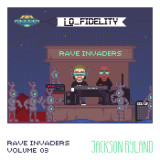
Lo Fidelity Music proudly unveils Rave Invaders Vol. III, marking the latest chapter in its acclaimed series with Washington D.C.’s innovative producer, Jackson Ryland. This release channels Ryland’s signature fusion of Detroit techno, house, and breakbeat across five hardware-driven tracks that pulse with raw energy and analog warmth.
Opening with Keep Building, Ryland crafts a relentless grooving beat, elevated by atmospheric melodies that build momentum, setting a powerful tone for the release. The following track, “Spa Echo”, shifts into a hypnotic space, blending elements of 90s techno with tech-house rhythms, its humming vocal loops adding a touch of mystery and swing to the groove.
A standout moment on the A-side is Orlando Voorn’s remix of Keep Building, where the legendary producer merges Detroit techno’s grit with smooth, Dutch house influences, adding his depth and energy to the original.
- 1: 3 Am
- 2: Timber
- 3: People Listen (To The Radio)
- 4: Everything's Green
- 5: Generator 6. Gossip
- 7: Shadow Boxing
- 8: Glossary
- 9: An Echo
- 10: Common
'Through Today' is the sophomore album for rising Australian band Chimers. A husband / wife duo comprising life partners Padraic Skehan (vocals / guitar) and Binx (drums / vocals). Recorded by Jono Boulet (Party Dozen) over two days at Stranded Studios, Wollongong and mixed at Boulet’s Sydney home studio, produced by the band and veteran manager / promoter / producer Tim Pittman (Feel Presents), 'Through Today' features ten tracks of tightly-coiled intensity that barely lets up for all of its 34 mins. In enlisting Boulet, the band were confident that due to his own experience of being one half of Party Dozen, they had someone who understood the confines of working within the structure of a two-piece but also the possibilities that creates. Boulet, in turn, rewarding that trust by capturing a powerful bedrock of sound that allowed the band's taught rhythms to circle and permeate and yet give full breathing space for the melody within. For Pittman’s part, having a third ear on hand to devote serious listening time and critical commentary was an added bonus. It’s a major step forward from the band’s 2021 self-titled debut. A twelve track effort that snuck out during covid and only hinted at the power within. "Our debut felt more like just trying to capture the songs we had at the time, we weren’t sure if we’d even release it or if it would be our only album" "This time around we were intent on capturing the energy and intensity of our live show on the recording but with a more produced sound than self-titled. We worked more on song structure previous to the sessions. We rehearsed a lot playing quietly so we could actually talk to each other whilst playing the song and iron out any kinks.” “Jono turned the whole live room into a drum room, mics everywhere. The guitar amps were situated outside to prevent too much spill but still recorded live along with about half of the vocals. Second guitar and the rest of the vocals were recorded the next day. Jono was super quick and had the same work ethic and mindset, get in, get it done. If the first take was good enough, move on.” - Padraic Lyrically Chimers maintain the intensity as they tackle the themes of love, life, death and relationships, distance from home (Padraic is Irish, moving to Australia in 2001) and the current political climate providing enough drama to fuel a forest fire. Guest musicians on the album include saxophonist Kirsty Tickle - also of Party Dozen - and violinist Jordan Ireland of The Middle East. Both of whom were invited in on short notice adding their respective parts in just 1-2 takes each without any prior knowledge of the material. Binx too showing added versatility contributing lead vocals to An Echo and sharing lead across 3AM, Generator and others. “Singing is not something that comes naturally to me, and it was at the last minute before we went into the studio that Padraic suggested I sing the lead in An Echo. Having very minimal musical instruments within the band I think having the two different vocals adds a nice dynamic to the record.” - Binx 'Through Today' is a great album. Solid and confident from the get go. No waste. No unnecessary fat. Should it be Chimers last it would remain a defining statement of originality and intent. But it’s not the last, it’s just the beginning. And there’s plenty more where that came from. BIO Like many good bands Chimers are a band born of isolation, not geographically though, via the pandemic. Irish born Padraic Skehan and his life partner Binx, formed the band in their Wollongong backyard during the initial lockdown of 2020. Veterans and drummers both of the ‘Gong’s vibrant garage-scene – The Pink Fits, The Drop Offs, Evol and more – Chimers is an altogether different beast, Padraic taking a giant leap forward by removing himself from the back-seat and assuming the role of driver; singing, playing guitar and writing the songs that would eventually become their 2021 self-titled debut album. It’s a sound and album that draws heavily on Skehan’s time as a youth in Ireland and the post-hardcore sounds of Dischord Records, Husker Du, The Wipers and which has seen the band find friends and favour in like-minds The Mark Of Cain, Henry Rollins, Guy Picciotto and Mudhoney. This is no mere nostalgia though, the band instead landing at the vanguard of a new generation of Sydney and surrounds bands – Body Type, Second Idol, Dust, Private Wives, R.M.F.C – borrowing from the past in order to create a future.
- A1: Howlin Wolf - Back Door Man
- A2: Slim Harpo - I'm A King Bee
- A3: Muddy Waters - Mannish Boy
- A4: Bo Diddley - Who Do You Love
- A5: Muddy Waters - Don't Go No Farther
- A6: Jimmy Reed - Going To New York
- A7: Muddy Waters - Close To You
- B1: John Lee Hooker - Crawling King Snake
- B2: Muddy Waters - Rock Me
- B3: Barrett Strong - Money (That's What I Want)
- B4: Richard Berry - Louie, Louie
- B5: Muddy Waters - Baby, Please Don't Go
- B6: Howlin Wolf - Little Red Rooster
- B7: Lotte Lenya - Alabama Song
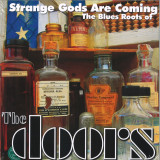
The Doors Californian kings of psychedelic-blues rock not only stood heads and shoulders above the peace and love hippy explosion of the sixties, but they were also proud to wear their influences on their sleeves by forwarding to the future by reconstructing the past.
The early live shows of the band performed in 1967 at the likes of the legendary Matrix Club in San Francisco would feature the group playing two sets, both featuring a mix of band originals and Blues covers done The Doors way.
Material such as 'I'm a King Bee' by Slim Harpo,'Who do you Love' by Bo Diddley,'Money (Thats what I want)' by Barrett Strong (a song that would stay in the live set for the duration of the bands life) and at The Winterland Ballroom over the Christmas festivites'Mannish Boy' by Muddy Waters were rolled out to an adoring local fanbase.
The classic 'Backdoor Man' by Howlin Wolf would also find a place on the group's debut album.
With all of the members of The Doors being long time blues fans more material was being worked up during rehearsals and added to the live shows along with new songs from The Doors forthcoming albums.
The Doors walked it like they talked it and sadly we will never see the likes of them again...a wonderful mixture of Blues and Psychedelic rock,they proved that in order to meet the future you must never forget the past..NO LIMITS,NO LAWS.................
Tappa Zukie is not only one of Jamaica’s greatest DJ’s, is also a much respected producer and arranger. Looking back through his master tapes we have found a lost release that due to being a worldwide recording artist and the pressures that this carries, it has stayed on his musical shelf and been passed over... until now.
When rhythm was King way back in the 1970’s, the predominant feature of the final mix down would in most cases be the drums and bass. Bringing drums and bass to the fore, the other instruments that create the tunes mood would take a back seat in the mix. With such fine musicians in the horn sections as Vin Gordon, Deadly ‘Headley’ Bennett and the unstoppable Tommy McCook, it sometimes felt, their services if nothing else were slightly underused.
So one way of rectifying this situation was one that Tappa himself instigated, putting a release together by picking some of his favourite productions that carried classic horn lines alongside those tightly recorded rhythms. Pushing those horn lines up in the mix and so making a feature of some of those touches that although added some colour to the original cut, laid back in the mix to the more Sound System friendly drum and bass cut.
When looking at the music with this approach, some of the other influences that were also in Tappa’s mind can be noticed more. Maybe it’s a Jazzier / Bluesy feel shining through. A strange thing happens that almost takes the song down the avenue of a soundtrack album. An unreleased film score to accompany an unreleased film.
So sit back and enjoy a lost release that time and place did not find time to see the light of day. As the opening track testifies and in the immortal words of Mr Tappa Zukie himself.. “Your Musical Daddy is back... Horns Up !!!!”
The 2 Tone sound was a great period in the aftermath of Punk and included influences taken from Jamaican Ska.
Mal-One had already worked on some Two Tone collages and had them put aside for some future project. He thought it would be fun to record some tracks related to these images and sounds. The first track he recorded was an instrumental track in the style of Harry J All Stars ‘Liquidator’ which he called ‘Rude Boy Shuffle’. Initially to be put out as a stand alone track on some reggae label of some sort. He had a poem already which he called ‘Two Tone Story’, so put that on top of the ‘Ska Train Is Back In Town’ rhythm which he had put together for another song of that name. Finally ‘Rude Boys and Rude Girls Listen Up! ‘came together.
Adding to this a couple of dub mixes and we have a 6 track 12”. Mal-One thought the artwork worked better on a 12” format.
Hope you enjoy the outcome.
That’s the Price of Loving Me marks Dean Wareham’s (Galaxie 500, Luna, Dean & Britta, ) evocative return, rekindling his partnership with producer Kramer for the first time since Galaxie 500's This Is Our Music in 1990.
Recorded in six days in Los Angeles, the album is steeped in lush, haunting soundscapes, driven by Wareham's signature reverb-soaked guitars and melancholic, dreamlike vocals. Britta Phillips joins on bass and harmonies, while Gabe Noel’s cello adds depth and tension. “Two takes yield more treasure than twenty,” notes longtime friend Matt Fishbeck, as Kramer's insistence on spontaneity infuses the project with raw immediacy.
Thematically, Wareham delves into the poetry of memory, set against a backdrop of wistful nostalgia and existential reflection. "Songs are in dialogue with other songs" Fishbeck writes. The lead single, “We’re Not Finished Yet,” is a playful, introspective meditation where Wareham drops his own name while relishing the tactile joy of the guitar. “You Were the Ones I Had to Betray” unfolds like a somber narrative, underpinned by Noel’s cello and crowned with a haunting bass harmonica by Kramer, encapsulating the emotional ambivalence of friendship and loyalty.
“That’s the Price of Loving Me” pulses with conga rhythms and Kramer’s vintage Moog, capturing Wareham’s musings on the life of a performer and the sacrifices it demands. Fishbeck describes “The Mystery Guest” as "an acrostic poem" and concludes by saying "We're not finished yet." 'Loving Me' also includes two covers, Mayo Thompson's 'Dear Betty Baby' and Nico's 'Reich der Träume.' The latter highlights his love for blending history and homage, sung entirely in German for a chillingly authentic touch.
Dean returns with his fourth solo album and his first album for Carpark Records. Inspired by the past yet resonant in its present-day relevance, the album’s sonic palette is reminiscent of Galaxie 500’s dream-pop roots, tempered with the matured introspection of Wareham’s later works. “Dean traffics in memory,” writes Fishbeck, reflecting on the record’s seamless blend of intimate recollections and catchy hooks. The result is a cohesive work encapsulating the duality of Wareham’s career: haunted by the past, yet steadfastly pushing forward. As Fishbeck poignantly puts it, “Imagination is nothing but the working over of what is remembered.”