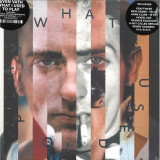
• The premium cuts by the legend that is Link Wray remastered on limited coloured vinyl with free CD
• Stunning artwork by Sophie Lo
• Liner notes by Author Nina Antonia.
It will surely come as no surprise that Quentin Tarantino picked up on Link Wray’s ‘Rumble’ and ‘Ace of Spades’ for the movie ‘Pulp Fiction’. The brooding guitar man; born in North Carolina in 1929, as Fred Lincoln Wray Jnr, hails from pulp territory - the mythic Americana of rock n’ roll. Wray’s mother, from whom he inherited his striking appearance, was a Shawnee Indian, his father was a street corner preacher and grandpa did some jail time. Whilst having contracted tuberculosis when serving in the Korean war affected Wray’s vocals, his guitar playing mostly did the singing for him, but he wasn’t always volatile - ‘Lillian’ and ‘Alone’ revealing the heart beneath the tough exterior. Fiercely independent, when the rock n’ roll boom burst, Wray fashioned a 3-track home studio from a chicken shack and largely extricated himself from the music business although he would continue to record and play, stating ‘Money don’t rule me, record companies don’t own me.’ Nothing owned Link Wray but he owned rock n roll. Though the era of monochrome had ended, Link cast a long shadow, drawing admiration from the likes of Neil Young, Keith Moon and Pete Townshend who noted of Wray ‘He is the king, if it hadn’t been for Link Wray and ‘Rumble’, I would never have picked up a guitar.’ Though often marginalised throughout his career, Wray was like the night, an unquantifiable influence on successive generations of guitarists who sought to scorch rather than soothe. In November 2005, Bob Dylan was just about to step out on stage at the Royal Hall Albert, when he learned that Link had struck his final chord. In tribute to the great man, Dylan commenced his set with ‘Rumble.’
Cerca:adm
The impact of Weldon Irvine's music across a wealth of genres cannot be overstated with his jazzy piano playing and compositions regularly passed down to newer generations. Artists like Q-Tip and Mos Def are noted admirers of the jazz-funk artist, and the distinct sounds of Irvine echo across the ages in samples etched into hip-hop history. The album version of Time Capsule was originally released in 1973, and this 10" features two versions of "Deja vu" on the side A, and "Feelin' Mellow" and "Watergate --- Don't Bug Me!" on the B.
Formed in 2007 in the Dolomite Alps region of Italy with a deep admiration for their native country’s hardcore punk luminaries in La Quiete and Raein, as well as eighties and nineties cult heroes in Negazione, Wretched and Indigesti. STORMO’s steady rise from unassuming beginnings has been one of consistently stirring song writing. Having amassed over 400 shows across Europe and the UK - including support slots to Converge, Full of Hell and La Dispute, as well as appearances at Fluff Fest - STORMO’s next chapter sees the band fully come of age. Lyrically, Endocannibalismo was written entirely in the band’s native tongue; partly as a byproduct of the albums nocturnal and instinctive writing process and partly in honour of their history as a band. Recorded and mixed by Giulio Favero (Zu) for mixing before being placed in the hands of Giovanni Versari at La Maesta for mastering, Endocannibalismo’s 11 tracks possess a crystalline clarity to service STORMO’s surging blastbeats, spiralling rhythms and noise punk cacophony, whilst staying true to the each songs deep seated primal nature. Seeking to tie together the whole process visually, STORMO took to artificial intelligence when creating Endocannibalismo’s art. Utilising specific prompts, the AI render was put through stages of mutation before culminating in its final form. A haunting graphic representation of living beings in a state of constant death and rebirth.
Recorded in 1994/95 at PCP Labs. Mixed at Conway Studios. Except "Minus" recorded at G-Son Studios and "Ramshackle" recorded at The Shop, Sunset Sound and Conway Studios and mixed at Conway Studios.
All songs published by Youthless / Kobalt Music Publishing / Dust Brothers Music ASCAP except "Ramshackle", "Lord Only Knows" and "Minus" published by Youthless / Kobalt Music Publishing ASCAP
"Devil's Haircut" contains a sample from "Out Of Sight" (James Brown) published by Fort Knox Music BMI, performed by Them, courtesy of the Decca Record Co.; a sample from "Soul Drums" (Bernard Purdie) published by Tenryk Music BMI, performed by Pretty Purdie, courtesy of Sony Music; and elements from "I Can Only Give You Everything" (Philip Coulter/Thomas Scott) published by Carbert Music ASCAP.
"Hotwax" contains a sample from "Song For Aretha" (Bernard Purdie/Horace Ott/Robert Thiele) published by Tenryk Music/Well Made Music BMI, performed by Pretty Purdie; and a sample from "Up On The Hill" (Monk Higgins/Alexandra Brown) published by Special Agent Co./Tippy Music Publishing ASCAP, performed by Monk Higgins & The Specialties, courtesy of Blue Note Records, a division of Capitol Records, Inc.
"Lord Only Knows" contains elements from "Lookout For Lucy" (Mike Millius/Don Thomas) published by Southern Music Publishing Company, Inc. ASCAP performed by Mike Millius, courtesy of MCA Records, Inc.
"The New Pollution" contains a sample from "Venus" (Brad Baker) published by Sonny Lester Music Publishing Co. ASCAP, performed by Joe Thomas, courtesy of LAC Ltd.
"Jack-ass" contains a sample from "It's All Over Now, Baby Blue" (Bob Dylan) published by Special Rider Music SESAC, performed by Them, courtesy of Decca Record Co.
"Where It's At" contains a sample from "Needle To The Groove" (Embden Toure/Khaleel Kirk) published by Hit And Hold Music, Inc. ASCAP, performed by Mantronix, courtesy of Warlock Records.
"Sissyneck" contains elements from "The Moog And Me" (Dick Hyman) published by Eastlake Music, Inc. ASCAP, performed by Dick Hyman, courtesy of MCA Records, Inc. and elements from "A Part Of Me" (Paris/Taylor) published by Zethus Music, administered by Chappell & Co., Inc. ASCAP. All Rights Reserved. Used by permission.
"Readymade" contains excerpts from "Desafinado" (Antonio Carlos Jobim/Newton Mendonca) published by Bendig Music/Corcovado Corp. BMI, performed by Laurindo Almeida And The Bossa Nova All Stars, courtesy of Blue Note Records, a division of Capitol Records, Inc.
"High 5 (Rock The Catskills)" contains elements from "Mr. Cool" (Vincent Willis) published by Cotillion Music Inc./NAP Publishing Co./ Sylheart Publishing Co., administered by Warner-Tamerlane Publishing Co., Inc. BMI performed by Rasputin's Stash, courtesy of Atlantic Recording Corp., by arrangement with Warner Special Products, Inc.
- A1: Logic System - Unit
- A2: Kraftwerk - Computerwelt (2009 Remastered
- B1: Whodini - Magic's Wand
- B2: Rocker's Revenger - Walking On Sunshine (Feat Donnie Calvin
- C1: Klein & Mbo - Dirty Talk (European Connection
- D1: Liaisons Dangereuses - Los Niños Del Parque
- D2: Yello - Bostich
- E1: The The - Giant
- F1: The Residents - Kaw-Liga
- G1: Clan Of Xymox - Stranger
- G2: A Split - Second - Flesh
- H1: Severed Heads - Dead Eyes Opened
- H2: The Weathermen - Poison!
- I1: New Order - Blue Monday
- J1: Anne Clark - Our Darkness
- J2: 16 Bit - Where Are You?
- K1: Phuture - We Are Phuture
- K2: Model 500 - No Ufo's (Vocal
- L1: Frankie Knuckles Feat Jamie Principle - Your Love
- L2: Quest - Mind Games (Street Mix
- M1: Jasper Van't Hof - Pili Pili
- N1: Guem Et Zaka Percussion - Le Serpent
- N2: Hugh Masekela - Don't Go Lose It Baby
- O1: Sly & Robbie - Make 'Em Move
- Q1: The Ecstasy Club - Jesus Loves The Acid
- R1: Foremost Poets - Reason To Be Dismal?
- S1: Lhasa - The Attic
- S2: A Guy Called Gerald - Voodoo Ray
- T1: M/A/R/R/S - Pump Up The Volume - Usa 12" Mix
- T2: Bobby Konders - Nervous Acid
- U1: Meat Beat Manifesto - Helter Skelter
- V1: Raze - Break 4 Love
- W1: Sueño Latino With Manuel Goettsching Performing E2-E4 - Sueño Latino (Paradise Version
- X1: Off - Electrica Salsa
- O2: Brian Eno - David Byrne - Help Me Somebody
- P1: Primal Scream - Loaded (Andy Weatherall Mix
For this uniquely personal retrospective spread over twelve vinyl discs, Sven Väth takes us back to the early days of his DJ career. On What I Used To Play we meet great pioneers of electronic music, gifted percussionists, obscure wave bands, and innovative producers of a bygone 'new electronic' era. Rough beats and irresistible grooves from the identification stage of house, techno, and acid remind us not just how far electronic music has evolved over the past four decades, but how great it was to dance to EBM, techno, and house for the very first time.
If there is one protagonist of the electronic music scene who has remained curious, innovative and at the very cutting edge of music for over four decades, it's Sven Väth. His multi-layered artist albums and Sound of the Season mix compilations have been defining the genre for over two decades, and even today, he is constantly on the lookout for the next top tune to add to the highlights of his next set. At least, that's the case when he's not producing them himself as an artist or remixer. "Actually, it's always been part of my DNA to think ahead," and nothing had been further from his mind than looking back at his past, but when in spring of 2020 the international DJ circuit had to be scaled down to virtually zero, the 'restless traveler' suddenly had time. Time to stop and reflect on "how it actually was back then, at the very beginning of my career..."
"It was a great trip and with every track, beautiful memories came flooding back".
In the London apartment, he had just moved into, Sven has set up a "little music room", where he cocooned himself for several days, "to look way back for the first time and review my musical journey through the eighties, so to speak."
The interim result was six thematically oriented playlists with a grand total of 120 tracks from 'early 80s' to 'Balearic late 80s', together with excursions into afrobeat, European new wave, and EBM sounds and a few epochal techno/house tracks from the USA in between. From these 'Best of Sven Väth's favorites', the project What I Used To Play crystallized. Sven remembers how the Cocoon team reacted to his proposal: "They found the idea of making a compilation out of it MEGA from the beginning and everyone said 'Sven, go for it', but then, of course, the work really started, namely, to clear the rights and to get clean sounding masters of the up to 40-year-old tracks. There was also disappointment, of course. We couldn't clear certain titles because the rights holders in the USA had fallen out with each other or simply disappeared from the scene. In short, it wasn't easy, but now I can safely say we got the most important tracks."
Finally, after two years of research, curation, design, and administrative fine-tuning, the "little retrospective" from 1981 to 1990 is available. The exquisitely packaged, and three-kilo heavy box set is not only physically impressive, WIUTP is also the definitive record of Sven Väth's musical development. On each of the twenty-four sides of vinyl, you can trace track by track, what influenced him during which phase, and how he took off as a DJ from his parents' Queen's Pub straight into the spotlight at Dorian Gray. There and at Vogue (later OMEN), Sven became the style-defining player in the DJ booth that he still is today.
1981 - 1990: Future Sounds of Now
In the early eighties, the crowd in clubs like Vogue and Dorian Gray danced to what nowadays we call 'dance classics' - mainly disco, funk, soul, and chart pop. It was up to a new generation of DJs, including Sven Väth, the youngest protagonist in the Rhine-Main area at the time, to create their own club-ready music mix. Good new tracks and potential floor-fillers were rarities that had to be sought out and found, in order to prove oneself worthy.
Without MP3s, internet streaming, or other digital download possibilities, music didn't just gravitate to the DJ, instead, it had to be tracked down. In well-stocked record stores in Frankfurt and Wiesbaden or even in Amsterdam, London, or New York, Sven and friends sourced the material for countless magical nights. On WIUTP we can follow Sven's very personal journey through this wild, innovative era in which synth-pop, funk, hip-hop, and disco were successively replaced as 'club music' by house, techno, acid, and breakbeat. By the end of the decade, it was clear to see that these once exotic 'fringe' phenomena would soon become 'mass' phenomena.
Early 80s
Dirty Talk by the Italian-American duo Klein & M.B.O. represents the most innovative phase of the Italo-disco genre in the early eighties like no other track. Mario Boncaldo (I) and Tony Carrasco relied entirely on the original synthetic drum and percussion sounds of the Roland TR-808, coupled with the raunchy vocals of Rossana Casale and guitar accents of Davide Piatto. Of course, other tracks from this period were also influential in style, most notably Unit by Logic System, which worked as the perfect soundtrack to the laser lighting system at the legendary Dorian Gray club. With stomping beats and robotic rap interludes, Bostich by Yello also belongs on Sven's eternal playlist - after all, it caught the attention of Afrikaa Bambaataa, who invited the Swiss duo to perform at the Roxy in New York in 1983.
EBM Wave - Mid 80s
From today's point of view, the almost ten-minute-long, downtempo track Giant by Matt Johnson's band project The The, would probably not be considered an obvious club classic. However, a closer (re)listen reveals the rhythmic intricacies of the percussion overdubs by JG Thirlwell (aka Foetus) on Johnson's composition, and it becomes clear why this exceptional piece of music is one of Sven's absolute favorites. Other classics from this phase include Kaw-Liga by the mysterious The Residents, the hypnotic-synthetic Our Darkness by Anne Clark (and David Harrow), and last but not least, the somber, monotonous anthem Where Are You? by 16Bit, one of Sven Väth's projects together with Michael Münzing, Luca Anzilotti from 1986.
US House - Late 80s
You certainly can't talk about Chicago house without mentioning Frankie Knuckles. The resident DJ at the Warehouse not only gave the name to an entire genre, but also produced epochal floor fillers on the Trax label like the timeless Your Love, sung (and moaned) by Jamie Principle. Acid house protagonists Phuture also hail from Chicago, and on We Are Phuture (also released on Trax) we hear the chirping acid sounds of the legendary Roland TB-303 in full effect. Another featured classic is No UFO's by Detroit's Model 500 aka Juan Atkins, who is rightly considered the 'Godfather of Techno' even if the genre-defining track from 1985 still breathes with the spirit of hip-hop and electro from the first breakdance era.
Afrobeat
Le Serpent, by Algerian-born Abdelmadjid Guemguem, is a track that sounds completely different from everything else on WIUTP. Made in 1978, it's a monumental, rousing groove created without bass or synths, just with five congas! Even though Guem sadly passed away in 2021, his immortal, acoustic beats are understood all over the world and will continue to enrich many thousands of DJ sets for years to come. Another classic that not only Sven appreciates beyond measure is Hugh Masekela's Don't Go Lose it, Baby. In addition to being one of the most important jazz pioneers, the trumpeter and freedom fighter from Johannesburg was very experimental, integrating electronic sounds into his music in later years, in a similar vein to Miles Davis and Herbie Hancock. Dutch jazz pianist Jasper van't Hof's afrobeat project Pili Pili has also aged well. The trance-like, almost sixteen-minute-long track of the same name, manages to fill a whole side on the seventh of twelve vinyl discs in the WIUTP box.
UK-US-Euro - Late 80s
Time for a change of scene, in the truest sense of the word, and from a musical perspective, this section is like landing on another planet. First up is Andrew Weatherall's classic remix of Primal Scream's Loaded, featuring the iconic Peter Fonda sample (lifted from the 1966 biker film Wild Angels) that came to personify the mood triggered by the British Second Summer of Love in the late eighties: "We wanna be free to do what we wanna do, and we wanna get loaded...". This period also saw the emergence of M/A/R/R/S whose only single, 1987's Pump Up The Volume, became a club classic with support from DJ legend CJ Mackintosh. In this most eclectic of sections, we also encounter New York house and reggae producer Bobby Konders and his seminal Nervous Acid.
Balearic - Late 80s
Those who know him, know that Sven had already lost his heart to the 'magic island' of Ibiza as a teenager, so with that in mind, the WIUTP project couldn't end without a Balearic chapter. Inspired by Manuel Göttsching's E2-E4, the immortal, eponymously titled Sueño Latino belongs in there without question. Equally popular on the island was, and still is Break 4 Love by Raze, which thinking about it, would also fit perfectly into the house chapter. Last, but not least, there's an overdue reunion with Sven Väth himself, in his role as frontman of the successful Frankfurt trio OFF. Together with Michael Münzing and Luca Anzilotti (later of Snap!) this 'Organization For Fun' created the off-the-wall club hit Electric Salsa in 1986 which incidentally turned into an international chart smash, putting Sven in the enviable position of having to decide between pop stardom and a DJ career. Well, we all know how that decision turned out and the rest, as they say, is history. A not insignificant part of his story is What I Used To Play. Enjoy!
Following up on reissues of the 2000 compilation »Multila« and 2001’s »Anima,« Sasu Ripatti has thoroughly revisited the classic »Whistleblower« for its first ever vinyl issue on the German Keplar label. Ripatti created entirely new mixes of previously unheard-of alternative versions of the tracks that first appeared on CD through his own Huume imprint in early 2007. He thus shines a new, different light on a record that was as much an expression of reaching a turning point in his life as it also showcased a new, more direct and perhaps more abrasive side of his Vladislav Delay project. »Whistleblower« was marked by the insertion of more noise and disruptive elements into Ripatti’s slowly moving take on intricate electronic music that heavily leaned on dub techniques. Fittingly for an album written at the threshold between one life and the other, »Whisteblower« seems at once melancholic and forward-looking in both tone and style.
»Whisteblower« was the follow-up record to 2005’s »The Four Quarters« and produced in the German capital. »I had quite a hard time in Berlin towards the end and I'm sure the track titles and the music reflect some of that uneasiness,« Ripatti says 15 years later. Changes in his personal life had a profound impact on him when making the record. The fifth track, »Lumi,« was dedicated to his daughter who was born shortly after the album was finished. »I had to reconsider what my life had been,« he recalls this watershed moment in his biography. Having already previously embraced a sober lifestyle—hinted at with the last piece’s title, »Recovery IDea«—Ripatti started questioning his life choices more thoroughly. This is also expressed in »He Lived Deeply,« a track inspired by Miles Davis’s love for Duke Ellington whose title can be read as an implicit question that Ripatti nowadays paraphrases thusly: »Had I been living fully, or fully not living?«
The seven tracks also marked a musical turning point in Ripatti’s work as a producer, not only because it was the last one for which he primarily used analogue and vintage equipment. They are also more straightforward on a music level, more demanding and at times more concerned with subtle rhythms than with the thick textures that were so integral to his earlier work. »Whisteblower« represented the first step in a process of focusing less on sonic abstraction and more on direct (self-)expression. While Ripatti admits that he found working on the album difficult back then, he also points out that he was surprised to hear how »gentle and peaceful« it sounded when he started revisiting the original files he used as a basis for these newly mixed versions. »It probably proves how much more comfortable I had become with sound.«
Celebrating its one hundredth release, Black Truffle is honoured to present a major archival discovery: a stunning document of the only performance by the trio of Tony Conrad, Arnold Dreyblatt and Jim O’Rourke. Across a two-night programme organised by David Weinstein at legendary New York experimental venue Tonic in January 2001, Conrad, Dreyblatt and O’Rourke presented individual projects before performing a collaborative set each night, the first with members of Dreyblatt’s ensemble and the second the trio heard here. As Dreyblatt points out in the wonderfully informative and reflective liner notes written for this release, this was a collaboration across generations, reflecting the profound impact of Conrad’s pioneering minimalism on Dreyblatt and O’Rourke. Both Dreyblatt and O’Rourke came to this collaboration armed with a deep appreciation of Conrad’s music and the just intonation principles at its core, Dreyblatt having first encountered the incredible power of Conrad’s precisely tuned violin chords during his tenure as an archivist for La Monte Young in 1975, while O’Rourke had performed with Conrad in various settings since the mid-1990s (as well as admiring, reissuing, and performing Dreyblatt's music). The flyer for the concert promised ‘massive, ecstatic, pulsating overtones’, and the trio certainly delivered. From the moment this keening stream of bowed strings begins, it is clear, as Dreyblatt writes, that we are in ‘Tony’s sonic universe’, as massively amplified, slowly shifting combinations of precisely chosen pitches fill the room with complex beating patterns and ghostly difference tones. For more than twenty-five minutes, the music operates at a level of intensity comparable to classic recordings such as Conrad’s Four Violins, until the texture thins out slightly in the performance’s final quarter, allowing for the listener’s first recognition of the individual voices that make up this enormous, overwhelming harmonic edifice. The constant stream of bowed tones is broken by a beautifully rich pizzicato from Conrad on monochord, the sliding low tones and metallic shimmer of the other strings taking the set's final moments on an unexpected detour into spacious pastoral psychedelia.
Though produced by three individuals known for their own distinctive bodies of the work, this is egoless music, the perfect expression of Conrad's desire 'to move away from composing to listening', to 'working "on" the sound from "inside" the sound'. Historically important and overwhelming in sonic impact, this release also serves as a moving tribute to Tony Conrad from two musicians profoundly marked by the example set by his art and life.
Glasgow’s Seated Records return with more archival Scottish New Wave material; this time, in the form of Pop Wallpaper’s disco-not-disco interpretation of the Shuggie Otis classic, “Strawberry Letter 23”. And interpretation is the right word, guitarist Evan Henderson confesses that the lyrics sang by Audrey Redpath on the record were, “err inaccurate due to pre-internet home recording translation”.
The Edinburgh band first released “Strawberry Letter 23” in 1986 as a double A side 12” alongside original song, “Nothing Can Call Me Back". The 1986 record’s sleeve states that the original - “Strawberry Letter 23" has been “re-modelled for special pleasures, namely on the dance floor”. Here the re-model has been re-modelled once more. The track is recontextualised for 2022 playing on a four track 12” that includes an unreleased instrumental demo version of the track, as well as mixes from label founder Pigeon Steve and close friend of the label, Useful Tom.
Wallpaper’s first EP “Over Your Shoulder” was released in 1984. The release received a considerable amount of radio support, not least from Radio 1’s John Peel and Janice Long, which culminated with a live session for Long’s show at the BBC’s studios in London. Released a couple of years later, Strawberry Letter received similar levels of radio play. Despite (much to the band’s confusion) being tracked by Motown UK at one point, Pop Wallpaper did not go on to receive commercial success and eventually went their separate ways.
“Strawberry Letter 23” sits in the singular historical, cultural context of mid-80s Britain. Following the explosion of punk at the end of the 1970s, in the 1980s many British bands began experimenting with new styles and instruments - always keeping an eye firmly on their punk roots. The loose percussion and synthesiser melodies have an almost new-age, balearic mood, while the falsetto vocals of singer Audrey Redpath are an unmistakable embodiment the Post-punk style of the time. The prominent bass-line suggests a reggae or disco inspiration, and bass player Myles Raymond admits that he obsessed over a Sly & Robbie Taxi records compilation around the time the band put the tune together.
This reissue includes an unreleased, unheard instrumental demo-version of the cover, “SL23”. The band recorded the demo during an nighter at Wilf’s Planet studios in Edinburgh, just after Wet Wet Wet had just finished up their own demo for “Wishing I Was Lucky” (Pop Wallpaper all insist they thought it would never be a hit). In this version, we hear the band messing around with drum machines and synths which, in a similar style to Kevin Low and Fiona Carlin on Seated 001, creates a stripped back dance floor work-out that bares almost no resemblance to any version of “Strawberry Letter 23”. In an attempt to emulate the Trevor Horne production style of the time, the band’s drummer Les Cook recalls pushing for more and more reverb on the drums during the session to a reluctant producer Chic Medley, who “eventually obliged, but needed a lot of persuading”. Much to Cook’s disappointment “the reverb was toned down when we got to the final release”.
On the B side, label boss Pigeon Steve delivers a dubbed-out and acid drenched, cosmic rendition of the track with “SL24”, before Useful Tom (son of Pop Wallpaper bass player Myles Raymond) brings the EP to an end with spacey de-construction of fractured vocals and gliding synths on the B2 with “SL25”.
- A1: It's Your Love That I Need - The Marvellos
- B1: It's Your Love That I Need (Instrumental) - The Marvellos
- C1: Heartstrings - The Invincibles
- D1: Got A Thing Goin' - The Invincibles
- E1: That's All You Gotta Do - Ben Aiken
- F1: Satisfied - Ben Aiken
- G1: Like I Told You – Carl Hall
- H1: Mean It Baby - Carl Hall
- I1: Just A Little Longer - The Enchanters
- J1: I'll Find A Way - Bobby Reed
- K1: See The Silver Moon - The Apollas
- L1: Go For Yourself - Larry Laster
- M1: If You Should See Her - Ben Aiken
- N1: Lies - Bobby Freeman
• To celebrate Kent’s 40th birthday (admittedly a month late, due to pressing times), we are releasing our first ever box set of singles. This is due to getting access to the Loma vaults and finding some previously unheard soul gems to augment the best of the soul dance tracks from the esteemed imprint.
• Starting with THE discovery of the soulful ‘20s we present LA soul group the Marvellos, whose ‘It’s Your Love That I Need’ – written by the great Willie Hutch – is a Motownesque dancer whose arrangements and melodies are so stunning we also issued the backing track as its instrumental B-side.
• The Invincibles were another fabulous Los Angeles outfit whose four Loma releases were ballads but two great dance tracks, the sublime ‘Heartstrings’ and the manic ‘Got A Thing Goin’’ showed they could really turn it up when needed.
• Ben Aiken’s ‘Satisfied’ is a stone classic Northern Soul dancer - finding the more subtle ‘If You Should See Her’ and ‘That’s All You Gotta Do’ in the vaults makes the Philly singer the best represented artist of the set.
• New York-based Carl Hall is another singer with a released classic - ‘Mean It Baby’ and a great unissued tape vault find – ‘Like I Told You’. The pair sit well together on their new 45 pressing.
• The Enchanters cut several tracks after they left Garnett Mimms; ‘Just A Little Longer’ is a great Drifters-sounding number which we’ve coupled with the beautiful ‘I’ll Find A Way’ by Bobby Reed.
• ‘See The Silver Moon’ by west coast girl group the Apollas would have wowed them at Wigan. The poptastic number has the perfect stomping dance beat, beloved of the Casino’s patrons. Alas it was not heard until 2012 when researcher and co-compiler Alec Palao unearthed the master tape. We paired it with Larry Laster’s terrific ‘Go For Yourself’ which shares the backing track of fellow Northern monsters ‘Lighten Up Baby’ and ‘Somebody Somewhere (Needs You)’, more than holding its own.
The album’s seemingly brief tracklisting belies a work of great beauty and depth, and one which turned into a one-man crusade for singer/guitarist Lars Andersson, intertwining deeply personal stories with his love for the era of Romanticism. “Every time I go to a museum and I’m about to pass through the era of Romanticism I stop in awe,” says Lars of the enduring appeal of the 18th century artistic movement. “Whatever it is – stories, paintings, music – it triggers something deep within me, something profoundly human. It really hits a nerve, and it utterly immerses me to a point where I can’t move.” The album replicates this feeling; a gloriously over-the-top blend of Slowdive and Sigur Rós, mixed with the single-mindedness of Daniel Johnston and the noisiness of Nirvana, it’s as bold and beautiful and every bit as ornate as the art that inspired it. Unlike their acclaimed debut, 2019’s All That Ever Could Have Been, which gradually came into focus with a 15-minute opening track, Picturesque hits home from the very first note of the short and sweet opener, ‘Ballerina’. That’s not to say there aren’t epics here – ‘Metamorphosis’ is essentially a 12-minute suite of three movements; blistering closer ‘The Lot’ is 11 minutes of Swans-inspired heaviness – but everything is much more direct and focused. This isn’t an album to lose yourself in, it’s one to get swept away by. “‘More is more’ was definitely the credo when making this record,” agrees Lars. “A big inspiration were bands like Pond and the way they manage to fill their songs up with stuff to the absolute maximum. While I definitely tried to give the listener some room to breathe at certain points and while, in good old post-rock fashion, it still builds up and breaks down, it relies much more on simple melody and harmony as opposed to noisy experimentation to transport feeling.” Never more so than on the first single, ‘The Golden Age’, which is the album’s centrepiece; a soaring slice of über-shoegaze that is so stunning you can’t take your eyes or ears off it. Like all the songs on the album, it’s based around a fairy-tale from the Romantic era. In this case, it’s Heinrich von Ofterdingen by the German poet, author and philosopher Novalis (other influences are: The Steadfast Tin Soldier by Hans Christian Andersen; The Seven Ravens and Hans in Luck by the Brothers Grimm; Undine by Friedrich de la Motte Fouqué and The Golden Pot by E.T.A. Hoffmann), with Lars drawing parallels between the titular character’s mystical and romantic searchings and his own personal quest. This is apt as the album has been an overriding obsession for Lars for the past two-and-a-half years; as well as writing and recording the songs (bandmate Phillip Dornauer played drums), he also mixed and mastered them at his Alpine Audio studio and Picturesque is very much his Brian Wilson or Kevin Shields moment. MOLLY were in the middle of their European tour when Covid hit in early 2020, forcing Lars to retreat back to his home outside Innsbruck and giving him time and space to think about every detail of the record. “Well, I was on a quest I guess,” he admits. “Like everyone, I was stranded at home and at some point I just said to myself, ‘If not now, then when?’ It was an intense process. I’ve worked on music from other bands and artists before but producing and mixing your own music is an utterly different animal. It was probably the most intense thing I’ve ever done, but it was also incredibly rewarding and the feeling of it all coming together piece by piece is incomparable.” The artwork is just as effective. “I think of Radiohead’s OK Computer – what you hear on the record is what you see on the cover,” explains Lars. “We were inspired by what we call ‘wimmelbilder’ hidden pictures in German, a very specific style in art where there are a lot of little things happening. When you see it from further away, it looks organic like a lost painting from the area of Romanticism, but the closer you look the more digital it gets. It’s a nice analogy.” He’s right, it perfectly sums up the conflict between Romanticism and 21st century life. “Romanticism was basically an answer to the Industrial Revolution as well as the social and political norms of the Age Of Enlightenment,” concludes Lars. “Now, we all live in a much more industrialised, materialistic, individualistic and sterile society than any early Romanticist could have ever possibly imagined. Over 200 years later the Romanticists have lost the battle.” With the divine and downright pulchritudinous Picturesque, MOLLY begin the fightback.1.Ballerina 2.Metamorphosis 3.The Golden Age 4.Sunday Kid 5.So To Speak 6.The Lot
To celebrate the 10th anniversary of Cloud Nothings' seminal album, Attack On Memory, the band has announced a very special limited edition vinyl pressing. 3000 copies worldwide.
It’s housed in a foil jacket with all new colorized artwork, is pressed on Sky Blue vinyl, and includes two bonus flexi 7"s with two never-before-released tracks, "You Will Turn" and "Jambalaya" from the original sessions at Steve Albini's Electrical Audio.
In 2009, Cleveland’s Dylan Baldi began writing and recording lo-fi power-pop songs in his parents’ basement, dubbing the project Cloud Nothings. His music quickly started making the Internet rounds, and fans and critics alike took note of his pithy songcraft, infectiously catchy melodies, and youthful enthusiasm. Baldi soon released a string of 7”s, a split cassette, and an EP before putting out Turning On—a compilation spanning about a year’s worth of work—on Carpark in 2010. January 2011 saw the release of Cloud Nothings’ self- titled debut LP, which, put next to Turning On, found Baldi cleaning up his lo-fi aesthetic, pairing his tales of affinitive confusion with a more pristine aural clarity. In the interval since the release of Cloud Nothings, Baldi has toured widely and put a great deal of focus on his live show, a detail that heavily shapes the music of his follow-up album, Attack on Memory.
After playing the same sets nightly for months on end, Baldi saw the rigidity of his early work, and he wanted to create arrangements that would allow for more improvisation and variability when played on the road. To accomplish this desired malleability, the entire band decamped to Chicago—where the album was recorded with Steve Albini—and all lent a hand in the songwriting process. The product of these sessions is a record boasting features that, even at a glance, mark a sea change in the band’s sound: higher fidelity, a track clocking in at almost nine minutes, an instrumental, and an overall more plaintive air. The songs move along fluidly, and Baldi sounds assured as he brings his vocals up in the mix, allowing himself to hold out long notes and put some grain into his voice. Minor key melodies abound, drums emphatically contribute much more than mere timekeeping, and the guitar work is much more adventurous than that of previous releases.
For all of early Cloud Nothings’ fun and fervor, Baldi admits that it never sounded like most of the music he listens to. With Attack on Memory, he wanted to remedy this anomaly, and in setting out to do so, Baldi and co. created an album that showed vast growth for a very young band.
Originally released in 1981, Rasa has long been admired and studied by
musicians as a model for how to do a cross-cultural recording project
where the musicians actually understand something of each other’s
musical cultural and actually feel it
Remastered from the original tapes by Bob Weston at Chicago Mastering.
Energetic, delightful, virtuosic and soulful, and available again for the first time in
over 40 years. Includes extensive liner notes by Jody Stecher and a new essay by
Baiju Bhatt.
• Here are two great cuts, previously unreleased as singles, recorded for Al Sears’ Sylvia label in New York City in 1965. The Corvairs had one very good release on the label in a soul group harmony style. ‘I'll Never Do It Again’ and ‘A Feeling Deep Inside’ are more R&B and sound earlier than the 45 release. Both tracks have picked up admirers from their New Breed and Modernist CD releases and their release as a Sylvia repro label single will be very welcome.
• Darrow Fletcher’s belated success in Europe - from the 70s onwards, but particularly in this century - has been very rewarding from him; he has been thrilled by the interest and admiration for his past work. These are two of his revered Jacklyn label sides; Jacklyn being owned by his father, who named the imprint after Darrow’s sister.
• This Repro coupling will be welcomed by collectors who cannot afford the high price of the originals – many of which are often found in poor condition as they were played the hell out of in 1960s Chicago.
Over the last decade-and-a-half, C Joynes has ploughed a singular furrow through solo guitar, with a body of work incorporating English folk-tunes alongside North & West African music, and lifting proto-minimalist and improvised techniques from the European classical and avant-garde traditions.
His new release, ‘Poor Boy On The Wire’, is his first full album dedicated wholly to the electric guitar. Through a typically wide-ranging set, Joynes exploits the instrument’s potential by placing intricate parlour music alongside overdriven garage blues throw-downs, wiry electric folk and the brittle ringing tones of free improvisation. However, these explorations of the tones and timbres of close-mic’d guitars and amplification retain an overall coherence and unity through the deliberate use of a limited palette of budget instruments and vintage equipment.
With ‘Poor Boy On The Wire’, Joynes has released 9 albums to date, including ‘The Borametz Tree’ (2019), recorded with long-term fellow travellers Dead Rat Orchestra, and ‘The Wild Wild Berry’, a collaboration with singer Stephanie Hladowski (MOJO Top 5 Folk Albums 2012, fROOTS Editors Choice Album Of The Year 2012). He has played extensively across the UK, Europe and the USA, sharing bills with performers including: Shirley Collins, Martin Carthy, A Hawk And A Hacksaw, Marc Ribot, Alasdair Roberts, Richard Dawson, Jack Rose, Josephine Foster, Sir Richard Bishop, Six Organs Of Admittance and 75 Dollar Bill.
“As much Conlon Nancarrow and Ali Farka Toure as Blind Lemon Jefferson, the compositional mind at work here can take apparently disparate threads of modernism and ethnic tradition and treat them as though they were all archaic blues styles learnt from dusty 78s.”
BRUCE RUSSELL, THE WIRE
“An inheritor to Davy Graham; a lone operator prone to unexpected collaborations, with a repertoire that crosses continents and timezones with consummate ease, and dashed off with a phenomenal, yet lightly applied technique.”
ROB YOUNG, THE WIRE
“His epigrammatic re-castings and re-readings of widely-travelled folk melodies and rhythms from a variety of traditions suggest shared memories that might be intensely universal while seeming strangely out of reach.”
KEVIN MACNEIL BROWN, DUSTED MAGAZINE
Pharoah Sanders' "Shukuru" is noteworthy as being the album that reunited Sanders with vocalist Leon Thomas, who sang on some of Sanders' most endearing and powerful compositions-- among them the legendary "The Creator Has a Masterplan".
Thomas only joins the band on two tracks-- "Mas in Brooklyn (Highlife)" and "Sun Song". The former gets a full calypso reading complete with steel drum sounds and chanted vocals traded between Sanders and Thomas. It's a lot of fun, but by and large, throwaway. The latter is one of the true gems on the album-- a pretty ballad that serves as both a launching point for Sanders' best balladry and Thomas' vocal, with the latter soaring in his upper register wordlessly between verses intoned in his trademark baritone. It's by and large simply stunning.
The rest of the record has got its issues however, and by and large this comes in the part of Henderson's synthesizer-- while his piano tone is virtually indistinguishable from an acoustic piano, several tracks receive irritating synth vocals or strings (it's really hard to tell which, it's fairly indistinct and obnoxious), mangling otherwise fine performances of traditional tenor feature "Body and Soul", Sanders-penned "Jitu" (although admittedly the leader manages such a powerful solo it gets past it) and an absolutely breathtaking reading of "Too Young to Go Steady". At least opener "Shukuru" and closing funereal piece "For Big George" are spared this as the use of synths of them are far more tasteful (although one questions Sanders' choice to intone his wife's name over the former's smokey lines, but that's another story). by Vine Voice
Glasgow's First Lady of Jazz Carol Kidd, whose string of successful Linn recordings in the 1980's have made her a staple of international audiophile artists, returns with an all-new collection of delectable jazz and pop standards delivered in her inimitably smooth and heartfelt style.
Kidd has always been an artist celebrated for her cool, controlled phrasing and easy-going balladry, and her lovely new recording, BOTH SIDES NOW, is replete with her trademark inflection and warmth spread over classic songs by everyone from Rodgers & Hammerstein, Billy Joel, Joni Mitchell, and Richard Thompson. A songwriter of note, Kidd herself contributes two new tracks co-authored with Chris Anthony.
Impex's exclusive 180-gram 33 rpm LP, mastered by the superlative Kevin Gray at Cohearent Audio, features brilliantly detailed mid-tones, effortlessly stable bottom end, and crisp overtones. RTI's peerless pressing brings it all together for your listening pleasure.
Carol Kidd is an international award winning singer. She has been named 'Best Vocalist' at the British Jazz Awards on four occasions and was appointed MBE for Services to Jazz. In 2006, Carol was a winner of the prestigious Nordoff-Robbins Tartan Clef Music Award and in 2017 she received a Lifetime Achievement Award at the Scottish Jazz Awards. Renowned for her impeccable phrasing and delivery along with an unforgettable ability to breathe fresh life into any jazz standard, Carol has cut a distinctive path through the Great American Songbook throughout her career with orchestral and trio backing, as well as performing as a unique and intimate duo with guitarist Nigel Clark.
A long line of admirers has included Tony Bennett, Vic Damone and Frank Sinatra, who invited her to open for him at a stadium concert where he remarked that, "Carol Kidd is the best kept secret of British jazz." After a sensational performance at the Tribute to Johnny Mercer show at the Royal Concert Hall in Glasgow, Sir Michael Parkinson observed from the stage that "If there is a better jazz singer out there I have yet to hear them!" Luminaries who have performed alongside Carol as her guests include George Shearing, Georgie Fame, Annie Ross, Benny Carter, Joe Temperley, Bobby Watson and Martin Taylor.
Following a battle with cancer, Carol returned to the stage triumphant in the summer of 2013 to give a powerful, emotional performance at the Glasgow Jazz Festival. In the wake of this homecoming, it is impossible to deny that Kidd is one of the most remarkable artists and performers of our time.
- A1: Orkes Teruna Ria - Bulan Dagoan
- F1: Zaenal Combo - Tandung Tjina
- A2: Yanti Bersaudara - Gumbira
- A3: Orkes Suita Rama - Tepui Tepui
- A4: Band Nada Kentjana - Djaleuleudja
- A5: Orkes Lokananta & Chris Byantoro - Nganggo Teklek Nang Krikilan
- A6: Orkes Teruna Ria - Budjang Talalai
- B1: Orkes Kelana Ria - Ya Mahmud
- B2: Orkes Teruna Ria - Geleang Sapi
- B3: Zaenal Combo - Ampat Lima Dalam Djambangan
- B4: Zaenal Combo - Seruling
- B5: Orkes Kelana Ria - Sojang
- B6: Mus Ds - Neleng Neng Kung
- C1: Orkes Gumarang - Malin Kundang
- C2: Orkes Tropicana - Pantjaran Kasih
- C3: Orkes Teruna Ria - Tak Ton Tong
- C4: Orkes Lokananta - Tari Bali
- C5: Orkes Kelana Ria - Emplek Emplek Ketepu
- C6: Mus Ds - Ahai Dara
- C7: Orkes Kelana Ria - Semoga
- D1: Zaenal Combo - Kaden Sadje
- D2: Orkes Irama - Gendjer Gendjer
- D3: Orkes Teruna Ria - Modjang Parahyangan
- D4: Orkes Sendja Meraju - Bubuj Bulan
- E1: Ivo Nilakreshna - Ka Huma (Bonus 7")
- E2: Zaenal Combo - Tandung Tjina (Bonus 7")
- D5: Mus Ds - Tautjo Tjiandjur
- D6: Nada Kantjana - Nelengnengkung
Padang Moonrise is the story of modern Indonesian music
that emerged underneath the volcanoes of Java and
Sumatra. Java, the most populous island in the archipelago
of over 17,000 islands and 1300 distinct ethnic groups, and
its capital city Jakarta, was where most of the post-colonial
national identity, politics, administration and music production
was centred.
Traditional songs from Java, Sumatra, Bali and beyond were
re-imagined by a small group of state-sponsored musicians
that also composed and arranged new music. These songs
aimed at consolidating a geographically disparate country
with a new language and new ideas of national character.
This compilation brings together a handful of these recordings
that combine elements of regional popular music, Islamic
Gambus, Javanese & Balinese Gamelan and Kroncong, with
jazz, Afro-Latin music & instrumentation, and vocal harmonies
influenced by banned American doo-wop and rock & roll.
The results are a unique blend of styles that have remained
mostly insulated from the world outside of Indonesia until a
recent worldwide resurgence in the interest of recorded music
of all forms has shone a new light on these nearly forgotten
recordings.
27 tracks compiled by Miles Cleret, on double vinyl with bonus
7”, housed in gatefold sleeve with extended liner notes.
To those who embraced 2000’s Nixon—Lambchop’s fifth album, whose luscious country soul grooves provided the sprawling Nashville collective with a significant British breakthrough that even found them selling out London’s 2,500-capacity Royal Festival Hall—the deceptively gentle Is a Woman, delivered two years later, administered a quiet but compelling shock. Gone almost entirely was frontman Kurt Wagner’s euphoric, Curtis Mayfield-esque falsetto, replaced by a tranquil, contemplative vocal style; and instead of the joyfully warm brass arrangements that had encouraged Zero 7 to remix “Up With People,” one of Nixon’s standouts, pianist Tony Crow now took center stage, teasing out gentle, ingenious melodies. The contrast was acute.
To discover the true spirit of Is a Woman, however, one need only listen to the remarkable “My Blue Wave,” one of the band’s finest recordings to date. Here, Wagner depicts a world of helpless tragedy in which comfort can nonetheless be found in the smallest of gestures, as he journeys from the contented sight of his pets—“You lay around the house… Just bones and squirrels inside your head”—to recollections of a devastating phone call from friend and bandmate William Tyler: “And William called and tried to tell me /
That his sister’s boyfriend has just died / He’s not sure what to do / And I’m not sure what to tell him he should do / Sometimes William, we’re just screwed / In my blue wave.”