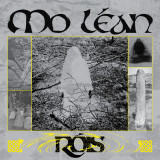
Rose Connolly has a beautiful voice with a wide melodic range, which she bends, twists, strains and warps through both her physical exertions and a sample-based granular synthesiser. The results recall both the Gaelic tradition of séan-nos singing, and the work of experimental artists such as Meredith Monk, Yoko Ono and Hatis Noit, while the beats meld folk with gothic, 4AD-era soundscapes unmatched since the glory days of This Mortal Coil.” – The Guardian (10 Best Folk Albums of 2024) “RÓIS is a composer, vocalist, multi-instrumentalist, and electronic artist from Fermanagh, whose songs breathe new life into a forgotten Ireland. Self-released, written and produced by RÓIS with additional production from John Spud Murphy (OXN/Lankum), 'MO LÉAN' is a concept album, taking the listener through the grieving process from start to finish, from the chaos that loss brings, to the intense emotional outpourings and finally, a cathartic release.
‘MO LÉAN' features several new original recordings and reworks of songs and hymns based around the concept of death, life, mourning and catharsis. RÓIS re-imagines the tradition of 'keening' in Ireland that goes back to pre-christian times, a practice in which women would 'keen' a lamenting wail at the side of a coffin during a wake. After discovering the last two recordings of keening songs, RÓIS was inspired by their ethereal melodies to give them a modern reworking yet honouring the original women by sampling them in her adaption. 'Keeners', through their voices, movements and laments, conveyed the communal expression of grief and allowed those suffering a way to release their sorrow and loss. RÓIS aspires to do the same with 'MO LÉAN', by expressing the power of the voice to transcend death and help us relinquish our fear of it

Cerca:af
Since 1992, Robin Storey (founding member of the pioneering post-industrial band Zoviet*France) has been creating innovative and thought-provoking music under the Rapoon moniker. Drawing inspiration from his early days with Z*F, he continues to push the boundaries of ambient, industrial, and world music genres, earning him a dedicated following across the globe.
Originally available in 1994 as a limited-edition DAT tape through Staalplaat Records, Cidar was later included as a bonus CD in the reissue of another Rapoon classic, Fallen Gods. Now, after years of anticipation, fans can experience this mesmerizing work as a stand-alone release – remastered and expanded with three previously unreleased tracks from the original 1994 recording sessions.
Cidar showcases Robin’s signature sound – a seamless blend of Z*F-inspired drones and loops intertwined with vibrant African percussion and hauntingly beautiful Asian string instruments. This combination creates an immersive, trance-like atmosphere that transports listeners into a world of meditative sonic exploration.
With its enchanting rhythms and deeply textured layers, Cidar stands as a testament to Robin’s unparalleled ability to craft music that defies genre boundaries while remaining instantly recognizable. Fans of both Zoviet*France and Rapoon will find themselves drawn into the hypnotic sounds of this timeless masterpiece.
The standalone release of Cidar marks an important milestone in the history of experimental music, offering audiences worldwide the opportunity to rediscover or experience for the first time one of Robin Storey’s most influential works.
- A1: Core
- A2: Anticipate
- A3: War Game
- A4: Mantra
- A5: Unlearn
- A6: Disarm
- B1: Open
- B2: Safe
- B3: Heal
- B4: Dmz
Demilitarize follows Nazar’s remarkable 2020 debut Guerrilla, which reprocessed Angolan kuduro music with rough textures, field recordings and media clips, telling a personal story of the civil war that exiled his family to Europe, while his father, a rebel General, fought a losing battle in the jungle back home. After Guerrilla, and an extended period of serious illness, now Demilitarize is motivated by a reckoning with mortality and the flowering of new love, turning the ‘rough kuduro’ of Guerrilla inside out.This is a deep sound world, genuinely dreamy, the arc of the album describing shedding the armour of trauma and surrendering to this new situation. A constant and unexpected aspect of Demilitarize is Nazar's gentle, submerged vocal. Insistent and mantra-like, it’s like a cross between Elisabeth Frazer, Arthur Russell and Frank Ocean, and the music is fragile and opaque in response. The rhythms of kuduro are still here,but move around his voice like fish around a swimmer, while precise sound design illuminates from different angles. Chords spiral, ripple and shoot through the beats giving tracks the loosest of settings; songs disassemble; vocals float off-centre.
- 1: Die For Allah
- 2: Deathwish
- 3: What?S The News
- 4: Life Inside Iran
- 5: Iranians On Bikes
- 6: Simple Life
- 7: Fifh
- 8: Blow Up The Embassy
- 9: Theme
- 10: Iranian Klan
- 11: Ultraviolence
- 12: Chant
- 13: Land Of The Free
The classic Fearless Iranians From Hell Die For Allah LP is now back in print after a twenty-five year hiatus. Remastered and repressed on nuclear green vinyl, this hardcore punk arsenal also includes all tracks from their literally explosive Blow Up The Embassy 7-inch debut. FIFH was a mysterious Texan monstrosity formed in 1983 by Iranian expat (and modern day hashashin) Amir Mamori, who gathered to his side various mutants and apocalyptic freaks from the San Antonio punk rock blast zone, even throwing in two Butthole Surfers rejects for good measure (including none other than the notorious Anus Presley himself). The subsequent recording sessions were a chaotic affair, as guitars were rarely in tune and the drums were seemingly scavenged from the trash. It was all directed by Amir who, with fanatical focus, would inspire the band on to victory from behind a stupifying cloud of hash smoke. The resulting releases were widely praised; from places like Maximum Rock n Roll and the Village Voice in the US, to Sounds and New Musical Express in the UK. They were even cited as forerunners of the musical genre known as Taqwacore. After touring the US in the late ’80s—and leaving in their wake crowd turbulence, police intimidation, and even bounties being place on the heads of the members—the band disbanded in 1989 upon the death of the Ayatollah Khomeini (may Allah have mercy on him). “We’re stoned as shit, and we’re ready to roll.” - F.I.F.H. ’87
- A1: Mas, Que Nada!
- A2: Tim Dom Dom
- A3: Balança Pema
- A4: Vem Morena
- A5: Chove Chuva
- A6: É Só Sambar
- B1: Rosa, Menina Rosa
- B2: Quero Esquecer Você
- B3: Uála Uálalá
- B4: A Tamba
- B5: Menina Bonita Não Chora
- B6: Por Causa De Você, Menina
Jorge Ben’s 1963 debut, Samba Esquema Novo, introduced his infectious blend of bossa nova and samba, propelled by the timeless Mas Que Nada and Chove Chuva. While his later sound leaned more into rock and Afro-Brazilian rhythms, this album bursts with swirling melodies, rich harmonies, and big-band energy, all anchored by Ben’s distinctive, minor-key guitar work. A vibrant, era-defining classic.
There’s no direct English translation for the word “hiraeth”. In the Welsh language, it describes a form of longing for an intangible something, somewhere or someone that no longer exists. Sofie Birch and Antonina Nowacka draw on the concept to guide their second collaborative album, a suite of vulnerable, open-hearted improvisations and reflections that attempt to grasp an image of the past that’s chimeric, dissolving almost as soon as it materializes. The duo’s process follows the same distant beacon; unlike Languoria, their critically acclaimed debut, Hiraeth is, at heart, an acoustic record, informed by in-person improvisations with voices and string instruments that gesture to an era before computers, AI and DAWs. It’s just as lush, but Hiraeth is warmer and more muted than its predecessor.
Nowacka and Birch conceived the album in the wake of a slew of collaborative live concerts, spurred on by serendipitous improvisations and an interest in paring down their setup. Unsound arranged a retreat in Sokołowsko, an idyllic village nestled in the verdant hills of Southern Poland, close to the Czech border. Sokołowsko surrounds a large ruined sanatorium that’s rumored to have inspired Thomas Mann’s 1924 novel The Magic Mountain, and has long been a magnet for artists. The two took the opportunity to rethink their approach completely, arriving with just a guitar, a zither and a portable Nagra reel-to-reel machine. Recording directly to tape, they sketched out ideas with just their voices and instruments, reflecting their surroundings without being distracted or mediated by modern technology.
“We wanted to get away from screens as much as possible,” says Birch, “to bring to the world something vulnerable and honest. Without advance preparation, every day we went out into the open air, finding places to sit, during sunset or the midday sun. We discovered new tunings on our instruments, picked up a melody, and started the machine, playing over
and over till we got a take.” In the autumn, they met again in a Copenhagen studio, sparingly and carefully layering old synths and organs to add more depth without muddying the mix.
Both Nowacka and Birch sing throughout, their voices threading the acoustic instruments and tangling with each other, almost becoming one. But it’s the environment of Sokołowsko, “the birds and the light, even the wind playing against the harps,” that’s woven into the music’s lining. Affected by time spent meditating and in nature, as well as the fact that Birch was pregnant whilst recording, the album feels alive and remarkably present. Even the sound quality of the tape machine gives Hiraeth a tactile, organic quality, as Nowacka puts it, “like being in a warm bath.”
They still have the raw recordings from Sokołowsko on old reels, physical souvenirs of their time spent making music in a “habitat for intuitive songs, a little ecosystem, alive and spirited.” The outmoded gear and remote setting helped the duo disengage from the modern world for a few moments and imagine an existence that’s been lost to time and nominal progress. With digital technology receding into the background, Nowacka and Birch had space to make “intuitive connections with frequencies and people,” as Birch explains. Hiraeth is a testament not to nostalgia, but to the power of kinship.
When a Russian missile struck the ground not far from my studio in Kyiv, I vividly remember how my body reacted to the explosion, milliseconds before my mind did. That traumatic explosion reduced my essence to a primal state. There existed nothing but dread—the kind that, in scripture, accompanies the appearance of angels announcing, ’Be not afraid’.
The visions of Abbess, composer and mystic Hildegard von Bingen were preceded by bright, excruciating flashes of light. Modern medicine reduces them to cluster migraines, one symptom of which is the retinal aura, often accompanied by blurred vision and blind spots. Hildegard’s music can place great demands on the bodies of its performers, emphasizing uncomfortable intervals and the wide distance between the lowest and highest pitch. In comparison, Gregorian chant, the liturgical standard of the time, represents a tempered attempt to grasp God intellectually; indeed, Hildegard’s music was once described as a stick of dynamite thrown into a Gregorian chant.
This album is not a historically informed performance. Hildegard’s persona and music are a starting point—a distant mirror, akin to the shield of Perseus, used to reflect Medusa. It allows us to reflect, comprehend, externalise, and transcend traumatic wartime experience, reinstating the embodied origins of Christianity, which contained suffering but also offered the promise of transcendence. Andriana-Yaroslava Saienko emphasises this physical aspect of Hildegard’s music by drawing on authentic Ukrainian folk singing, a form that survived despite efforts by the Soviet occupation to replace it with a simulacrum that is naive, harmless, and devoid of contradictions—an attempt to ‘civilise’ the body by disembodying it.
The musical approach is also informed by my ongoing practice of reimagining early music in modular synthesis. I accompany Andriana-Yaroslava’s fiery singing with drones—extended sounds that also occurred in medieval music. The drones alternate with improvisations, one taking its starting point in medieval polyphony, the other working with the concept of the interchangeability of sound and light, referring both to Hildegard’s visions and the space in which we recorded the album: the Cistercian abbey of Sylvanès in Occitania, known for contemporary stained glass windows whose patterns reference the dispersion of acoustic waves inside the church.
The album features two compositions by Hildegard von Bingen: O Ignis Spiritus Paracliti (O Fire of the Spirit and Defender), dedicated to the Holy Spirit, and O Tu Suavissima Virga (O Sweetest Branch), in honour of the Virgin Mary. Both pieces are performed radically slower than usual, expanding in time and space. On vinyl, the compositions are designed to reflect one another and can be listened to in either order. In the digital edition, there is a bonus track titled Zelenaia Dubrovonka (The Green Oak Grove). Based on a Ukrainian folk song from the Polissia region, Andriana Yaroslava adapted the lyrics to reflect our contemporary reality. The green oak grove does not rustle with the wind; instead, it resonates with a different sound—perhaps the missile that struck near my Kyiv studio.
- A1: And The Native Hipsters-There Goes Concorde Again
- A2: Dislocation Dance - Yops Course
- A3: Laughter In The Garden - Clutching At Straws
- A4: Airkraft- Here Comes That Sound
- B1: Prana - All The Earth Is Sacred
- B2: Surface Mutants - Souls Will Cry
- B3: Ingrid- A Dream
- B4: The Flying Lizards-Another Story
- C1: Siren -Breaking It Down
- C2: Blank Students - We Are Native
- C3: The Drezznels-Class Distinction
- C4: Some Now Are – Aftermath
- D1: The Gist-Fool For A Version
- D2: Johnny G - Miles & Miles
- D3: Janet Armstrong-Exploitation
- D4: The Sticks-Dole Queue Rock
Now, following great acclaim for Volume 1, CTR is proud to unveil another equally eclectic Post-Punk Era Selection Compiled by Jason Boardman ( Before I Die Records) Celebrated Manchester club-night curator & record Label Owner , DJ & digger - supreme.
A second compilation of late 1970s / early 1980s Post-Punk era bedroom & small studio innovations & DIY Inspirations - Featuring more rarely & never heard cuts from that period. Including tracks from the enigmatic Prana, Blank Students, Janet Armstrong & The Native Hipsters ..A rich vein .
Jason Writes Of Volume 2 :
"It was a delightful shock that No Ones Listening Anyway Volume One was so well received - thanks to everyone one who bought & enjoyed it. This led to John asking me to collate Volume Two, so here it is.
This time all the material was recorded & released in the UK between 1978 & 1984.
I was conscious that there was minimal female energy on Volume One so have tried to rectify that here on Volume Two. I have also tried to make it as varied as possible with none hit wonders, oddities, collectables, under the radar B-sides & a couple of previously unreleased on vinyl selections."
- 1: Timz N Hood Chek
- 2: Wrektime
- 3: Wontime
- 4: Wrekonize
- 5: Sound Bwoy Burreill
- 6: K.i.m
- 7: Bucktown
- 8: Stand Strong
- 9: Next Shit
- 10: Cession At Da Doghillee
- 11: Hellucination
- 12: Home Sweet Home
- 13: Wipe Ya Mouf
- 14: Let’s Git It On
- 15: P.n.c. Intro
- 16: P.n.c
- 17: Nuttin' Move But Da Money
- 18: Wrekonize Remix
- 19: Sound Bwoy Burreill Remix
Released in the winter of 1995, Dah Shinin’ introduced Smif-N-Wessun as torchbearers of the gritty, sample-driven East Coast sound that defined a generation. Backed by Da Beatminerz’ haunting, jazz-laced production and supported by their Boot Camp Clik brethren, Tek and Steele delivered a debut that was as raw as it was revolutionary — capturing the essence of mid-90s Brooklyn.
Now, 30 years later, Dah Shinin’ returns in its most complete form. The 30th Anniversary Definitive Deluxe Edition brings together for the first time in one place, the full original album, two essential remixes "Wrekonize" and "Sound Bwoy Bureill" and rare material, including the long-unreleased “Nuttin’ Move But Da Money,” finally available officially after years on white label.
Pressed across three LPs and housed in a premium tri-fold jacket featuring original artwork, newly commissioned liner notes, period photography, and archival content, this expanded edition stands as a tribute to the album’s creation and legacy. From the underground anthem “Bucktown” to the crew showcase “Cession At Da Doghillee,” every track celebrates the timeless sound that made Dah Shinin’ a classic.
- A1: Enchanted Mirror 04:00
- A2: Summertime Love 03:00
- A3: Reflections 02:42
- A4: Concerto For Guitar 03:15
- B1: Rain 02:40
- B2: Leque 01:50
- B3: Missal (Estudo) 03:46
- B4: Adventure In Space 05:17
Introspection is a 1972 cult-favorite solo guitar album by Brazilian composer and guitarist Luiz Bonfà. Unlike his more famous bossa nova recordings, this album presents Bonfá in a deeply personal, almost meditative setting. Recorded primarily as a set of intimate solo guitar pieces, Introspection showcases Bonfà’s signature combination of classical technique, Brazilian rhythm and emotive melodic phrasing. Initially overlooked, Introspection later gained recognition as one of Bonfà’s most admired and distinctive works outside the mainstream bossa nova canon. This reissue is the first ever on vinyl after 1972.
Instant House returns with their long-awaited second 7-inch release, from one of the most respected and underground names of the 1990s deep house era. This essential edition features the out-of-print yet highly sought-after remix of “Hat Hat”, reimagined by the legendary Joe Claussell, a deep, spiritual reconstruction that stands as a true collector’s gem. On the flip side lies the timeless Instant House classic “Mellow Out,” a defining deep house cut that captures the pure essence of the early ’90s movement. Pressed in limited quantities, this 7-inch is a must-have for true deep house collectors and admirers of Instant House and the golden era of late ’80s / early ’90s underground house.
- A1: Java - Augustus Pablo
- A2: Hospital Trolly - I Roy
- A3: King Of Babylon - Junior Byles
- A4: Don't Go - Horace Andy
- A5: A Little Love - Jimmy London
- A7: Cheater - Dennis Brown
- A9: For The Love Of You - John Holt
- A10: Too Late To Turn Back Now - Alton Ellis
- A11: Be Thankful - Donovan Carless
- A12: Woman Of The Ghetto - Hortense Ellis
- A13: Children Of The Ghetto - Senya
- A14: Lonely Soldier - Gregory Isaacs
- A16: Going To Zion - Black Uhuru
- A17: Ordinary Man - Lloyd Parks
- A18: Ordinary Version 3 - Impact All Stars
- A19: Hold Tight - African Brothers
- A20: Righteous Man - Keith Poppin
- A21: Created By The Father - Errol Dunkley
- A22: The Race - The Gladiators
- A24: My Guiding Star - The Heptones
- A27: No Jestering - Carl Malcolm
- A28: Knotty No Jester - Big Youth
- A29: Fattie Bum Bum - Carl Malcolm
- A25: Something On Your Mind - Hubert Lee
- A26: Country Boy - Charley Ace & Dirty Harry
Chapter Two[36,35 €]
RANDY'S 50th ANNIVERSARY CHAPTER ONE / VARIOUS - First time on vinyl for Chapter Two second part of the acclaimed previously CD only set that was released to celebrate the 50th Anniversary of Randy's Records. From Augustus Pablo's groundbreaking 'Java' to Carl Malcolm's UK pop crossover hit 'Fattie Bum Bum' Chapter Two showcase classic after classic from a all-star line up of the 70's reggae music greats including Black Uhuru, Horace Andy, Dennis Brown, Gregory Isaacs, The Heptones & Big Youth. Beautifully packaged with inner sleeves featuring rare photos and liner notes by reggae historian, Dennis Katz.
- Talking Time
- Ajiboye Special
- Thousand Kisses
- Carry On
- My Sweet Lord
- Justina
- My Lady
Ein extrem seltenes und fantastisches Afro-Funk-Album, aufgenommen 1976, dessen Sound aber an die 1960er-Jahre erinnert: Wuchtige Drums, tiefer Bass, Wah-Wah-Gitarre und Orgel der Friimen Musik Company begleiten die gefühlvolle Stimme von Maxwell Elemuo. Erste Wiederauflage in limitierter Edition.
Editing is a specialist game that is easy to play but difficult to master. King Most is more adept than many, as he shows with a third outing here on his own KM label. This one finds him spreading his wings a little, flying away from r&b and hip-hop and migrating towards more worldly grooves with Afro and Latin undercurrents. 'Tony Trinidad' brings swirling guitar echo and coconut percussion to a crispy slow jam, then 'Hermanos Cub' pumps up the funk with blazing horns and vocals. There's lush polyrhythmic looseness and string melodies to 'Zimbabwe Thorn' and earthy disco charm to 'Bebe Cameroon' with its seductive vocal leads. Cultured cuts.
Jexy's back! After conquering post-pando dance floors with his celebrated Bad Timin' label, the Jexter is getting back to basics and bringing things home to his Good Timin' label. This time, the Balearic Bad Boy slams the breaks on the BPMs and delivers an album full of downtempo groovers, angelic diamondry and more hooks than a pirate convention! Get into it!
“Lonesome for a Storm” is the result of a felt sense in the summer of 2024.
A fleeting feeling in the body meditated on and played through a restrained pallette of instruments and found sound . LFAS is Gustav Kemps’s first solo album under his own name, but he’s been a frequent behind the scenes coll- aborator in various other bands (if you can connect the dots, there’s a lot to find). Mystery can be fun, but this album of his feels tender and generous in what it conveys.
RIYL: Empress, Loren Connors, Penguin Cafe Orchestra, The Humble Bee, Yo La Tengo, Taku Sugimoto...
Glasgow’s Fortified Audio returns after at least a ten years long hiatus (No pun intended) and now returns to the world of bass with a full length album from local music firestarter Ten Years Lost. Modern day trap instrumentals at its core whilst sub-consciously giving hints of Drexciya, Moroder and the Memphis & Croydon bass music regions alongside some real deft sampling but still remains Glasgow at its core!
Eight years after his last solo EP on NORD LTD, Shkedul makes a formidable return with four absolute dancefloor killers. This release does more than just fill a silence; it reasserts his position as a producer with a fiercely distinctive character and an unmistakable sonic signature.
- A1: Piano Terra (Intro) – 01:02
- A2: Ricordati Di Me – 01:29
- A3: Sono In Un Van – 03:11
- A4: Onda Feat. Lauryyn – 03:07
- A5: Attesa (Skit) – 01:19
- A6: 10 Days Feat. Sup Nasa – 02:47
- A7: Avevo Un Sogno – 03:18
- B1: Ideal – 02:15
- B2: No Answer (Skit) – 00:58
- B3: La Noche En Que Te Fuiste – 03:29
- B4: Della Morte E Della Grazia – 02:28
- B5: Ikyk – 04:10
- B6: Calma – 02:22
- B7: Ultimo Piano (Outro) – 00:53
"PRONTO" is the debut album by ARYA, an Italian-Venezuelan artist who grew up in Milan. ARYA arrives with this first full-length album after the EPs
Peace of Mind (2021) and Punto Zero (2023), collaborations (Mahmood, Venerus, Ghemon, Dardust, Calibro35, and many others), and an intense live
activity, which have made her one of the most interesting voices on the Italian neo-soul/R&B scene.
Born from a personal journey of therapy and awareness, "PRONTO" takes shape as a concept album, transforming the emotional investigation into a
coherent and layered musical narrative. The title captures the meaning of the project: "Pronto" is a word that crosses all the languages present on the
album—Italian, English, and Spanish—taking on different meanings ("subito," "presto"), and is also the first word uttered in the intro. A term that introduces the listener to a space of availability, anticipation, and presence.
The entire album was produced by Claudio La Rocca (Sup Nasa), a key figure in building the project's sonic identity. Giuseppe Seccia, Matteo D'Ignazi,
Martina Tedesco, Tiziano Codoro, Stefano De Vivo, and Giulia Gentile also contributed to the album, recording the instrumental parts and contributing
to the arrangements and production of some tracks.
With "PRONTO," ARYA takes the listener on a journey through different levels of her emotional history, until the elevator starts moving again and leaves room for a new possibility of balance.
ARYA (AryaDelgado) is an Italian-Venezuelan artist born in Milan in 1994. Daughter of salsa singer Orlando Watussi, she grew up surrounded by music
and quickly developed a sensibility that blends Latin roots, nu-soul, and contemporary R&B, with a strong focus on the emotional and narrative dimensions of her writing. In 2021, she released her debut EP, Peace of Mind, followed in 2023 by Punto Zero. These releases attracted press attention
and led to collaborations with artists such as Mahmood, Venerus, Ghemon, Dardust, and Calibro35. Over the years, she has consolidated an increasingly recognizable presence, alternating songwriting, solo production, and an intense live schedule in Italy and abroad. In 2024, she accompanied Mahmood on tour and released the single, "Si Potesse Tornare." In 2025, La Noche En Que Te Fuiste and Onda were released, songs that marked the
beginning of a new artistic chapter and anticipated the release of “PRONTO,” her debut album, released in February 2026. An intimate and layered
work, which focuses on vulnerability as a language and confirms ARYA as one of the most personal and aware voices of the new Italian soul scene.