quête:afrika system

Genres
Tout
  • 1
Afrikan Simba - Mission

Reality Shock is proud to announce the release of "Mission", a brand new 7" single by Afrikan Simba, with accompanying dub mix by Kris Kemist.

Mission is the title track of the recently released third studio album from the internationally acclaimed roots reggae chanter Afrikan Simba. Originally hailing from Nigeria & residing in East London, Afrikan Simba is well established in the roots reggae world, known for his conscious, spiritual, and uplifting lyrics. With a career spanning several decades, Afrikan Simba has worked with legendary sound systems like Jah Shaka, Aba Shanti, and Channel One as well as artists like Luciano, Nereus Joseph, Little John, Earl Sixteen & many more, performing at countless shows & festivals across the globe.

Mission 7" is produced by Mercury nominated producer Patrick Williamson in collaboration with Kris Kemist of Reality Shock Records, who has been working closely with Simba for over 20 years. The song features Backing vocals by Indra & brass by Tribuman. On the flip side of the 7" is a heavyweight dub version mixed by Kris Kemist at Reality Shock Studio.

pré-commande25.07.2025

il devrait être publié sur 25.07.2025

12,56
Various - Hua Hua Plays for You Vol. 1

John Gosling (aka Mekon) the English big beat/industrial musician and electronica producer, is set to launch his new label Hua Hua (pronounced wah wah) with an 11-track compilation album this July. A quick scan at some of the featured artists showcases a line up of legends - eighties rap sensation Schooly D sitting alongside Primal Scream mainstay Bobby Gillespie and John’s recently departed punk hero Alan Vega - even Roxy Music’s saxophonist and founder member Andy Mackay makes an appearance. And while John’s electronic alter ego Mekon is always on hand to remix and arrange, he’s far from the only producer behind the proverbial wheel.
“It’s stuff I had lying around and now I am finding ways to get it out of my system,” he says. “It’s all been brought to the world with brilliant new artwork by Isabelle de Jour, who also features on various tracks.”
Gosling is well known as a member of both Psychic TV and Coil (for the album Transparent). Gosling founded the groups Zos Kia with John Balance and Bass-o-Matic with William Orbit before recording as Mekon. He has also remixed under the name Sugar J. And that’s before we get to the fact that he has soundtracked some of the most forward-thinking fashion shows in the world - crafting the soundscapes for Alexander McQueen shows since the show Dante in 1996. Firstly working hand in hand with the late great Lee “Alexander” McQueen, then with his successor Sarah Burton. In the mid-to-late-nineties he was a core member of the group Agent Provocateur along with Matthew Ashman (originally of Bow Wow Wow), Dan Peppe, Danny Saber (of Black Grape) and Cleo Torez. He has also worked with artists such as Roxanne Shanté ('Yes Yes Y'All'), Marc Almond ('Delirious'), and Afrika Bambaataa. His third album “Something Came Up” featured artwork by Alexander McQueen.
John is as passionate about Suicide and Alan Vega and what he describes as “the new stuff”. Besides, he says, “that’s how people listen to music now. I think kids – my kids anyway – listen right across the board. People don’t see genres anymore. So it’s my definition of good music.” It’s safe to say that this is very much Volume 1. “Yes, it doesn’t cover everything and Volume 2 will be completely different.”

pré-commande20.01.2025

il devrait être publié sur 20.01.2025

26,26
Fela Kuti - O.D.O.O. (Overtake Don Overtake Overtake)  LP

In O.D.O.O. singt Fela über die Auswirkungen der militärischen Machtübernahme und die Zerstörung der jungen afrikanischen Demokratien seit der Unabhängigkeit - insbesondere der jungen Demokratien, die nach langen Auseinandersetzungen und manchmal sogar Kriegen mit den Kolonialmächten ihre Unabhängigkeit erkämpft und gewonnen haben. Er sagte, dass Putschisten, wenn sie an die Macht kommen, Namen annehmen wie: Nigerianischer Oberster Militärrat, Ghanaischer Erlösungsrat, Libyscher Revolutionär usw. In den meisten Fällen wurden die Putschversuche von den ehemaligen Kolonialmächten geplant und finanziert. Für diejenigen, die sich dessen nicht bewusst sind, schafft die Präsenz des Militärs auf der politischen Bühne die Illusion einer friedlichen "demokratischen" Partizipation und einer funktionierenden Regierung. Zumal der größte Teil der täglichen Regierungsarbeit von Zivilisten geleistet wird, die den Militärchefs unterstehen. Für Fela besteht die Aufgabe der Streitkräfte unter normalen Umständen darin, die zivile Regierung zu verteidigen und zu unterstützen, und nicht darin, sie zu stürzen oder die Aufgaben eines Regierungszweiges an sich zu reißen, weil sie kein politisches Mandat haben. Das Gegenteil zu tun - das bedeutet "überholen". Jede Vorstellung von einem wohlhabenden und friedlichen Land, in dem das Militär an der Spitze der Macht steht, ist eine Illusion.

Die anhaltenden Skandale und die Korruption auf höchster Ebene, die alle Regime seit der Unabhängigkeit kennzeichnen, tragen dazu bei, Felas Desillusionierung und sein Misstrauen gegenüber dem Militär ins rechte Licht zu rücken. Er weist auf die Zweideutigkeit hin, daß die Verfassungen der neuen unabhängigen afrikanischen Nationen an die Verfassungen der scheidenden Kolonialherren angelehnt sind. Identifiziert das als Ursache der Probleme. In seiner sarkastischen Art bezeichnet Fela das, was in Afrika als Regierung durchgeht, als: '…soldier go! Soldier come!' Damit meint er, dass die Institution, die die militärische Struktur geschaffen hat, die Armee absichtlich dorthin gebracht hat, um ihr koloniales Werk fortzusetzen. Um die Not der Afrikaner unter einer solchen Diktatur deutlich zu machen, führt Fela eine Liste von Liedern an, die er geschrieben hat und in denen er die Ungerechtigkeiten des Systems kritisiert: Kalakuta Show! Mr. Follow-Follow! Zombie! Shuffering und Shmiling! Leider sind es die armen Massen, die am meisten unter der Misswirtschaft und Korruption der Regierung leiden. Von klein auf müssen afrikanische Kinder lernen, wie man in einem System überlebt, in dem man nicht weiß, woher die nächste Mahlzeit kommt - keine soziale Sicherheit, keine Bildung etc.

Trotz all dieser Rückschläge versuchen die Afrikaner weiterhin, ihre Kinder zu erziehen. Die Kinder wachsen auf, nehmen feste Jobs an, um ihr Leben zu verbessern, sparen hier und dort, um zu überleben. Letzten Endes jedoch machen die Ereignisse der Misswirtschaft verschiedener Verwaltungen alle Opfer und Abstriche, die der Einzelne zur Verbesserung seines Lebens macht, nutzlos.

O.D.O.O. war im Box Set #5 enthalten, das von Chris Martin und Femi Kuti kuratiert wurde. Das Album wurde auf grünem, transparentem Vinyl neu gepresst und mit einem bedruckten Inlay versehen in einer single sleeve Außenhülle.

- Ltd. Col. LP: (Transparent Green Vinyl)

pré-commande23.02.2024

il devrait être publié sur 23.02.2024

23,95
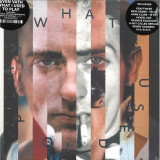
Sven Väth - What I Used To Play (12x12" boxset)
 
36

For this uniquely personal retrospective spread over twelve vinyl discs, Sven Väth takes us back to the early days of his DJ career. On What I Used To Play we meet great pioneers of electronic music, gifted percussionists, obscure wave bands, and innovative producers of a bygone 'new electronic' era. Rough beats and irresistible grooves from the identification stage of house, techno, and acid remind us not just how far electronic music has evolved over the past four decades, but how great it was to dance to EBM, techno, and house for the very first time.

If there is one protagonist of the electronic music scene who has remained curious, innovative and at the very cutting edge of music for over four decades, it's Sven Väth. His multi-layered artist albums and Sound of the Season mix compilations have been defining the genre for over two decades, and even today, he is constantly on the lookout for the next top tune to add to the highlights of his next set. At least, that's the case when he's not producing them himself as an artist or remixer. "Actually, it's always been part of my DNA to think ahead," and nothing had been further from his mind than looking back at his past, but when in spring of 2020 the international DJ circuit had to be scaled down to virtually zero, the 'restless traveler' suddenly had time. Time to stop and reflect on "how it actually was back then, at the very beginning of my career..."

"It was a great trip and with every track, beautiful memories came flooding back".
In the London apartment, he had just moved into, Sven has set up a "little music room", where he cocooned himself for several days, "to look way back for the first time and review my musical journey through the eighties, so to speak."

The interim result was six thematically oriented playlists with a grand total of 120 tracks from 'early 80s' to 'Balearic late 80s', together with excursions into afrobeat, European new wave, and EBM sounds and a few epochal techno/house tracks from the USA in between. From these 'Best of Sven Väth's favorites', the project What I Used To Play crystallized. Sven remembers how the Cocoon team reacted to his proposal: "They found the idea of making a compilation out of it MEGA from the beginning and everyone said 'Sven, go for it', but then, of course, the work really started, namely, to clear the rights and to get clean sounding masters of the up to 40-year-old tracks. There was also disappointment, of course. We couldn't clear certain titles because the rights holders in the USA had fallen out with each other or simply disappeared from the scene. In short, it wasn't easy, but now I can safely say we got the most important tracks."

Finally, after two years of research, curation, design, and administrative fine-tuning, the "little retrospective" from 1981 to 1990 is available. The exquisitely packaged, and three-kilo heavy box set is not only physically impressive, WIUTP is also the definitive record of Sven Väth's musical development. On each of the twenty-four sides of vinyl, you can trace track by track, what influenced him during which phase, and how he took off as a DJ from his parents' Queen's Pub straight into the spotlight at Dorian Gray. There and at Vogue (later OMEN), Sven became the style-defining player in the DJ booth that he still is today.


1981 - 1990: Future Sounds of Now

In the early eighties, the crowd in clubs like Vogue and Dorian Gray danced to what nowadays we call 'dance classics' - mainly disco, funk, soul, and chart pop. It was up to a new generation of DJs, including Sven Väth, the youngest protagonist in the Rhine-Main area at the time, to create their own club-ready music mix. Good new tracks and potential floor-fillers were rarities that had to be sought out and found, in order to prove oneself worthy.
Without MP3s, internet streaming, or other digital download possibilities, music didn't just gravitate to the DJ, instead, it had to be tracked down. In well-stocked record stores in Frankfurt and Wiesbaden or even in Amsterdam, London, or New York, Sven and friends sourced the material for countless magical nights. On WIUTP we can follow Sven's very personal journey through this wild, innovative era in which synth-pop, funk, hip-hop, and disco were successively replaced as 'club music' by house, techno, acid, and breakbeat. By the end of the decade, it was clear to see that these once exotic 'fringe' phenomena would soon become 'mass' phenomena.


Early 80s

Dirty Talk by the Italian-American duo Klein & M.B.O. represents the most innovative phase of the Italo-disco genre in the early eighties like no other track. Mario Boncaldo (I) and Tony Carrasco relied entirely on the original synthetic drum and percussion sounds of the Roland TR-808, coupled with the raunchy vocals of Rossana Casale and guitar accents of Davide Piatto. Of course, other tracks from this period were also influential in style, most notably Unit by Logic System, which worked as the perfect soundtrack to the laser lighting system at the legendary Dorian Gray club. With stomping beats and robotic rap interludes, Bostich by Yello also belongs on Sven's eternal playlist - after all, it caught the attention of Afrikaa Bambaataa, who invited the Swiss duo to perform at the Roxy in New York in 1983.


EBM Wave - Mid 80s

From today's point of view, the almost ten-minute-long, downtempo track Giant by Matt Johnson's band project The The, would probably not be considered an obvious club classic. However, a closer (re)listen reveals the rhythmic intricacies of the percussion overdubs by JG Thirlwell (aka Foetus) on Johnson's composition, and it becomes clear why this exceptional piece of music is one of Sven's absolute favorites. Other classics from this phase include Kaw-Liga by the mysterious The Residents, the hypnotic-synthetic Our Darkness by Anne Clark (and David Harrow), and last but not least, the somber, monotonous anthem Where Are You? by 16Bit, one of Sven Väth's projects together with Michael Münzing, Luca Anzilotti from 1986.


US House - Late 80s

You certainly can't talk about Chicago house without mentioning Frankie Knuckles. The resident DJ at the Warehouse not only gave the name to an entire genre, but also produced epochal floor fillers on the Trax label like the timeless Your Love, sung (and moaned) by Jamie Principle. Acid house protagonists Phuture also hail from Chicago, and on We Are Phuture (also released on Trax) we hear the chirping acid sounds of the legendary Roland TB-303 in full effect. Another featured classic is No UFO's by Detroit's Model 500 aka Juan Atkins, who is rightly considered the 'Godfather of Techno' even if the genre-defining track from 1985 still breathes with the spirit of hip-hop and electro from the first breakdance era.


Afrobeat

Le Serpent, by Algerian-born Abdelmadjid Guemguem, is a track that sounds completely different from everything else on WIUTP. Made in 1978, it's a monumental, rousing groove created without bass or synths, just with five congas! Even though Guem sadly passed away in 2021, his immortal, acoustic beats are understood all over the world and will continue to enrich many thousands of DJ sets for years to come. Another classic that not only Sven appreciates beyond measure is Hugh Masekela's Don't Go Lose it, Baby. In addition to being one of the most important jazz pioneers, the trumpeter and freedom fighter from Johannesburg was very experimental, integrating electronic sounds into his music in later years, in a similar vein to Miles Davis and Herbie Hancock. Dutch jazz pianist Jasper van't Hof's afrobeat project Pili Pili has also aged well. The trance-like, almost sixteen-minute-long track of the same name, manages to fill a whole side on the seventh of twelve vinyl discs in the WIUTP box.


UK-US-Euro - Late 80s

Time for a change of scene, in the truest sense of the word, and from a musical perspective, this section is like landing on another planet. First up is Andrew Weatherall's classic remix of Primal Scream's Loaded, featuring the iconic Peter Fonda sample (lifted from the 1966 biker film Wild Angels) that came to personify the mood triggered by the British Second Summer of Love in the late eighties: "We wanna be free to do what we wanna do, and we wanna get loaded...". This period also saw the emergence of M/A/R/R/S whose only single, 1987's Pump Up The Volume, became a club classic with support from DJ legend CJ Mackintosh. In this most eclectic of sections, we also encounter New York house and reggae producer Bobby Konders and his seminal Nervous Acid.


Balearic - Late 80s

Those who know him, know that Sven had already lost his heart to the 'magic island' of Ibiza as a teenager, so with that in mind, the WIUTP project couldn't end without a Balearic chapter. Inspired by Manuel Göttsching's E2-E4, the immortal, eponymously titled Sueño Latino belongs in there without question. Equally popular on the island was, and still is Break 4 Love by Raze, which thinking about it, would also fit perfectly into the house chapter. Last, but not least, there's an overdue reunion with Sven Väth himself, in his role as frontman of the successful Frankfurt trio OFF. Together with Michael Münzing and Luca Anzilotti (later of Snap!) this 'Organization For Fun' created the off-the-wall club hit Electric Salsa in 1986 which incidentally turned into an international chart smash, putting Sven in the enviable position of having to decide between pop stardom and a DJ career. Well, we all know how that decision turned out and the rest, as they say, is history. A not insignificant part of his story is What I Used To Play. Enjoy!

pas en stock

Commandez maintenant et nous commanderons l'article pour vous chez notre fournisseur.

184,83

Last In: 8 months ago
DUBXANNE - POLICE IN DUB LP

Dubxanne

POLICE IN DUB LP

12inchEBLPRED67
Echo Beach
04.11.2022

Zu Beginn der 1980er-Jahre zählten sie zu den größten Acts des Planeten, und ihre Reunion-Tour füllte 2007 weltweit die Hallen und Stadien: The Police. Wie kaum eine andere Popband profitierte das Trio von Einflüssen afrikanischer und vor allem jamaikanischer Musik. Songs wie "So Lonely" und "My Bed"s Too Big Without You" wären nichts ohne Stings parallel zum Gesang gezimmertes Bass-Fundament, und "Walking On The Moon" ist wahrscheinlich eine der wenigen Reggae-Killer-Basslinien, die außerhalb Jamaikas entstanden sind. Zeit für eine Würdigung der besonderen Art: "DubXanne" ist das wohl erste Dub-Showcase, das komplett auf Police-Riddims basiert. Eingespielt wurde das Album von Okada, der Backing-Band des Reggaekünstlers Zoe, und vielen Gästen wie Earl 16, Rankin Rogers, Eased (Seeed) und dem Dichter Benjamin Zephaniah. Das Ergebnis sind gesättigte Bässe, ein dynamisches, repetitives Gleichmaß, Sound-System-Atmosphäre und vor allem: Synchronicity - eine Rückkoppelung der abstrahierten Reggaeelemente von The Police mit deren jamaikanischen Wurzeln.

pré-commande04.11.2022

il devrait être publié sur 04.11.2022

21,22
TIKEN JAH FAKOLY - BRAQUAGE DE POUVOIR

Der sich über mehr als drei Jahrzehnte erstreckende musikalische Erfolg von Tiken Jah Fakoly ist auf vier Eckpfeilern begründet, deren Fundament für seinen klaren und kompromisslosen Reggae steht und sich ebenso klar und unmissverständlich in den Texten des beliebten afrikanischen Musikers widerspiegelt. Sei es als Verteidiger der Unterdrückten oder als steter Daumen in der Wunde der von ihm benannten Tyrannen. Schon zu Beginn der 90er Jahre, mit seiner ersten Band 'Djélys" in Odienné, einer Stadt im Nordwesten der Elfenbeinküste, fiel Tiken Jah mit seiner tiefen, eindringlichen Stimme auf. Ein großer Erfolg und der erste der starken Eckpfeiler war jedoch sein in Abidjan entstandenes Debut Album unter seinem Namen, 'Mangercratie" (1999). Es erschütterte sowohl die lokale Reggae-Szene, vor allem aber auch die Machthaber, die dekadente Oberschicht, die "alten Fressäcke", wie er sie betitelte, die die Zeichen der Zeit ignorierten und sich an die Macht klammerten. Den zweiten Grundstein legte er in Paris, dem zentralen Nerv Frankreichs, mit seinem dritten Album 'Françafrique" (2002), einem Begriff, der informell für das - wie Tiken Jah in seinen Texten anprangerte - antiquierte politische System Frankreichs und dessen mafiöse Strukturen steht. Im selben Jahr wurde sein Land, die Elfenbeinküste, von einem Bürgerkrieg zerrissen. Seine Landsleute hatten "den Verstand verloren", wie er es schon zuvor in einem seiner Liedtexte prophezeit hatte. Fakoly suchte Unterschlupf in Bamako, ohne sich jedoch wie ein Flüchtling zu fühlen, denn "Africa is united", Afrika ist vereint, wie er schon immer verkündet hatte. In Bamako legte er mit dem treffend benannten 'L"Africain" (seinem fünften Album, 2007) den dritten Eckpfeiler, gefolgt von dem vierten Eckpfeiler, dem großartigen 'African Revolution" (2010), seinem siebten Album, welches das endgültige Fundament bildete: Ein revolutionärer Schrei, ein direkter politischer Aufruf, der sich in den bloßen, schlichten Reggae-Rhythmen entlädt, unangekündigt und dafür umso schöner und machtvoller. Sein elftes und neuestes Album 'Braquage de pouvoir" (Raub der Macht) setzt diesen Weg fort. Das Album trifft den Nerv auf den Punkt, denn es begnügt sich nicht damit, Tiken Jahs musikalische und politische Errungenschaften zusammenzufassen, sondern offenbart in Gänze das Wesen des fakolianischen Stils - ein Adjektiv, das wir zu erfinden wagen, so wie Tiken Jah Fakoly es wagte, diese starken Pfeiler zu erschaffen.

pré-commande04.11.2022

il devrait être publié sur 04.11.2022

31,39
Various - Dance To The Drummer's Beat Vol. 1 (2x12")

Presenting a collection of stone-cold classic breakbeats and b-boy jams from the sunkissed vaults of Miami's legendary TK Disco label!

NYC in the late 70's and early 80's saw a nascent street subculture fully evolve, a movement with it's own language, art, aesthetics, dances, fashion and way of living.

What would become what is now globally known as 'hip-hop' was in its infancy, with it's own legends and history being forged on an almost daily basis across the city's Black and Hispanic neighbourhoods. Music was central to hip-hop, the DJ was king and at the hands of people like Kool Herc, Grandmaster Flash, Grandmaster Flowers, Mean Gene, Jazzy Jay, Afrika Bambaataa, Charlie Chase and numerous other groundbreaking DJ's of the era, music took on a whole new meaning that would reverberate through popular culture for the rest of time.

The breaks - minute sections or breakdowns of a record where we get to the unadulterated groove and the band on the record cut loose - is what it was all about! Unlike the discotheque DJ's who favoured the long mixes and blends in their club scenarios, hip-hop DJ's were amassing huge collections of records that had these magical sections on them, often x 2 copies of each, so that they could elongate the best part of the record ad infinitum by cutting them up live - all killer no filler! These special on the fly mixes and edits were then unleashed in the local parks of their neighbourhoods, on gargantuan DIY sound systems for all of their friends and neighbours to party on down until the wee small hours. These breakbeat segments also gave the MC's space to address the gathered masses without their voices colliding with lavish string arrangements or vocals underneath. A clear, concise, stripped back slab of funk on which to put forth their ideas, feelings and rhymes for all to enjoy.

Collected here are some of those most infamous breakbeats, all from the TK vaults. These records were studied by these young DJ's, coveted, covered up, hunted down, whispered about in darkened corners by those who needed and obsessed over the freshest of beats. There's a good chance you will have heard these records in some form or another as they have been covered, sampled, recreated and spun in clubs across the galaxy for over 4 decades. These are the very building blocks upon which popular culture and club music have been built, and here they are all in one place for your listening enjoyment!

Released with love and respect by: Above Board and TK Disco, Miami FL. 2020.

pas en stock

Commandez maintenant et nous commanderons l'article pour vous chez notre fournisseur.

20,97

Last In: 3 years ago
Bheki Mseleku - Celebration 2x12"

From the inheritor of John Coltrane's mouthpiece a re-integration of deep South African jazz roots with the Black Atlantic spiritual jazz continuum.

Celebration's release trumpeted the emerging dawn of South Africa's epochal changes. Sainted and blessed, Bheki Mseleku appeared as the herald of a new era, a prophet of rebirth and reconnection. This is a work signalling transition and change, and a sign of a South African music that was properly reconnected with global currents - a music that could journey far beyond the stifling combination of exile and oppression in which it had been bound.

Recognising Bheki as a kindred spirit to her late husband, Alice gave him the saxophone mouthpiece that John Coltrane had used during the recording of A Love Supreme. Coltrane was a permanent touchstone for the pianist, one of the few who Bheki felt had the same esoteric and spiritual focus as himself: 'the only musicians I know of who were deeply into this were Coltrane, and Pharoah and Sun Ra', he told an interviewer in 1992.

While the idioms of post-Coltrane spirit jazz are certainly to the fore on Celebration, they are energised by a swift and original musical vision, quite specific to Bheki's music, in which whole musical systems - the marabi and mbhaqanga jazz of the townships, American jazz, European classical, and more - are seamlessly mended together by the pianist's quicksilver musical sensibility and legendary technical ability.

Celebration was originally released on compact disc and cassette in the middle of 1992 by World Circuit. It was Bheki's first statement under his own name, and the first recorded presentation of his personal musical vision. This vision had been tempered across two decades which had combined intense professional playing with profound personal trials in both the spiritual and earthly domains, all set against the greater backdrop of South African political turmoil and exile in Europe.

The band brought together musicians hailing from three signally important points within the interconnected, communicating spaces of the Black Atlantic continuum - North America, post-colonial Britain, and southern Africa. With them, Mseleku created the first major South African-led musical statement to be produced after the sufferance of exile was ended. The ultimate and most egregious remnant of the centuries-long colonial era, apartheid, was finally being dismantled as they played. At this critical point, Mseleku's musical spirit work, channelled from a higher source, spoke of a time to come where all divisions might be transcended by a greater unity.

pas en stock

Commandez maintenant et nous commanderons l'article pour vous chez notre fournisseur.

25,17

Last In: 4 years ago
Barker - Like An Animal Ep

freshly repressed!
Leisure System, the collective, label and famed Berghain club night of four years standing, is back with their third release from co-founder and resident, Sam Barker. Known for its genre-defiant lineups, Leisure System's quarterly residency has consistently brought together artists with varying styles. Flying Lotus, Autechre, Afrika Hitech, Jackmaster, Surgeon, Jimmy Edgar, Blawan, 808 State, Dopplereffekt, Clark, Machinedrum, Surgeon, Venetian Snares, Objekt and Egyptian Lover have all graced the decks, showing off the collective's commitment to the exploration of new and experimental sounds in EDM. The development of the label, and now this release from Barker, is no exception. After discovering computers and raves in the late '90s, Barker began making tracks at age 13, building up a sizable collection of vintage analogue synths, paving the way for his future solo work and collaborations with artists like Tim Exile, Clark, Shitmat, Scotch Egg, The Field, Leafcutter John and Jimmy Edgar. Shortly after his 2007 move to Berlin, Barker began collaborating with fellow Berghain resident nd_baumecker, resulting in their ongoing project Barker & Baumecker. Their first EP 'Candyflip', was released on Ostgut Ton in 2010, followed up by a live show tour throughout Europe. The duo is currently readying their second EP and have a long player due out in August 2012. For this new solo EP, mastered by electronic music legend Pole, Barker presents a creative three-track lesson in diversity and highlights Leisure System's ever-evolving aural curiosity. The opener and title track 'Like An Animal' is a number that builds and builds, quickly changing course and mutating into a percussive and texturized melting pot of sounds. Up next the hypnotic 'I Feel', which is filled with moody pads and syncopated breakbeat rhythms, paving the way for the mechanical, yet smooth half-step rhythm of 'Hot Lover'. Siimilar to the collective, this offering pushes boundaries and mirrors the progressive ideals of the collective. Just like Leisure System's first two 12's from Pixelord and Eprom in 2011, Barker's 'Like An Animal' EP is a clear statement of the label's simple and distinct commitment : to be a platform for timeless, thrilling and soulful dance music in the fields of house, techno and electronica, disregarding media hype and genre borders. In keeping with this clear sonic manifesto, Leisure System's design aesthetic is equally individual, with all vinyl releases housed in deluxe die-cut jackets.

pas en stock

Commandez maintenant et nous commanderons l'article pour vous chez notre fournisseur.

8,11

Last In: 10 years ago
  • 1
Articles par page:
N/ABPM
Vinyl