In diesem Jahr jährt sich die Veröffentlichung von Cymandes 'Promised Heights' zum 50. Mal. Das Album bildete den Abschluss einer historischen Serie von drei bahnbrechenden Afro-Soul-Alben der frühen 1970er Jahre, zu denen auch ihr selbstbetiteltes Debütalbum von 1972 und 'Second Time Round' von 1973 gehörten. 'Promised Heights' festigte Cymandes Platz in der Musikgeschichte und enthält einige ihrer beliebtesten und häufig gesampelten Titel wie 'Brothers On The Slide'. Als Kinder der Windrush-Generation gehörten Cymande zur ersten Welle von Innovatoren und Gründern der jungen schwarzen britischen Musikszene. Die Band nahm Einflüsse ihrer guayanischen und jamaikanischen Wurzeln auf und verschmolz Reggae-Basslinien, afrogefärbte Nyabinghi-Percussion, psychedelische Rockeinflüsse und Funk-Instrumente im amerikanischen Stil zu einem einzigartigen Sound, den sie "Nyah Rock" nannten. Promised Heights wurde nach einer US-Tournee mit Al Green aufgenommen, die Cymande bei einem begeisterten amerikanischen Publikum bekannt machte.
Cymande waren auch die erste britische Band, die im legendären Apollo Theater in Harlem auftrat.
Suche:afro rock
Archival reissue of the Afro-prog-psych Zamrock masterpiece Presented For The First Time Ever In A Yellow Vinyl Pressing
"Electrified by a diet of James Brown, the Stones and Deep Purple, WITCH were the stadium-filling kings of 70s Zamrock. - ****" - MOJO
WITCH’s musical arc is contained to a five year span and, in retrospect, is a logical one. The band’s fifth and final rock album - released before the band splintered and an offshoot band traveled to Zimbabwe to record and release disco albums - makes use of traditional Zambian rhythms and folk melodies alongside progressive rock movements. Like Lukombo Vibes before it, it is in the Osibas “afro-rock” style.
- A1: Magic Momentum
- A2: Rockets To Mars
- A3: The News These Days
- A4: Life (Skit)
- A5: Love Vibration
- B1: Original Flow
- B2: Hold On
- B3: Surviver (Skit)
- B4: Tatamaka Pt.1
- B5: Tatamaka Pt.2
- C1: Time (Skit)
- C2: Time
- C3: Jinja (Skit)
- C4: Kochirakoso
- C5: Our Tactus
- C6: Nah Personal
- D1: No Chains
- D2: Push Comes To Shove
- D3: We No Let Y'all In
- D4: Mexico (Skit)
- D5: Future For Our Children
We Release JAZZ is very happy to announce an exciting new body of work by Joseph Deenmamode aka Mo Kolours. The singular musical spirit’s new 21-track album Original Flow is available as a double LP housed in a heavy 350gsm sleeve with original artwork by Mo Kolours himself and the classic WRJ obi strip, as well as in digipack CD and digital formats.
A catalog of critically acclaimed records, including his self-titled debut (2014), ‘Texture Like Like Sun’ (2015), 2018 album ‘Inner Symbols’ and three companion EPs, established Deenmamode as a prodigious musician and vocalist. Pitchfork extolled his “hypnotic, tribal-infused dance grooves”, DJ Mag appreciated the “colourful celebration of soundsystem culture”, and Resident Advisor advocated that “no one sounds quite like Mo Kolours”. Musical analogies were drawn by The Guardian as “The best album Curtis Mayfield never made with A Tribe Called Quest and Lee Perry” and Mojo as “like Marvin Gaye produced by J Dilla”.
Five years ago, Deenmamode moved to the Japanese countryside. Far away from familiarity, he contemplated his place and further questioned his identity. “I had none of my ‘own’ people around. I had time to really find what makes me tick musically. Japan has helped me go back to those subconscious leanings, really go deep, and reflect the aspects that make up my story”.
The tracks on ‘Original Flow’ have been constructed from sessions, improvisations and soundbites captured around the world during this time; collecting contributions from musicians including Deenamode’s brothers Reginald Omas Mamode and Jeen Bassa plus Andrew Ashong, Charles Bullen, Dwaye Kilvington, Eddie Hick, Stefan Asanovic, Myele Manzanza, Ross Hughes, and Tom Dreissler. Deenamode says “I’m proud of this album’s creative process. Coming from a tradition of scouring through hours of records, I wanted to create my own samples, to find that perfect loop that no other producer could put their hands on. I decided to invite a group of friends and acquaintances, who also happen to be incredible musicians, to a studio in Crystal Palace to improvise based on some loose ideas I had. We spent all day, and recorded everything”.
‘Original Flow’ is an album of UK street-soul nouveau, future indigenous jazz fusion, Rasta Segga, Nyahbinghi jazz, Malagasy Hebrew hip hop. While retaining a spirit of exploration and improvisation, it sees Deenmamode grow and flex beyond beat tape brevity, expanding composition and stretching his musical muscle to play live with other musicians. Themes of empowerment, overcoming adversity, and mental liberation coexist with notes from ancient history, futurism, and science, as well as musings on family and togetherness.
‘Magik Momentum’ springs from a discussion that features at the start of the song, an inspiring mentor answering a question from Deenmamode about improvisation and what role it plays in life when planning and manifesting the future. ‘Rockets to Mars’ questions the lack of care for the billions of people with nothing, while governments plan to explore space. “This sparked a comparison in my mind to a Sonny Okuson song that I would reference when performing. Okuson’s song talked of the lack of resources in many communities in the world, while governments go to the moon”.
He says the music behind ‘The News These Days’ is “possibly my favourite on the album”. Looped like he would a late sixty jazz-fusion sample, there was nothing added and the track was complete within a matter of minutes. “It was the first and best moment from the entire Crystal Palace session”, he adds. The album’s contrasting title track with minimal instrumentation played solo by Deenamode. While frustratingly searching for gems in past recordings, he thought in a burst of ego, “I don’t need no-one else to make a dope beat!” picked up his ravanne, (the traditional frame drum of his fathers home-land of Mauritius), pressed record, and started to play. He says, “In my thoughts were the rhythms of the Nubians in Upper-Egypt and Sudan, the swing of the huge drums played by Mauritanian women, of-course the Sega beat of Mauritius, and the ever inspiring beat of James Yancey”.
Driven by UK broken beat, Cuban congas, Nigerian and Mauritian inflections, ‘Love Vibration’ follows the concept that all emotions carry a vibratory frequency and pays homage to the frequency of creation and the power of love. The two part ‘Tatamaka’ tells of the history of Deenmamode’s ancestors, the maroons of Mauritius. “We are people who managed to run from our oppressors and find refuge in a corner of the island called ‘Le Morne’ where they could not reach us. One bloody day they came in numbers to re-capture, to revenge. Many of us chose to jump to our deaths, rather than be taken back into subjugation. The poem by Creole Richard Sedley Assonne says; “there were hundreds of them, but my people, the maroons chose the kiss of death over the chains of slavery”. Tatamaka was the name of a famed maroon leader who was murdered for claiming his, and our people’s freedom. The song is the imagined journey of escape and freedom by an ancestor of the maroons of Le Morne”.
Born in the west midlands and raised on the traditional sega music of his father’s Indian Ocean homeland of Mauritius alongside records by the likes of Jimi Hendrix, Santana and Michael Jackson; his influences expanded with late 90s jungle and drum and bass nights in Bristol, experiments at art college in Camberwell, and the rich culture of Peckham, “at the time we called it the Afro Quarters of London” says Deenmamode, adding hip hop, dub, soul and soundsystem styles to his individual sound.
He explains, “I love drum music, from hand-drums to 808s. I love music from the ancient past, heritage music, indigenous music, traditional music passed down from the beginning of time. Music from the body, hand claps, grunts and foot stomps. Music with audible depth, busy, bustling, highly charged. Music from the soul, the music from beyond. I love music from the islands and the mountains. The music of the streets, hustle music, alleyway beats. Club music”.
He describes the creative process as thinking in images. “The visual world and the world of sound seem to intermingle in my thought process. When I play the drum with my eyes closed, a world of imagery dances and moves with beat. Improvised drumming feels like I am listening to what I want to hear, rather than trying to play what I want to hear. Following the rhythm and finding new pathways to walk within the patterns is what I experience. In this way I often feel I am just a listener, instead of the player”.
Original Flow is pressed on biovinyl, a sustainable alternative to traditional vinyl. Biovinyl replaces petroleum in S-PVC by recycling used cooking oil or industrial waste gases, resulting in 100% CO2 savings in bio-based S-PVC production. Furthermore, it is 100% recyclable and reusable, embracing the circular economy ideology.
Meaning ‘Hi’ in Uruguayan slang, Opa are a South American jazz-funk phenomenon. Fusing Uruguay’s native Candombe rhythms with North American jazz and pop music, Opa’s space-age synthesizers, boisterous grooves and compositional magic expressed a distinctive Afro-Uruguayan voice within the global jazz vernacular: a voice which remains as vital and unique today as when it was recorded, almost half a century ago.
Having migrated to New York from Montevideo in the early seventies, Opa were heard playing in a nightclub by renowned producer and label owner Larry Rosen. At Holly Place Studios between July and August 1975, Rosen oversaw Opa’s first recordings using a four track TEAC 3340. The album would become home to some of Opa’s hardest hitting funk jams, with moments of songwriting wonderment and soulful pop and rock progressions combining with the jazz-funk fusion Opa would become known for.
Mysteriously (for reasons unknown to the band), Opa’s debut was shelved and remained so until the mid-1990s. But the Back Home recordings were used as demos, gaining Opa a record deal with Milestone Records and the subsequent release of two cult-favourite albums: Goldenwings (1976) and Magic Time (1977).
Opa would also collaborate with North American titans including bassist Ron Carter, producer Creed Taylor and Brazilian icons Airto Moreira, Flora Purim, Hermeto Pascoal and Milton Nascimento. In more recent years Opa’s music has found new audiences after being sampled by Captain Murphy (aka Flying Lotus) and Madlib.
For fans of Azymuth, Weather Report, Cortex and The Headhunters, Opa’s Back Home will be released on Vinyl LP and CD on the 8th March 2024 via Far Out Recordings
Edoardo Florio Di Grazia is a Cantautore (singer-songwriter) and story collector from the Amalfi coast, born in Florence and living in Paris, of a Neapolitan family..
Edoardo tries, like an antenna, to pick up signals and transform them into songs. Writing songs allows him to travel and unite distant worlds, to create imaginary landscapes on which to dream up new music: the Amalfi rocks of Tangier harbor can lead directly to a house in Belleville overlooking a Florentine piazza.
Edoardo is also a writer, with a PhD in medieval history from the University of Florence, a podcast author, radio show host, and DJ Selector, a compulsive Digger constantly on the lookout for the rare gem. He will publish next spring "Italia Express" the podcast produced by Radiooooo. It is a journey in five stages through the main Italian cities (Naples, Rome, Bologna, Milan, and Genoa) to discover music and history, from the post-war period to today.
After a first EP “Indossare Il Mare” released in June 2023, the spring of 2024 will see the release of “Ambra e Corallo”, Edoardo Florio Di Grazia’s first album, produced by the Parisian afro-beat label Comet Records (Tony Allen, Ebo Taylor, etc.). 9 songs about journeys, a small collection of stories found in the deep and mythological Mediterranean Sea. Like bottles in the sea, these songs belong to no one and are timeless, messages whispering us the dream of a new path to explore. The story of his first album, "Ambra e Corallo" has the flavor of a novel, the aftertaste of a contemporary fairy tale.
The vinyl includes a QR Code booklet featuring lyrics, liners notes, photos..
- A1: Step By Step - Ik Laat Me Niet Belazeren
- A2: Monica Rypma - Ik Hou Veel Van Jou
- A3: Bloedgroep O - Slow Motion
- A4: Francis Verdoodt & Herrie - Tegelliedje / Gevaarlijk (Harde Smart Edit)
- B1: Rob Glotzbach - Hoofdstuk 1
- B2: Noodweer - De Toekomst Laat Me Koud
- B3: Jan Hautekiet - Nachttrafiek
- B4: Peter Praet & Praeters - Enkel Proberen
- B5: Omar & The New Sound - Drugs
- C1: Joost Belinfante - Zonder Woorden
- C2: De Div - Teken De Tijd
- C3: Mam - Ongelofelijk
- C4: Cocododo - Roekoe
- D1: Kurt Van Eeghem - Cool Hé, Jongen
- D2: Nadagen - Onder 4 Ogen
- D3: Mensen Blaffen - Braziliaanse Woud
- D4: Wim De Craene - Hoor
Did you know that for decades, record collectors across the Dutch-speaking region have overlooked a significant portion of their own musical heritage while avidly searching for rare grooves and breaks in bins filled with more exotic music? It's a fact! And that's where Harde Smart comes in. After delving deep into dusty crates of Belgian and Dutch music, Harde Smart's inaugural compilation in 2019, dedicated to music from the 1970s, brought to light a selection of smooth, jazzy, funky, and soulful gems from Flanders (the Dutch-speaking part of Belgium) and Holland. In addition to exquisite grooves and hard-pounding drums, these songs shared Dutch lyrics, offering a unique compilation of lyric-driven Flemish and Dutch music from back in the days.
Yet, nothing is as certain as the unexpected. This compilation marked the first time a Dutch album uncovered the authentic Afro-American funk and soul vibe, which, albeit sporadically, influenced the work of both popular and lesser-known singers and musicians in this corner of the world during the 1970s. Undoubtedly, influences also stemmed from French chanson and rock music of the era. This 21-trackalbum shattered all musical predictability, taking listeners on a strange and nostalgic journey, offering a revised collection of "essential homegrown classics" for local listeners while also captivating non-Dutch-speaking audiences.
With the second compilation, Harde Smart shifts its focus from the 1970s sound to explore the next decade, the 1980s. Vinyl aficionados No Sleep Richy and Micha Marva joined forces with Sjefke De Kok, one of Holland's premier crate diggers, to continue their musical odyssey. Digging even deeper into dusty bins filled with Dutch and Flemish records once again unearthed an exquisite selection of tracks-too weird to play, too rare to ignore. From butt-shaking boogie to weird disco adventures on wax, this album encapsulates all the good stuff of the 1980s: smooth and seductive alongside dark and wavy. Get ready for an atypical introduction into the Dutch lyric-driven music from the 1980's.
Archival reissue of the Afro-prog-psych Zamrock masterpiece Presented For The First Time Ever In An Aged Copper Green Pressing "Electrified by a diet of James Brown, the Stones and Deep Purple, WITCH were the stadium-filling kings of 70s Zamrock. - ****" - The entirety of WITCH’s fourth album, restored and remastered from master tapes, and presented as an archival reissue in an aged copper green vinyl pressing. WITCH’s musical arc is contained to a five year span and, in retrospect, it is a logical one. The band’s fourth album - recorded after the band toured with Osibisa - makes use of traditional Zambian rhythms and folk melodies alongside progressive rock movements. It is the most "afro-rock" of WITCH’s oeuvre..
Having built a loyal local Antwerp following off of the success of their 2019 debut self released album, ‘Forgotten Kingdom’, and growing reputation for electrifying stage performances, Kolonel Djafaar achieved worldwide recognition in 2021 for the ‘Cold Heat’ EP on Batov Records, attracting praise from Music Is My Sanctuary (“triumphant), and support from Gideon Coe on BBC 6 Radio Music, and DJs across Worldwide FM, Soho Radio, Le Mellotron, and KEXP.
The group overcame busy schedules and frequent quarantine periods to hit the studio in February 2022 to lay down four tracks. However, the creative itch persisted, leading to an intense writing session in August, deep in the heart of a tranquil forest. From noon until midnight, the band immersed themselves in the creative process, embracing the freedom to make noise without restraint.
Fueled by hearty breakfasts, unwavering focus, and the ambient clucking of chickens roaming the studio, Kolonel Djafaar crafted the majority of ‘Getaway’. This period marked a pivotal shift as a number of new band members joined just in time for the August sessions.
Membership changes, including Emiel Lauryssen joining on trumpet, alongside guitarist Philip Matthhijnssens, the band's palette has broadened and new sounds are able to break through. From psychedelic rock and soul influence of the Daptone Records’ affiliated Budos Band, surf rock (“Urban Dweller”), Morricone Spaghetti Western guitar, and Afro Cuban (“Kelmendi”), alongside the brassy Afrobeat and Ethio jazz vibes the group have been known for.
The broader dynamics of ‘Getaway’, and the band’s more cinematic and experimental approach, is particularly apparent on "Siren’s Glitch" and "Phil’s First Tear". The latter, first conceived by drummer Anton Van Hove, features the lead guitar doubling up with the bass guitar for added impact. Whilst the origins of "Convoi Exceptionnel", a brass & synths stomper of a march, trace back to a jam session during the band's Hungarian tour, another vital period of prolonged time together, capturing the organic essence of their experiences on the road.
Each track on ‘Getaway’ holds a unique connection to at least one band member, and all benefit from a collaborative approach to songwriting. "Sparking Clover'', an Ethio-inspired psych & soul groover penned by tenor saxophonist Doyin Smith, carries a poignant undertone inspired by personal loss, while psych rock leaning tracks like "Apologies in Advance" showcase the band's evolution and increasing professionalism in crafting a distinct sonic experience.
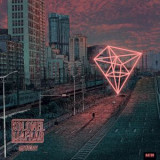
The curious cover art depicts a lone individual heading down an empty city street towards a large mysterious glowing object, evoking the common emptiness and struggle of urban life, and the search for meaning or just something better. The band envision the object to represent this album, offering a beacon to like-minded listeners. Kolonel Djafaar invite music enthusiasts on an immersive journey, to ‘Getaway’ from the daily grind of life, on an album reflecting diverse influences and marking a new chapter in their musical exploration.
Japanese jazz, rare groove masterpiece re-released on clear lime yellow color vinyl!
The pleasure of feeling numb all over your body with a single drum beat. Akira Ishikawa, the super funky drummer born in Japan, runs through a wonderland of grooves!
Akira Ishikawa is a super funky drummer born in Japan. His ability to freely explore and fuse jazz, rock, and African music to create a unique musicality has been highly praised in many fields. His career includes masterpieces from jazz rock to rare groove, but this work is especially beloved for its outstanding song selection and exciting musicality. "Let's Start" is a tight cover of Fela Kuti's Afro-funk, "Bongo Rock" is a dynamic song with drum breaks, and "Pick Up The Pieces" is a jazz-funk version of the Average White Band's classic song. It is full of amazing monster tunes that are hard to believe were recorded in 1975. Support from masters such as Kiyoshi Sugimoto, Hiromasa Suzuki, and Takeru Muraoka also shines.
text by Yusuke Ogawa (universounds/Deep Jazz Reality)
- A1: Walter Rizzati - L`unica Chance
- A2: Chrisma - Amore
- A3: I Robots - Tabù Tubà (Part 1)
- B1: Luca D`ammonio - Oh Caron
- B2: Ramasandiran Somusundaram - Contrabbando Di Fagioli
- B3: Jean Paul & Angelique - Africa Sound
- C1: Weyman Corporation - Kumbayero
- C2: African Revival - Soul Makossa
- C3: Lara Saint Paul - The Voodoo Lady
- D1: Beryl Cunningham - Why O
- D2: Augusto Martelli & The Real Mccoy - Calories
- D3: Prognosi Riservata - M A.a.g.o
Africamore: The Afro-Funk Side of Italy (1973-1978)
Continuing Four Flies' dedication to delving into lesser-explored periods of Italian music, Africamore takes us on a captivating journey into the intersection of Afro-funk and the Italian soundscape during the six years between 1973 and 1978 - a time when disco was looming on the horizon and the nightclub market was rapidly expanding.
Before reaching Italian shores, the infectious sound originating from African and Afro-Caribbean roots traversed both the Mediterranean and the Atlantic, landing on New York dancefloors, where DJ Dave Mancuso discovered "Soul Makossa" by Manu Dibango. In 1973, from Mancuso's Loft parties, the song's hypnotic groove spread to the rest of the globe, including in Italy, where it sparked a wave of imitations and variations.
Tribal influences thus found their way into Italian soul-funk and early-disco productions released between 1973 and 1978 – from psychedelic-tinged tunes like Jean Paul & Angelique's "Africa Sound" to the Afrobeat-inspired club banger "Kumbayero" by composer/producer Albert Verrecchia (aka Weyman Corporation); and from groundbreaking Afro-cosmic songs like Chrisma's "Amore", co-written by Vangelis and featuring the rhythms of Ghanaian-British Afro-rock band Osibisa, to mind-blowing floor-fillers like Beryl Cunningham's "Why O", a re-write of Nat King Cole's "Calypso Blues" arranged by Paolo Ormi, with percussion breaks that sound pretty much like what would later become known as techno.
Combining feel-good vibes with driving rhythms, world-style percussion, and even synths, all these productions pushed the boundaries of dance music at a time when disco had not yet taken over. In doing so, they sowed many of the seeds of the later Italian cosmic scene and its unique mixture of African elements, disco-funk and electronic music.
This was a brief but nuanced period in Italian music history, one that deserves to be rediscovered, with love.
Africamore is due out on March 22nd and will be available as a gatefold 2LP and digipak CD. Both formats come with stunning artwork by Kathrin Remest and liner notes by Pierpaolo De Sanctis and Elena Miraglia.
Say no more Comorian blues or Indian Ocean rock: Eliasse is ZANGOMA!
This musical concept, created by Baco, the famous Comorian musician, brings together Western music and Comorian and Indo-Oceanic music. Eliasse creates his zangoma rock by mixing rock, blues and folk with typical Comorian and African rhythms. From twarab to mgodro, maloya to afrobeat, zangoma rock reveals its plural face. Its foundation is the drum (ngoma), and Eliasse's percussive rock lays claim to this common, hybrid banner!
With his third album, eponymously entitled Zangoma, due out in early 2024 (Soulbeats Music), Eliasse and his power trio once again promise to deliver groove: Fred Girard's powerful drums, Eliasse's roaring guitar, Jérémy Ortal's swaying bass and a thousand nuances of voice... In short: the Indian Ocean is dancing ZANGOMA ROCK!
Dersu and Diego Figueura are Basel-based brothers also known as Alma Negra and have been responsible for some seriously fresh and funky, afro-inspired dance music since their inception a decade ago. With releases on Heist, Lumberjacks In Hell, Basic Fingers and their own Alma Negra imprint, the duo wear their Cape Verdean roots proudly on their sleeves ensuring a warm, tropical sound emanates through their productions. For their Delusions debut Alma Negra have delivered a compelling and well-rounded EP which shows off their skills across two original tracks, a dub version and a brilliant remix from Yuksek.
Title track Madrugada takes us directly to the afterparty. More specifically, the kitchen of the house party where the action invariably continues to the early hours. Live horns, guitar, percussion and bass all bring a big sound and real band groove to the production making for a feel good modern-day boogie tune guaranteed to lift the spirits.
Next up we have the aptly named Funky Fever which treads a similar path with big horn parts rubbing up alongside Moog synth lines and punctuated with 80’s tom fills and a rock solid rhythm guitar riff. The real star of the show is the vocal which is unashamedly raw and unpolished giving an authentic and endearing hook to the track.
French producer Yuksek is someone whose productions we’ve been loving for some time and really happy to finally have him onboard for a remix for what we feel is the perfect project for him. Like Alma Negra, Yuksek is another talent who is difficult to pigeonhole and enjoys mashing up genres and incorporating many outernational influences into his sound. On his remix of Madrugada he keeps many of the live parts intact but generally ‘houses’ up the drums and mix which increases the energy without losing the overall vibe of the original.
Closing out the EP we have Alma Negra’s own Dub Mix of Madrugaga which goes for a classic dub approach; pairing back the parts, muting the vocals and creating space for the groove to shine, all making for a perfect track to warm up the dance floor early doors.
Box Version[44,50 €]
Repress!
Mr Bongo are delighted to present an officially licensed re-issue of this underground Japanese rock rarity 'Uganda (Dawn of Rock)' by Akira Ishikawa & Count Buffaloes. This album has become highly sought-after amongst psych, prog and acid rock collectors and due to the rare nature of original copies they come at a hefty price tag.
The respected Japanese jazz drummer Akira Ishikawa was not messing around when he recorded the 'Uganda (Dawn of Rock)' album with his band the Count Buffaloes. For this offering, originally released in 1972 on Toshiba Records, Akira Ishikawa takes us on a deep tripped-out journey. 'Uganda (Dawn of Rock)' is a fusion of progressive and psych rock with African percussion workouts, dergy-wah wah blues-funk, and jazzy sensibilities; with different genres morphing and uniting as they progress.
A long way from his funk and afrobeat album 'Back To Rhythm’, re-issued on Mr Bongo in 2019, this record has a darker, deeper, abstract and experimental stoned tone with the listener being pulled into its vortex for the ride. This record doesn’t pull any punches.
For this album, Akira is joined by Hideaki Chihara on bass, guitarist Kimio Mizutani, sounding at times like an early 70s Peter Green, percussionist Larry Sunaga and composer Takeru Muraoka.
The album has become highly sought-after amongst psych, prog and acid rock collectors and due to the rare nature of original copies they come at a hefty price tag.
We are delighted to present an officially licensed re-issue of this underground Japanese rock rarity.
Available in 2 formats: Original LP in Box version & Tip-on Sleeve with OBI version.
• Highly sought-after underground Japanese rock rarity, originally released in 1972.
• Feat. Hideaki Chihara, Kimio Mizutani, Larry Sunaga and Takeru Muraoka.
• Available as the original LP in Box version & Tip-on Sleeve with OBI version.
Inimitable post-rock outsiders A Burial At Sea return with `Close To Home', a soaring sonic love letter to the places and people that shaped them, the collective's first new music since the eponymous debut full-length in 2020, `Close To Home' is a breathtaking evolution of their unique, brass-led blend of shoegaze, math-metal and blissed out afro-jazz that draws inspiration, influence and insight from the rich Gaelic cultural heritage of their Irish homeland. First making waves in 2018 with unbridled bombastic creativity of `_And The Sum Of Its Parts' EP, A Burial At Sea turned the traditionally austere post-rock frown upside down. Quickly catching the attention of like-minded, international genre-benders And So I Watch You From Afar (ASIWYFA), This Will Destroy You ,Caspian and Some Become Hollow Tubes (Godspeed You! Black Emperor), the band subsequently spent months on tour in support, honing their incendiary craft and gaining a loyal fan base across Europe in the process. Despite being landlocked by forces outside of their control, A Burial At Sea continued their adventure by looking inwards to produce `Close To Home': a staggering refinement of the band's already singular instrumental sound. The confidence, experience and sheer musical assuredness behind this album renders any generic labels of post rock immediately obsolete. `Close To Home' proves without a doubt that A Burial At Sea are indeed more than the sum of their parts; positioning the band on the crest of a truly progressive wave of uplifting, anthemic post-rock. Everything you are NOT edition (single coloured vinyl)!
It’s a family affair. One formed almost thirty years ago, back in the mid-nineties, when the pair joined seminal French jazz combo Olympic Grammofon. For twenty-four years they have worked together as Bumcello, each complementing the other, echoing polar opposites. The Boom in Bumcello is none other than Cyril Atef, incisive drummer, relentlessly pushing beats towards new horizons. The Cello is Vincent Ségal, cellist without blinkers and extraordinary musical alchemist. Since 1999, these two die-hard music fans, coming together for mercurial results, have released one record after the other whilst conquering the hearts of their live audiences, old regulars as well as new recruits. We have all been seduced by the way their music leapfrogs categories - these two experts are much more interested in kindred spirits than pigeonholing, and this very spirit is celebrated on more than one track of this ninth record, whose concept is original to say the least.
Everything began with an idea by Cyril Atef - a soundtrack based upon drawings penned by Marin, Vincent’s son, architect and visual artist. The musicians involved then coached their reaction to these images on a score, and the pair were charged with collating and adjusting the results. These thirteen ink drawings, in a heroic fantasy vein, constituted a matrix which was then to serve as a guide, like a roadmap through a singular and multi-faceted labyrinth. The key to this sonic fresco is in Bumcello’s image – an eclectic aesthetic twinned with a great sense of contrast. Herein lies the trademark of this entity animated by the gift of musical ubiquity, gorged on scales and rhythms, capable of a slap as much as a gentle caress. From classical music to electronics, from improvised music to sophisti-pop, everything is allowed with no preconceived ideas. They can even reclaim the traditions of others, all the better to propel them towards new horizons - this is how the very history of music has always panned out.
If you listen between the lines and look at the details, more than one piece bears witness to the moments and individuals that have impacted the criss-crossing lives of Vincent and Cyril. The track Crash is the perfect excuse to create a Jamaican-style jam with New York inflections, and we can see, in capital letters, the name Hilaire Penda, playing alongside Bumcello at the Apollo Theater in the associated drawing. This bass player from Cameroon, who died on 5th November 2018, was more than just a friend for the two Frenchmen. He was one of the family. Similarly, they give a nod to another Cameroonian, and another departed friend - singer of rock band les Têtes brûlées, Zanzibar, through the vocals of fellow countryman Zanzi. The ghost of Rémi Kolpa Kopul, emblematic voice of Radio Nova, haunts the margins of Spark Av, in a vocal sample with a smattering of effects. As for I Remember Tim, it directly honours the memory of Timothy Jerome Parker, aka The Gift Of Gab, another friend who left us in 2021. Tim is depicted in a drawing with the docks of Oakland in the background, and it’s his alter ego within Blackalicious, Chief Xcel, who remotely added his signature to the track, notably by adding the words of Lateef The Truthspeaker to brass and woodwind sounds.
These are the only additions to Bumcello’s original nucleus, all the better to create a genuine musical concoction where Vincent Taurelle is in charge of production and mixing sessions recorded live and direct. He is also invited for a twinkle on the keys (piano, synths, Wurlitzer, organ), on a handful of tracks. Already at the commands of previous opus Monster Talk, always taking care over the slightest detail, the one that makes all the difference, this pianist is now also part of the family. “Everything he brings is perfect, whether added though slight touches or through very important choices”, say the two members of a combo which today, appears to us under the guise of a trio, adding an extra dimension to a far-reaching mix, in the image of the veiled or more explicit tributes making up the cornerstones of this release.
Booker, a drawing where we see the musicians enter a club, honours James Booker, great pianist from New Orleans who has always fascinated Vincent, in a genre that is off-beat and gender defying. Her Story was created by Cyril in support of the Iranian women’s movement. Aysyen Kampe evokes, even in the original drawing, a tradition that remains impactful for Bumcello – Haitian mysticism, and Ouï Khouïette Ouï conjures up the beats of the Allaoui, a war dance from Western Algeria, one they have taken part in in the past with the help of Cheikha Rabia. They deliver a metal version, original and surprising, especially as Marin Ségal’s drawing features the Nicholas Brothers, those iconic dancers of the 30s jazz scene!
Resolutely hard to pin down, Bumcello’s beats can initially take on the structure of disjointed house, though Sangre begins like a film soundtrack, “in a Mexican style” adds Vincent, who was at the origin of this track. A delicate alap on the cello can open up onto afrobeat rhythms, a well-pitched voice can enchant, like on the amazing The City Has Eyes which has everything of a hummable pop hit. Emblematic of this manner of encompassing all music without being exclusive, Le Grand Sommeil, a direct reference to the Howard Hawks movie inspired by Raymond Chandler, a precursor of David Lynch, begins nice and smooth but ends on a wild tempo, on a drum’n’bass tip, as in the good old days of Cithéa, when this Party story began in the other century.
In this Bukky's latest offering, he has assembled some of his favourite DJs and producers including his old comp Rende Gillies Peterson, Orlando Voorn, Lesley Lawrence. His dear friend the godfather of Dub Dennis Bovell. Featuring original material compositions:
OBEDUN (Sweet SOUP) - Mixed by Orlando Voorn Inspired by his cultural background Bukky goes in search of the cuisine traditions of his mother land Nigeria. He sings praises of his favourite traditional African cuisines. Sang in his native dialect Yoruba language.
GENRE JAM – Afrobeat recently became a recognised genre. Whereby the unique percussion driven with soulful guitar hook lines and melodic piano phrases can be incorporated any genre as a version.
UNISEX DILENMA - it's just light-hearted, tongue in cheek commentary on the interplay between men and women and some of the stereotypical ways we see relationships, it's nuanced and that's why it's called Unisex Dilemma. Meaning people shouldn't take the song too literally.
ANNARKEY – Mixed by the Godfather of Dub Dennis Bovell. This a great example 0f Genre Jam whereby Rock or Reggae can be intertwined with Afrobeat. Especially from the Latin Rhythms which are all influenced by Afrobeat.
SUMMER BREEZE – Mixed by Lesley Lawrence is Jazzy instrumental track. It draws from Bukky's past recording and associations with the giants of Jazz i.e. Clifford Jarvis, Bob Ra Kalan Moses, and playing with Tony Allen who is heavily influenced Art Blackey and Max Roach.
a 01: Obedun (Sweet Soup) Orlando Voorn Mix
Bella Brown & the Jealous Lovers Unveil "Soul Clap" LP: A Fusion of Retro Soul/Funk and Modern Grooves
Los Angeles-based retro soul/funk sensation Bella Brown & the Jealous Lovers are set to ignite the music scene with their highly anticipated LP, "Soul Clap." Born from the creative genius of Grammy Award-winning vocalist/songwriter Carol Hatchett, Bella Brown emerges as a diva with a fiery stage presence, drawing inspiration from the likes of Tina Turner and Sharon Jones, and channeling the empowered female leads of 70s Blaxploitation films. Led by producer/bassist/songwriter Daniel Pearson, The Jealous Lovers assemble an impressive ensemble of A-list musicians, boasting pedigrees that include names like Mick Jagger, Elton John, Whitney Houston, Prince, and Stevie Wonder. This musical collective is on a relentless quest to redefine the boundaries of music, infusing soul and funk with elements of jazz, rock, and Afro-Caribbean influences.
The essence of "Soul Clap" is derived from the cultural phenomena it is named after—a shared and improvised rhythm-making by a collective. The LP, spanning 40 minutes of pure musical bliss, invites the audience to immerse themselves in the groove and discover their individual truths in the music.
The title track, "Soul Clap," and the infectious "Living Proof" serve as funky dance bangers, echoing the spirit of Bohannan and The Tramps. These tracks, punctuated with jazzy improvisations and soulful horn arrangements, are simple yet joyful expressions of shared humanity and self-love.
"Coming For You" is Bella's audacious response to the soul/funk classic Apache, boldly announcing her and The Jealous Lovers' arrival on the modern soul landscape. "I Found You" takes a northern soul love song approach, reminiscent of Gloria Jones with a touch of modern influence, giving it a distinct Amy Winehouse feel.
Bella Brown seamlessly weaves social commentary into her art. "Bang Bang Bang," an uptempo, funky Motown groove, cleverly uses Curtis Mayfield's sense of sarcasm to reflect on American gun culture. "Lady Time" takes a driving afrobeat groove, employing brassy horns and reggae-like echoes to address the issue of homelessness.
However, the album is not without its lighthearted moments. "Fast As Lightning" celebrates a cleaner future by imagining Jimi Hendrix joining Ike and Tina Turner's band to create a classic Chuck Berry car song. "There Is Love" blends horns, strings, and vocals reminiscent of The Stylistics over a Chi-Lites style rhythm section, to create a lush message of support to those among us that may find the world a bit overwhelming at moments. Finally, "What Will You Leave Behind," is a revamped version of the group's sold-out vinyl 45 release. This track serves as a powerful call to action for a better future, delivered over a straight-up Motown groove with a funky Sly Stone finish.
Bella Brown & the Jealous Lovers have crafted an album that transcends genres, embracing the roots of soul and funk while pushing musical boundaries.
"Soul Clap" is a celebration of individual truths, shared experiences, and the timeless power of music.
Rated 5/5 in UK Music Republic Magazine
The star-studded Sai Galaxy project returns, bringing together West African legends Steve Monite and Rob with multi-instrumentalist Simon Durrington, guitar maestro Alfred Bannerman and Egypt 80 trumpet player Bade for a second EP of vital Afro-disco and soul.
The EP follows up 2022’s Get It As You Move EP, blending layers of vocal harmonies and synth washes with a rock-solid disco base. The sound stays faithful to the analogue production techniques of the 70s and 80s, adding a modern touch informed by Durrington’s Digital Afrika project.
Lead single ‘Hold You Tonight’ features Nigerian disco icon Steve Monite (best known for his mega hit ‘Only You’), revisiting his 80s origins with a dancefloor-ready slice of dubbed out boogie. ‘Rich Man Poor Man’ (featuring Ghana’s very own ROB) slows down the tempo and brings the highlife influence to the fore, while ‘Sometimes It Rains’ brings a neo soul bump with the Omar-esque sound of Fijian vocalist Kaivili.
Opaque Yellow Vinyl
Orgone sind zurück in Kalifornien und kommen mit "Chimera", einem feuerspeienden Spektakel aus psychedelischem Afro-Soul, in Fahrt. Produziert von Sergio Rios (Neal Francis, Say She She), ist "Chimera" eine elektrisierende, traumähnliche Odyssee, die durch die nebligen Sümpfe von New Orleans führt und Texturen von betörendem Voodoo-Soul, dröhnendem Afro-Funk und steinhartem Psych-Rock verwebt. Auf "Chimera" verwandelt die Band aus Los Angeles harte, düstere und ansteckende Grooves in mitreißende Tanzrhythmen. "Chimera", benannt nach einem mythischen Tier mit dem Kopf eines Löwen, dem Körper einer Ziege und dem Schwanz einer Schlange, beschwört einen Zustand herauf, der gleichzeitig tranceartig und herzzerreißend aufregend ist. Das Album beginnt wie eine berauschende Rauchwolke im Gesicht mit "Hallowed Dreams" und zieht den Hörer in einen Zustand, in dem die Realität verschwimmt und die Musik die Kontrolle übernimmt. Der Fokus-Track "Zum Zum" ist ein mitreißender Afro-Funk-Tanzflächeneinheizer, der den Herzschlag mit der treibenden Perkussion synchronisiert, wobei sich der hypnotische Rhythmus zu einem rauschenden, psychedelischen Höhepunkt aufbaut. Auf dem rauen und mitreißenden "Tula Muisi (Dance Like Them)", einer Mischung aus Afrobeat und schwerem Psych-Rock, ruft der Sänger zu Einheit und Respekt auf, was übersetzt so viel heißt wie "Hört die Musik und tanzt wie sie". Die Band ist bekannt für ihre packenden Instrumentalstücke und ihre mitreißende Live-Show. Das verdiente Selbstvertrauen dieser bewährten und kultigen Band ist auf "Chimera" zu hören. Von Anfang an war Orgone eine Chimäre - eine facettenreiche Schöpfung und die physische Manifestation unmöglicher quixotischer Träume. Chimera wird Fans der frühen Orgone begeistern und gleichzeitig die mühelose und unendliche Fähigkeit der Band zeigen, ihre Form zu verändern. Es ist ein elektrisierendes, hypnotisierendes Album, das die Erwartungen übertrifft und den Hörer in Atem hält.
Psychedelic Latin-funk holy grail from Nicaragua, 1974!!
Poder del Alma (“Soul Power”) was a supergroup formed by some of the best musicians from the Nica scene. This all-star band of nine members was assembled to play at the famous free concert of Santana in Managua in benefit for the 1972 earthquake. After that successful gig supporting the Latin-Rock superstar, what was to be a one-night stand became the seed of the most loved Nicaraguan act from the 70s. All the members had already played an important role in the history of the Nica music / hippie scene in the 1960s. Among them, we can find Roman Cerpas (previously on Bwana), Rene “Chapo Dominguez (Los Rockets), Edgar “El Gato” Aguilar…
A few months after the Managua concert with Santana, Poder del Alma traveled to Guatemala to record their first long play for Dideca (Discos De Centroamerica, S.A.) in just one week of recording sessions. Despite the low budget and precarious recording equipment, the band managed to obtain a powerful psychedelic / afro / funk-rock sound full of electric guitar, heavy drums, hot, percussion, horns, Spanish male/female vocals…featuring titles like “El Valle del Ayatimbo”, “Ia-Taa Yo”, “Zumbale”…
For the second instalment in our Cuban Classics series, we proudly present this sought-after slice of sublime Afro-Cuban jazz from 1976. It comes courtesy of one of Cuba’s most influential acts, Grupo Irakere. Founded in 1973 by Chucho Valdés (son of the Cuban pianist and bandleader Bebo Valdés) the group was home to many of Cuba’s finest musicians over the years. With an electrifying style and sound, they mixed traditional Cuban music with jazz, funk, and rock.
This self-titled album includes the much-loved, dancefloor heavy-hitter 'Chequeré-Son’, a Latin-jazz funk masterpiece with Cubanized bebop-flavoured horn lines, lush keys, and ‘70s hip swagger. Though 'Chequeré-Son’ is the keystone of the record, the album is laced with brilliance at every turn, from the Carlos Santana-esque channelling ‘Iya’ with its percussive Latin power, to the sultry, slick and passionate '38 1/2’. Elsewhere, the absorbing, ever-building energy of 'Juana 1600’ and steamy vocal dancer ‘Xiomara’ are also highlights of this incredible album.
Pressed on Cuba’s state led Areito Records, the album was well received internationally, garnering distribution in Finland on Love Records, in Italy on Phase 6 Super Stereo, and also in the Dominican Republic, Mexico and Venezuela.
A cherished Afro-Cuban triumph, this album has been crying out for a reissue and we’re delighted to make that happen.
- A1: The Cyclones With Count Ossie – Meditation
- A2: Cornell Campbell – Natty Don't Go
- A3: Freddie Mcgregor – Africa Here I Come
- A4: Bunnie & Skitter – Lumumbo
- B1: Willie Williams – Addis A Baba
- B2: L Crosdale – Set Me Free
- B3: Leroy Wallace – Far Beyond
- B4: Lennie Hibbert – More Creation
- C1: Alton Ellis – Blackish White
- C2: Winston Jarrett – Fear Not
- C3: Devon Russell – Drum Song
- C4: The Gaylads – Africa
- D1: Black Brothers – School Children
- D2: Linton Cooper – You'll Get Your Pay
- D3: Sound Dimension – Congo Rock
- D4: Zoot Simms – African Challenge
This is the new 20th anniversary edition of one of Soul Jazz Records’ classic Studio One releases, now available as a one-off special blue vinyl very limited-edition pressing (2000 copies worldwide).
Studio One Roots set the standard for Soul Jazz Records’ long-standing series of Studio One collections and features many of the classic artists from Clement 'Sir Coxsone’ Dodd’s mighty roster of reggae. This album includes Freddie McGregor, Willie Williams, Cornell Campbell, Alton Ellis, Devon Russell alongside some of the defining crack-session men groups of Jamaican reggae history – The Sound Dimension, Brentford All-Stars, The Skatalites, New Establishment and more. As ever the album is filled with a mixture of
seminal cuts and super-rarities from the vast vaults of 13 Brentford Road.
Stand-out tracks include Alton Ellis’s Blackish White, a surreal and powerful Afro-centric dream, Count Ossie Nyabinghi and Rastafarian drummers genre-defying interpretation of Booker
T and The MGs ‘Meditation’, Willie Williams awe-inspiring versioning of the Skatalites seminal Rastafari anthem Addis Ababa and many, many more.
This album has been fully digitally remastered, analog cut and packaged complete with the following: Original sleevenotes by Lloyd Bradley (author of When Reggae Was King),
compiled by Mark Ainley (Hones Jons), high-quality Soul Jazz mastering, wicked images of Count Ossie and the Mystic Revelation of Rastafari on the cover, and a rare image of Clement Dodd and musicians inside the studio at Studio One on the full colour inner
sleeves.
“The music of this compilation is of a rare, rare beauty and is essential to anyone's reggae collection” All Music
Hard salsa with rocking tropical electric guitar! Príncipe's 1967 debut album, featuring powerful Afro-Latin rhythms like guaguancó and pachanga played with youthful exuberance and originality. Truly unique sound from the dawn of salsa in Venezuela. Príncipe y Su Sexteto, from Caracas, Venezuela, were early pioneers of "salsa con guitarra eléctrica" (salsa with electric guitar), a subset of the salsa genre where the electric guitar is the main melodic rhythm instrument, often taking the spotlight in place of the piano and brass section. They were the perfect combination arriving at the right moment, when salsa spontaneously emerged as a new musical movement coming from working-class youth of the barrios in Caracas. All the compositions are original to the band, and hold up really well more than 50 years later. Though the arrangements and playing are deceptively simple, the effect is both mesmerizing and energizing, like early rock 'n' roll fed through a Caribbean filter. This first time reissue has been remastered directly from the original tapes and licensed from Discomoda. With in-depth liner notes it has also been augmented by three smoking bonus tracks that were never released during Príncipe y Su Sexteto's existence as a band. 180g vinyl.
Delasi, the Koforidua-based producer, singer and rapper has released his new single ‘Amplifier’ featuring Nii Noi Nortey.
Prophetic, spiritual and frenetic, ‘Amplifier’ is Delasi’s testimony in musical form. A manifestation of Delasi emerging triumphant after many years in limbo as he searched for a long-awaited breakthrough in the music industry.
Produced by Delasi himself alongside Morgan Greenstreet, ‘Amplifier’ is underpinned by the texture of coastal rhythms indigenous to Accra and tightly ornamented with bustling drum breaks, electronic synth lines and jazz sensibilities.
Veteran Ghanaian multi-instrumentalist and sound designer Nii Noi Nortey appears on the track to deliver an explosive and rhythmically intense saxophone performance throughout as it tastefully builds to an emphatic crescendo.
Self-described as a prayer, the track’s maximalist and percussive instrumentation is cleverly juxtaposed with minimal lyrics where Delasi’s faint vocal repeats a series of repeated phrases like evoking the mood and semblance of a meditative chant and religious experience. Harkening to the work of afrofuturistic jazz musicians like Sun Ra and Pharaoh Sanders.
Speaking on the track’s meaning, Delasi said: “‘Amplifier’ is my prayer and like with other songs of mine it can scare me because I write things and then it’ll manifest in exact detail. The song is basically outlining how hard I’ve worked and how I need an amplifier to have my desires fulfilled. It's like a mantra and that’s why it's not so lyrical”.
‘Amplifier’ marks Delasi’s first release as a lead artist since his 2015 self-released project ‘#thoughtjourney’ which garnered support and praise from Rolling Stone, BBC6 Music, Worldwide FM, KCRW, Afropop Worldwide, Deutschlandfunk Kultur, NRK and legendary French DJ/Producer Laurent Garnier. Additionally parlaying into touring and festival gigs across Nairobi, Berlin, Morocco, Denmark and Sweden.
Delasi is an artist that has been quietly prolific for over a decade. Honing his musicianship exploring sonic possibilities with Ableton and Teenage Engineering. Eventually entrenching himself in the Ghanaian rap scene via collaborations with Hammer of The Last Two, Reggie Rockstone and Yaw P with whom he would release a joint project ‘Imperfections: The Break Up Vol 1’ in 2013.
He was musically raised on a diet heavily influenced by his father who exposed him to the sounds of Marvin Gaye, Bob Marley & The Wailers, Bobby McFerrin, Jim Reeves and Billy Ocean alongside the soundtracks for movies like Doctor Zhivago, The Sound of Music and La Bamba. Delasi’s own tastes would be heavily informed by linchpins of US Hip-Hop like Wu-Tang Clan, Nas, Onyx and M.O.P in addition to alternative R&B artists Frank Ocean and James Blake.
After many years of operating as a proudly independent and self-contained artist, Delasi has now partnered with Gilles Peterson’s Brownswood Recordings. One of the world’s leading indie labels, famed for their instrumental role in breaking the likes of KOKOROKO, Yussef Dayes, Swindle, Joe-Armon Jones, Shabaka And The Ancestors, Zara McFarlane and Ghostpoet.
With Delasi now being granted resources to give his music the grand and worthy footing, he is now on the cusp of the artistic breakthrough that was long out of reach. Speaking further on how the deal with Brownswood inspired the new single, Delasi said:
“The music I’ve created this go round is so strong that I can’t handle it all by myself. Though I had a lot of fun doing it all by myself with ‘#thoughtjourney’, this time around I needed it to be with a home who could properly amplify it.”
Trip Hill is a one-man operation by Fabrizio Cecchi out of Florence, Italy. With a naïve approach to making music and inspiration from all over the world he is making his own homemade and original version of trippy psychedelia and krautrock. Fabrizio Cecchi played in various garage and psych rock bands in the early 90's but by 1994 he set his own cause and started to work alone and in his own universe. Originally a bass-player he since taught himself guitar, drums, keyboards and various other instruments to be able to find his own way in making psychedelic music. Ain't Trip Ceremony is the latest output in a long string of experimental home productions recorded in his basement studio. Until recently it was only available on his Bandcamp and as a very cool limited edition CD-R with covers printed on thick cardboard with a special linograph technique. But now it gets the proper release on vinyl via Bad Afro Records that these recordings deserve. 1st print is limited to 500 copies on black vinyl.
Ayyuka was founded in the year 2001.They've started to make their own music which was mostly improvisation and influenced by a lot of different styles. Some time later the band had it's name naturally which Is AYYUKA that has two meanings: ''to the highest part of the sky' and 'an idiom to tell that a secret has been revealed'" . After university years they moved to Istanbul and started to perform their music at some live venues. Since their self-titled debut album release, the band have performed in various music festivals and venues in a number of cities including Istanbul, Berlin, Lyon, Sao Paulo. They also have opened up for some major artists like Jonathan Richman, R.E.M., Sonic Youth. With very direct live performance energy in their compositions, Ayyuka fuse characteristic elements from a variety of genres such as Anatolian Rock, arabesque, surf rock, punk, spaghetti western, psychedelic rock, and funk. They released their second studio album 'Kiraci Odalari' on October 2013. 'Sömestr' is Ayyuka's third studio album, the sound moves between psychedelic rock, afro rhythms and much else besides. The album was made by the improvising recording sessions that they recorded at their studio. TRACKLIST: 1. Sömestr, 2. Tek Teker, 3. Geceleri Zor Uyurum, 4. Gün 1B, 5. Gabor, 6. Guaruja, 7. Aryton Senna, 8. Bu Bi Rüya Olmali.
‘Life & Love’ is the third album from Skinshape (with ‘Filoxiny’ being his fourth). Written, Recorded and Produced by Will Dorey at the Arch Studio, London, and in his bedroom. Great melting pot of styles and tunes, D.I.Y. Funk Soul Jazz. Recommended if you're into Khruangbin. Skinshape is the project of British musician William Dorey. The sound has roots in many genres but in particular 1960s-0s Funk, Soul, Reggae, Psychedelic Rock, Afrobeat and Folk. Skinshape grew out of a love for old music and the way it sounded. Initially Dorey experimented with samples (especially drum breaks) to create instrumental Hip-Hop/Trip-Hop tracks but then later started to play around with tape machines as a means to create his own 'samples'. This process gave birth to Skinshape with all elements being recorded by Dorey since the first self-titled album released in 2014. Aside from the Skinshape project Dorey was bassist for the band Palace from 2014-2017 and runs a reggae label called Horus Records based in North London.
10 year anniversary edition of the 6th Baby Woodrose album limited to 500 copies on clear vinyl. All Baby Woodrose albums have a different vibe and with Third Eye Surgery they have made their space rock album. For the first time Lorenzo Woodrose integrates the heavy psych of his side projects Dragontears and Spids Nogenhat with the fine song writing of Baby Woodrose. No matter how much the fuzz guitar is wailing or the echo machine is tripping, there's always a good song hiding beneath the rumble. Several of them clocks in at 6 minutes so there are only 9 songs on Third Eye Surgery. Songs like Nothing is Real and Love Like a Flower have an Eastern flavour thanks to the sitar of Vicki Singh while Just a Ride sounds like a trip to India in more than one way. Even though the central songs on Third Eye Surgery like Waiting for the War, Bullshit Detector and the title song are very spaced out there are also a few tunes that sticks out. Dandelion is a sweet and melancholic psychedelic pop song and is also a duet with Emma Acs while Honalie is a dreamy ballad that makes time stand still. Almost. Third Eye Surgery has been recorded in the Black Tornado studio in Copenhagen and is engineered by Anders "Evil Jebus" Onsberg and produced by Lorenzo Woodrose. The artwork is made by German artist Kiryk Drewinski who has worked with the band several times before and also did the artwork for the demo collection Mindblowing Seeds and Disconnected Flowers released in 2011.
- Astroblack Orunmila Featuring Jazzmeia Horn + Orquestra Afro
- S God (Sun Ra Sam Ba) Feauring Meshell Ndegeocello + Munir H
- Nine Rocket For The Planet Featuring Meta Meta + Edgar 5:09
- O Csdigo (Black Prince Charming) Featuring Fabrmcio Boliveir
- When There Is No Sun (Intergalactic Version) Featuring Xjnia
- Eu Sou Um Instrumento Featuring Fabrmcio Boliveira + Jazzmei
- Interstellar Low Ways Featuring Hamilton De Holanda Trio 5:3
- Brainville Dazidiia Featuring Max De Castro + Bnegao + Arche
SOLAR: Sun Ra In Brasil is a Brazilian celebration of the music of Sun Ra. The album was recorded in 2022 in Bahia and São Paulo, Brazil, and highlights incredible talent in Jazz, Avant-Pop, Rap and poetry. It includes such Brazilian forward-thinking artists such as Metá Metá, Edgar, Xênia França, Tiganá Santana, Max De Castro, Hamilton de Holanda, as well as 3x Grammy nominated vocalist Jazzmeia Horn and world renown musician and songwriter Meshell Ndgeocello.
- A1: The Skatalites - Coconut Rock
- A2: Cedric "Im" Brooks & Sound Dimension - Mun-Dun-Go
- A3: Tommy Mccook & Richard Ace & Disco Height - Shockers Rock
- B1: The Soul Vendors - Ringo Rock
- B2: Jackie Mittoo & Ernest Ranglin - Jericho Skank
- B3: The New Establishment - The People Skanking
- B4: Karl Bryan & The Afrokats - Money Generator
- C1: Lester Sterling - Afrikaan Beat
- C2: Sound Dimension - Heavy Rock
- C3: Sugar Belly - In Cold Blood
- D1: Don Drummond - & The Skatalites Heavenless
- D2: The Soul Brothers - Bugaloo
- D3: Vin Gordon - Red Blood
- E1: Pablove Black - Push Pull
- E2: Jackie Mittoo & Brentford Rockers - Sidewalk Doctor
- E3: Liberation Group - Namibia
- F1: Brentford Road All Stars - Last Call
- F2: Soul Defenders - Still Calling
- F3: Karl Bryan & Count Ossie - Black Up
REPRESSED 2x12" now with bonus download code! Heavy, heavy tunes! Studio One instrumentals are the foundation of Reggae. These rhythm tracks became the basis for all Dancehall as countless artists and producers re-versioned these classic Studio One instrumentals.
REVIEWS: "Sheer volume of output from Studio One is astonishing, combined with the fact that the quality of the recordings never seem to diminish. These instrumentals touch on ska, rocksteady, dub, and begin to hint at the reggae sound of the late '70s. Each instrumental is perfect and has the feel that it could hardly be improved upon. Soul Jazz has once again put together a wonderfully rounded collection of music from Studio One" - All Music.
"I think if a nuclear family could have a soundtrack, ours would be the Soul Jazz comp Studio One: Scorcher. I wouldn't say it's the best record ever made, but if I heard it every single day for the rest of my life, I'd be 100% cool with it." DJ. & "Compilation of essential & rare Studio One instrumentals" - Hard Wax.
"Studio One Scorcher is the latest of these, collecting instrumental tracks spanning the years from the late 60's rocksteady vogue through the onset of dancehall and digital rhythms in the early 80's featuring The Skatalites, trombonist Don Drummond, Pablove Black and others." - Billboard.
OLAYA SOUND SYSTEM, Peruvian band founded 15 years ago and with a discography of 6 CDs, present their first vinyl release, comprising some of their most outstanding productions recorded between 2015 and 2022. Their songs explore the sounds of Andean cumbia and chicha, with elements of psychedelia, reggae and Afro-Latin rhythms of global relevance, projecting with its music an innovative new chapter in the development of Peruvian tropical music of the 21st century.
Just like Chico Trujillo, Frente Cumbiero or Son Rompe Pera are also doing, OLAYA SOUND SYSTEM are reaching a global impact modernizing tropical music.
This album is released on the recently revamped Peruvian label Rey Record, one of the essential and most iconic record labels during the golden days of cumbia and chicha, decades ago. Olaya Sound System was founded in Chorrillos, Lima (Peru), in 2009 and since then they have developed a very particular exploration of the sounds of Andean cumbia and chicha, with elements of psychedelia, reggae and Afro-Latin rhythms of global relevance, projecting with its music an innovative new chapter in the development of Peruvian tropical music of the 21st century. Both on the dance floor and in meditative listening, Olaya Sound System take us with this LP on a journey through bucolic landscapes of the Andes, the Amazon and the infinite Pacific Ocean, essential locations that constitute their native Peru and that have inspired very perceptibly their sound. This album, the band's first release on vinyl, comprising some of their most outstanding productions recorded between 2015 and 2022. Cultivators of a very particular tropical musical style, they collect and adapt the Peruvian traditions of the cumbia, chicha and huayno genres, and then blend them with a melting pot of contemporary Latin and global influences such as reggae, salsa, rock, among others.
Emerging from the Peruvian independent scene, Olaya Sound System reflect relevant social topics in its lyrics, such as the search for individual and collective consciousness, with a strong content of social issues. The band has become, from their native Peru, in one of the most interesting projects that modernize tropical music today, just like groups like Chico Trujillo, Frente Cumbiero or Son Rompe Pera, are also doing from different Latinamerican territories, reaching a global impact
■ In den frühen bis mittleren 60er Jahren war Gene McDaniels ein erfolgreicher Gesangstar. Er andete in den Charts mit den Singles "A Hundred Pounds of Clay", "Tower of Strength" und "Chip
Chip". McDaniels war jedoch ein nachdenklicherer und politisch bewussterer Mensch, als seine Hits vermuten lassen würden, und nach der Ermordung von Martin Luther King verließ er Amerika, um in
Europa zu leben und sich auf das Songwriting zu konzentrieren. Als er 1970 in die USA zurückkehrte, nannte er sich Eugene McDaniels the Left Rev. Mc D und seine Musik nahm eine scharfe Wendung in
eine neue Richtung.
"Outlaw" ist eine Sammlung von Songs, die sich an der Grenze zwischen Jazz, Rock und Funk bewegen. Am wichtigsten ist jedoch, dass McDaniels als Songwriter die Gegenkultur und die damaligen gesellschaftlichen Themen begeistert aufgriff, und "Outlaw" ist voll von klugen, pointierten Texten, die von Rasse, Klasse und kultureller Spaltung sprechen. Die Musiker (darunter Größen wie
Ron Carter, Hugh McCracken und Ray Lucas) bringen eine unauffällige Virtuosität in ihre Darbietungen ein. In einer Zeit, in der das Bewusstsein der Afroamerikaner in der populären Musik in
neue und provokative Richtungen explodierte, zeigt "Outlaw", dass Eugene McDaniels an der Spitze dieser Revolution stand
Ein Jahr nach Veröffentlichung des letzten GOAT-Albums "Oh Death" kündigen die maskierten Schwed*innen nun den Nachfolger "Medicine" an, der am 13. Oktober auf Rocket Recordings erscheint. In der ersten Single "Unemployment Office" ergänzen sie ihren Psych-Rock um Elemente aus dem 70s-Progressive. Nicht nur die neue Single, sondern auch das gesamte Album hat eine durchgängig zurückhaltendere, warme Ausstrahlung, und die Band deutet an, dass das übergreifende Thema des Albums die Vergänglichkeit im Leben ist - in all seinen verschiedenen Facetten: "It's about the impermanence of life in different ways: sickness, relationships,love, death and how our time is finite." Es ist schwer zu sagen, wie oft die Mythologie und das Geheimnis von GOATs Hintergrundgeschichte neugeschrieben werden kann, aber das neue Album macht Schluss, nur in der Vergangenheit zu schwelgen, und präsentiert einem etwas sanfteren Psych-Folk-Sound, der immer noch Goat ist. Die einzelnen Identitäten, die an den drei Alben der Band beteiligt sind, bleiben geheimnisumwittert: GOAT-Sprecher behaupten, dass die Gruppe lediglich ein fortlaufendes Mehrgenerationen-Kollektiv von Musiker*innen aus dem isolierten schwedischen Ort Korpilombolo ist. Nördlich des Polarkreises gelegen, ist die Stadt ein Knotenpunkt zwischen samischen Ureinwohnern, skandinavischen Siedlern und dem seltenen Eindringen von Wanderern von außerhalb. Darüber hinaus geben GOAT nur sehr wenig preis. Die Geheimhaltung der einzelnen Mitglieder und der Mangel an Informationen über Korpilombolo tragen wenig dazu bei, die Behauptungen von GOAT zu untermauern oder zu widerlegen. So "unnahbar" auch ihre Gerschichte klingt, so mysterös beschreib die Band auch ihre Musik: "We often talk about how all music is world music and all other genres are old fashioned. All you can hear is the universal similarity between all music. The music from some old cult in northern Sweden can be the same as the music from wherever." Der Sound des neuen Albums ist die klangliche Manifestation aus nigerianischen Afrobeat, deutschen Krautrocks, Funk und düsteren, halluzinatorischen Rock. Passend zum Titel "Medicine" muss dieses Medikament also sehr stark sein. Unabhängig von Dosierung und Art der "Medicine" - es ist Zeit sie jetzt einzunehmen. Limitiertes Wavy Cap Colour Vinyl-LP (Purple-Clear Colour-In-Colour)
Cover versions of international songs have long thrived in South Africa’s music industry. Often unable to license the original tracks (until the early 90s the result of an international boycott of the country) labels instead hired producers and session artists to re-record them for the local market. Early house music in SA was no different.
When Ron ‘Robot’ Friedman, former bass player for local rockers Rabbitt, was winding down his label On Records in the early 90s, he reached out for new inspiration as the popularity of ‘bubblegum’ disco waned. For one of the label’s final releases he hired young DJ/producer Quentin Foster, obsessed with the new soulful house sound coming out of the US, to take the reins on a studio project dubbed Citi Express.
On Robot’s insistence it included a cover of Stevie Wonder’s ‘Living for the City’ (from 1973’s Innervisions) as the title track. Foster set to work in his home studio, dubbed Tone Def, selecting and re-working other US and UK tracks — ‘It’s Too Late’ (originally released in 1989 by Kelli Sae), ‘Love is the Message’ (influenced by the 70s soul anthem and credited to Gamble & Huff but bearing a closer resemblance to Better Days’ 1990 release written by Steve Proctor), ‘People of The World’ (recorded by Sorell Johnson in the UK in 1990) and ‘Victim of Your Love’ (released in 1990 by Gary Vonqwest as ‘Victim of Love’) — adding some signature South African touches in the process that foreshadow the imminent rise of kwaito. One original composition was added for good measure, ‘Open Invitation’.
The result offers a glimpse into those early days of house, a uniquely South African take on a global sound that still resonates today — reissued for the first time on Afrosynth Records.
DeForrest Brown Jr., the writer and producer behind Speaker Music, describes Techxodus as "abstracting Blackness through information overload". On the album he explores the intersection of tech, Blackness and resistance via music taken from his archived live shows, which are then edited, ordered and reassembled in the studio. The main line of inquiry that feeds into Techxodus is Drexciya, whose myths have informed much recent afrofuturist creativity. DeForrest researches and reimagines the artifacts and stories of Drexciya with new maps, ideas and music, particularly reflecting on the 'Seven Storms', seven albums that came out in quick succession around the death of Drexciya member James Stinson, which seemed to herald Drexciyans in the attack mode. The artwork by Abu Qadim Haqq, who also created artwork for Drexciya, links the work too, with Deforrest re-orienting charts and timelines familiar from Drexciyan mythology, working up clues to all possible environments where Drexciyans could survive, from the depths of the Atlantic, to oceanic islands or even outer space. Like Sun-Ra, another touchstone of Afrofuturist music, it might be that the Drexciyans wanted to leave the planet they hated. With these elements, DeForrest creates a soundtrack for an alternate history, a sort of sci-fi sonic fiction which threads together the sonic warfare and mythos of the Drexciyan records with ideas and references to Ishmael Reed's 'Mumbo Jumbo', which tracks the story of 'Jes Grew', an audio virus, back to the coastal black cities of Alabama and the American South. Musically the album is as intense as its inspirations. DeForrest skilfully hand-plays rhythms which amalgamate trap and jazz drumming, but feel at times like orca-song as they pulse through the thick waves of digital sound. Equally the music evokes the ocean, with deep cold drones, or as if it's floating through time like in 'Holosonic Rebellion' which mixes in recordings of African Warriors. Sometimes there is an energetic turbulence as on 'Jes Grew', where punched-in passages of jazz brass bounce against DeForrest's drums to create a weird disassembled jazz. Towards the end the album begins to feel like a spaceship taking off, the rushes of ascending noise and distortion, distant Southern Gospel Vocals feel like music that's leaving earth. Listen to it without the references or feed your imagination; this is a powerful and immersive original work from one of electronic music's most unique creators.
Rare Montreux festival sessions from 1982.
Live Album by Detroit/Tribe Jazz Icon Reggie Fields.
Featuring an All-Star Line-up.
First ever vinyl reissue.
180g BLACK vinyl limited to 500 copies (w/obi strip) . Non-Returnable.
The Real ShooBeeDoo (AKA Reggie Fields) has always been a consistent name on the Detroit jazz scene … Fields who played with Pharoah Sanders while he was living in Motor City, worked with Sun Ra in the late 1970s and early 80s and who was also a close associate of the Afro-centric TRIBE label and artist collective, leaving his marks on a few essential TRIBE sessions such as Phil Ranelin’s “The Time Is Now!” as well as Ranelin & Wendell Harrison’s masterpiece “A Message From The Tribe”. It was Wendell Harrison who gave Fields the chance to record his landmark solo album (Reminiscing from 1981) to be released on his Wenha imprint. Reggie chose to record under his moniker “The Real ShooBeeDoo” because he built a rock-solid reputation as an internationally acclaimed performer under that name.
In 1982 he embarked on a European tour and performed at various clubs in countries such as Germany, Holland, Belgium, Italy, Switzerland, Luxemburg, France and Norway. This ecstatic touring vibe can later be heard on his fantastic ‘‘Live at Montreux Jazz Festival, 1982” album (simply called ‘Good To Go’).
“Good To Go” which we are proudly presenting you today features 10 tracks consisting of smooth Jazz-rumbas, French avant-garde jazz vocalizations, bass lines that can blow through walls as if they were made from paper, foot stomping rhythmic beats, lyrics that are pure poetry and ecstatic beats that took the crowd on a musical trip that ended in them raving for more. Playing before a large and enthusiastic crowd, Reggie’s spiritual cosmic free-flowing rhythms took the audience by storm…and the stakes were high because the bill was pretty impressive, he shared the stage with some of the biggest names in the genre (the festival bill also included Miles Davis, Dizzy Gillespie and Sonny Rollins).
Also…a quick closer look at the cast of all-star players featured on the album is most likely to be enough to get an impression that this is a very special record. Detroit preferred pianist Earl Van Riper brings his rich musical experience to the table that he perfected during his collaborations with Marcus Belgrave, Eddy ‘Cleanhead’ Vinson, Dinah Washington, Wes Montgomery and countless others. On the tenor saxophone we have Robert Barnes known for his work with Donald Bird…and last but not least we have Tani Tabbal on drums who is famous for his performances and recordings with Roscoe Mitchell and Sun Ra!
All of the above makes this rare album a total must-have that just begs for a prominent place in your record collection.
Tracklist:
Jumping With The Bellboy , Dark Eyes , Qu'est Ceque C’est , Do You Call that Friendship , Oo Shoobee Doo , Crazy She Calls Me , Have You Met Miss Jones , Ye Brac Hareesee , Hit That Jive Jack , Too Late Now
- A1: Space Is The Place
- A2: Images
- B1: Discipline 33
- B2: Sea Of Sound
- B3: Rocket Number Nine
Space Is The Place – highlighted by the rousing 21-minute title track – is both an essential album and a great onramp for new listeners to travel the spaceways of Sun Ra’s other-worldly blend of avant-garde jazz, experimental rock, and Afrofuturism.
This Verve By Request title is pressed on 180-gram vinyl at Third Man in Detroit.
- 1: Hello
- 2: A Love From Outer Space
- 3: Crack Up
- 4: Timewind
- 5: What's All This Then?
- 6: Snow Joke
- 7: Off Into Space
- 8: And I Say
- 9: Yeti
- 10: Conundrum
- 11: Honeysuckleswallow
- 12: Long Body
- 13: In A Circle
- 14: Fast Ka
- 15: Miles Apart
- 16: Pop
- 17: Mars
- 18: Spook
- 19: Sugarwings
- 20: Back Home
- 21: Down
- 22: Supervixens
- 23: Insect Love
- 24: Sorry
- 25: Catch My Drift
- 26: Challenge
A.R. Kive collates the three most astonishing works from that most miraculous of duos - A.R. Kane - comprising the ‘Up Home’ EP from 1988 that signified the band’s dawning realisation of their own powers and possibilities, their legendary debut LP ‘sixty nine’ (1988) and its kaleidoscopic, prophetic double-LP follow up ‘i’ (1989).
In founder-member Rudy Tambala’s new remastering, the music on these pivotal transmissions from the birth of dream pop, have been reinvigorated and re-infused with a new power, a new depth and intimacy, a new height and immensity. Vivid, timeless and yet always timely whenever they’re recalled, these records still force any listener to realise that despite the habits of retrospective myth-making and the
safe neutering effects of ‘genre’, thirty years have in no way dimmed how resistant and dissident to critical habits of categorisation A.R. Kane always were. Never quite ‘avant-pop’ or ‘shoegaze’ or ‘post-rock’ or any of those sobriquets designed to file and categorise, A.R. Kive is a reminder that those genres had to be coined, had to be invented precisely to contain the astonishing sound of A.R. Kane, because
previous formulations couldn’t come close to their sui generis sound and suggestiveness. This is music that pointed towards futures which a whole generation of artists and sonic explorers would map out. Now beautifully repackaged, remastered and fleshed out with extensive sleeve notes and accompanying materials, ‘A.R. Kive’ reveals that 35 years on it’s still a struggle to defuse the revolutionary and inspirational possibility of A.R. Kane’s music.
A.R. Kane were formed in 1986 by Rudy Tambala and Alex Ayuli, two second-generation immigrants who grew up together in Stratford, East London. From the off the pair were outsiders in the culturally mixed (cockney/Irish/West Indian/Asian) milieu of the East End, with Alex and Rudy’s folks first generation immigrants from Nigeria and Malawi, respectively. The two of them quickly developed and fostered an innate and near-telepathic mutual understanding forged in musical, literary and artistic exploration. Like a lot of second-generation immigrants, they were ferocious autodidacts in all kinds of areas, especially around music and literature. Diving deep into the music of afro-futurist luminaries such as Sun Ra, Miles Davis, Lee Perry and
Hendrix, as well as devouring the explorations of lysergic noise and feedback from contemporaries like Sonic Youth and Butthole Surfers, they also thoroughly immersed themselves in the alternate literary realities of sci-fi and ancient history (the fascination with the arcane that gave the band their name), all to feed their voracious cultural thirsts and intellectual curiosity.
It was seeing the Cocteau Twins performing on Channel 4 show the Tube that spurred A.R. Kane into being - “They had no drummer. They used tapes and technology and Liz Fraser looked completely otherworldly with those big eyes. And the noise coming out of Robin’s guitar! That was the ‘Fuck! We could do that! We could express ourselves like that!’ moment”, recalls Tambala - and through a mix of
confidence, chutzpah, ad hoc almost-mythical live shows and sheer innocent will the duo debuted with the astonishing ‘When You’re Sad’ single for One Little Indian in 1986. Immediately dubbed a ‘black Jesus & Mary Chain’ by a press unsure of WHERE to put a black band clearly immersed in feedback and noise, what was immediately apparent for listeners was just how much more was going on here - a
tapping of dub’s stealth and guile, a resonant umbilicus back to fusion and jazz, the music less a conjuration of past highs than a re-summoning of lost spirits.
The run of singles and EPs that followed picked up increasingly rapt reviews in the press, but it was the ‘Up Home EP’ released in 1988 on their new home, Rough Trade that really suggested something immense was about to break. Simon Reynolds noted the EP was: Their most concentrated slab of iridescent awesomeness and a true pinnacle of an era that abounded with astounding landmarks of guitar-reinvention, A.R. Kane at their most elixir-like.
If anything, the remastered ‘Up Home’ that forms the first part of ‘A.R. Kive’ is even more dazzling, even more startling than it was when it first emerged, and listening now you again wonder not just about how many bands christened ‘shoegaze’ tried to emulate it, but how all of them fell so far short of its lambent, pellucid wonder. This remains intrinsically experimental music but with none of the frowning orthodoxy those words imply. A.R. Kane, thanks to that second generation auto-didacticism were always supremely aware about the interstices of music and magic, but at the same time gloriously free in the way they explored that connection within their own sound, fascinated always with the creation of ‘perfect mistakes’ and the possibilities inherent in informed play.
‘sixty nine’ the group’s debut LP that emerged in 1988 had
critics and listeners struggling to fit language around A.R. Kane’s sound. As a title it was telling - the year of ‘Bitches Brew’, the year of ‘In A Silent Way’, the erotic möbius between two lovers - and as originally coined by the band themselves, ‘dream pop’ (before it became a free-floating signifier of vague import) was entirely apposite for the music A.R. Kane were making. Crafted in a dark small basement studio in which Tambala recalls the duo had “complete freedom - We wanted to go as far out as we could, and in doing so we discovered the point where it stops being music”. There was an irresistibly dreamy, somnambulant, sensual and almost surreal flow to ‘sixty nine’s sound, but also real darkness/dankness, the ruptures of the primordial and the reverberations of the subconscious, within the grooves of remarkable songs like ‘Dizzy’ and ‘Crazy Blue’. Alex’s plangent vocals floated and surged amidst exquisite peals of refracted feedback but crucially there was BASS here, lugubrious and funky and full of dread, sonic pleasure and sonic disturbance crushed together to make music with a center so deep it felt subcutaneous, music constructed from both the accidental and the deliberate, generous enough to dance with both serendipity and chaos. ‘sixty nine’ remains - especially in this remastered iteration - ravishing, revolutionary.
The final part of this ‘A.R. Kive’ contains 1989’s astonishing double-LP ‘i’ which followed up on ‘sixty nine’s promise and saw the duo fully unleash their experimental pop sensibilities over 26 tracks, plunging the A.R. Kane sound into a dazzlingly kaleidoscopic vision of pop experiment and play. Suffused with new digital technologies and combining searingly sweet and danceable pop with perhaps the duo’s strangest and boundary-pushing compositions, the album did exactly what a great double-set should do - indulge the artists sprawling pursuit of their own imaginations but always with a concision and an ear for those moments where pop both transcends and toys with the listeners expectations. Jason Ankeny has noted that “In retrospect, ‘i’ now seems like a crystal ball prophesying virtually every major musical development of the 1990s; from the shimmering techno of ‘A Love from Outer Space’ to the liquid dub of ‘What’s All This Then?’, from the alien drone-pop of ‘Conundrum’ to the sinister shoegazer miasma of ‘Supervixens’ — it’s all here, an underground road map for countless bands to follow.” Perhaps the most overwhelmingly all-encompassing transmission from A.R. Kane, ‘i’ bookended a three year period in which the duo had made some of the most prophetic and revelatory music of the entire decade.
After ‘i’ the duo’s output became more sporadic with Tambala and Ayuli moving in different directions both geographically and musically, with only 1994’s ‘New Clear Child’ a crystalline re-fraction of future and past echoes of jazz, folk and soul, before the duo went their separate ways. Since then, A.R. Kane’s music has endured, not thanks to the usual sepia’d false memories that seem to maintain interest in so much of the musical past, but because those who hear A.R. Kane music and are changed irrevocably, have to share that universe which A.R. Kane opened up, with anyone else who will listen. Far more than other lauded documents of the late 80s it still sounds astonishingly fresh, astonishingly livid and vivid and necessary and NOW.