The band that became Nightshift formed in 2019 in the ecosystem of Glasgow's current indie scene. The city's fertile & creative group of musicians have been committed to pushing the boundaries of and blurring the lines between DIY, punk, experimentalism and indie pop for decades now; a home to bands like Shopping, Vital Idles, Current Affairs, Still House Plants, and Happy Meals as well as forebears like Orange Juice, Teenage Fanclub and Yummy Fur. Nightshift slot right in with all mentioned, featuring members from current indie stalwarts Spinning Coin, 2 Ply and Robert Sotelo. Initially formed by guitarist David Campbell and bassist Andrew Doig as a "No Wave/No New York/ early Sonic Youth/This Heat-esque" group, the addition of Eothen Stern (keyboards/vocals) and Chris White (drums) instantaneously transformed their approach (guitarist/vocalist/clarinetist Georgia Harris joined as the band was writing "Zöe"). The band self-released a full-length tape on CUSP Recordings in early 2020, laying the foundation of their sound; hypnotic, melodic, understated indie post-punk with hooks that stick around long after you've heard them. "Zöe" is the band's newest effort, and first for Trouble In Mind. Unlike the band's previous album, the songs on "Zöe" weren't conceived live in the band's practice space, but rather pieced together and recorded remotely during quarantine lockdown, with each member composing or improvising their parts in homes/home studios, layering ideas over loops someone made and passing it on. The isolation actually allowed for an openness and creativity to flow and many of the songs took on radically different forms from when they were originally envisioned. Vocalist & primary lyricist Eothen Stern says "The process of writing these songs separately during lockdown was a kind of exquisite corpse - I liked this gesticulation of reaching out to one another and responding. Building up the next layer and passing it on." Stern says "poetic restraints" to writing & Eno's Oblique Strategies concepts were on their mind when composing the words to the songs on "Zöe" and lists the influence of author Rosi Bradiotti's book "The Posthuman". "Zöe" means "live drive", derived from the word conatus. Bradiotti defines conatus as "an effort or striving, endeavour, impulse, inclination, tendency, undertaking, serving is an innate inclination of a thing to continue to exist and enhance itself." and Stern views it as "...a kind of feminist re-claiming of communal public, anti- privatisation, looking to strive for social and environmental justice. Zöe kind of became a character of striving for me when writing.". "Zöe" kicks off with "Piece Together", a hypnotic song anchored by the band's chanted vocals and serpentine guitar licks. "Spraypaint the Bridge" showcases Harris' clarinet in an unexpected & delightful melodic shift during the song's anti-chorus. Elsewhere tunes like the swooning "Infinity Winner" and "Outta Space"s minimalist, slinky rhythm swirl in a late-night vibe, while "Make Kin" ruminates on "Looking to kinship as a way of engaging with entangled environmental and reproductive issues... how a band is a bond" and lurches forward with kinetic guitar strangling and staccato rhythmic percussion from White and Doig. "Power Cut" is the album's centerpiece, kicking off side two and lures the listener into its world over it's 7-minute runtime. Lulling them into involuntary movement with its waves of melodic harmonies, synth drones and metronomic pulse, until they all come crashing down in the song's dissonant midsection. The band acknowledges the whiffs of nostalgia prevalent in "Zöe"s songs (the title track in particular), and the nature of writing and recording the album is soaked in the self-work, reflection and reevaluations involved not only personally but creatively in each member's lives. Consequently, the album becomes a collection of sketches of hope, growth, awareness of the power of the world and the power of self, kith, kinship, friendship, resistance, and possibility.
Buscar:after work
The band that became Nightshift formed in 2019 in the ecosystem of Glasgow's current indie scene. The city's fertile & creative group of musicians have been committed to pushing the boundaries of and blurring the lines between DIY, punk, experimentalism and indie pop for decades now; a home to bands like Shopping, Vital Idles, Current Affairs, Still House Plants, and Happy Meals as well as forebears like Orange Juice, Teenage Fanclub and Yummy Fur. Nightshift slot right in with all mentioned, featuring members from current indie stalwarts Spinning Coin, 2 Ply and Robert Sotelo. Initially formed by guitarist David Campbell and bassist Andrew Doig as a "No Wave/No New York/ early Sonic Youth/This Heat-esque" group, the addition of Eothen Stern (keyboards/vocals) and Chris White (drums) instantaneously transformed their approach (guitarist/vocalist/clarinetist Georgia Harris joined as the band was writing "Zöe"). The band self-released a full-length tape on CUSP Recordings in early 2020, laying the foundation of their sound; hypnotic, melodic, understated indie post-punk with hooks that stick around long after you've heard them. "Zöe" is the band's newest effort, and first for Trouble In Mind. Unlike the band's previous album, the songs on "Zöe" weren't conceived live in the band's practice space, but rather pieced together and recorded remotely during quarantine lockdown, with each member composing or improvising their parts in homes/home studios, layering ideas over loops someone made and passing it on. The isolation actually allowed for an openness and creativity to flow and many of the songs took on radically different forms from when they were originally envisioned. Vocalist & primary lyricist Eothen Stern says "The process of writing these songs separately during lockdown was a kind of exquisite corpse - I liked this gesticulation of reaching out to one another and responding. Building up the next layer and passing it on." Stern says "poetic restraints" to writing & Eno's Oblique Strategies concepts were on their mind when composing the words to the songs on "Zöe" and lists the influence of author Rosi Bradiotti's book "The Posthuman". "Zöe" means "live drive", derived from the word conatus. Bradiotti defines conatus as "an effort or striving, endeavour, impulse, inclination, tendency, undertaking, serving is an innate inclination of a thing to continue to exist and enhance itself." and Stern views it as "...a kind of feminist re-claiming of communal public, anti- privatisation, looking to strive for social and environmental justice. Zöe kind of became a character of striving for me when writing.". "Zöe" kicks off with "Piece Together", a hypnotic song anchored by the band's chanted vocals and serpentine guitar licks. "Spraypaint the Bridge" showcases Harris' clarinet in an unexpected & delightful melodic shift during the song's anti-chorus. Elsewhere tunes like the swooning "Infinity Winner" and "Outta Space"s minimalist, slinky rhythm swirl in a late-night vibe, while "Make Kin" ruminates on "Looking to kinship as a way of engaging with entangled environmental and reproductive issues... how a band is a bond" and lurches forward with kinetic guitar strangling and staccato rhythmic percussion from White and Doig. "Power Cut" is the album's centerpiece, kicking off side two and lures the listener into its world over it's 7-minute runtime. Lulling them into involuntary movement with its waves of melodic harmonies, synth drones and metronomic pulse, until they all come crashing down in the song's dissonant midsection. The band acknowledges the whiffs of nostalgia prevalent in "Zöe"s songs (the title track in particular), and the nature of writing and recording the album is soaked in the self-work, reflection and reevaluations involved not only personally but creatively in each member's lives. Consequently, the album becomes a collection of sketches of hope, growth, awareness of the power of the world and the power of self, kith, kinship, friendship, resistance, and possibility.
Tape / Cassette
"Like water drops, gently hovering, slowly bursting one by one, reassembling themselves simultaneously." An imagery that shaped this shining debut album "klondike" by hanisii - a mysteriously operating artist who has been flying under the radar for half a decade now yet scattering some highly unique re-interpretations via Soundcloud.
After a no-contact-no-contract-deal with Rico Puestel about remixing and editing his music back in 2016 and 2017 (working out both stunningly and skillfully), it took three years until this album at hand emerged out of the blue. Adapted to the circumstances, Rico Puestel constructed a way of presenting this specialty item appropriately on his large-scale project "Time In The Special Practice Of Relativity": A "slight bit" beyond the usual, showcasing the entire album on a limited cassette tape together with an exclusive SD card, carrying its digital audio version + bonus material.
As one might cynically state that God created music, the devil the ones writing about it, it feels right to keep it short and simple about the album itself here: Setting the scene itself with an intro and outro of genuine beauty (letting even an old broadcasting signal sound like those multifarious water drops of elegancy), everything in between profoundly passes through the depths of electronic onomatopoeia in nine diverse yet coherent and organic shapes, melting the groovy energy of House music with a pervasive serenity and clearness of Techno aesthetics.
While "klondike" allows itself to only raise the singular claim of wanting to get listened to, the scent of a future classic might be floating around the ether...
- A1: Too Little Too Late
- A2: Never Do Anything
- A3: Pinch Me
- A4: Go Home
- A5: Falling For The First Time
- B1: Conventioneers
- B2: Sell Sell Sell
- B3: The Humour Of The Situation
- B4: Baby Seat
- C1: Off The Hook
- C2: Helicopters
- C3: Tonight Is The Night I Fell Asleep At The Wheel
- C4: Hidden Sun
- D1: Powder Blue
- D2: Inline Bowline
- D3: Born Human
- D4: Falling For The First Time (Demo)
- D5: Green Christmas (Alternate Version)
Over the course of their remarkable career, Barenaked Ladies have sold over 15 million albums, written multiple top 20 hits (including radio staples “One Week,” “Pinch Me,” “If I Had $1,000,000”), garnered 2 GRAMMY® nominations, won 8 JUNO Awards, had Ben & Jerry’s name an ice cream after them (“If I Had 1,000,000 Flavours”), participated in the first-ever “space-to-earth musical collaboration” with astronaut Chris Hadfield, and garnered an international fan base whose members number in the millions. In 2018, the band were inducted into the Canadian Music Hall of Fame and Toronto Mayor John Tory declared October 1st “Barenaked Ladies Day.”
For the 20th anniversary of their 6th Reprise studio album, Maroon, Run Out Groove is finally issuing the album on vinyl for the first time as a 2LP set with bonus tracks. The album is limited to 3000 copies and features a previously unreleased demo version of “Falling For The First Time.”
The band are currently in the studio working on their 16th album. BNL will return to the US in Summer 2021 with their ‘Last Summer on Earth Tour’ featuring Gin Blossoms and Toad the Wet Sprocket. They will also tour the UK in Autumn 2021.
After a decade gap, northern soul legend Dean Parrish has once more hooked up with Acid Jazz Records to release a new single. ‘It’s Time - Purple Mountain Majesty’ is a towering slice of psychedelic soul, that references the work of Norman Whitfield and like those records, comes with a powerful message.
Known predominately in the UK as ‘the Northern Soul star that sold over one million records’, Dean is an esoteric musician who has worked with the likes of Jimi Hendrix, Santana, Herbie Mann and Bob Marley. All whilst following a career as an actor too, appearing in hit US TV series The Sopranos
The iconic status of his hit records such as I’m On My Way, Tell Her & Bricks, Broken Bottles and Sticks has meant that Dean has always been welcome in the UK. In the noughties, he released records with Acid Jazz and was the subject of a Radio 2 documentary by the late and much missed Pete Mitchell. Now 79, Dean has not stopped writing & recording. This latest single presents us with a stunning return to form.
Much has changed in the musical life of renowned composer and director John Carpenter since 2016's Lost Themes II. Following the release of that album, he went on his first-ever concert tour, performing material from the Lost Themes albums, as well as music from his classic film scores. He re-recorded many of those classic movie themes for 2017's Anthology album, working alongside son Cody Carpenter and godson Daniel Davies. The following year, he was asked to executive produce and compose the music for the new Halloween movie directed by David Gordon Green, which promptly became the highest-grossing installment in the series. Now, he returns with his first album of non-soundtrack music in nearly five years, Lost Themes III: Alive After Death. Underpinning Carpenter's renaissance as a musician has been his collaboration with Cody Carpenter and Daniel Davies. They've composed and performed as a trio throughout this entire run, on studio albums, on soundtracks, and onstage. Here, the trio reaches a new level of creative mind meld. Richly rendered worlds are built in the interplay between Davies's guitar and the dueling synthesizers played by the Carpenters. "We begin with a theme, a bass line, a pad, something that sounds good and will lead us to the next layer," John says of the trio's process. "We then just keep adding on from there. We understand each other's strengths and weaknesses, how to communicate without words, and the process is easier now than it was in the beginning. We've matured." Whereas the original Lost Themes album came as a pleasant surprise after years of relative silence from Carpenter, the third installment sees him in the midst of a resurgent moment as a cultural force. The 2018 Halloween score gave his music its biggest audience in decades, and the world he releases his new album into is one that has, at long last, given him the credit he deserves as a founding father of modern electronic music.
MSG is a legendary name. After two phenomenal records under the guise of Michael Schenker Fest, a true guitar hero is returning to his roots. By forming Michael Schenker Group (MSG) back in 1979, Michael Schenker laid the foundations for one of hard rock’s most glorious solo careers of all times. And while nobody expected anything less from a former guitarist for Scorpions and UFO, it’s close to impossible mentioning everything Michael has built over the past 50 years, or the countless people he influenced or played with. This, truly, is the stuff that hard rocking myths are made of.
“I never looked back,” is how Michael dryly sums up an extraordinary career. Due to this mindset, he only realised much later what a huge impact his playing had made on the world of metal and hard rock. Very few guitarists can be cited as a primary influence for the likes of James Hetfield, Kirk Hammett, Dave Mustaine, Dimebag Darrell, Slash or Kerry King. However, to understand Michael Schenker means to understand one primary thing: he’s not here to be worshipped or adored, he’s not here to get rich, he’s here to play. And at 65, he’s doing it with the same swagger, verve and dizzying artistry as always. “I’m still 16 in my head,” he laughs.
Right in time for his 40th anniversary as a solo artist and his 50th birthday as a musician, he resurrects the immortal Michael Schenker Group. “Immortal” is also the name of his new album, recorded by likely the strongest line-up in his long history. Its a lightning bolt of an album that sounds fresh, bloodthirsty and agile. “Immortal” showcases the gargantuan vocal talents of Chilean hard rock prodigy Ronnie Romero (Rainbow), backed by singers Ralf Scheepers (Primal Fear), Joe Lynn Turner (ex-Deep Purple) as well as Schenker’s brother in arms, Michael Voss (Mad Max) who again produced the record alongside Michael Schenker – flawlessly, punchy and at full steam as if their very lives depended on it.
Next to Michael Schenker caressing his iconic black and white Dean Flying V, we hear bass player Barry Sparks (Dokken), keyboard player Steve Mann as well as the three drummers Bodo Schopf, Simon Phillips (ex-Toto) and Brian Tichy (ex-Whitesnake) pumping gallons of fresh blood through the tracks. And that’s not all, keyboard wizard extraordinaire Derek Sherinian (Dream Theater, Black Country Communion) gives the listener a baptism of fire in the blistering, heavy hitting opener “Drilled to Kill”, powered by Ralf Scheepers’ unbelievable vocal tornado.
Michael Schenker doesn’t live to play, he plays to live, and there’s no better way of summing up his relationship to his music than this – now for half a century and counting. The most emblematic representation of this relationship is the monumental closing track “In Search Of The Peace Of Mind”, a new recording of the very first song he ever wrote. “I composed this track in my mother’s kitchen back when I was 15,” he looks back half a century and smiles broadly: “The solo is just so perfect, I wouldn’t change a single note even today. This is the most important song of the last 50 years for me. It’s what started it all.”
When it finally got released in 1972 on the Scorpions’ debut “Lonesome Crow” Schenker had already moved on to UFO. What followed were several decades of pure hard rock ecstasy on and off stage, featuring a rotating cast of stellar players, always pressing the pedal to the metal. Now, in 2020, he reaps what he sowed. Alongside many of his peers, friends and contemporaries, he is celebrating 50 years of hard rock – fittingly with an album that is something like a zeitgeisty reminiscence of everything he’s ever done. The massive midtempo smasher “Don’t Die On Me Now” sees Joe Lynn Turner going all in, Ronnie Romero works his magic in “Knight Of The Dead” while Michael Voss cuts a grand figure before the microphone as well as behind the mixing desk on the furious second single “After The Rain”.
Towering above them all, Michael Schenker and his guitar prove they’re truly and utterly invincible. The celebrated icon pulls out all the stops – including his legendary “howler”, the fabled magnet he’s used on his fingerboard for a while now. And here’s yet another thing that’s just so archetypically Schenker, when bringing up his fiery and dedicated performance on “Immortal” he nonchalantly shrugs it off: “I simply played from the heart, as always.” This, dear Michael, is the understatement of the year – all the more so for a record that is already one of the top contenders for hard rock/metal album of the year.
MSG is a legendary name. After two phenomenal records under the guise of Michael Schenker Fest, a true guitar hero is returning to his roots. By forming Michael Schenker Group (MSG) back in 1979, Michael Schenker laid the foundations for one of hard rock’s most glorious solo careers of all times. And while nobody expected anything less from a former guitarist for Scorpions and UFO, it’s close to impossible mentioning everything Michael has built over the past 50 years, or the countless people he influenced or played with. This, truly, is the stuff that hard rocking myths are made of.
“I never looked back,” is how Michael dryly sums up an extraordinary career. Due to this mindset, he only realised much later what a huge impact his playing had made on the world of metal and hard rock. Very few guitarists can be cited as a primary influence for the likes of James Hetfield, Kirk Hammett, Dave Mustaine, Dimebag Darrell, Slash or Kerry King. However, to understand Michael Schenker means to understand one primary thing: he’s not here to be worshipped or adored, he’s not here to get rich, he’s here to play. And at 65, he’s doing it with the same swagger, verve and dizzying artistry as always. “I’m still 16 in my head,” he laughs.
Right in time for his 40th anniversary as a solo artist and his 50th birthday as a musician, he resurrects the immortal Michael Schenker Group. “Immortal” is also the name of his new album, recorded by likely the strongest line-up in his long history. Its a lightning bolt of an album that sounds fresh, bloodthirsty and agile. “Immortal” showcases the gargantuan vocal talents of Chilean hard rock prodigy Ronnie Romero (Rainbow), backed by singers Ralf Scheepers (Primal Fear), Joe Lynn Turner (ex-Deep Purple) as well as Schenker’s brother in arms, Michael Voss (Mad Max) who again produced the record alongside Michael Schenker – flawlessly, punchy and at full steam as if their very lives depended on it.
Next to Michael Schenker caressing his iconic black and white Dean Flying V, we hear bass player Barry Sparks (Dokken), keyboard player Steve Mann as well as the three drummers Bodo Schopf, Simon Phillips (ex-Toto) and Brian Tichy (ex-Whitesnake) pumping gallons of fresh blood through the tracks. And that’s not all, keyboard wizard extraordinaire Derek Sherinian (Dream Theater, Black Country Communion) gives the listener a baptism of fire in the blistering, heavy hitting opener “Drilled to Kill”, powered by Ralf Scheepers’ unbelievable vocal tornado.
Michael Schenker doesn’t live to play, he plays to live, and there’s no better way of summing up his relationship to his music than this – now for half a century and counting. The most emblematic representation of this relationship is the monumental closing track “In Search Of The Peace Of Mind”, a new recording of the very first song he ever wrote. “I composed this track in my mother’s kitchen back when I was 15,” he looks back half a century and smiles broadly: “The solo is just so perfect, I wouldn’t change a single note even today. This is the most important song of the last 50 years for me. It’s what started it all.”
When it finally got released in 1972 on the Scorpions’ debut “Lonesome Crow” Schenker had already moved on to UFO. What followed were several decades of pure hard rock ecstasy on and off stage, featuring a rotating cast of stellar players, always pressing the pedal to the metal. Now, in 2020, he reaps what he sowed. Alongside many of his peers, friends and contemporaries, he is celebrating 50 years of hard rock – fittingly with an album that is something like a zeitgeisty reminiscence of everything he’s ever done. The massive midtempo smasher “Don’t Die On Me Now” sees Joe Lynn Turner going all in, Ronnie Romero works his magic in “Knight Of The Dead” while Michael Voss cuts a grand figure before the microphone as well as behind the mixing desk on the furious second single “After The Rain”.
Towering above them all, Michael Schenker and his guitar prove they’re truly and utterly invincible. The celebrated icon pulls out all the stops – including his legendary “howler”, the fabled magnet he’s used on his fingerboard for a while now. And here’s yet another thing that’s just so archetypically Schenker, when bringing up his fiery and dedicated performance on “Immortal” he nonchalantly shrugs it off: “I simply played from the heart, as always.” This, dear Michael, is the understatement of the year – all the more so for a record that is already one of the top contenders for hard rock/metal album of the year.
MSG is a legendary name. After two phenomenal records under the guise of Michael Schenker Fest, a true guitar hero is returning to his roots. By forming Michael Schenker Group (MSG) back in 1979, Michael Schenker laid the foundations for one of hard rock’s most glorious solo careers of all times. And while nobody expected anything less from a former guitarist for Scorpions and UFO, it’s close to impossible mentioning everything Michael has built over the past 50 years, or the countless people he influenced or played with. This, truly, is the stuff that hard rocking myths are made of.
“I never looked back,” is how Michael dryly sums up an extraordinary career. Due to this mindset, he only realised much later what a huge impact his playing had made on the world of metal and hard rock. Very few guitarists can be cited as a primary influence for the likes of James Hetfield, Kirk Hammett, Dave Mustaine, Dimebag Darrell, Slash or Kerry King. However, to understand Michael Schenker means to understand one primary thing: he’s not here to be worshipped or adored, he’s not here to get rich, he’s here to play. And at 65, he’s doing it with the same swagger, verve and dizzying artistry as always. “I’m still 16 in my head,” he laughs.
Right in time for his 40th anniversary as a solo artist and his 50th birthday as a musician, he resurrects the immortal Michael Schenker Group. “Immortal” is also the name of his new album, recorded by likely the strongest line-up in his long history. Its a lightning bolt of an album that sounds fresh, bloodthirsty and agile. “Immortal” showcases the gargantuan vocal talents of Chilean hard rock prodigy Ronnie Romero (Rainbow), backed by singers Ralf Scheepers (Primal Fear), Joe Lynn Turner (ex-Deep Purple) as well as Schenker’s brother in arms, Michael Voss (Mad Max) who again produced the record alongside Michael Schenker – flawlessly, punchy and at full steam as if their very lives depended on it.
Next to Michael Schenker caressing his iconic black and white Dean Flying V, we hear bass player Barry Sparks (Dokken), keyboard player Steve Mann as well as the three drummers Bodo Schopf, Simon Phillips (ex-Toto) and Brian Tichy (ex-Whitesnake) pumping gallons of fresh blood through the tracks. And that’s not all, keyboard wizard extraordinaire Derek Sherinian (Dream Theater, Black Country Communion) gives the listener a baptism of fire in the blistering, heavy hitting opener “Drilled to Kill”, powered by Ralf Scheepers’ unbelievable vocal tornado.
Michael Schenker doesn’t live to play, he plays to live, and there’s no better way of summing up his relationship to his music than this – now for half a century and counting. The most emblematic representation of this relationship is the monumental closing track “In Search Of The Peace Of Mind”, a new recording of the very first song he ever wrote. “I composed this track in my mother’s kitchen back when I was 15,” he looks back half a century and smiles broadly: “The solo is just so perfect, I wouldn’t change a single note even today. This is the most important song of the last 50 years for me. It’s what started it all.”
When it finally got released in 1972 on the Scorpions’ debut “Lonesome Crow” Schenker had already moved on to UFO. What followed were several decades of pure hard rock ecstasy on and off stage, featuring a rotating cast of stellar players, always pressing the pedal to the metal. Now, in 2020, he reaps what he sowed. Alongside many of his peers, friends and contemporaries, he is celebrating 50 years of hard rock – fittingly with an album that is something like a zeitgeisty reminiscence of everything he’s ever done. The massive midtempo smasher “Don’t Die On Me Now” sees Joe Lynn Turner going all in, Ronnie Romero works his magic in “Knight Of The Dead” while Michael Voss cuts a grand figure before the microphone as well as behind the mixing desk on the furious second single “After The Rain”.
Towering above them all, Michael Schenker and his guitar prove they’re truly and utterly invincible. The celebrated icon pulls out all the stops – including his legendary “howler”, the fabled magnet he’s used on his fingerboard for a while now. And here’s yet another thing that’s just so archetypically Schenker, when bringing up his fiery and dedicated performance on “Immortal” he nonchalantly shrugs it off: “I simply played from the heart, as always.” This, dear Michael, is the understatement of the year – all the more so for a record that is already one of the top contenders for hard rock/metal album of the year.
- A1: Yes We Can Can – Allen Toussaint
- A2: World I Never Made – Dr. John
- A3: Back Water Blues – Irma Thomas
- A4: Gather By The River – Davell Crawford
- A5: Cryin' In The Streets – Buckwheat Zydeco
- B1: Canal Street Blues – Dr. Michael White
- B2: Brother John Is Gone / Herc-Jolly-John – Wild Magnolias
- B3: When The Saints Go Marching In – Eddie Bo
- B4: My Feet Can't Fail Me Now – Dirty Dozen Brass Band
- B5: Tou' Les Jours C'est Pas La Meme (Every Day Is Not The Same) – Carol Fran
- C1: L'ouragon (The Hurricane) – Beausoleil
- C2: Do You Know What It Means To Miss New Orleans –Preservation Hall Jazz Band
- C3: Prayer For New Orleans – Charlie Miller
- C4: What A Wonderful World (Feat. Donald Harrison) – The Wardell Quezergue Orchestra
- C5: Tipitina And Me – Allen Toussaint
- C6: Louisiana 1927 (With Members Of The New York Philharmonic) – Randy Newman And The Louisiana Philharmonic Orchestra
- D1: Do You Know What It Means – Davell Crawford *
- D2: Let's Work Together – Buckwheat Zydeco & Ry Cooder *
- D3: Crescent City Serenade – Dr. Michael White *
- D4: Walking By The River – Dr. John *
- D5: Do You Know What It Means (Feat. Donald Harrison) – The Wardell Quezergue Orchestra *
Nonesuch releases a remastered, special edition of the 2005 record Our New Orleans for the first time on vinyl. The two-LP set, also available digitally, includes five previously unreleased tracks: ‘Do You Know What It Means’, by Davell Crawford; ‘Let's Work Together’, by Buckwheat Zydeco and Ry Cooder; ‘Crescent City Serenade’, by Dr. Michael White; ‘Walking By the River’, by Dr. John; and ‘Do You Know What It Means’, by The Wardell Quezergue Orchestra featuring Donald Harrison.
The $1.5 million raised from the 2005 release went toward providing housing in partnership with low-income musicians and others through the New Orleans Habitat Musicians’ Village, a concept that was developed by New Orleans Area Habitat for Humanity, working with Branford Marsalis and Harry Connick, Jr. Habitat–built homes in the village now provide musicians and others of modest means the opportunity to buy decent, affordable housing. The centerpiece of the village is the Ellis Marsalis Center for Music, dedicated to celebrating the music and musicians of New Orleans and to the education and development of homeowners and others who live nearby.
For Our New Orleans, many of the Crescent City’s best-known musicians recorded songs that are integral to their lives and that express their feelings about the city and the trauma of Katrina. The album was made swiftly and simply, over the course of a month, in one-day sessions across the country. Nick Spitzer, host of public radio’s New Orleans–based American Routes, contributed liner notes to the record, as did Pulitzer Prize–winning author Richard Ford, also a Crescent City resident. Other producers who made enormous contributions include Mark Bingham, Ry Cooder, Joel and Adam Dorn, Steve Epstein, Joe Henry, Doug Petty, Matt Sakakeeny, and Hal Willner.
Nonesuch’s parent company – Warner Records, part of the Warner Music Group – donated all production costs for Our New Orleans as part of the Group’s larger efforts on behalf of hurricane victims on the Gulf Coast. Many others involved in creating the album also generously donated their time and services.
Nonesuch President David Bither recalls, “What was most remarkable to me was the immediate response of the musicians. Many were in New Orleans when Katrina struck. Many lost everything they owned including even the musical instruments that are their livelihood. Yet they responded within days to the question of whether they might participate in this project. The emotion and the power of Our New Orleans come both from their anguish and from their incredible generosity.”
And the label’s Chairman Emeritus Bob Hurwitz said, “When we pick up a CD booklet, we usually skip over the page that says, ‘Special thanks to…’, but in the case of Our New Orleans, it is, after the listing of the musician’s names, the most important part of this package. Everyone wanted to help – studios that insisted on contributing free time, caterers, photographers and videographers, instrument rentals, producers, engineers – every step down the line, people gave, not only their profits, but absorbed all of their costs. It was an incredible outpouring of generosity.”
“Our New Orleans is a testament to the power of music to heal and provide a sense of community,” said Marguerite Oestreicher, Executive Director of New Orleans Area Habitat for Humanity. “Musicians helped the city heal after Hurricane Katrina, and Musicians’ Village helped them come home. We’re grateful to Nonesuch and everyone who worked on this album. This year has brought new challenges to everyone, but especially to our culture-bearers. This re-release could not be more timely.”
Ubuntu Music is excited to announce the signing of Skeltr for the worldwide release of their album, ‘Dorje’. Skeltr began as a late night, post-gig session between Sam Healey (keys) and Craig Hanson (drums) in the dusty old cotton mills of Manchester. Forging a shared connection inspired by Post-bop and Modern groove, the pair developed a tightly knit, highly musical duo. Their first UK gig in 2017 at the Manchester Jazz Festival saw the duo sell all of their physical records of their debut release in one day. Within a few months of this auspicious start, the lads found themselves supporting L.A sensation KNOWER on UK tour, appearing on JazzFM, Worldwide FM, listed as ‘ones to watch’ in Jazzwise Magazine as well as performing across European jazz festivals, including Reykjavik Jazz Festival, InJazz, Rotterdam and the famous Osloscene Club in Norway. A tragic accident saw hard times fall upon the Duo as Sam suffered a serious hand injury. However, after operations and months of rehabilitation, Sam was able to return to his saxophone and continue playing music again. Having had chance to compose during rehab, the Duo immediately hit the studio and recorded their second album, named after Sam’s new-born son, Dorje. A nucleus of Saxophone and Drums set to scapes of synths, vocals and guest features, Skeltr's second album, 'Dorje', combines heartfelt statements of sensitive, illuminating, incensed improvisation which stem from ardent and fluent melodies. Craig ondrums is as much an expressive protagonist of the music as he is a foundation with deep roots, leading to intricate interplay between the Duo. Themes include understanding the nature of happiness, self-examination and acceptance in aquest to achieve a positive mental state. Ultimately, ‘Dorje’ seeks to provide the listener with a space in which to explore their own relativities with guidance, inspiration and accompaniment. Sam describes the project, saying, “What a wonderful experience it has been to create this album. We look forward to spreading the music far and wide with positive intentions. The sounds are crafted with a passionate energy in our hearts and I hope otherswill be able to feel and hear that.” Concerning Skeltr’s new relationship with Ubuntu Music, Healey continues, “It has been a three-year journey to bring this album to fruition and we’re so happy to have met Martin (Hummel) and Ubuntu Music as the album was coming to completion. This auspicious timing makes the new relationship all the more rewarding. The Ubuntu Music team’s knowledge, experience and phenomenal work ethic are vastly inspiring and will help Skeltr to reach a much wider audience across the world. We look forward to a close relationship with theLabel as we strive to bring great musical offerings to many people.” Martin Hummel, Director of Ubuntu Music, said, “These guys have breath-taking talent. I first came in touch with Sam on New Year’s Day (probably not the best day to do so) and told him what I thought of their music. It’s deep. It’s spiritual. And it shakes your senses, inside out and to your very core. Sam is meticulous in everything he does, and you can hear this in the recording. If you want to feed your soul with the best musical vibes, check this out.”
Columbus, Ohio’s Rudolph Johnson drew comparisons to John Coltrane during his career; like the jazz legend in his later years, Johnson eschewed drugs or alcohol and spent his time every day either meditating and rehearsing on his horn. You can definitely hear
a little bit of Coltrane in Johnson’s playing on this, his 1971 debut release for the Black Jazz label, the first of two he recorded for the
imprint and the first he recorded as a leader after some sideman work (most notably for organist Jimmy McGriff); his ability to explore the upper registers and overtones of his tenor sax while retaining control is quite striking. Of course, this being a Black Jazz release, along with the bebop sounds of “Sylvia Ann” and the mid-‘60s Blue Note stylings of “Sylvia Ann,” there’s the soul jazz of “Diswa” and the groove funk of “Devon Jean,” all played by, as is typical on Black Jazz releases, by top-notch sidemen including drummer Raymond Pounds, who’s layed
with everybody from Stevie Wonder to Pharoah Sanders to Bob Dylan, and pianist John Barnes, whose work is very familiar to Motown fans (Supremes, Temptations, Marvin Gaye). Bassist Reggie Jackson, who appeared on the Walter Bishop, Jr. Coral Keys record we previously released, rounds out the quartet. First vinyl reissue of another stellar Black Jazz release!
“The album title ADELA comes from a song by Rodrigo which constitutes the emotional culmination of our duo’s programme. What counts is not the name, but the person we love and long for. Everyone certainly has such a person, and so we hope that each listener will find something close to his or her heart on our album.
The piano and classical guitar virtually never collaborate in music. However, after our first joint performance with Łukasz Kuropaczewski, we immediately realised that we could create intriguing music worlds together. We followed the same line of thinking in our choice of programme, which derives from both the piano and guitar repertoires, though the spirit of the South that informs most of that music is more typically associated with the guitar tradition. In my arrangements of classical works, I strove to represent the sonic qualities of both instruments, their unique expression, and cultural associations. I reworked Domenico Scarlatti’s famous “Sonata in D Minor (Toccata)” K. 141 so as to bring out its Spanish roots. Titled “Domingo” on our album, it features distinctive flamenco qualities and an improvised layer. The “Aranjuez Concerto BWV 1056” is, as its very name suggests, a fusion of the world’s most famous piece for guitar and orchestra, Joaquin Rodrigo’s “Concierto de Aranjuez”, with Johann Sebastian Bach’s “Keyboard Concerto in F Minor” BWV 1056. Themes from the second, slow movements of both concertos interlink here as in the film cross-cutting technique, and we swap roles, Łukasz leading the Bach theme while I take up Rodrigo’s.
Three of the works on this album have been enriched by the angelic voice of Jakub Józef Orliński. In these three, Egberto Gismonti’s guitar composition “Água e Vinho”, my own “Quarantine Song”, and even the famous “Adela” by Joaquin Rodrigo, the voice has been treated more as an instrument than a lyrical subject. “Quarantine Song” was composed during the COVID-19 quarantine in 2020 specially for Jakub Józef Orliński as its performer. “Pedro” was inspired by the films of Pedro Almodóvar.
[c] A3. Água e Vinho [feat. Jakub Józef Orliński] - Egberto Gismonti
[f] B2. Quarantine Song [feat. Jakub Józef Orliński] - Aleksander Dębicz
[h] B4. Adela [feat. Jakub Józef Orliński] - Joaquín Rodrigo
DeWolff return with their new album, Wolffpack, released on 5th February 2021 via Mascot Records.
DeWolff, the kaleidoscopic warriors were not long into their 2019 Tascam Tapes European Tour when the Covid19 pandemic broke and they, like so many others, had to turn back and head home. They started working on the new album Wolffpack.
The album kicks off with the first song they finished, the soulful psychedelic funk of "Yes You Do," featuring Ian Peres and longtime friend of the band, Judy Blank. "We wrote it in a Zoom meeting!" Pablo says. "Treasure City Moonchild," struts in with a funky swagger and Piso's trademark swirling Hammond, with Dawn Brothers' Levis Vis providing some Bass juice. "Do Me," includes Theo Lawrence on vocals and is through the eyes of an anti-hero who realizes he isn't worthy of the woman of his dreams, and dates back to 2019 and the Next of Kin live show. "I consider this the best song I ever wrote, so I couldn't stand the idea that it was only used for those Next of Kin shows and then never again! That's why I brought it to DeWolff, but it needed some rearranging," he says. Another song from the Next of Kin sessions was "Sweet Loretta" and features Dawn Brothers' Stefan Wolfs and Darilyn's Diwa Meijman. "Loretta is the protagonist's childhood sweetheart. She has a rich dad, but he's really conservative, and so she can only inherit his money if she marries a man. But she's lesbian. So, the protagonist, who's also out for this old guy's money, suggests they play pretend and marry so they can split the money."
They sweep through disco on "Half Your Love," swamp rock on "Bona Fide" and take on sci-fi and the Old Testament on "RU My Savior." Their tour buddies The Grand East show up on "Roll Up the Rise." Written in the first days of quarantine, it's about the end of the quarantine - told from a future perspective. "Lady J," came after Pablo watched the documentary "13th." "I was quite shaken up by it," he admits. "The lyrics are based on the idea that Lady Justice seems to have a scale that doesn't measure the "weight" of your crime but the tone of your skin. She is supposed to be blindfolded, but the people who act in "her" name aren't blind at all: they discriminate between white and black."
The album ends with the forlorn "Hope Train." Based on the Pulitzer prize-winning novel by Colson Whitehead about two slaves in the US during the 19th century, who make a bid for freedom from their Georgia plantation. "I found it really hard to envision the world in which it takes place," he says. The band used a 1970s Fisher-Price Toy cassette recorder in the intro, "We wanted to see if we could somehow approach the sound of those very early country blues recordings, like the ones by Blind Willie Johnson.”
Limited edition 12” LP - 180 gram silver marble vinyl. In response to a
world struggling with disruption and discord, Tony Tixier has instinctively turned towards his music as a way to re-establish the sundered
connections of everyday existence.
‘I Am Human’, a series of remotely records duets - available only on limitededition vinyl - was created when he returned from a sell-out US tour to find himself locked down in his Paris apartment.
An escape route appeared out of a happy combination of chances: a loan of a new piano from Yamaha and an encounter with a neighbour, David Freiss, who turned out to be an expert sound engineer. Tixier conceived a plan to spontaneously record a series of pieces, all in one take, and then send them out across the world to a chosen band of his closest musical accomplices - Scott Tixier, Hermon Mehari, Ben Leifer, Logan Richardson and Adrien Soleiman - musicians with whom he felt so closely in tune that the enforced separation of time and space could be overcome - and invited them to overdub a response to create a series of virtual duet recordings “Each track is dedicated to a friend, someone I feel close to - I sent them the track in the morning, and by the afternoon I had the track back with their parts.”
Each side of the vinyl release is opened with a performance of an original solo piece by Tixier, both recorded back to back. ‘Leaking Life’ is a meditation on the passing of time and a call to action to make the most of every day. ‘Humain’ is an expression of his own identity “A presentation of myself - I don’t see myself as mixed race - I am 100% black, 100% white, 100% human.”
Tixier has travelled the world with the likes of Christian Scott and Keyon Harrold and performed for audiences across four continents, but this is his most personal, direct work to date. Reaching out across the world, sustained by a network of friends, he has delivered a statement for our times that transcends the limitations of remote recording with the sheer force of its emotional connection. Personnel: Tony Tixier (piano), Scott Tixier (violin), Hermon Mehari
(trumpet), Ben Leifer (double bass), Logan Richardson (alto saxophone), Adrien
Soleiman (tenor saxophone)
Ugly is Beautiful’ is the first full-length release from Gen Z’s meme-making extraordinaire Oliver Tree, who announced his early retirement in March - only to return in May with the announcement of his debut after a hacker held Oliver hostage in exchange for 1 million Instagram likes (which Oliver logged in under 24 hours).
To commemorate the digital release, Oliver partnered with Guinness World Records on his secret, longtime passion project of building the world’s largest scooter. He rode the completed 20 foot tall scooter for half a mile.
On ‘Ugly is Beautiful,’ Oliver Tree takes his millions of followers on an unpredictable roller coaster ride through a cracked world full of comic disaster. ‘Ugly is Beautiful’ then is the product of all of Oliver’s otherworldly experiences distilled into fourteen songs - the promise of his EPs, ‘Alien Boy’ and ‘Do You Feel Me?’ fulfilled. “The truth is, it’s my life’s work,” Oliver says.
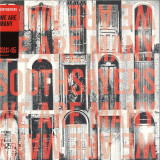
South London-based band Soothsayers are set to release their ninth studio album 'We Are Many'. Held together by heavy basslines, solid grooves, and socially and politically charged lyrics; the album takes the listener into different sonic spaces with elements of dub, Afrobeat, improvisational jazz and electronica.
The initial steps in recording 'We Are Many' came in January 2019 when the band's founders - saxophonist Idris Rahman and trumpeter Robin Hopcraft - set out on a journey to Brazil. With executive production in the Sao Paulo studio by renowned music journalist and author David Katz, they hooked up with bass player and producer Victor Rice who they'd met sharing the bill at Freedom Sounds festival in Cologne, Germany a year earlier. Victor organised a session in Studio Traquitana, home of acclaimed Brazilian band Bixiga 70, and invited a selection of local musicians. Percussionist and singer Ligia Kamara contributed lyrics and melodies written in the studio, and drummer Bruno Buarque, guitarist Joao Erbetta and bassist Victor provided some solid, personality-driven input. Fresh and vital, what came out was a fascinating blend of Soothsayers' dub and Afrobeat mixed with distinctly Brazilian inflections.
After arriving back in the UK, Idris and Robin set about creating the remainder of the album in a different, yet complimentary way, and called on the services of Wu-Lu and Kwake at their The Room studio in South London. Things started to take shape very quickly, Wu-Lu and Kwake combining Soothsayers' music with electronic elements, while also referencing elements of the current UK jazz scene.
When lockdown hit in March 2020, there was still a lot of work to do in order to complete a full album and Robin and Idris set about working on tracks with their musicians remotely. Having time to consider the album as a whole, they found strong connections between the music recorded in Brazil and the tracks recorded in London and they set about fusing and combining these elements further into a satisfying whole.
UK based Sengalese singer Modou Toure was enlisted to guest on one track while percussionists Satin Singh and Maurizio Ravalico were engaged to help affirm a sound-world where Brazilian flavours, such as the low-end Surdo drum, were combined with sounds more readily associated with reggae and Afrobeat.
Soothsayers' three part vocal harmony is a defining factor in this album. With strong references to the vocal styles of reggae legends such as The Gladiators, Mighty Diamonds, Heptones, and Abyssinnians; it has benefited from the long-standing friendship between Robin, Idris and Julia Biel. Lyrics, melodies and harmonies were presented, discussed, explored and recorded at Idris' and Julia's home studio in Streatham in a relaxed and positive way, with concepts from social and political commentary turned into powerful songs.
Themes cover political observations of Trump and beyond alongside Brazil's president Bolsanaro (Rat Race), speaking out against increasing levels of violence from the Brazilian government towards its native and indigenous people (Love And Unity) and keeping hopeful despite the impending horrors of a no-deal Brexit (We Won't Lose Hope).
Elsewhere they discuss striving to create space for meditation and reflection against the background noise of 24/7 news and social media (Move In Silence), the daily grind (No Sacrifice) and workers' rights (Slave), while highlighting those that fall through the cracks in society and end up without a permanent address, what led to this and how close we all are from this happening (One Step Away).
'We Are Many' represents a positive and uplifting statement in the face of challenging times - the overriding force, power and positivity of the music to continue forward, pushing the boundaries of musical concepts into the future.
"Whilst heavy questions of life and death and the future of our species surround us all, music is a guide that can help us perceive the challenges in a different way - a guide that can help us towards a deep inner peace. If we listen, music can help light the way. We hope you will listen, and we hope you will experience the joy, meditative power and beauty in the connection of different musical cultures that was experienced in the creation of this album."
Two years after the release of 'Kreise' Selm have once again peered out from the torture racked enclave they call a studio. Originally conceived as two separate EP's and later stacked into an all-consuming album over 44 minutes 'TiiiER / Post-Adrenaline' pushes Selm's agenda of black dwarf techno and physically exhausting industrial churning to new levels. The opening salvo of tracks that form the 'TiiiER' disc (tracks 1-5) posit a techno minimalism coated in the incredible, almost edible crust of controlled distortion and flaking edges garnered through masterful gain staging. Opener 'Sin' accrues greater density with each iteration and pass. 'Kreise' is classic DBX style beep ran into manic filters and weight gain classes.'Moger' is a truly sinister and clinical piece of industrial sound design raising blood pressure with its stainless steel poise. 'Laus' is a real percy, syncopated just the right side of falling over and baked into the toughest compression throbs. It closes the first 'disc' and perhaps what could be considered the more straight forward tracks of the album. 'Post-Adrenaline' the second disc of the set is where Selm's love of intensely textural sound design work can be best felt. 'Nineteen Voices' opens with its disembodied conversations utterly smothered by the roiling mass of bass synth which surrounds on all sides. 'Irr' terrifies the young with it's truly OTT undulance of seismic tone, as reverential to death industrial as it is to guitar music, the riff laid bare. 'Brett' is a damp, warm environment of intelligent growth. Fermenting itself again in a stew of gnashing bass heaviness now crowned with glowing bowed metal and tuned feedback. 'Sommeil' closes the second disc with not a single positive note played, it's a dreary escalation of all the albums previous incarnations, flickering noise shaped rhythm, serpentine bass formations and no rush to please or to entertain. At just under 6 minutes, it and the album are over. Selm do not hold up on this follow up to Kreise. While the albums share ideas they are refined to a point of punishment here. 'TiiiER / Post-Adrenaline' is hyper-modern music that sounds like it's made from air, stone and rust.